Study Guides
IGCSE Accounting: Verification of Accounting Records (Cambridge 0452)
The trial balance, correction of errors, bank reconciliation and control accounts – the four checking mechanisms of Topic 3 for Cambridge IGCSE Accounting 0452, 2027-2029 syllabus.
- Subject
- Accounting
- Level
- IGCSE
- Topic
- Verification of accounting records
- Author
- Marlbridge Academic Team
- Updated
- Reviewed by
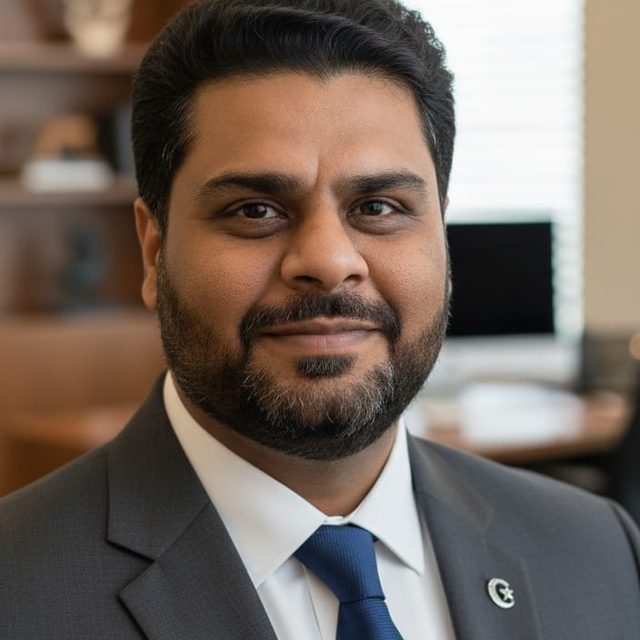
- Javaid Iqbal Sabri (what this means)
Aligned to Cambridge IGCSE Accounting (0452), 2027-2029. Official specification .
Syllabus page (what it covers and how it is assessed): Cambridge IGCSE Accounting.
Syllabus points this page covers
0452
- 3 Verification of accounting records (whole topic)
Found an error? Report a correction.
Need help with this topic? Request a free trial class for IGCSE Accounting (0452).
Syllabus edition note. This resource follows the Cambridge IGCSE Accounting 0452 syllabus for exams in 2027, 2028 and 2029 (version 1), first examined in the March 2027 series in India and the June 2027 series elsewhere. If you sit 0452 in November 2026, you sit the 2026 syllabus (version 2), which differs: Paper 1 has 35 multiple-choice marks in 1 hour 15 minutes, not 40 marks in 1 hour 30 minutes; Topic 7 is “Accounting principles and policies”, without 7.2 Ethical considerations or 7.3 Technology and sustainability; 4.4 is “Irrecoverable debts and provision for doubtful debts”; income statements are named instead of statements of profit or loss; three-column running balance accounts are not required; Clubs and societies is 5.4 and Manufacturing accounts 5.5; and 6.3 is “Inter-firm comparison”. For this topic, the 2026 syllabus also lists dividends among the cash book updates, and it does not include the impact of digital transactions on bank reconciliation or on control accounts. If you sit in November 2026, work from the 2026 syllabus on the Cambridge International website.
This guide covers Topic 3 Verification of accounting records, for Cambridge IGCSE Accounting 0452, syllabus for exams in 2027, 2028 and 2029 (Version 1). It is the third of seven topics, and unlike Topics 1 and 2, which teach how to record transactions, Topic 3 is entirely about checking that recording has been done correctly.
Where this fits in 0452
Verification of accounting records assumes candidates can already apply double entry confidently (Topic 2’s Sources and Recording of Data). Every technique in this topic exists to catch errors that double entry alone does not automatically reveal – some errors leave the books in perfect arithmetic balance while still being factually wrong, which is precisely why a trial balance balancing is necessary but not sufficient evidence that the records are correct.
Syllabus coverage
CAMBRIDGE IGCSE ACCOUNTING (0452) — TOPIC 3: VERIFICATION OF ACCOUNTING RECORDS
- 3.1 The trial balance — the purposes and limitations of a trial balance; preparing one from a list of balances and amending one that contains errors; the types of error that do not affect it: commission (correct type of account, wrong specific account), compensating (two unrelated errors that cancel out), complete reversal (debit and credit entries swapped), omission (a transaction left out entirely), original entry (the wrong amount entered on both sides) and principle (the wrong type of account altogether). A trial balance that balances shows that debits and credits are equal overall, but it cannot detect these six.
- 3.2 Corrections of errors — correcting errors by journal entries; using a suspense account as a temporary measure to balance the trial balance when an error does cause an imbalance, and correcting errors through it; adjusting the profit or loss for the period after the corrections; and the effect of the corrections on the statement of financial position.
- 3.3 Bank reconciliation — the use and purpose of a bank statement; updating the cash book for items first seen on the statement (bank charges, bank interest paid and received, correction of errors, credit transfers, direct debits and standing orders); preparing a bank reconciliation statement for the differences that remain: unpresented cheques, uncredited deposits (also called outstanding lodgements) and bank errors; and the impact of digital business transactions on the reconciliation process.
- 3.4 Control accounts — the purposes of sales ledger and purchases ledger control accounts; the books of prime entry as the sources of their entries; preparing them with credit sales and purchases, receipts and payments, cash discounts, returns, irrecoverable debts, dishonoured cheques, interest on overdue accounts, contra entries, refunds, and opening and closing debit and credit balances; and the impact of digital recording on how control accounts are prepared and used. Candidates do not need to reconcile control account balances with the sales and purchases ledger balances.
How to approach it
Because these four sub-topics are really four different answers to the same underlying question – “how do we know the records are right?” – revise them side by side rather than in isolation, and be explicit about what each technique can and cannot catch. The trial balance catches arithmetic imbalance but not misclassification; correction of errors puts right both the errors a trial balance cannot detect and those that unbalance it; bank reconciliation checks cash records against an independent external source (the bank); and control accounts give an independent total for the sales and purchases ledgers, built from the books of prime entry. Practising the classification of a described error into its correct category (omission, commission, principle, original entry, reversal or compensating) before attempting the correcting journal entry is a more reliable route to full marks than jumping straight to the double entry, since the specific correcting entries differ by error type.
Worked example: correction of errors
A business pays $450 for vehicle repairs but posts the amount to the motor vehicles (non-current asset) account instead of the vehicle repairs (expense) account. Both entries were made correctly to the value of $450, so the trial balance still balances despite the error – this is an error of principle, since the transaction was posted to the wrong type of account (an asset account instead of an expense account), not merely the wrong specific account. The correcting journal entry removes the $450 from motor vehicles and posts it to vehicle repairs: debit vehicle repairs $450, credit motor vehicles $450. Because this correction does not change the overall trial balance total (both sides remain equal), no suspense account is needed here – suspense accounts are only required where an error actually causes the trial balance to disagree.
Common mistakes
Assuming a trial balance that balances proves the accounts are free of error, when several error types (including principle, commission, original entry, complete reversal and compensating errors) do not disturb the trial balance totals at all. Confusing an error of commission (wrong specific account, correct account type) with an error of principle (wrong account type entirely). Treating unpresented cheques and uncredited deposits as items to enter in the cash book, when they are timing differences that the bank reconciliation statement explains; and the opposite mistake, leaving bank charges, standing orders, direct debits, credit transfers and interest out of the cash book when they belong there before the statement is prepared. Forgetting that a control account is built from totals of source documents or books of prime entry, not by adding up the individual personal ledger balances it is meant to check.
Digital transactions and records
The 2027-2029 syllabus adds two questions about technology to this topic.
- Bank reconciliation. Card payments, online payments and bank transfers usually clear within hours or days rather than waiting for a cheque to be presented, so they leave fewer timing differences, and a business that checks its online bank account often can find differences sooner. Reconciliation is still needed: direct debits, standing orders, bank charges and interest still reach the statement before the cash book, and entries can still be duplicated, mis-keyed or matched to the wrong transaction.
- Control accounts. When credit sales, returns, receipts and payments are recorded digitally, the software can total the books of prime entry and produce the control account automatically and at any time, so arithmetic errors in the totals are far less likely and the control account can be used as an up-to-date total of trade receivables or payables. It still cannot catch an input error, such as a wrong amount or the wrong customer, and control over who can enter or change records becomes more important.
Quick revision checklist
- Explain what a balancing trial balance does and does not prove.
- Classify a described error correctly into one of the six named error types before attempting its correction.
- Know when a suspense account is needed (imbalance-causing errors) and when it is not (errors that don’t affect the trial balance total).
- Update the cash book for items first seen on the bank statement, then reconcile the remaining unpresented cheques, uncredited deposits and bank errors.
- Explain how digital transactions and records affect bank reconciliation and control accounts.
- Explain how a control account provides an independent check on the sales or purchases ledger.
Official syllabus
Cambridge IGCSE Accounting 0452 syllabus for 2027, 2028 and 2029 (Version 1, September 2024) — cambridgeinternational.org, verified 2026-09-16.
Get free revision emails (optional)
Occasional emails with practice questions, worked explanations and links to free resources for the qualification and subjects you choose. No spam, and you can unsubscribe from any email. The free tools on this site never need an email.
Related resources
-
Revision notes
IGCSE Accounting: Analysis and Interpretation — Revision Notes
Condensed recall notes on the ten accounting ratios, interpreting them, profit versus cash, inter-business comparison, interested parties and the limitations of accounting statements for Cambridge IGCSE Accounting (0452) Topic 6, 2027-2029 syllabus.
Accounting · Cambridge · IGCSE
Revise topic -
Practice questions
IGCSE Accounting: Verification of Accounting Records — Practice Questions
Exam-style questions with full worked answers on the trial balance, the six error types, suspense accounts, bank reconciliation, control accounts and digital records, for Cambridge IGCSE Accounting (0452) Topic 3, 2027-2029 syllabus.
Accounting · Cambridge · IGCSE
Try questions -
Revision notes
IGCSE Accounting: Verification of Accounting Records — Revision Notes
Condensed recall notes on the trial balance, the six error types, bank reconciliation, control accounts and the impact of digital records for Cambridge IGCSE Accounting (0452), 2027-2029 syllabus.
Accounting · Cambridge · IGCSE
Revise topic
Related articles
-
teaching
A Level tuition in Dubai: Cambridge or Pearson Edexcel International A Level?
Schools in Dubai and Abu Dhabi teach either Cambridge International AS & A Level or Pearson Edexcel International A Level. How the two are structured, why it matters for tuition, and how online classes from Lahore work.
9 October 2026
-
curriculum guides
Choosing subjects at IGCSE and A Level
How subject choices at 14 and 16 affect university options later, and how to keep pathways open without overloading a timetable.
28 July 2026
Studying this with a teacher
Working through Accounting IGCSE?
This page is free and stays free. If you would rather be taught it, Marlbridge runs Accounting classes one-to-one and in small groups of up to 15, online in your own time zone. The first trial class is free. WhatsApp replies within an hour (8am–11pm Pakistan time, every day); email the same day.
Cambridge Accounting teachers at Marlbridge