
Study Guides
IB DP Computer Science B.4: Abstract Data Types (HL)
Overview study guide to B.4 Abstract data types, the HL-only IB DP Computer Science sub-topic (first assessment 2027): 23 HL hours and Paper 2 HL questions.
- Subject
- Computer Science
- Level
- IB
- Topic
- B.4 – Abstract data types (HL only)
- Author
- Marlbridge Academic Team
- Updated
- Reviewed by
- Harris Khan (what this means)
Aligned to International Baccalaureate IB Diploma Programme Computer Science (DP Computer Science), First assessment 2027. Official subject brief .
Syllabus page (what it covers and how it is assessed): IB Diploma Programme Computer Science.
Found an error? Report a correction.
Need help with this topic? Request a free trial class for IB Diploma Programme Computer Science (DP Computer Science (2014) / DP Computer Science (2027)).
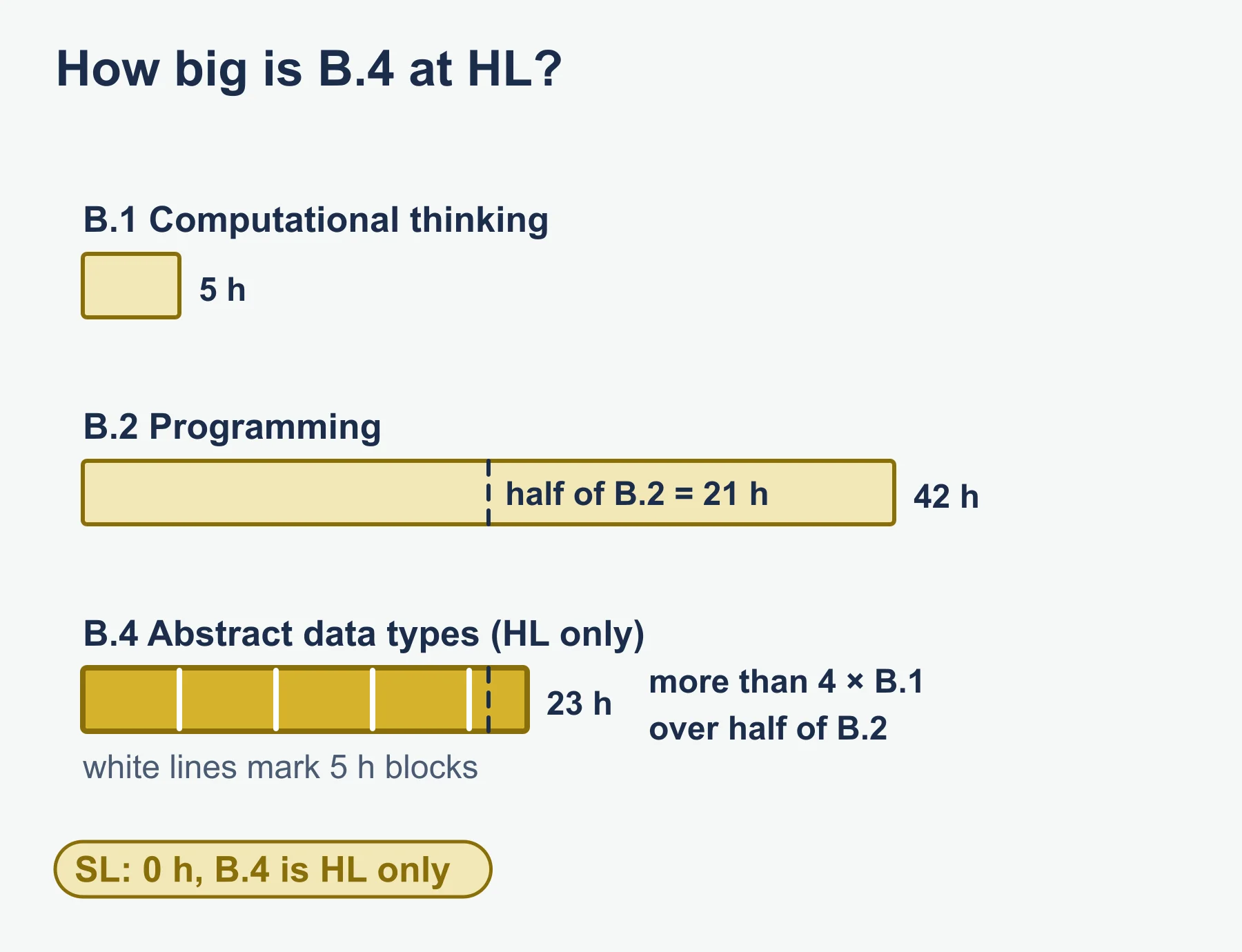
B.4 Abstract data types is the fourth and final sub-topic of Theme B in the IB Diploma Programme Computer Science course first assessed in 2027, and it is HL only. The IB subject brief gives it 23 recommended teaching hours at HL and none at SL, and says HL Paper 2 includes additional questions focused on OOP and abstract data types. SL students do not study B.4.
Scope of this page. This overview is written from the IB’s public Diploma Programme Subject Brief, Sciences: Computer science, first assessment 2027 (© International Baccalaureate Organization 2024). The brief names B.4 and gives its hours and assessment but does not list which abstract data types are studied or the learning outcomes. Those are in the full DP Computer Science guide, available to IB schools through the Programme Resource Centre. Follow your school’s copy of the full guide for the exact content and depth.
What does the IB subject brief say about B.4?
| Item | Subject brief |
|---|---|
| Name | B.4 Abstract data types (HL only) |
| Theme | B, “Computational thinking and problem-solving” |
| Recommended teaching hours | 0 SL / 23 HL |
| Assessment | HL Paper 2: additional questions for HL focused on OOP and abstract data types |
| Paper 2 at HL | 2 hours, 40% of the final grade; some questions require programming, in Java or Python |
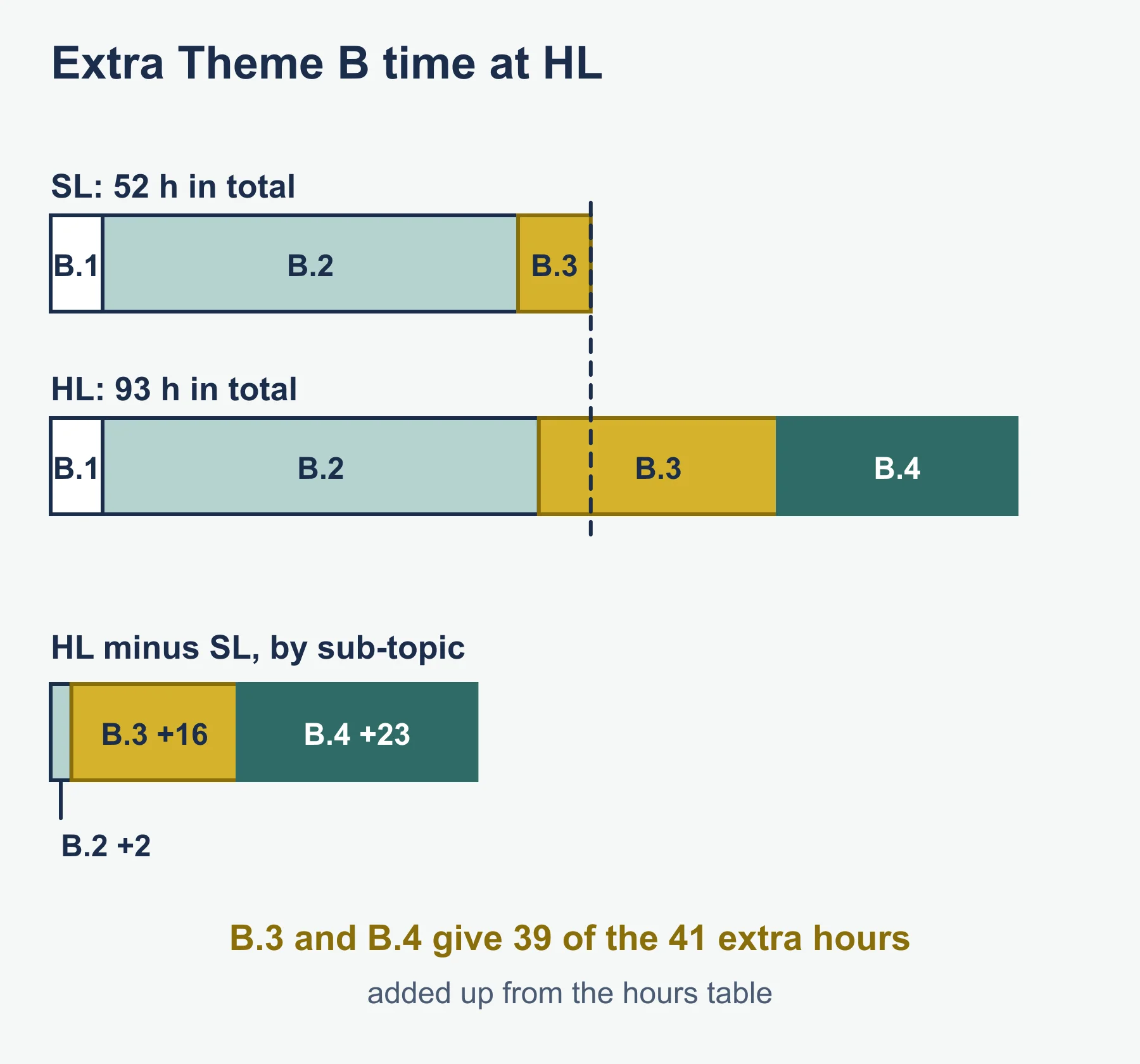
Together, B.3 (23 HL hours, against 7 at SL) and B.4 (23 HL hours, 0 at SL) account for most of the extra Theme B time at HL.
Where does B.4 fit in the course?
Theme B “focuses on how we can use computing systems to solve real-world problems”. B.4 follows B.1 Computational thinking, B.2 Programming and B.3 OOP, so it builds on programming and object oriented skills. The brief says the course can be studied in Python or Java, so B.4 work is done in the language your school uses.
General background: what is an abstract data type?
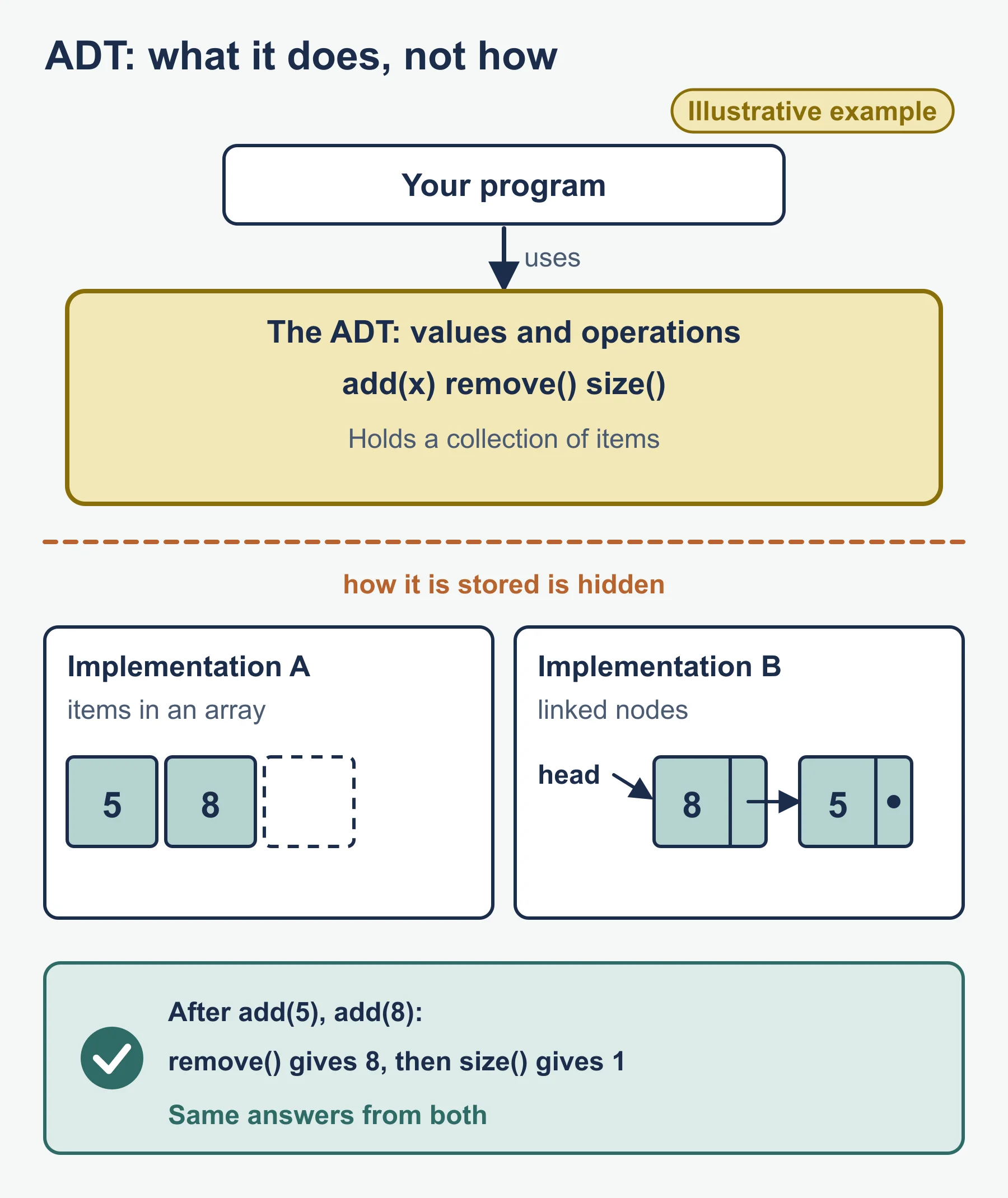
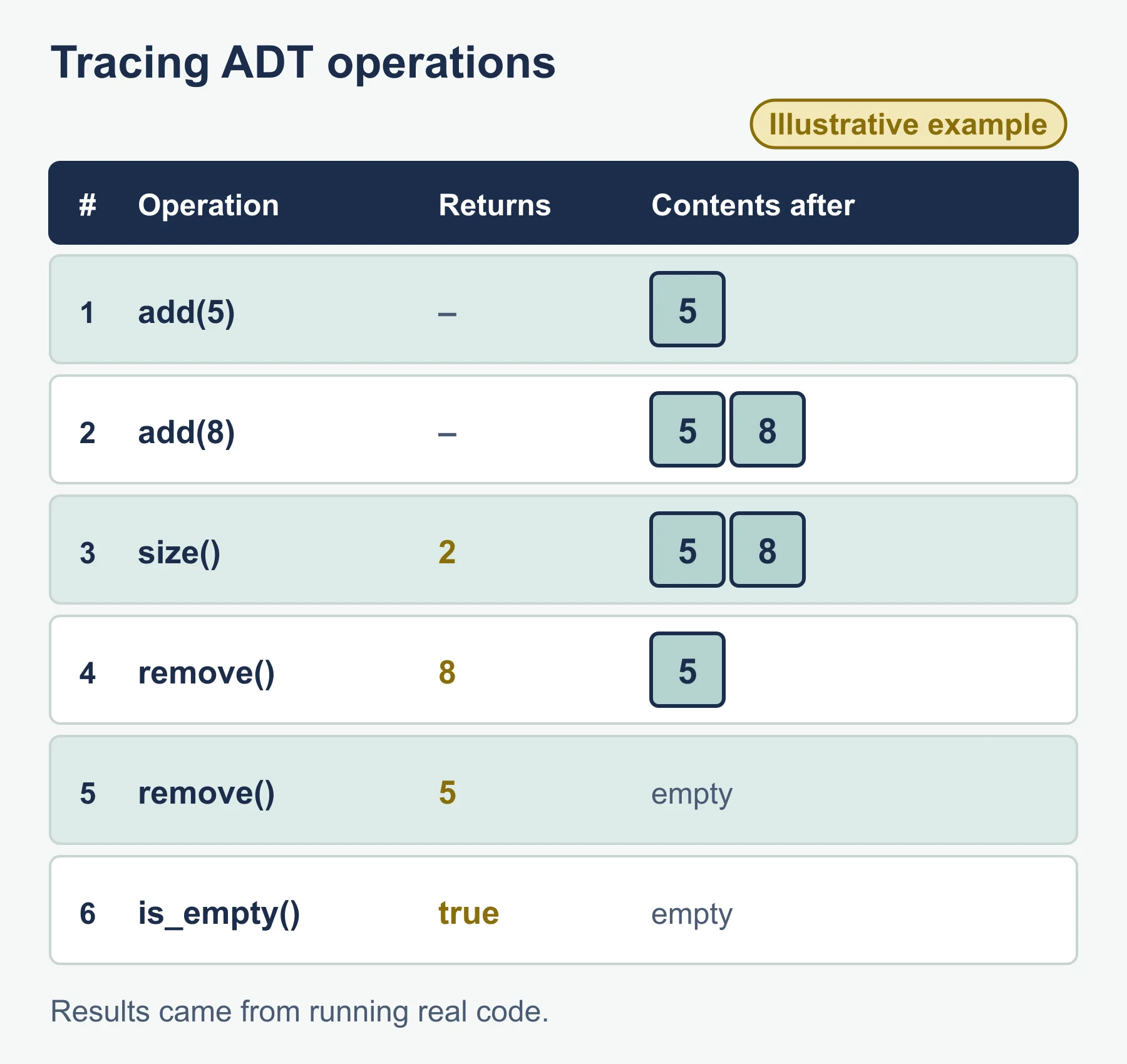
This section is general computer-science background, not the IB’s list of B.4 outcomes. An abstract data type (ADT) is defined by the values it can hold and the operations that can be carried out on it, independently of how it is implemented in a particular language. Separating “what it does” from “how it is stored” is an application of abstraction, one of the computational thinking abilities the brief lists. Which specific ADTs and operations B.4 requires is set out in the full guide.
How should HL students prepare for B.4?
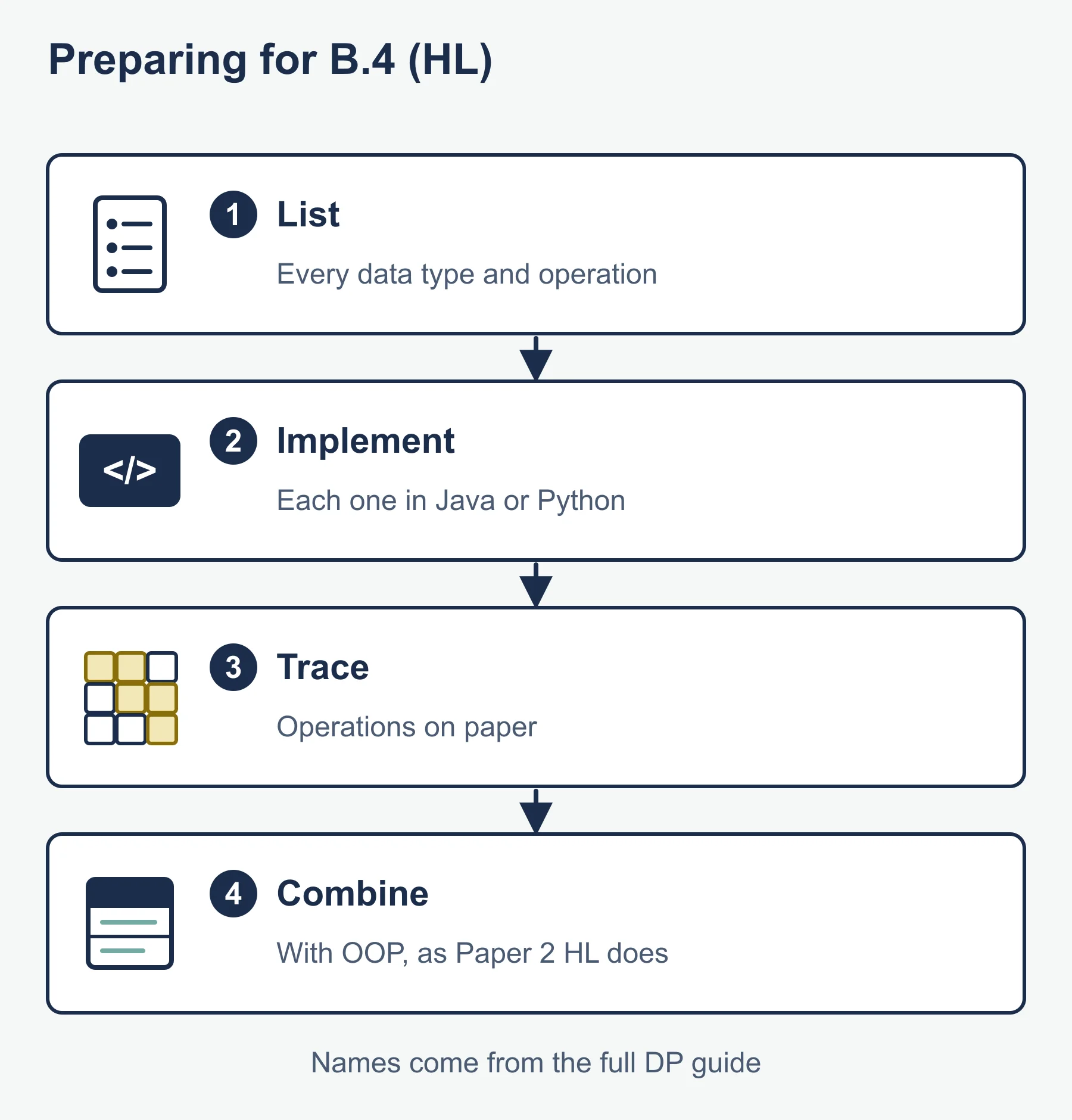
- Get the B.4 learning outcomes from the full guide and list every data type and operation named.
- For each one, practise implementing it in your course language and tracing operations on paper.
- Expect Paper 2 HL questions that combine B.4 with OOP (the brief groups the two in its description of the additional HL questions).
- Budget time: 23 hours is more than four times B.1’s allocation and over half of B.2’s.
- Use the B.1 process: specify the operations needed, decompose, abstract the data, then test and evaluate.
Frequently asked questions
Is B.4 on the SL exam? No. The brief labels B.4 “HL only” and gives it 0 SL hours. SL Paper 2 covers the three other Theme B topics.
How many hours is B.4? 23 recommended teaching hours at HL.
Which abstract data types are in B.4? The public subject brief does not list them. They are in the full DP Computer Science guide, available through the IB Programme Resource Centre.
Which paper assesses B.4? Paper 2, through additional HL questions focused on OOP and abstract data types.
Related pages
- B.4 Abstract data types revision notes
- B.4 Abstract data types practice questions
- B.3 Object oriented programming study guide
- DP Computer Science syllabus guide
Source
International Baccalaureate Organization, Diploma Programme Subject Brief, Sciences: Computer science, first assessment 2027 (© 2024). The complete subject guide is available through the IB Programme Resource Centre.
Get free revision emails (optional)
Occasional emails with practice questions, worked explanations and links to free resources for the qualification and subjects you choose. No spam, and you can unsubscribe from any email. The free tools on this site never need an email.
Related resources
-
Study guides
IB Diploma Programme Computer Science: Syllabus Guide
Full syllabus map for IB DP Computer Science, first assessment 2027: Theme A and Theme B sub-topics, the case study and recommended teaching hours at SL and HL.
Computer Science · International Baccalaureate · IB
Read guide -
Practice questions
IB DP Computer Science B.4: Abstract Data Types – Practice Questions
Original warm-up questions with answers for IB DP Computer Science B.4 Abstract data types (HL only): ADT ideas, abstraction and what the 2027 brief says.
Computer Science · International Baccalaureate · IB
Try questions -
Revision notes
IB DP Computer Science B.4: Abstract Data Types – Revision Notes
Revision notes on IB DP Computer Science B.4 Abstract data types (HL only): what the 2027 subject brief says on hours, HL Paper 2 questions and how to revise.
Computer Science · International Baccalaureate · IB
Revise topic
Related articles
-
teaching
A Level tuition in Dubai: Cambridge or Pearson Edexcel International A Level?
Schools in Dubai and Abu Dhabi teach either Cambridge International AS & A Level or Pearson Edexcel International A Level. How the two are structured, why it matters for tuition, and how online classes from Lahore work.
9 October 2026
-
curriculum guides
Choosing subjects at IGCSE and A Level
How subject choices at 14 and 16 affect university options later, and how to keep pathways open without overloading a timetable.
28 July 2026
Studying this with a teacher
Working through Computer Science IB?
This page is free and stays free. If you would rather be taught it, Marlbridge runs Computer Science classes one-to-one, online in your own time zone. The first trial class is free. WhatsApp replies within an hour (8am–11pm Pakistan time, every day); email the same day.
IB Computer Science teachers at Marlbridge