
Study Guides
AQA A-level Biology: Cell Recognition and the Immune System (7402)
Study guide to AQA A-level Biology 3.2.4: antigens, phagocytosis, T and B cells, antibodies, vaccines and herd immunity, HIV, monoclonal antibodies and ELISA.
- Subject
- Biology
- Level
- A LEVEL (AS CONTENT)
- Topic
- Cell Recognition and the Immune System
- Author
- Marlbridge Academic Team
- Updated
- Reviewed by
- Hina Mogul (what this means)
Aligned to AQA A Level Biology (7402), For first teaching 2015. Official specification .
Syllabus page (what it covers and how it is assessed): AQA A Level Biology.
Syllabus points this page covers
7402 (AS content of the A Level)
- 3.2.4 Cell recognition and the immune system
Found an error? Report a correction.
Need help with this topic? Request a free trial class for A Level Biology (7402).
Section 3.2.4 of the AQA A-level Biology (7402) specification, Cell recognition and the immune system, explains how the body recognises “non-self” molecules called antigens and responds with phagocytes, T lymphocytes (the cellular response) and B lymphocytes (the humoral response). You also need vaccines and herd immunity, active and passive immunity, HIV and AIDS, monoclonal antibodies, the ELISA test, and the ethics of vaccines and monoclonal antibodies.
This guide is aligned to the AQA AS and A-level Biology specification (A-level 7402), for first teaching 2015 with exams from June 2016, Version 1.5. Section 3.2.4 is AS content and is often assessed with data from vaccine trials or ELISA results. Use it with the cell recognition and immune system revision notes and the immune system practice questions. Protein structure, which explains antibody specificity, is in the lipids and protein structure study guide. Course hub: AQA A-level Biology.
What the specification asks for
| Specification content (3.2.4) | What you must be able to do |
|---|---|
| Cell-surface molecules identify pathogens, cells from other individuals of the same species, abnormal body cells and toxins | Explain how the immune system distinguishes self from non-self |
| Definition of antigen; antigen variability | Define antigen; explain how variability affects disease and its prevention |
| Phagocytosis and destruction by lysozymes | Describe the stages of phagocytosis |
| Cellular response: antigen-presenting cells; helper T cells stimulating cytotoxic T cells, B cells and phagocytes | Describe the T-cell response |
| Humoral response: clonal selection, plasma cells, memory cells, primary and secondary responses | Describe the B-cell response and explain the faster secondary response |
| Antibody definition and structure; antigen-antibody complex (agglutination and phagocytosis) | Draw and label an antibody; explain how antibodies destroy antigens |
| Vaccines, herd immunity, active and passive immunity | Explain how vaccines protect individuals and populations |
| HIV structure and replication in helper T cells; AIDS; antibiotics and viruses | Explain how HIV causes AIDS symptoms and why antibiotics do not work on viruses |
| Monoclonal antibodies (targeted drugs, diagnosis); ELISA | Explain their uses; interpret ELISA |
| Ethical issues; evaluating evidence | Discuss ethics and evaluate data on vaccines and monoclonal antibodies |
What is an antigen?
An antigen is a foreign molecule, usually a protein, that triggers an immune response by lymphocytes. Every type of cell has specific molecules on its surface, so the immune system can identify pathogens, cells from other organisms of the same species (for example transplanted organs), abnormal body cells (such as cancer cells) and toxins.
Antigen variability. Some pathogens change their antigens frequently, for example as a result of mutation in the influenza virus. Memory cells from an earlier infection or vaccine no longer have receptors complementary to the new antigen, so a person can catch the disease again, and a new vaccine has to be developed regularly.
How does phagocytosis destroy a pathogen?
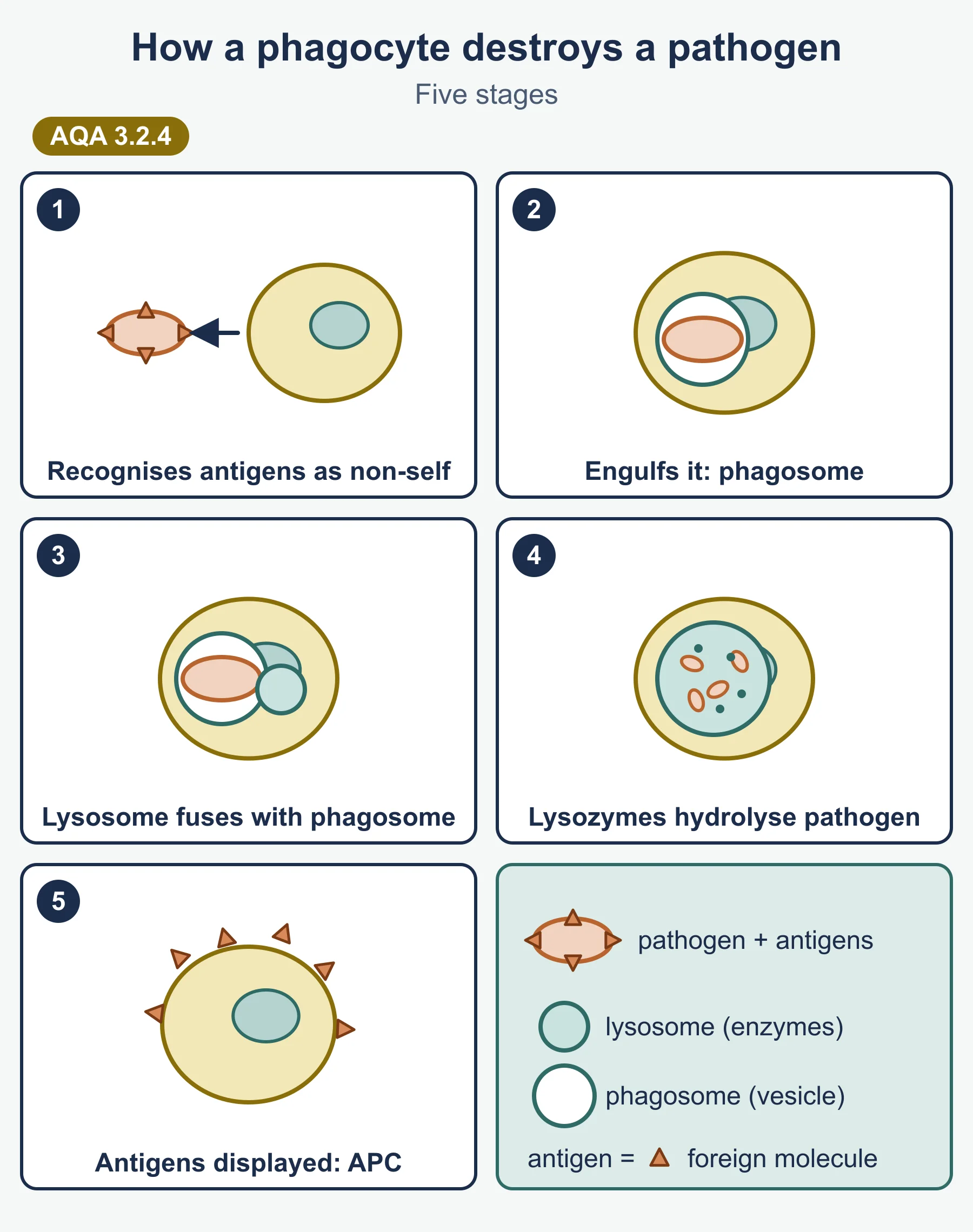
- The phagocyte is attracted to the pathogen and recognises its antigens as non-self.
- It engulfs the pathogen, enclosing it in a vesicle called a phagosome.
- A lysosome fuses with the phagosome.
- Lysozymes (hydrolytic enzymes) from the lysosome hydrolyse the pathogen.
- The phagocyte displays the pathogen’s antigens on its own surface, becoming an antigen-presenting cell.
What is the cellular response?
The cellular response is the response of T lymphocytes to a foreign antigen.
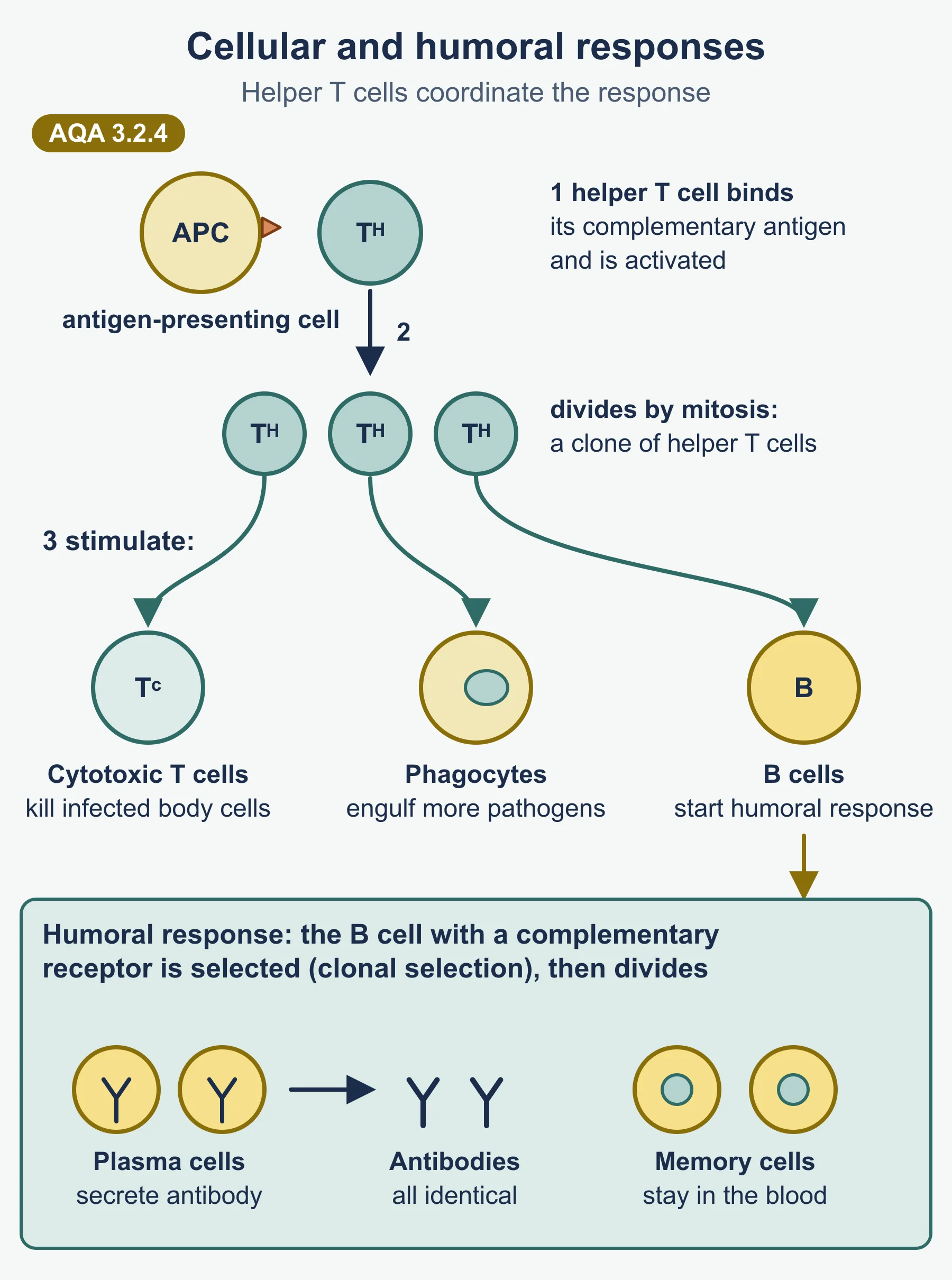
- An antigen-presenting cell (for example a phagocyte, or an infected body cell) displays the foreign antigen.
- A helper T cell (TH cell) with a receptor complementary to that antigen binds to it and is activated.
- The activated TH cell divides by mitosis to form a clone.
- TH cells then stimulate:
- cytotoxic T cells (TC cells), which kill infected body cells displaying the antigen;
- B cells, to begin the humoral response;
- phagocytes, to engulf more pathogens.
The specification says the roles of other T cells are not required.
What is the humoral response?
The humoral response is the response of B lymphocytes, and involves antibodies in body fluids.
- A B cell with antibody receptors complementary to the antigen binds to it, takes it in and presents it.
- A helper T cell binds to the B cell and activates it. This selection of the one B cell type with the complementary receptor is clonal selection.
- The B cell divides by mitosis to make a clone of plasma cells and memory cells.
- Plasma cells secrete large numbers of identical, monoclonal antibodies specific to the antigen.
- Memory cells remain in the blood for a long time.
What is an antibody and how is it built?
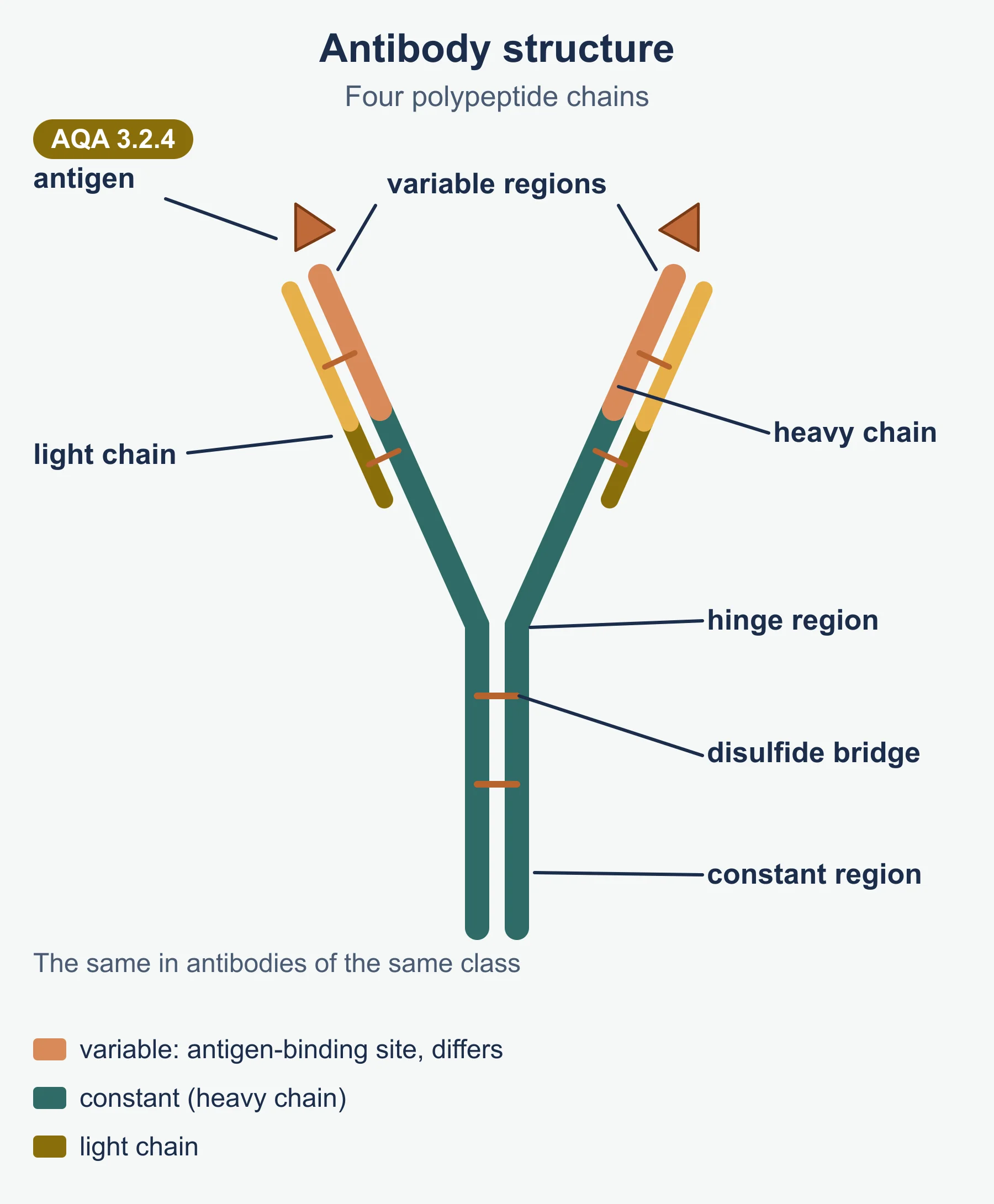
An antibody is a protein that binds specifically to an antigen. It is made of four polypeptide chains: two long heavy chains and two short light chains, held together by disulfide bridges. Each antibody has:
- two variable regions at the tips, each with an antigen-binding site whose shape is complementary to one antigen (the variable region’s amino acid sequence differs between antibodies);
- a constant region, the same in antibodies of the same class;
- a hinge region, which lets the two arms move to bind antigens a different distance apart.
Binding forms an antigen-antibody complex. The specification limits destruction of the antigen to agglutination (each antibody has two binding sites, so it clumps bacteria together) and phagocytosis of the clumped bacterial cells.
Why is the secondary response faster?
| Primary response | Secondary response | |
|---|---|---|
| When | First exposure to the antigen | Later exposure to the same antigen |
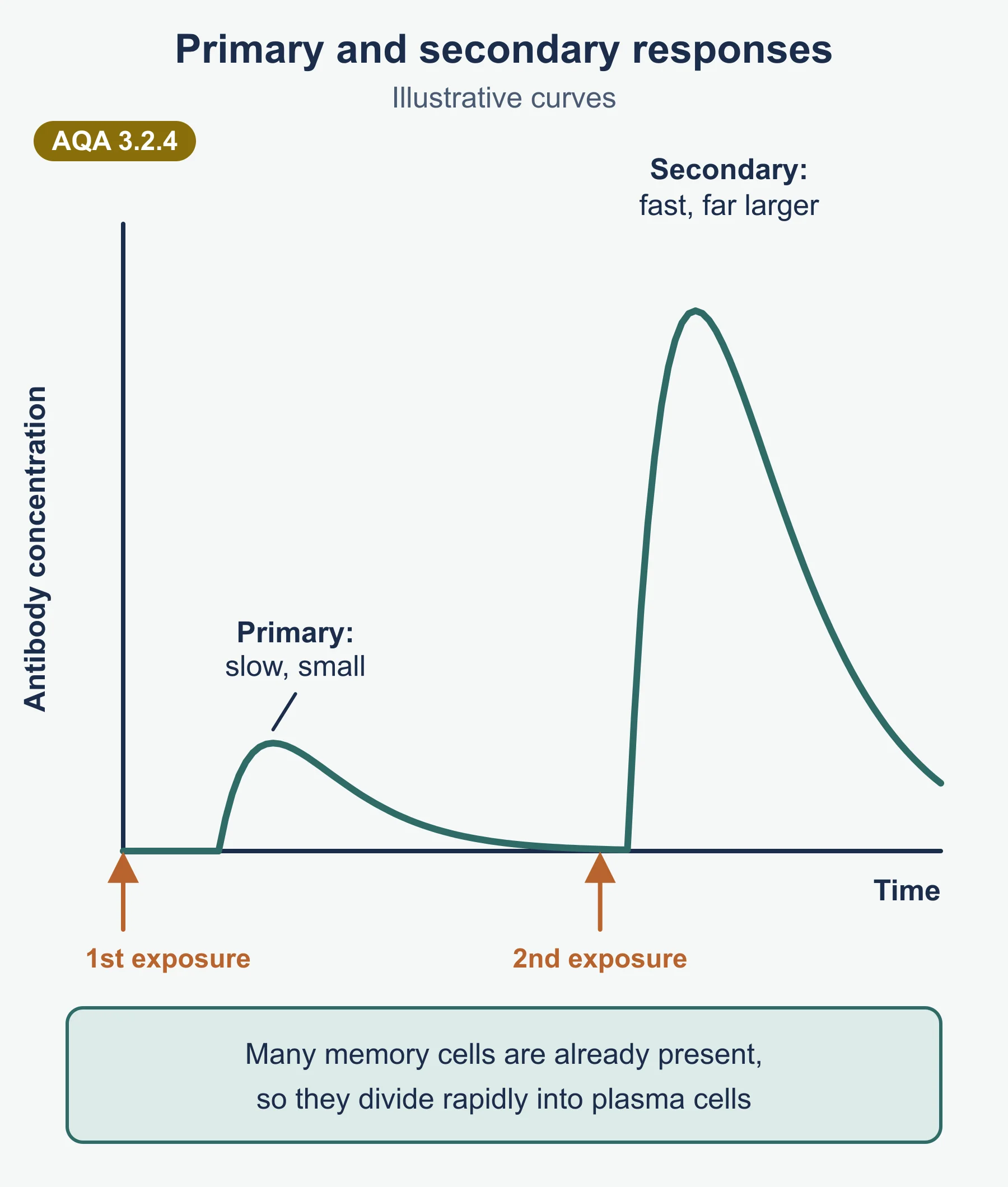
| Cells involved | Few B and T cells with the right receptor; clonal selection takes time | Many memory cells already present |
| Speed and size | Slow; small amount of antibody; symptoms usually develop | Fast; far more antibody; pathogen usually destroyed before symptoms |
Memory cells divide rapidly into plasma cells on re-exposure, which is why a second infection is often symptomless.
How do vaccines and herd immunity work?
A vaccine contains antigens (for example dead or attenuated pathogens, or isolated antigens) that stimulate a primary response and the production of memory cells without causing the disease. If the real pathogen enters later, a secondary response destroys it quickly.
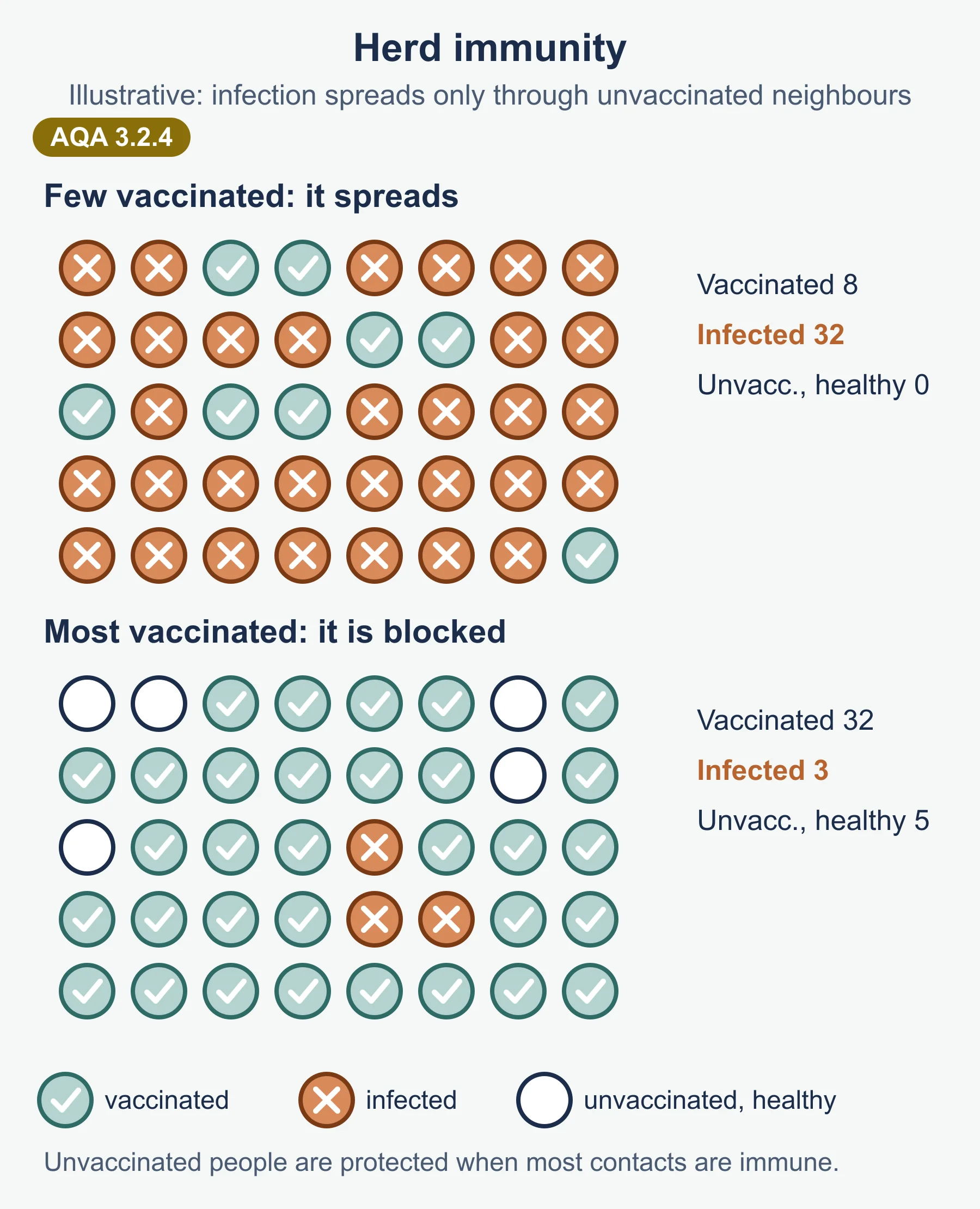
Herd immunity arises when a large proportion of a population is vaccinated: the pathogen cannot spread easily because most contacts are immune, so unvaccinated people (for example babies too young to be vaccinated, or people whose immune systems are weakened) are also protected.
What is the difference between active and passive immunity?
| Active immunity | Passive immunity | |
|---|---|---|
| How it arises | The body makes its own antibodies after exposure to the antigen (natural infection, or a vaccine) | Antibodies are introduced from another source (across the placenta, in breast milk, or by injection) |
| Memory cells | Yes | No |
| Speed | Slow to develop | Immediate |
| Duration | Long term | Short term, as the antibodies are broken down |
How does HIV cause AIDS?
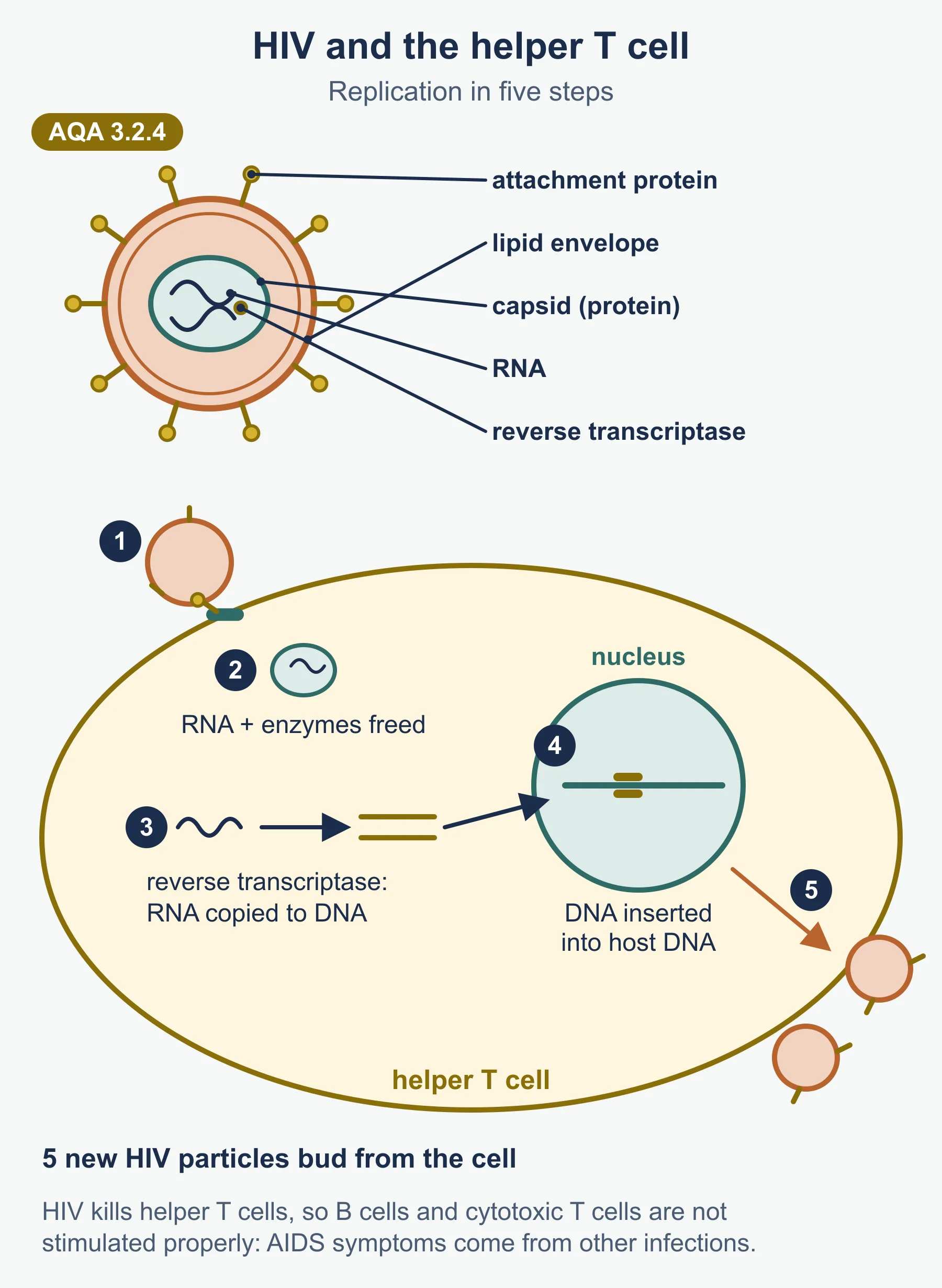
Structure of HIV. HIV has a core of RNA and the enzyme reverse transcriptase, inside a protein capsid, surrounded by a lipid envelope (from the host cell membrane) carrying attachment proteins.
Replication in helper T cells.
- The attachment protein binds to a receptor protein on a helper T cell.
- The capsid is released into the cell, and RNA and enzymes are released.
- Reverse transcriptase makes a DNA copy of the viral RNA.
- The DNA is inserted into the helper T cell’s DNA.
- The cell transcribes and translates the viral genes, making new HIV particles that bud from the cell.
AIDS. HIV kills or prevents the replication of helper T cells. As their number falls, the immune system cannot stimulate B cells and cytotoxic T cells properly, so the person cannot fight opportunistic infections. The symptoms of AIDS are the symptoms of these infections and cancers, not of HIV itself.
Why antibiotics do not work on viruses. Antibiotics work by damaging bacterial structures or processes, such as the murein cell wall. Viruses have no murein cell wall, and no ribosomes or metabolic enzymes of their own: they replicate using the host cell’s enzymes and ribosomes, so there is nothing for the antibiotic to target.
What are monoclonal antibodies used for?
Monoclonal antibodies are antibodies from a single clone of plasma cells, so all are identical and bind one specific antigen.
- Targeted medication. A therapeutic drug is attached to an antibody that binds an antigen found only on one cell type (for example a cancer cell), so the drug acts on those cells and fewer healthy cells are harmed.
- Medical diagnosis. For example, pregnancy tests use monoclonal antibodies that bind a hormone in urine.
Details of producing monoclonal antibodies are not required.
How does the ELISA test work?
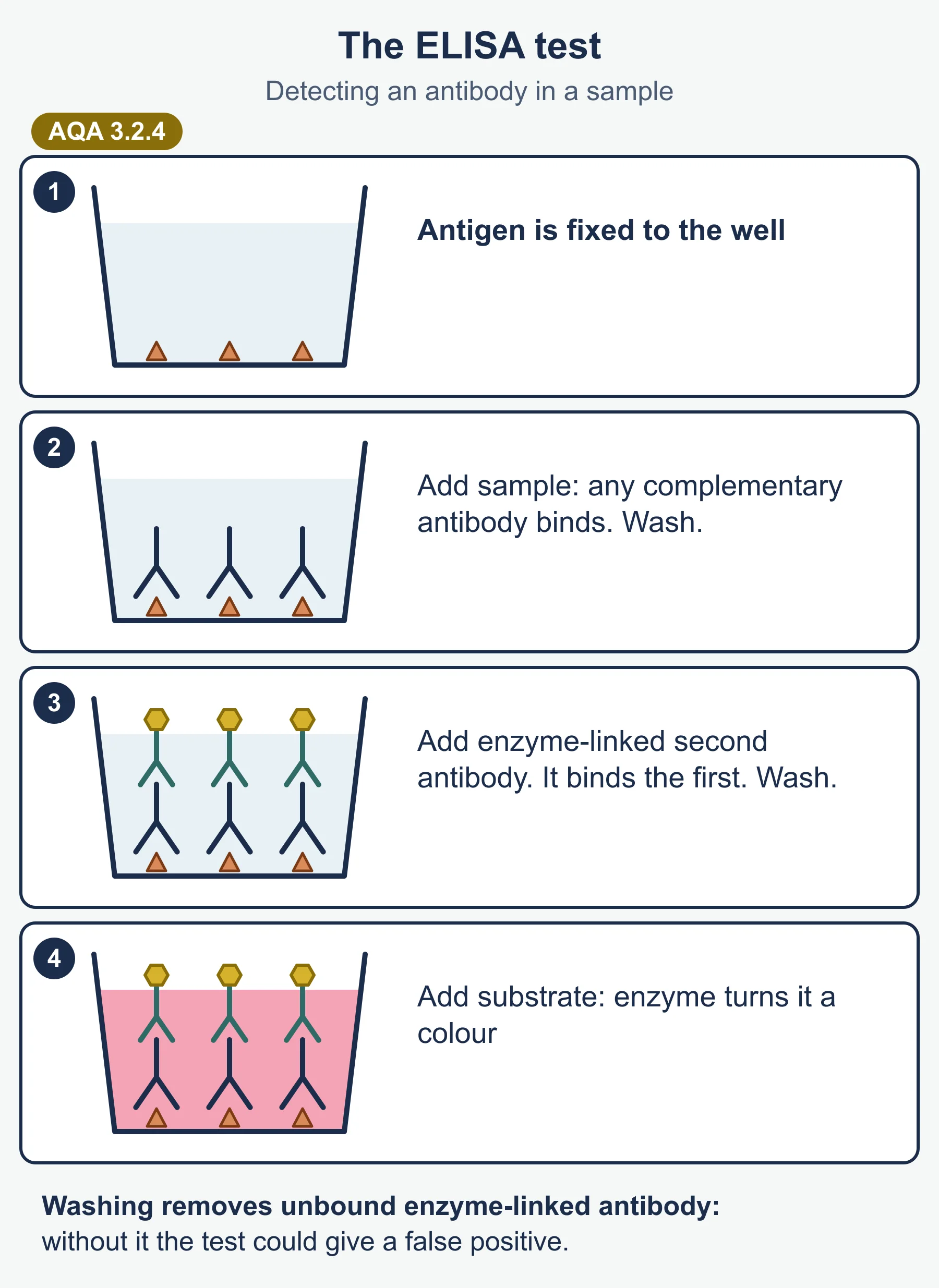
ELISA (enzyme-linked immunosorbent assay) uses antibodies to detect an antigen or an antibody in a sample. In one form, the antigen is fixed to a well; the patient’s sample is added and any complementary antibodies bind. After washing, a second antibody with an enzyme attached is added, which binds to the first antibody. The well is washed again so unbound enzyme-linked antibody is removed; a substrate is then added, and the enzyme turns it a colour. A colour change shows that the target antibody was present. Washing is essential to prevent a false positive from unbound enzyme.
What ethical issues are raised?
- Vaccines: testing on animals; trials on volunteers who may suffer side effects; whether vaccination should be compulsory; balancing small risks to individuals against the benefit of herd immunity; fair access between countries.
- Monoclonal antibodies: animals (mice) have been used in their production; drug trials carry risks for volunteers; treatments are expensive, raising questions about who receives them.
When you evaluate vaccine or monoclonal antibody data, comment on sample size, whether a placebo or control group was used, whether the trial was blind, how long people were followed, and whether differences are large enough to be meaningful.
Frequently asked questions
What is the difference between a cellular and a humoral response? The cellular response is carried out by T lymphocytes acting on cells. The humoral response is carried out by B lymphocytes and the antibodies they release into body fluids.
Why can you catch flu more than once? The influenza virus changes its antigens. Memory cells from an earlier infection do not recognise the new antigen, so there is no fast secondary response.
Is a pregnancy test an example of passive immunity? No. It is a diagnostic use of monoclonal antibodies. Passive immunity means receiving antibodies made by another organism.
Why does HIV infection not immediately cause symptoms? The symptoms of AIDS appear when the number of helper T cells has fallen so far that the immune system can no longer fight opportunistic infections.
Common mistakes
- Saying antibodies “kill” bacteria; they bind to antigens, causing agglutination, and phagocytes destroy them.
- Confusing lysozymes (enzymes) with lysosomes (organelles).
- Describing antibodies and antigens as the “same shape” rather than complementary.
- Saying vaccines contain antibodies (that is passive immunity).
- Saying HIV is AIDS, or that antibiotics treat HIV.
- Forgetting the washing steps when explaining ELISA results.
Official syllabus
AQA AS and A-level Biology (7401/7402) specification, Version 1.5 (26 November 2021), section 3.2 Cells, 3.2.4 Cell recognition and the immune system.
Get free revision emails (optional)
Occasional emails with practice questions, worked explanations and links to free resources for the qualification and subjects you choose. No spam, and you can unsubscribe from any email. The free tools on this site never need an email.
Related resources
-
Exam preparation
AQA A-Level Biology: Paper-by-Paper Exam Preparation
How AQA A-Level Biology 7402 Papers 1, 2 and 3 work, with strategy for the Paper 2 comprehension, the Paper 3 essay and practical skills, plus a checklist.
Biology · AQA · A Level
Read guide -
Practice questions
AQA A-level Biology: Cell Recognition and the Immune System (7402) – Practice Questions
Original questions with worked answers on AQA A-level Biology 3.2.4: antigens, phagocytosis, T and B cells, antibodies, vaccines, HIV, monoclonals and ELISA.
Biology · AQA · A Level (AS content)
Try questions -
Revision notes
AQA A-level Biology: Cell Recognition and the Immune System (7402) – Revision Notes
Condensed AQA 7402 notes on 3.2.4: antigens, phagocytosis, T and B cells, antibodies, vaccines, HIV, monoclonal antibodies and ELISA, for A-level Biology.
Biology · AQA · A Level (AS content)
Revise topic
Related articles
-
study skills
How to revise for a science examination
Most science revision fails because it rereads notes instead of retrieving them. A practical method for revising physics, chemistry and biology in the weeks before a paper.
14 July 2026
-
teaching
A Level tuition in Dubai: Cambridge or Pearson Edexcel International A Level?
Schools in Dubai and Abu Dhabi teach either Cambridge International AS & A Level or Pearson Edexcel International A Level. How the two are structured, why it matters for tuition, and how online classes from Lahore work.
9 October 2026
Studying this with a teacher
Working through Biology A LEVEL (AS CONTENT)?
This page is free and stays free. If you would rather be taught it, Marlbridge runs Biology classes one-to-one and in small groups of up to 15, online in your own time zone. The first trial class is free. WhatsApp replies within an hour (8am–11pm Pakistan time, every day); email the same day.
AQA Biology teachers at Marlbridge


