
Revision Notes
AQA GCSE English Literature (8702): Unseen Poetry – Revision Notes
Condensed notes on unseen poetry in AQA GCSE English Literature 8702 Paper 2 Section C: the 24-mark and 8-mark tasks, key terms, traps and a self-test.
- Subject
- English Literature
- Level
- GCSE
- Topic
- Paper 2 – Modern Texts and Poetry
- Author
- Marlbridge Academic Team
- Updated
- Reviewed by
- Ammar Bilal (what this means)
Aligned to AQA GCSE English Literature (8702), For first teaching 2015. Official specification .
Syllabus page (what it covers and how it is assessed): AQA GCSE English Literature.
Syllabus points this page covers
8702
- 3.2.3 Unseen poetry
Found an error? Report a correction.
Need help with this topic? Request a free trial class for GCSE English Literature (8702).
Quick-recall notes for Section C. For a full explanation of the two tasks and a first-read routine, use the Unseen poetry study guide.
The task in one view
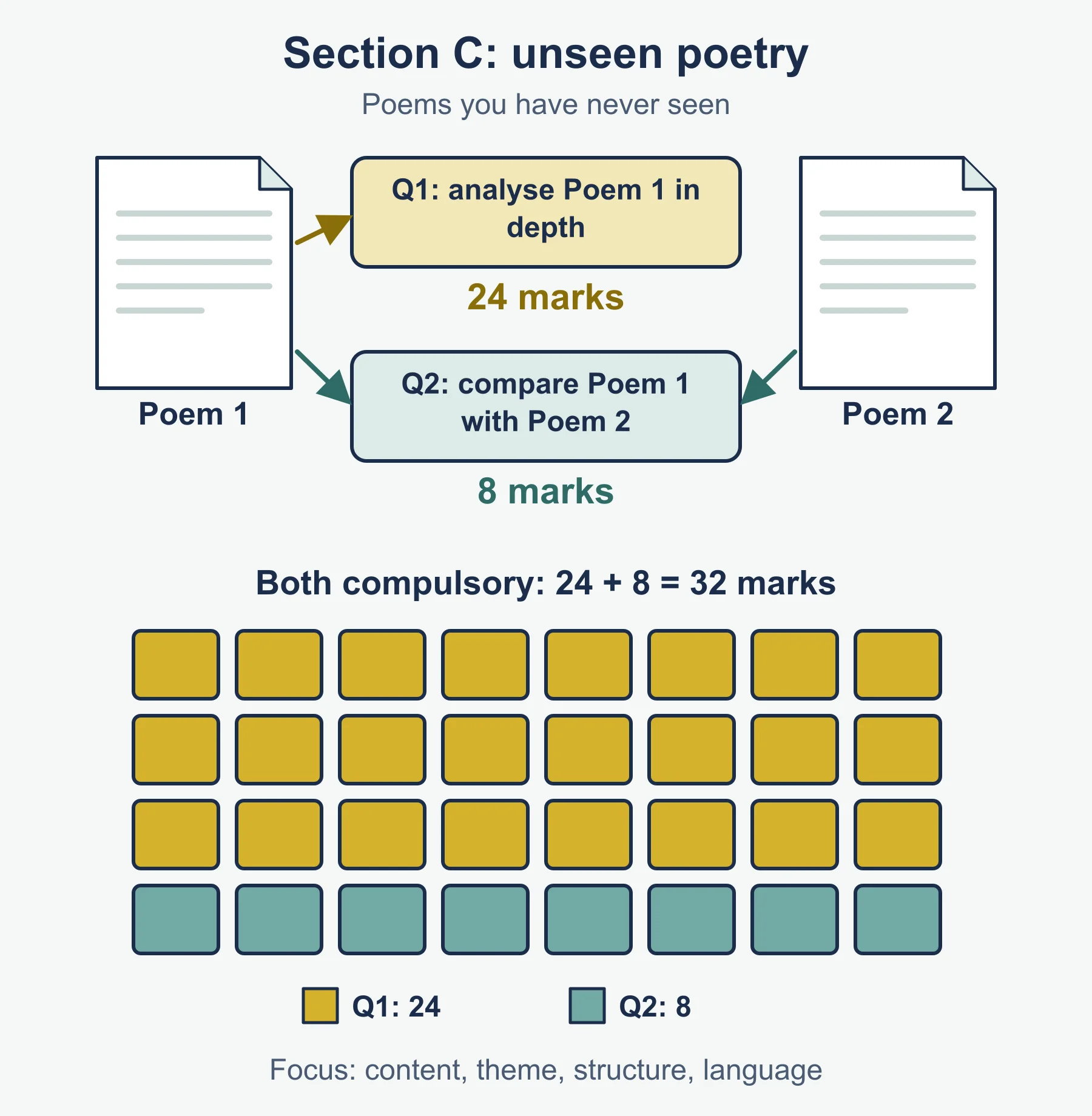
| Feature | First question | Second question |
|---|---|---|
| Poems | One unseen poem | The first poem and a second unseen poem |
| Task | How the poet presents an idea or feeling | Similarities and/or differences between the poets’ methods |
| Marks | 24 | 8 |
| Objectives in AQA mark schemes | AO1 12, AO2 12 | AO2 8 |
| Context needed? | No | No |
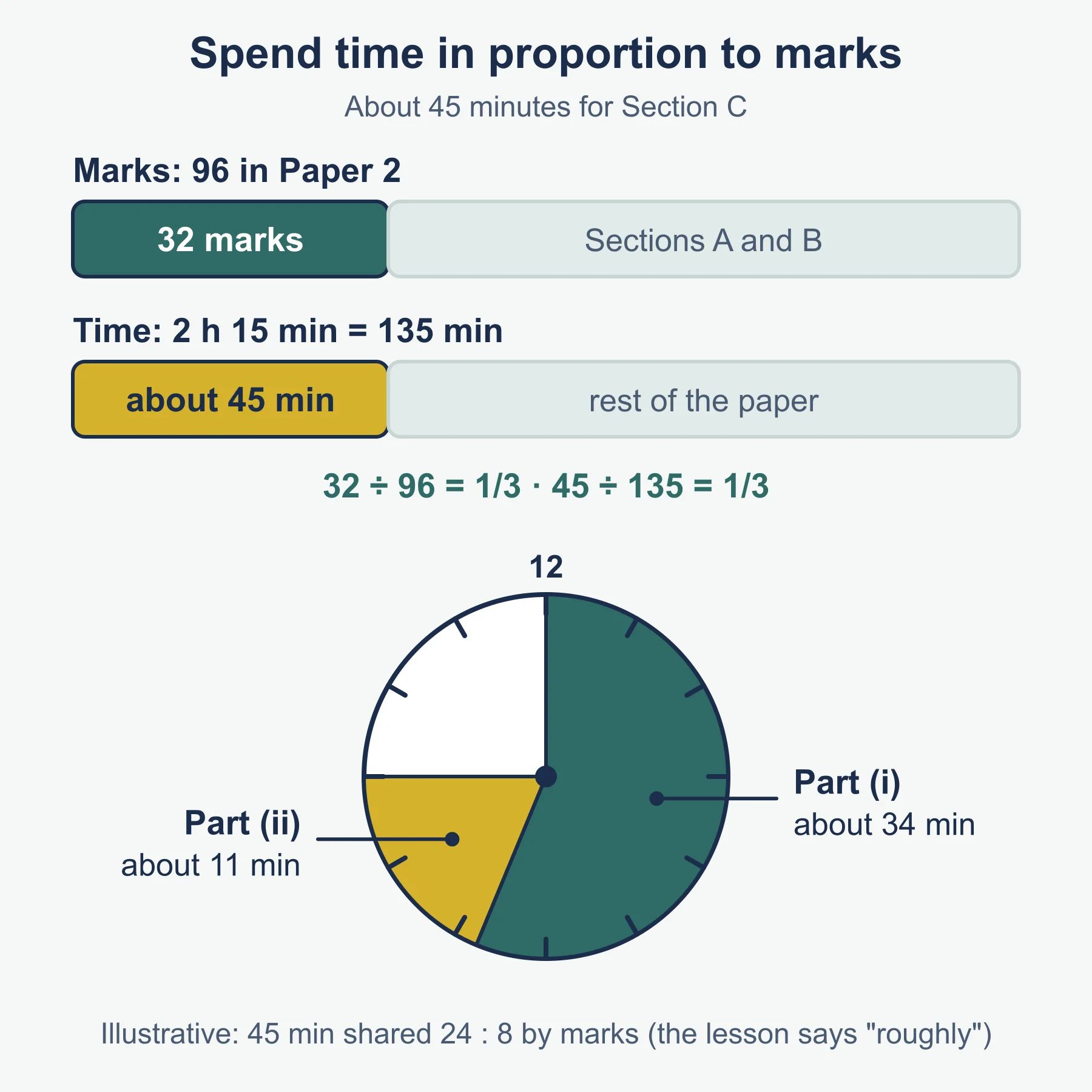
| Suggested time | About 30 to 35 minutes | About 10 to 12 minutes |
Both questions are compulsory. The specification says students should experience a wide range of poetry so that they can analyse and compare content, theme, structure and use of language.
Core recall
- Read for the question’s focus. The first question names an idea or feeling; read the poem twice with that focus in mind.
- Make an overview first. One or two sentences on what the poem is about and how it feels give your answer direction and earn AO1 credit.
- Track movement. Most poems shift: a change of tone, time, place or attitude. Find the turn and build your answer around before and after.
- Endings matter. The last lines often reframe the whole poem. Always analyse them.
- Interpret tentatively. Unseen poems allow several readings; “perhaps” and “this could suggest” show exploration.
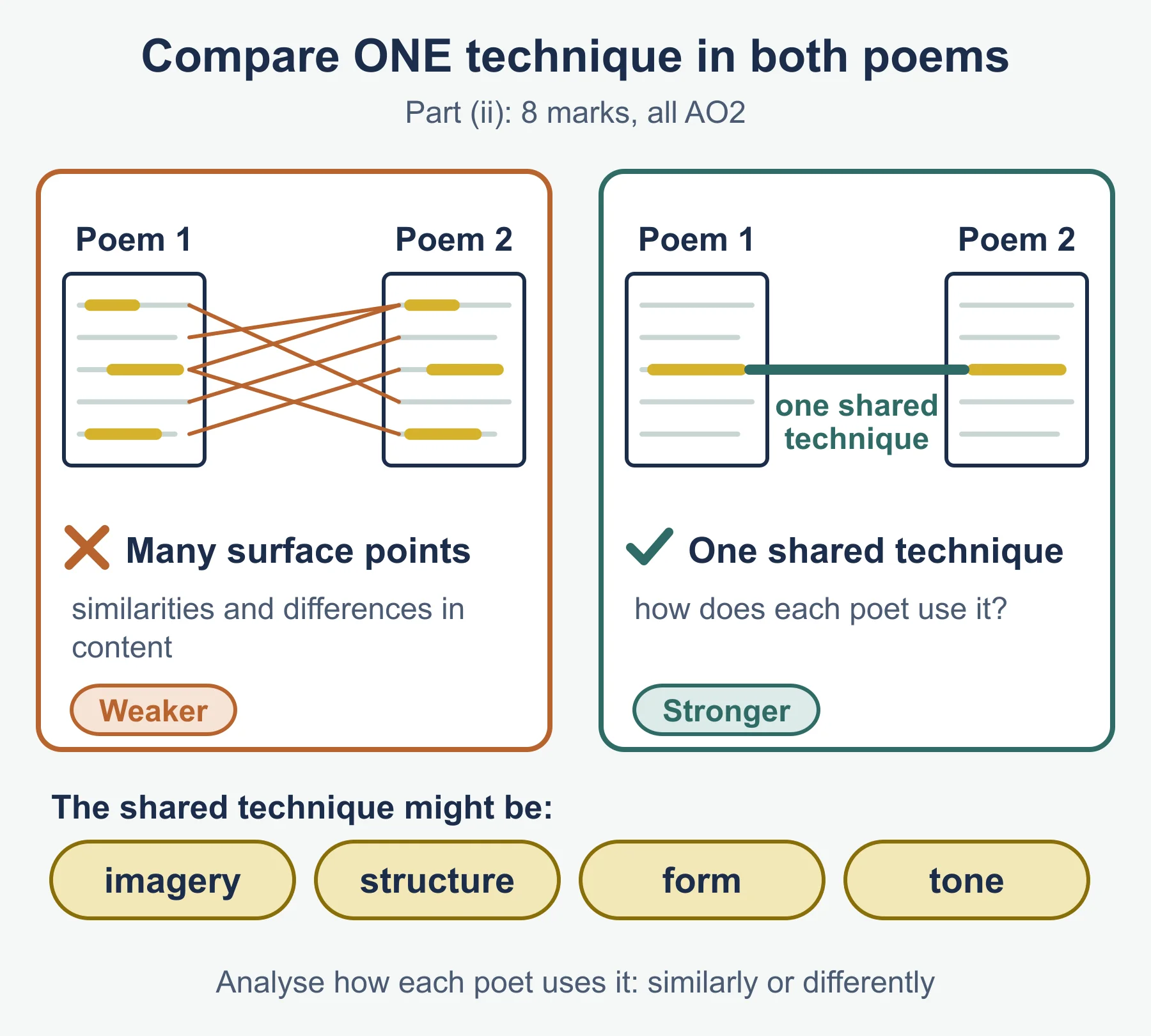
- The second question is about methods only. Compare how the poets write, not just what they write about. No context, no long summary.
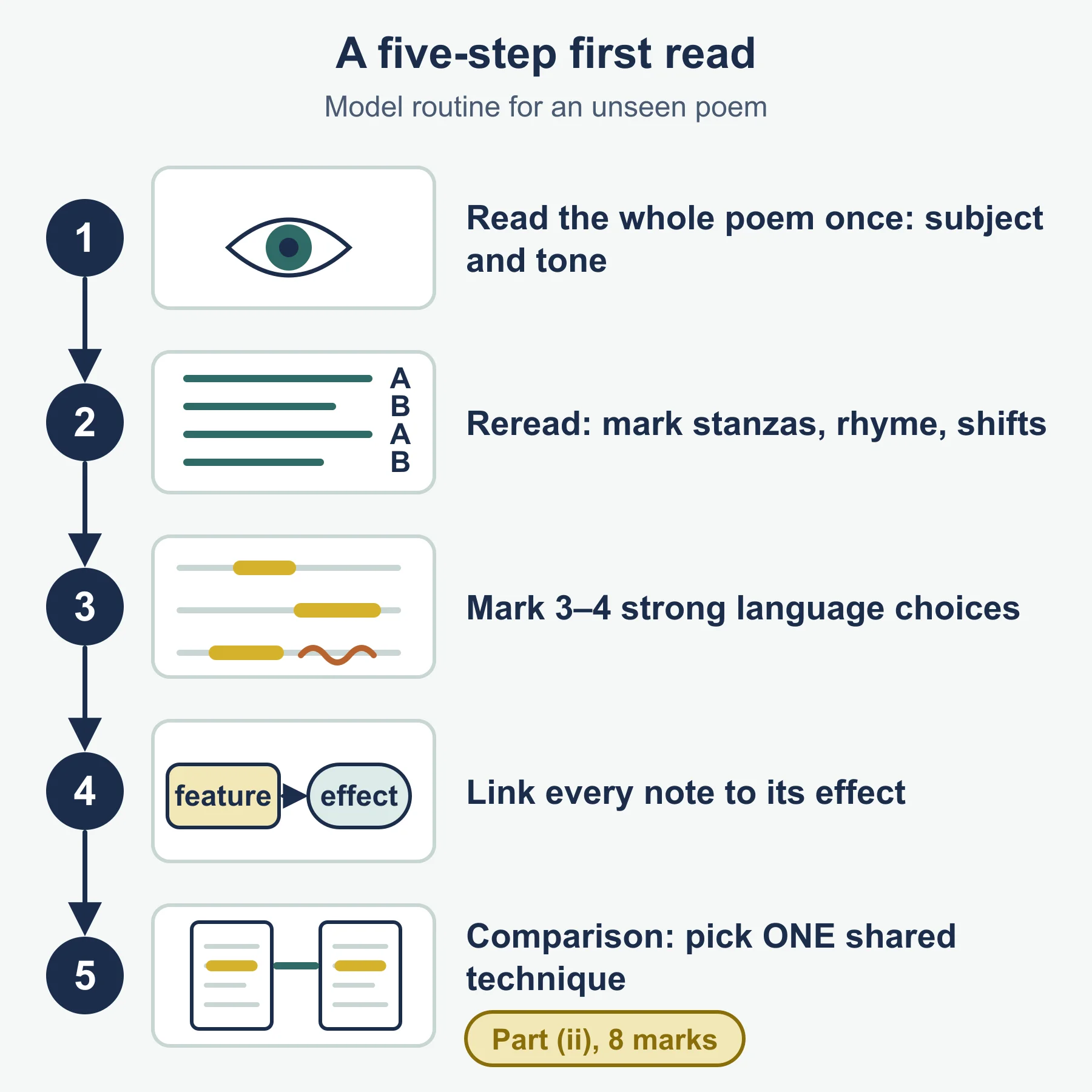
Five questions for the first read
- Who is speaking, and to whom?
- What situation is described?
- What is the tone, and does it change?
- What is the shape? Stanzas, line lengths, rhyme or none, regular or broken rhythm.
- What is the title doing? It may name the subject, set up irony or hint at the ending.
Tone vocabulary
Precise tone words make AO1 sharper than “happy” or “sad”.
| Positive | Negative | Mixed or complex |
|---|---|---|
| Tender | Bitter | Wistful |
| Affectionate | Resentful | Bittersweet |
| Celebratory | Despairing | Ambivalent |
| Reverent | Menacing | Resigned |
| Hopeful | Sardonic | Nostalgic |
| Playful | Accusatory | Uneasy |
Key terms
| Term | What to say about it |
|---|---|
| Speaker | The voice of the poem; not automatically the poet |
| Imagery | Pictures created by words; say what feeling or idea they suggest |
| Juxtaposition | Contrasts placed side by side to sharpen difference |
| Enjambment | Lines running on; flow, urgency or a delayed revelation |
| Caesura | Mid-line pause; hesitation, shock, a change of direction |
| Stanza break | A pause, shift in time or change in focus |
| Rhyme scheme | Pattern of rhyme; order, harmony, or unease if broken |
| Repetition | Emphasis, obsession, or a refrain that changes meaning |
| Volta | A turn in thought or tone |
| Direct address | Speaking to “you”; intimacy, accusation or appeal |
| Tense shift | Movement between past and present; memory, change, loss |
The 24-mark answer in four moves
- Overview: what the poem presents about the focus, and how the feeling develops.
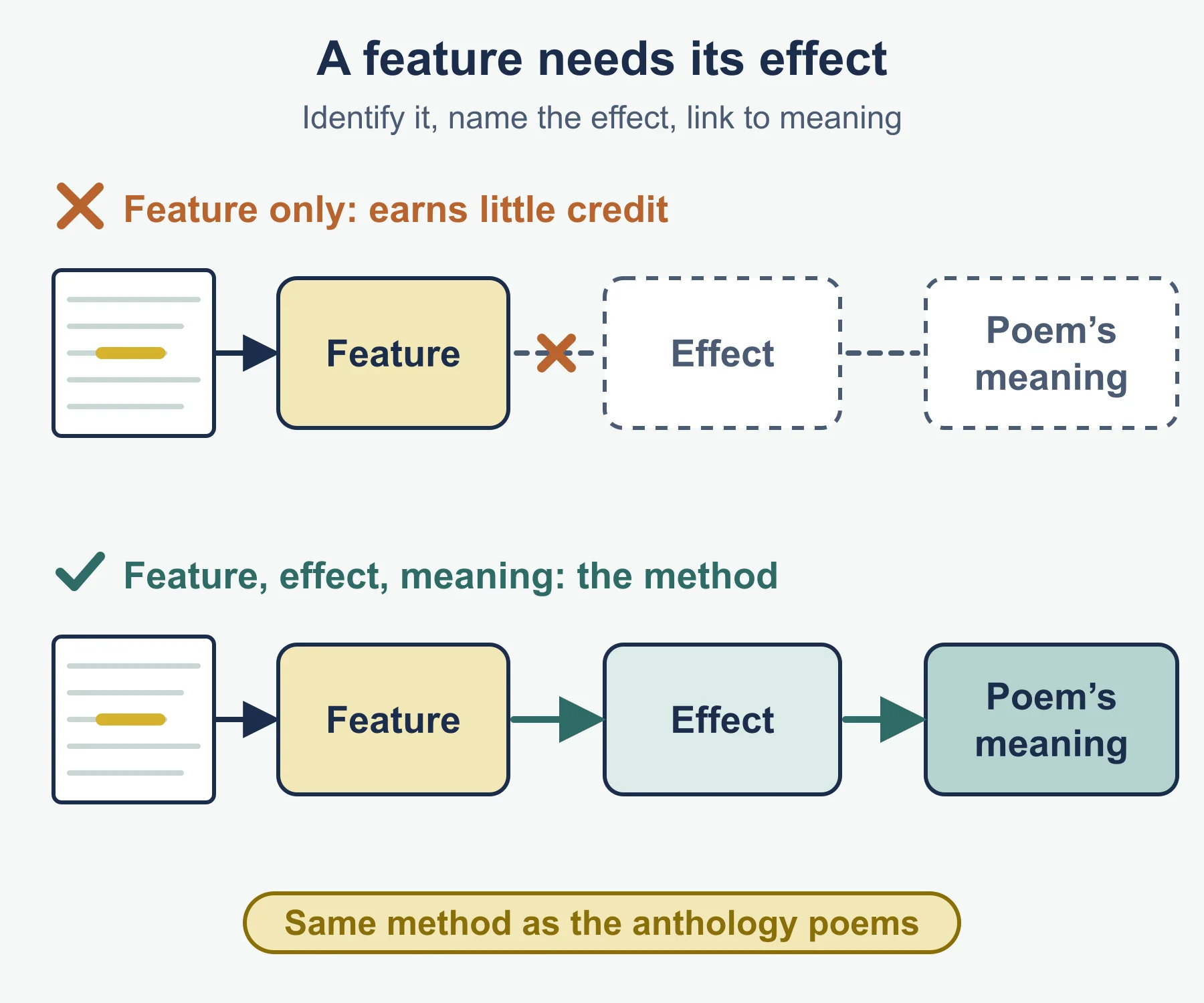
- Language: two or three precise choices, each linked to the focus.
- Structure and form: shape, line breaks, turning point, ending.
- Development: how the feeling at the end differs from the beginning, with a final judgement.
The 8-mark answer in three moves
- One sentence on the shared focus.
- One or two methods compared across both poems, with brief quotations from each.
- A sentence on how the effects differ.
Exam traps
- Paraphrasing the poem line by line instead of analysing choices.
- Feature-spotting: “There is enjambment in line 4” with no effect explained.
- Ignoring structure and form, which are part of AO2.
- Guessing biography: “The poet must have lost their mother.” Write about the speaker.
- Adding context to the second question; it assesses methods only.
- Over-running the first question and leaving the second question with two lines.
- Long quotations. One or two words, precisely analysed, are worth more.
Self-test
- How many marks are the two Section C questions worth?
- Which objectives does the first question assess in AQA’s mark schemes?
- Which objective does the second question assess?
- Is context needed in Section C?
- What should the opening of your 24-mark answer contain?
- Why is the ending of a poem worth analysing?
- Give three precise tone words for a poem about loss.
- What is the difference between the speaker and the poet?
- What does a stanza break often signal?
- What should the 8-mark answer focus on?
- Roughly how should you divide time between the two questions?
- Why should you use tentative language in unseen analysis?
Answers
- 24 and 8, making 32.
- AO1 and AO2, 12 marks each.
- AO2 only.
- No. Neither question requires context.
- An overview of what the poem presents about the focus and how the feeling develops.
- It often reframes the whole poem, revealing a change or the speaker’s final attitude.
- Any three of: wistful, despairing, resigned, bitter, nostalgic, bittersweet, tender.
- The speaker is the voice in the poem, which may be a persona; the poet is the writer who creates that voice.
- A pause, a shift in time or place, or a change of focus or tone.
- Similarities and/or differences in the poets’ methods, compared across both poems.
- About 30 to 35 minutes for the 24-mark question and 10 to 12 minutes for the 8-mark question.
- Because unseen poems allow more than one reading, and exploring possibilities shows a critical, personal response.
More resources on this topic
Related resources
-
Study guides
AQA GCSE English Literature: Modern Texts and Poetry (8702)
AQA GCSE English Literature 8702 Paper 2 Modern Texts and Poetry: the modern prose or drama text, the anthology cluster, unseen poetry and the paper's format.
English Literature · AQA · GCSE
Read guide -
Practice questions
Modern Texts and Poetry (8702): Practice Questions
Original practice with worked answers on AQA GCSE English Literature 8702 Paper 2: modern texts, the poetry anthology cluster and the two unseen poetry tasks.
English Literature · AQA · GCSE
Try questions -
Revision notes
Paper 2 Modern Texts and Poetry: Revision Notes
Condensed notes on AQA GCSE English Literature 8702 Paper 2: the modern text, the poetry anthology cluster and unseen poetry, with timing and exam traps.
English Literature · AQA · GCSE
Revise topic
Get free revision emails (optional)
Occasional emails with practice questions, worked explanations and links to free resources for the qualification and subjects you choose. No spam, and you can unsubscribe from any email. The free tools on this site never need an email.