
Revision Notes
IB DP History (DP History): Prescribed subjects – Revision Notes
Revision notes for IB DP History Paper 1: key facts for all ten prescribed-subject case studies and a checklist for the four source questions, 2017 syllabus.
- Subject
- World History
- Level
- IB
- Topic
- Topic 1: Prescribed subjects
- Author
- Marlbridge Academic Team
- Updated
- Reviewed by
- Azam Siddique (what this means)
Aligned to International Baccalaureate IB Diploma Programme History (DP History), First assessment 2017. Official specification .
Syllabus page (what it covers and how it is assessed): IB Diploma Programme History.
Syllabus points this page covers
DP History
- 1 Military leaders
- 2 Conquest and its impact
- 3 The move to global war
- 4 Rights and protest
- 5 Conflict and intervention
This page covers all 5 subtopics recorded here in topic 1, Prescribed subjects.
Found an error? Report a correction.
Need help with this topic? Request a free trial class for IB Diploma Programme History (DP History / DP History (2028)).
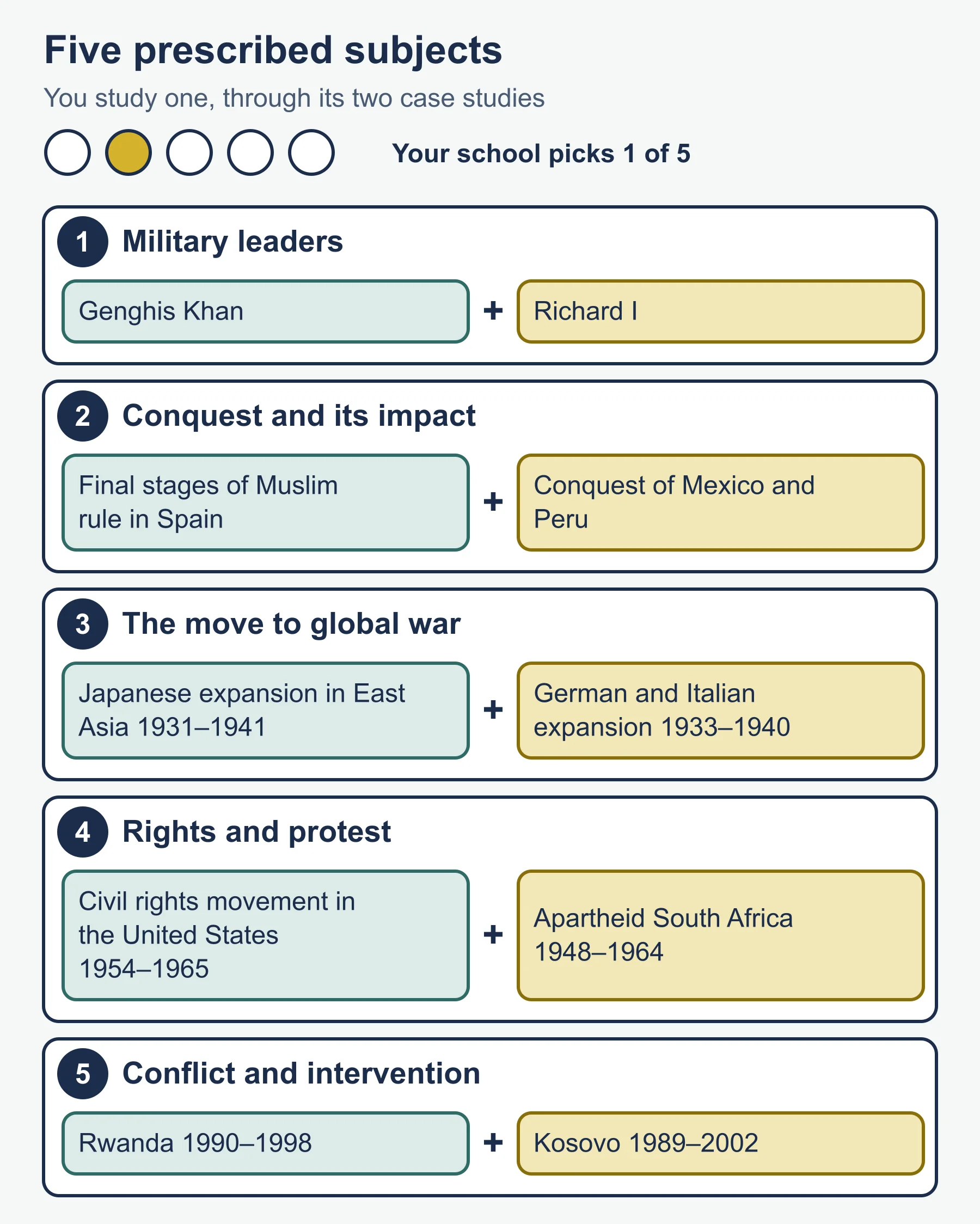
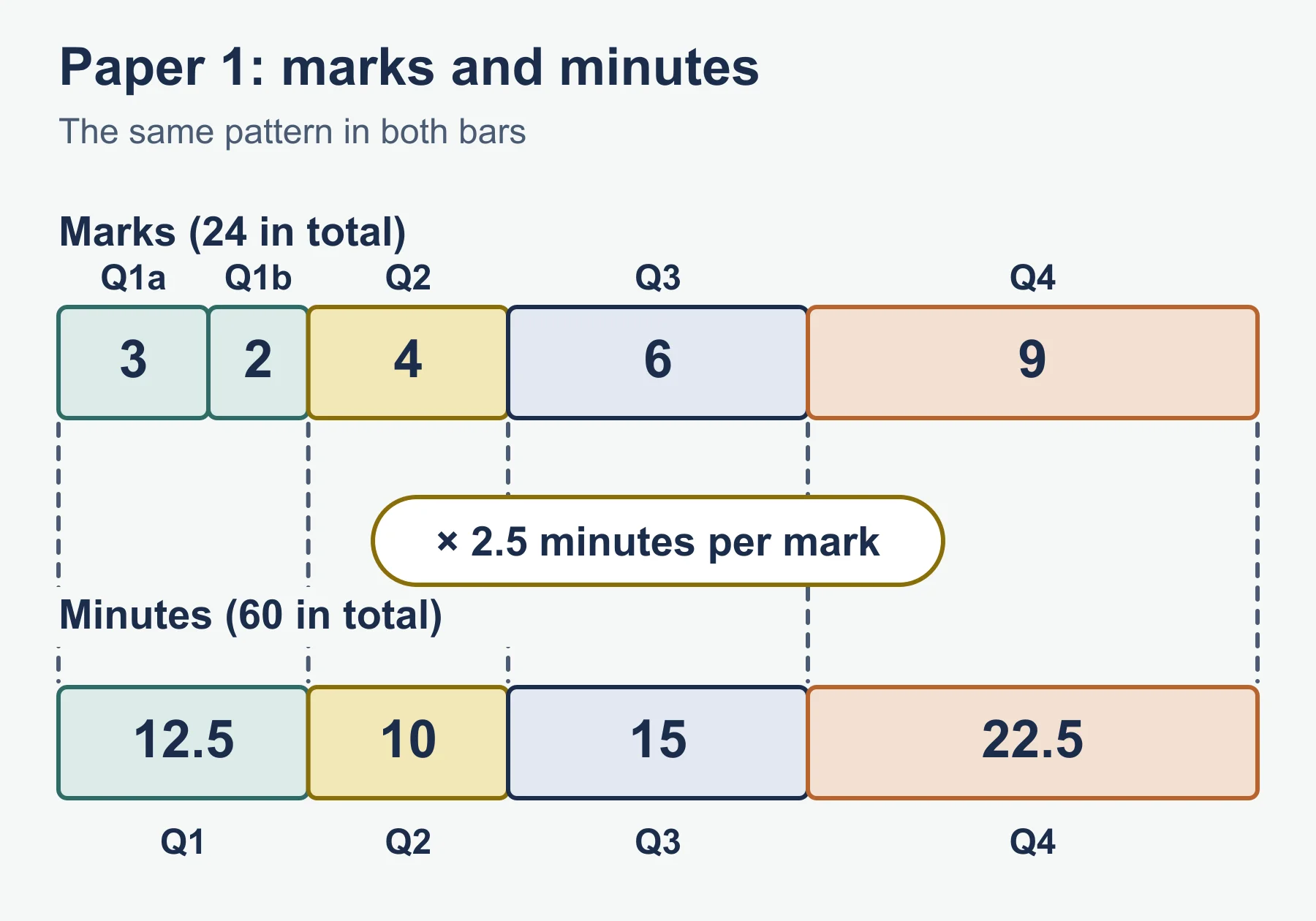
The prescribed subjects are the content for IB DP History Paper 1, a one-hour source paper worth 24 marks (30% at SL, 20% at HL in the course first assessed in 2017). You study one of five prescribed subjects, each with two case studies, and answer four questions on a set of sources: comprehension, origin-purpose-value-limitation, comparison, and a synthesis that combines the sources with your own knowledge.
Related: Prescribed subjects study guide and practice questions.
Syllabus coverage (DP History, first assessment 2017)
| No. | Prescribed subject | Case study 1 | Case study 2 |
|---|---|---|---|
| 1 | Military leaders | Genghis Khan (c.1200-1227) | Richard I of England (1173-1199) |
| 2 | Conquest and its impact | The final stages of Muslim rule in Spain (1482-1492) | The conquest of Mexico and Peru (1519-1551) |
| 3 | The move to global war | Japanese expansion in East Asia (1931-1941) | German and Italian expansion (1933-1940) |
| 4 | Rights and protest | Civil rights movement in the United States (1954-1965) | Apartheid South Africa (1948-1964) |
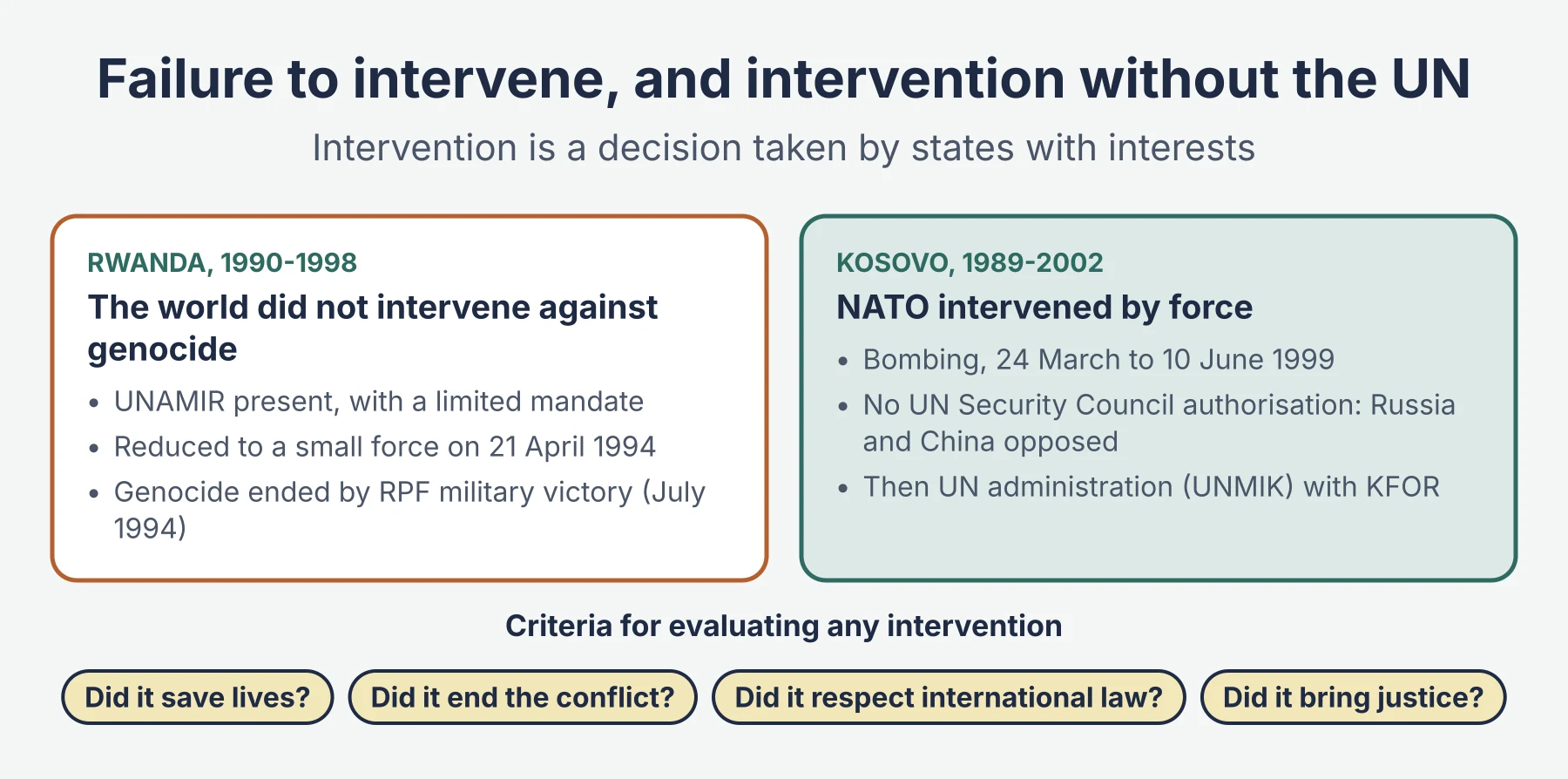
| 5 | Conflict and intervention | Rwanda (1990-1998) | Kosovo (1989-2002) |
Sources in the exam are set on one case study per prescribed subject, so revise both case studies of your subject.
The four Paper 1 questions
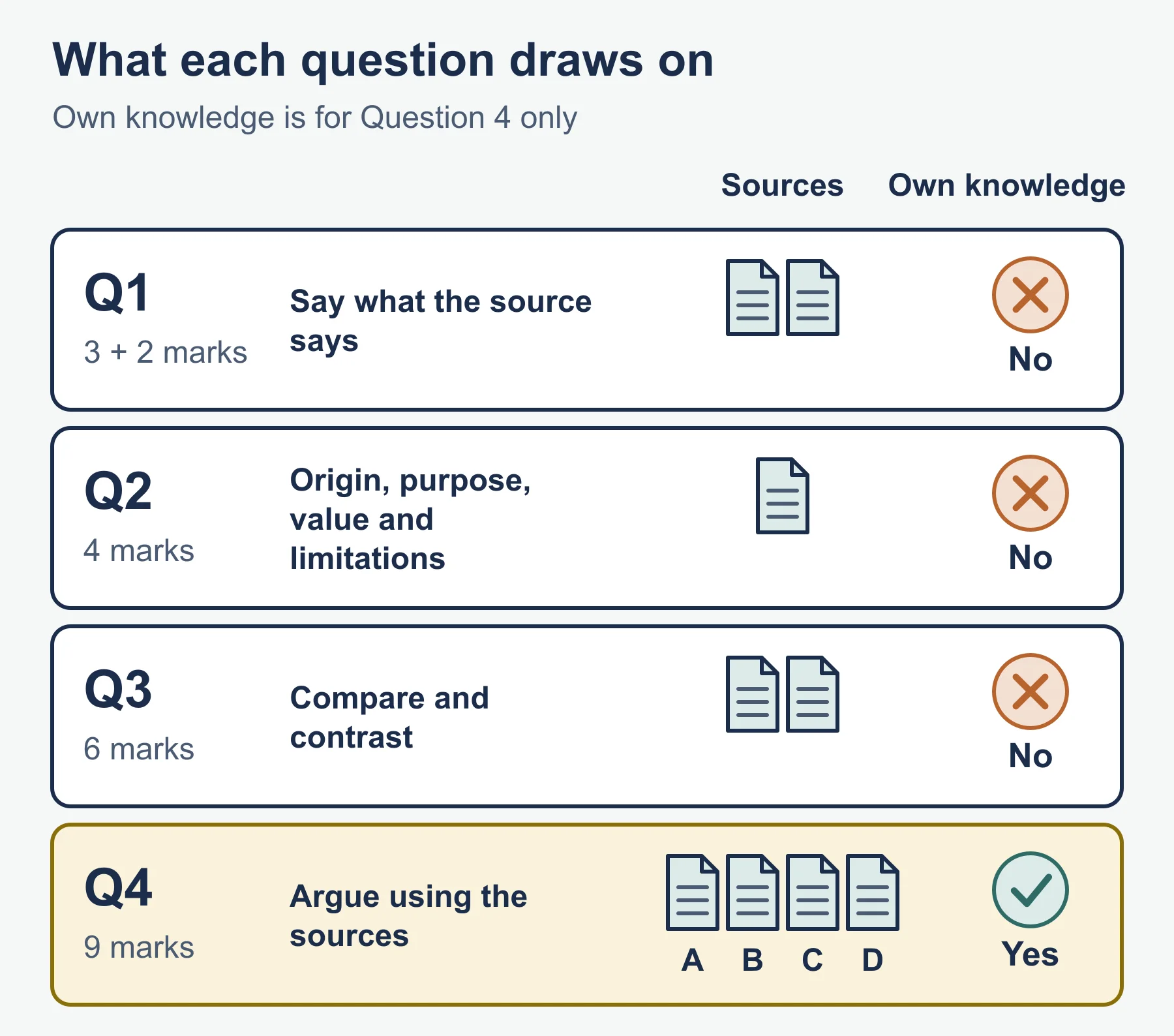
| Question | Marks | Skill | Key rule |
|---|---|---|---|
| 1(a) | 3 | Comprehension of a written source | Three distinct points from the source |
| 1(b) | 2 | Message of a visual or second source | Two points; describe what the image conveys |
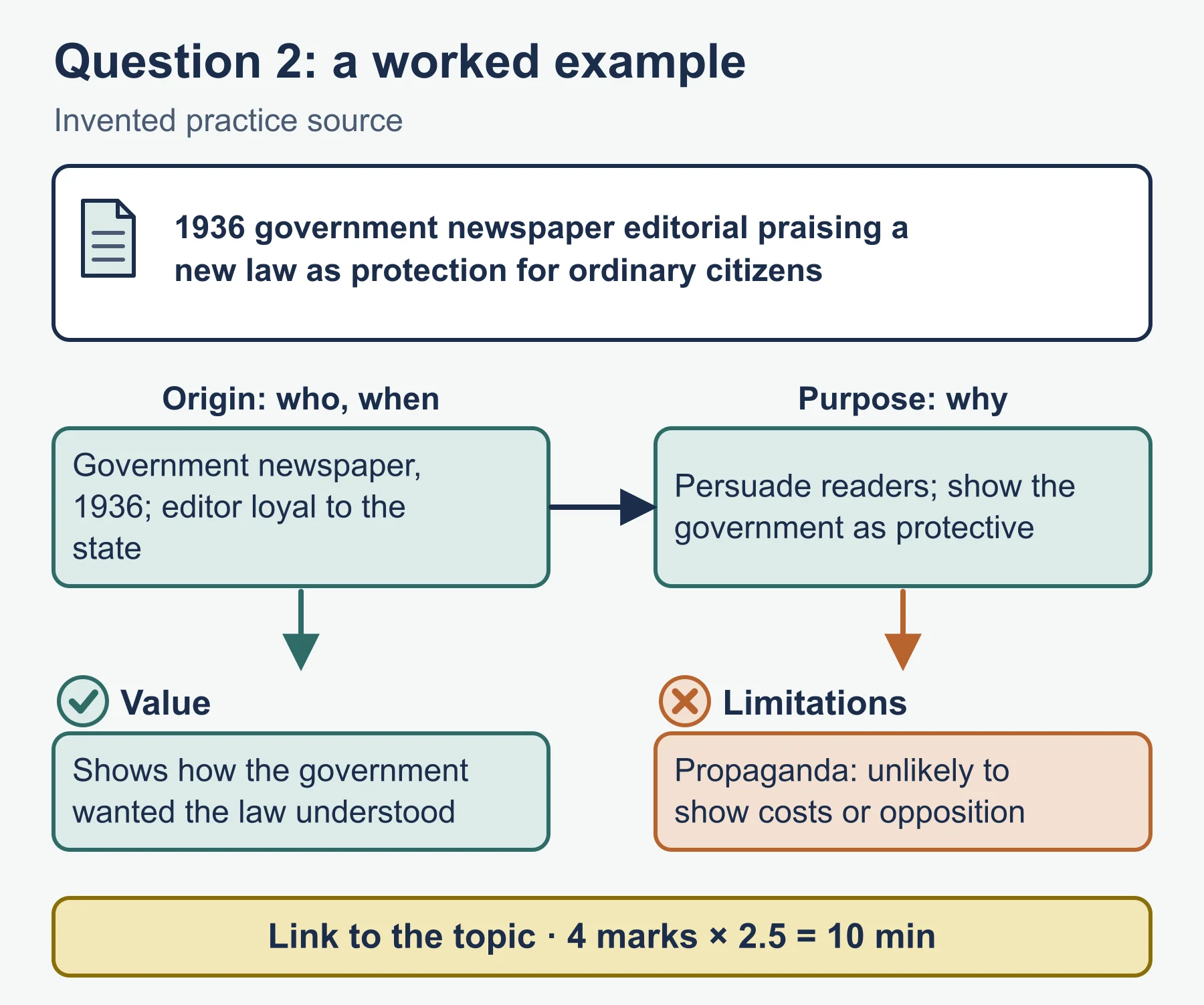
| 2 | 4 | Origin, purpose and content: value and limitations | Link each point to the named topic |
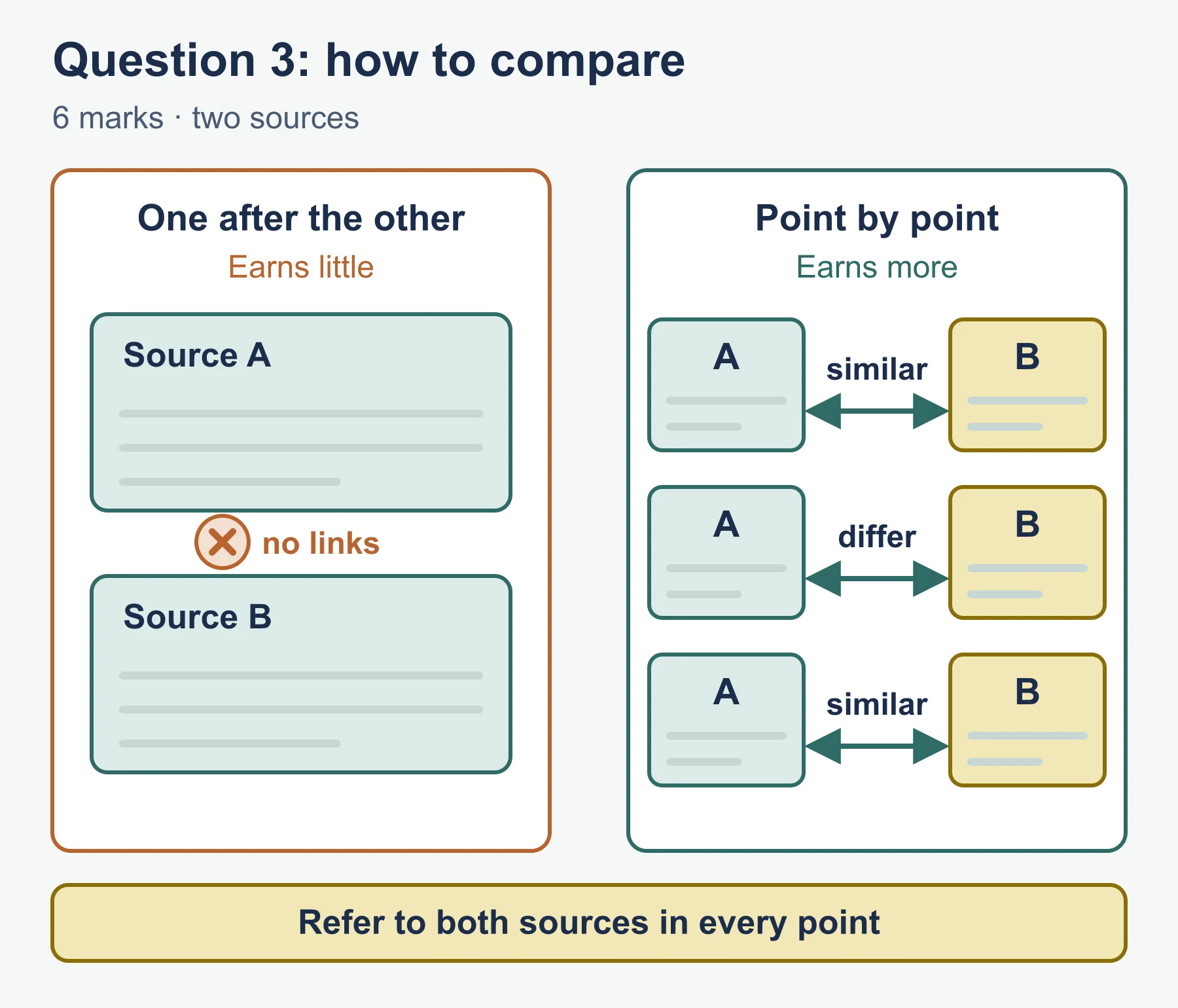
| 3 | 6 | Compare and contrast two sources | Running comparison: similarities and differences |
| 4 | 9 | Synthesis of sources and own knowledge | Use the sources and own knowledge to answer the question |
Timing at 2.5 minutes per mark: Q1 about 12 minutes, Q2 10, Q3 15, Q4 about 23.
PS1 Military leaders
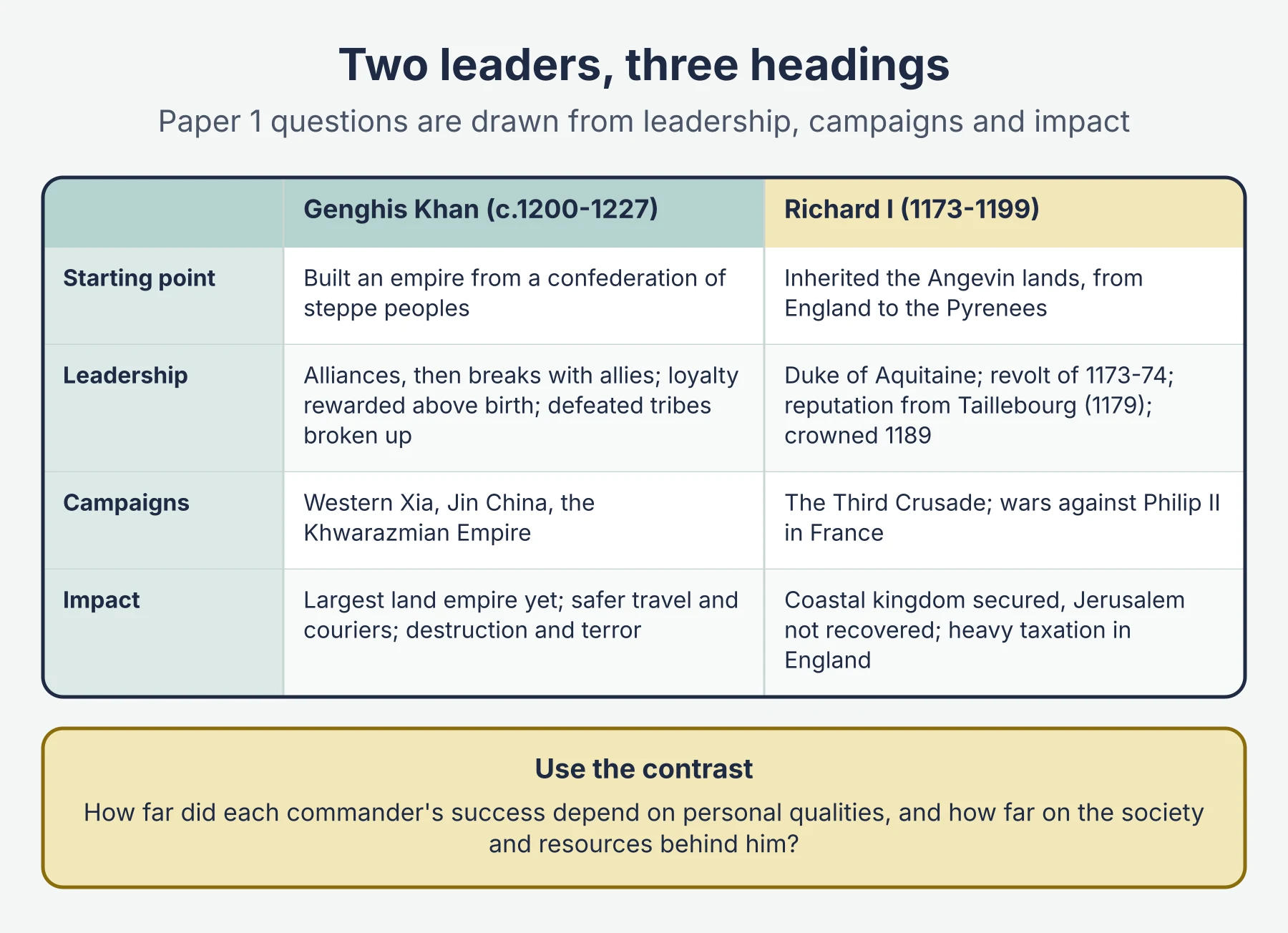
| Genghis Khan (c.1200-1227) | Richard I (1173-1199) |
|---|---|
| Unified Mongol tribes; proclaimed Genghis Khan at the kurultai of 1206 | Joined the revolt against Henry II (1173-74); Duke of Aquitaine |
| Campaigns against Western Xia, the Jin (Zhongdu taken 1215) and the Khwarazmian Empire (from 1219) | Crowned 1189; took the cross and financed the Third Crusade |
| Methods: decimal army organisation, mobility, horse archers, captured siege engineers, intelligence, deliberate terror | Siege of Acre (1191), execution of Muslim prisoners; victory at Arsuf (1191); Jaffa (1192) |
| Rule: the Yassa law code, merit-based appointment, religious tolerance, a courier system | Treaty of Jaffa with Saladin (1192); Jerusalem not retaken |
| Debate: brilliant organiser or destroyer? Sources are often written by enemies or much later | Captured on his return, ransomed (1194); wars with Philip II; died at Châlus (1199) |
PS2 Conquest and its impact
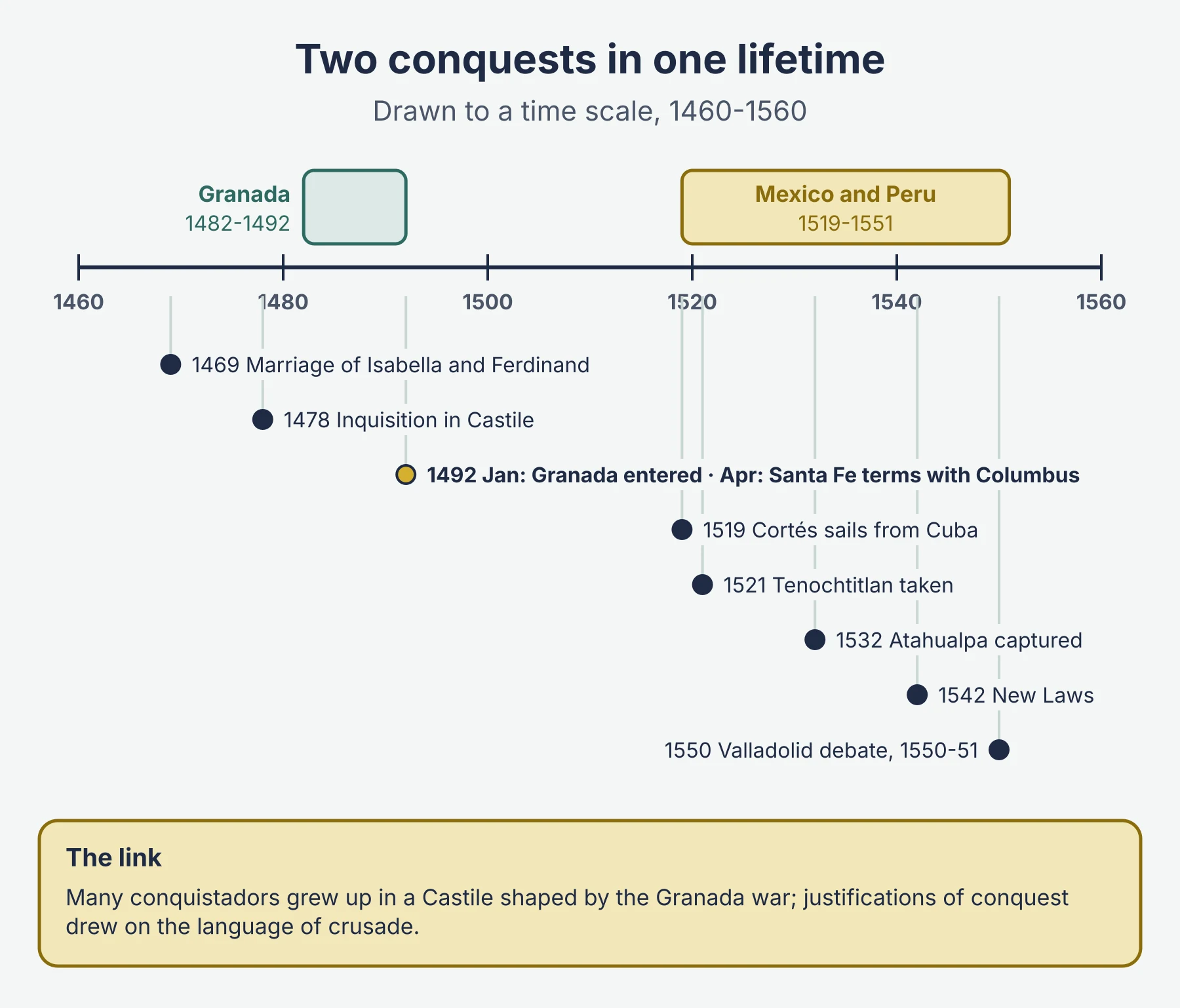
| Muslim Spain (1482-1492) | Mexico and Peru (1519-1551) |
|---|---|
| Nasrid kingdom of Granada divided by civil war (Boabdil against his father and uncle) | Cortés lands in 1519; alliance with Tlaxcala; Moctezuma; the Noche Triste (1520); fall of Tenochtitlan (1521) |
| Ferdinand and Isabella’s war from 1482: Alhama (1482), Málaga (1487) | Role of Malinche, disease (smallpox), indigenous allies and steel weapons |
| Treaty of Granada (1491) promises religious tolerance; surrender January 1492 | Pizarro captures Atahualpa at Cajamarca (1532), executes him (1533); Inca civil war aided the Spanish |
| Impact: expulsion of the Jews (1492); forced conversions of Muslims from 1499-1502; the Inquisition | Impact: encomienda, the New Laws (1542), conquistador civil wars, the Valladolid debate (1550-51) between Las Casas and Sepúlveda |
PS3 The move to global war
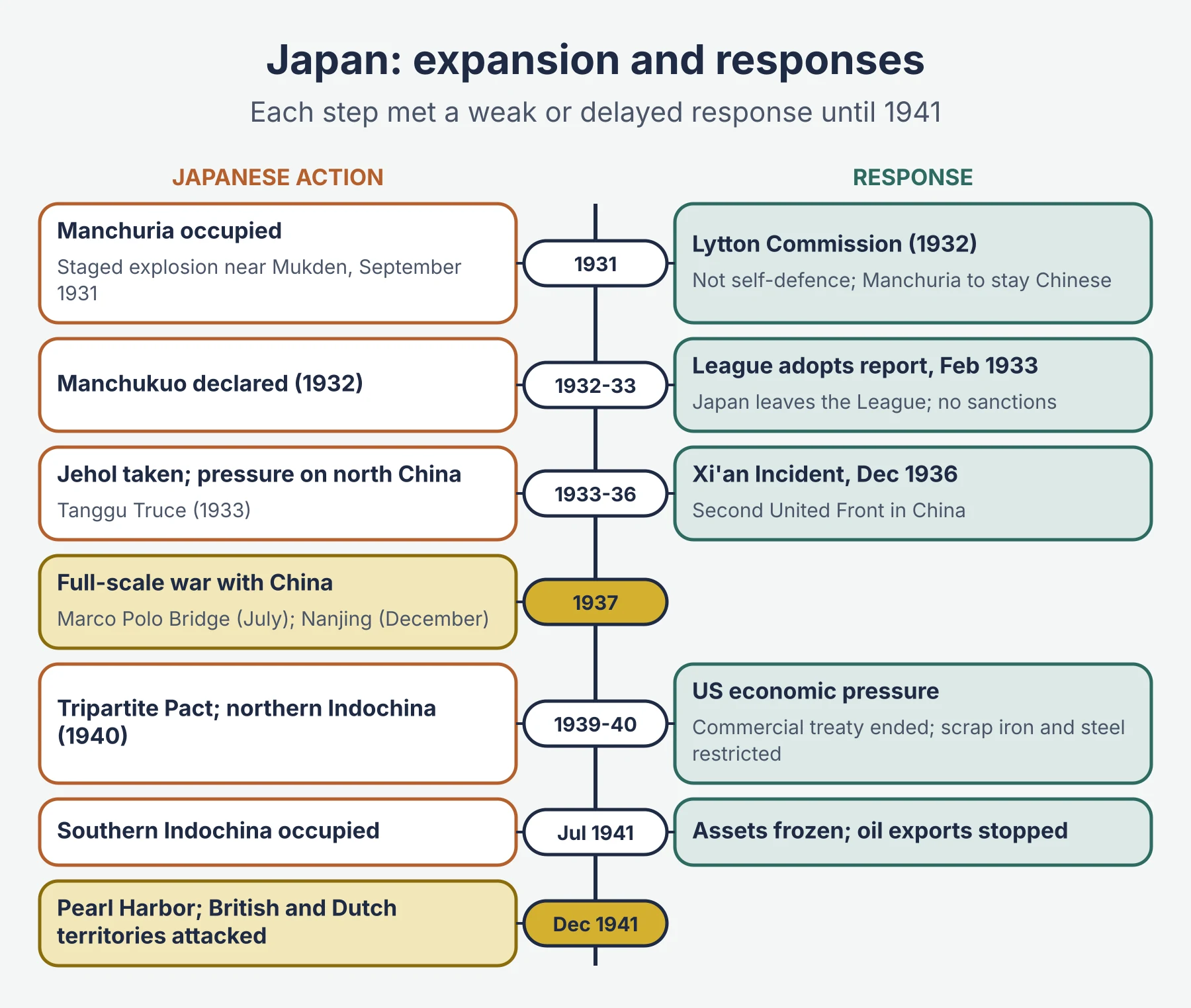
| Japanese expansion (1931-1941) | German and Italian expansion (1933-1940) |
|---|---|
| Causes: nationalism and militarism; Depression; army influence over government | Causes: fascist and Nazi ideology; economic aims; changing alignments; end of collective security |
| Mukden Incident and invasion of Manchuria (1931); Manchukuo (1932) | German challenges to the settlement 1933-38: leaving the League, rearmament, Rhineland, Anschluss |
| Lytton Report; Japan leaves the League (1933) | Italy: Abyssinia (1935-36), Albania (1939) |
| Sino-Japanese War from 1937 (Marco Polo Bridge); Nanjing; the Second United Front in China | Sudetenland and Munich (1938); Czechoslovakia (March 1939); Pact of Steel; Nazi-Soviet Pact; Poland |
| Tripartite Pact (1940); US embargoes; Pearl Harbor (December 1941) | Responses: Stresa, Hoare-Laval, appeasement, the guarantee to Poland; Italy enters the war (June 1940) |
PS4 Rights and protest
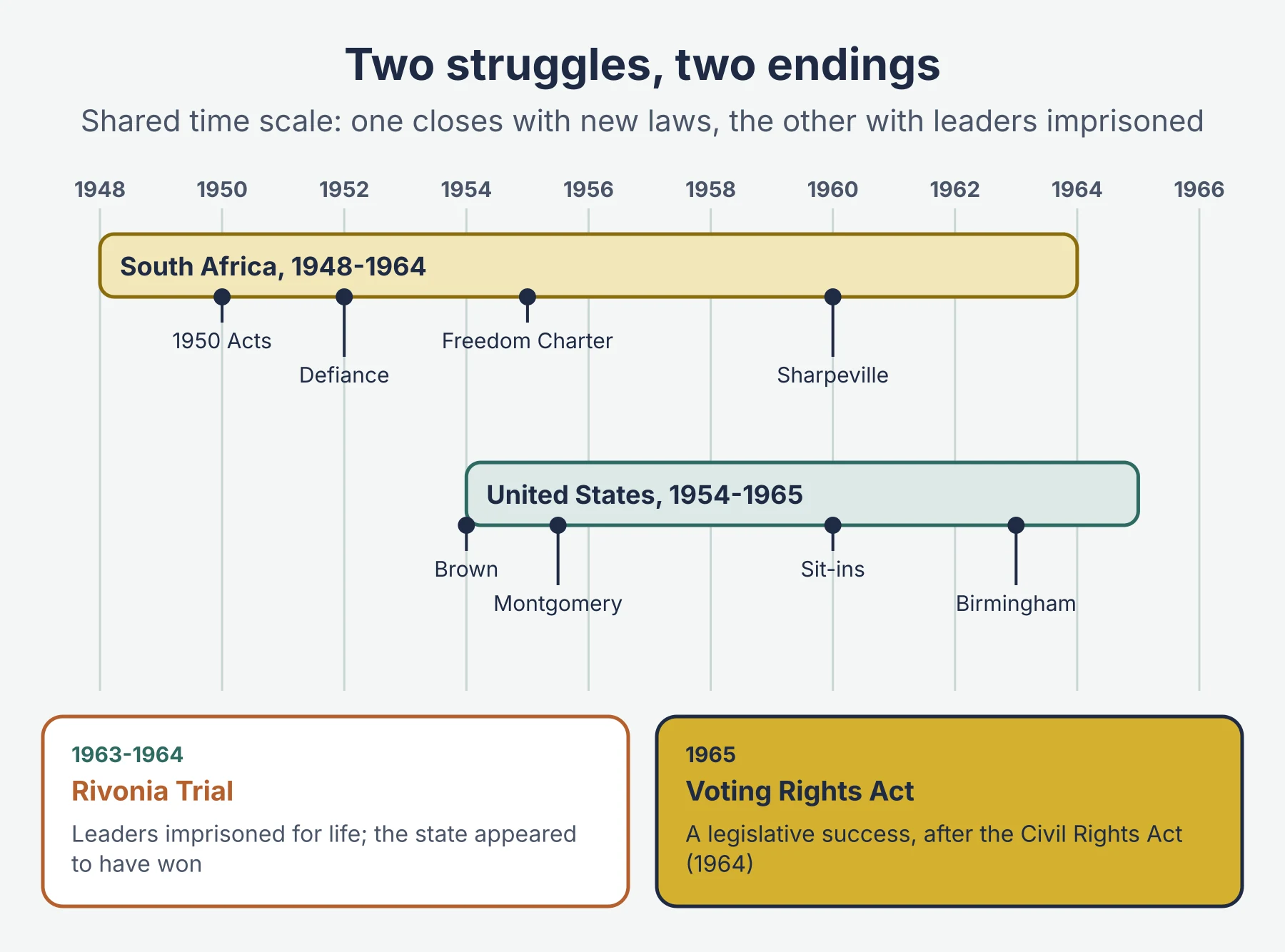
| US civil rights (1954-1965) | Apartheid South Africa (1948-1964) |
|---|---|
| Discrimination: segregation, voting barriers, racial violence, the Ku Klux Klan | Legislation: Population Registration, Group Areas, Bantu Authorities, Bantu Education; “petty” and “grand” apartheid |
| Brown v. Board of Education (1954); Montgomery Bus Boycott (1955-56); Little Rock (1957) | Defiance Campaign (1952); bus boycotts; Freedom Charter (1955) |
| Sit-ins (1960), Freedom Rides (1961), Birmingham and the March on Washington (1963), Freedom Summer (1964), Selma (1965) | Sharpeville (1960); bans on the ANC and PAC; turn to armed struggle |
| Actors: King, Malcolm X, Johnson; NAACP, SCLC, SNCC | Actors: Mandela, Luthuli; ANC, SACP, Umkhonto we Sizwe |
| Civil Rights Act (1964); Voting Rights Act (1965) | Rivonia Trial (1963-64): leaders imprisoned |
PS5 Conflict and intervention
| Rwanda (1990-1998) | Kosovo (1989-2002) |
|---|---|
| Hutu-Tutsi tensions rooted in colonial classification; RPF invasion (1990) | Milošević removes Kosovo’s autonomy (1989) |
| Arusha Accords (1993); UNAMIR under Dallaire | Rugova’s non-violent resistance; rise of the KLA in the later 1990s |
| President Habyarimana’s plane shot down (6 April 1994); genocide of about 800,000 people in some 100 days | Račak (January 1999); failed Rambouillet talks |
| Limited UN response; French Operation Turquoise; RPF victory (July 1994) | NATO bombing (March-June 1999) without UN Security Council authorisation; mass flight of Kosovo Albanians |
| Impact: refugee crisis, wars in Zaire/DRC from 1996; International Criminal Tribunal for Rwanda; gacaca courts | Resolution 1244; KFOR and UNMIK; Milošević handed to The Hague (2001), trial opens 2002 |
Worked example: a Question 2 paragraph
Source: a speech by a civil rights leader to a church congregation, 1963, on the value of non-violence.
“The origin – a leading campaigner speaking in 1963 at the height of the Birmingham protests – gives the source value for a historian studying the methods of the movement, as it shows how leaders justified non-violence to supporters. Its purpose, to persuade and inspire a sympathetic audience, limits it: it presents an idealised picture and does not show how far ordinary participants shared the commitment or how opponents responded.”
The paragraph links origin, purpose and content to the named topic – the requirement of the top markband for Question 2.
Common mistakes / exam traps
- Q1 with outside knowledge. Comprehension marks come from the source only.
- Generic OPVL. “It is biased” earns little; say how the purpose affects value for the stated topic.
- End-on comparison in Q3. Describing Source A then Source B is juxtaposition; examiners reward explicit linkage.
- Q4 without own knowledge. The top band requires both sources and own knowledge woven into an argument.
- Running out of time. Q4 carries more than a third of the marks.
Frequently asked questions
How many sources are there on Paper 1? Four sources per prescribed subject, usually including at least one visual source, set on one of its two case studies.
Do I need historians for Paper 1? Sources may include extracts from historians, which you must evaluate like any other source. You are not required to quote historians from memory.
Is Paper 1 the same at SL and HL? Yes: the same paper and the same 24 marks, but weighted 30% at SL and 20% at HL.
Self-test
- Which case studies make up PS3? Japanese expansion 1931-41; German and Italian expansion 1933-40.
- What happened at Cajamarca in 1532? Pizarro captured Atahualpa.
- What was the Freedom Charter? The 1955 Congress of the People’s statement of a non-racial South Africa.
- When did NATO bomb Yugoslavia over Kosovo? March-June 1999.
- How many marks is Question 3? 6.
Related resources
-
Study guides
IB DP History (DP History): Prescribed subjects – Study Guide
How to study the five Paper 1 prescribed subjects in IB DP History: source skills, the four question types, case-study themes and a worked source analysis.
World History · International Baccalaureate · IB
Read guide -
Study guides
IB DP History (DP History): Military leaders
Prescribed subject 1 for IB History Paper 1: Genghis Khan and Richard I, their leadership, campaigns and impact, with source advice and a worked answer plan.
World History · International Baccalaureate · IB
Read guide -
Practice questions
IB DP History (DP History): Military leaders – Practice Questions
Twelve original IB History practice questions on Military leaders: recall on Genghis Khan and Richard I, then a Paper 1-style source set on the Third Crusade.
World History · International Baccalaureate · IB
Try questions
Get free revision emails (optional)
Occasional emails with practice questions, worked explanations and links to free resources for the qualification and subjects you choose. No spam, and you can unsubscribe from any email. The free tools on this site never need an email.