Study Guides
IGCSE Physics: Thermal Physics (Cambridge 0625)
The kinetic particle model, gas pressure and the kelvin scale, thermal expansion, specific heat capacity, changes of state, and conduction, convection and radiation – everything Topic 2 Thermal physics asks of Core and Extended candidates in Cambridge IGCSE Physics 0625, examined 2026-2028.
- Subject
- Physics
- Level
- IGCSE
- Topic
- Thermal physics
- Author
- Marlbridge Academic Team
- Updated
- Reviewed by
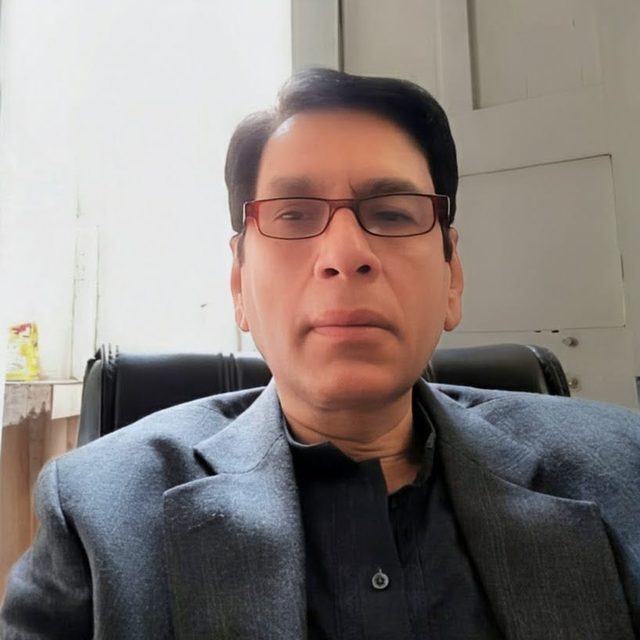
- Iftikhar Azeemi (what this means)
Aligned to Cambridge IGCSE Physics (0625), For examination in 2026, 2027 and 2028. Official specification .
Syllabus page (what it covers and how it is assessed): Cambridge IGCSE Physics.
Syllabus points this page covers, with Core and Extended
0625
- 2.1 Kinetic particle model of matter · Core and Extended
- 2.2 Thermal properties and temperature · Core and Extended
- 2.3 Transfer of thermal energy · Core and Extended
"Core and Extended" means part of that syllabus point is Extended only. The page's own tier notes say which part.
Found an error? Report a correction.
Need help with this topic? Request a free trial class for IGCSE Physics (0625).
This guide maps Topic 2 Thermal physics of Cambridge IGCSE Physics 0625 for the 2026–2028 examination series. Each sub-section below separates what every candidate must know (Core; a Core-only entry is eligible for grades C to G) from what is required only at the Extended tier (Supplement). Extended candidates are eligible for grades A* to G, so Supplement content is needed for grades A* to B, and Cambridge advises candidates aiming for grades A* to C to be taught the Extended content.
Where this fits in 0625
Thermal physics is the second of the six 0625 topics, sitting between Motion, forces and energy and Waves. It leans directly on two ideas from Topic 1: pressure as force per unit area reappears when gas pressure is explained through particle collisions, and the concept of internal energy connects back to the energy-stores language introduced with work and power. It is also the topic where the particle picture of matter — which returns later in the course when radiation and states of matter are discussed — is set up properly, so gaps here tend to surface again in later topics.
Syllabus coverage
CAMBRIDGE IGCSE PHYSICS 0625 — TOPIC 2 THERMAL PHYSICS
This list summarises what the syllabus requires; it is not a list of what this page explains. The sections below, the revision notes and the practice sets teach it between them.
- 2.1 Kinetic particle model of matter, in three parts. States of matter (2.1.1, Core) — the distinguishing properties of solids, liquids and gases, and the terms for changes of state (gas-to-solid and solid-to-gas transfers are not required). Particle model (2.1.2, Core) — particle arrangement, separation and motion in each state with simple particle diagrams; the link between particle motion and temperature, including absolute zero (−273 °C) as the lowest possible temperature where particles have least kinetic energy; gas pressure explained through particle collisions with surfaces; and the random motion of microscopic particles in suspension (Brownian motion) as evidence for the model. The Supplement adds explaining properties through the forces and distances between particles, treating pressure as the force per unit area created by colliding particles, and knowing that microscopic particles are moved by collisions with light, fast-moving molecules. Gases and the absolute scale of temperature (2.1.3, Core) — the qualitative effect on the pressure of a fixed mass of gas of changing temperature at constant volume or changing volume at constant temperature, and converting between kelvin and degrees Celsius with T (in K) = θ (in °C) + 273; the Supplement adds pV = constant for a fixed mass of gas at constant temperature, including its graph.
- 2.2 Thermal properties and temperature, in three parts. Thermal expansion (2.2.1, Core) — qualitative expansion of solids, liquids and gases at constant pressure, with everyday applications and consequences; the Supplement explains the relative order of magnitude of expansion of the three states through particle motion and arrangement. Specific heat capacity (2.2.2) — the Core asks only that a temperature rise increases an object’s internal energy; the Supplement defines specific heat capacity as energy per unit mass per unit temperature increase, uses c = ΔE/(mΔθ), links temperature rise to the average kinetic energy of the particles, and requires experiments to measure the specific heat capacity of a solid and of a liquid. Melting, boiling and evaporation (2.2.3, Core) — melting and boiling as energy input without temperature change, the melting and boiling temperatures of water at standard atmospheric pressure, condensation and solidification in particle terms, evaporation as the escape of more-energetic particles from a liquid surface, and the cooling effect of evaporation; the Supplement adds the differences between boiling and evaporation, how temperature, surface area and air movement affect evaporation, and explaining the cooling of an object in contact with an evaporating liquid.
- 2.3 Transfer of thermal energy, in four parts. Conduction (2.3.1, Core) — experiments demonstrating good and bad thermal conductors; the Supplement explains conduction in all solids through lattice vibrations plus free-electron movement in metals, explains why gases and most liquids conduct badly, and notes that many solids conduct better than insulators but less well than good conductors. Convection (2.3.2, Core) — convection as an important transfer method in liquids and gases, explained through density changes and shown by experiment. Radiation (2.3.3, Core) — thermal radiation as infrared emitted by all objects, requiring no medium, and the effect of surface colour (black or white) and texture (dull or shiny) on emission, absorption and reflection; the Supplement covers the balance of energy transfer at constant temperature, what happens when incoming and outgoing rates differ, how that balance controls the temperature of the Earth, experiments distinguishing good and bad emitters and absorbers, and how emission rate depends on surface temperature and surface area. Consequences of thermal energy transfer (2.3.4, Core) — everyday applications such as heating a kitchen pan and heating a room by convection; the Supplement examines applications where more than one transfer type matters at once, such as a wood or coal fire and a car radiator.
How to approach it
Almost every mark in this topic is earned by arguing from particles, so practise writing two-to-three-sentence explanations that name the arrangement, separation and motion of particles before drawing any conclusion — examiners reward the mechanism, not the bare fact. Keep the three transfer processes strictly separated: conduction needs particle contact, convection needs a fluid whose density can change, radiation needs nothing at all, and questions frequently describe a situation (a vacuum flask, a black car roof) and ask which process dominates. Extended candidates should give the equation work — c = ΔE/(mΔθ) and pV = constant — the same rehearsal as the Topic 1 equations, and be ready to describe the specific heat capacity experiments with the measurements taken and how the result is calculated. Finally, learn the evaporation–boiling distinctions as a table: where it happens, at what temperature, and how fast.
Changes of state in terms of particles
At standard atmospheric pressure, pure water melts at 0 °C and boils at 100 °C.
- Condensation (gas to liquid): as a gas cools, its particles lose kinetic energy and move more slowly; the attractive forces between them pull them close together, so they form a liquid. Energy is transferred to the surroundings.
- Solidification (freezing, liquid to solid): as a liquid cools, its particles lose energy until the forces between them hold them in fixed positions in a regular arrangement; they can then only vibrate. Energy is transferred to the surroundings.
- While either change is happening, the temperature stays constant (for pure water at standard atmospheric pressure, steam condenses at 100 °C and water freezes at 0 °C) even though energy is being transferred away, just as it stays constant during melting and boiling while energy is supplied.
Experiments to describe
Good and bad thermal conductors (Core). Fix rods of equal size made of different materials (for example copper, iron, glass and wood) so one end of each is heated equally, with a drawing pin stuck to the far end of each by a blob of wax. The pin on the best conductor falls first.
Convection (Core). Drop a crystal of potassium manganate(VII) to the bottom of a beaker of water at one side and heat gently beneath it. The purple colour rises above the heated spot, moves across the top and sinks on the far side, showing the convection current: heated water expands, becomes less dense and rises, and cooler, denser water sinks to replace it.
Specific heat capacity (Supplement). Put an electric heater and a thermometer into holes in a metal block of known mass (or into a known mass of water in an insulated beaker), and wrap the block in insulation before heating to reduce energy losses. Measure the energy supplied with a joulemeter, or from E = IVt using an ammeter, a voltmeter and a clock. Record the temperature rise and calculate c = ΔE/(mΔθ). For example, a 12 V heater taking 4.0 A for 5.0 minutes supplies E = 4.0 × 12 × 300 = 14 400 J; if a 1.0 kg aluminium block warms by 16 °C, c = 14 400 ÷ (1.0 × 16) = 900 J/(kg °C). Energy lost to the surroundings makes the measured value higher than the true value.
Emitters and absorbers of infrared (Supplement). Emitters: fill a metal cube whose faces are dull black, shiny silver, white and so on with hot water, and point an infrared detector (or a thermometer with a blackened bulb) at each face from the same distance. The dull black face gives the highest reading. Absorbers: place a dull black and a shiny metal plate the same distance from a radiant heater, each with a drawing pin fixed to its back with wax. The wax on the black plate melts first, so its pin falls first.
Radiation balance (Supplement)
An object stays at a constant temperature when it transfers energy away at the same rate as it receives energy. If it receives energy faster than it loses it, its temperature rises; if it loses energy faster, its temperature falls. A hotter surface, and a larger surface area, emit radiation at a greater rate. The Earth’s temperature depends on the balance between the radiation it receives from the Sun and the infrared radiation its surface emits; anything that reduces how much of the emitted radiation escapes into space (for example more greenhouse gases in the atmosphere) makes the Earth warm until the rates balance again.
Conductors in between and complex applications (Supplement)
Thermal conduction is not all-or-nothing: many solids, such as glass, brick and concrete, conduct thermal energy better than thermal insulators (such as plastic foam, wool and trapped air) but much less well than good conductors (metals).
Where more than one transfer process matters:
- A fire burning wood or coal: the burning fuel radiates infrared directly to people and objects in the room; the hot gases rise by convection up the chimney, drawing in fresh air to keep the fire burning (and carrying much of the energy away); conduction heats the grate and the hearth in contact with the fire.
- A car radiator: the coolant is heated by conduction through the hot engine walls and carries the energy to the radiator as it flows (the flow is pumped); the energy passes by conduction through the thin metal tubes and fins, and air moving over the large surface area of the fins carries it away by convection. Despite its name, a car radiator transfers energy mainly by conduction and convection, not radiation.
Official syllabus
Cambridge IGCSE Physics 0625 syllabus for 2026, 2027 and 2028 (Version 2, December 2025), Topic 2 verified against the PDF on 24 August 2026 — cambridgeinternational.org.
Get free revision emails (optional)
Occasional emails with practice questions, worked explanations and links to free resources for the qualification and subjects you choose. No spam, and you can unsubscribe from any email. The free tools on this site never need an email.
Related resources
-
Practice questions
IGCSE Physics: Thermal Physics (Extended) — Practice Questions (Cambridge 0625)
Original exam-style questions with full worked answers on pV = constant, gas pressure in terms of forces from particle collisions, specific heat capacity, boiling and evaporation, conduction in gases and the balance between energy received and energy emitted, for Cambridge IGCSE Physics (0625) Extended candidates.
Physics · Cambridge · IGCSE
Try questions -
Practice questions
IGCSE Physics: Thermal Physics — Practice Questions
Original exam-style practice questions with full worked answers on the kinetic particle model, gas laws, specific heat capacity, changes of state and heat transfer for Cambridge IGCSE Physics 0625.
Physics · Cambridge · IGCSE
Try questions -
Revision notes
IGCSE Physics: Thermal Physics — Revision Notes
Condensed recall notes on the kinetic particle model, gas laws, thermal expansion, specific heat capacity, changes of state, and conduction/convection/radiation for Cambridge IGCSE Physics 0625 Topic 2.
Physics · Cambridge · IGCSE
Revise topic
Related articles
-
study skills
How to revise for a science examination
Most science revision fails because it rereads notes instead of retrieving them. A practical method for revising physics, chemistry and biology in the weeks before a paper.
14 July 2026
-
teaching
A Level tuition in Dubai: Cambridge or Pearson Edexcel International A Level?
Schools in Dubai and Abu Dhabi teach either Cambridge International AS & A Level or Pearson Edexcel International A Level. How the two are structured, why it matters for tuition, and how online classes from Lahore work.
9 October 2026
Studying this with a teacher
Working through Physics IGCSE?
This page is free and stays free. If you would rather be taught it, Marlbridge runs Physics classes one-to-one and in small groups of up to 15, online in your own time zone. The first trial class is free. WhatsApp replies within an hour (8am–11pm Pakistan time, every day); email the same day.
Cambridge Physics teachers at Marlbridge