
Study Guides
OCR A Level Business: Political, economic, social and technological factors and related topics (H431)
Study guide to political, economic, social, technological, digital, ethical, legal and environmental factors for OCR A Level Business H431.
- Subject
- Business
- Level
- A LEVELS
- Topic
- External influences facing businesses
- Author
- Marlbridge Academic Team
- Updated
- Reviewed by
- Salman Ahmad (what this means)
Aligned to OCR A Level Business (H431), Version 2.1 (January 2026), for first assessment in 2017; final assessment summer 2027. Official specification .
Syllabus page (what it covers and how it is assessed): OCR A Level Business.
Syllabus points this page covers
H431
- 2.5 Political, economic, social and technological factors
- 2.6 The digital revolution, ethical, legal and environmental factors
Found an error? Report a correction.
Need help with this topic? Request a free trial class for A Level Business (H431).
This guide is aligned to the OCR A Level Business (H431) specification, Version 2.1 (January 2026), first assessment 2017, final assessment summer 2027. It covers the external influences content on political, economic, social and technological factors, the digital revolution, and ethical, legal and environmental factors (sections 2.5 and 2.6 of our unit plan). It includes the consequences of ignoring external factors.
Related: revision notes for this unit, practice questions for this unit, the broader External Influences study guide, its revision notes and practice set. Course hub: OCR A Level Business. Printable list: checklist. Test yourself first with the free diagnostics.
What you must be able to do
| Factor | Command words the specification uses |
|---|---|
| Political | identify, explain, evaluate |
| Economic | explain, identify, distinguish, analyse, describe, evaluate |
| Social | describe, evaluate |
| Technological and digital | identify, explain, evaluate |
| Ethical | distinguish, explain, evaluate, recommend and justify |
| Legal | explain, evaluate |
| Environmental and sustainability | describe, explain, evaluate, recommend and justify |
Most factors end with the same task: evaluate the impact and importance of changes in that factor for a business and its stakeholders.
Political factors
Political factors are the actions and decisions of governments and the stability of the system they work in.
Political uncertainty means a business cannot predict which rules, taxes or trade terms will apply. It delays investment, makes long-term contracts risky and raises the cost of borrowing. Political stability brings benefits: planning over longer periods, confident investment, steadier consumer demand and lower risk premiums from lenders.
Instability and trade. Unrest, sudden policy changes or sanctions can close ports, block payments and interrupt supply, so exporters may lose customers and importers may lose suppliers.
Policies at different levels. Local government sets business-relevant matters such as planning decisions and local charges. National government sets taxes, spending, regulation and trade policy. International bodies and governments set trade agreements, tariffs and shared standards.
Economic factors
Key indicators
The standard set of indicators is GDP growth, inflation, unemployment, interest rates and exchange rates. This is the usual list, not an OCR-printed one. Falling growth cuts sales forecasts, rising inflation lifts costs, low unemployment makes recruitment harder.
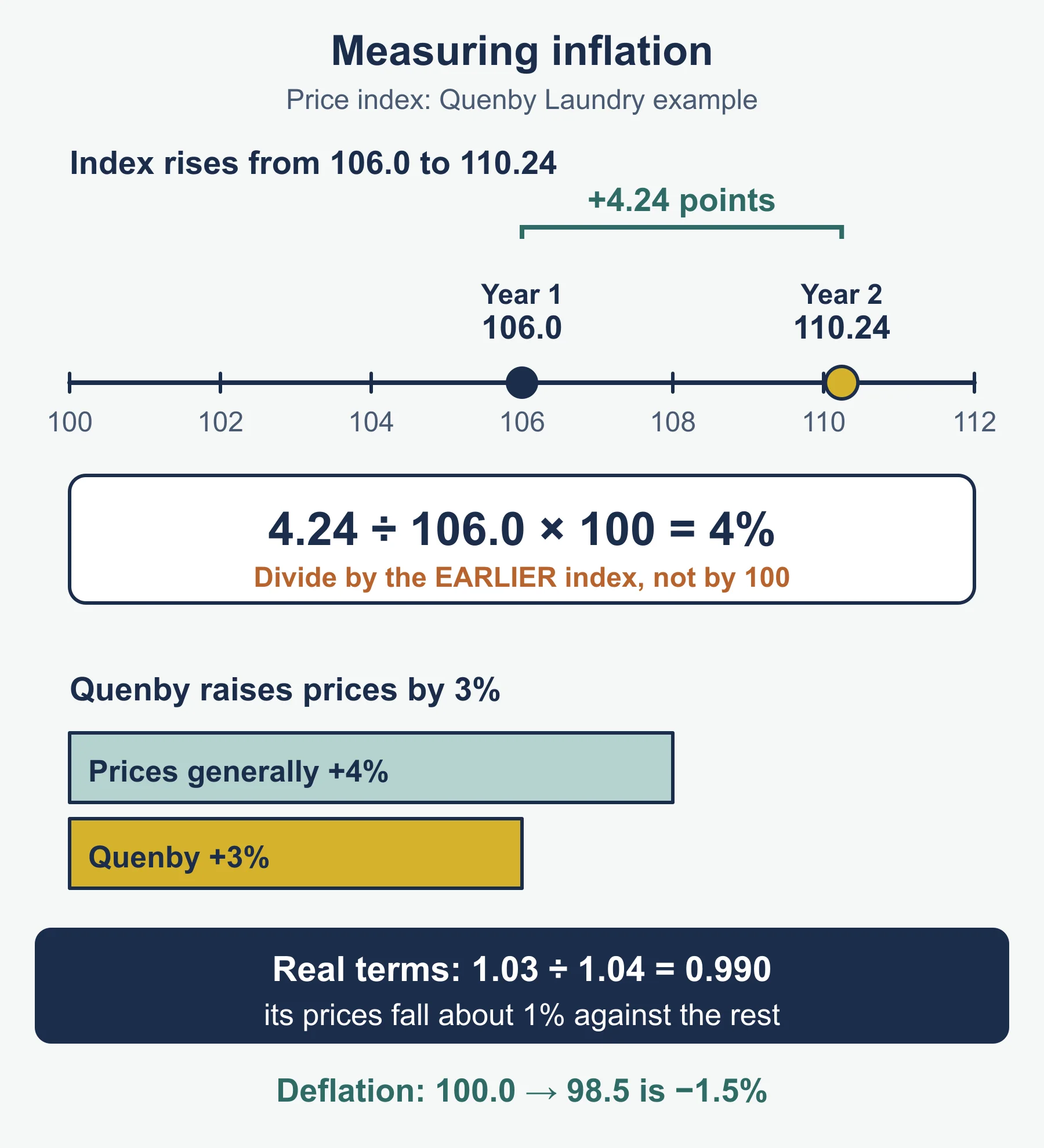
Worked example (checked). An economy’s GDP rises from £2,000bn to £2,050bn: growth = 50 ÷ 2,000 × 100 = 2.5%. A price index moves from 100 to 103.2: inflation = 3.2%. If 1.7m of a 34m labour force are unemployed, the unemployment rate is 1.7 ÷ 34 × 100 = 5%.
Taxation
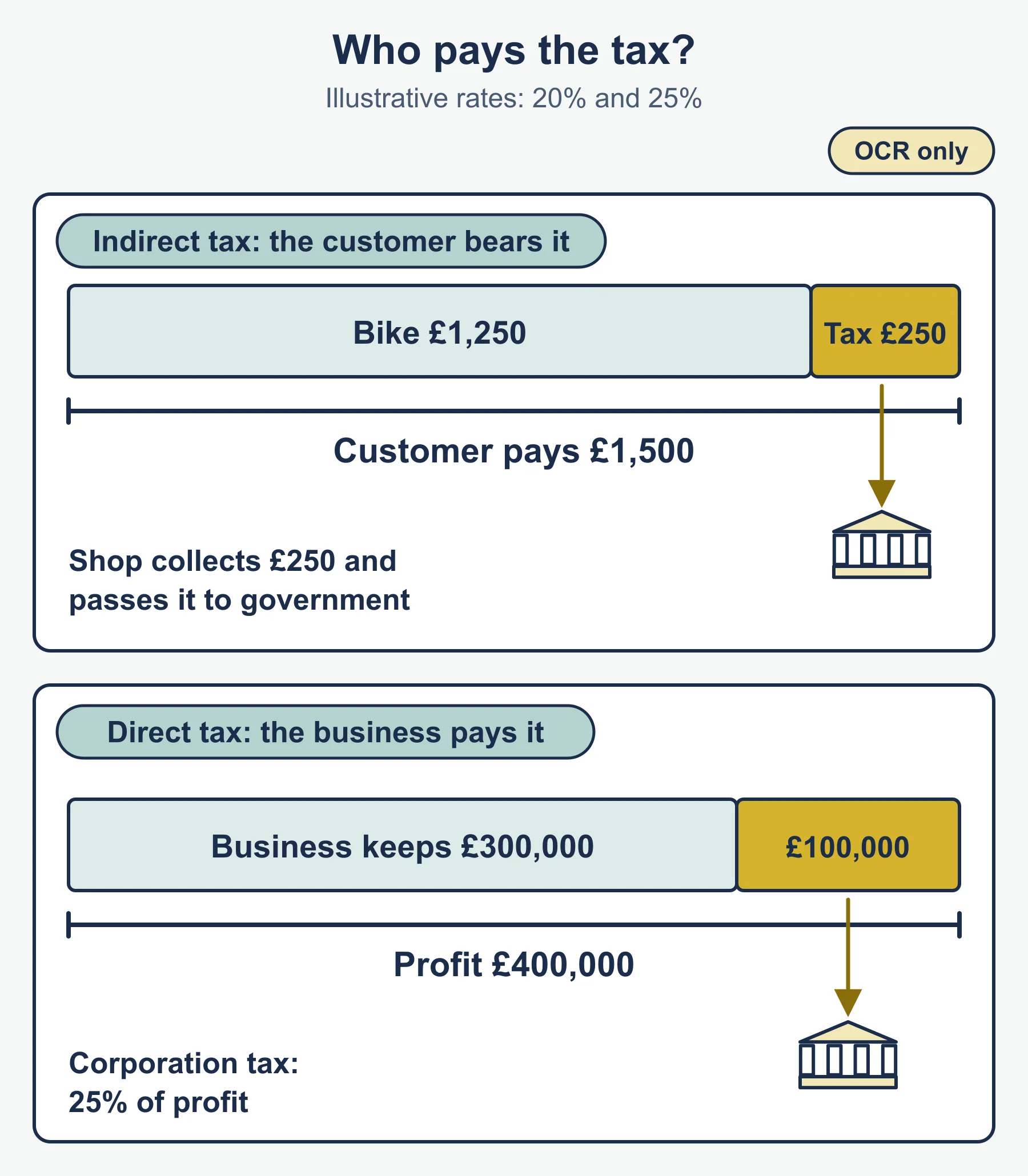
A direct tax goes directly to the government from the person or business it is levied on. Standard UK examples (the specification gives no list) are income tax, National Insurance contributions, corporation tax and capital gains tax. An indirect tax is collected by a seller but borne by the consumer through the price, for example VAT and excise duties. Purposes: raise revenue, redistribute income and influence behaviour.
Worked example. Brindlecott Cycles sells an electric bike at £1,250 before an indirect tax of 20% (20% is an illustrative rate). Tax = £250; the customer pays £1,500. Brindlecott collects the £250 and passes it on. Separately, if its profit is £400,000 and an illustrative corporation tax rate is 25%, it pays £100,000 and keeps £300,000.
Government expenditure
Standard main types (not an OCR-printed list) are health, education, social protection (welfare and pensions), defence, transport and other infrastructure, and interest on government debt. Purposes include providing public services, redistributing income and supporting jobs and growth.
Subsidies
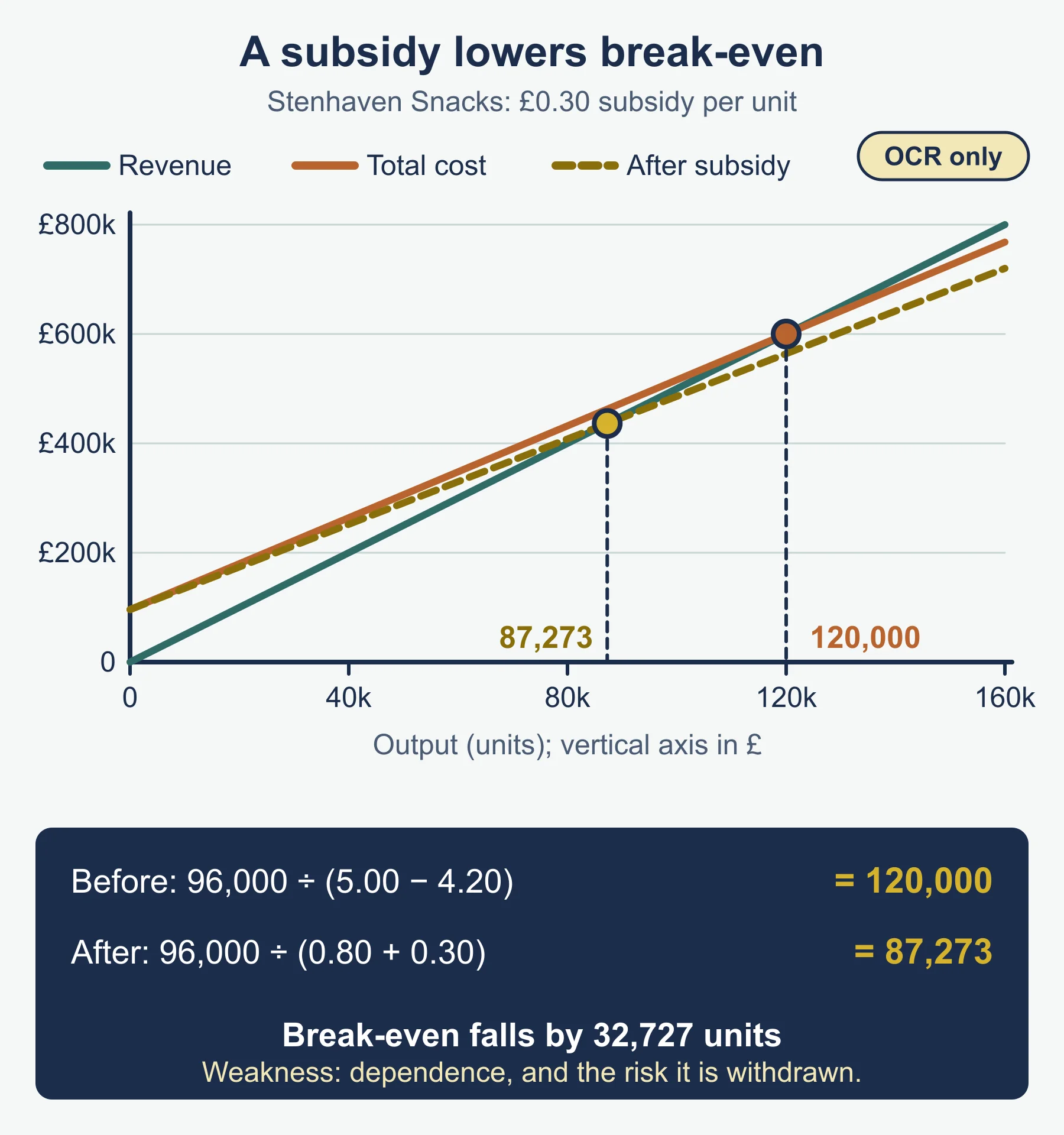
A subsidy is money paid by government to a business or industry to lower its costs or encourage an activity. Benefits to the business: lower costs, a lower break-even point, the ability to cut prices or invest, and survival in a weak market. Weakness: dependence, and the risk it is withdrawn.
Worked example. Stenhaven Snacks sells at £5.00, with variable cost £4.20 and fixed costs £96,000. Break-even = 96,000 ÷ 0.80 = 120,000 units. A subsidy of £0.30 per unit raises contribution to £1.10, so break-even = 96,000 ÷ 1.10 = 87,273 units (to the nearest unit).
Monetary, fiscal and supply-side policy
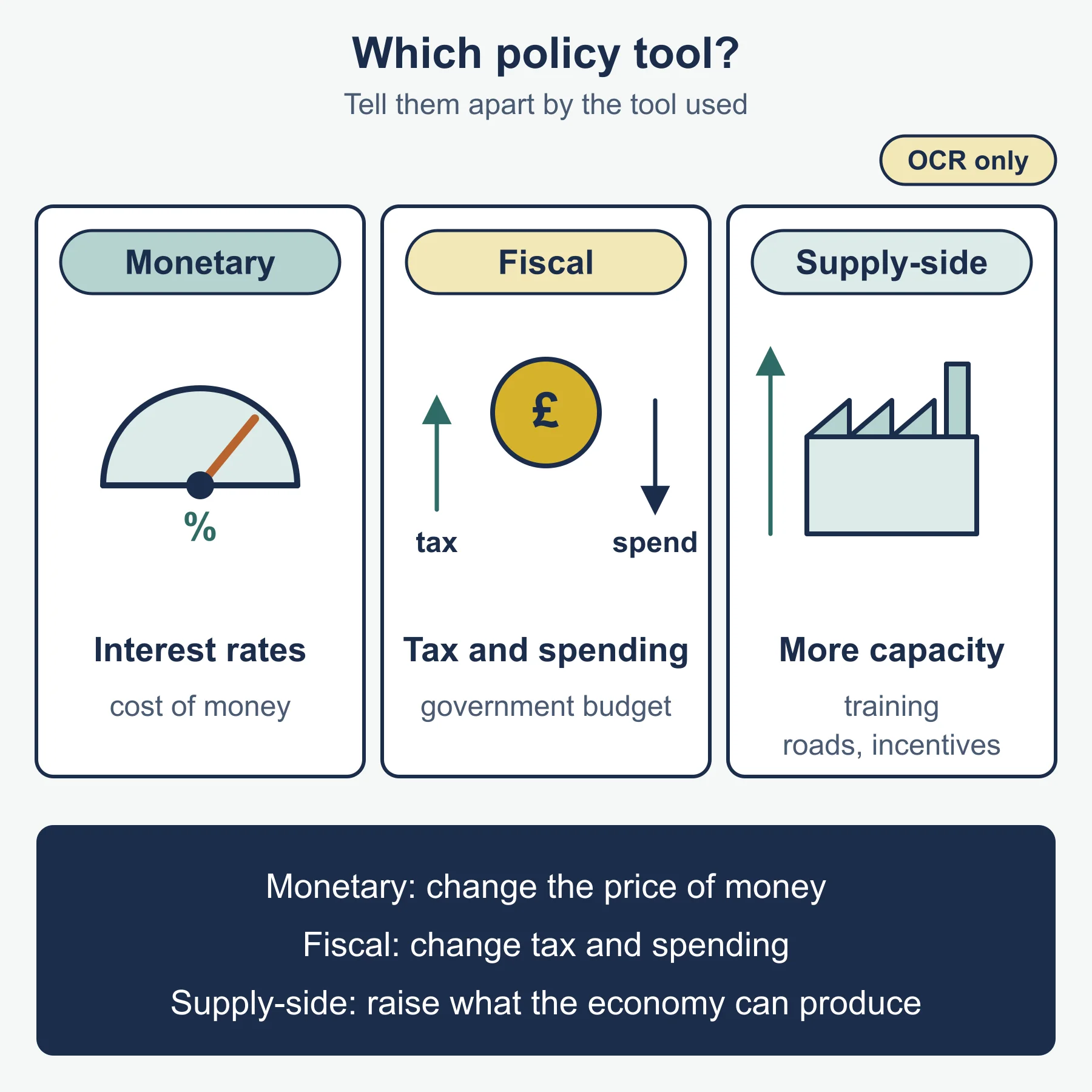
- Monetary policy changes the cost and availability of money, mainly through interest rates.
- Fiscal policy changes government taxation and spending.
- Supply-side policy raises the economy’s capacity to produce, through education and training, infrastructure, deregulation or incentives to invest.
These are the standard definitions. Distinguish them by the tool used: interest rates, tax and spend, or productive capacity.
Interest rates and exchange rates
Higher UK interest rates tend to attract foreign money, so demand for pounds rises and the pound appreciates. Lower rates tend to weaken it. This is the standard link; other influences also act.
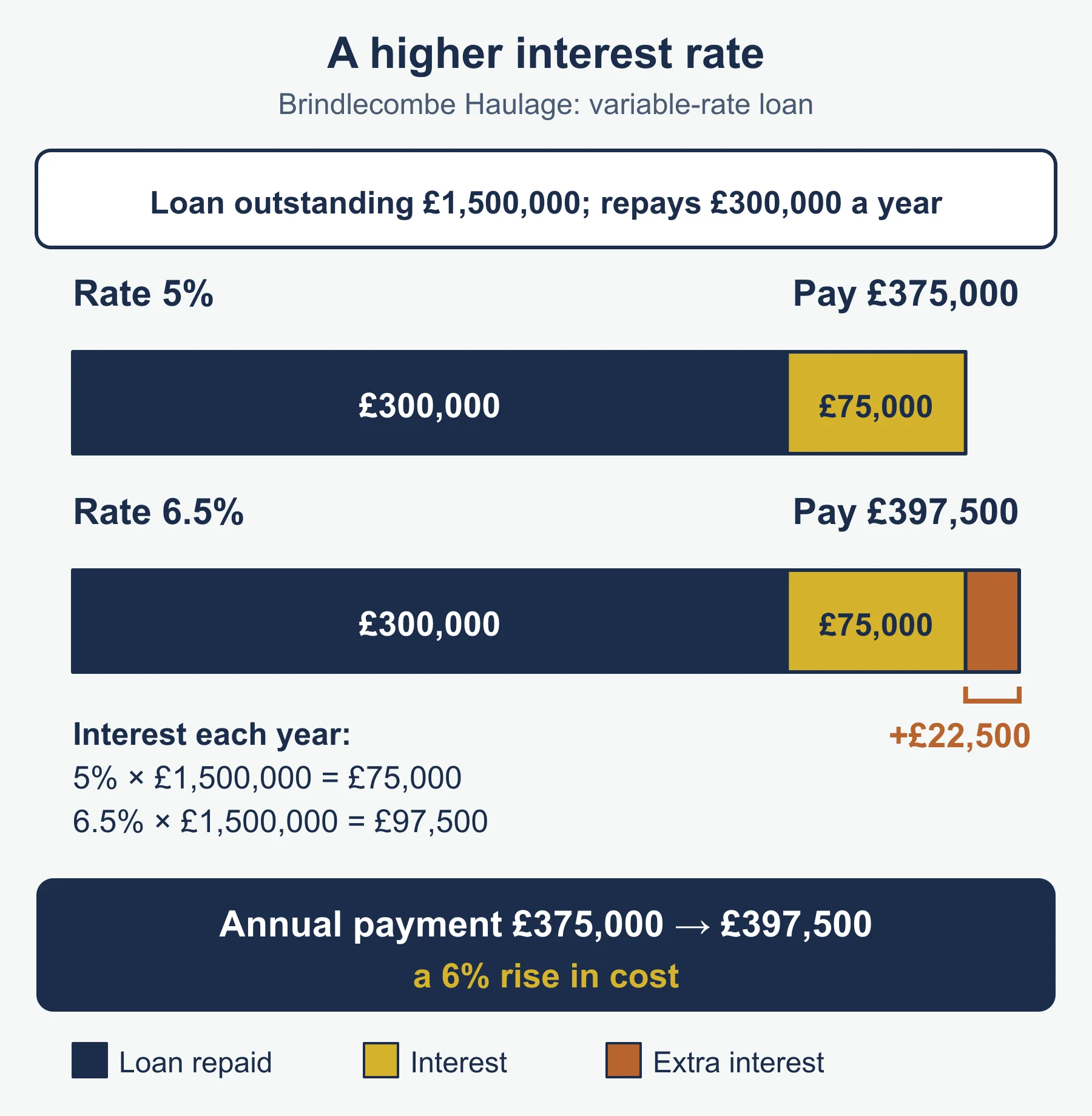
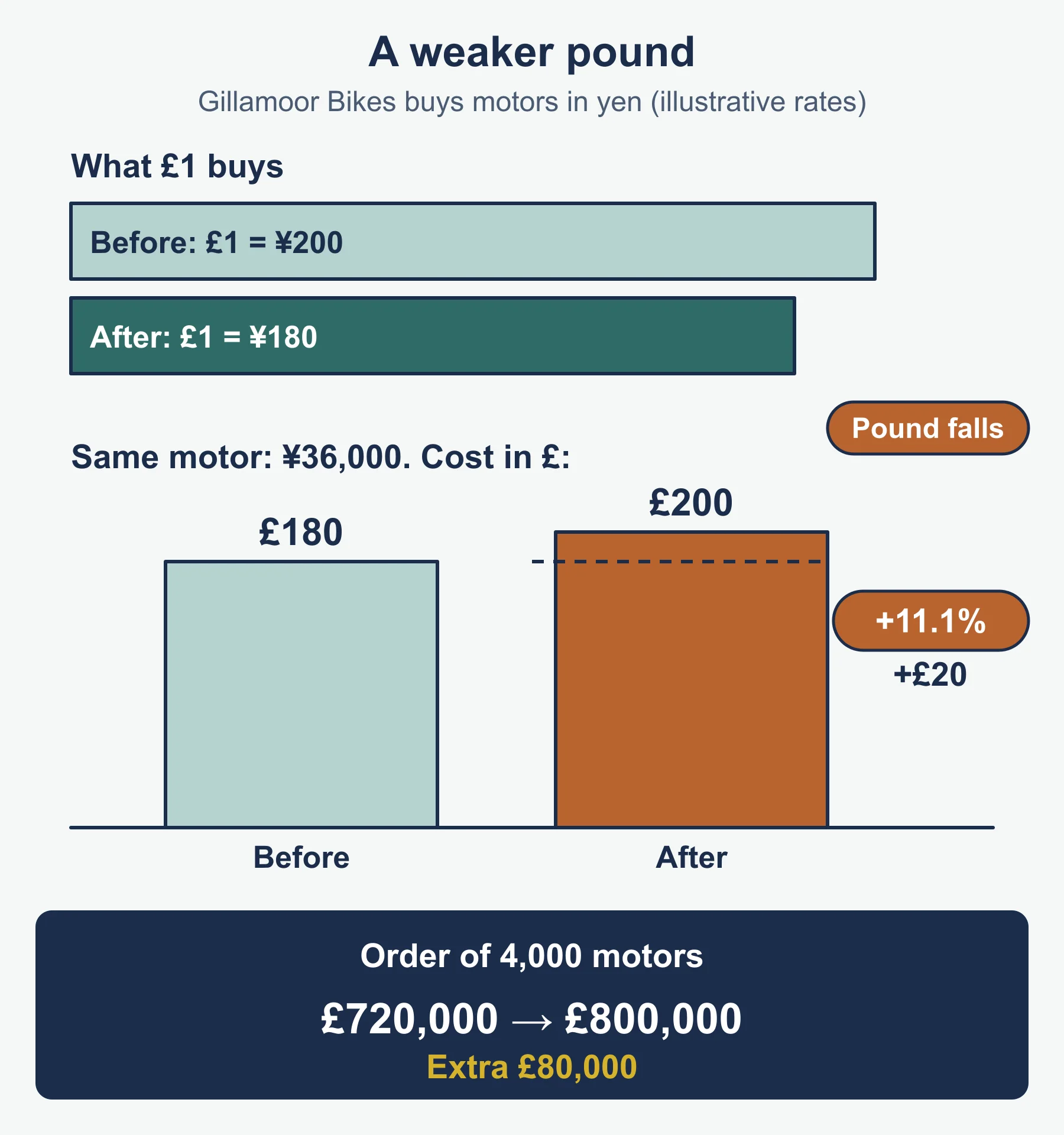
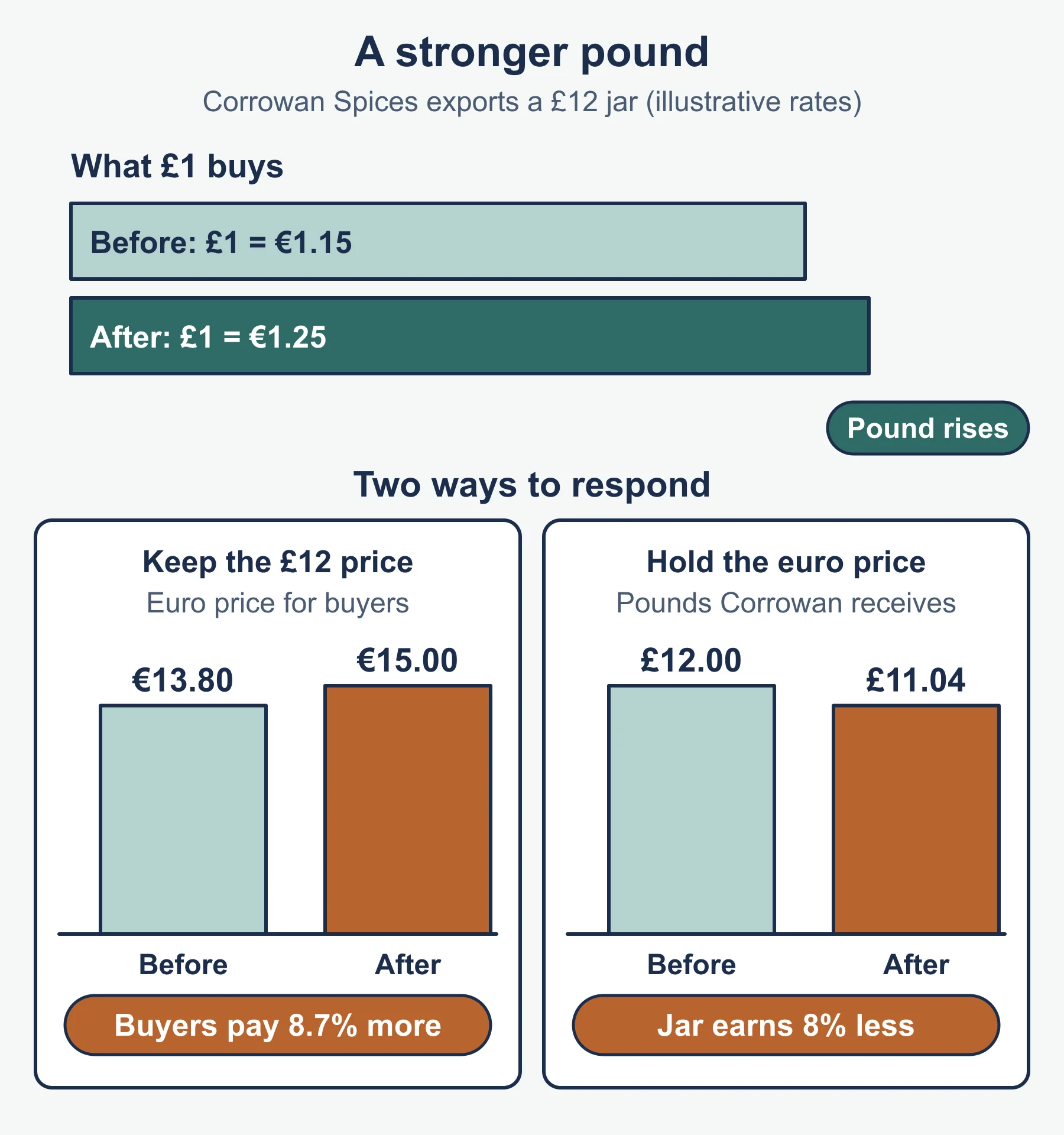
Worked example. A £200,000 loan at 4% costs £8,000 a year in interest; at 6% it costs £12,000, a £4,000 rise. If £1 buys 1.30 US dollars, an order priced at 52,000 US dollars costs £40,000. If the pound falls to 1.20 dollars, the same order costs £43,333, which is £3,333 more (8.3%). An exporter gains in the opposite case, and loses when the pound strengthens.
GDP and the business cycle
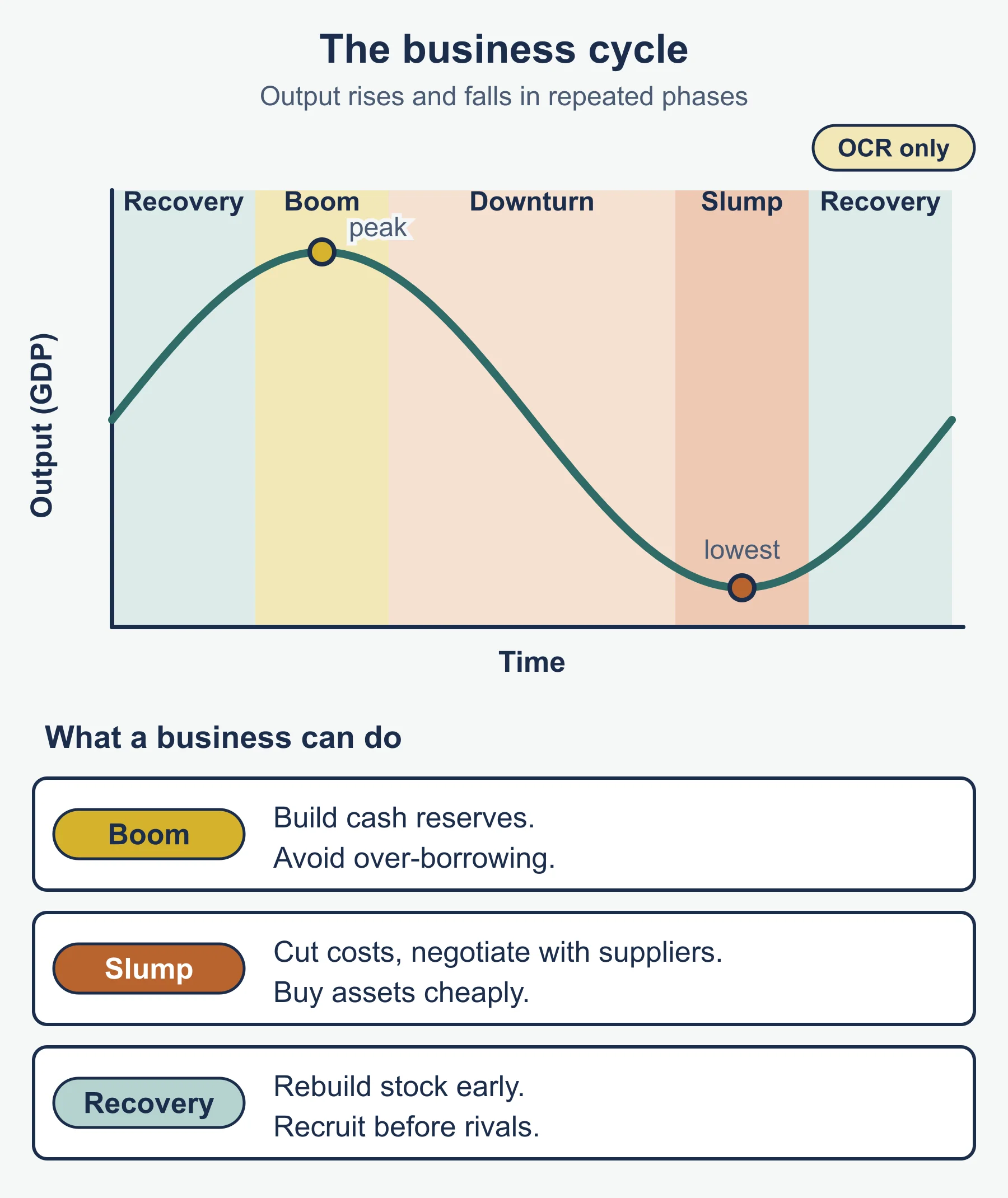
Gross Domestic Product is the value of all the output a country produces in a given period. The business cycle is the repeated pattern of rising and falling economic activity. The standard phases are boom, downturn or recession, slump (the lowest point) and recovery.
Using the cycle. In a boom: build cash reserves and avoid over-borrowing. In a slump: cut costs, negotiate with suppliers, buy assets cheaply. In recovery: rebuild stock early and recruit before rivals.
Who is hit hardest? Businesses selling luxuries or durable goods (cars, holidays, construction) suffer most, because customers delay these purchases. Highly indebted firms and firms with high fixed costs suffer more. Sellers of necessities or low-priced goods may gain in a slump.
Social factors
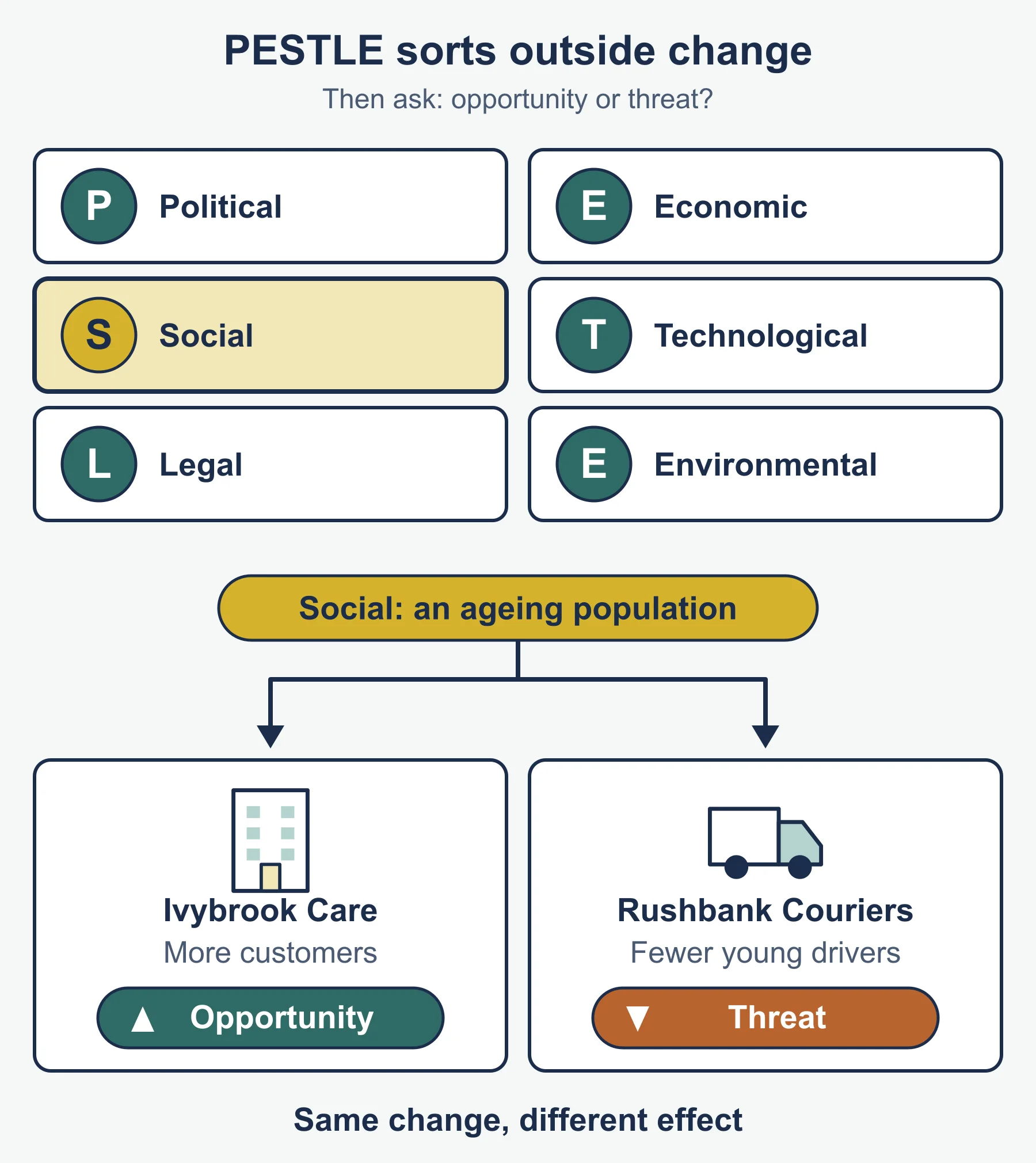
Social factors include demographics (age structure, population movement), lifestyle, attitudes and fashion. They change what customers want and who is available to work.
Worked example. In Pellowmere, the share of residents aged 65 and over grows from 18% to 24%, a 6 percentage-point rise. A local garden centre may find more weekday shoppers, more demand for easy-care products and a smaller pool of young part-time staff. The effect is slow and predictable, so the firm can adapt gradually.
Technological factors
Technological factors include automation, robotics, software, new materials and communications. How a business uses technology: CAD and CAM in design and production, stock control systems, customer databases, websites and apps, and cloud storage.
How changes impact a business: new products, lower unit costs, faster service, new competitors, and obsolete equipment or skills.
Hardware and software. Advantages: speed, accuracy, lower labour cost per unit and better information. Disadvantages: purchase, training and upgrade costs, breakdown and security risks, job losses and resistance to change.
Opportunities and threats. Opportunity: a new sales channel. Threat: a rival using the same technology to undercut you.
The digital revolution
The digital revolution is the shift from analogue to digital technology, giving the information age, where information is created, stored and shared quickly and cheaply. For a business it changes how it sells (online, apps), how it communicates, what it knows about customers (data) and who it competes with (global online rivals).
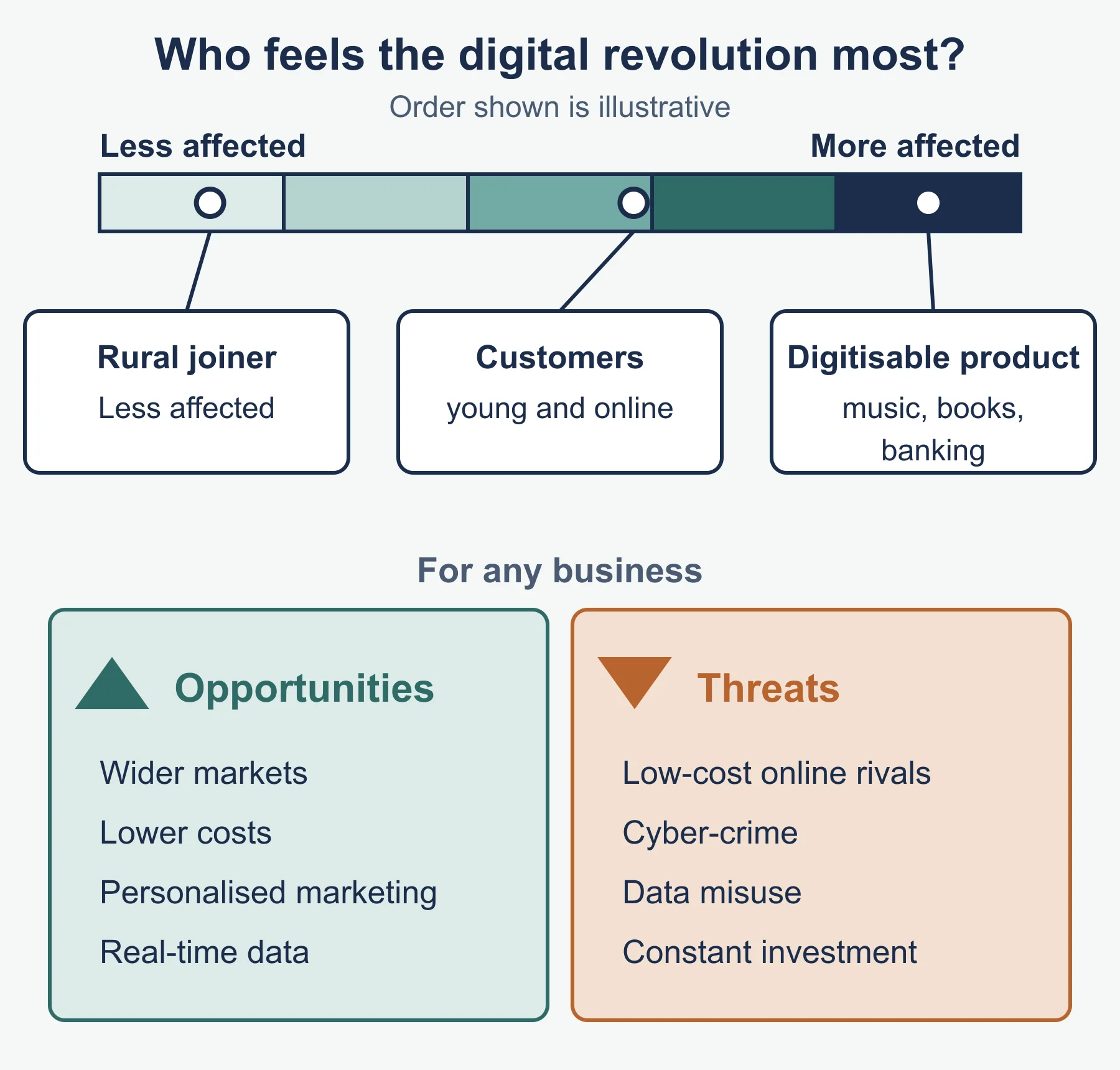
Opportunities: wider markets, lower costs, personalised marketing, real-time data. Threats: low-cost online rivals, cyber-crime, data misuse and pressure to invest constantly.
Why some are more affected. Firms whose product can be digitised (music, books, banking) or whose customers are young and online are most exposed; a rural joiner is less affected.
Rapid technological change. Advantages: early adopters gain competitive advantage, and productivity may rise. Disadvantages: constant investment, short product life, staff retraining and redundancy, and stakeholders who cannot keep pace.
Ethical factors
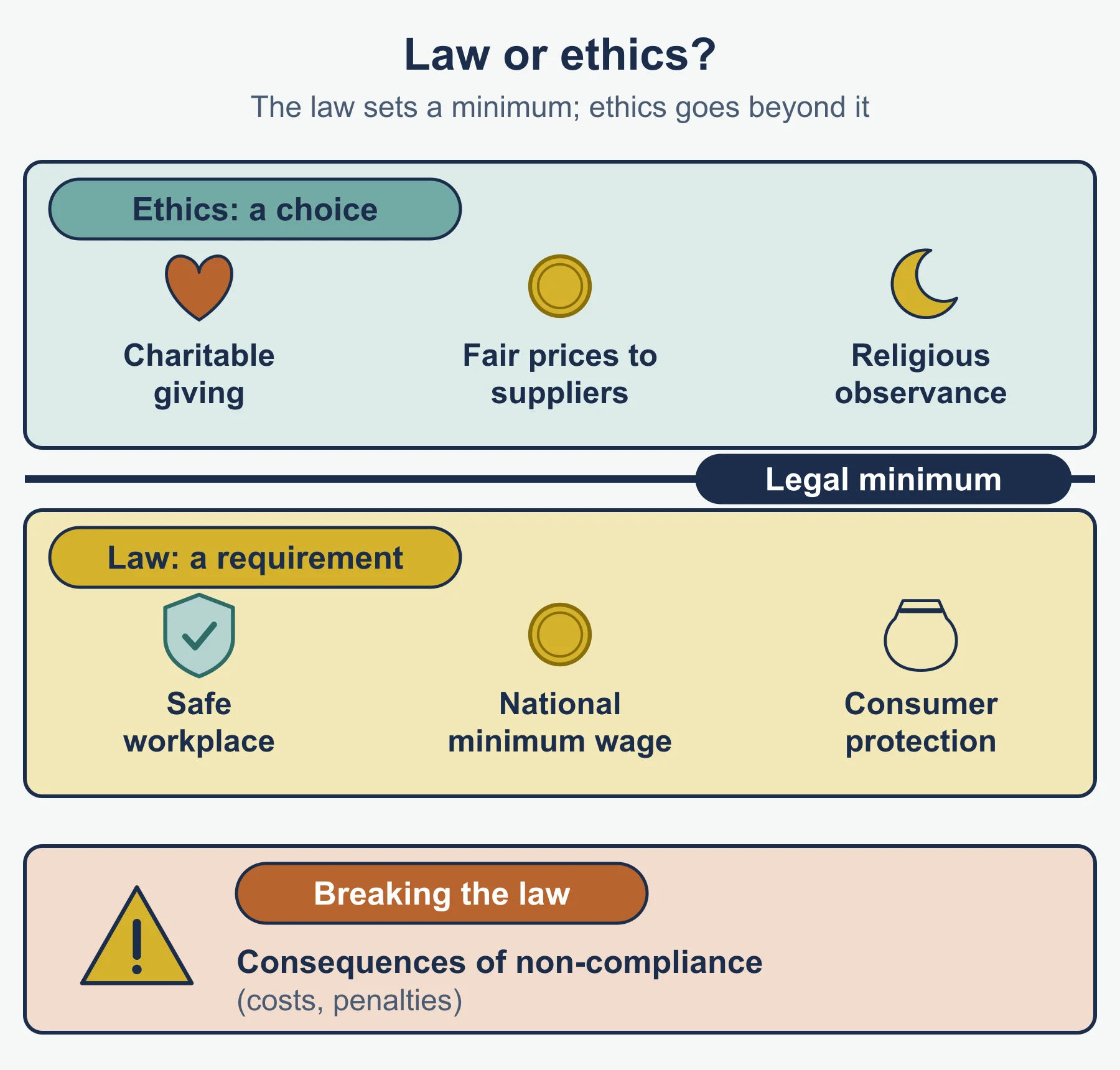
Law and ethics. The law is a body of rules the state enforces, with penalties. Ethics are moral principles about what is right; they go beyond the legal minimum and a business chooses to follow them. Something can be legal but unethical.
Ethical issues: treatment of employees and suppliers, honest advertising, animal testing, sourcing, tax avoidance, product safety and use of customer data. Firms with long supply chains or a high public profile are more affected than small local firms.
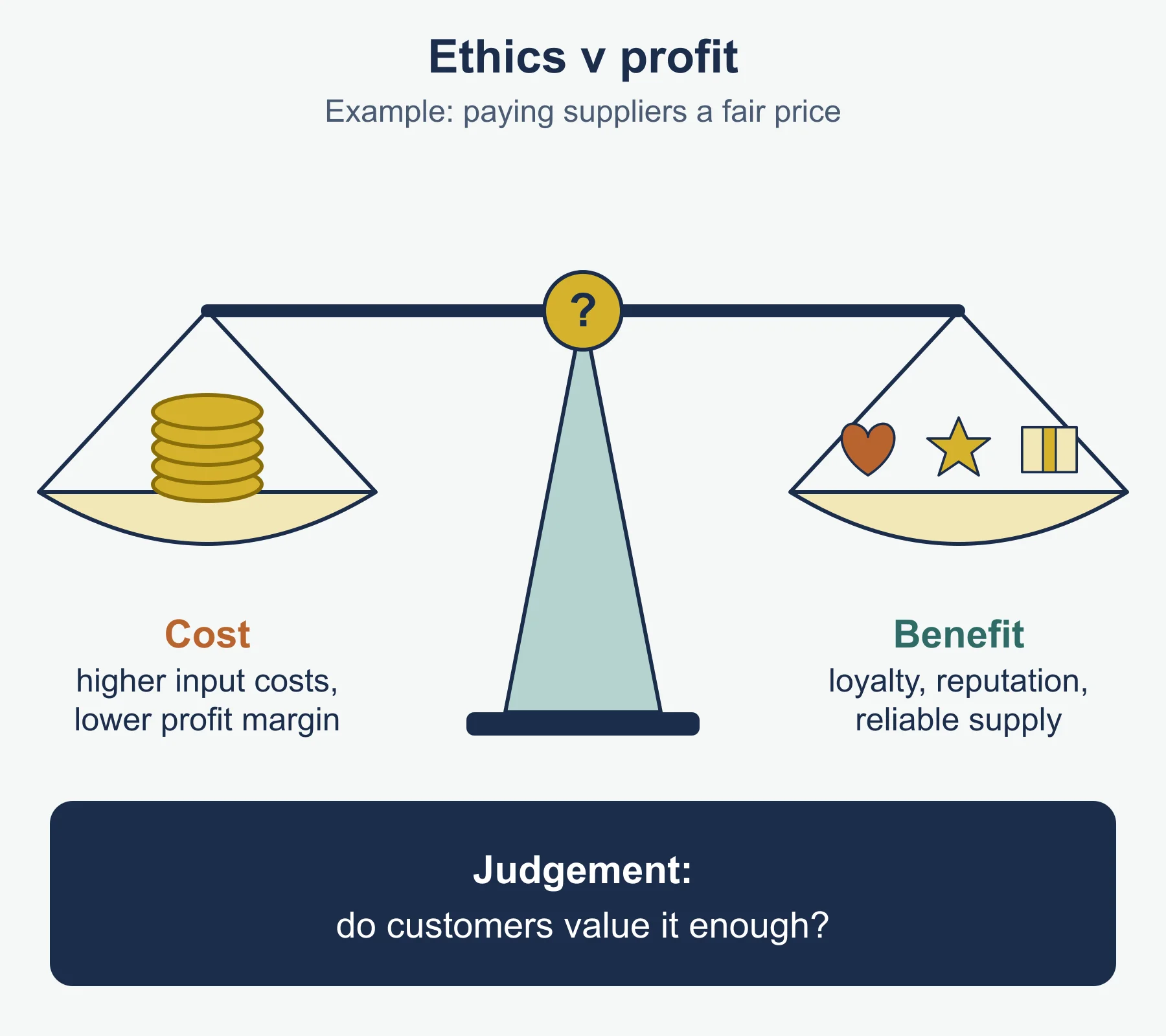
Ethical trading methods and working practices. Fair trade sourcing, auditing suppliers, no child labour, fair wages, safe conditions, openness about origins. Evaluate: they raise cost and complexity, but build reputation and trust.
Improving the ethical profile. Recommend and justify actions such as a published code of conduct, supplier audits, independent certification and regular reporting.
Behaving ethically: advantages and disadvantages. Advantages: trust, loyalty, recruitment, press coverage. Disadvantages: higher costs, lower short-term profit, and damaging claims if practice falls short. Being seen as ethical matters because customers, staff and investors act on perception.
Conflicts. Ethical aims can clash with profit, growth or cost control.
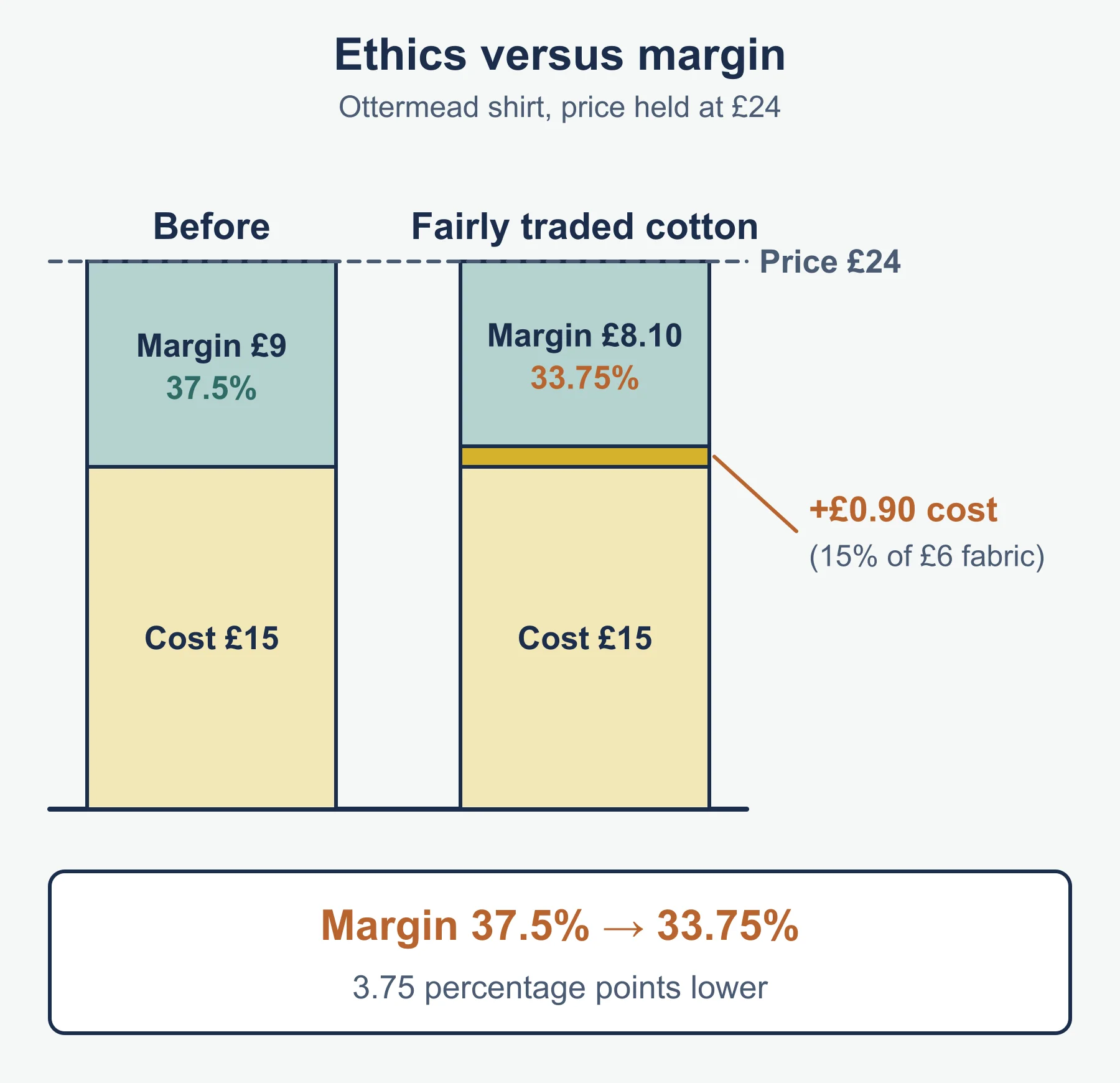
Worked example. Ottermead sells shirts at £24 with unit cost £15, a margin of 9 ÷ 24 = 37.5%. Fairly traded cotton adds £0.90 per shirt (15% on a £6 fabric cost); unit cost rises to £15.90 and margin falls to 8.10 ÷ 24 = 33.75%. Managing the conflict: raise the price slightly, tell customers why, absorb part of the cost, or phase the change in.
Legal factors
Legislation sets compulsory rules, with penalties, to protect people and keep markets fair. The specification names these areas. General purposes only are given here.
| Area | Purpose in general terms |
|---|---|
| Employment | rights and duties of employers and workers |
| Equality | prevent unfair treatment of groups |
| Company and partnership | set out how businesses are formed and run |
| Health and safety | protect workers and visitors |
| Data protection | control use of personal data |
| Intellectual property | protect ideas, brands and creations |
| Planning | control land use and building |
| Environmental | limit pollution and waste |
| Consumer protection | protect buyers from unfair sale |
| Contract | make agreements enforceable |
| Financial conduct | keep financial dealings honest |
Complying: training, written policies, a named responsible manager, audits and professional advice. Conflicts: compliance costs money and time, which may clash with cost or growth objectives. Importance and consequences of failure: fines, compensation, court action, lost contracts, damaged reputation and in serious cases closure. Changes in law can force redesign of products or processes.
Environmental factors
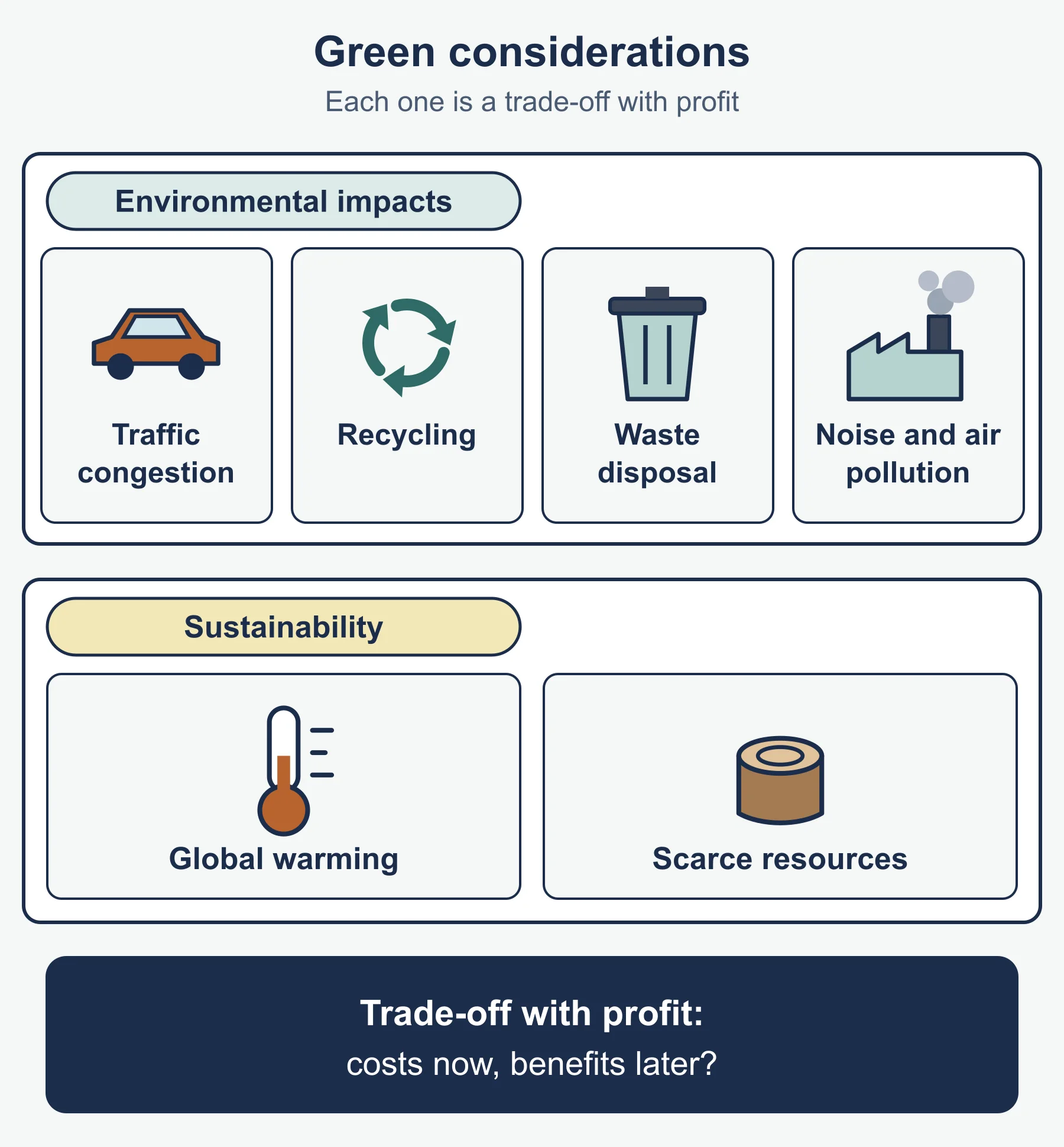
Issues include climate change, pollution, waste, energy use and resource shortage. A business must consider them because of law, customer pressure, cost savings, staff and investor attitudes, and risk to its supply.
Environmental policy. A written commitment with targets and actions. Evaluate its impact on cost, brand and stakeholders.
Sustainability means using resources so that today’s needs are met and future generations can still meet their own. A business acts sustainably by using renewable energy, cutting waste, recycling, sourcing responsibly and designing durable products. To become more sustainable it can set measurable targets and report progress. Sustainability matters to owners (long-run costs), staff, customers and communities. Being seen as environmentally friendly attracts customers, staff and investors, but unsupported claims damage trust.
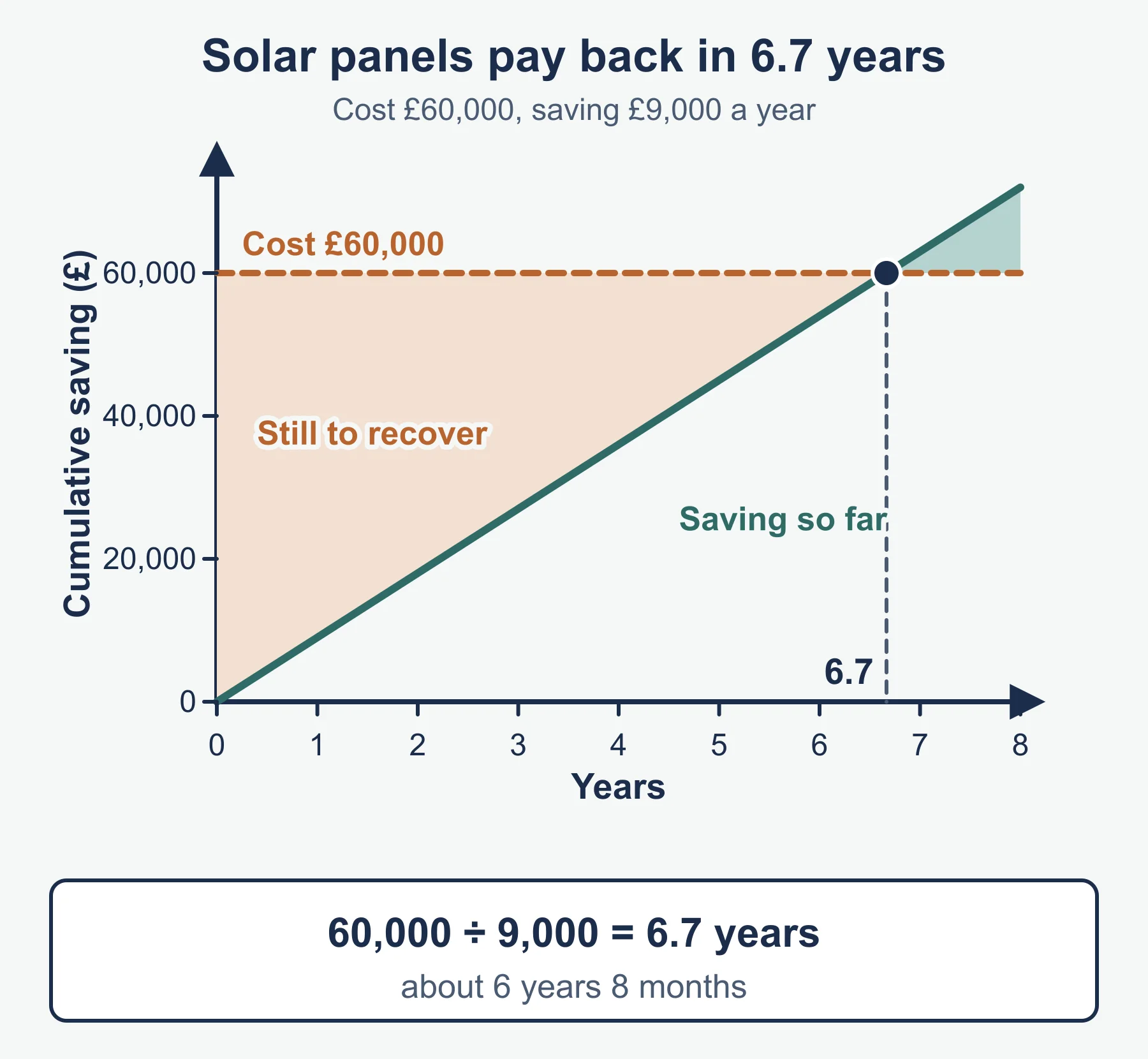
Worked example. Brindlecott buys solar panels for £60,000 that save £9,000 a year. Payback = 60,000 ÷ 9,000 = 6.7 years (about 6 years 8 months).
Conflicts. Greener materials or slower, cleaner transport can raise costs. Manage by phasing the change and targeting savings such as energy and waste.
Ignoring external factors
Ignoring external factors risks being caught out by tax or interest changes, falling behind technology, breaking the law or losing customers on ethical grounds. Consequences include lost sales, fines, higher costs and, at worst, failure.
Common errors
- Listing factors with no real link to the named business.
- Treating ethics and law as the same thing.
- Calling a subsidy a loan.
- Saying a rising pound always helps firms; it helps importers but hurts exporters.
- Giving only advantages of ethical or green behaviour, with no cost or conflict.
- Concluding without a judgement on impact and importance for named stakeholders.
Frequently asked questions
Which businesses are hit hardest in a slump? Businesses selling luxuries or durable goods, such as cars, holidays and construction, usually suffer most in a slump because customers can delay these purchases. Highly indebted firms and those with high fixed costs also suffer more, while sellers of necessities or low-priced goods may even gain.
What is a subsidy and how does it affect a business? A subsidy is money paid by government to a business or industry to lower its costs or encourage an activity. By reducing costs, it can lower a firm’s break-even output or allow it to cut prices.
What does sustainability mean in OCR A Level Business? Sustainability means using resources so that today’s needs are met while future generations can still meet theirs. In OCR A Level Business (H431) you evaluate sustainable actions by weighing their cost against savings, brand effects and stakeholder reactions.
Official syllabus
OCR, OCR Level 3 Advanced GCE in Business (H431) Specification, Version 2.1 (January 2026), Area of Study: External influences.
Get free revision emails (optional)
Occasional emails with practice questions, worked explanations and links to free resources for the qualification and subjects you choose. No spam, and you can unsubscribe from any email. The free tools on this site never need an email.
Related resources
-
Practice questions
OCR A Level Business: Political, economic, social and technological factors and related topics (H431) – Practice Questions
Original practice questions with worked answers on PESTLE, digital, ethical, legal and environmental factors for OCR A Level Business H431.
Business · OCR · A Level
Try questions -
Revision notes
OCR A Level Business: Political, economic, social and technological factors and related topics (H431) – Revision Notes
Condensed revision notes on political, economic, social, technological, digital, ethical, legal and environmental factors for OCR A Level Business H431.
Business · OCR · A Level
Revise topic -
Study guides
OCR A Level Business: The market, market size and growth and Demand and supply (H431)
Study guide to markets, market size and growth, market structures, demand, supply and equilibrium for OCR A Level Business (H431), with worked diagrams.
Business · OCR · A Level
Read guide
Related articles
-
teaching
A Level tuition in Dubai: Cambridge or Pearson Edexcel International A Level?
Schools in Dubai and Abu Dhabi teach either Cambridge International AS & A Level or Pearson Edexcel International A Level. How the two are structured, why it matters for tuition, and how online classes from Lahore work.
9 October 2026
-
curriculum guides
Choosing subjects at IGCSE and A Level
How subject choices at 14 and 16 affect university options later, and how to keep pathways open without overloading a timetable.
28 July 2026
Studying this with a teacher
Working through Business A LEVELS?
This page is free and stays free. If you would rather be taught it, Marlbridge runs Business classes one-to-one, online in your own time zone. One-to-one only for this course: Rs 6,000 per class in Pakistan, with other currencies on the fees page. The first trial class is free. WhatsApp replies within an hour (8am–11pm Pakistan time, every day); email the same day.
OCR Business teachers at Marlbridge
