
Revision Notes
OxfordAQA IGCSE Business: Business operations (9225) – Revision Notes
Condensed revision notes on production methods, JIT, Kaizen, suppliers, quality, TQM and customer service for OxfordAQA IGCSE Business.
- Subject
- Business
- Level
- IGCSE
- Topic
- Business operations
- Author
- Marlbridge Academic Team
- Updated
- Reviewed by
- Salman Ahmad (what this means)
Aligned to OxfordAQA IGCSE Business (9225), First teaching September 2020, first examined May/June 2022. Official specification .
Syllabus page (what it covers and how it is assessed): OxfordAQA IGCSE Business.
Syllabus points this page covers
9225
- 3 Business operations (whole topic)
Found an error? Report a correction.
Need help with this topic? Request a free trial class for IGCSE Business (9225).
These notes condense section 3.3 Business operations of the OxfordAQA International GCSE Business (9225) specification, version 3.1, for exams from May/June 2022 onwards. For full explanations and worked examples, read the study guide. Then test yourself with the practice questions. The course hub, the printable checklist and the free diagnostics cover the rest of the course.
Topic map
| Section | Content in one line |
|---|---|
| 3.3.1 Production processes | Job, batch, flow, cell; efficiency through JIT and Kaizen |
| 3.3.2 The role of procurement | JIT and buffer stock; supplier choice (price, quality, reliability) |
| 3.3.3 The concept of quality | Expectations, measuring problems, consequences, TQM, costs and benefits, growth, outsourcing, franchising |
| 3.3.4 Good customer services | Product knowledge, engagement, post-sales; benefits and dangers; websites, e-commerce, social media |
Stock control charts are not examined: the specification says you will not be asked to draw or interpret them.
3.3.1 Production processes
| Method | Definition | Use when | Watch for |
|---|---|---|---|
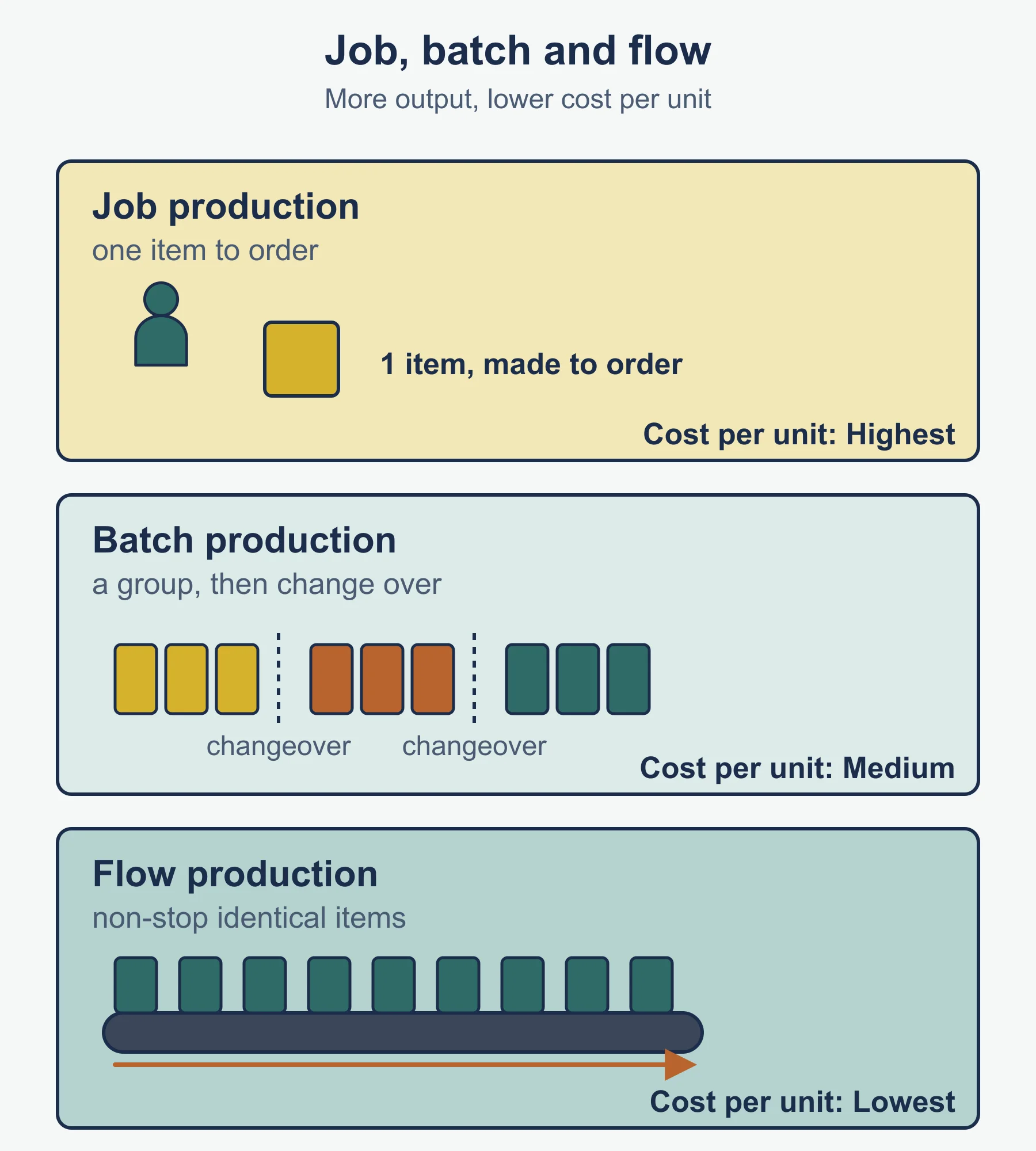
| Job | One item made to order | Unique or made-to-measure goods | High cost per item, skilled labour |
| Batch | Identical items made in groups, one group after another | Several variants in set quantities | Idle time between batches, stock build-up |
| Flow | Continuous production of a standard product | Very high demand for identical goods | Expensive set-up, inflexible |
| Cell | Small teams each making a whole part or product | Medium volume, need for flexibility and teamwork | Needs multi-skilled staff |
Method to choose a method: ask how many items, how similar they are, how much customers want to specify, and how big the budget for equipment is.
Efficiency
- Efficiency: more output from the resources used, or equal output from fewer resources, so unit cost falls.
- JIT: little or no stock, materials arrive when needed.
- Kaizen: continuous improvement, meaning many small changes put forward by employees at every level.
3.3.2 The role of procurement
JIT versus buffer stock
| Benefits | Costs and risks | |
|---|---|---|
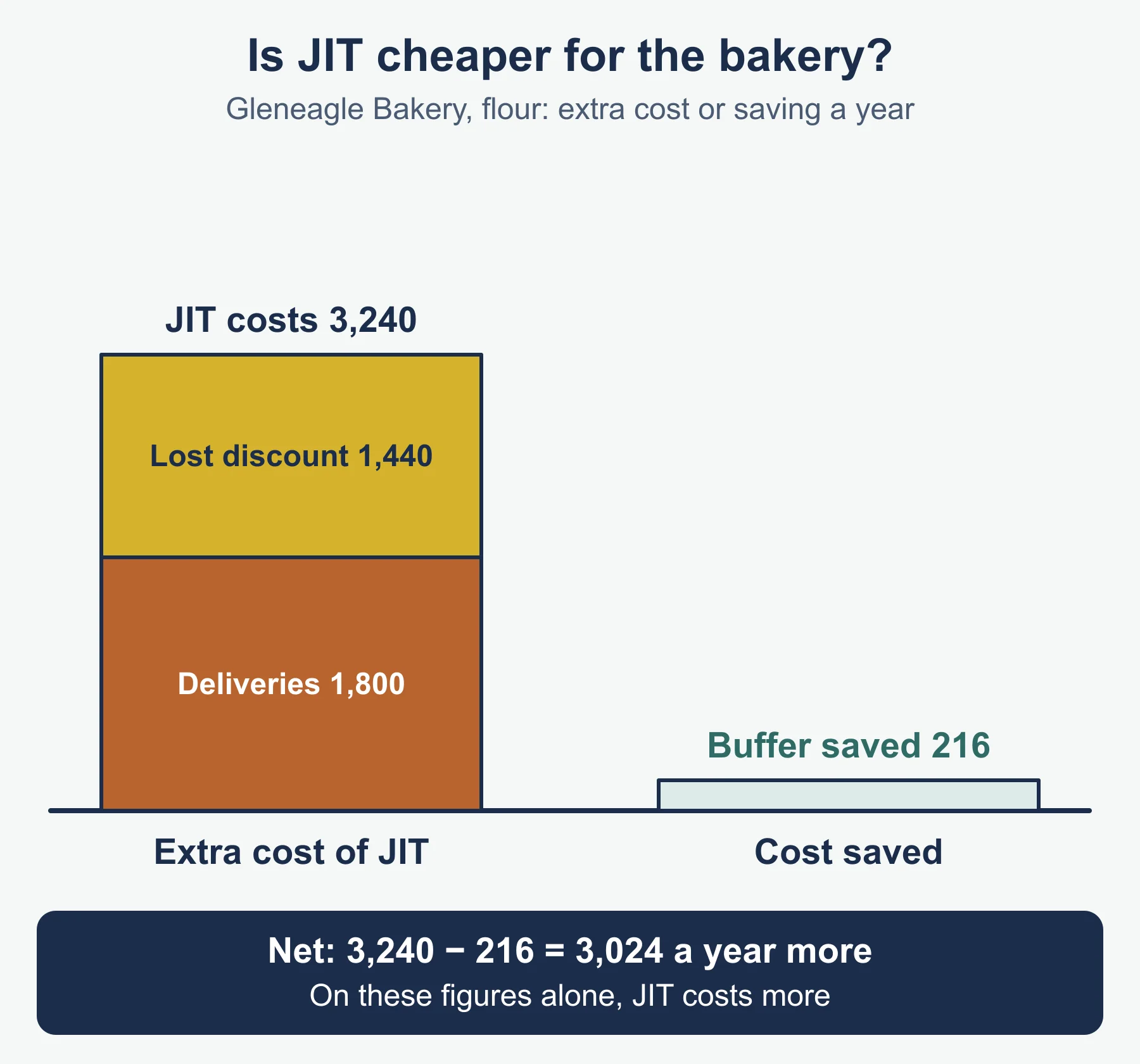
| JIT | Lower storage and holding costs, less cash tied up, less waste and damage | More frequent deliveries, lost bulk-buying discounts, production stops if a delivery is late |
| Buffer stock | Spare stock to meet unexpected demand or cover late deliveries | Storage, insurance, risk of damage or going out of date, cash tied up |
Evaluate JIT for a given business: weigh the savings against extra delivery cost and lost economies of scale, then check reliability of suppliers and how predictable demand is.
Choosing a supplier
| Factor | Question to ask |
|---|---|
| Price | What is the total cost once delivery, discounts and credit terms are included? |
| Quality | Are materials good enough to avoid faults and returns? |
| Reliability | Does it deliver the right goods on time, every time? |
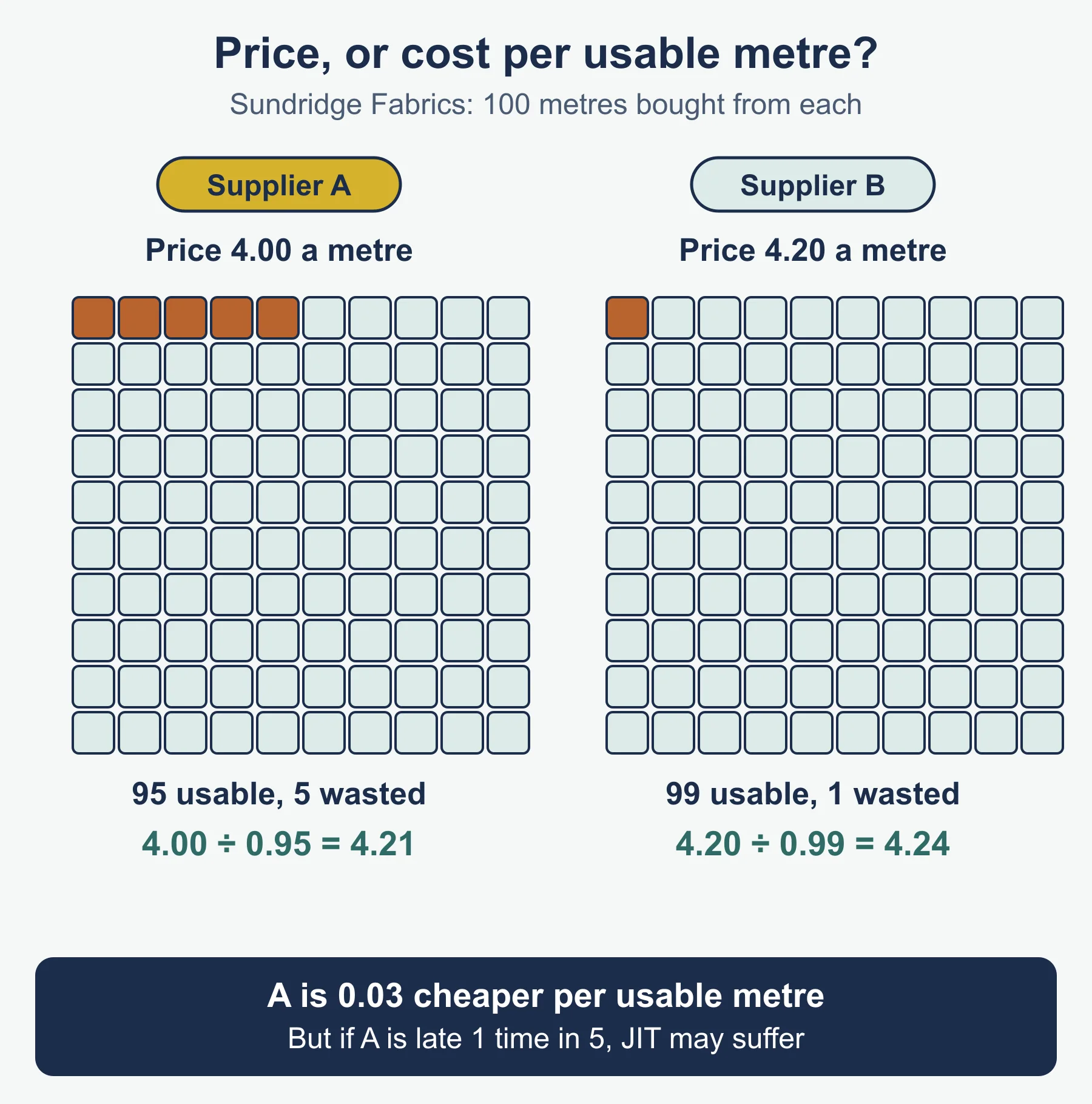
Formula reminder (standard form): cost per usable unit = price / (1 - proportion unusable).
Worked reminder. Price 3.60 with 10% unusable: 3.60 / 0.90 = 4.00 per usable unit. A rival at 3.90 with 2% unusable: 3.90 / 0.98 = 3.98. The dearer-looking price is cheaper per usable unit, by about 0.02.
3.3.3 The concept of quality
- Quality means meeting customer expectations, which differ for goods (durability, safety, performance) and services (accuracy, speed, courtesy, consistency).
- Identify problems by inspection, complaints, returns, reviews, surveys and staff reports.
- Measure by percentage defective, return rate, complaints, repeat purchase and satisfaction scores.
- Consequences of poor quality: refunds and replacements, lost sales, damaged reputation, lost loyalty, low staff morale, possible legal problems.
TQM
Total quality management: every employee in every department is responsible for quality, and faults are prevented at each stage instead of only being found at the end.
| Advantages to a business | Disadvantages |
|---|---|
| Fewer defects and less waste | Training and time to introduce |
| Lower cost of rework and returns | Needs commitment from managers |
| Greater customer loyalty and reputation | Change of habits can meet resistance |
| Staff feel involved | Benefits can take time to appear |
Costs and benefits of quality
| Costs | Benefits |
|---|---|
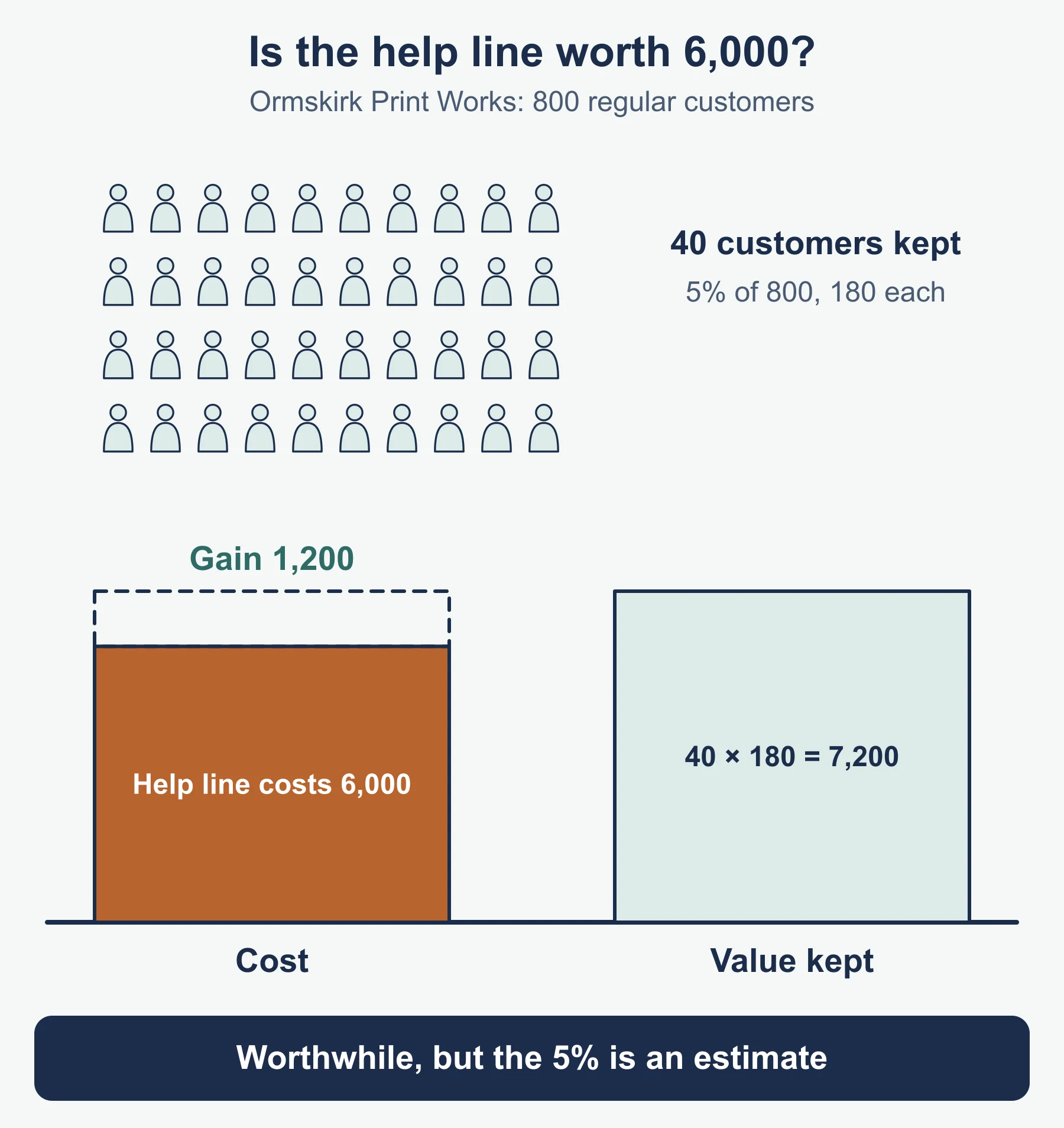
| Better materials, training, equipment, checking | Fewer returns, stronger reputation, loyalty, possibly higher prices |
Quality as the business grows
- Managers are further from daily work, so standards can slip.
- Outsourcing: less direct control over the other firm’s standards; the business still gets the blame.
- Franchising: one weak outlet can damage the brand; the franchisor needs standards, training and inspections.
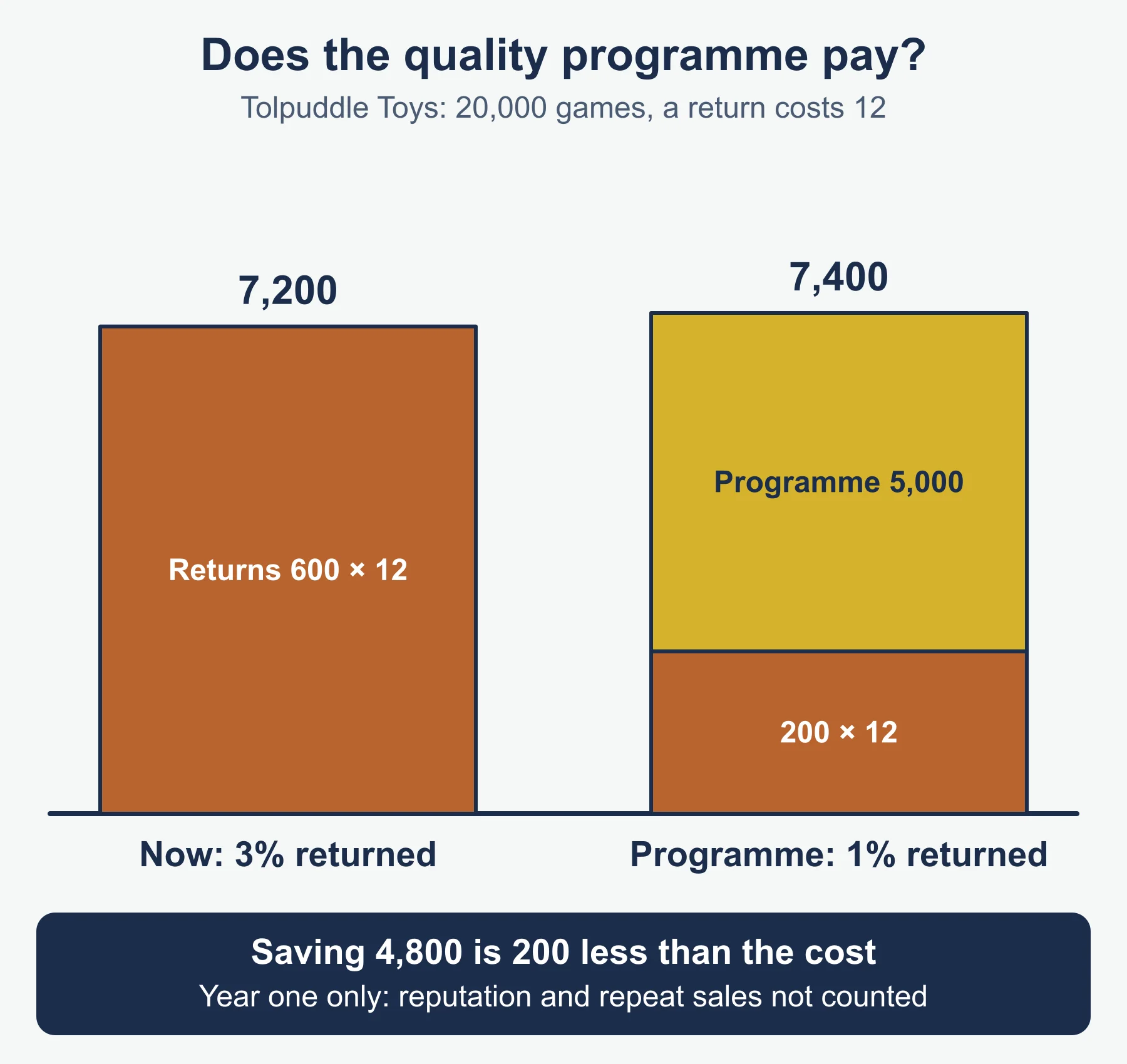
Worked reminder. A quality scheme costs 2,000 and cuts returns from 500 to 150 items, each return costing 9. Saving = 350 x 9 = 3,150. Net gain = 3,150 - 2,000 = 1,150.
3.3.4 Good customer services
| Method | Example |
|---|---|
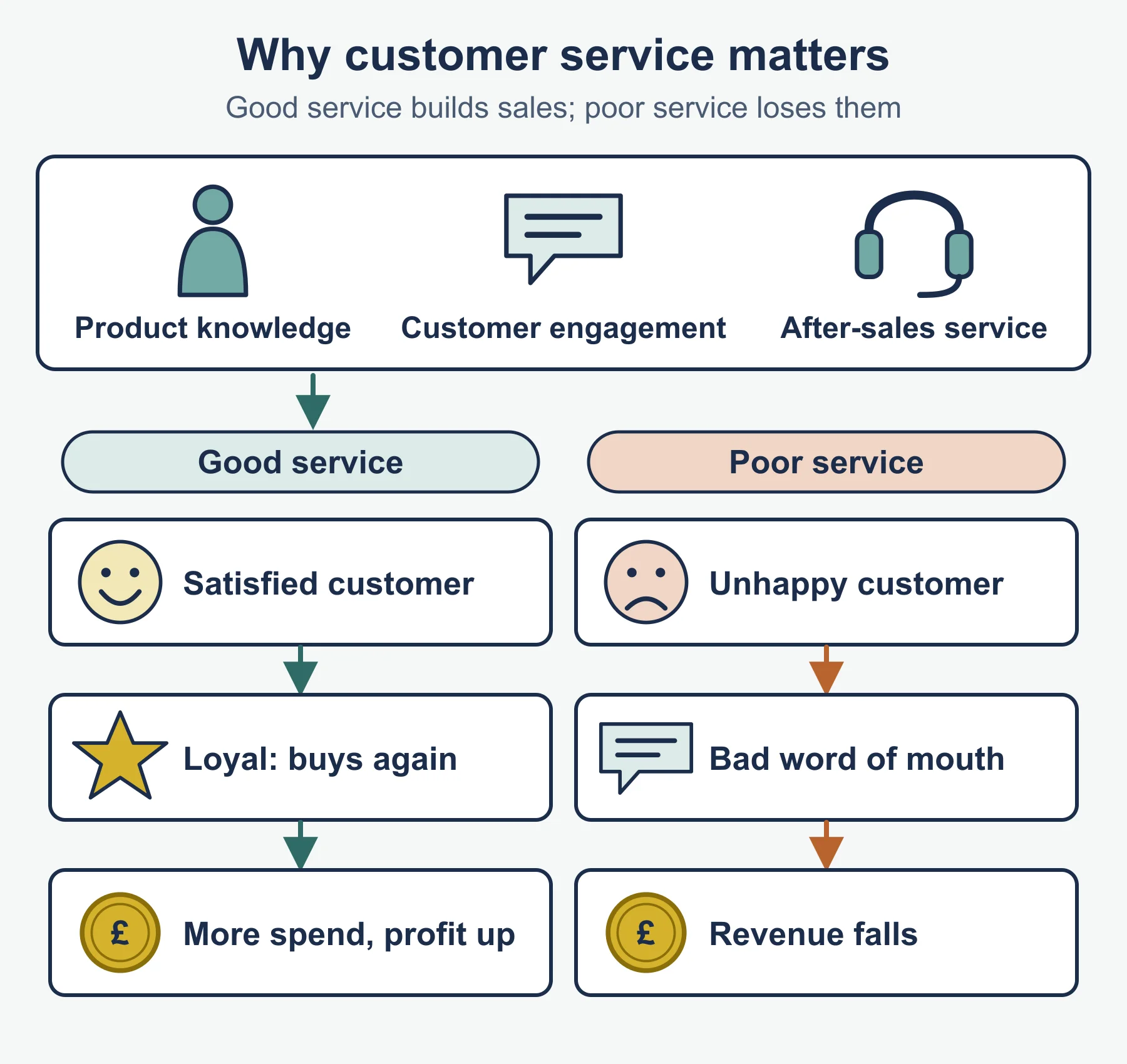
| Product knowledge | Staff who can advise which model suits a customer’s needs |
| Customer engagement | Friendly greeting, listening, quick problem handling |
| Post-sales services | User training, help lines, servicing |
| Benefits of good service | Dangers of poor service |
|---|---|
| Customer satisfaction and loyalty, repeat custom, good word of mouth | Dissatisfied customers, poor reputation, lost sales |
Good service has costs too: training, staff time and systems.
ICT and customer service
| Tool | Role |
|---|---|
| Websites | Information, FAQs, order tracking, live chat at any hour |
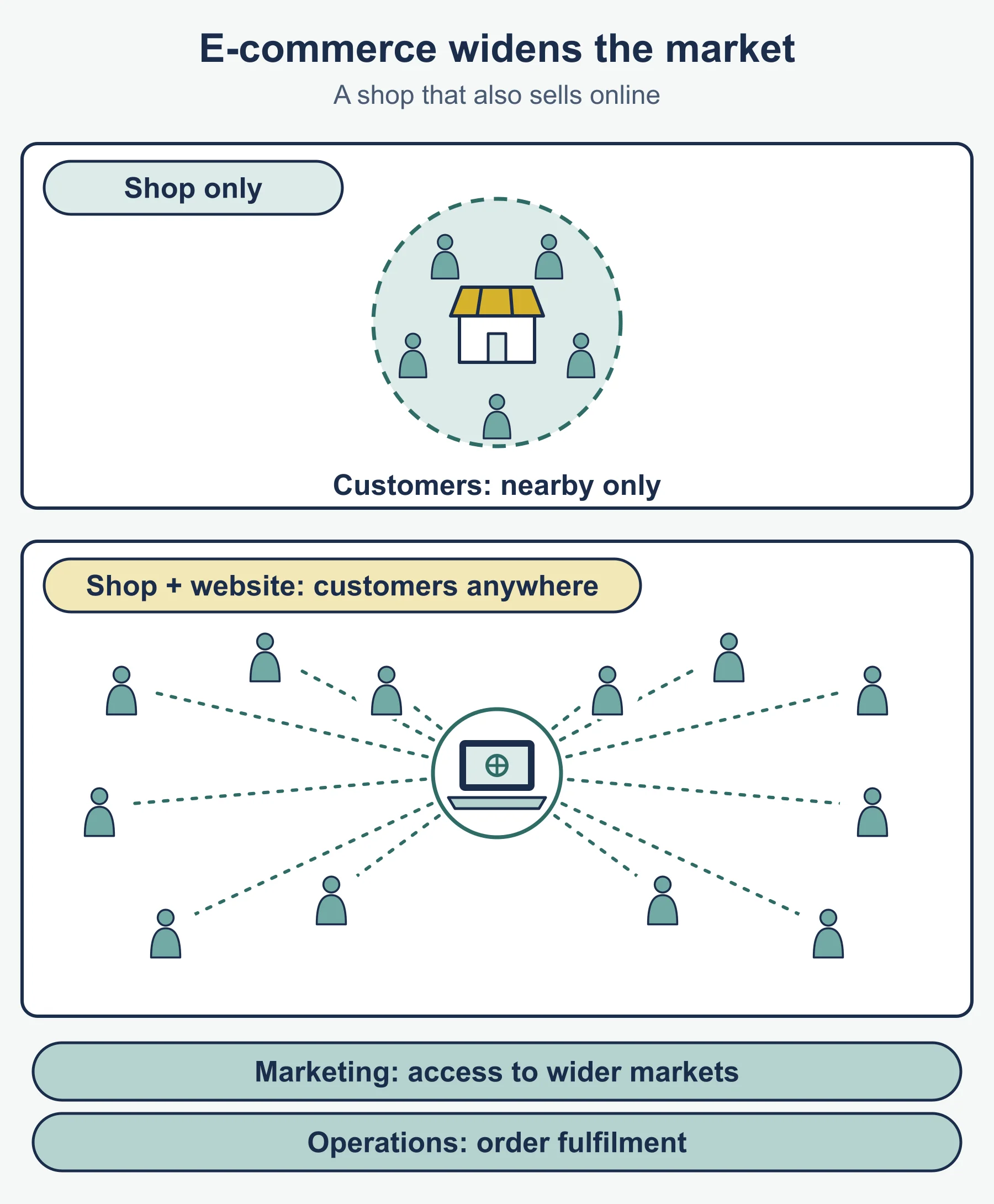
| E-commerce | Buying online at any time; wider market; needs delivery and returns to work |
| Social media | Fast two-way contact and feedback; replies are public |
Applying the topic to a case study
Short answers earn credit for knowing a term. Longer answers need the term applied to the business in the stem, with a consequence and, for evaluation, a judgement.
Chain for analysis
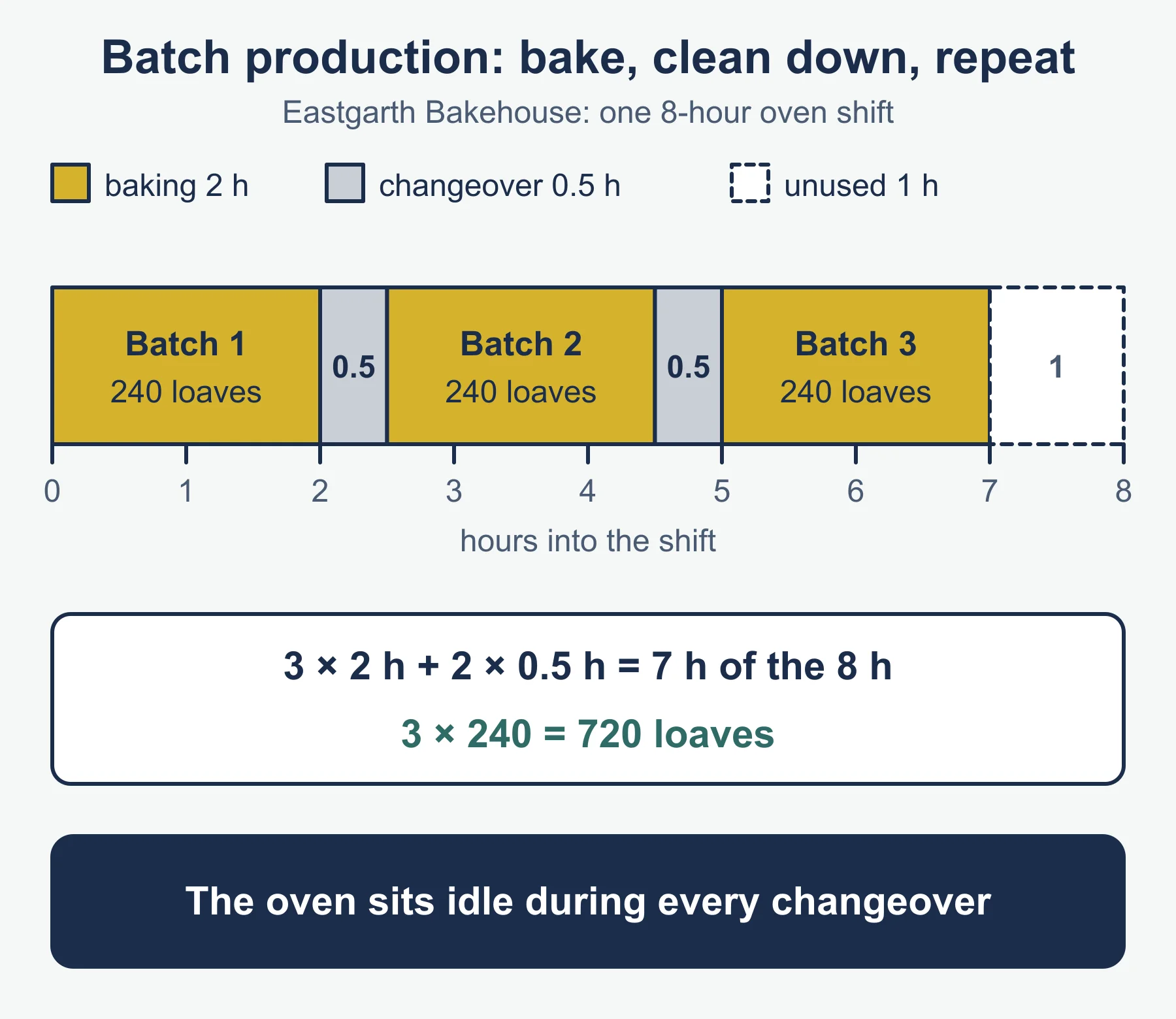
Name the point, say what it does in this business, then say what that means for cost, sales, reputation or customers. For example: batch production lets a bakery change recipe between groups, so it can offer variety, but oven time is lost between batches, which raises cost per loaf.
Chain for evaluation
State the case for, state the case against, use a figure or fact from the stem, then decide and give the condition on which your decision depends. Useful conditions in this topic include how reliable suppliers are, how predictable demand is, how much customers pay for quality, and how large the business is.
Linking the four parts
- Production method affects quality: flow production gives consistency, job production allows personal finish but varies more.
- JIT needs reliable suppliers and high quality inputs, because there is no spare stock to cover faults.
- Good customer service can offset a small quality problem, but cannot replace quality in the long run.
- Growth through outsourcing or franchising makes TQM and clear standards more important.
- Websites and social media create more chances to show good service and also more chances for complaints to be seen.
Must-know distinctions
- Job versus batch: job is one item to a customer’s order, batch is a group of identical items.
- Flow versus cell: flow is a continuous line for one standard product, cell is a team making a whole piece of work.
- JIT versus buffer stock: JIT holds as little as possible, buffer stock is spare on purpose.
- TQM versus inspection: TQM prevents faults at every stage, inspection finds them after.
- Outsourcing versus franchising: outsourcing gives work to another firm, franchising lets others run outlets under your brand.
Quick self-test
- Name the production method suited to making a one-off wedding dress for a customer.
- Give one cost of using JIT.
- Define buffer stock.
- Price 5.00 with 20% unusable. Calculate the cost per usable unit.
- State two factors, other than price, in choosing a supplier.
- What does TQM stand for?
- Give two ways a business might measure quality.
- Why does franchising put quality at risk?
- Give one post-sales service.
- State one way social media helps customer service.
- What does Kaizen mean in practice?
- Which production method is best for a very high volume of one standard product?
Answers
- Job production.
- More frequent deliveries cost more, or bulk-buying discounts are lost (also: production stops if a delivery is late).
- Spare stock kept to meet unexpected demand or cover late delivery.
- 5.00 / 0.80 = 6.25 per usable unit.
- Quality and reliability.
- Total quality management.
- Any two from: percentage defective, return rate, number of complaints, repeat purchases, satisfaction scores.
- Independent owners run outlets under the brand, so a weak outlet may damage the brand and the franchisor has less direct control.
- Any one of: user training, help line, servicing.
- It gives fast two-way contact so queries can be answered and feedback gathered.
- Everyone looks for small, regular improvements.
- Flow production.
Where marks are usually lost
- Defining a production method without linking it to the business in the stem.
- Giving only the benefits of JIT and forgetting the delivery cost and lost economies of scale.
- Picking a supplier on price alone.
- Confusing buffer stock with JIT.
- Writing that TQM is a final check, not a whole-business approach.
- Listing customer service methods without a consequence such as loyalty or reputation.
- Quoting figures without a unit or without a judgement at the end of an evaluation.
- Ignoring the stem: naming outsourcing or franchising risks when the business uses neither.
Frequently asked questions
How do you calculate cost per usable unit when comparing suppliers? Cost per usable unit is the price divided by one minus the proportion that is unusable. A supplier with a lower price can work out more expensive once unusable items are allowed for.
What is the difference between flow and cell production? Flow production makes a standard product continuously along a line, which suits very large demand but needs costly equipment and is hard to change. Cell production splits production into small self-contained teams that each make a complete part or product, which suits medium volumes but needs trained, flexible staff.
What is the difference between job and batch production? Job production makes one item to a customer’s order, while batch production makes a group of identical items before switching to the next product.
How can ICT improve customer service? Websites can give information, FAQs, order tracking and live chat at any hour. Good service still has costs, such as training, staff time and systems.
Official syllabus
OxfordAQA International GCSE Business (9225) specification, version 3.1, OxfordAQA, for International GCSE exams May/June 2022 onwards. Section 3.3 Business operations (3.3.1 to 3.3.4).
Get free revision emails (optional)
Occasional emails with practice questions, worked explanations and links to free resources for the qualification and subjects you choose. No spam, and you can unsubscribe from any email. The free tools on this site never need an email.
Related resources
-
Study guides
OxfordAQA IGCSE Business: Business operations (9225)
Study guide to production methods, JIT, Kaizen, suppliers, quality, TQM and customer service for OxfordAQA International GCSE Business operations.
Business · OxfordAQA · IGCSE
Read guide -
Practice questions
OxfordAQA IGCSE Business: Business operations (9225) – Practice Questions
Twelve original questions with worked answers on production methods, JIT, suppliers, quality, TQM and customer service for OxfordAQA IGCSE Business.
Business · OxfordAQA · IGCSE
Try questions -
Exam preparation
OxfordAQA International GCSE Business: Operations and People, Marketing and Finance
OxfordAQA International GCSE Business 9225: how content splits across two 90-mark papers with no coursework, using the case and a recommendation routine.
Business · OxfordAQA · IGCSE
Read guide
Related articles
-
teaching
A Level tuition in Dubai: Cambridge or Pearson Edexcel International A Level?
Schools in Dubai and Abu Dhabi teach either Cambridge International AS & A Level or Pearson Edexcel International A Level. How the two are structured, why it matters for tuition, and how online classes from Lahore work.
9 October 2026
-
curriculum guides
Choosing subjects at IGCSE and A Level
How subject choices at 14 and 16 affect university options later, and how to keep pathways open without overloading a timetable.
28 July 2026
Studying this with a teacher
Working through Business IGCSE?
This page is free and stays free. If you would rather be taught it, Marlbridge runs Business classes one-to-one and in small groups of up to 15, online in your own time zone. The first trial class is free. WhatsApp replies within an hour (8am–11pm Pakistan time, every day); email the same day.
OxfordAQA Business teachers at Marlbridge
