
Study Guides
A Level Business: Enterprise (Cambridge 9609)
Study guide to section 1.1 Enterprise of Cambridge AS & A Level Business 9609: business activity, entrepreneurs, intrapreneurs and business plans.
- Subject
- Business
- Level
- AS LEVEL
- Topic
- Business and its environment
- Author
- Marlbridge Academic Team
- Updated
- Reviewed by
- Salman Ahmad (what this means)
Aligned to Cambridge A Level Business (9609), For examination in 2026, 2027 and 2028. Official specification .
Syllabus page (what it covers and how it is assessed): Cambridge A Level Business.
Syllabus points this page covers
9609 (AS Level)
- 1.1 Enterprise
Found an error? Report a correction.
Need help with this topic? Request a free trial class for A Level Business (9609).
This guide teaches section 1.1 Enterprise of the Cambridge International AS & A Level Business 9609 syllabus for examination in 2026, 2027 and 2028. Section 1.1 is part of Topic 1, Business and its environment, an AS Level topic that A Level candidates also study. It has three parts: 1.1.1 The nature of business activity, 1.1.2 The role of entrepreneurs and intrapreneurs, and 1.1.3 Business plans.
Use it with the revision notes and the practice questions. For the whole of Topic 1 in broader strokes, see the Topic 1 study guide, the Topic 1 revision notes and the Topic 1 practice questions. Course links: the Cambridge A Level Business hub, the printable checklist and the free diagnostics.
What the syllabus lists
| Section | What you must be able to do |
|---|---|
| 1.1.1 | Explain the purpose of business activity, the four factors of production (land, labour, capital, enterprise), adding value, economic activity, the problem of choice and opportunity cost, the dynamic business environment, why businesses succeed or fail, and the differences between local, national, international and multinational businesses |
| 1.1.2 | Explain the qualities entrepreneurs and intrapreneurs need, the role of entrepreneurship in starting a business, the role of intrapreneurship in ongoing success, barriers to entrepreneurship, business risk and uncertainty, and the role of business enterprise in a country’s development |
| 1.1.3 | Explain the meaning and purpose of business plans, their key elements, and their benefits and limitations |
Paper 1 (Business Concepts 1) and Paper 2 (Business Concepts 2) both test the AS Level content, and both assess application, analysis and evaluation as well as knowledge. Enterprise is therefore never only a list of definitions: you will be asked to use these ideas on a business you are given.
1.1.1 The nature of business activity
Purpose and the factors of production
The purpose of business activity is to use resources to produce goods and services that people want, and to do so in a way that meets the owners’ aims. Those aims may be profit, but the syllabus also covers other objectives later in Topic 1.
Producing anything needs the four factors of production:
- Land: natural resources, not only ground. Timber, water, minerals and a shop’s site all count.
- Labour: the physical and mental effort of the workforce.
- Capital: man-made resources used to produce, such as machines, vehicles and premises, plus the money used to buy them.
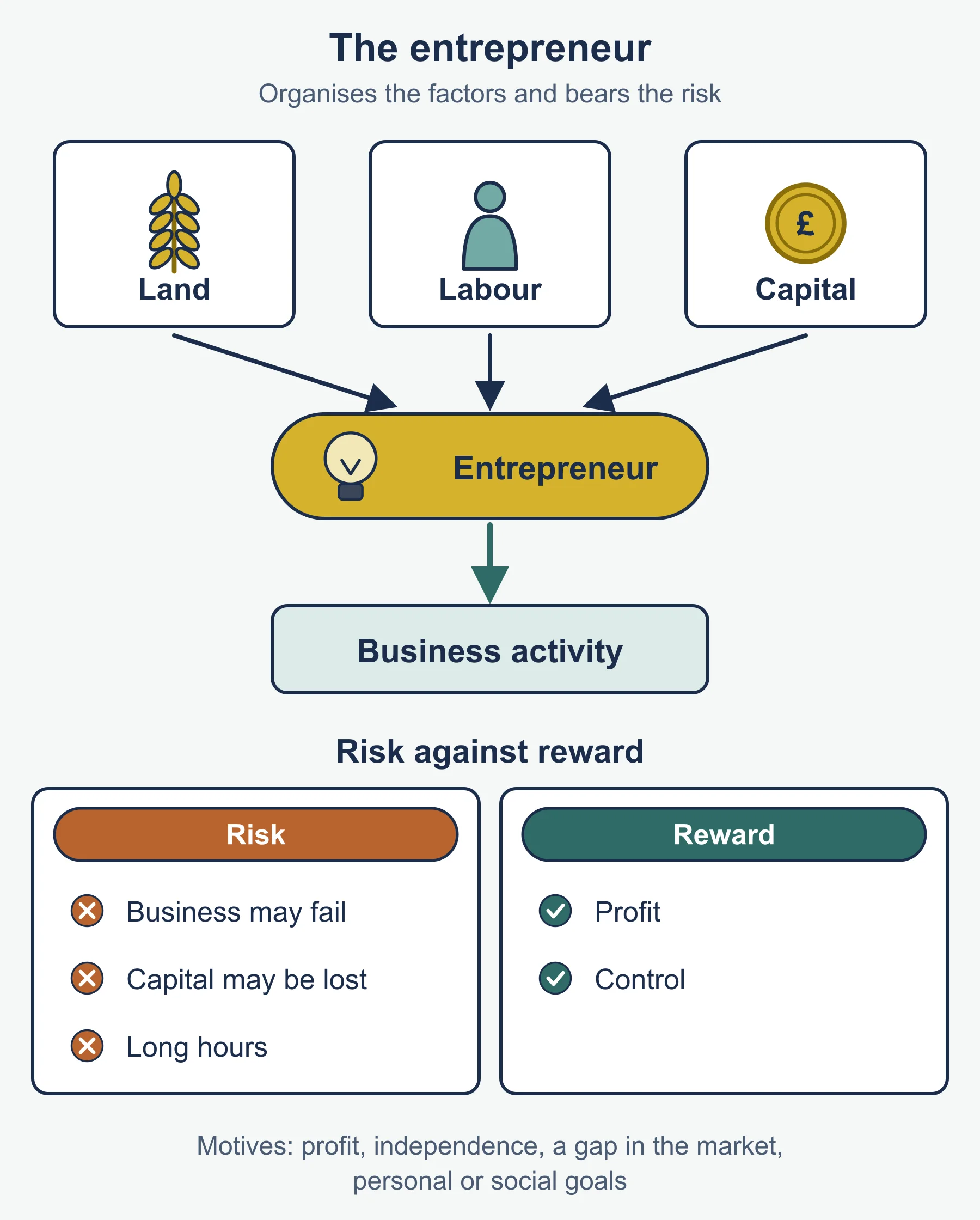
- Enterprise: the ability to seek out and successfully develop business opportunities, which is how the syllabus describes the key concept. The person who brings the other three together and accepts the risk supplies it.
Standard teaching adds that each factor earns a reward (rent, wages, interest and profit). That reward list is the usual textbook form, not something the syllabus itself sets out, so use it only as support.
Adding value
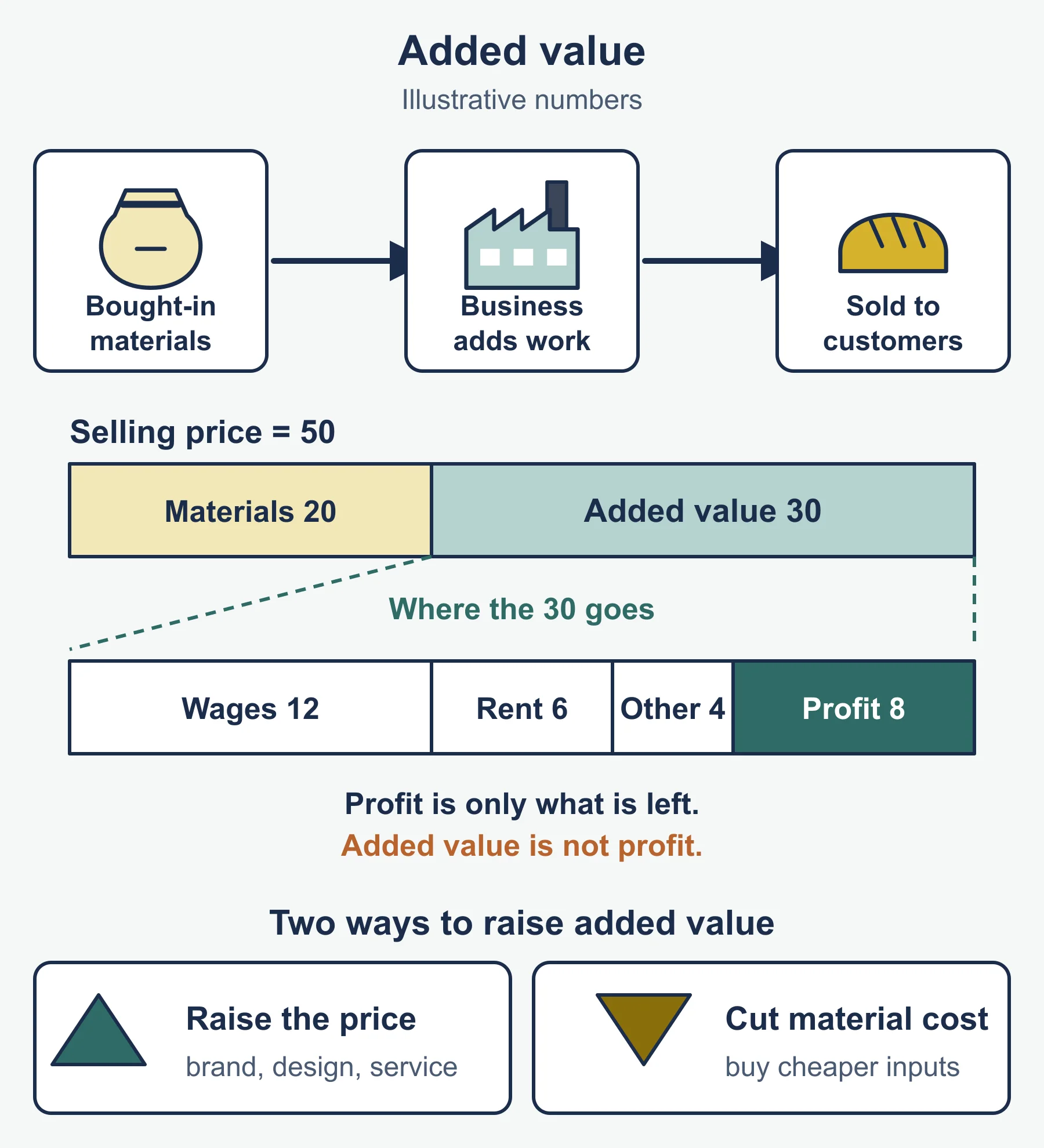
Adding value means turning inputs into outputs that sell for more than the bought-in inputs cost. The standard form is:
value added = selling price − cost of bought-in materials and services
Value added is not profit. Wages, rent and other overheads must still be paid out of it.
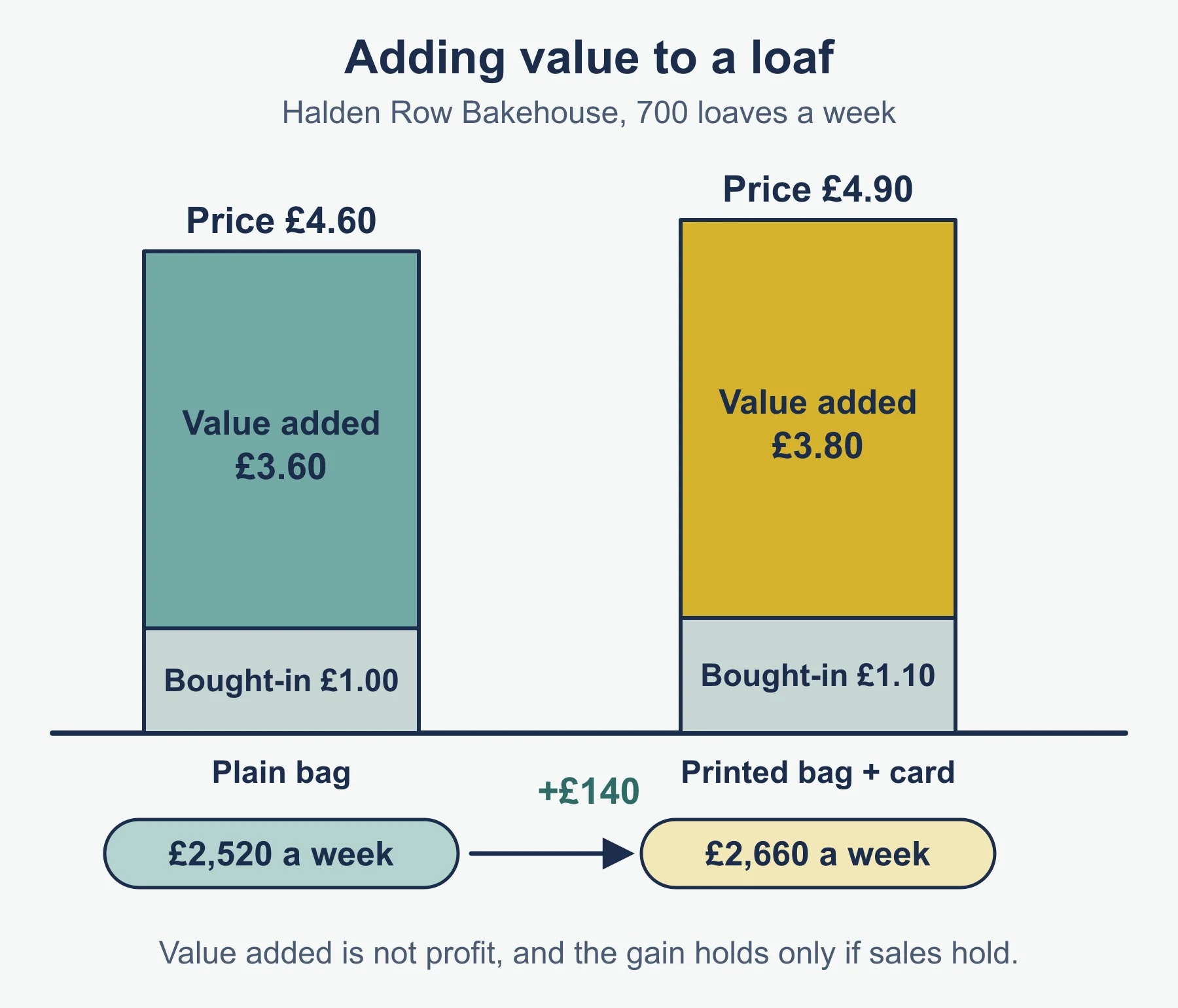
Worked example. Halden Row Bakehouse sells sourdough loaves at £4.60. Each loaf uses £0.85 of ingredients and £0.15 of packaging, so bought-in cost is £1.00.
- Value added per loaf = £4.60 − £1.00 = £3.60.
- At 700 loaves a week, total value added = 700 × £3.60 = £2,520 a week.
The owner then adds a printed bag and a story card. Bought-in cost rises to £1.10 and the price to £4.90.
- New value added = £4.90 − £1.10 = £3.80 a loaf.
- Weekly value added = 700 × £3.80 = £2,660, a rise of £140 a week, if sales volume holds.
The caveat matters. A higher price may reduce the number sold, so the gain is only certain if customers accept the new price. Ways to add value include branding, design, quality, service and convenience.
Economic activity, choice and opportunity cost
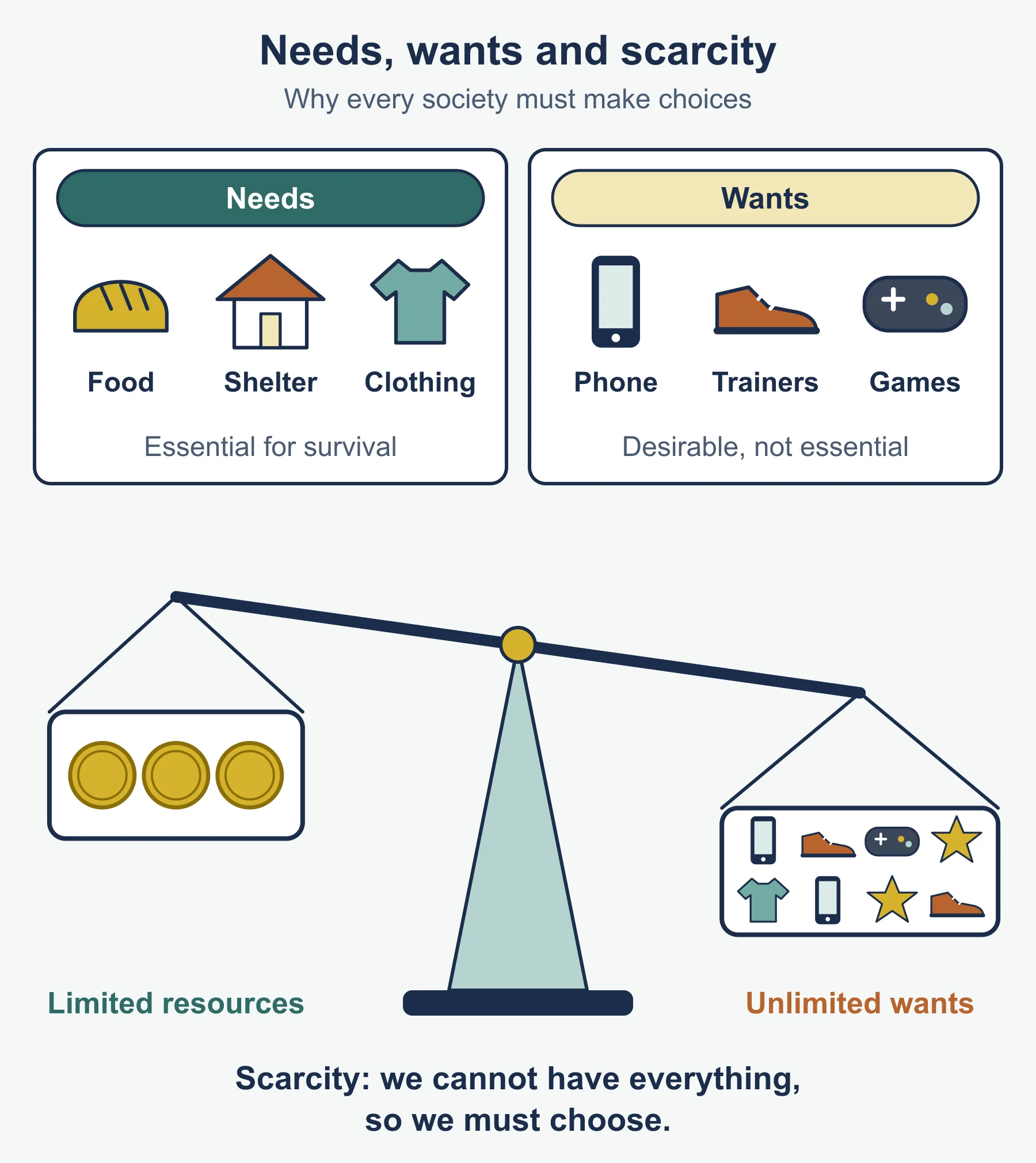
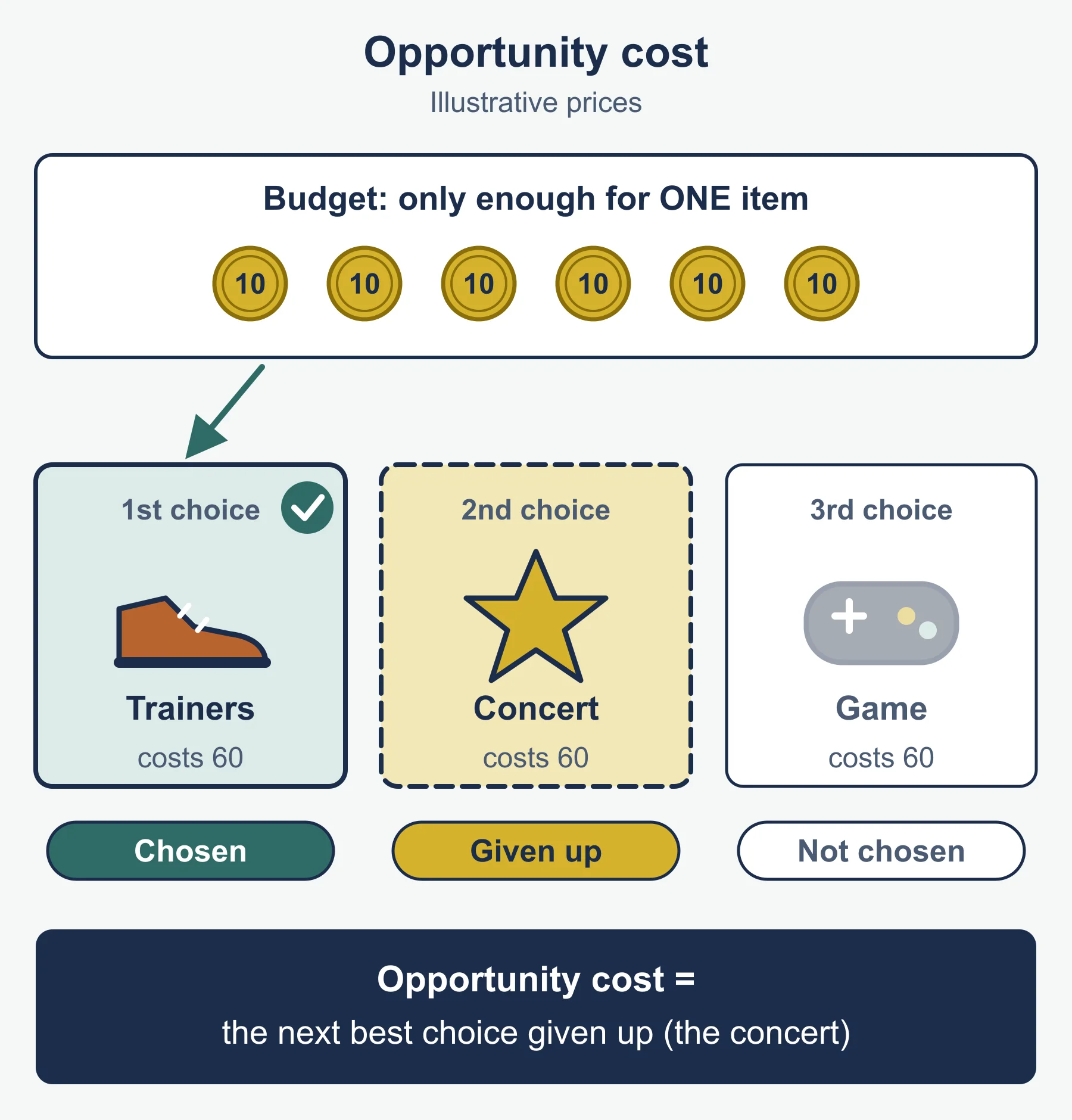
Economic activity is the production and consumption of goods and services. Resources are limited but wants are not, which creates the problem of choice: using resources one way means not using them another way. Opportunity cost is the value of the next best alternative given up.
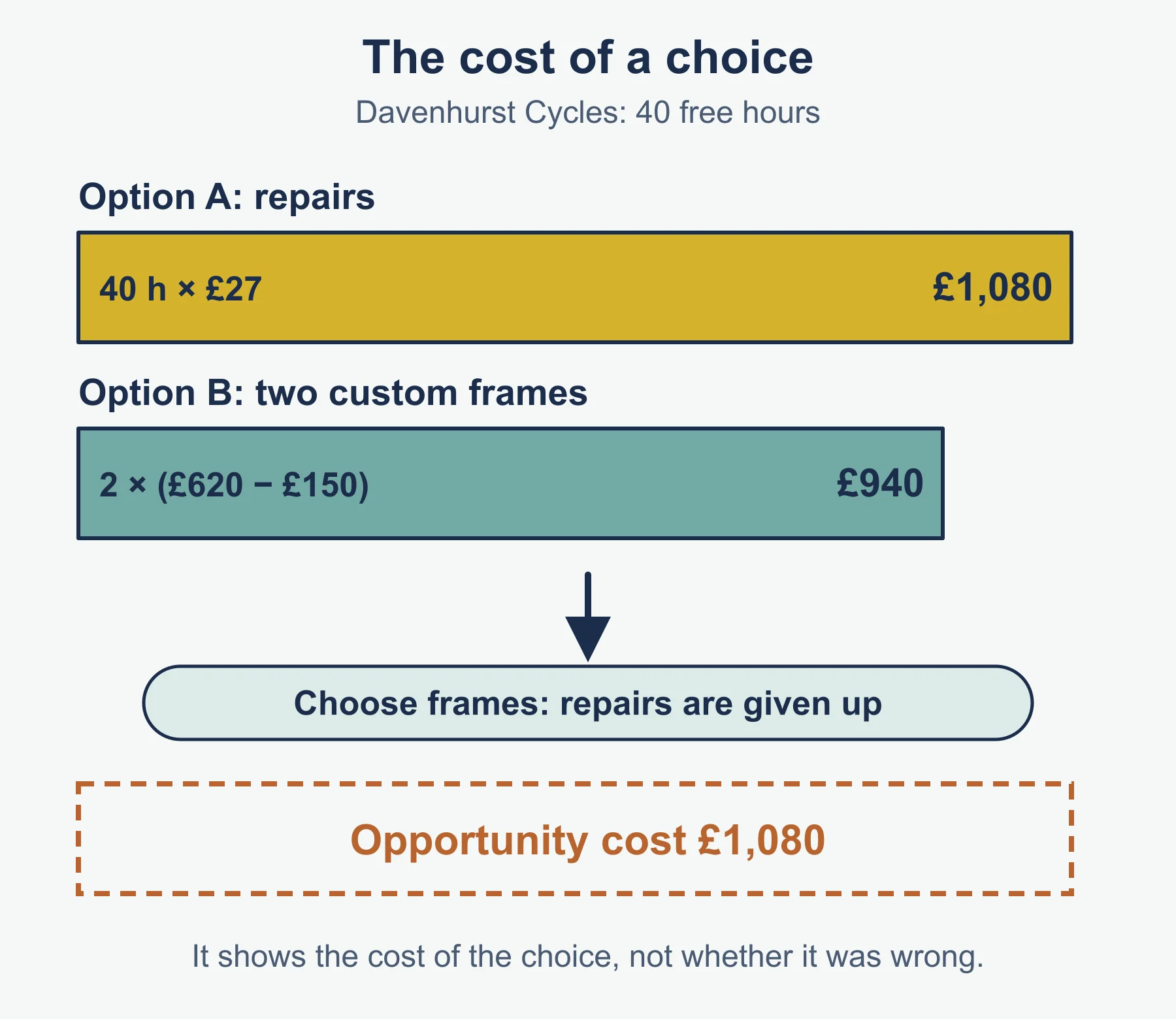
Worked example. Bastian Voll runs Davenhurst Cycles and has 40 hours free next week. Repairs would bring in £27 an hour, so £1,080. Alternatively he can build two custom frames, each selling for £620 with £150 of materials, a net £940.
- Repairs: 40 × £27 = £1,080.
- Frames: 2 × (£620 − £150) = £940.
- If he builds the frames, the opportunity cost is the £1,080 of repair income given up.
He may still choose the frames, for example to build a reputation for custom work. Opportunity cost shows what a decision costs; it does not by itself say which choice is right.
The dynamic business environment
The business environment changes continuously: customer tastes, technology, competitors, prices and the economy all move. The syllabus calls change the only constant. Change creates opportunities, so new enterprises appear, and it creates threats for firms that do not respond. Businesses therefore research their context and adapt rather than assume that what worked last year still works.
Why businesses succeed or fail
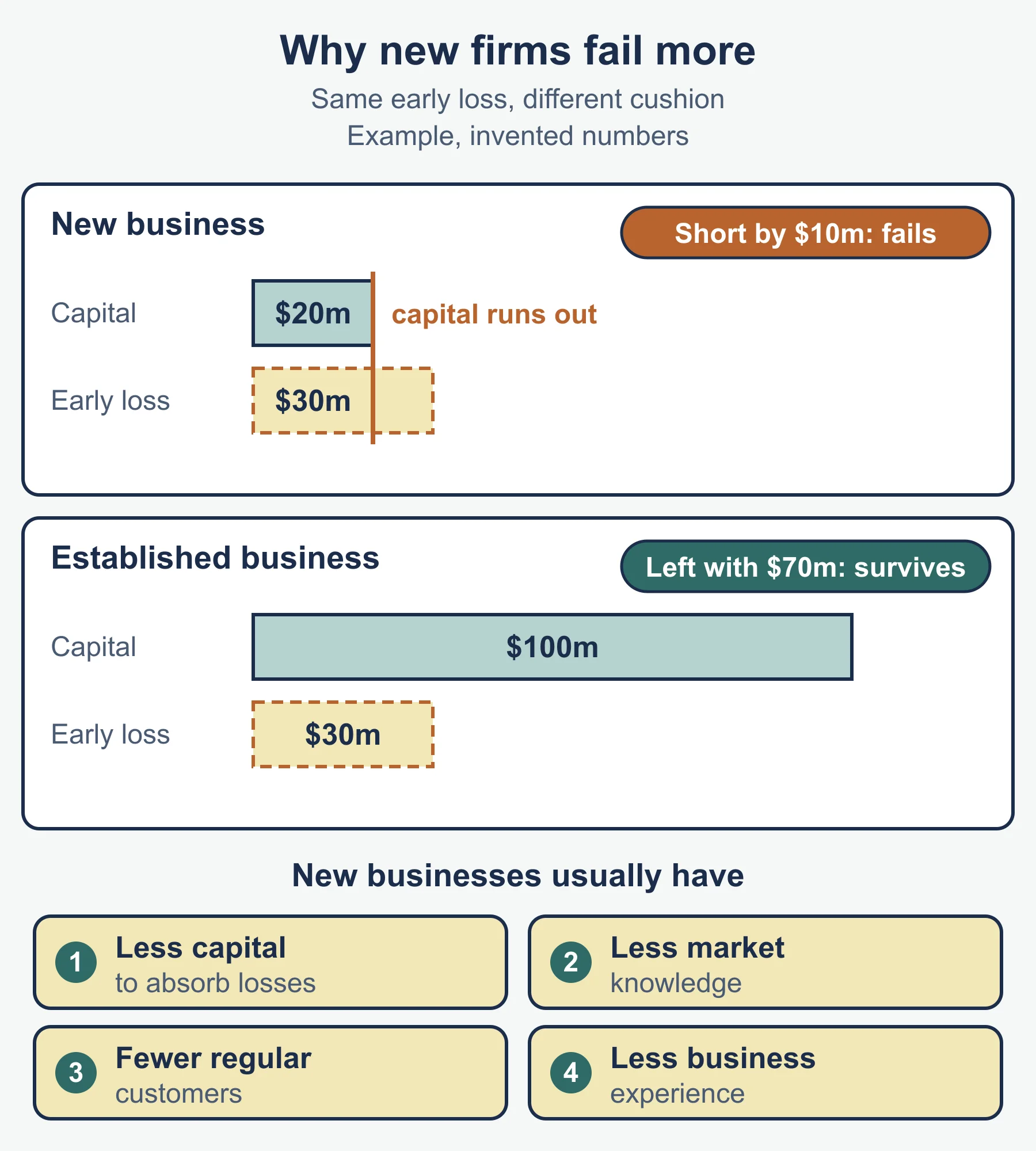
Common causes of failure: weak planning, too little finance or poor cash control, costs above revenue, strong competition, poor management, and failing to adapt to change. Common causes of success: meeting a real customer need, good control of cash and costs, effective management, a clear difference from competitors, and adapting as conditions change. In an exam, tie the cause to the figures or facts in the case rather than listing causes.
Local, national, international and multinational businesses
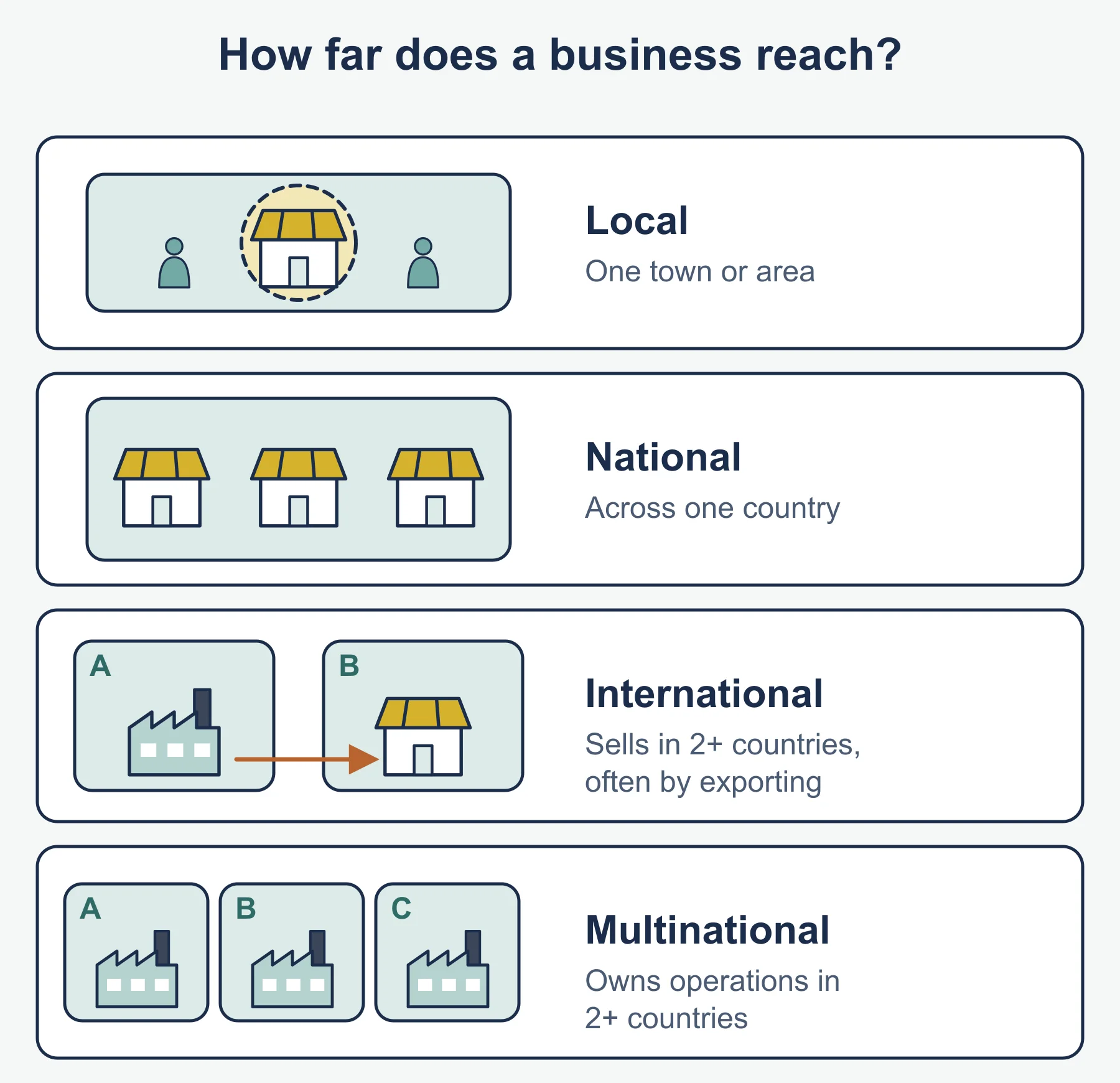
| Type | Standard distinction |
|---|---|
| Local | Operates in one town or area, with customers mainly nearby |
| National | Operates across one country |
| International | Sells in more than one country, often by exporting |
| Multinational | Owns and runs operations (such as factories or shops) in more than one country |
The key contrast is between selling abroad and owning operations abroad. Multinationals can use lower-cost locations and reach bigger markets, but they face more complexity, exchange-rate exposure and local-culture issues.
1.1.2 Entrepreneurs and intrapreneurs
Qualities
Both need: creativity and the ability to spot opportunities, willingness to take calculated risks, determination, resilience after setbacks, leadership and communication, organisation and numeracy, and flexibility. Apply them to the person in the case. An entrepreneur who is creative but cannot control cash is exposed in a different way from one who is careful but never innovates.
Entrepreneurship and intrapreneurship
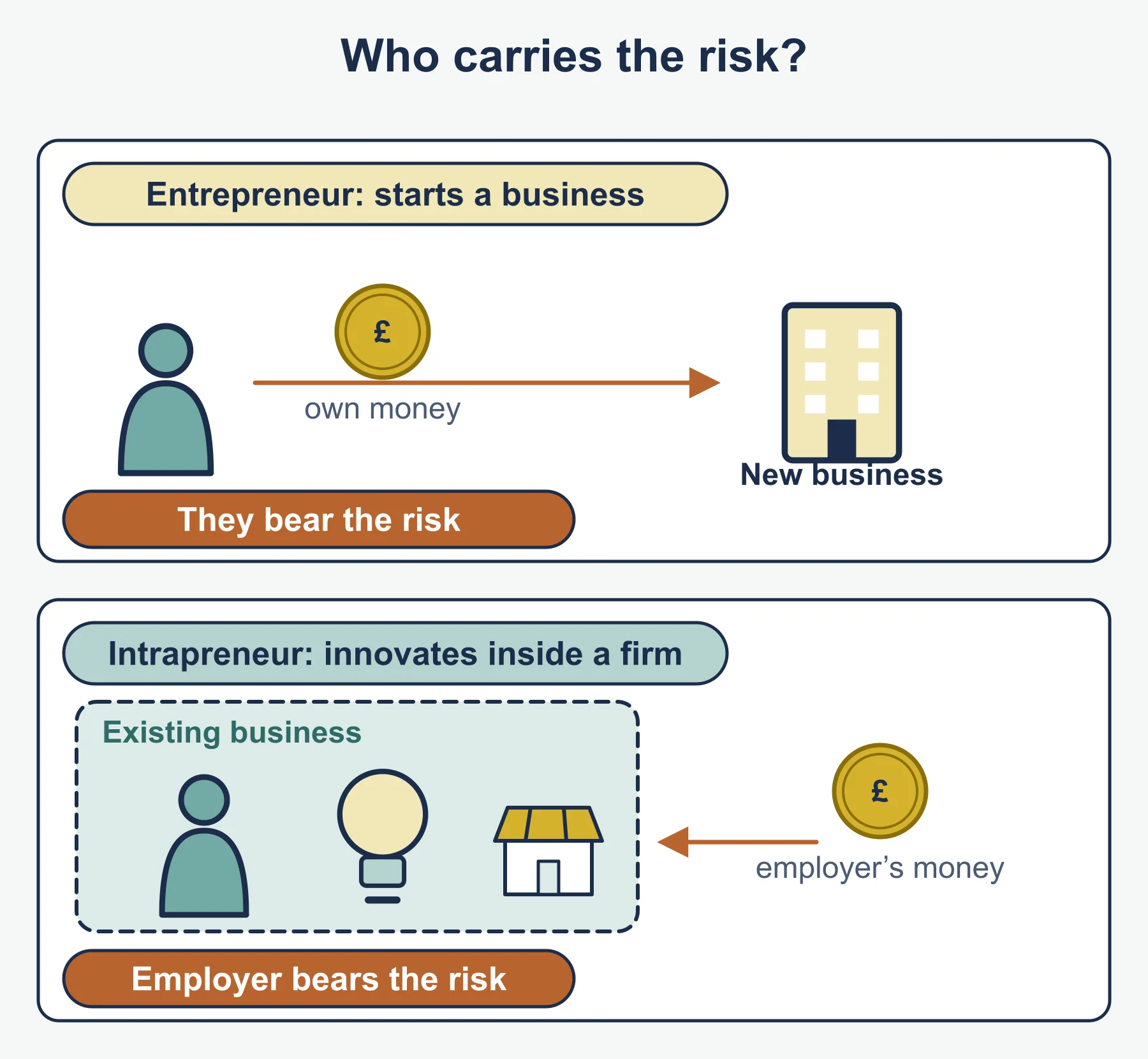
An entrepreneur creates and starts up a business, usually putting in their own money and bearing the risk. Their role in start-up includes spotting the opportunity, gathering the resources, and organising production and selling.
An intrapreneur behaves in an entrepreneurial way inside an existing business. The employer carries the financial risk, but the intrapreneur proposes and drives new products, processes or ventures. Their role in ongoing success is to keep a large business innovative, so that it does not become slow and fixed as it ages. A business can encourage this with freedom to experiment, rewards for ideas and tolerance of some failure.
Barriers to entrepreneurship
- Finance: hard to raise start-up capital without a track record or security.
- Skills and experience: gaps in management, accounting or marketing knowledge.
- Regulation and costs: licences, paperwork and the cost of complying.
- Competition and market entry: established firms with loyal customers.
- Fear of failure and the loss of a secure income.
- Lack of a suitable idea or of access to information and networks.
Risk and uncertainty
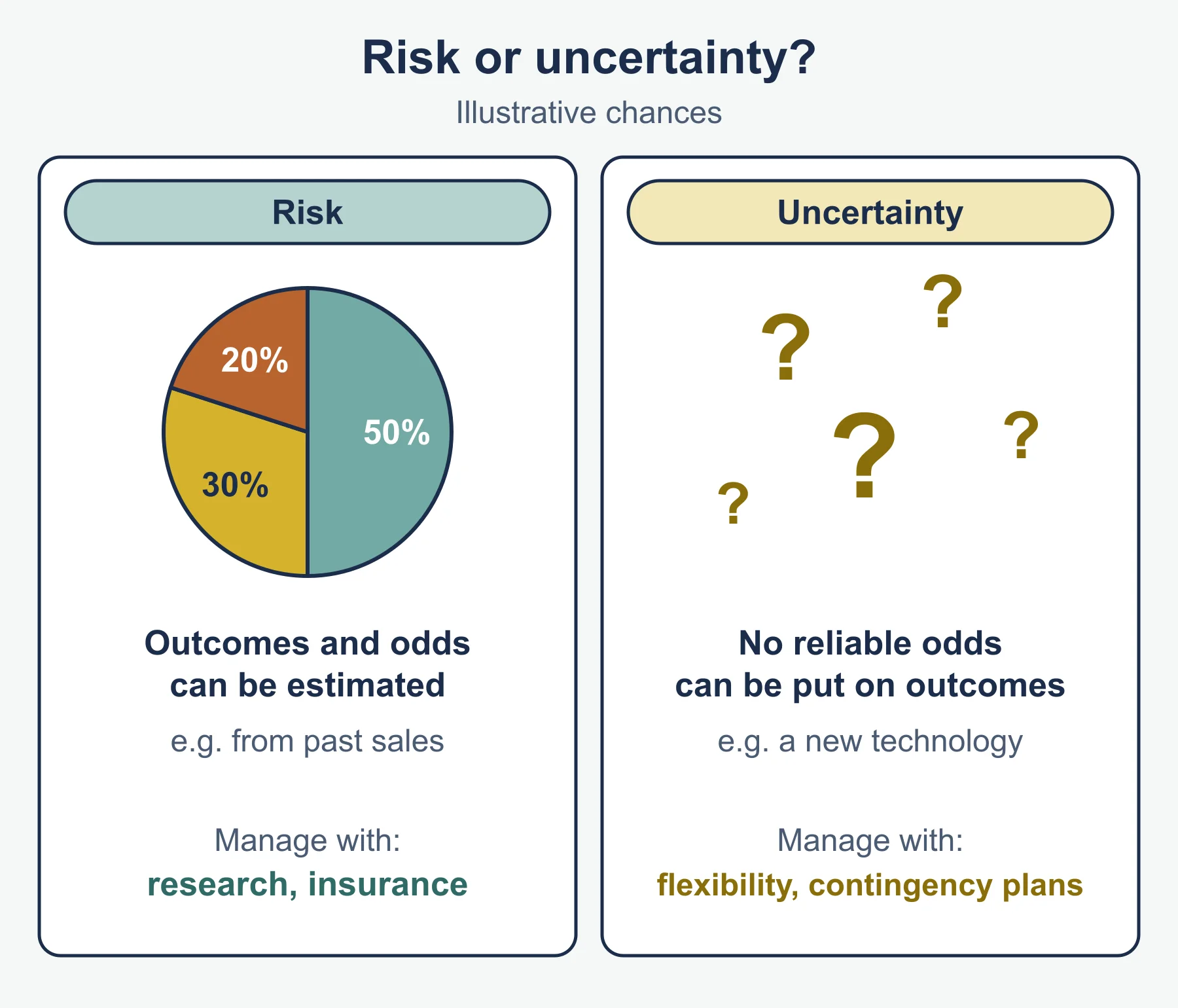
The syllabus lists both and does not define them, so this is the standard distinction. Risk is the chance of loss where the possible outcomes and their likelihood can be estimated, for example from past sales. Uncertainty is where outcomes cannot be predicted reliably, so no probabilities can be put on them, as when a new technology appears. Risk can be reduced through research and insurance. Uncertainty can only be managed through flexibility and contingency plans.
Enterprise and a country’s development
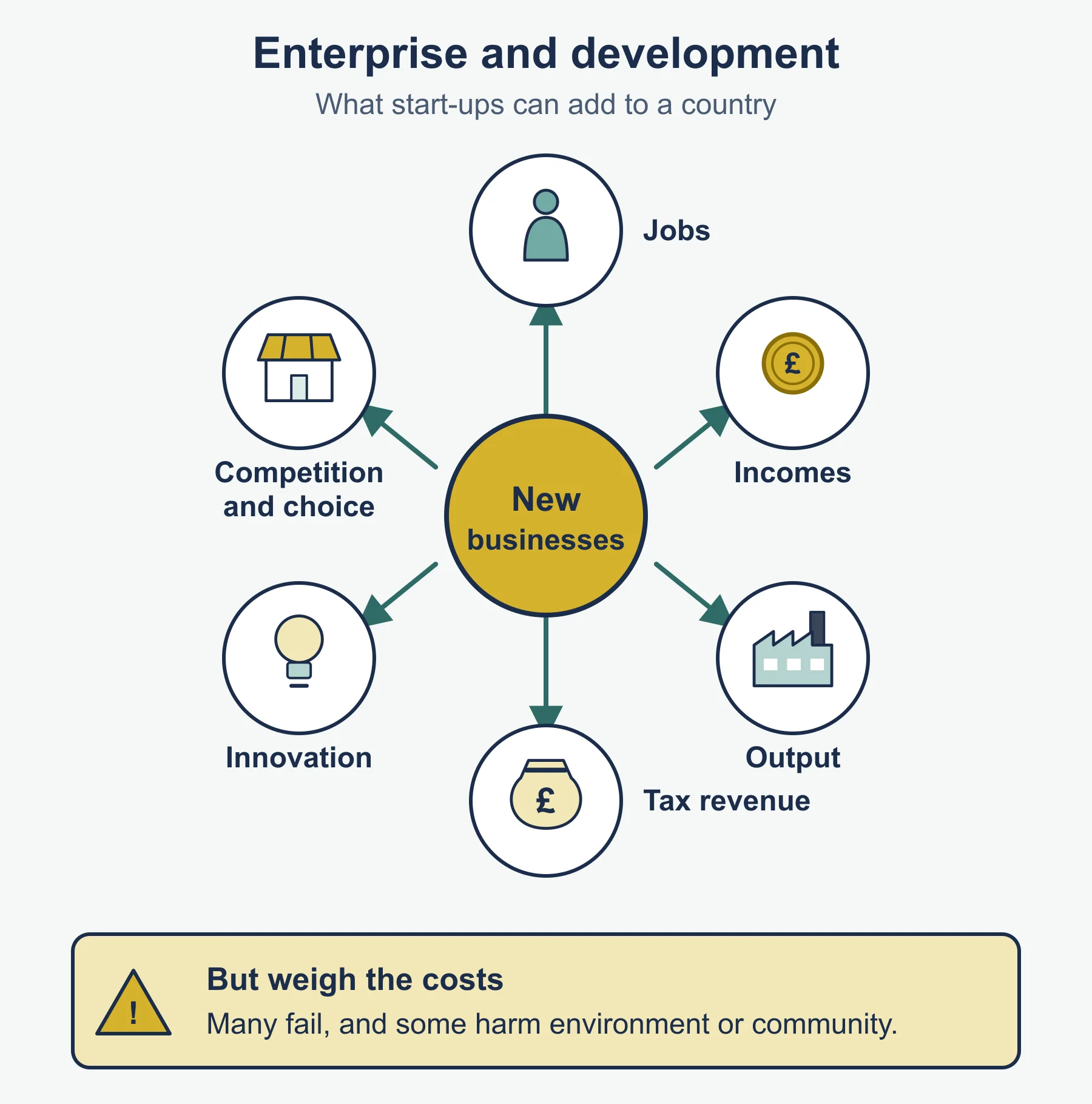
Business enterprise can raise the development of a country by creating jobs and incomes, adding output and tax revenue, encouraging innovation, increasing competition, and giving people more choice. Evaluate by noting that benefits depend on the kind of enterprise: a very high failure rate wastes resources, and some activity may harm the environment or local communities.
1.1.3 Business plans
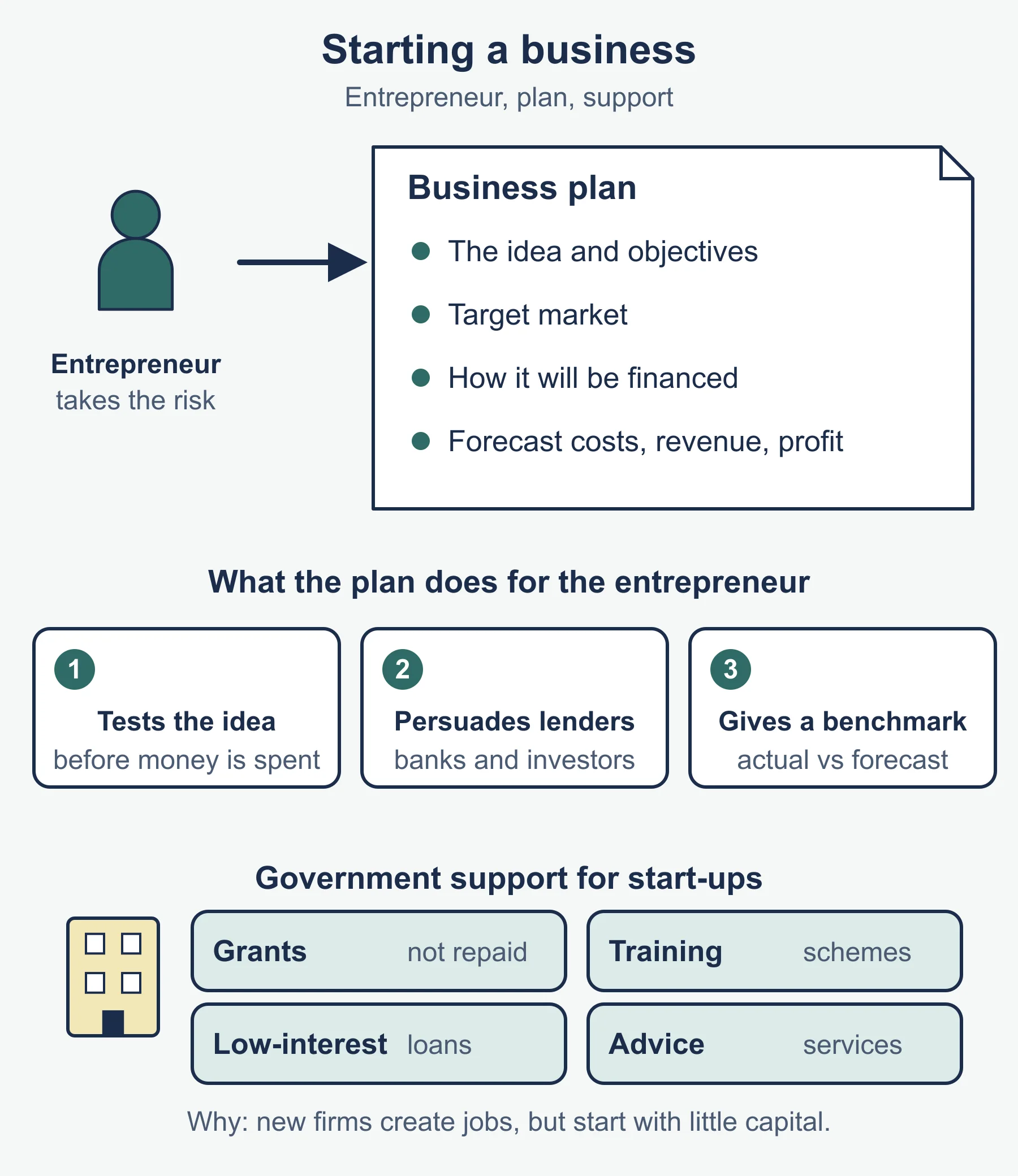
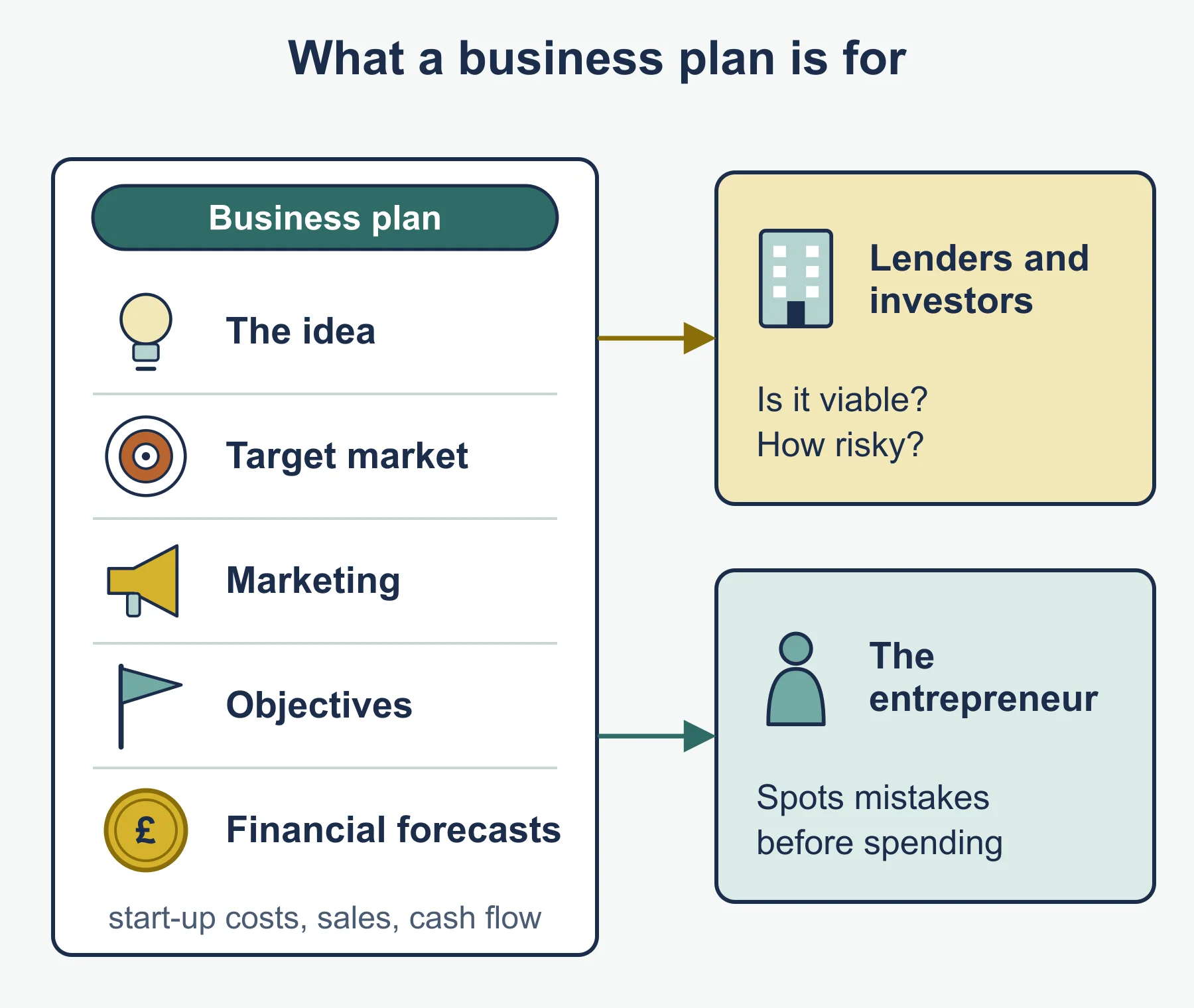
A business plan is a document setting out what a business intends to do and how, usually for a start-up or a major new venture. Its purposes are to clarify the idea, to guide decisions, to set targets against which progress can be checked, and to persuade lenders and investors.
Key elements: the business idea and its aims; the target market and market research; marketing plan; operations and staffing; legal structure and owners; and financial information, usually start-up costs, sources of finance, and forecasts of revenue, costs and cash flow.
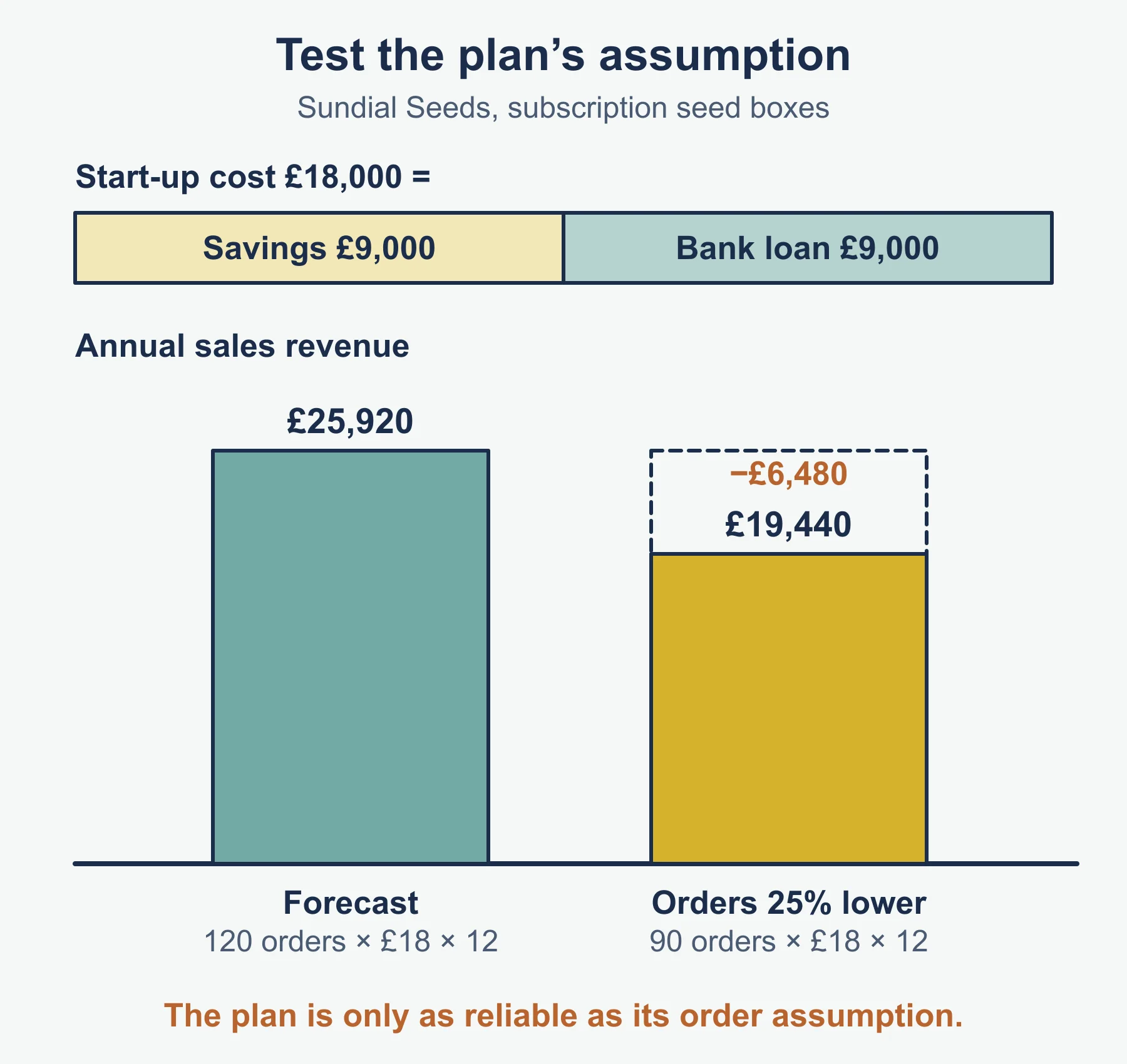
Worked example. Tamsin Rudd plans Sundial Seeds, a subscription seed-box business. Start-up costs are £18,000, funded by £9,000 of her savings and a £9,000 bank loan. She forecasts 120 orders a month at £18, so monthly sales revenue is 120 × £18 = £2,160 and annual sales revenue is £25,920.
A cautious reader tests the assumption. If orders are 25% lower, they fall to 90 a month, so revenue is 90 × £18 = £1,620 a month, or £19,440 a year. That is £6,480 a year below the forecast. The plan is only as reliable as its order assumption.
Benefits: forces careful thinking, exposes weaknesses before money is spent, helps raise finance, and gives targets for review. Limitations: takes time to write; forecasts rest on assumptions that may be wrong; the market may change and make it out of date; and a plan cannot guarantee success.
Common errors
- Writing “profit” when the question asks for value added.
- Calling the opportunity cost the benefit chosen, rather than the next best alternative given up.
- Treating risk and uncertainty as the same thing.
- Describing an intrapreneur as someone who starts their own business.
- Listing barriers without saying which matters most for the person in the case.
- Saying a business plan guarantees finance or success.
- Using “international” and “multinational” as if they meant the same thing.
Frequently asked questions
What are the four factors of production in Cambridge 9609 Business? Land, labour, capital and enterprise. The syllabus describes enterprise as the ability to seek out and successfully develop business opportunities.
What is an intrapreneur? An intrapreneur behaves in an entrepreneurial way inside an existing business, driving new products, processes or ventures, while the employer bears the financial risk.
Does a business plan guarantee finance or success? No. A business plan forces careful thinking and can help persuade lenders, but its forecasts rest on assumptions that may be wrong and it can go out of date.
Why do businesses fail? Common causes are weak planning, too little finance or poor cash control, costs above revenue, strong competition and failing to respond to change. In an exam, link the cause to figures from the case.
Official syllabus
Cambridge International AS & A Level Business 9609 syllabus for examination in 2026, 2027 and 2028, published by Cambridge University Press & Assessment (Cambridge Assessment International Education), section 1.1.
Get free revision emails (optional)
Occasional emails with practice questions, worked explanations and links to free resources for the qualification and subjects you choose. No spam, and you can unsubscribe from any email. The free tools on this site never need an email.
Related resources
-
Practice questions
A Level Business: Enterprise (Cambridge 9609) – Practice Questions
Original practice questions with worked answers on 1.1 Enterprise for Cambridge AS & A Level Business 9609: short answer, calculation and case study.
Business · Cambridge · AS Level
Try questions -
Revision notes
A Level Business: Enterprise (Cambridge 9609) – Revision Notes
Condensed revision notes for 1.1 Enterprise in Cambridge AS & A Level Business 9609, with a self-test and the usual ways marks are lost.
Business · Cambridge · AS Level
Revise topic -
Study guides
A Level Business: External influences on business activity (Cambridge 9609)
Study guide to 6.1 External influences on business activity for Cambridge A Level Business 9609: political, economic, social, technological and more.
Business · Cambridge · A Level
Read guide
Related articles
-
teaching
A Level tuition in Dubai: Cambridge or Pearson Edexcel International A Level?
Schools in Dubai and Abu Dhabi teach either Cambridge International AS & A Level or Pearson Edexcel International A Level. How the two are structured, why it matters for tuition, and how online classes from Lahore work.
9 October 2026
-
curriculum guides
Choosing subjects at IGCSE and A Level
How subject choices at 14 and 16 affect university options later, and how to keep pathways open without overloading a timetable.
28 July 2026
Studying this with a teacher
Working through Business AS LEVEL?
This page is free and stays free. If you would rather be taught it, Marlbridge runs Business classes one-to-one and in small groups of up to 15, online in your own time zone. The first trial class is free. WhatsApp replies within an hour (8am–11pm Pakistan time, every day); email the same day.
Cambridge Business teachers at Marlbridge

