
Revision Notes
A Level Business: Enterprise (Cambridge 9609) – Revision Notes
Condensed revision notes for 1.1 Enterprise in Cambridge AS & A Level Business 9609, with a self-test and the usual ways marks are lost.
- Subject
- Business
- Level
- AS LEVEL
- Topic
- Business and its environment
- Author
- Marlbridge Academic Team
- Updated
- Reviewed by
- Salman Ahmad (what this means)
Aligned to Cambridge A Level Business (9609), For examination in 2026, 2027 and 2028. Official specification .
Syllabus page (what it covers and how it is assessed): Cambridge A Level Business.
Syllabus points this page covers
9609 (AS Level)
- 1.1 Enterprise
Found an error? Report a correction.
Need help with this topic? Request a free trial class for A Level Business (9609).
These are condensed notes for section 1.1 Enterprise of the Cambridge International AS & A Level Business 9609 syllabus for examination in 2026, 2027 and 2028 (1.1.1 to 1.1.3, an AS Level topic). For full explanations and worked examples, use the study guide. Then test yourself with the practice questions. Wider Topic 1 recall is in the Topic 1 revision notes. Course links: the Cambridge A Level Business hub, the checklist and the free diagnostics.
1.1.1 Nature of business activity
Key definitions
| Term | Meaning |
|---|---|
| Purpose of business activity | Using resources to produce goods and services that meet customer wants and the owners’ aims |
| Land | Natural resources, including the site |
| Labour | Human effort, physical and mental |
| Capital | Man-made resources used in production, and the money used to buy them |
| Enterprise | The ability to seek out and successfully develop business opportunities (the syllabus wording) |
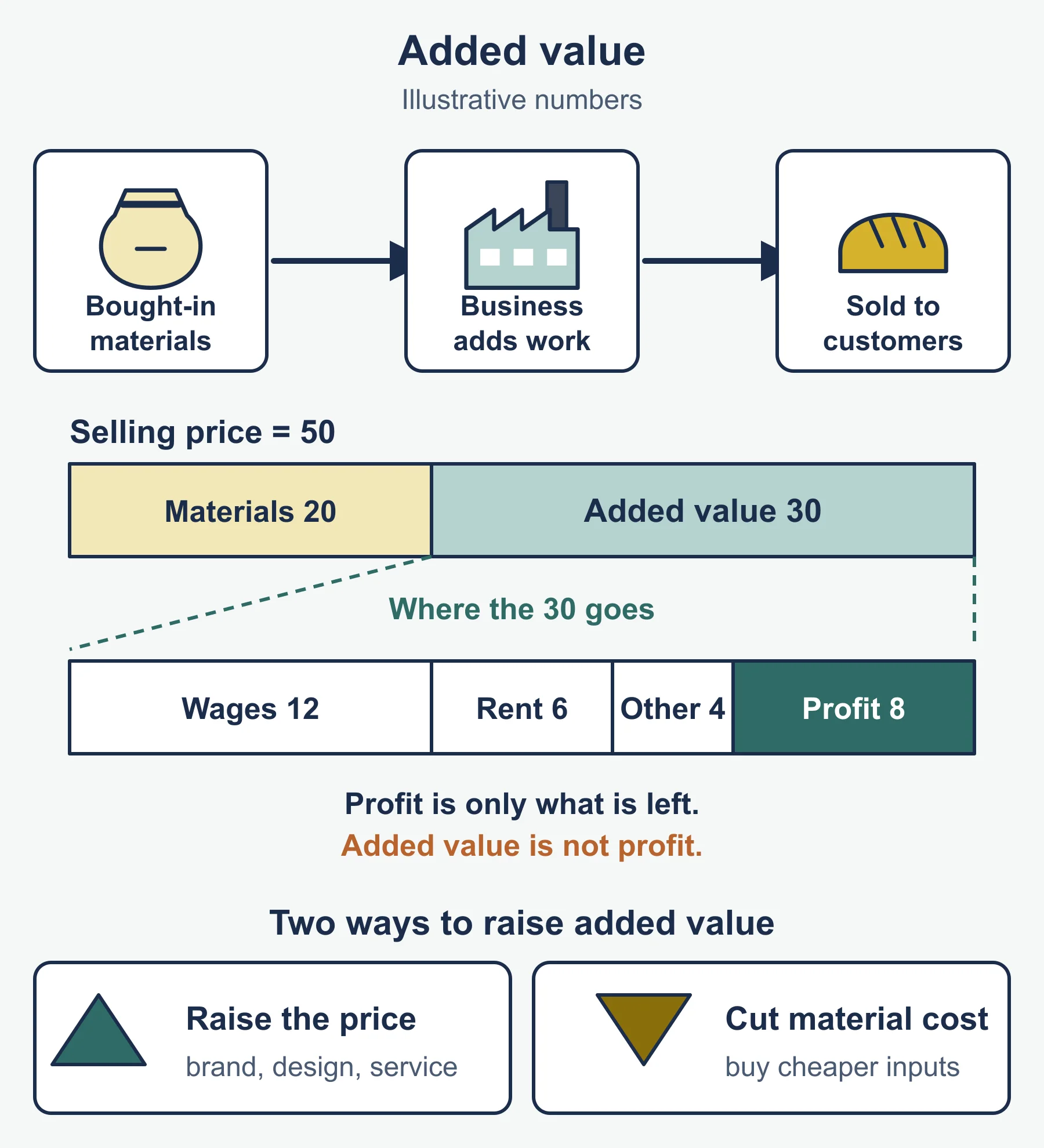
| Adding value | Selling output for more than the cost of the bought-in inputs |
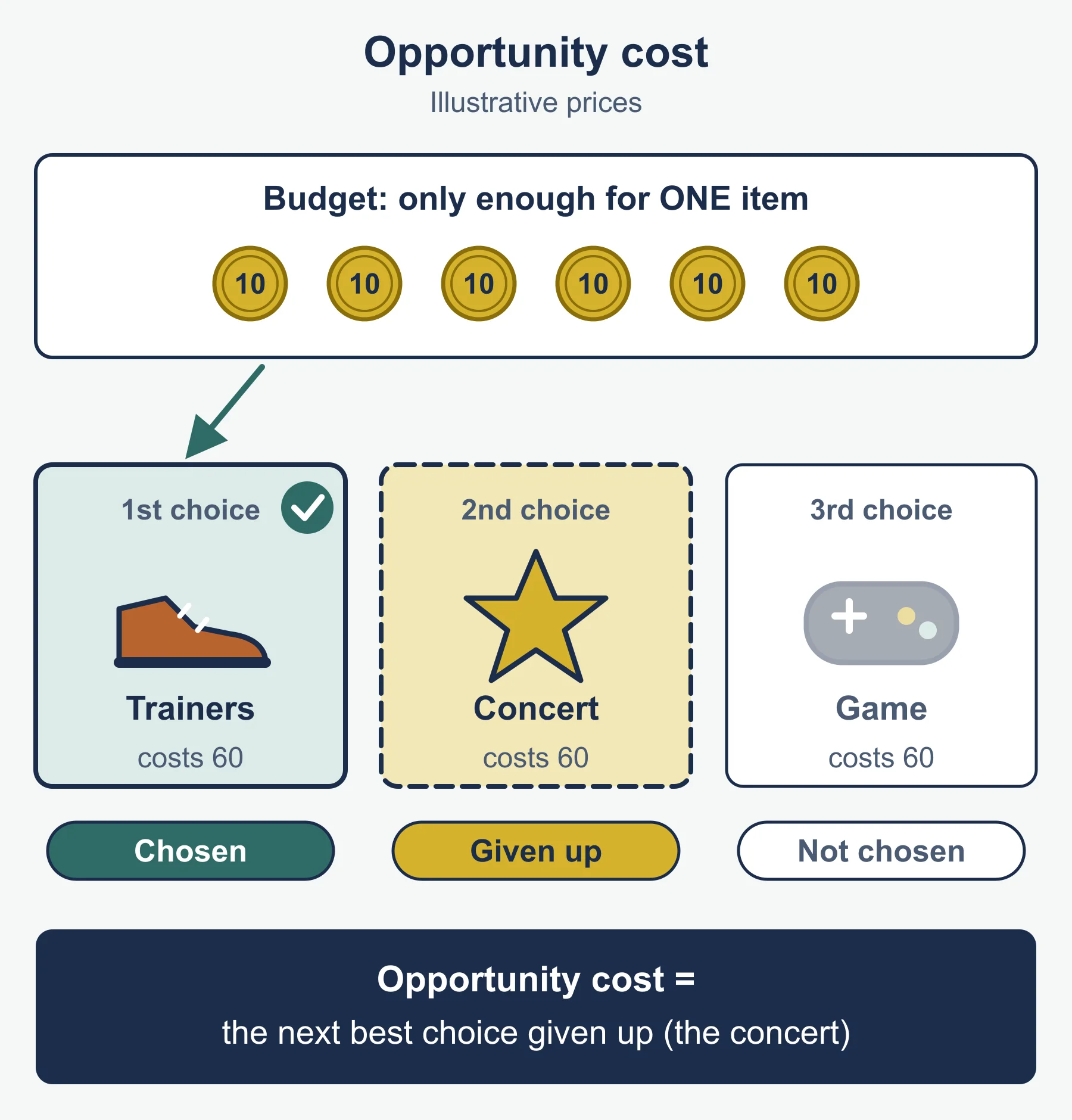
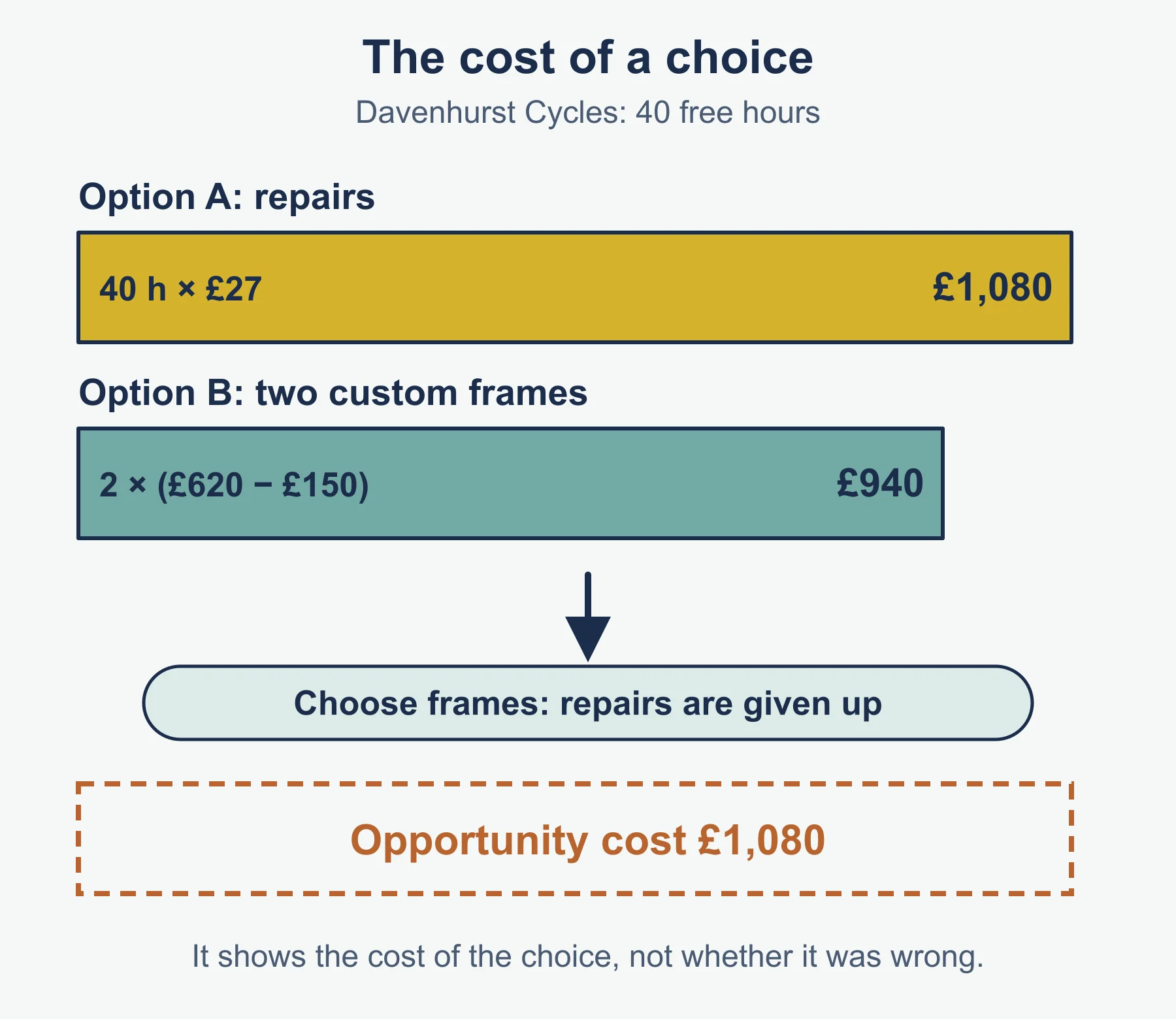
| Opportunity cost | The value of the next best alternative given up |
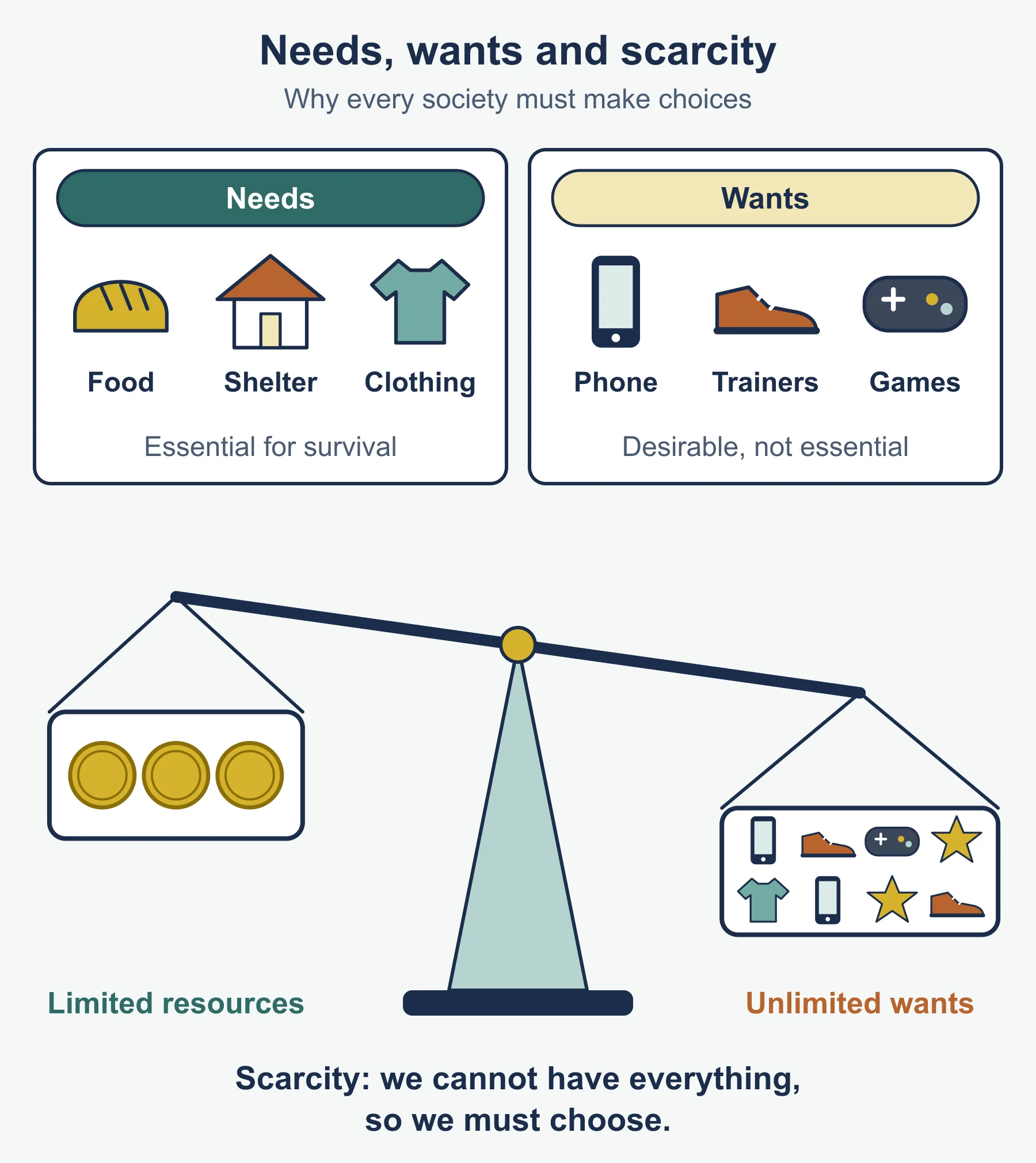
| Problem of choice | Resources are limited and wants are not, so using resources one way means not using them another way |
Formula to know
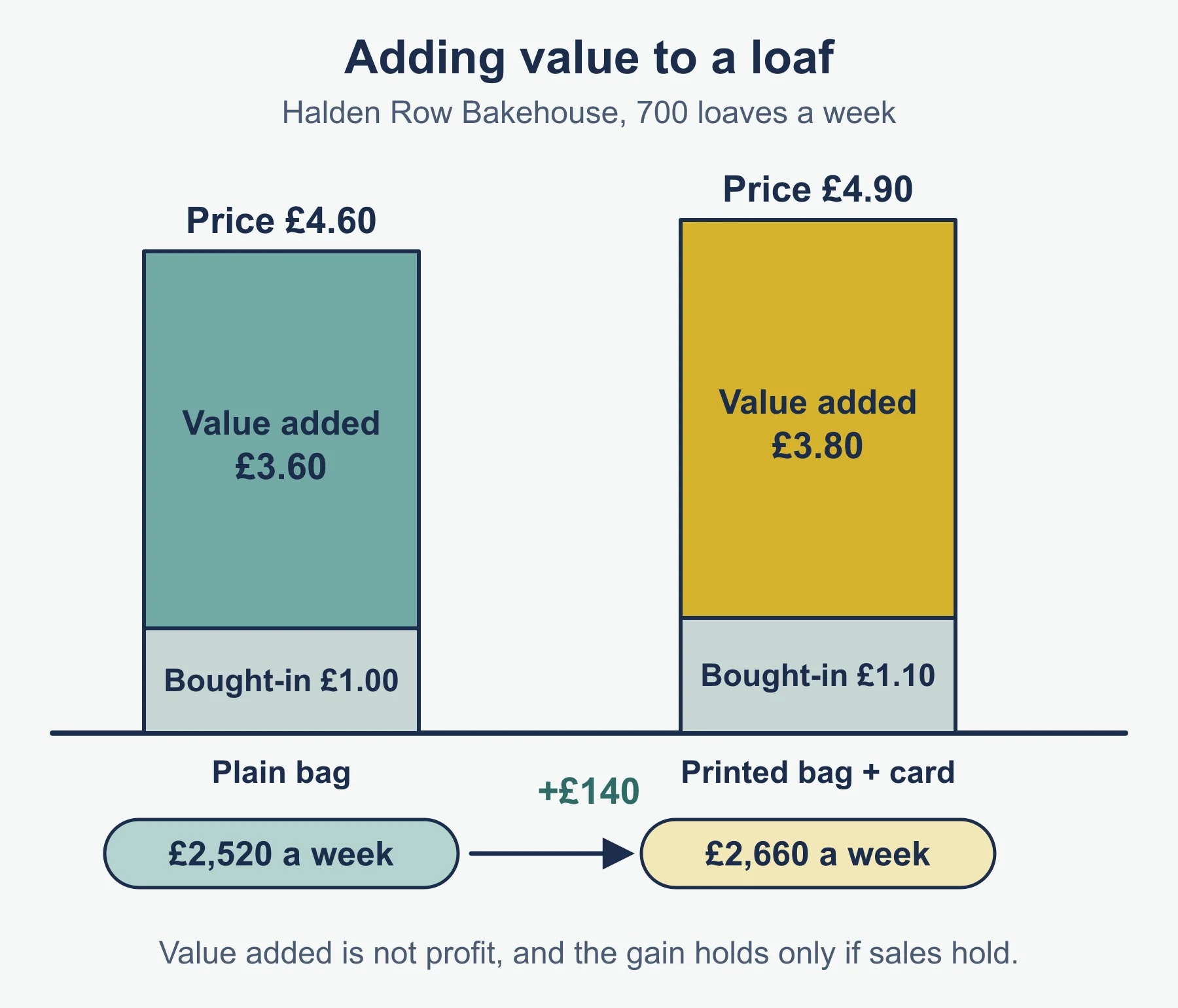
Value added = selling price − cost of bought-in materials and services. It is a standard form. It is not profit, because wages and overheads come out of it.
Reminders
- To add value: branding, design, quality, service, convenience, speed.
- Value added per unit × units sold = total value added. Check that volume is unlikely to fall when price rises before claiming a gain.
- Opportunity cost is the single best alternative given up, not a list of everything given up.
- The dynamic environment: tastes, technology, rivals, prices and the economy keep changing. Change creates both opportunities (new enterprises) and threats.
Success and failure
| Tends to cause success | Tends to cause failure |
|---|---|
| A real customer need | Weak planning |
| Good cash and cost control | Too little finance or poor cash control |
| Effective management | Costs above revenue |
| Clear difference from rivals | Strong competition |
| Adapting to change | Failing to respond to change |
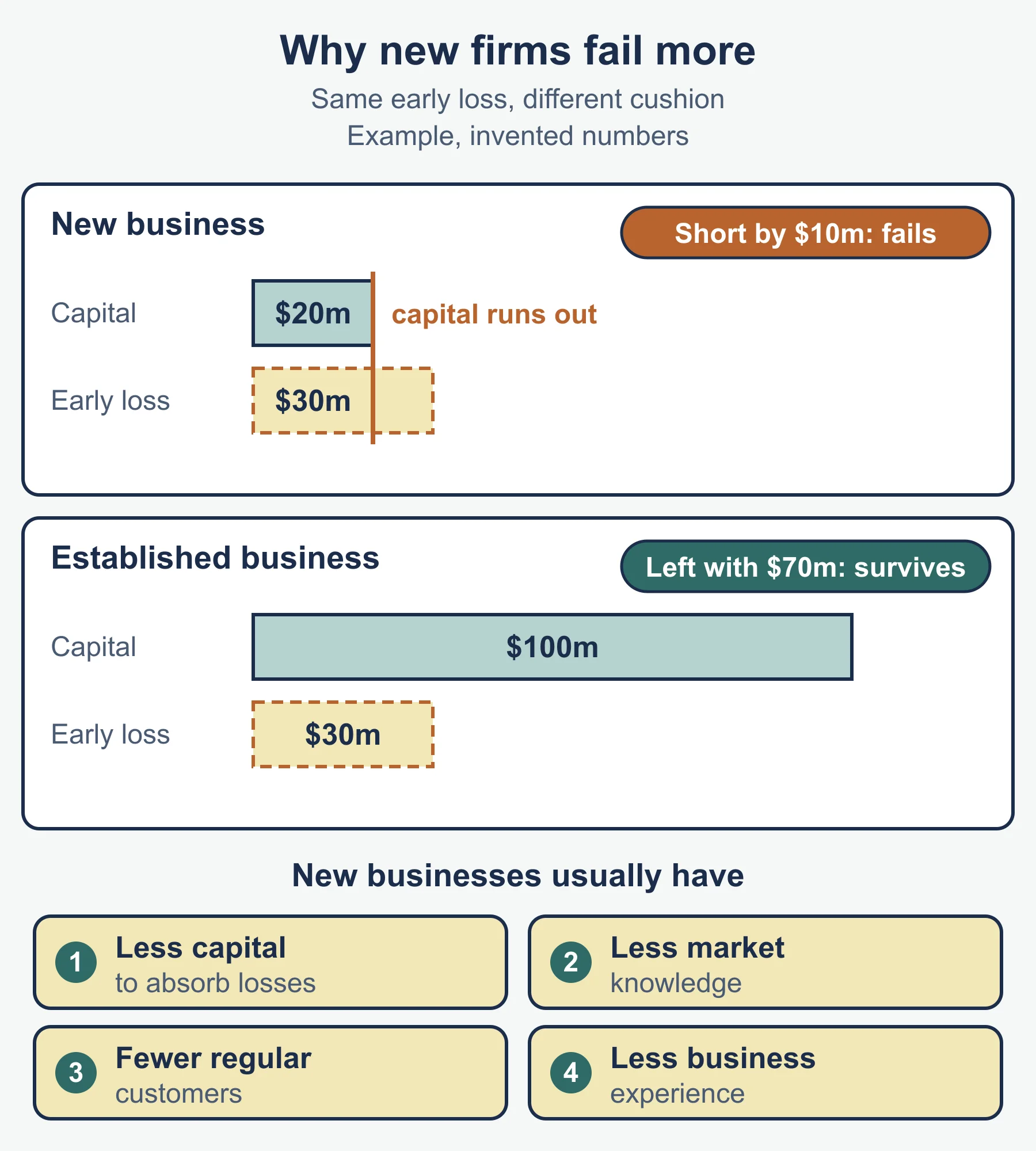
Link the cause to the case facts. “Poor cash flow” earns little; “monthly costs of £8,000 against £5,500 of sales revenue” shows application.
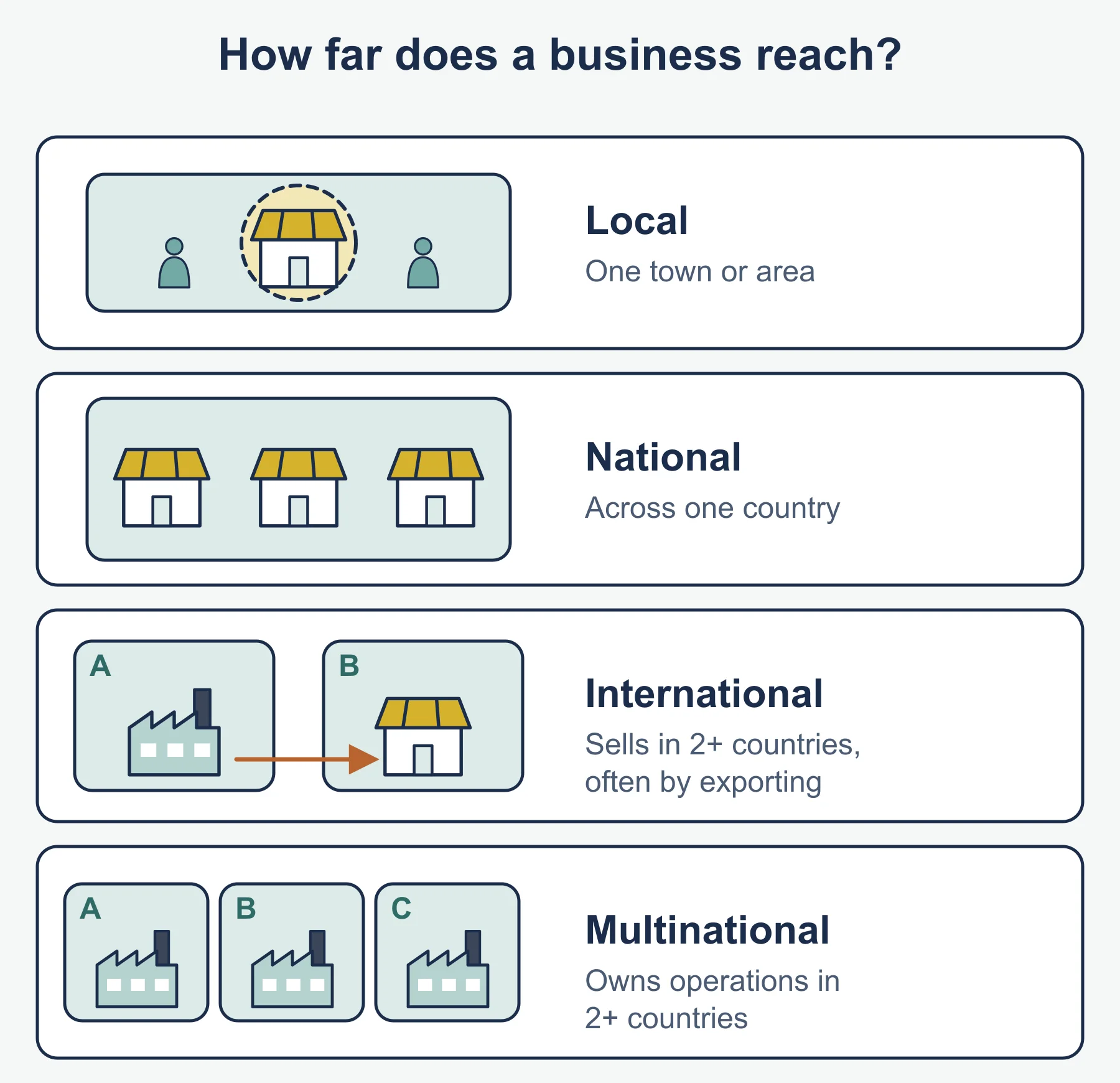
Scale of business
| Type | Quick test |
|---|---|
| Local | One town or area |
| National | Across one country |
| International | Sells in more than one country |
| Multinational | Owns and runs operations in more than one country |
Must-know distinction: international is about where it sells; multinational is about where it operates. (These are the standard distinctions; the syllabus lists the four types without defining them.)
1.1.2 Entrepreneurs and intrapreneurs
Compare the two
| Entrepreneur | Intrapreneur | |
|---|---|---|
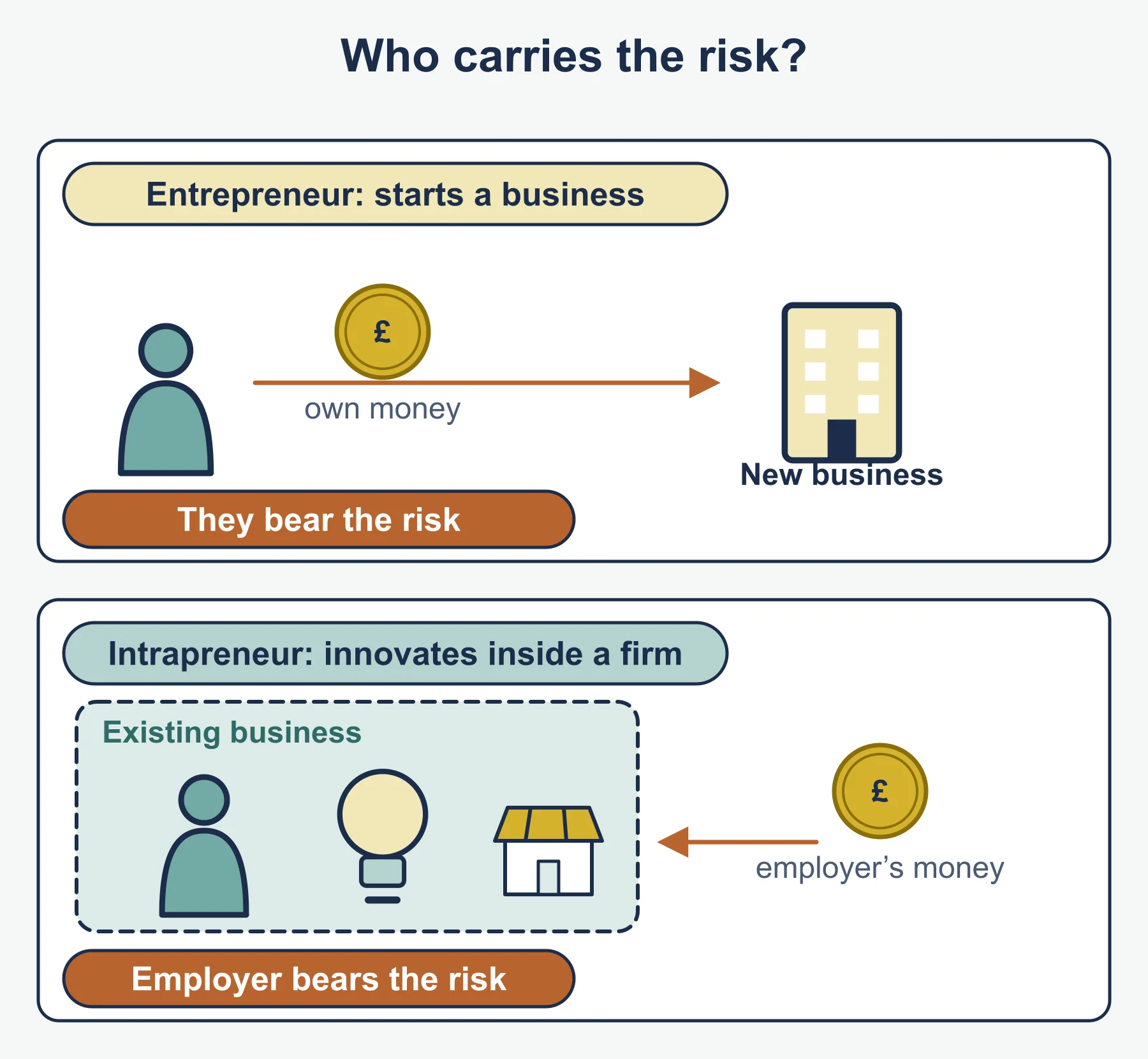
| Where | Creates a new business | Works inside an existing business |
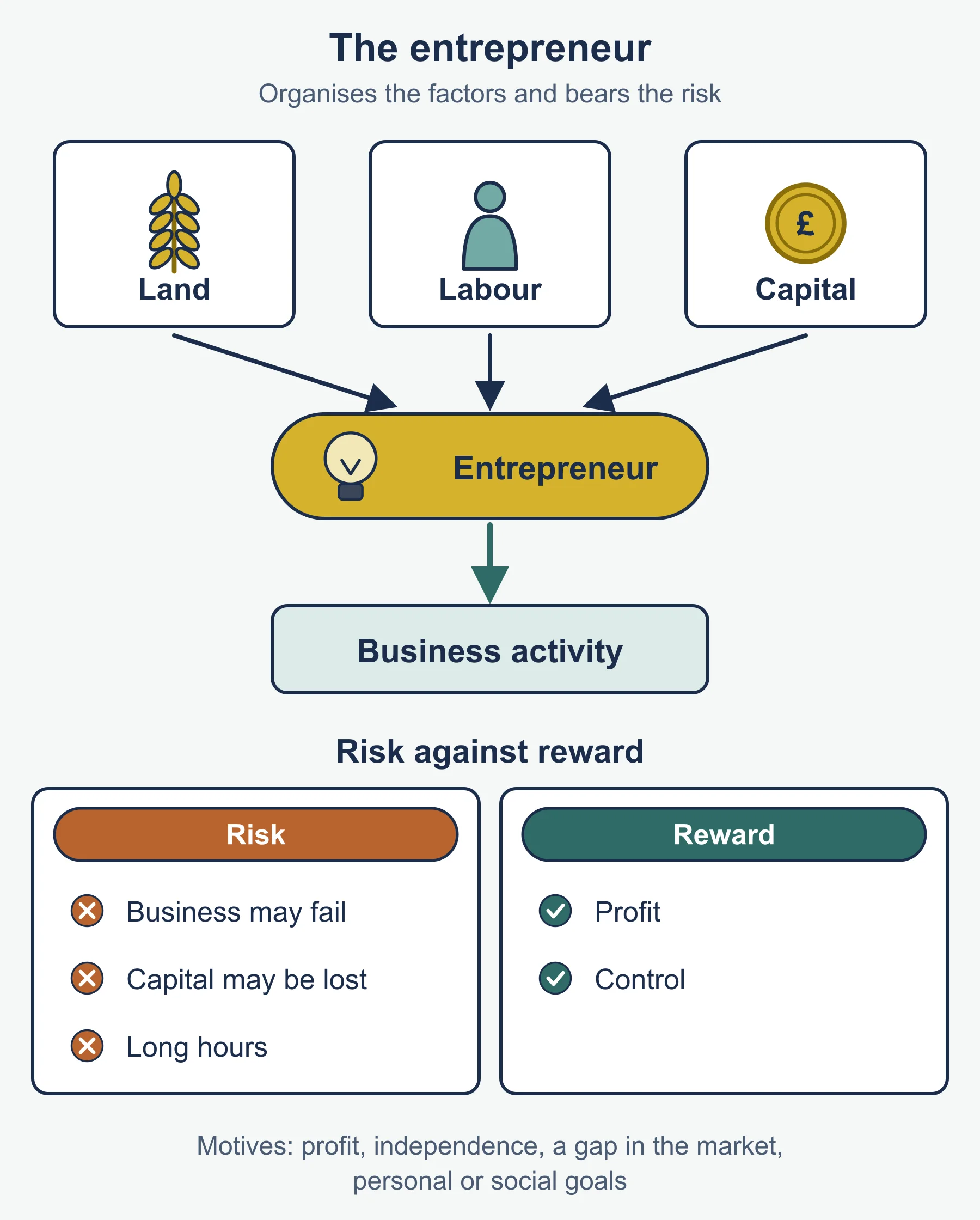
| Risk | Usually bears the financial risk | Employer bears the financial risk |
| Role | Spots the opportunity, gathers resources, starts up | Drives new products, processes or ventures to keep the business successful |
| Reward | Profit and ownership | Pay, promotion, recognition, sometimes a share of the gain |
Qualities (apply to the person in the case)
Creativity and opportunity recognition; calculated risk-taking; determination and resilience; leadership and communication; organisation and numeracy; flexibility.
Barriers to entrepreneurship
Finance; lack of skills or experience; regulation and the cost of complying; competition and entry costs; fear of failure; lack of an idea, information or networks.
Risk versus uncertainty
| Risk | Uncertainty | |
|---|---|---|
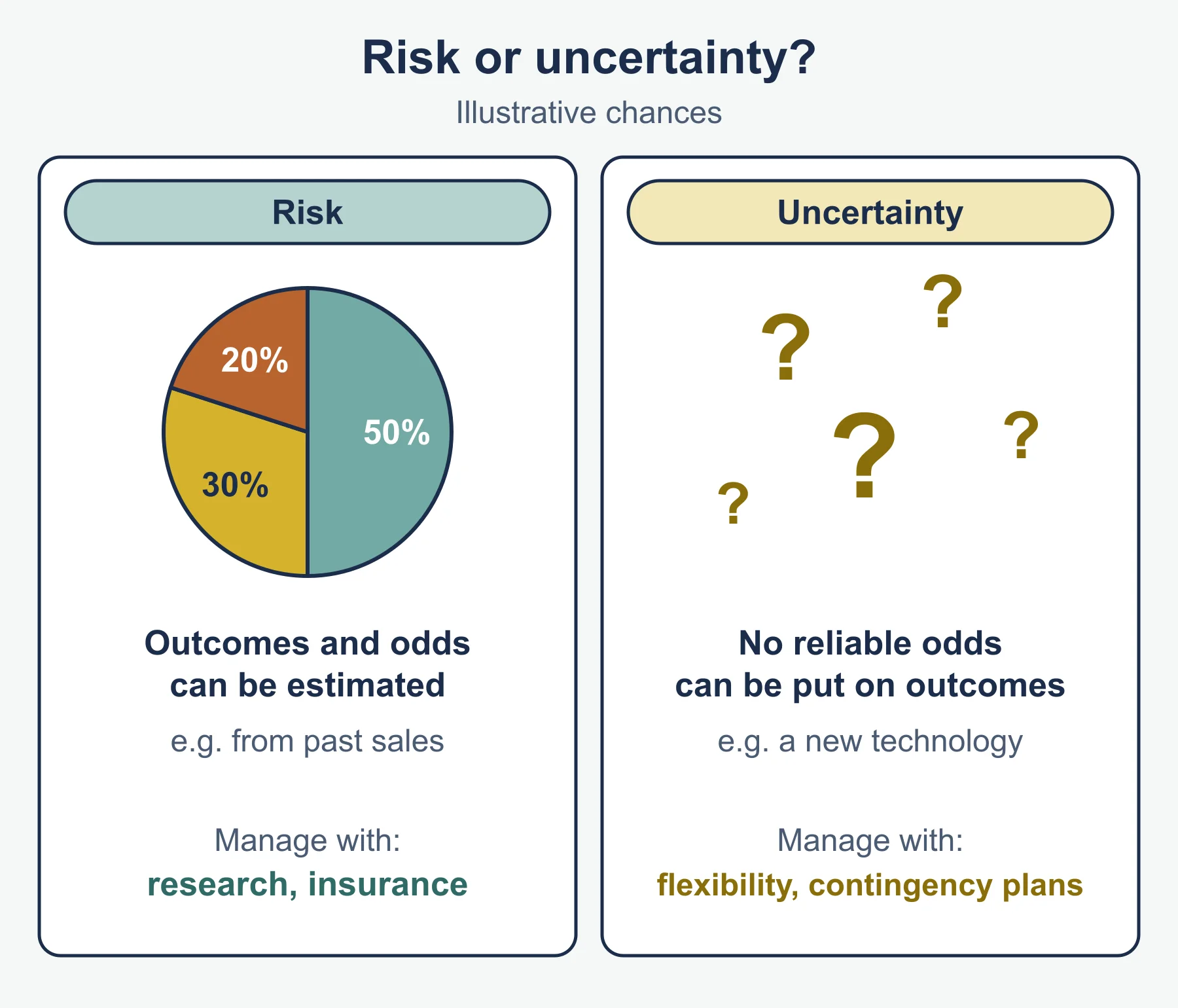
| Outcomes | Known or estimable | Cannot be reliably predicted |
| Probability | Can be estimated, for example from past data | Cannot be put on it |
| Response | Research, insurance, spreading risk | Flexibility, contingency plans |
These are the standard definitions, since the syllabus lists both terms without defining them.
Enterprise and a country’s development
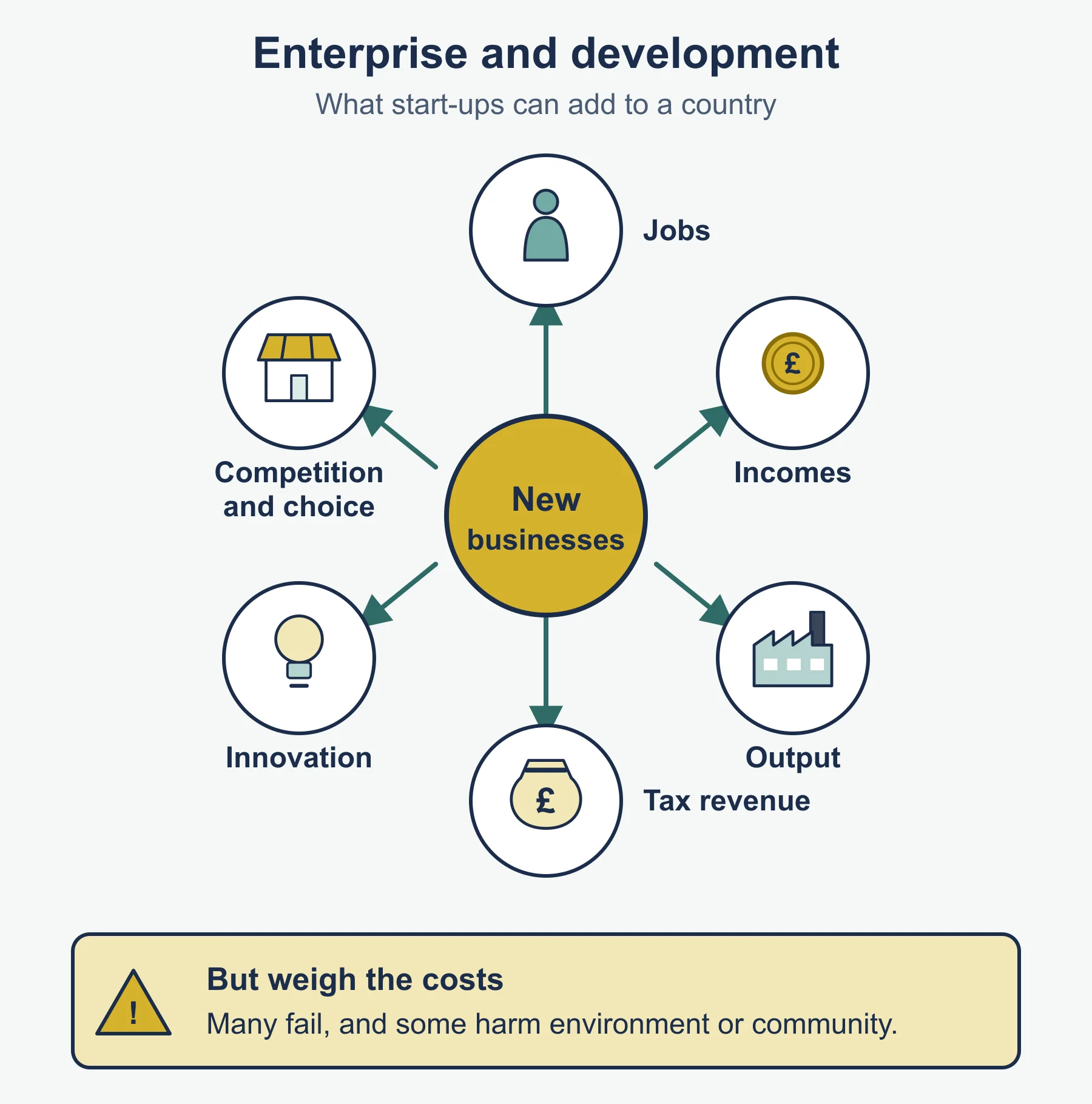
Jobs and incomes, output and tax revenue, innovation, competition and choice. Evaluation: a high failure rate wastes resources, and some enterprise harms the environment or the community.
1.1.3 Business plans
Method in steps for a plan question:
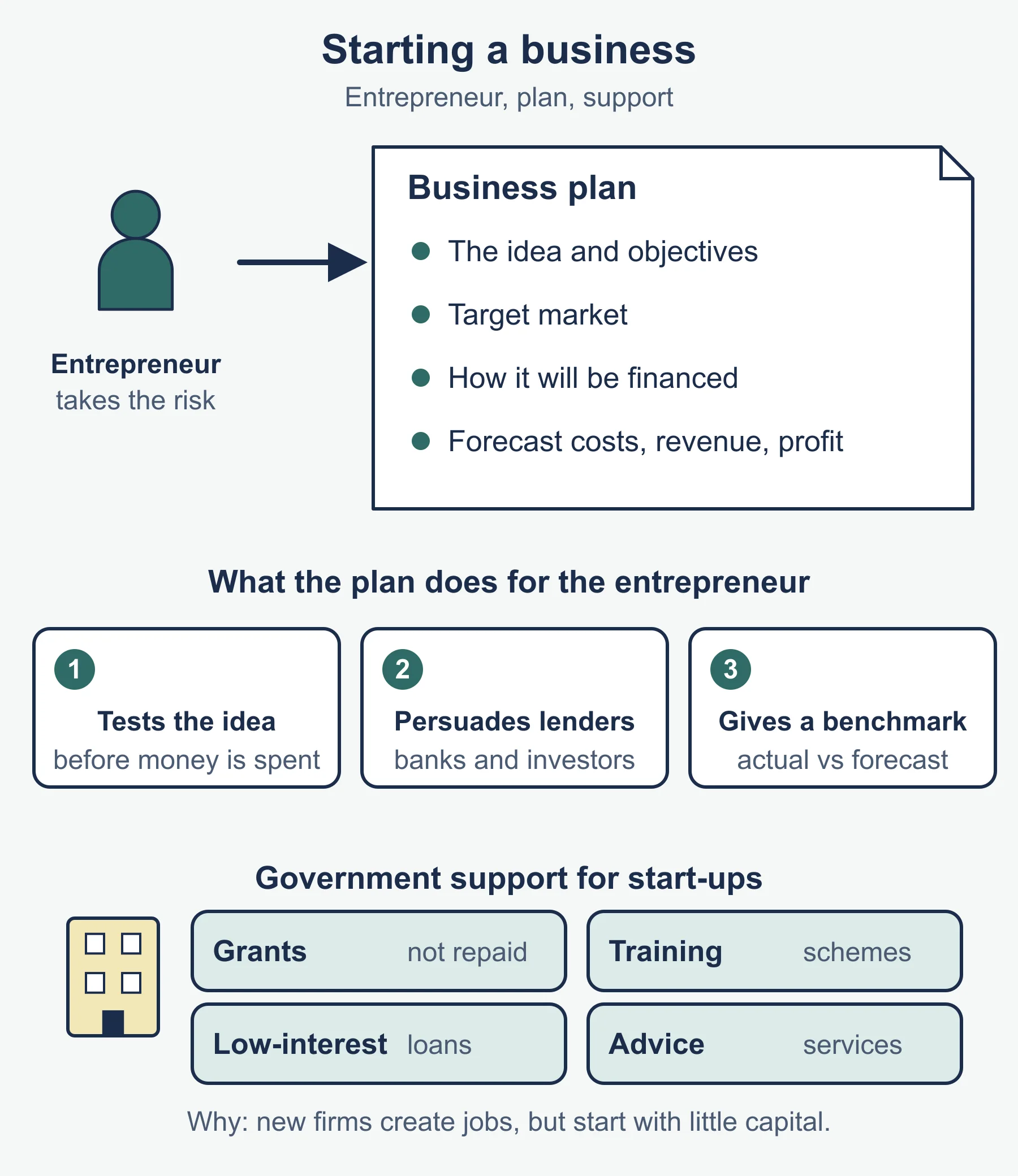
- State what a business plan is: a document setting out the intended business and how it will be achieved.
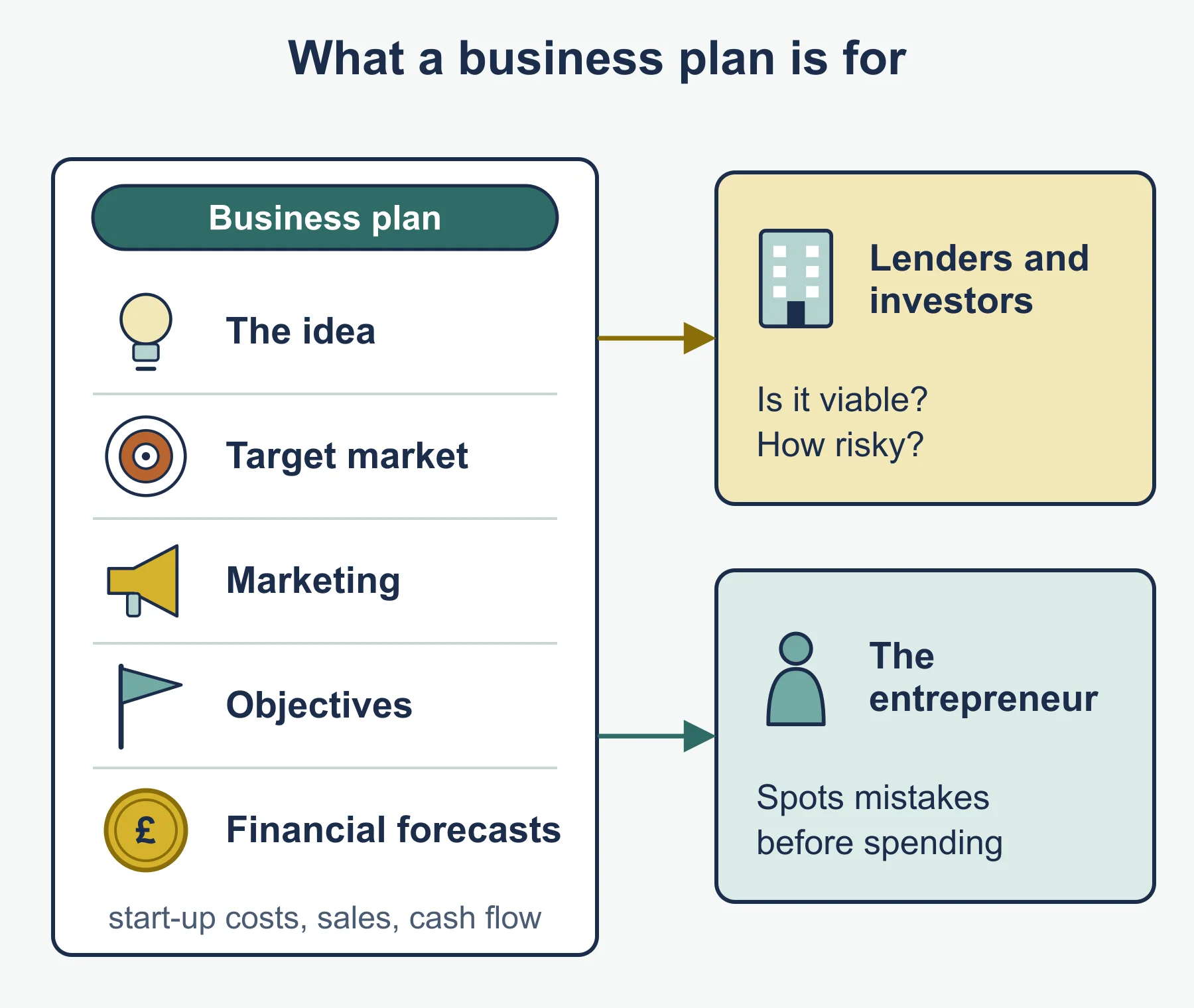
- Give its purpose: clarify the idea, guide decisions, set targets, persuade lenders and investors.
- Name the elements: idea and aims, target market, marketing, operations and staffing, legal structure and owners, financial information and forecasts.
- Weigh benefits (thinking, spotting weaknesses early, raising finance, targets) against limitations (time, unreliable assumptions, goes out of date, no guarantee).
- Give a judgement tied to the case: how risky is the venture, and how much finance is needed?
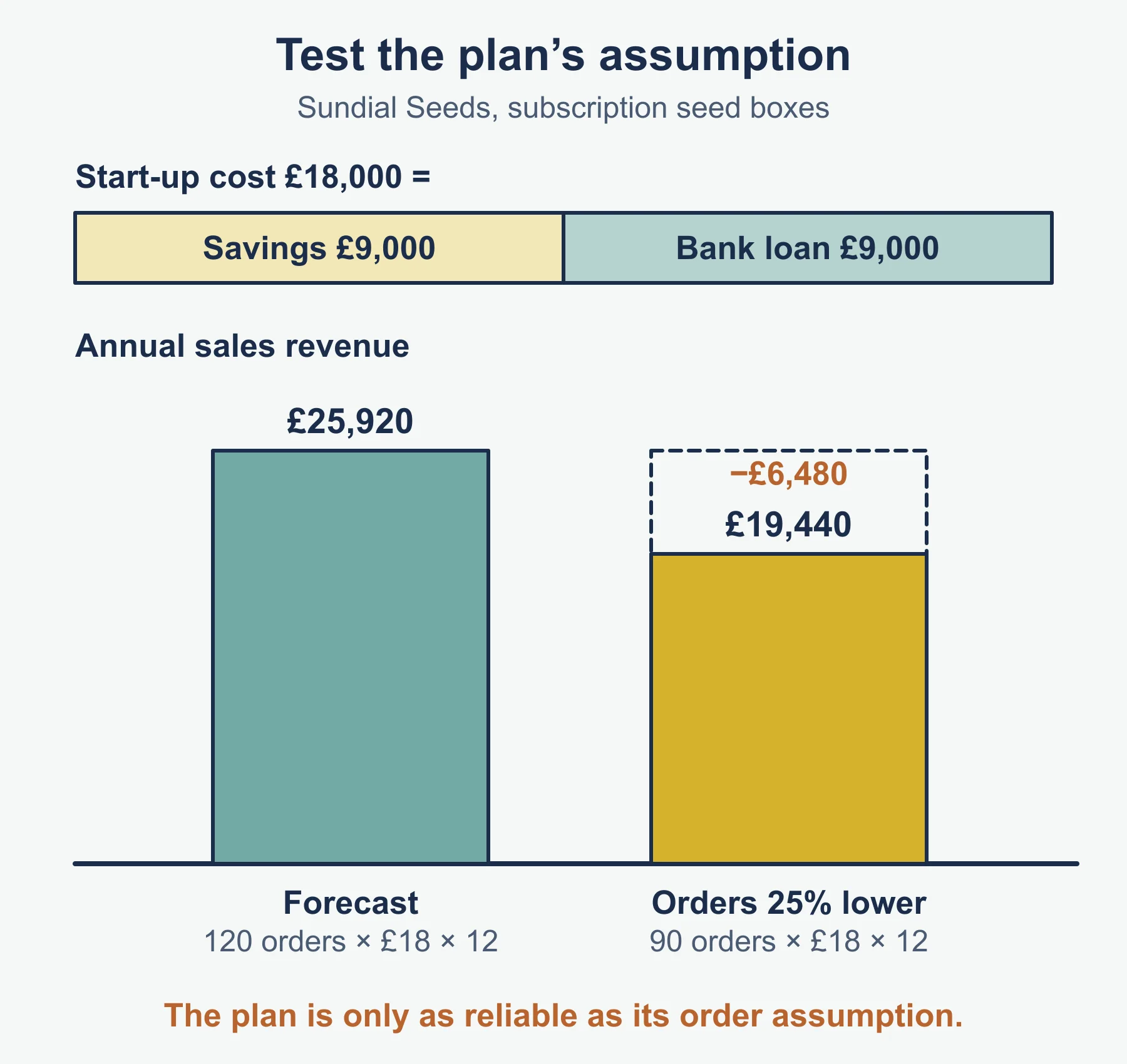
Small worked reminder: a forecast of 150 orders at £12 gives monthly sales revenue of £1,800. If orders prove 20% lower at 120, revenue is £1,440, which is £360 less. Test the sensitivity of the plan to the assumption.
Worked reminders
Value added. A leather wallet sells at £14.00. Bought-in leather costs £5.50 and packaging £0.50, so bought-in cost is £6.00 and value added is £14.00 − £6.00 = £8.00. For 2,000 wallets, total value added is £16,000. Show the subtraction before the total.
Opportunity cost. A florist can accept a wedding order worth £640 with £280 of materials, a net £360, or run an events stall worth £430 with £120 of materials, a net £310. If she takes the wedding, the opportunity cost is the £310 net she gives up. Take net figures where costs are given, and name only the next best option.
Scale and risk in context. A bakery selling in one town is local. If it ships across the country it is national. If it exports to three countries it is international. If it opens its own ovens in two of them it is multinational. Whenever a case shows a risk, ask whether the probabilities could be estimated; if not, call it uncertainty.
How to write the answer
| Command word | What the answer needs |
|---|---|
| State, identify | A short point with no explanation |
| Define | The meaning, in your own words, precise enough to separate it from near terms |
| Calculate | Formula or working, then the answer with units |
| Explain | A point, then why or how, tied to the case |
| Analyse | A point, developed through a chain of reasons using case facts |
| Evaluate | Weigh both sides, then reach a reasoned judgement |
| Justify | Give a decision, then support it with reasons from the case |
For case studies, quote at least one figure or fact in every developed paragraph. Short answers such as definitions gain from a brief example. In evaluation, state what the judgement depends on, for example the amount of finance needed, the owner’s experience or the time available.
Planning check. Before trusting a business plan, ask three things: where did the forecast numbers come from, what happens to revenue if sales fall short, and does the plan show how the start-up costs will be funded. A plan that answers all three is more convincing to a lender than one that only states hopes.
Quick self-test
- Name the four factors of production.
- A candle costs £2.30 of bought-in materials and sells for £9.80. State the value added per candle.
- How much value is added if 500 candles are sold?
- A trader can spend a day on market sales worth £210 or on wholesale deliveries worth £180. If she chooses the market, what is the opportunity cost?
- Distinguish international from multinational.
- State one difference between an entrepreneur and an intrapreneur.
- Give two barriers to entrepreneurship.
- Distinguish risk from uncertainty.
- Give two purposes of a business plan.
- Give two limitations of a business plan.
- Why is value added not the same as profit?
Answers
- Land, labour, capital and enterprise.
- £9.80 − £2.30 = £7.50.
- 500 × £7.50 = £3,750.
- The £180 of wholesale deliveries given up.
- International sells in more than one country; multinational owns and runs operations in more than one country.
- An entrepreneur starts a new business, while an intrapreneur acts entrepreneurially within an existing business.
- Any two, such as difficulty raising finance and lack of experience.
- Risk has outcomes whose likelihood can be estimated; uncertainty has outcomes that cannot be reliably predicted.
- Any two, such as clarifying the idea and persuading a lender.
- Any two, such as unreliable assumptions and going out of date.
- Wages, rent and other overheads must still be paid out of value added.
Where marks are usually lost
- Confusing value added with profit or with selling price.
- Naming the chosen option as the opportunity cost instead of the option given up.
- Defining risk and uncertainty identically.
- Treating an intrapreneur as a business founder.
- Listing qualities or barriers without applying them to the person in the case.
- Giving a one-sided answer to a question that asks you to evaluate or justify.
- Stating “poor planning” as a cause of failure without citing data from the case.
- Saying a business plan guarantees success or a loan.
- Using “international” and “multinational” interchangeably.
Frequently asked questions
What is the difference between an international and a multinational business? An international business sells in more than one country, often by exporting. A multinational owns and runs operations, such as factories or shops, in more than one country.
What is the difference between risk and uncertainty? Risk has outcomes whose likelihood can be estimated, for example from past data. Uncertainty has outcomes that cannot be reliably predicted, so no probability can be put on them.
Why is value added not the same as profit? Value added is the selling price minus the cost of bought-in materials and services. Wages, rent and other overheads must still be paid out of it, so profit is lower.
What are the barriers to entrepreneurship? Common barriers include difficulty raising finance, lack of skills or experience, regulation and the cost of complying, competition from established firms, and fear of failure.
Official syllabus
Cambridge International AS & A Level Business 9609 syllabus for examination in 2026, 2027 and 2028, published by Cambridge University Press & Assessment (Cambridge Assessment International Education), section 1.1.
Get free revision emails (optional)
Occasional emails with practice questions, worked explanations and links to free resources for the qualification and subjects you choose. No spam, and you can unsubscribe from any email. The free tools on this site never need an email.
Related resources
-
Study guides
A Level Business: External influences on business activity (Cambridge 9609)
Study guide to 6.1 External influences on business activity for Cambridge A Level Business 9609: political, economic, social, technological and more.
Business · Cambridge · A Level
Read guide -
Practice questions
A Level Business: External influences on business activity (Cambridge 9609) – Practice Questions
Original practice questions with worked answers on 6.1 External influences on business activity for Cambridge A Level Business 9609.
Business · Cambridge · A Level
Try questions -
Revision notes
A Level Business: External influences on business activity (Cambridge 9609) – Revision Notes
Condensed revision notes on 6.1 External influences on business activity for Cambridge A Level Business 9609, with a self-test and common slips.
Business · Cambridge · A Level
Revise topic
Related articles
-
teaching
A Level tuition in Dubai: Cambridge or Pearson Edexcel International A Level?
Schools in Dubai and Abu Dhabi teach either Cambridge International AS & A Level or Pearson Edexcel International A Level. How the two are structured, why it matters for tuition, and how online classes from Lahore work.
9 October 2026
-
curriculum guides
Choosing subjects at IGCSE and A Level
How subject choices at 14 and 16 affect university options later, and how to keep pathways open without overloading a timetable.
28 July 2026
Studying this with a teacher
Working through Business AS LEVEL?
This page is free and stays free. If you would rather be taught it, Marlbridge runs Business classes one-to-one and in small groups of up to 15, online in your own time zone. The first trial class is free. WhatsApp replies within an hour (8am–11pm Pakistan time, every day); email the same day.
Cambridge Business teachers at Marlbridge

