
Revision Notes
A Level Business: External influences on business activity (Cambridge 9609) – Revision Notes
Condensed revision notes on 6.1 External influences on business activity for Cambridge A Level Business 9609, with a self-test and common slips.
- Subject
- Business
- Level
- A LEVEL
- Topic
- Business and its environment
- Author
- Marlbridge Academic Team
- Updated
- Reviewed by
- Salman Ahmad (what this means)
Aligned to Cambridge A Level Business (9609), For examination in 2026, 2027 and 2028. Official specification .
Syllabus page (what it covers and how it is assessed): Cambridge A Level Business.
Syllabus points this page covers
9609 (A Level)
- 6.1 External influences on business activity
Found an error? Report a correction.
Need help with this topic? Request a free trial class for A Level Business (9609).
These revision notes condense section 6.1 External influences on business activity (6.1.1 to 6.1.7) of the Cambridge International AS & A Level Business 9609 syllabus for examination in 2026, 2027 and 2028. This is Topic 6 content, which is A Level. Read the study guide for full explanations, then test yourself with the practice questions. Course links: the Cambridge A Level Business hub, the checklist and the free diagnostics.
Core definitions
| Term | Meaning |
|---|---|
| Privatisation | Transfer of a business or industry from government to private ownership |
| Nationalisation | Transfer of a business or industry from private to government ownership |
| Market failure | A free market gives a poor result, so government may step in |
| Macroeconomic objectives | Low unemployment, low inflation, economic growth |
| Corporate social responsibility (CSR) | Business duties to society beyond the minimum legal and profit duties |
| Social audit | A review of the firm’s social impact and conduct |
| Demographic change | Change in a population’s size, age structure and distribution |
| Multinational | A business operating in more than one country |
| Tariff | A tax on imports |
| Environmental audit | A check of the firm’s environmental impact against targets |
| Sustainability | Meeting present needs without harming future needs |
6.1.1 Political and legal
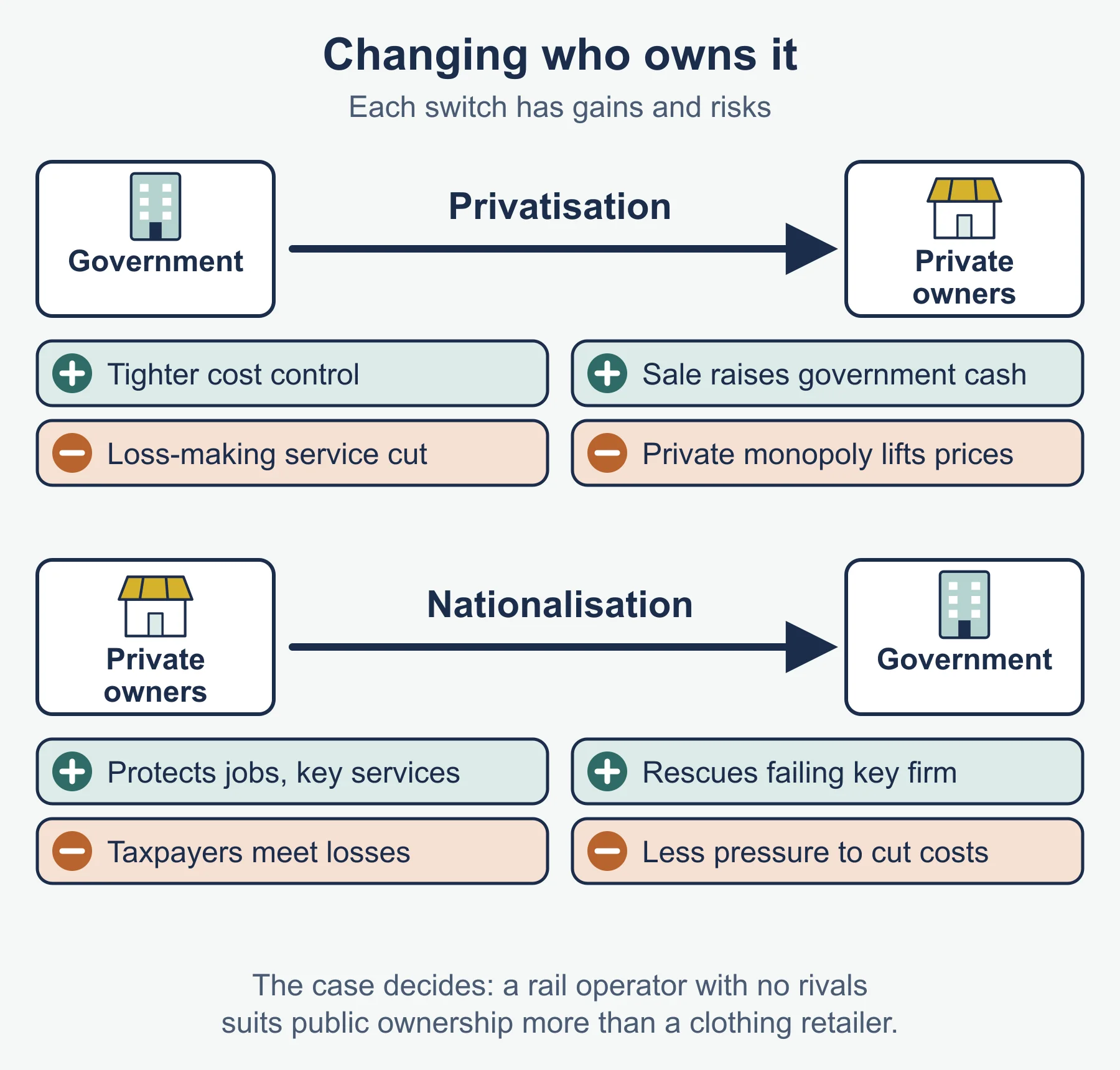
Privatisation and nationalisation: always judge “in a given situation”.
| Advantages | Disadvantages | |
|---|---|---|
| Privatisation | Efficiency incentive; cash for government; investor capital | Unprofitable services cut; private monopoly; job losses |
| Nationalisation | Protects jobs and key services; rescue of strategic firms | Taxpayer funds losses; weaker cost pressure; political aims |
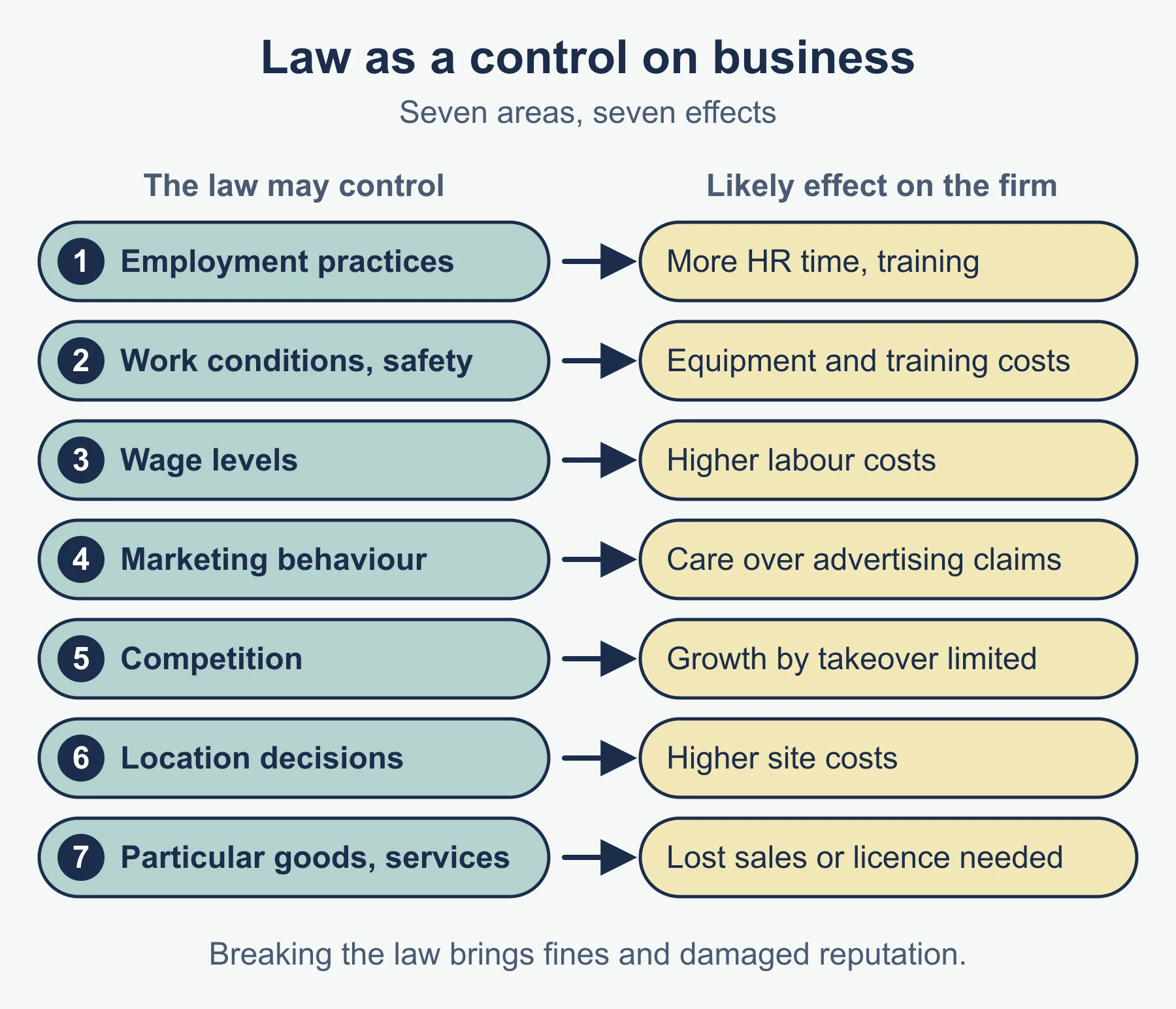
Law as control, seven areas to recall:
- Employment practices.
- Conditions of work, including health and safety.
- Wage levels.
- Marketing behaviour.
- Competition.
- Location decisions.
- Particular goods and services.
Method for any law question: name the area, say what the law requires, state the cost or change for this firm, then say whether the firm can adapt.
6.1.2 Economic
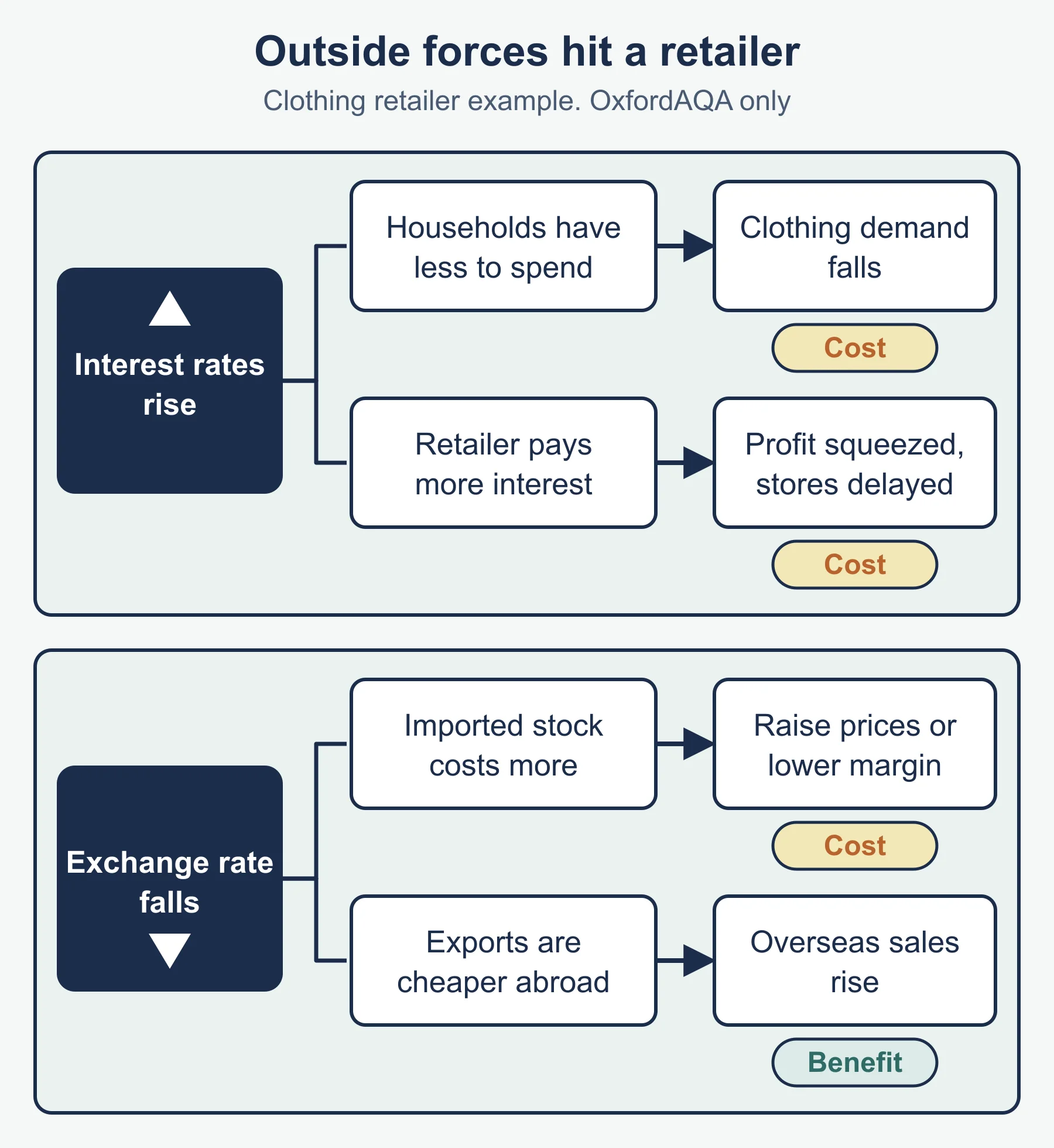
Government can help business and encourage enterprise (grants, subsidies, lower tax, training, advice), constrain it (taxes, regulation, licences) and deal with market failure (taxes, subsidies, regulation, direct provision, competition rules).
Effect of macroeconomic performance on a firm:
| Condition | Demand | Costs | Labour |
|---|---|---|---|
| Growth | Rises, most for high income elasticity goods | May rise | Harder to hire |
| Recession | Falls | May ease | Easier to hire |
| High inflation | Uncertain | Rise | Pressure for pay rises |
| High unemployment | Weak | May ease | Easier to hire, weaker pay claims |
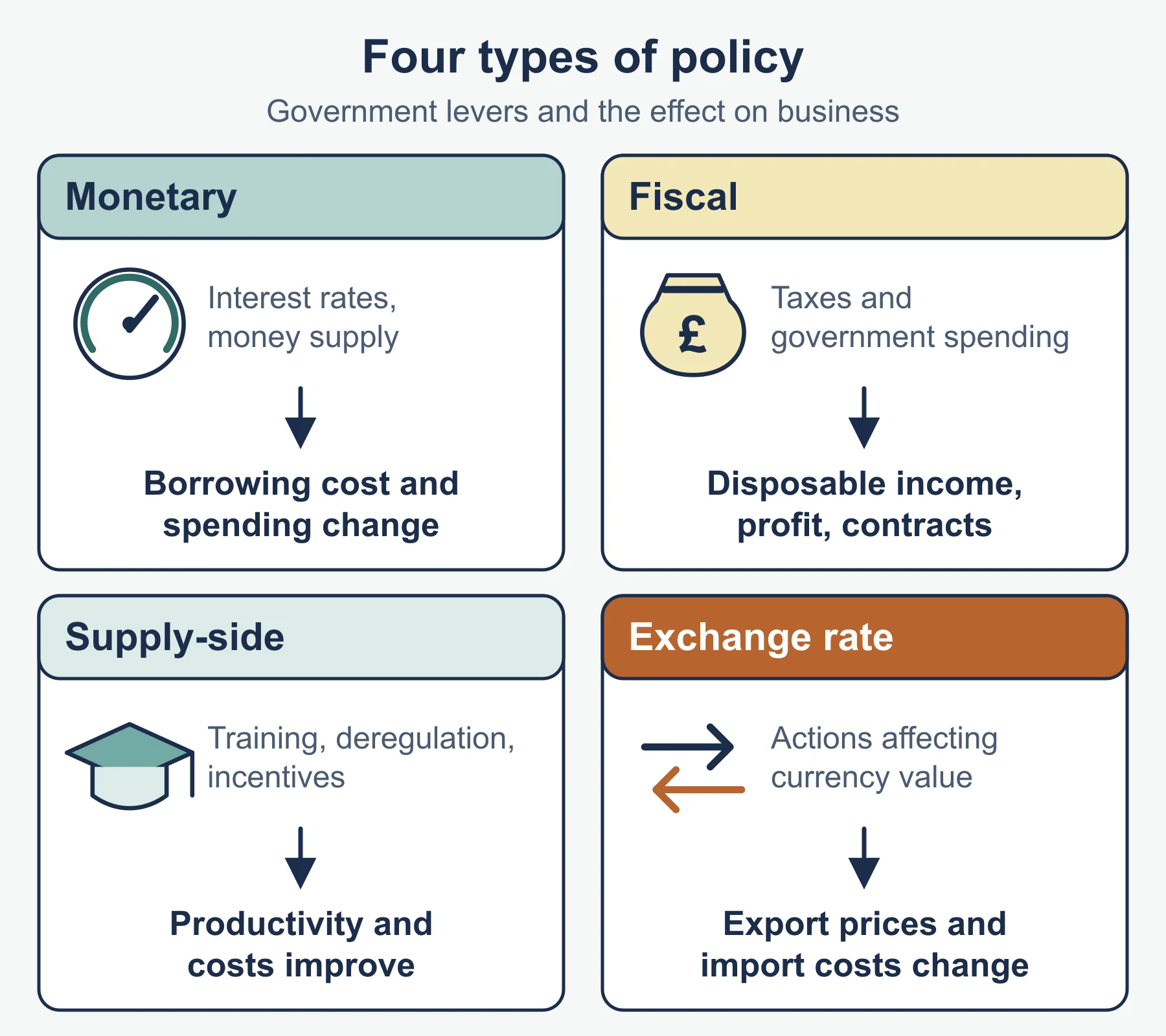
Policies:
| Policy | Tools | Link to business |
|---|---|---|
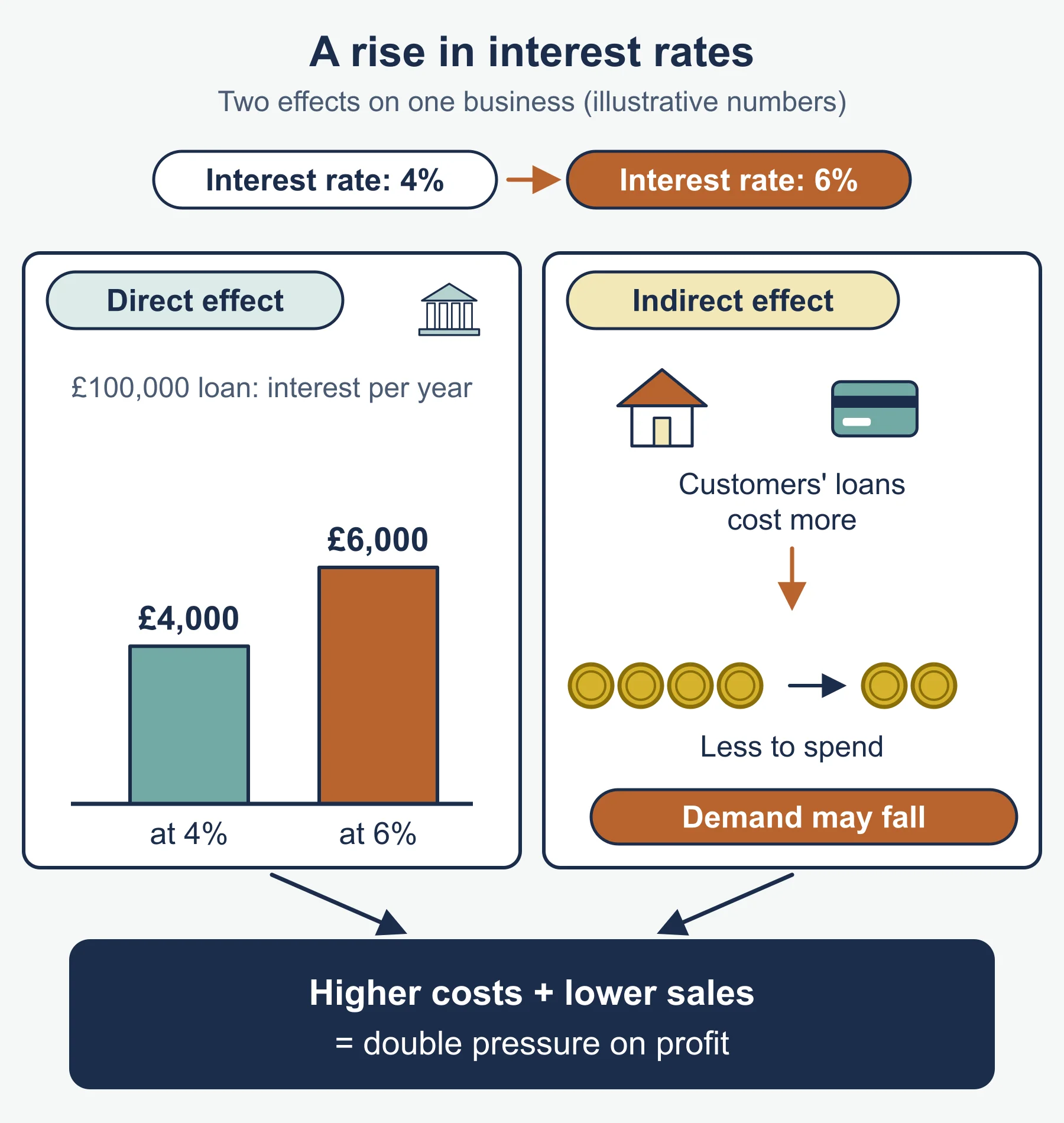
| Monetary | Interest rates, money supply | Loan costs, consumer credit, investment |
| Fiscal | Taxes, government spending | Disposable income, profit tax, public contracts |
| Supply-side | Training, deregulation, incentives | Productivity, skills, costs |
| Exchange rate | Actions affecting the currency’s value | Export prices, import costs |
Quick calculations (standard forms):
- Change in demand ≈ income elasticity × percentage change in income.
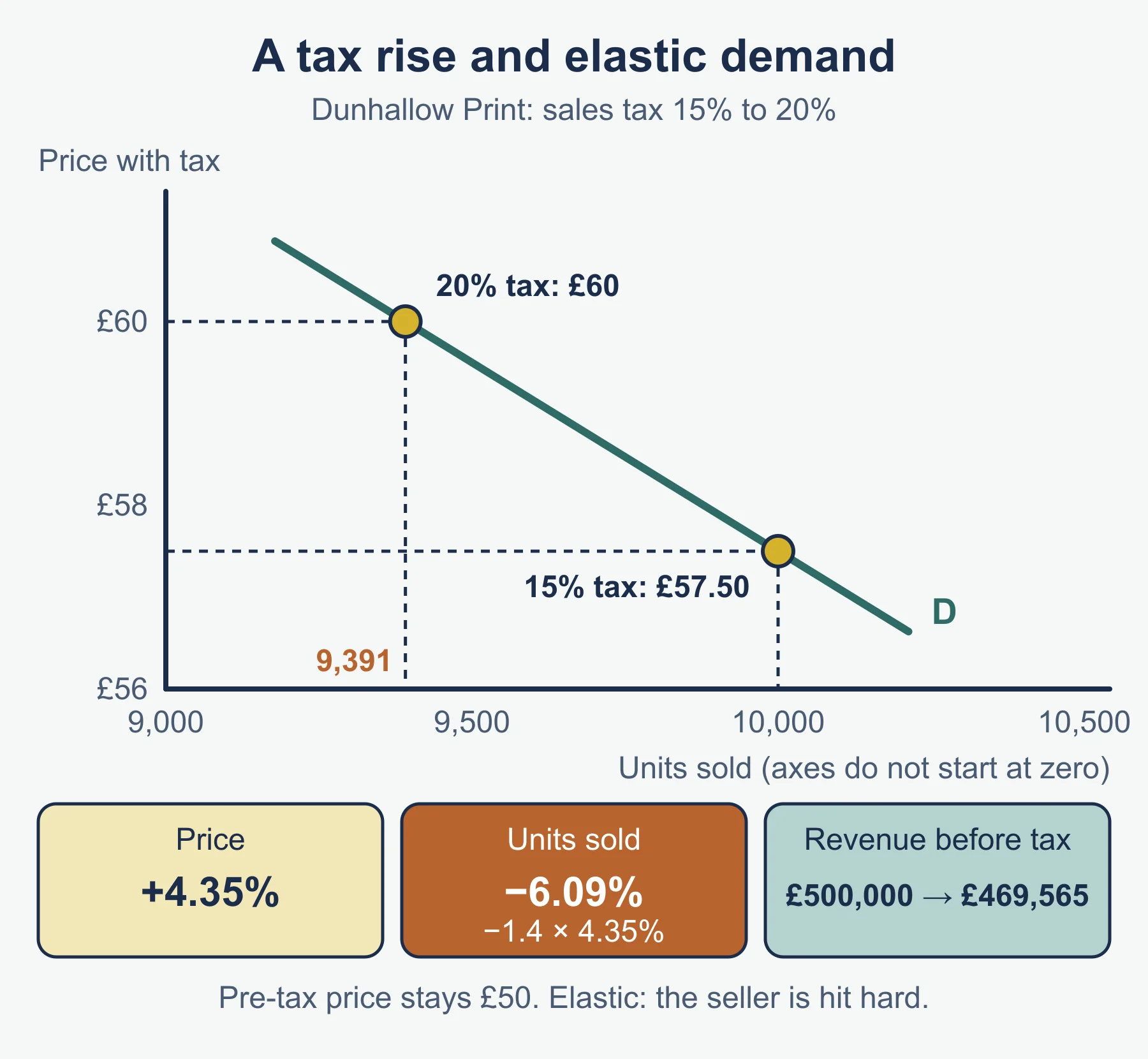
- Change in quantity ≈ price elasticity × percentage change in price.
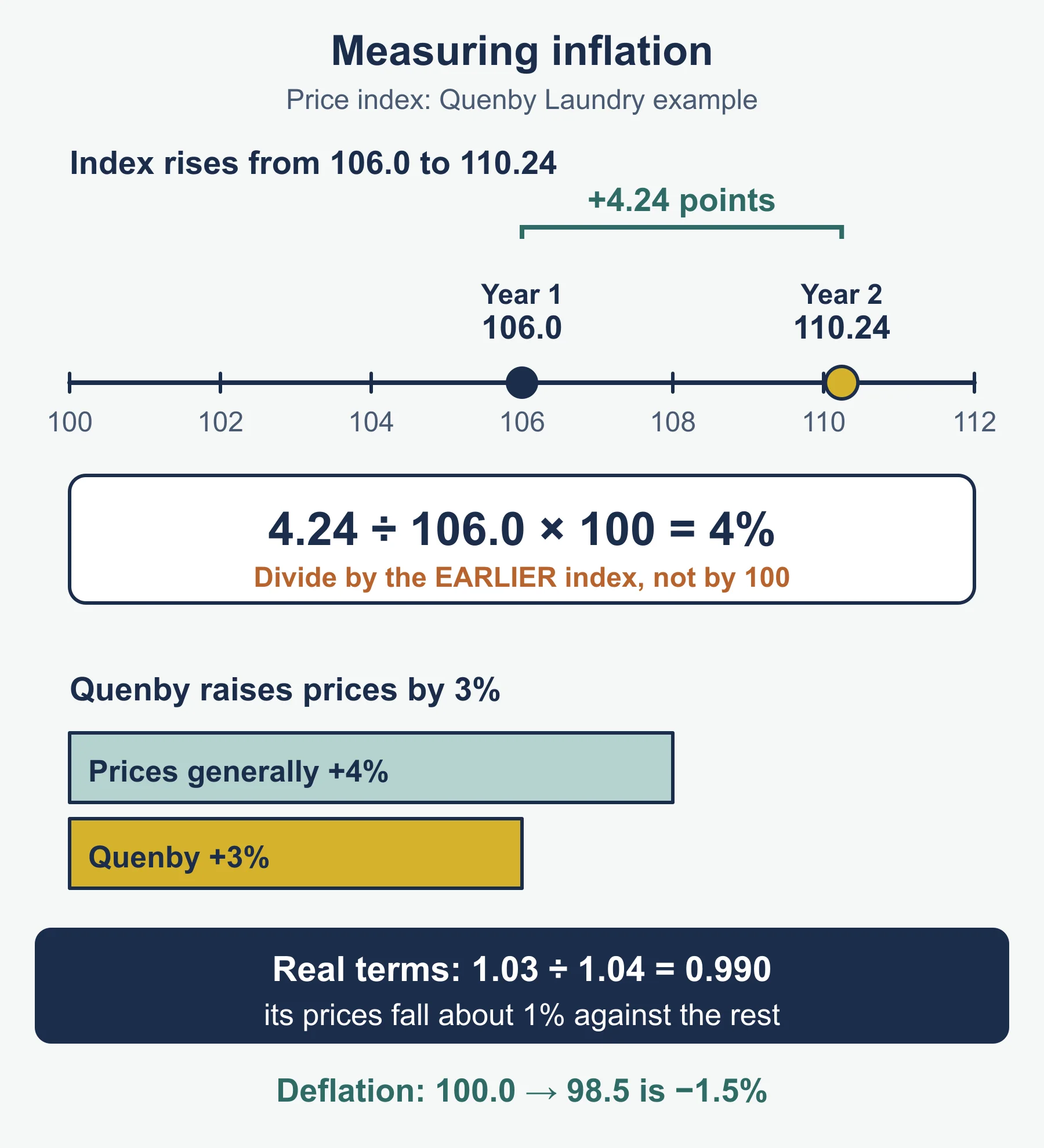
- Percentage change = change ÷ original × 100.
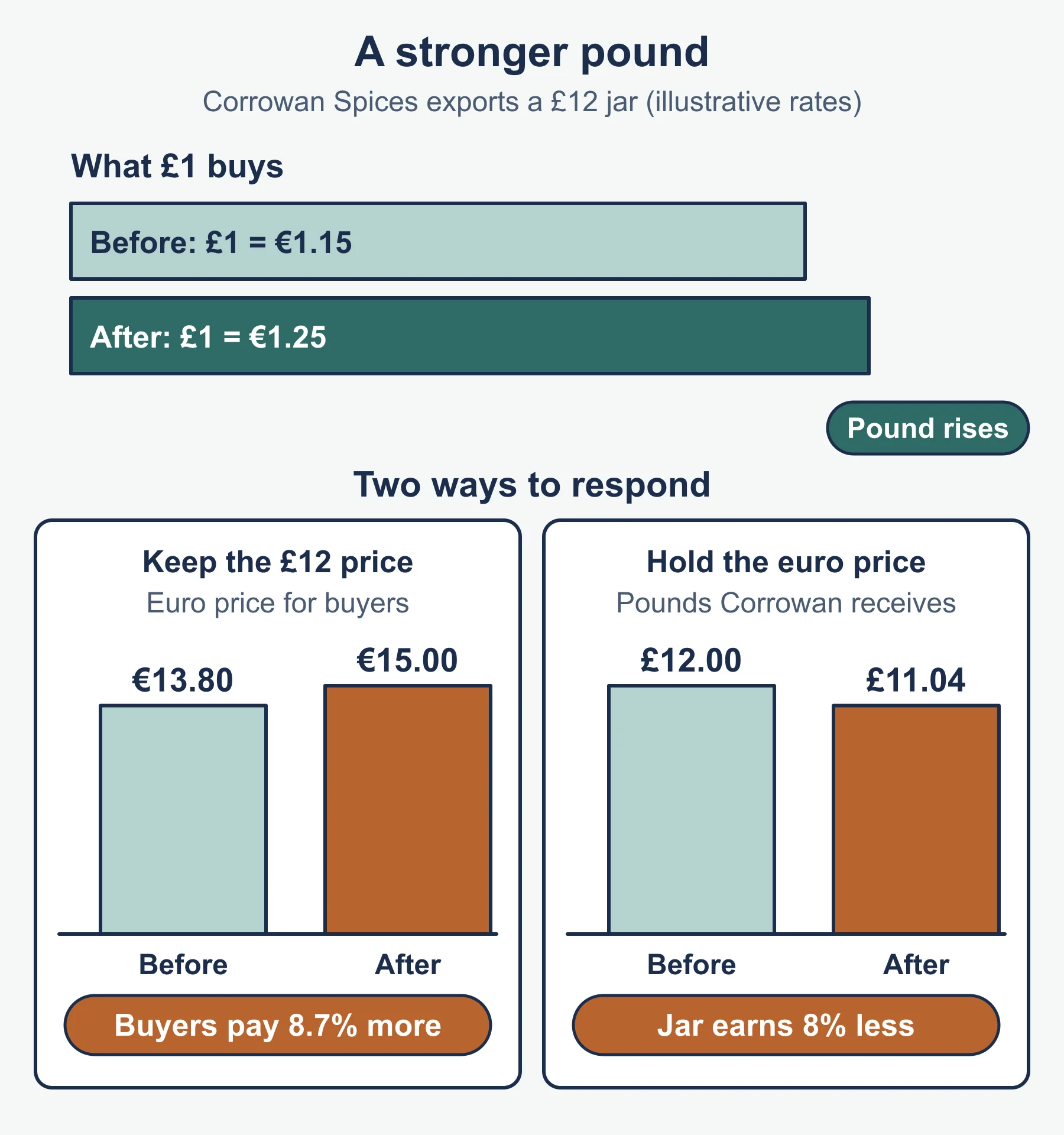
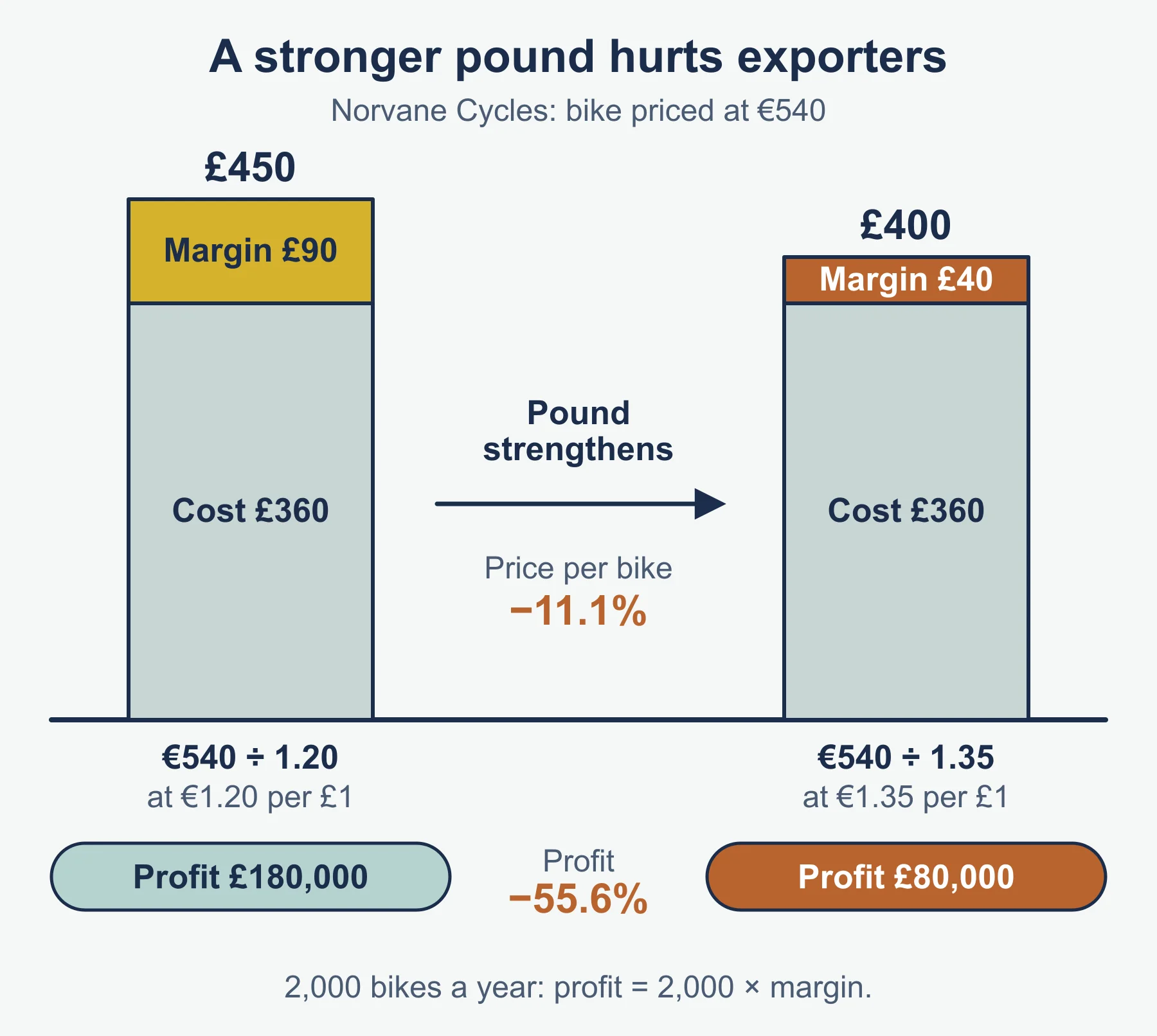
- Foreign price in home currency = foreign price ÷ exchange rate (foreign units per £1).
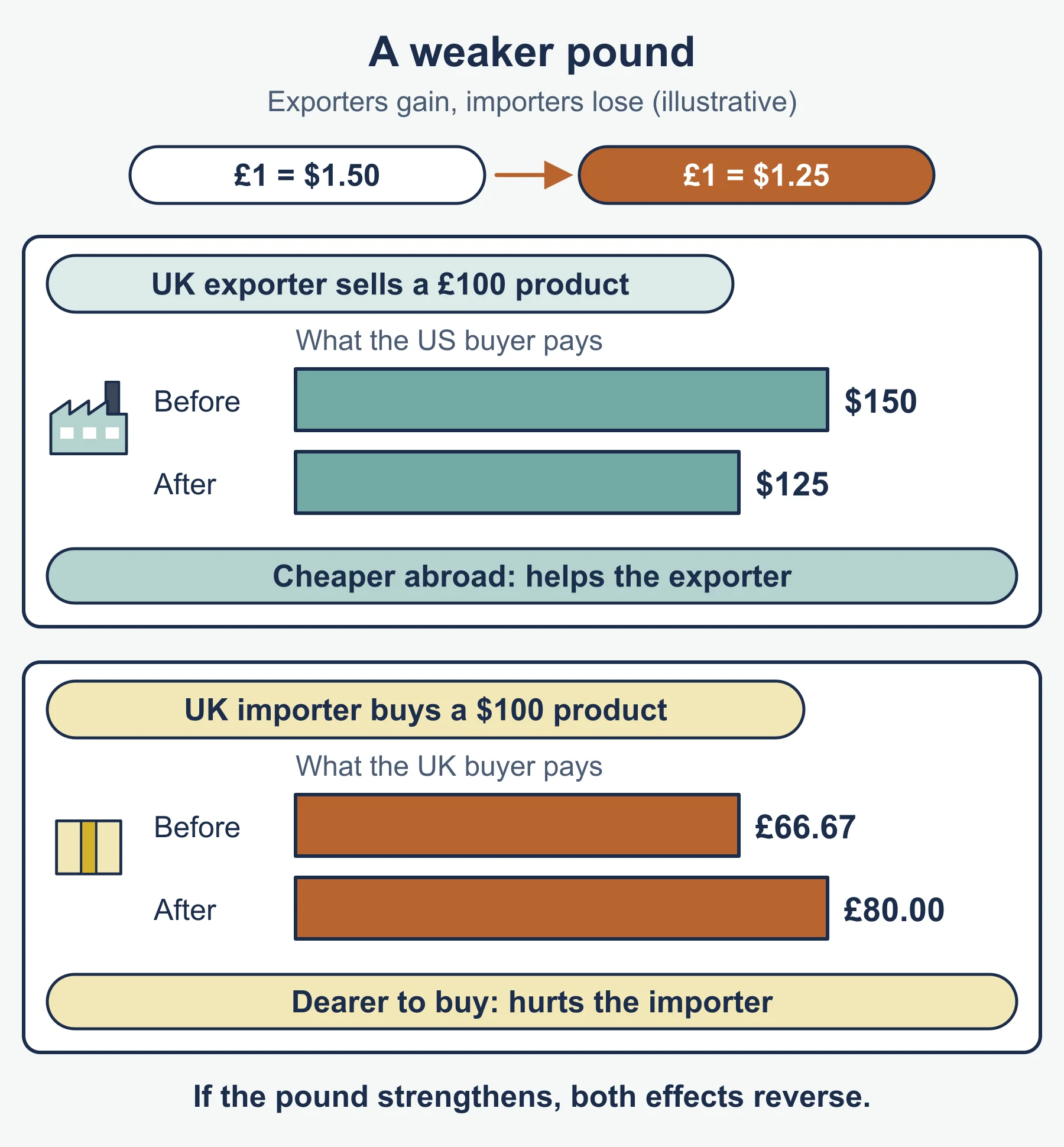
Rule: a stronger home currency makes exports dearer abroad and imports cheaper. A weaker one does the reverse.
Method in steps for a policy question:
- State the policy change and the tool used.
- Say whether it changes the firm’s costs, the customers’ spending, or both.
- Put a figure on it if the data allows.
- Judge the size using the firm’s debt, exports, customers and product type.
6.1.3 Social and demographic
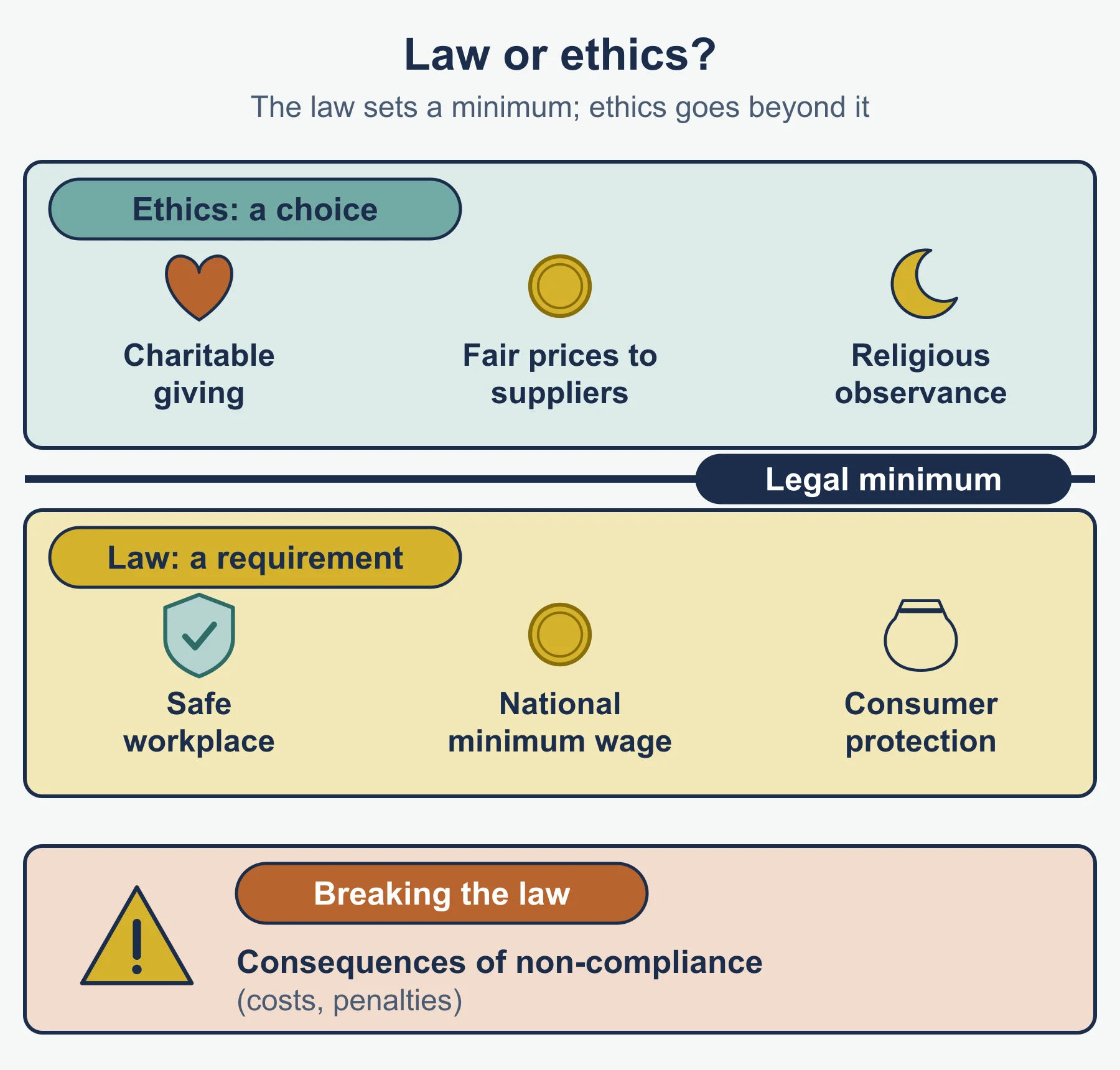
- CSR examples named in the syllabus: accounting practices, paying incentives for the award of contracts, social auditing.
- Possible gains: reputation, loyalty, recruitment. Possible costs: money, higher prices, accusations of empty claims.
- The community supplies labour and customers and grants goodwill. Pressure groups can use publicity and boycotts to change attitudes and influence law.
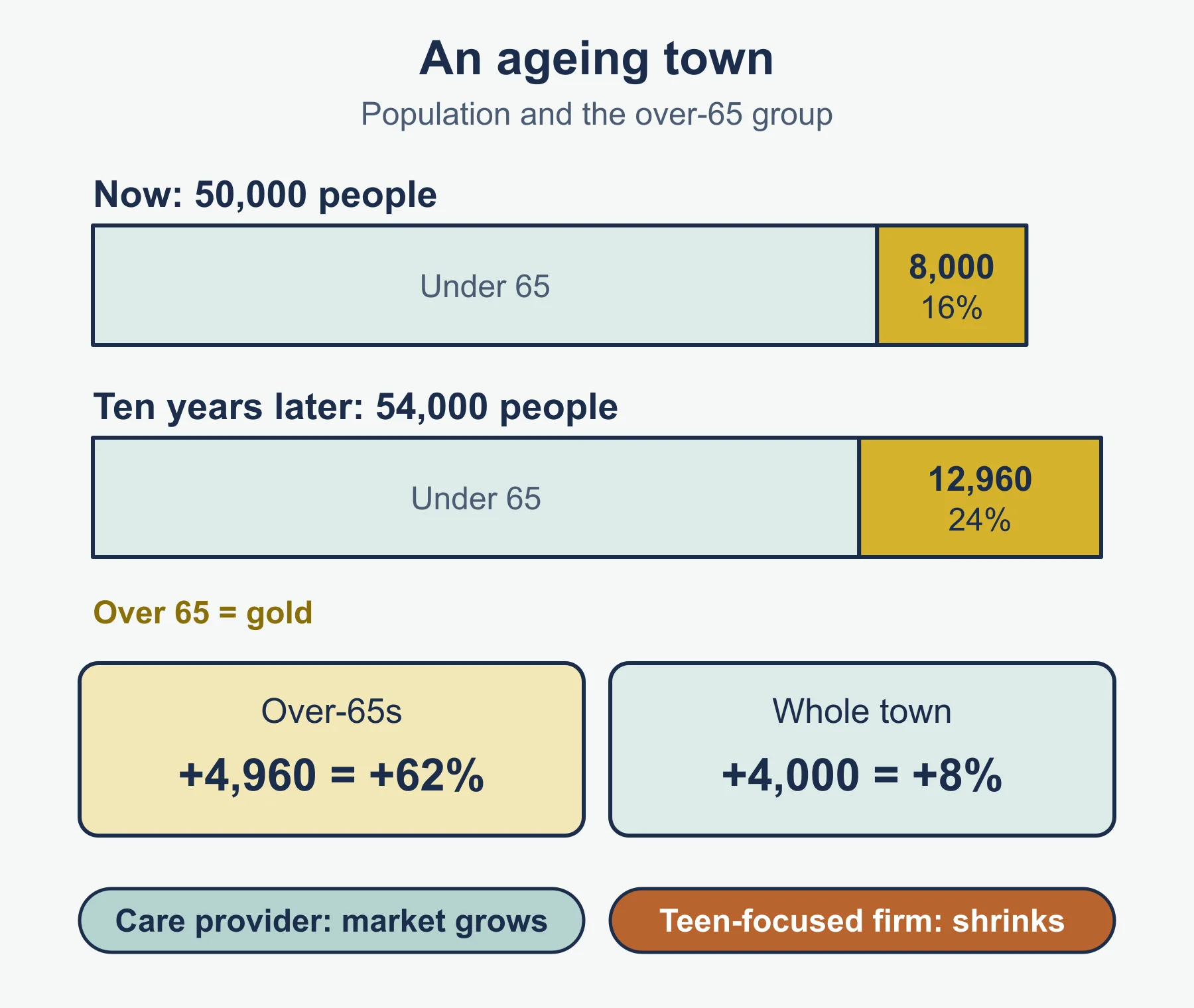
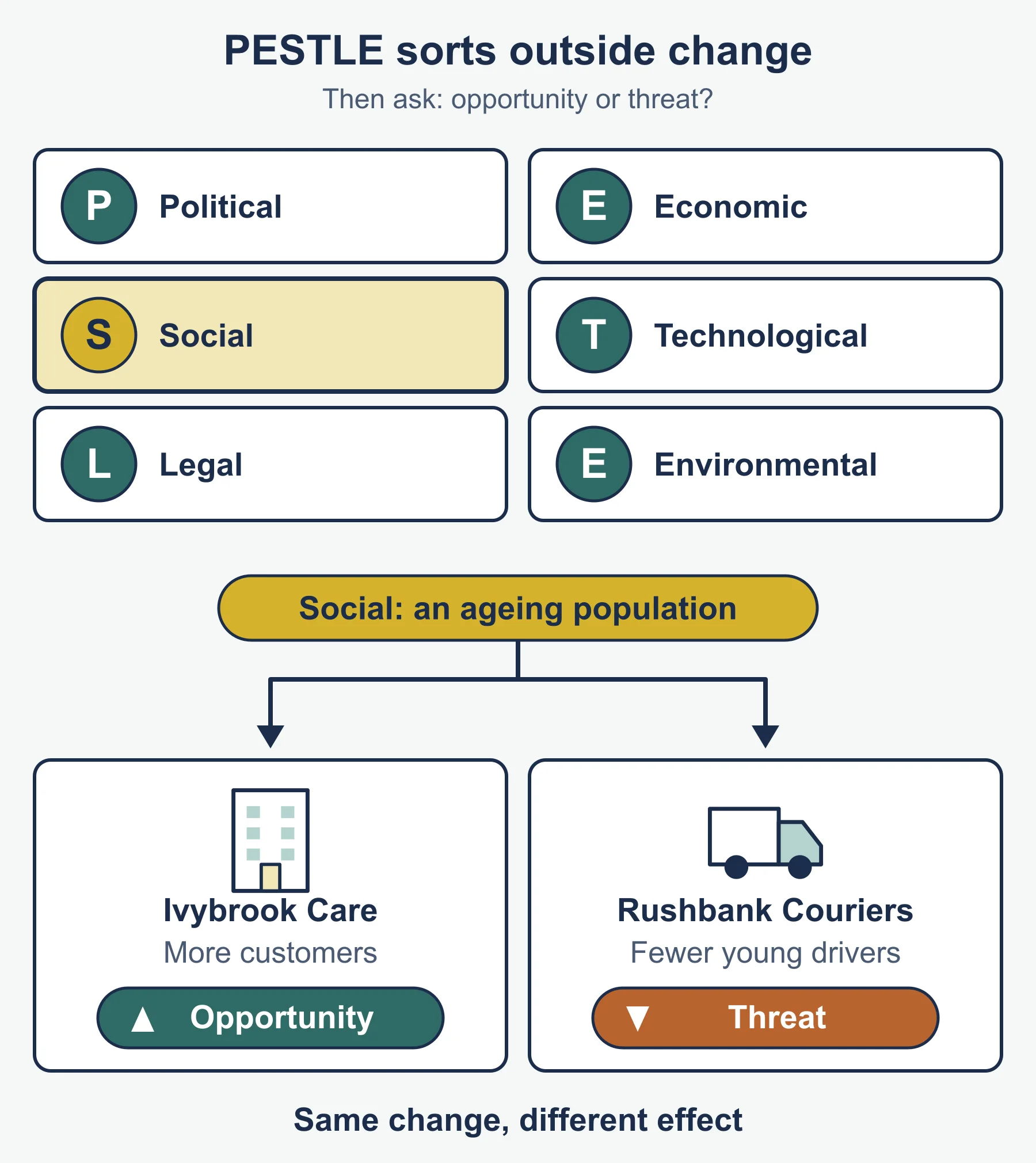
- Demography at three levels: local, national, global. Think age structure, birth and death rates, migration.
- Effects: demand for age-linked goods, labour supply, pension and training costs, choice of location.
6.1.4 Technological
Technology changes products, methods and sales channels. Gains: lower unit costs, new markets, better quality. Costs: investment, retraining, job losses, obsolete stock. Judgement: timing, cost, and what customers and rivals are doing.
6.1.5 Competitors and suppliers
| Group | Influences | Possible response |
|---|---|---|
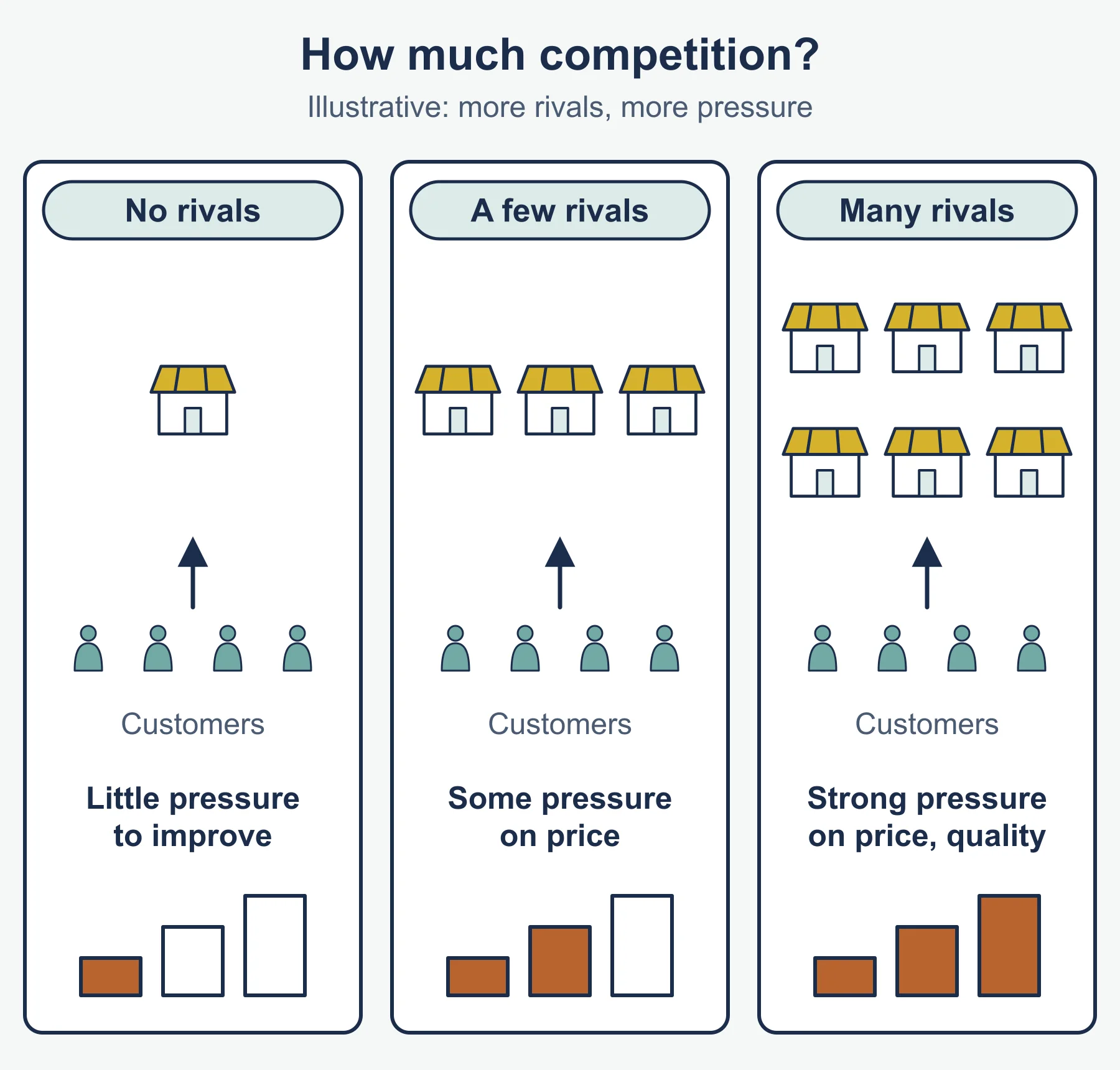
| Competitors | Price, features, promotion, entry decisions | Differentiate, match price, innovate |
| Suppliers | Cost, quality, reliability, delivery | Use several suppliers, longer contracts, backward integration |
6.1.6 International
- Trading links: bigger markets, cheaper inputs, economies of scale. Risks: exchange rate changes, foreign rivals, cultural and rule differences.
- Trade agreements: can lower barriers and widen market access, but also bring stronger rivals and leave out non-members.
- Technology in trade: online selling, digital payment, tracking, spread of design and production.
- Multinational and host country: jobs, investment, skills, tax, exports against profit leaving, pressure on local firms, environmental harm, loss of control.
- Multinational and government: incentives and bargaining on one side, regulation and tax on the other.
6.1.7 Environmental
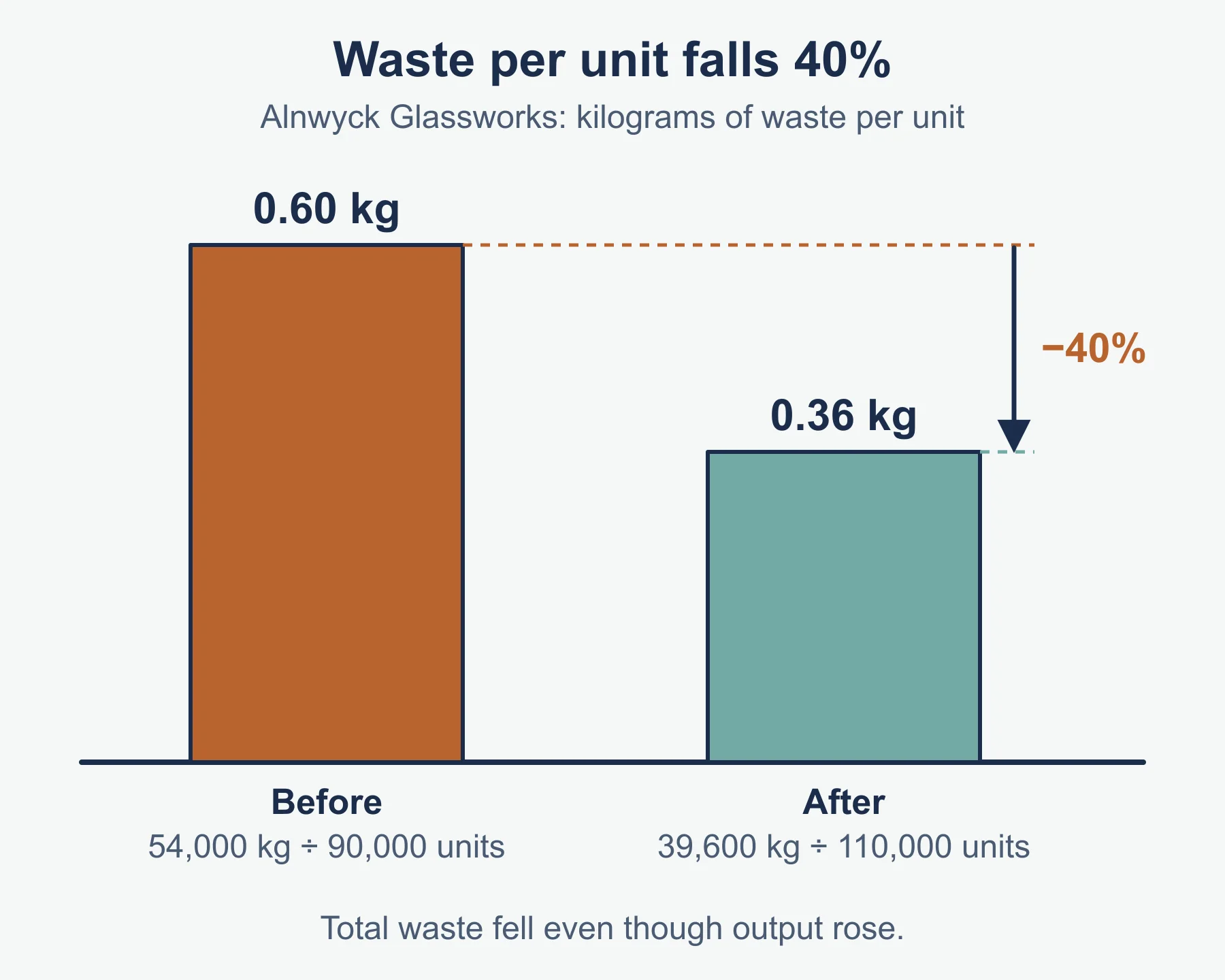
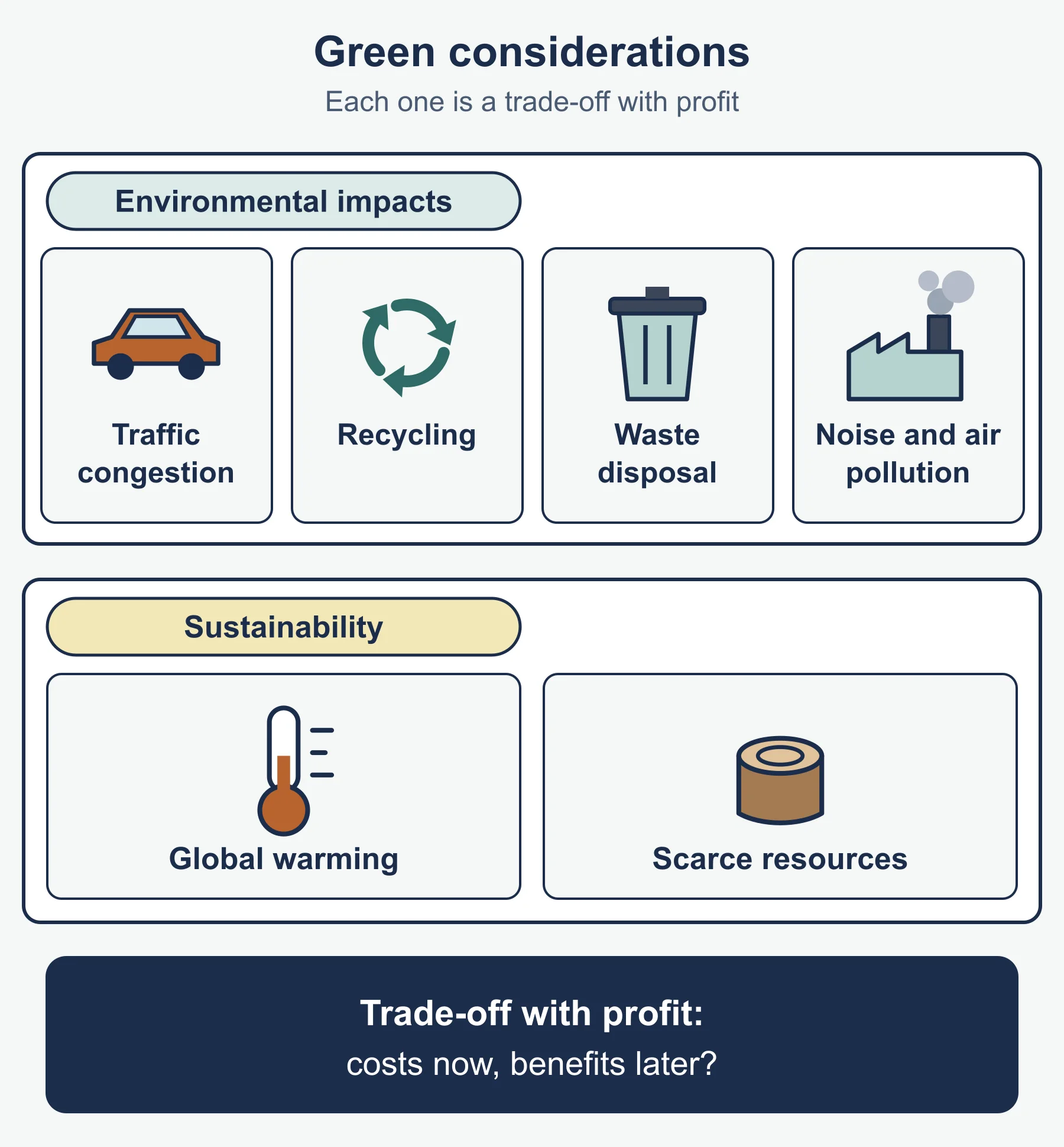
- Physical issues: pollution, climate change, resource scarcity, waste, habitat damage.
- Influence on behaviour: law, customer opinion, input costs, risk of disruption.
- Environmental audit: used by the business to find waste and support claims; used by stakeholders to check those claims.
- Sustainability: affects product design, supply chains and reporting. Gains: lower long-term cost, brand strength. Costs: investment now.
Worked reminders
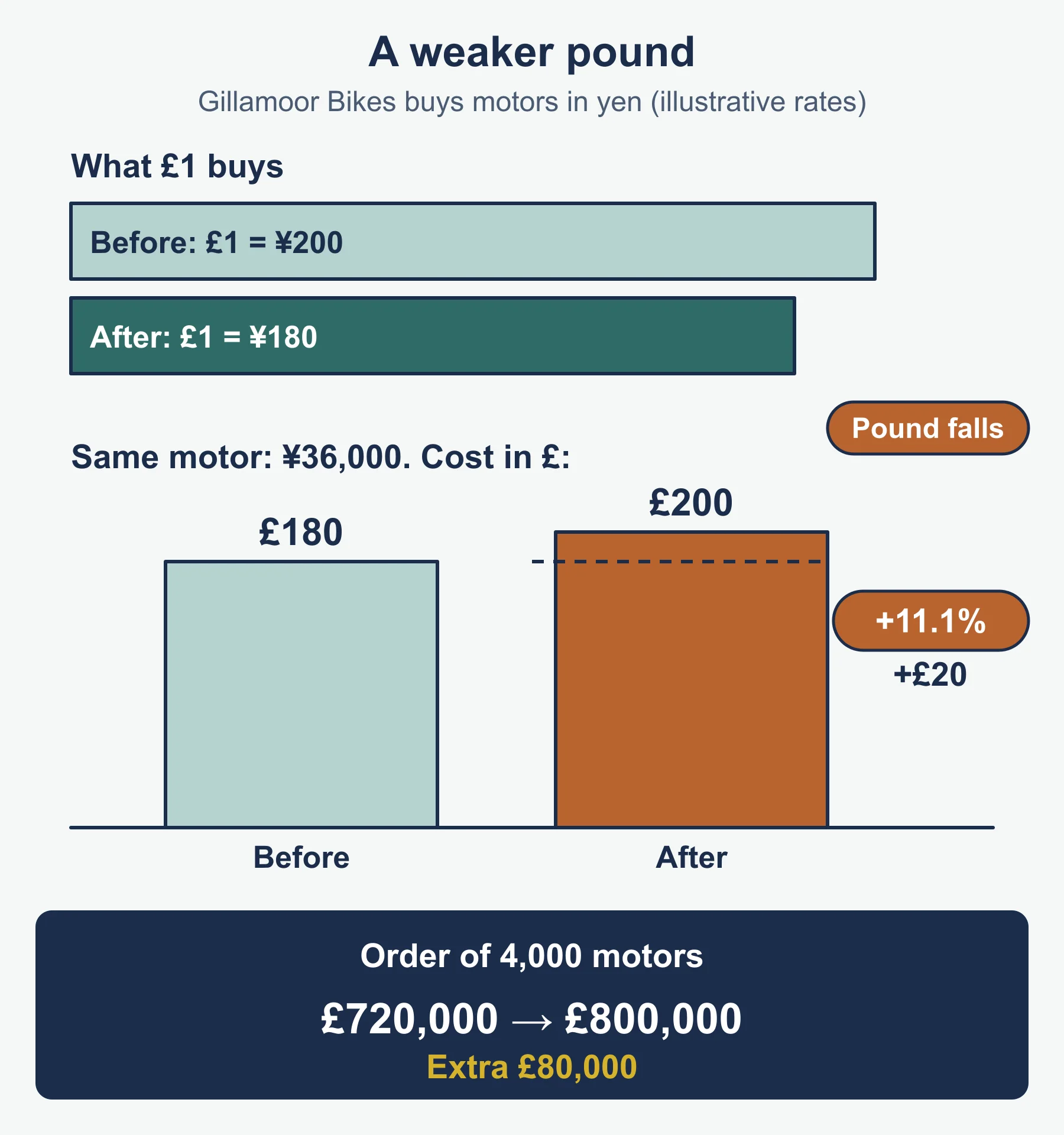
Importer and exchange rate: a firm buys stock priced at €60,000. At €1.25 per £1 it costs £48,000. At €1.20 per £1 it costs £50,000. The pound has weakened, so the cost rises by £2,000, or 4.2%.
Subsidy: a grant covering 15% of a £200,000 project cost is worth £30,000, leaving the firm to find £170,000. A subsidy lowers cost, but it may end, so a firm should not build a plan that only works with it.
Demographic shift: if the share of a town aged over 65 rises while total population is flat, the number of older customers rises. Calculate the group’s size (share × population) before and after, then compare.
Evaluating an external influence
Ask these in order:
- How large is the change compared with the firm’s size, debt, exports or customers?
- Is the effect short-term or lasting?
- Does it hit all competitors equally, or this firm in particular?
- Can the firm respond, and at what cost?
- Which stakeholders gain and lose?
Then state a judgement and the condition that would change it.
Must-know distinctions
- Privatisation versus nationalisation: the direction of ownership change.
- Fiscal versus monetary: taxes and spending versus interest rates and money.
- Supply-side versus demand-side: supply-side aims at productive capacity, not spending.
- Social audit versus environmental audit: social conduct versus environmental impact.
- Stronger currency versus weaker currency: effect on exporters and importers is opposite.
Quick self-test
- Define nationalisation.
- Name the three key macroeconomic objectives in the syllabus.
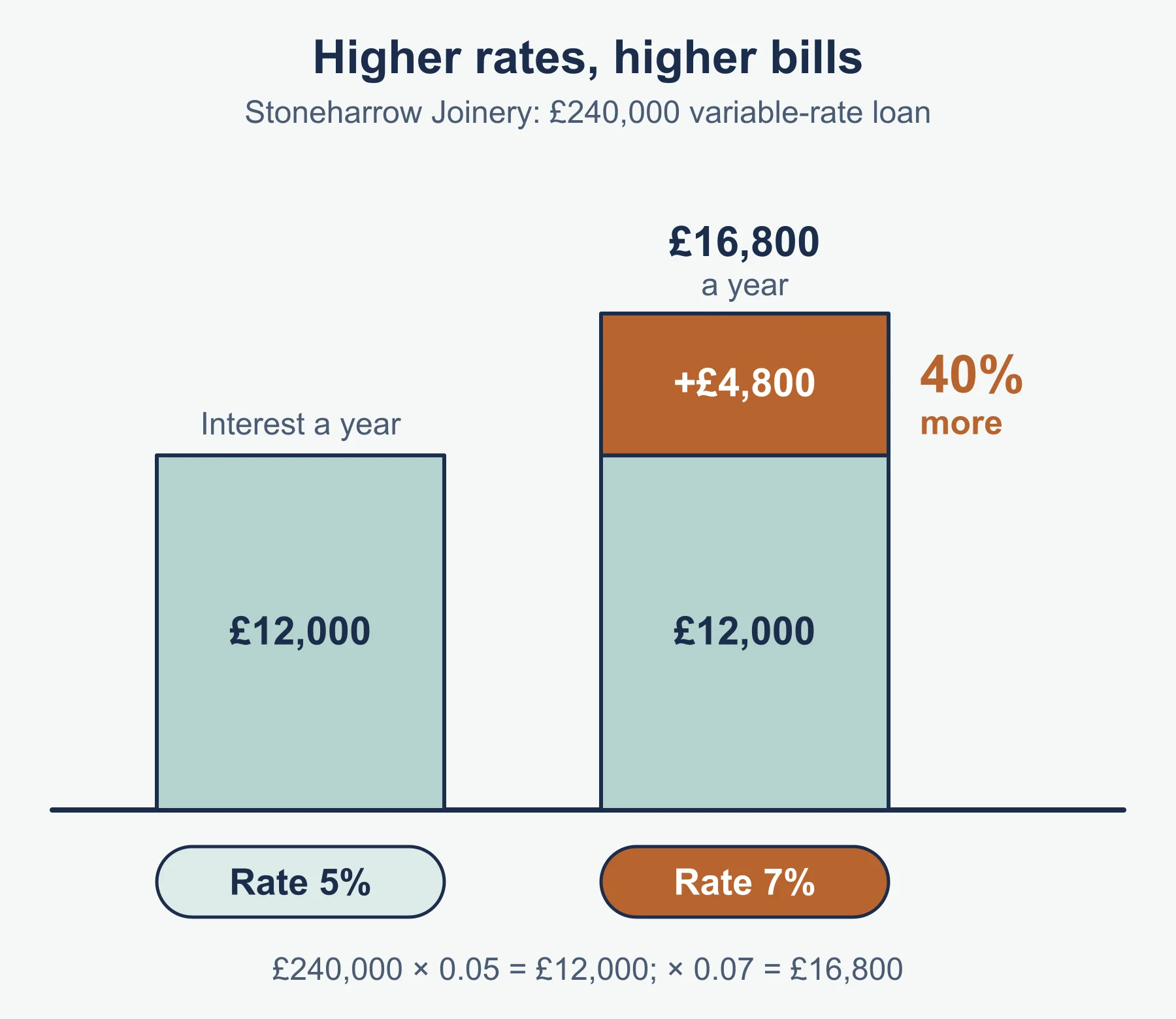
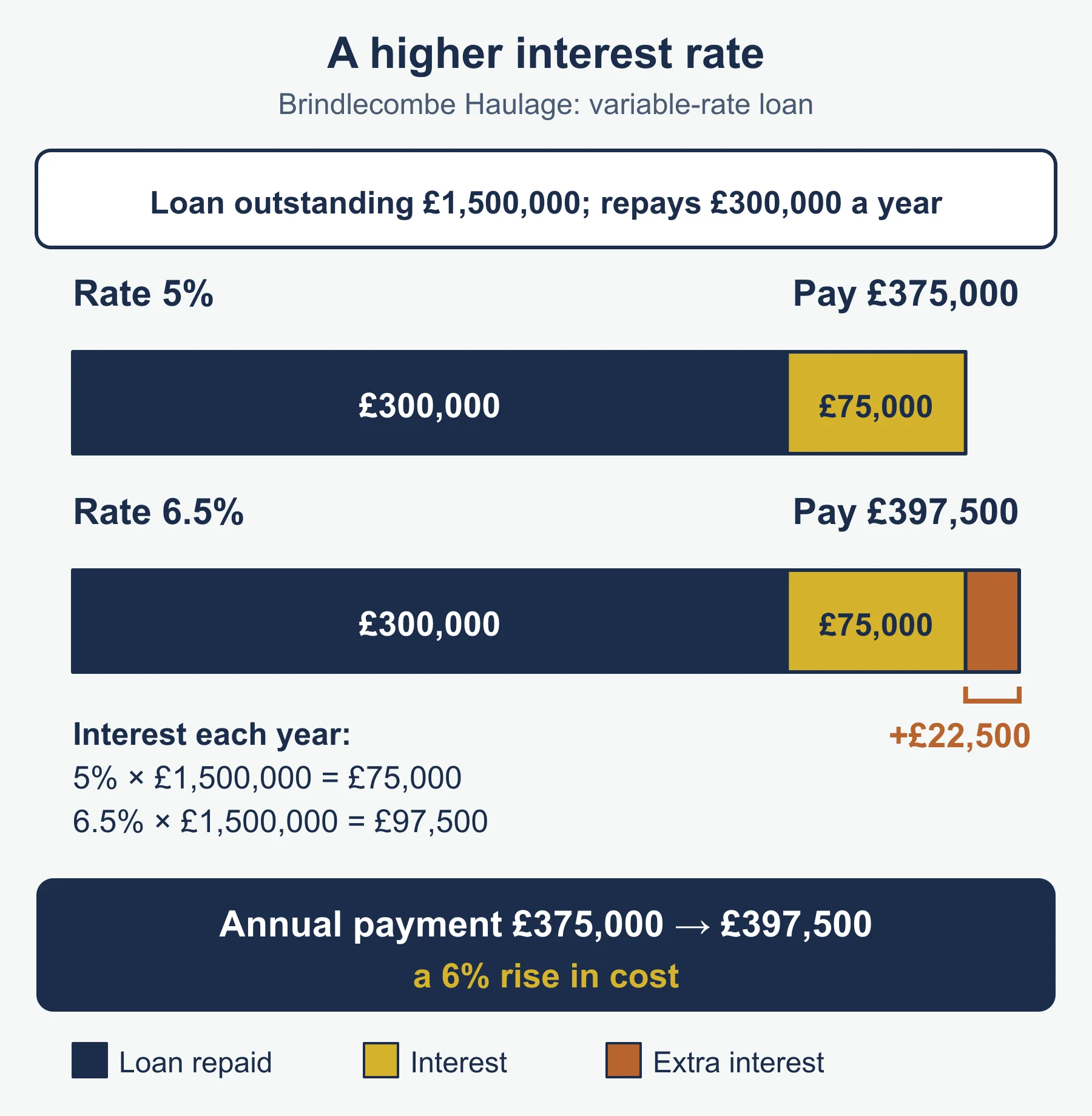
- A firm has a £150,000 variable loan. The rate rises from 4% to 6%. Find the extra annual interest and the percentage rise in interest.
- An exporter sells at €300. Find the sterling price at €1.25 per £1 and at €1.20 per £1. Which rate favours the exporter?
- Income elasticity of demand is +0.8 and incomes rise 2.5%. Estimate the change in demand.
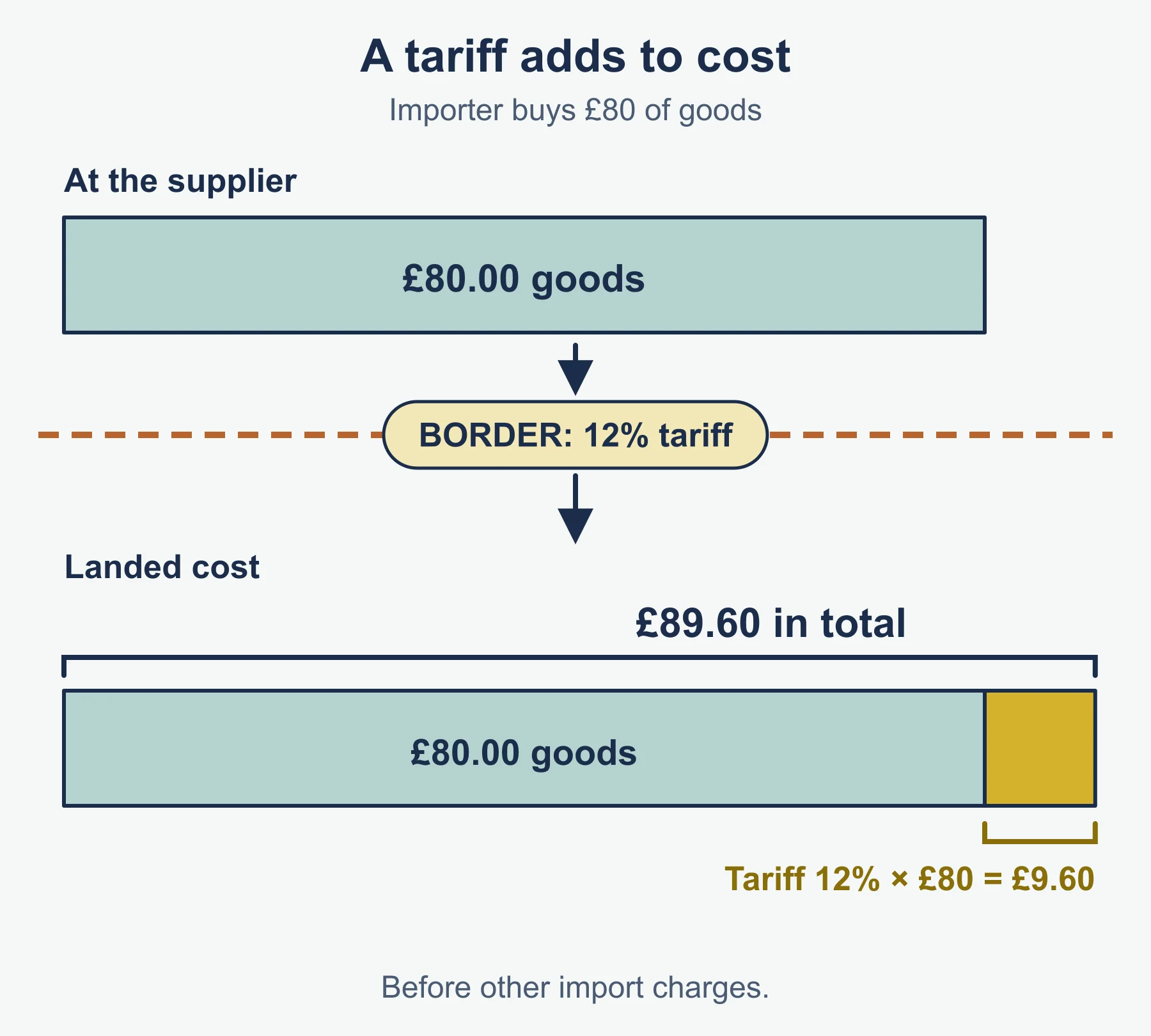
- Find the landed cost of goods worth £200 with a 15% tariff.
- Wages rise 2% while prices rise 4%. Estimate the real change in wages.
- A product costs £40 before sales tax. Find the price with 20% tax.
- Name the four types of government policy used to achieve macroeconomic objectives.
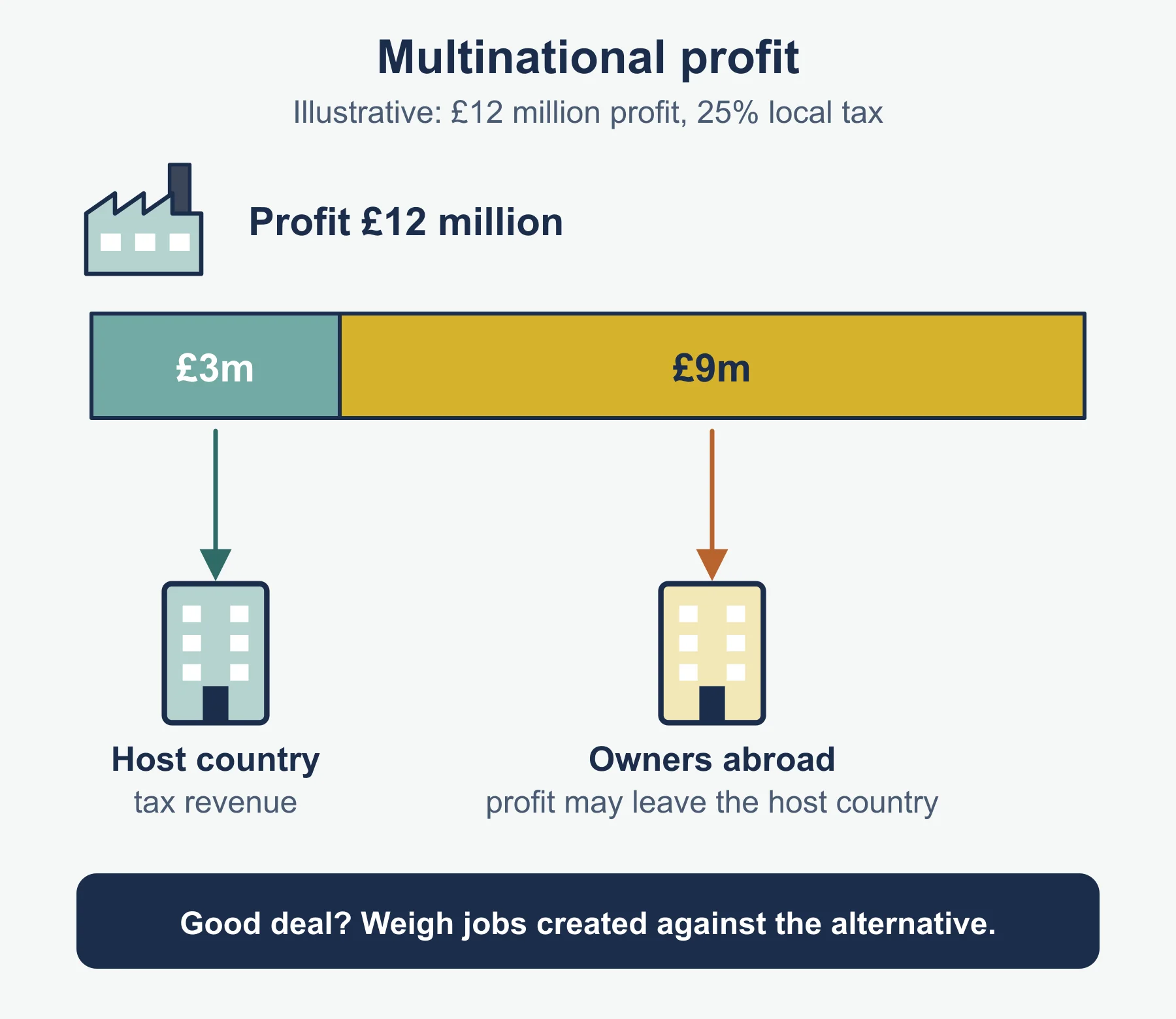
- A multinational makes £8 million profit and pays 30% local tax. How much does the host government receive? Give one reason this may not make the host better off.
Answers
- Transfer of a business or industry from private to government ownership.
- Low unemployment, low inflation, economic growth.
- Interest £6,000 becomes £9,000, so the extra is £3,000, a rise of 50%.
- 300 ÷ 1.25 = £240 and 300 ÷ 1.20 = £250. The lower rate (€1.20) favours the exporter, because the pound is weaker.
- 0.8 × 2.5 = 2.0%, so demand rises by about 2%.
- 200 × 1.15 = £230.
- About −1.9% (exactly 1.02 ÷ 1.04 − 1).
- 40 × 1.20 = £48.
- Monetary, fiscal, supply-side, exchange rate policies.
- £2.4 million. Possible reasons: profit leaves the country, local firms lose out, jobs may be few.
Where marks are usually lost
- Describing the policy or factor without linking it to the business in the case.
- Giving only advantages for privatisation or nationalisation when the question asks for both.
- Getting the direction of an exchange rate effect wrong.
- Using percentage points where a percentage change is needed.
- Treating one change as certain to cut sales, ignoring elasticity and customer type.
- Writing about CSR as always positive without cost or credibility issues.
- Not separating the immediate effect from the longer-term one.
- Ending an evaluation without a judgement.
Frequently asked questions
What are the key macroeconomic objectives in Cambridge 9609 Business? The syllabus names low unemployment, low inflation and economic growth. Answers should link each one to a specific firm’s demand, costs or labour.
What is the difference between fiscal and monetary policy? Fiscal policy uses taxation and government spending. Monetary policy uses interest rates and the money supply.
How does a stronger currency affect exporters and importers? A stronger home currency makes exports dearer abroad and imports cheaper. A weaker currency has the opposite effect, helping exporters and raising import costs.
What is the difference between a social audit and an environmental audit? A social audit reviews a firm’s social impact and conduct, such as working conditions. An environmental audit checks its environmental impact, such as waste and energy use, against targets.
Official syllabus
Cambridge International AS & A Level Business 9609 syllabus for examination in 2026, 2027 and 2028, published by Cambridge University Press & Assessment (Cambridge International), section 6.1.
Get free revision emails (optional)
Occasional emails with practice questions, worked explanations and links to free resources for the qualification and subjects you choose. No spam, and you can unsubscribe from any email. The free tools on this site never need an email.
Related resources
-
Practice questions
A Level Business: Business and Its Environment — Practice Questions
Original exam-style practice questions with full worked answers on enterprise, business structure and size, objectives and stakeholders.
Business · Cambridge · AS Level
Try questions -
Revision notes
A Level Business: Business and Its Environment — Revision Notes
Condensed recall notes on enterprise, business objectives, ownership, stakeholders and growth for AS Topic 1 of Cambridge AS & A Level Business 9609.
Business · Cambridge · AS Level
Revise topic -
Study guides
A Level Business: Business and its Environment (Cambridge 9609)
Study guide to enterprise, business structure, size, objectives and stakeholders: Topic 1 Business and its environment for Cambridge AS & A Level Business 9609.
Business · Cambridge · AS Level
Read guide
Related articles
-
teaching
A Level tuition in Dubai: Cambridge or Pearson Edexcel International A Level?
Schools in Dubai and Abu Dhabi teach either Cambridge International AS & A Level or Pearson Edexcel International A Level. How the two are structured, why it matters for tuition, and how online classes from Lahore work.
9 October 2026
-
curriculum guides
Choosing subjects at IGCSE and A Level
How subject choices at 14 and 16 affect university options later, and how to keep pathways open without overloading a timetable.
28 July 2026
Studying this with a teacher
Working through Business A LEVEL?
This page is free and stays free. If you would rather be taught it, Marlbridge runs Business classes one-to-one and in small groups of up to 15, online in your own time zone. The first trial class is free. WhatsApp replies within an hour (8am–11pm Pakistan time, every day); email the same day.
Cambridge Business teachers at Marlbridge

