
Study Guides
Cambridge International AS & A Level Psychology (9990): 1.2 Mood (affective) disorders: depressive disorder (unipolar) and bipolar disorder
Topic 1.2 mood disorders for Cambridge 9990 Psychology: ICD-11 depression and bipolar, the BDI, Oruč et al., Beck, learned helplessness and treatments.
- Subject
- Psychology
- Level
- A LEVEL
- Topic
- Specialist Option 1: Clinical Psychology
- Author
- Marlbridge Academic Team
- Updated
- Reviewed by
- Kanwal Aslam (what this means)
Aligned to Cambridge A Level Psychology (9990), 2024-2026. Official specification .
Syllabus page (what it covers and how it is assessed): Cambridge A Level Psychology.
Syllabus points this page covers
9990 (A Level)
- 1.2 Mood (affective) disorders: depressive disorder (unipolar) and bipolar disorder
Topic 1.2 of Specialist Option 1, Clinical Psychology, in Cambridge International AS & A Level Psychology (9990) covers mood (affective) disorders: depressive disorder (unipolar) and bipolar disorder. It has three parts: 1.2.1 diagnostic criteria and the Beck Depression Inventory, 1.2.2 explanations of depressive disorder, including the key study by Oruč et al. (1997), and 1.2.3 treatment and management. This guide goes deeper than the Clinical Psychology study guide, especially on evaluation.
Revise with the mood disorders revision notes and test yourself with the mood disorders practice questions.
1.2.1 Diagnosis and measurement
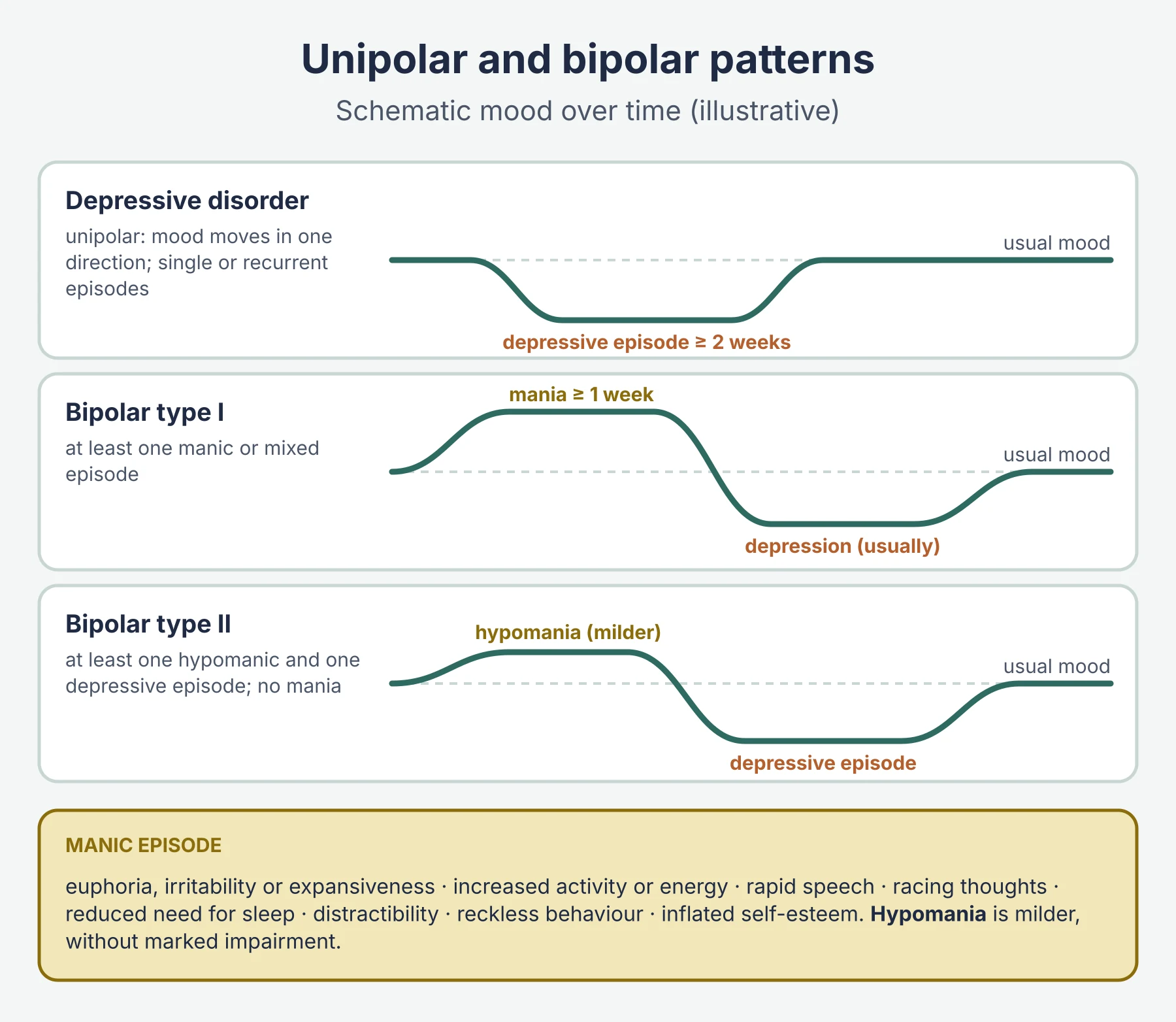
Depressive episode. ICD-11 describes a period of almost daily depressed mood or markedly reduced interest in activities, lasting at least two weeks, with other symptoms such as difficulty concentrating, feelings of worthlessness or excessive or inappropriate guilt, hopelessness, recurrent thoughts of death or suicide, changes in appetite or sleep, psychomotor agitation or slowing, and reduced energy or fatigue. Depressive disorder is called unipolar because mood moves in one direction only. It can be a single episode or recurrent.
Bipolar disorders involve episodes of elevated mood as well as, usually, depression.
| Type | Requirement |
|---|---|
| Bipolar type I | At least one manic or mixed episode |
| Bipolar type II | At least one hypomanic episode and at least one depressive episode, with no manic episode |
A manic episode lasts at least one week (unless shortened by treatment) and is an extreme mood state of euphoria, irritability or expansiveness, with increased activity or energy and other signs such as rapid speech, racing thoughts, reduced need for sleep, distractibility, impulsive or reckless behaviour, and inflated self-esteem. Hypomania is a milder version that does not cause marked impairment.
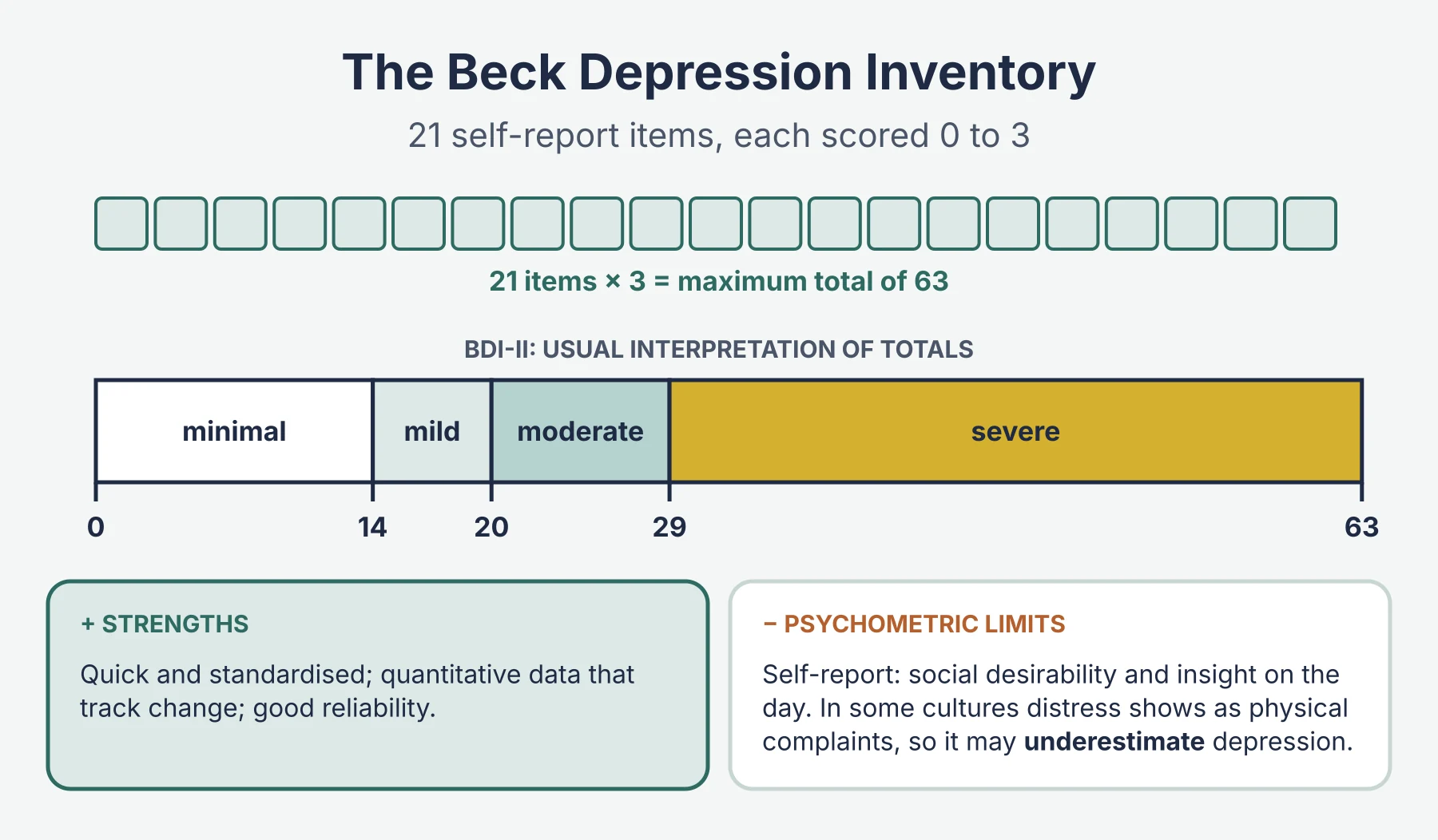
The Beck Depression Inventory (BDI). A 21-item self-report questionnaire; each item has four statements scored 0 to 3, covering symptoms such as sadness, pessimism, guilt, loss of energy and changes in sleep. Totals range from 0 to 63, with higher scores showing more severe depression. In the revised BDI-II, totals of 0–13 are usually interpreted as minimal, 14–19 mild, 20–28 moderate and 29–63 severe.
Evaluating the BDI. It is quick and standardised, gives quantitative data that can track change during treatment, and has good reliability. But it is a psychometric self-report, open to social desirability bias and to the person’s insight on the day. Cultural differences matter too: in some cultures distress is more often expressed through physical complaints, such as tiredness or pain, than through statements of sadness, so a questionnaire built on Western descriptions may underestimate depression.
1.2.2 Explanations of depressive disorder
Biochemical
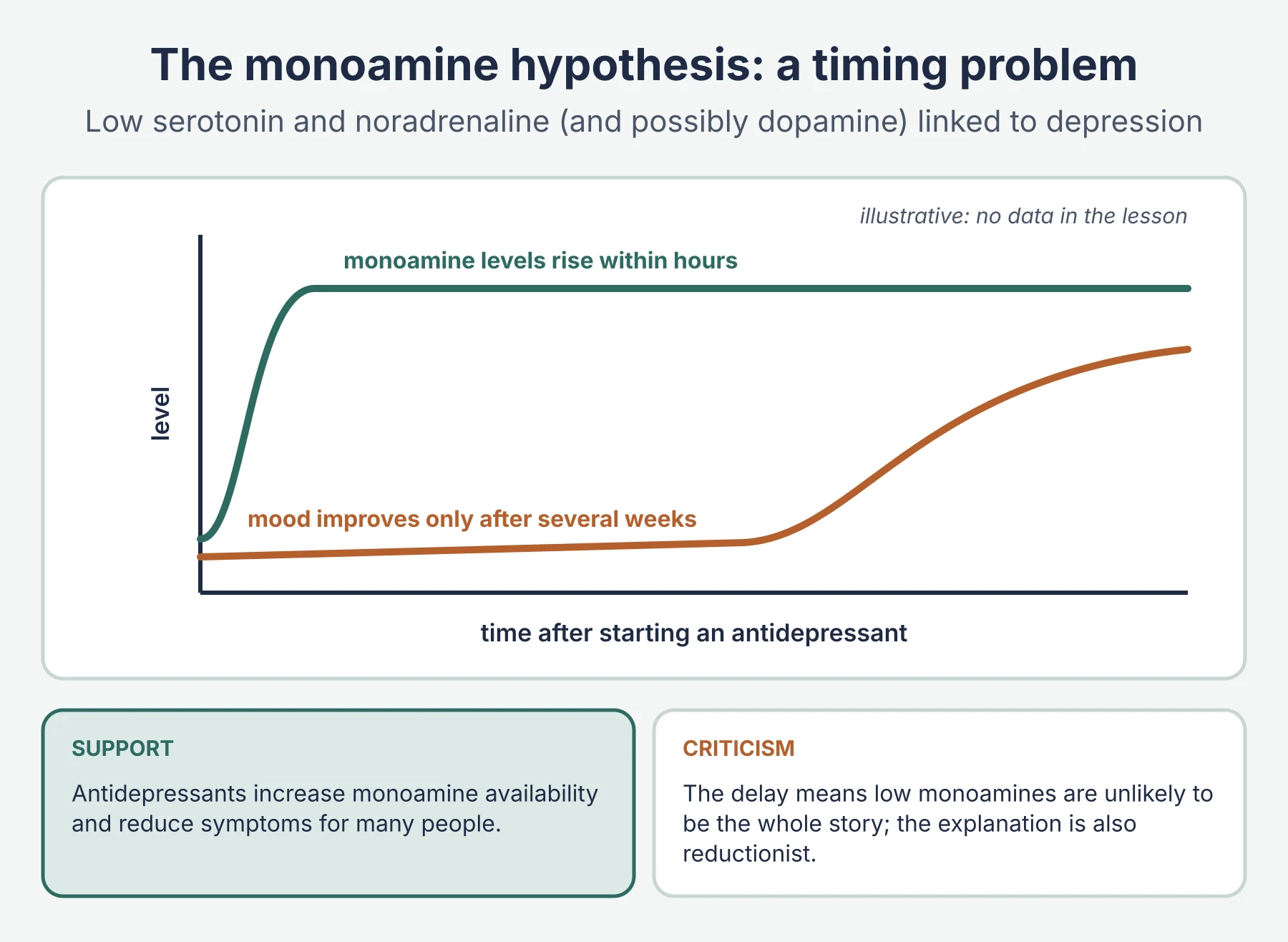
The monoamine hypothesis links depression to low activity of serotonin and noradrenaline (and possibly dopamine). Support comes from antidepressants, which increase monoamine availability and reduce symptoms for many people. A key criticism is timing: the drugs raise monoamine levels within hours, but mood usually improves only after several weeks, so low monoamines are unlikely to be the whole story. The explanation is also reductionist.
Genetic: key study Oruč et al. (1997)
Context. Family and twin studies suggest mood disorders run in families, and bipolar disorder appears to be more heritable than unipolar depression. Serotonin is implicated in mood, so genes affecting serotonin receptors and reuptake were candidates.
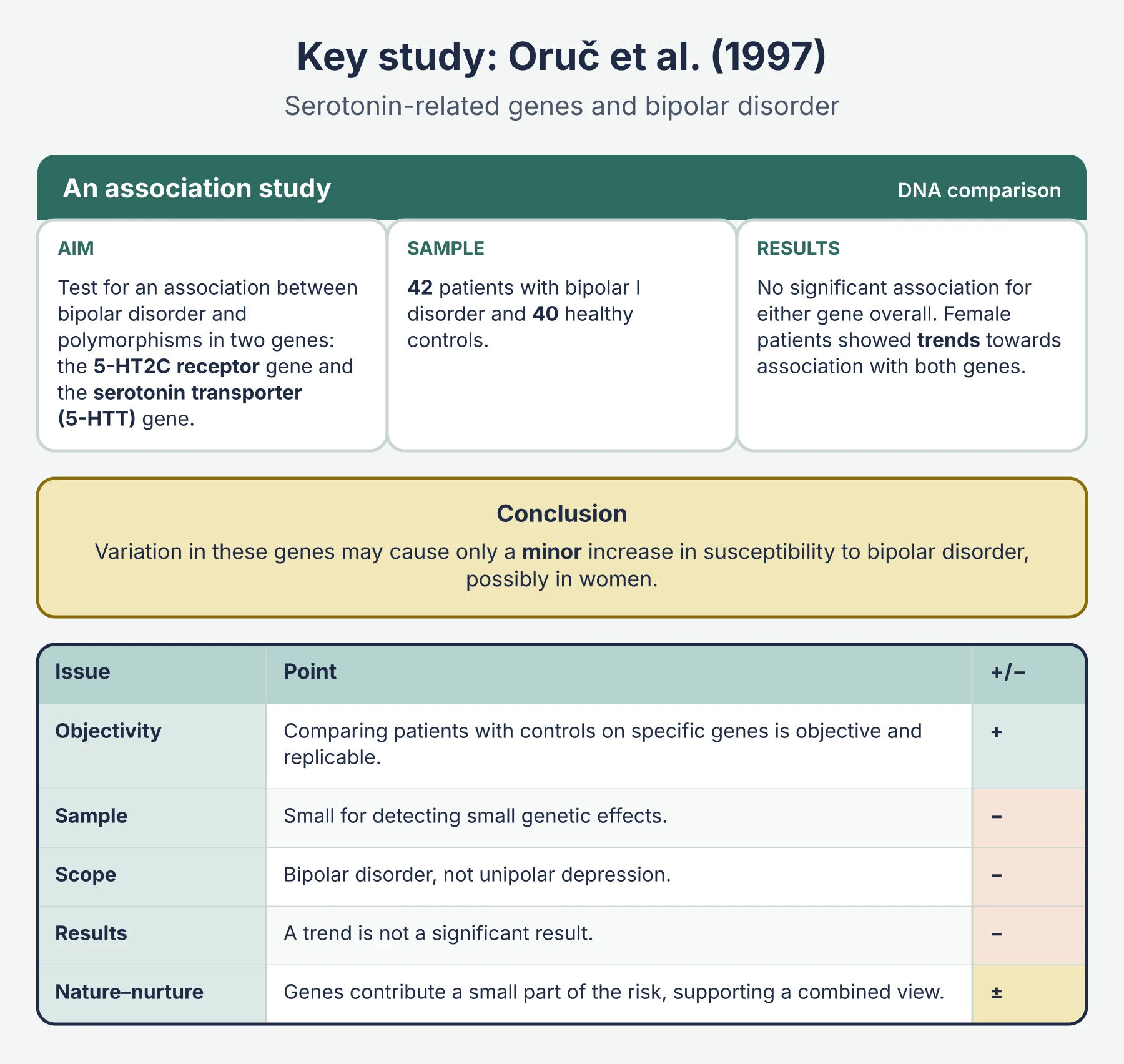
Aim. To test for an association between bipolar disorder and variations (polymorphisms) in two serotonin-related genes: the 5-HT2C receptor gene and the serotonin transporter (5-HTT) gene.
Method. An association study comparing DNA from 42 patients with bipolar I disorder and 40 healthy controls.
Results. No significant association was found for either gene in the sample as a whole. When patients were analysed by gender, female patients showed trends towards association with both genes.
Conclusions. Variation in these genes may cause only a minor increase in susceptibility to bipolar disorder, possibly in women.
Evaluation. Comparing patients with controls on specific genes is objective and replicable. But the sample is small for detecting small genetic effects, it involved bipolar disorder, not unipolar depression, and a trend is not a significant result. It illustrates that genes contribute a small part of the risk, which supports a combined nature–nurture view.
Beck’s cognitive theory
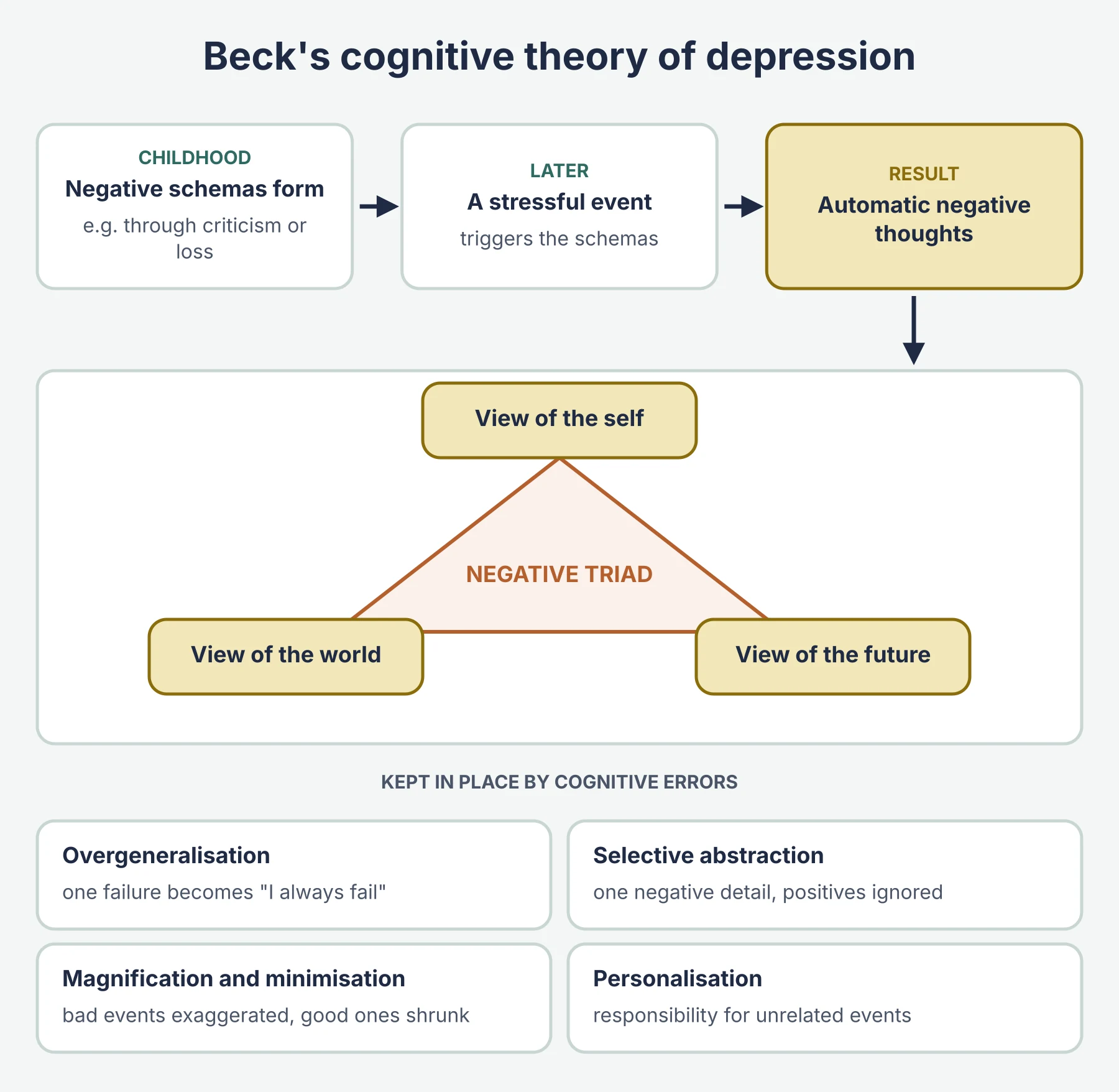
Beck proposed that depression arises from negative schemas formed in childhood, for example through criticism or loss, which are triggered by later stressful events. These produce automatic negative thoughts and the negative triad: negative views of the self, the world and the future. They are kept in place by cognitive errors:
- Overgeneralisation: one failure becomes “I always fail”.
- Selective abstraction: focusing on one negative detail and ignoring the positives.
- Magnification and minimisation: exaggerating bad events and shrinking good ones.
- Personalisation: taking responsibility for events that have nothing to do with you.
Evaluation: well supported by the effectiveness of cognitive therapy, and it gives the person a sense of control (free will). But negative thinking could be a symptom of depression rather than its cause, and the theory can seem to blame the individual while ignoring situational factors such as poverty.
Learned helplessness and attributional style
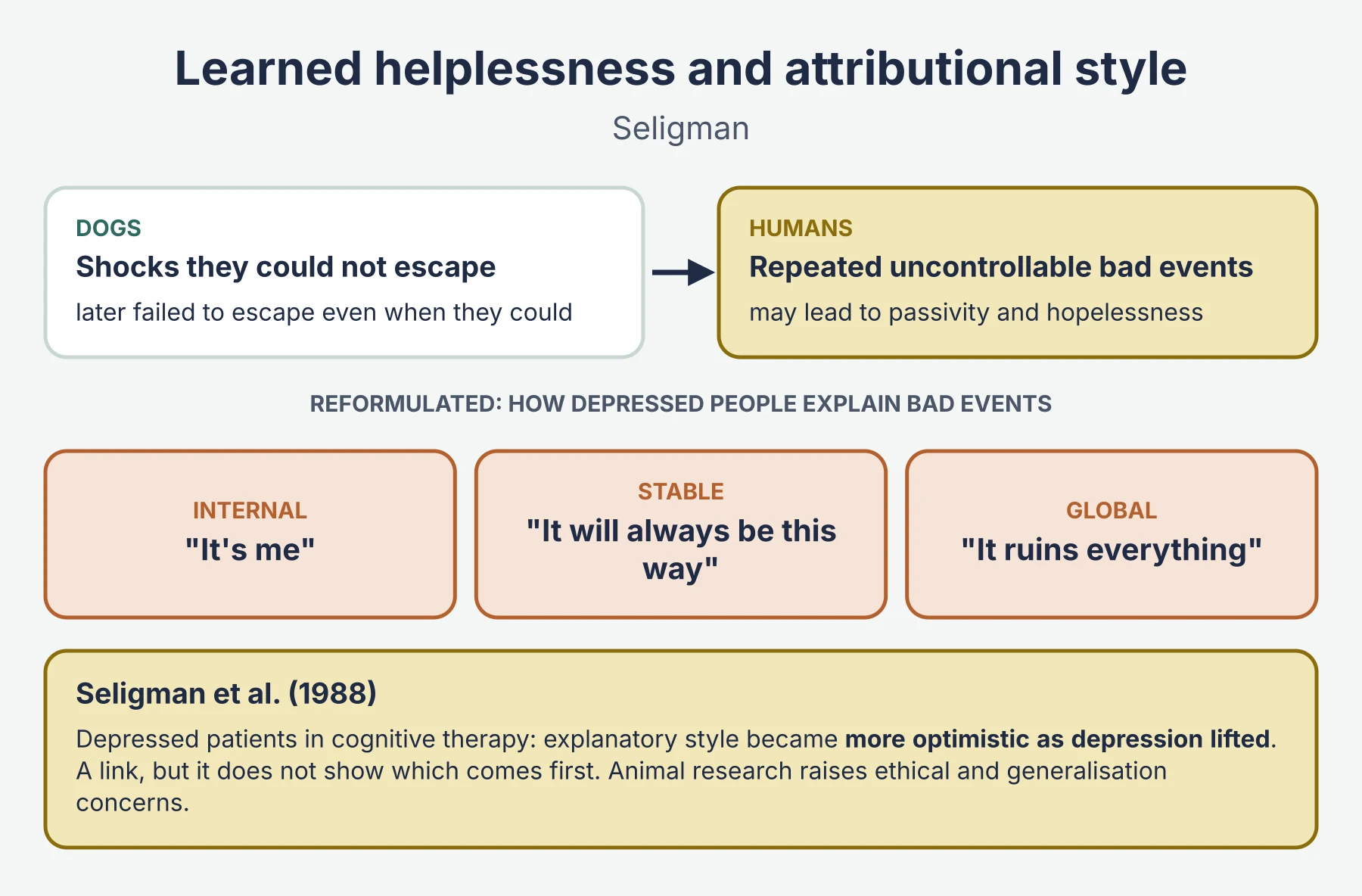
Seligman’s early experiments found that dogs exposed to shocks they could not escape later failed to escape even when they could, as if they had learned that their actions made no difference. Applied to humans, repeated uncontrollable bad events may lead to passivity and hopelessness. The reformulated theory added attributional style: depressed people tend to explain bad events as internal (“it’s me”), stable (“it will always be this way”) and global (“it ruins everything”).
Seligman et al. (1988) studied depressed patients receiving cognitive therapy and found that their explanatory style became more optimistic as their depression lifted. This supports a link between attributional style and depression, though it does not show which comes first. The original animal research raises ethical concerns and questions about generalising from dogs to people.
1.2.3 Treatment and management
| Antidepressant | Mechanism | Points to evaluate |
|---|---|---|
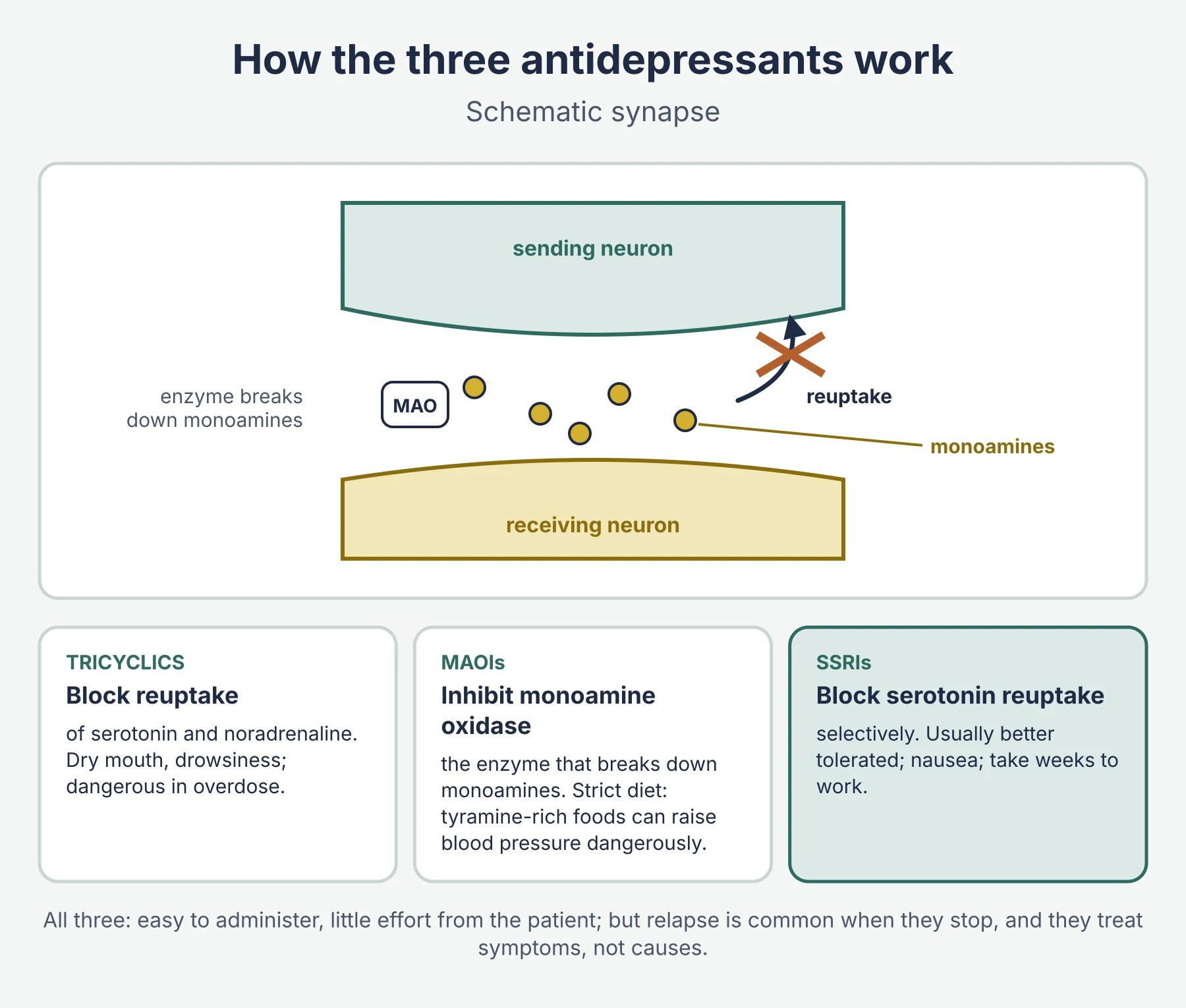
| Tricyclics | Block reuptake of serotonin and noradrenaline | Side effects such as dry mouth and drowsiness; dangerous in overdose |
| MAOIs | Inhibit monoamine oxidase, the enzyme that breaks down monoamines | Strict diet: tyramine-rich foods such as some cheeses can cause a dangerous rise in blood pressure |
| SSRIs | Selectively block reuptake of serotonin | Usually better tolerated; side effects include nausea; take weeks to work |
Drugs are easy to administer and need little effort from the patient, but relapse is common when they stop, and they treat symptoms rather than causes.
Beck’s cognitive restructuring teaches the client to notice automatic negative thoughts, record them in a thought diary, test them against evidence (the therapist acts like a scientist alongside the client, called collaborative empiricism), and replace them with more balanced thoughts.
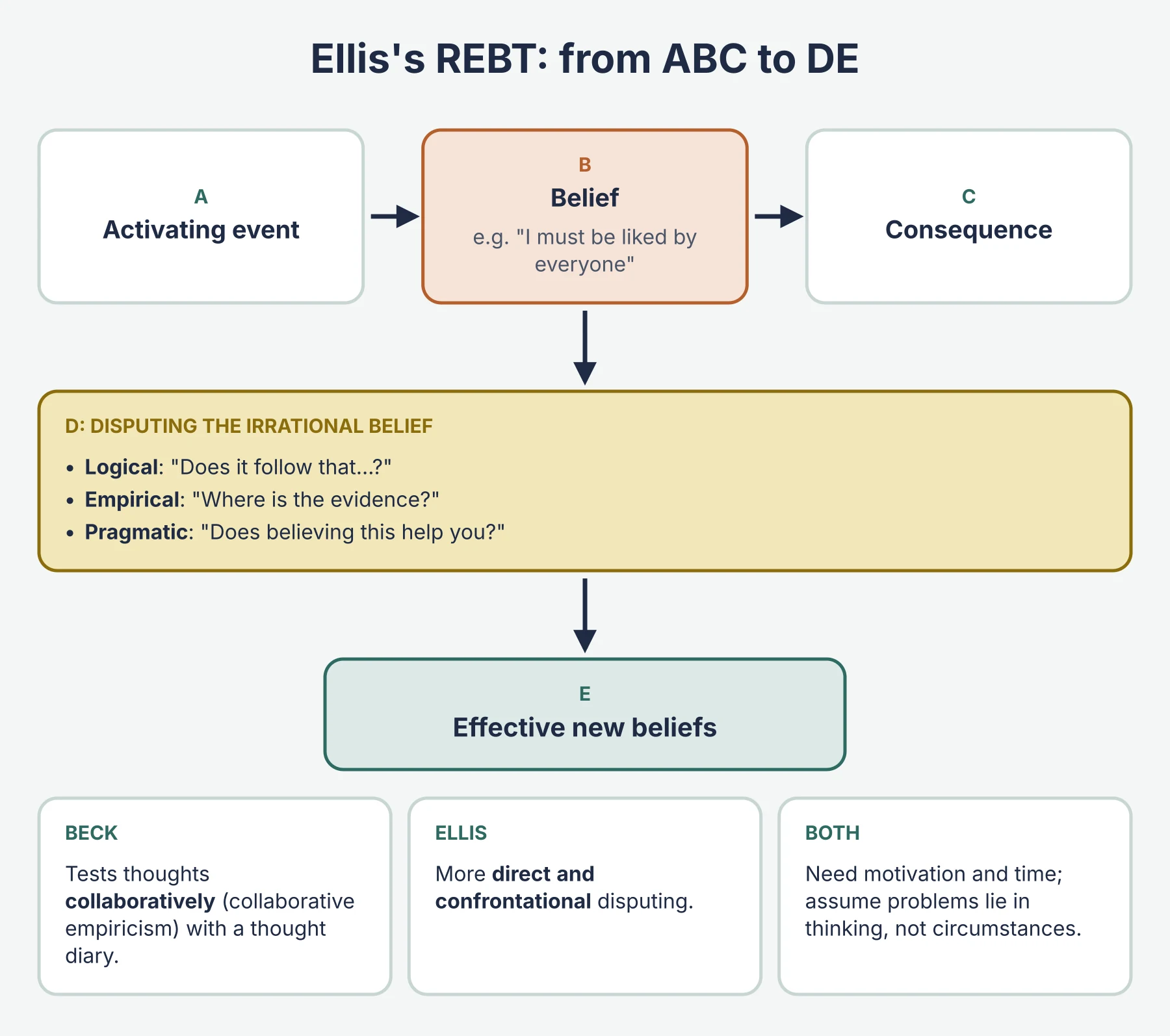
Ellis’s REBT uses the ABC model: an Activating event leads to a Belief, which produces a Consequence. Irrational beliefs, especially rigid demands (“I must be liked by everyone”), are challenged by Disputing, leading to Effective new beliefs. Disputing can be logical (“Does it follow that…?”), empirical (“Where is the evidence?”) or pragmatic (“Does believing this help you?”).
Comparison: Beck’s approach tests thoughts collaboratively; Ellis’s is more direct and confrontational. Both demand motivation and time, and both assume problems lie in thinking rather than in circumstances.
Common mistakes
- Using DSM terms without noting that the syllabus uses ICD-11.
- Saying Oruč et al. studied depression: the sample had bipolar I disorder.
- Reporting a “significant” finding for Oruč et al.: there were only trends in women.
- Mixing up the three antidepressant mechanisms.
- Describing REBT as ABC only, without disputing.
Exam technique
Describe the explanations in Paper 3 part (a) with their components (triad, errors, attributions). For part (b) evaluate with the issues the syllabus lists: nature versus nurture, reductionism, determinism, individual versus situational explanations and cultural differences, ending with a judgement. On Paper 4, expect questions on the BDI as a psychometric measure and on Oruč et al.’s method.
Official syllabus
Cambridge International AS & A Level Psychology 9990 syllabus for 2024, 2025 and 2026, Specialist Option 1, 1.2 Mood (affective) disorders — cambridgeinternational.org.
More resources on this topic
Related resources
-
Practice questions
Cambridge International AS & A Level Psychology (9990): 1.2 Mood (affective) disorders: depressive disorder (unipolar) and bipolar disorder – Practice Questions
Original Paper 3 and Paper 4 style questions with answers on 9990 topic 1.2 mood disorders: diagnosis, the BDI, Oruč et al., Beck, REBT and antidepressants.
Psychology · Cambridge · A Level
Try questions -
Revision notes
Cambridge International AS & A Level Psychology (9990): 1.2 Mood (affective) disorders: depressive disorder (unipolar) and bipolar disorder – Revision Notes
Revision notes for 9990 topic 1.2 mood disorders: ICD-11 episodes, the BDI, Oruč et al., Beck, attributional style, antidepressants, REBT and a self-test.
Psychology · Cambridge · A Level
Revise topic -
Study guides
Cambridge International AS & A Level Psychology (9990): 1.5 Obsessive-compulsive disorder (OCD)
Topic 1.5 OCD for Cambridge 9990 Psychology: ICD-11 obsessions and compulsions, MOCI and Y-BOCS, five explanations, SSRIs, ERP and Lovell et al.
Psychology · Cambridge · A Level
Read guide
Studying Psychology?
This page is free and stays free. Marlbridge is not offering Psychology classes at the moment, so there is no tuition to book for it. The free study resources stay open to everyone.
Get free revision emails (optional)
Occasional emails with practice questions, worked explanations and links to free resources for the qualification and subjects you choose. No spam, and you can unsubscribe from any email. The free tools on this site never need an email.