
Revision Notes
Cambridge International AS & A Level Psychology (9990): 1.2 Mood (affective) disorders: depressive disorder (unipolar) and bipolar disorder – Revision Notes
Revision notes for 9990 topic 1.2 mood disorders: ICD-11 episodes, the BDI, Oruč et al., Beck, attributional style, antidepressants, REBT and a self-test.
- Subject
- Psychology
- Level
- A LEVEL
- Topic
- Specialist Option 1: Clinical Psychology
- Author
- Marlbridge Academic Team
- Updated
- Reviewed by
- Kanwal Aslam (what this means)
Aligned to Cambridge A Level Psychology (9990), 2024-2026. Official specification .
Syllabus page (what it covers and how it is assessed): Cambridge A Level Psychology.
Syllabus points this page covers
9990 (A Level)
- 1.2 Mood (affective) disorders: depressive disorder (unipolar) and bipolar disorder
These notes condense topic 1.2, mood (affective) disorders, from Specialist Option 1, Clinical Psychology, of Cambridge International AS & A Level Psychology (9990), syllabus for 2024 to 2026. Learn the episode definitions, the BDI, one biochemical and one genetic explanation, two cognitive explanations and the treatments, each with an evaluation point. Full explanations are in the mood disorders study guide; test yourself with the mood disorders practice questions.
1.2.1 Diagnosis
| Episode or disorder | Key features |
|---|---|
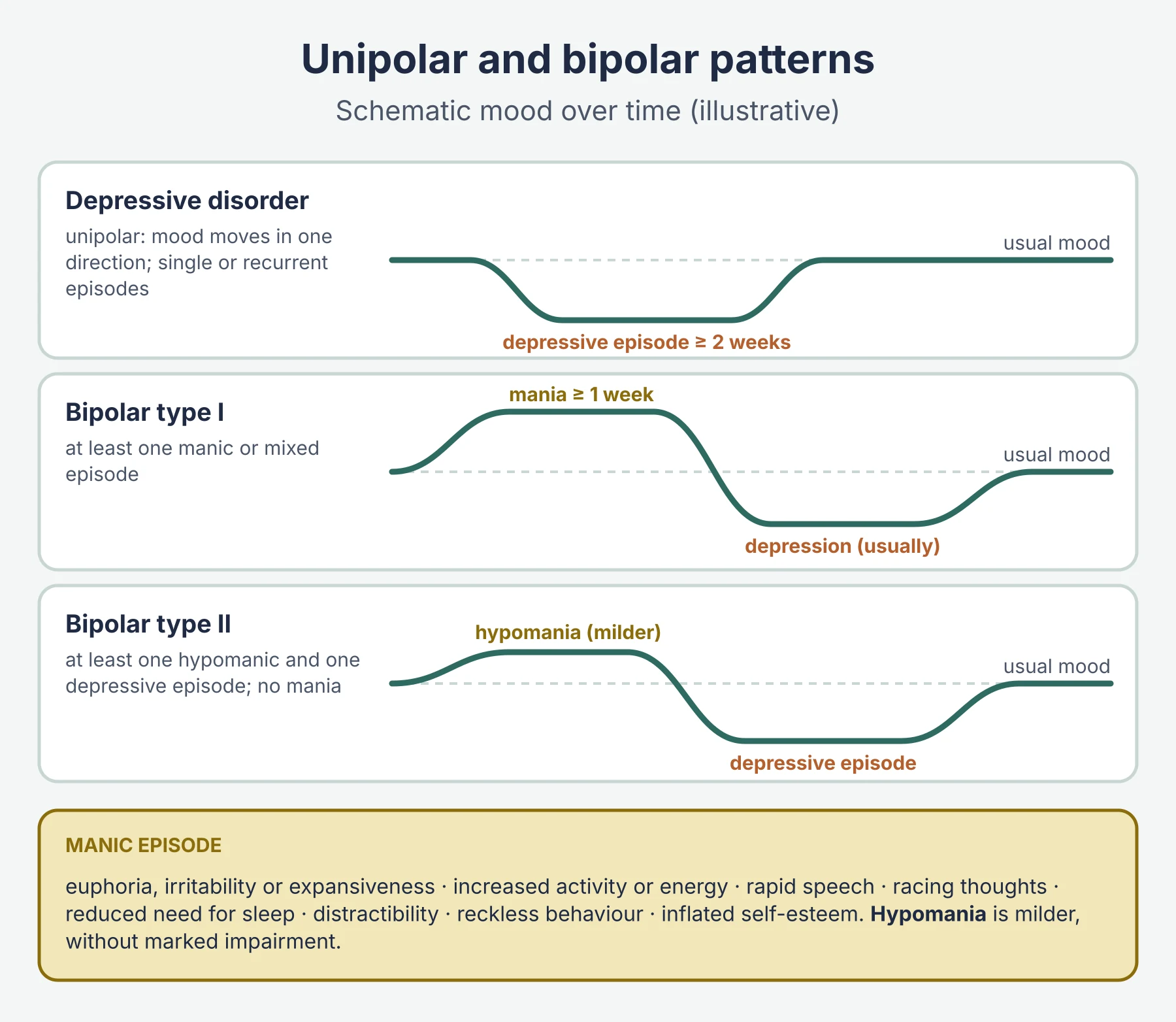
| Depressive episode | Almost daily depressed mood or loss of interest for at least two weeks, plus symptoms such as poor concentration, worthlessness or guilt, hopelessness, thoughts of death, appetite or sleep change, psychomotor change, fatigue |
| Manic episode | At least one week of euphoria, irritability or expansiveness with increased activity or energy; rapid speech, racing thoughts, less need for sleep, impulsivity |
| Hypomanic episode | Milder elevation without marked impairment |
| Bipolar type I | At least one manic or mixed episode |
| Bipolar type II | At least one hypomanic and one depressive episode; no manic episode |
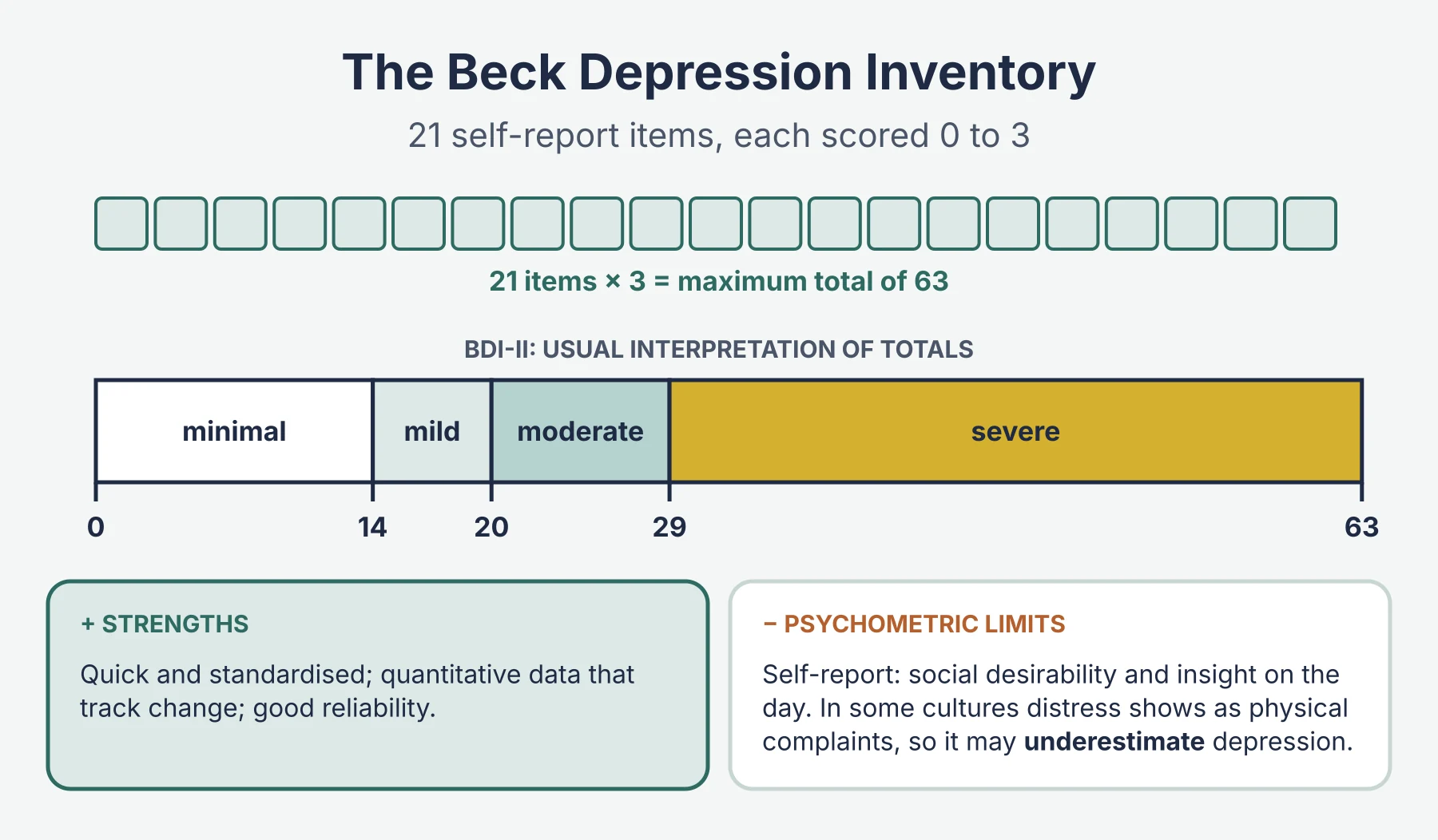
Beck Depression Inventory: 21 items, each 0–3, total 0–63. BDI-II bands: 0–13 minimal, 14–19 mild, 20–28 moderate, 29–63 severe.
- Strengths: quick, standardised, quantitative, tracks change.
- Weaknesses: self-report bias; depends on insight; may miss depression expressed through physical symptoms in some cultures.
1.2.2 Explanations
| Explanation | Core idea | Evaluation |
|---|---|---|
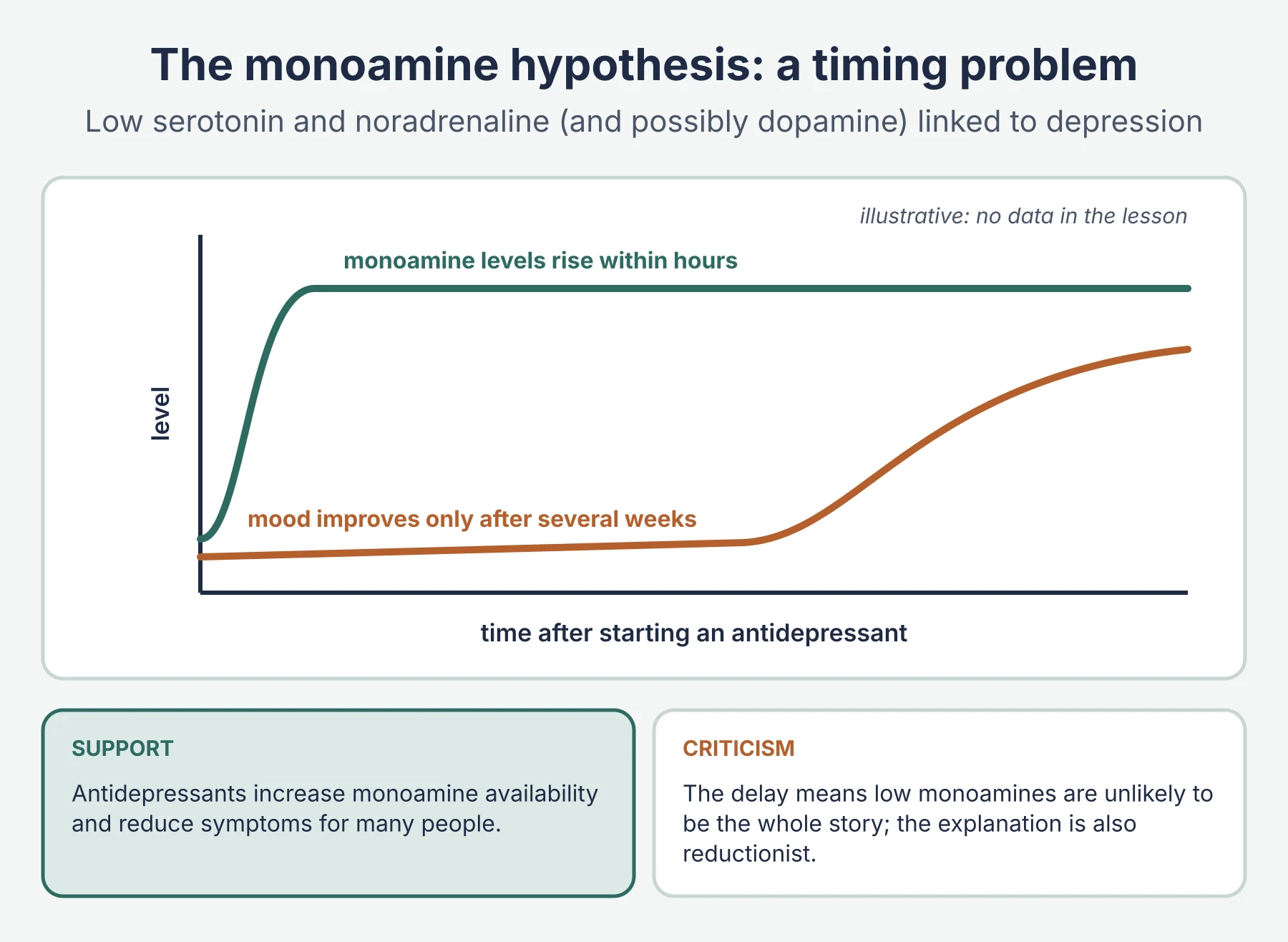
| Biochemical (monoamine) | Low serotonin and noradrenaline | Antidepressants support it; but mood lifts weeks after levels change; reductionist |
| Genetic | Inherited susceptibility | Family and twin studies; Oruč et al. show only small effects |
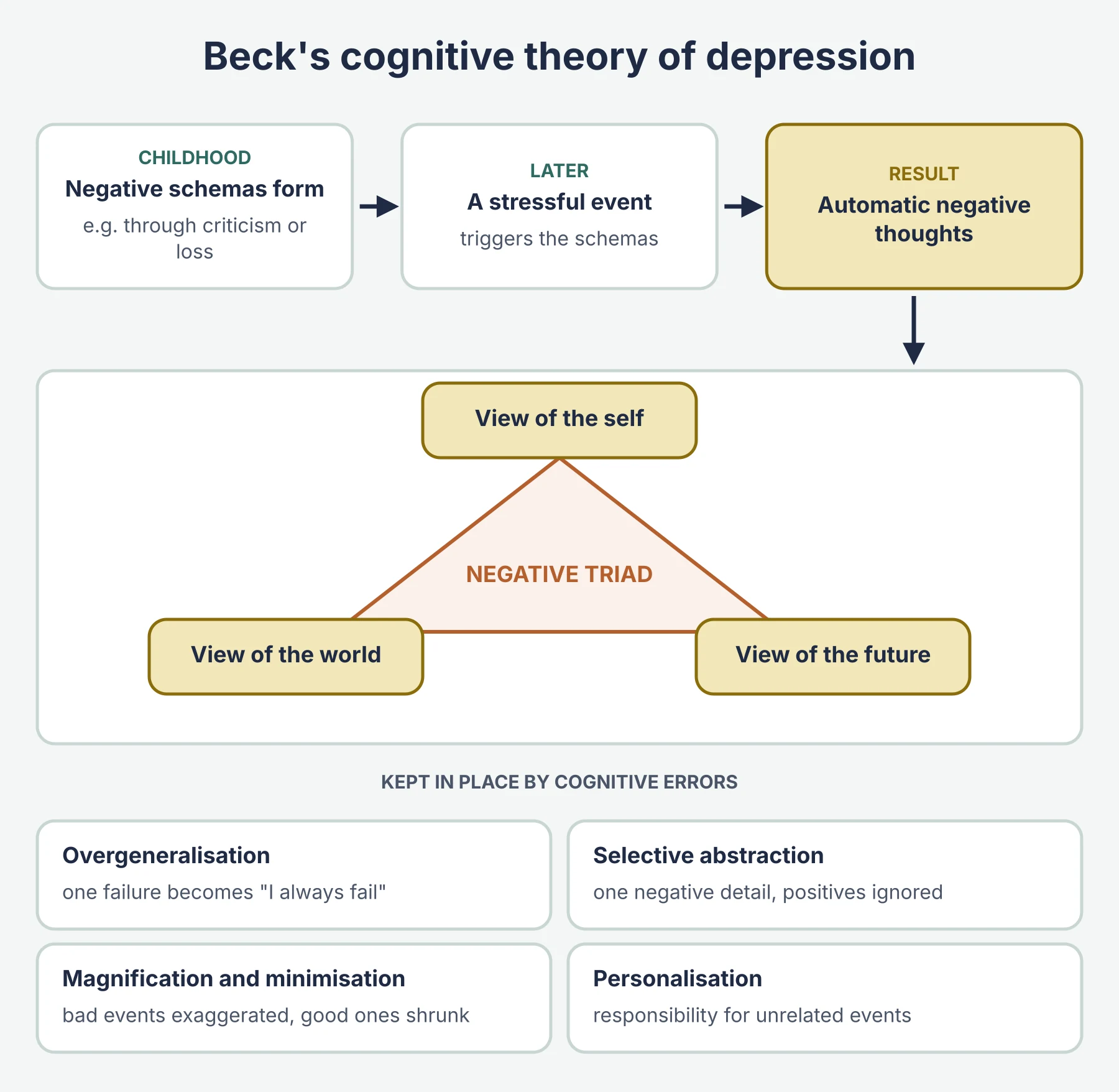
| Beck’s cognitive theory | Negative schemas, automatic thoughts, negative triad, cognitive errors | Supported by cognitive therapy outcomes; cause or symptom? |
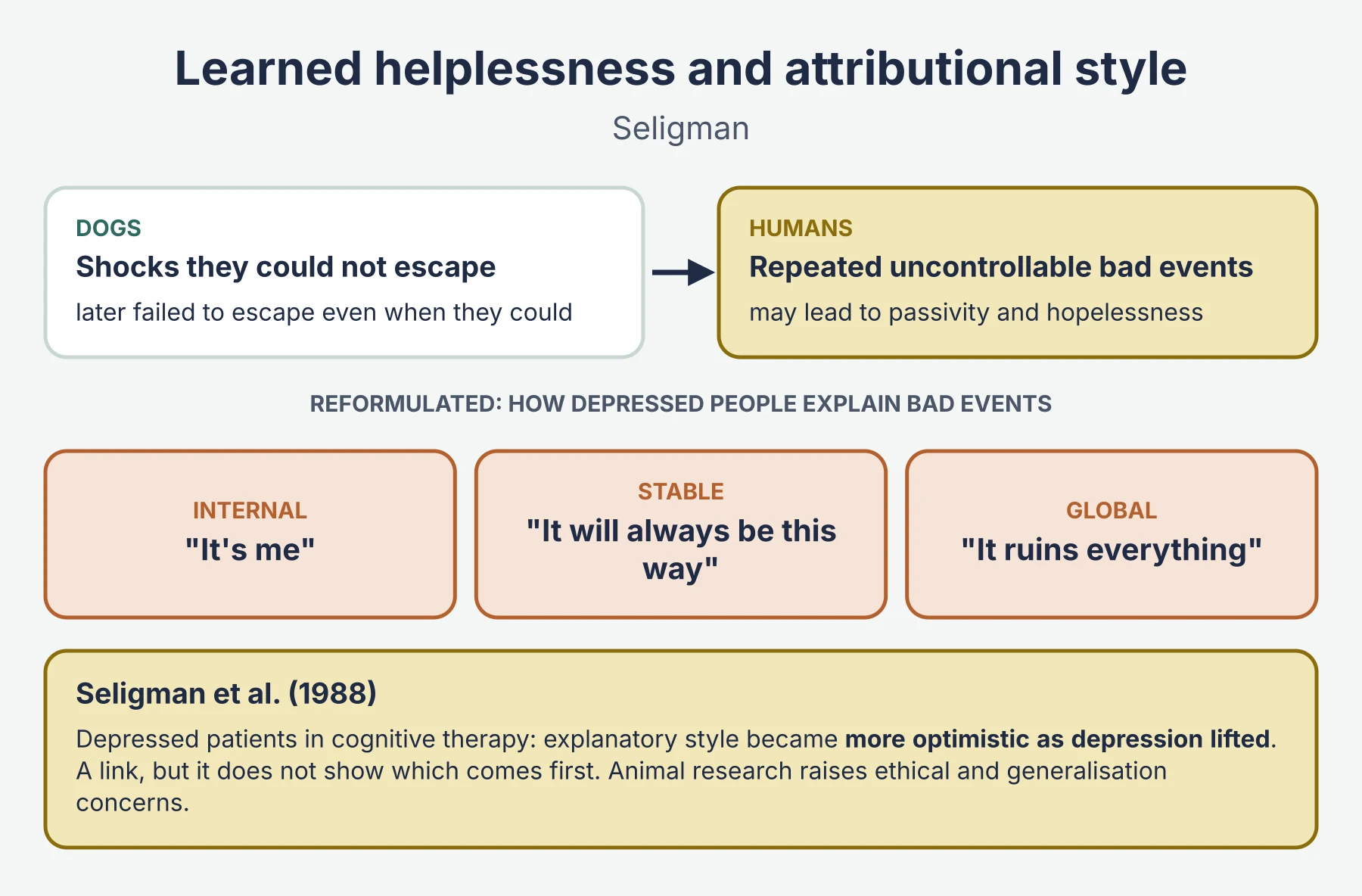
| Learned helplessness / attributional style | Uncontrollable events teach passivity; internal, stable, global attributions | Seligman et al. (1988): style became more optimistic with therapy; animal origins |
Key study: Oruč et al. (1997)
| Element | Detail |
|---|---|
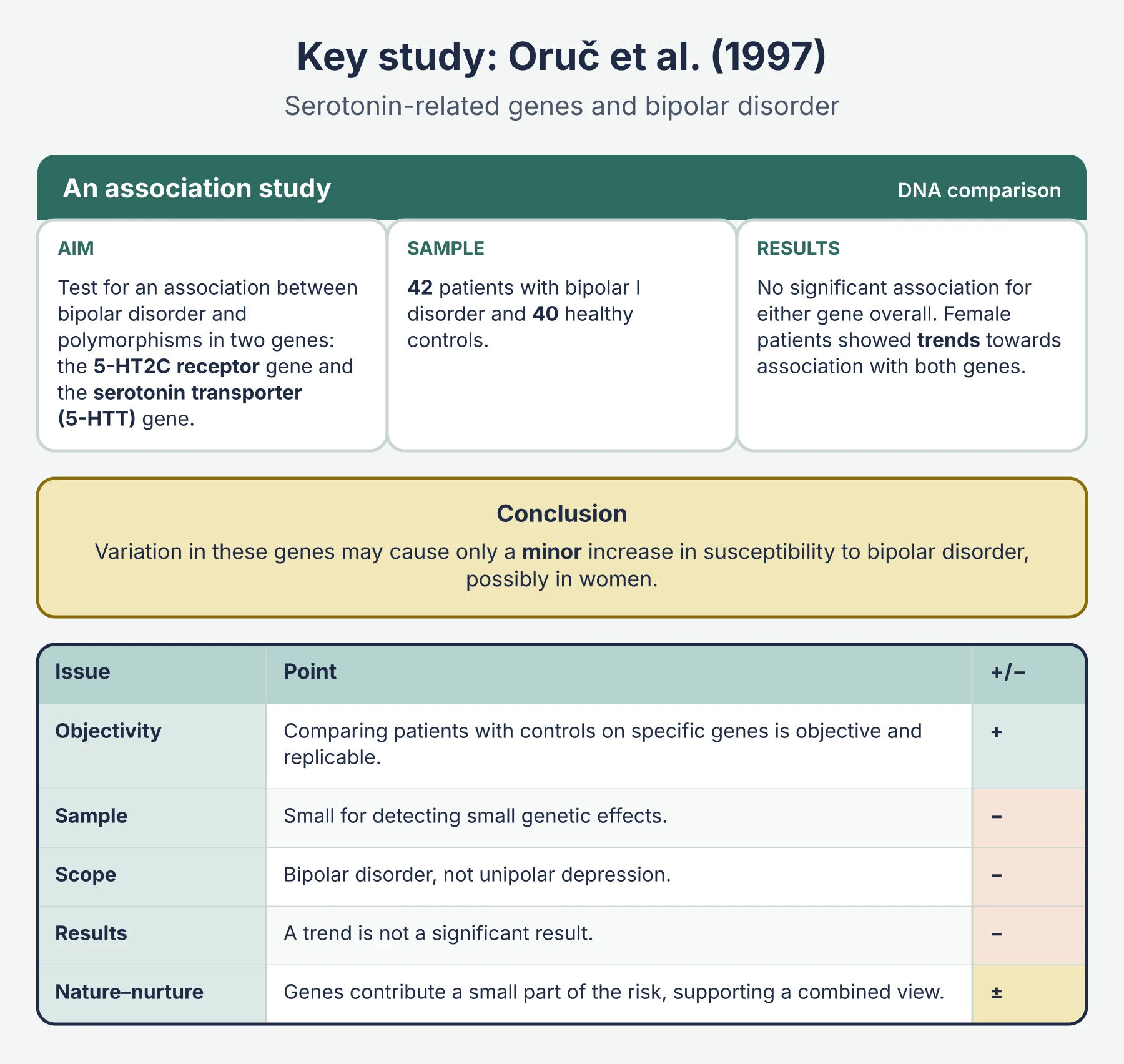
| Aim | Association between bipolar disorder and 5-HT2C receptor and 5-HTT genes |
| Sample | 42 patients with bipolar I disorder; 40 healthy controls |
| Method | Genetic association analysis of DNA |
| Results | No significant association overall; trends in female patients for both genes |
| Conclusion | Minor increase in susceptibility at most, possibly in women |
| Evaluation | Objective, replicable; small sample; bipolar not unipolar; trend not significant |
Beck’s cognitive errors
Overgeneralisation; selective abstraction; magnification and minimisation; personalisation.
1.2.3 Treatments
| Treatment | How it works | Drawback |
|---|---|---|
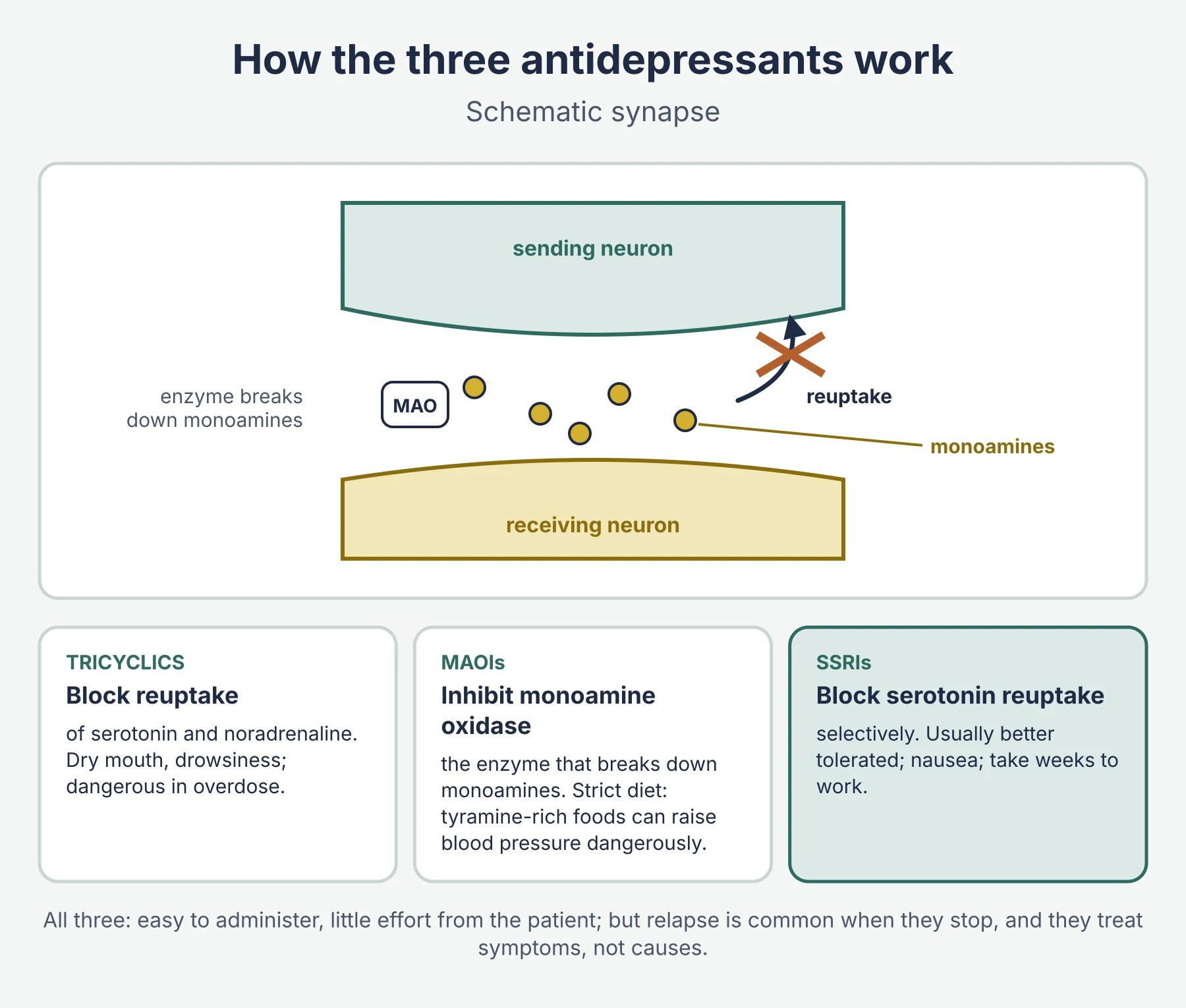
| Tricyclics | Block reuptake of serotonin and noradrenaline | Dry mouth, drowsiness; dangerous in overdose |
| MAOIs | Inhibit monoamine oxidase | Tyramine diet restriction |
| SSRIs | Block serotonin reuptake | Weeks to work; nausea |
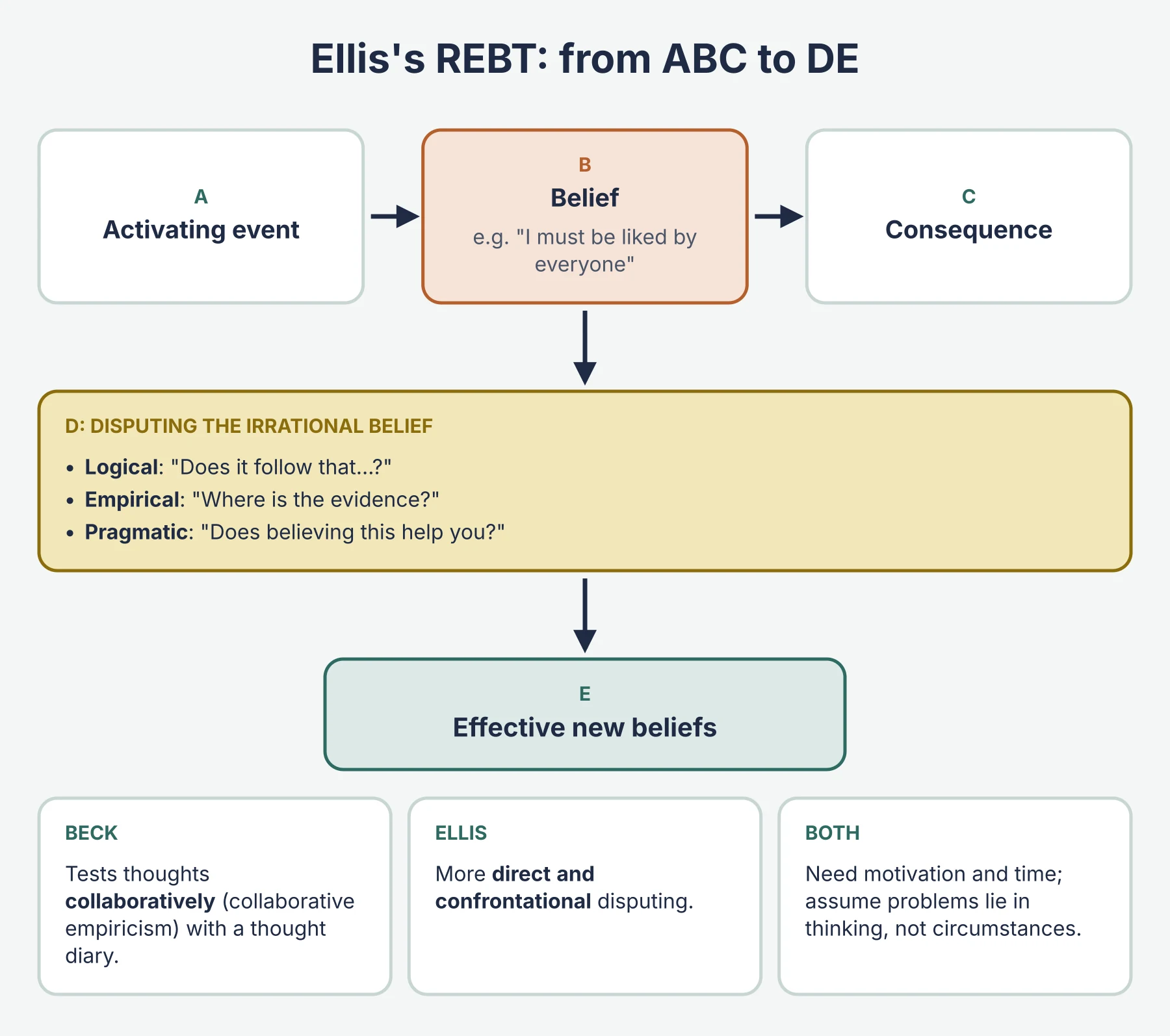
| Beck’s cognitive restructuring | Thought diary; test thoughts against evidence | Needs motivation and time |
| Ellis’s REBT | ABC, then Disputing and Effective new beliefs | Can feel confrontational |
Key terms
| Term | Meaning |
|---|---|
| Unipolar | Mood disturbance in one direction (depression only) |
| Mixed episode | Manic and depressive symptoms together or rapidly alternating |
| Monoamines | Neurotransmitters including serotonin, noradrenaline and dopamine |
| Reuptake | Reabsorption of a neurotransmitter by the neuron that released it |
| Polymorphism | A common variation in a gene |
| Association study | Compares gene variants in patients and controls |
| Schema | Mental framework of beliefs built from experience |
| Automatic negative thoughts | Quick, unchallenged negative interpretations |
| Collaborative empiricism | Client and therapist test beliefs together like scientists |
| Irrational belief | Rigid, demanding belief, often a “must” |
| Psychometric | Standardised measurement of a psychological characteristic |
Issues and debates hooks
- Nature versus nurture: small genetic effects plus life events; schemas from childhood.
- Reductionism: monoamine hypothesis versus cognitive and social factors.
- Determinism versus free will: biological accounts imply little control; cognitive therapies assume change is possible.
- Individual and situational: attributional style is individual; uncontrollable events are situational.
- Cultural differences: physical expression of distress; BDI norms.
Exam traps
- Saying bipolar II includes mania: it includes hypomania.
- Giving the depressive-episode duration as one week (that is mania).
- Calling Oruč et al.’s result significant.
- Writing that SSRIs block noradrenaline reuptake.
- Describing learned helplessness without the attributional reformulation when the syllabus names attributional style.
Self-test
- How long must a depressive episode last in ICD-11?
- What distinguishes bipolar type I from type II?
- How many items does the BDI have, and how is each scored?
- Give one cultural criticism of the BDI.
- Which genes did Oruč et al. study?
- What did Oruč et al. find in female patients?
- Name the three parts of Beck’s negative triad.
- Define selective abstraction.
- Describe a depressive attributional style.
- What is the “cheese effect” risk with MAOIs?
- What does the D stand for in REBT, and give one type.
- Give one criticism of the monoamine hypothesis.
Answers: (1) at least two weeks. (2) type I has at least one manic or mixed episode; type II has hypomanic and depressive episodes but no mania. (3) 21; 0 to 3. (4) in some cultures depression is expressed more through physical complaints, which the items may underweight. (5) the 5-HT2C receptor gene and the serotonin transporter gene. (6) trends towards association with both genes. (7) self, world, future. (8) focusing on one negative detail and ignoring the wider picture. (9) internal, stable and global explanations for bad events. (10) tyramine-rich foods such as some cheeses can cause a dangerous rise in blood pressure. (11) Disputing; logical, empirical or pragmatic. (12) antidepressants raise monoamines quickly but mood takes weeks to improve.
Official syllabus
Cambridge International AS & A Level Psychology 9990 syllabus for 2024, 2025 and 2026, Specialist Option 1, 1.2 Mood (affective) disorders — cambridgeinternational.org.
More resources on this topic
Related resources
-
Study guides
Cambridge International AS & A Level Psychology (9990): 1.5 Obsessive-compulsive disorder (OCD)
Topic 1.5 OCD for Cambridge 9990 Psychology: ICD-11 obsessions and compulsions, MOCI and Y-BOCS, five explanations, SSRIs, ERP and Lovell et al.
Psychology · Cambridge · A Level
Read guide -
Practice questions
Cambridge International AS & A Level Psychology (9990): 1.5 Obsessive-compulsive disorder (OCD) – Practice Questions
Original Paper 3 and Paper 4 style questions with mark-scheme answers on 9990 topic 1.5 OCD: diagnosis, MOCI, Y-BOCS, explanations, ERP and Lovell et al.
Psychology · Cambridge · A Level
Try questions -
Revision notes
Cambridge International AS & A Level Psychology (9990): 1.5 Obsessive-compulsive disorder (OCD) – Revision Notes
Revision notes for 9990 topic 1.5 OCD: ICD-11 criteria, Charles, MOCI and Y-BOCS, five explanations, SSRIs, ERP, Lovell et al. and a 12-question self-test.
Psychology · Cambridge · A Level
Revise topic
Studying Psychology?
This page is free and stays free. Marlbridge is not offering Psychology classes at the moment, so there is no tuition to book for it. The free study resources stay open to everyone.
Get free revision emails (optional)
Occasional emails with practice questions, worked explanations and links to free resources for the qualification and subjects you choose. No spam, and you can unsubscribe from any email. The free tools on this site never need an email.