
Study Guides
Cambridge A Level Psychology (9990): Stress
Cambridge 9990 topic 3.4 in depth: the GAS model, life events, work and Type A, biological and self-report measures, biofeedback, Bridge et al. (1988) and SIT.
- Subject
- Psychology
- Level
- A LEVEL
- Topic
- Specialist Option 3: Health Psychology
- Author
- Marlbridge Academic Team
- Updated
- Reviewed by
- Kanwal Aslam (what this means)
Aligned to Cambridge A Level Psychology (9990), 2024-2026. Official specification .
Syllabus page (what it covers and how it is assessed): Cambridge A Level Psychology.
Syllabus points this page covers
9990 (A Level)
- 3.4 Stress
Topic 3.4, Stress, is part of Specialist Option 3 (Health Psychology) in Cambridge International A Level Psychology 9990, syllabus for 2024 to 2026. It covers the physiology and causes of stress (3.4.1), biological and psychological ways of measuring it (3.4.2), and ways of managing and preventing it (3.4.3). The key study is Bridge et al. (1988), a randomised controlled trial of relaxation and imagery for women having radiotherapy for breast cancer.
The Health Psychology study guide outlines every topic in the option. This page develops 3.4 with fuller explanations, comparisons of measures and an annotated answer. Pair it with the stress revision notes and the stress practice questions.
Syllabus content for 3.4
| Sub-topic | Content | Named study |
|---|---|---|
| 3.4.1 Sources of stress | Physiology of stress: the GAS model and effects of stress on health; causes: Holmes and Rahe’s life events, work, Friedman and Rosenman’s Type A personality | e.g. Chandola et al. (2008) |
| 3.4.2 Measures of stress | Biological: recording devices for heart rate and brain function (fMRI); sample tests for salivary cortisol; psychological: self-report questionnaires, including Type A tests and the life events questionnaire | e.g. Wang et al. (2005); e.g. Evans and Wener (2007) |
| 3.4.3 Managing stress | Biofeedback; use of imagery; three phases of stress inoculation training | e.g. Budzynski et al. (1969); key study Bridge et al. (1988) |
3.4.1 The physiology of stress
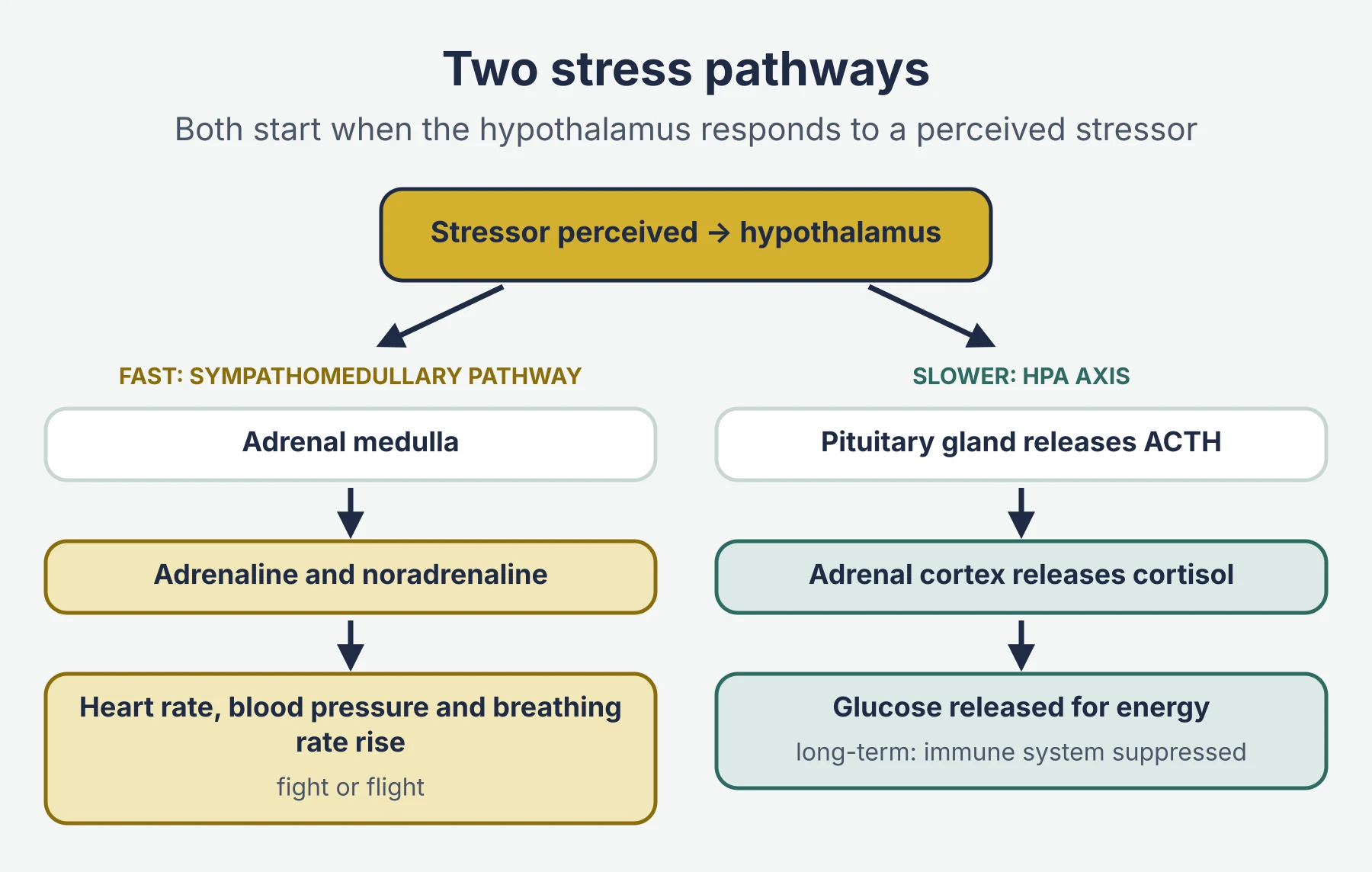
Two stress pathways. When a stressor is perceived, the hypothalamus activates two systems. The fast sympathomedullary pathway stimulates the adrenal medulla to release adrenaline and noradrenaline, raising heart rate, blood pressure and breathing rate: the fight-or-flight response. The slower hypothalamic-pituitary-adrenal (HPA) axis leads the pituitary gland to release ACTH, which causes the adrenal cortex to release cortisol. Cortisol releases glucose for energy but, if raised for long periods, suppresses the immune system.
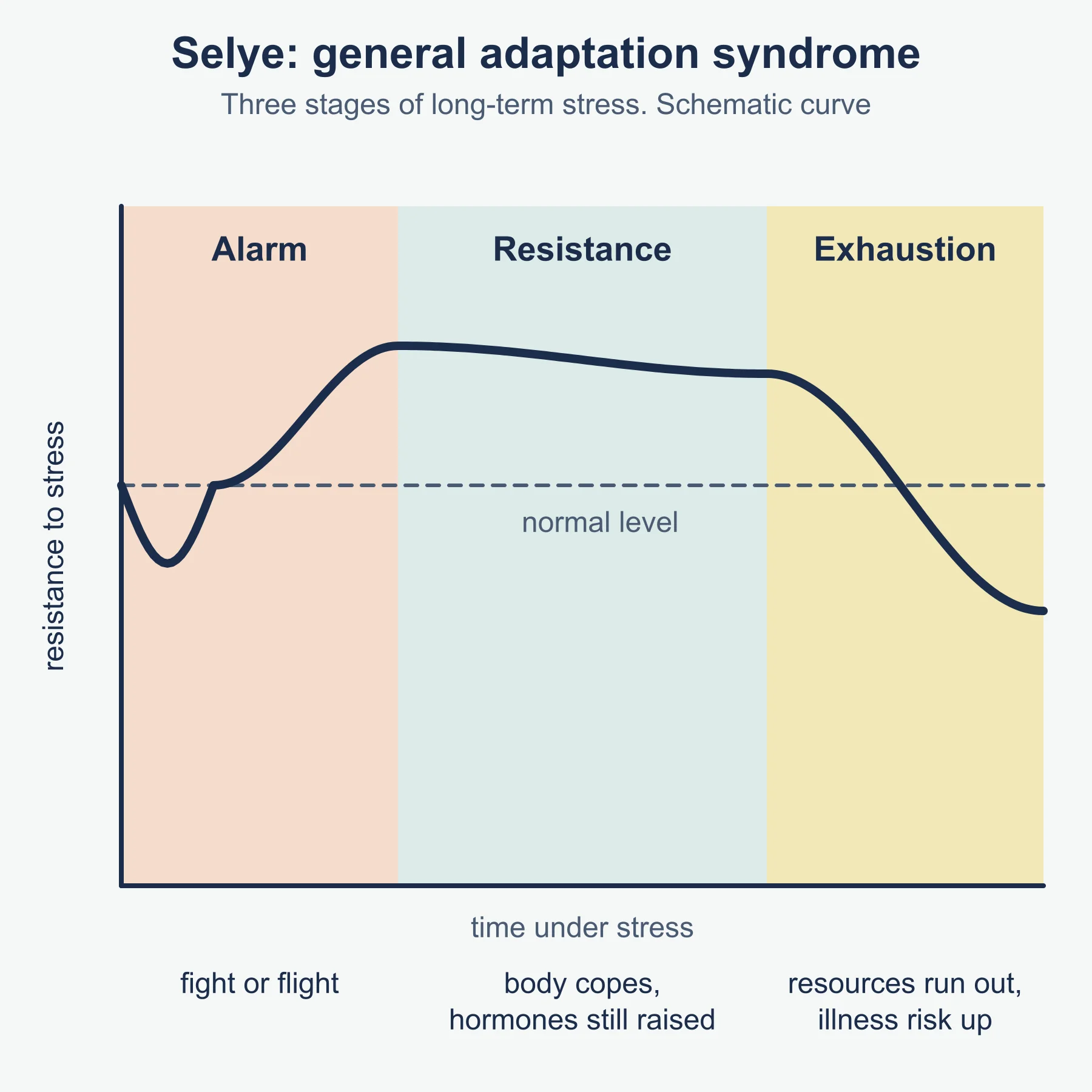
Selye’s General Adaptation Syndrome (GAS). Selye observed the same pattern of response in animals exposed to many different stressors and proposed three stages:
- Alarm: the stressor is detected; adrenaline is released and the body is aroused for action.
- Resistance: if the stressor continues, the body adapts; cortisol stays high, and the person appears to cope, but resources are being used up.
- Exhaustion: after prolonged stress, resources are depleted; the immune system is weakened and stress-related illnesses become more likely.
Effects on health. Long-term stress is linked to cardiovascular disease, through raised blood pressure and heart rate, and to lowered immunity, making infections more likely. The GAS was based largely on animal research, so generalising to humans needs care, and it gives little role to how a person appraises a stressor.
Causes of stress
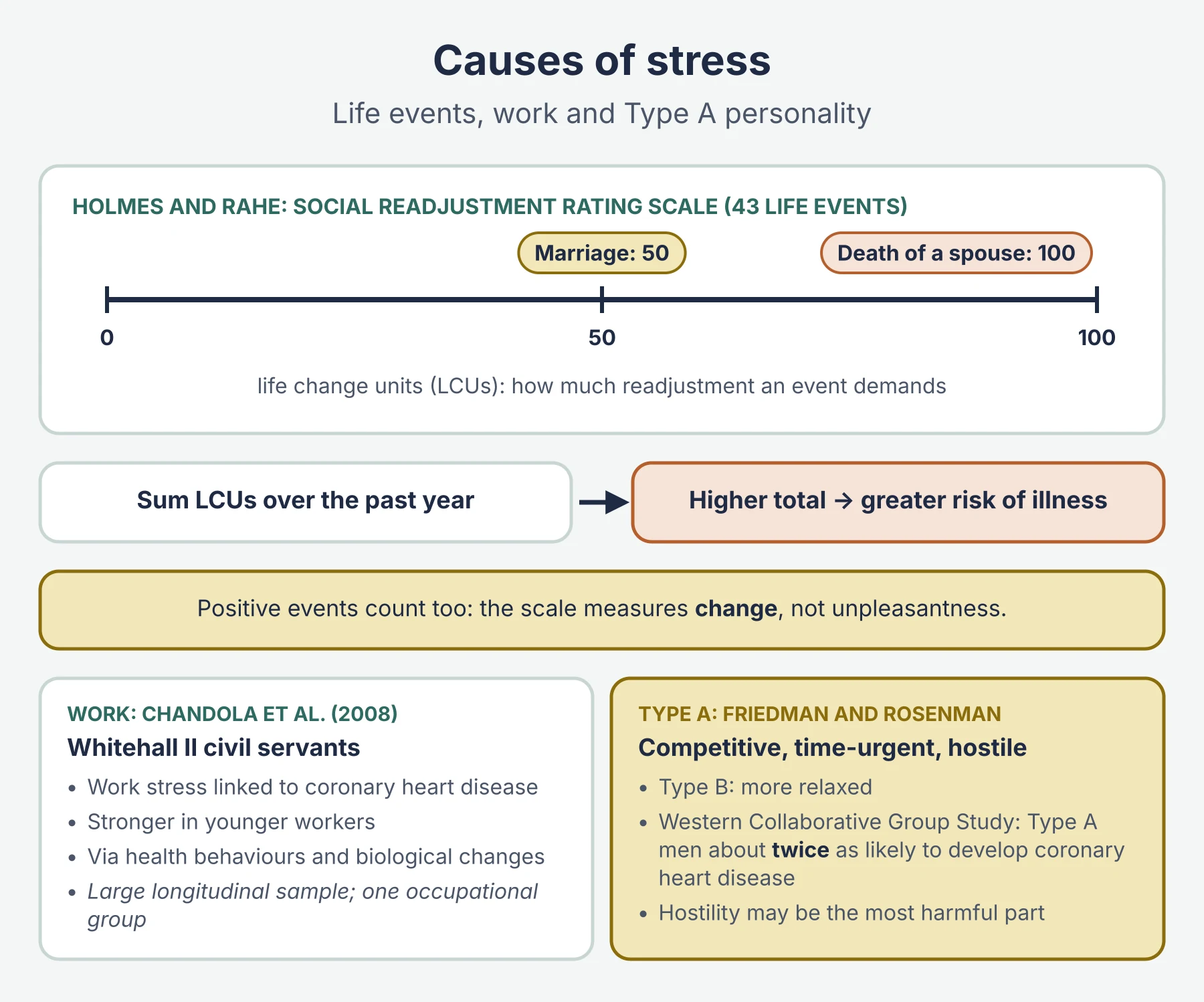
Life events. Holmes and Rahe developed the Social Readjustment Rating Scale (SRRS), listing 43 life events, each with a value in life change units (LCUs) reflecting how much readjustment it demands. Death of a spouse scores 100; marriage, 50. Scores are summed over the past year, and higher totals are associated with a greater risk of illness. Note that positive events, such as marriage or a holiday, also count, because the scale measures change, not unpleasantness.
Work. Chandola et al. (2008) analysed data from the Whitehall II study of British civil servants and found that work stress was associated with coronary heart disease. The link was stronger in younger workers and appeared to operate partly through health behaviours and partly through biological changes. The large longitudinal sample is a strength, but civil servants are one occupational group, so findings may not generalise to manual or self-employed workers.
Type A personality. Friedman and Rosenman, two cardiologists, described Type A behaviour: competitiveness, time urgency (always in a hurry, impatient) and hostility. Type B people are more relaxed. In their Western Collaborative Group Study of men in California, Type A men were about twice as likely as Type B men to develop coronary heart disease over the follow-up period. Later research suggests hostility is the most harmful component.
3.4.2 Measuring stress
| Measure | What it records | Strengths | Weaknesses |
|---|---|---|---|
| Heart rate recording | Beats per minute, often continuously by a wearable device | Objective; can be recorded in real settings | Heart rate rises with exercise, caffeine or excitement, not only stress |
| fMRI | Changes in blood flow showing brain activity | Objective; shows which brain areas respond | Expensive; the scanner is noisy and confined, so stressful in itself; artificial tasks |
| Salivary cortisol | Cortisol level in a saliva sample | Non-invasive; reflects HPA activity | Cortisol varies across the day, so timing must be controlled |
| Self-report questionnaires | Life events, Type A traits, perceived stress | Cheap; measure the person’s own appraisal | Social desirability; memory errors; scale items may not suit all cultures |
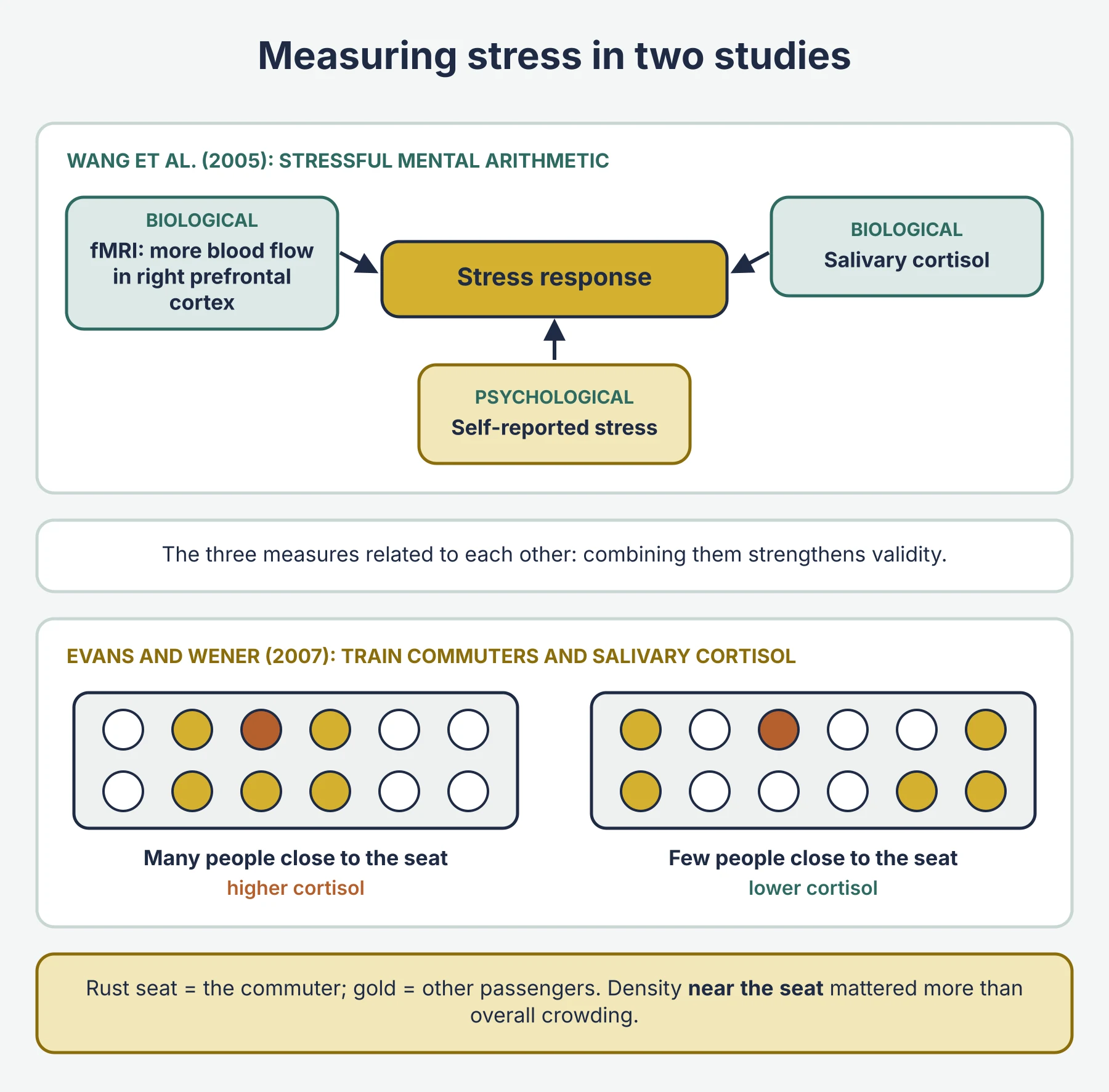
Wang et al. (2005) used fMRI while participants carried out a stressful mental arithmetic task and found increased blood flow in the right prefrontal cortex, which related to self-reported stress and to salivary cortisol. Combining three measures strengthens validity.
Evans and Wener (2007) studied train commuters and found that those seated with more people close around them had higher salivary cortisol. The density of people near the seat mattered more than how crowded the carriage was overall. This shows cortisol can detect stress in real-life settings.
Self-report of Type A. Type A can be assessed by questionnaires that ask about impatience, competitiveness and hostility. Holmes and Rahe’s SRRS is the life events questionnaire. Both are psychometric measures; a key evaluation is whether they are reliable (consistent on retesting) and valid (measuring stress, not, say, general unhappiness).
3.4.3 Managing stress
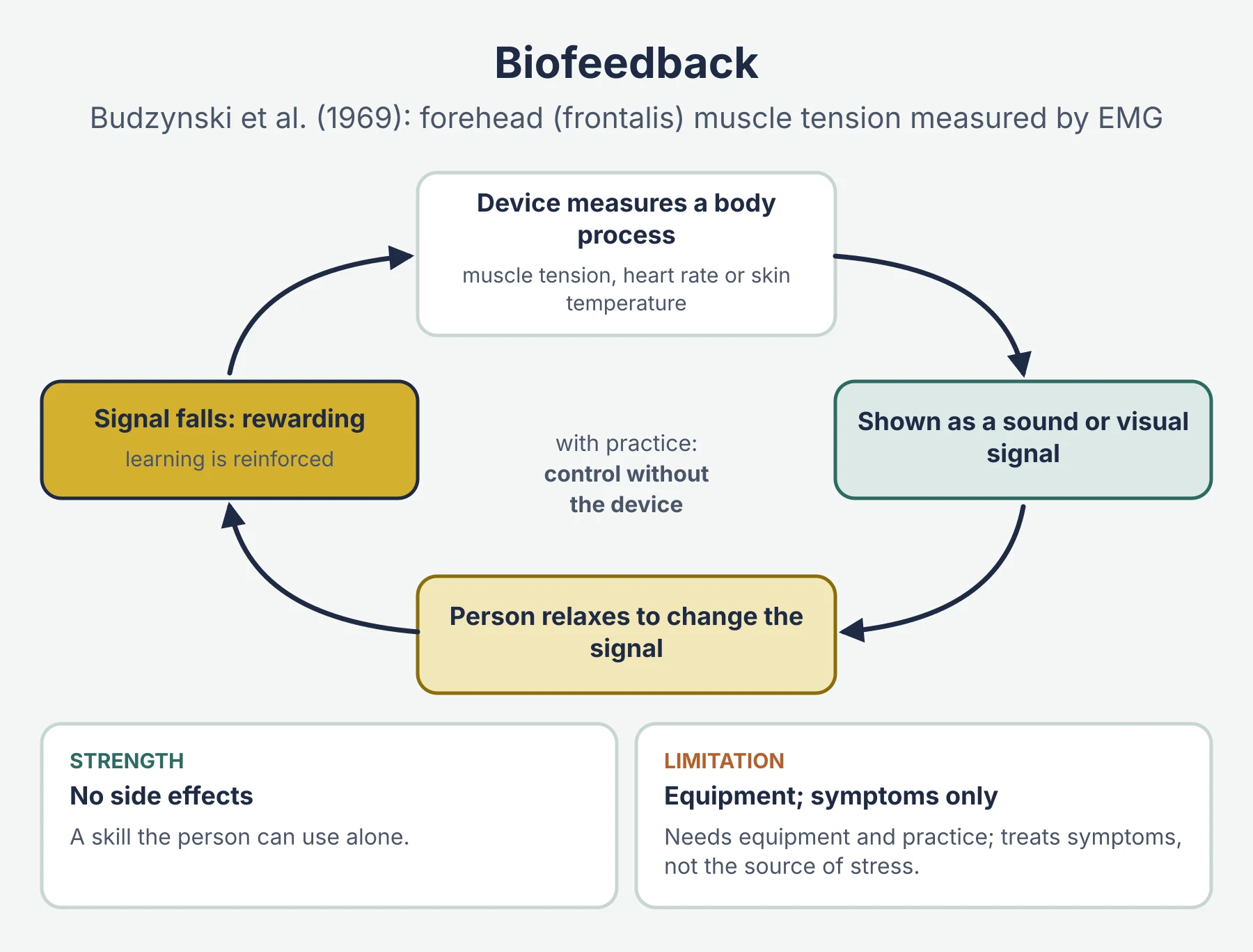
Biofeedback. The person is attached to a device that displays a body process, such as muscle tension, heart rate or skin temperature, as a sound or visual signal. They learn to change the signal through relaxation, and with practice can control the process without the device. Learning is reinforced because a falling signal is rewarding. Budzynski et al. (1969) is the syllabus example: participants received feedback of muscle tension in the forehead (frontalis muscle, measured by EMG) and learned to relax it. Biofeedback has no side effects but needs equipment and practice, and it treats the symptoms rather than the source of stress.
Imagery. Imagery involves imagining a calm, pleasant scene in detail, using all the senses.
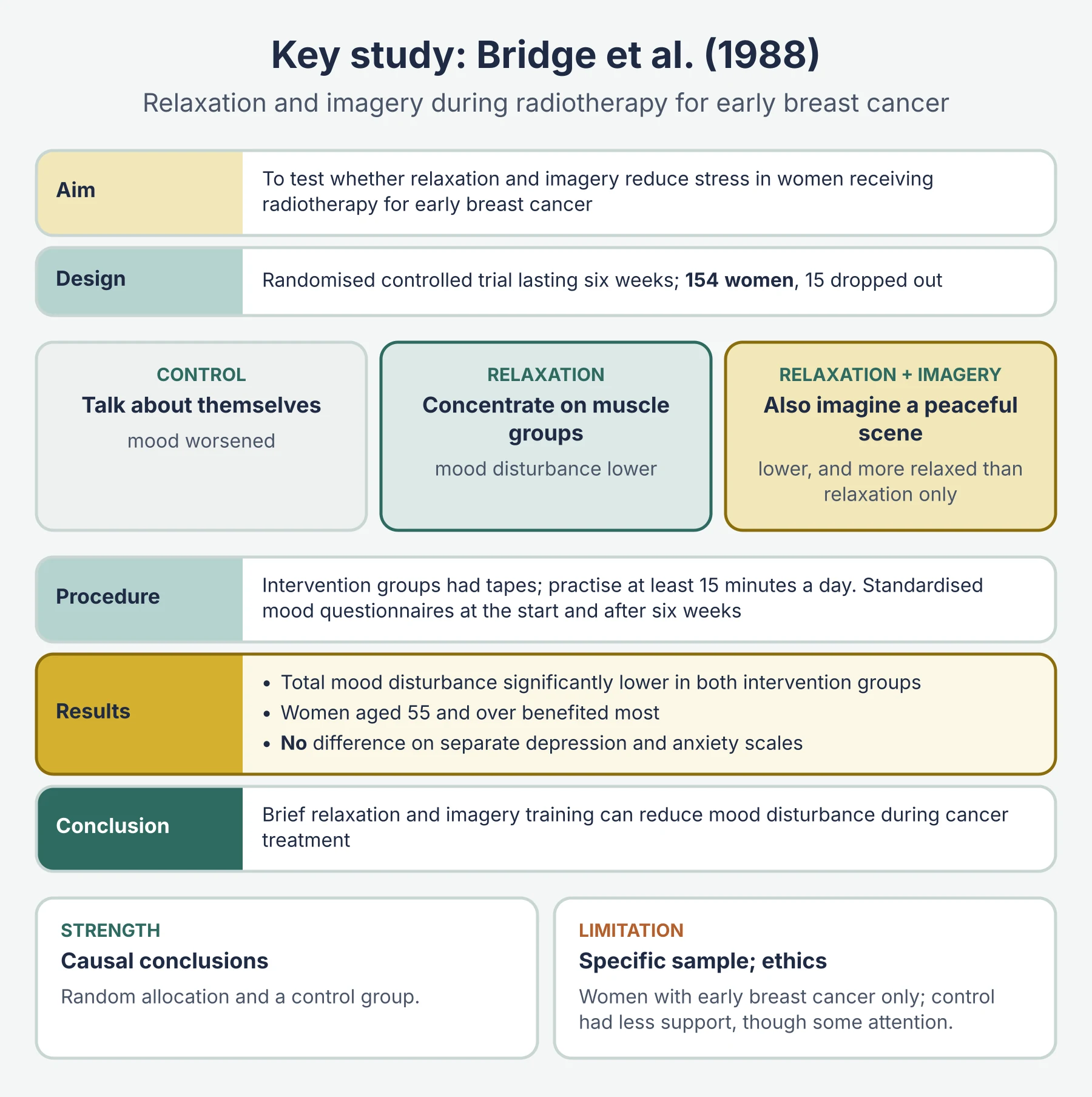
Key study: Bridge et al. (1988).
- Aim: to test whether relaxation and imagery reduce stress in women receiving radiotherapy for early breast cancer.
- Design: a randomised controlled trial lasting six weeks.
- Sample: 154 women; 15 dropped out.
- Conditions: control (encouraged to talk about themselves); relaxation (taught to concentrate on muscle groups); relaxation plus imagery (also taught to imagine a peaceful scene of their choice). Intervention groups had tapes and were asked to practise for at least 15 minutes a day.
- Measures: standardised questionnaires of mood, completed at the start and after six weeks.
- Results: total mood disturbance was significantly lower in both intervention groups at six weeks, and the combined group was more relaxed than the relaxation-only group. Mood in the control group worsened. Women aged 55 and over benefited most. There was no difference between groups on separate depression and anxiety scales.
- Conclusion: brief relaxation and imagery training can reduce mood disturbance during cancer treatment.
- Evaluation: random allocation and a control group support causal conclusions; the sample is specific (women with early breast cancer), limiting generalisation; ethically, the control group received less support, although they did receive attention.
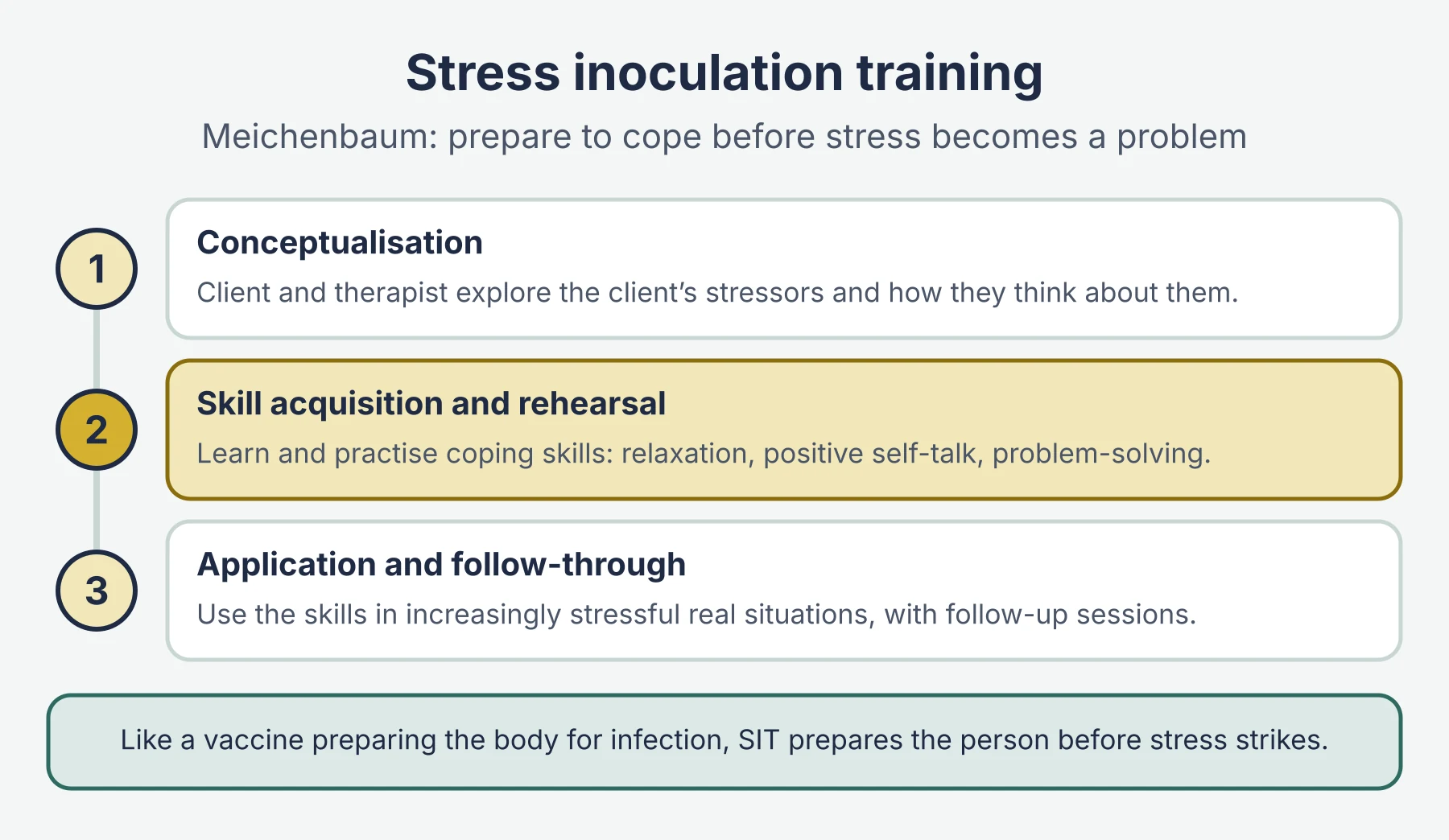
Stress inoculation training (SIT) (Meichenbaum) prepares people to cope before stress becomes a problem, as a vaccine prepares the body for infection.
- Conceptualisation: the client and therapist explore the client’s stressors and how they think about them.
- Skill acquisition and rehearsal: the client learns coping skills, such as relaxation, positive self-talk and problem-solving, and practises them.
- Application and follow-through: the client uses the skills in increasingly stressful real situations, with follow-up sessions.
Annotated answer: a 4-mark comparison
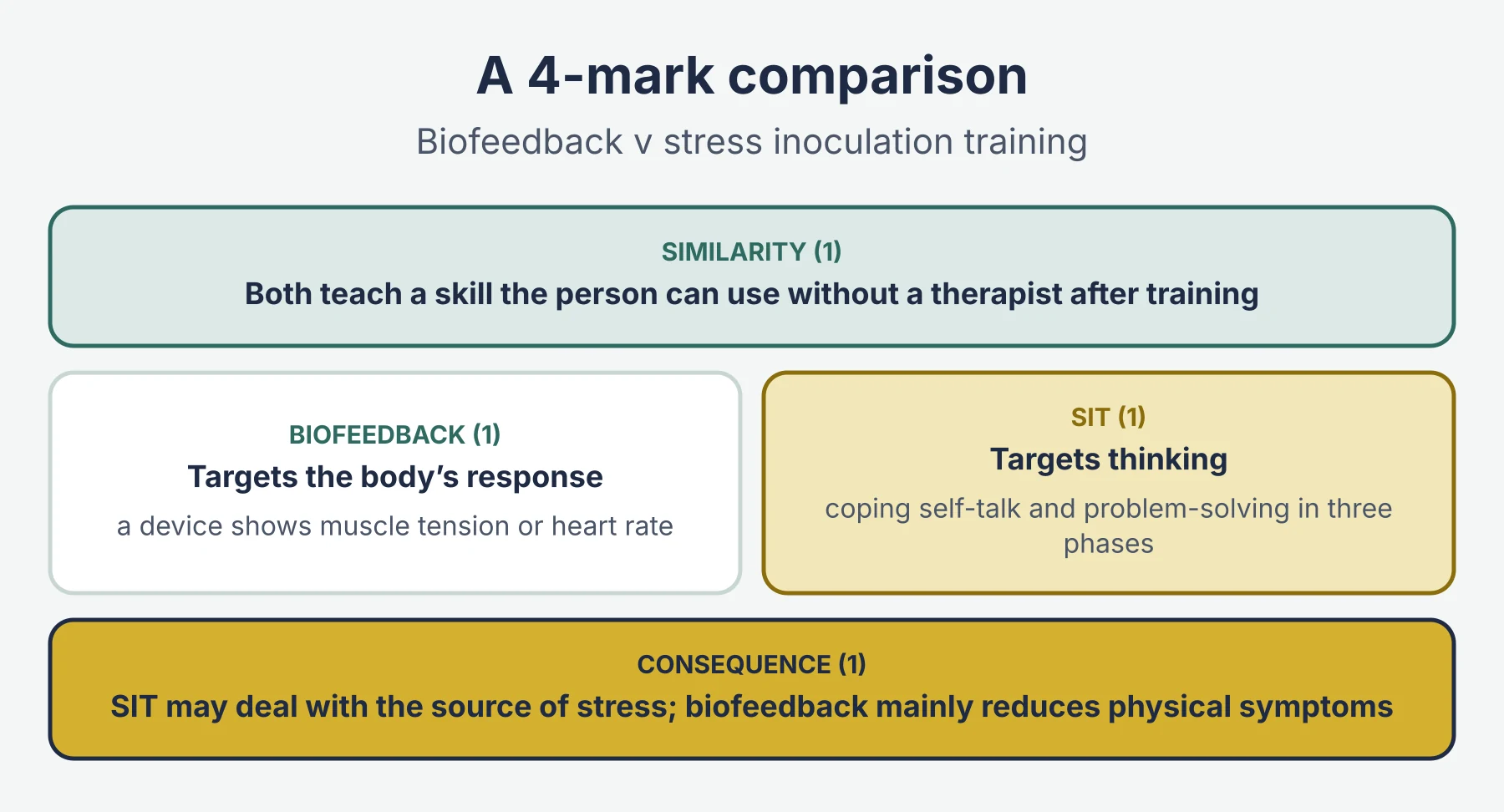
Compare biofeedback and stress inoculation training as ways of managing stress. [4]
“Both teach the person a skill they can use themselves without a therapist after training (1). Biofeedback targets the body’s response, using a device to show muscle tension or heart rate so the person learns to reduce it (1), whereas SIT targets thinking, teaching coping self-talk and problem-solving through three phases (1). So SIT may deal with the source of stress, while biofeedback mainly reduces the physical symptoms (1).”
Common mistakes
- Putting the GAS stages in the wrong order: alarm, resistance, exhaustion.
- Saying the SRRS only includes negative events. It measures change.
- Describing Evans and Wener as a study of overall train crowding. It was the density of people near the seat that mattered.
- In Bridge et al., claiming the interventions reduced depression and anxiety scores separately. They did not.
Exam technique
Describe the GAS by naming and explaining each stage with a physiological detail. Evaluate measures using the syllabus methods for 3.4.2: questionnaires, psychometrics, subjective and objective data, validity and reliability. Suggest questions in Paper 4 often ask which measure suits a scenario; justify by linking to what needs to be known, for example cortisol for a long-term stressor and heart rate for a moment-by-moment response.
More resources on this topic
Official syllabus
Cambridge International AS & A Level Psychology 9990 syllabus for 2024, 2025 and 2026, Specialist Option 3: Health Psychology, topic 3.4 — cambridgeinternational.org.
Related resources
-
Practice questions
Cambridge A Level Psychology (9990): Stress – Practice Questions
Original Paper 3 and Paper 4 style questions on Cambridge 9990 topic 3.4 Stress: sources, measures, biofeedback, imagery and SIT, with full mark-scheme answers.
Psychology · Cambridge · A Level
Try questions -
Revision notes
Cambridge A Level Psychology (9990): Stress – Revision Notes
Revision notes for Cambridge 9990 topic 3.4 Stress: GAS, life events, Type A, measures, biofeedback, Bridge et al. (1988) and SIT, with a self-test.
Psychology · Cambridge · A Level
Revise topic -
Study guides
Cambridge A Level Psychology (9990): The patient–practitioner relationship
Cambridge 9990 topic 3.1 in depth: clothing and jargon, diagnosis errors, Savage and Armstrong (1990), delay, Munchausen and malingering.
Psychology · Cambridge · A Level
Read guide
Studying Psychology?
This page is free and stays free. Marlbridge is not offering Psychology classes at the moment, so there is no tuition to book for it. The free study resources stay open to everyone.
Get free revision emails (optional)
Occasional emails with practice questions, worked explanations and links to free resources for the qualification and subjects you choose. No spam, and you can unsubscribe from any email. The free tools on this site never need an email.