
Revision Notes
Cambridge IGCSE Commerce (0715): Retailing – Revision Notes
Recall notes for Cambridge IGCSE Commerce 0715 section 2.3: ten retailer types, small-shop survival, selling techniques, digital trends and ecommerce impacts.
- Subject
- Commerce
- Level
- IGCSE
- Topic
- Topic 2 – Commercial Operations
- Author
- Marlbridge Academic Team
- Updated
- Reviewed by
- Salman Ahmad (what this means)
Aligned to Cambridge IGCSE Commerce (0715), 2028. Official specification .
Syllabus page (what it covers and how it is assessed): Cambridge IGCSE Commerce.
Syllabus points this page covers
0715
- 2.3 Retailing
Found an error? Report a correction.
Need help with this topic? Request a free trial class for IGCSE Commerce (0715).
Condensed notes for section 2.3 of Cambridge IGCSE Commerce (0715). For full tables of advantages and disadvantages and an annotated answer, use the retailing study guide.
The four parts of 2.3
- 2.3.1 Types of retailer: features, advantages and disadvantages; why small-scale retailers survive.
- 2.3.2 Retail selling techniques (eleven named).
- 2.3.3 Digital retail trends (eleven named).
- 2.3.4 Positive and negative effects of ecommerce on traditional commerce.
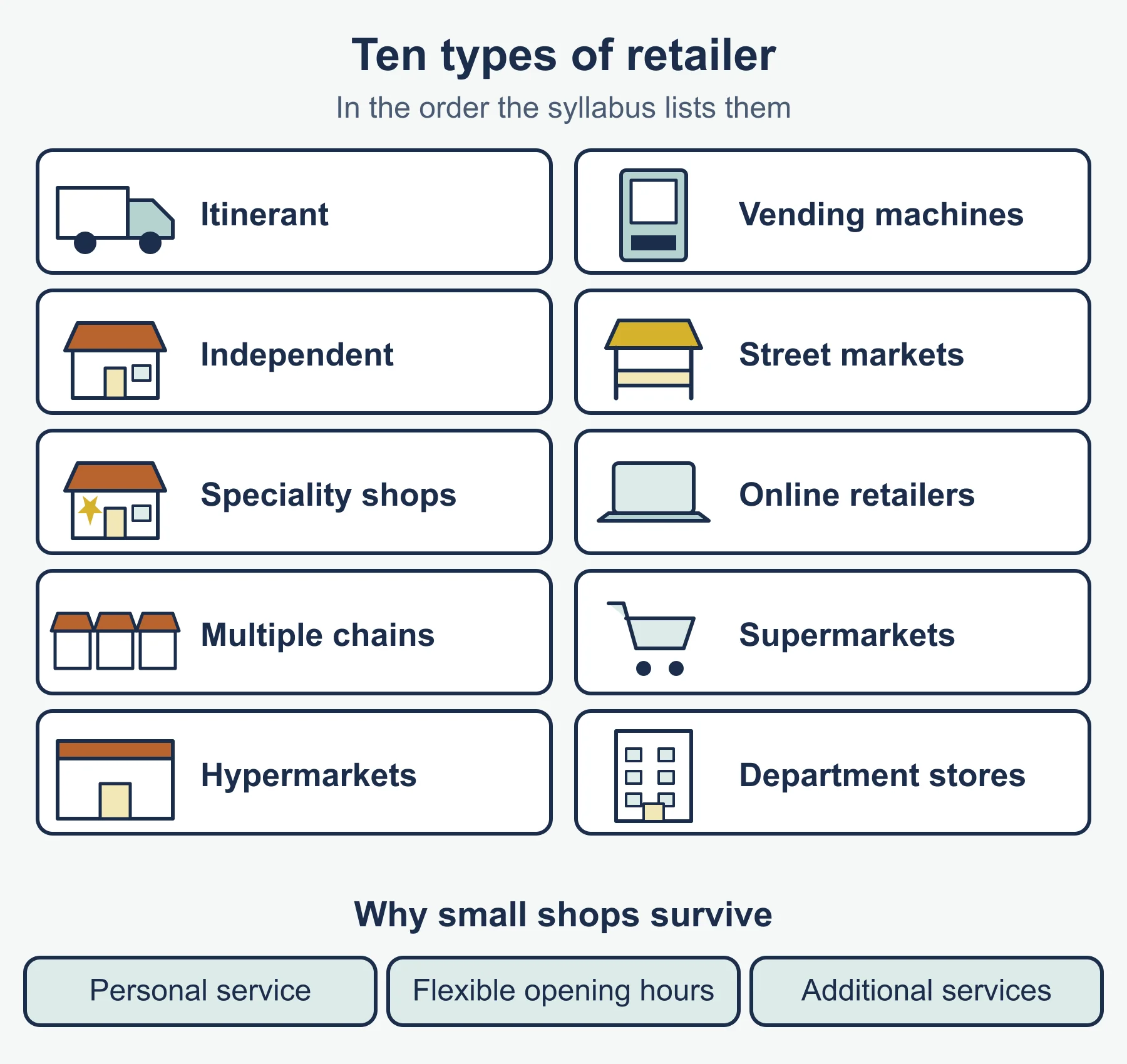
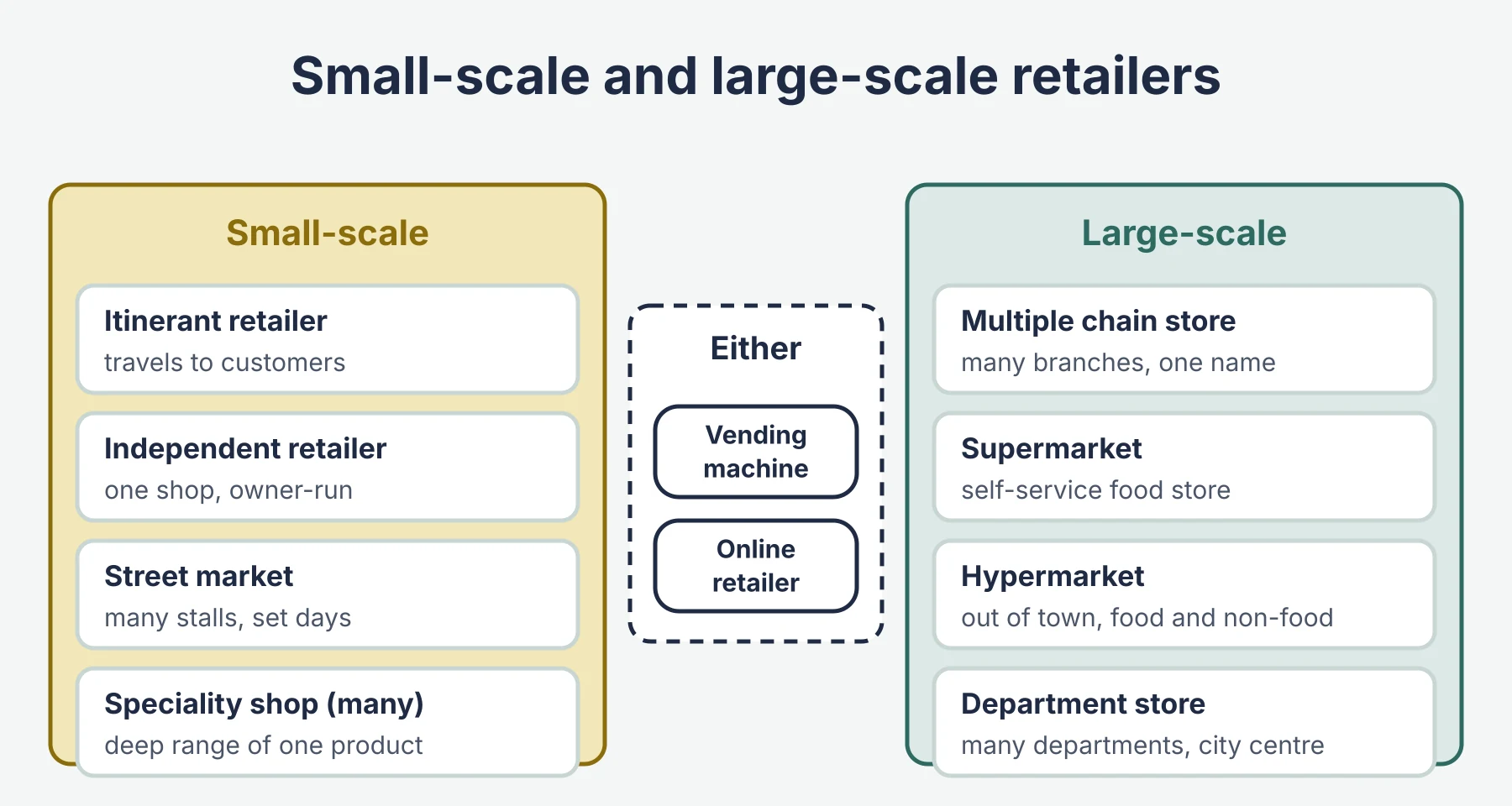
Ten types of retailer: one identifying feature each
| Type | Identifying feature |
|---|---|
| Itinerant retailer | No fixed premises; goes to the customer |
| Vending machine | Unstaffed, automatic, 24 hours |
| Independent retailer | Owner-run single shop |
| Street market | Many stalls together, set days |
| Speciality shop | Deep range of one product type, expert staff |
| Online retailer | Website or app plus delivery |
| Multiple chain store | Many branches, one name, central buying |
| Supermarket | Large self-service, mainly food and household goods |
| Hypermarket | Very large, out of town, food and non-food, big car parks |
| Department store | Many departments under one roof, city centre, high service |
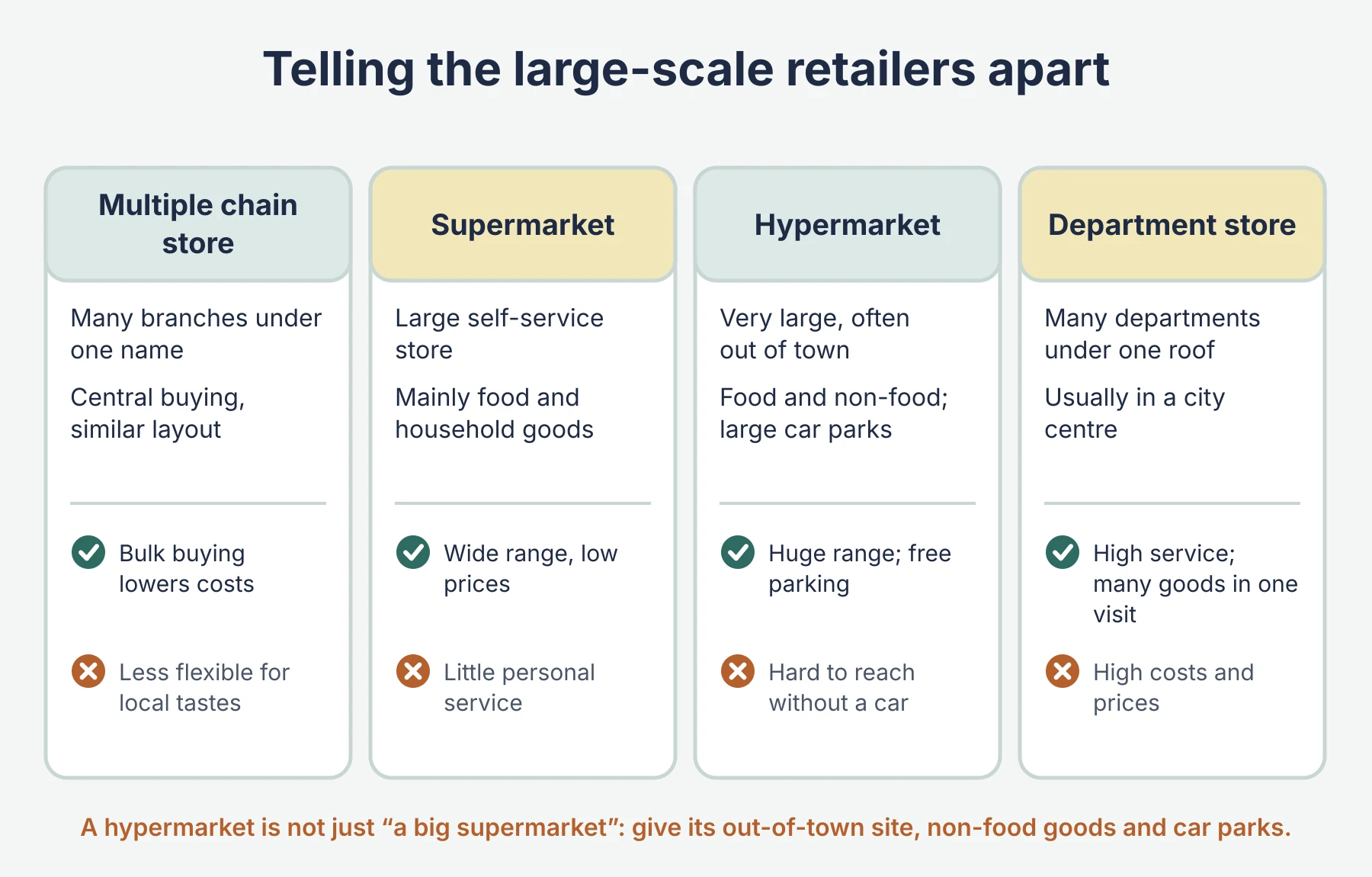
Supermarket vs hypermarket: hypermarkets are larger, usually out of town and sell much more non-food. Chain store vs department store: a chain has many branches; a department store has many departments in one building.
Small-scale survival: the syllabus three
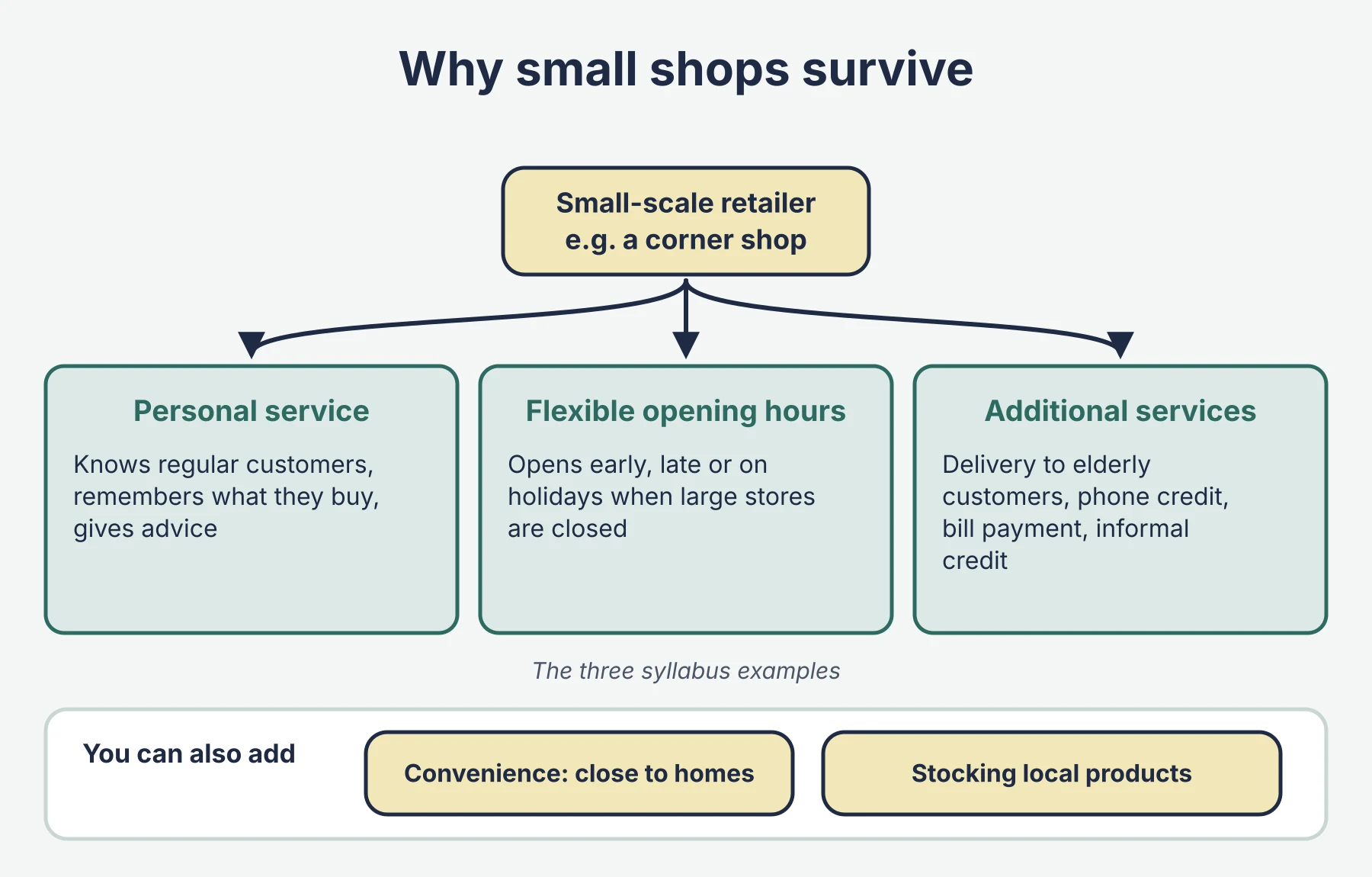
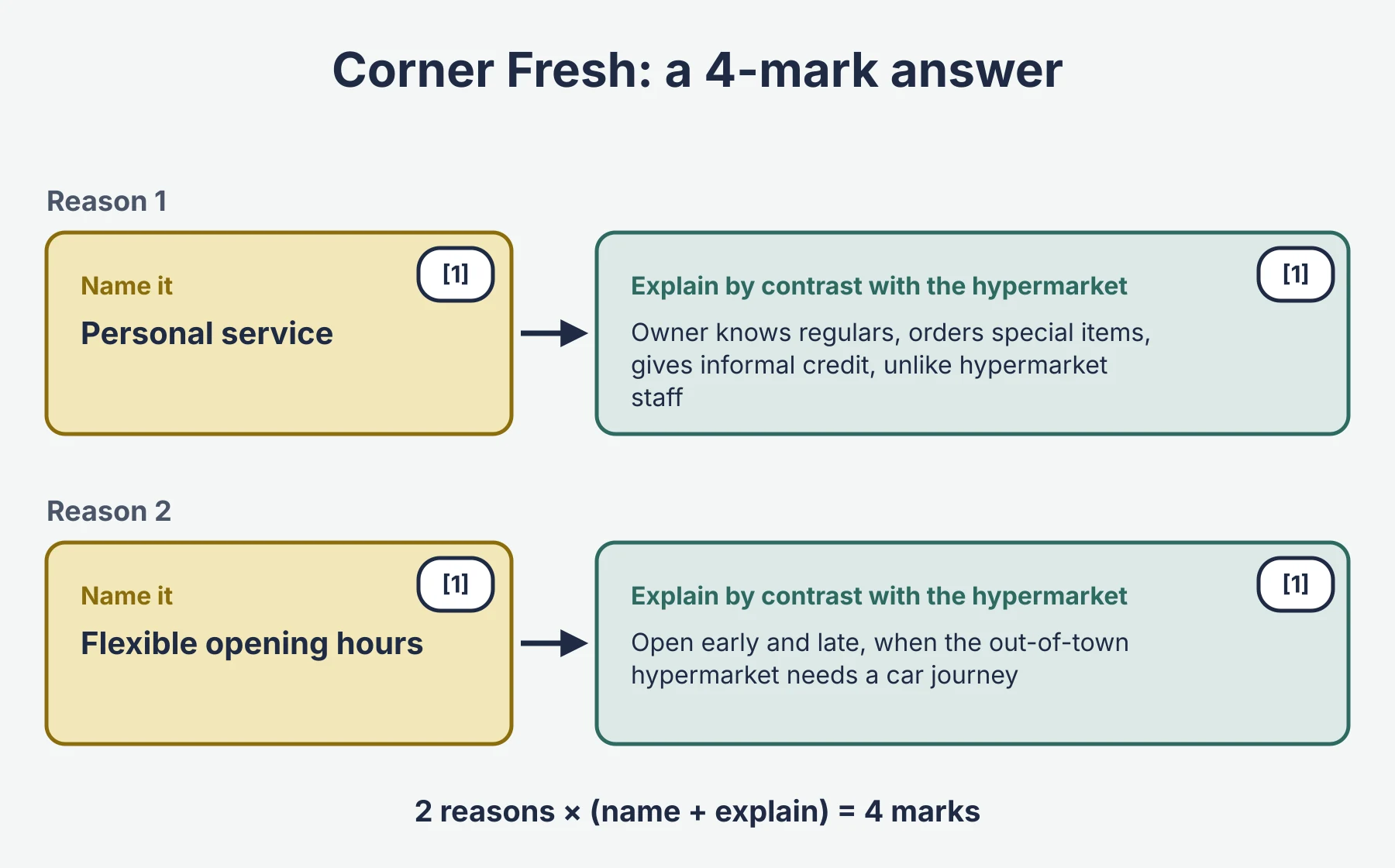
- Personal service: knows customers, gives advice, orders specials.
- Flexible opening hours: early, late, holidays.
- Additional services: delivery, informal credit, bill payments, selling mobile phone credit.
Also accepted: convenience of location, local products.
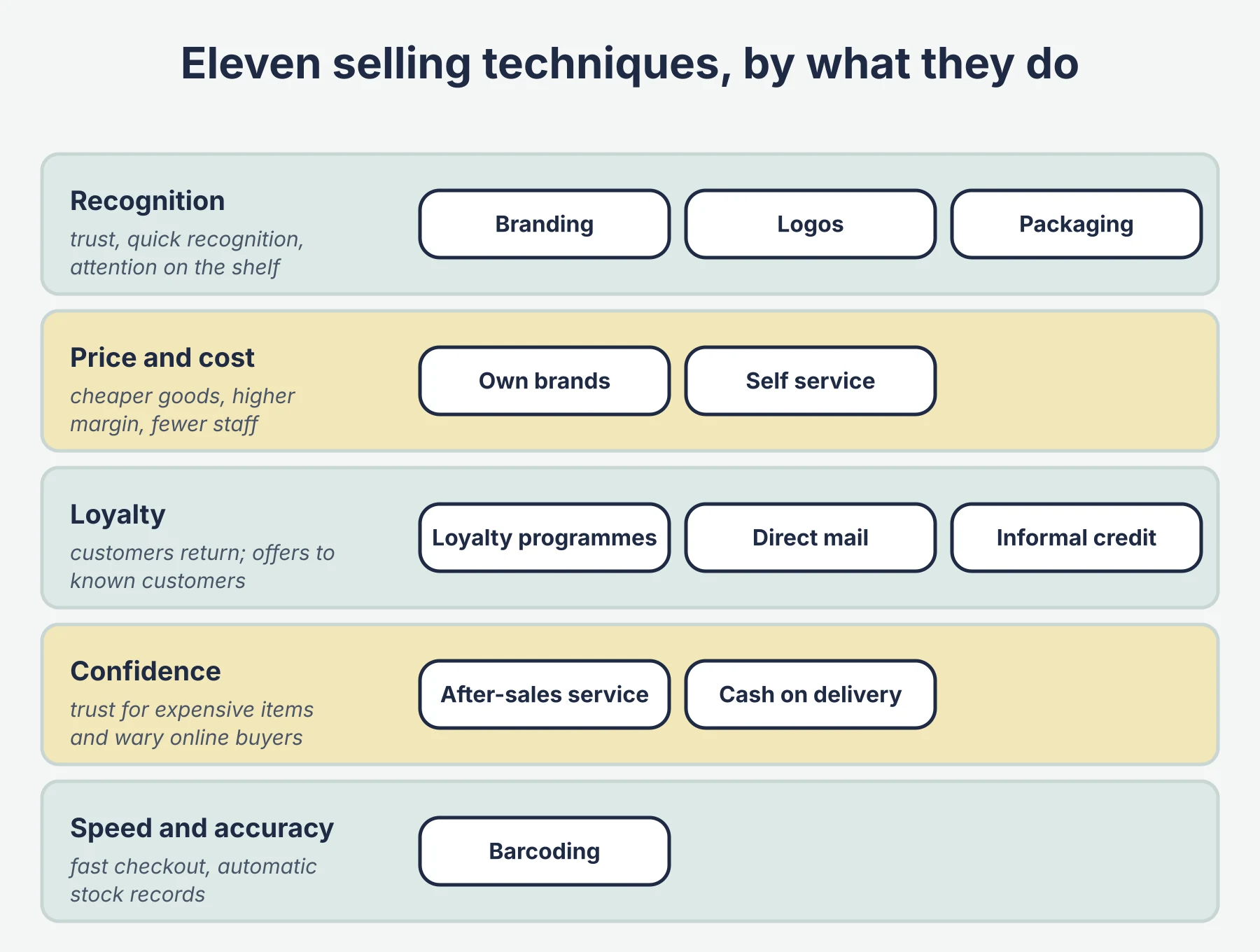
Eleven selling techniques
Branding, own brands, logos, packaging, self service, after-sales service, barcoding, direct mail, loyalty programmes, informal credit, cash on delivery.
Quick links:
- Own brands = retailer’s name, made by manufacturers for it; cheaper, higher margin.
- Barcoding = fast checkout and automatic stock control (works with EPoS).
- Informal credit = small shops; trust-based, no contract.
- Cash on delivery = pay when goods arrive; builds trust in online buying.
Eleven digital retail trends
Omnichannel retailing, cashless stores, EPoS, click and collect, self-service checkouts, subscription commerce, QR codes, VR showrooms, dropshipping, mobile apps, multi-channel retailing.
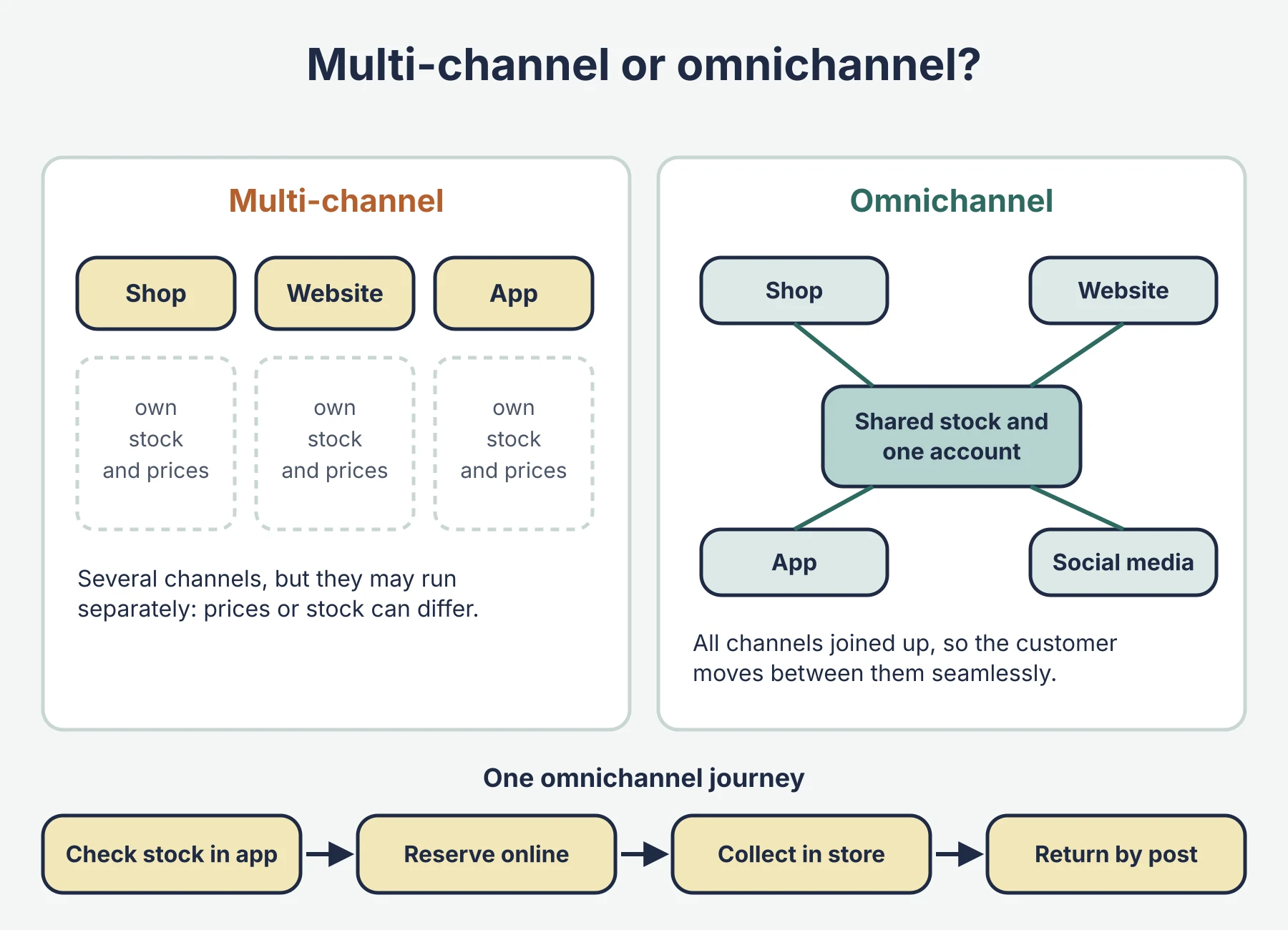
Omnichannel vs multi-channel
| Omnichannel | Multi-channel |
|---|---|
| Channels joined up: shared stock, prices and account | Several channels that may run separately |
| Buy online, collect or return in store in one account | Shop and website may differ in prices or stock |
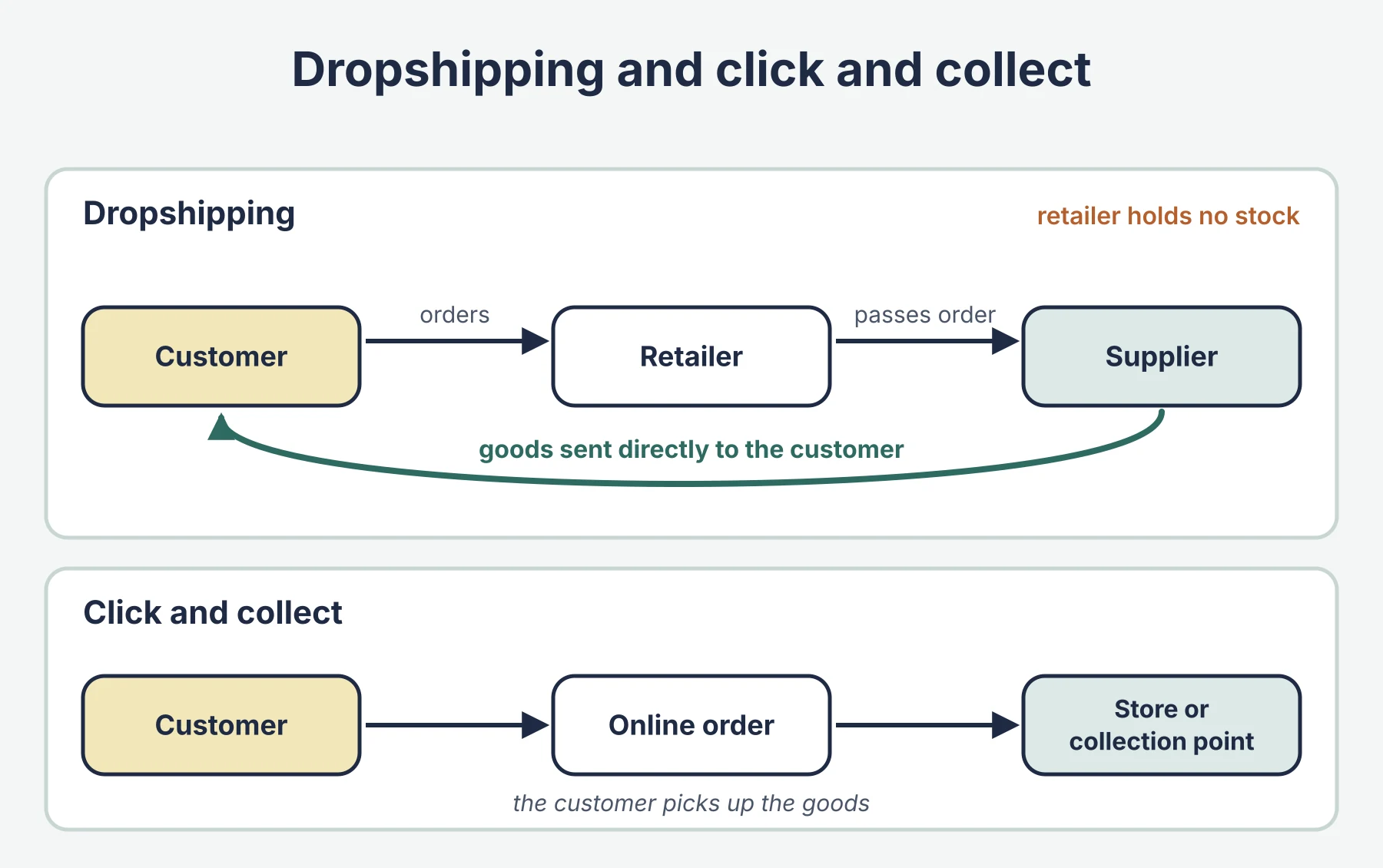
Dropshipping: retailer takes the order; supplier ships straight to the customer; retailer holds no stock.
Ecommerce and traditional commerce
| Positive | Negative |
|---|---|
| 24/7 selling | Delivery costs |
| More potential customers | Staff training |
| Increased revenue | Larger warehousing space |
| Targeted marketing | Website maintenance |
| Reduced operating store costs |
Key terms
| Term | Meaning |
|---|---|
| Retailer | Business that sells goods to the final consumer |
| Itinerant retailer | Trader with no fixed shop who travels to customers |
| Speciality shop | Shop selling a wide choice within one product type |
| Multiple chain store | Retailer with many branches under one name |
| Own brand | Product sold under the retailer’s own name |
| Loyalty programme | Rewards for repeat purchases |
| After-sales service | Help given after purchase, such as repairs or installation |
| EPoS | Tills linked to computers that record sales and update stock |
| Click and collect | Order online, collect from a store or point |
| Subscription commerce | Regular automatic purchase for a repeating payment |
| Dropshipping | Selling goods the supplier sends directly to the customer |
| Omnichannel retailing | All sales channels integrated into one experience |
Exam traps
- A hypermarket answer needs its features, not “a bigger supermarket”.
- Own brands are not made by the retailer.
- Omnichannel is not just “selling on several channels”; that is multi-channel.
- “Survives because it is small” is not a reason. Use personal service, hours or services.
- Ecommerce impact questions need both sides.
- A vending machine is a type of retailer, not a selling technique.
Self-test
- Name two small-scale and two large-scale types of retailer.
- State two features of a hypermarket.
- What is the difference between a multiple chain store and a department store?
- Give the three syllabus examples of why the small-scale retailer survives.
- What is an own brand?
- How does barcoding help a supermarket?
- Why might an online retailer offer cash on delivery?
- Define omnichannel retailing.
- What is dropshipping?
- Give one benefit of click and collect for the customer.
- State two positive impacts of ecommerce on traditional commerce.
- State two negative impacts of ecommerce on traditional commerce.
Answers
- Small-scale: any two of itinerant retailer, independent retailer, street market, speciality shop. Large-scale: any two of multiple chain store, supermarket, hypermarket, department store.
- Any two: very large; usually out of town; food and non-food goods; large free car parks; self service.
- A chain store has many branches under one name; a department store is one large store with many departments under one roof.
- Personal service, flexible opening hours, additional services provided.
- A product sold under the retailer’s own name, usually made for it by a manufacturer.
- Faster, more accurate checkout and automatic recording of sales and stock levels.
- Customers who fear fraud or have no card can pay only when goods arrive, which builds trust and raises sales.
- Joining all sales channels together, sharing stock, prices and customer accounts so customers move between them seamlessly.
- The retailer sells goods it does not stock; the supplier sends them directly to the customer.
- No delivery charge or waiting at home; collect at a convenient time.
- Any two: 24/7 selling, more potential customers, increased revenue, targeted marketing, reduced operating store costs.
- Any two: delivery costs, staff training, larger warehousing space, website maintenance.
Related resources
-
Study guides
Cambridge IGCSE Commerce (0715): Trading documents
Home and international trading documents, online ordering and digital documents, with a worked invoice, for Cambridge IGCSE Commerce 0715 section 2.5.
Commerce · Cambridge · IGCSE
Read guide -
Practice questions
Cambridge IGCSE Commerce (0715): Trading documents – Practice Questions
Original Cambridge IGCSE Commerce 0715 questions with answers on home and international trading documents, invoice calculations and online ordering.
Commerce · Cambridge · IGCSE
Try questions -
Revision notes
Cambridge IGCSE Commerce (0715): Trading documents – Revision Notes
Recall notes for Cambridge IGCSE Commerce 0715 section 2.5: home trade document sequence, discounts, export documents, online ordering stages and digital tools.
Commerce · Cambridge · IGCSE
Revise topic
Get free revision emails (optional)
Occasional emails with practice questions, worked explanations and links to free resources for the qualification and subjects you choose. No spam, and you can unsubscribe from any email. The free tools on this site never need an email.