
Revision Notes
Edexcel A Level Urdu (9UR0): Popular Culture (مقبول کلچر) – Revision Notes
9UR0 Theme 2.2 notes on popular culture (مقبول کلچر): drama, music, cricket, global influence, a model paragraph and a self-test.
- Subject
- Urdu Language
- Level
- A LEVELS
- Topic
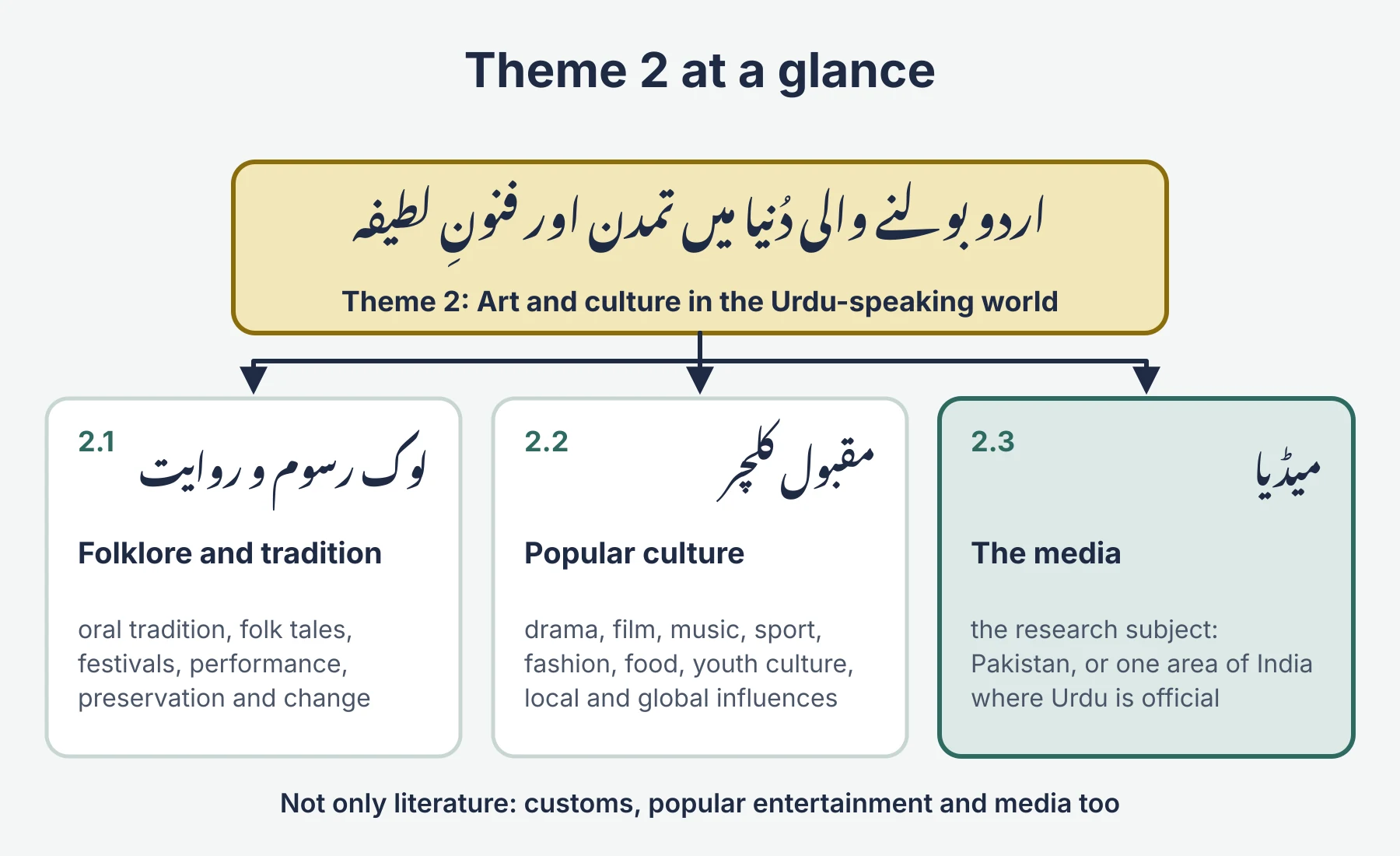
- Theme 2: Art and culture in the Urdu-speaking world (اردو بولنے والی دُنیا میں تمدن اور فنونِ لطیفہ)
- Author
- Marlbridge Academic Team
- Updated
- Reviewed by
- Farheen Zehra (what this means)
Aligned to Pearson Edexcel A Level Urdu Language (9UR0), 2018. Official specification .
Syllabus page (what it covers and how it is assessed): Pearson Edexcel A Level Urdu Language.
Syllabus points this page covers
9UR0
- 2.2 مقبول کلچر
Found an error? Report a correction.
Need help with this topic? Request a free trial class for A Level Urdu Language (9UR0).
Revision notes for sub-theme 2.2 of Theme 2 in Pearson Edexcel A Level Urdu (9UR0): popular culture (مقبول کلچر). For the wider theme, read the Theme 2 study guide.
Key ideas
- Television drama, film and music, and how audiences relate to them.
- Sport, especially cricket, as a shared passion with fans, heroes and public occasions.
- Fashion and food, and the role of festivals and markets.
- Youth culture and social media: following trends, creating and sharing content.
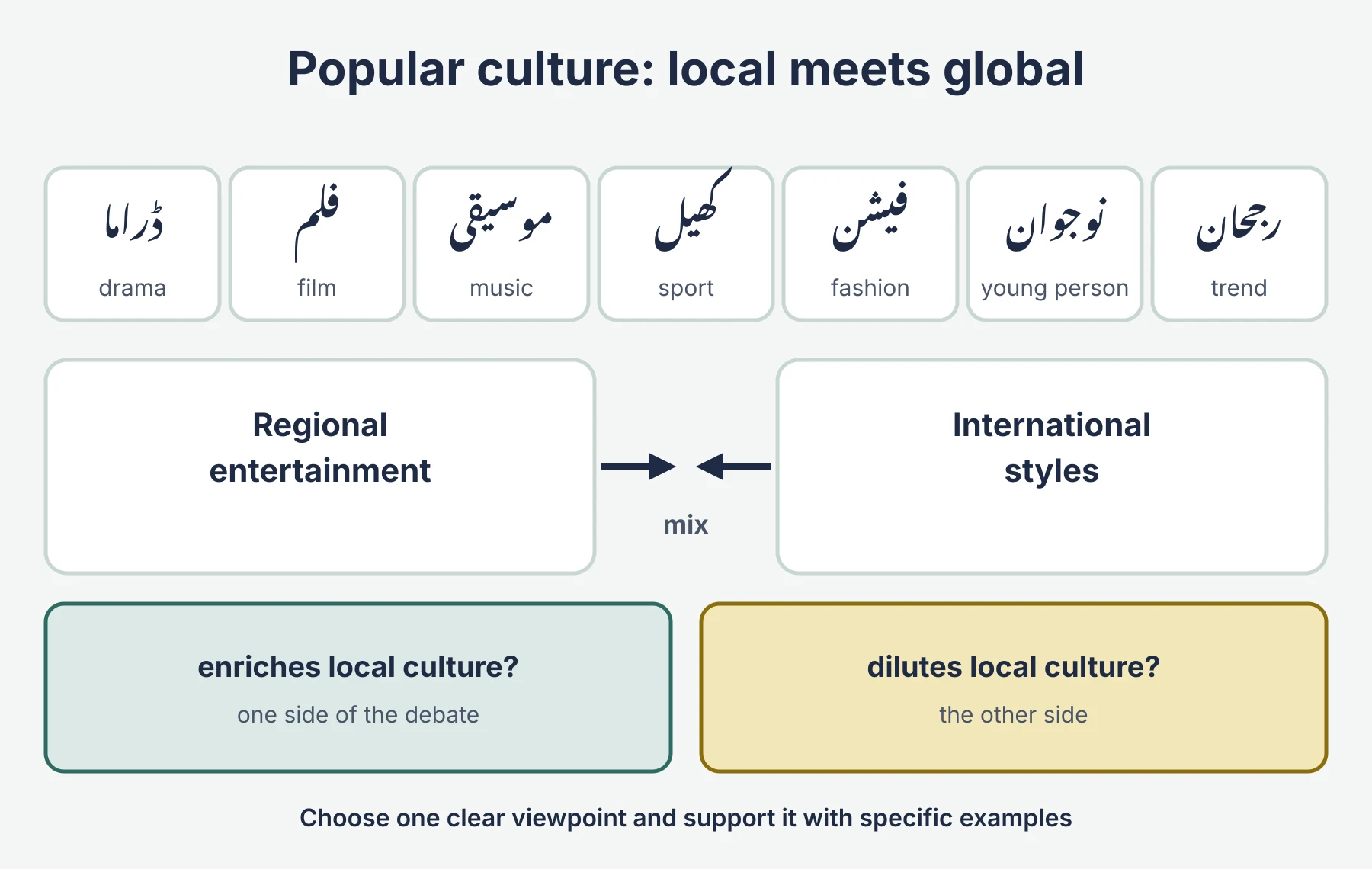
- Local and global influences: regional entertainment mixing with international styles; does this enrich or dilute local culture?
Issues and perspectives
What ‘popular’ means. Popular culture is the culture of everyday enjoyment shared by large audiences: what people watch, listen to, wear, eat and talk about. It differs from folklore (sub-theme 2.1) because it is usually produced and spread by industries and media, and it changes quickly. The two often meet, for instance when a folk song is rearranged for a modern audience.
Television drama. Urdu television drama has a strong reputation across the region. Classic PTV serials of the 1980s such as Dhoop Kinare and Tanhaiyan are still remembered, and later serials on private channels, for example Humsafar (2011) and Zindagi Gulzar Hai, found large audiences in Pakistan, in India and among the diaspora. Dramas often deal with family, marriage and social pressure, so they connect to Theme 1. Critics argue that some dramas repeat the same stories of family conflict and present women mainly as victims; supporters reply that they open discussion of real problems.
Global influence. Indian films and songs have long been popular in Pakistan, and in 2020 PTV broadcast the Turkish historical drama Ertugrul dubbed into Urdu, which became extremely popular. Such examples are useful for the debate on whether foreign content enriches or threatens local culture.
Music. Coke Studio, which began in Pakistan in 2008, mixed folk, Sufi and classical traditions with modern pop and rock and reached audiences worldwide online. It is a strong example that global formats can also help local traditions.
Cricket. Cricket is the most popular sport, and players become national heroes. Pakistan’s 1992 World Cup victory under Imran Khan remains a key moment of shared pride, and the Pakistan Super League, launched in 2016, brought franchise cricket and, in time, international players back to Pakistani grounds. A big match can unite a whole country for an evening.
Fashion, food and youth culture. Traditional dress such as shalwar kameez continues alongside western clothes, and designers mix both. Food culture includes regional dishes and fast-growing street-food and café scenes. Young people now follow trends on social media, create their own videos and become influencers; this gives them a voice, but critics worry about imitation (نقالی), pressure to look a certain way and time spent online.
The central debate. Some writers speak of a ثقافتی یلغار (cultural invasion) from abroad that weakens local language and values. Others argue that culture has always mixed, and that confident local industries can absorb outside influences and export their own work. A strong answer takes a clear position but recognises the other side.
Vocabulary
| Urdu | Meaning |
|---|---|
| مقبول | popular |
| ڈراما | drama |
| فلم | film |
| موسیقی | music |
| کھیل | sport |
| فیشن | fashion |
| نوجوان | young person |
| رجحان | trend |
| مقبولیت | popularity |
| تفریح | entertainment |
| ڈراما سیریل | television serial |
| اداکار / اداکارہ | actor / actress |
| گلوکار | singer |
| ناظرین | viewers |
| شائقین | fans, enthusiasts |
| مداح | admirer, fan |
| مقامی | local |
| عالمی | global |
| مغربی | western |
| غیر ملکی | foreign |
| نقالی | imitation |
| ثقافتی یلغار | cultural invasion |
| رنگا رنگ | colourful, varied |
Debate frame
| Enriches | Dilutes |
|---|---|
| New ideas and styles reach local audiences | Local traditions may be neglected |
| Young people create and share content | Trends can replace older forms |
| Local artists reach the world online | Local industries struggle against foreign content |
| Fusion can revive folk forms | Imitation can replace originality |
Choose one viewpoint, support it with a specific example, and answer the statement in your conclusion.
Useful sentences with grammar notes
- پاکستانی ڈرامے سرحد پار بھی شوق سے دیکھے جاتے ہیں۔ (Pakistani dramas are watched eagerly across the border too.) Passive agreeing with ڈرامے (masculine plural): دیکھے جاتے ہیں.
- 1992 میں پاکستان نے کرکٹ کا عالمی کپ جیتا۔ (In 1992 Pakistan won the Cricket World Cup.) With نے, the verb agrees with the object کپ (masculine): جیتا.
- نوجوانوں میں مغربی فیشن کی مقبولیت بڑھ رہی ہے۔ (The popularity of western fashion among young people is growing.) The verb agrees with مقبولیت (feminine), not with فیشن.
- کچھ لوگوں کا خیال ہے کہ غیر ملکی ڈرامے ہماری ثقافت کو کمزور کر رہے ہیں۔ (Some people think foreign dramas are weakening our culture.) کا خیال ہے کہ introduces a reported opinion.
- کوک اسٹوڈیو نے لوک موسیقی کو نئی نسل تک پہنچایا ہے۔ (Coke Studio has brought folk music to the new generation.) With نے and an object marked by کو, the verb takes the default masculine singular: پہنچایا ہے.
Model paragraph
مقبول کلچر کسی معاشرے کی بدلتی ہوئی پسند کا آئینہ ہوتا ہے۔ پاکستان میں کرکٹ اور ٹی وی ڈرامے برسوں سے لوگوں کو ایک دوسرے سے جوڑتے آئے ہیں؛ جب قومی ٹیم کوئی بڑا میچ کھیلتی ہے تو گلیوں اور گھروں میں ایک ہی موضوع پر بات ہوتی ہے۔ اس کے علاوہ کوک اسٹوڈیو جیسے پروگراموں نے پرانے لوک گیتوں کو جدید موسیقی کے ساتھ ملا کر نوجوانوں میں مقبول بنایا ہے۔ ناقدین کا کہنا ہے کہ غیر ملکی ڈراموں اور فیشن کی نقالی سے مقامی روایات پیچھے رہ جاتی ہیں۔ میرے خیال میں عالمی اثرات سے بچنا ممکن نہیں، لیکن اگر ہم اپنی زبان اور روایات پر اعتماد رکھیں تو یہ اثرات ہماری ثقافت کو کمزور کرنے کے بجائے مزید رنگا رنگ بنا سکتے ہیں۔
Translation: Popular culture is a mirror of a society’s changing tastes. In Pakistan, cricket and television dramas have connected people with one another for years; when the national team plays a big match, the streets and homes talk about one subject. In addition, programmes such as Coke Studio have made old folk songs popular among young people by combining them with modern music. Critics say that imitating foreign dramas and fashion leaves local traditions behind. In my view it is impossible to avoid global influences, but if we keep confidence in our own language and traditions, these influences can make our culture more colourful instead of weakening it.
Why it works: a general definition, two Pakistani examples, a critic’s view, and a conditional conclusion that answers the debate. جوڑتے آئے ہیں expresses an action that has continued over time (‘have been connecting’).
Connectives to reuse
| Urdu | Use |
|---|---|
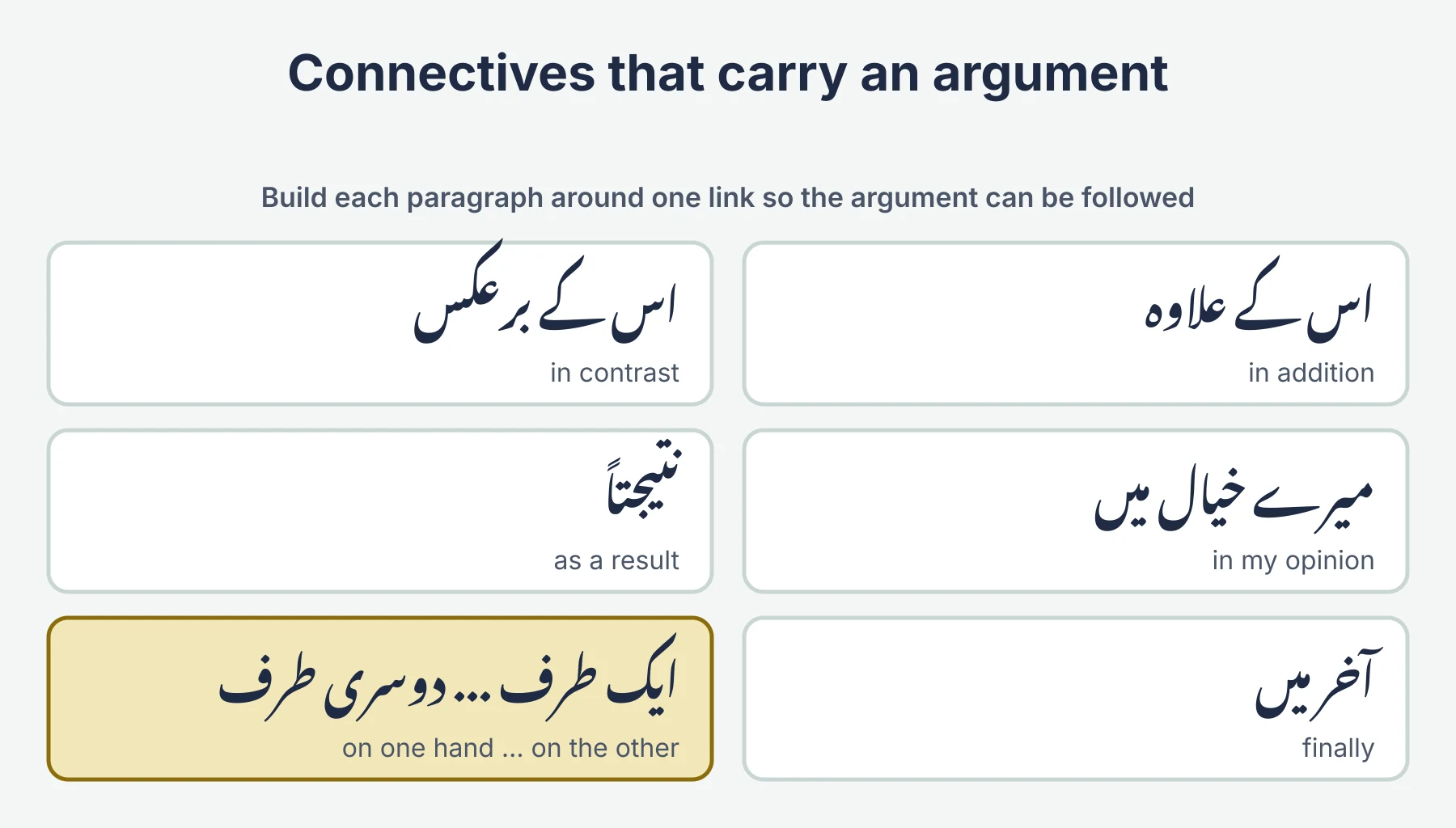
| اس کے برعکس | in contrast |
| اس کے علاوہ | in addition |
| نتیجتاً | as a result |
| میرے خیال میں | in my opinion |
| ایک طرف … دوسری طرف | on one hand … on the other |
| آخر میں | finally |
Discussion and essay prompts
- «غیر ملکی ڈرامے اور فلمیں ہماری ثقافت کے لیے خطرہ ہیں۔» (Foreign dramas and films are a threat to our culture.) To what extent do you agree?
- «کرکٹ صرف ایک کھیل نہیں بلکہ قومی یکجہتی کی علامت ہے۔» (Cricket is not just a game but a symbol of national unity.) Discuss.
- Do Urdu television dramas reflect society accurately?
- Is social media making young people more creative, or more alike?
Exam traps
- Naming popular items without discussing their effect.
- Dropping gender agreement in passives and compound verbs.
- Using English words where a suitable Urdu equivalent exists, without checking.
- Confusing popular culture with folklore; explain how the two differ and where they meet.
- Making the verb agree with the wrong noun in phrases like فیشن کی مقبولیت بڑھ رہی ہے.
- Quoting viewing figures or match statistics without a source.
Self-test
- Give the Urdu for ‘popular’ and ‘trend’.
- Name two forms of popular culture covered in this sub-theme.
- What is the debate about local and global influences?
- Translate ‘sport’ and ‘music’ into Urdu.
- What should a conclusion do?
- How does popular culture differ from folklore?
- Name one Urdu television drama and one example of foreign drama popular in Pakistan.
- Why is Coke Studio a useful example in the ‘enrich or dilute’ debate?
- What does ثقافتی یلغار mean, and who uses the idea?
- In نوجوانوں میں مغربی فیشن کی مقبولیت بڑھ رہی ہے, why is the verb feminine?
- Translate: ‘In 1992 Pakistan won the Cricket World Cup’.
Answers: 1. مقبول and رجحان. 2. For example, television drama and cricket. 3. Whether mixing regional entertainment with international styles enriches or dilutes local culture. 4. کھیل and موسیقی. 5. Answer the statement in the task, keeping the opinion consistent. 6. It is usually produced by industries and media and changes quickly, while folklore is created and passed on by ordinary people, often orally. 7. For example, Humsafar or Dhoop Kinare; the Turkish drama Ertugrul, dubbed into Urdu. 8. It used a modern format to bring folk and Sufi music to new audiences, which suggests global influence can strengthen local traditions. 9. ‘Cultural invasion’: the view of critics who believe foreign influence weakens local language and values. 10. It agrees with مقبولیت, which is feminine. 11. 1992 میں پاکستان نے کرکٹ کا عالمی کپ جیتا۔
Related resources
-
Study guides
Edexcel A-Level Urdu: Theme 2, Art and Culture in the Urdu-Speaking World (9UR0)
Folklore, popular culture and the media in the Urdu-speaking world: ideas, vocabulary and model Urdu writing for Theme 2 of Pearson Edexcel GCE A-Level Urdu (9UR0).
Urdu Language · Pearson Edexcel · A Level
Read guide -
Study guides
Edexcel A Level Urdu (9UR0): Folklore and Tradition (لوک رسوم و روایت)
9UR0 sub-theme 2.1 study guide: folk music, the emerging Western influence and national and religious festivals, with translation and evaluation practice.
Urdu Language · Pearson Edexcel · A Level
Read guide -
Practice questions
Edexcel A Level Urdu (9UR0): Folklore and Tradition (لوک رسوم و روایت) – Practice Questions
Twelve original 9UR0 practice questions on folk music, Western influence and festivals, with a reading passage, translation both ways and marked answers.
Urdu Language · Pearson Edexcel · A Level
Try questions
Get free revision emails (optional)
Occasional emails with practice questions, worked explanations and links to free resources for the qualification and subjects you choose. No spam, and you can unsubscribe from any email. The free tools on this site never need an email.