
Revision Notes
Edexcel A Level Urdu (9UR0): Work (کام) – Revision Notes
9UR0 Theme 1.2 notes on work (کام): informal work, unemployment, women's employment, technology, a model paragraph and a self-test.
- Subject
- Urdu Language
- Level
- A LEVELS
- Topic
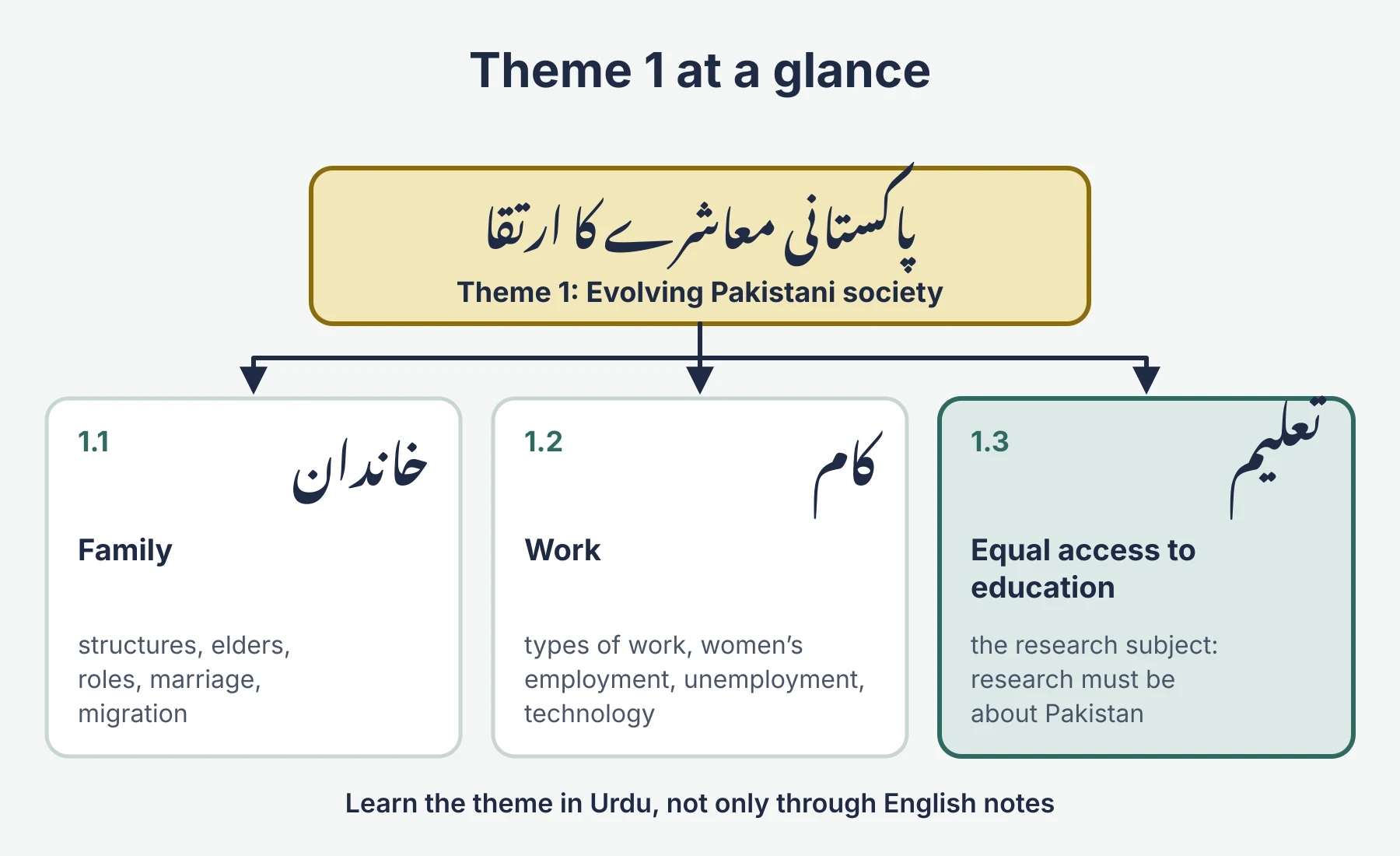
- Theme 1: Evolving Pakistani society (پاکستانی معاشرے کا ارتقا)
- Author
- Marlbridge Academic Team
- Updated
- Reviewed by
- Farheen Zehra (what this means)
Aligned to Pearson Edexcel A Level Urdu Language (9UR0), 2018. Official specification .
Syllabus page (what it covers and how it is assessed): Pearson Edexcel A Level Urdu Language.
Syllabus points this page covers
9UR0
- 1.2 کام
Found an error? Report a correction.
Need help with this topic? Request a free trial class for A Level Urdu Language (9UR0).
Revision notes for sub-theme 1.2 of Theme 1 in Pearson Edexcel A Level Urdu (9UR0): work (کام). For the wider theme, read the Theme 1 study guide.
Key ideas
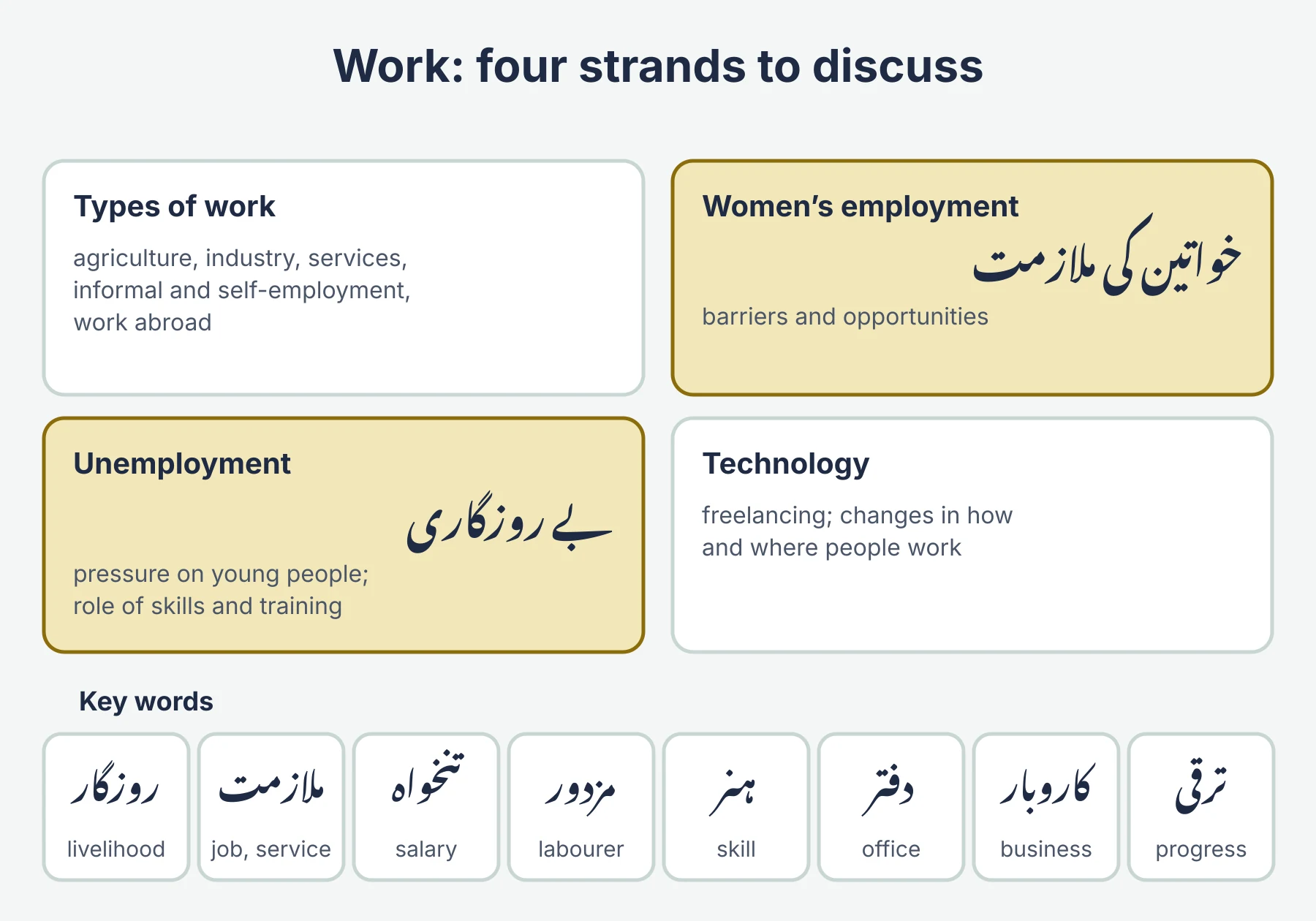
- Types of work: agriculture, industry, services, informal work and self-employment, and work abroad.
- خواتین کی ملازمت = women’s employment, with its barriers and opportunities.
- بے روزگاری = unemployment; pressure on young people and the role of skills and training.
- Technology, freelancing and changes in how and where people work.
Issues and perspectives
A changing economy. Agriculture (زراعت) has long been a major source of work in Pakistan, especially in rural areas, while industry (صنعت), such as textiles, and the services sector (خدمات کا شعبہ) employ many people in towns and cities. A large part of the workforce is in the غیر رسمی شعبہ (informal sector): street vendors, domestic workers, day labourers and small workshops, often with no contract, pension or protection. When you discuss a type of work, explain what it means for the worker’s security, not just what the job is.
Young people and unemployment. A common concern is that many educated young people cannot find work that matches their qualifications. Explanations offered include a mismatch between what universities teach and what employers need, slow economic growth, and the importance of personal connections (سفارش) in getting jobs. Possible responses include vocational training (فنی تربیت), support for small businesses and links between colleges and employers.
Women’s employment. More women now work in education, health, banking, business and technology, and home-based and online work has opened opportunities for women who cannot travel easily. Barriers that are often discussed include family attitudes, safe transport, childcare, unequal pay and harassment at work (ہراسانی). Pakistan has a law on protection against harassment at the workplace; check its name and year in your own source before quoting it. Present these barriers as obstacles that can change, not as fixed facts about every family.
Technology and new kinds of work. Freelancing (فری لانسنگ) lets people sell skills such as programming, design or writing to clients abroad, and online selling and ride-hailing apps have created new kinds of income. Supporters see a route to independence; critics note that such work can be insecure, with no fixed pay or benefits.
Work abroad and child labour. Work abroad links this sub-theme to emigration (Theme 3), and remittances support many families. Child labour (بچوں سے مشقت) links it to education (sub-theme 1.3): children who work are often unable to attend school.
Rights at work. Minimum wage (کم سے کم اجرت), working hours, safety and the right to form unions are all part of the debate. A balanced answer recognises both the need for jobs and the need for fair conditions.
Vocabulary
| Urdu | Meaning |
|---|---|
| روزگار | livelihood, employment |
| ملازمت | job, service (feminine) |
| تنخواہ | salary (feminine) |
| مزدور | labourer |
| ہنر | skill |
| دفتر | office |
| کاروبار | business |
| ترقی | progress, promotion |
| بے روزگاری | unemployment |
| نوکری | job (feminine) |
| اجرت | wage |
| کم سے کم اجرت | minimum wage |
| زراعت | agriculture |
| صنعت | industry |
| خدمات کا شعبہ | services sector |
| غیر رسمی شعبہ | informal sector |
| فنی تربیت | vocational training |
| پیشہ | profession |
| آجر | employer |
| ملازم | employee |
| سفارش | personal recommendation, connections |
| ہراسانی | harassment |
| کام کی جگہ | workplace |
| فری لانسنگ | freelancing |
Argument frame
State the change (for example in who works and where), give an opportunity and a barrier, then a reasoned opinion. Use میرے خیال میں for the opinion and اس کے علاوہ to add a second point.
Grammar to control
- Keep gender agreement in compound verbs and passives.
- Prefer simple structures you can control to ambitious ones you cannot.
- Check script details: a misplaced dot or missing diacritic can change a word.
Useful sentences with grammar notes
- آج کل بہت سی خواتین گھر سے آن لائن کام کرتی ہیں۔ (Nowadays many women work online from home.) Note بہت سی (feminine) before خواتین, and the feminine plural verb کرتی ہیں.
- تعلیم یافتہ نوجوانوں کو بھی نوکری ملنا مشکل ہو گیا ہے۔ (It has become hard even for educated young people to find a job.) The whole infinitive phrase نوکری ملنا is the subject, so the verb is masculine singular ہو گیا, even though نوکری is feminine. This is the safest pattern to learn and reuse.
- اگر نوجوانوں کو ہنر سکھایا جائے تو وہ اپنا کاروبار شروع کر سکتے ہیں۔ (If young people are taught skills, they can start their own businesses.) Passive subjunctive سکھایا جائے, agreeing with ہنر (masculine).
- کسانوں نے اپنی فصلیں منڈی میں بیچیں۔ (The farmers sold their crops in the market.) With نے, the verb agrees with the object فصلیں (feminine plural): بیچیں.
- کام کی جگہ پر خواتین کا تحفظ یقینی بنانا ضروری ہے۔ (It is essential to ensure women’s safety at the workplace.) یقینی بنانا (to ensure) is a useful formal verb.
Model paragraph
پاکستان میں کام کی دنیا تیزی سے بدل رہی ہے۔ پہلے زیادہ تر لوگ کھیتوں، کارخانوں یا سرکاری دفتروں میں کام کرتے تھے، لیکن اب انٹرنیٹ کی وجہ سے بہت سے نوجوان فری لانسنگ کے ذریعے بیرونِ ملک کے گاہکوں کے لیے بھی کام کرتے ہیں۔ اس کے علاوہ خواتین کی ایک بڑی تعداد تعلیم، صحت اور کاروبار کے شعبوں میں آگے آ رہی ہے۔ تاہم اب بھی بہت سی خواتین کو خاندانی پابندیوں، سفر کی مشکلات اور کام کی جگہ پر ہراسانی کا سامنا کرنا پڑتا ہے۔ میرے خیال میں اگر حکومت ہنر کی تربیت اور محفوظ ماحول فراہم کرے تو نوجوان مرد اور خواتین دونوں ملکی ترقی میں بہتر کردار ادا کر سکتے ہیں۔
Translation: The world of work in Pakistan is changing fast. In the past most people worked in fields, factories or government offices, but now, because of the internet, many young people also work through freelancing for clients abroad. In addition, a large number of women are coming forward in education, health and business. However, many women still have to face family restrictions, difficulties with travel and harassment at the workplace. In my opinion, if the government provides skills training and a safe environment, both young men and women can play a better part in the country’s progress.
Why it works: a past/present contrast (پہلے … لیکن اب), two developments, a barrier introduced with تاہم, and a conditional recommendation. Watch the agreement in خواتین کی ایک بڑی تعداد … آ رہی ہے: the verb agrees with تعداد (feminine singular), not with خواتین.
Research and sources
Do not quote a figure you cannot trace to a named source. Your own research file should hold named sources, dates and figures you have checked yourself.
Discussion and essay prompts
- «فری لانسنگ پاکستان کے نوجوانوں کے لیے بے روزگاری کا حل ہے۔» (Freelancing is the solution to unemployment for Pakistan’s young people.) Discuss.
- «خواتین کی ملازمت سے خاندان اور معاشرہ دونوں مضبوط ہوتے ہیں۔» (Women’s employment strengthens both the family and society.) To what extent do you agree?
- Is a university degree still the best route to a good job?
- What responsibilities do employers have towards their workers?
Exam traps
- Listing jobs without explaining their importance.
- Asserting opinions about unemployment with no reasons or evidence.
- Learning isolated words without sentences to use them in.
- Agreement with infinitive subjects: learn نوکری ملنا مشکل ہو گیا ہے as a fixed pattern (infinitive phrase as subject, masculine singular verb) and use it consistently.
- Agreement with collective nouns: ایک بڑی تعداد takes a feminine singular verb.
- Treating women’s work as one simple story; distinguish city and village, and different kinds of work.
Self-test
- Give the Urdu for ‘unemployment’ and ‘livelihood’.
- What does خواتین کی ملازمت refer to?
- Translate ‘salary’ and ‘skill’ into Urdu.
- Name two types of work you could discuss.
- Why avoid quoting a statistic you cannot trace?
- What is the غیر رسمی شعبہ, and why does it matter for workers?
- Give two barriers to women’s employment that are often discussed.
- Give one argument for and one against freelancing as a career.
- In کسانوں نے اپنی فصلیں منڈی میں بیچیں, why is the verb بیچیں?
- Why is the verb masculine in نوکری ملنا مشکل ہو گیا ہے?
- Give the Urdu for ‘minimum wage’ and ‘vocational training’.
- How does this sub-theme link to sub-theme 1.3?
Answers: 1. بے روزگاری and روزگار. 2. Women’s employment. 3. تنخواہ and ہنر. 4. For example, agriculture and services, or self-employment and work abroad. 5. It cannot be checked, and the research file should contain only named, dated, checked sources. 6. The informal sector: work without contracts, pensions or protection, so workers have little security. 7. For example, family attitudes, safe transport, childcare, unequal pay or harassment. 8. For example, independence and access to clients abroad (for); insecure income with no benefits (against). 9. With نے the verb agrees with the object فصلیں, which is feminine plural. 10. The subject is the infinitive phrase نوکری ملنا, which takes masculine singular agreement. 11. کم سے کم اجرت and فنی تربیت. 12. Through child labour, which keeps children out of school, and through the link between education and employment.
Related resources
-
Study guides
Edexcel A Level Urdu (9UR0): Work (کام)
9UR0 sub-theme 1.2 study guide on work: changing professions, women in the workplace and workers' rights, with a translation into Urdu walk-through.
Urdu Language · Pearson Edexcel · A Level
Read guide -
Practice questions
Edexcel A Level Urdu (9UR0): Work (کام) – Practice Questions
Twelve original 9UR0 practice questions on work: changing professions, women at work and workers' rights, with translation both ways and full answers.
Urdu Language · Pearson Edexcel · A Level
Try questions -
Study guides
Edexcel A Level Urdu (9UR0): Family (خاندان)
9UR0 sub-theme 1.1 study guide: the three family aspects, women's role, marriage attitudes, a translation walk-through and Paper 3 summary technique.
Urdu Language · Pearson Edexcel · A Level
Read guide
Get free revision emails (optional)
Occasional emails with practice questions, worked explanations and links to free resources for the qualification and subjects you choose. No spam, and you can unsubscribe from any email. The free tools on this site never need an email.