
Revision Notes
IGCSE Business: Marketing mix (Cambridge 0264) – Revision Notes
Condensed revision notes on the marketing mix, life cycle, pricing, channels, promotion and ecommerce for Cambridge IGCSE Business 0264.
- Subject
- Business
- Level
- IGCSE
- Topic
- Marketing
- Author
- Marlbridge Academic Team
- Updated
- Reviewed by
- Salman Ahmad (what this means)
Aligned to Cambridge IGCSE Business (0264), For examination in 2027, 2028 and 2029. Official specification .
Syllabus page (what it covers and how it is assessed): Cambridge IGCSE Business.
Syllabus points this page covers
0264
- 3.3 Marketing mix
Found an error? Report a correction.
Need help with this topic? Request a free trial class for IGCSE Business (0450 / 0264).
These notes condense section 3.3 Marketing mix of the Cambridge IGCSE Business 0264 syllabus for examination in 2027, 2028 and 2029. For full explanations and worked examples, read the study guide first, then test yourself with the practice questions. Course links: IGCSE Business hub, the checklist and the free diagnostics.
Key definitions
| Term | Meaning |
|---|---|
| Marketing mix | The combination of product, price, place and promotion used to sell to a target market |
| Brand image | The picture customers hold of a brand: quality, values, status |
| Packaging | Protects, informs, attracts and expresses the brand |
| Product life cycle | The stages a product passes through: introduction, growth, maturity, decline |
| Extension strategy | An action to keep a product’s sales from falling |
| Distribution channel | The route goods take from producer to customer |
| Sales promotion | Short-term offers to boost sales |
| Ecommerce | Buying and selling over the internet |
3.3.1 Product in a page
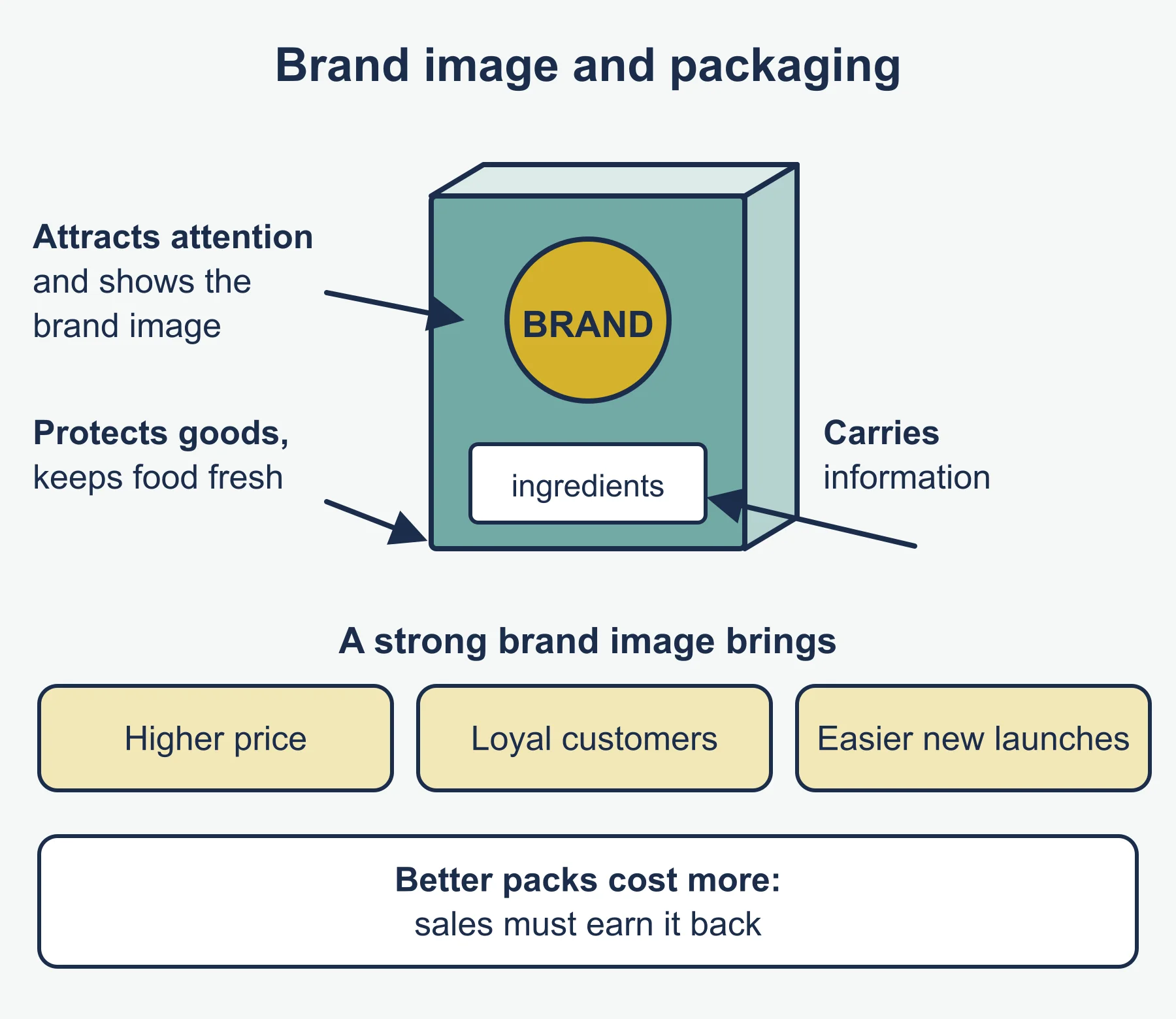
- Brand image supports higher prices, loyalty and easier launches. Poor image does the reverse.
- Packaging roles: protect, preserve, inform, attract, reflect the brand. Better packaging costs more.
- New products: advantages are fresh sales and a lead on rivals; disadvantages are development cost, risk of failure and sales taken from existing products.
Life cycle at a glance
| Stage | Sales shape | Profit | Promotion |
|---|---|---|---|
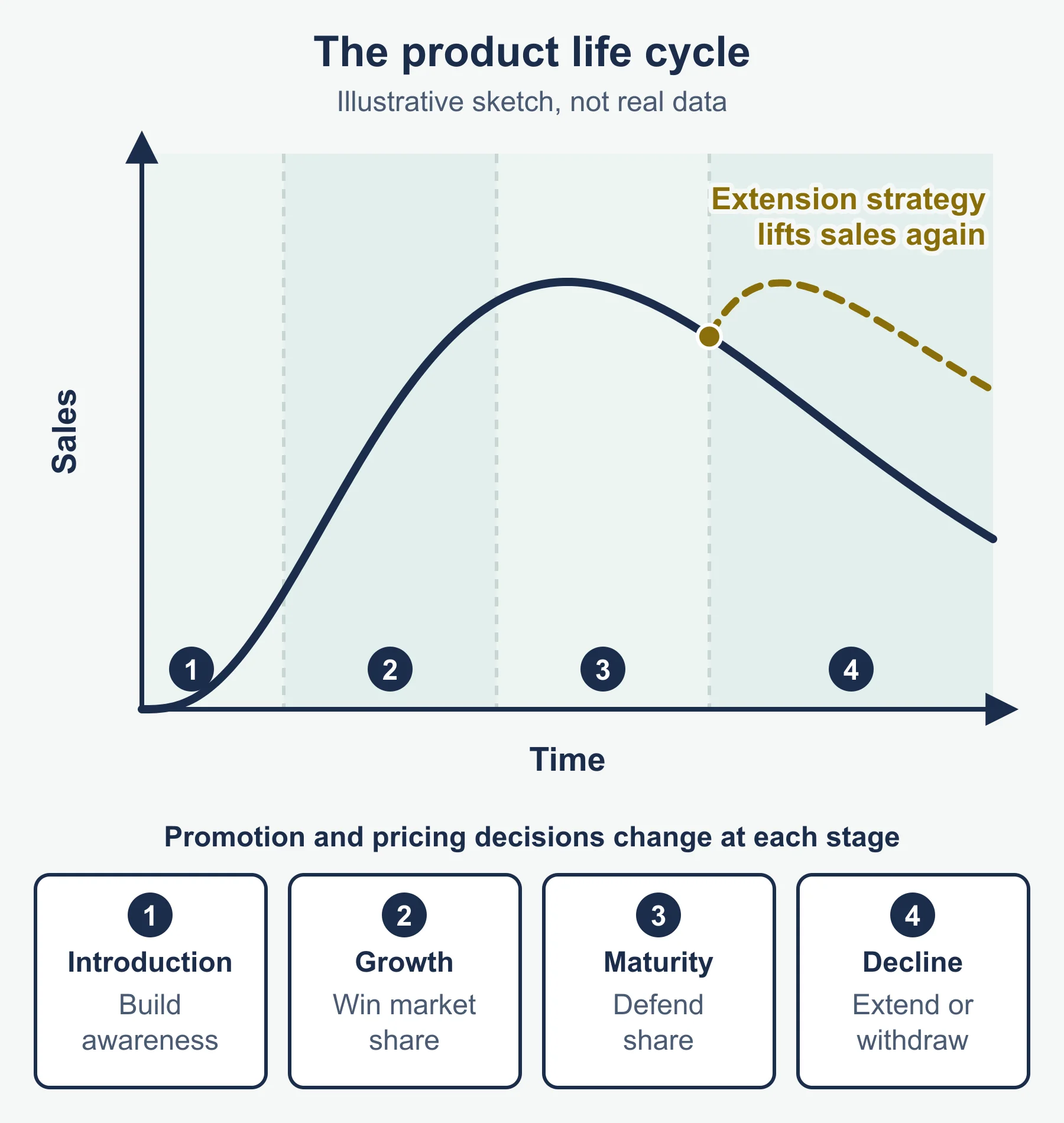
| Introduction | Low, slow rise | Little or none | Heavy, to build awareness |
| Growth | Steep rise | Rising | Persuasive, as rivals arrive |
| Maturity | Flat top | Highest | Defend share |
| Decline | Falling | Falling | Often cut back |
Reading a diagram in steps
- Label the axes: sales up, time across.
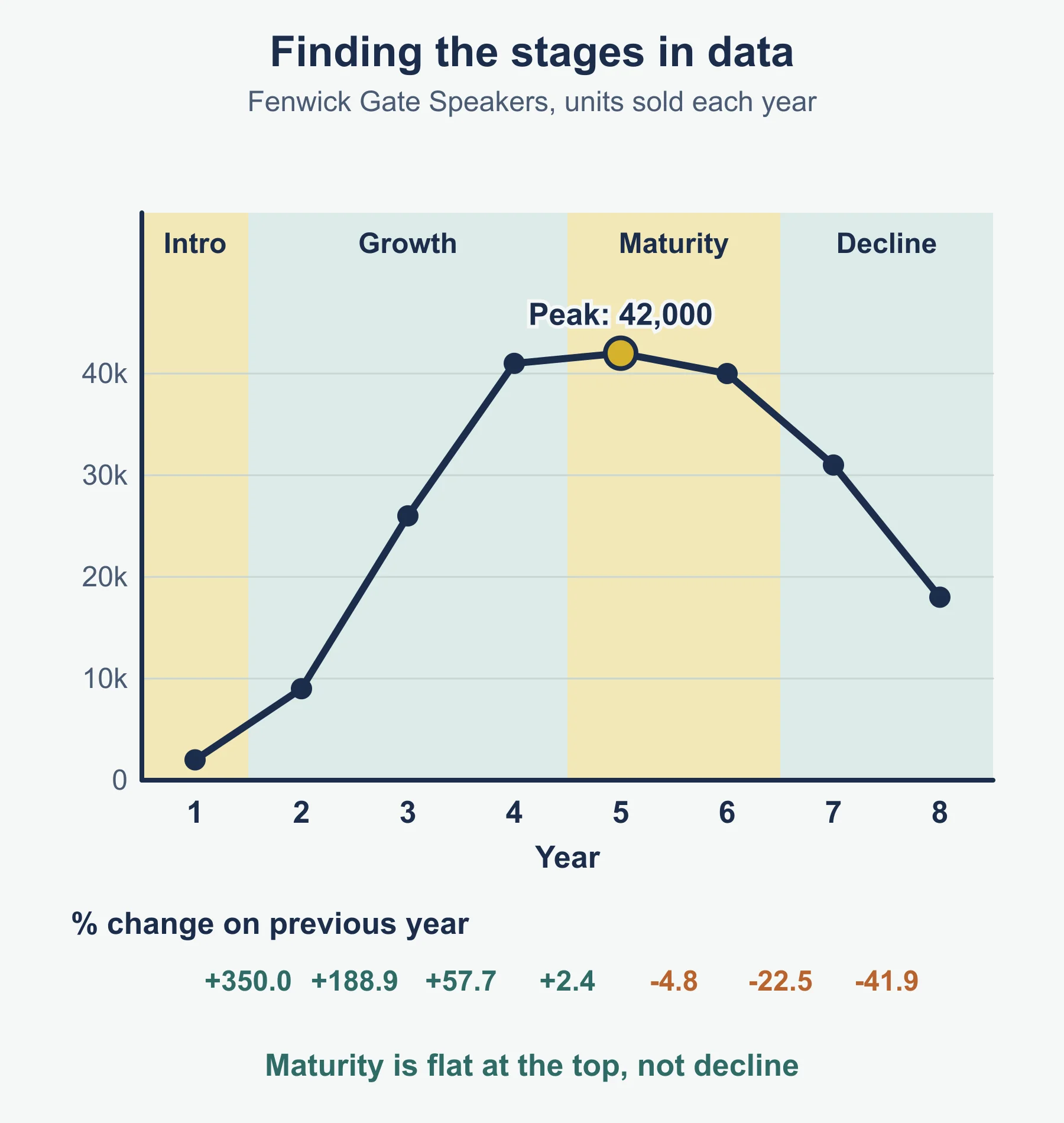
- Find the peak. Steep climb before it is growth; flat area at it is maturity.
- Mark where the line falls: decline.
- Quote figures from the diagram to support each label.
Extension strategies and the one-line test
| Strategy | Choose it when | Watch out for |
|---|---|---|
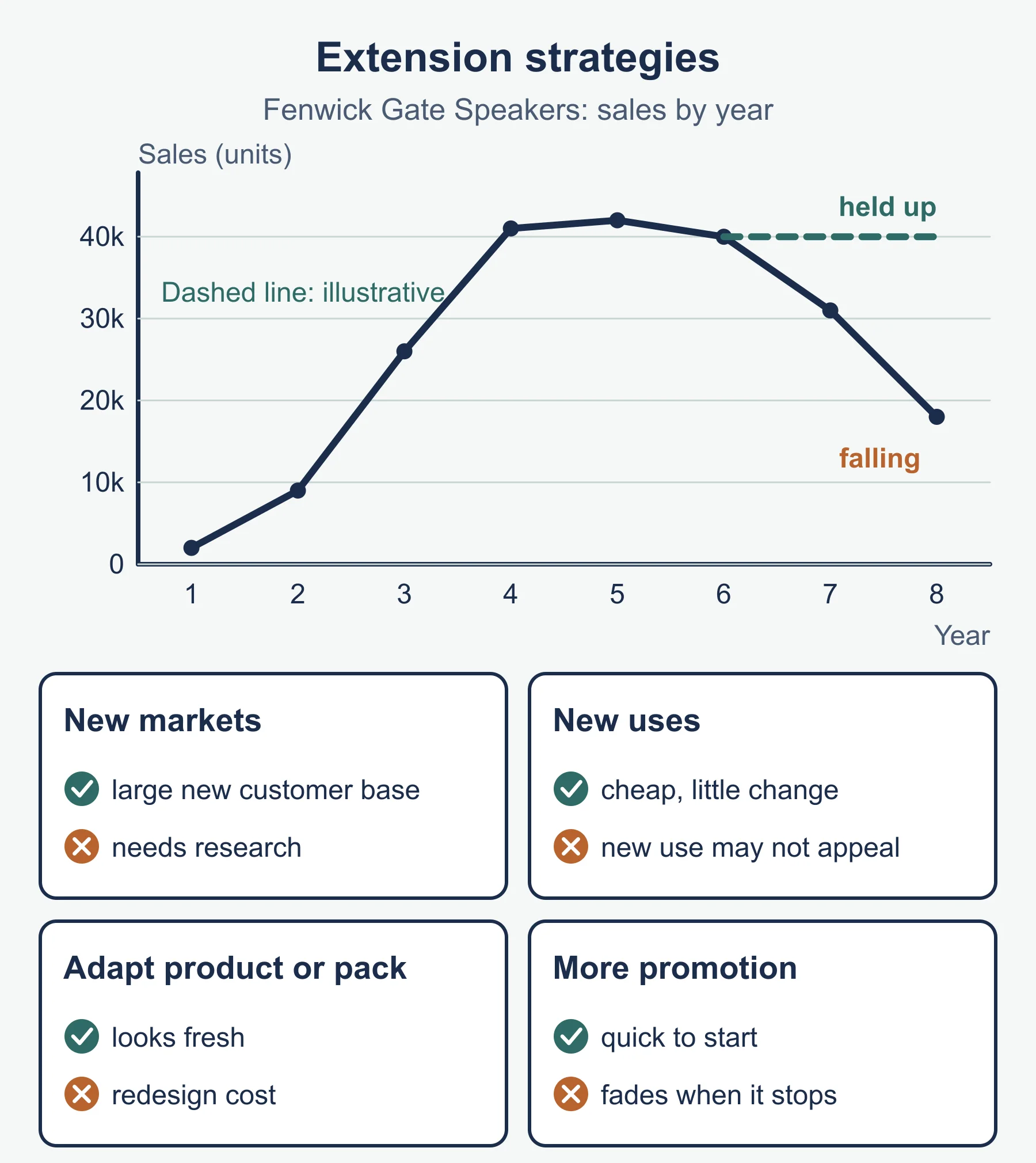
| New markets | The product still sells well somewhere else | Research and distribution cost |
| New uses | The product has features that suit another need | Customers may not accept the new use |
| Adapt product or packaging | The product looks dated | Redesign cost |
| More advertising or sales promotion | Customers know the product but are drifting | Effect fades when spending stops |
3.3.2 Price in a page
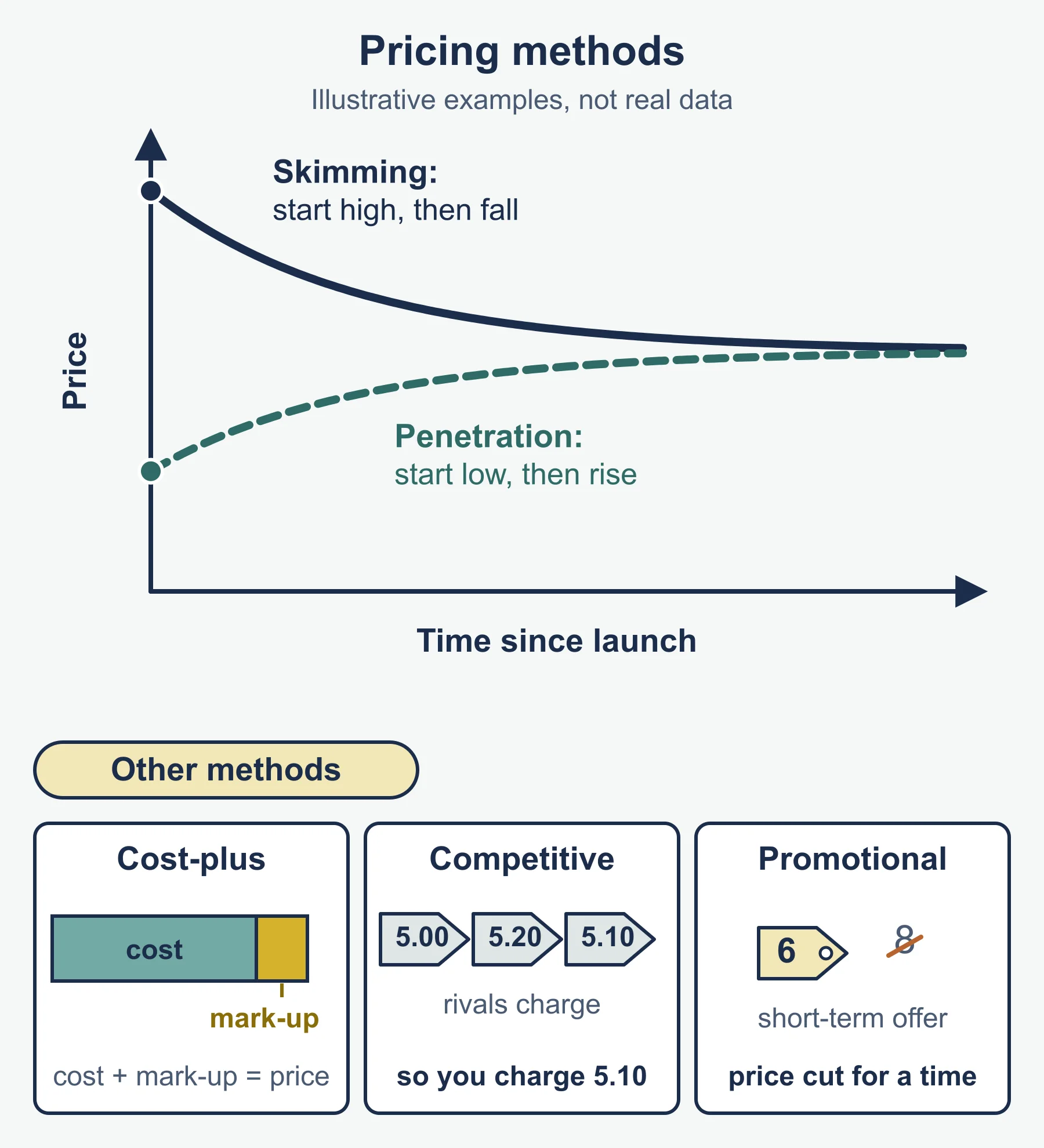
| Method | Memory hook | Best when |
|---|---|---|
| Cost-plus | Cost then add a percentage | A business needs a quick, safe price |
| Competitive | Follow the rivals | Products are similar and prices are visible |
| Penetration | Low to get in | The business wants market share fast |
| Skimming | High to start | The product is new or unique |
| Dynamic | Moves with demand | Demand changes by time or customer |
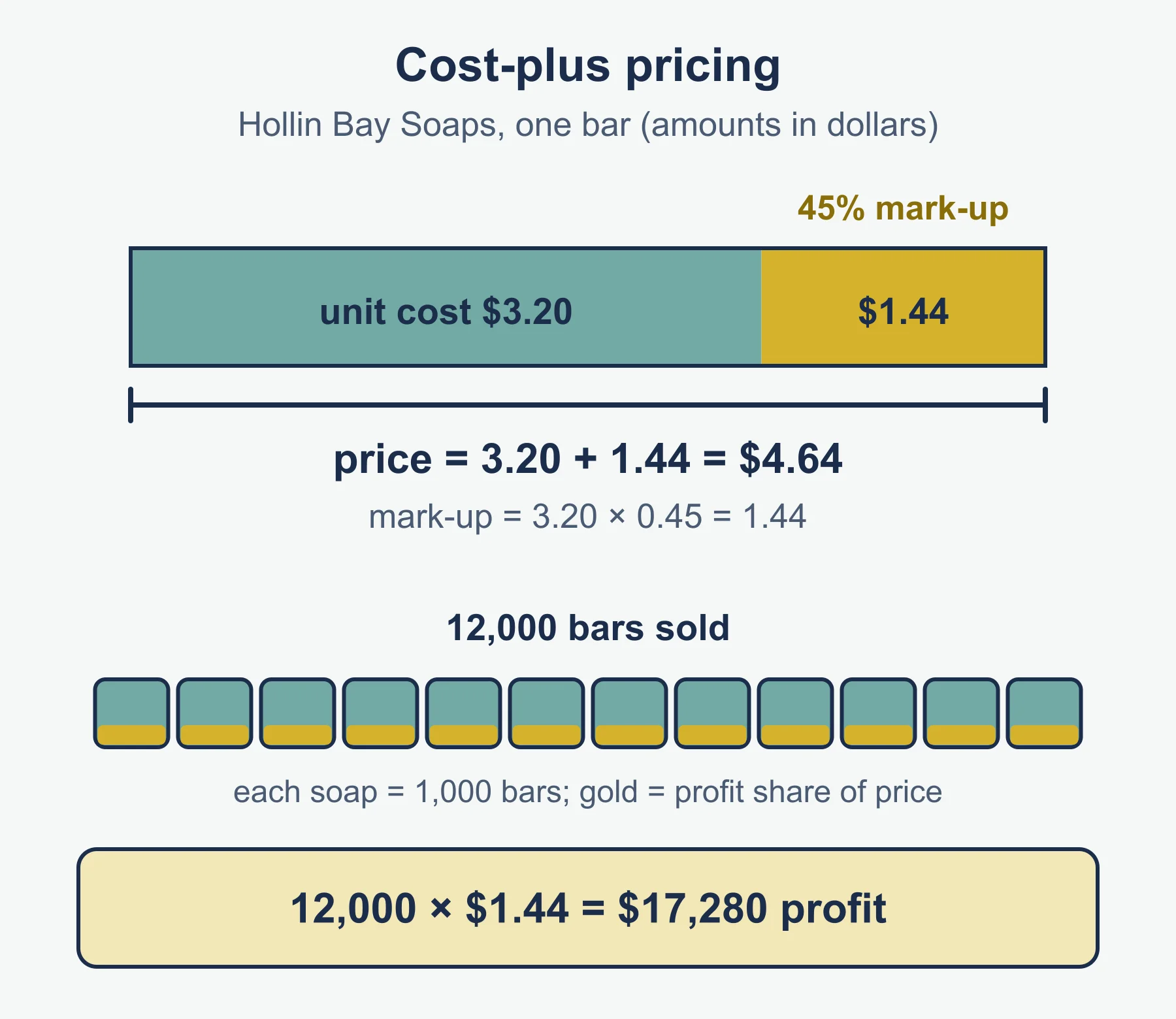
Standard form for cost-plus: price = unit cost × (1 + mark-up percentage as a decimal). The syllabus does not print it, so quote it as the standard form.
Worked reminder. Unit cost 14, mark-up 50%: price = 14 × 1.5 = 21. Profit per unit 7. Selling 300 gives 2,100 profit (amounts in dollars).
Judging a pricing method. Ask three things. What does the business want (profit now or share)? Who are the customers (price-sensitive or not)? How many rivals are there? Then pick a method, give the reason from the case, and state one drawback.
3.3.3 Place in a page
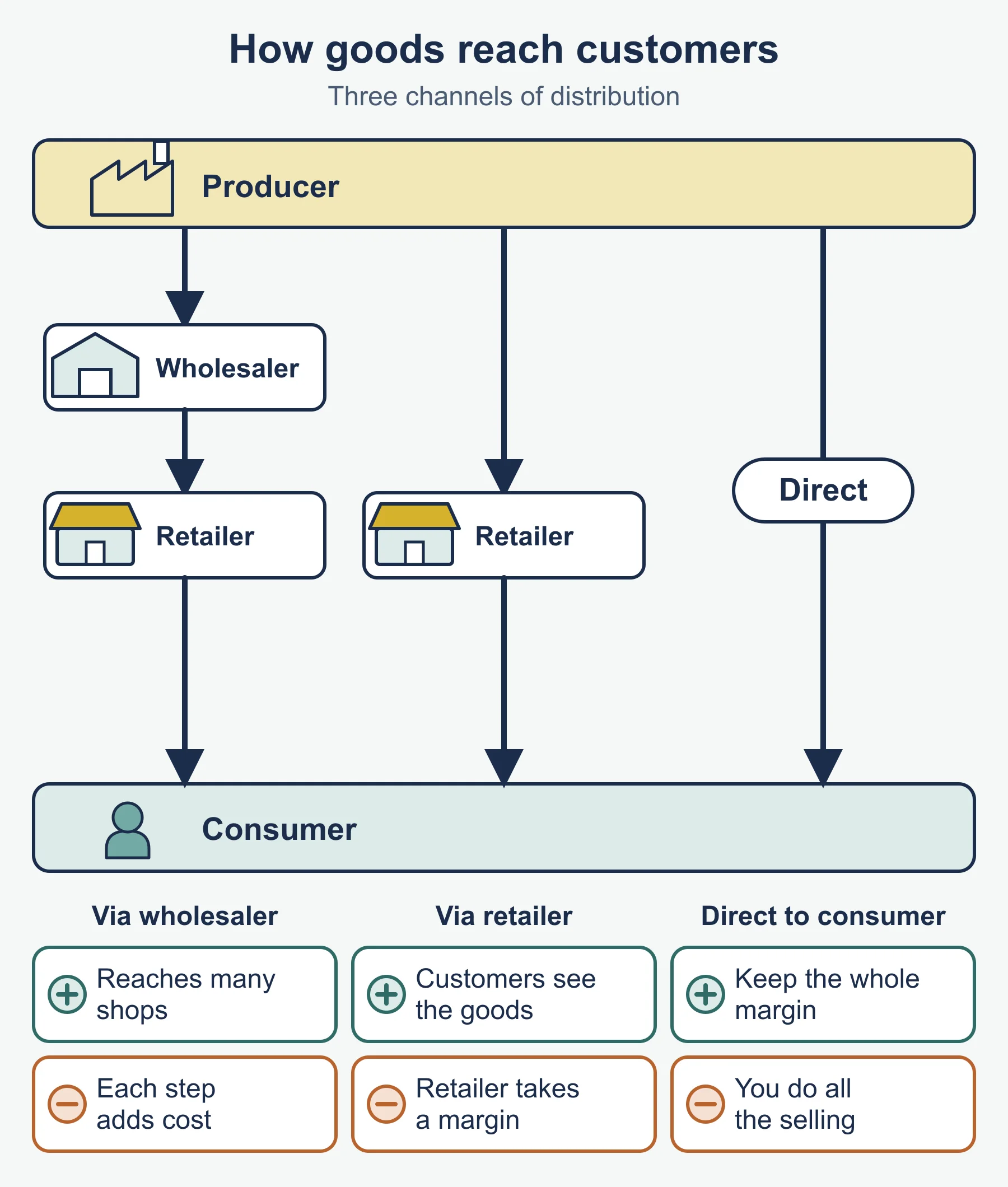
| Channel | Remember |
|---|---|
| Direct | Whole margin; you do the storage, delivery and selling |
| Retailer | Reach and display; retailer takes a margin |
| Wholesaler | Bulk breaking; one more margin |
| Agent | Local knowledge; commission |
Method for a channel recommendation
- Name the product type: perishable, bulky, custom, mass market.
- Name the customer: where they are and how they like to buy.
- Choose the channel that fits both.
- Justify against one alternative, then give one drawback.
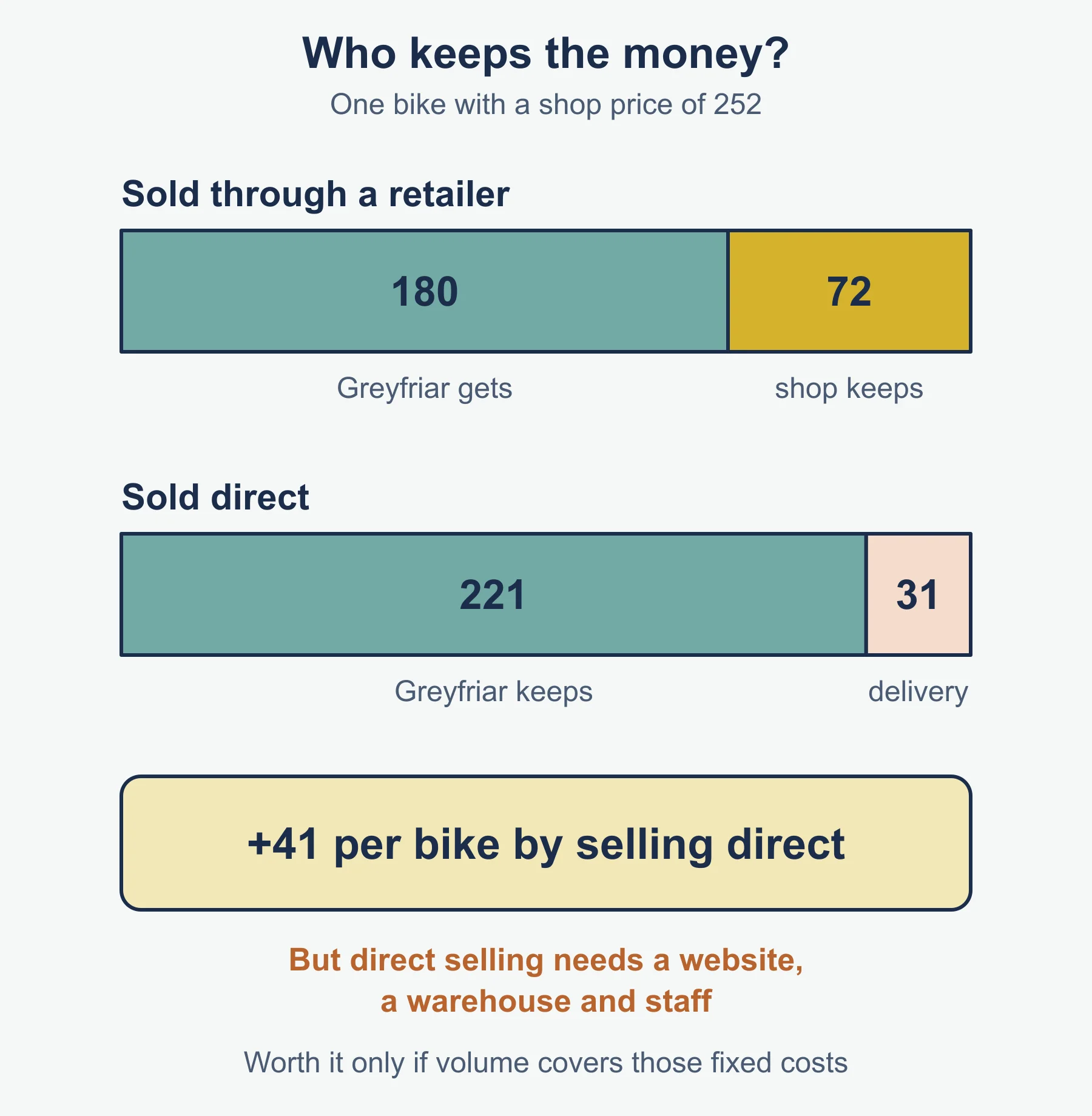
Margins reminder. Retailer buys at 150 and adds 40%: shop price 150 × 1.4 = 210, retailer keeps 60.
3.3.4 Promotion in a page
- Reasons: inform, persuade, increase sales, build or keep brand image, respond to rivals.
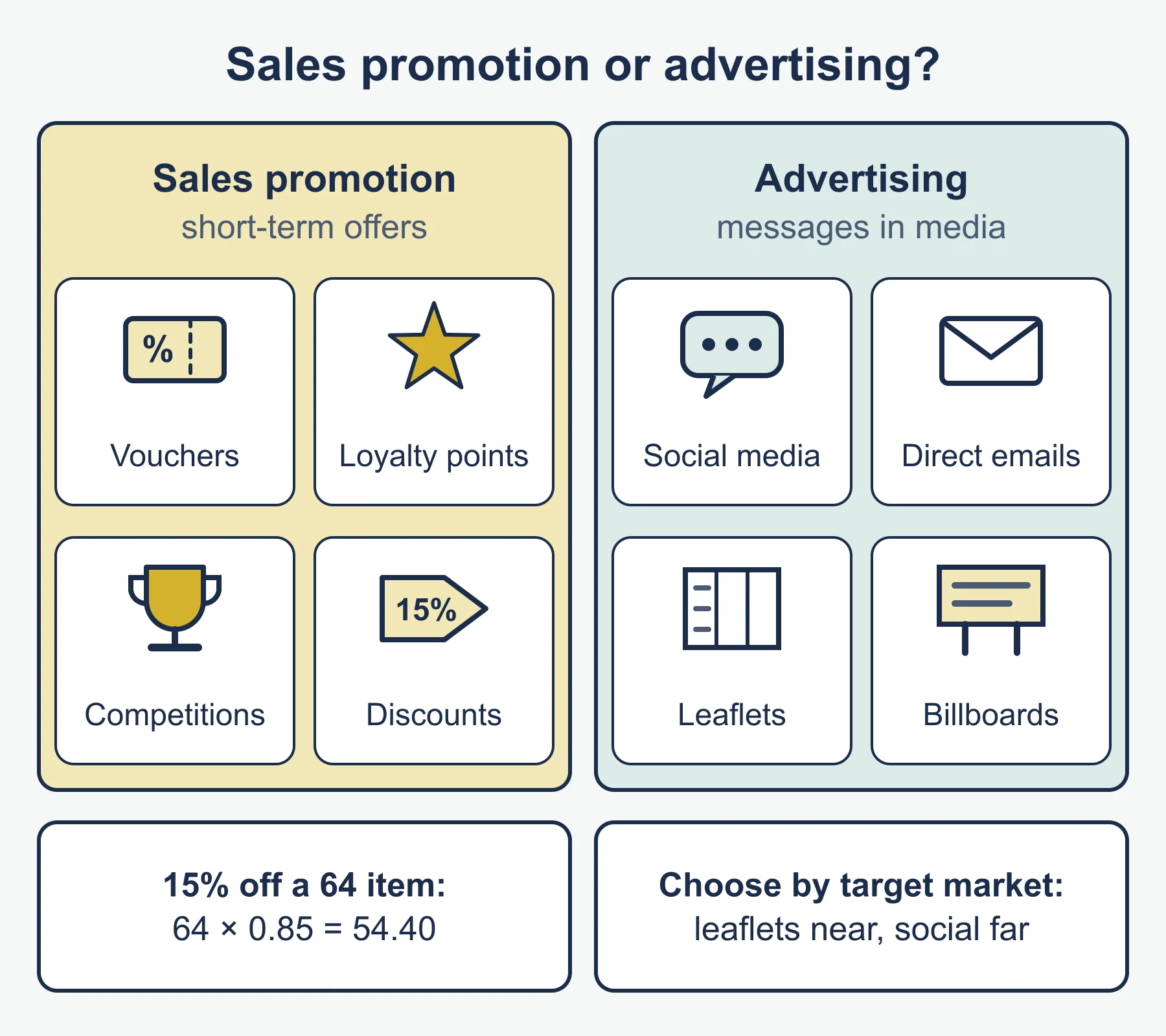
- Sales promotion methods: vouchers, reward schemes, competitions, special offers or discounts.
- Advertising methods: social media, direct or targeted emails, leaflets, billboards.
- Sales promotion is a short-term offer. Advertising is a message in a medium.
| Method | Fits best | Main weakness |
|---|---|---|
| Social media | Young, online target group | Needs steady effort |
| Targeted emails | Existing customers | May be treated as junk |
| Leaflets | Local customers | Hard to target |
| Billboards | Mass awareness in busy places | Costly; short message only |
| Vouchers | Winning new buyers | Cost of discount |
| Reward schemes | Repeat purchase | Admin and reward cost |
| Competitions | Building interest | Few winners |
| Discounts | Clearing stock fast | Cuts profit per unit |
Discount reminder. 10% off 120: 120 × 0.9 = 108.
3.3.5 Ecommerce in a page
Examples: mobile or internet banking, online shopping, online ticketing.
| For | Advantages | Disadvantages |
|---|---|---|
| Business | Wider market; lower premises cost; always open | Website and security cost; delivery issues; fraud; rivals one click away |
| Customer | Convenient; compare prices; wider choice | Cannot inspect goods; wait for delivery; security worries; needs internet |
3.3.6 Marketing strategy
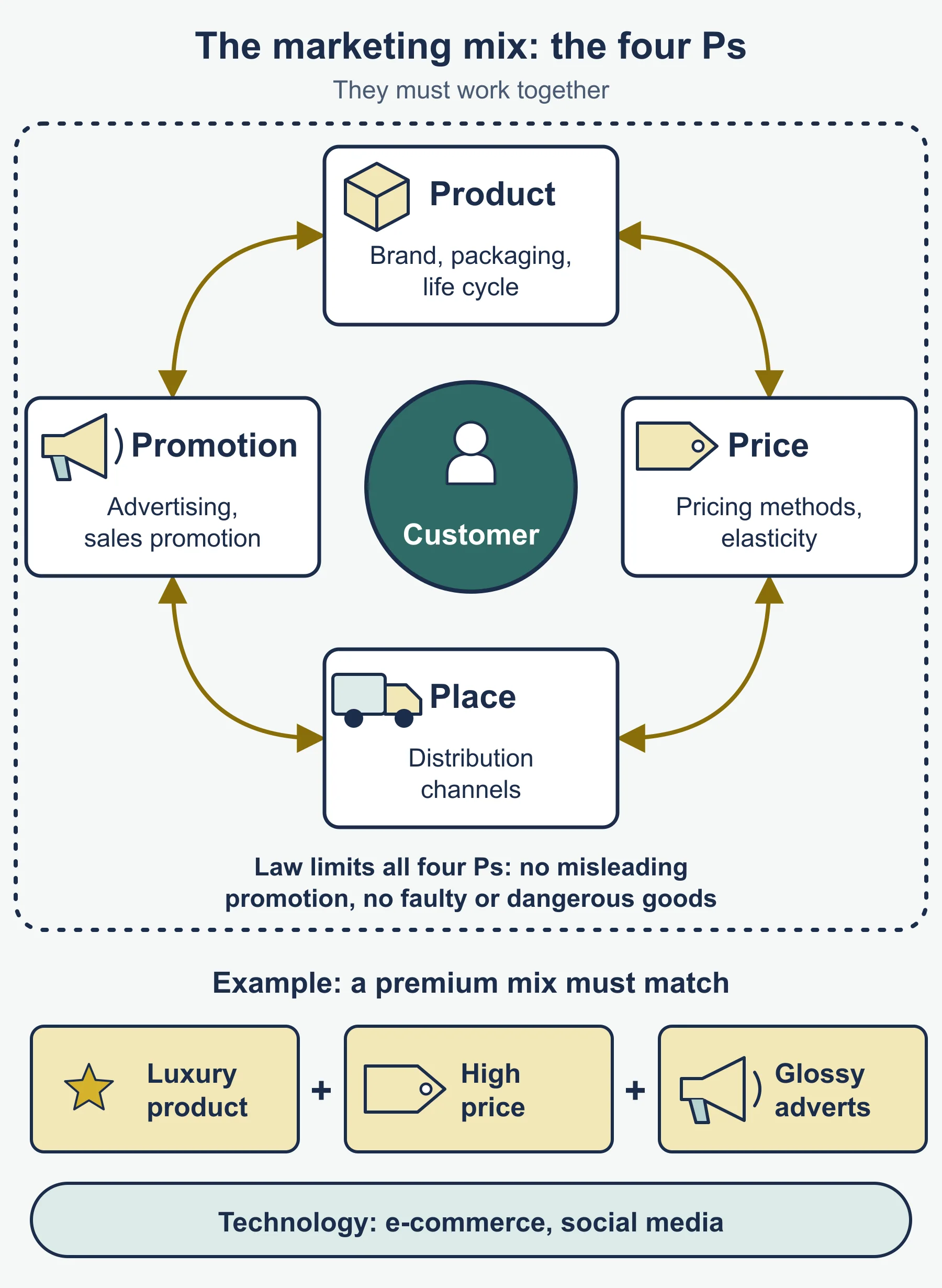
- The elements must fit each other and the target market.
- Importance varies: price for basic goods, product and brand for differentiated goods, place for convenience purchases, promotion for new or unknown products.
Method for a marketing mix recommendation
- State the target market from the case.
- Give one decision for each of product, price, place and promotion.
- Link each decision to evidence.
- Show the four fit together.
- Say which element matters most here, with a reason.
3.3.7 Entering new markets in other countries
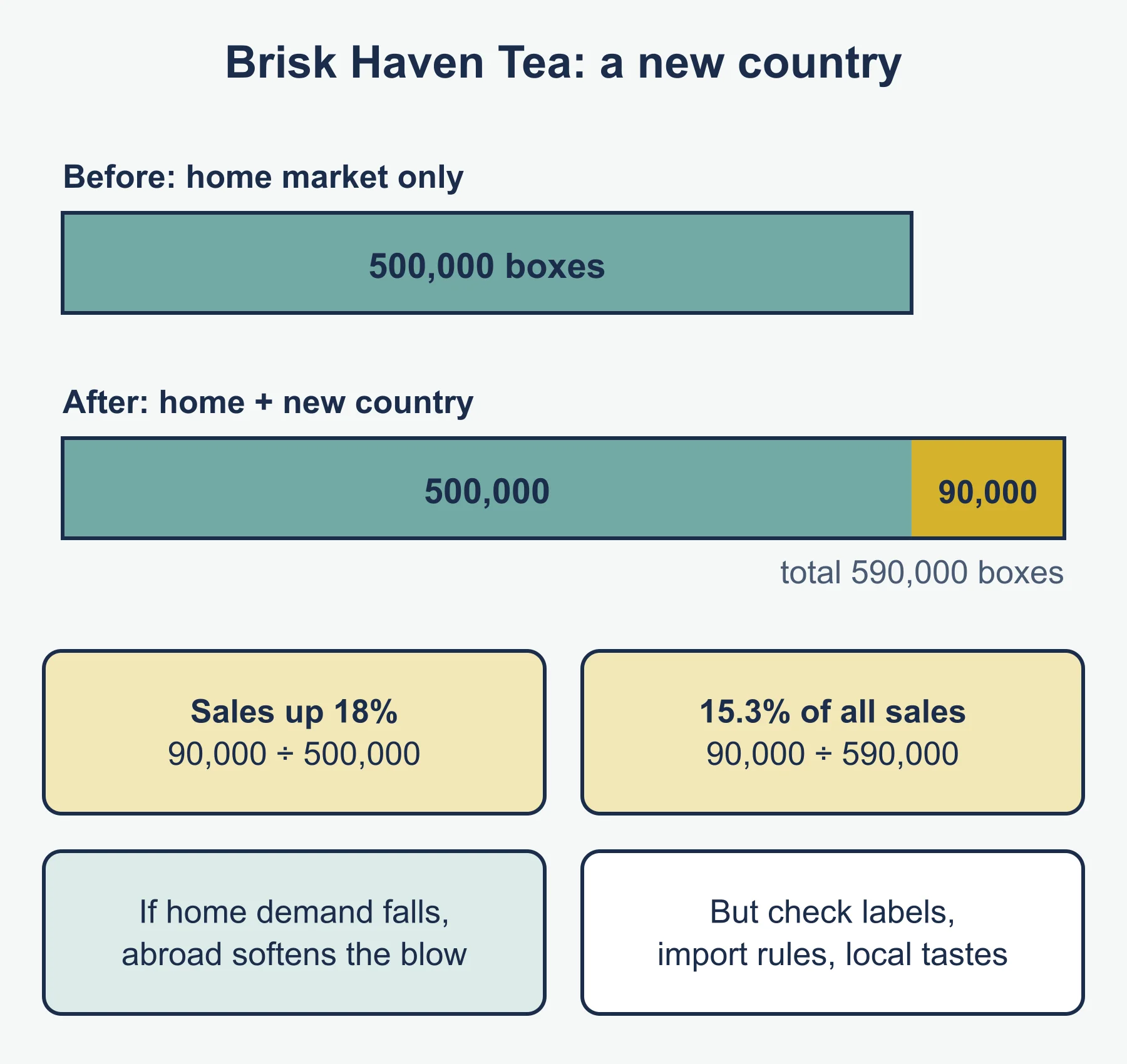
| Advantages | Disadvantages |
|---|---|
| Increase sales | Cultural differences |
| Spread risk | Lack of knowledge |
| Longer product life | Legal requirements |
| Possible lower unit costs | Transport and exchange costs |
Percentage change. (new - old) / old × 100. Sales from 8,000 to 10,000 is a 25% rise.
Must-know distinctions
- Penetration: low price to gain share. Skimming: high price to gain profit from early buyers.
- Maturity: sales high and flat. Decline: sales falling.
- Sales promotion: short-term offer. Advertising: message to inform or persuade.
- Wholesaler: sells to retailers. Retailer: sells to the public. Agent: arranges sales for commission.
- Extension strategy: acts on an existing product. New product: a different product.
Command words for this topic
| Command word | What to do | Marketing mix example |
|---|---|---|
| State, identify | Give the answer briefly | State one extension strategy |
| Define | Give the meaning in one sentence | Define dynamic pricing |
| Calculate | Show the working and the unit | Calculate a cost-plus price |
| Explain | Give a point and a reason | Explain why packaging matters for a food product |
| Analyse | Develop a chain: point, cause, effect | Analyse how a falling price could change sales and profit |
| Recommend, justify | Choose one option, give reasons from the case, say why others are weaker | Justify a distribution channel for a small producer |
| Evaluate | Weigh both sides and reach a judgement | Evaluate whether skimming suits a new product |
For recommendation questions, one clear choice with two reasons from the case is stronger than a list of every option. Finish with a judgement sentence that begins with “Overall” or “Therefore” and names the deciding factor, for instance the size of the target market or the budget available.
Quick self-test
- State the four stages of the product life cycle.
- Define brand image.
- State two roles of packaging.
- Name two extension strategies.
- A unit costs 25. Use a 30% mark-up to find the cost-plus price.
- Which pricing method sets a high price at launch?
- A producer sells to a retailer at 150 and the retailer adds 40%. What is the shop price?
- A coat priced at 120 is offered with 10% off. What is the new price?
- Give two disadvantages of ecommerce for customers.
- Give two advantages of entering a new country.
- Sales rise from 8,000 to 10,000 units. Calculate the percentage change.
- State the difference between sales promotion and advertising.
Answers
- Introduction, growth, maturity, decline.
- The image customers have of a brand, such as its quality and values.
- Any two of: protect goods, keep them fresh, give information, attract attention, show the brand image.
- Any two of: new markets, new uses, adapting the product or packaging, increased advertising or sales promotion.
- 25 × 1.3 = 32.50.
- Skimming.
- 150 × 1.4 = 210.
- 120 × 0.9 = 108.
- Any two of: cannot see or try goods, delivery delay, worry about security of payment, privacy worries, no internet means no access.
- Any two of: increase sales, spread risk, longer product life, possible lower costs per unit.
- (10,000 - 8,000) / 8,000 × 100 = 25% rise.
- Sales promotion is a short-term offer to boost sales, for example a voucher. Advertising is a message in a medium, for example social media, to inform or persuade.
Where marks are usually lost
- Naming a pricing method or channel without a reason tied to the business in the question.
- Giving only advantages when the command word asks for a recommendation and justification.
- Mixing up penetration and skimming.
- Calling a flat peak “decline” on a life cycle diagram.
- Writing “advertise more” as the only extension strategy and ignoring a better fit such as new markets.
- Leaving out units or currency in a calculation.
- Describing ecommerce for the business when the question asks about customers, or the other way round.
- Writing a list of four Ps with no judgement about which matters most.
- Giving a general description of a method with no link to the target customers or the product.
Frequently asked questions
What is the difference between penetration and skimming pricing? Penetration pricing sets a low price to gain market share. Skimming sets a high price to gain profit from early buyers.
What is the difference between sales promotion and advertising? Sales promotion is a short-term offer, such as vouchers, reward schemes, competitions or discounts. Advertising is a message in a medium, such as social media, targeted emails, leaflets or billboards, used to inform or persuade.
What is the difference between maturity and decline in the product life cycle? In maturity, sales are high and flat at their peak. In decline, sales are falling.
What does packaging do for a product? Packaging protects and preserves the product, informs customers, attracts attention and reflects the brand.
Official syllabus
Cambridge IGCSE Business 0264 syllabus for examination in 2027, 2028 and 2029, published by Cambridge University Press & Assessment, section 3.3 Marketing mix.
Get free revision emails (optional)
Occasional emails with practice questions, worked explanations and links to free resources for the qualification and subjects you choose. No spam, and you can unsubscribe from any email. The free tools on this site never need an email.
Related resources
-
Study guides
IGCSE Business: Legal controls (Cambridge 0264)
A full study guide to Cambridge IGCSE Business 0264 section 3.4: why legal controls protect customers and how they affect marketing decisions.
Business · Cambridge · IGCSE
Read guide -
Practice questions
IGCSE Business: Legal controls (Cambridge 0264) – Practice Questions
Twelve original practice questions with worked answers on Cambridge IGCSE Business 0264 section 3.4: legal controls on marketing.
Business · Cambridge · IGCSE
Try questions -
Revision notes
IGCSE Business: Legal controls (Cambridge 0264) – Revision Notes
Condensed revision notes for Cambridge IGCSE Business 0264 section 3.4: legal controls, misleading promotion, faulty goods and their effects on marketing.
Business · Cambridge · IGCSE
Revise topic
Related articles
-
teaching
A Level tuition in Dubai: Cambridge or Pearson Edexcel International A Level?
Schools in Dubai and Abu Dhabi teach either Cambridge International AS & A Level or Pearson Edexcel International A Level. How the two are structured, why it matters for tuition, and how online classes from Lahore work.
9 October 2026
-
curriculum guides
Choosing subjects at IGCSE and A Level
How subject choices at 14 and 16 affect university options later, and how to keep pathways open without overloading a timetable.
28 July 2026
Studying this with a teacher
Working through Business IGCSE?
This page is free and stays free. If you would rather be taught it, Marlbridge runs Business classes one-to-one and in small groups of up to 15, online in your own time zone. The first trial class is free. WhatsApp replies within an hour (8am–11pm Pakistan time, every day); email the same day.
Cambridge Business teachers at Marlbridge

