
Study Guides
IGCSE Business: Technology and production of goods and services and related topics (Cambridge 0264)
Study guide to Cambridge IGCSE Business 0264 sections 4.2 and 4.3: technology in production, service-sector productivity and sustainable production.
- Subject
- Business
- Level
- IGCSE
- Topic
- Operations management
- Author
- Marlbridge Academic Team
- Updated
- Reviewed by
- Salman Ahmad (what this means)
Aligned to Cambridge IGCSE Business (0264), For examination in 2027, 2028 and 2029. Official specification .
Syllabus page (what it covers and how it is assessed): Cambridge IGCSE Business.
Syllabus points this page covers
0264
- 4.2 Technology and production of goods and services
- 4.3 Sustainable production of goods and services
Found an error? Report a correction.
Need help with this topic? Request a free trial class for IGCSE Business (0450 / 0264).
This guide covers sections 4.2 and 4.3 of the Cambridge IGCSE Business 0264 syllabus for examination in 2027, 2028 and 2029: Technology and production of goods and services, and Sustainable production of goods and services. Both sit in topic 4, Operations management. All businesses in the examples are invented. For condensed recall use the revision notes, then test yourself with the practice questions. The course hub and the printable checklist track your progress, and the free diagnostics show where to start.
What the syllabus asks you to know
| Section | What you must be able to do |
|---|---|
| 4.2.1 | Explain how technology is changing production methods through automation and mechanisation, for example Computer-Aided Manufacture (CAM) and 3D printing |
| 4.2.1 | Explain how technology improves productivity in the service sector, for example contactless payments |
| 4.2.1 | Give advantages and disadvantages of changes in technology for businesses and for employees |
| 4.3.1 | Explain how a business can be more sustainable: renewable energy, fewer resources or less waste, reusing, recycling, environmentally friendly products and environmentally friendly packaging |
| 4.3.1 | Give advantages and disadvantages of a business becoming more sustainable |
Both sections fit the Paper 1 and Paper 2 style of working: knowledge first, then application to the business in the question, then analysis and a judgement. The syllabus lists the examples above with “e.g.”, so be ready to use other sensible examples of the same ideas.
4.2.1 Technology in the production of goods and services
Mechanisation and automation
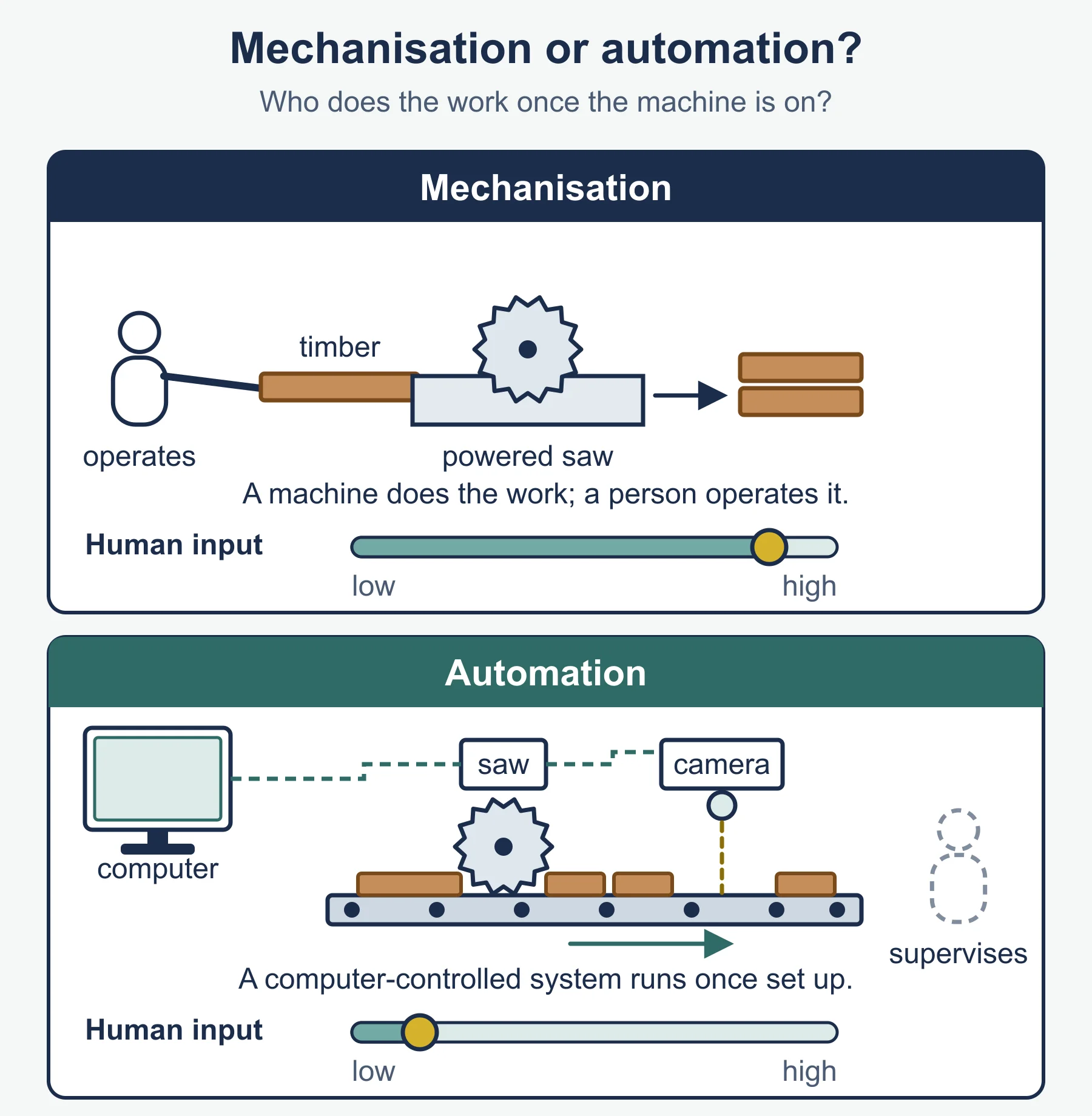
Production once relied mainly on people using hand tools. Technology has changed that in two steps. The syllabus names both words, but does not give a definition, so these are the standard forms:
- Mechanisation is the use of machines to do work that people used to do by hand. A person usually still operates or supervises the machine.
- Automation is the use of machines or computer-controlled systems that carry out tasks with little or no human input once they are set up.
The difference is in how much a person is involved. A worker feeding timber into a powered saw is mechanisation. A line where a computer decides what to cut, moves the pieces and checks them is automation.
Computer-Aided Manufacture (CAM)
Computer-Aided Manufacture (CAM) uses computers to control machines and equipment in the making of a product. A design is turned into instructions, and the machine follows them exactly each time.
Why this matters for a business:
- It produces identical items, so quality is more consistent.
- It can run for long periods without breaks, so output rises.
- It often reduces waste, because cutting is precise.
- The machines are expensive to buy and need trained people to programme and repair them.
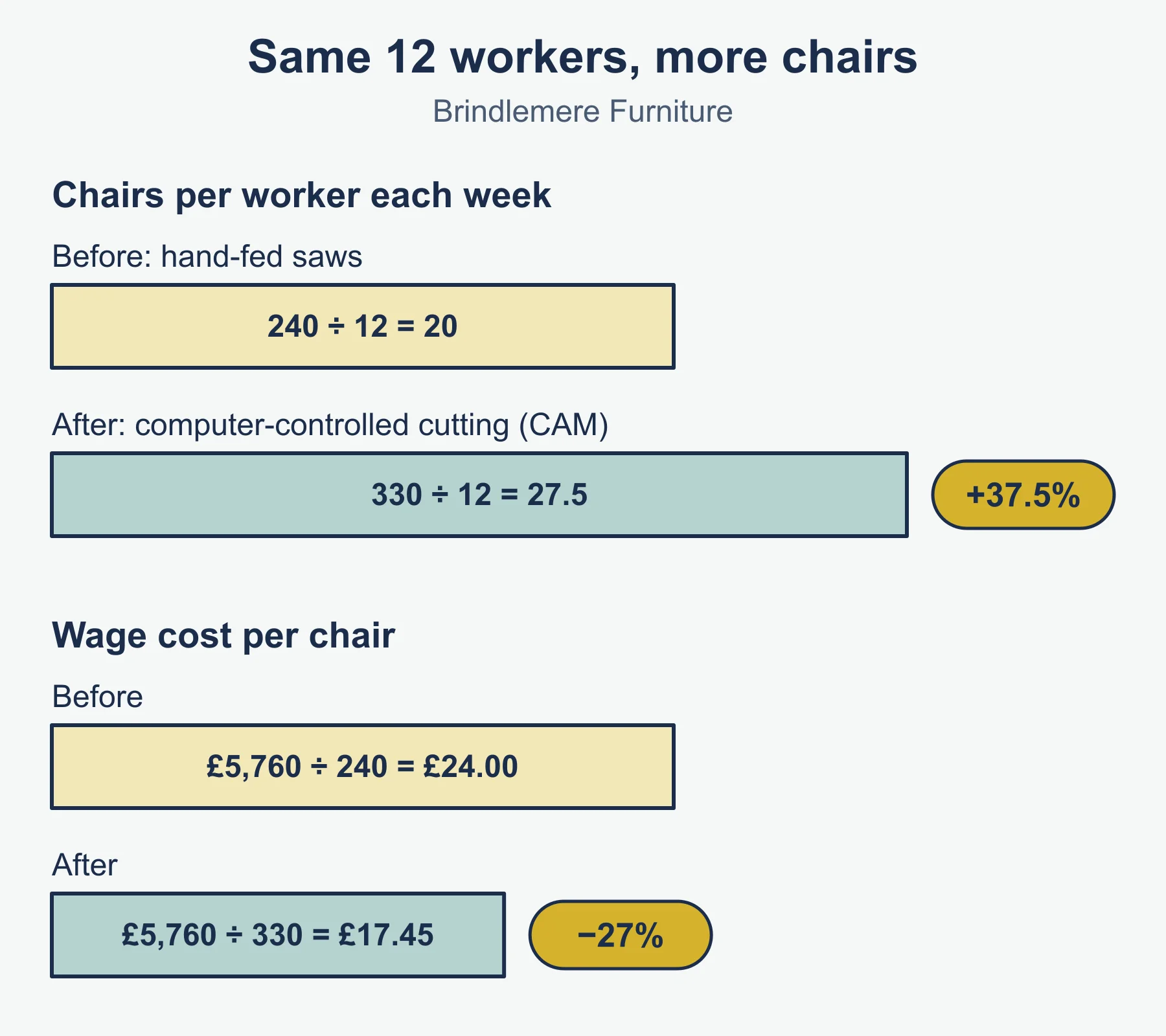
Worked example: Brindlemere Furniture. Brindlemere employs 12 workers who make 240 chairs a week using hand-fed saws. It buys computer-controlled cutting machines. With the same 12 workers, output rises to 330 chairs a week. The standard form of labour productivity is output divided by the number of employees.
- Before: 240 ÷ 12 = 20 chairs per worker per week.
- After: 330 ÷ 12 = 27.5 chairs per worker per week.
- Percentage increase: (27.5 − 20) ÷ 20 × 100 = 37.5%.
Each worker is paid £480 a week, so the weekly wage bill is 12 × £480 = £5,760. Wage cost per chair falls from £5,760 ÷ 240 = £24.00 to £5,760 ÷ 330 = £17.45 (to the nearest penny). That is a clear gain, but the question for the owner is whether the saving is enough to justify the cost of the machines. Application means using the numbers like this, not just naming CAM.
3D printing
3D printing builds an object layer by layer from a digital design. It is a form of technology-led production that suits one-off items and small runs, because it needs no special mould or tool for each new design.
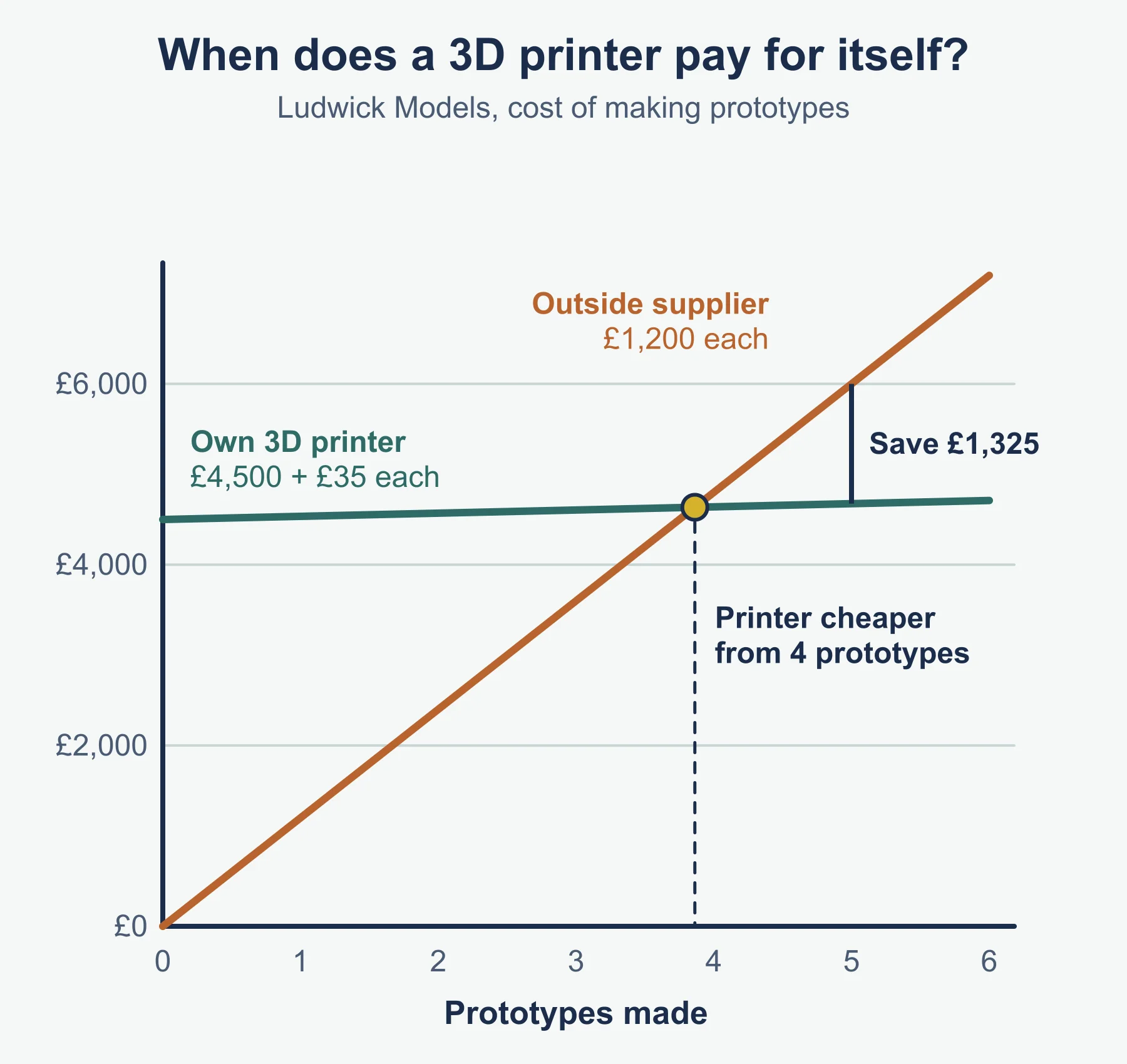
Worked example: Ludwick Models. Ludwick designs product prototypes for other firms. Having prototypes made by an outside supplier costs £1,200 each. Buying a 3D printer costs £4,500, and the material for each prototype costs £35.
- Five prototypes by the outside supplier: 5 × £1,200 = £6,000.
- Five prototypes by 3D printer: £4,500 + (5 × £35) = £4,675.
- Saving: £6,000 − £4,675 = £1,325.
The printer pays for itself quickly if Ludwick makes four or more prototypes (the printer’s fixed outlay of £4,500 is spread over more items, and each extra prototype costs only £35 rather than £1,200). Time may also fall: if the printer makes a prototype in days rather than the weeks an outside supplier needs, a design can be changed and tested sooner. The limits are that 3D printing may be slow for large quantities, and the range of materials and the size of items can be restricted.
Technology in the service sector
Technology does not only change factories. Services also use it to raise productivity, meaning more output from the same inputs. The syllabus example is contactless payments.
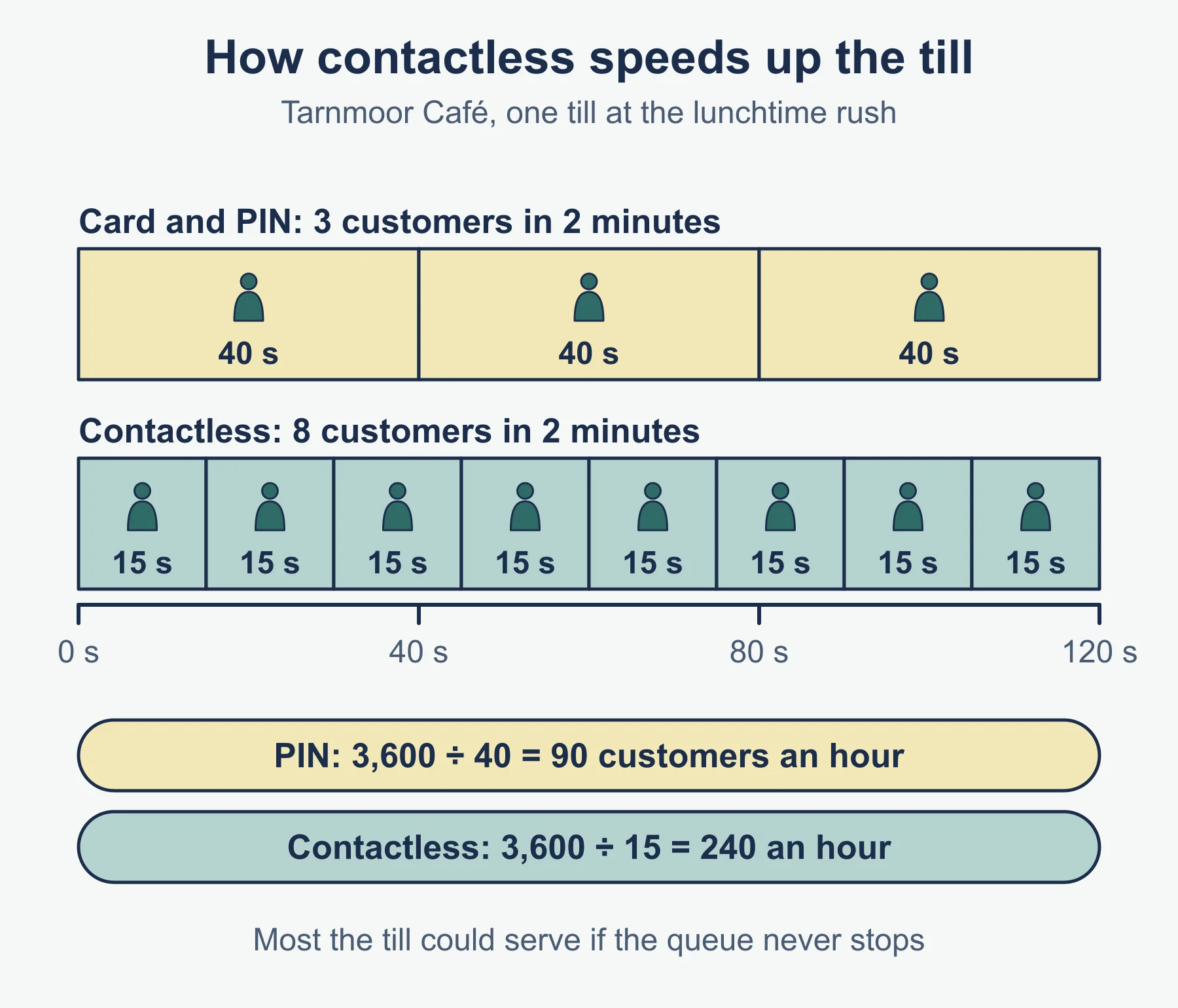
Worked example: Tarnmoor Café. At the lunchtime rush one till serves customers one at a time. Taking a card with a PIN takes 40 seconds per customer. Contactless takes 15 seconds.
- Customers per hour with PIN: 3,600 ÷ 40 = 90.
- Customers per hour with contactless: 3,600 ÷ 15 = 240.
- Increase: 150 customers, or about 167%.
These are the most the till could handle if customers were queueing without a break, so real figures are lower. The point is that shorter transactions let the same member of staff serve more people. Other service-sector examples are online booking, self-service tills, and mobile banking. Benefits: faster service, fewer errors, lower labour cost per customer and 24-hour availability. Problems: system failures, security risks such as fraud, and customers who are not comfortable with the technology.
Advantages and disadvantages of technology
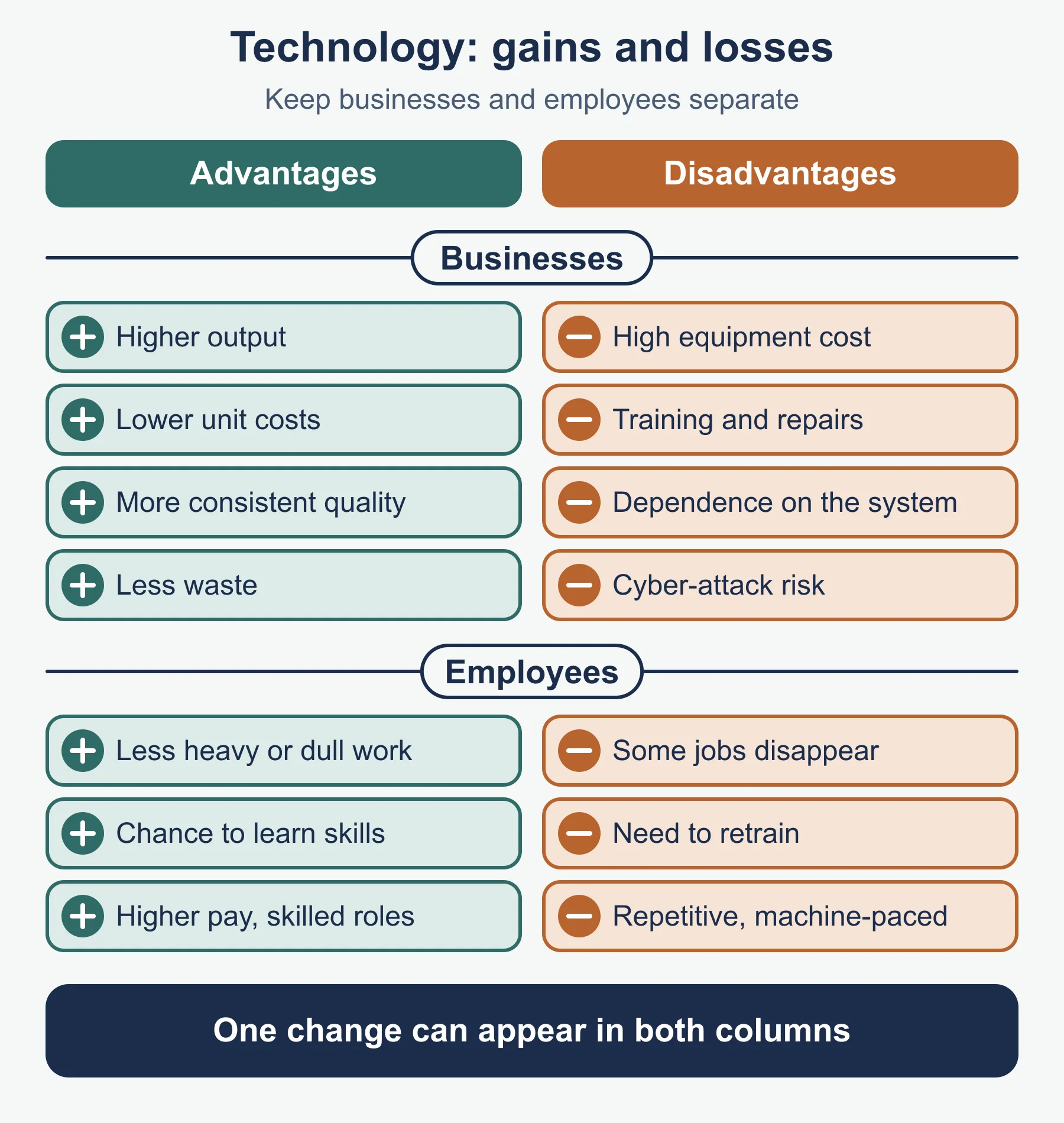
The syllabus asks about both businesses and employees. Keep the two groups separate in your answer.
| Advantages | Disadvantages | |
|---|---|---|
| Businesses | Higher output and productivity; lower unit costs; more consistent quality; faster response to customers; less waste | High cost of buying and installing equipment; training costs; repairs and breakdowns; dependence on the system; risk of cyber-attack in service businesses |
| Employees | Less heavy, dull or dangerous work; chances to learn new skills; possibly higher pay for skilled technical roles | Some jobs disappear; need to retrain; fear of redundancy; work may become repetitive or machine-paced |
Notice that one change can appear in both columns. Cutting machines raise output (a business gain) and may replace workers (an employee loss). In a case study, decide which effect matters most for the business described. A small firm with little cash may find the cost the main issue. A firm struggling to hire skilled staff may value automation more.
4.3.1 Sustainable production of goods and services
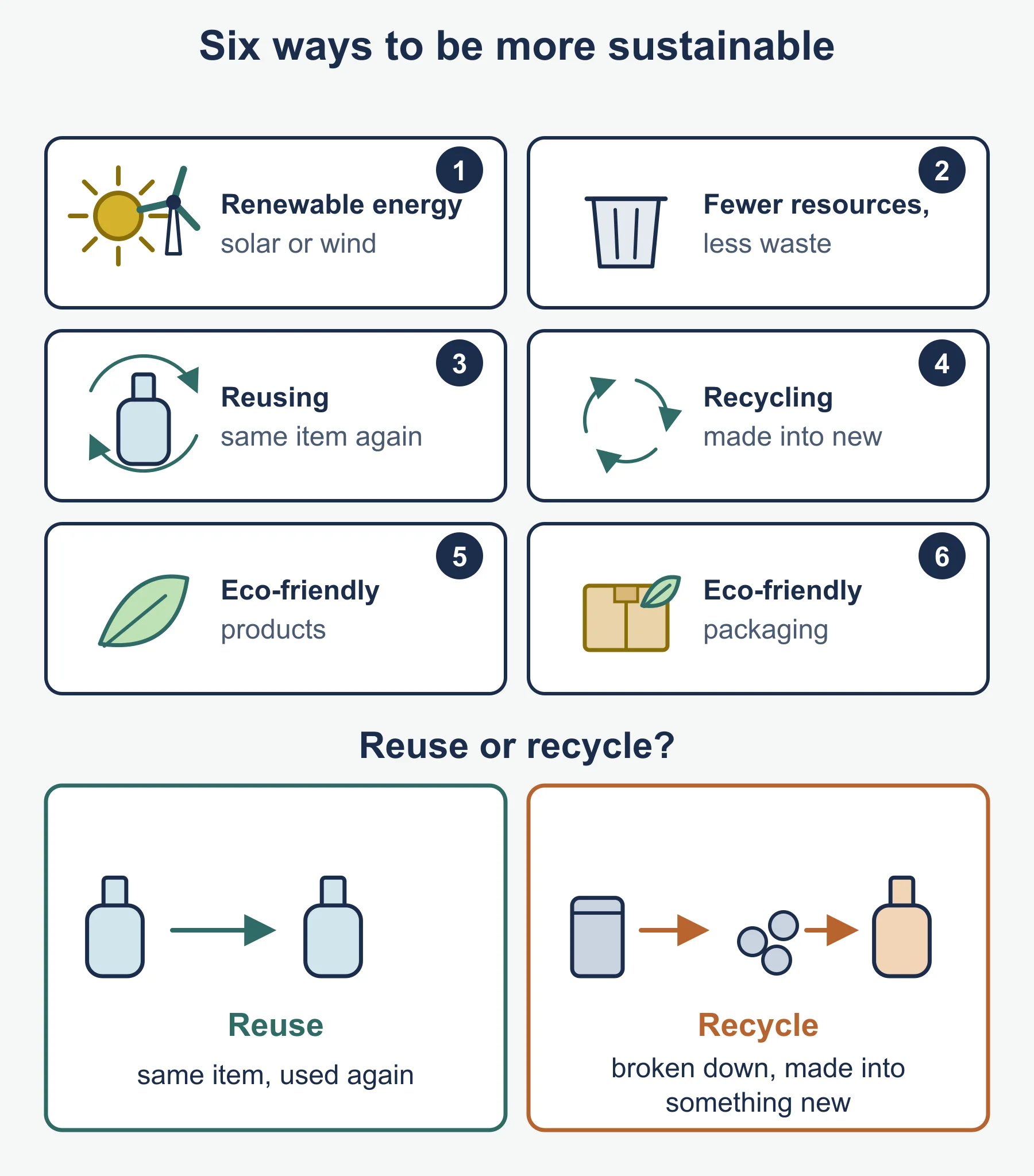
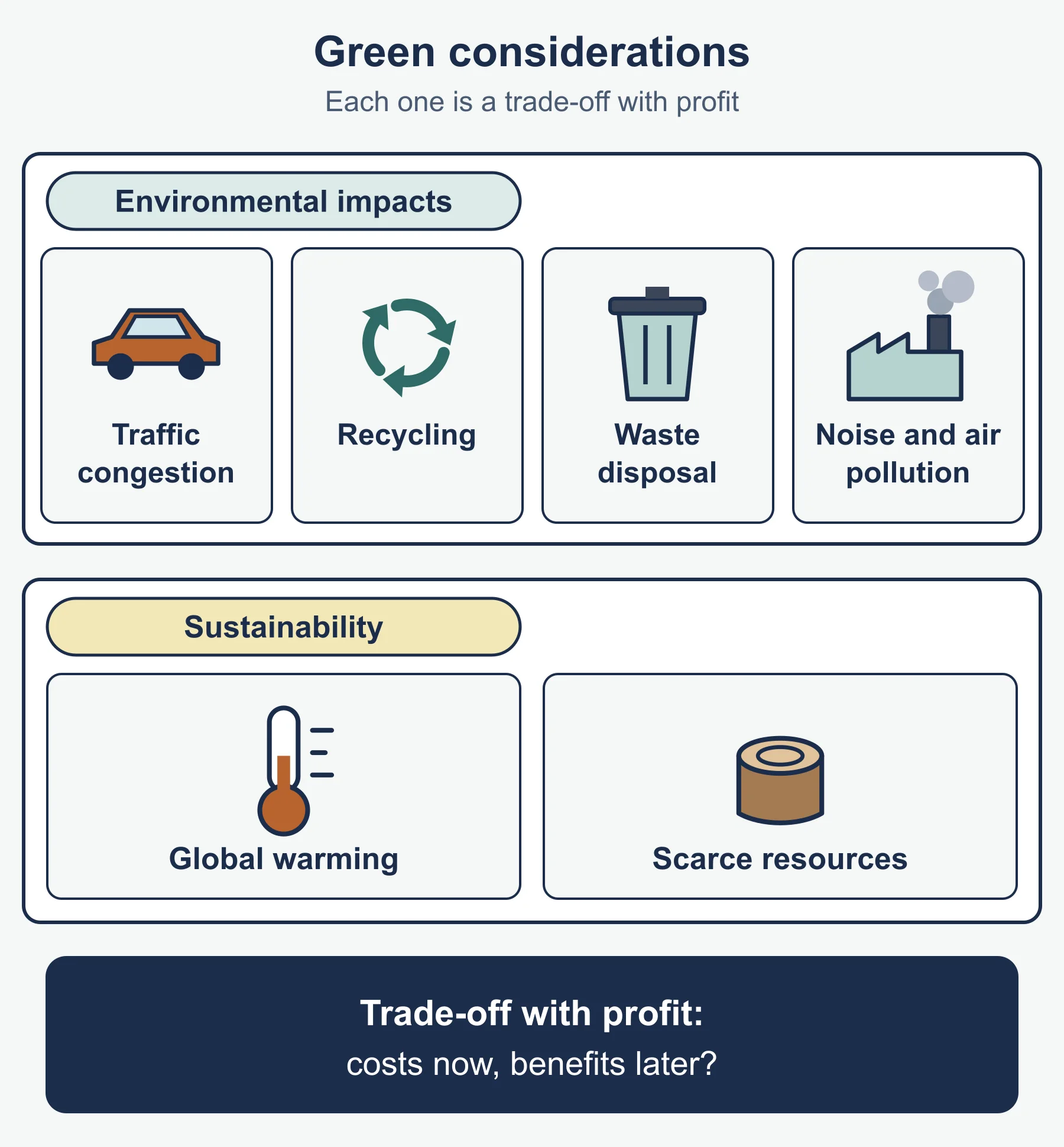
Sustainable production means making goods and providing services in a way that meets today’s needs without using up resources or harming the environment so that future production is damaged. The syllabus lists six ways a business can be more sustainable.
- Using renewable energy. Power from sources that are replaced naturally, such as solar or wind, instead of fossil fuels.
- Using fewer resources and creating less waste. Careful design, accurate cutting and better stock control mean less material is bought and thrown away.
- Reusing. Using an item or part again for the same or a new purpose, such as refilling containers.
- Recycling. Turning waste into new material, for example melting scrap metal or pulping paper.
- Developing environmentally friendly products. Products that use less energy in use, last longer, can be repaired or are made from safer materials.
- Using environmentally friendly packaging. Less packaging, or packaging that is recyclable, biodegradable or made from recycled material.
Reusing and recycling are different. Reusing keeps the item as it is. Recycling breaks it down and makes something new.
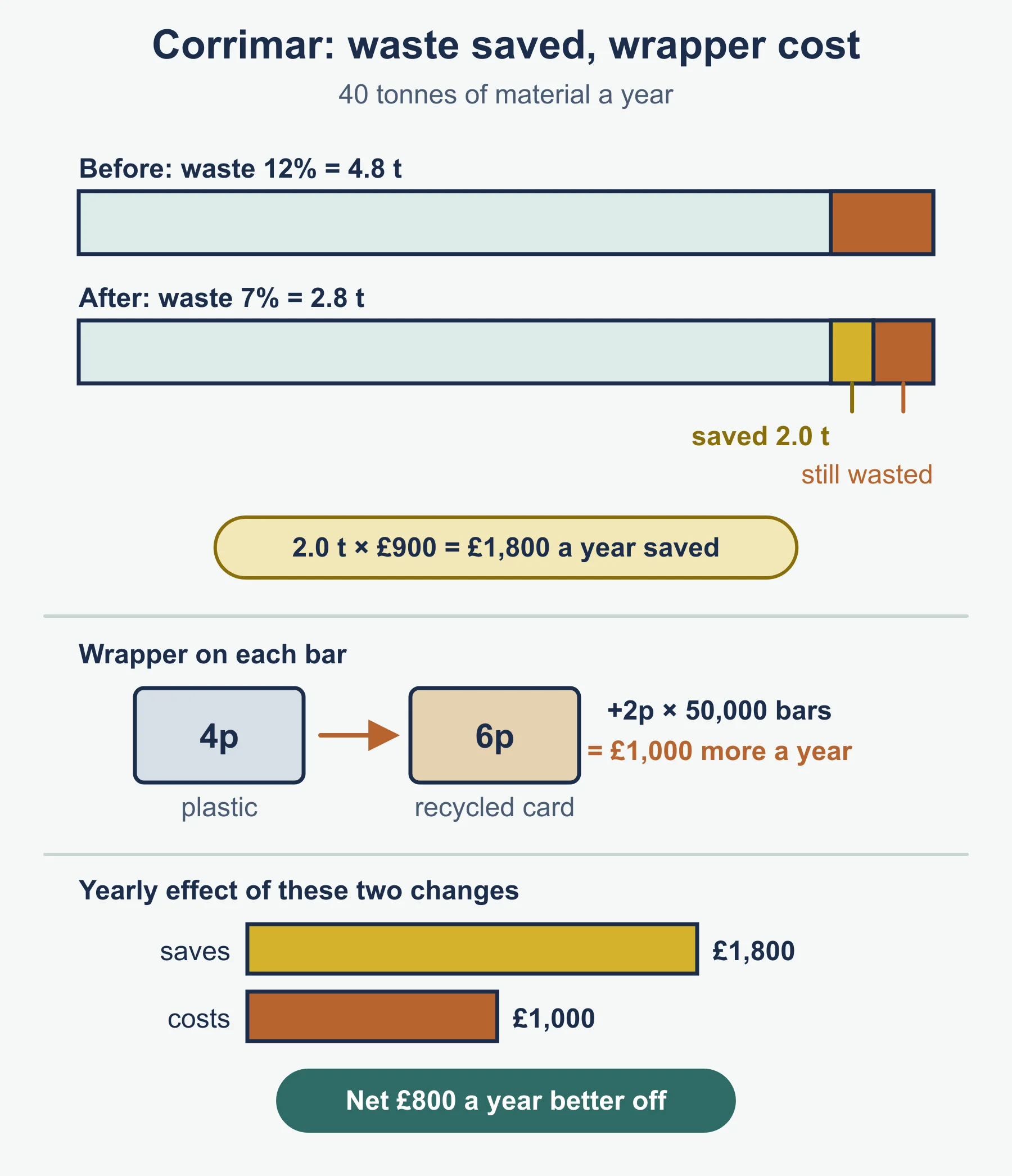
Worked example: Corrimar Soaps. Corrimar uses 40 tonnes of raw material a year and wastes 12% of it. A new cutting process cuts waste to 7%.
- Waste before: 12% of 40 = 4.8 tonnes.
- Waste after: 7% of 40 = 2.8 tonnes.
- Material saved: 2.0 tonnes. At £900 a tonne, the saving is £1,800 a year.
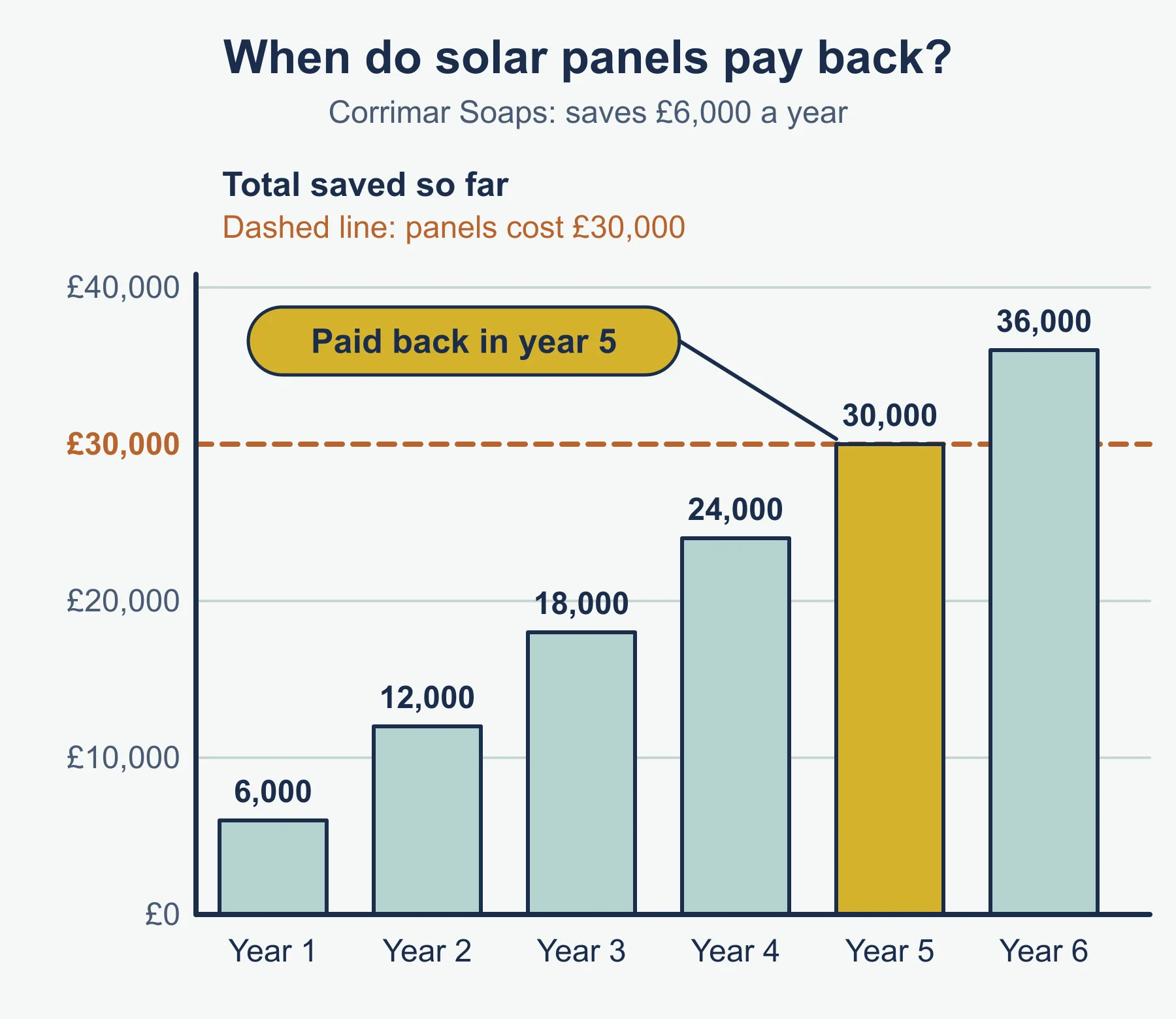
Corrimar also installs solar panels costing £30,000, which cut its electricity bill by £6,000 a year. It takes 30,000 ÷ 6,000 = 5 years for the saving to equal the cost. Finally, it changes from plastic wrappers costing 4p to recycled card wrappers costing 6p, on 50,000 bars a year. The extra cost is 50,000 × 2p = £1,000 a year.
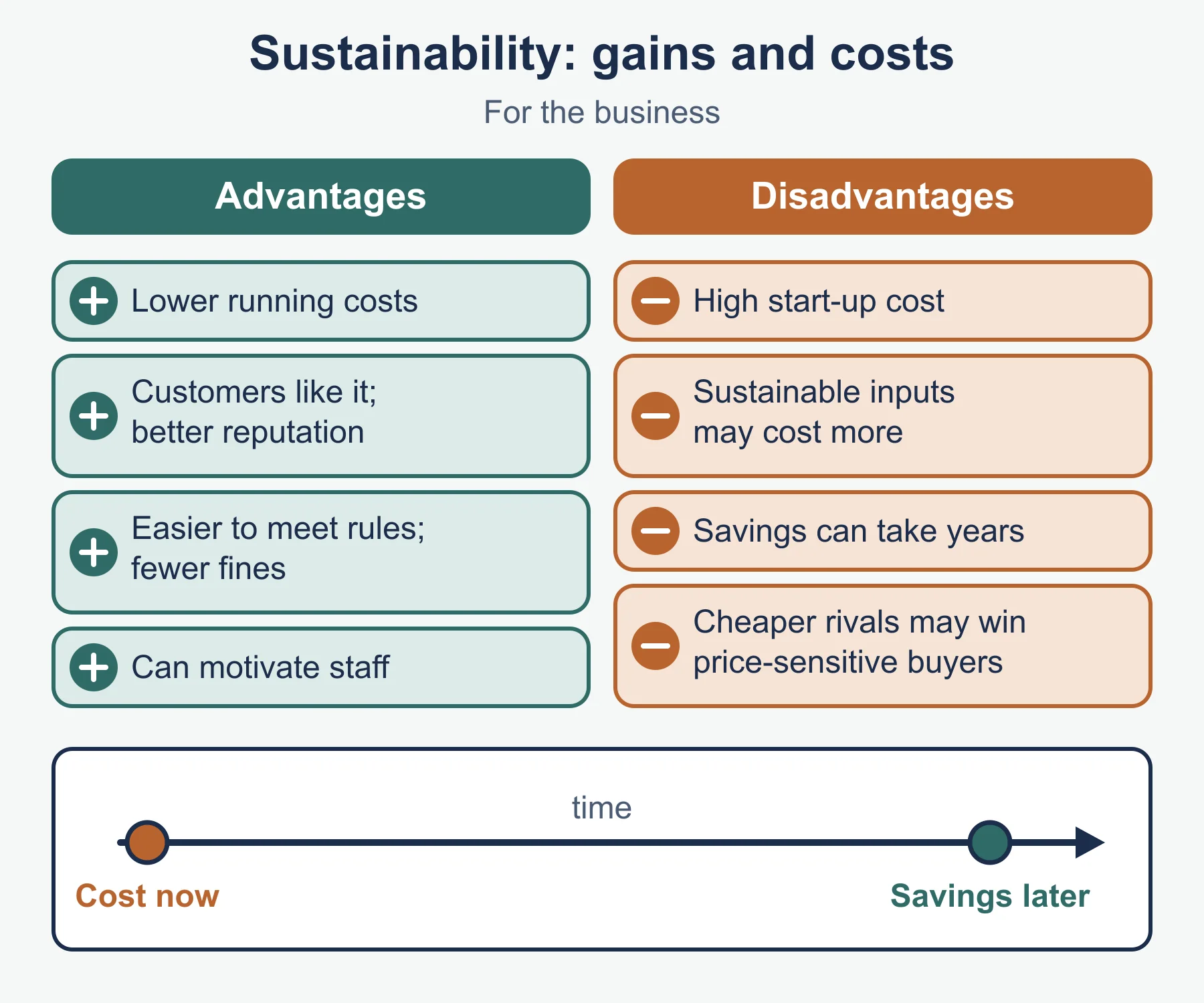
Advantages and disadvantages for the business
| Advantages | Disadvantages |
|---|---|
| Lower running costs from less energy, material and waste | Equipment, new materials and redesign can cost a lot at the start |
| Attracts customers who care about the environment; better reputation and possible higher sales | Sustainable inputs may cost more, which can raise prices or cut profit |
| Easier to meet rules and avoid fines or bad publicity | Savings may take years to arrive |
| Can motivate employees who want to work for a responsible firm | Competitors with cheaper methods may win price-sensitive customers |
In Corrimar’s case, the wastage saving and the solar panels reduce costs, while the new wrapper adds £1,000. A good answer weighs these together. It also considers the long term: the panels run for years after the five-year recovery period, so the gain continues.
Common errors
- Writing “technology is good” without saying how it changes output, cost, quality or jobs.
- Mixing up mechanisation and automation, or calling every use of a computer “CAM”.
- Giving only business effects when the question asks about employees.
- Saying sustainable production is always cheaper. It often costs more first.
- Confusing reusing with recycling.
- Forgetting to use the figures in the stem when asked to apply or evaluate.
Frequently asked questions
What are the disadvantages of new technology for employees? Some jobs disappear, workers may need to retrain and may fear redundancy, and work can become repetitive or machine-paced. Technology can also bring benefits, such as less heavy or dangerous work and chances to learn new skills.
Why is 3D printing useful for prototypes and small runs? 3D printing builds an object layer by layer from a digital design and needs no special mould or tool for each new design. That makes one-off items and small runs cheaper and often quicker to produce.
Is sustainable production always cheaper for a business? No. Sustainable production can lower running costs over time, but equipment, new materials and redesign often cost more at the start, and the savings may take years to arrive.
Do you need to use the exact examples named in the 0264 syllabus? Not always. The syllabus lists examples such as CAM, 3D printing and contactless payments with “e.g.”, so be ready to use other sensible examples of the same ideas.
Official syllabus
Cambridge IGCSE Business 0264 syllabus for examination in 2027, 2028 and 2029, published by Cambridge University Press & Assessment (Cambridge International Education): sections 4.2.1 and 4.3.1.
Get free revision emails (optional)
Occasional emails with practice questions, worked explanations and links to free resources for the qualification and subjects you choose. No spam, and you can unsubscribe from any email. The free tools on this site never need an email.
Related resources
-
Practice questions
IGCSE Business: Technology and production of goods and services and related topics (Cambridge 0264) – Practice Questions
Eleven original practice questions with worked answers on Cambridge IGCSE Business 0264 sections 4.2 and 4.3: technology and sustainable production.
Business · Cambridge · IGCSE
Try questions -
Revision notes
IGCSE Business: Technology and production of goods and services and related topics (Cambridge 0264) – Revision Notes
Condensed revision notes for Cambridge IGCSE Business 0264 sections 4.2 and 4.3: technology, service-sector productivity and sustainable production.
Business · Cambridge · IGCSE
Revise topic -
Study guides
IGCSE Business: Costs, scale of production and break-even analysis (Cambridge 0264)
A full study guide to Cambridge IGCSE Business 0264 section 4.4: classifying costs, economies of scale and break-even analysis, with worked examples.
Business · Cambridge · IGCSE
Read guide
Related articles
-
teaching
A Level tuition in Dubai: Cambridge or Pearson Edexcel International A Level?
Schools in Dubai and Abu Dhabi teach either Cambridge International AS & A Level or Pearson Edexcel International A Level. How the two are structured, why it matters for tuition, and how online classes from Lahore work.
9 October 2026
-
curriculum guides
Choosing subjects at IGCSE and A Level
How subject choices at 14 and 16 affect university options later, and how to keep pathways open without overloading a timetable.
28 July 2026
Studying this with a teacher
Working through Business IGCSE?
This page is free and stays free. If you would rather be taught it, Marlbridge runs Business classes one-to-one and in small groups of up to 15, online in your own time zone. The first trial class is free. WhatsApp replies within an hour (8am–11pm Pakistan time, every day); email the same day.
Cambridge Business teachers at Marlbridge

