
Study Guides
O Level Business: Environmental and ethical issues and Business and the international economy (Cambridge 7115)
Study guide to environmental and ethical issues, globalisation, multinationals and exchange rates for Cambridge O Level Business 7115, with examples.
- Subject
- Business
- Level
- O LEVELS
- Topic
- External influences on business activity
- Author
- Marlbridge Academic Team
- Updated
- Reviewed by
- Salman Ahmad (what this means)
Aligned to Cambridge O Level Business (7115), For examination in 2026. Official specification .
Syllabus page (what it covers and how it is assessed): Cambridge O Level Business.
Syllabus points this page covers
7115
- 6.2 Environmental and ethical issues
- 6.3 Business and the international economy
Found an error? Report a correction.
Need help with this topic? Request a free trial class for O Level Business (7115).
This guide follows the Cambridge O Level Business Studies 7115 syllabus for examination in 2026. It covers sections 6.2 (Environmental and ethical issues) and 6.3 (Business and the international economy) from topic 6, External influences on business activity. The syllabus assesses content from the whole course in both Paper 1 (Short Answer and Data Response) and Paper 2 (Case Study), so these ideas can appear in either.
Section 6.1, Economic issues, is not covered here. For mixed practice across the whole topic, see the existing external influences practice questions. The matching revision notes and practice set go with this guide. Course links: Cambridge O Level Business hub, printable checklist, and the free diagnostics.
What this guide covers
| Syllabus point | What you must be able to do |
|---|---|
| 6.2.1 | Explain how business activity affects the environment, for example global warming |
| 6.2.1 | Explain externalities: external costs and external benefits |
| 6.2.1 | Explain sustainable development and how business can contribute |
| 6.2.1 | Explain how and why businesses respond to environmental pressures and opportunities, for example pressure groups |
| 6.2.1 | Explain the role of legal controls, for example pollution controls |
| 6.2.1 | Analyse conflicts between profits and ethics, and how a business may respond (child labour, fair prices to suppliers) |
| 6.3.1 | Explain globalisation, why it happens, its opportunities and threats, and why governments use import tariffs and quotas |
| 6.3.2 | Explain why multinationals (MNCs) grow, the benefits to the business and its stakeholders, and the benefits and drawbacks for the host country |
| 6.3.3 | Explain appreciation and depreciation and how they affect importers and exporters |
The syllabus states that exchange rate calculations will not be assessed. You need the direction and the reasoning, not conversions.
6.2.1 Environmental concerns as opportunities and constraints
An environmental concern can be a constraint, because it limits or adds cost to what a business may do. It can also be an opportunity, because customers, governments and investors may reward a business that deals with it well.
How business activity affects the environment
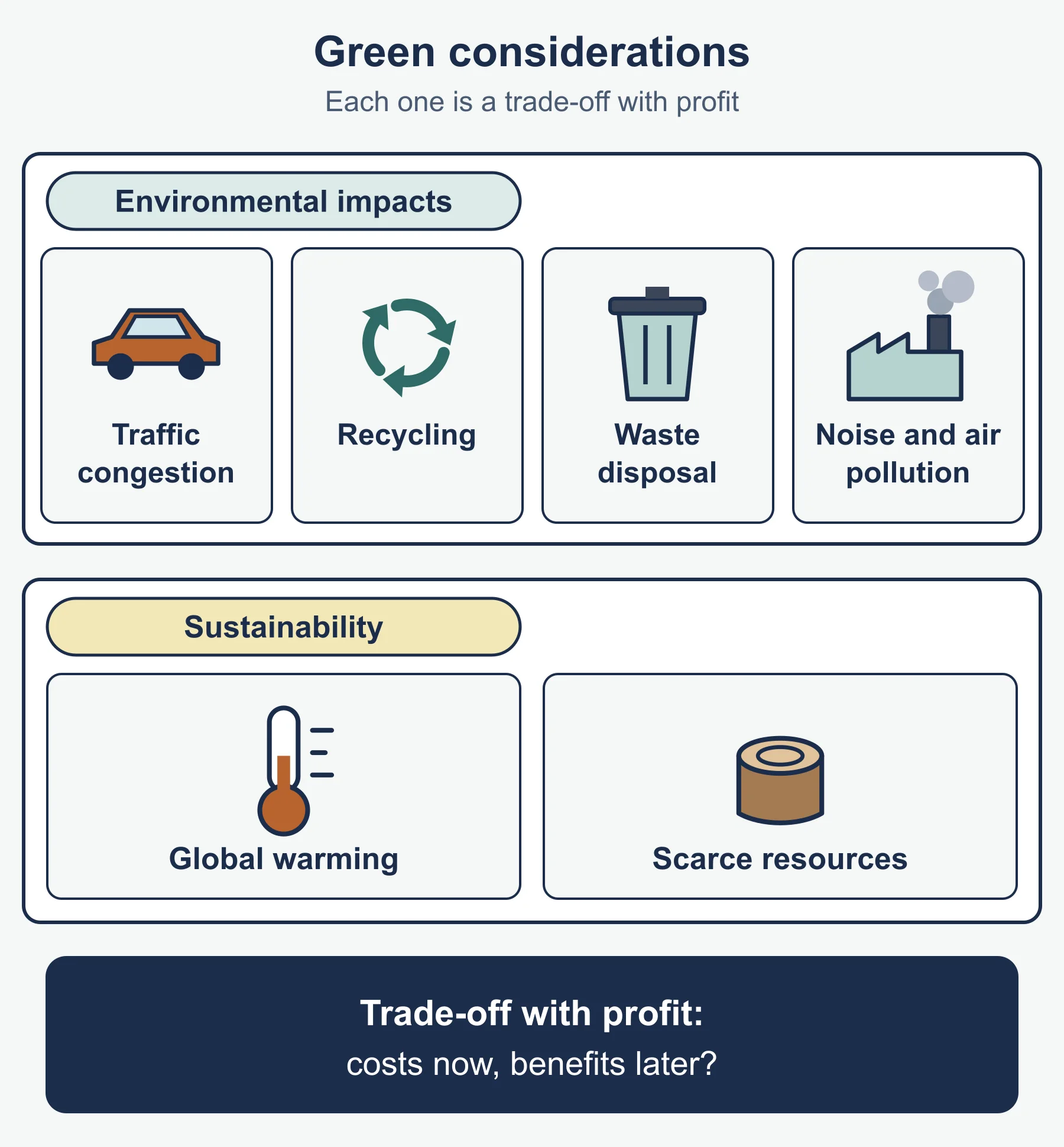
Factories burn fuel, farms clear land, transport uses oil and shops create packaging waste. Burning fossil fuels releases gases that add to global warming. Other effects include air and water pollution, noise, loss of wildlife habitat and the use up of non-renewable resources such as coal and minerals.
Externalities
An externality is a cost or benefit of a business decision that falls on people who are not part of the transaction. Those people are neither the business nor its customer.
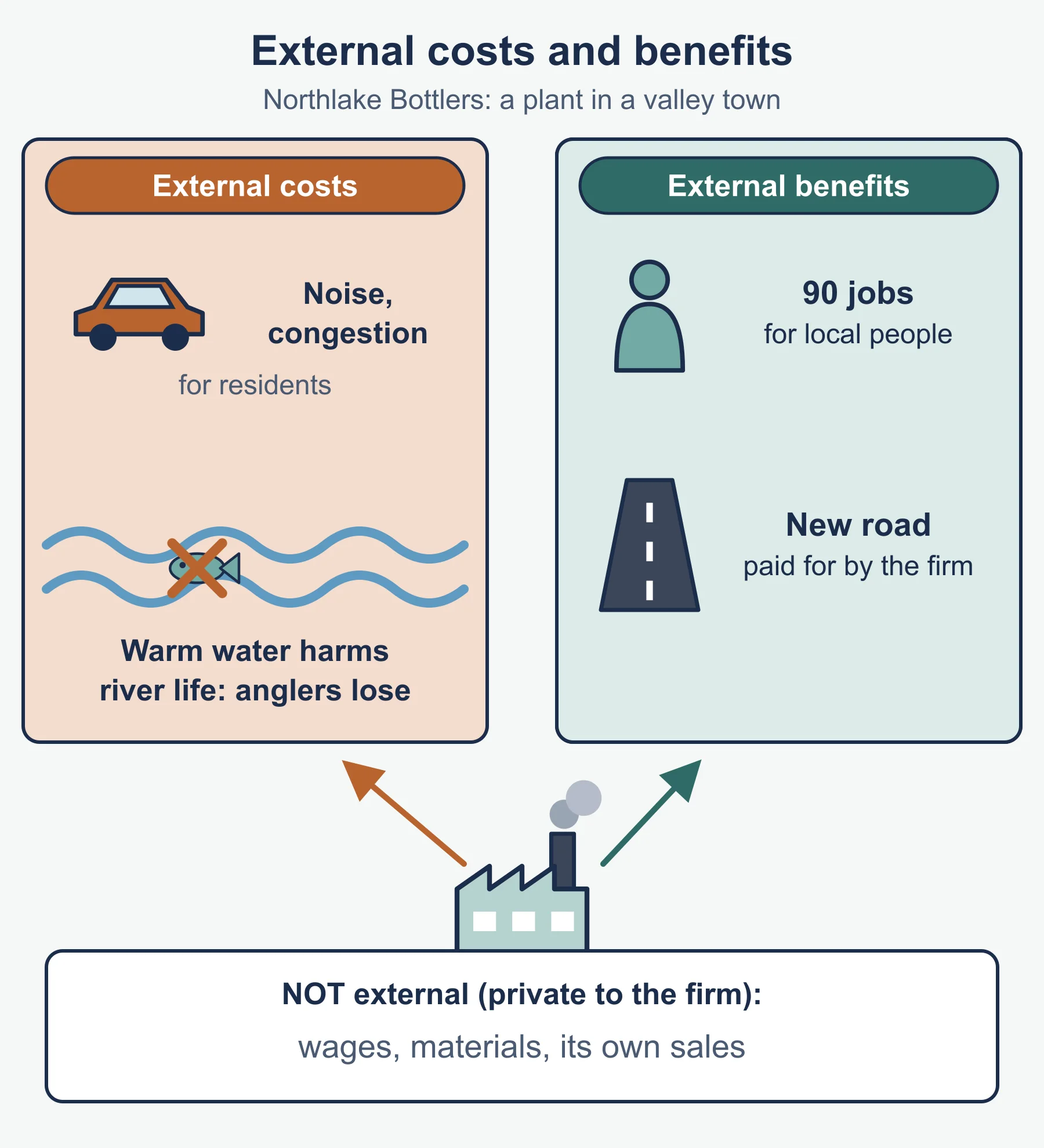
- External cost: a cost borne by third parties. Smoke from a plant harms the health of people nearby.
- External benefit: a gain to third parties. A new factory attracts shops and cafes that give local people work and income.
Private costs, such as wages and materials, are paid by the business. External costs are not, which is why a business can ignore them unless pressure or law makes it count them.
Worked example. Northlake Bottlers fills water bottles in a valley town. Its lorries make the road busy and noisy, and the plant lets warm water run into the river. Local anglers lose fish. The town also gains 90 jobs and a better road paid for by the firm.
- External costs: noise and congestion for residents, harm to river life for anglers.
- External benefits: jobs and the new road for the community.
- Costs and benefits to Northlake itself, such as wages or sales, are private, not external.
Sustainable development
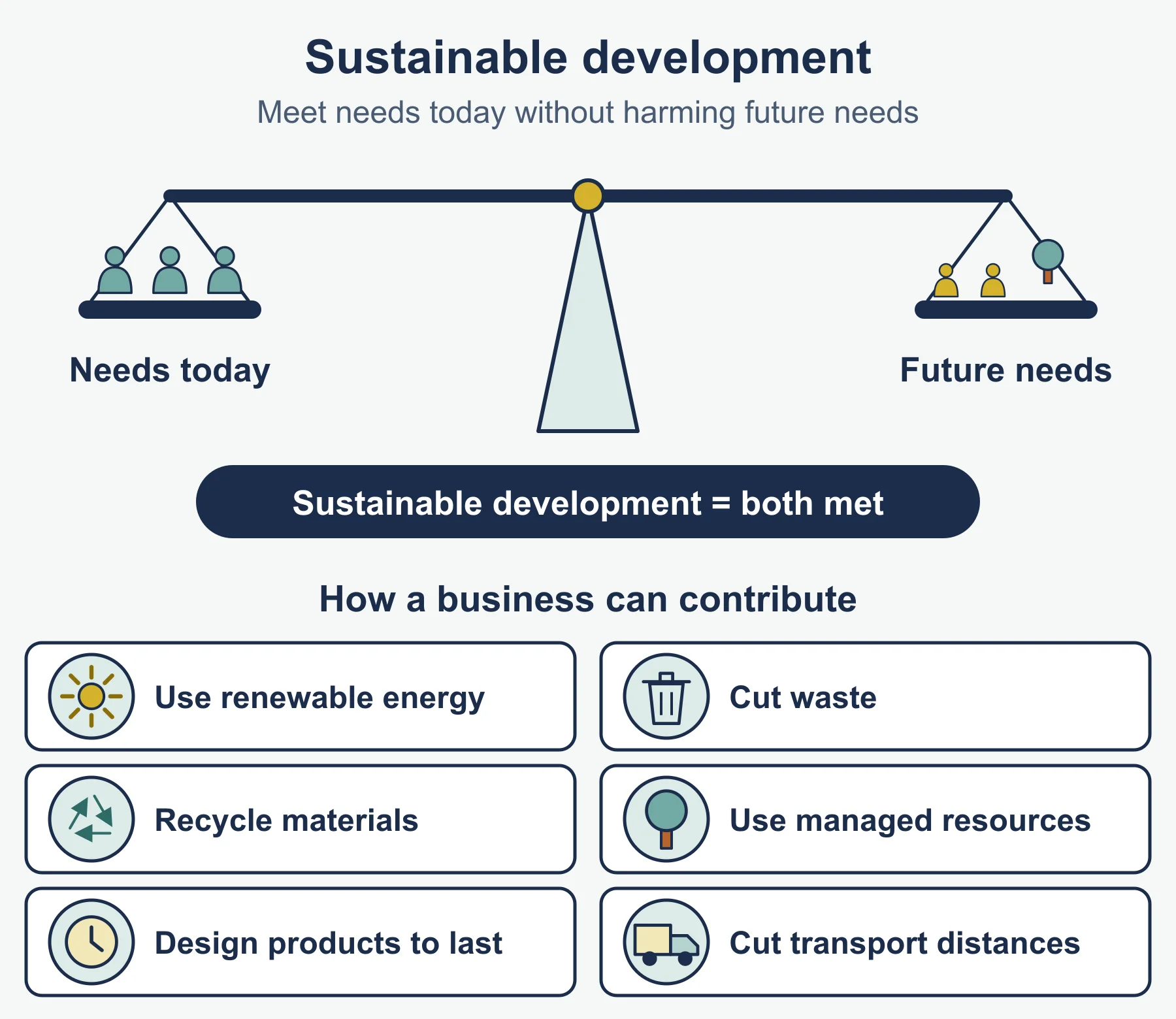
Sustainable development means meeting the needs of people today without harming the ability of future generations to meet their needs. A business can contribute by using renewable energy, cutting waste, recycling materials, using resources from managed sources, designing products to last and reducing transport distances.
Responding to environmental pressures and opportunities
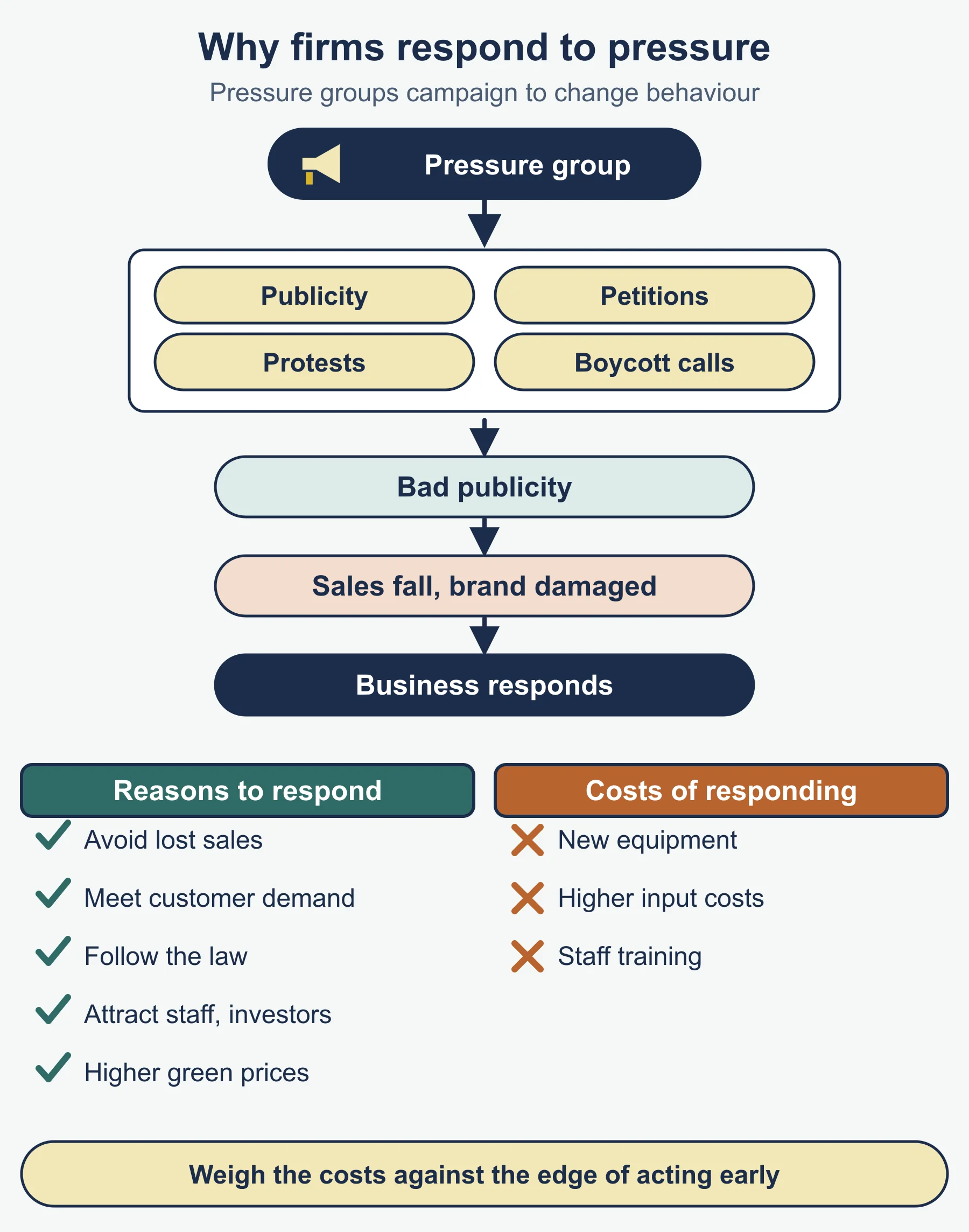
Pressure groups campaign to change business behaviour. Methods include publicity, petitions, protests and calling for consumer boycotts. Businesses respond because bad publicity can lower sales and damage the brand.
Reasons to respond: avoid lost sales, meet customer demand, follow the law, attract staff and investors, and charge higher prices for green products. Costs of responding: new equipment, higher input costs and staff training. A business that acts early may gain an advantage over rivals, but it must weigh that against the extra cost.
Legal controls
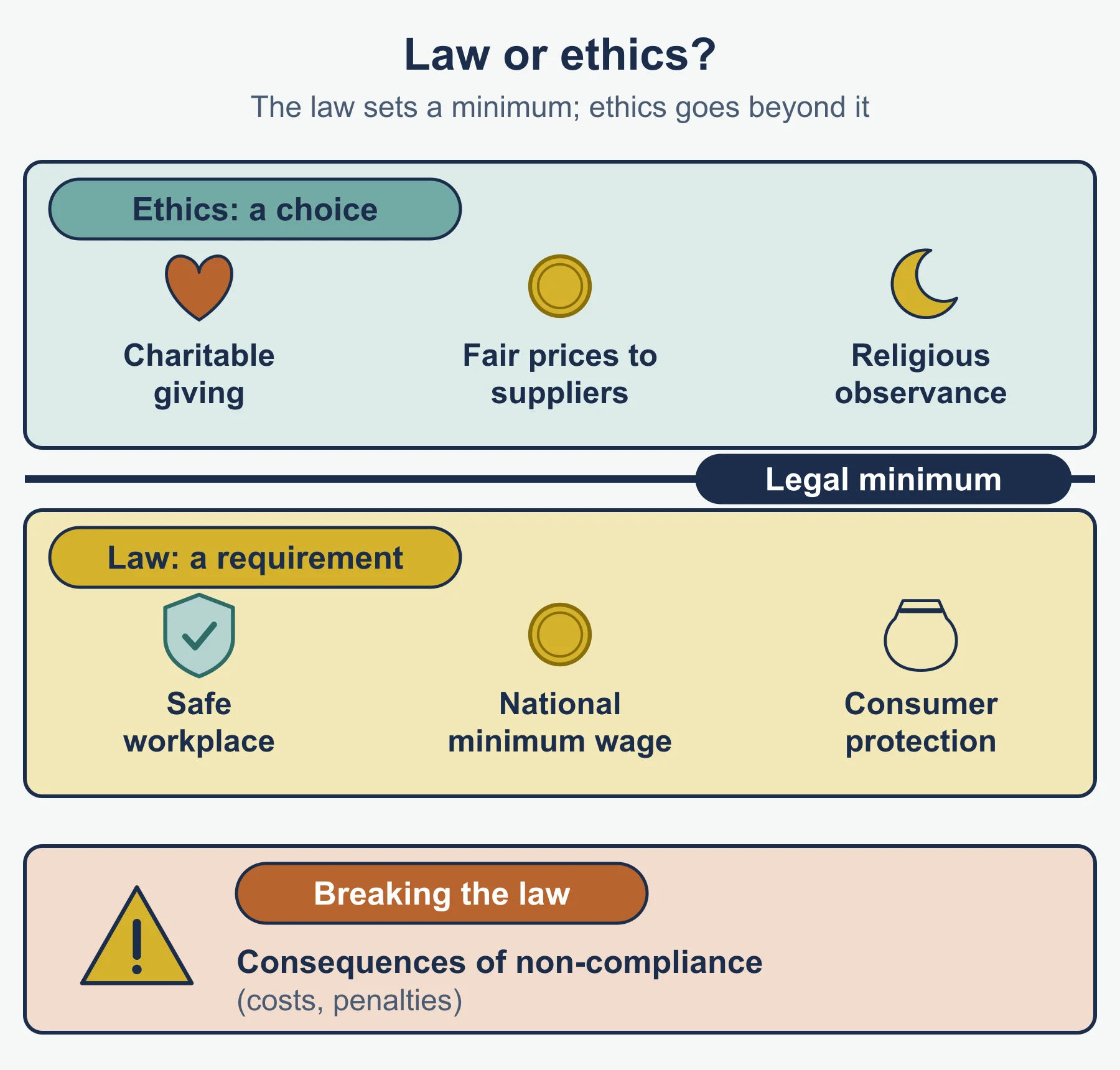
Governments set rules, such as pollution controls on what a factory may release. Businesses that break them can face fines, orders to stop and loss of reputation. The law forces all firms in an industry to meet the same minimum standard, which stops a careless firm gaining a cost advantage. Compliance raises costs, though it can also push a business towards cleaner methods. Keep your description general: name the type of control rather than inventing exact laws.
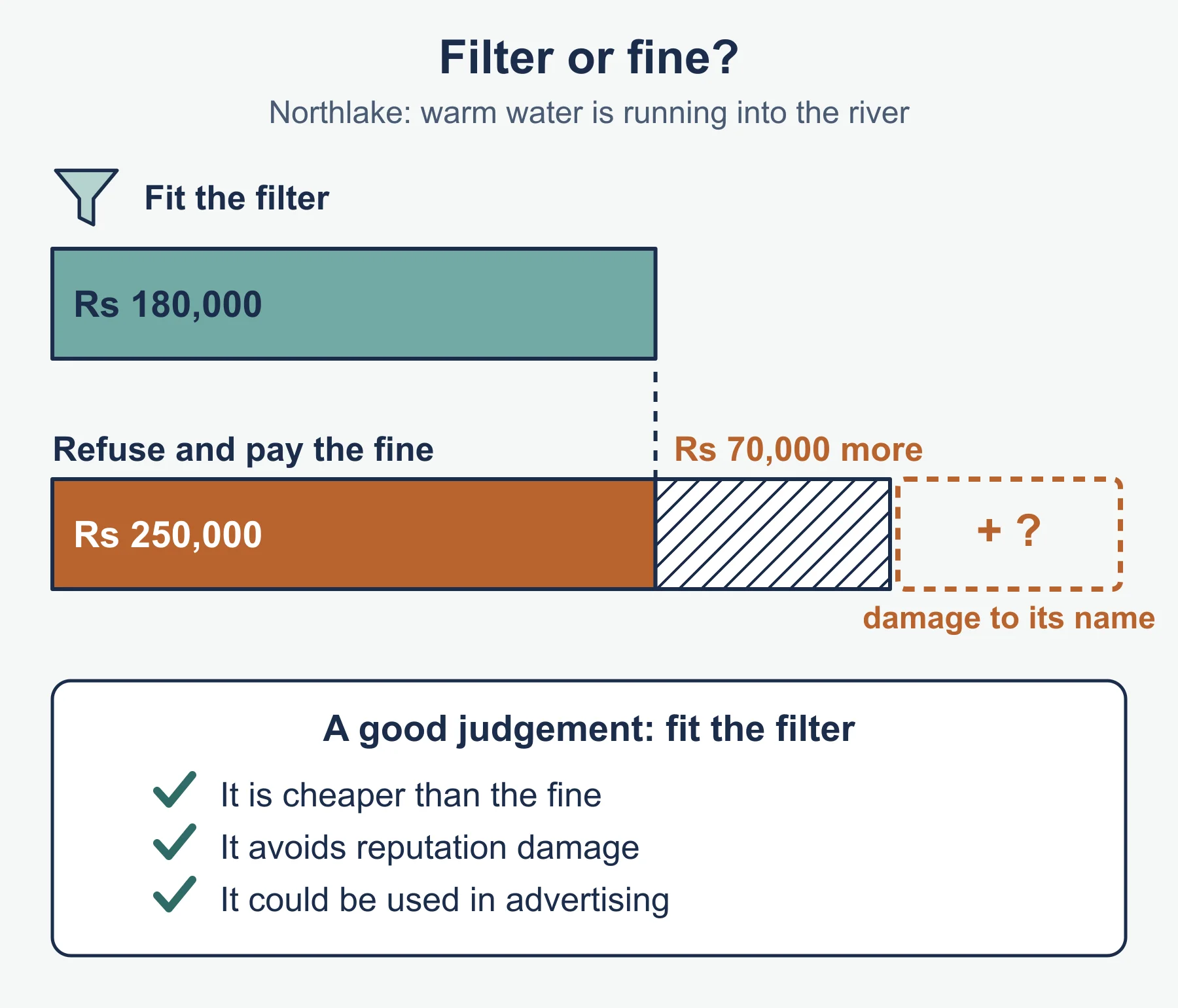
Worked example. Northlake is told to fit a filter to stop warm water entering the river. The filter costs Rs 180,000. If it refuses and is fined Rs 250,000, the fine is Rs 70,000 higher than the filter, before counting damage to its name. A good judgement says the filter is cheaper, avoids reputation damage and could be used in advertising.
Ethical issues
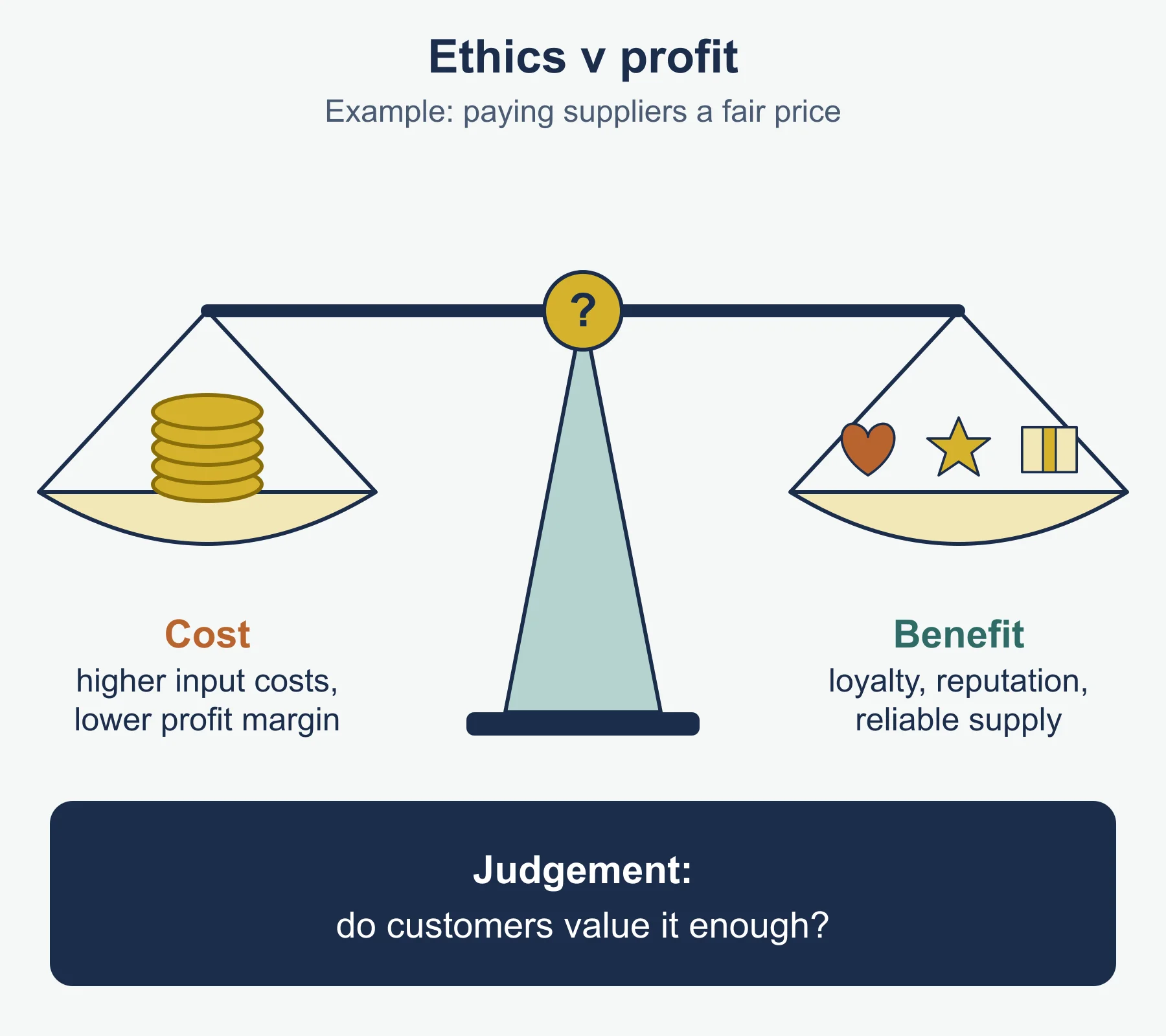
An ethical issue is a question of right and wrong in how a business behaves. Many conflicts are between profit and ethics: the cheapest route may not be the fair one.
- Child labour: cheap but wrong. The business could audit suppliers, end contracts with those that use it and buy from certified sources.
- Paying fair prices to suppliers: low prices raise margins but can leave farmers or small firms unable to live decently.
- Other examples: honest advertising, safe working conditions and treatment of staff.
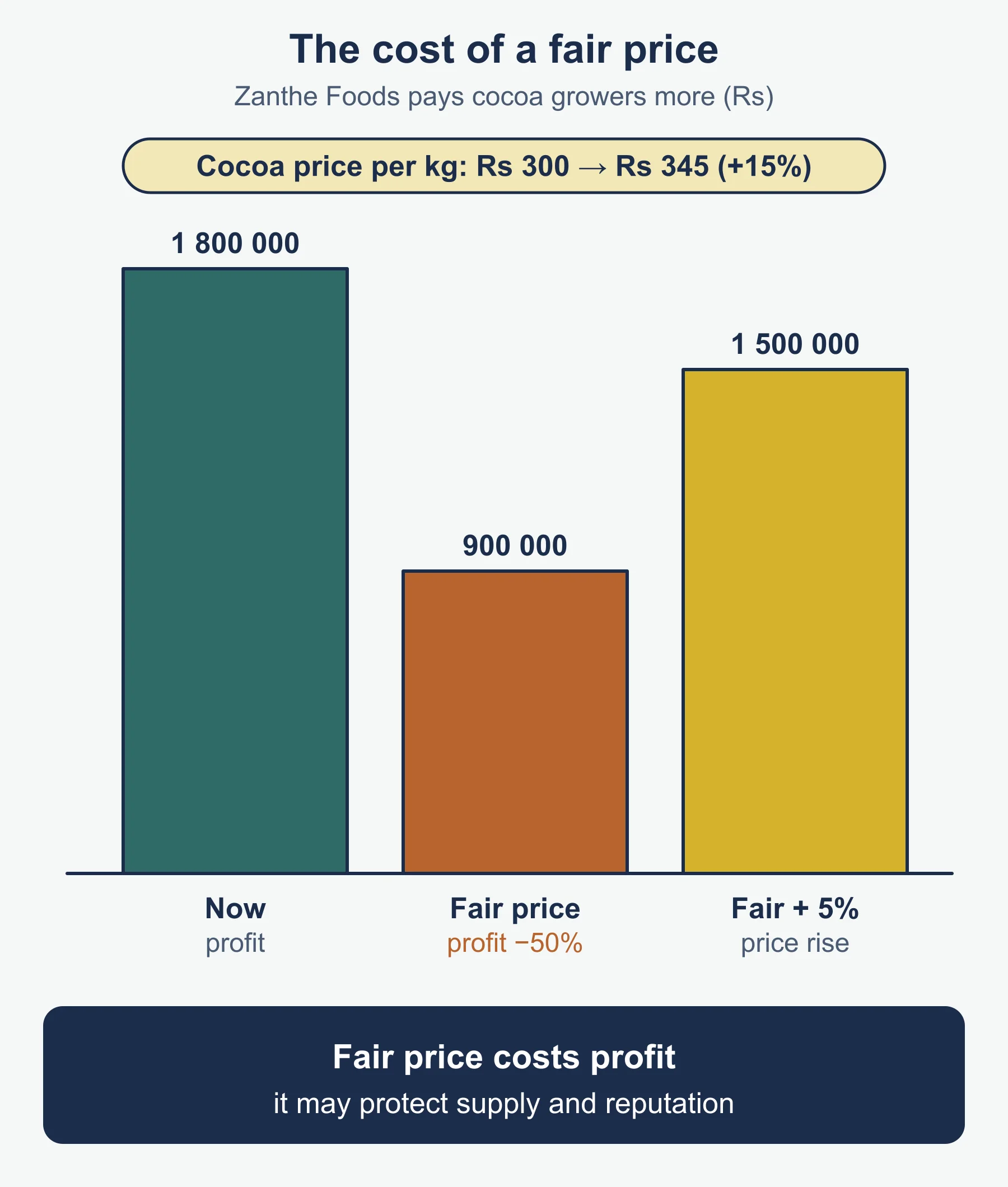
Worked example. Zanthe Foods buys 20,000 kg of cocoa a year at Rs 300 per kg, a cost of Rs 6,000,000. Sales revenue is Rs 12,000,000 and other costs are Rs 4,200,000, so profit is Rs 1,800,000. The growers ask for a fair price of Rs 345 per kg.
- Price rise: 345 minus 300 is 45, so 45/300 = 15%.
- New cocoa cost: 20,000 × 345 = Rs 6,900,000, up by Rs 900,000.
- New profit: 12,000,000 minus 6,900,000 minus 4,200,000 = Rs 900,000, so profit falls by 50%.
Zanthe could raise its price by 5%, which adds Rs 600,000 to revenue, leaving profit at Rs 1,500,000, or Rs 300,000 less than before. The fair price costs profit, but it may protect supply, win ethical customers and avoid bad publicity. A reasoned judgement says it depends on whether customers will accept the price rise.
6.3.1 Globalisation
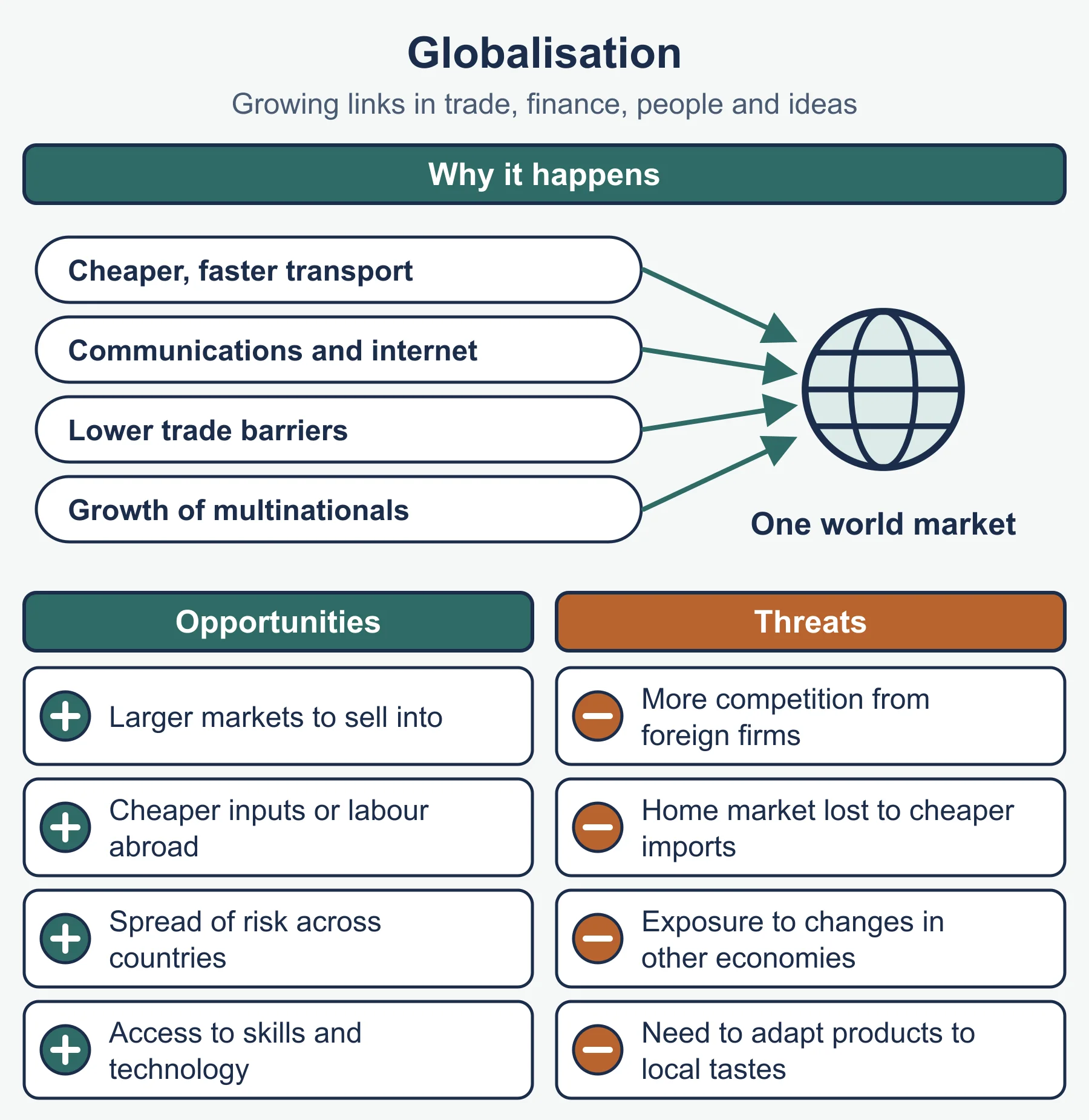
Globalisation is the growing links between countries in trade, finance, people and ideas, so that markets work as one world market. Reasons for it include cheaper and faster transport, better communications and the internet, lower trade barriers, and the growth of multinationals.
| Opportunities for a business | Threats to a business |
|---|---|
| Larger markets to sell into | More competition from foreign firms |
| Cheaper inputs or labour abroad | Home market lost to cheaper imports |
| Spread of risk across countries | Exposure to changes in other economies |
| Access to skills and technology | Need to adapt products to local tastes |
Import tariffs and import quotas
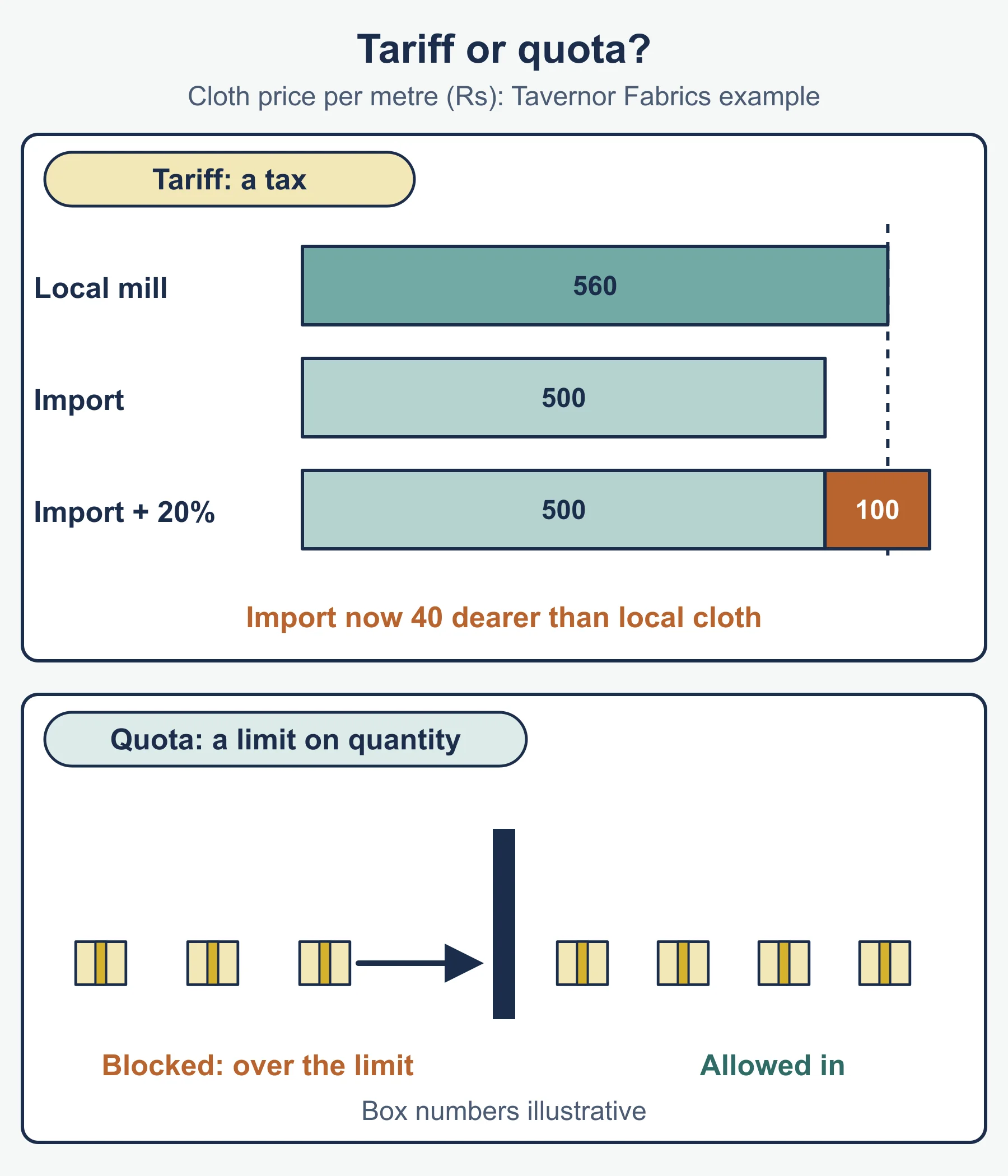
An import tariff is a tax on imported goods. An import quota is a limit on the quantity of a good that may be imported. Governments may use either to protect local firms and jobs, to protect new industries, to raise money (tariffs) or to cut a trade deficit.
Worked example. Tavernor Fabrics, a local mill, sells cloth at Rs 560 per metre. Imported cloth costs Rs 500 per metre. A 20% tariff adds 500 × 0.20 = Rs 100, so imported cloth now sells at Rs 600, which is Rs 40 above the local mill. Local buyers now have more reason to buy from Tavernor. The cost: shoppers who liked the cheaper cloth lose, and other countries may reply with tariffs on the country’s exports.
A quota gives a hard limit on volume, not a price rise. Local firms are protected because fewer imports can enter, but prices may rise as supply is short.
6.3.2 Multinational companies
A multinational company (MNC) operates in more than one country. It has its head office in one and production, sales or both in others.
Benefits to the business: access to new markets, lower labour and material costs, avoiding import tariffs by producing inside the country, spreading risk and economies of scale. Impact on stakeholders: shareholders may gain higher profits, managers get new careers, and local suppliers get new contracts. But workers at home may lose jobs if production moves, and some host communities may object to the firm.
| Benefits to the host country | Drawbacks to the host country |
|---|---|
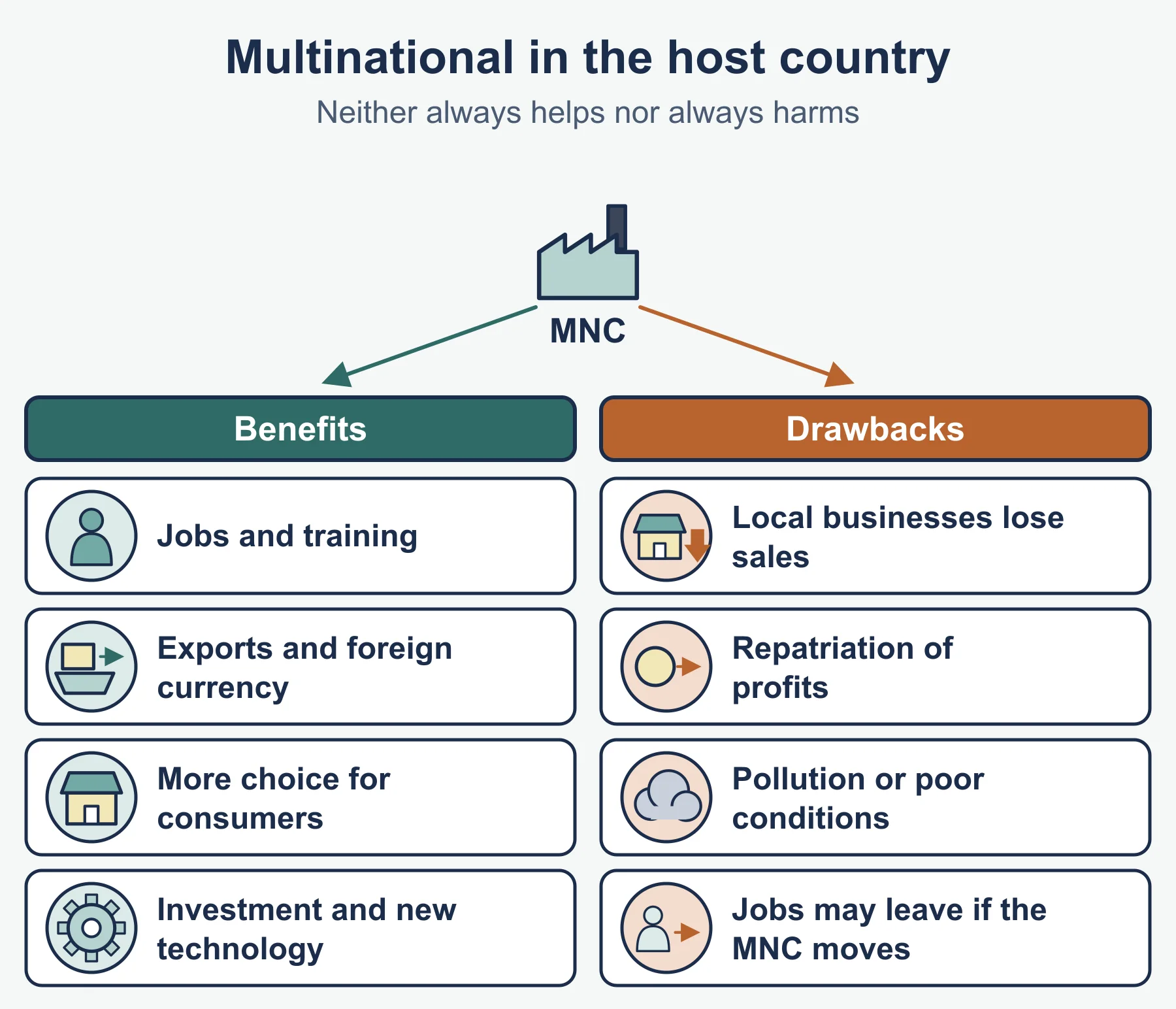
| Jobs and training | Local businesses lose sales |
| Exports and foreign currency | Repatriation of profits |
| More choice for consumers | Pollution or poor conditions |
| Investment and new technology | Jobs may leave if the MNC moves |
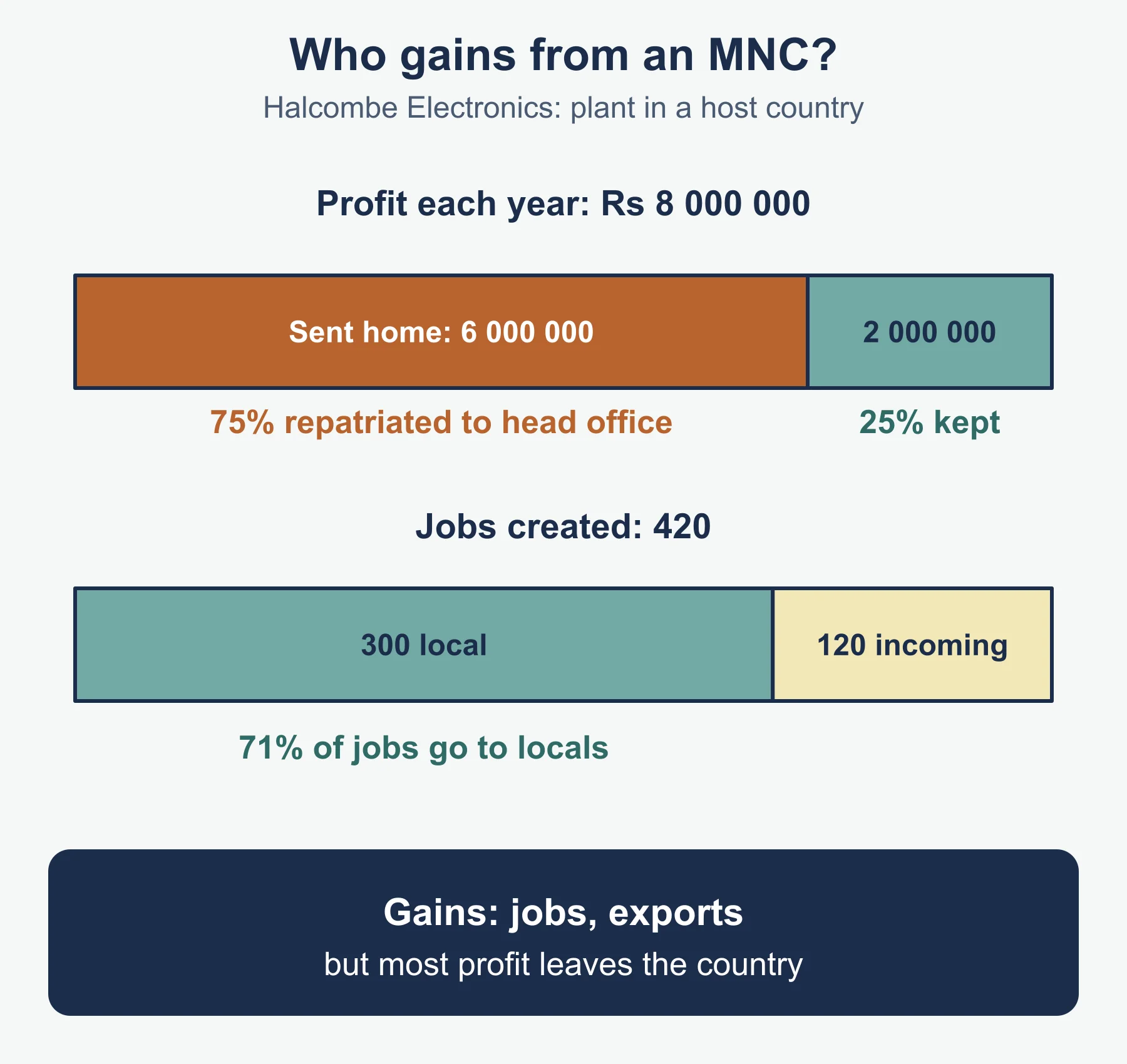
Repatriation of profits means sending profits back to the home country, not reinvesting them where they were earned.
Worked example. Halcombe Electronics, from a larger country, opens a plant employing 300 local people and 120 imported managers and technicians. It makes Rs 8,000,000 profit a year and sends 75% to its head office. That is Rs 6,000,000 repatriated, with Rs 2,000,000 kept. The host country gains jobs and exports but loses most profit. Only 300 of the 420 jobs go to locals, or 71%, so the benefit is smaller than it first looks.
6.3.3 Exchange rates
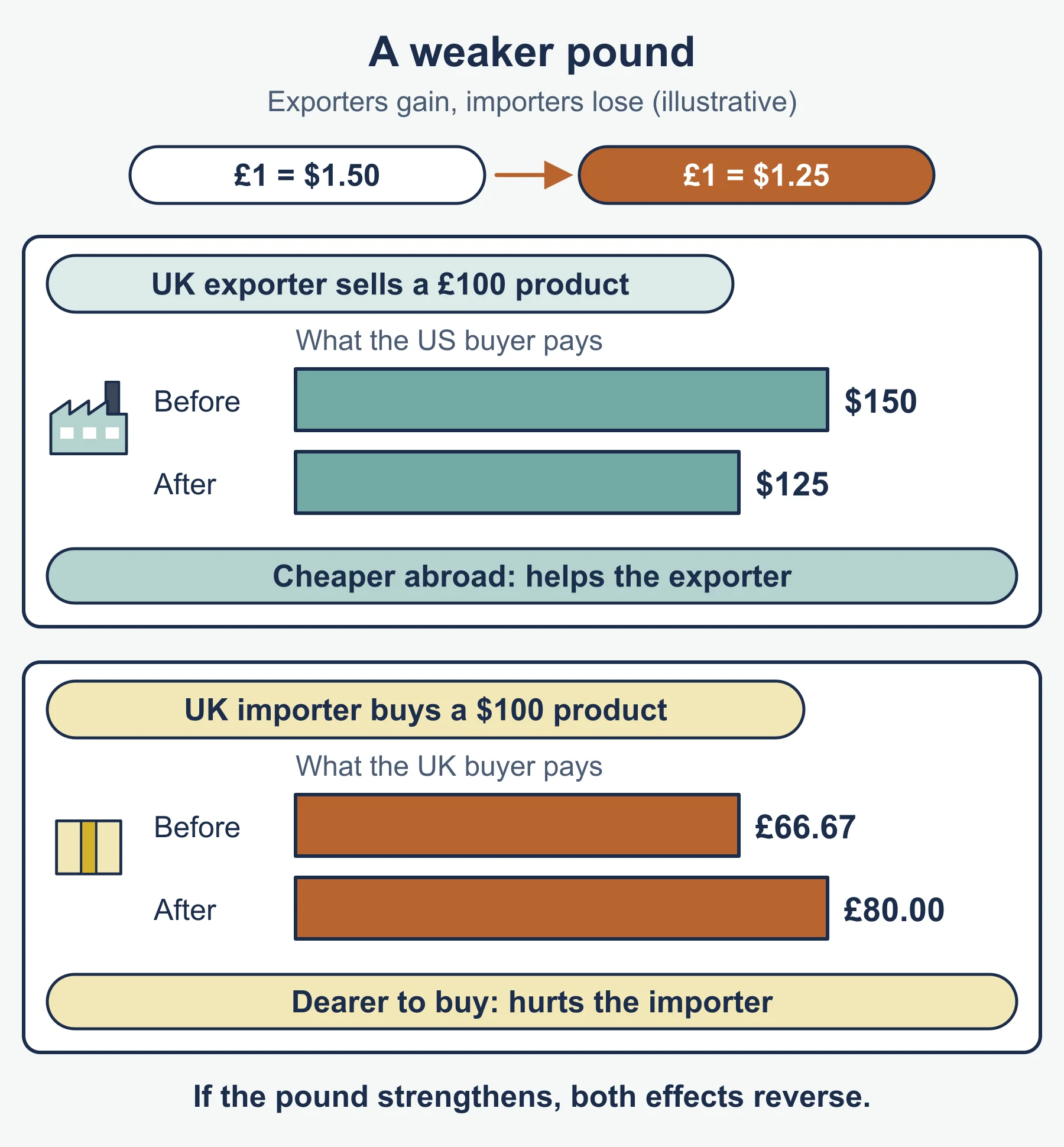
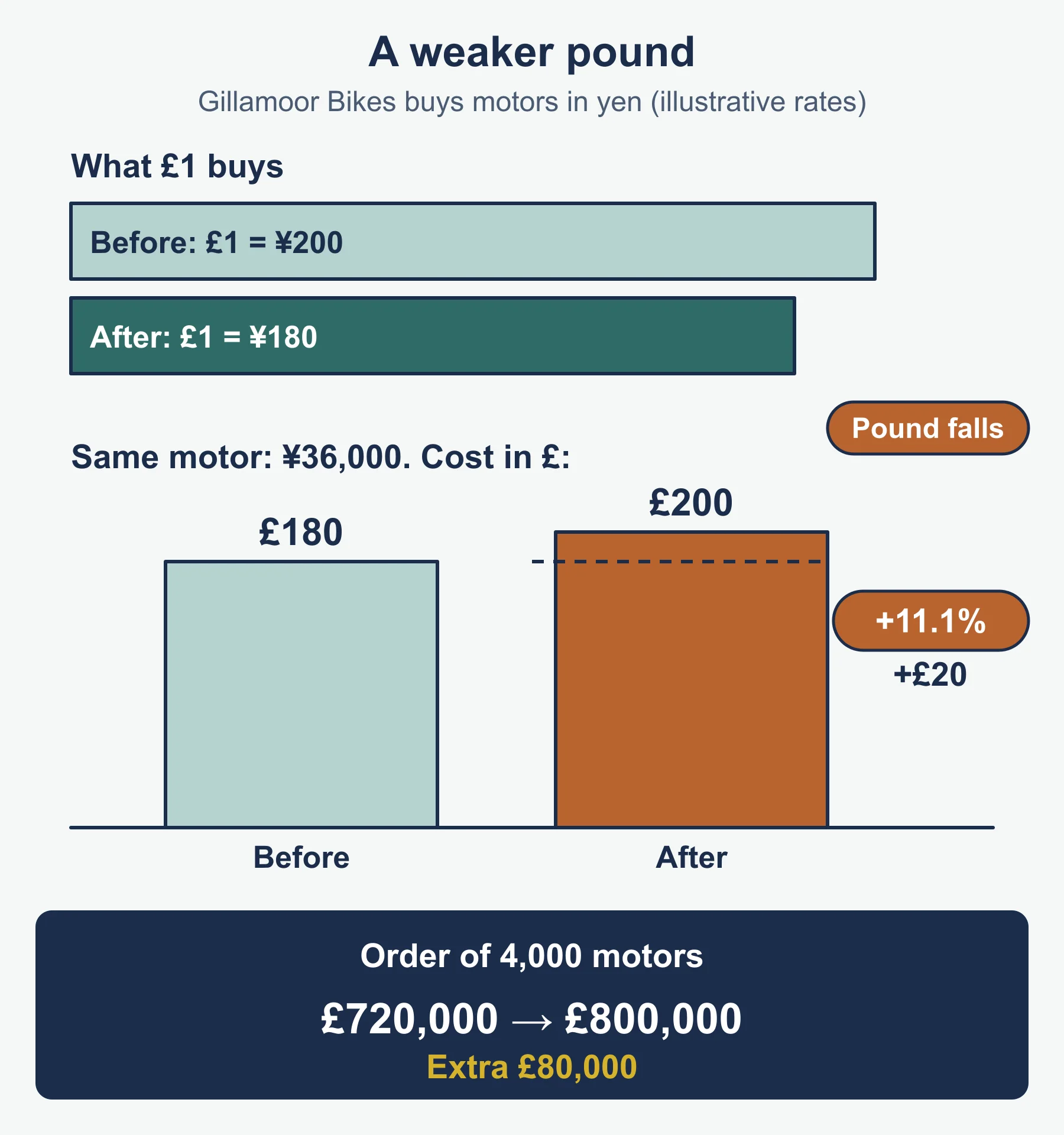
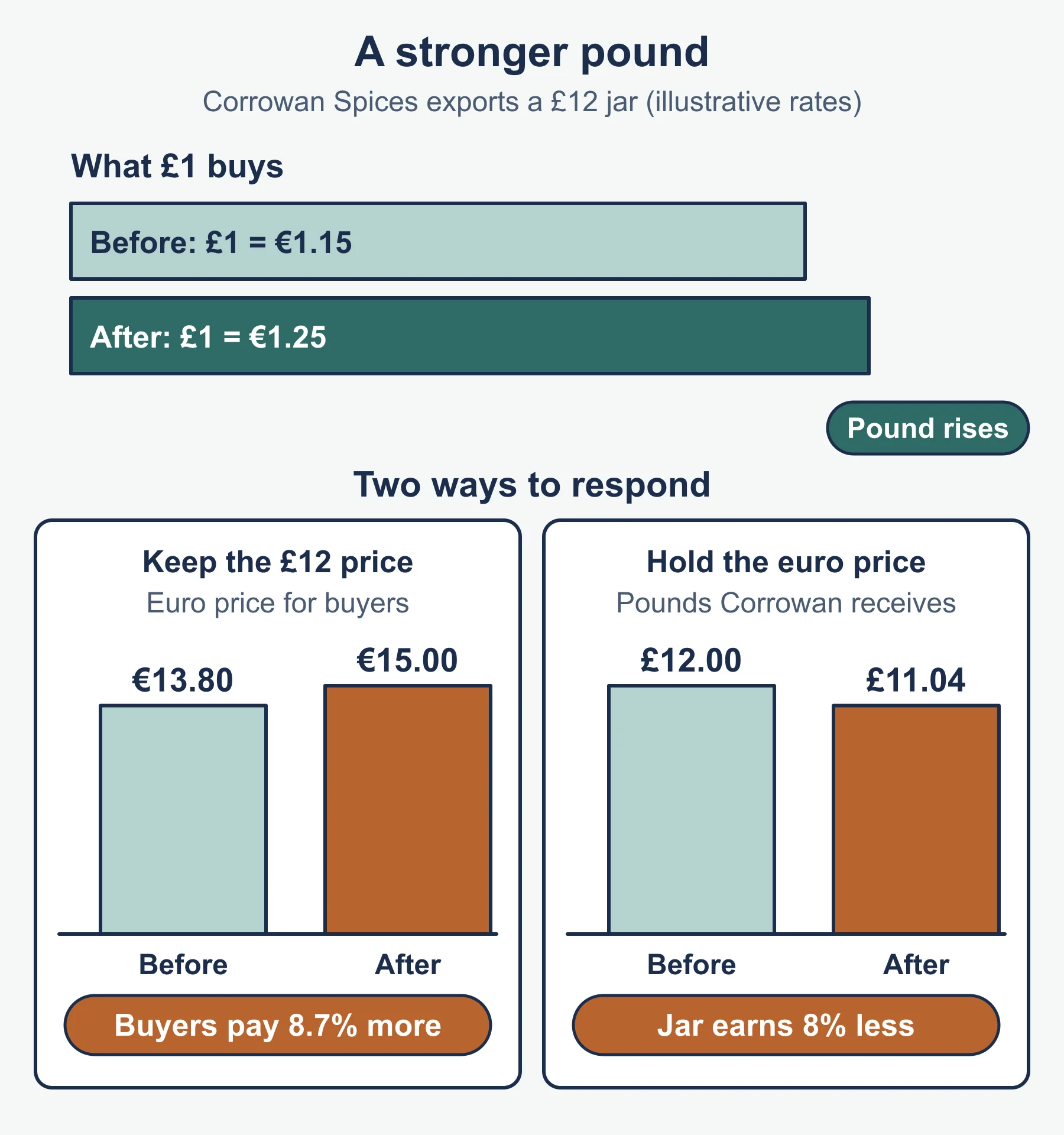
An exchange rate is the price of one currency in terms of another. Appreciation means a currency buys more foreign currency; depreciation means it buys less.
| If the home currency | Exporters | Importers |
|---|---|---|
| Appreciates | Prices abroad rise, competitiveness falls, sales may fall | Imports cheaper, costs fall, profit may rise |
| Depreciates | Prices abroad fall, competitiveness rises, sales may rise | Imports dearer, costs rise, profit may fall |
Profitability depends on the mix. Mereford Shoes imports leather and sells shoes abroad. If its currency depreciates, leather costs more but its shoes look cheaper abroad. Whether profit rises depends on which effect is larger, and on whether the business can change its supplier or price. This is how to evaluate.
Common errors
- Naming costs to the business itself as external costs.
- Mixing up a tariff (a tax) and a quota (a limit on quantity).
- Writing “appreciation” when the currency has fallen in value.
- Saying an MNC always helps or always harms the host country.
- Describing an ethical issue without a business response.
Frequently asked questions
What is sustainable development? Sustainable development means meeting the needs of people today without harming the ability of future generations to meet their needs. A business can contribute by using renewable energy, cutting waste and recycling materials.
Why do businesses respond to pressure groups? Pressure groups use publicity, petitions, protests and calls for consumer boycotts, and the resulting bad publicity can lower sales and damage the brand. Responding can protect sales but costs money, for example for new equipment.
What is an import quota? An import quota is a limit on the quantity of a good that may be imported. It protects local firms by letting fewer imports in, but prices may rise if supply is short.
Does a multinational company always benefit the host country? No. A multinational can bring jobs and investment, but it may bring in its own managers and send most of its profit back home, so it neither always helps nor always harms.
What ethical issues might a business face? Examples include child labour in the supply chain, paying fair prices to suppliers, honest advertising, safe working conditions and the treatment of staff. Many involve a conflict between profit and acting fairly.
Official syllabus
Cambridge O Level Business Studies 7115, syllabus for examination in 2026, Cambridge University Press and Assessment (Cambridge International Education).
Get free revision emails (optional)
Occasional emails with practice questions, worked explanations and links to free resources for the qualification and subjects you choose. No spam, and you can unsubscribe from any email. The free tools on this site never need an email.
Related resources
-
Practice questions
O Level Business: Environmental and ethical issues and Business and the international economy (Cambridge 7115) – Practice Questions
Original practice questions with worked answers on externalities, ethics, tariffs, multinationals and exchange rates for Cambridge O Level Business 7115.
Business · Cambridge · O Level
Try questions -
Revision notes
O Level Business: Environmental and ethical issues and Business and the international economy (Cambridge 7115) – Revision Notes
Condensed revision notes on externalities, sustainability, ethics, globalisation, tariffs, MNCs and exchange rates for Cambridge O Level Business 7115.
Business · Cambridge · O Level
Revise topic -
Practice questions
O Level Business: External influences on business activity — Practice Questions (Cambridge 7115)
Original practice questions with worked answers on import quotas, tax, external costs, pressure groups, exchange and interest rates for O Level Business 7115.
Business · Cambridge · O Level
Try questions
Related articles
-
teaching
A Level tuition in Dubai: Cambridge or Pearson Edexcel International A Level?
Schools in Dubai and Abu Dhabi teach either Cambridge International AS & A Level or Pearson Edexcel International A Level. How the two are structured, why it matters for tuition, and how online classes from Lahore work.
9 October 2026
-
curriculum guides
Choosing subjects at IGCSE and A Level
How subject choices at 14 and 16 affect university options later, and how to keep pathways open without overloading a timetable.
28 July 2026
Studying this with a teacher
Working through Business O LEVELS?
This page is free and stays free. If you would rather be taught it, Marlbridge runs Business classes one-to-one and in small groups of up to 15, online in your own time zone. The first trial class is free. WhatsApp replies within an hour (8am–11pm Pakistan time, every day); email the same day.
Cambridge Business teachers at Marlbridge

