
Revision Notes
OCR A Level Business: Human resources (H431) – Revision Notes
Condensed revision notes for the whole Human resources topic of OCR A Level Business H431, with formulas, theories and a self-test.
- Subject
- Business
- Level
- A LEVELS
- Topic
- Human resources
- Author
- Marlbridge Academic Team
- Updated
- Reviewed by
- Salman Ahmad (what this means)
Aligned to OCR A Level Business (H431), Version 2.1 (January 2026), for first assessment in 2017; final assessment summer 2027. Official specification .
Syllabus page (what it covers and how it is assessed): OCR A Level Business.
Syllabus points this page covers
H431
- 5 Human resources (whole topic)
Found an error? Report a correction.
Need help with this topic? Request a free trial class for A Level Business (H431).
These notes condense the Human resources topic of the OCR A Level in Business (H431), Version 2.1 (January 2026). For full explanations read the study guide, then try the practice questions. Course pages: OCR A Level Business hub and checklist. Find gaps first with the free diagnostics.
Businesses in examples are invented. Formulas not given in the specification are standard forms.
Skills the topic tests
- Explain and distinguish: define the term, then add a reason or example.
- Calculate and interpret: workforce measures, with a comment on what the figure suggests.
- Evaluate: weigh benefits and costs for the business and its stakeholders, then judge.
- Recommend and justify: pick an option, back it with evidence from the case, and state a limit.
Objectives, structure and culture
| Term | Meaning |
|---|---|
| HRM objective | A target for people management, such as lower absence |
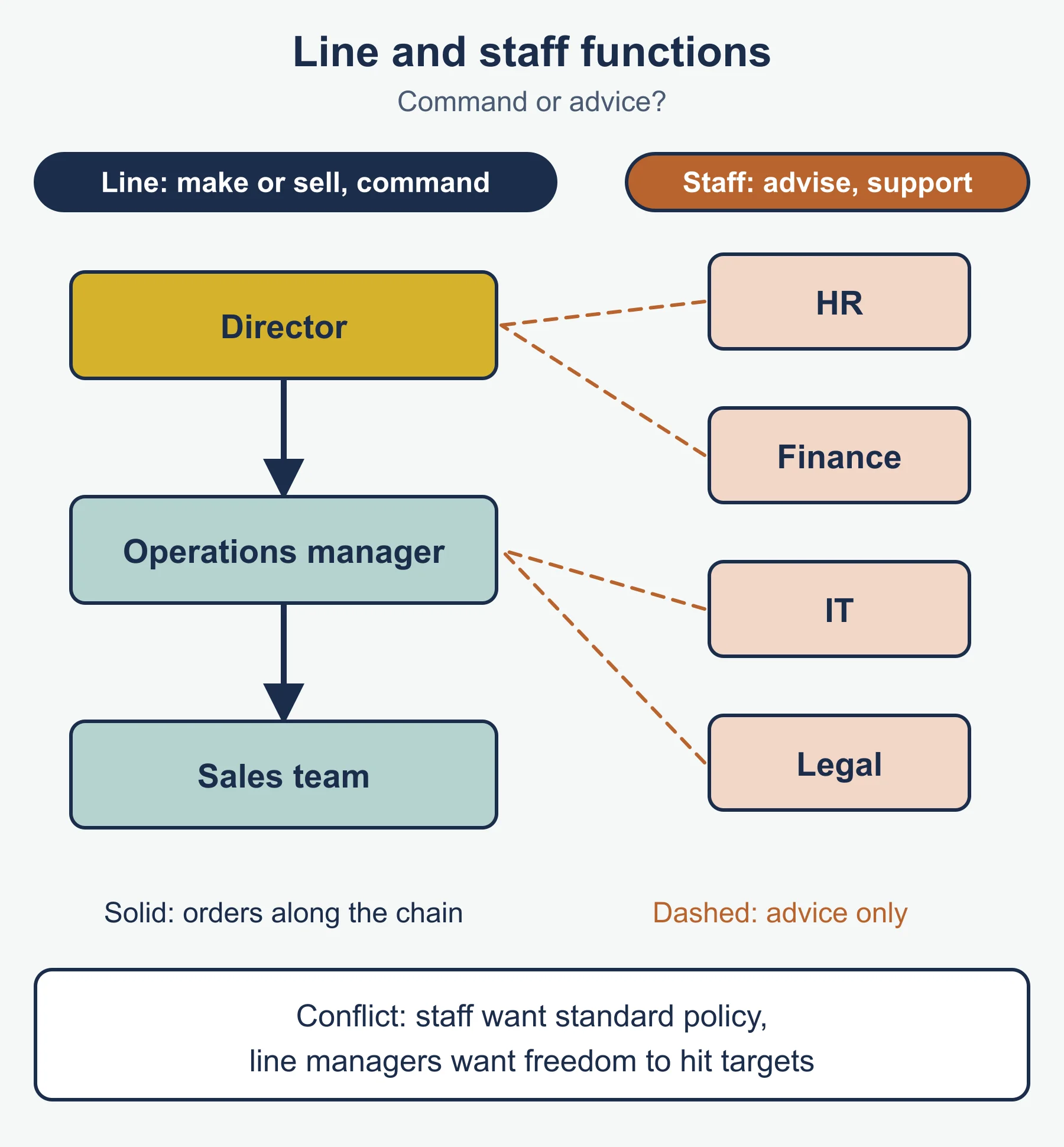
| Line relationship | Manager to direct subordinate |
| Staff relationship | Specialist advice, no direct command |
| Chain of command | The path instructions follow down the hierarchy |
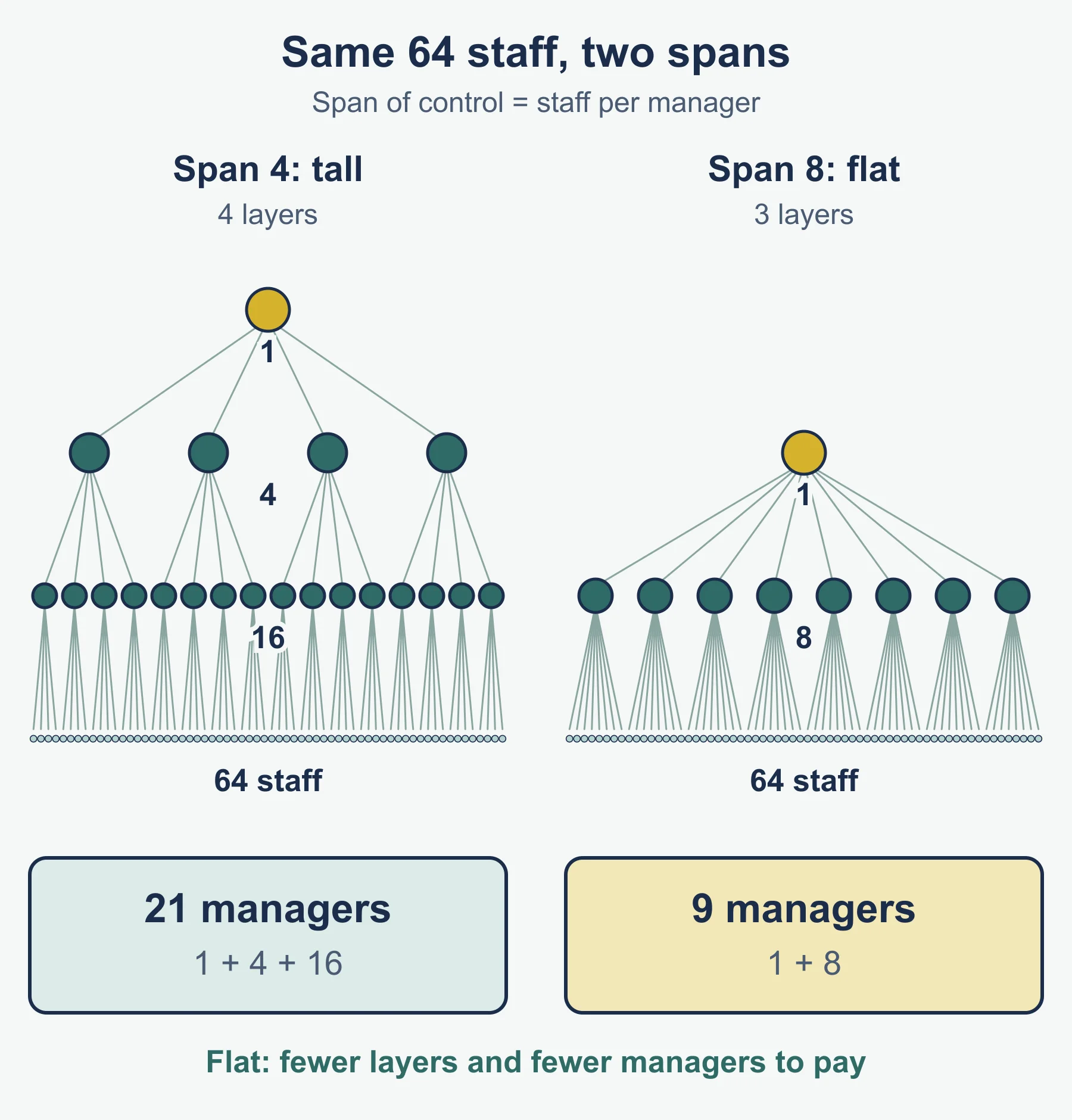
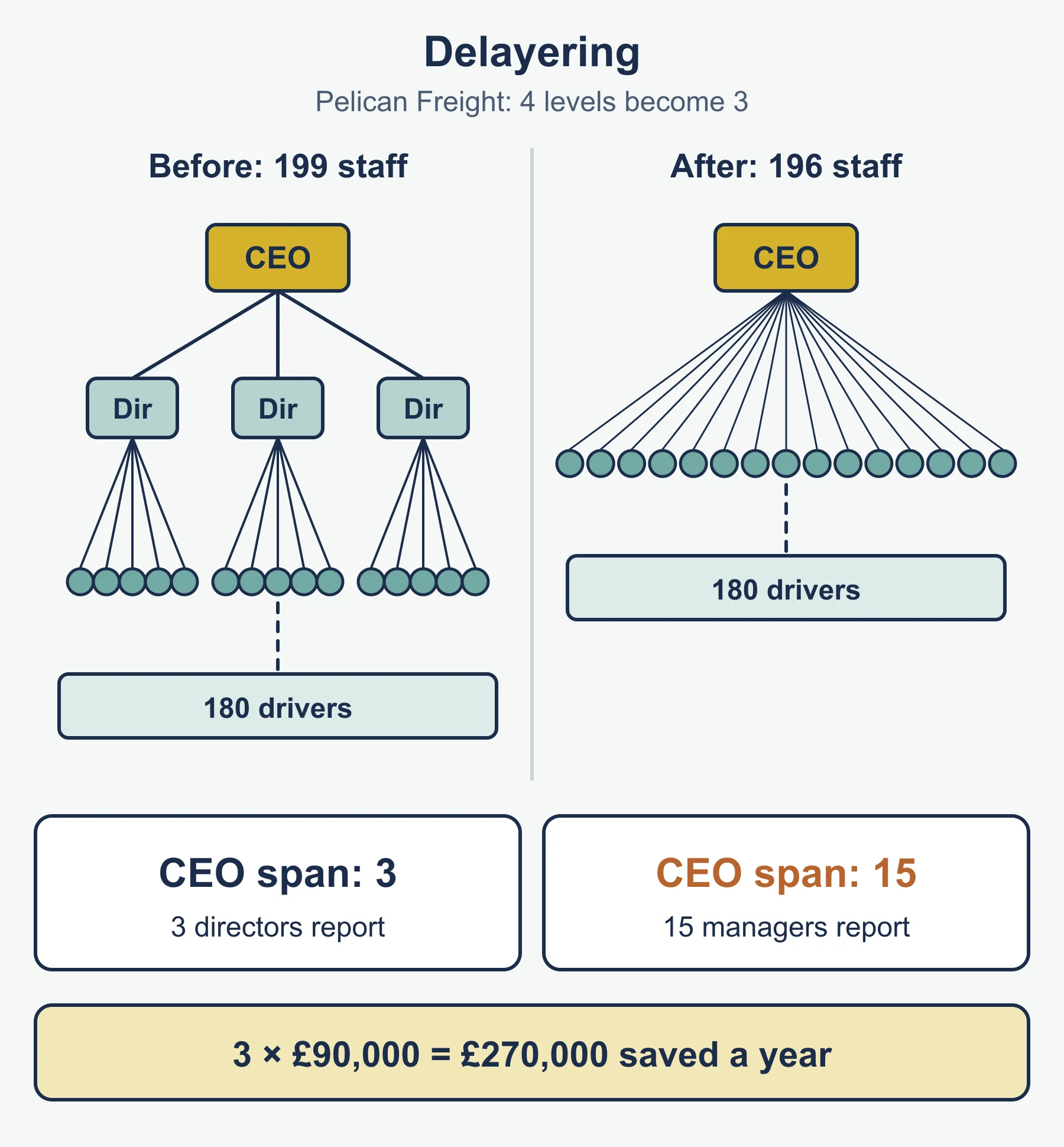
| Span of control | Number of direct reports |
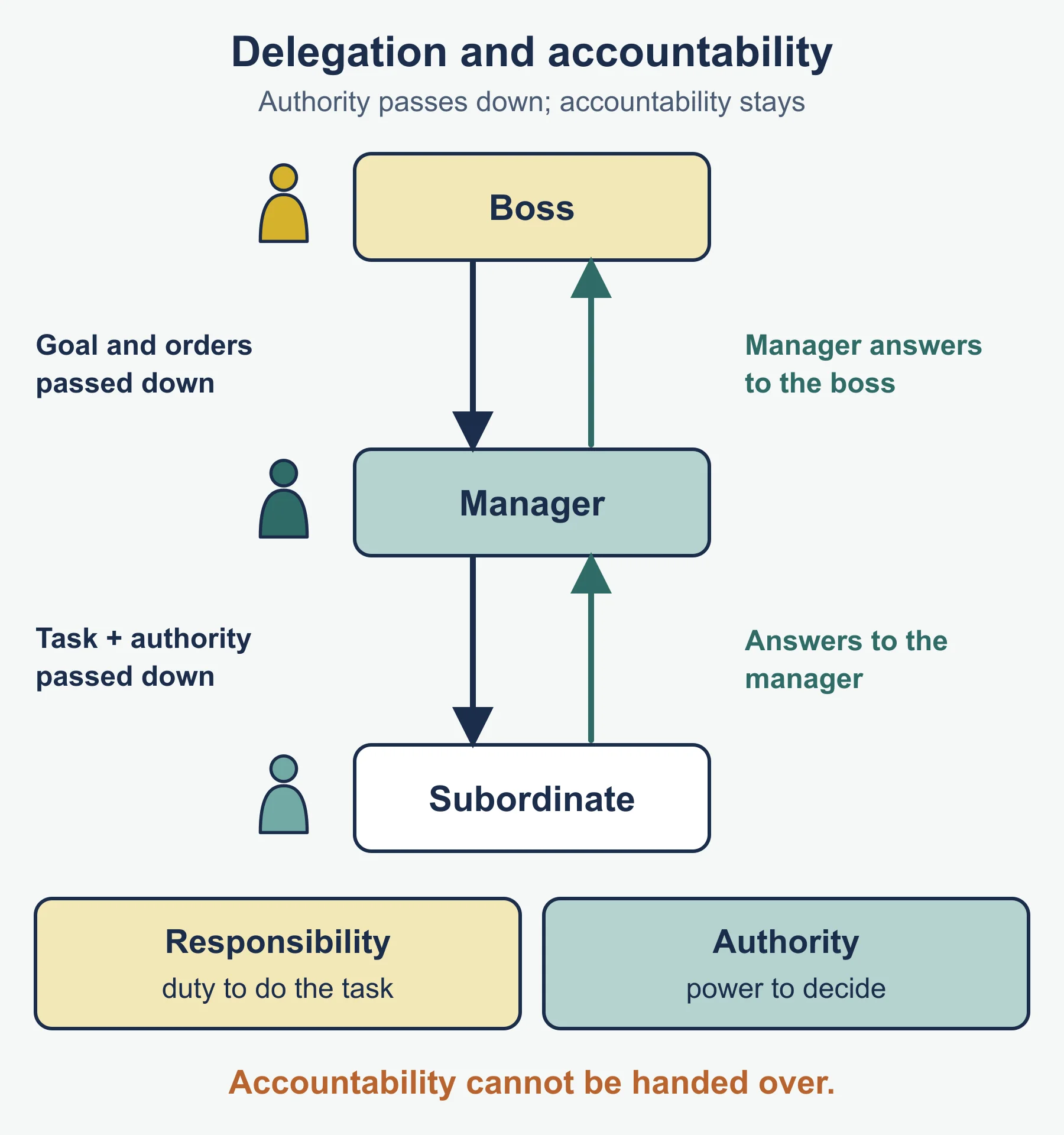
| Authority / responsibility | Right to instruct / accountability for results |
| Centralisation / decentralisation | Decisions at the top / spread downwards |
| Delegation | Passing a task and the authority to do it |
| Delayering | Removing management levels |
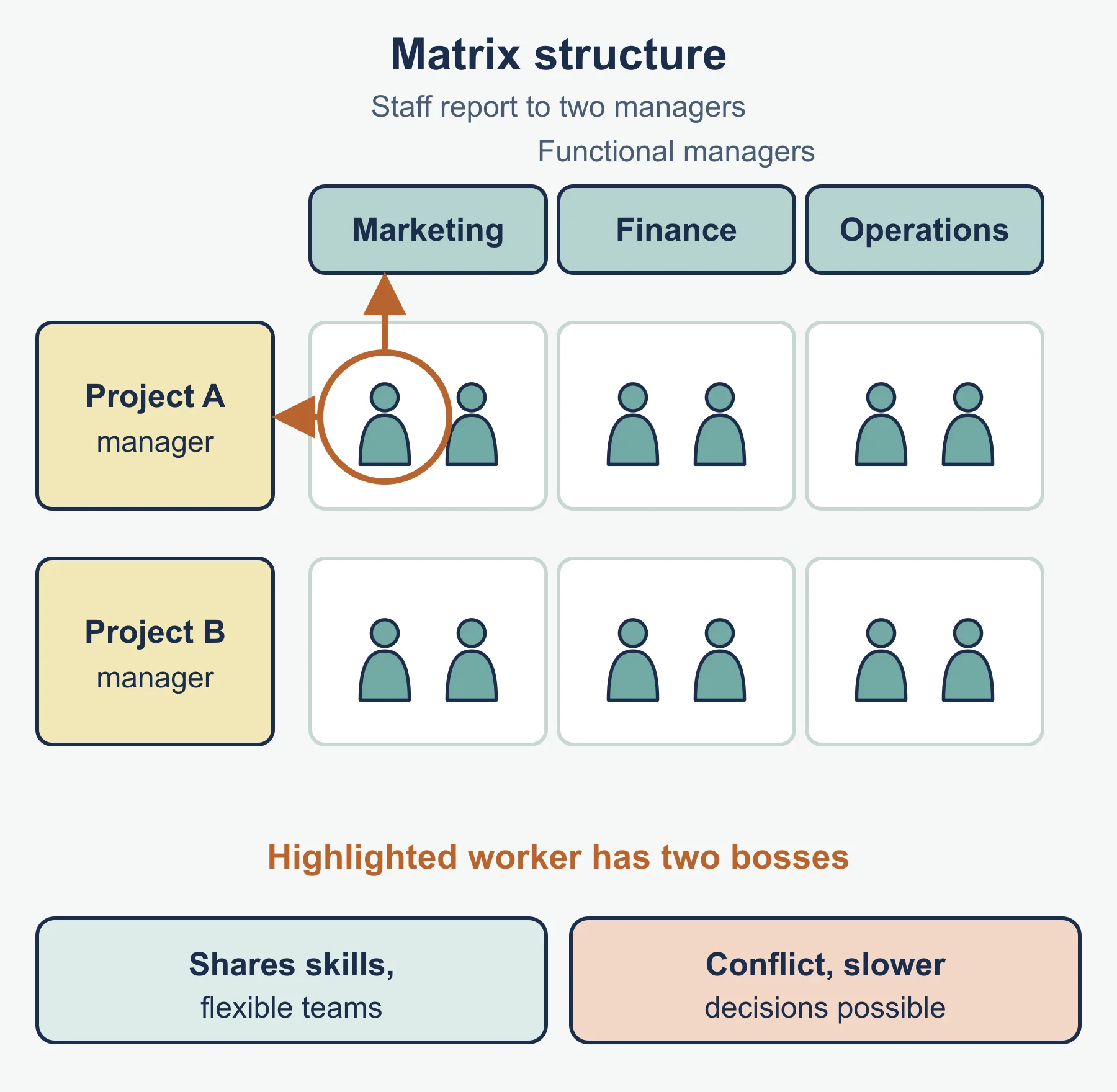
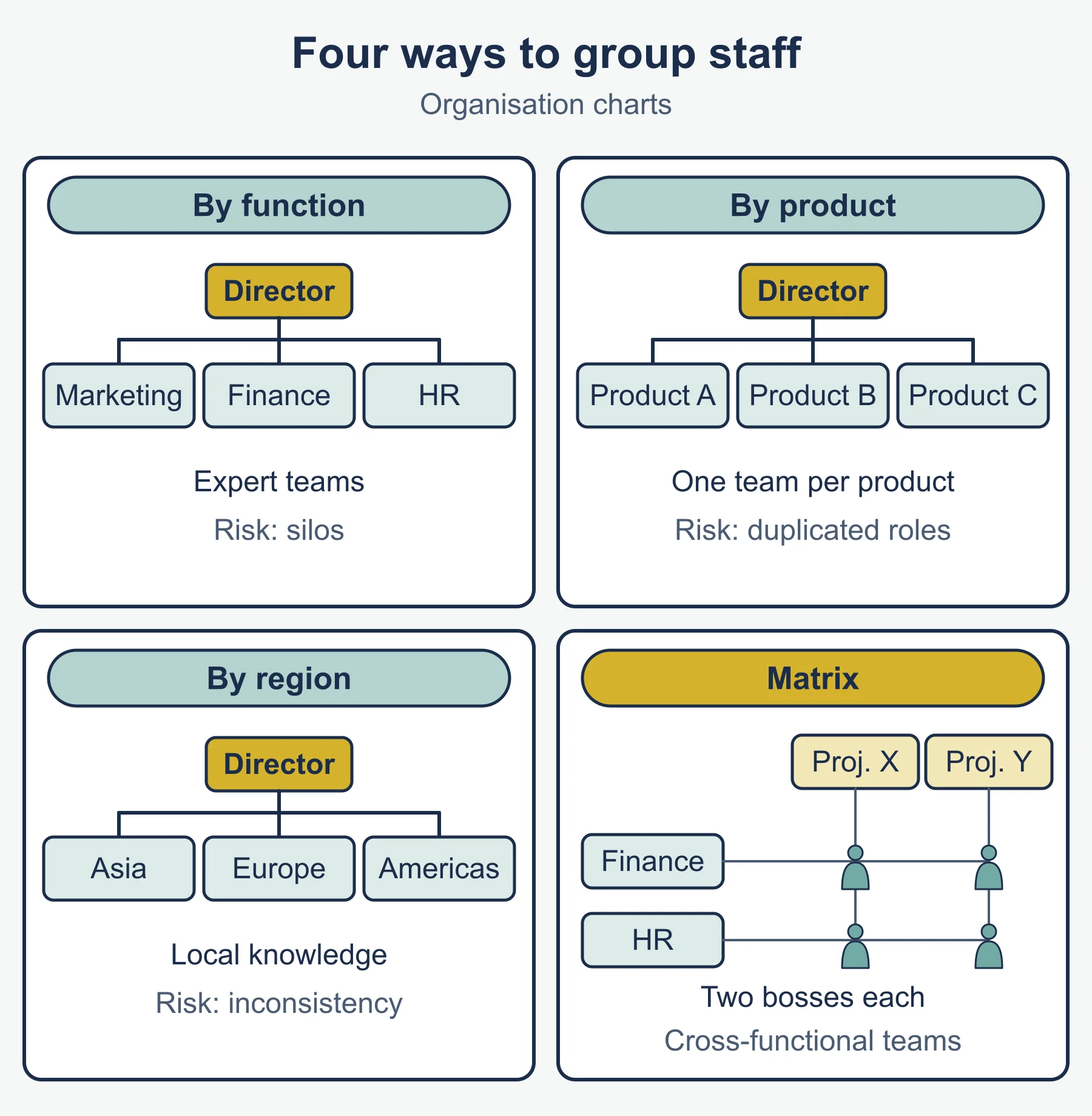
- Models: hierarchy; by function; by product; division; matrix; system.
- Tall: narrow spans, many levels, slow messages. Flat: wide spans, few levels, faster, heavier workload per manager.
- Culture is shaped by leaders, history, size, ownership, industry and structure. It affects commitment, willingness to change and how people treat customers.
- Why objectives matter: they give direction, allow measurement and link people decisions to business objectives. Limits: the wrong target, or too many targets, distort behaviour.
Communication
- Formal: official routes. Informal: grapevine, quick but can mislead.
- Group norms: unwritten rules of conduct. Group aims can clash with individual aims or with the business.
- Verbal v non-verbal: words versus gestures, tone and visuals.
- Media: written, face-to-face, oral, social, electronic, mass.
- Choice of method turns on speed, cost, audience size, detail, record and feedback.
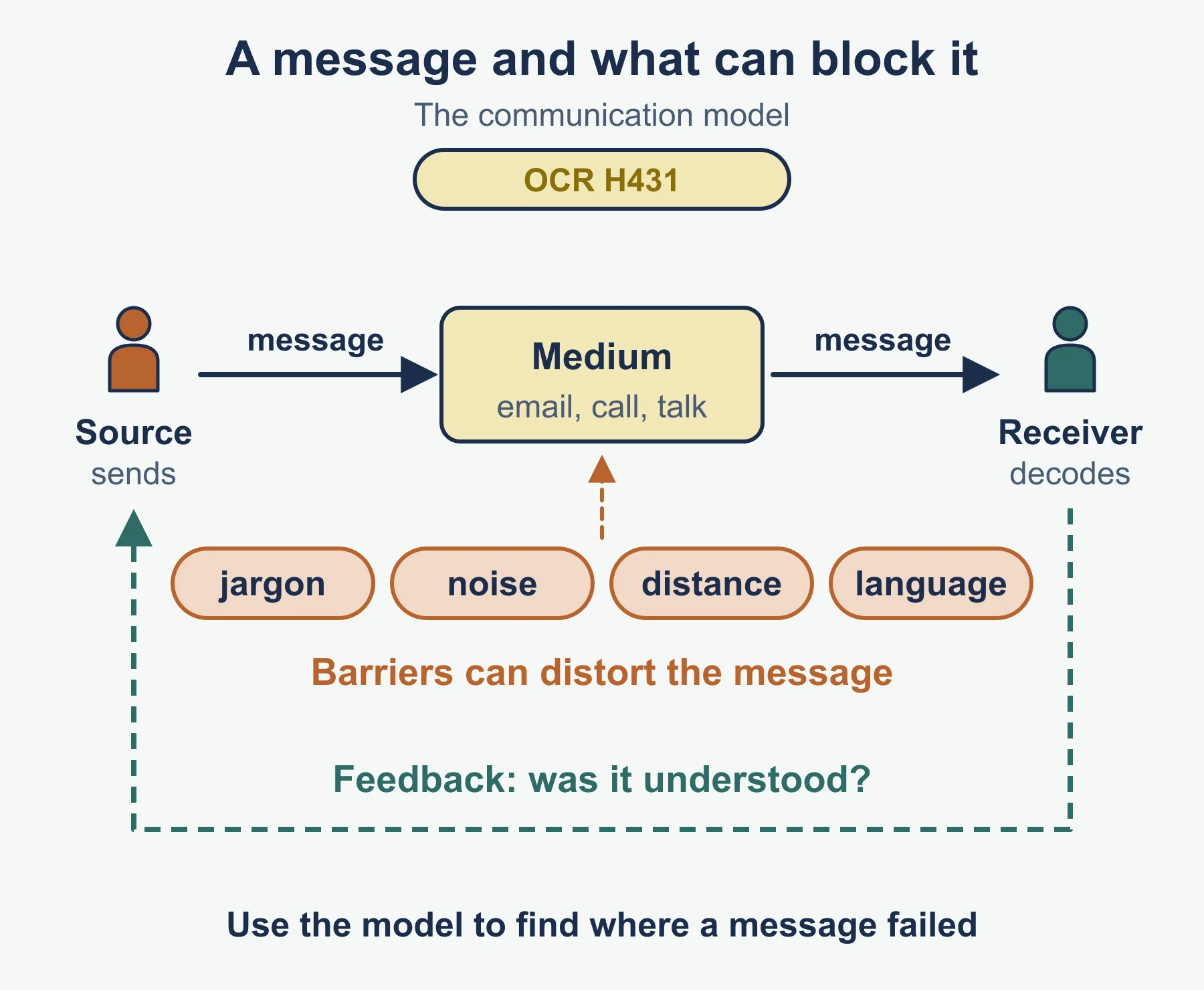
- Model: source, message, media, barriers, receiver, feedback.
- Poor communication: mistakes, delays, conflict, lower motivation and weaker customer relations. Judge effectiveness by whether objectives were met and the message understood.
Workforce planning and flexible working
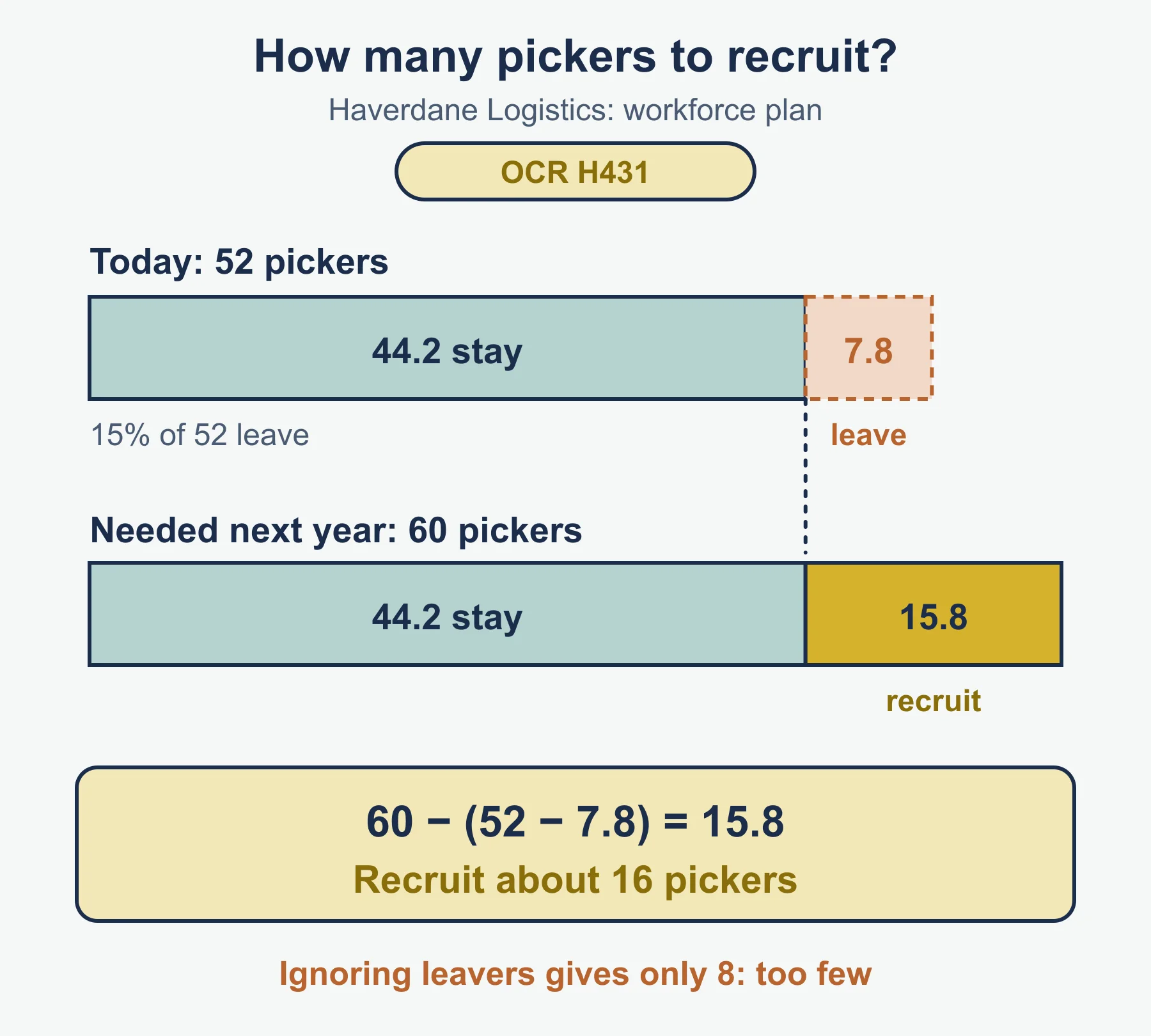
Plan: required staff, minus current staff after leavers, equals recruits.
Worked reminder (Sorrel Vale Care Homes). 70 carers needed; 58 now; 10% leave. Leavers 5.8, remaining 52.2, recruits needed 70 - 52.2 = 17.8, so 18.
| Practice | Key point |
|---|---|
| Part-time | Fewer hours than full-time |
| Flexi-time | Staff pick hours around core times |
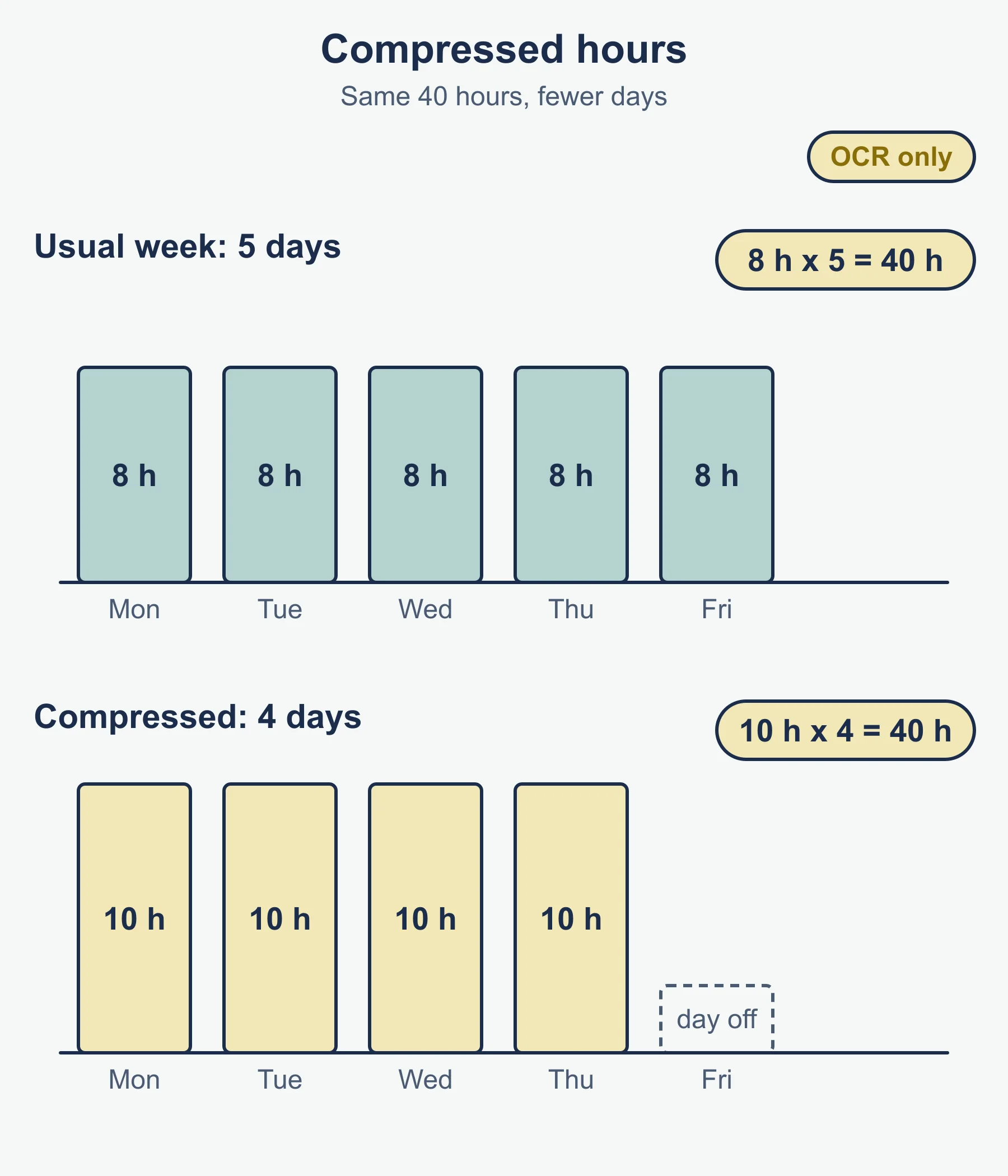
| Compressed hours | Same hours in fewer, longer days |
| Home/remote | Work away from the site |
| Annualised hours | Yearly total, spread to demand |
| Term-time | Work only in school terms |
| Time off in lieu | Time off instead of overtime pay |
| Job sharing | Two share one post |
| Zero hours | No guaranteed hours |
For the business: cover for peaks, lower office cost, wider pool. Against: harder coordination, weaker team identity. For staff: balance versus insecurity.
Recruitment, selection, training
- Recruitment: attracting applicants. Reasons: leavers, growth, new skills, promotion.
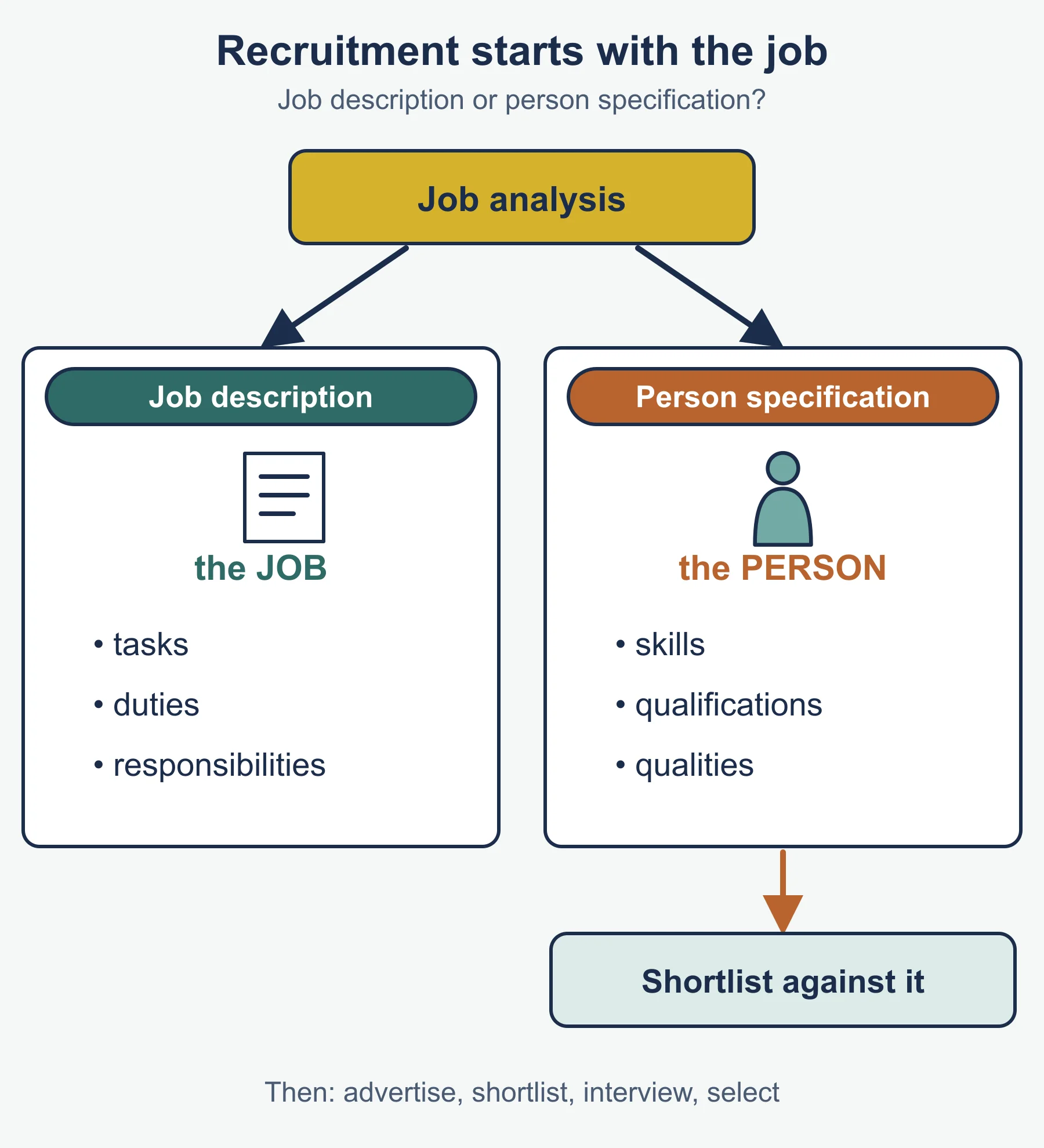
- Documents: job description (duties), person specification (the person needed), advertisement (attracts applicants).
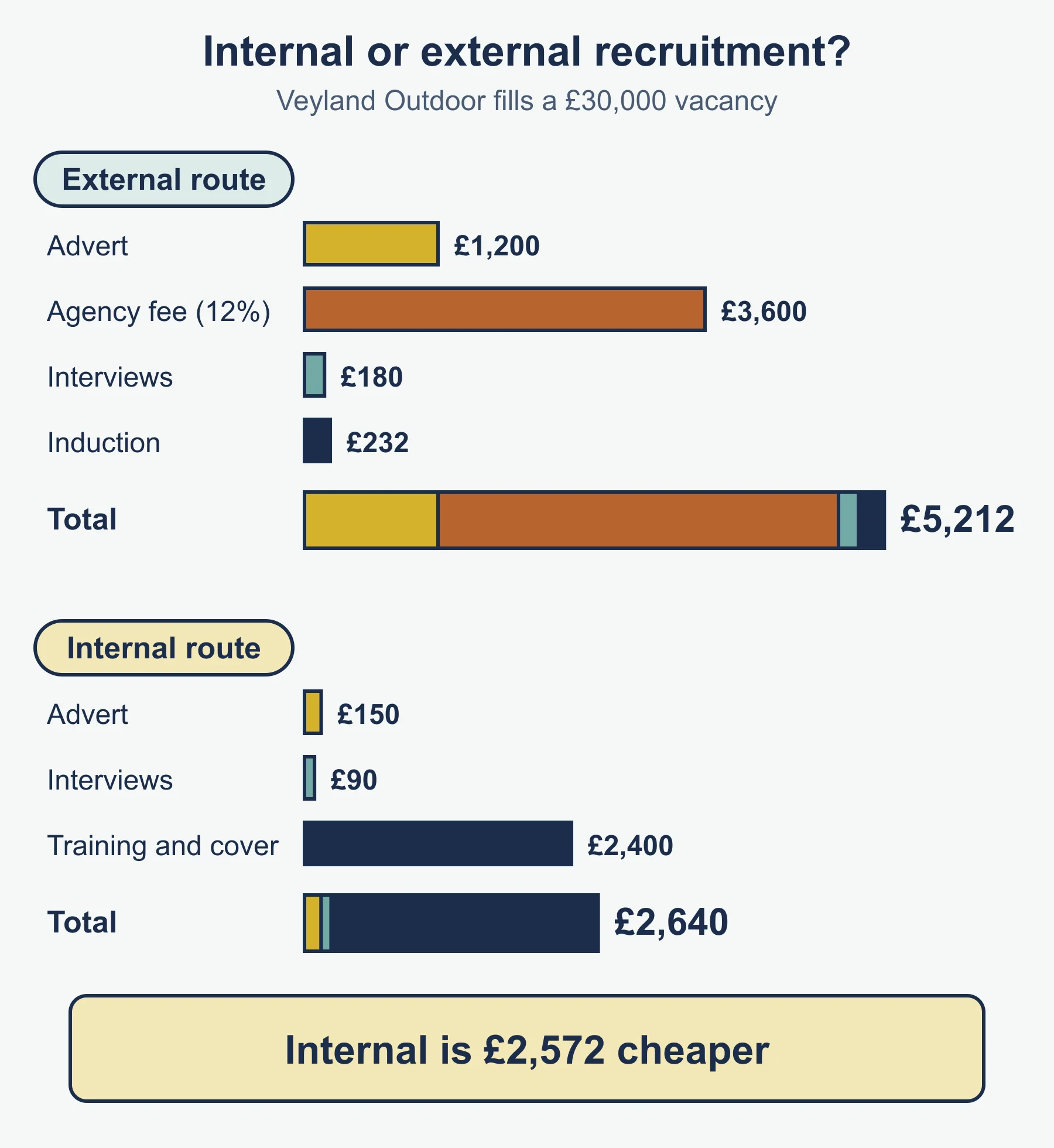
- Internal: cheaper, quick, motivating, but limited choice. External: fresh ideas, wider choice, dearer and slower.
- Selection: application form, CV, letter of application, testing, interview, work trial, references. No single method predicts well alone.
- Impact of a poor selection: retraining cost, lost output, lower team morale, re-advertising.
- Training types: induction, on-the-job, off-the-job, academic, vocational, apprenticeship.
- TNA: skills required compared with skills held; shows who needs what, avoiding wasted spend.
- Benefits of training: skill, flexibility, retention. Costs: fees, lost time, risk of poaching.
Appraisal and performance measures
- Appraisal: review of performance and plans. Methods: managerial, peer, self, 360 degree, target setting.
- Purposes: feedback, training needs, pay and promotion decisions, motivation.
| Measure | Formula |
|---|---|
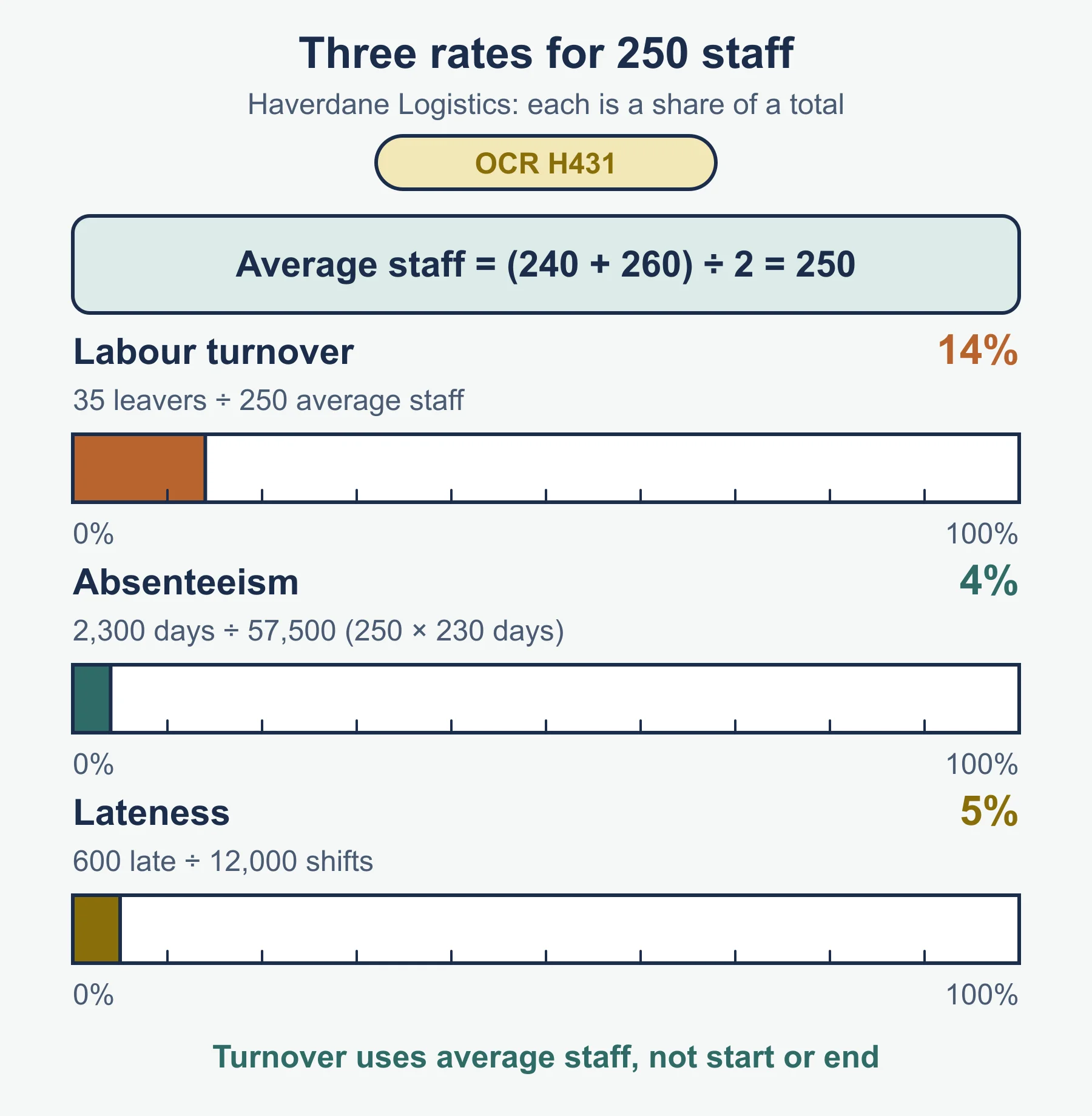
| Labour turnover | leavers / average staff x 100 |
| Absenteeism | days lost / days available x 100 |
| Lateness | late arrivals / possible attendances x 100 |
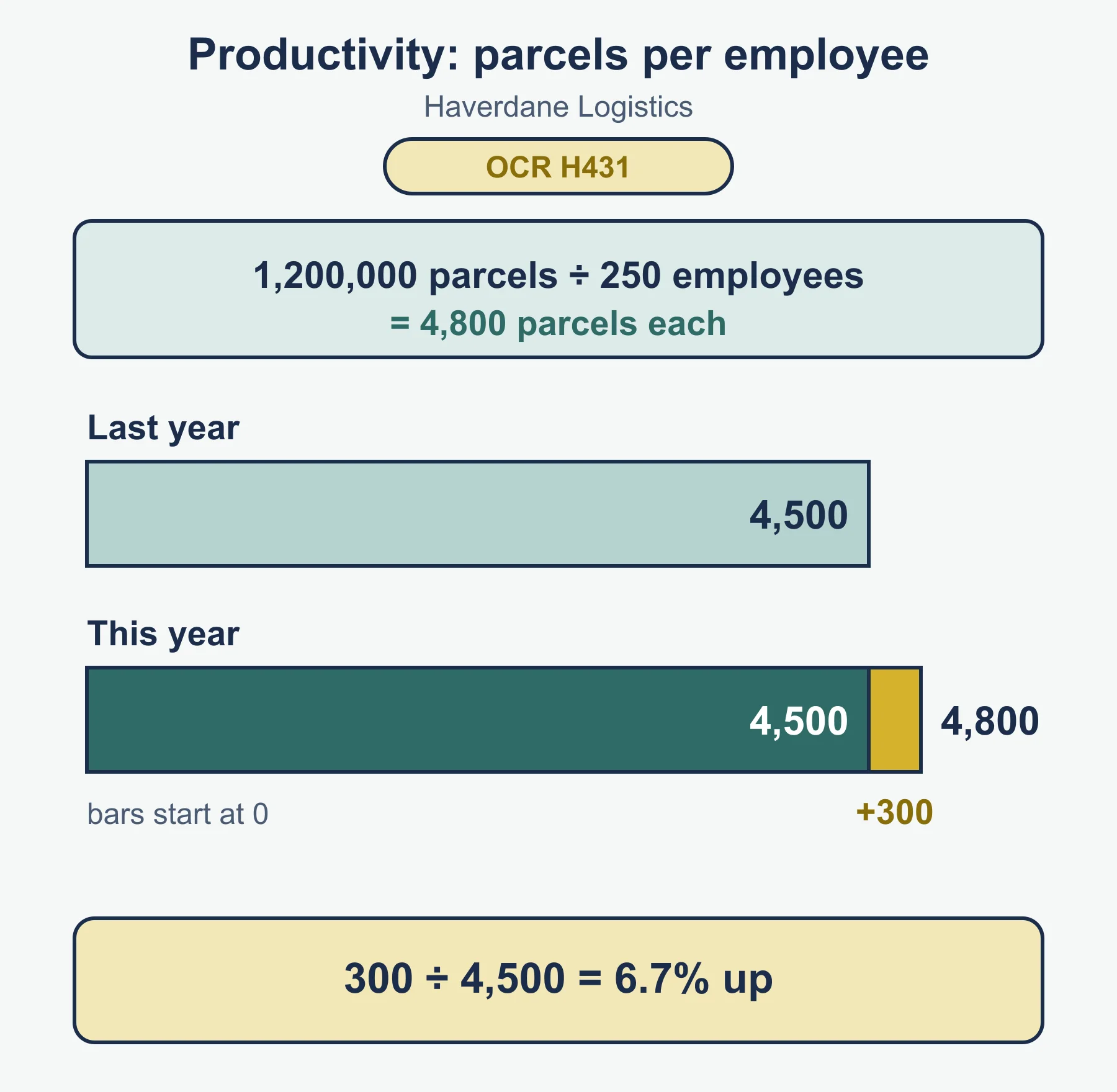
| Productivity | output / employees (or hours) |
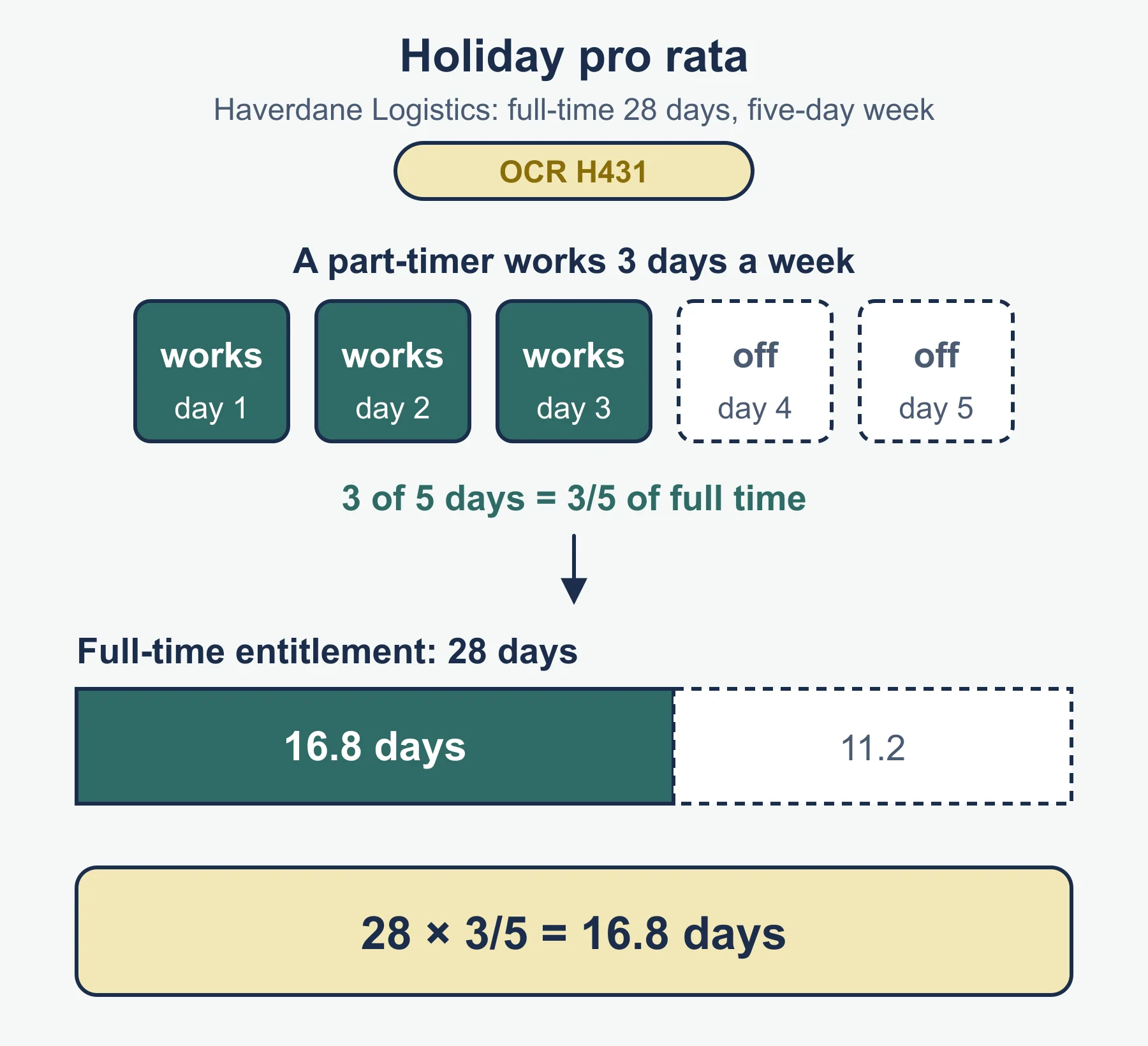
| Holiday entitlement | full entitlement x (days worked / full-time days) |
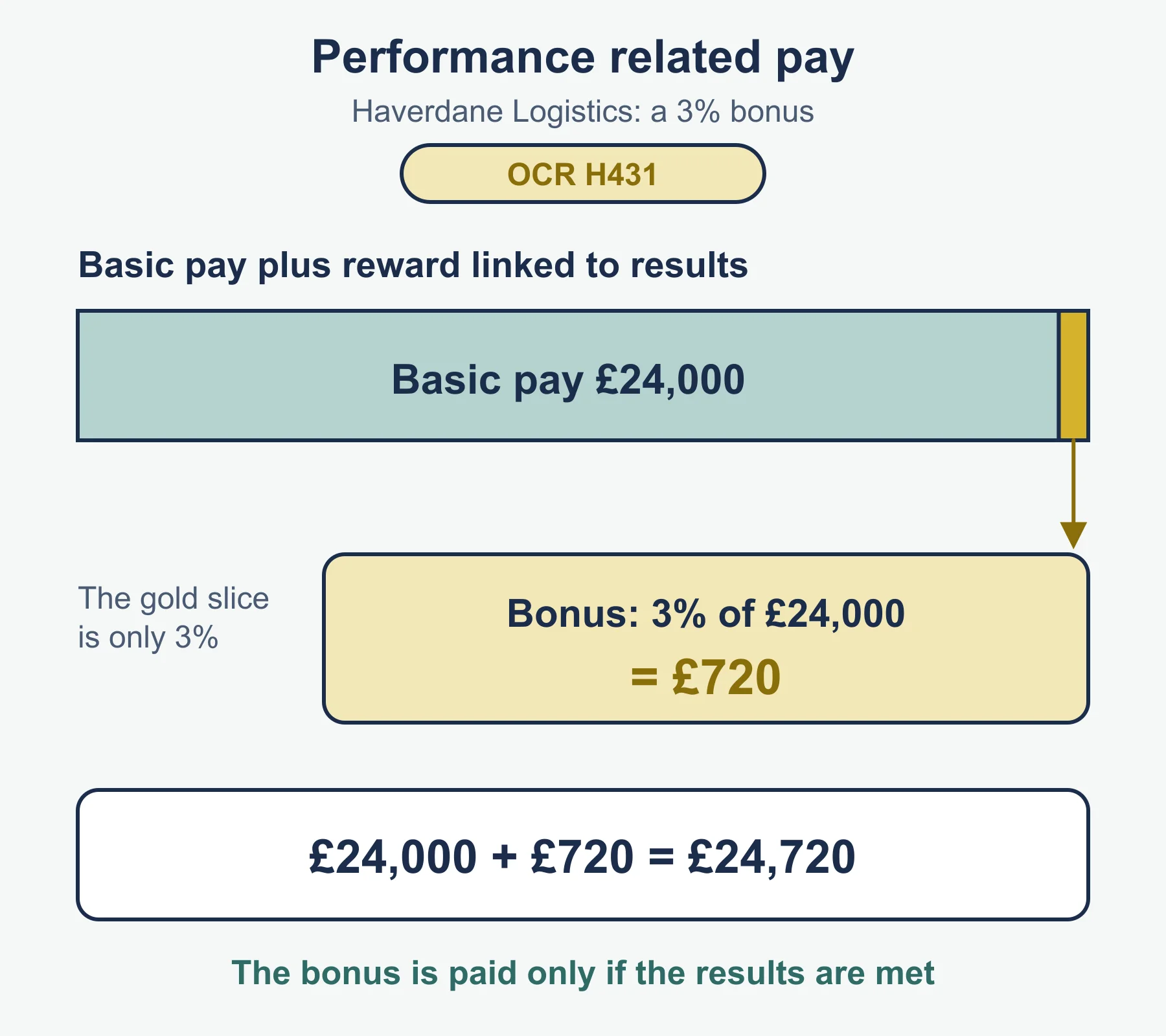
| Performance related pay | basic pay + reward for results |
Worked reminders (Sorrel Vale Care Homes, 120 staff).
- 18 leavers: 18/120 = 15% turnover.
- 1,440 days lost out of 120 x 240 = 28,800: 5%.
- 84 late arrivals out of 2,800 possible: 3%.
- 4,320 home visits / 120 = 36 per employee; up from 32.5, a rise of 10.8%.
- Holiday: 25 days for five days a week gives 25 x 2/5 = 10 days for two days a week.
- A 5% bonus on £30,000 is £1,500, giving £31,500.
Interpret by comparing with earlier periods, targets and similar businesses, and asking why the figure moved. Limits: measures do not show quality or causes.
Redundancy, dismissal, grievance, tribunals
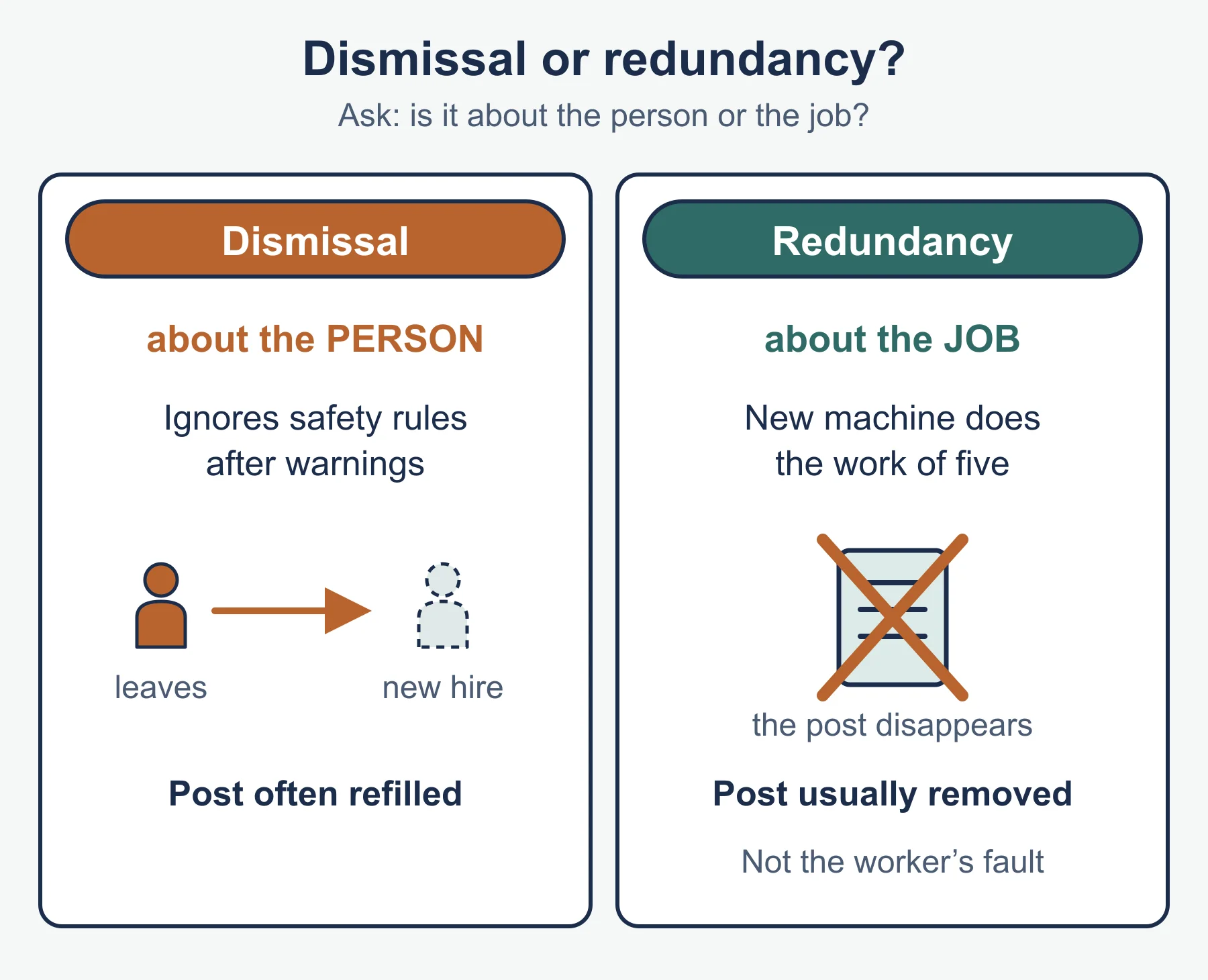
- Redundancy: the post is no longer needed. Dismissal: the employer ends the contract.
- Fair reasons: capacity, conduct, redundancy, other substantial reason.
- Unfair reasons include pregnancy, trade union membership, discrimination, whistle blowing.
- Dismissal procedure: investigate, tell the employee, hear their case, decide, offer appeal.
- Grievance procedure: formal complaint, hearing, decision, appeal.
- Employment tribunal: independent body that decides employment disputes. It gives workers a route to redress and pushes employers towards fair process, but claims cost time and money.
Management and leadership
- Management: organising resources towards objectives. Functions (standard form): plan, organise, direct, control.
- Constraints: money, law, skills, stakeholders, competitors, time.
- Success: objectives met, stakeholders satisfied, staff retained.
| Theory | Core idea |
|---|---|
| Carlyle and Galton | Leaders born with traits |
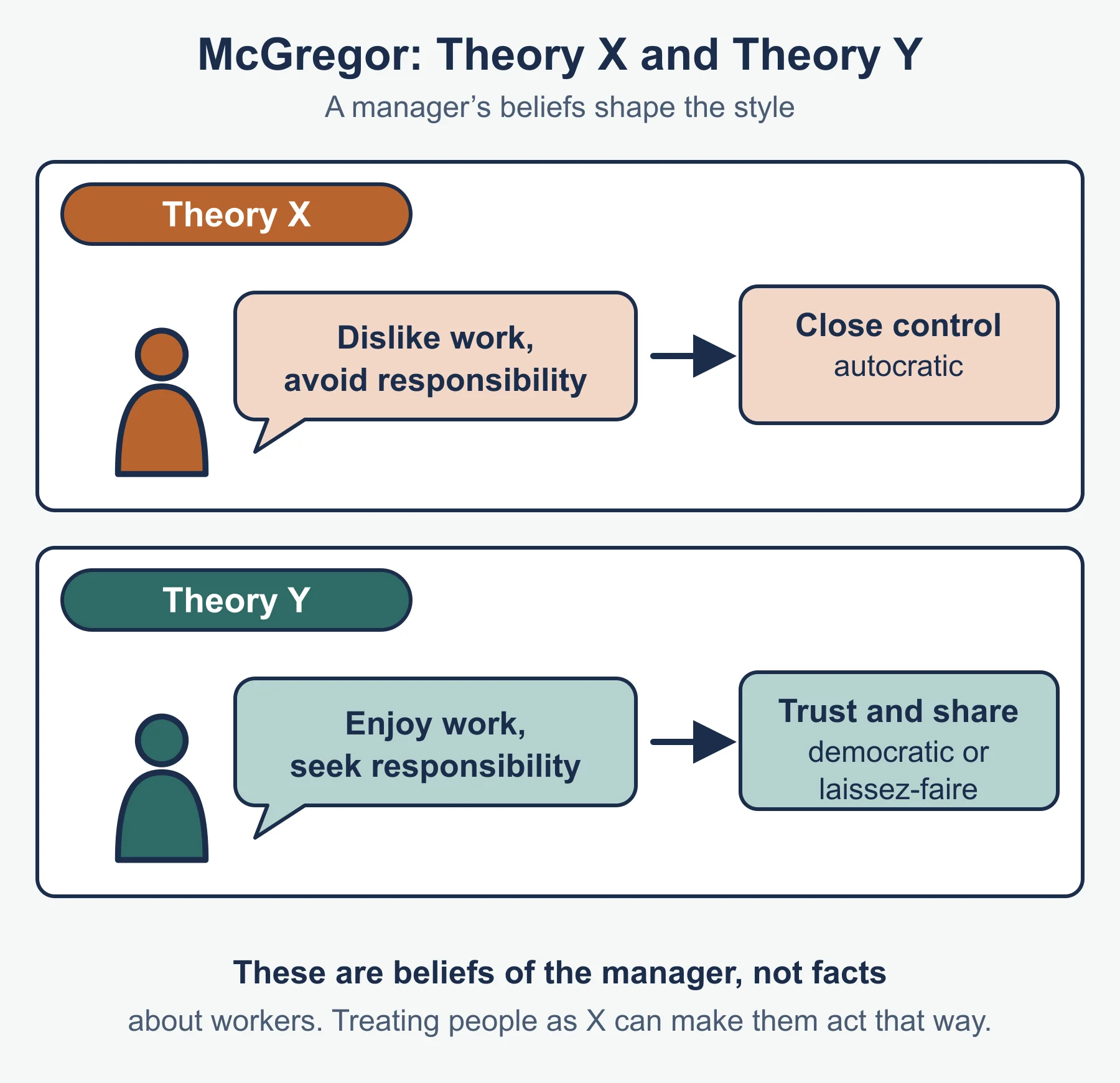
| McGregor X and Y | X: workers need control. Y: workers seek responsibility |
| Blake and Mouton | Grid of concern for production against people |
| Lewin | Contingency theory listing leadership styles |
| Tannenbaum and Schmidt | Continuum from boss-centred to subordinate-centred |
| Adair | Task, team, individual |
Styles: autocratic (leader decides), democratic (staff consulted), laissez-faire (staff largely free), paternalistic (leader decides, with care for staff). Match the style to urgency, skill and trust.
Motivation
| Theory | Core idea |
|---|---|
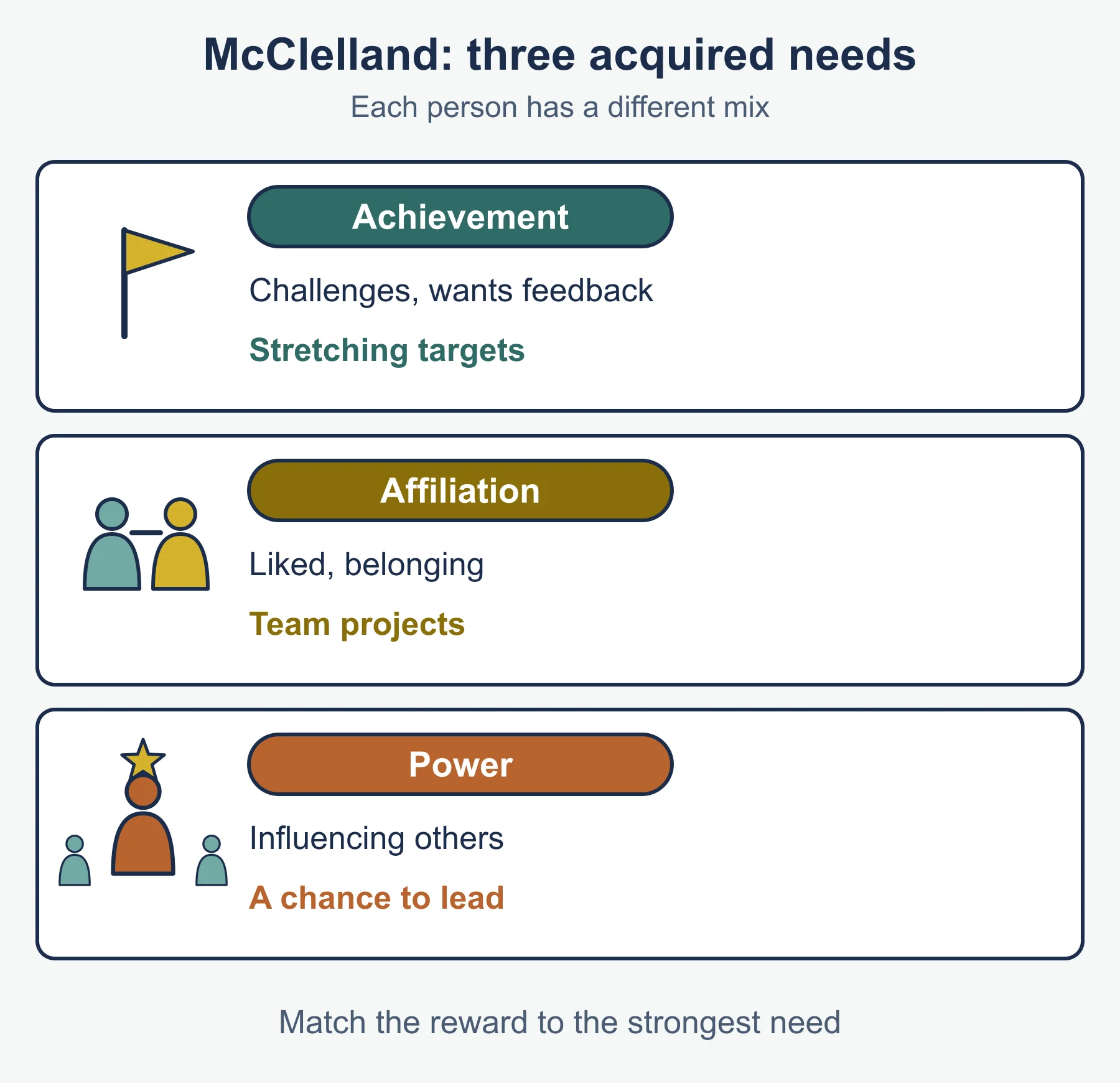
| McClelland | Needs for achievement, power, affiliation |
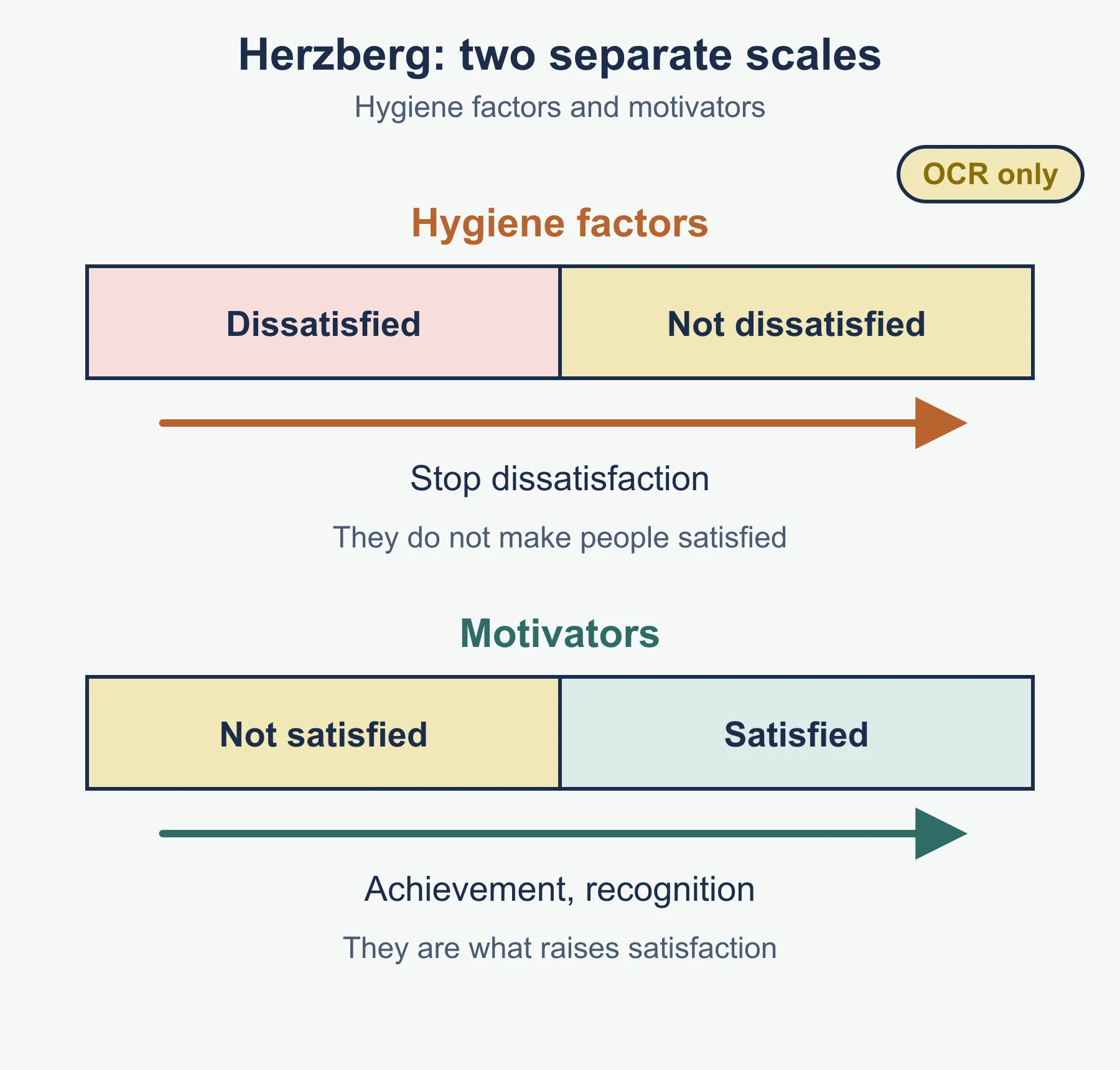
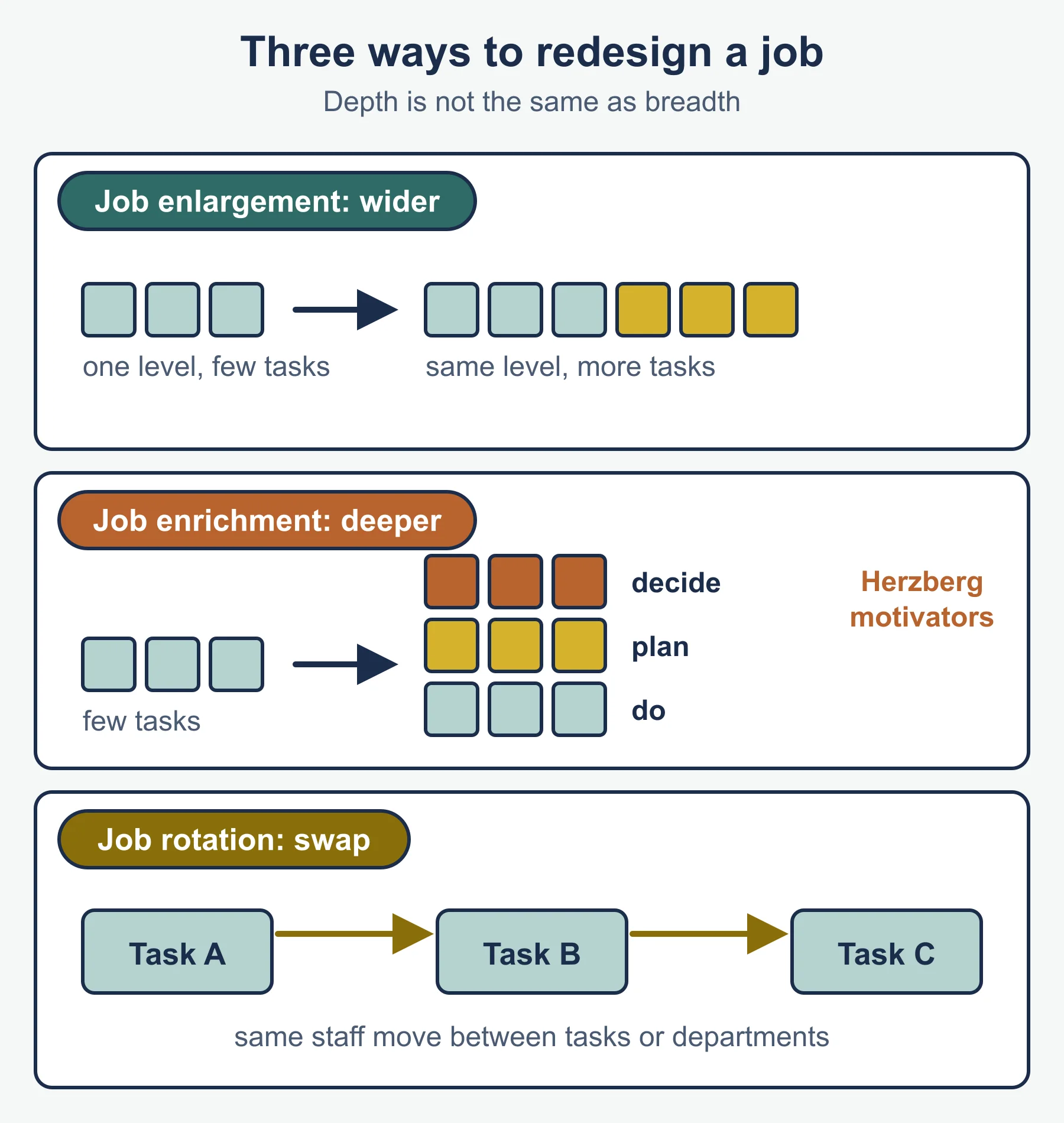
| Herzberg | Hygiene factors and motivators |
| Maslow | Hierarchy of needs |
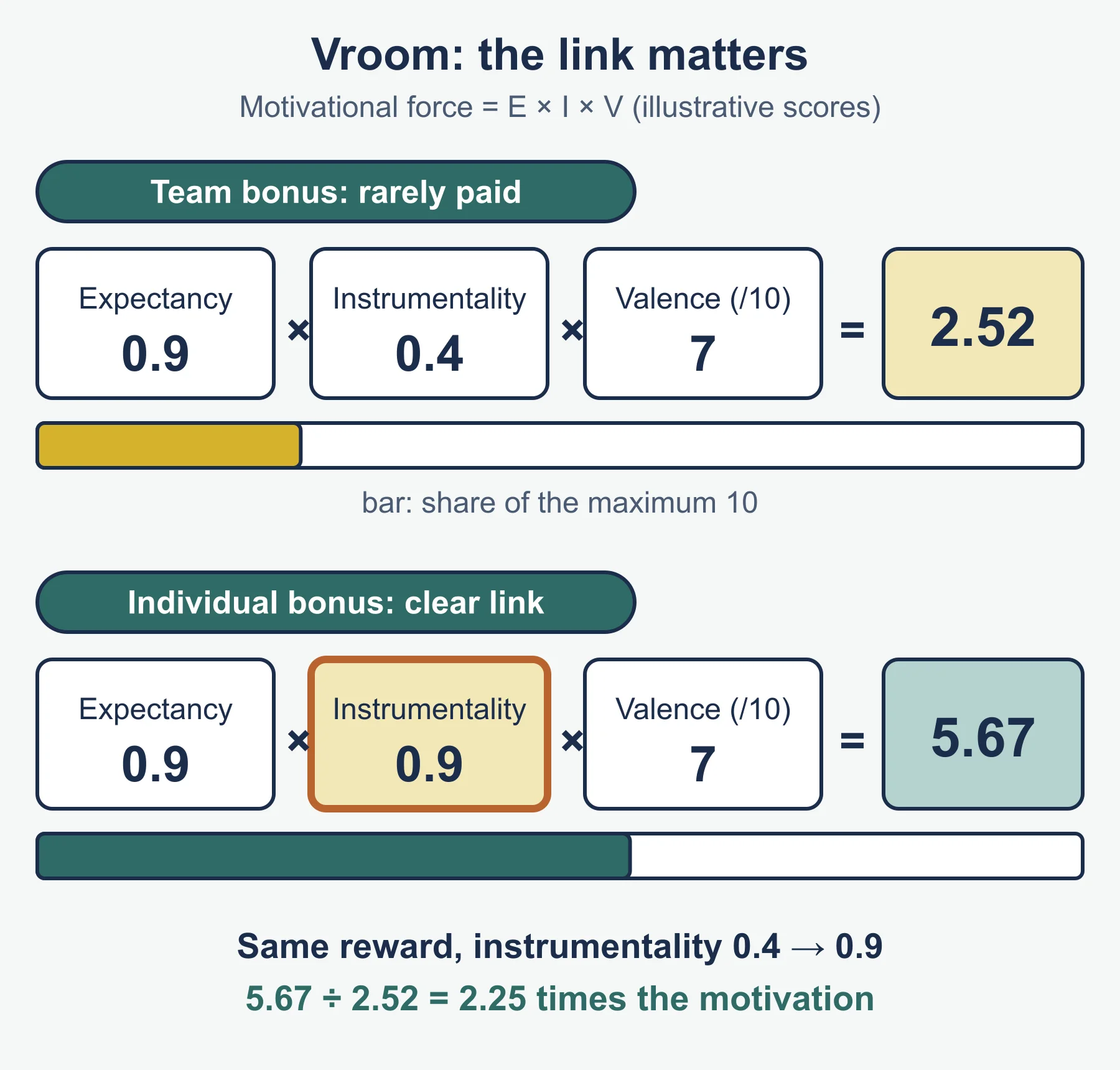
| Vroom | Expectancy: effort, performance and reward must link |
| Locke | Clear, hard goals improve performance |
| Drucker | Management by objectives |
| Peters | Excellence theory, autonomy and valuing people |
- Monetary: wages, bonus, commission, profit share. Non-monetary: praise, responsibility, training, flexible hours.
- Evaluate by asking which staff, which task, what cost and how long the effect lasts.
- Motivation affects output, turnover, quality, absence and the owner’s profit.
Relations, law, participation, unions
- Good relations: fewer disputes, easier change, steadier output. Poor relations: strikes, absence, tribunal claims, reputation damage.
- Law (general terms): contracts of employment, minimum wage, health and safety, equality, data protection, dismissal and grievance.
- Participation: industrial democracy, participative decision making, works councils.
- Trade union: representative body of workers that bargains over pay and conditions and supports members. The changing pattern of membership and activity changes how firms negotiate.
External influences and strategy
The eight influences are social, legal, ethical, environmental, economic, political, technological and international. For each, state the change, the effect on recruitment, cost, skills or morale, and how the business can respond.
A human resources strategy sets long-term people plans that support business objectives. Impact depends on fit, cost and stakeholder acceptance. To recommend: choose, justify with evidence, give a risk.
Evaluation prompts
Ask these to move from description to judgement.
- Size: is the business small enough for informal methods, or large enough to need formal ones?
- Skills: are the staff skilled and experienced, or new and unskilled?
- Time: does the benefit come at once or only after months?
- Cost: does the gain outweigh the cost of fees, pay, lost time or administration?
- Stakeholders: who gains and who loses, among employees, managers, owners, customers and the community?
- Context: what in the case makes the answer different for this business?
Finish with a short judgement that begins “On balance” and names the factor on which it depends.
Quick self-test
- What is the span of control for a manager with nine direct reports?
- Give one disadvantage of a tall structure.
- Name the six parts of the communication model in the specification.
- A firm had 400 staff on average and 48 left. Find labour turnover.
- 3,000 days were lost from 100 staff who could each work 250 days. Find absenteeism.
- A team of 20 makes 5,000 units. Find productivity per employee.
- A 25-day holiday for five days a week: what for three days a week?
- Name two fair reasons for dismissal.
- Which theorist wrote about hygiene factors?
- Name two types of employee participation.
Answers
- Nine.
- Slow communication, or higher management cost.
- Source, message, media, barriers, receiver, feedback.
- 48/400 = 12%.
- 3,000/25,000 = 12%.
- 5,000/20 = 250 units.
- 25 x 3/5 = 15 days.
- Any two of capacity, conduct, redundancy, other substantial reason.
- Herzberg.
- Any two of industrial democracy, participative decision making, works councils.
Where marks are usually lost
- Defining a term correctly but not linking it to the case.
- Giving turnover without using average staff.
- Writing one-sided evaluation with no judgement.
- Listing theorists without applying them.
- Ignoring stakeholders other than employees.
- Mixing up redundancy and dismissal.
- Recommending a method with no justification from the data.
Frequently asked questions
How do you calculate labour turnover for OCR A Level Business H431? Labour turnover = leavers ÷ average number of staff × 100, which is the standard form. Use the average of opening and closing staff, not the closing figure alone.
Is redundancy the same as dismissal? No. Redundancy is when a job is no longer needed. Dismissal is the employer ending the contract, and fair reasons include capacity, conduct and redundancy.
What is the difference between Theory X and Theory Y? McGregor’s Theory X assumes workers dislike work and need control. Theory Y assumes people enjoy work and seek responsibility, which leads to democratic or laissez-faire management.
How should motivation and leadership theorists be used in answers? Apply each theorist to the case rather than listing names. Naming a theorist without linking the theory to the business in the question earns little.
Official syllabus
Source: OCR A Level in Business (H431), Version 2.1 (January 2026), published by OCR; Human resource management, Human resources and strategy content headings.
Get free revision emails (optional)
Occasional emails with practice questions, worked explanations and links to free resources for the qualification and subjects you choose. No spam, and you can unsubscribe from any email. The free tools on this site never need an email.
Related resources
-
Study guides
OCR A Level Business: Human resources (H431)
Study guide to the whole Human resources topic of OCR A Level Business H431: structures, recruitment, motivation, leadership, relations and strategy.
Business · OCR · A Level
Read guide -
Practice questions
OCR A Level Business: Human resources (H431) – Practice Questions
Original practice questions with worked answers on Human resources for OCR A Level Business H431: short answers, calculations and cases.
Business · OCR · A Level
Try questions -
Study guides
OCR A Level Business: Market forces, physical and non-physical markets, competition, dominance (H431)
Study guide to market forces, physical and non-physical markets, competition and market dominance for OCR A Level Business H431, with worked examples.
Business · OCR · A Level
Read guide
Related articles
-
teaching
A Level tuition in Dubai: Cambridge or Pearson Edexcel International A Level?
Schools in Dubai and Abu Dhabi teach either Cambridge International AS & A Level or Pearson Edexcel International A Level. How the two are structured, why it matters for tuition, and how online classes from Lahore work.
9 October 2026
-
curriculum guides
Choosing subjects at IGCSE and A Level
How subject choices at 14 and 16 affect university options later, and how to keep pathways open without overloading a timetable.
28 July 2026
Studying this with a teacher
Working through Business A LEVELS?
This page is free and stays free. If you would rather be taught it, Marlbridge runs Business classes one-to-one, online in your own time zone. One-to-one only for this course: Rs 6,000 per class in Pakistan, with other currencies on the fees page. The first trial class is free. WhatsApp replies within an hour (8am–11pm Pakistan time, every day); email the same day.
OCR Business teachers at Marlbridge
