
Revision Notes
OxfordAQA IGCSE Business: Marketing (9225) – Revision Notes
Condensed revision notes for section 3.5 Marketing in OxfordAQA International GCSE Business: segmentation, market research and the 4Ps.
- Subject
- Business
- Level
- IGCSE
- Topic
- Marketing
- Author
- Marlbridge Academic Team
- Updated
- Reviewed by
- Salman Ahmad (what this means)
Aligned to OxfordAQA IGCSE Business (9225), First teaching September 2020, first examined May/June 2022. Official specification .
Syllabus page (what it covers and how it is assessed): OxfordAQA IGCSE Business.
Syllabus points this page covers
9225
- 5 Marketing (whole topic)
Found an error? Report a correction.
Need help with this topic? Request a free trial class for IGCSE Business (9225).
These notes condense section 3.5 Marketing of the OxfordAQA International GCSE Business (9225) specification, version 3.1, for exams from May/June 2022 onwards. For full explanations read the study guide, then test yourself with the practice questions. The course hub, the printable checklist and the free diagnostics show what else to revise. All businesses and figures are invented.
Topic map
| Ref | Topic |
|---|---|
| 3.5.1 | Identifying and satisfying customer needs (local, national, international) |
| 3.5.2 | Market segmentation: gender, age, location, income |
| 3.5.3 | Market research: purpose, methods, using results, inaccuracy |
| 3.5.4 | Price, product, promotion, place, e-commerce, the integrated mix |
3.5.1 Customers
- Identify who customers are and what they need, then supply what they will buy.
- Local, national and international markets differ in tastes, income and culture, so the offer may need adapting.
- Why it matters: unsold stock and wasted spending follow from guessing wrong.
3.5.2 Segmentation
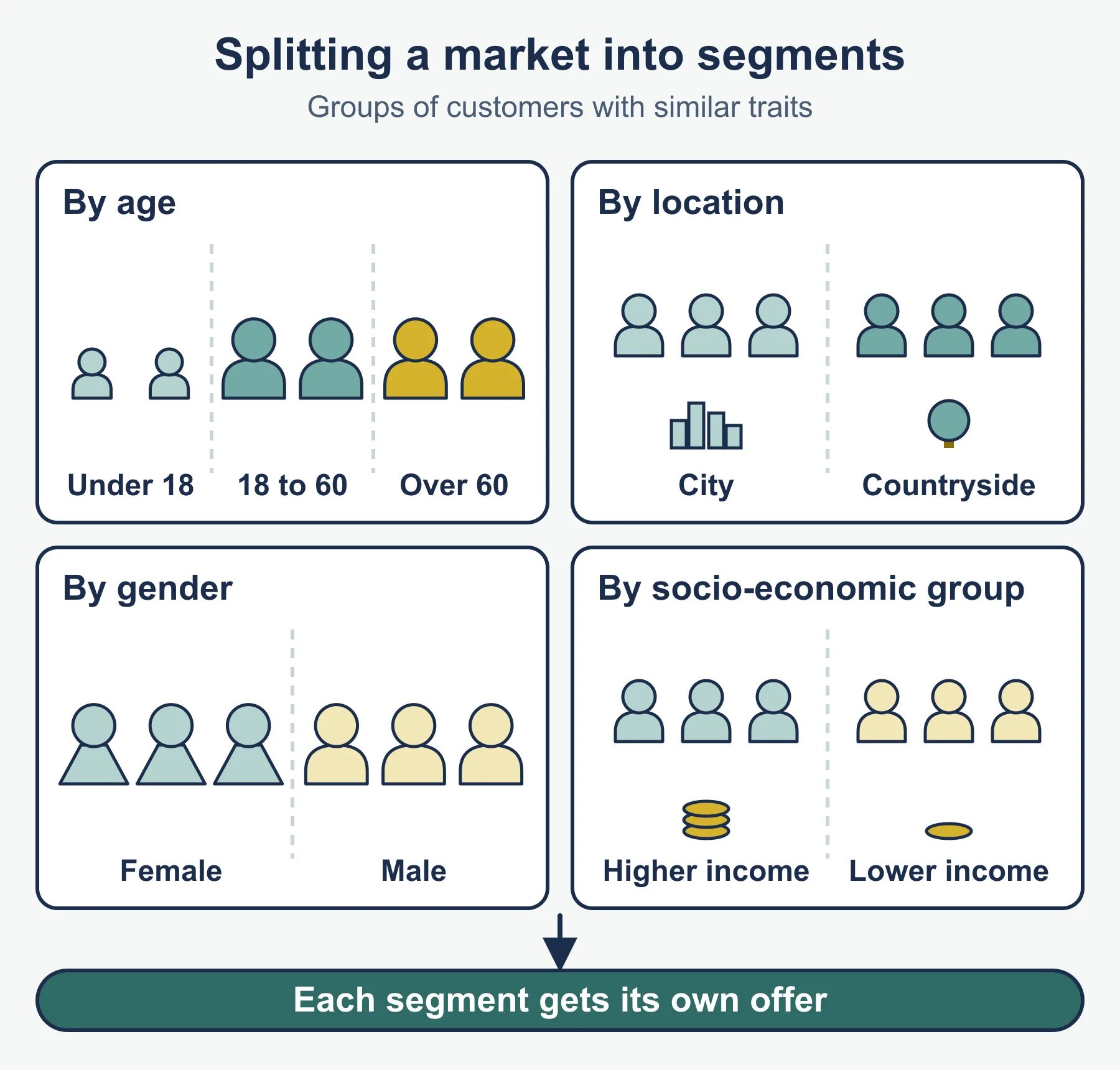
- A segment is a group of customers with shared characteristics.
- Types: gender, age, location, income.
- Benefit: product, price and message fit the group; money goes where buyers are. Cost: more products and campaigns.
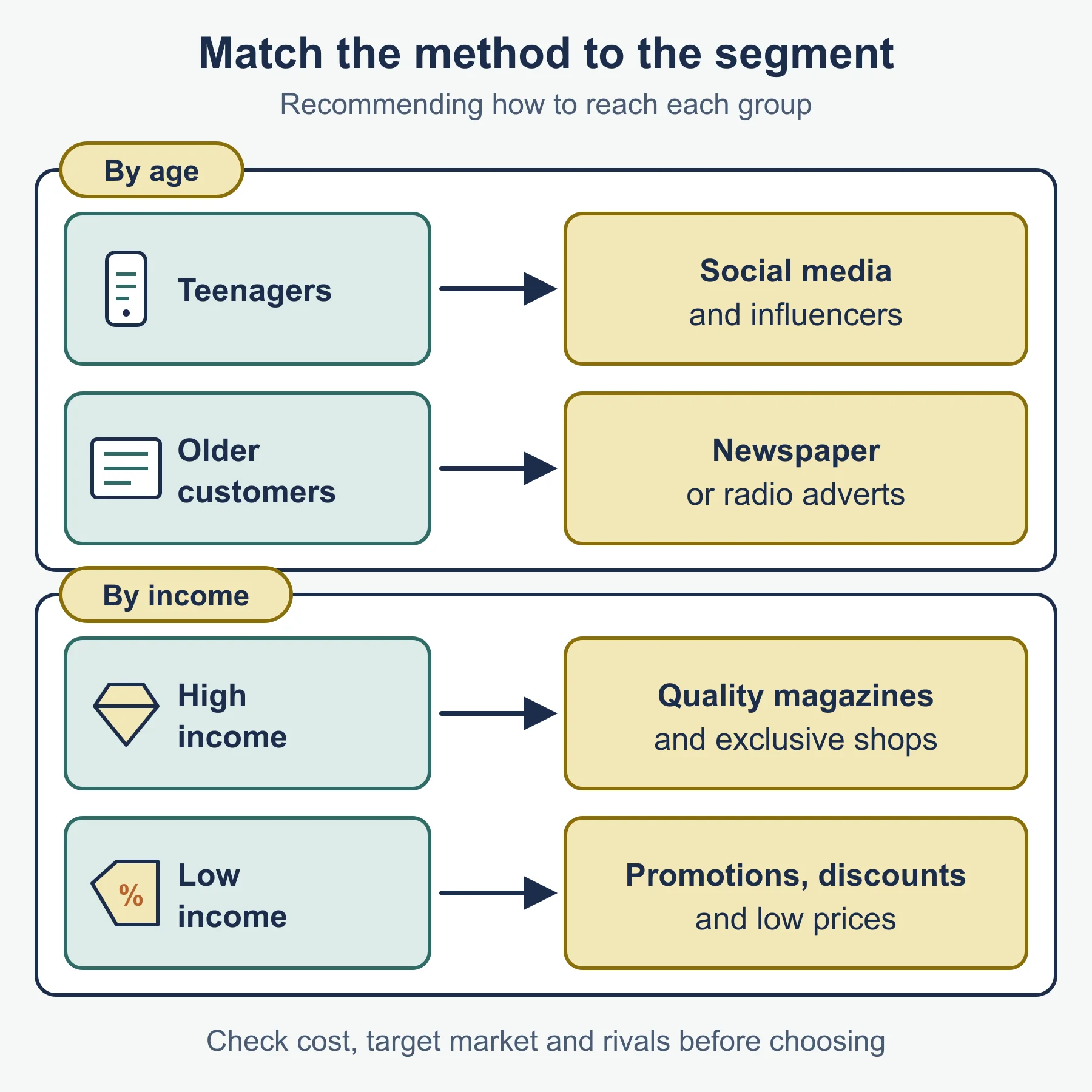
- Method to recommend: young segment, social media; older segment, print or radio; high income, exclusive retail and quality magazines; low income, discounts.
3.5.3 Market research
Purpose
- Identify market opportunities.
- Gain insight into customers and competitors.
- Reduce the risk of launching the wrong thing.
Must-know distinctions
| Pair | Difference |
|---|---|
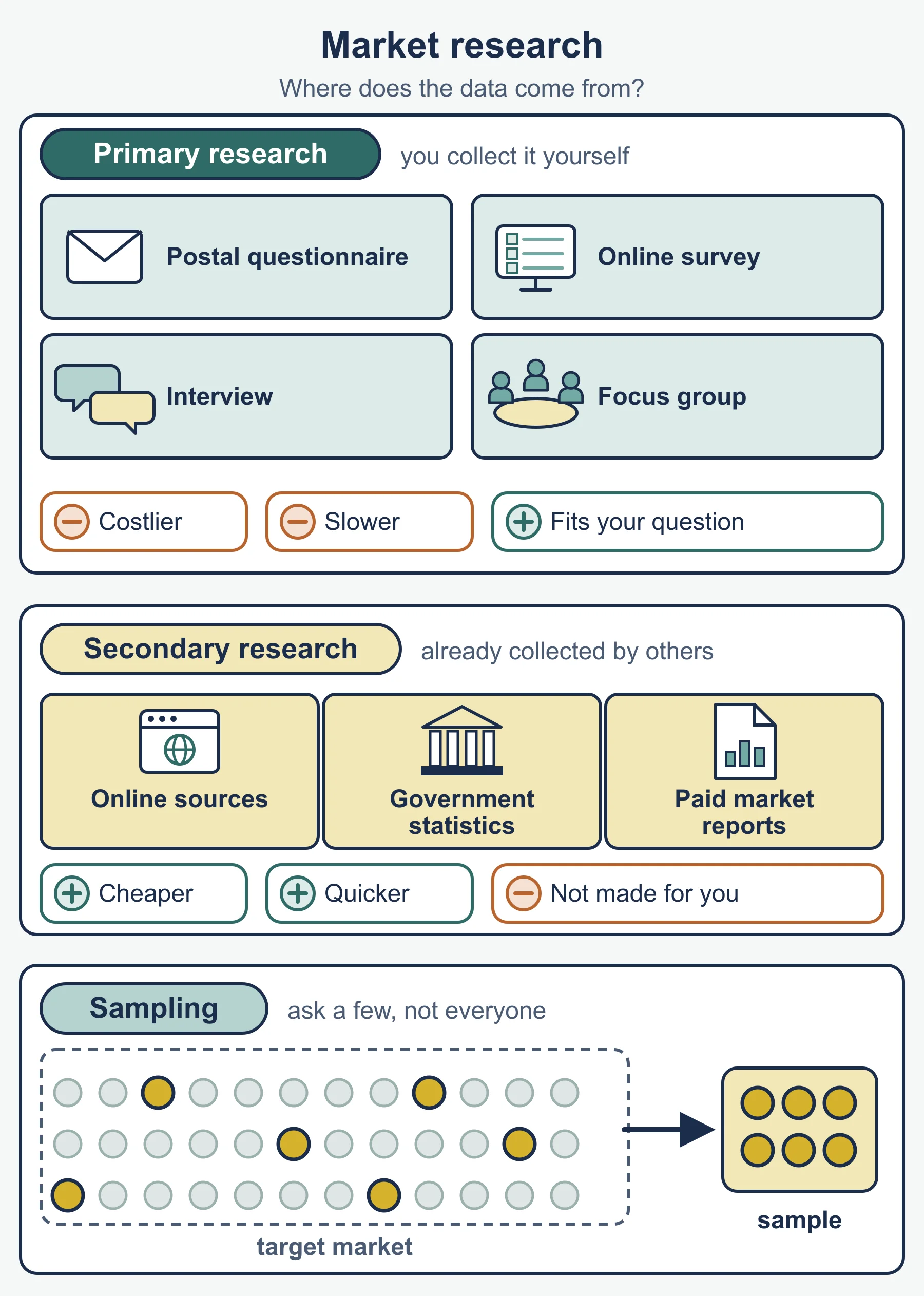
| Primary vs secondary | First-hand and new, versus existing information collected by others |
| Quantitative vs qualitative | Numbers and counts, versus opinions and reasons |
| Survey vs focus group | Many answers, easy to total, versus deeper views from few people |
| Sales data vs interview | What customers did, versus why |
Techniques
| Technique | Benefit | Drawback |
|---|---|---|
| Questionnaire | Many replies | Low response, untruthful answers |
| Interview | Detail | Slow, costly |
| Focus group | Attitudes | Group influence, small sample |
| Online survey | Cheap, wide reach | Self-selected respondents |
| Website data | Real behaviour | No reasons |
| Secondary sources | Cheap, quick | Dated, not specific |
Method in steps: using a table or chart
- Read the title, units and totals.
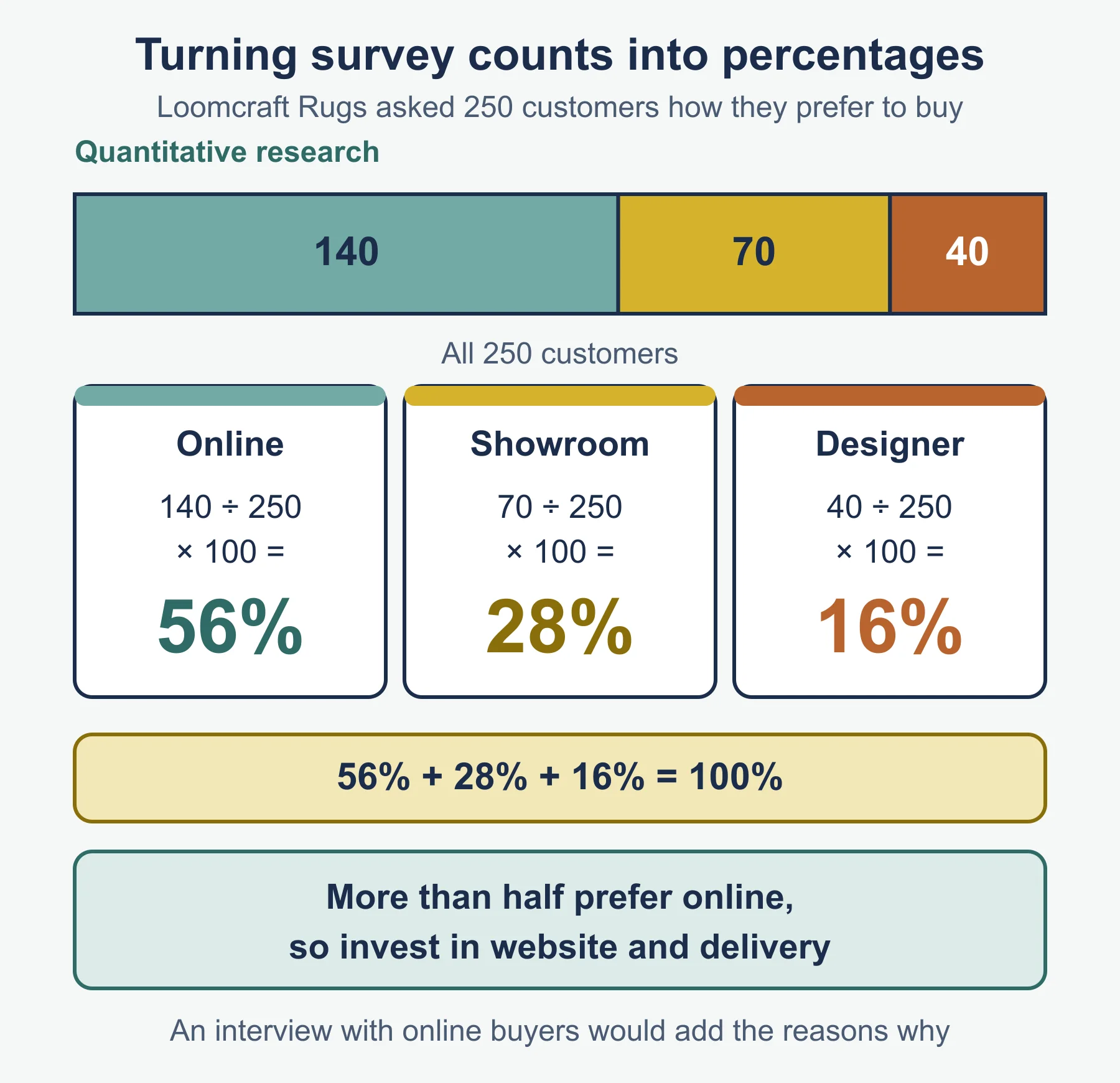
- Convert counts to percentages: part ÷ total × 100.
- Name the largest and smallest groups.
- Link the finding to a decision for this business.
- State a limit, such as sample size or age of the data.
Reminder example. Peltry Leather asks 400 customers whether they would buy a card holder. 60 say yes, 120 maybe, 220 no. Yes = 60 ÷ 400 = 15%; maybe = 30%; no = 55%. A majority say no, so launching widely is risky. A small trial, or follow-up qualitative research on the “maybe” group, is more sensible.
Why research can mislead
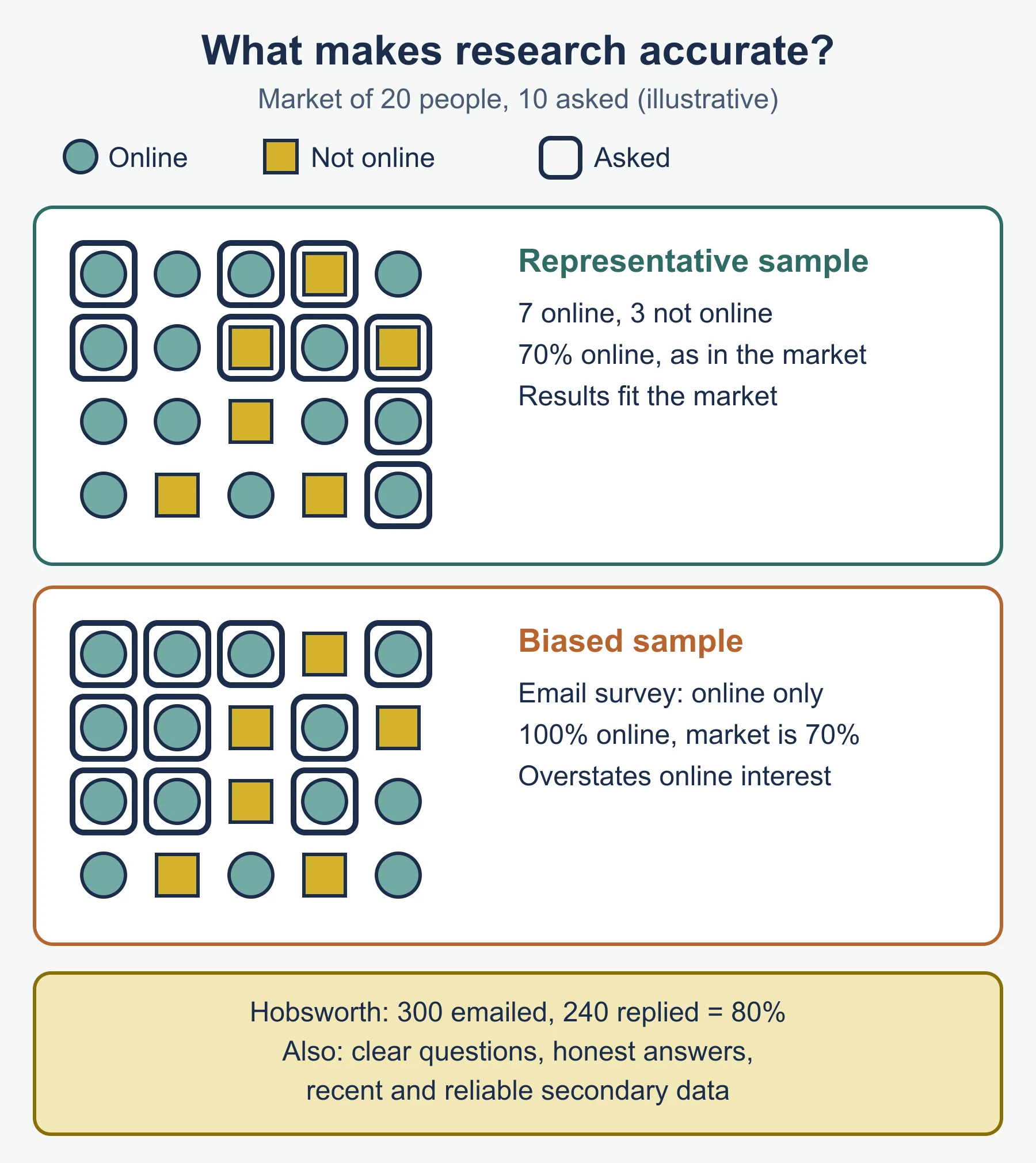
- Sample too small or unrepresentative.
- Leading or unclear questions.
- Dishonest or biased answers.
- Out-of-date data.
- Misreading the results.
3.5.4 Price
Methods
| Method | Key idea | Suits |
|---|---|---|
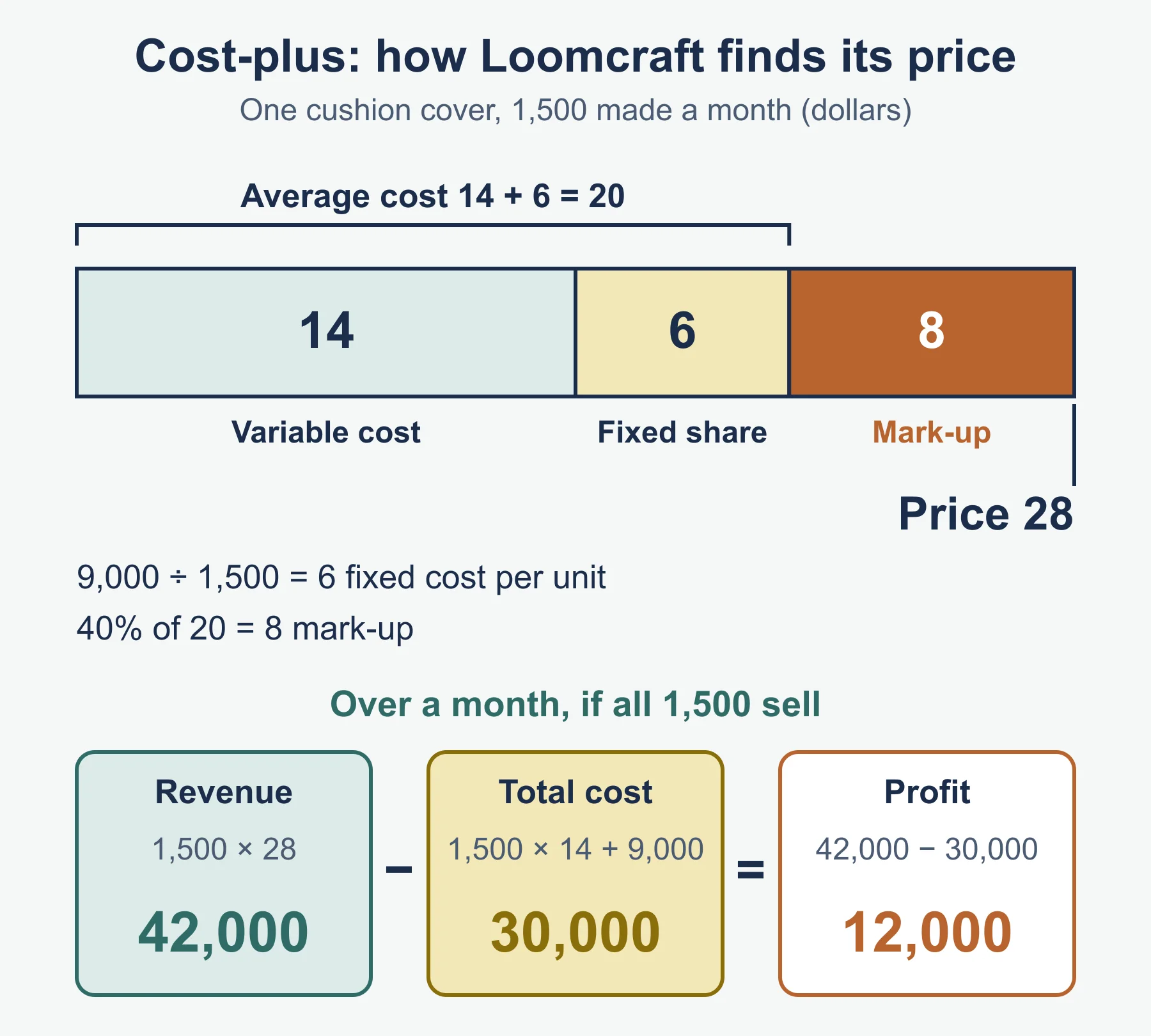
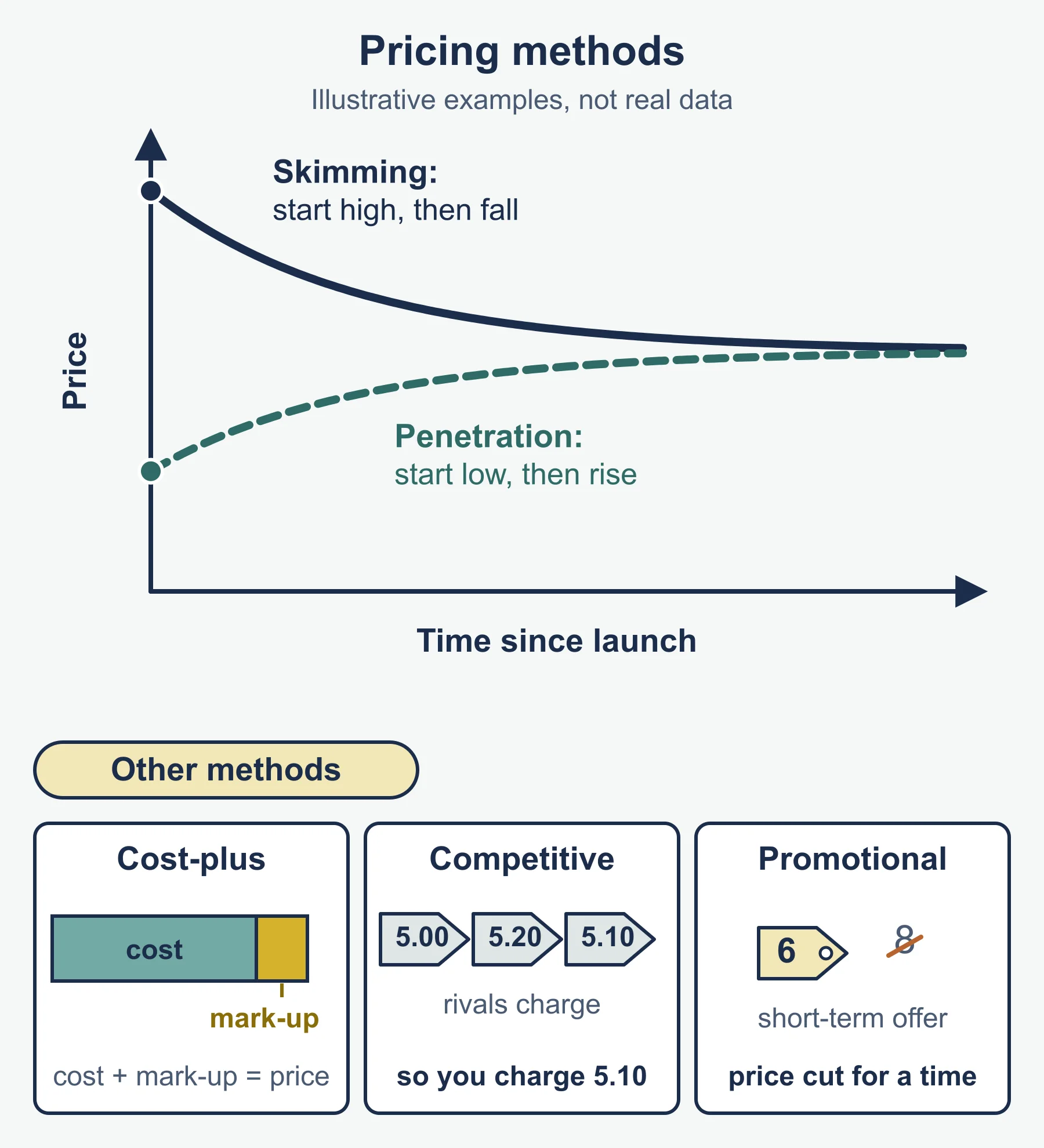
| Cost-plus | Unit cost plus a mark-up | Firms that need a safe margin |
| Skimming | Start high, cut later | New, unique products |
| Penetration | Start low to gain share | Crowded or price-sensitive markets |
| Competitive | Price near rivals | Similar products |
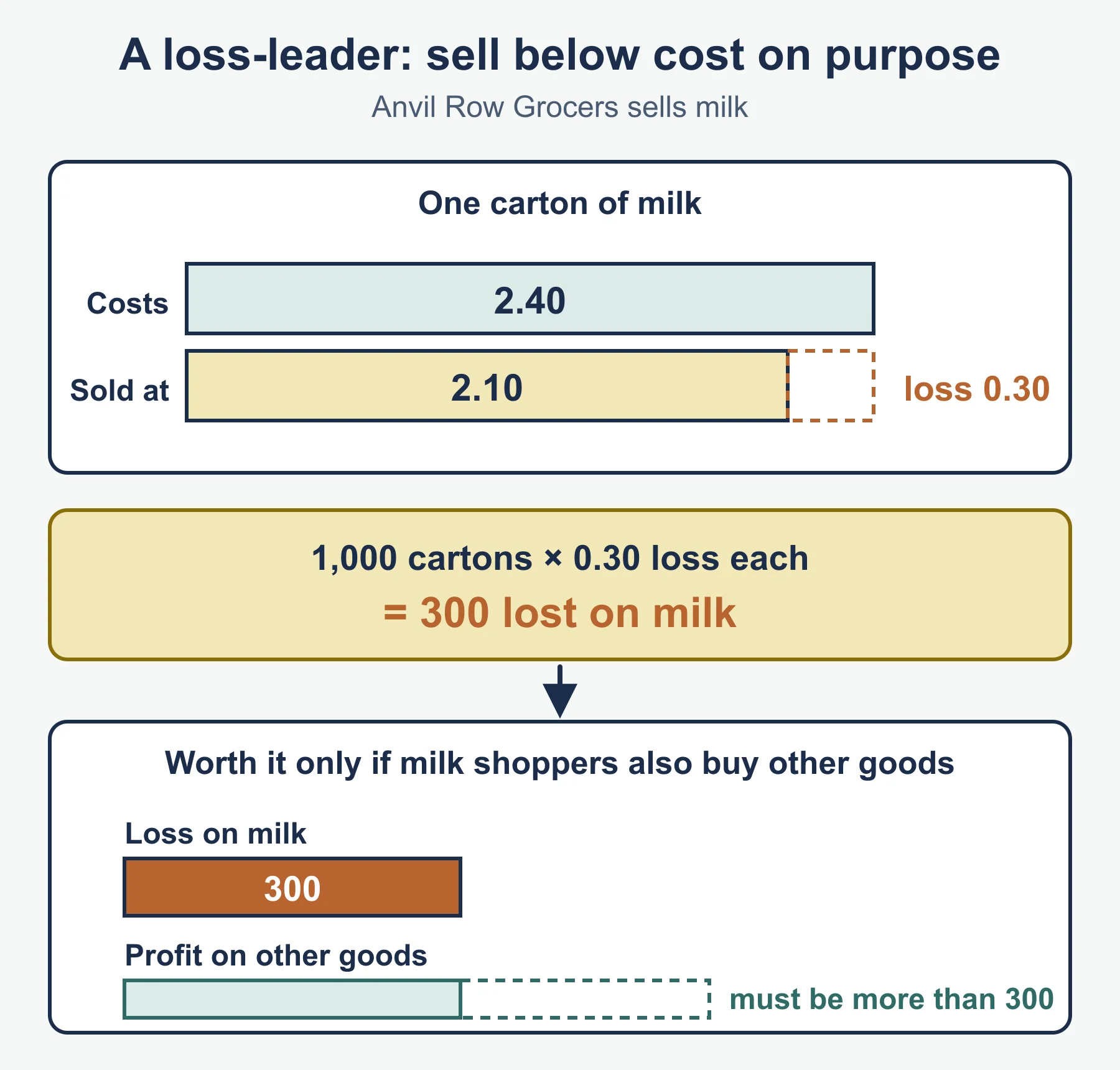
| Loss-leader | Below cost to bring in shoppers | Retailers with many lines |
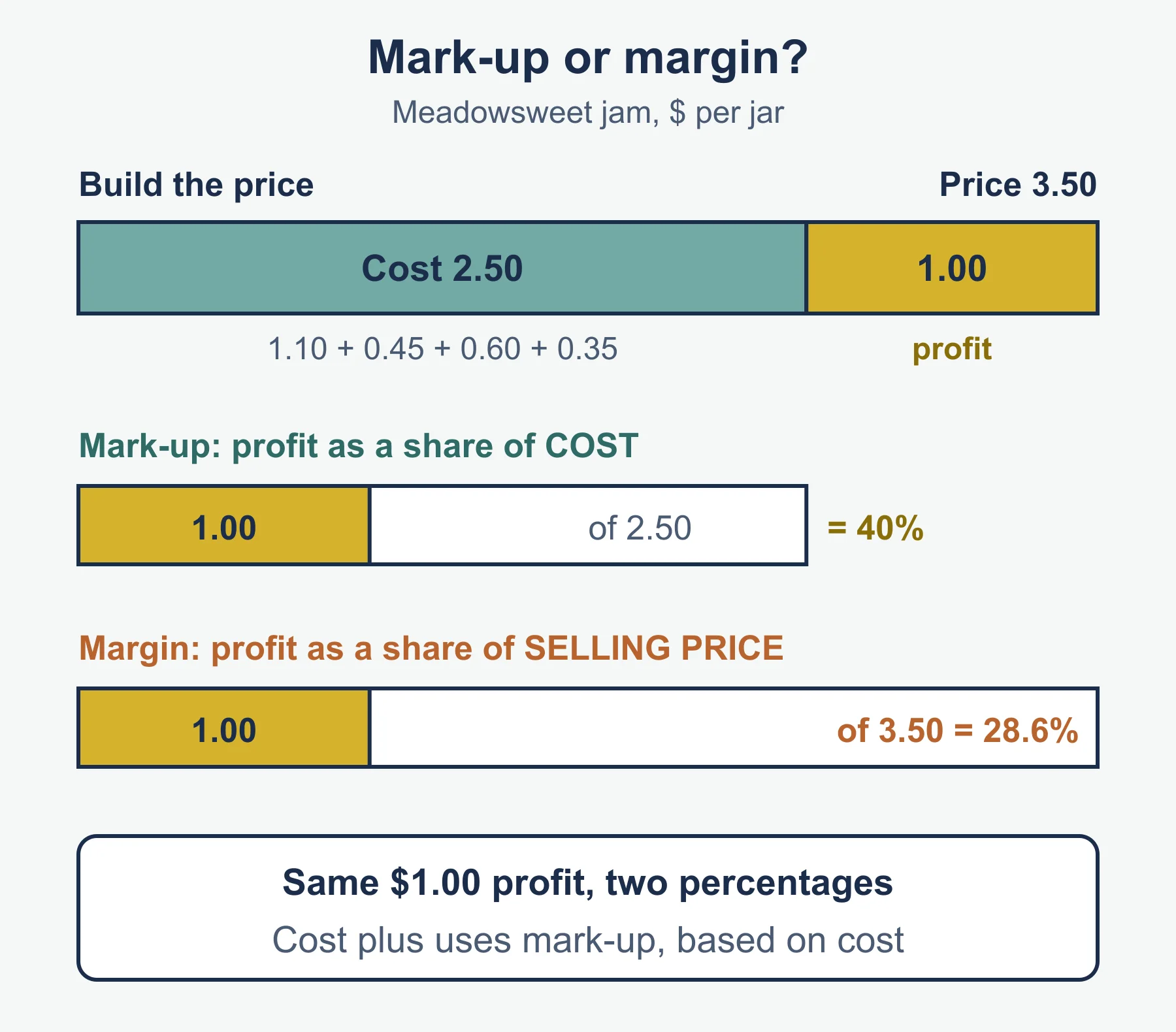
Reminder example. Peltry’s wallet costs 22 to make. A 25% mark-up adds 22 × 0.25 = 5.50, so the price is 27.50. Mark-up and margin differ: cost 30 and price 39 gives a mark-up of 9 ÷ 30 = 30% but a margin of 9 ÷ 39 = about 23.1% of selling price.
Factors influencing price
- Production costs (the floor).
- Degree of competition.
- Product life cycle stage.
- Growth of the business: lower unit costs, new rivals, new markets.
- To assess suitability: match each factor to the case, then judge which method fits best.
3.5.4 Product
New and adapted products
- Benefits: new sales, spread of risk, stronger image.
- Risks: cost, possible failure.
- Adapting is usually cheaper than a brand-new product.
- Fit design, brand image and target market needs.
Differentiation
- USP: a feature or benefit rivals lack, giving a reason to choose and sometimes a higher price.
- Brand image: recognition and loyalty; damage loses sales.
Product life cycle
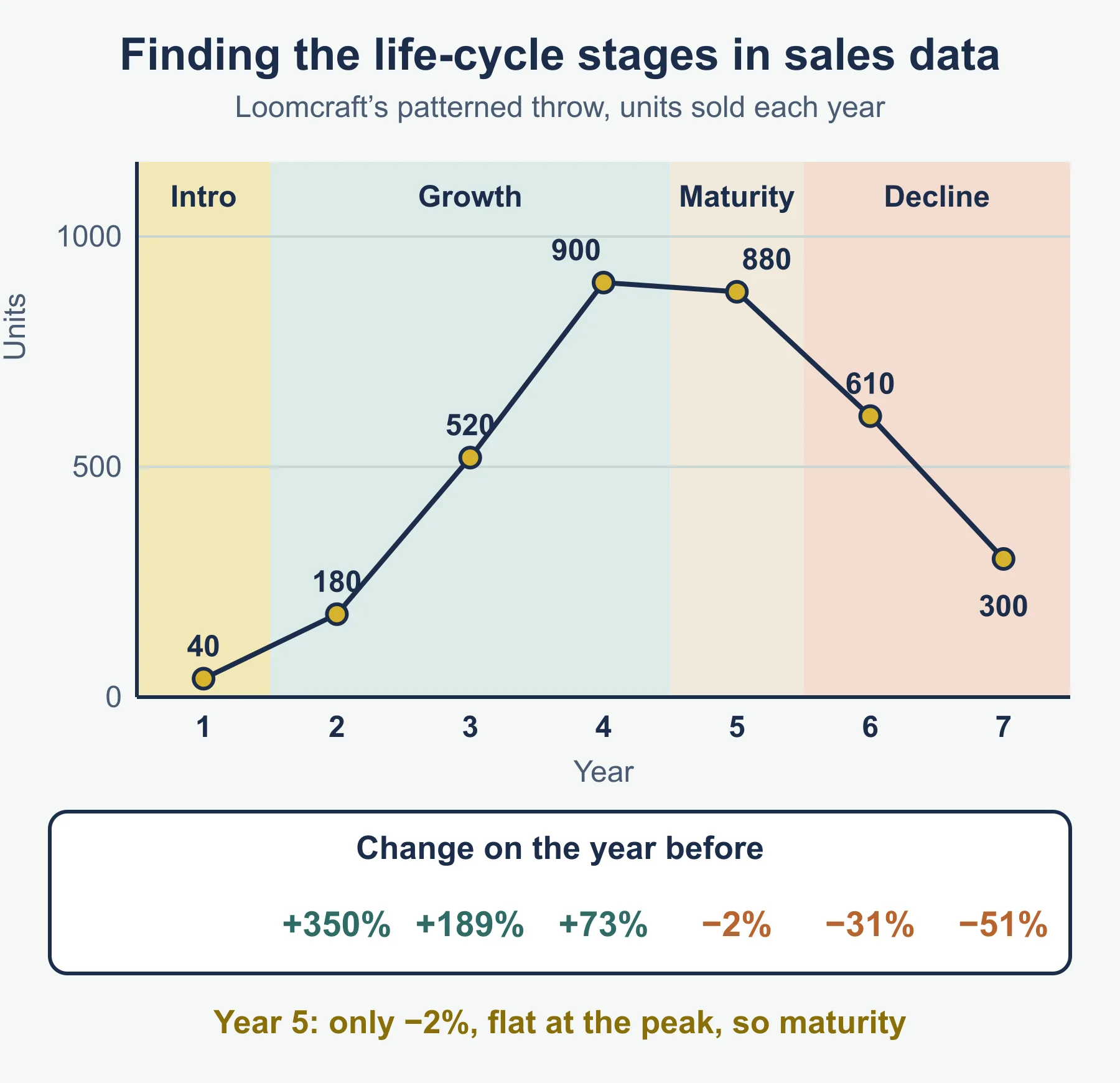
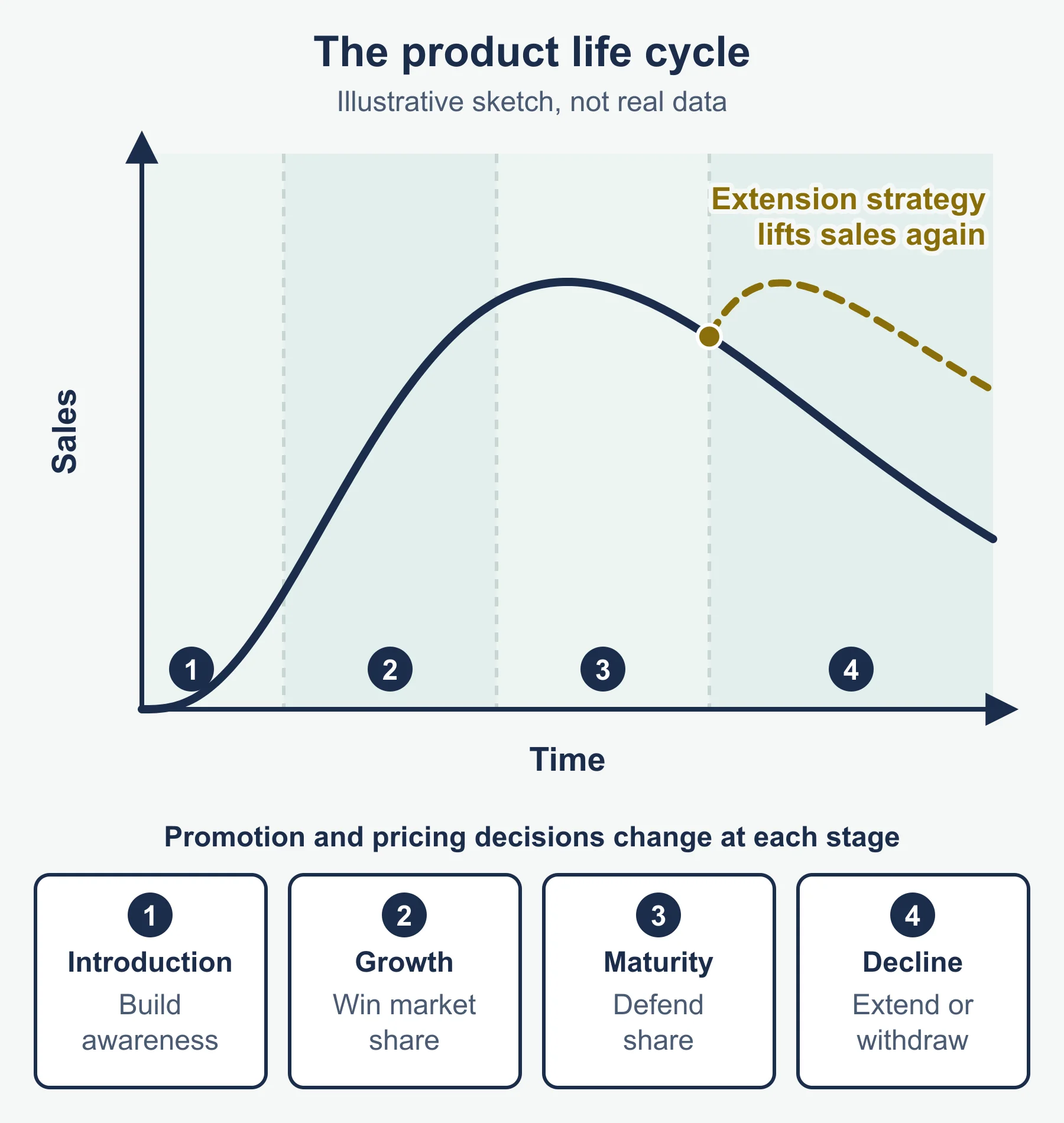
| Stage | Sales | Typical action |
|---|---|---|
| Introduction | Low | Build awareness; price by skimming or penetration |
| Growth | Rising quickly | Widen distribution; defend share |
| Maturity | Peak, flat | Extension strategies |
| Decline | Falling | Discount, redesign or withdraw |
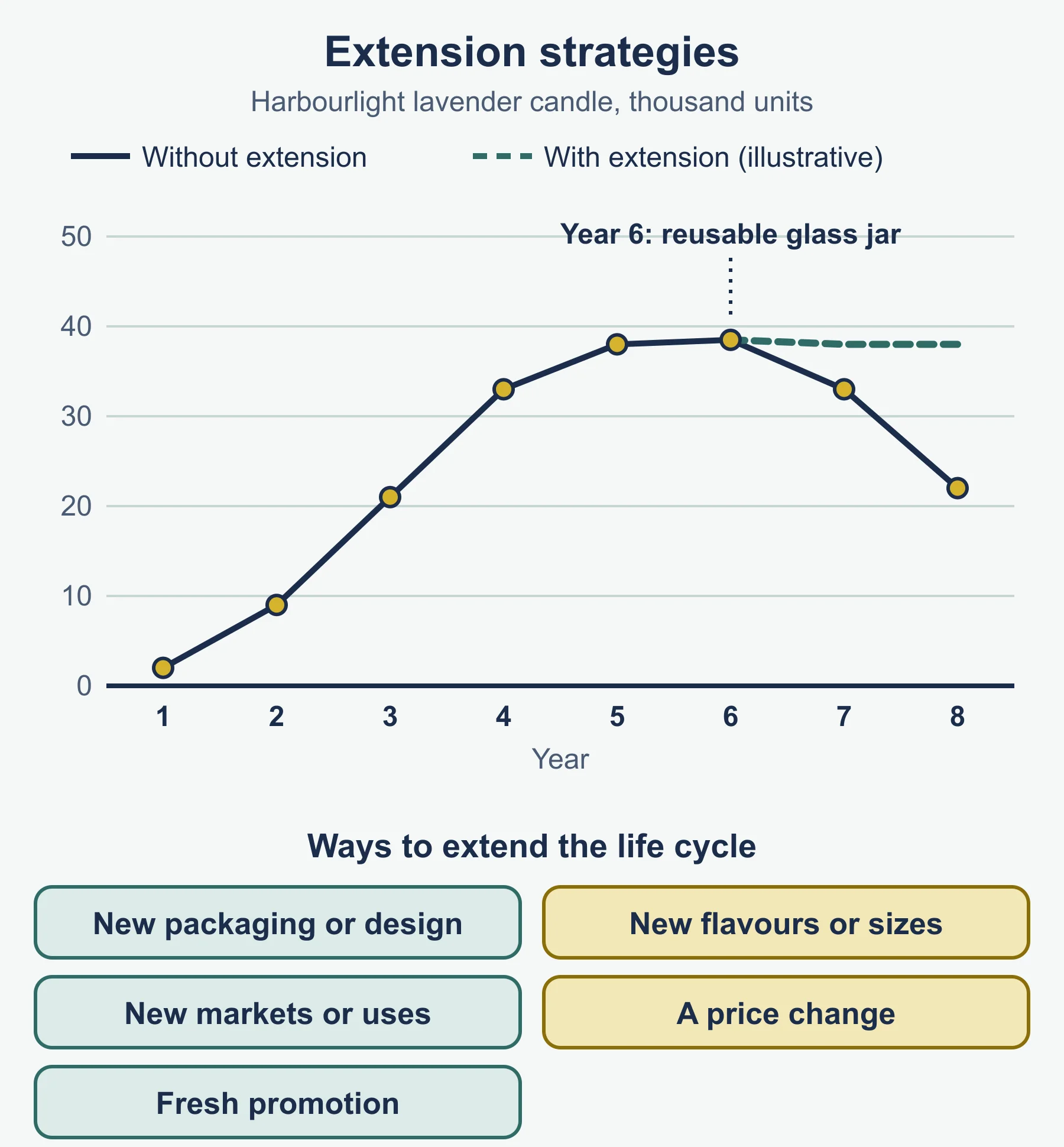
- Extension strategies: new packaging, uses, markets, price, design, promotion.
- Judge by cost against extra sales; suitable at maturity or early decline.
Product portfolio
- Broaden: more products, segments and spread of risk.
- Balance: mature products fund new ones.
- Reminder example. Peltry sells 400 items: wallets 120 (30%), bags 180 (45%), belts 100 (25%). Bags carry the business, so a new line would reduce reliance on one product.
3.5.4 Promotion
- Purpose: inform, persuade, remind.
- Methods: advertising, sales promotions, public relations, sponsorship, personal selling, social media.
- Selection factors: target market, marketing budget, competitors’ activities, product type.
- Judge each method by reach, cost, and fit to the target market.
3.5.4 Place
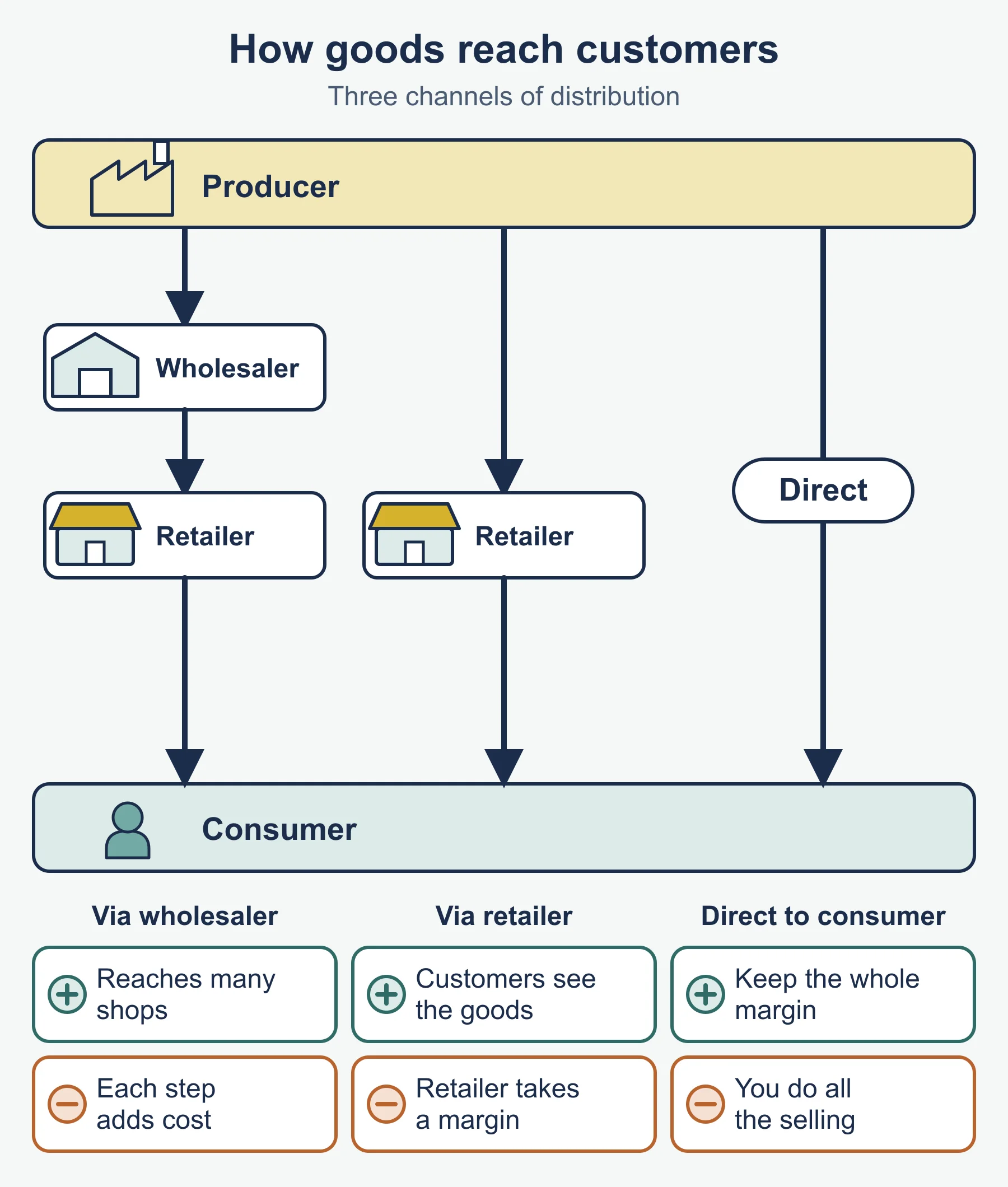
| Channel | Route |
|---|---|
| Direct | Producer to customer |
| Retailer | Producer, retailer, customer |
| Wholesaler | Producer, wholesaler, retailer, customer |
- Intermediaries: retailers (convenience), wholesalers (bulk), vending machines (no staff), telesales, direct selling, e-commerce.
- Choose by product, customer location, cost and control.
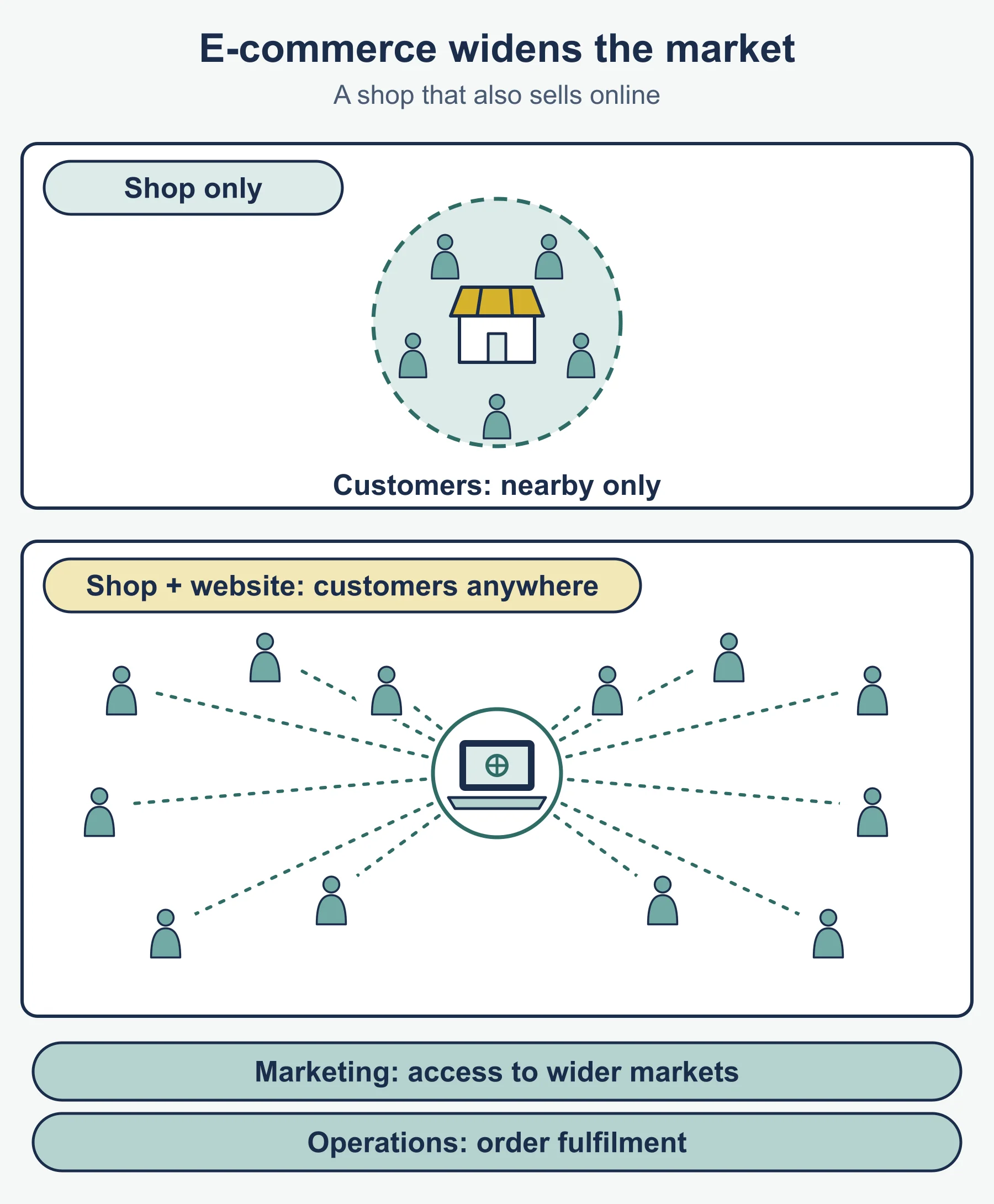
e-Commerce
- Benefits: 24-hour access, international reach, low premises cost, customer data.
- Drawbacks: delivery, security worries, rivals, no touching the product, IT costs.
- Computer commerce suits detailed browsing. Mobile (cell-phone) commerce reaches customers anywhere but has small screens.
Integrated mix
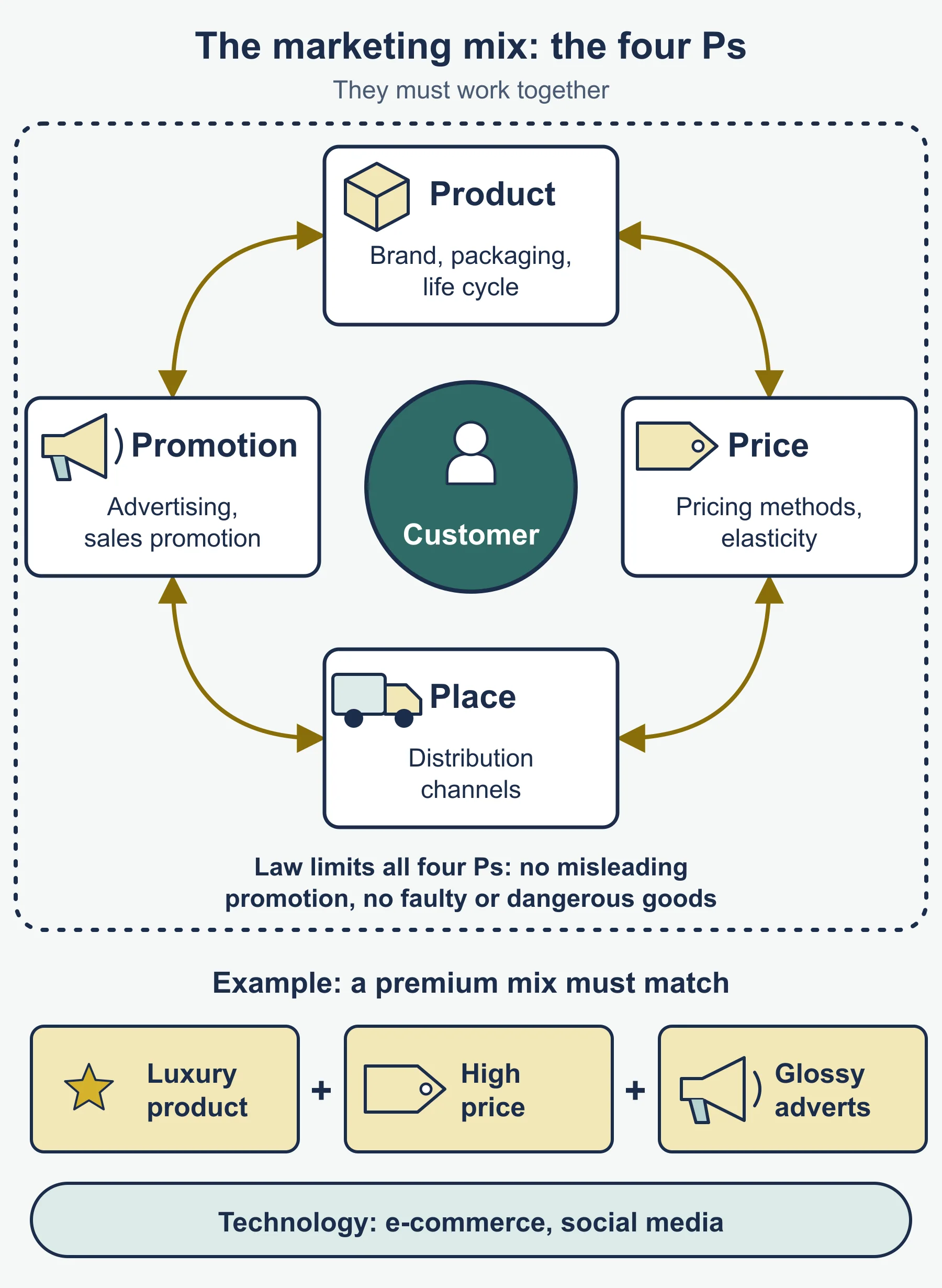
- Choose the target segment.
- Set a product, price, promotion and place that fit each other.
- Review as the life cycle, rivals and customers change.
- Mismatched elements, such as a luxury image with a bargain price, confuse buyers.
- Recommend activities for the case and evaluate the business’s reaction to change.
Applying the 4Ps to a case study
Case-study questions give you a business, a market and some data. Follow this routine.
- Underline the target market, the budget, the stage of the product and any rival.
- Decide which of the 4Ps the question is really about.
- Make a point, link it to a fact from the stem, then say what it means for the business.
- For evaluate and justify questions, weigh at least one point on each side and end with a reasoned judgement.
Worked reminder. Peltry plans to sell a premium wallet to professionals aged 30 to 50 with high incomes. Skimming fits because the product is new and the buyers can pay. Promotion in business magazines and online suits the segment, while a cut-price discount would damage the image. A sensible channel is its own website plus a few upmarket retailers. The weakness is a high price that rivals could undercut, so the business should watch competitors and cut the price at maturity.
Distribution reminder
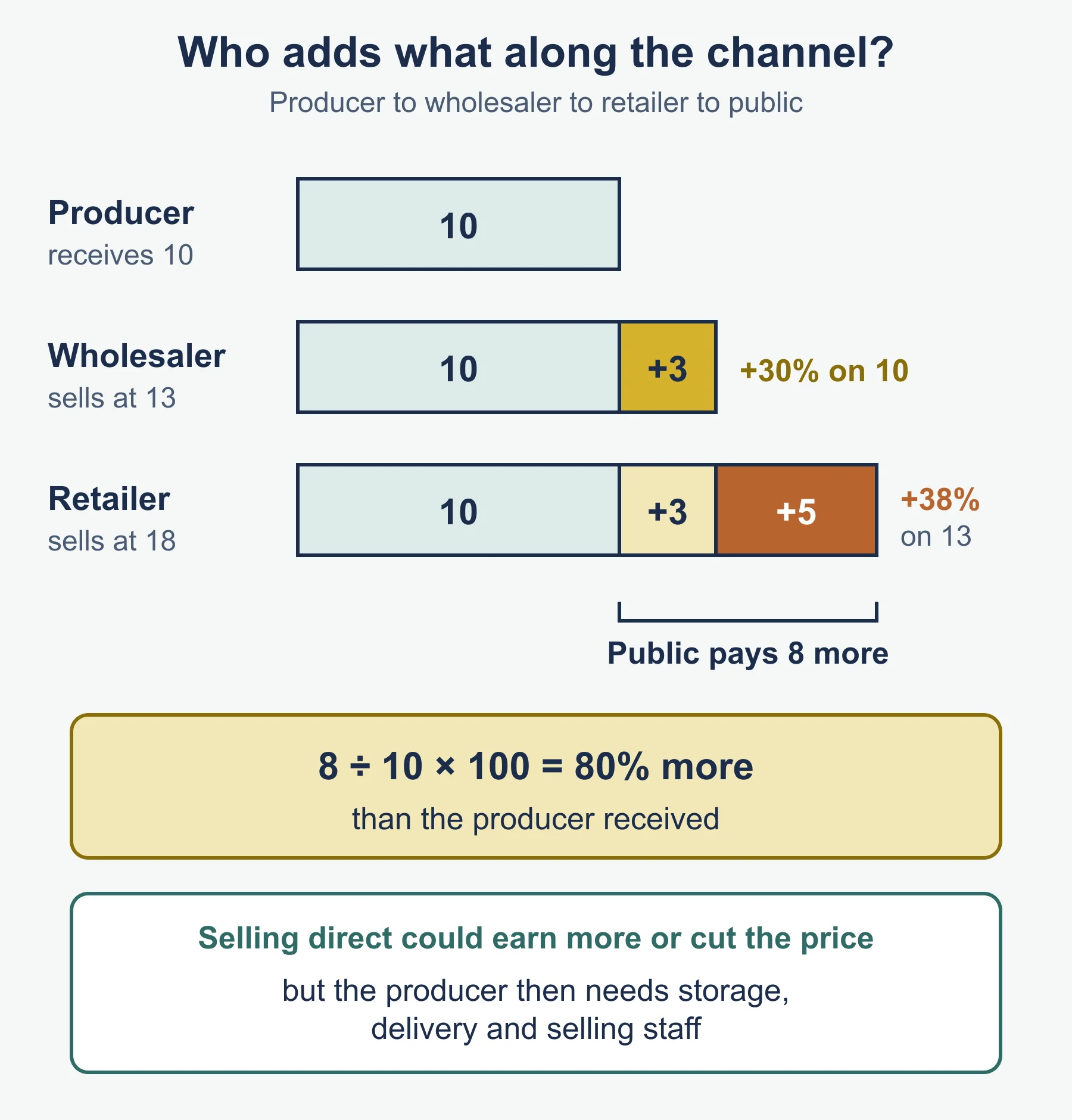
A producer sells at 16 to a wholesaler, who sells at 20 to a retailer, who sells at 30. The wholesaler’s mark-up is 4 ÷ 16 = 25%. The retailer’s is 10 ÷ 20 = 50%. The customer pays 30, which is 87.5% more than the producer received. Selling direct removes the intermediaries’ mark-ups but the producer takes on storage, delivery and selling costs.
Command words
- State, identify: give the answer with no explanation.
- Define: give an exact meaning.
- Calculate: show the working and the units.
- Explain: give a reason and develop it.
- Analyse: break the issue into parts and link cause to effect in the case.
- Evaluate, justify, recommend: weigh the options for this business and reach a reasoned conclusion.
Quick self-test
- State two reasons why a business carries out market research.
- Peltry surveys 500 people and 125 prefer leather. What percentage is this?
- Define primary research.
- Is a count of website visits quantitative or qualitative?
- A product costs 40 to make. What is the price with a 35% mark-up?
- Name the pricing strategy that starts high and falls later.
- In which life cycle stage are sales highest and flat?
- Give two extension strategies.
- Name the intermediary that buys in bulk and sells to retailers.
- Give one benefit and one drawback of selling online.
Answers
- To identify market opportunities; to understand customers and competitors better.
- 125 ÷ 500 × 100 = 25%.
- New information collected first-hand for a specific purpose.
- Quantitative.
- 40 × 1.35 = 54.
- Skimming.
- Maturity.
- Any two: new packaging, new uses, new markets, price change, redesign, extra promotion.
- Wholesaler.
- Benefit: reaches international customers. Drawback: delivery costs, security worries or competition.
Where marks are usually lost
- Giving a definition of a pricing method but not applying it to the business named.
- Writing “cheap” or “quick” as the only point for secondary research.
- Mixing up mark-up and margin.
- Naming promotion methods without linking them to budget or target market.
- Calling a product a loss-maker because sales fell, without checking the life cycle stage.
- Saying e-commerce is good with no drawback, or the reverse.
- Recommending a channel without analysing the product and customer.
- Giving a list in evaluation questions with no judgement.
Frequently asked questions
What types of market segmentation are in OxfordAQA IGCSE Business? The types listed include gender, age, location and income. A segment is a group of customers with shared characteristics, so the business can fit its product and message to that group.
How do you calculate a cost-plus price? Multiply the unit cost by the mark-up percentage and add the result to the unit cost. For example, a 25% mark-up on a cost of 22 adds 5.50, giving a price of 27.50.
What are extension strategies? Extension strategies delay the decline of a product, for example new packaging, new uses, new markets, a price change, a new design or more promotion. Judge them by their cost against the likely extra sales.
What is the purpose of promotion? Promotion aims to inform, persuade and remind customers. Methods include advertising, sales promotions, public relations, sponsorship and personal selling.
Official syllabus
OxfordAQA International GCSE Business (9225) specification, version 3.1, OxfordAQA, for International GCSE exams May/June 2022 onwards. Section 3.5 Marketing (3.5.1 to 3.5.4).
Get free revision emails (optional)
Occasional emails with practice questions, worked explanations and links to free resources for the qualification and subjects you choose. No spam, and you can unsubscribe from any email. The free tools on this site never need an email.
Related resources
-
Study guides
OxfordAQA IGCSE Business: Marketing (9225)
A full study guide to section 3.5 Marketing for OxfordAQA International GCSE Business: customers, segmentation, market research and the 4Ps.
Business · OxfordAQA · IGCSE
Read guide -
Practice questions
OxfordAQA IGCSE Business: Marketing (9225) – Practice Questions
Twelve original questions with worked answers on segmentation, market research and the 4Ps for OxfordAQA International GCSE Business section 3.5.
Business · OxfordAQA · IGCSE
Try questions -
Study guides
OxfordAQA IGCSE Business: Technology and Ethical and environmental considerations (9225)
A full teaching guide to e-commerce, digital communication, ethics, the environment and sustainability for OxfordAQA International GCSE Business.
Business · OxfordAQA · IGCSE
Read guide
Related articles
-
teaching
A Level tuition in Dubai: Cambridge or Pearson Edexcel International A Level?
Schools in Dubai and Abu Dhabi teach either Cambridge International AS & A Level or Pearson Edexcel International A Level. How the two are structured, why it matters for tuition, and how online classes from Lahore work.
9 October 2026
-
curriculum guides
Choosing subjects at IGCSE and A Level
How subject choices at 14 and 16 affect university options later, and how to keep pathways open without overloading a timetable.
28 July 2026
Studying this with a teacher
Working through Business IGCSE?
This page is free and stays free. If you would rather be taught it, Marlbridge runs Business classes one-to-one and in small groups of up to 15, online in your own time zone. The first trial class is free. WhatsApp replies within an hour (8am–11pm Pakistan time, every day); email the same day.
OxfordAQA Business teachers at Marlbridge
