
Revision Notes
OxfordAQA IGCSE Business: Technology and Ethical and environmental considerations (9225) – Revision Notes
Condensed recall notes, tables and a self-test on ICT, e-commerce, ethics, the environment and sustainability for OxfordAQA International GCSE Business.
- Subject
- Business
- Level
- IGCSE
- Topic
- Influences on business
- Author
- Marlbridge Academic Team
- Updated
- Reviewed by
- Salman Ahmad (what this means)
Aligned to OxfordAQA IGCSE Business (9225), First teaching September 2020, first examined May/June 2022. Official specification .
Syllabus page (what it covers and how it is assessed): OxfordAQA IGCSE Business.
Syllabus points this page covers
9225
- 3.2.1 Technology
- 3.2.2 Ethical and environmental considerations
Found an error? Report a correction.
Need help with this topic? Request a free trial class for IGCSE Business (9225).
These notes condense sections 3.2.1 Technology and 3.2.2 Ethical and environmental considerations of the OxfordAQA International GCSE Business (9225) specification, version 3.1, first teaching September 2020 and first examined May/June 2022. Fuller explanations and worked examples sit in the study guide. Then try the practice questions. For the whole topic, see the Influences on business revision notes. Course links: the hub, the checklist and the free diagnostics.
3.2.1 Technology at a glance
| Point | Remember |
|---|---|
| ICT | Information and Communication Technology. Its use keeps changing, and this changes what businesses do |
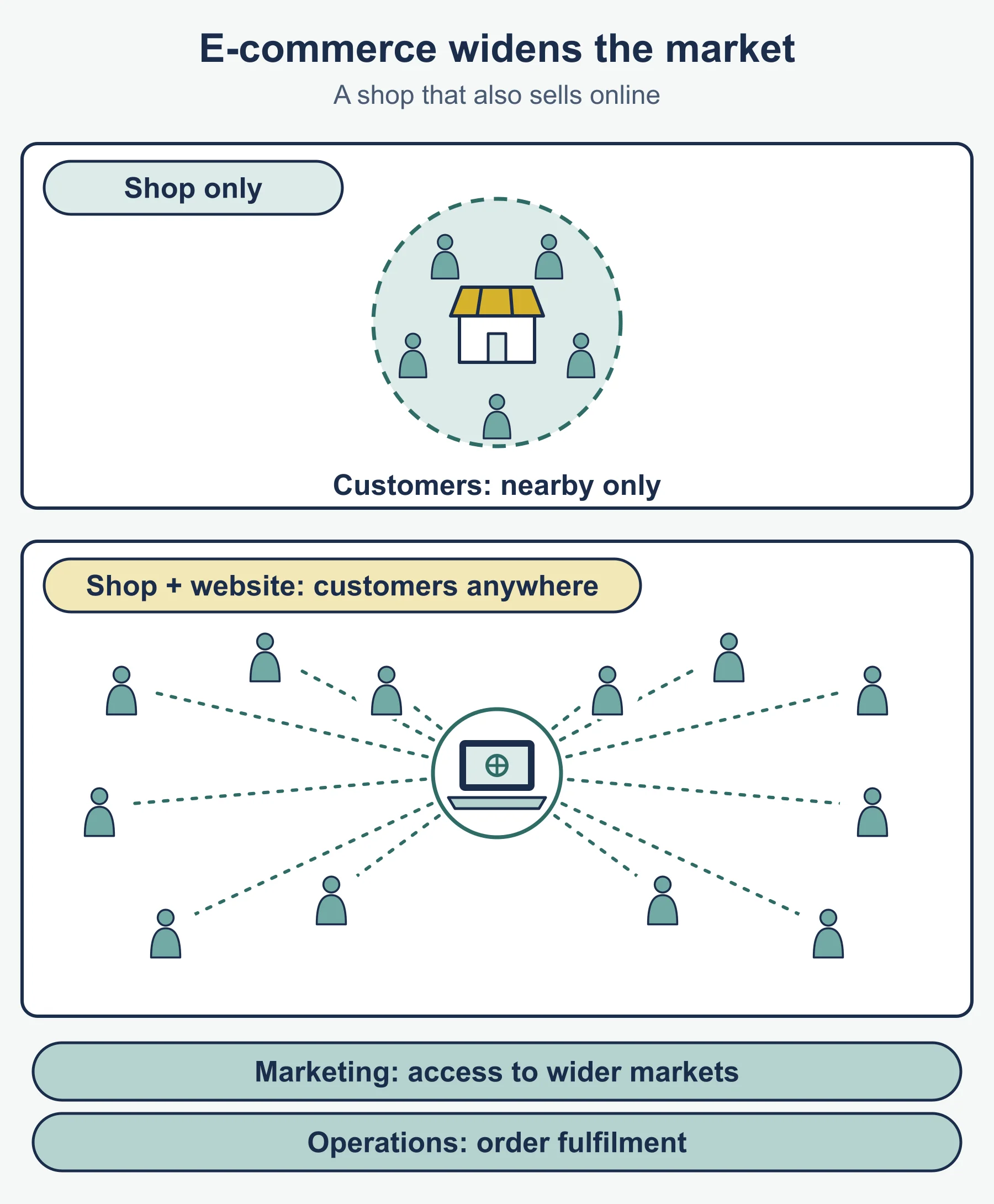
| e-commerce | Buying and selling over the internet. Gives access to wider markets |
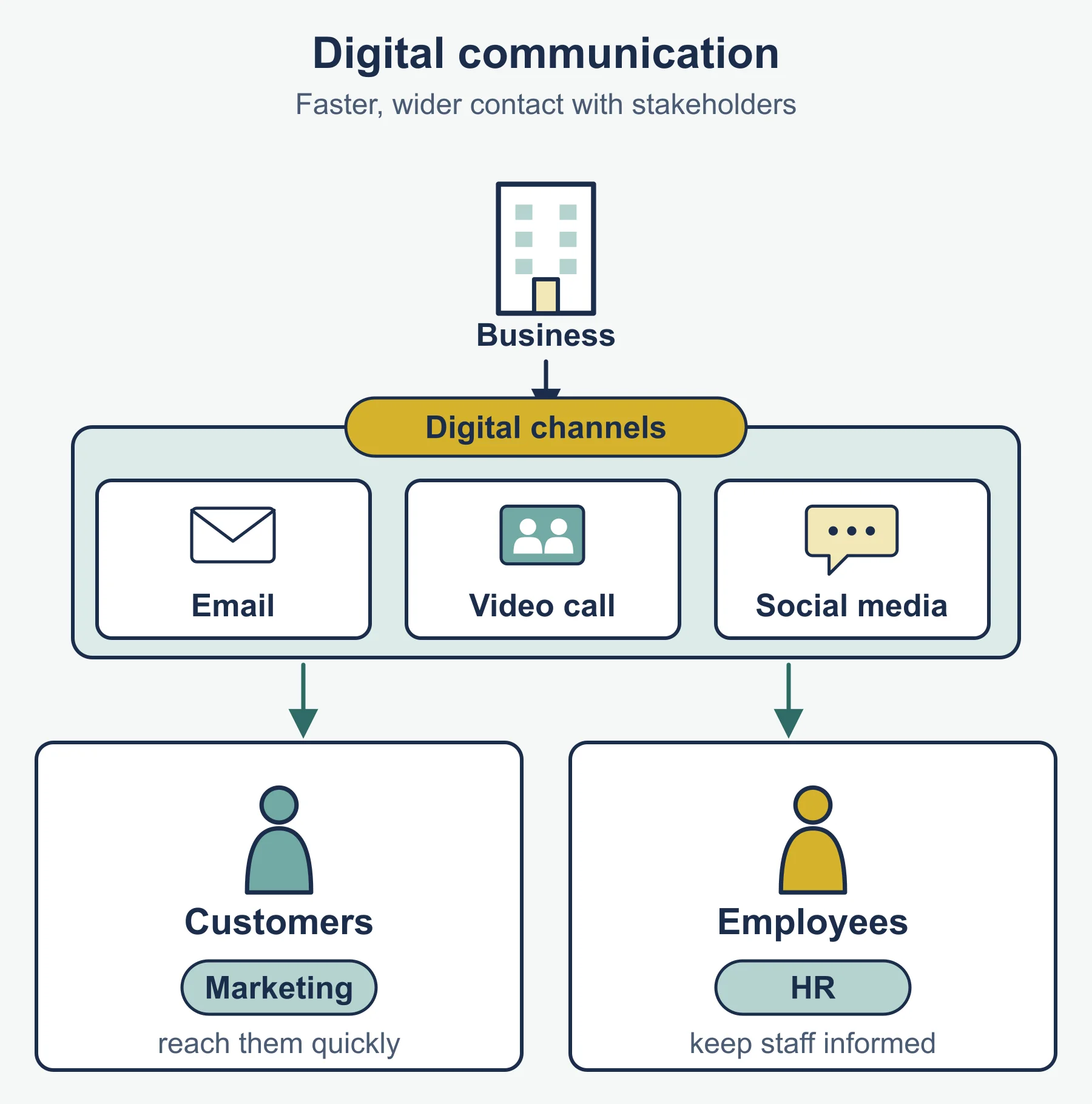
| Digital communication | Electronic contact with stakeholders, for example email and video conferencing |
How ICT influences business activity
- Selling: online orders alongside shop sales.
- Buying: ordering from suppliers online.
- Communication: faster contact with staff, customers and suppliers.
- Staffing: some tasks shrink, new skills are needed, training costs money.
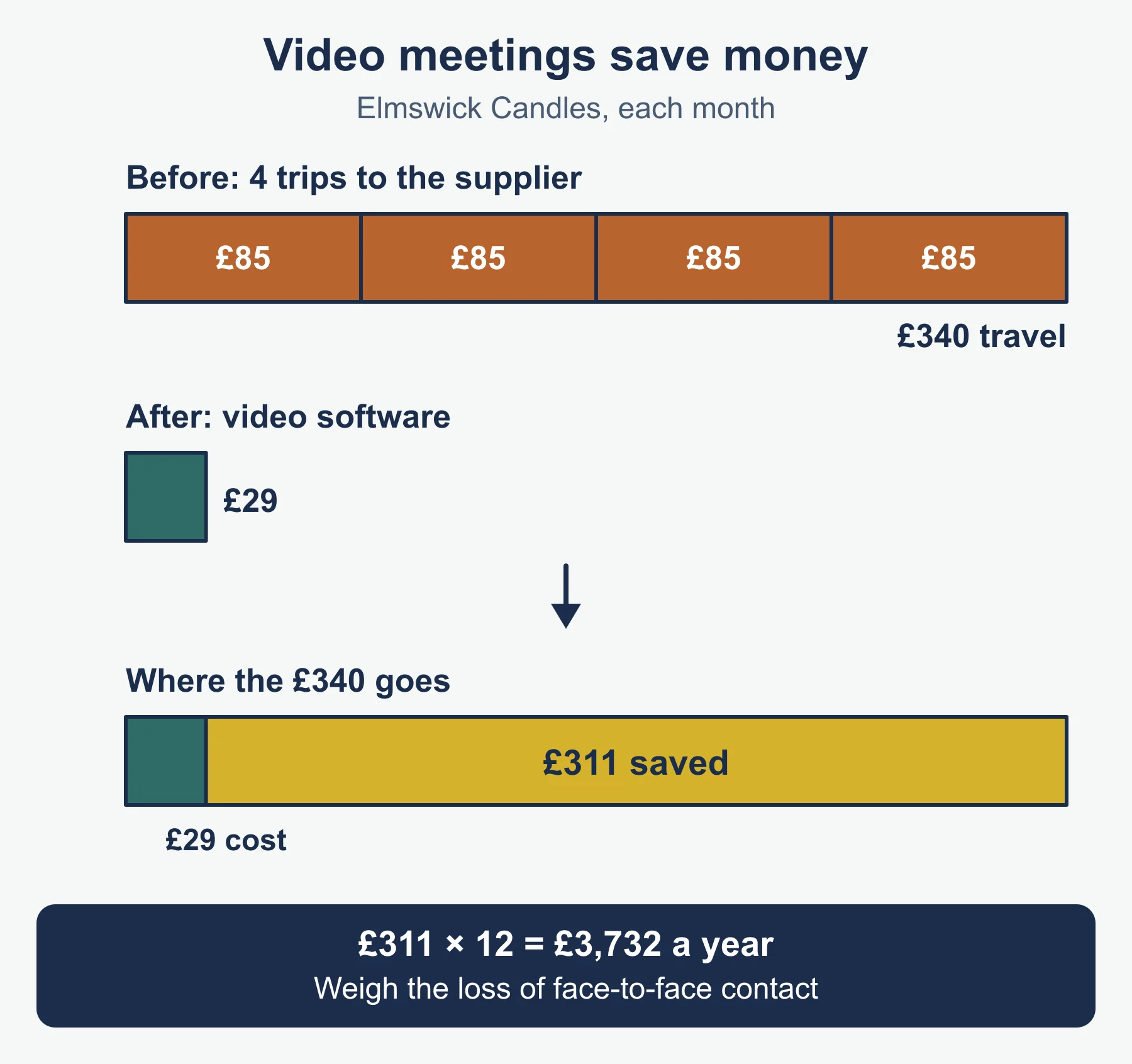
- Costs: set-up, security and upkeep, against savings on travel, printing and premises.
Always finish the chain: technology, then what changes, then the effect on cost, revenue or a stakeholder.
e-commerce: benefits and drawbacks
| Benefits | Drawbacks |
|---|---|
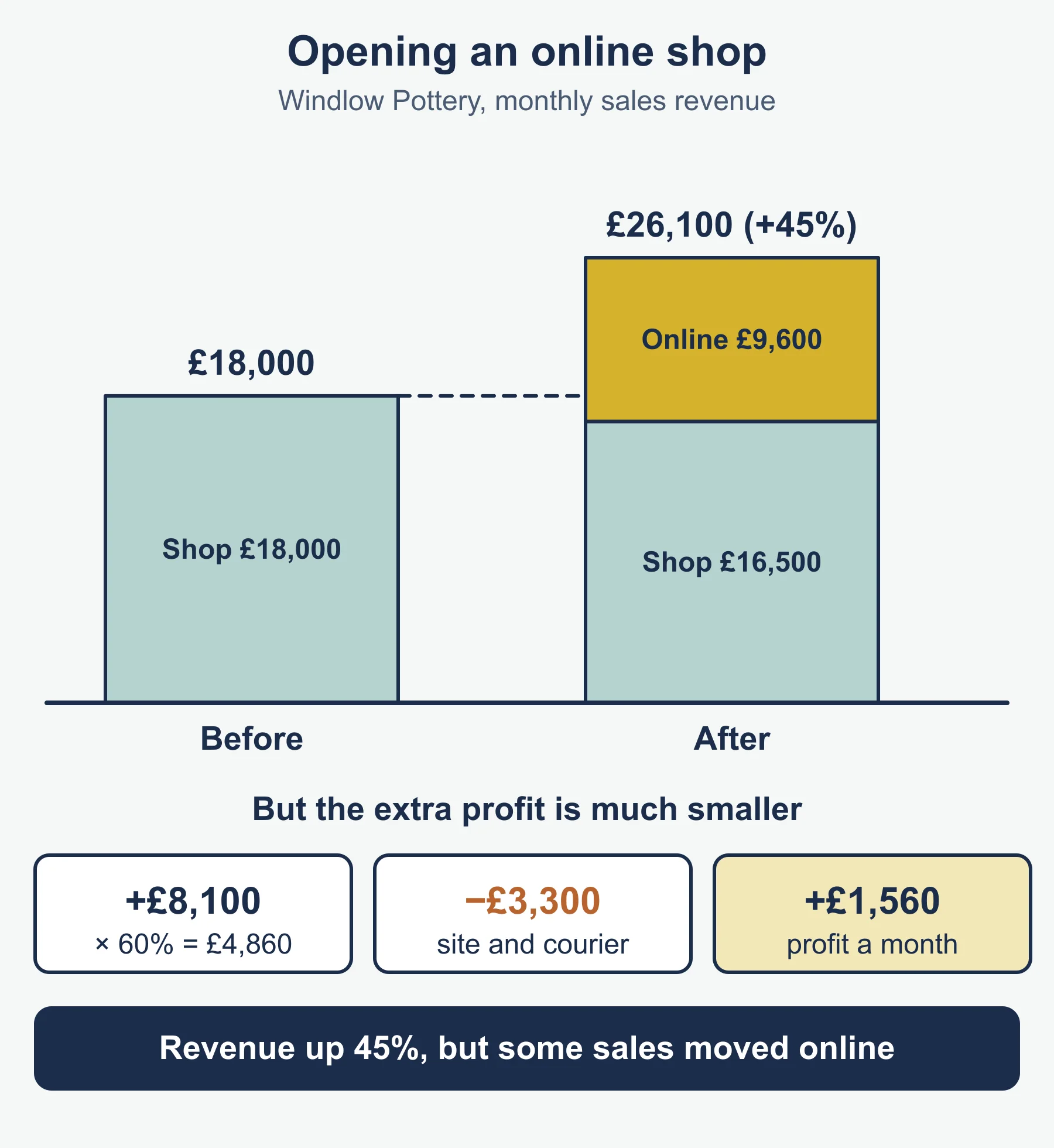
| Wider market, beyond the people who can visit a shop | Delivery, packaging and returns costs |
| Open at all hours | Set-up and security costs |
| Possible saving on premises | Customers cannot see or touch the product |
| Can sell to other towns and countries | Some sales just move from the shop |
Method for a “wider markets” answer, in steps:
- Say who the business could not reach before.
- Say what the website lets them do, such as order at any time or from abroad.
- State the effect on sales revenue.
- Add one cost or limit.
Digital communication and stakeholders
| Method | Use it for | Watch out for |
|---|---|---|
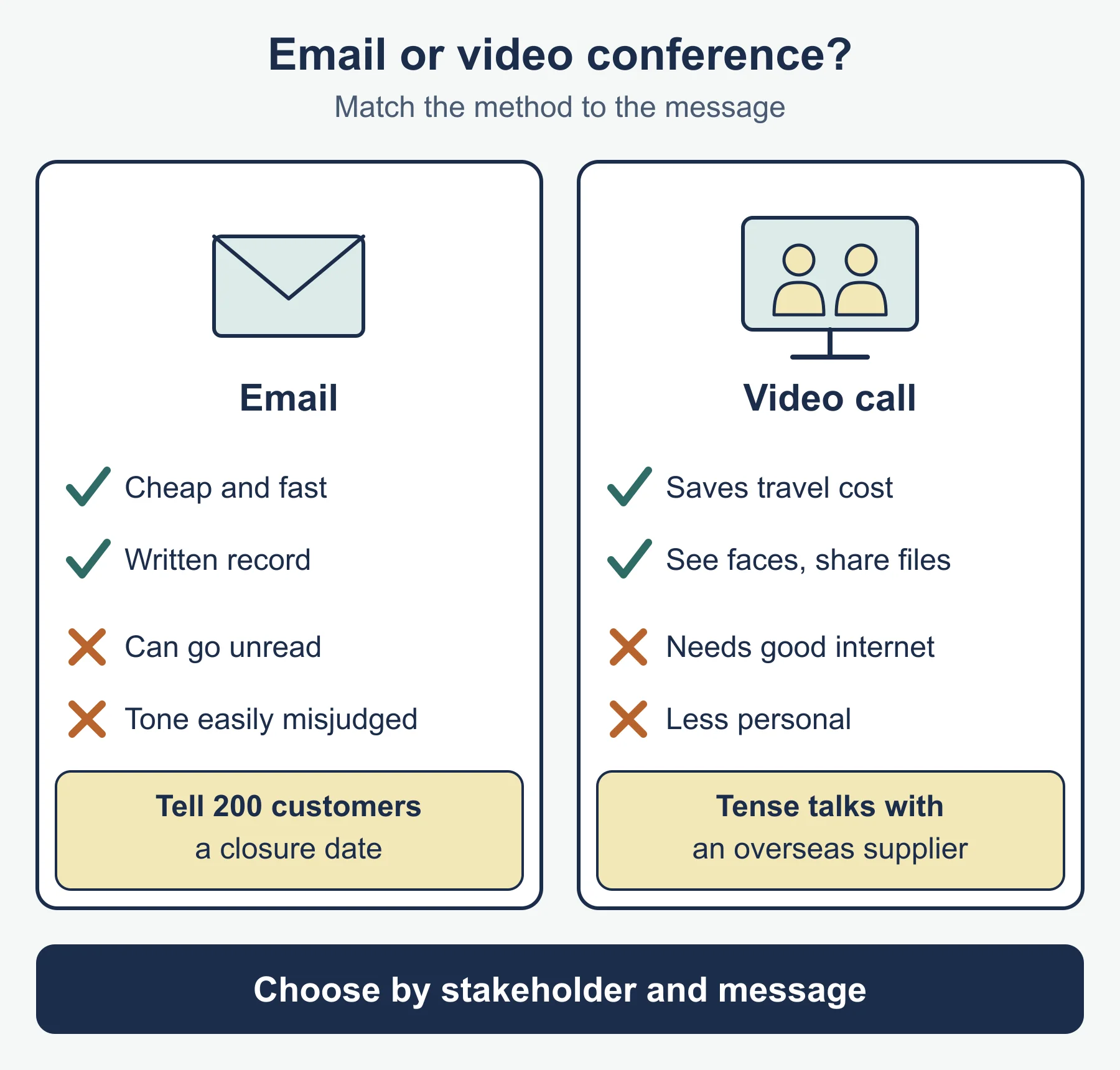
| Written messages to many people, with a record | Slow replies, unread messages | |
| Video conferencing | Meetings with people far away, saving travel | Poor connections, less personal |
| Website or social media | News and questions from customers and the community | Needs regular updating; criticism is public |
Stakeholders to link to: owners, employees, customers, suppliers, lenders, the local community. Name the stakeholder and say why the method suits them.
3.2.2 Ethical considerations
Key ideas
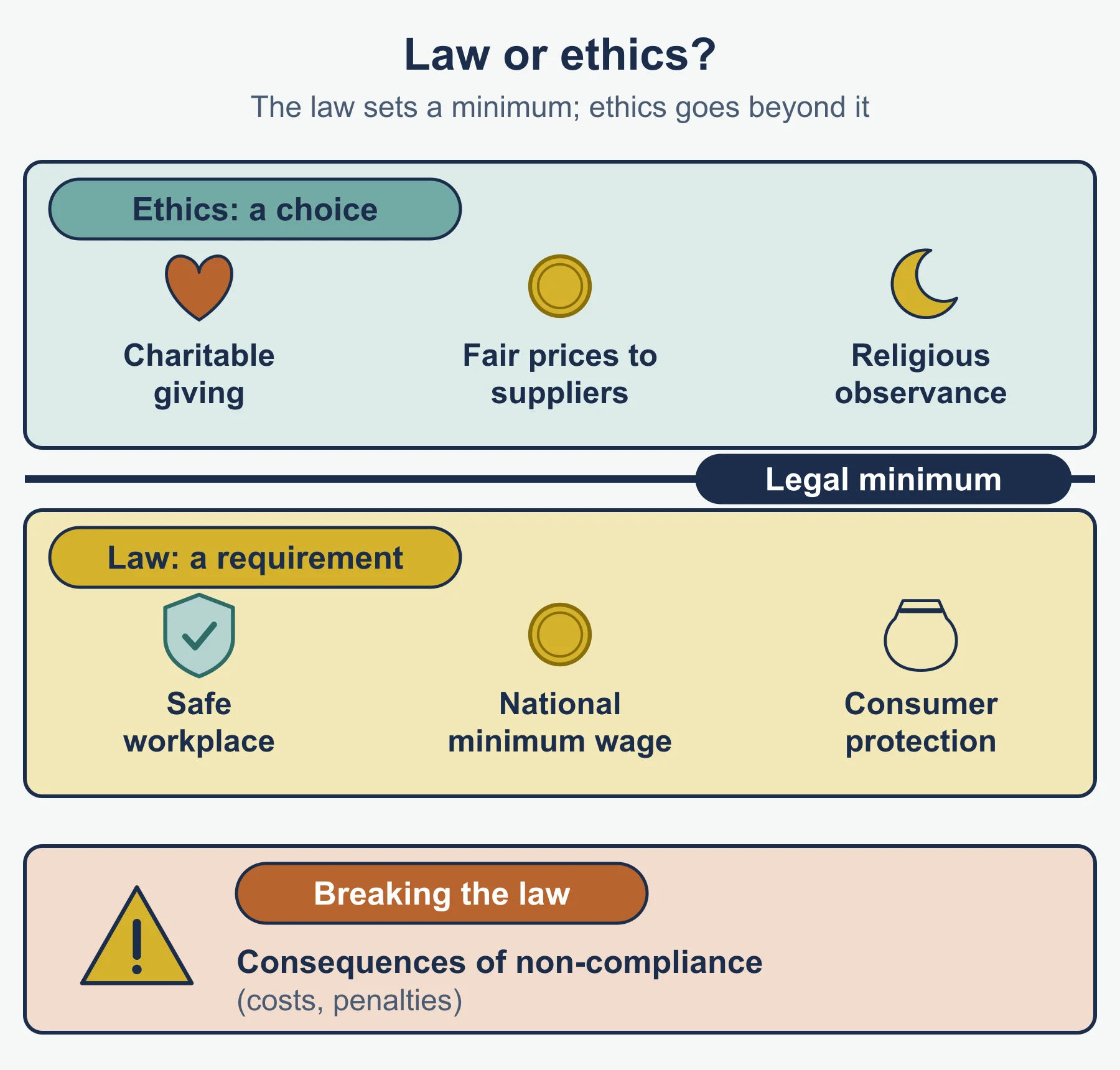
- Ethical behaviour: conduct that stakeholders regard as fair and also honest.
- Includes religious observance (for example, allowing staff time for prayer or festivals) and charitable giving.
- It is a choice. It is not the same as obeying the law.
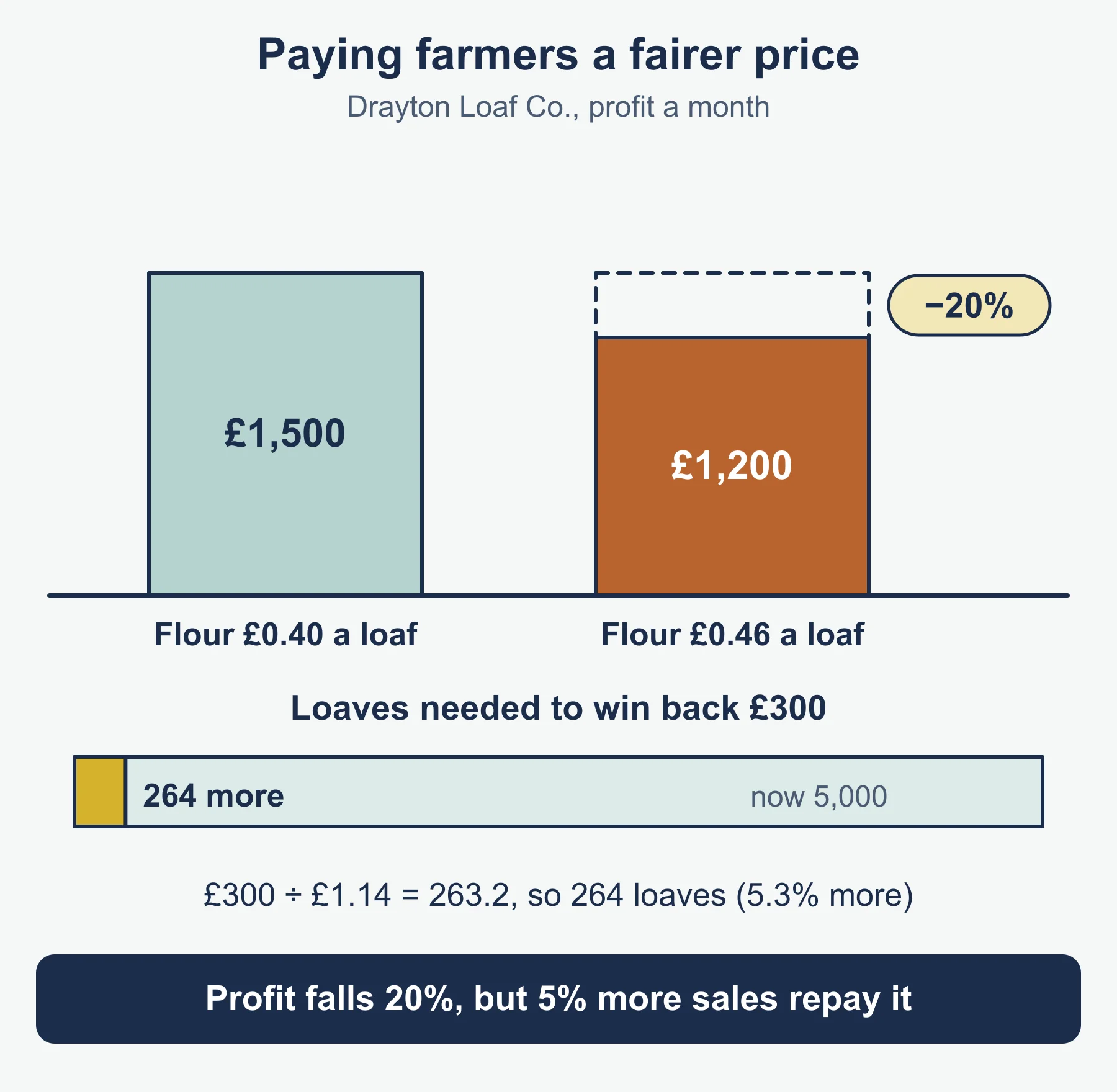
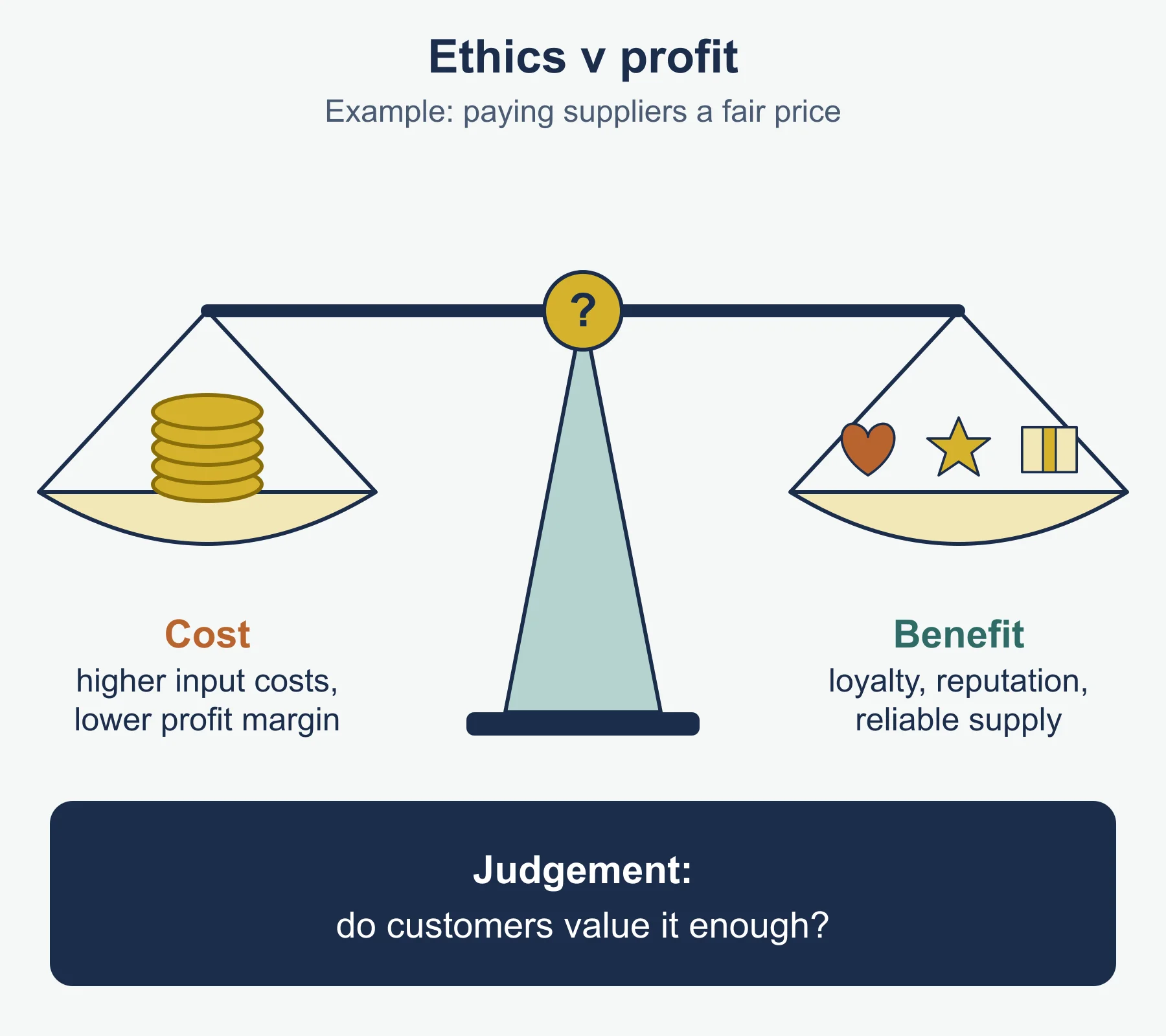
- Trade-off: the ethical option often raises cost or lowers profit in the short run, but may bring benefits later.
Examples of ethical behaviour
- Fair prices to suppliers and prompt payment.
- Honest labelling and advertising.
- Fair treatment of staff.
- Giving money or time to charity.
- Respecting staff religious needs where possible.
Benefits and drawbacks
| Benefits | Drawbacks |
|---|---|
| Customer loyalty from those who value fairness | Higher costs, lower profit per unit |
| Better reputation and staff recruitment | Rivals with lower costs may undercut prices |
| Stronger supplier relationships | Payback is uncertain and slow |
| Fewer complaints | Time and money diverted from the main business |
Method for an ethics versus profit question
- Name the ethical choice.
- Show the cost, with a figure if the case gives one.
- Show a possible benefit, and when it arrives.
- Compare, then judge using something from the case, such as customers’ attitudes or the size of the cost.
3.2.2 Environmental considerations
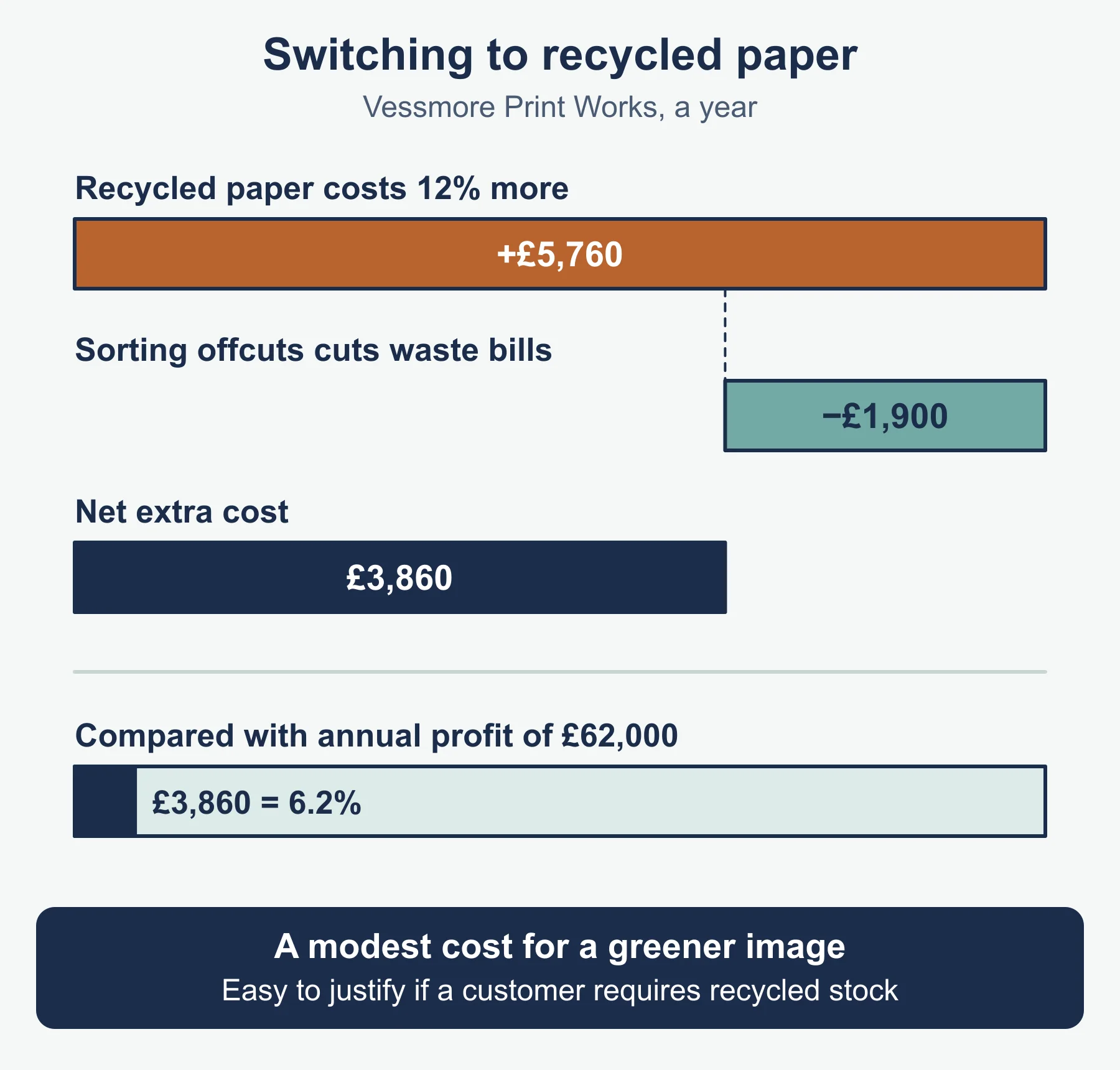
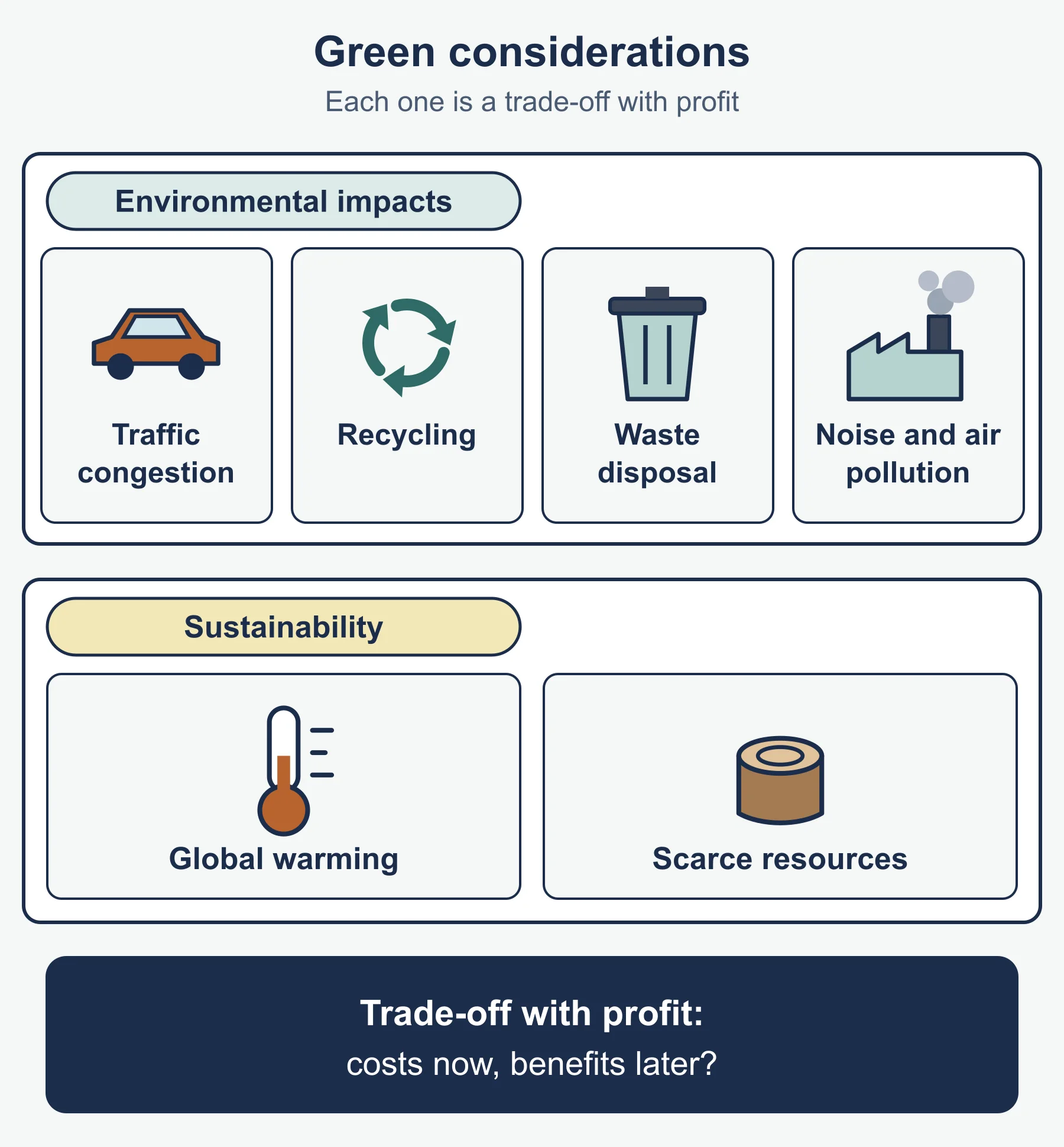
Society and consumers expect more environmental responsibility in decision-making. A business weighs the costs against the benefits of behaving this way.
| Named area | Problem | One response |
|---|---|---|
| Traffic congestion | Vehicles clog local roads | Fewer, fuller deliveries |
| Recycling | Resources lost | Recycled inputs and packaging; sort waste |
| Disposing of waste | Cost and harm to land and water | Cut waste at source |
| Noise pollution | Disturbs neighbours and staff | Insulation, limited hours |
| Air pollution | Harms health | Cleaner vehicles, filters |
| Costs | Benefits |
|---|---|
| Equipment, dearer inputs, training | Better reputation |
| Slower or more costly delivery | Customers who prefer green products |
| Time to plan changes | Lower waste costs, fewer complaints |
3.2.2 Sustainability
- Usual definition (the specification gives none): serving today’s demand without leaving later generations short of what they will need.
- Global warming: emissions from burning fuels warm the planet. Society expects cuts.
- Using scarce resources: limited materials get dearer and may run out.
- Trade-off with profit: spending now cuts profit now; savings and reputation come later.
- Always ask over what time scale the benefit arrives.
Calculations you may need
These are standard forms, used in the study guide’s worked examples. The specification does not list a formula for them.
| Calculation | Form |
|---|---|
| Change in sales revenue | new revenue minus old revenue |
| Percentage change | change ÷ original × 100 |
| Share of total | part ÷ total × 100 |
| Contribution per unit | selling price minus variable cost per unit |
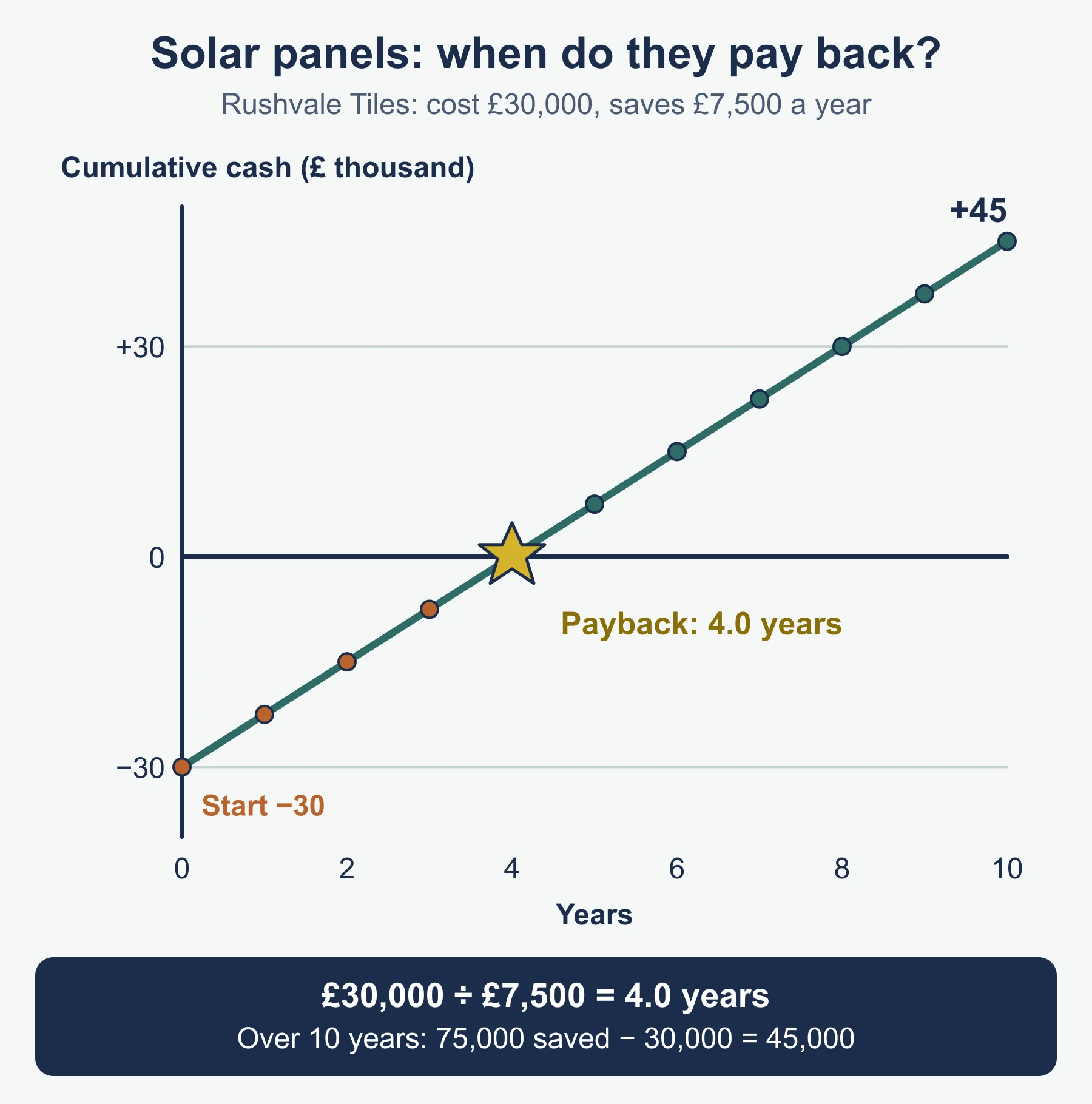
| Payback period | cost ÷ yearly saving |
Must-know distinctions
- Ethics (choice) versus law (duty).
- e-commerce (selling online) versus digital communication (contact with stakeholders).
- Cost (what the business pays) versus benefit (what it gains).
- Short-run profit versus long-run position.
Worked reminders
Religious observance as a cost
A workshop has 10 staff paid £9 an hour. Each is allowed an extra 20 minutes a day for prayer, five days a week.
- Weekly cost = 10 × (20 ÷ 60) × 9 × 5 = £150.
- Yearly cost = 150 × 52 = £7,800.
- Judgement: a real cost, but it may reduce staff turnover and build goodwill. Whether it is worth it depends on how much the workshop values keeping skilled staff.
A model chain for e-commerce
“The business sells online (point), so customers in other regions can order without visiting the shop (reason). This raises potential sales revenue (effect). However, delivery and returns add costs, so profit may rise by less than revenue (limit).”
A model chain for an environmental decision
“The factory fits filters to its chimneys (point), which reduces air pollution for nearby residents (reason). This improves its reputation locally (benefit) but the filters cost money to buy and clean (cost). Because the factory is next to housing, complaints could be costly, so the benefit may outweigh the cost (judgement).”
Command words in this topic
| Command word | Task | Length of answer |
|---|---|---|
| State, identify | Give the fact asked for | A few words |
| Define | Give the meaning | One short sentence |
| Calculate | Show working and units | As needed |
| Explain | Give a reason or consequence | A developed point |
| Analyse | Build a chain of cause and effect | Two or three linked points |
| Evaluate, justify | Weigh both sides, then reach a supported judgement | A short paragraph with a conclusion |
For evaluate and justify, the conclusion must depend on a detail in the case. Useful details are the size of the cost, the type of customer, how long the benefit takes to arrive and how competitive the market is.
Quick self-test
- State what ICT stands for.
- Define e-commerce.
- Give two examples of digital communication.
- Online sales of a firm rose from £8,000 to £11,000 a month. Calculate the percentage increase.
- A firm pays suppliers £0.05 more per unit and makes 20,000 units a year. Calculate the extra yearly cost.
- State two named environmental considerations.
- Give one benefit and one drawback of acting ethically.
- State what is meant by acting ethically in terms of stakeholders.
- A business spends £6,000 on packaging. Recycled packaging would cut this by 15%. Calculate the saving.
- A machine costs £9,000 and saves £3,000 a year in energy. Calculate the payback period.
- Give one reason sustainability can conflict with profit.
Answers
- Information and Communication Technology.
- Buying and selling goods or services over the internet.
- Any two from email, video conferencing, a website or social media.
- 3,000 ÷ 8,000 × 100 = 37.5%.
- 0.05 × 20,000 = £1,000.
- Any two from traffic congestion, recycling, disposing of waste, noise pollution, air pollution.
- Benefit: loyal customers or better reputation. Drawback: higher cost. Other valid answers accepted.
- Behaving so that stakeholders see the business as fair and honest.
- 6,000 × 0.15 = £900.
- 9,000 ÷ 3,000 = 3 years.
- Money spent now on cleaner methods lowers profit now, while the benefits arrive later.
Where marks are usually lost
- Naming a technology or a problem without saying what changes for the business.
- Giving only the benefits of e-commerce and forgetting delivery and set-up costs.
- Writing “email is quick” without linking it to a stakeholder or a result.
- Describing ethics as always profitable. Show the cost as well as the possible gain.
- Confusing ethical choices with legal duties.
- Listing pollution types without any cost or benefit to the business.
- Evaluating without a judgement, or with a conclusion that could fit any business.
- Dropping the units, such as £ or years, in a calculation.
Frequently asked questions
What does sustainability mean in OxfordAQA IGCSE Business? The specification gives no definition. The usual definition is serving today’s demand without leaving later generations short of what they will need.
Which environmental areas does the 9225 specification name? The named areas include traffic congestion, recycling, disposing of waste, noise pollution and air pollution. For each, link the problem to a response the business could make, such as fewer, fuller deliveries to cut congestion.
Does ethical behaviour include religious observance? Yes. Ethical behaviour includes religious observance, such as allowing staff time for prayer or festivals, and charitable giving.
What is the difference between e-commerce and digital communication? E-commerce is selling online, while digital communication is contact with stakeholders, such as owners, employees, customers and suppliers.
Official syllabus
OxfordAQA International GCSE Business (9225) specification, version 3.1, for International GCSE exams May/June 2022 onwards, published by OxfordAQA. Sections 3.2.1 and 3.2.2.
Get free revision emails (optional)
Occasional emails with practice questions, worked explanations and links to free resources for the qualification and subjects you choose. No spam, and you can unsubscribe from any email. The free tools on this site never need an email.
Related resources
-
Study guides
OxfordAQA IGCSE Business: The economic climate on business and Globalisation (9225)
Study guide to interest rates, employment, spending, globalisation and exchange rates for OxfordAQA International GCSE Business, sections 3.2.3-3.2.4.
Business · OxfordAQA · IGCSE
Read guide -
Practice questions
OxfordAQA IGCSE Business: The economic climate on business and Globalisation (9225) – Practice Questions
Eleven original questions with worked answers on interest rates, employment, incomes, globalisation and exchange rates for OxfordAQA IGCSE Business.
Business · OxfordAQA · IGCSE
Try questions -
Revision notes
OxfordAQA IGCSE Business: The economic climate on business and Globalisation (9225) – Revision Notes
Condensed notes on interest rates, employment, consumer spending, globalisation and exchange rates for OxfordAQA International GCSE Business 3.2.3-3.2.4.
Business · OxfordAQA · IGCSE
Revise topic
Related articles
-
teaching
A Level tuition in Dubai: Cambridge or Pearson Edexcel International A Level?
Schools in Dubai and Abu Dhabi teach either Cambridge International AS & A Level or Pearson Edexcel International A Level. How the two are structured, why it matters for tuition, and how online classes from Lahore work.
9 October 2026
-
curriculum guides
Choosing subjects at IGCSE and A Level
How subject choices at 14 and 16 affect university options later, and how to keep pathways open without overloading a timetable.
28 July 2026
Studying this with a teacher
Working through Business IGCSE?
This page is free and stays free. If you would rather be taught it, Marlbridge runs Business classes one-to-one and in small groups of up to 15, online in your own time zone. The first trial class is free. WhatsApp replies within an hour (8am–11pm Pakistan time, every day); email the same day.
OxfordAQA Business teachers at Marlbridge
