
Revision Notes
OxfordAQA IGCSE Business: The economic climate on business and Globalisation (9225) – Revision Notes
Condensed notes on interest rates, employment, consumer spending, globalisation and exchange rates for OxfordAQA International GCSE Business 3.2.3-3.2.4.
- Subject
- Business
- Level
- IGCSE
- Topic
- Influences on business
- Author
- Marlbridge Academic Team
- Updated
- Reviewed by
- Salman Ahmad (what this means)
Aligned to OxfordAQA IGCSE Business (9225), First teaching September 2020, first examined May/June 2022. Official specification .
Syllabus page (what it covers and how it is assessed): OxfordAQA IGCSE Business.
Syllabus points this page covers
9225
- 3.2.3 The economic climate on business
- 3.2.4 Globalisation
Found an error? Report a correction.
Need help with this topic? Request a free trial class for IGCSE Business (9225).
These notes condense sections 3.2.3 (The economic climate on business) and 3.2.4 (Globalisation) of the OxfordAQA International GCSE Business (9225) specification, version 3.1, for exams from May/June 2022 onwards. Use the full study guide for explanations and worked examples, then try the practice questions. The wider topic is in the Influences on business revision notes. Also useful: the course hub, the printable checklist and the free diagnostics.
Scope in one table
| Spec point | Remember |
|---|---|
| 3.2.3 Interest rates | Loans and overdrafts (cost), consumer and business spending (demand), Sharia compliant alternatives |
| 3.2.3 Level of employment | Demand, recruitment, wage costs |
| 3.2.3 Consumer spending | Demand moves as incomes move; products differ |
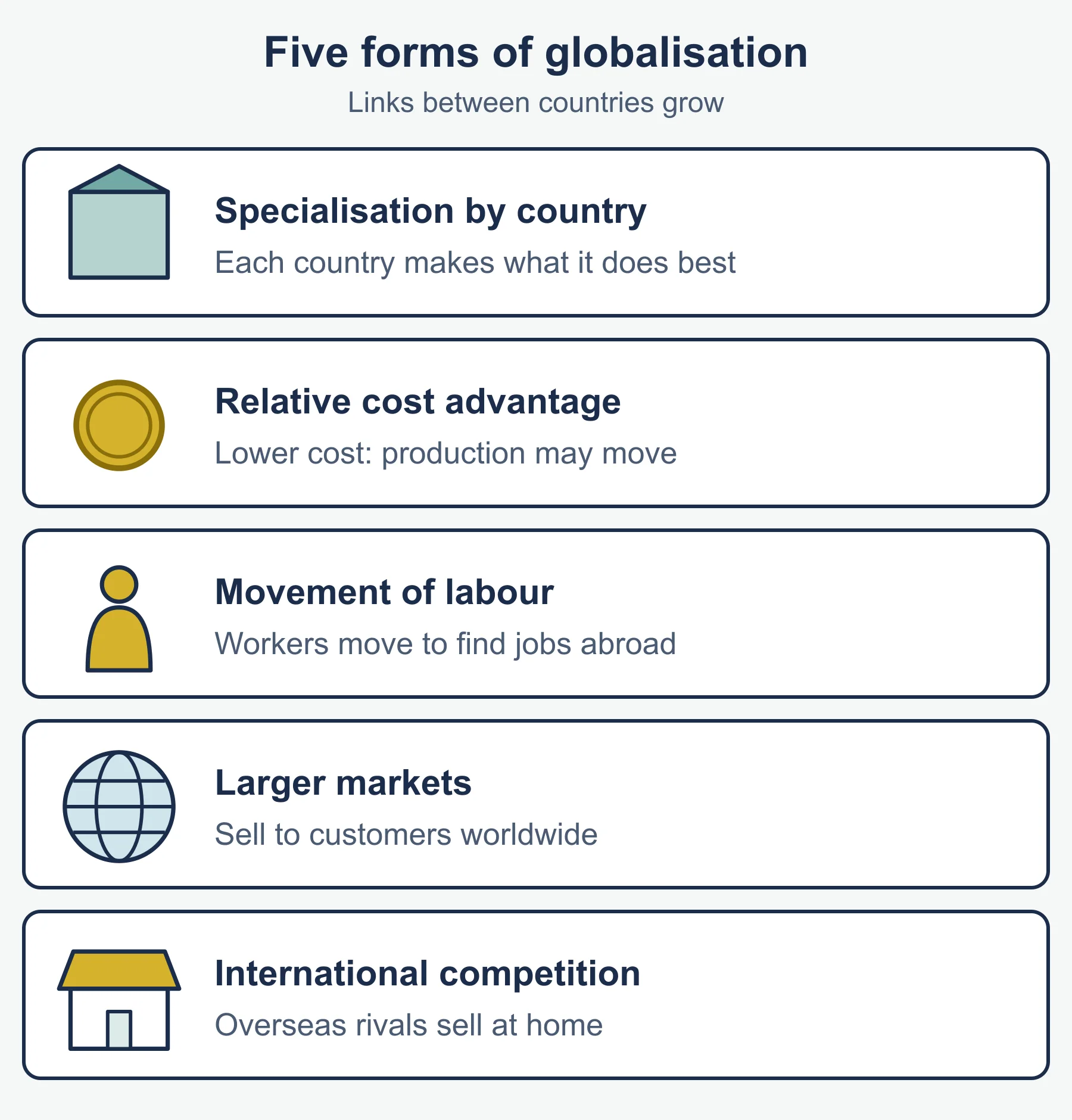
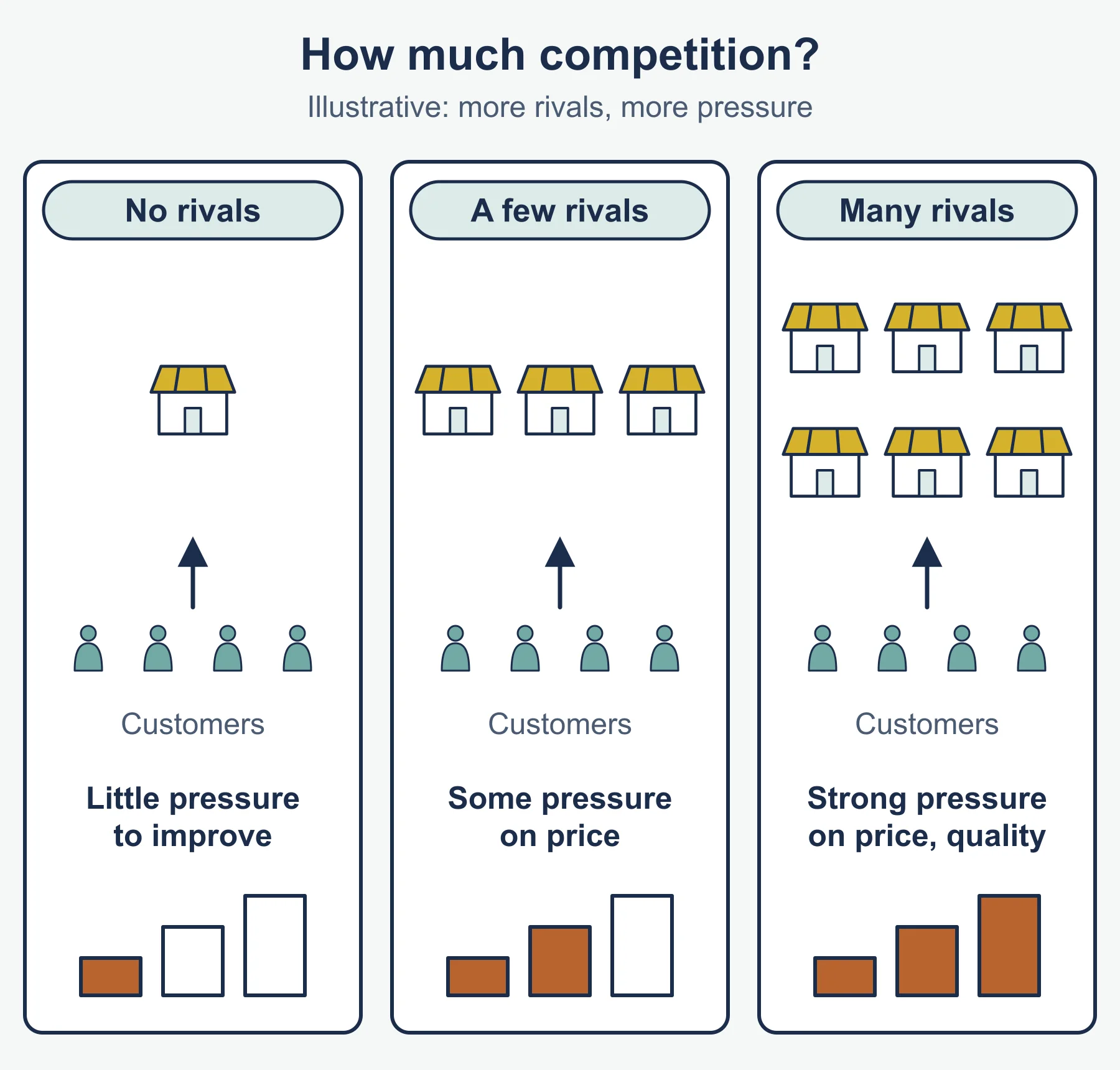
| 3.2.4 Forms of globalisation | Specialisation by country, relative cost advantage, movement of labour, larger markets, international competition |
| 3.2.4 Benefits and drawbacks | Businesses and economies, developed and developing |
| 3.2.4 Exchange rates | Effect on profit and sales of importers and exporters; severe fluctuations |
Not required: why interest rates change, and exchange rate conversions.
Definitions
- Rate of interest: the price of borrowing money, shown as a percentage of the amount borrowed each year.
- Loan: a fixed sum borrowed and repaid with interest over an agreed period.
- Overdraft: borrowing through a bank account by spending more than the balance, up to an agreed limit; interest is charged on the amount overdrawn.
- Level of employment: how many people who want to work have jobs.
- Consumer spending: the total that households spend on goods and services.
- Globalisation: the growing links between countries through trade, investment, people and communication.
- Exchange rate: the price of one currency in terms of another.
- Relative cost advantage: being able to produce at lower cost than other countries or firms.
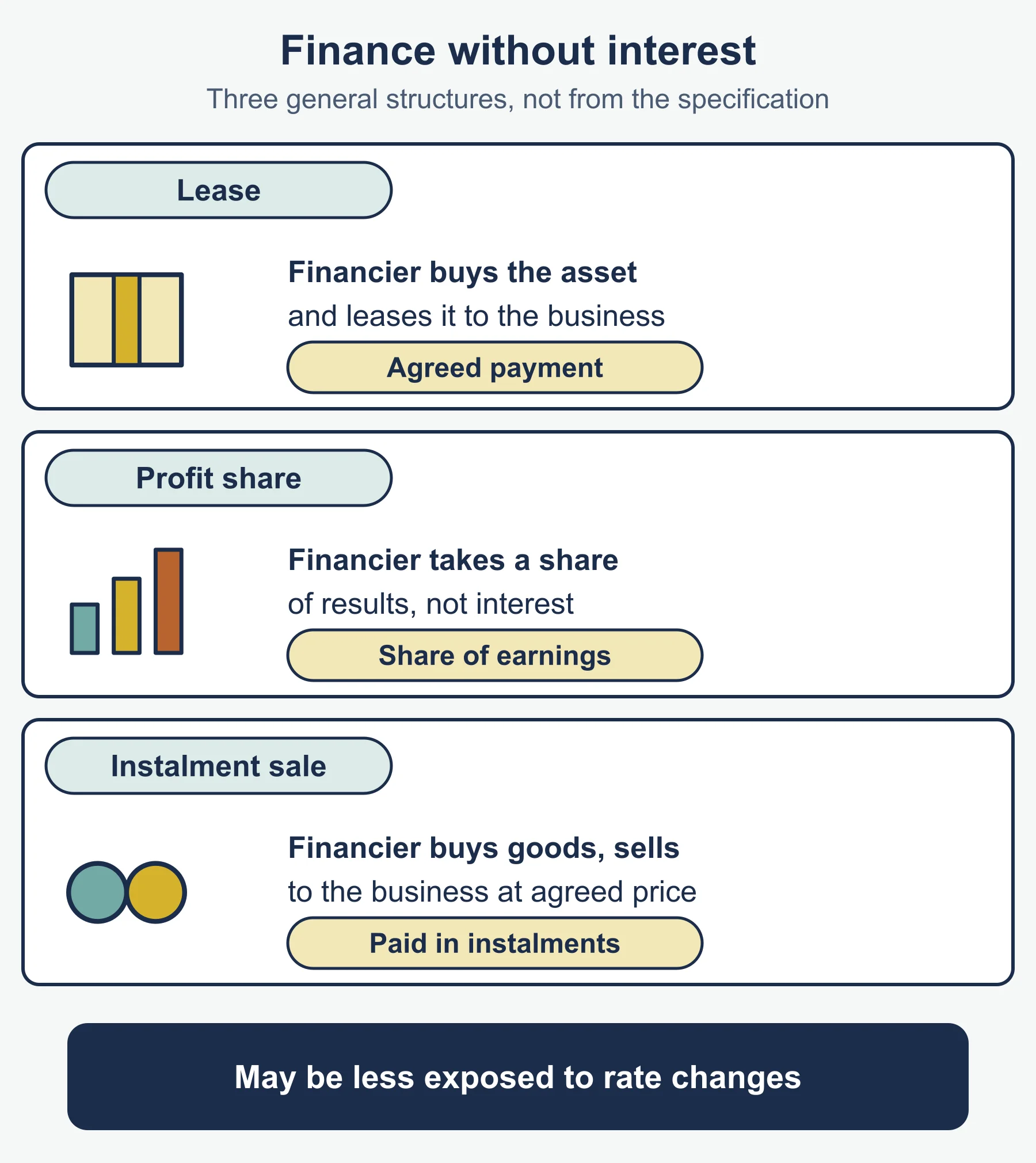
- Sharia compliant finance: finance that does not charge or pay interest. The specification names only “Sharia compliant alternatives”; leasing, profit sharing and agreed-price sales are our own general description of how it can work.
Interest rates: method in steps
- Say whether the business borrows and whether the rate is variable or fixed.
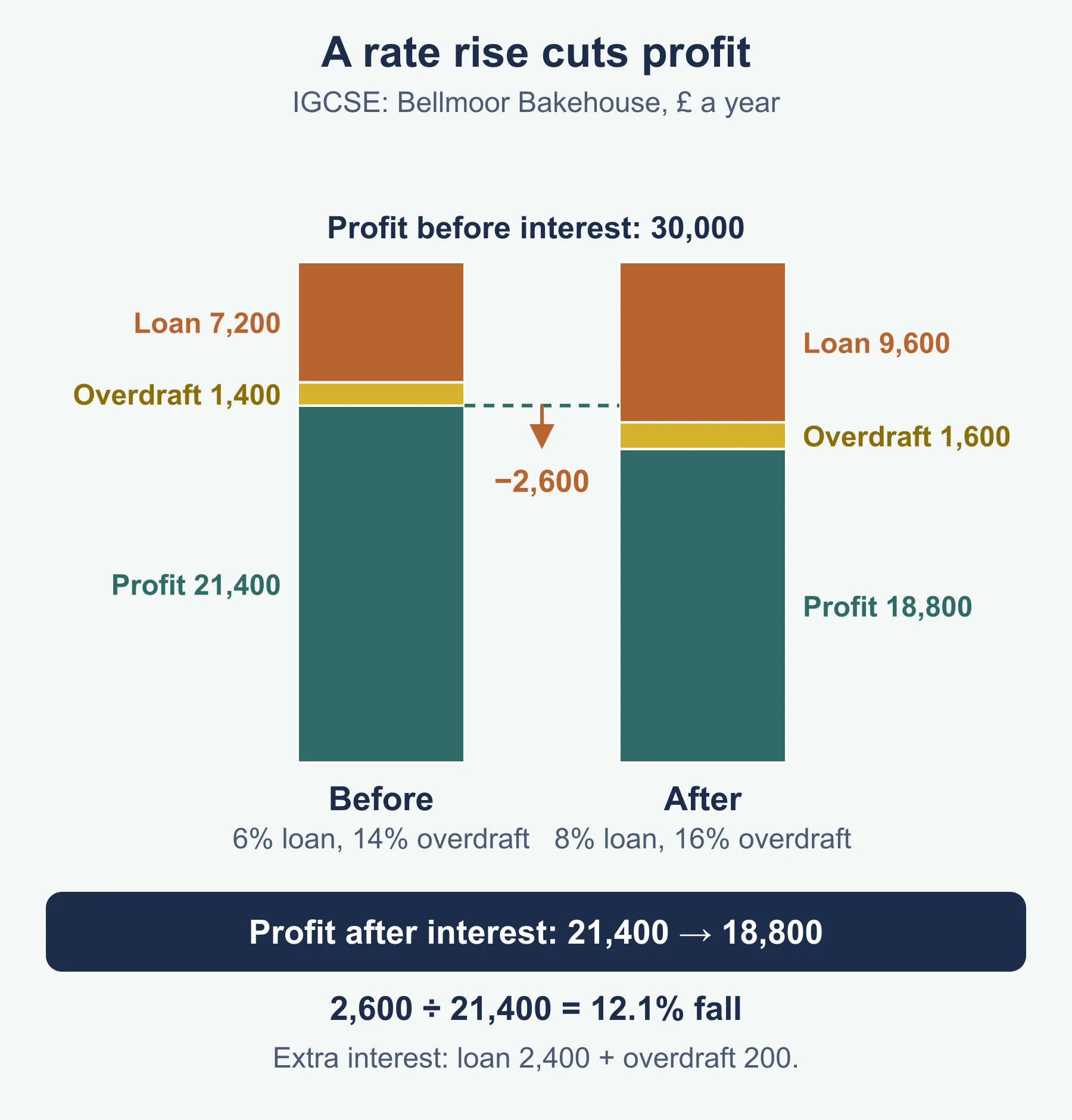
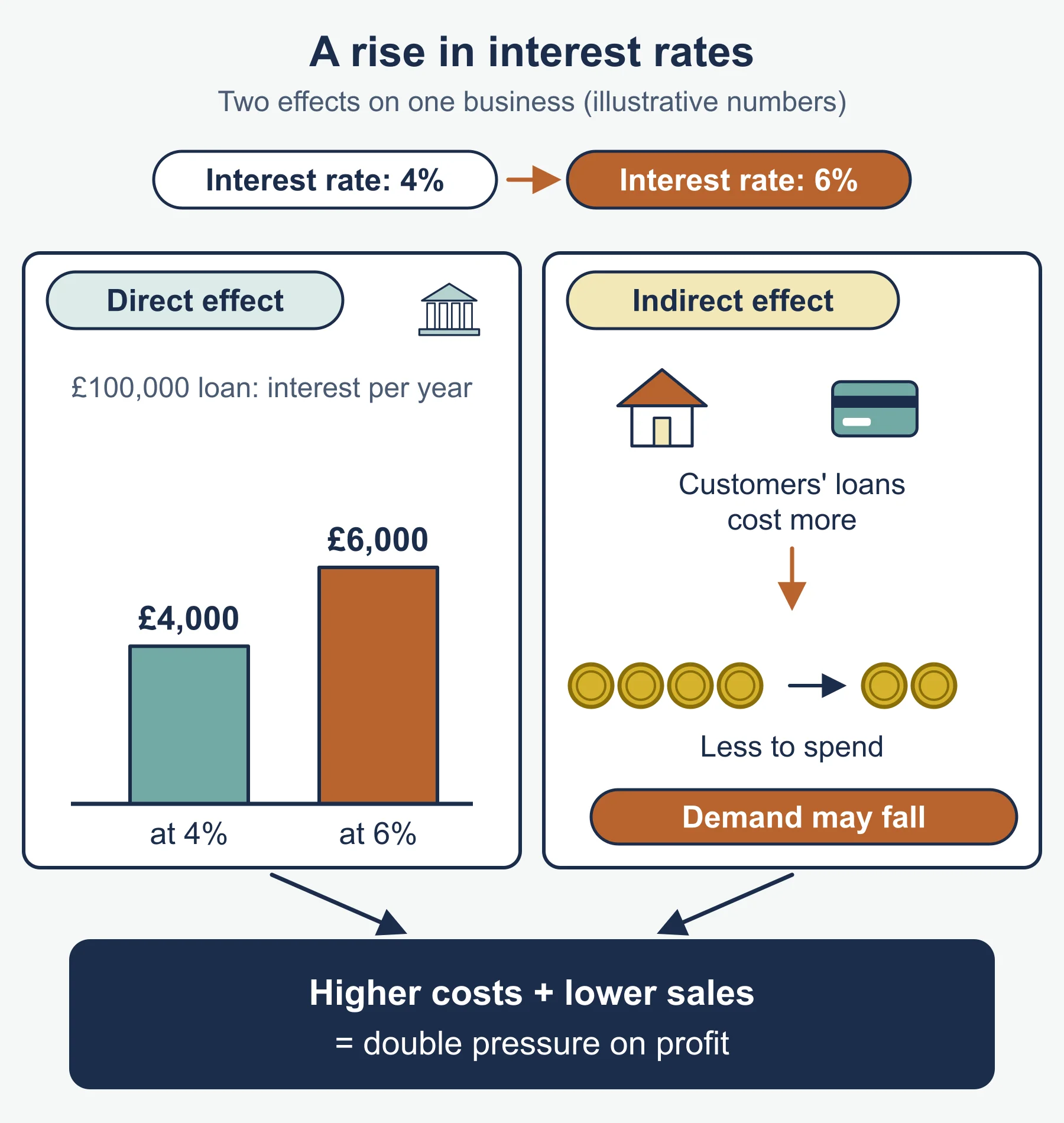
- Direct channel: rate up, repayments up, costs up, profit down.
- Indirect channel: rate up, household and business borrowing costs up, spending down, sales down.
- Say which channel is bigger for this business and why.
- Reverse the whole chain for a rate fall.
Small reminder: Ixworth Cycles has a £50,000 variable-rate loan. The rate rises from 4% to 6%. Annual interest goes from £2,000 to £3,000, an extra £1,000 a year.
Sharia compliant alternatives: say what they avoid (interest), name one structure (leasing, profit share or an agreed-price sale), and say that the business may be less exposed to a rate change (our own reasoning, not a specification statement) but still has payments to make.
Employment: cause and effect
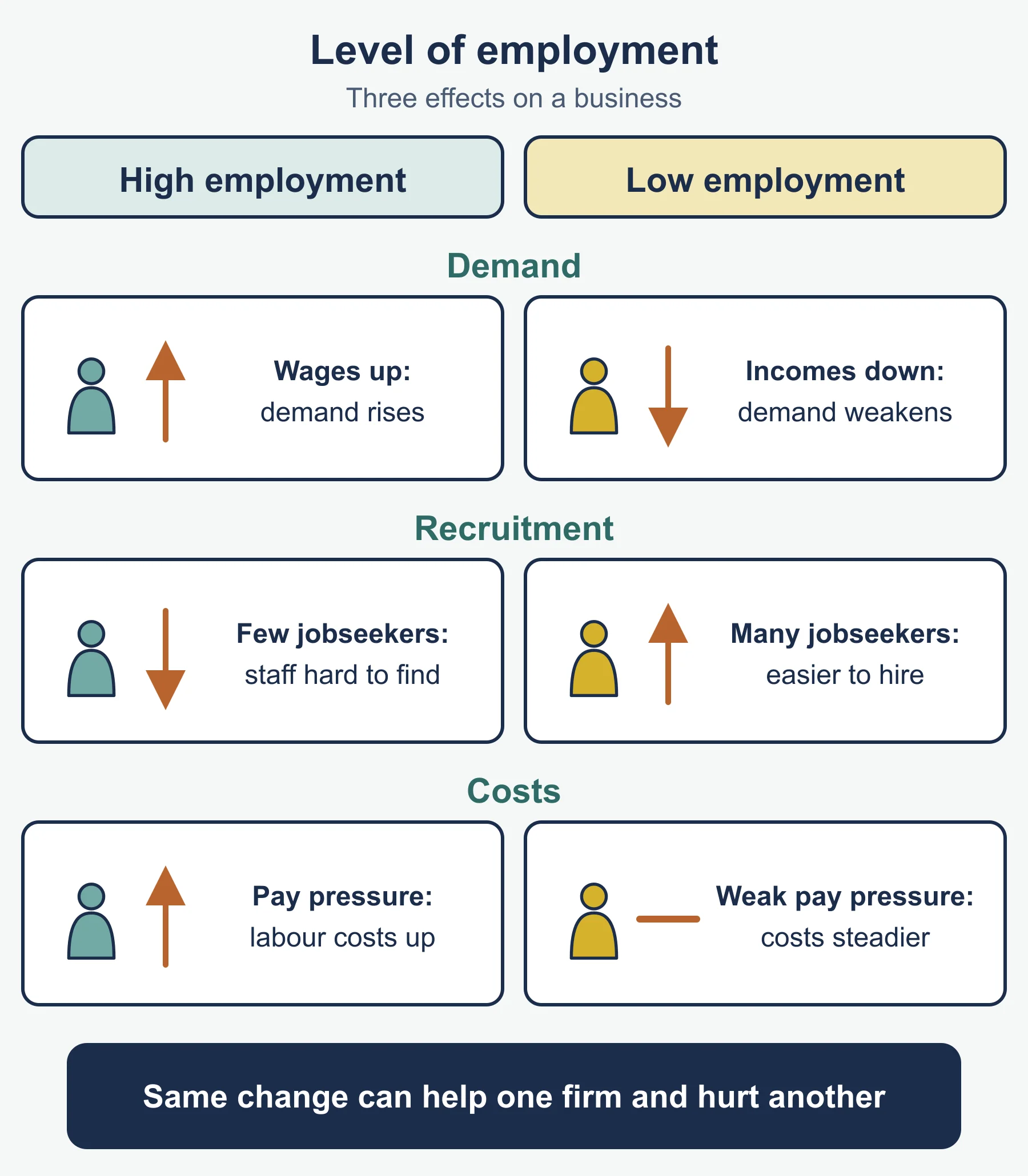
| Employment | Demand | Recruitment and pay | Likely winners |
|---|---|---|---|
| Rises | Up, as more households have wages | Harder to hire; wages may rise | Businesses selling non-essentials |
| Falls | Down, as incomes drop | Easier to hire; less pay pressure | Businesses selling cheaper alternatives |
Always add one sentence on the business type. A recruitment agency is affected differently from a restaurant.
Consumer spending and incomes
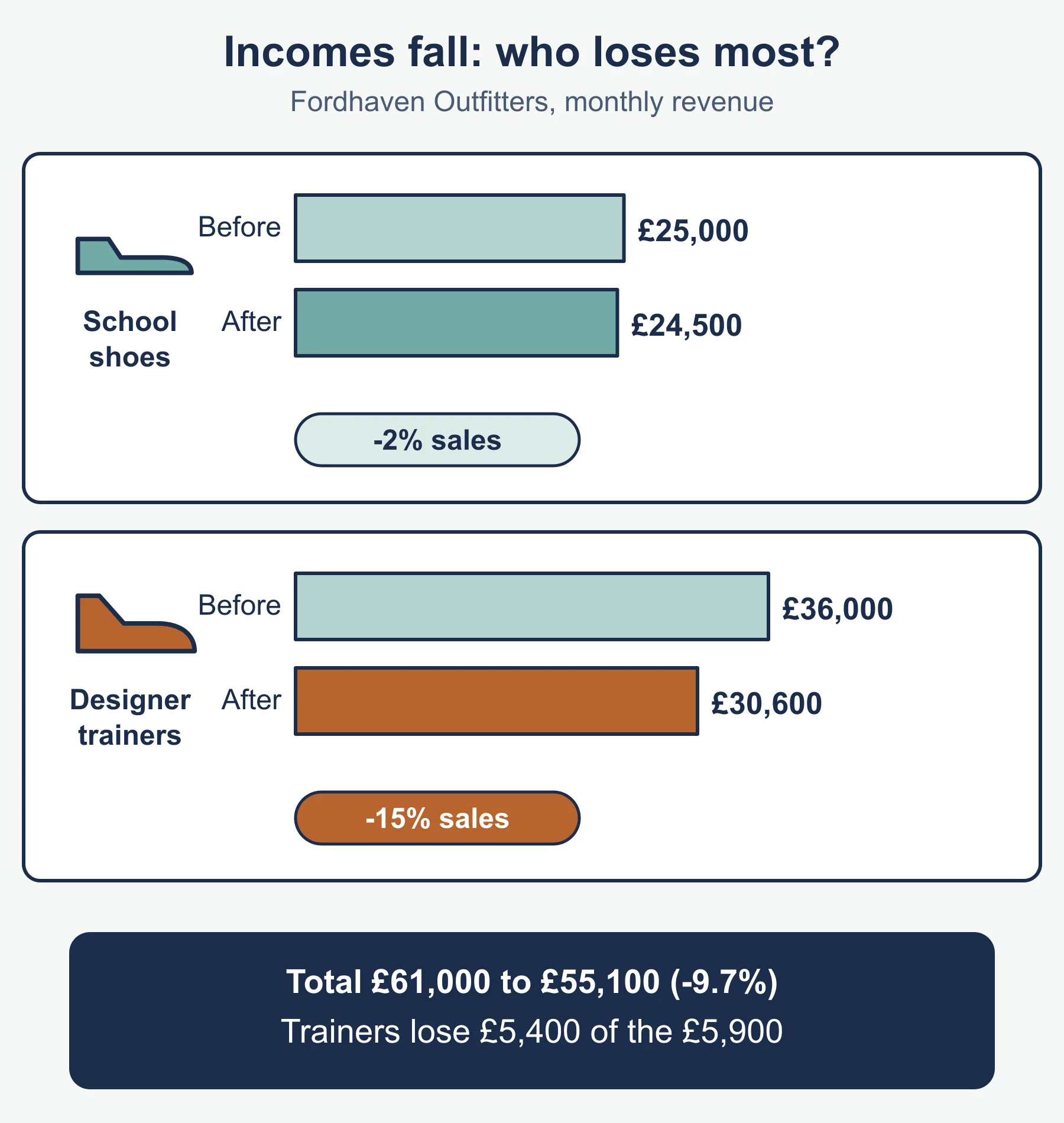
- Income up: more spending, especially on products people can postpone. A business may need more stock, staff and space.
- Income down: luxuries and postponable items fall most; necessities change little; cheaper alternatives may rise.
- A mixed range spreads the risk. A single-product business is exposed.
Small reminder: sales of 2,000 units at £12 give £24,000. A 25% fall in volume leaves £18,000, a fall of £6,000.
Forms of globalisation
| Form | One-line business effect |
|---|---|
| Specialisation by country | Low-cost volume production in some places; imports of the rest |
| Relative cost advantage | Production moves to the lower-cost site |
| Movement of labour | Wider choice of staff; skills may leave a country |
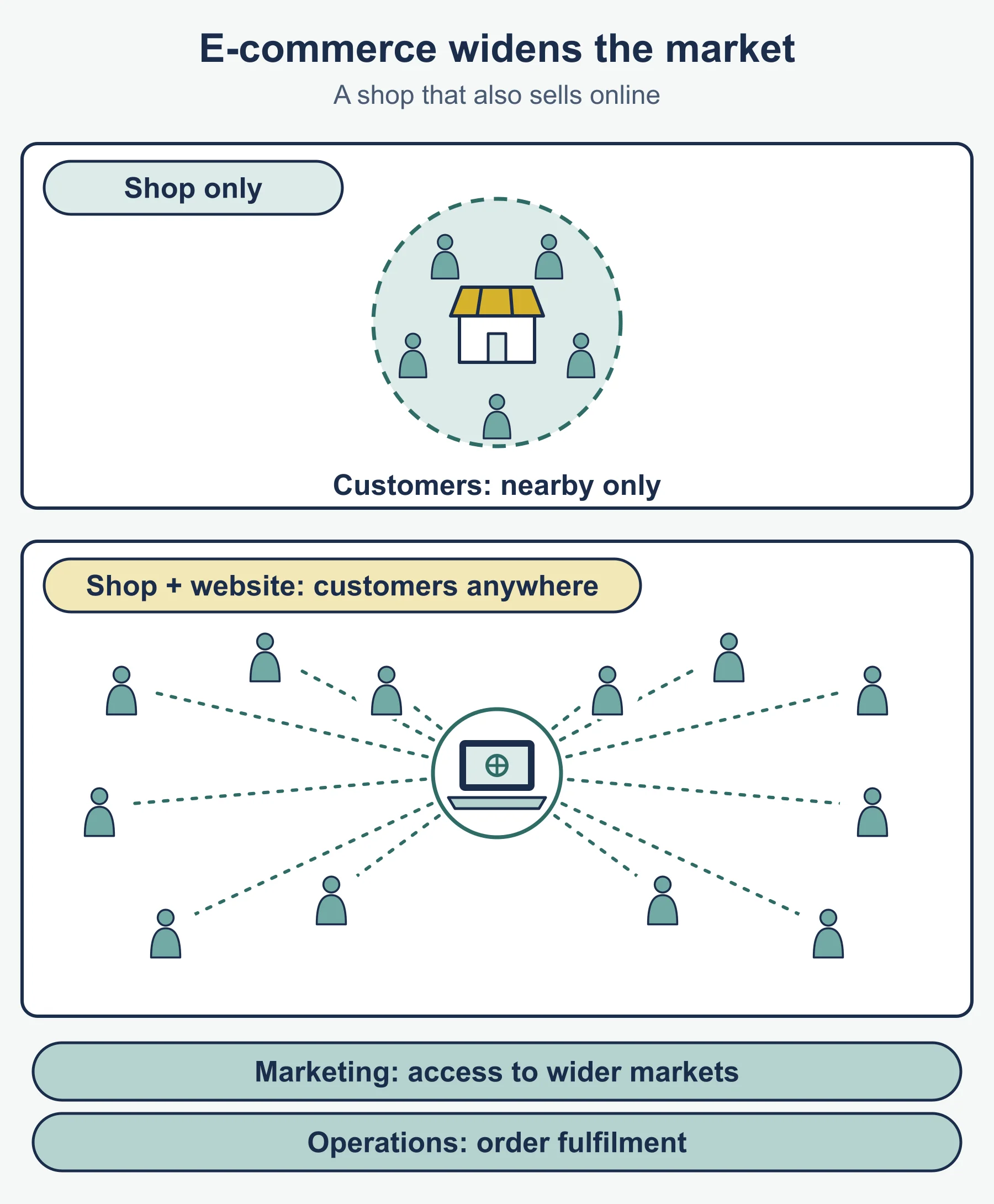
| Larger markets | More customers, scope for economies of scale |
| International competition | Pressure on prices and market share |
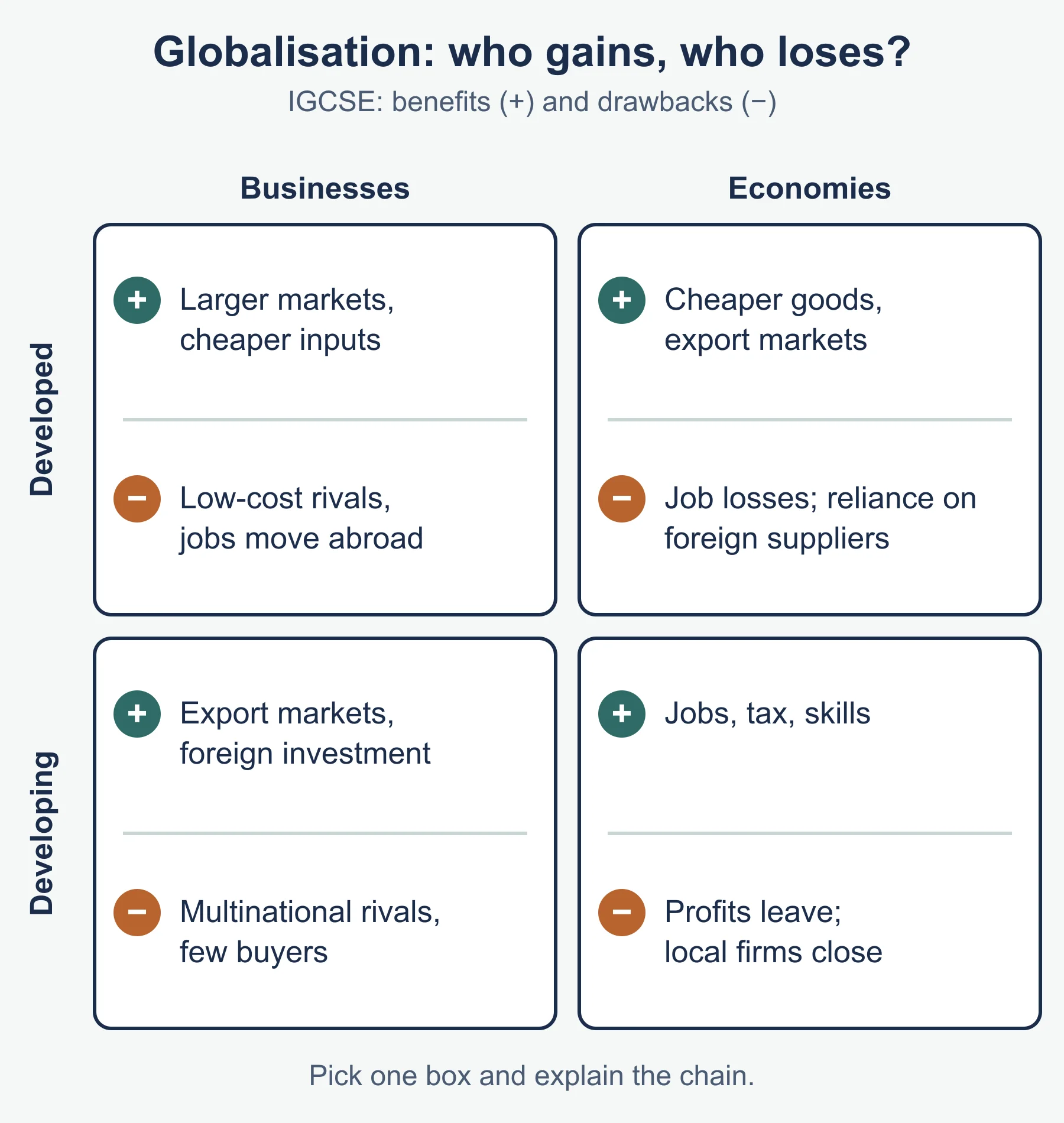
Benefits and drawbacks grid
| Benefit | Drawback | |
|---|---|---|
| Developed-country business | Bigger markets, cheaper inputs | Low-cost rivals, jobs move abroad |
| Developed-country economy | Cheaper goods, export markets | Some industries decline |
| Developing-country business | Export orders, investment, skills | Strong multinational rivals, dependence on few buyers |
| Developing-country economy | Jobs, tax, technology | Profits leave, local firms close, skilled workers leave |
Method: pick one box, name a benefit or drawback, add “so” twice to show the chain, then say how big it is for the business in the stem.
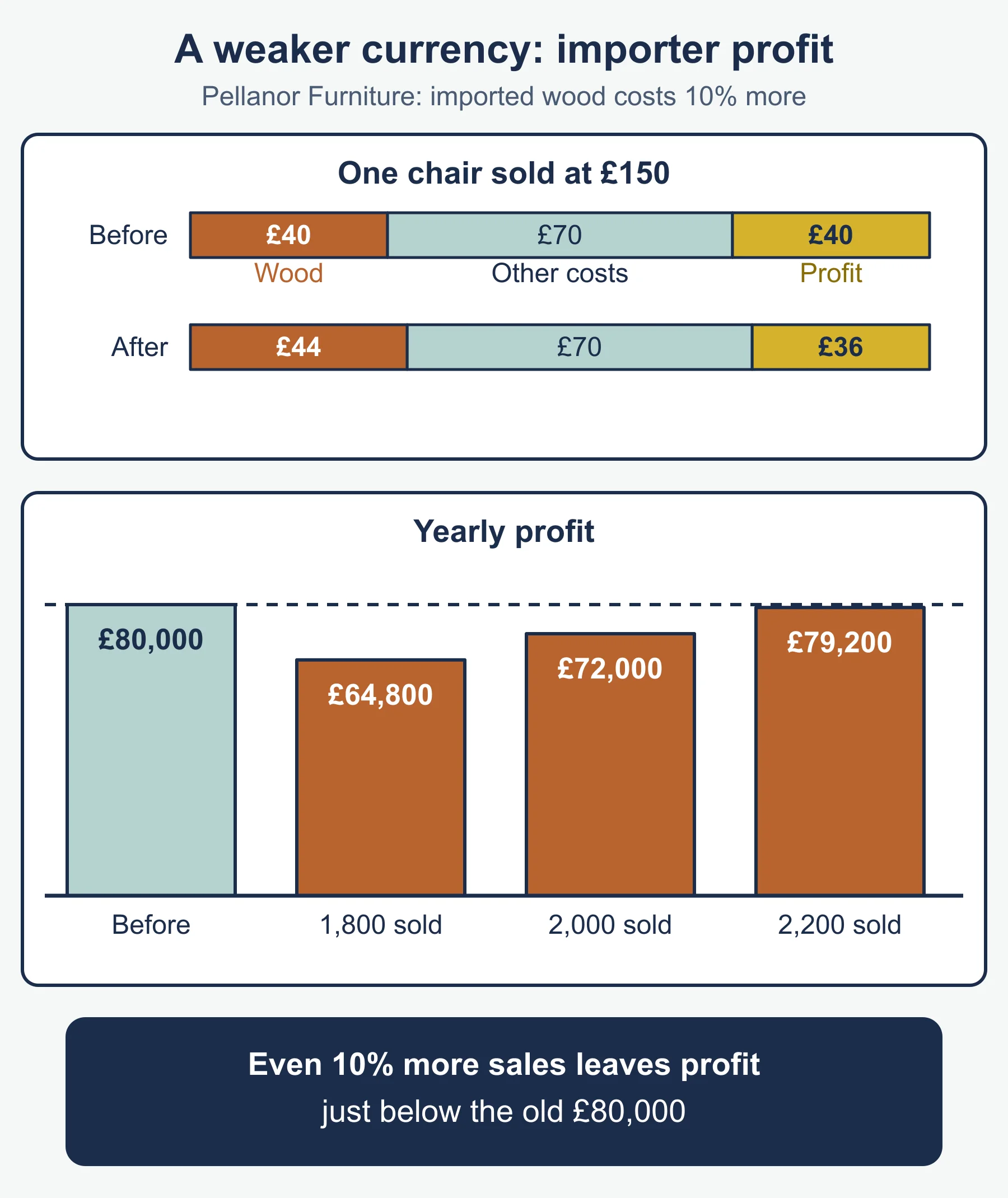
Exchange rates: the direction table
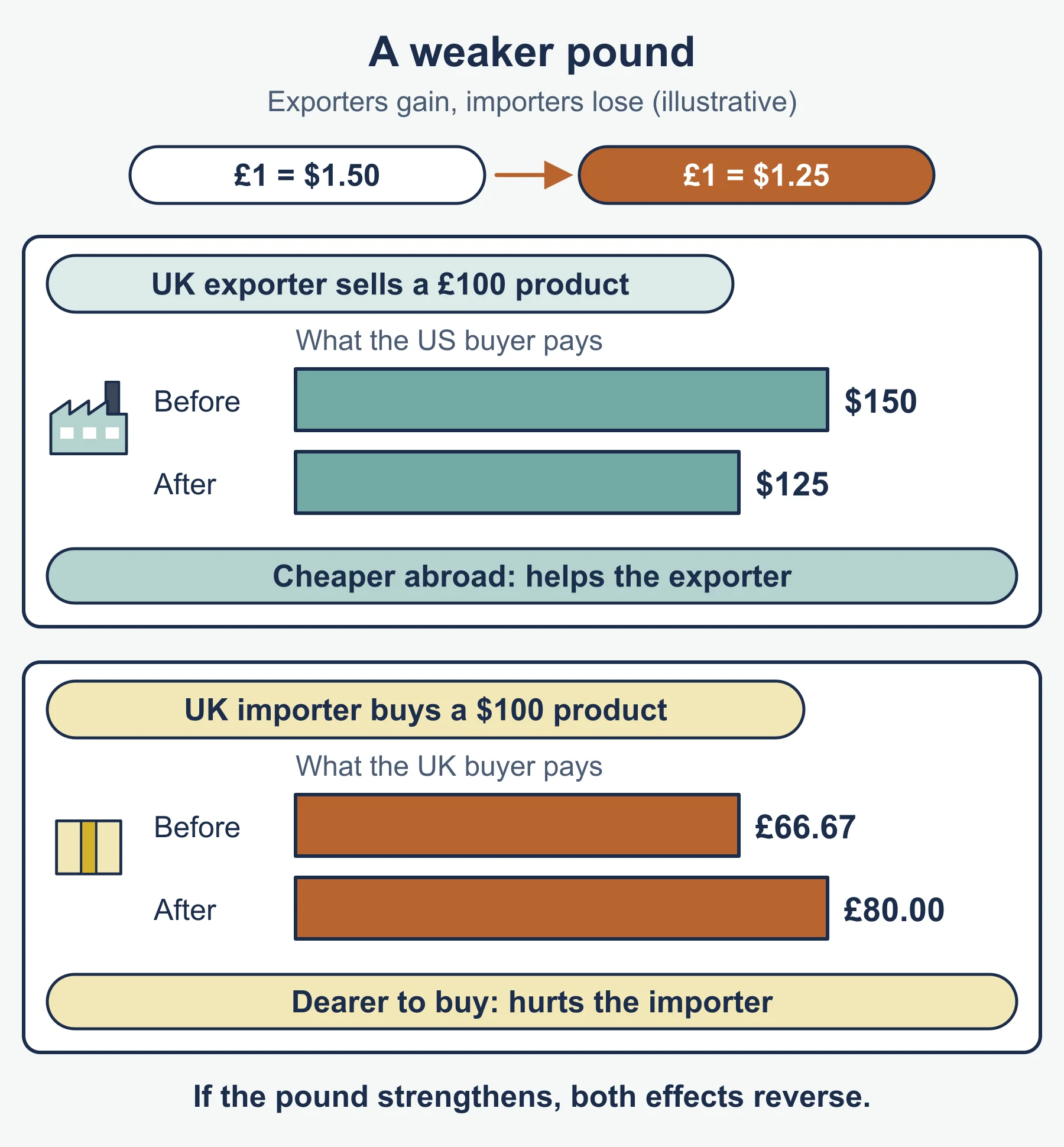
| Home currency | Exporter | Importer |
|---|---|---|
| Stronger | Overseas prices higher, sales may fall | Inputs cheaper, costs may fall |
| Weaker | Overseas prices lower, sales may rise | Inputs dearer, costs rise, profit squeezed |
A firm that does both imports and exports has two effects pulling against each other. Weigh them: which is larger depends on how much of its cost is imported and how responsive its overseas buyers are to price.
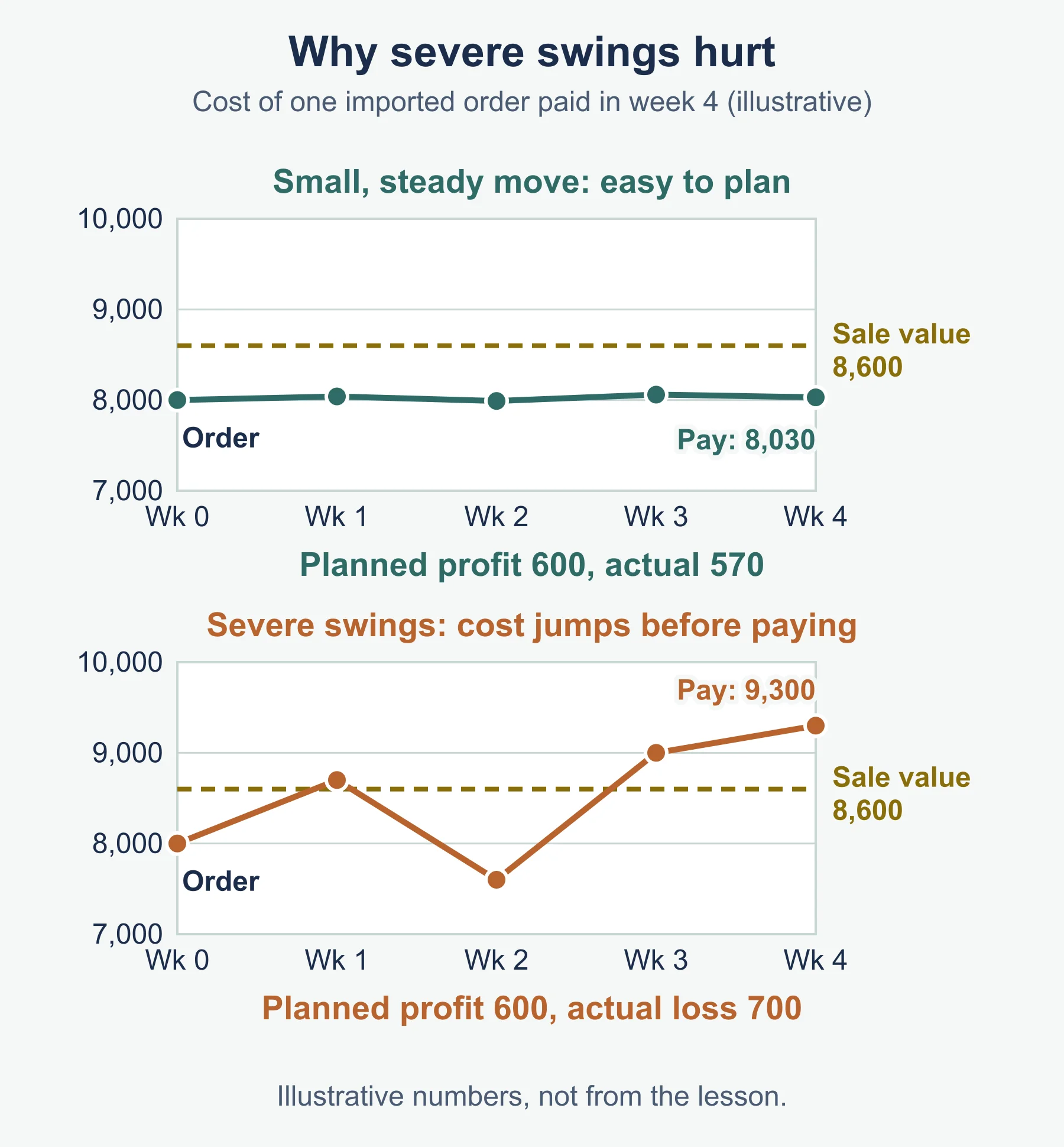
Severe fluctuations: unpredictable costs, difficulty setting prices, uncertain profit, harder investment decisions. Responses: agree prices in advance, use home suppliers, sell in several countries.
Routine for a longer answer
For a question that asks you to analyse, evaluate or justify, use five moves.
- Name the influence and tie it to the business in the stem (its borrowing, its customers, its imports or exports).
- Give the first effect and explain the mechanism in one sentence: what changes, and how that reaches cost, price, sales or profit.
- Give a second effect, ideally through the other channel, or the opposite side of the trade (exporter against importer, business against economy).
- Compare the two: which is larger, quicker or more certain for this business, and why.
- Finish with a judgement that answers the question set, such as whether to expand, borrow, price higher or source locally. Add one condition that would change your view.
A judgement that could be pasted onto any other business has not used the case.
Must-know distinctions
- Direct channel (own borrowing costs) versus indirect channel (customer spending).
- Exporter versus importer: a weak currency helps one and hurts the other.
- Businesses versus economies: a benefit to a business is not automatically a benefit to the country.
- Developed versus developing: the same trend can be an opportunity in one and a threat in the other.
- Certain effect versus possible effect: a repayment rise is certain for a variable loan; a sales fall is only possible.
Quick self-test
- State two forms of finance whose cost is affected by a change in interest rates.
- Ixworth Cycles borrows £50,000 and the rate rises from 4% to 6%. What is the extra interest per year?
- Name two ways a rise in the rate of interest could reduce spending.
- Give one reason why high employment could be a problem for a business.
- A product earns £24,000 and sales volume falls by 25%. What is the new revenue if the price is unchanged?
- Name three of the five forms of globalisation listed in the specification.
- Give one drawback of globalisation for a developing-country economy.
- The home currency weakens. Who benefits more directly, an exporter or an importer?
- A home currency strengthens. What may happen to an exporter’s overseas sales?
- State one effect of a severe exchange rate fluctuation on a business.
- Explain why a Sharia compliant alternative may reduce exposure to interest rates.
Answers
- Loans and overdrafts.
- £1,000 (interest £2,000 rises to £3,000).
- Higher household repayments leave less to spend; businesses delay buying equipment. Saving also becomes more attractive.
- It is harder to recruit staff, and wage costs may rise.
- £18,000.
- Any three of: specialisation by country, relative cost advantage, movement of labour, larger markets, international competition.
- Profits may go abroad; local firms may close; skilled workers may leave.
- The exporter, because overseas prices fall.
- They may fall, because the product costs more in overseas currency.
- Costs or revenues become unpredictable, so prices and profit are hard to plan.
- The cost is agreed in advance or linked to the business’s results, not to the interest rate, so the business may be less exposed (it still has payments to make).
Where marks are usually lost
- Naming a factor without a chain of reasoning to cost or revenue.
- Giving only the direct channel for interest rates.
- Writing that a weak currency is bad for everyone.
- Writing about the country when the stem asks about the business.
- Listing benefits and drawbacks without judging which matters more to the business described.
- Treating Sharia compliant finance as free or as having no payments.
- Attempting currency conversions, which are not required.
- Forgetting that a variable-rate loan responds at once, while a fixed-rate loan does not.
Frequently asked questions
What is the difference between the direct and indirect effects of an interest rate rise? The direct channel works through the business’s own borrowing: repayments rise, costs rise and profit falls. The indirect channel works through customers: their borrowing costs rise, so they spend less and the business’s sales fall.
What is Sharia compliant finance? Sharia compliant finance does not charge or pay interest. It is not free, because the business still has payments to make, but it may be less exposed to a change in interest rates.
Do you need to calculate exchange rate conversions for OxfordAQA IGCSE Business? No. These notes list exchange rate conversions as not required for 9225, along with explaining why interest rates change. Focus instead on the direction of a currency movement and its effect on exporters and importers.
How does a stronger home currency affect a business that both imports and exports? A stronger currency makes its overseas prices higher, so export sales may fall, but makes its imported inputs cheaper. The two effects pull against each other, so weigh which is larger for the business.
Official syllabus
OxfordAQA International GCSE Business (9225), specification version 3.1, for International GCSE exams from May/June 2022 onwards, published by OxfordAQA. Sections 3.2.3 and 3.2.4.
Get free revision emails (optional)
Occasional emails with practice questions, worked explanations and links to free resources for the qualification and subjects you choose. No spam, and you can unsubscribe from any email. The free tools on this site never need an email.
Related resources
-
Study guides
OxfordAQA IGCSE Business: Influences on Business (9225)
Study guide to Topic 2 Influences on Business for OxfordAQA International GCSE Business 9225: technology, ethics, economy, globalisation, law and competition.
Business · OxfordAQA · IGCSE
Read guide -
Revision notes
OxfordAQA IGCSE Business: Influences on Business — Revision Notes
Revision notes on technology, ethics, the economic climate, globalisation, legislation and competition for OxfordAQA International GCSE Business 9225 Topic 2.
Business · OxfordAQA · IGCSE
Revise topic -
Practice questions
OxfordAQA IGCSE Business: Influences on Business — Practice Questions (9225)
Original OxfordAQA International GCSE Business 9225 practice questions with worked answers on technology, ethics, the economy, globalisation, law and rivals.
Business · OxfordAQA · IGCSE
Try questions
Related articles
-
teaching
A Level tuition in Dubai: Cambridge or Pearson Edexcel International A Level?
Schools in Dubai and Abu Dhabi teach either Cambridge International AS & A Level or Pearson Edexcel International A Level. How the two are structured, why it matters for tuition, and how online classes from Lahore work.
9 October 2026
-
curriculum guides
Choosing subjects at IGCSE and A Level
How subject choices at 14 and 16 affect university options later, and how to keep pathways open without overloading a timetable.
28 July 2026
Studying this with a teacher
Working through Business IGCSE?
This page is free and stays free. If you would rather be taught it, Marlbridge runs Business classes one-to-one and in small groups of up to 15, online in your own time zone. The first trial class is free. WhatsApp replies within an hour (8am–11pm Pakistan time, every day); email the same day.
OxfordAQA Business teachers at Marlbridge
