
Study Guides
A Level Accounting: Regulatory and ethical considerations (Cambridge 9706)
Study guide to nine International Accounting Standards, the five ethical principles, audit and stewardship, for Cambridge 9706 A Level Accounting.
- Subject
- Accounting
- Level
- A LEVEL
- Topic
- Financial accounting
- Author
- Marlbridge Academic Team
- Updated
- Reviewed by
- Zain Ud Din Ahmed (what this means)
Aligned to Cambridge A Level Accounting (9706), 2026-2028. Official specification .
Syllabus page (what it covers and how it is assessed): Cambridge A Level Accounting.
Syllabus points this page covers
9706 (A Level)
- 3.2 Regulatory and ethical considerations
Found an error? Report a correction.
Need help with this topic? Request a free trial class for A Level Accounting (9706).
This guide covers section 3.2 Regulatory and ethical considerations of the Cambridge International AS & A Level Accounting 9706 syllabus for 2026, 2027 and 2028. It is A Level content. The official text bases the questions of Paper 3, Financial Accounting, on section 3, with AS Level knowledge assumed. All businesses and figures below are invented, and amounts are in dollars.
Use it with the revision notes and the practice questions. The ownership and control ideas from section 1.1.1 are in Business entities and the accounting system, and depreciation is in Accounting for non-current assets. See the course hub, the printable checklist and the free diagnostics.
What the syllabus asks for
| Section | You must understand | Where below |
|---|---|---|
| 3.2.1 | Main provisions of IAS 1, 2, 7, 8, 10, 16, 36, 37 and 38 | Standards table and worked examples |
| 3.2.2 | The need for an ethical framework; five fundamental principles; effects of ethical behaviour on stakeholders; social implications of decisions | Ethics section |
| 3.2.3 | Role and responsibilities of the auditor; external versus internal audit; qualified versus unqualified report; stewardship and directors’ duties to shareholders; true and fair view | Audit and stewardship section |
The syllabus says the scope of each standard is set out in the Teacher Guidance document that accompanies it, so treat the table below as the main provisions, not every rule in each standard.
3.2.1 International Accounting Standards
A standard is a rule set that makes financial statements consistent and comparable between businesses and years. The nine you need:
| Standard | Main provisions |
|---|---|
| IAS 1 Presentation of financial statements | Statements must present fairly. Prepare on a going concern basis unless the business will cease trading. Use the accrual basis. Keep presentation consistent. Material items are shown separately. A complete set is a statement of financial position, a statement of profit or loss and other comprehensive income, a statement of changes in equity, a statement of cash flows and notes. Prepared at least annually, with comparative figures. |
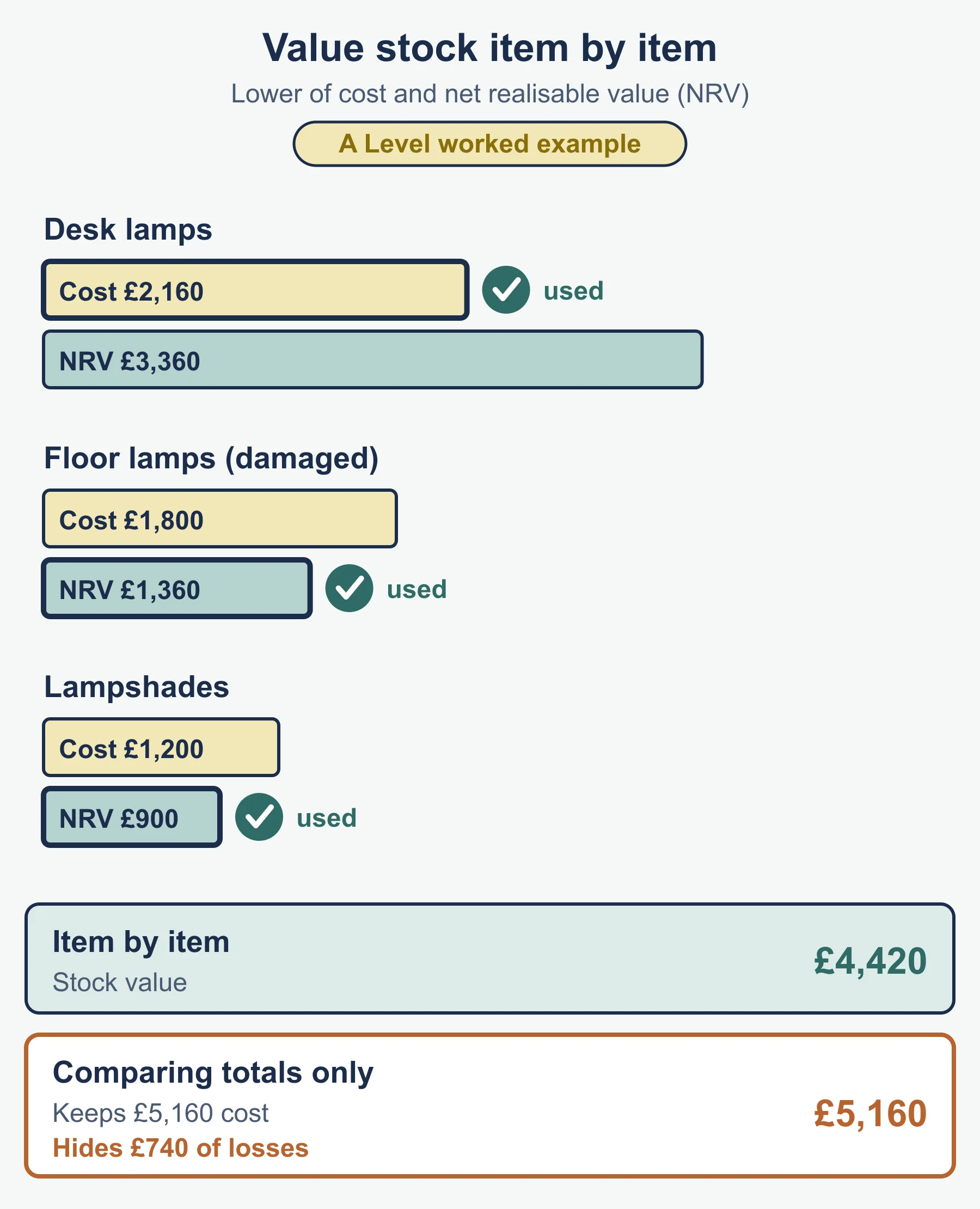
| IAS 2 Inventories | Value at the lower of cost and net realisable value (NRV). Cost is purchase and conversion costs plus other costs of bringing items to their present location and condition. Use FIFO or weighted average cost. LIFO is not permitted. NRV is the estimated selling price less the estimated costs of completion and sale. |
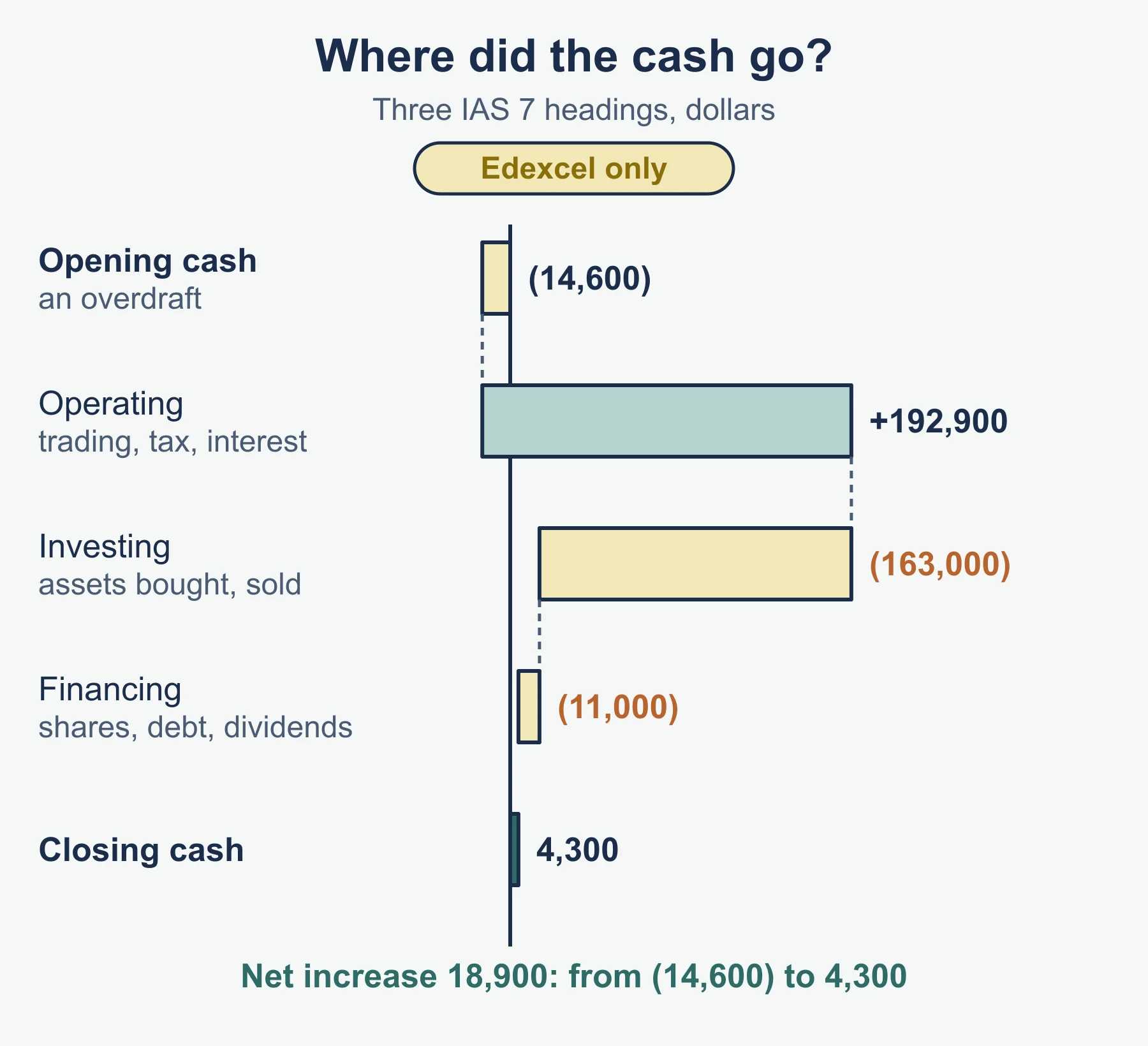
| IAS 7 Statement of cash flows | Report cash flows in three groups: operating, investing and financing. Operating cash flow may be shown by the direct or the indirect method. Cash and cash equivalents are the amounts reconciled. Transactions with no cash movement are left out. |
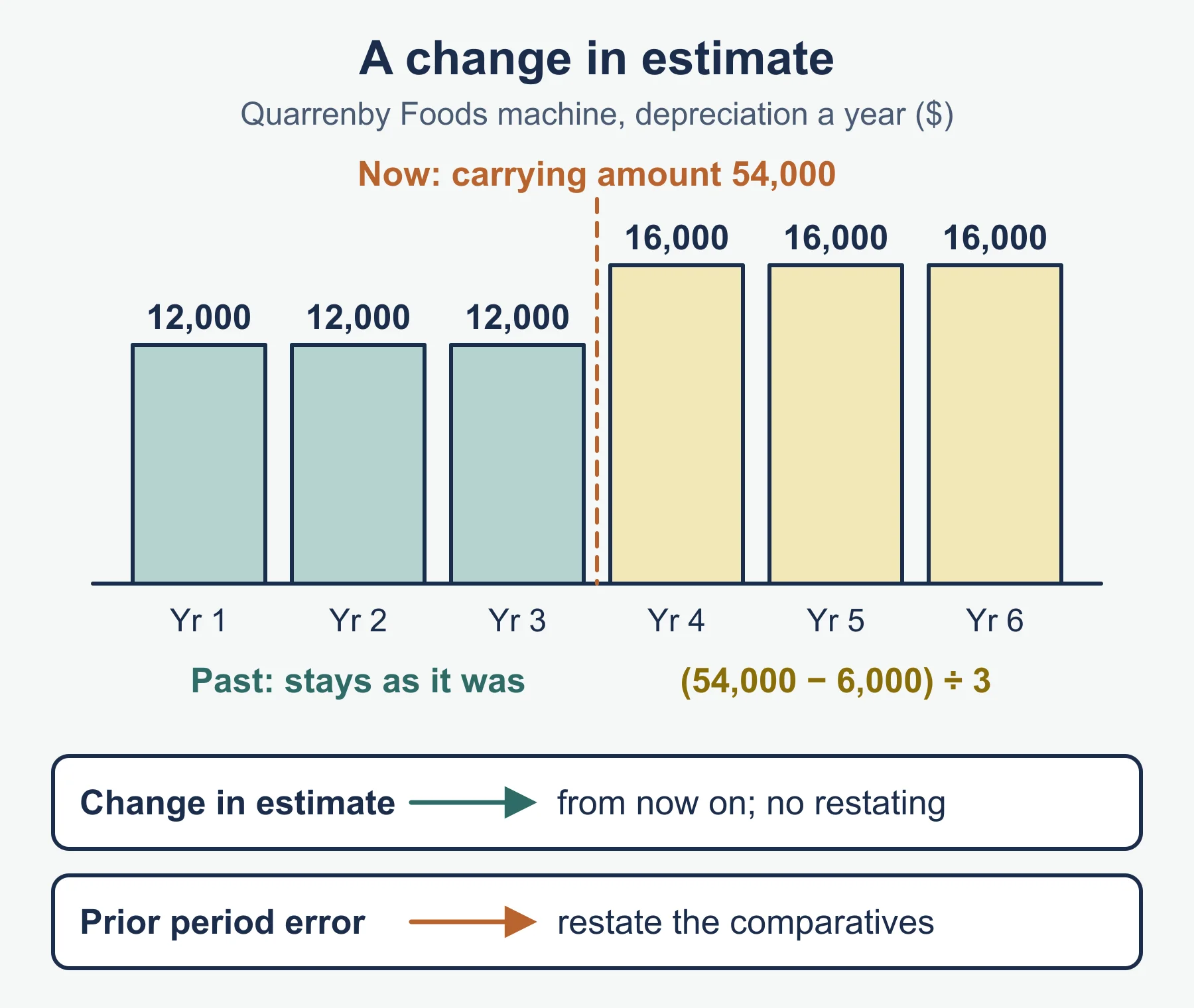
| IAS 8 Accounting policies, changes in accounting estimates and errors | Apply policies consistently. Change a policy only if a standard requires it or the change gives more reliable and relevant information, and then apply it retrospectively. Changes in estimates apply from now on (prospectively). Material prior period errors are corrected by restating comparatives. |
| IAS 10 Events after the reporting period | Adjusting events give evidence of conditions at the reporting date, so the figures are changed. Non-adjusting events arise afterwards, so they are only disclosed if material. Dividends declared after the reporting date are not a liability at that date. |
| IAS 16 Property, plant and equipment | Recognise when future benefits are probable and cost can be measured reliably. Cost includes purchase price less discounts, import duties, costs directly needed to bring the asset into use and an initial estimate of dismantling costs. Use the cost model or the revaluation model. Depreciate systematically over the useful life, and review life and residual value at least each year. Land is normally not depreciated. |
| IAS 36 Impairment of assets | An asset must not be carried above its recoverable amount, which is the higher of fair value less costs of disposal and value in use. Any excess of carrying amount is an impairment loss, charged to profit or loss (against a revaluation surplus first if the asset was revalued). |
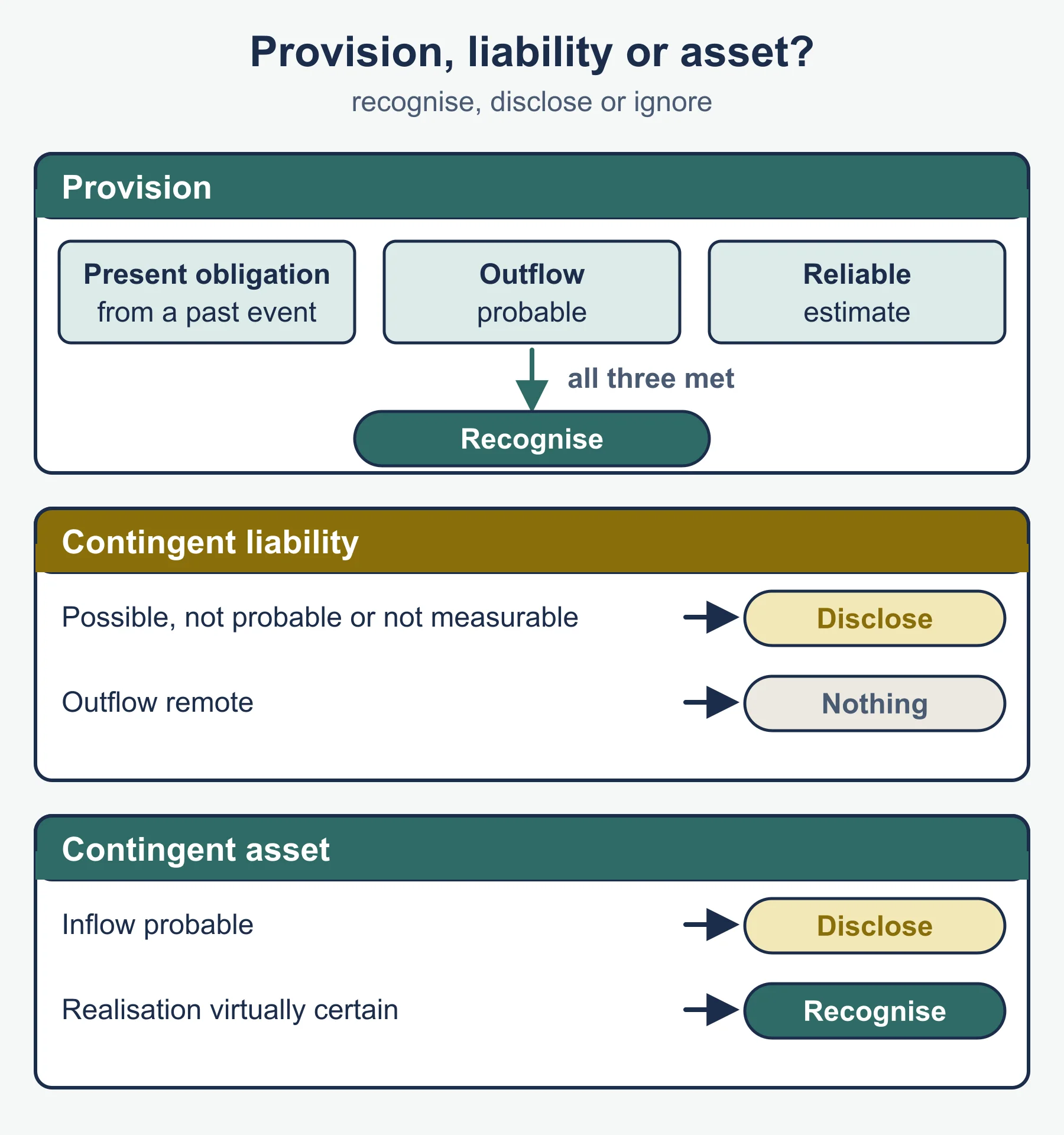
| IAS 37 Provisions, contingent liabilities and contingent assets | A provision needs a present obligation from a past event, a probable outflow and a reliable estimate. A contingent liability (possible obligation, or one not probable or not measurable) is disclosed, not recognised, unless the outflow is remote. A contingent asset is never recognised until realisation is virtually certain, and is disclosed when the inflow is probable. |
| IAS 38 Intangible assets | An intangible asset is identifiable, non-monetary, has no physical substance and is controlled by the business. Research costs are expensed. Development costs are capitalised only when all the criteria are met, including technical feasibility and intention and ability to complete. Internally generated goodwill and brands are not recognised. Amortise a finite life; test an indefinite life for impairment each year. |
Worked example: IAS 2 and IAS 16
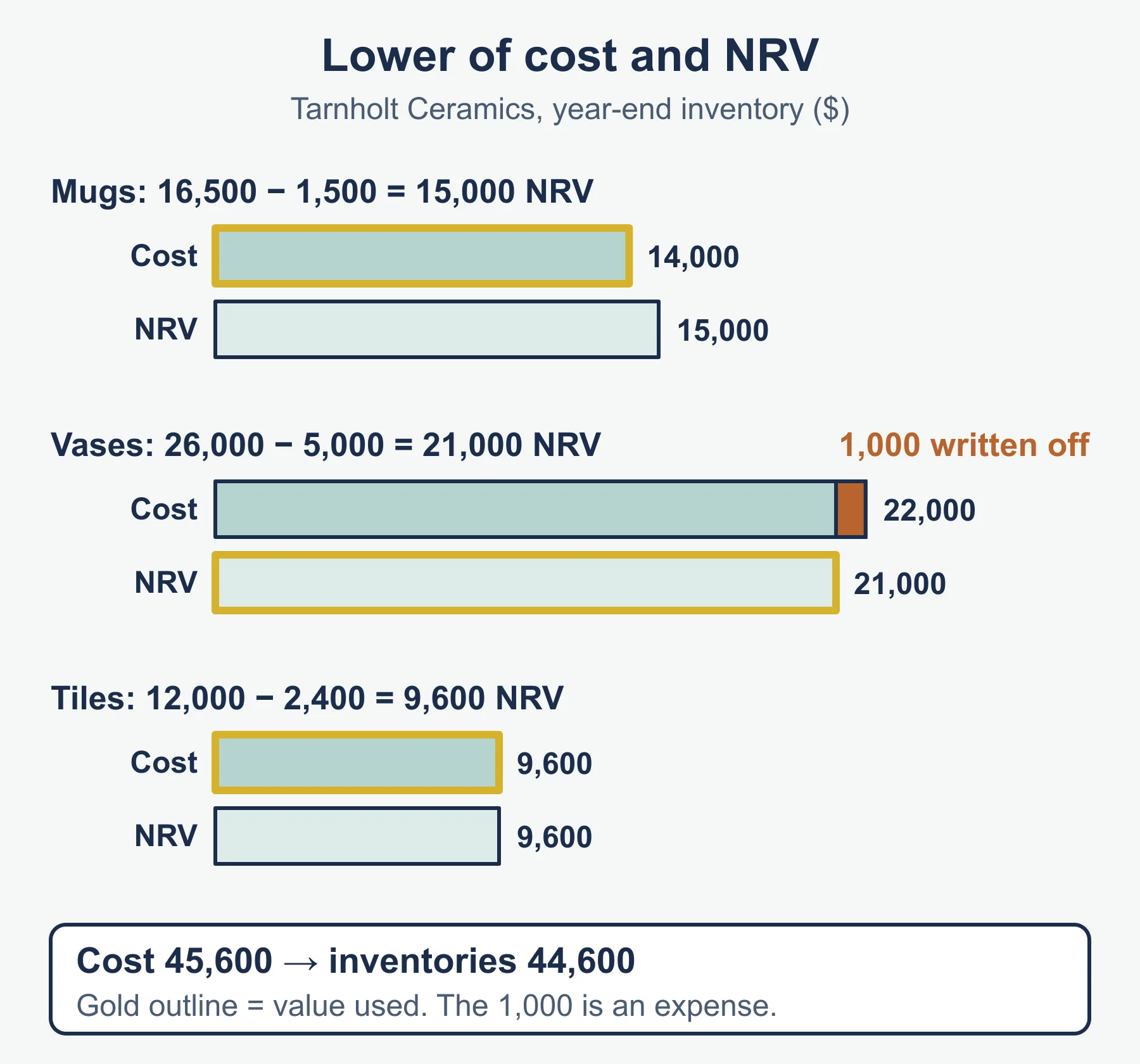
Tarnholt Ceramics holds three product lines at the year end.
| Line | Cost | Selling price | Costs to sell | NRV | Value used |
|---|---|---|---|---|---|
| Mugs | 14,000 | 16,500 | 1,500 | 15,000 | 14,000 |
| Vases | 22,000 | 26,000 | 5,000 | 21,000 | 21,000 |
| Tiles | 9,600 | 12,000 | 2,400 | 9,600 | 9,600 |
Inventories are 44,600, against a cost total of 45,600. The 1,000 write-down on vases is an expense in the statement of profit or loss.
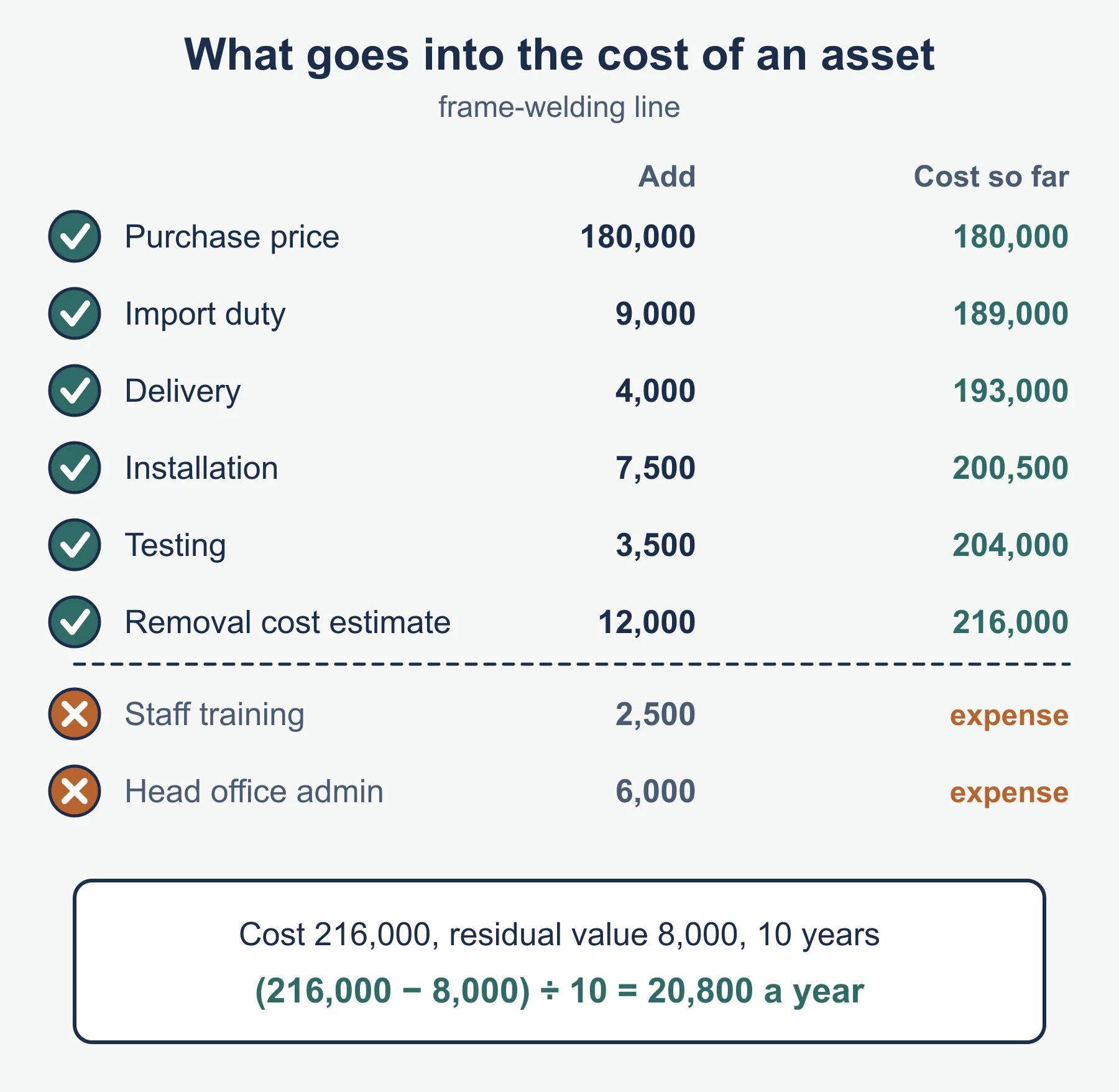
Ormsby Cycles buys a frame-welding line: price 180,000, import duty 9,000, delivery 4,000, installation 7,500, testing 3,500, and a 12,000 estimate of removal costs at the end of its life. Staff training (2,500) and head office administration (6,000) are not part of cost. Cost is 180,000 + 9,000 + 4,000 + 7,500 + 3,500 + 12,000 = 216,000. With residual value 8,000 and a 10-year life, annual depreciation is (216,000 − 8,000) ÷ 10 = 20,800.
Worked example: IAS 36
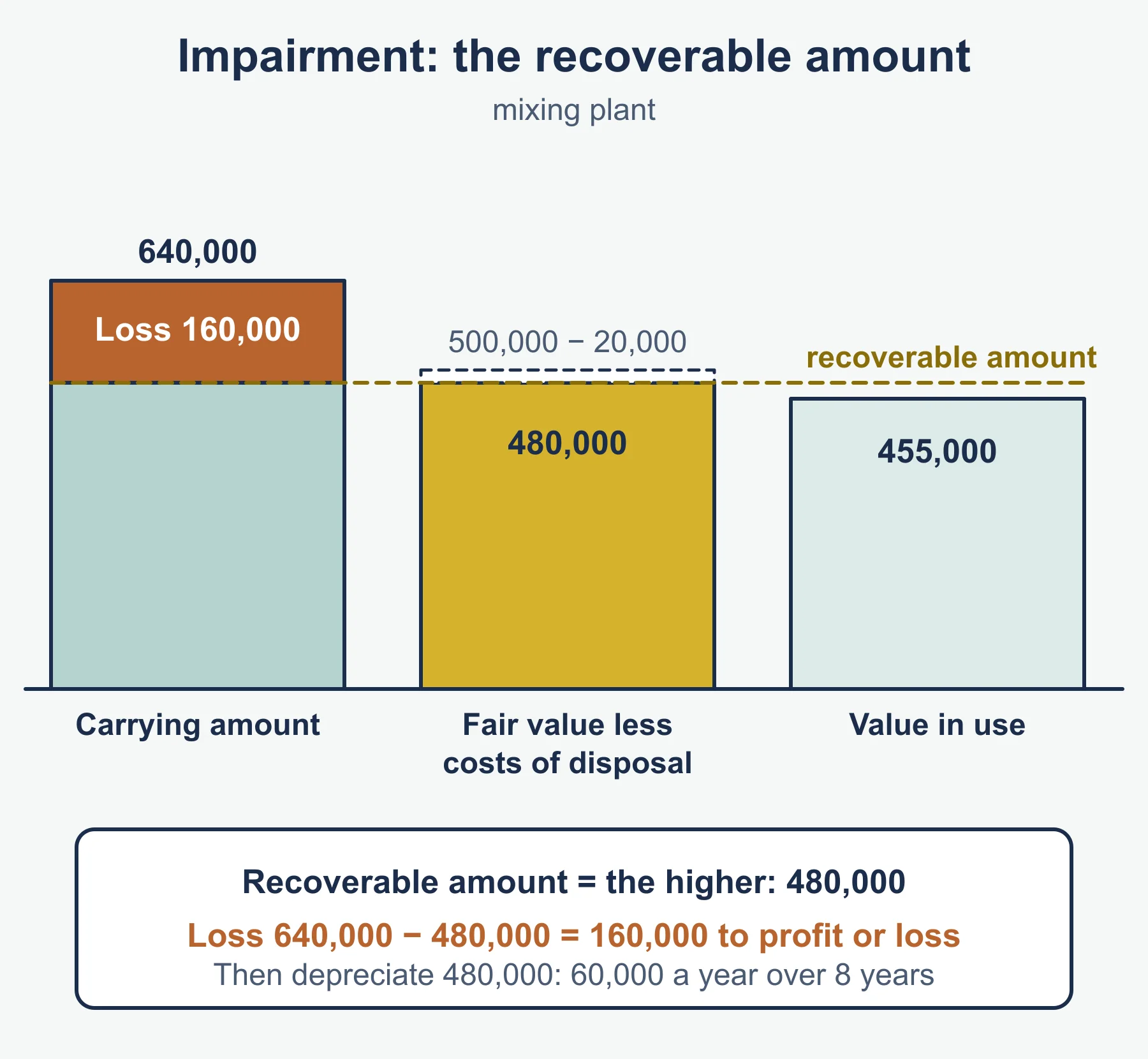
Lindgarth Chemicals has a mixing plant with carrying amount 640,000. Its fair value is 500,000, with 20,000 disposal costs, and its value in use is 455,000.
Fair value less costs of disposal = 480,000. Recoverable amount is the higher of 480,000 and 455,000, so 480,000. Impairment loss = 640,000 − 480,000 = 160,000, charged to profit or loss. Depreciation then runs on 480,000 over the remaining life, for example 60,000 a year if 8 years remain.
Worked example: IAS 8 and IAS 10
Quarrenby Foods bought a machine for 90,000 with residual value 6,000 and a 7-year life, giving 12,000 a year. After 3 years the carrying amount is 90,000 − 36,000 = 54,000. Management now expects 3 more years of use. This is a change in estimate, so nothing is restated. Depreciation from now is (54,000 − 6,000) ÷ 3 = 16,000 a year.
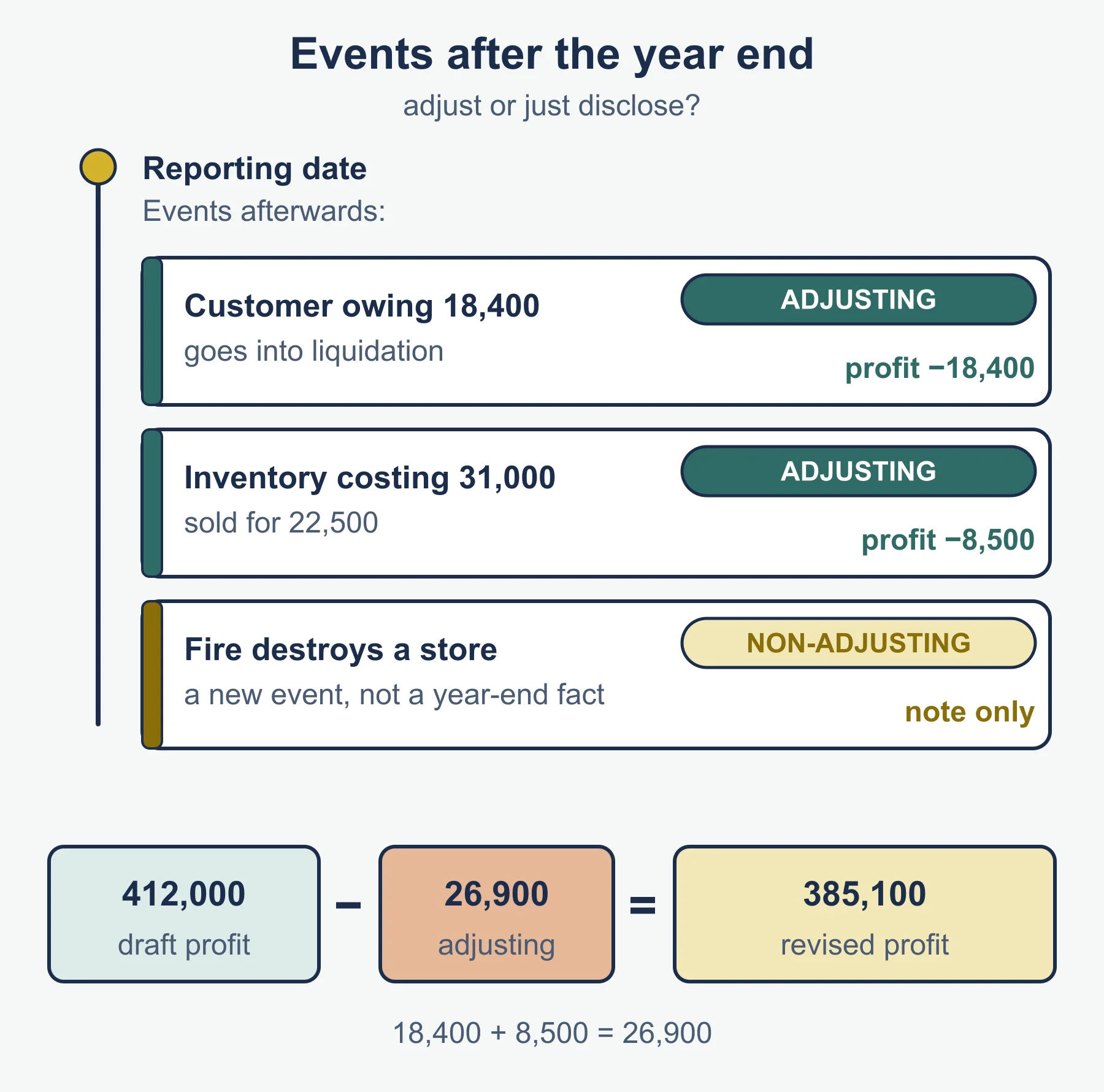
Hallowby Furniture reports profit of 412,000 before three events are considered.
- A customer owing 18,400 at the year end went into liquidation after it. This is adjusting, because it shows the debt was already doubtful at the reporting date.
- Inventory costing 31,000 was sold soon after the year end for 22,500. This is adjusting, because it shows NRV was below cost, so inventories are written down by 8,500.
- A fire after the year end destroyed a store. This is non-adjusting, so only a note is needed.
Adjusting events total 26,900, so revised profit is 412,000 − 26,900 = 385,100.
Worked example: IAS 38
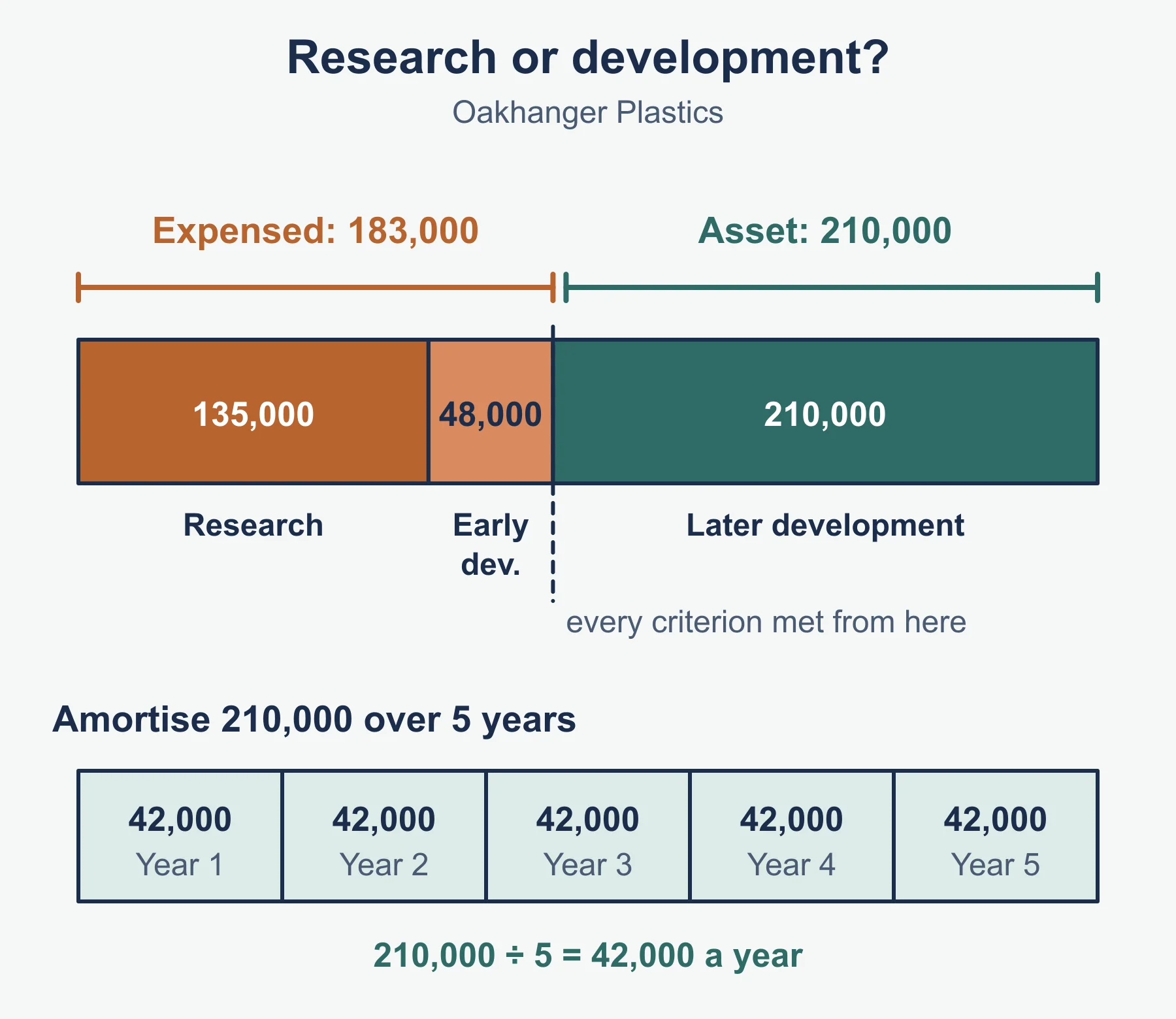
Oakhanger Plastics spent 135,000 on research and 48,000 on early development before it could show feasibility. Later development spending of 210,000 met every capitalisation criterion. The 183,000 (135,000 + 48,000) is expensed. The 210,000 is recognised as an intangible asset. With a 5-year life, amortisation is 42,000 a year.
3.2.2 Ethical considerations
Accountants are trusted by owners, lenders, employees and the public to report honestly, often about matters those users cannot check. Rules alone cannot cover every situation, so an ethical framework gives a standard of conduct. It protects users, supports confidence in financial information and protects the reputation of the profession.
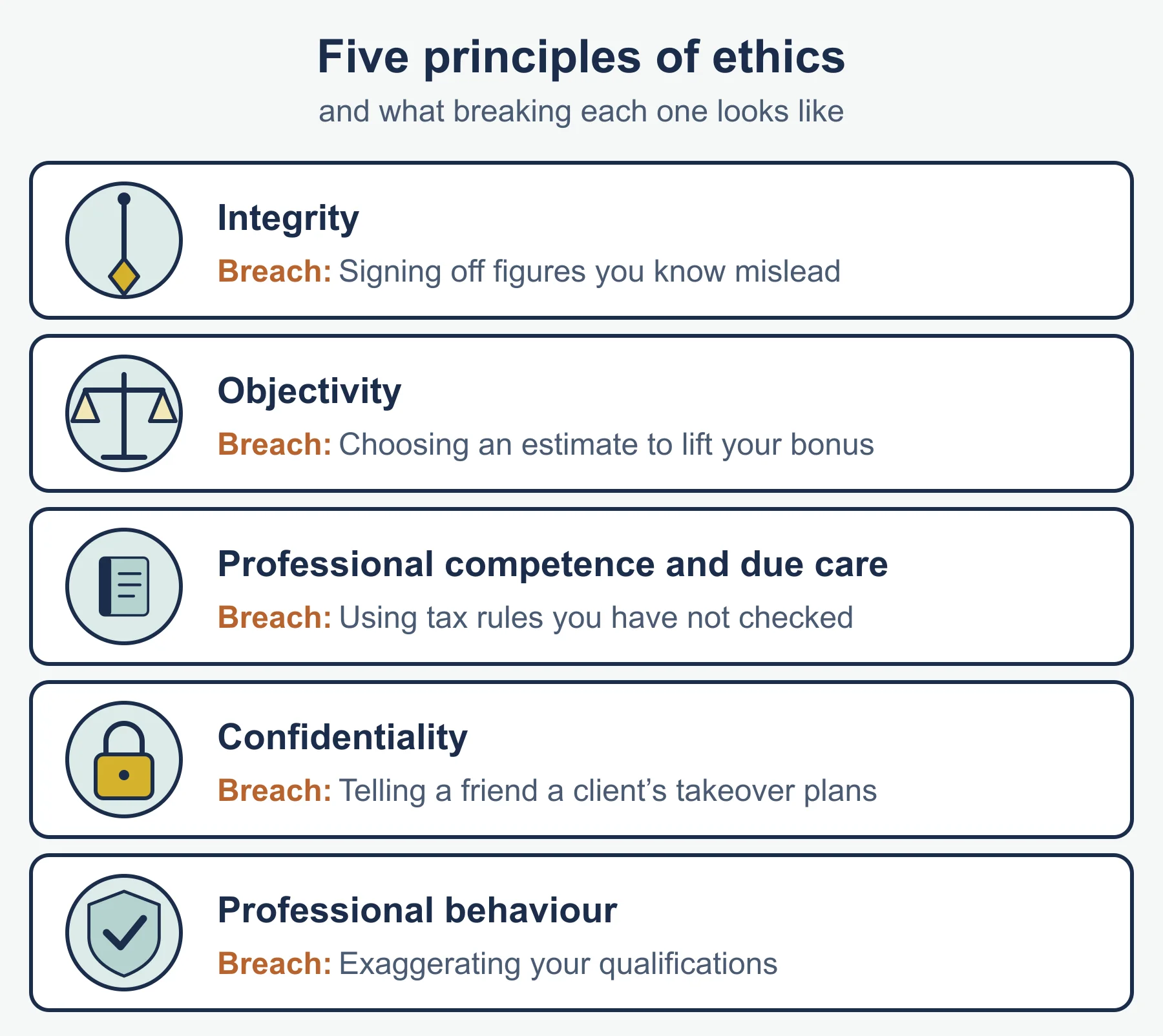
The five fundamental principles:
- Integrity: be straightforward and honest, and do not be linked to information you know is false or misleading.
- Objectivity: do not let bias, conflict of interest or pressure from others override professional judgement.
- Professional competence and due care: keep your knowledge up to date, and work carefully in line with technical standards.
- Confidentiality: do not disclose or use information gained through the work unless there is a legal or professional right or duty to do so.
- Professional behaviour: comply with laws and avoid conduct that would discredit the profession.
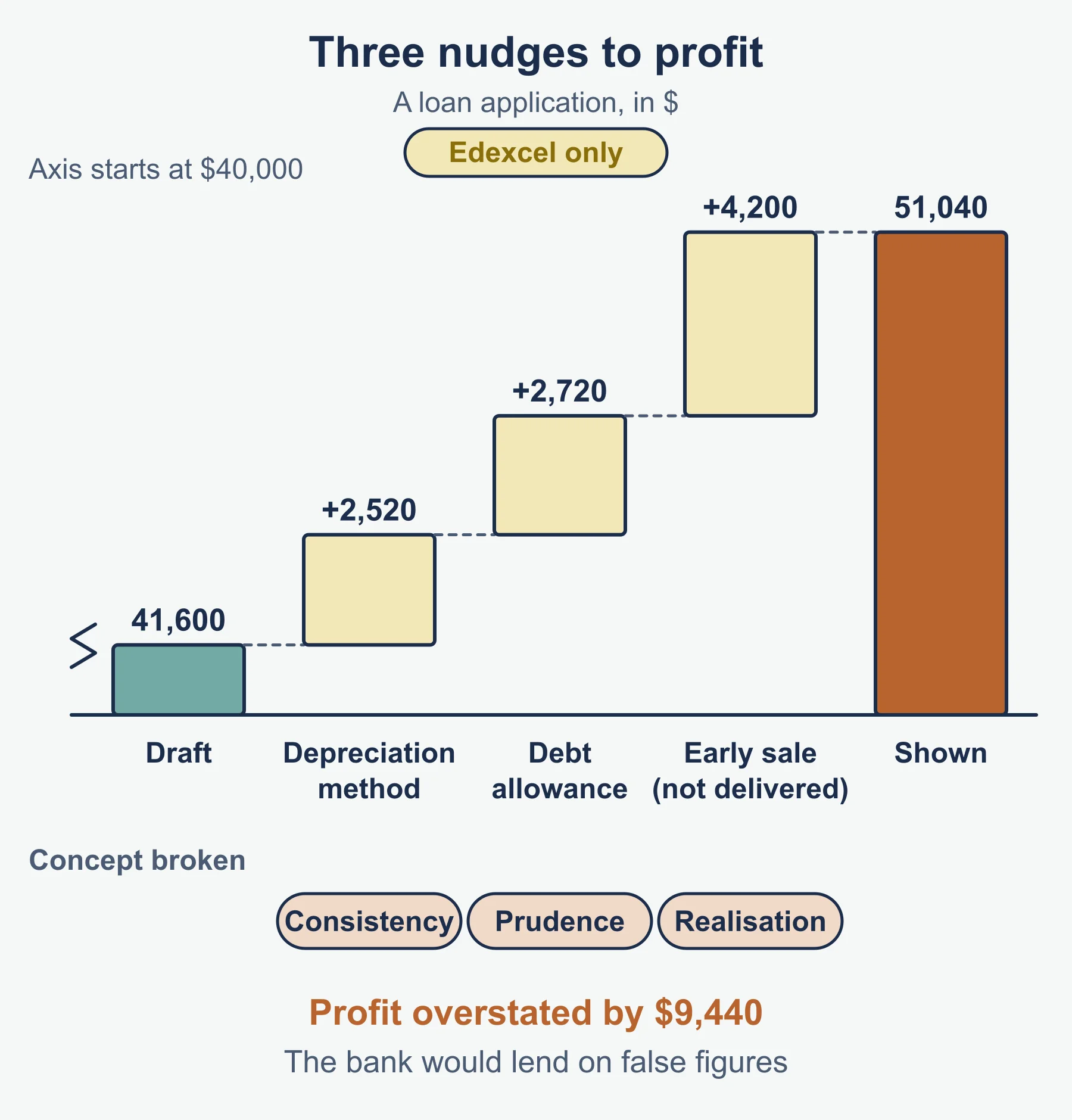
Ethical behaviour affects the business and other stakeholders. Reliable figures help lenders judge risk and let investors compare businesses. Misstated profit can lead to wrong dividend decisions, unfair bonuses, tax underpayment and loss of the business’s own reputation. If an auditor lacks objectivity, shareholders may rely on statements that mislead them.
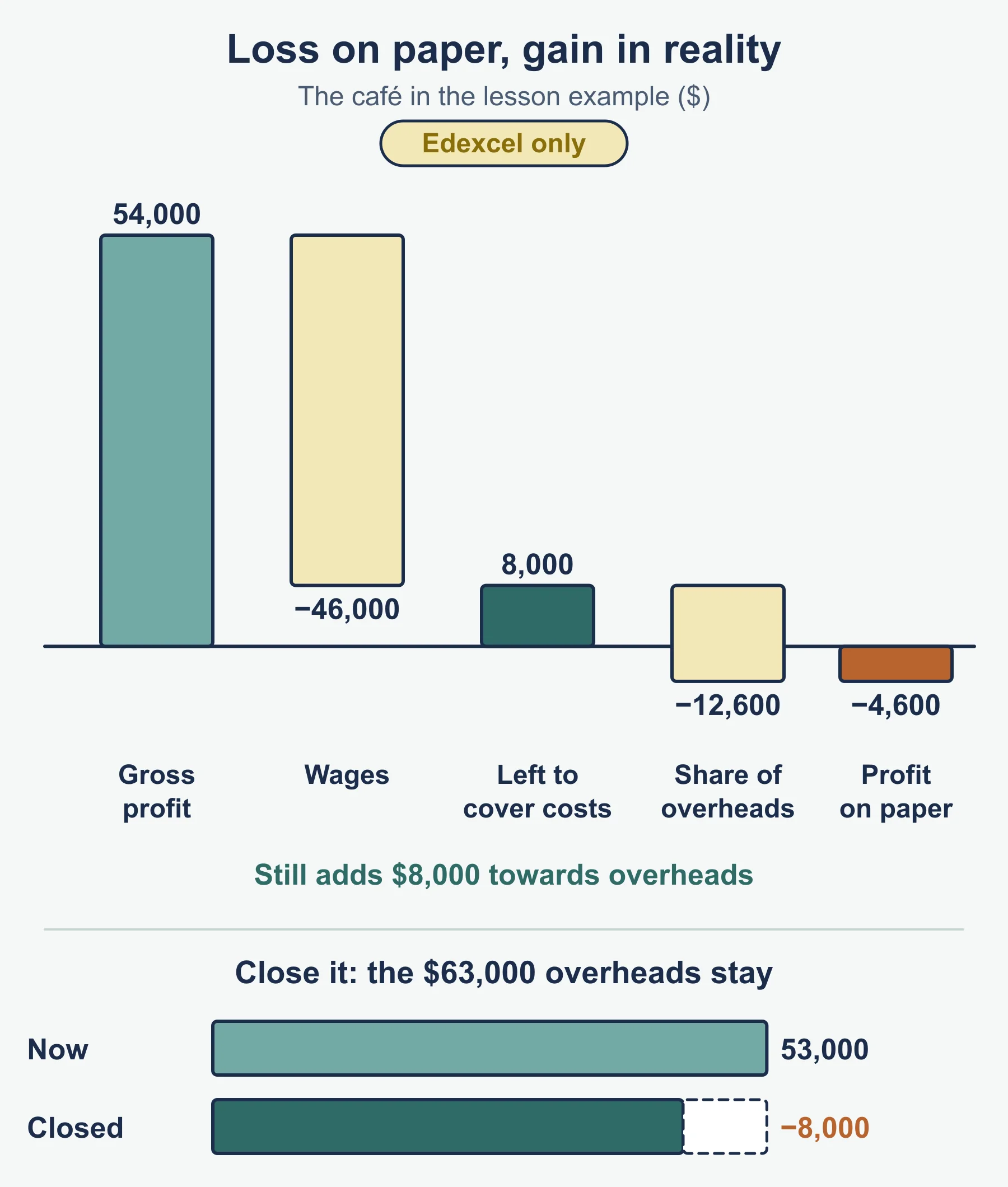
Social implications of decision-making go beyond profit. Closing a plant affects employees and the local community. Cheaper materials may increase pollution. Being open about risks affects trust. A good answer weighs financial benefit against these wider effects.
3.2.3 Auditing and stewardship of limited companies
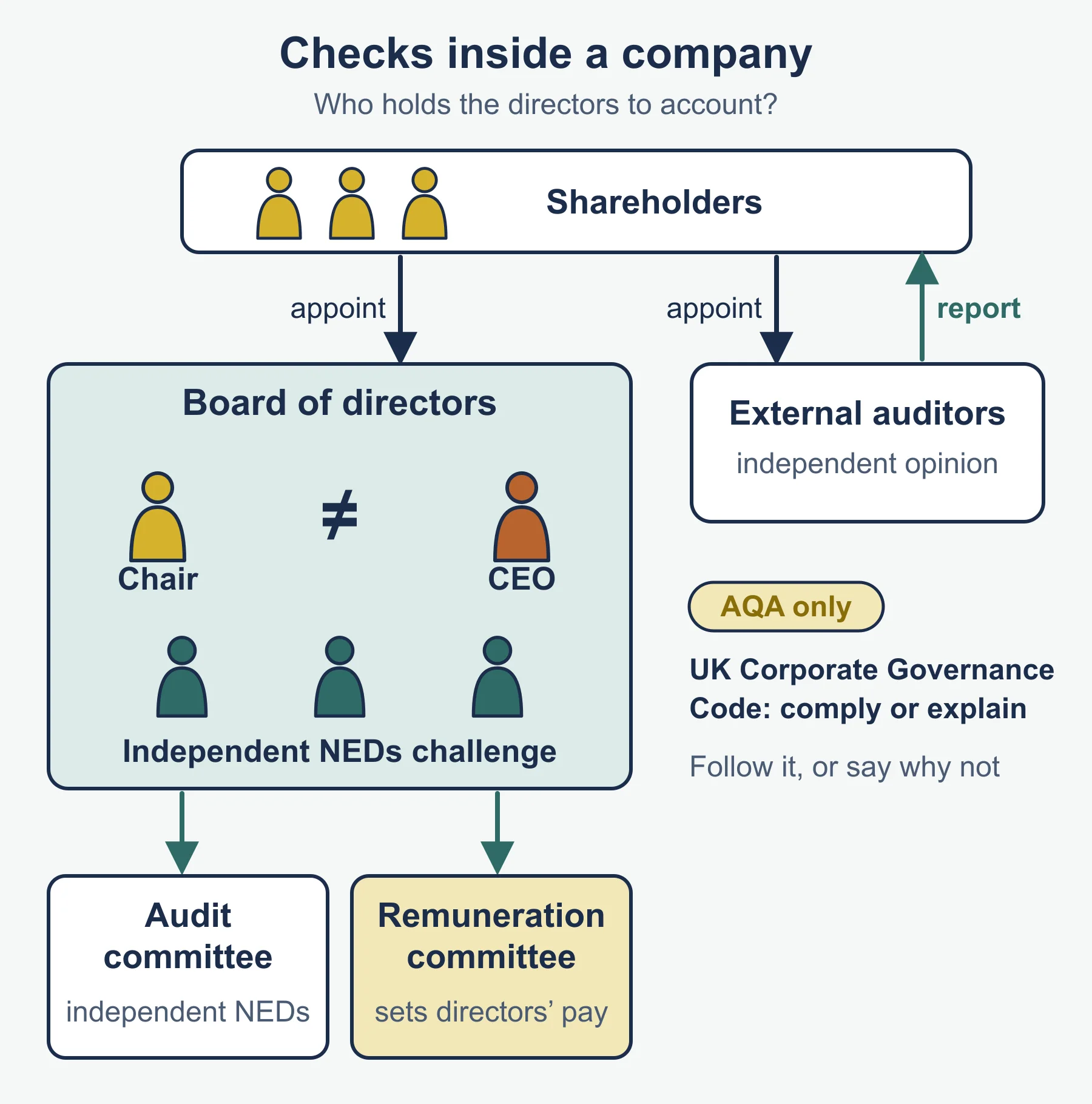
Stewardship is the duty of directors to look after the company’s resources on behalf of the shareholders. In a limited company the owners (shareholders) do not run the business, and the directors do. The directors must:
- act in the best interests of the company and its shareholders
- safeguard assets and use them properly
- keep proper accounting records
- prepare financial statements that give a true and fair view
- report to shareholders, for example through the annual report and at the annual general meeting
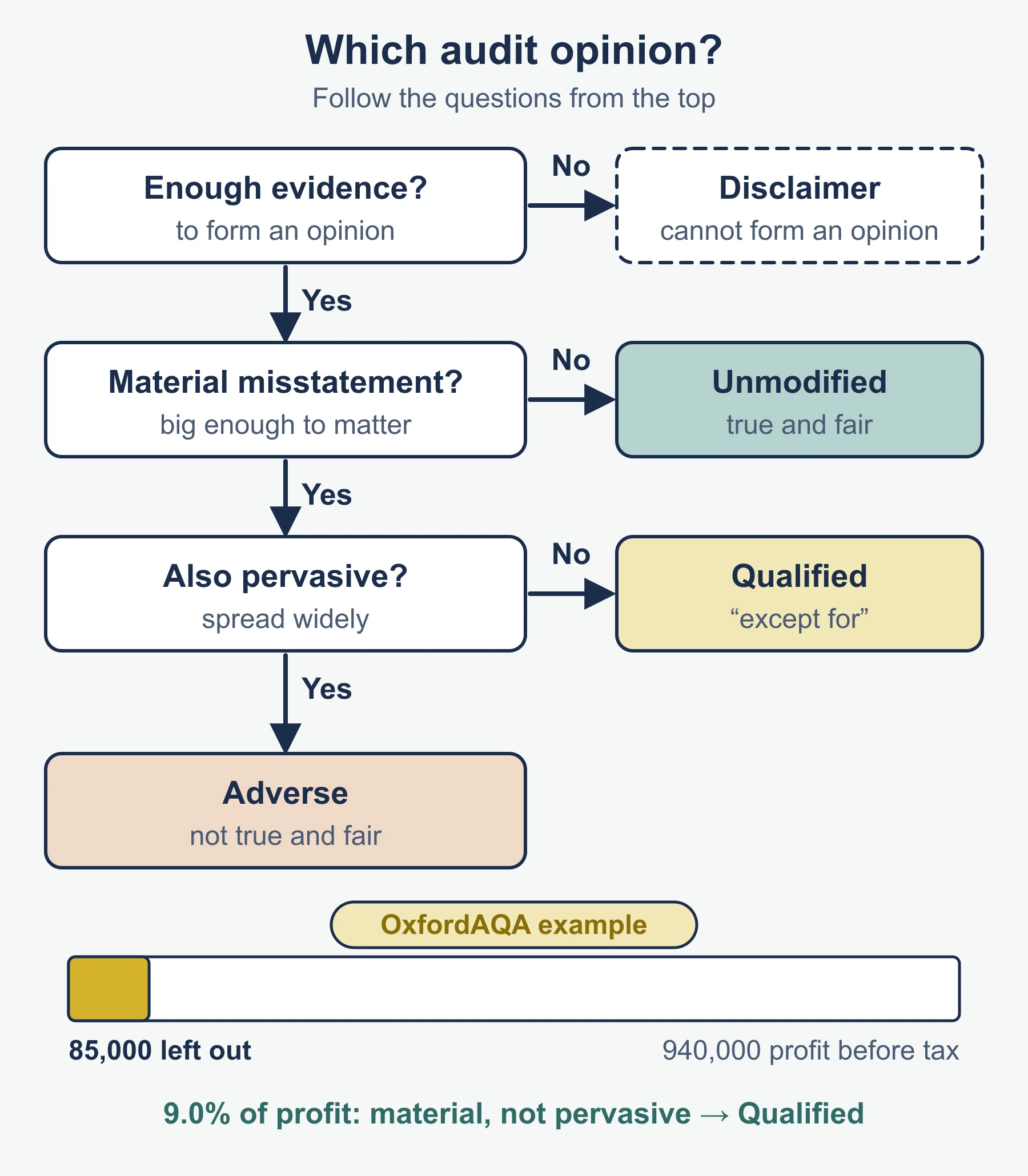
True and fair view means the statements present the financial position, performance and changes in financial position without material misstatement, usually by applying the standards. It is a judgement, not a guarantee of exact figures.
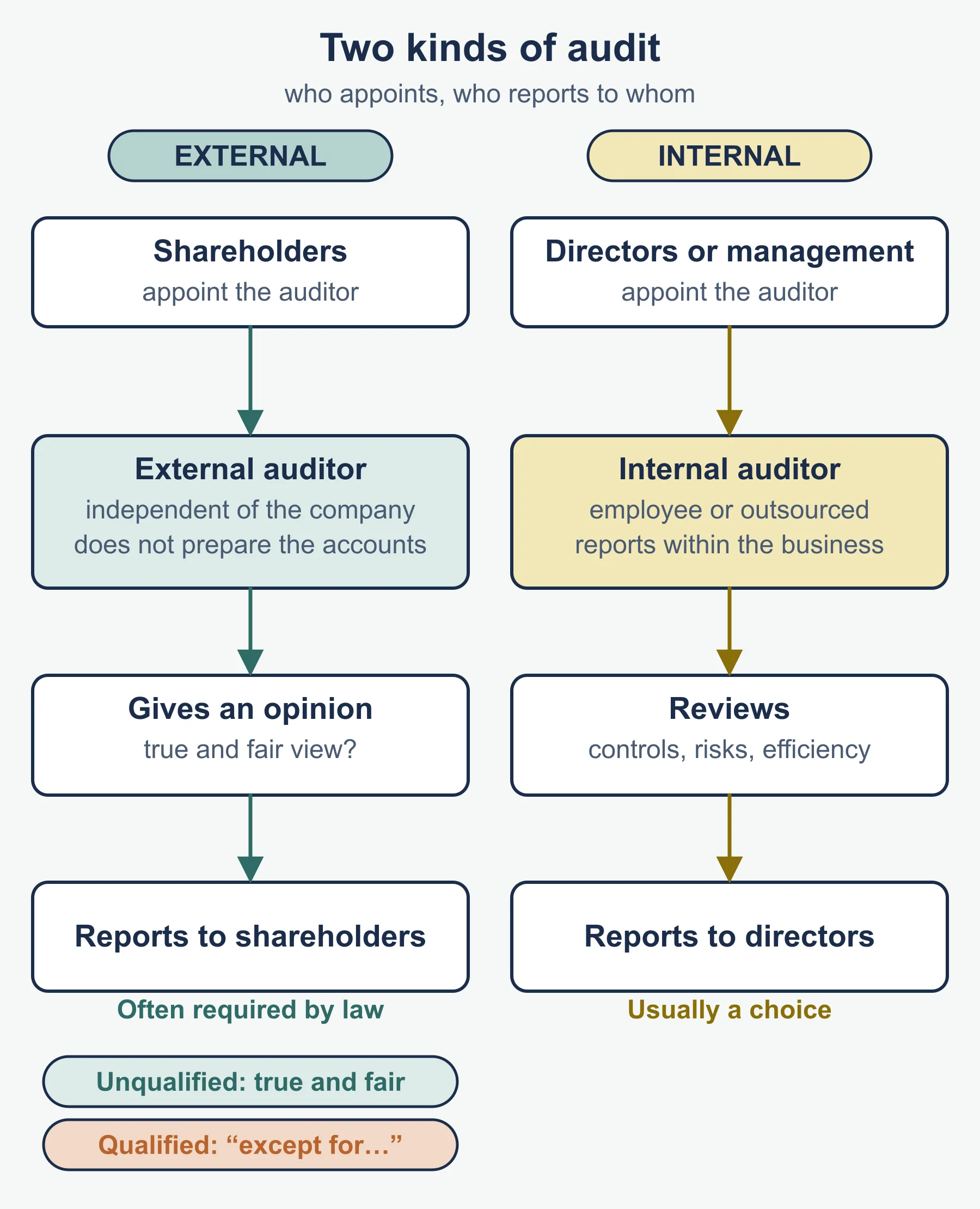
The role of the auditor is to examine the financial statements independently and give an opinion on whether they give a true and fair view in accordance with the reporting framework. The auditor gathers evidence, tests samples and assesses controls. The auditor does not prepare the statements, which remain the directors’ responsibility, and does not guarantee that no fraud or error exists.
| External audit | Internal audit | |
|---|---|---|
| Appointed by | Shareholders | Directors or management |
| Independence | Independent of the company | Employee or outsourced, reports within the business |
| Purpose | Opinion on the financial statements | Review controls, risks and efficiency |
| Report to | Shareholders | Directors or management |
| Required | Often by law for companies | Usually a choice |
An unqualified (clean) report says the statements give a true and fair view. A qualified report says they do so “except for” a stated matter, because of a material misstatement or because the auditor could not obtain enough evidence. Qualified reports lower confidence, and may affect share price, lending and dividends.
Common errors
- Writing “inventory at cost” without comparing with NRV.
- Treating a change in estimate as a prior period error and restating the past.
- Calling every after-year-end event adjusting.
- Recognising a contingent asset because a gain looks likely.
- Capitalising research costs.
- Confusing integrity with confidentiality.
- Saying the auditor prepares the accounts or guarantees accuracy.
Frequently asked questions
Which International Accounting Standards are in Cambridge 9706? Section 3.2 names nine standards: IAS 1, 2, 7, 8, 10, 16, 36, 37 and 38. The syllabus says the scope of each is set out in the Teacher Guidance that accompanies it.
What is the difference between an adjusting and a non-adjusting event under IAS 10? An adjusting event gives evidence of a condition that existed at the reporting date, such as a customer owing money at the year end going into liquidation afterwards, so the figures are changed. A non-adjusting event, such as a fire after the year end, arises after that date and only needs a note.
Are research costs capitalised under IAS 38? No. Research costs are always expensed. Development costs are capitalised only once the business can show it meets every IAS 38 criterion.
How is recoverable amount found under IAS 36? Recoverable amount is the higher of fair value less costs of disposal and value in use. If the carrying amount is above the recoverable amount, the asset is impaired.
What are the five fundamental ethical principles? The five principles are integrity, objectivity, professional competence and due care, confidentiality, and professional behaviour.
Next steps
Condense this with the revision notes, then test yourself on the practice questions. In evaluation answers, give reasons on both sides and then a justified conclusion.
Official syllabus
Cambridge International, AS & A Level Accounting 9706 syllabus for 2026, 2027 and 2028, section 3.2.
Get free revision emails (optional)
Occasional emails with practice questions, worked explanations and links to free resources for the qualification and subjects you choose. No spam, and you can unsubscribe from any email. The free tools on this site never need an email.
Related resources
-
Study guides
A Level Accounting: Accounting for Non-Current Assets (Cambridge 9706)
Capital versus revenue spending, why assets depreciate depreciation methods, cost and revaluation models and disposals, for Cambridge 9706 Accounting topic 1.3.
Accounting · Cambridge · AS Level
Read guide -
Practice questions
A Level Accounting: Regulatory and ethical considerations (Cambridge 9706) – Practice Questions
Ten original questions with worked answers on IAS 1 to 38, ethical principles, audit and stewardship, for Cambridge 9706 A Level Accounting.
Accounting · Cambridge · A Level
Try questions -
Revision notes
A Level Accounting: Regulatory and ethical considerations (Cambridge 9706) – Revision Notes
Condensed recall notes on IAS 1, 2, 7, 8, 10, 16, 36, 37 and 38, ethics, audit and stewardship for Cambridge 9706 A Level Accounting.
Accounting · Cambridge · A Level
Revise topic
Related articles
-
teaching
A Level tuition in Dubai: Cambridge or Pearson Edexcel International A Level?
Schools in Dubai and Abu Dhabi teach either Cambridge International AS & A Level or Pearson Edexcel International A Level. How the two are structured, why it matters for tuition, and how online classes from Lahore work.
9 October 2026
-
curriculum guides
Choosing subjects at IGCSE and A Level
How subject choices at 14 and 16 affect university options later, and how to keep pathways open without overloading a timetable.
28 July 2026
Studying this with a teacher
Working through Accounting A LEVEL?
This page is free and stays free. If you would rather be taught it, Marlbridge runs Accounting classes one-to-one and in small groups of up to 15, online in your own time zone. The first trial class is free. WhatsApp replies within an hour (8am–11pm Pakistan time, every day); email the same day.
Cambridge Accounting teachers at Marlbridge

