
Revision Notes
Cambridge IGCSE Environmental Management (0680): Plastic pollution – Revision Notes
Recall notes on conventional, bio, biodegradable and microplastics, marine impacts and management strategies, with a self-test, for Cambridge IGCSE 0680.
- Subject
- Environmental Management
- Level
- IGCSE
- Topic
- Topic 3 – Water
- Author
- Marlbridge Academic Team
- Updated
- Reviewed by
- Azam Siddique (what this means)
Aligned to Cambridge IGCSE Environmental Management (0680), 2027-2029. Official specification .
Syllabus page (what it covers and how it is assessed): Cambridge IGCSE Environmental Management.
Syllabus points this page covers
0680
- 3.6 Plastic pollution
Found an error? Report a correction.
Need help with this topic? Request a free trial class for IGCSE Environmental Management (0680).
Condensed notes for sub-topic 3.6 of Cambridge IGCSE Environmental Management (0680). The plastic pollution study guide explains each point and works through a decomposition data question.
Definitions to learn word for word
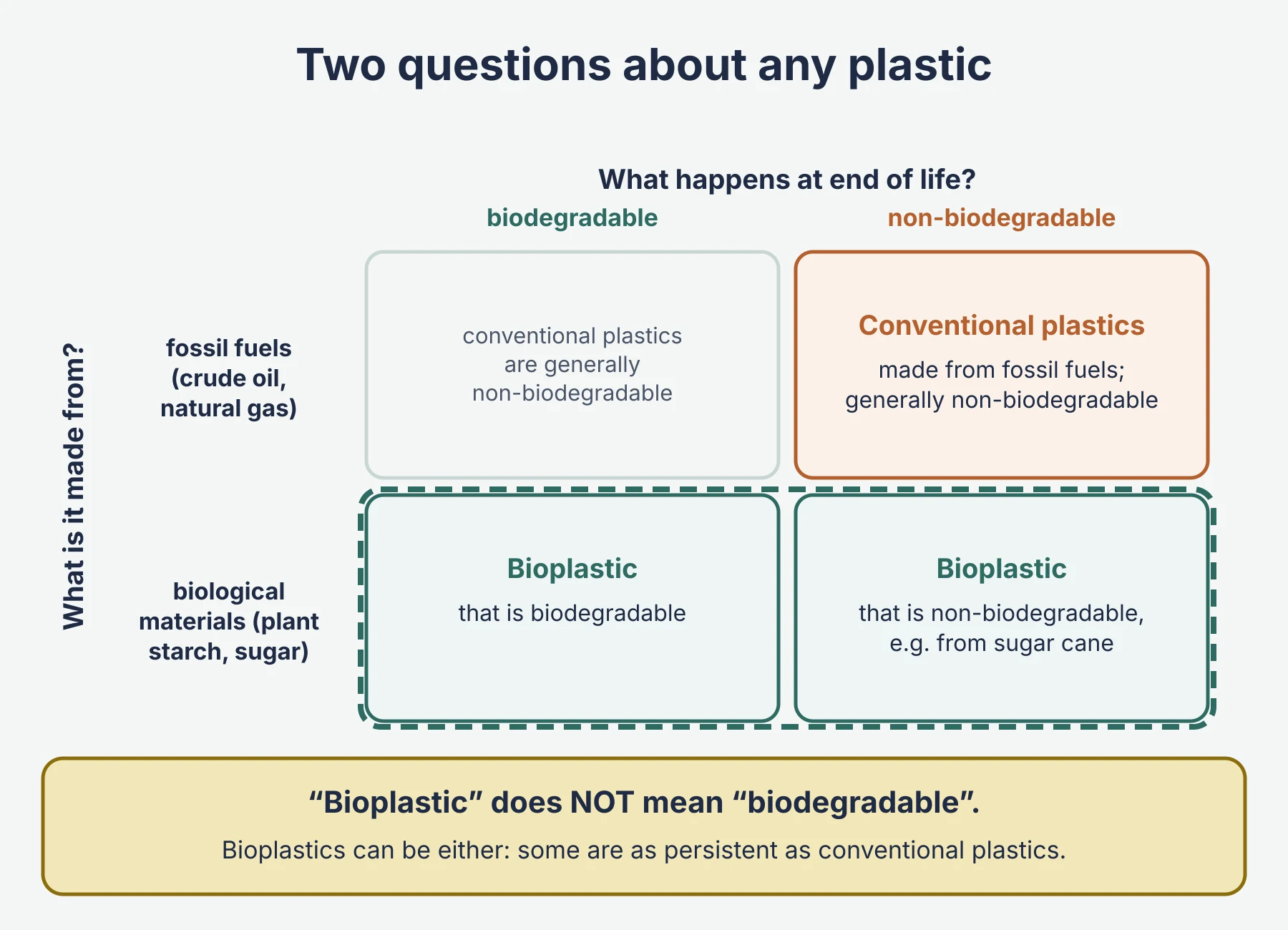
- Conventional plastics: made from fossil fuels; generally non-biodegradable.
- Bioplastics: fully or partly made from biological raw materials rather than fossil fuels; can be biodegradable or non-biodegradable.
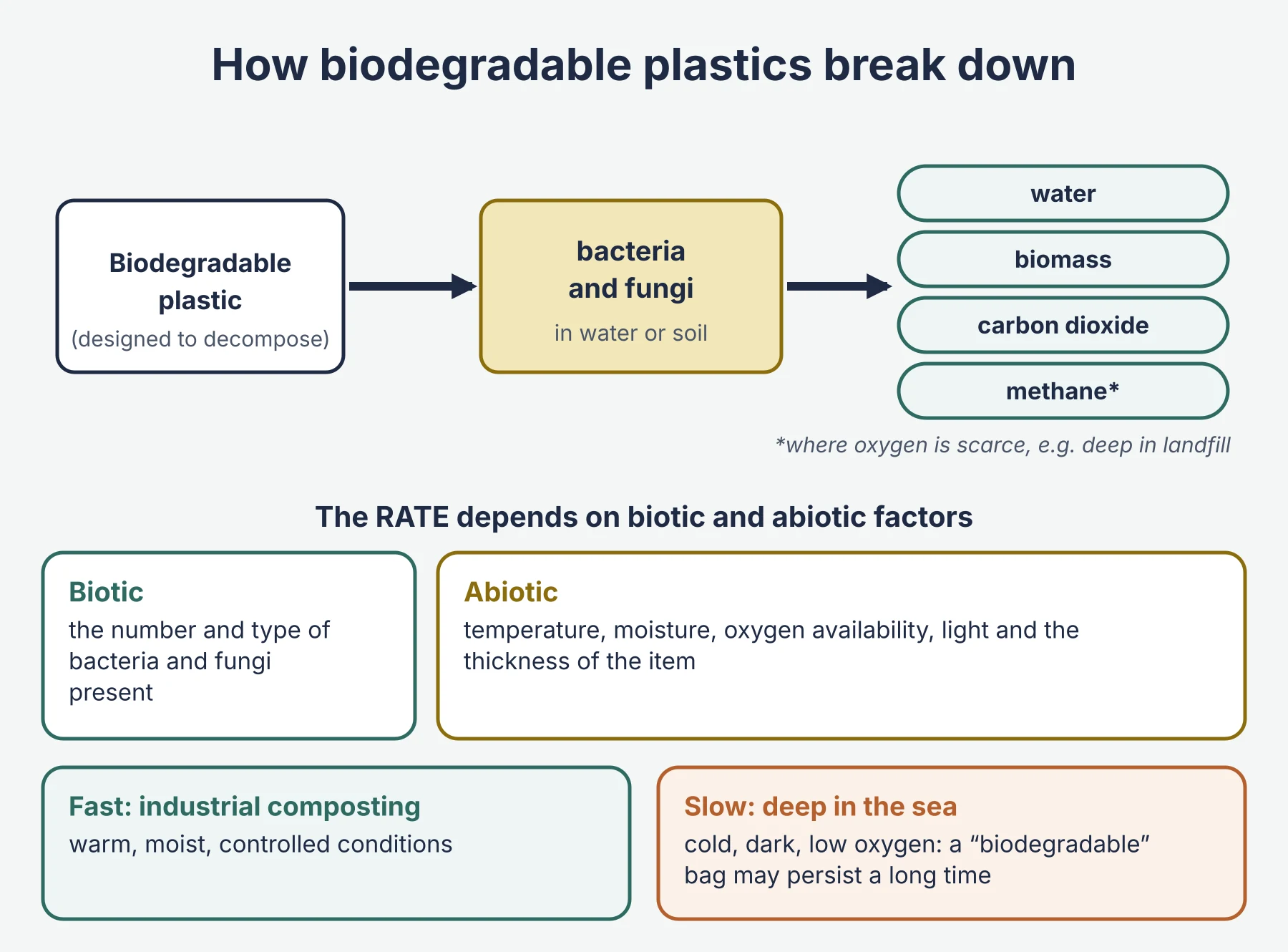
- Biodegradable plastics: designed to decompose in water or soil; decomposed by bacteria and fungi into water, biomass and gases (carbon dioxide and methane); decompose at different rates depending on biotic and abiotic factors.
- Non-biodegradable plastics: break down over a long period of time.
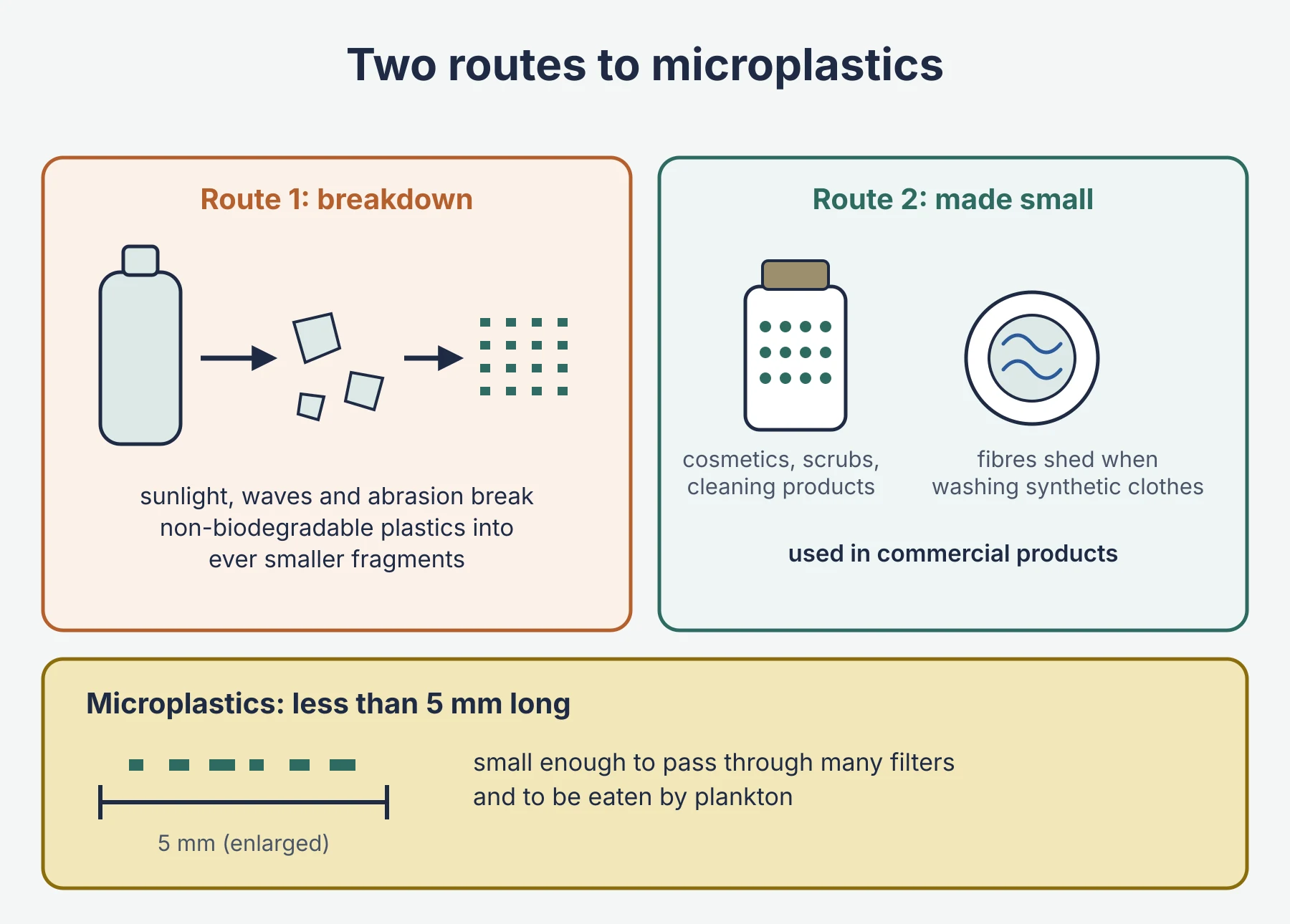
- Microplastics: less than 5 mm in length; formed when larger plastics break down; used in commercial products.
Sorting grid
| Made from fossil fuels | Made fully or partly from biological materials | |
|---|---|---|
| Biodegradable | Possible: some fossil-based plastics are designed to biodegrade | Biodegradable bioplastic |
| Non-biodegradable | Conventional plastic | Non-biodegradable bioplastic |
The two labels describe different things: raw material (conventional or bio) and end of life (biodegradable or not).
Rate of biodegradation
- Biotic factors: number and type of bacteria and fungi.
- Abiotic factors: temperature, moisture, oxygen, light, thickness of the item.
- Fast: warm, moist, oxygen-rich, many decomposers (for example, an industrial compost heap).
- Slow: cold, dark, low-oxygen water at depth.
- Methane forms where oxygen is scarce, such as in landfill.
Two routes to microplastics
- Breakdown of larger items by sunlight, waves and abrasion.
- Manufacture for commercial products, such as particles in some cosmetics and cleaning products; fibres are also shed from synthetic clothing in washing.
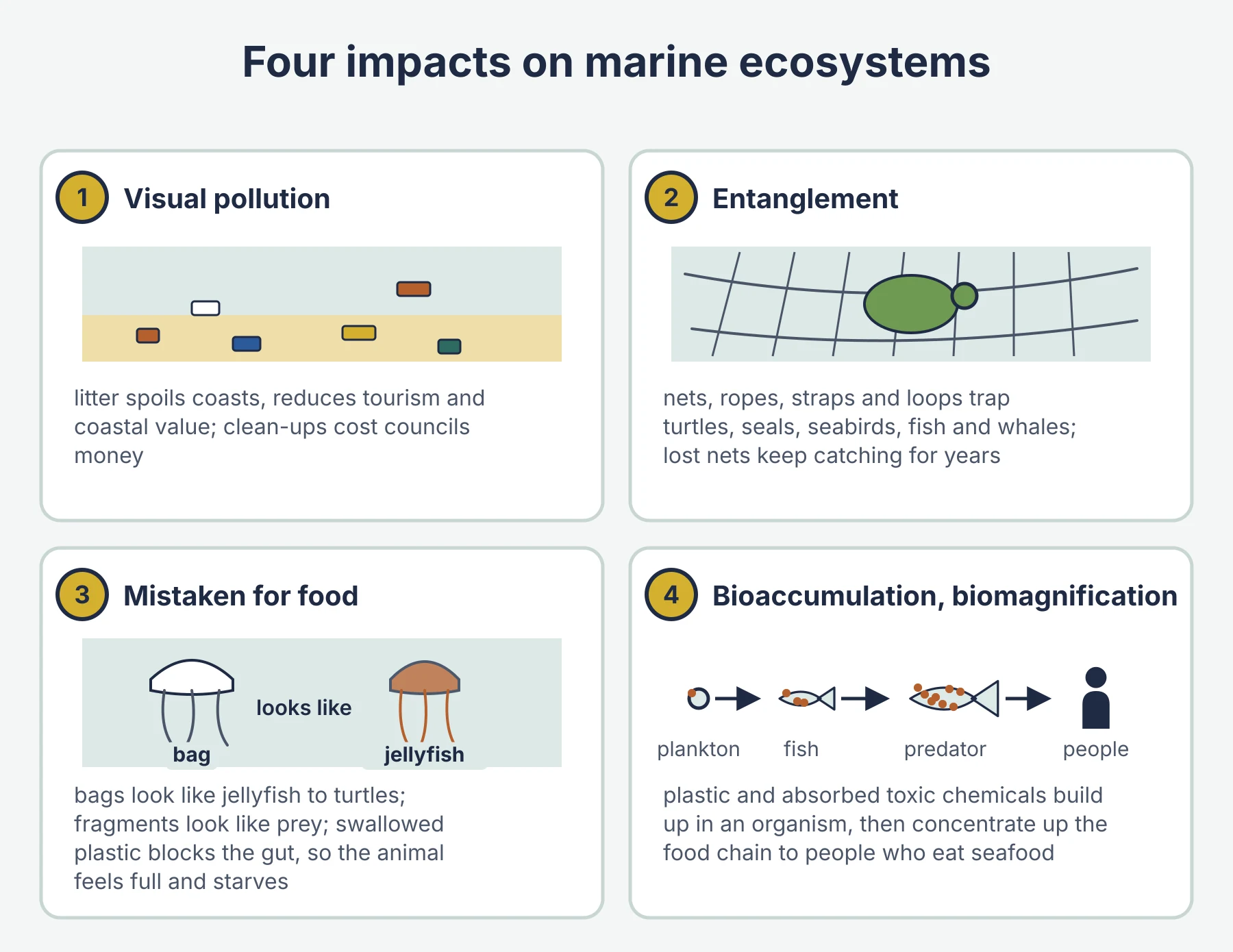
Impacts on marine ecosystems (3.6.6)
| Impact | Mechanism | Effect |
|---|---|---|
| Visual pollution | Litter on beaches and floating rubbish | Fewer tourists; clean-up costs |
| Entanglement | Nets, ropes, straps, loops | Drowning, wounds, unable to feed or move |
| Mistaken for food | Bags look like jellyfish; fragments like prey | Blocked gut, false fullness, starvation; chicks fed plastic |
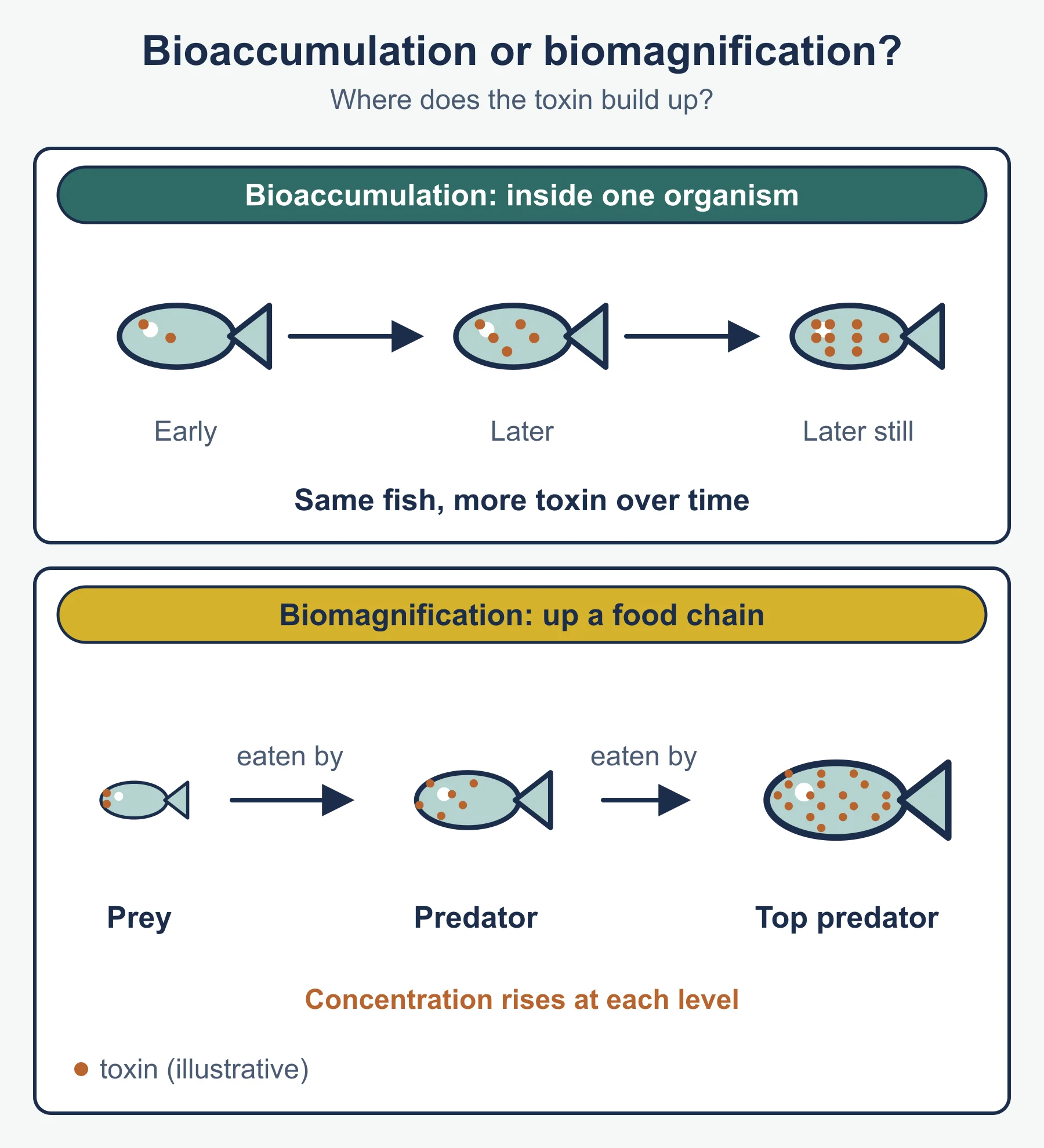
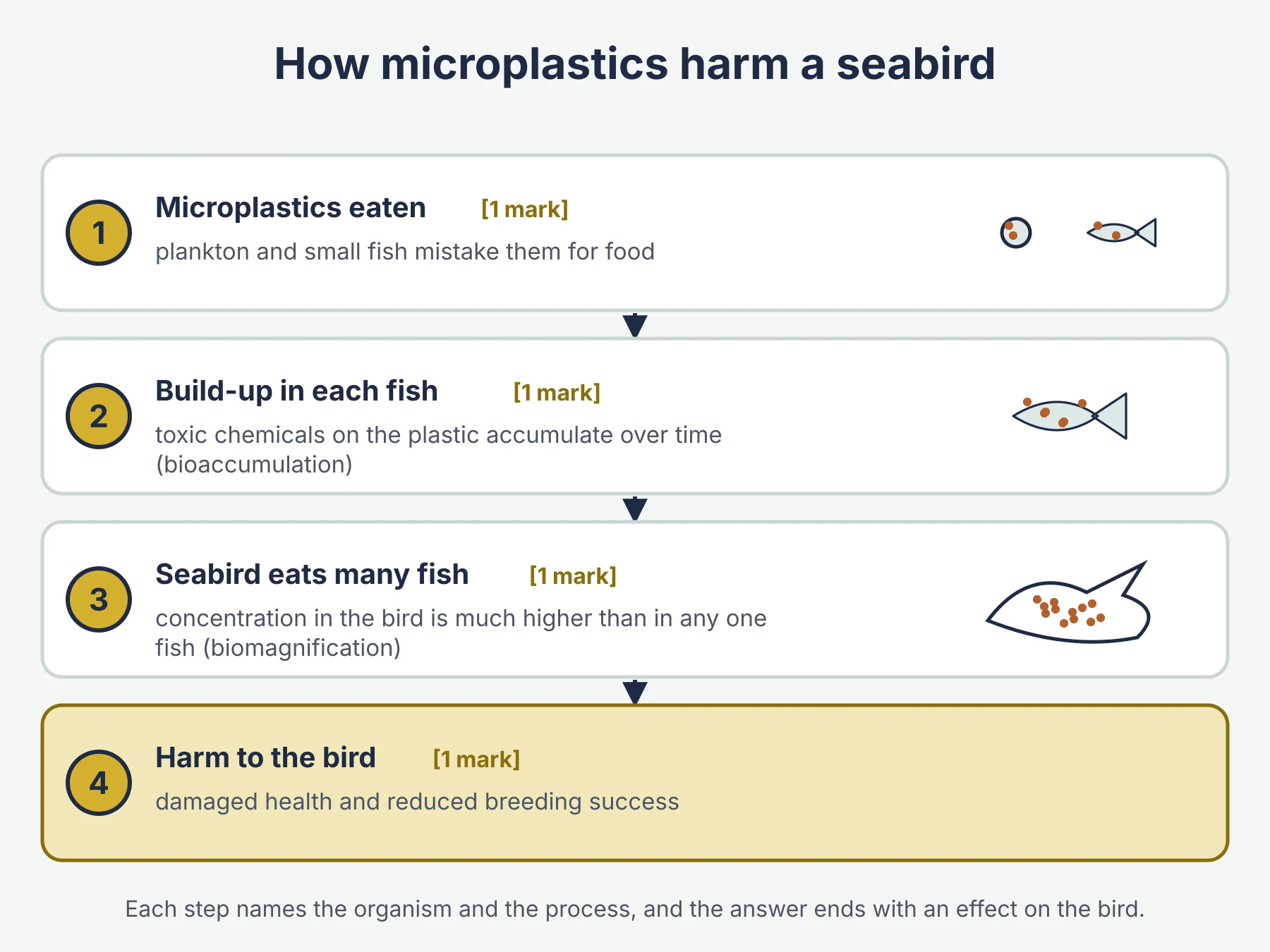
| Bioaccumulation | Plastic and absorbed toxins build up in one organism over time | Harm to health and breeding |
| Biomagnification | Concentration rises at each trophic level | Apex predators and seafood eaters most exposed |
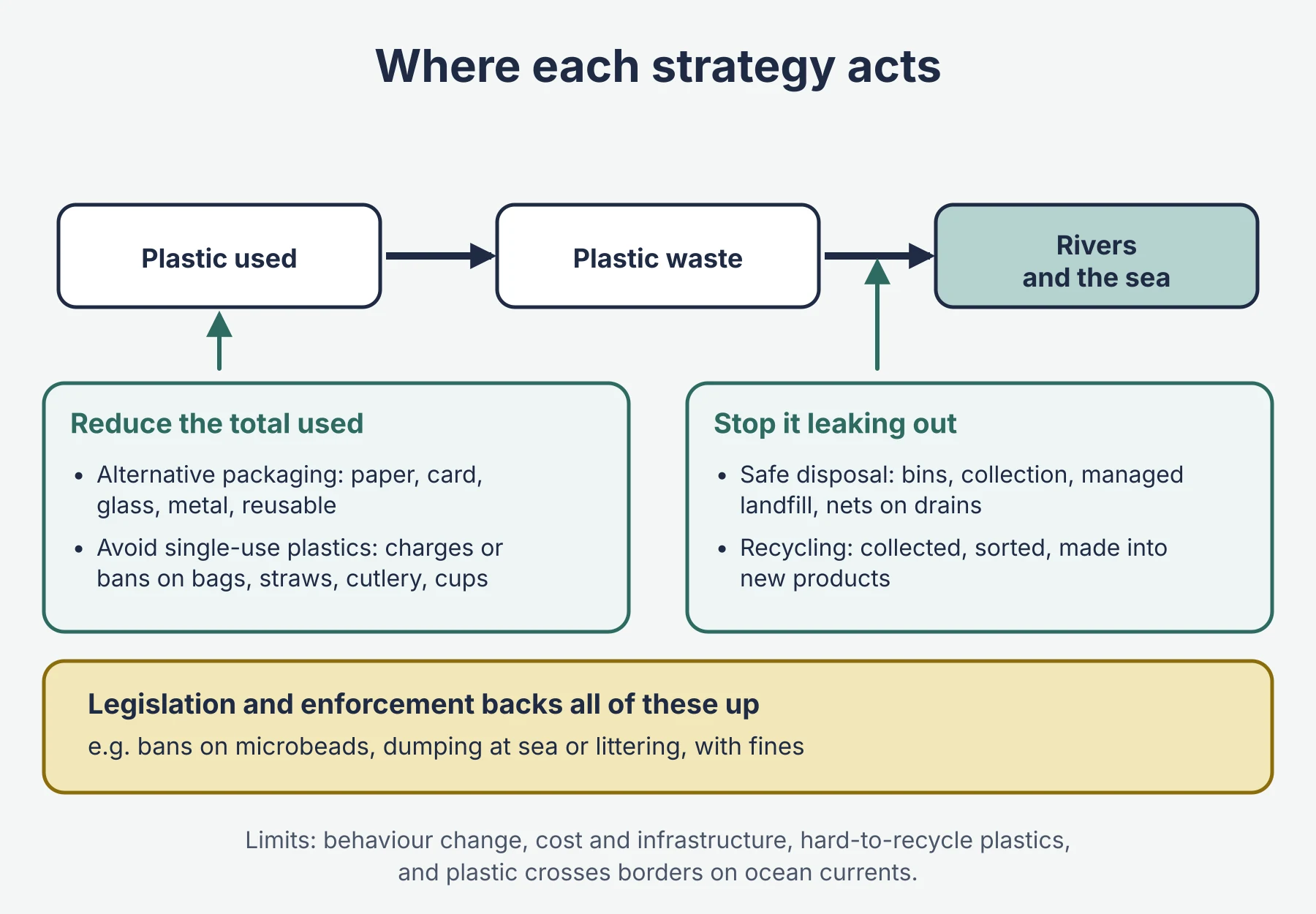
Strategies (3.6.7)
| Strategy | Example | + | – |
|---|---|---|---|
| Alternative packaging | Paper, glass, metal, reusable containers | Less plastic made | Heavier, costlier, energy to make |
| Avoiding single-use plastics | Bag charges, straw bans | Cuts throwaway use | Needs behaviour change |
| Safe disposal | Bins, collections, drain nets, managed landfill | Stops leakage to sea | Needs money and infrastructure |
| Recycling | Collect, sort, reprocess | Reuses material | Many types hard to recycle; quality falls |
| Legislation and enforcement | Microbead bans, fines for dumping | Applies to all | Must be policed; plastic crosses borders |
Key terms
| Term | Meaning |
|---|---|
| Fossil fuel | Coal, crude oil or natural gas; raw material of conventional plastics |
| Biomass | Organic material made by living things |
| Decomposer | Bacterium or fungus that breaks down dead or organic material |
| Biotic factor | A living influence, such as the number of decomposers |
| Abiotic factor | A non-living influence, such as temperature or oxygen |
| Single-use plastic | An item used once then thrown away |
| Entanglement | Animals trapped in plastic items |
| Microplastic | A plastic piece less than 5 mm long |
Exam traps
- Bioplastic is not a synonym for biodegradable. Always add “can be biodegradable or non-biodegradable”.
- Include the 5 mm figure when defining microplastics.
- Name both decomposer groups (bacteria and fungi) and all three products (water, biomass, gases), naming the gases.
- Non-biodegradable is not “never breaks down”; it breaks down over a long period, forming microplastics.
- Recycling does not remove plastic already in the sea. Match each strategy to the stage it acts on: reduce use, stop leakage, or enforce.
- When a question asks about marine ecosystems, keep examples marine: turtles, seabirds, seals, fish, plankton, shellfish.
Self-test
- Describe a conventional plastic.
- Describe a bioplastic.
- Can a bioplastic be non-biodegradable? Explain.
- Name the organisms that decompose biodegradable plastics.
- Name the products of biodegradation.
- State two abiotic factors that affect the rate of biodegradation.
- State the size limit for microplastics.
- Give the two sources of microplastics in the syllabus.
- Explain how a floating plastic bag can kill a turtle.
- Explain why apex predators carry higher levels of toxins linked to microplastics than plankton do.
- Give one limitation of recycling as a way of managing plastic pollution.
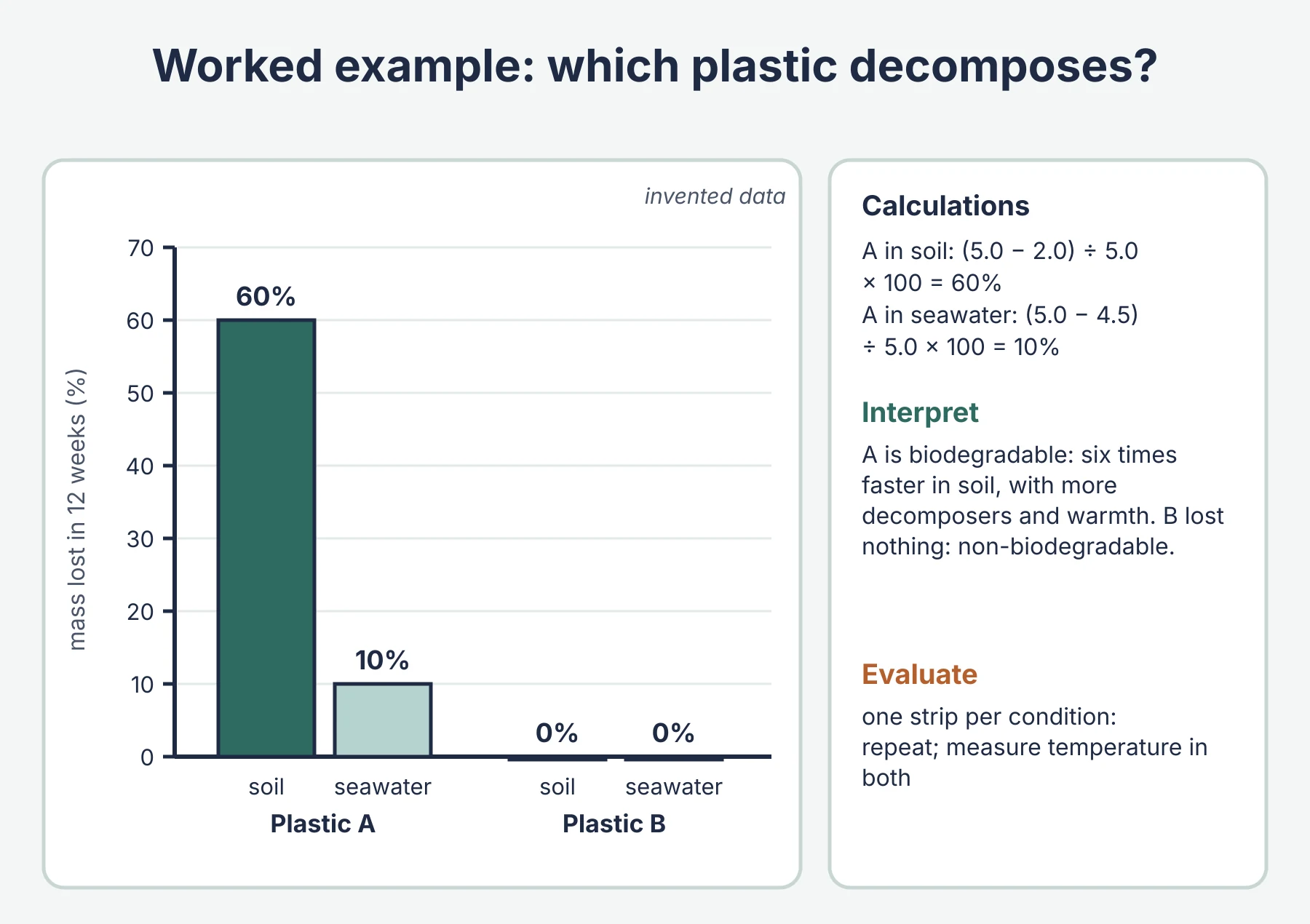
- A biodegradable cup of mass 8.0 g has a mass of 6.0 g after 10 weeks in seawater. Calculate the percentage mass loss.
Answers
- A plastic made from fossil fuels that is generally non-biodegradable.
- A plastic fully or partly made from biological raw materials rather than from fossil fuels.
- Yes: “bio” describes the raw material, not what happens at the end of life, so some bioplastics do not biodegrade.
- Bacteria and fungi.
- Water, biomass and gases (carbon dioxide and methane).
- Any two: temperature, moisture, oxygen availability, light.
- Less than 5 mm in length.
- Breakdown of larger plastics; use in commercial products.
- The turtle mistakes it for food such as a jellyfish and swallows it; it blocks the gut or fills the stomach so the turtle starves. Also accept: entanglement causing drowning.
- Predators eat many contaminated prey, so the toxins build up at each trophic level (biomagnification).
- Many plastics are hard or costly to recycle, mixed or contaminated waste cannot be sorted easily, or it does not remove plastic already in the sea.
- (8.0 − 6.0) / 8.0 × 100 = 25%.
Linked pages
Practise with the plastic pollution practice questions. Biomagnification of other toxins is covered in the water pollution revision notes.
Related resources
-
Revision notes
Cambridge IGCSE Environmental Management: Land — Revision Notes
Recall notes on soils and crop growth, food production and soil erosion for Topic 2 Land of Cambridge IGCSE Environmental Management 0680, 2027-2029 series.
Environmental Management · Cambridge · IGCSE
Revise topic -
Study guides
Cambridge IGCSE Environmental Management (0680): Water pollution
Sources and impacts of water pollution, bioaccumulation, biomagnification, eutrophication and water-quality strategies for Cambridge IGCSE 0680.
Environmental Management · Cambridge · IGCSE
Read guide -
Practice questions
Cambridge IGCSE Environmental Management (0680): Water pollution – Practice Questions
Original practice questions with mark-scheme answers on water pollution sources, biomagnification, eutrophication and sewage treatment for IGCSE 0680.
Environmental Management · Cambridge · IGCSE
Try questions
Get free revision emails (optional)
Occasional emails with practice questions, worked explanations and links to free resources for the qualification and subjects you choose. No spam, and you can unsubscribe from any email. The free tools on this site never need an email.