
Revision Notes
Cambridge O Level Commerce (7100): Commercial enterprises – Revision Notes
Recall notes for Cambridge O Level Commerce 7100 sub-topic 2.1: ownership forms, liability, public corporations, MNC impacts, franchises and location factors.
- Subject
- Commerce
- Level
- O LEVELS
- Topic
- Topic 2 – Commercial Operations
- Author
- Marlbridge Academic Team
- Updated
- Reviewed by
- Salman Ahmad (what this means)
Aligned to Cambridge O Level Commerce (7100), 2026-2028. Official specification .
Syllabus page (what it covers and how it is assessed): Cambridge O Level Commerce.
Syllabus points this page covers
7100
- 2.1 Commercial enterprises
Found an error? Report a correction.
Need help with this topic? Request a free trial class for O Level Commerce (7100).
Quick-recall notes for sub-topic 2.1 Commercial enterprises in Cambridge O Level Commerce (7100). The commercial enterprises study guide explains each point with examples and an annotated answer.
Key terms
| Term | Meaning |
|---|---|
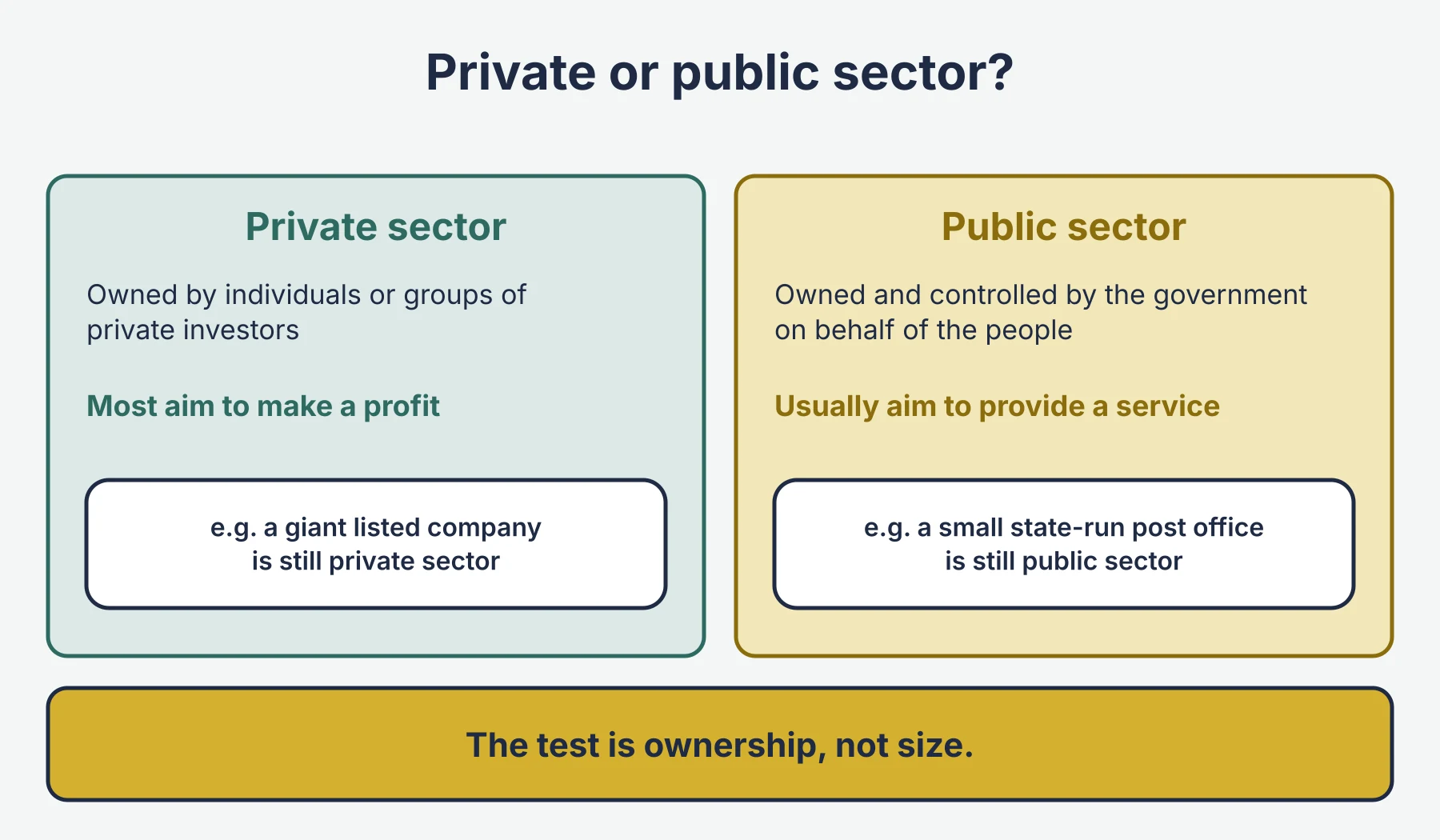
| Private sector | Enterprises owned by private individuals or investors |
| Public sector | Enterprises owned and controlled by the government for the public |
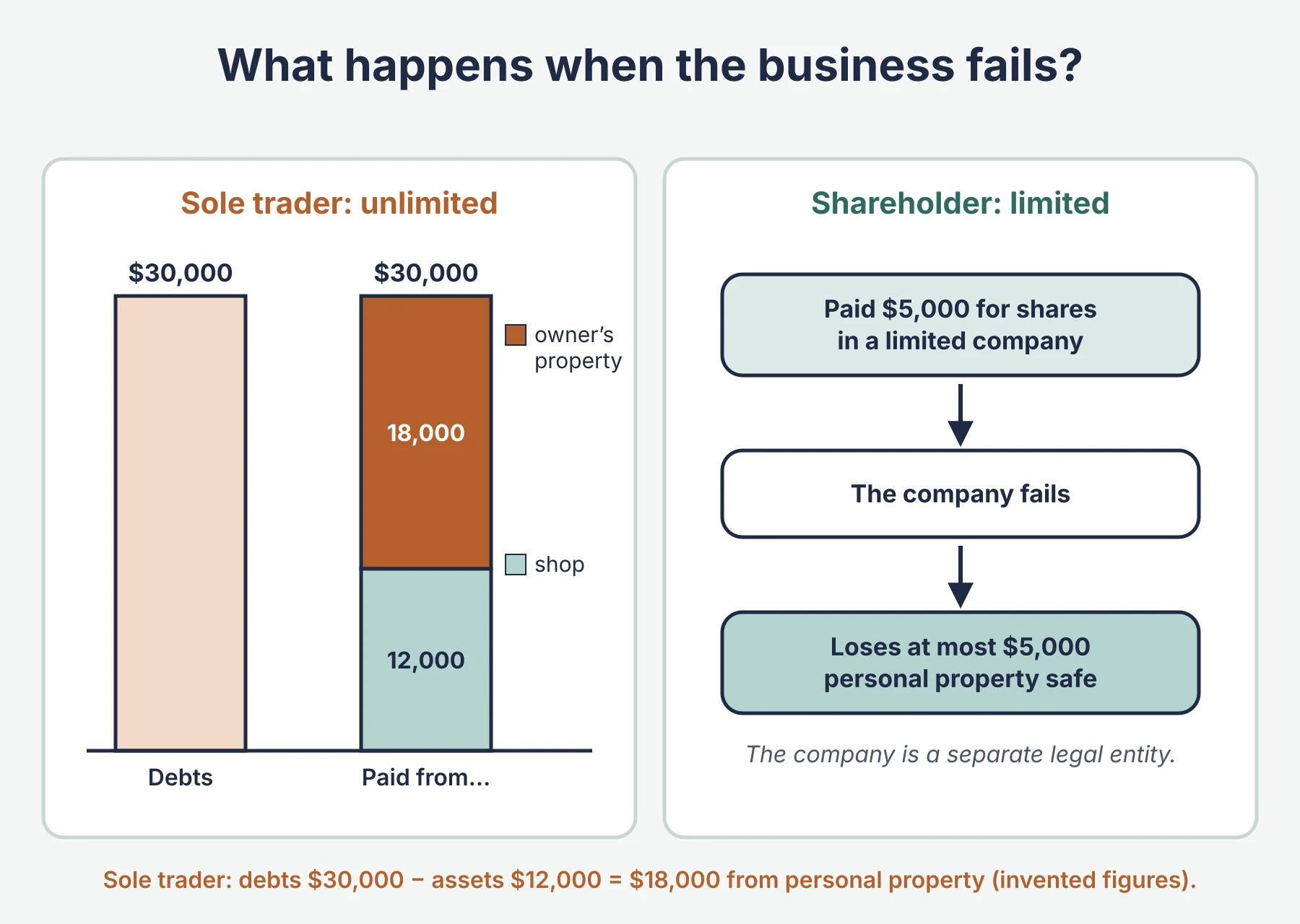
| Unlimited liability | Owners’ personal possessions can be used to pay business debts |
| Limited liability | Owners can lose only the money they invested in shares |
| Separate legal entity | A company exists in law apart from its owners and continues if an owner leaves or dies |
| Cooperative | Business owned and controlled by its members for their benefit, usually one member one vote |
| Partnership agreement | Document setting out partners’ capital, profit shares and duties |
| Public corporation | State-owned enterprise run by a government-appointed board |
| Multinational company (MNC) | Company with headquarters in one country and operations in others |
| Host country | The country where an MNC sets up operations |
| Franchisor | Business that owns the brand and sells the right to use it |
| Franchisee | Business that buys the right to trade under the brand |
| Royalty | Ongoing payment from franchisee to franchisor, often a percentage of sales |
Ownership forms: one-line summaries
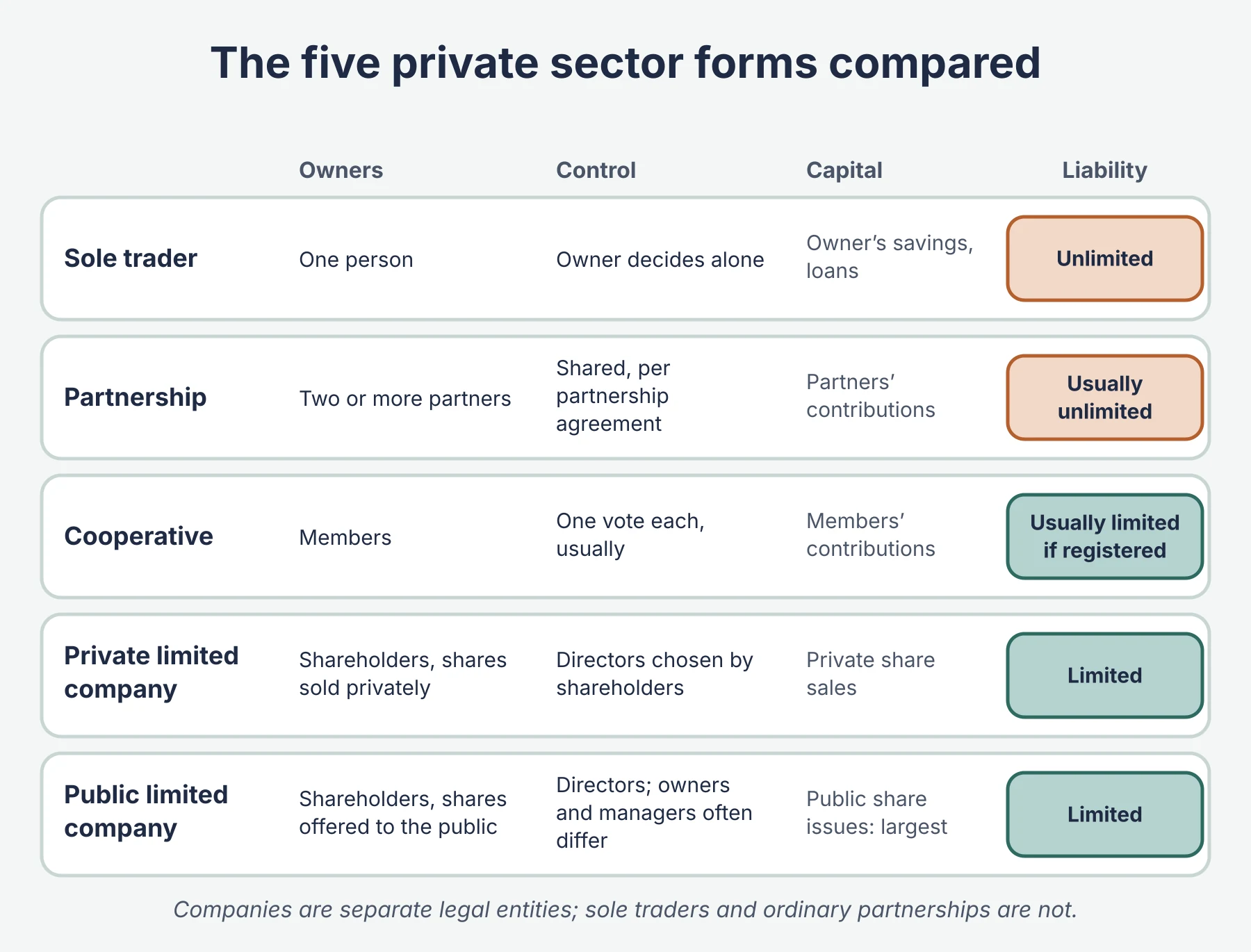
- Sole trader: one owner, full control, keeps all profit, unlimited liability, limited capital.
- Partnership: two or more owners, shared capital and skills, usually unlimited liability, risk of disagreement.
- Cooperative: member-owned, one member one vote, profits shared among members, aims to benefit members.
- Private limited company: limited liability, shares sold privately, accounts must be filed, cannot offer shares to the general public.
- Public limited company: limited liability, shares offered to the public, largest capital, accounts published, risk of takeover, owners often not managers.
Appropriateness checklist
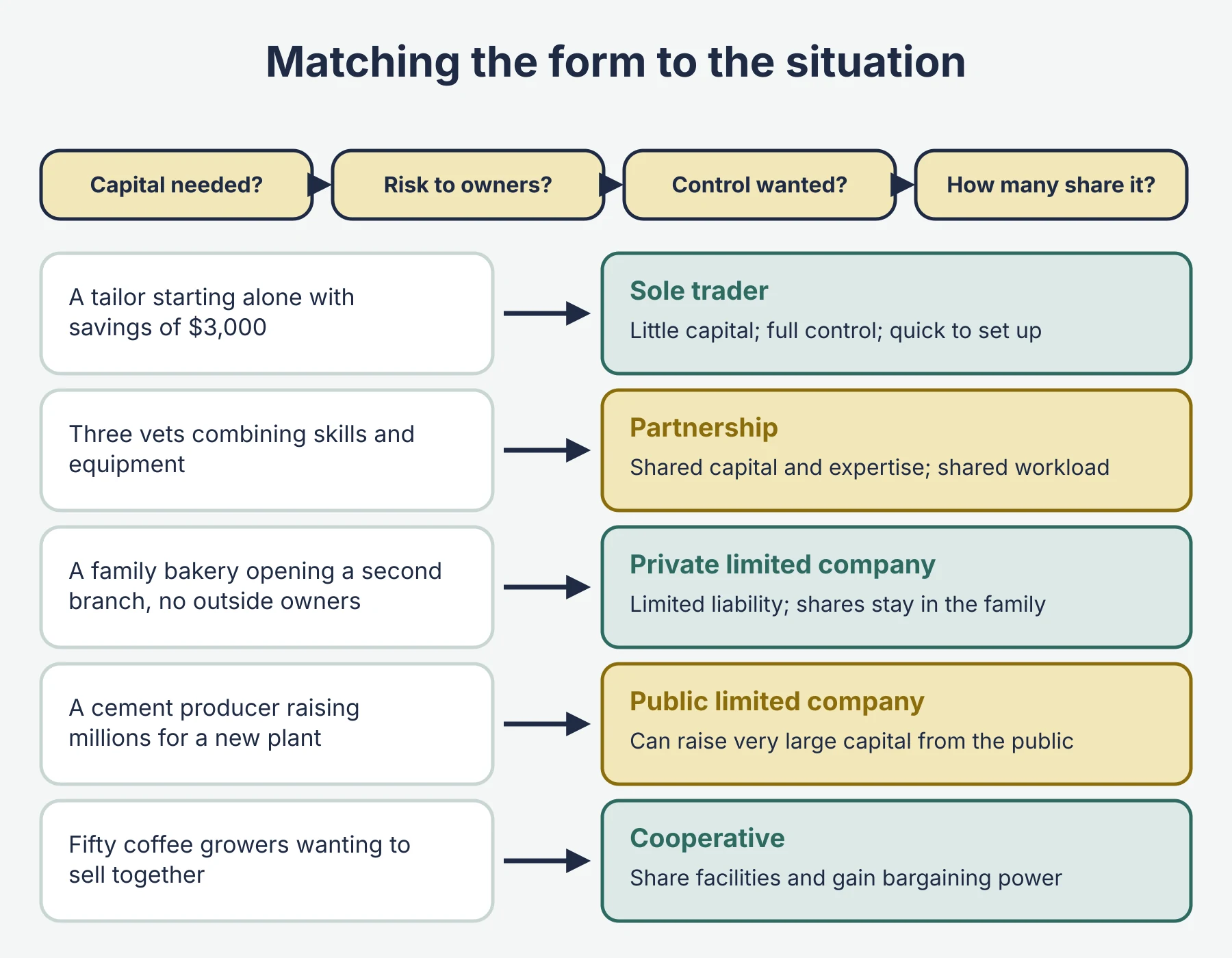
Ask four questions of any scenario: How much capital? How much risk? How much control do the owners want? How many people share ownership? Then recommend one form and give a reason from the scenario.
Public corporations
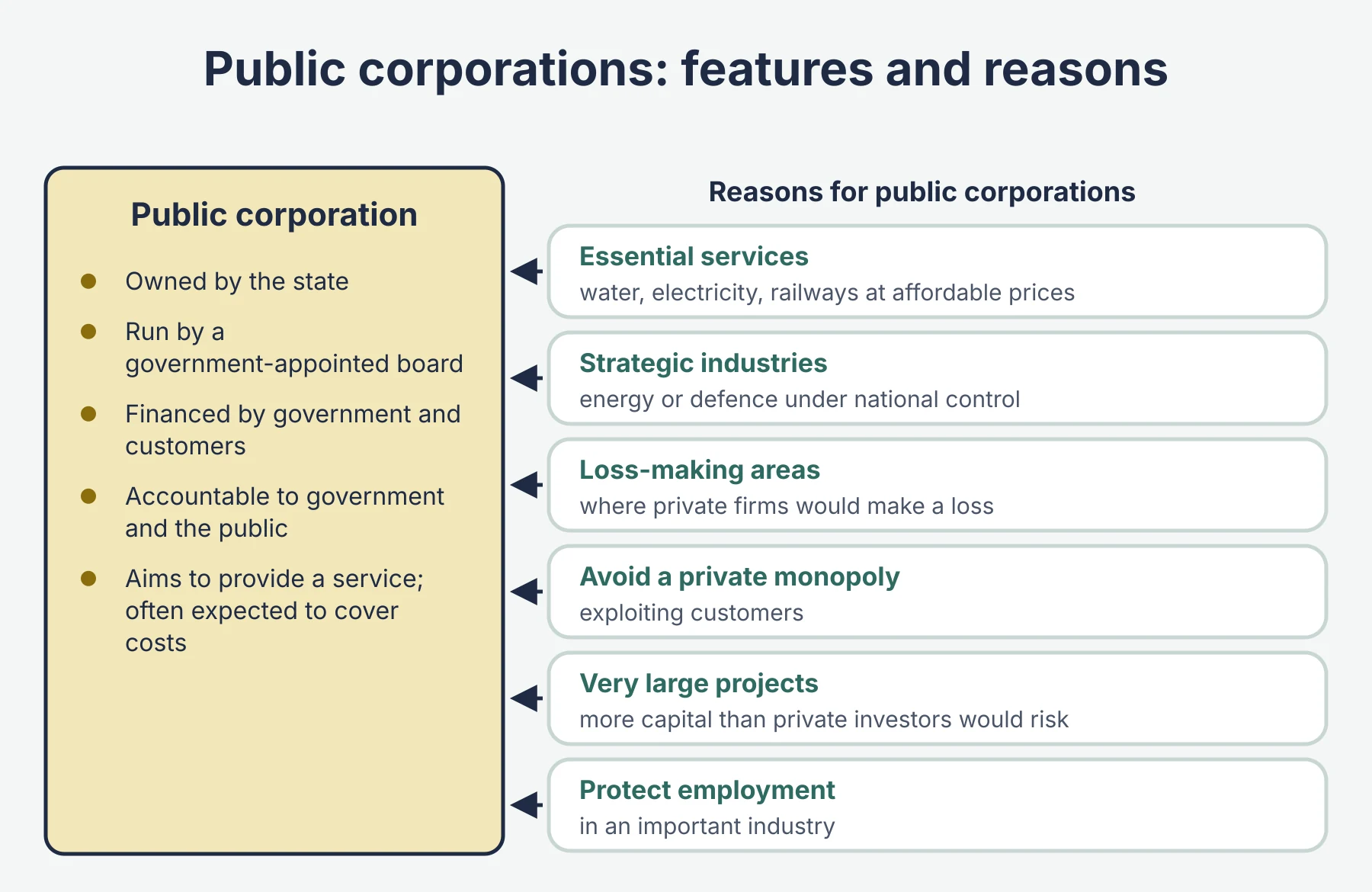
- Features: state-owned; board appointed by government; financed by government and customers’ payments; accountable to government; service objective.
- Reasons: essential services at affordable prices; strategic industries under national control; services in loss-making areas; prevent private monopolies; very large projects; protect jobs.
MNCs
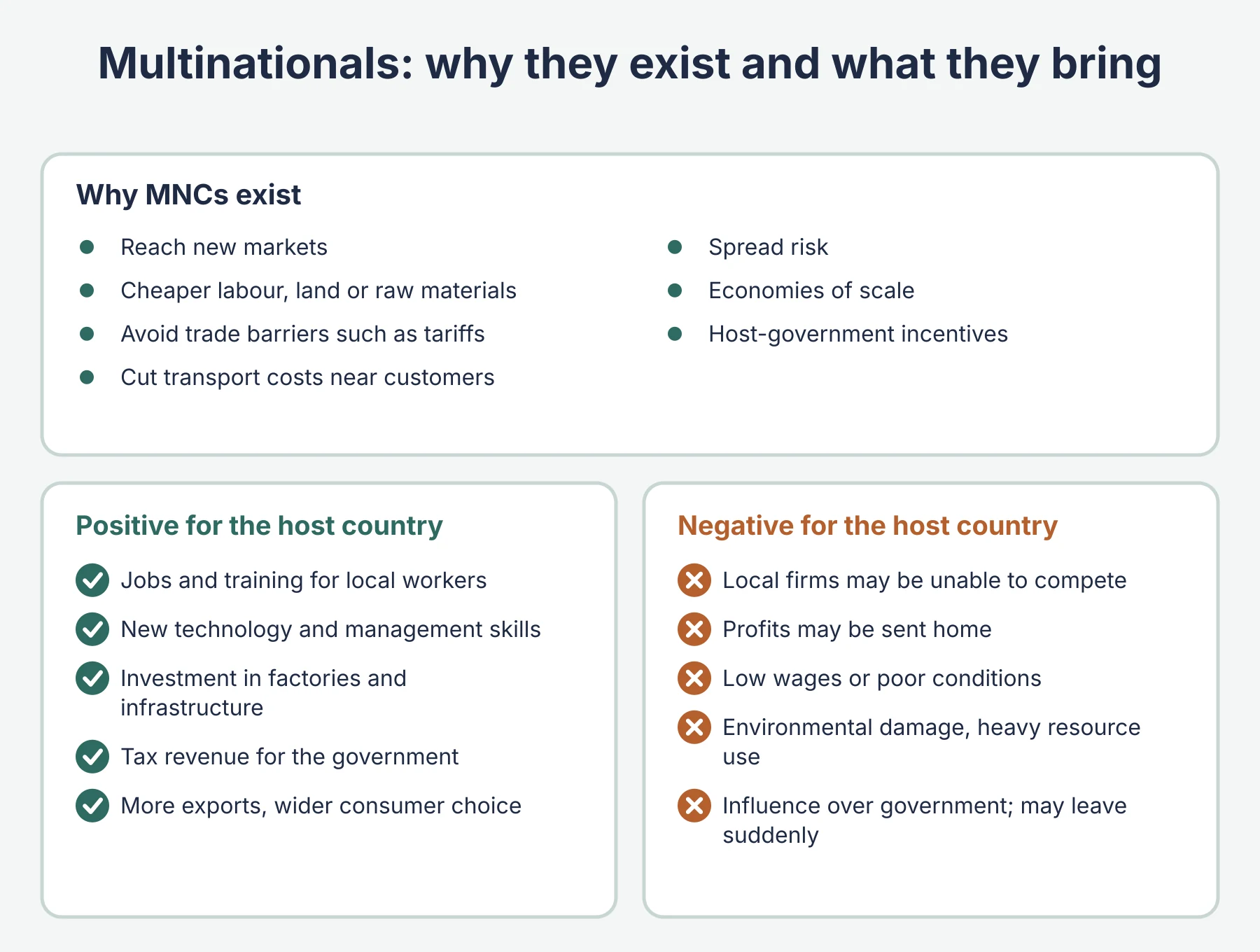
Reasons they exist: new markets; cheaper labour, land or materials; avoid tariffs by producing inside a market; lower transport costs; spread risk; economies of scale; host government incentives.
| Positive for host | Negative for host |
|---|---|
| Jobs and training | Local firms closed by competition |
| New technology and skills | Profits sent abroad |
| Investment and infrastructure | Low wages or poor conditions |
| Tax revenue | Environmental damage |
| Exports and consumer choice | Political influence; may leave suddenly |
Franchises
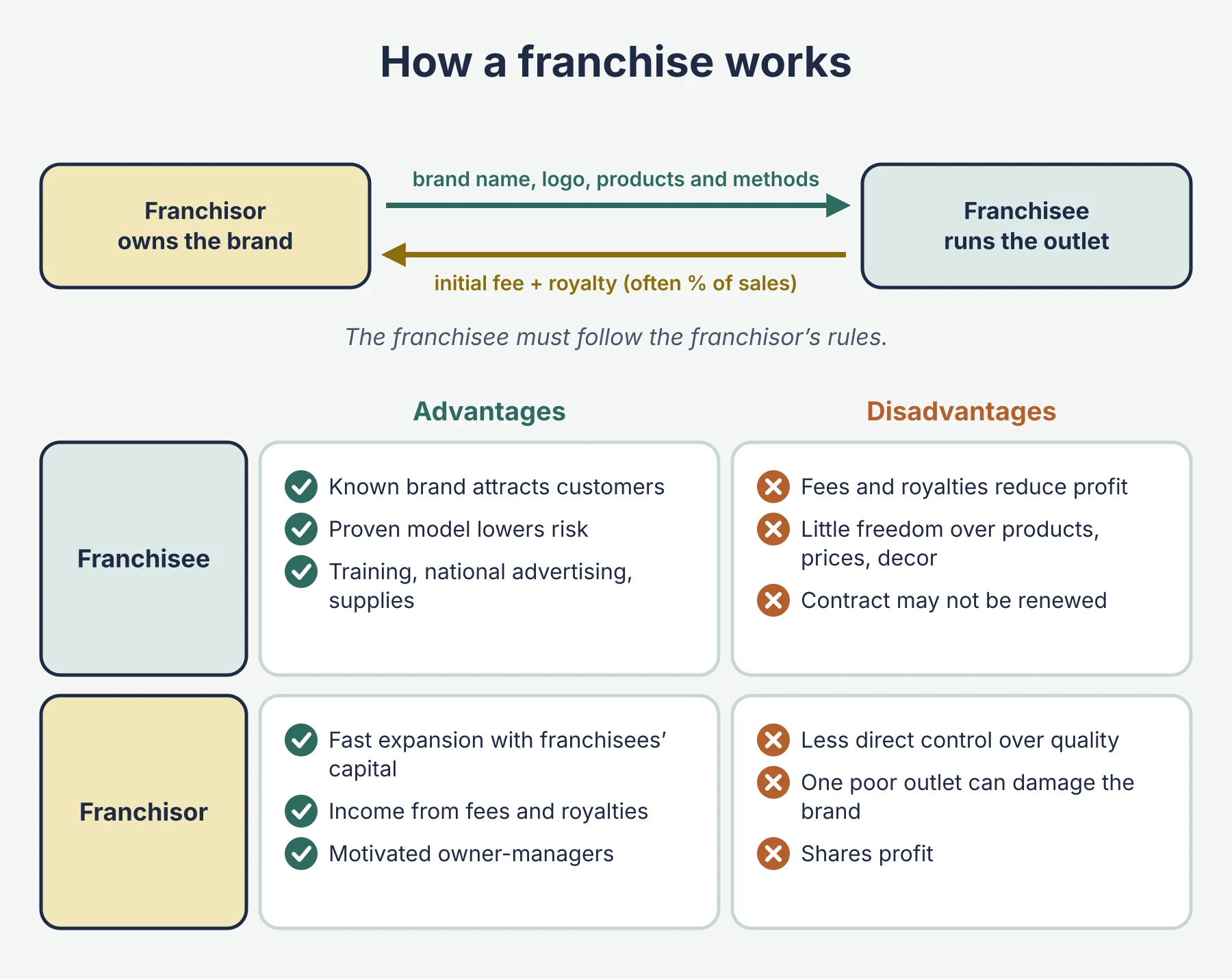
- Features: brand, logo, products and methods supplied by franchisor; initial fee plus royalties; franchisee follows the franchisor’s rules; franchisor gives training and national advertising.
- Franchisee: lower risk, known brand, support / fees, royalties, little freedom.
- Franchisor: rapid growth with others’ capital, fee income / less control, brand risk from poor outlets.
Location factors
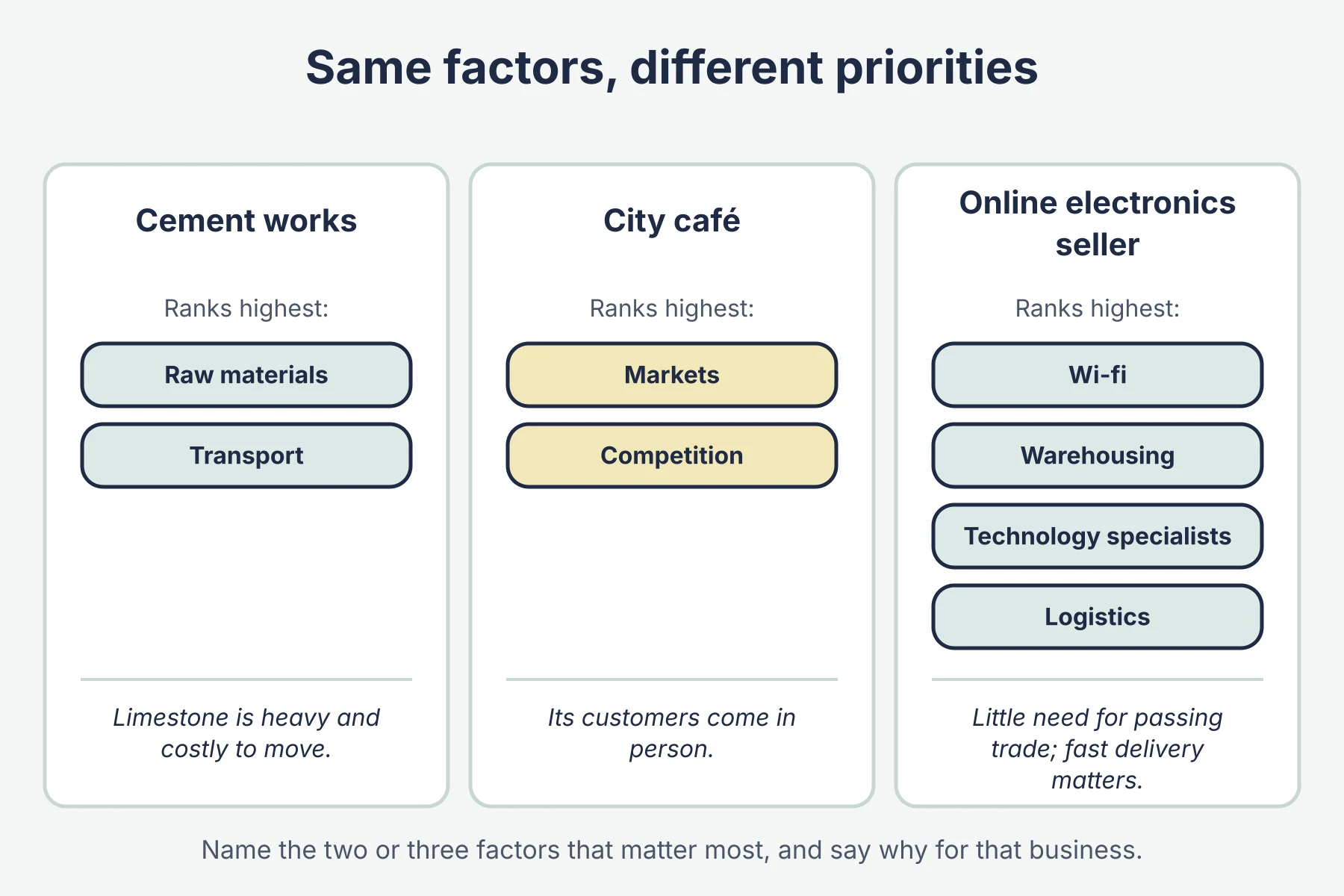
- Physical (9): labour, markets, transport, power, raw materials, competition, suppliers, communication, government influence.
- Ecommerce (4): wi-fi, warehousing, technology specialists, logistics.
- Heavy raw materials → near the source. Perishable or service products → near customers. Online seller → connectivity, warehouse and delivery links.
Exam traps
- Public limited company is private sector. “Public” refers to who can buy the shares, not who owns the business.
- Liability is about debts, not profits. Do not write “limited liability means limited profit”.
- Cooperative members are not partners; a cooperative is a separate form.
- Two sides for MNCs and franchises: questions often ask for positives and negatives, or for franchisee and franchisor.
- Location answers must be selective: the most relevant factors for the business, with a reason.
Self-test
- What decides whether an enterprise is in the private or public sector?
- Define unlimited liability.
- Give two features of a cooperative.
- State one difference between a private limited company and a public limited company.
- Why is a company called a separate legal entity?
- Give three reasons why a government may run a public corporation.
- Define a multinational company.
- State two reasons why an MNC may set up a factory in another country.
- Give one positive and one negative impact of an MNC on a host country.
- What is a royalty in a franchise?
- Give one disadvantage of franchising for the franchisor.
- Name the four ecommerce location factors.
Self-test answers
- Who owns it: private individuals or investors (private sector) or the government (public sector).
- The owner’s personal possessions can be used to pay the business’s debts.
- Any two: owned by members; usually one member one vote; profits shared among members or used for their benefit; aims to serve members.
- A public limited company can offer shares to the general public, often on a stock exchange; a private limited company can sell shares only privately.
- It exists in law separately from its owners: it can own property, make contracts and be sued in its own name, and it continues if an owner leaves.
- Any three: essential services at affordable prices; strategic control; services in loss-making areas; preventing private monopoly; very large projects; protecting jobs.
- A company with its headquarters in one country and production or service operations in at least one other country.
- Any two: new markets; cheaper labour or materials; avoid tariffs; lower transport costs; spread risk; government incentives.
- Positive, for example jobs and training; negative, for example profits sent back to the home country.
- An ongoing payment from the franchisee to the franchisor, often a percentage of sales.
- Less direct control over quality, so a poor outlet can damage the whole brand.
- Wi-fi, warehousing, technology specialists and logistics.
Frequently asked questions
Do I need to know the legal registration documents for companies? The 7100 content asks for features of each form, not the names of registration documents, so concentrate on ownership, liability, control, profit and capital.
How many location factors should an answer use? Usually two or three, chosen for the business in the question and each explained.
Apply these notes in the commercial enterprises practice questions.
Official syllabus
Cambridge O Level Commerce (7100) syllabus for 2026, 2027 and 2028, sub-topic 2.1: official syllabus PDF.
Related resources
-
Revision notes
Cambridge O Level Commerce: Commercial Operations — Revision Notes (7100)
Recall notes for Cambridge O Level Commerce 7100 Topic 2: enterprise types, multinationals, franchises, outsourcing, retail, wholesale and communication.
Commerce · Cambridge · O Level
Revise topic -
Study guides
Cambridge O Level Commerce (7100): Communication
Cambridge O Level Commerce 7100 sub-topic 2.6 in depth: types and methods of communication and how to choose the right method using the six named factors.
Commerce · Cambridge · O Level
Read guide -
Practice questions
Cambridge O Level Commerce (7100): Communication – Practice Questions
Twelve original questions with full answers on Cambridge O Level Commerce 7100 sub-topic 2.6: communication types, methods and choosing the right method.
Commerce · Cambridge · O Level
Try questions
Get free revision emails (optional)
Occasional emails with practice questions, worked explanations and links to free resources for the qualification and subjects you choose. No spam, and you can unsubscribe from any email. The free tools on this site never need an email.