
Study Guides
Cambridge O Level Commerce (7100): Retailing
Cambridge O Level Commerce 7100 sub-topic 2.3 in depth: ten types of retailer, why small shops survive, selling techniques, digital retail trends and ecommerce.
- Subject
- Commerce
- Level
- O LEVELS
- Topic
- Topic 2 – Commercial Operations
- Author
- Marlbridge Academic Team
- Updated
- Reviewed by
- Salman Ahmad (what this means)
Aligned to Cambridge O Level Commerce (7100), 2026-2028. Official specification .
Syllabus page (what it covers and how it is assessed): Cambridge O Level Commerce.
Syllabus points this page covers
7100
- 2.3 Retailing
Found an error? Report a correction.
Need help with this topic? Request a free trial class for O Level Commerce (7100).
Retailing is the final stage of the chain of distribution: selling goods in small quantities to the consumer. Sub-topic 2.3 of Cambridge O Level Commerce (7100) is the most detailed part of Topic 2, with four sections: types of retailers (2.3.1), retail selling techniques (2.3.2), digital retail trends (2.3.3) and the effects of ecommerce on traditional commerce (2.3.4). Each section is a named list, so questions often ask you to apply one named item to a shop in a case study.
The Commercial Operations overview introduces retailing alongside the rest of Topic 2. This guide covers every item in 2.3 with its features and an exam-ready judgement.
What the specification asks for
| Section | Content statements |
|---|---|
| 2.3.1 Types of retailers | Ten small-scale and large-scale types; features of each; advantages and disadvantages of each; reasons why the small-scale retailer often survives |
| 2.3.2 Retail selling techniques | Branding, own brands, logos, packaging, self service, after-sales service, barcoding, direct mail, loyalty programmes, informal credit, cash on delivery |
| 2.3.3 Digital retail trends | Omnichannel retailing, cashless stores, EPoS, click and collect, self-service checkouts, subscription commerce, QR codes, VR showrooms, dropshipping, smartphone apps, multi-channel retailing |
| 2.3.4 Effects of ecommerce | Positive and negative impacts on traditional commerce |
Small-scale retailers
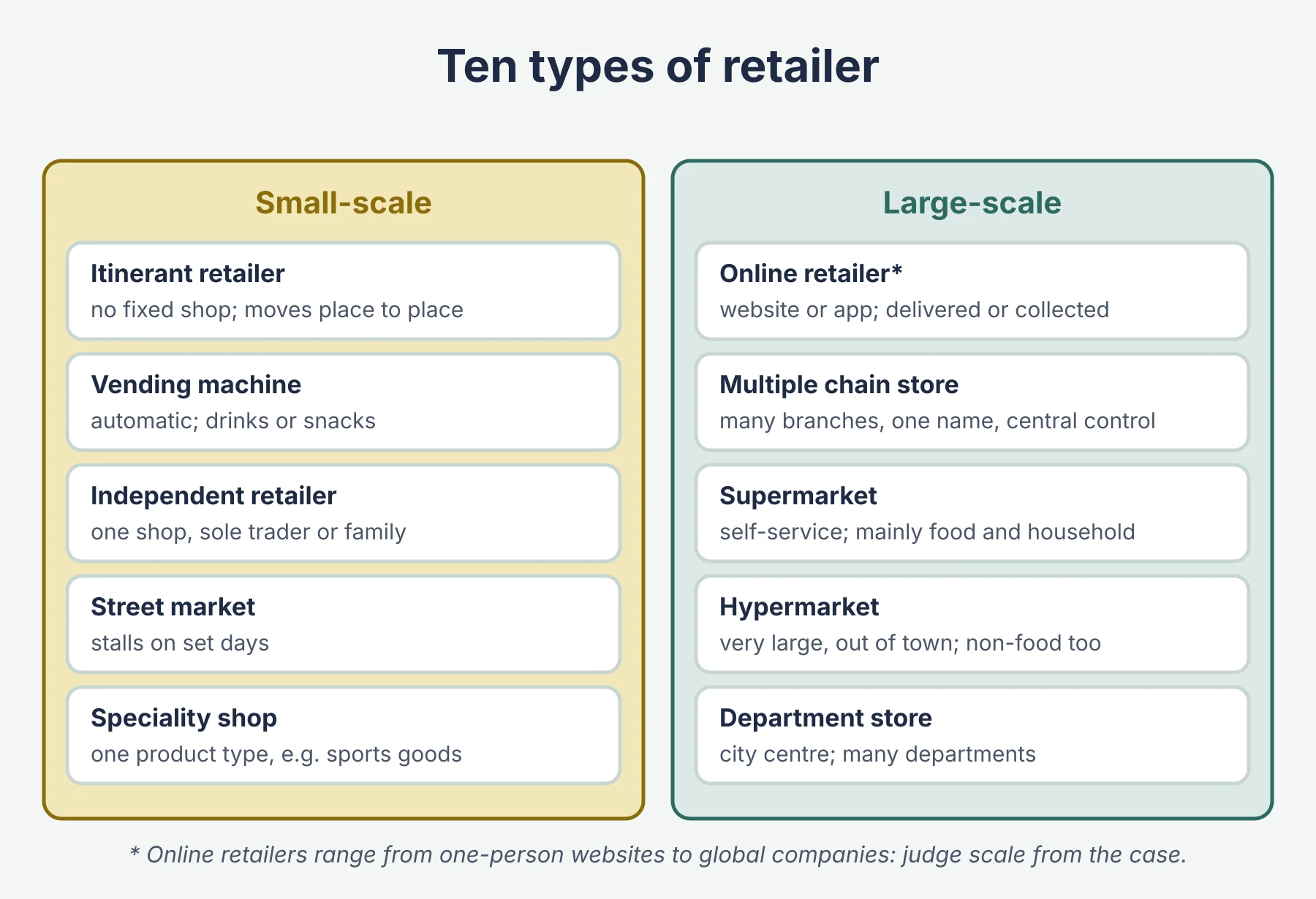
The syllabus lists the ten types together without dividing them. The grouping below is the usual one, but online retailers range from one-person websites to global companies, so judge scale from the case.
| Type | Features | Advantages | Disadvantages |
|---|---|---|---|
| Itinerant retailer | No fixed shop; moves from place to place, on foot, by bicycle or in a mobile van | Low overheads; takes goods to customers, including remote villages | Small stock; affected by weather; hard to return faulty goods |
| Vending machine | Automatic machine selling small items such as drinks or snacks | Sells 24 hours with no sales staff; placed where people gather | Narrow range; breakdowns and vandalism; must be restocked |
| Independent retailer | Usually one shop, owned by a sole trader or family | Personal service; may give credit to known customers; flexible hours | Higher prices because it buys in small quantities; limited capital and range |
| Street market | Stalls on set days in an open space or covered hall | Low rent so low prices; bargaining; lively atmosphere | Open only on certain days; exposed to weather; little after-sales service |
| Speciality shop | Concentrates on one product type, such as sports goods or musical instruments | Deep range of that product; expert advice | Higher prices; depends on demand for one product type |
Large-scale retailers
| Type | Features | Advantages | Disadvantages |
|---|---|---|---|
| Online retailer | Sells through a website or app; goods delivered or collected | Open 24/7; very wide range; no shop costs; reaches distant customers | Delivery cost and waiting time; customers cannot inspect goods; returns |
| Multiple chain store | Many branches under one name, centrally owned and managed | Bulk buying lowers prices; recognisable brand; same layout everywhere | Central decisions ignore local tastes; less personal service |
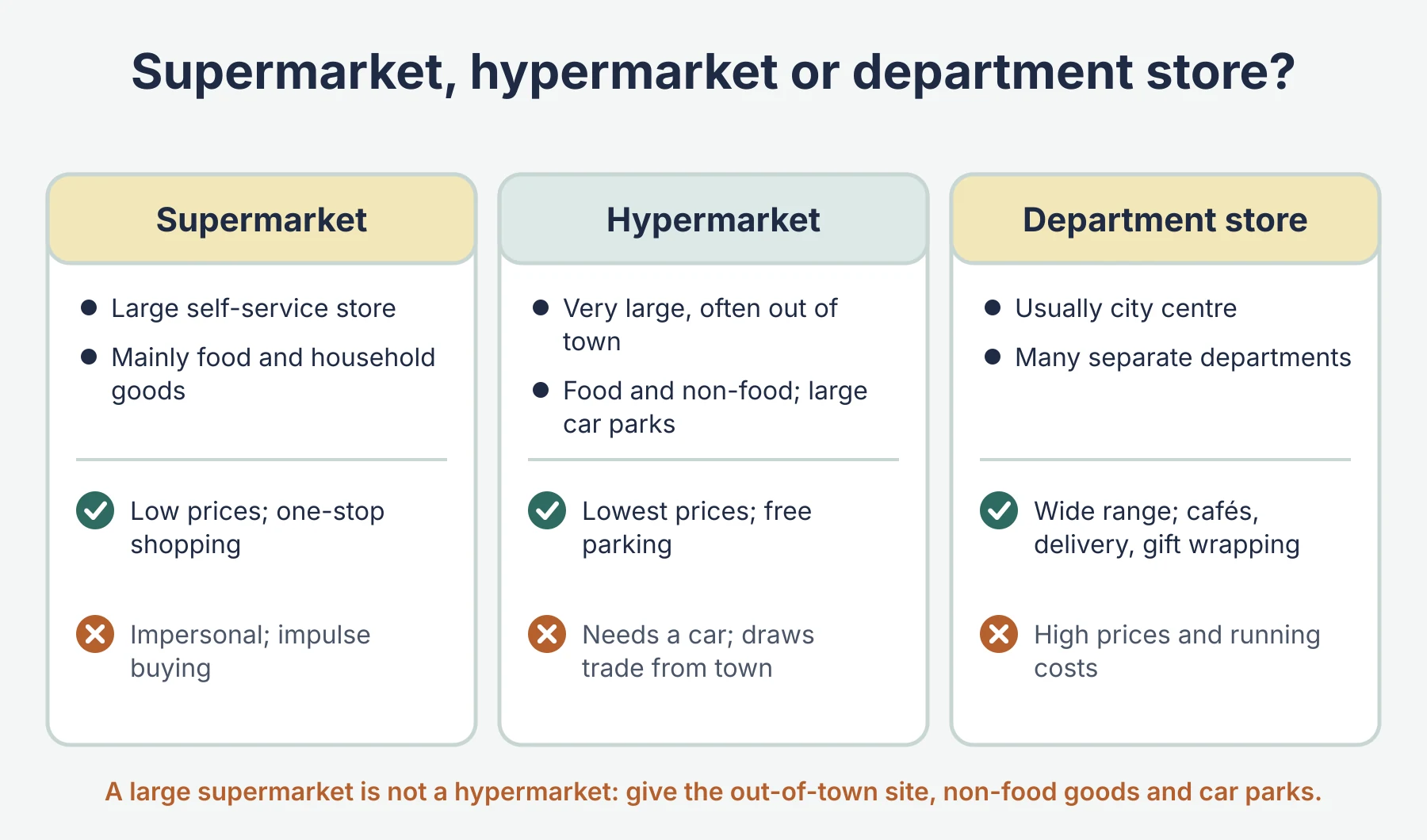
| Supermarket | Large self-service store, mainly food and household goods | Low prices; wide range; one-stop shopping | Impersonal; encourages impulse buying; competes away small shops |
| Hypermarket | Very large self-service store, often out of town, with food and non-food goods and large car parks | Lowest prices from huge volumes; free parking; everything under one roof | Needs a car or transport; draws trade away from town centres |
| Department store | Large store, usually in a city centre, with many separate departments under one roof | Wide range; comfortable surroundings; services such as cafés, delivery and gift wrapping | High prices; high running costs; can feel expensive to customers |
Why the small-scale retailer often survives
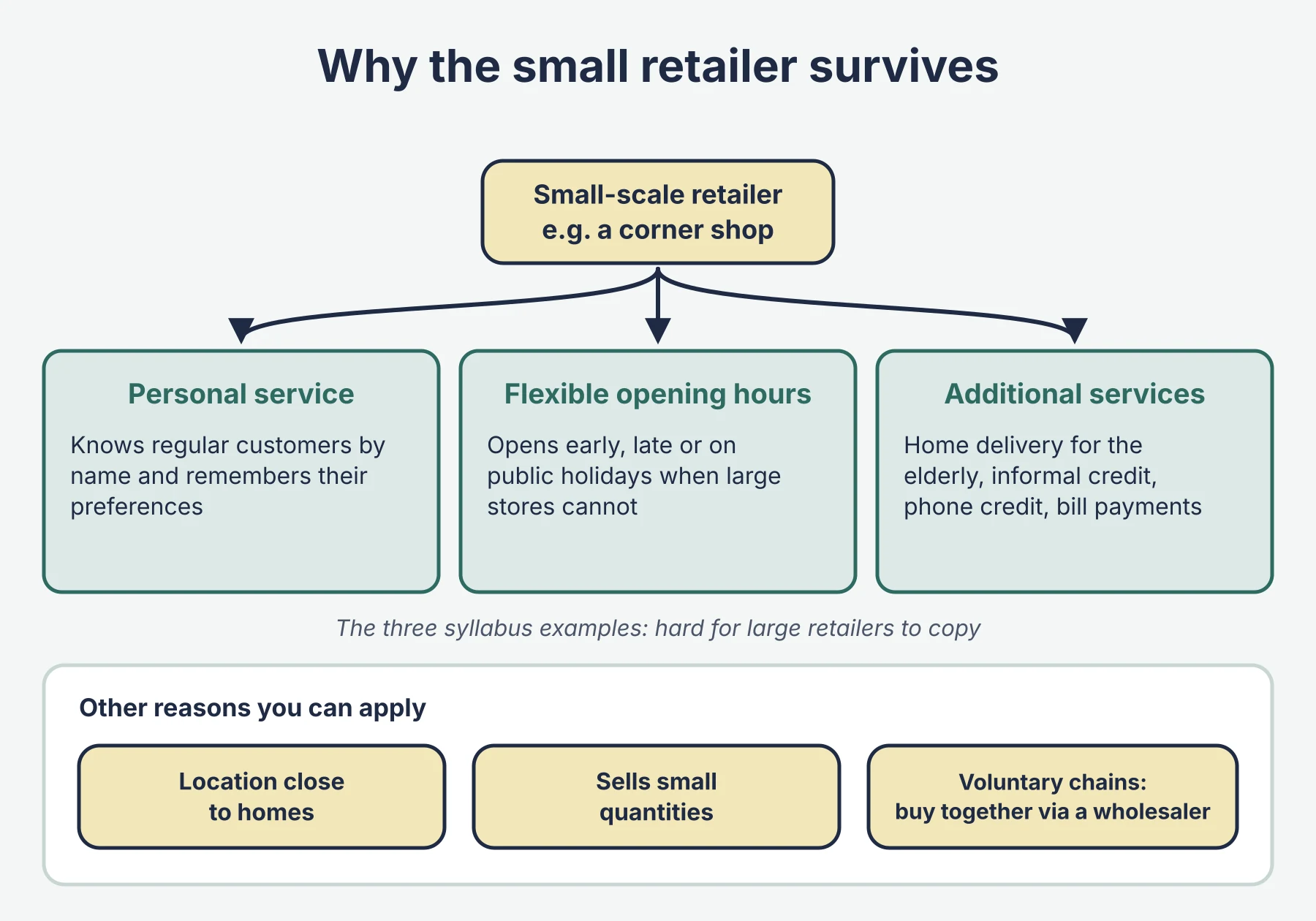
The syllabus gives three examples, and they work because large retailers find them hard to copy:
- Personal service: the owner knows regular customers by name and remembers their preferences.
- Flexible opening hours: a corner shop can open early, late or on public holidays when a large store’s staffing rules prevent it.
- Additional services: home delivery for elderly customers, informal credit, or selling mobile phone credit and taking bill payments.
Other reasons you can apply include convenient location close to homes, and selling small quantities for people who want to buy only what they need today. Voluntary chains, in which independent shops buy together through one wholesaler, also help them; this is covered in the wholesaling study guide.
Retail selling techniques
| Technique | What it is | How it raises sales |
|---|---|---|
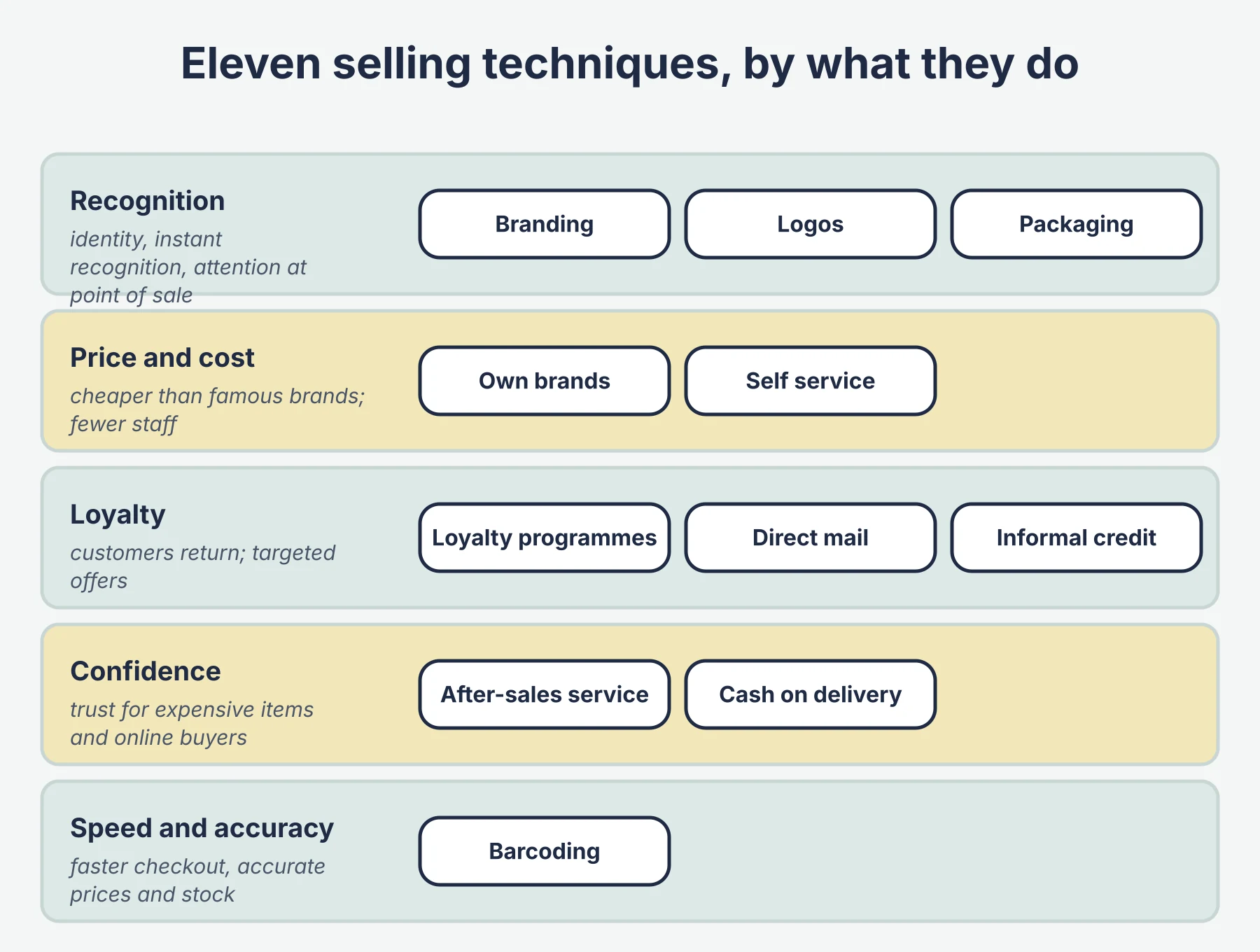
| Branding | Giving a product a name and identity that distinguishes it | Builds recognition and loyalty; customers may pay more |
| Own brands | Products sold under the retailer’s own name, made for it by a manufacturer | Cheaper than famous brands; higher margin for the retailer |
| Logos | A symbol or design that represents the brand | Instantly recognised on shelves and adverts |
| Packaging | The container and its design | Protects goods and attracts attention at the point of sale |
| Self service | Customers choose goods from shelves themselves | Fewer staff needed; encourages impulse buying |
| After-sales service | Help after purchase: delivery, installation, repairs, warranties | Gives confidence to buy expensive items |
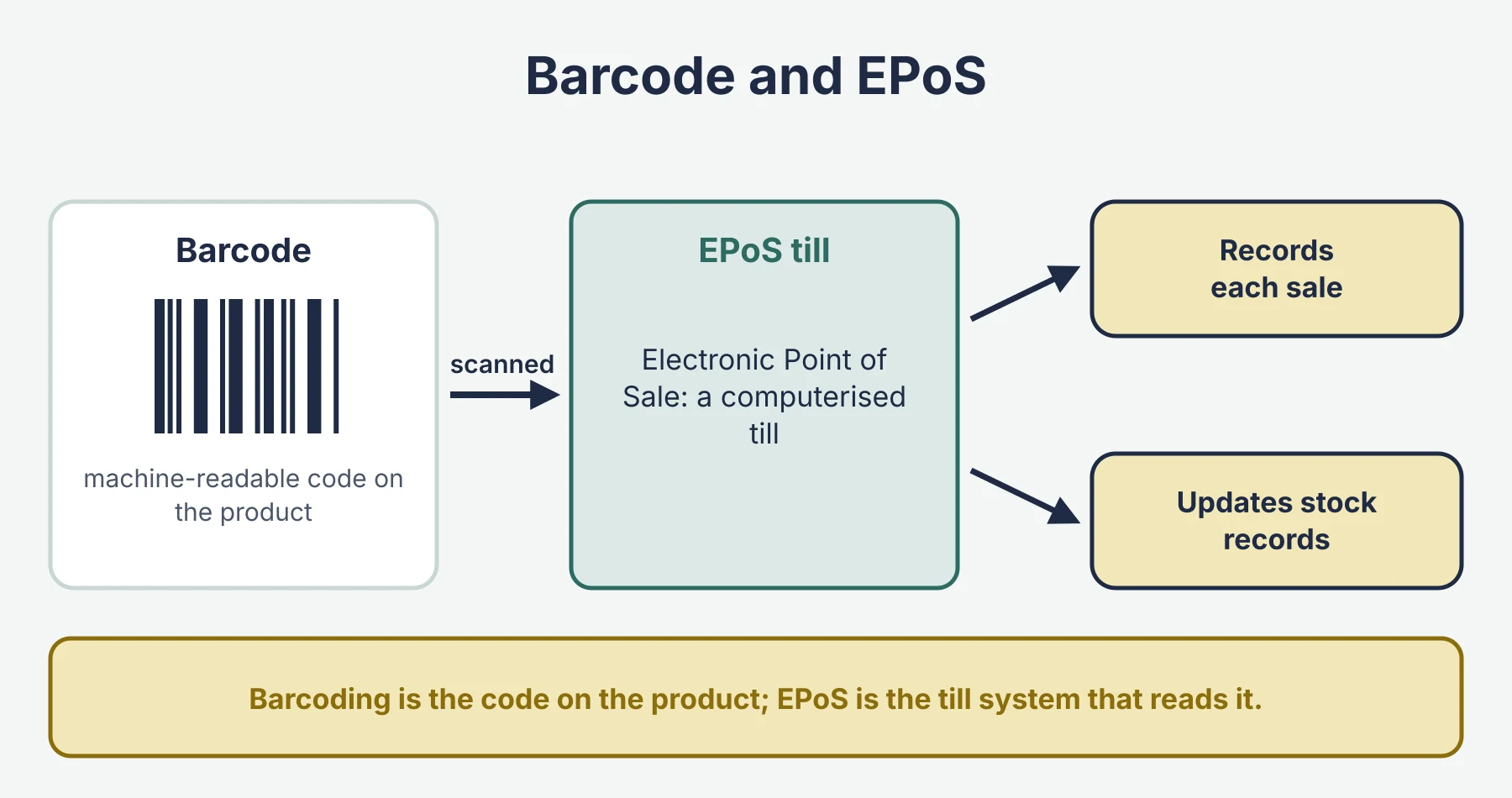
| Barcoding | A machine-readable code on each product | Faster checkout, accurate prices and stock records |
| Direct mail | Promotional material sent to named customers by post or email | Reaches chosen customers with targeted offers |
| Loyalty programmes | Points or rewards for repeat shopping | Encourages customers to return; gives purchase data |
| Informal credit | Letting trusted customers pay later without a formal agreement | Keeps customers loyal, especially to small shops |
| Cash on delivery | Customer pays when the goods arrive | Builds trust for online buyers who fear fraud |
Digital retail trends
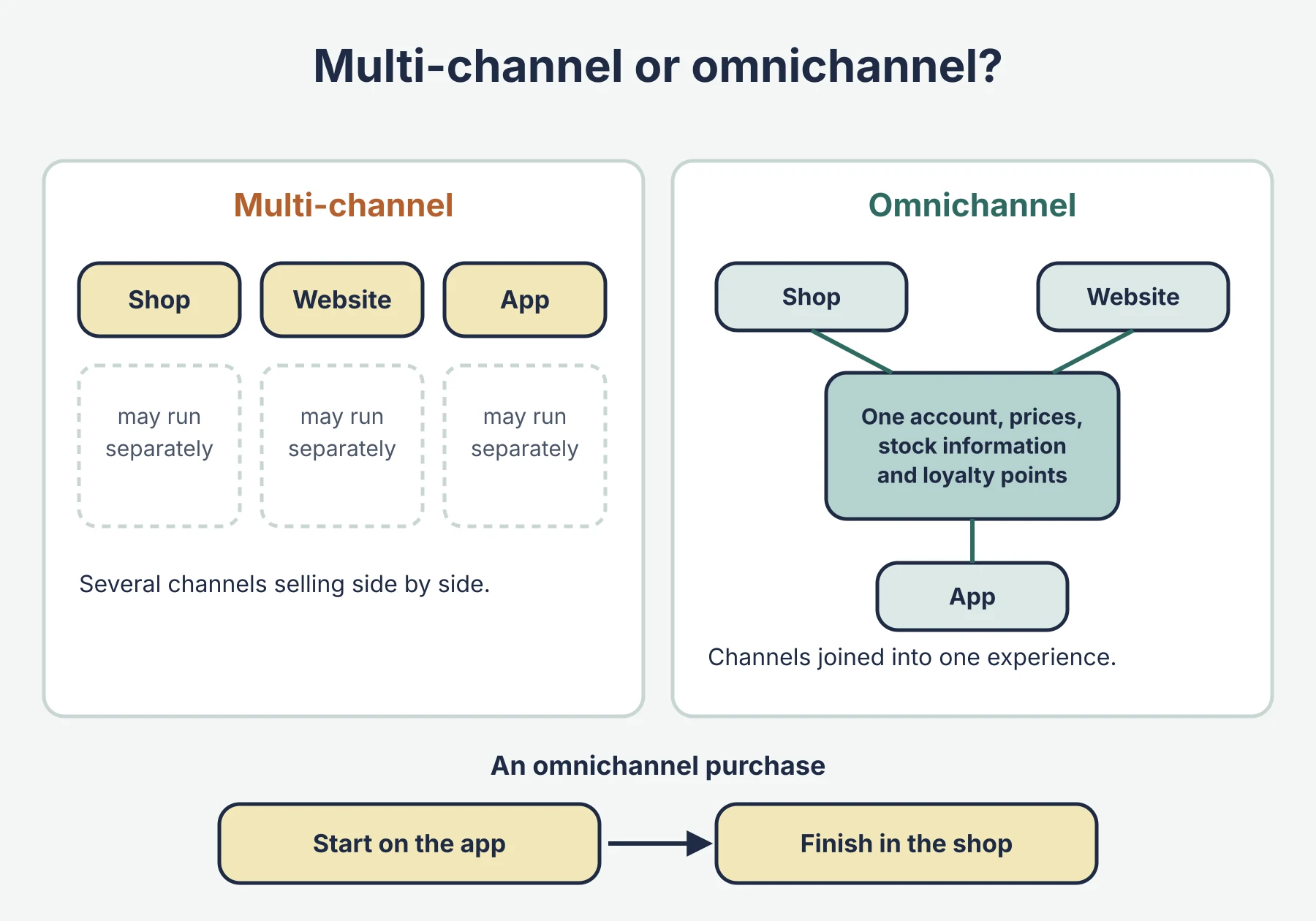
Two of the eleven trends are often confused. Multi-channel retailing means selling through several channels, such as a shop, a website and an app, which may run separately. Omnichannel retailing joins those channels into one experience: the same account, prices, stock information and loyalty points whether the customer is online or in store, so a customer can start a purchase on the app and finish it in the shop.
| Trend | Meaning |
|---|---|
| Cashless stores | Accept only card, mobile or other electronic payments |
| EPoS | Electronic Point of Sale: computerised tills that scan barcodes, record each sale and update stock records |
| Click and collect | Order online and collect from a store or locker |
| Self-service checkouts | Customers scan and pay for their own goods |
| Subscription commerce | Customers pay a regular fee for repeat deliveries, such as monthly coffee or pet food |
| QR codes | Square codes scanned with a phone to open product information, offers or payment pages |
| VR showrooms | Virtual reality lets customers view products, such as furniture in a room, before buying |
| Dropshipping | The retailer sells goods it does not stock; the supplier sends them straight to the customer |
| Smartphone apps | A retailer’s own app for browsing, ordering, payment and offers |
Effects of ecommerce on traditional commerce
| Positive impacts (syllabus examples) | Negative impacts (syllabus examples) |
|---|---|
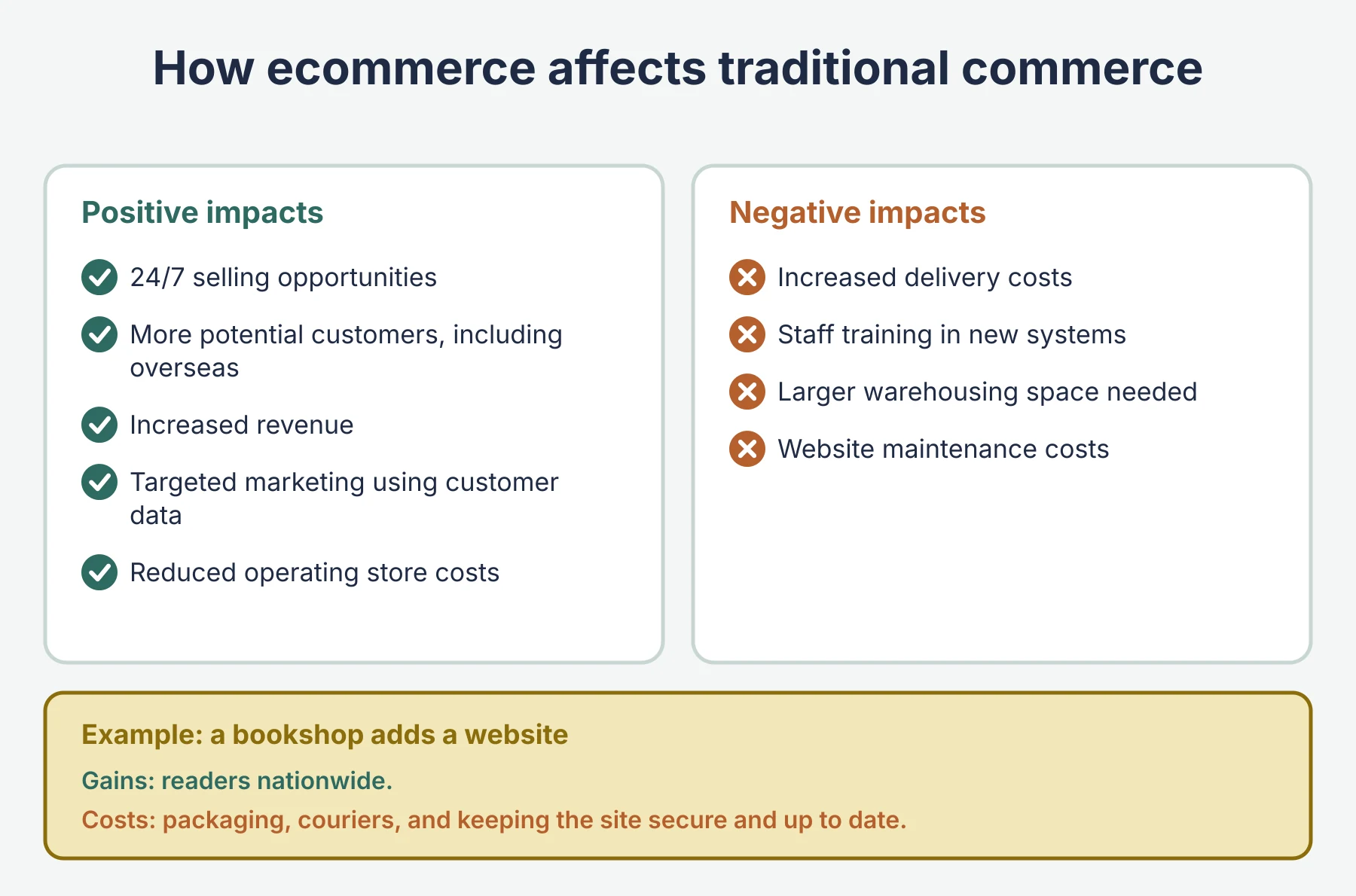
| 24/7 selling opportunities | Increased delivery costs |
| More potential customers, including overseas | Staff training in new systems |
| Increased revenue | Larger warehousing space needed |
| Targeted marketing using customer data | Website maintenance costs |
| Reduced operating store costs |
For a shop owner the overall effect depends on the product and the customers: a bookshop adding a website can reach readers nationwide, but must pay for packaging, couriers and keeping the site secure and up to date.
Annotated model answer
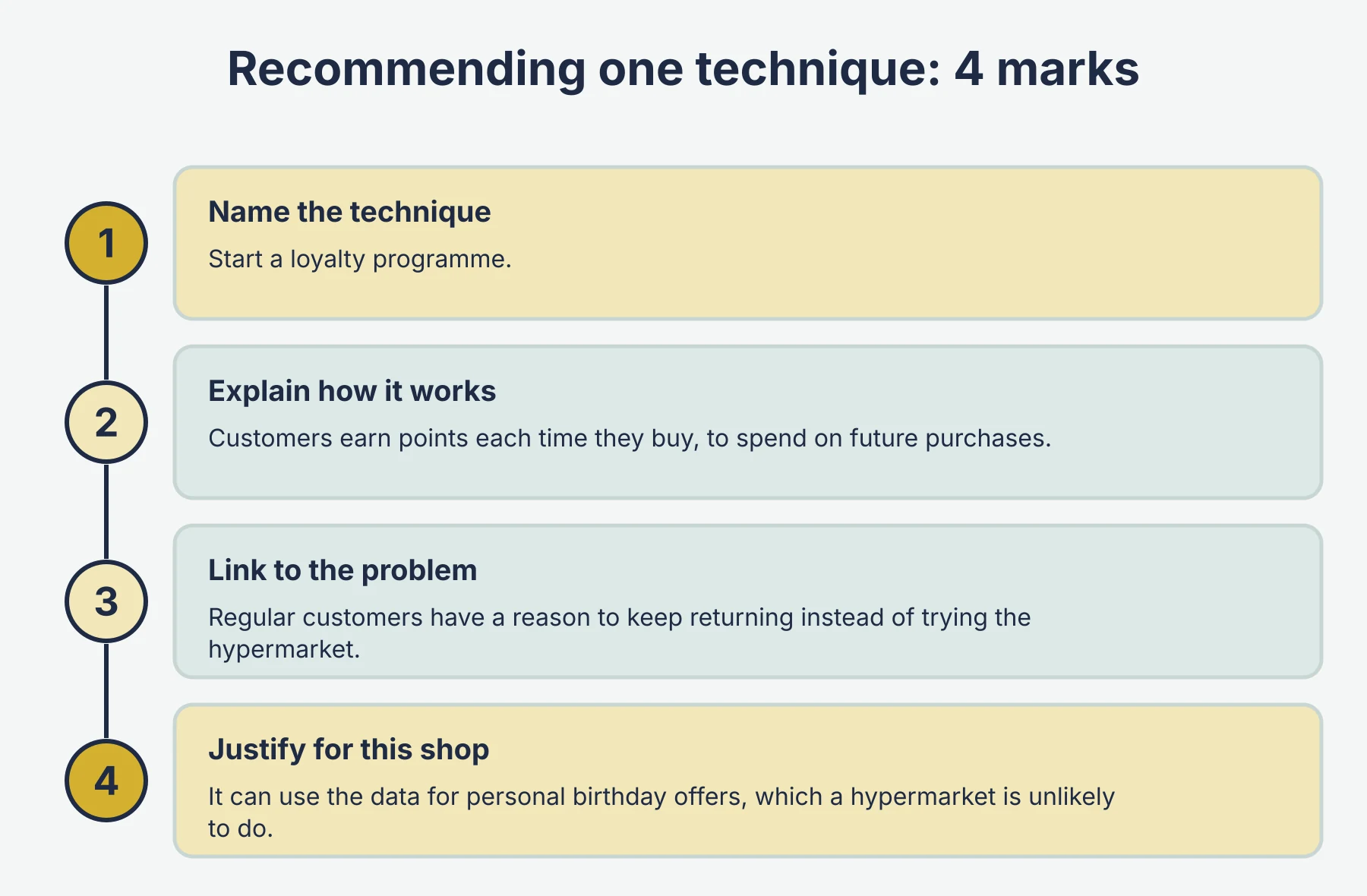
Original question: “A family clothing shop is losing customers to a hypermarket. Recommend one retail selling technique it should use.” (4 marks)
The shop should start a loyalty programme (technique). Customers would earn points each time they buy, which they can spend on future purchases (explains how it works). This gives regular customers a reason to keep returning instead of trying the hypermarket (links to the problem). Because the shop is small, it can also use the data to send personal offers on customers’ birthdays, which a hypermarket is unlikely to do (justifies the choice for this shop).
Common mistakes
- Calling a supermarket a hypermarket because it is large; hypermarkets are very large, usually out of town, and sell many non-food goods.
- Treating own brands and branding as the same technique.
- Confusing EPoS (the till system) with barcoding (the code on the product).
- Writing “omnichannel” when the evidence shows separate channels.
- Describing dropshipping as a delivery service: it is a way of selling without holding stock.
- Giving only positive effects of ecommerce when a balanced answer is needed.
Exam technique
- Identify a type of retailer from clues: no premises means itinerant; many departments means department store.
- Explain a technique by saying how it increases sales or loyalty for the shop described.
- Discuss the effects of ecommerce with at least two positives and two negatives, then a judgement.
Practise this sub-topic
Use the retailing revision notes for fast recall, then the retailing practice questions.
Official syllabus
Cambridge O Level Commerce (7100) syllabus for 2026, 2027 and 2028, sub-topic 2.3 Retailing: official syllabus PDF.
Related resources
-
Revision notes
Cambridge O Level Commerce: Commercial Operations — Revision Notes (7100)
Recall notes for Cambridge O Level Commerce 7100 Topic 2: enterprise types, multinationals, franchises, outsourcing, retail, wholesale and communication.
Commerce · Cambridge · O Level
Revise topic -
Practice questions
Cambridge O Level Commerce (7100): Retailing – Practice Questions
Thirteen original questions with full answers on Cambridge O Level Commerce 7100 sub-topic 2.3: retailer types, selling techniques, digital trends, ecommerce.
Commerce · Cambridge · O Level
Try questions -
Revision notes
Cambridge O Level Commerce (7100): Retailing – Revision Notes
Recall notes for Cambridge O Level Commerce 7100 sub-topic 2.3: retailer types, small shop survival, selling techniques, digital trends and ecommerce effects.
Commerce · Cambridge · O Level
Revise topic
Get free revision emails (optional)
Occasional emails with practice questions, worked explanations and links to free resources for the qualification and subjects you choose. No spam, and you can unsubscribe from any email. The free tools on this site never need an email.