
Study Guides
Cambridge O Level First Language Urdu (3247): Paper 2 Unseen Passage
How to read and write about the unseen Urdu prose or poetry extract in 3247 Paper 2 Part 1: using the prompts, analysing effects and reaching the top levels.
- Subject
- Urdu Language
- Level
- O LEVELS
- Topic
- Paper 2 – Texts
- Author
- Marlbridge Academic Team
- Updated
- Reviewed by
- Farheen Zehra (what this means)
Aligned to Cambridge O Level Urdu Language (3247), 2027. Official specification .
Syllabus page (what it covers and how it is assessed): Cambridge O Level Urdu Language.
Found an error? Report a correction.
Need help with this topic? Request a free trial class for O Level Urdu Language (3247 / 3248).
This guide covers Part 1 Unseen Passage of Cambridge O Level First Language Urdu 3247 Paper 2 Texts. The syllabus describes it as “one passage-based question”: candidates “read an extract (from poetry or prose) which they have not seen before and then answer a question which tests critical understanding of the text and response to the ways in which the writer achieves effects”, and “the question will include prompts which will suggest aspects that candidates may consider”. For the whole paper and the set texts, start with the Paper 2 Texts study guide. This page is about method: how to read an extract you have never seen and turn your reading into a 20-mark answer.
What the question tests
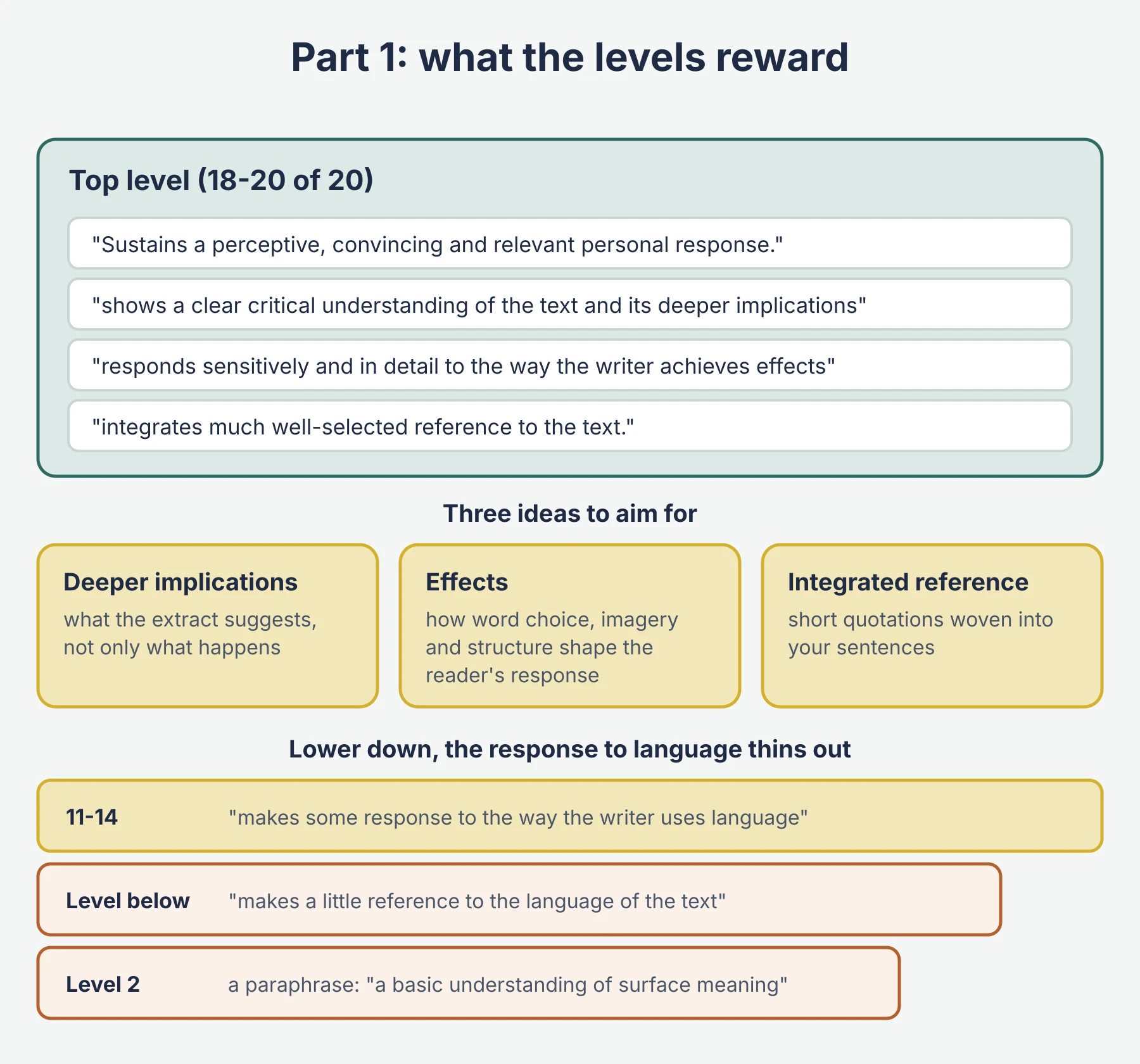
Part 1 is worth 20 marks of Paper 2’s 50, and there are no set texts for it. The single question is marked on a six-level scheme. Reading its top level (18–20 marks) tells you exactly what to aim for:
- “Sustains a perceptive, convincing and relevant personal response.”
- “shows a clear critical understanding of the text and its deeper implications”
- “responds sensitively and in detail to the way the writer achieves effects”
- “integrates much well-selected reference to the text.”
Three ideas run through this: deeper implications (what the extract suggests, not only what happens), effects (how word choice, imagery and structure shape the reader’s response), and integrated reference (short quotations woven into your sentences, not long copied blocks). The middle level (11–14) “makes some response to the way the writer uses language”; the level below it “makes a little reference to the language of the text”. The gap between a mid-level and a top-level answer is therefore almost entirely about how much you say about how the writing works.
Using the prompts
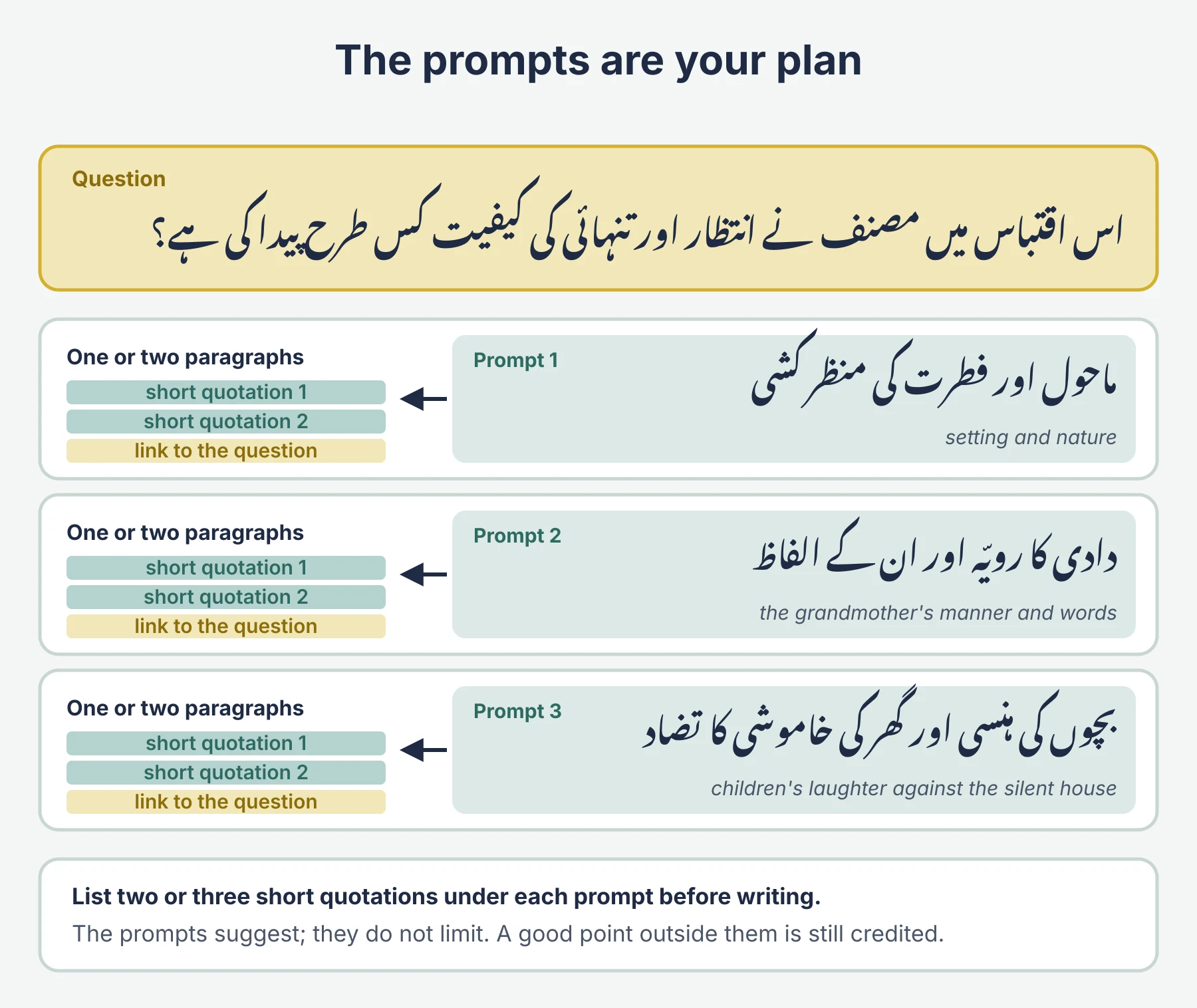
The question includes prompts suggesting aspects to consider. Treat them as a ready-made plan:
- Turn each prompt into one or two paragraphs.
- Under each prompt, list two or three short quotations from the extract before you write.
- Keep the main question in view. If it asks how the writer creates a sense of loneliness, each paragraph must end by showing how its evidence adds to that loneliness.
The prompts suggest; they do not limit. A good observation outside them is still credited if it answers the question.
Reading an unseen extract in three passes
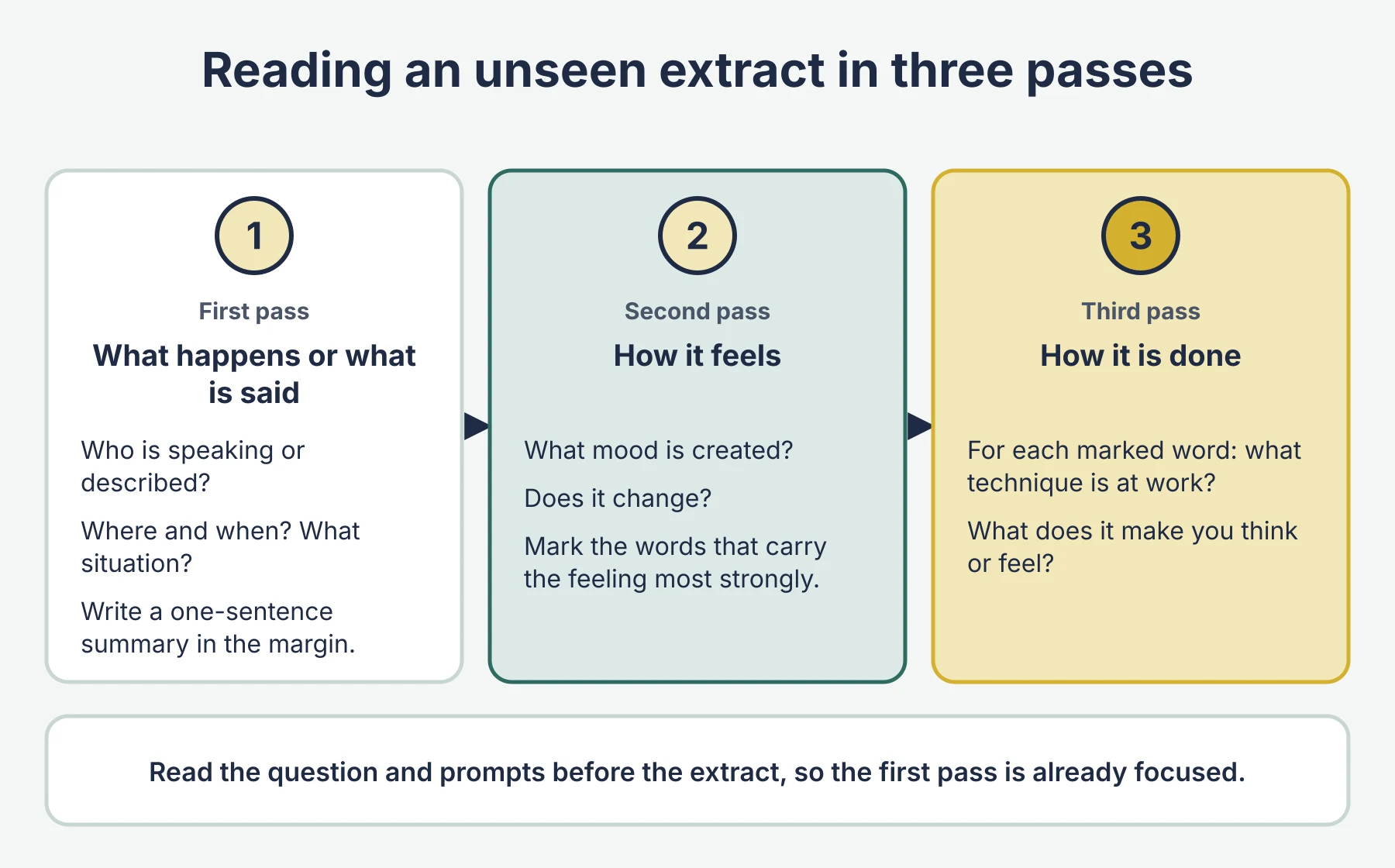
First pass: what happens or what is said. Who is speaking or being described? Where and when? What is the situation? Write one sentence of summary in the margin.
Second pass: how it feels. What mood does the extract create, and does it change? Mark the words that carry the feeling most strongly.
Third pass: how it is done. For each marked word or phrase, ask what technique is at work and what it makes you think or feel.
The toolkit: terms and what they do
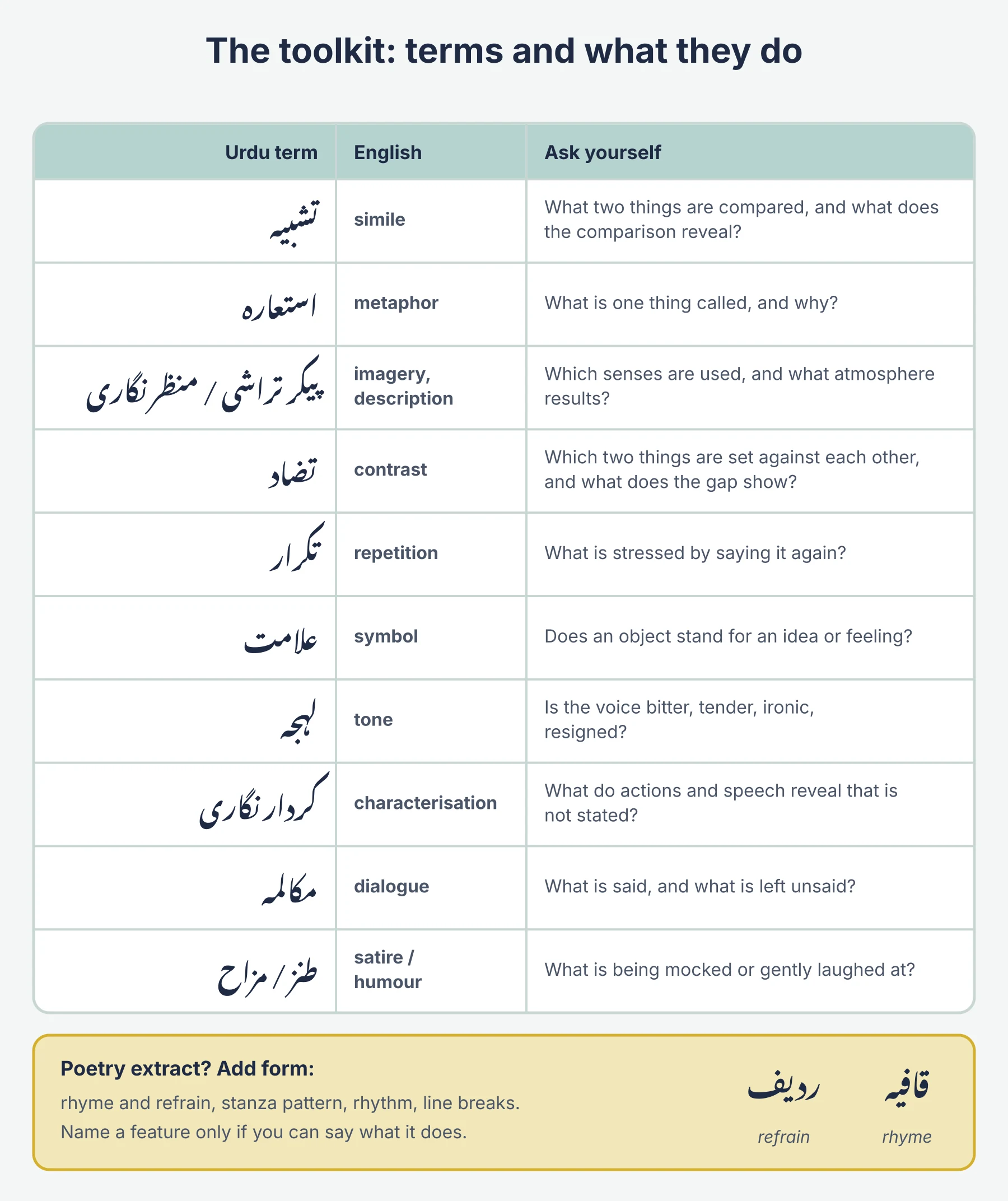
| Urdu term | English | Ask yourself |
|---|---|---|
| تشبیہ | simile | What two things are compared, and what does the comparison reveal? |
| استعارہ | metaphor | What is one thing called, and why? |
| پیکر تراشی / منظر نگاری | imagery, description | Which senses are used, and what atmosphere results? |
| تضاد | contrast | Which two things are set against each other, and what does the gap show? |
| تکرار | repetition | What is stressed by saying it again? |
| علامت | symbol | Does an object stand for an idea or feeling? |
| لہجہ | tone | Is the voice bitter, tender, ironic, resigned? |
| کردار نگاری | characterisation | What do actions and speech reveal that is not stated? |
| مکالمہ | dialogue | What is said, and what is left unsaid? |
| طنز / مزاح | satire / humour | What is being mocked or gently laughed at? |
If the extract is poetry, add the features of form: the rhyme (قافیہ) and refrain (ردیف) of a ghazal, the stanza pattern of a nazm, rhythm, and the way a line break can hold back a word for effect. Name a feature only when you can say what it does.
Worked example
The extract below is original, written for this guide.
بارش رُکی تو گلی میں ایک عجیب سی خاموشی پھیل گئی۔ نالیوں میں پانی ابھی تک بڑبڑا رہا تھا، جیسے کوئی بوڑھا اپنی بات ادھوری چھوڑ کر جا رہا ہو۔ دادی کھڑکی کے پاس بیٹھی تھیں، ان کی انگلیاں تسبیح کے دانوں پر رُکی ہوئی تھیں۔ “اس سال بھی وہ نہیں آیا،” انھوں نے کسی سے نہیں، شاید دیوار سے کہا۔ صحن میں نیم کا درخت جھکا ہوا تھا، اس کی ہر شاخ سے بوندیں یوں ٹپک رہی تھیں جیسے وہ بھی کسی کا انتظار کرتے کرتے تھک گیا ہو۔ میں نے چائے کی پیالی ان کے سامنے رکھی، مگر انھوں نے نظر اٹھا کر بھی نہ دیکھا۔ باہر بچے کاغذ کی کشتیاں بہا رہے تھے، اور ان کی ہنسی اس گھر کی چپ میں کسی پتھر کی طرح آ کر گرتی تھی۔
Question (original): اس اقتباس میں مصنف نے انتظار اور تنہائی کی کیفیت کس طرح پیدا کی ہے؟ ان باتوں پر غور کیجیے: ماحول اور فطرت کی منظر کشی؛ دادی کا رویّہ اور ان کے الفاظ؛ بچوں کی ہنسی اور گھر کی خاموشی کا تضاد۔
Model paragraph on the first prompt:
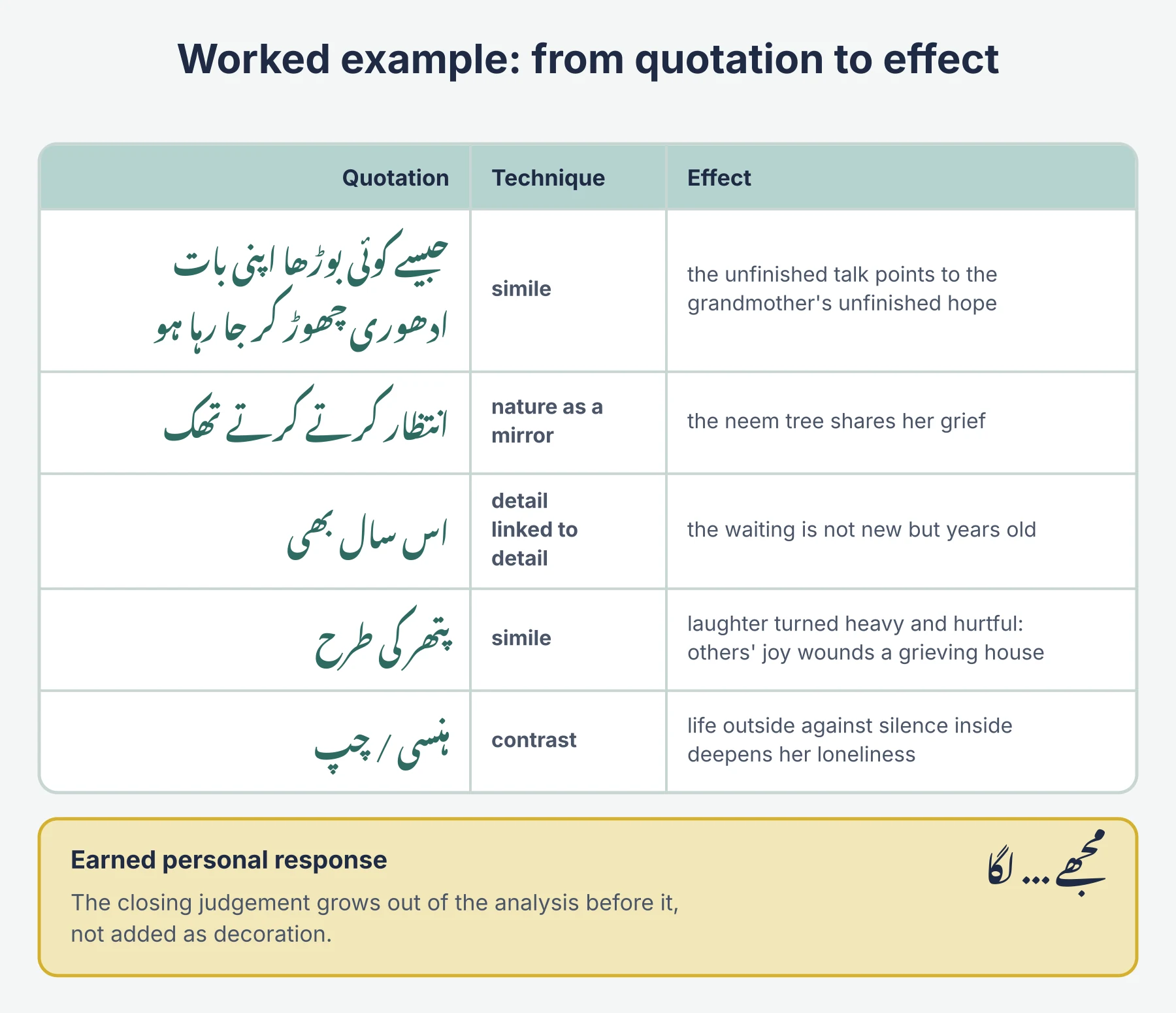
مصنف نے فطرت کو انسانی احساسات کا آئینہ بنا دیا ہے۔ نالیوں کے پانی کو “بڑبڑاتا” ہوا کہا گیا ہے، “جیسے کوئی بوڑھا اپنی بات ادھوری چھوڑ کر جا رہا ہو”۔ یہ تشبیہ معنی خیز ہے، کیونکہ ادھوری بات خود دادی کی ادھوری امید کی طرف اشارہ کرتی ہے۔ اسی طرح نیم کا درخت “انتظار کرتے کرتے تھک” گیا ہے۔ یوں پورا ماحول دادی کے غم میں شریک دکھائی دیتا ہے، اور قاری محسوس کرتا ہے کہ یہ انتظار نیا نہیں بلکہ برسوں پرانا ہے، جس کی تصدیق “اس سال بھی” کے الفاظ کرتے ہیں۔
Commentary: the paragraph names a technique only alongside its effect, uses short quotations inside its own sentences, and reaches a deeper implication (the waiting has lasted years) by connecting two separate details. That is “integrated”, “well-selected” reference with a response to effects.
Model paragraph on the third prompt:
اقتباس کا سب سے مؤثر لمحہ آخری جملہ ہے۔ بچوں کی ہنسی، جو عام طور پر خوشی کی علامت ہوتی ہے، یہاں “پتھر کی طرح” گرتی ہے۔ یہ تشبیہ چونکا دیتی ہے: ہنسی کو بوجھل اور چوٹ پہنچانے والی چیز بنا کر مصنف دکھاتا ہے کہ غم زدہ گھر میں دوسروں کی خوشی بھی تکلیف دیتی ہے۔ باہر کی زندگی اور اندر کی “چپ” کا یہ تضاد دادی کی تنہائی کو اور گہرا کر دیتا ہے۔ مجھے یہ انجام خاص طور پر دردناک لگا، کیونکہ کشتیاں بہاتے بچے بے خبر ہیں کہ ان کی آواز کسی کے زخم کو چھو رہی ہے۔
Commentary: the last sentence is a personal response (“مجھے … لگا”), but it is earned by the analysis before it rather than added as decoration.
Common mistakes
- Retelling the extract. A paraphrase shows “a basic understanding of surface meaning”, which is Level 2 territory.
- Spotting devices without effects. “There is a simile in line 2” earns little until you say what it makes the reader see or feel.
- Long quotations. Copying three lines wastes time; a few precise words show selection.
- Ignoring one prompt entirely, which leaves the response less complete and less detailed.
- A personal response with no evidence, such as “I liked this passage”, which does not show critical understanding.
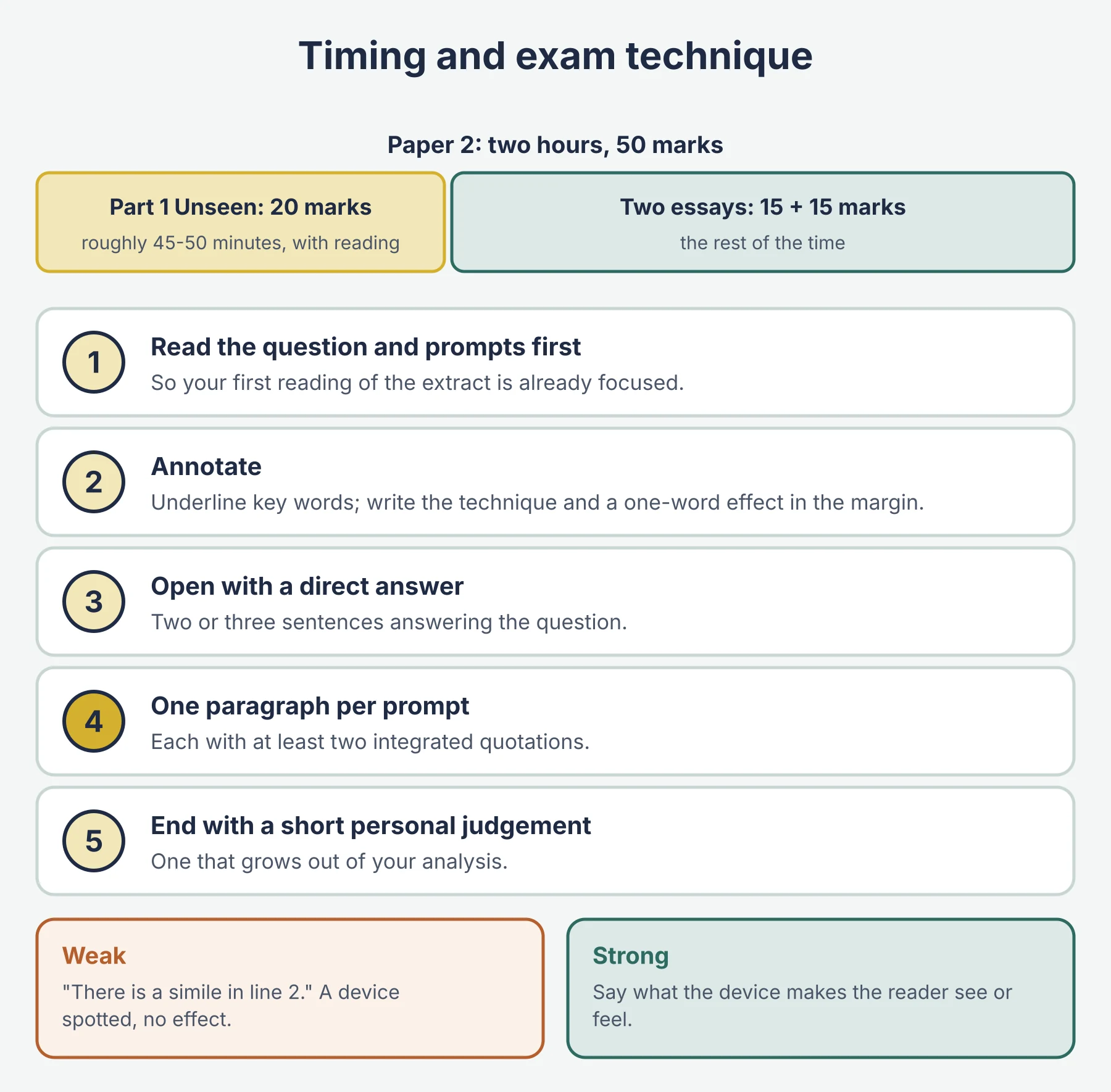
- Spending too long here. Part 1 is 20 of 50 marks in a two-hour paper, so roughly 45 to 50 minutes including reading leaves fair time for the two 15-mark essays.
Exam technique
- Read the question and prompts before the extract, so your first reading is already focused.
- Annotate: underline key words, write the technique and a one-word effect in the margin.
- Open with a direct answer to the question in two or three sentences.
- Write a paragraph per prompt, each with at least two integrated quotations.
- End with a short personal judgement that grows out of your analysis.
More resources on this topic
Related resources
-
Practice questions
Cambridge O Level First Language Urdu (3247): Paper 2 Unseen Passage – Practice Questions
Original unseen Urdu prose extracts with technique questions and a full 20-mark prompted question in the 3247 Paper 2 style, with model answers.
Urdu Language · Cambridge · O Level
Try questions -
Revision notes
Cambridge O Level First Language Urdu (3247): Paper 2 Unseen Passage – Revision Notes
Condensed notes on the 3247 Paper 2 Unseen Passage: the six levels, a reading method, Urdu literary terms and effects, traps and a self-test.
Urdu Language · Cambridge · O Level
Revise topic -
Study guides
Cambridge O-Level First Language Urdu: Paper 2 Texts (3247)
Unseen Passage, Poetry and Prose – the full structure of Paper 2 Texts for Cambridge O Level First Language Urdu 3247, 2027 series (Version 1), with its prescribed ghazal, nazm and prose set texts.
Urdu Language · Cambridge · O Level
Read guide
Get free revision emails (optional)
Occasional emails with practice questions, worked explanations and links to free resources for the qualification and subjects you choose. No spam, and you can unsubscribe from any email. The free tools on this site never need an email.