
Revision Notes
Cambridge O Level Second Language Urdu (3248): Exercise 2 Multiple-choice Cloze Passage – Revision Notes
Condensed grammar for the 3248 Paper 2 cloze: tense clues, agreement and ne, noun forms, comparison, postpositions, ek/koi/kuch, traps and a self-test.
- Subject
- Urdu Language
- Level
- O LEVELS
- Topic
- Paper 2 – Grammar, Writing and Translation
- Author
- Marlbridge Academic Team
- Updated
- Reviewed by
- Farheen Zehra (what this means)
Aligned to Cambridge O Level Urdu Language (3248), 2027-2029. Official specification .
Syllabus page (what it covers and how it is assessed): Cambridge O Level Urdu Language.
Found an error? Report a correction.
Need help with this topic? Request a free trial class for O Level Urdu Language (3247 / 3248).
These notes cover Exercise 2, the Multiple-choice cloze passage, of 3248 Paper 2: a short text “with gaps to be filled from multiple-choice options”, testing “grammatical usage in context”. The paper overview is in the Paper 2 Grammar, Writing and Translation study guide; full explanations and a worked passage are in the Exercise 2 cloze study guide.
Task facts
- 10 marks; objectives R2, W3, W4, W5; all in Urdu; no dictionaries.
- The syllabus list: conjugation of verbs, subject/verb agreement, comparatives, superlatives, parts of speech, nouns, prepositions, postpositions, articles, vocabulary appropriate to the context.
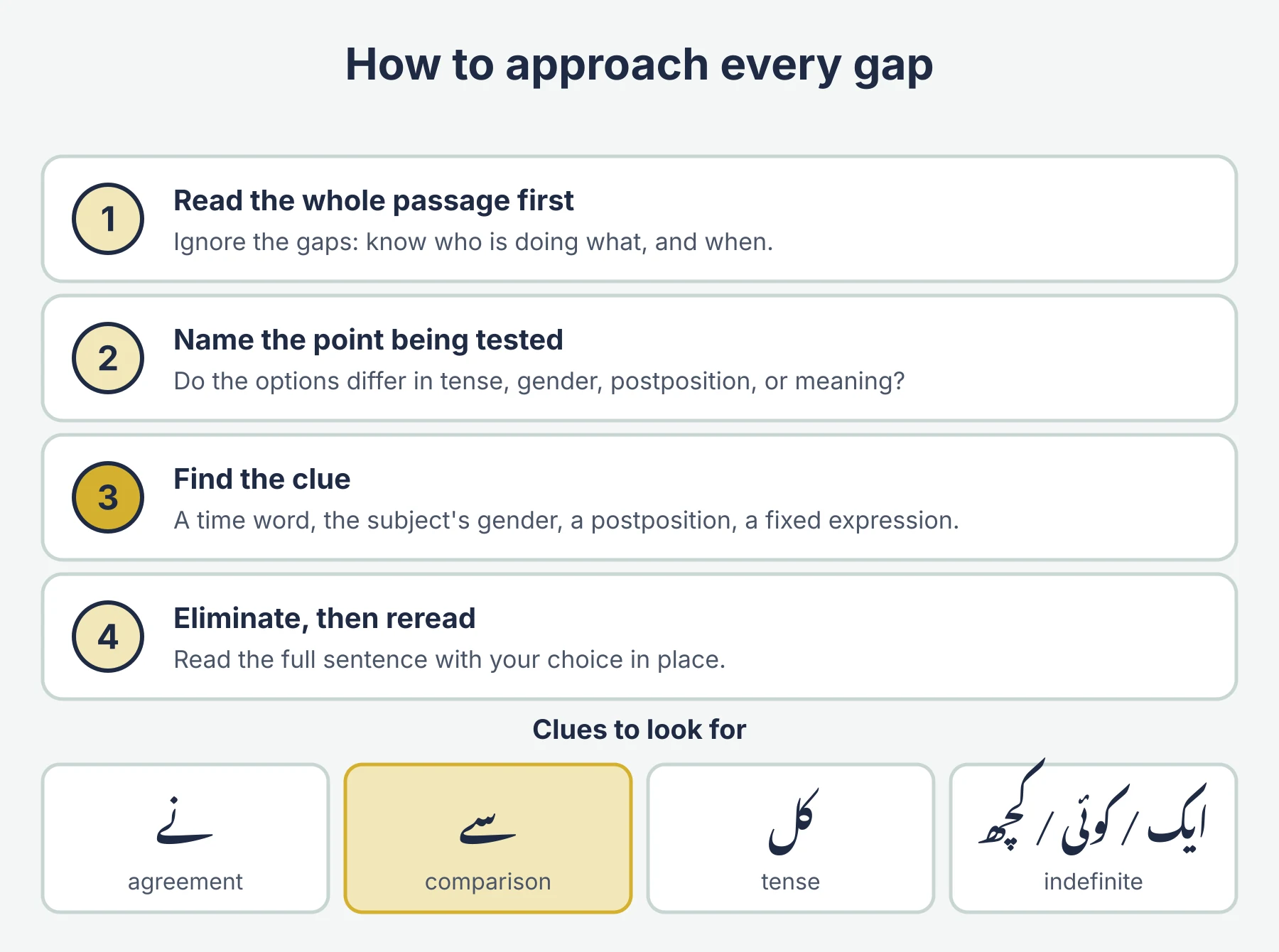
Four-step routine
Read all → name the point → find the clue → eliminate and reread.
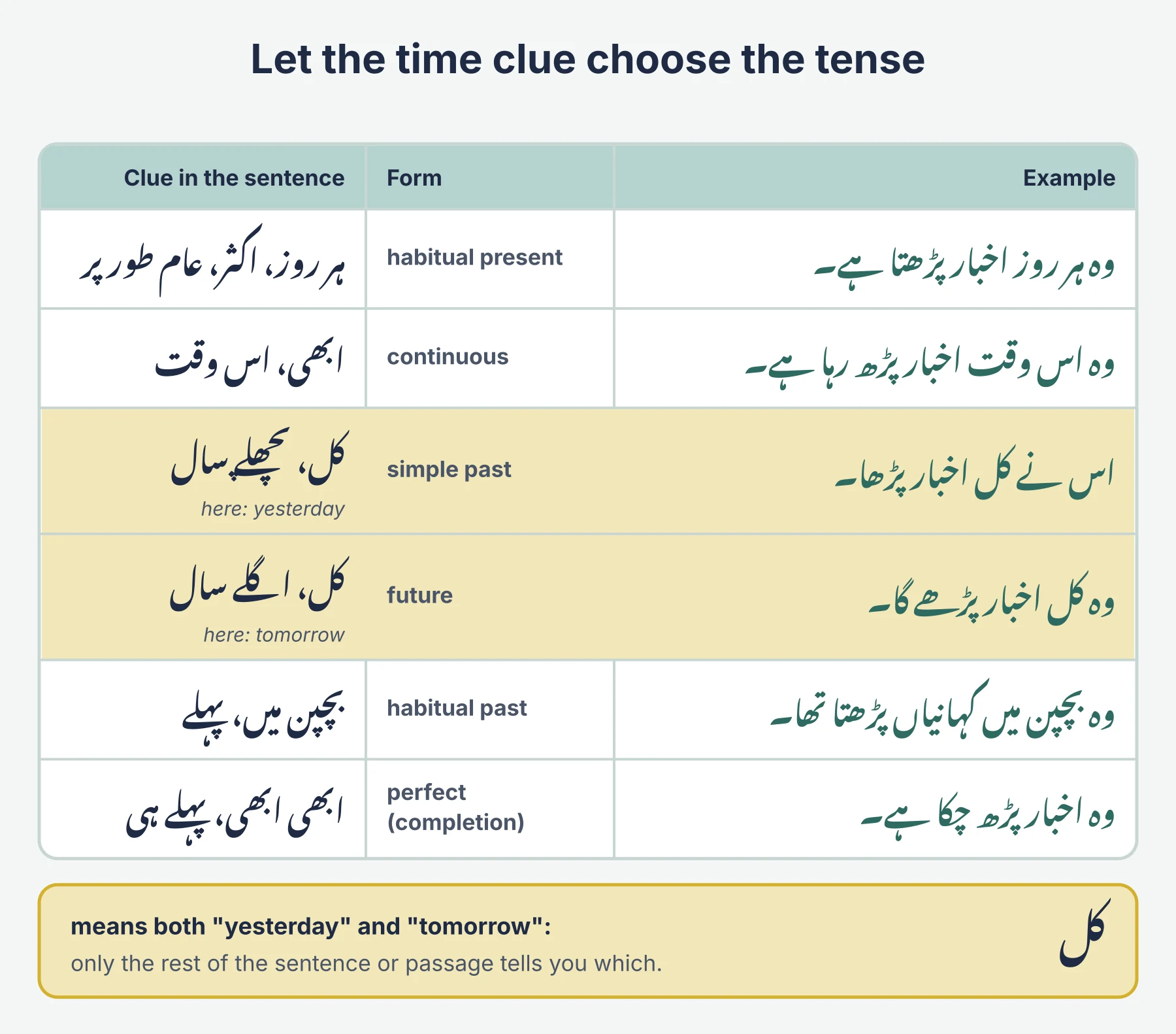
Tense clues
| Clue | Form |
|---|---|
| ہر روز، اکثر | پڑھتا ہے |
| ابھی، اس وقت | پڑھ رہا ہے |
| پچھلے ہفتے، کل (past) | پڑھا |
| اگلے ہفتے، کل (future) | پڑھے گا |
| بچپن میں، پہلے | پڑھتا تھا |
| پہلے ہی، ابھی ابھی | پڑھ چکا ہے |
کل is both yesterday and tomorrow: check the context.
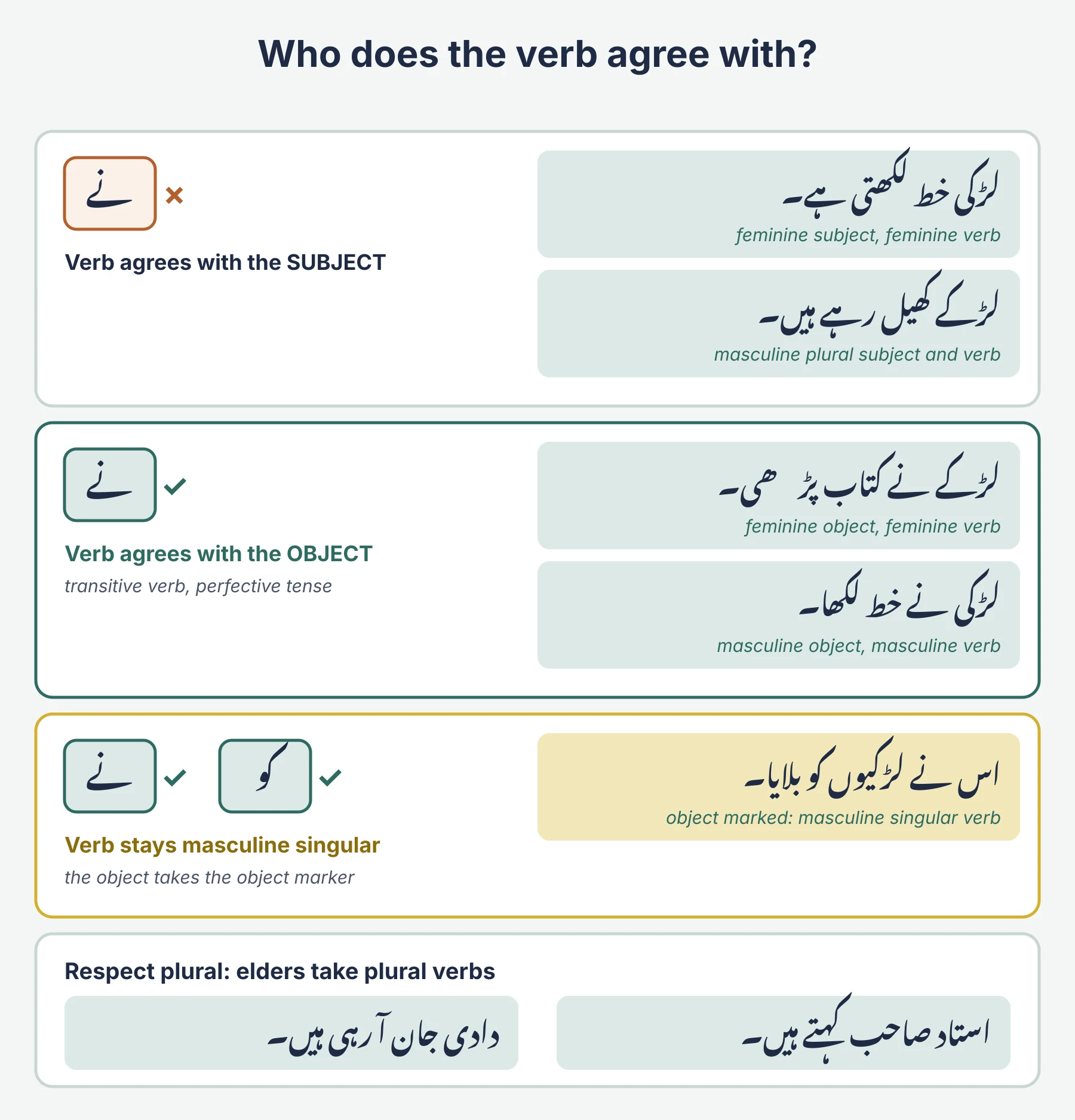
Agreement rules
- No نے: verb agrees with the subject.
- نے + object without کو: verb agrees with the object.
- نے + object with کو: verb is masculine singular.
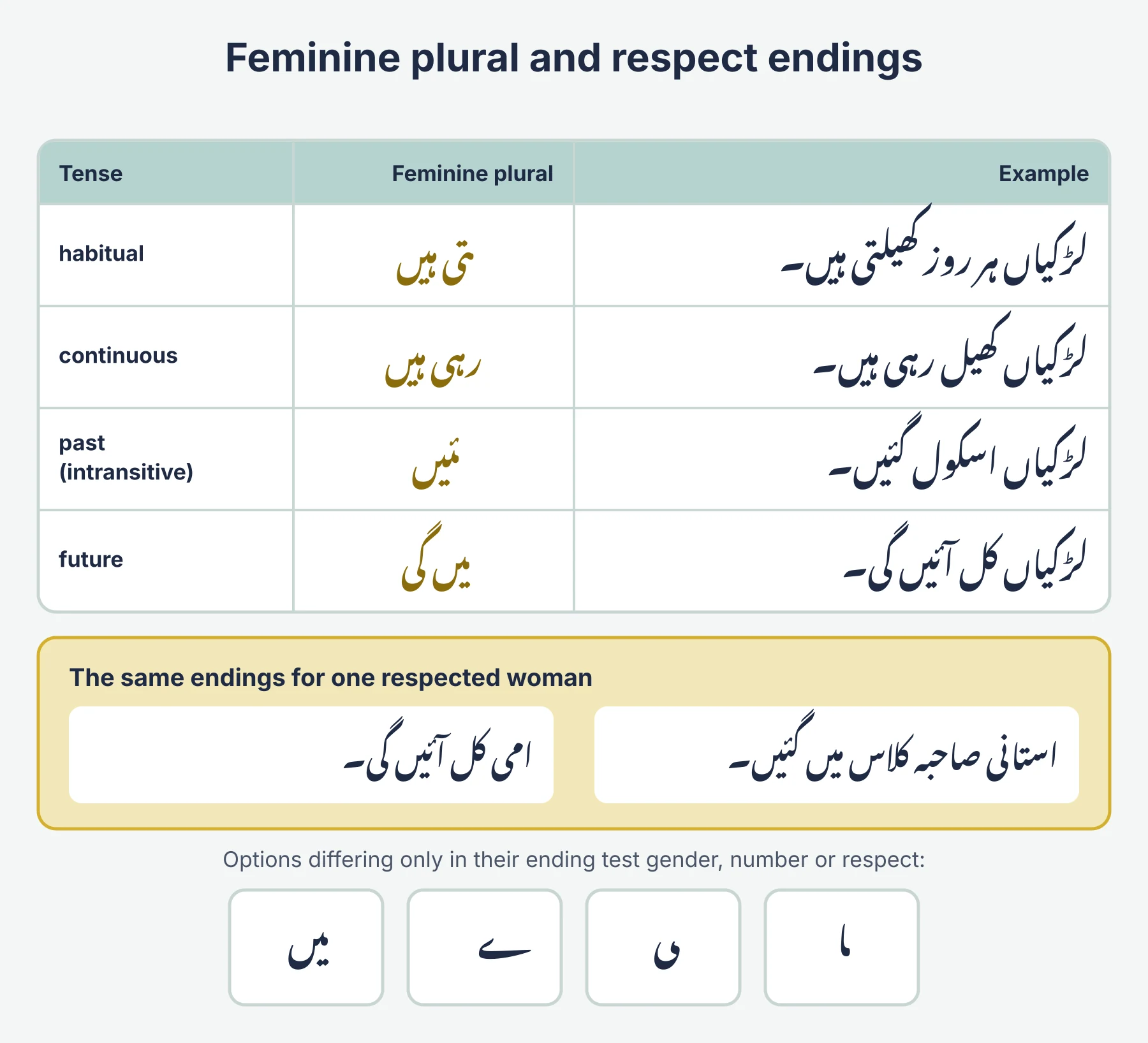
- Respect: elders and teachers take plural verbs (دادی آ رہی ہیں).
| Sentence | Why |
|---|---|
| لڑکی نے خط لکھا۔ | خط masculine |
| لڑکے نے چائے پی۔ | چائے feminine |
| ہم نے پراٹھے کھائے۔ | پراٹھے masculine plural |
| امی نے بچوں کو بلایا۔ | object with کو |
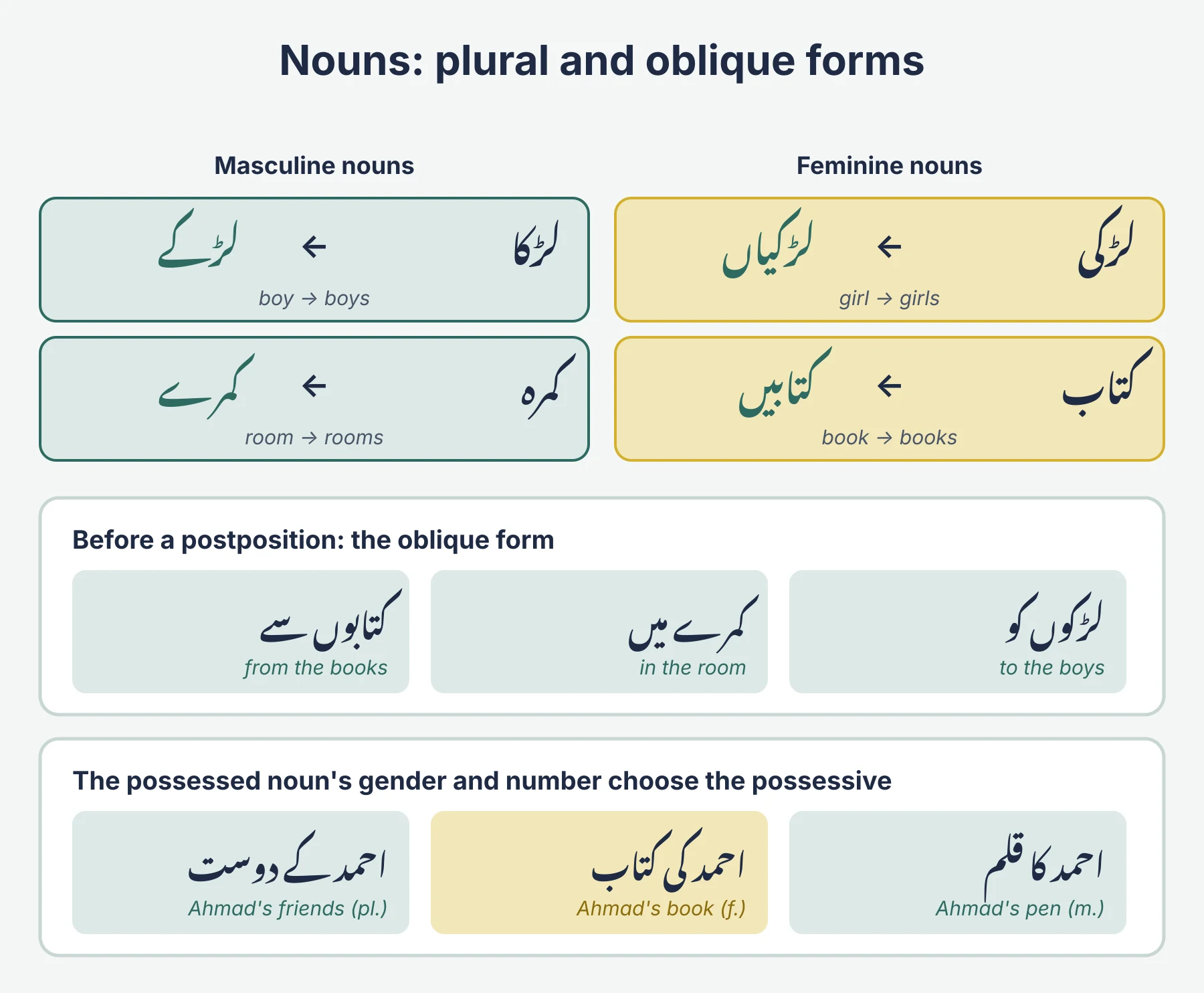
Noun forms
| Singular | Plural | Oblique plural |
|---|---|---|
| لڑکا | لڑکے | لڑکوں |
| کمرہ | کمرے | کمروں |
| لڑکی | لڑکیاں | لڑکیوں |
| کتاب | کتابیں | کتابوں |
Oblique singular of لڑکا is لڑکے (لڑکے کو).
Comparison
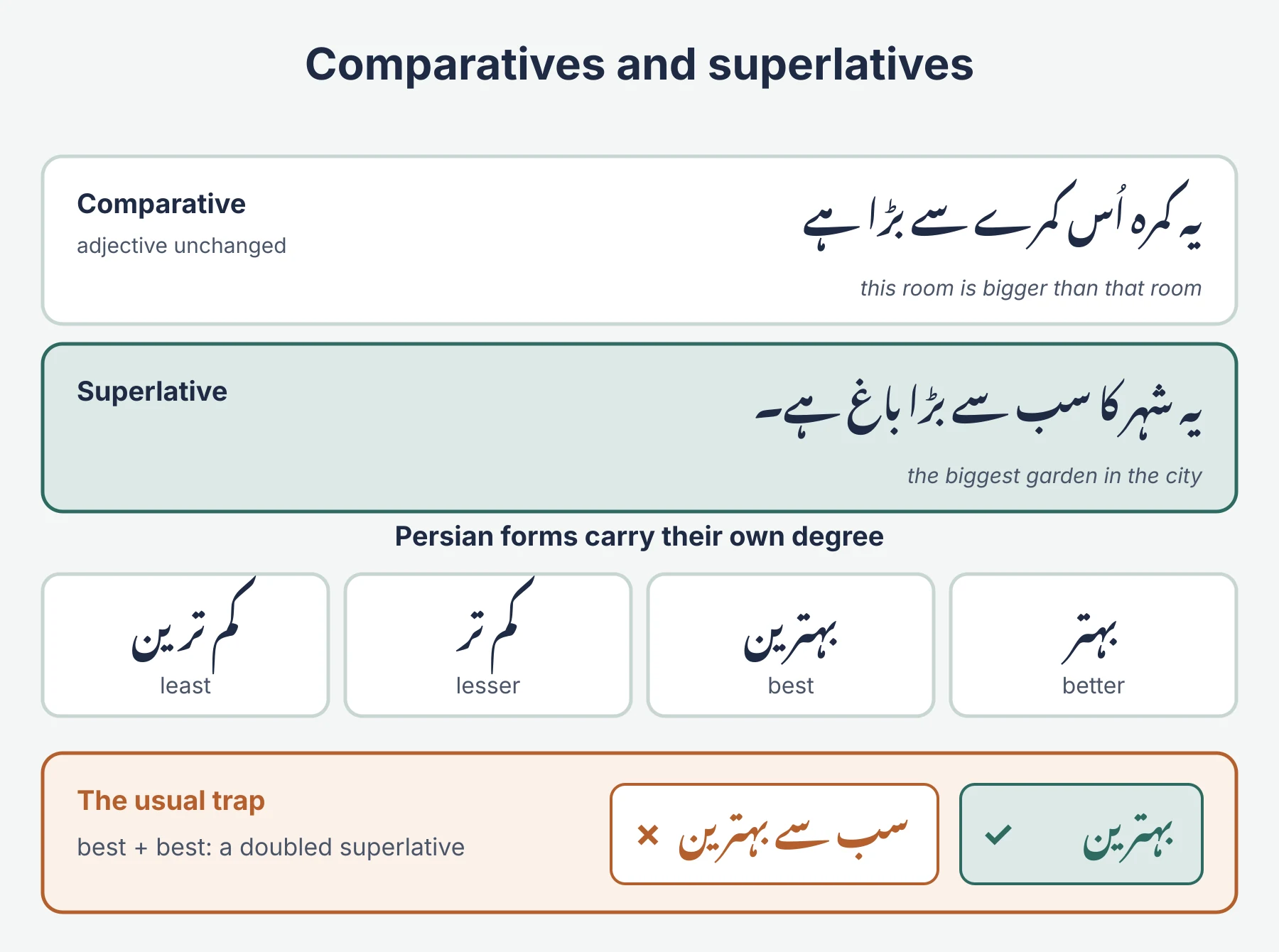
- Comparative: X Y سے adjective: یہ کمرہ اُس سے بڑا ہے۔
- Superlative: سب سے adjective: سب سے بڑا.
- With degree words: زیادہ / کم + adjective.
- Persian forms: بہتر / بہترین, کم تر / کم ترین. Avoid سب سے بہترین.
Postpositions and verb partners
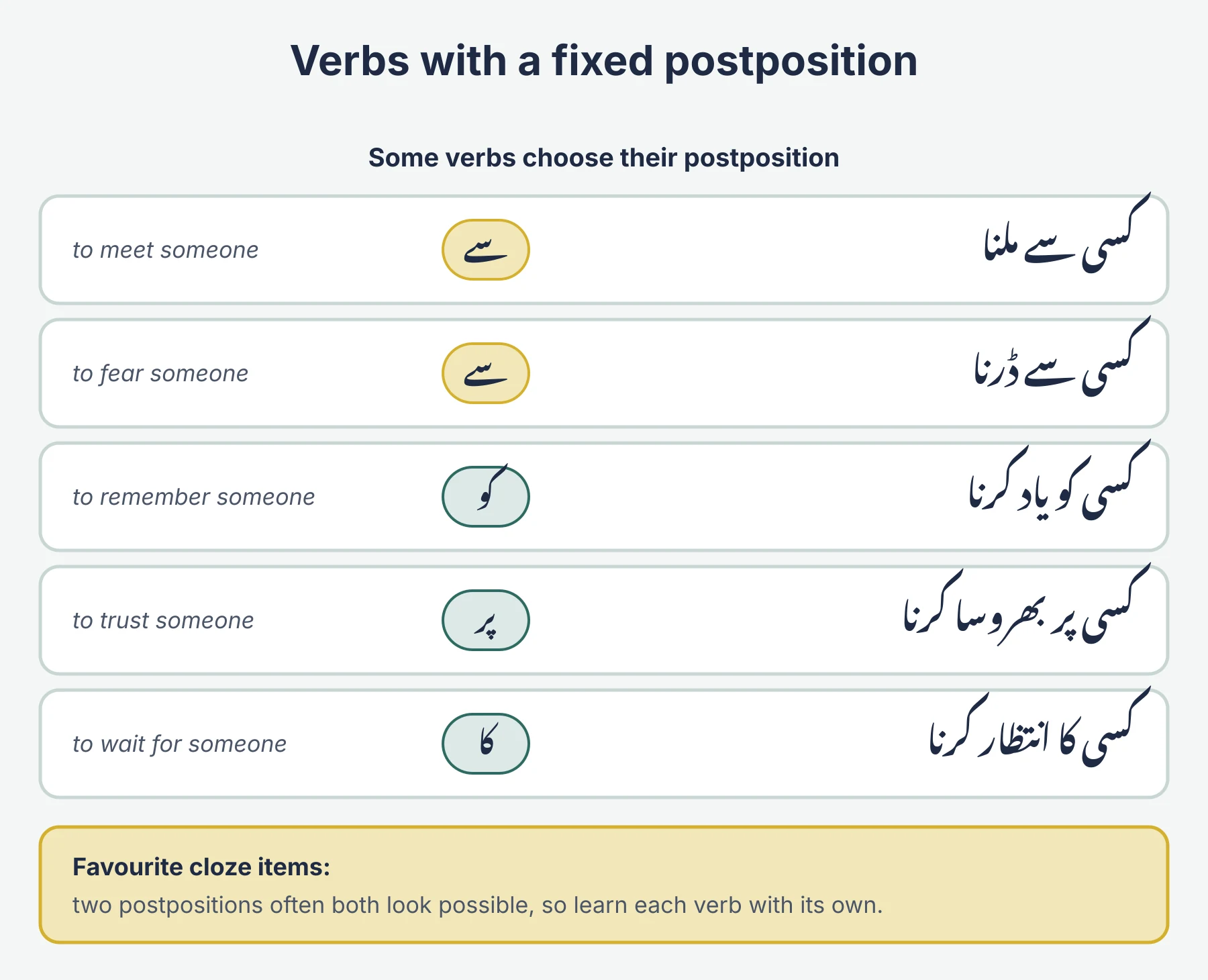
| Verb | Partner |
|---|---|
| ملنا (meet) | سے |
| ڈرنا (fear) | سے |
| پوچھنا (ask someone) | سے |
| انتظار کرنا | کا |
| بھروسا کرنا | پر |
| یاد کرنا (miss/remember someone) | کو |
| شکریہ ادا کرنا | کا |
Before-noun words: بغیر (بغیر اجازت), Persian بے (بے فکر), با (با ادب).
“Articles” in Urdu
No “the”. Indefinites:
| Word | Use |
|---|---|
| ایک | one particular, unnamed: ایک آدمی آیا |
| کوئی | any/some person or thing, often questions and negatives: کوئی نہیں آیا |
| کچھ | some, with quantities and plurals: کچھ پانی، کچھ لوگ |
Parts of speech
Adjective before a noun (تیز گاڑی); adverb before a verb (تیزی سے چلنا); noun after a postposition (خوشی سے); verb in the verb slot.
Collocations to know
فیصلہ کرنا، سوال پوچھنا، جواب دینا، قدم اٹھانا، امتحان دینا، شکریہ ادا کرنا، مدد کرنا، وقت ضائع کرنا، حصہ لینا، نقصان پہنچانا.
Decoding the option set
| Options differ in | Point tested | Look for |
|---|---|---|
| tense endings (ـتا ہے / رہا ہے / ـا / ـے گا) | conjugation | time word |
| ـا / ـی / ـے / ـیں | agreement | subject gender, or نے and the object |
| سے / میں / کو / پر | postposition | comparison, verb partner, place |
| ایک / کوئی / کچھ | indefinite (“article”) | countable? question or negative? |
| adjective / noun / adverb of one root | part of speech | what comes before and after the gap |
| four real words | vocabulary | the collocation with the verb |
Quick drill
- ہم نے بہت سی تصویریں (کھینچا / کھینچیں)۔ → کھینچیں: object feminine plural.
- بچے پارک (میں / کو) کھیل رہے ہیں۔ → میں: place.
- وہ (تیز / تیزی) سے لکھتا ہے۔ → تیزی: noun before سے.
- یہ اس سال کی (سب سے اچھی / سب سے بہترین) فلم ہے۔ → سب سے اچھی.
Timing
Paper 2 is 90 minutes for 50 marks. Ten one-mark gaps should take no more than about 15 minutes, so that the 20-mark extended writing and the 15-mark translation get the time they need.
Exam traps
- Tense chosen by sound, not by clue.
- Agreeing with the subject after نے.
- Non-oblique noun after a postposition.
- Singular verb for a respected elder.
- سب سے بہترین.
- Right meaning, wrong collocation: امتحان دینا, not امتحان کرنا; حصہ لینا, not حصہ کرنا.
Self-test
- How many marks is Exercise 2 worth?
- Name five grammar points the syllabus lists.
- Choose: میری بہن نے ایک نظم (لکھا / لکھی / لکھے)۔
- Choose: استاد صاحب کل (آئے گا / آئیں گے / آئے گی)۔
- Choose: یہ سڑک اُس سڑک (میں / سے / کو) چوڑی ہے۔
- Correct: لڑکا کو بلاؤ۔
- Which postposition goes with انتظار کرنا?
- Choose: کیا کمرے میں (ایک / کوئی / کچھ) ہے؟
- Why is سب سے بہترین avoided?
- Choose: ہم نے بچوں کو (بلایا / بلائے / بلائیں)۔
- What is the plural of کمرہ?
- Choose: ہماری استانی صاحبہ کل چھٹی پر (تھی / تھیں)۔ What rule decides it?
Answers
-
- Any five: conjugation of verbs, subject/verb agreement, comparatives, superlatives, parts of speech, nouns, prepositions, postpositions, articles, vocabulary in context.
- لکھی (نظم is feminine and نے is present).
- آئیں گے (respect plural).
- سے.
- لڑکے کو بلاؤ۔
- کا (کسی کا انتظار کرنا).
- کوئی.
- بہترین already means “best”, so سب سے doubles the superlative.
- بلایا (object with کو: masculine singular).
- کمرے.
- تھیں: a respected woman takes the plural form, even though she is one person.
More resources on this topic
Related resources
-
Study guides
Cambridge O Level Second Language Urdu (3248): Exercise 3 Extended Writing Exercise
How to plan and write about 200 words of continuous Urdu in 3248 Paper 2 Exercise 3: purpose, format, audience, paragraphs, register and accuracy.
Urdu Language · Cambridge · O Level
Read guide -
Practice questions
Cambridge O Level Second Language Urdu (3248): Exercise 3 Extended Writing Exercise – Practice Questions
Original practice for 3248 Paper 2 Exercise 3: purpose, format and audience drills, register and a full 200-word writing task with model answer.
Urdu Language · Cambridge · O Level
Try questions -
Revision notes
Cambridge O Level Second Language Urdu (3248): Exercise 3 Extended Writing Exercise – Revision Notes
Recall notes for 3248 Paper 2 Exercise 3: task facts, planning, formats, register, linking words and common faults in about 200 words of Urdu.
Urdu Language · Cambridge · O Level
Revise topic
Get free revision emails (optional)
Occasional emails with practice questions, worked explanations and links to free resources for the qualification and subjects you choose. No spam, and you can unsubscribe from any email. The free tools on this site never need an email.