
Study Guides
Cambridge O Level Second Language Urdu (3248): Exercise 4 Translation into Urdu
Translating the 150-word English passage into Urdu for 3248 Paper 2 Exercise 4: word order, tenses, articles, gender, idiom and register, with an example.
- Subject
- Urdu Language
- Level
- O LEVELS
- Topic
- Paper 2 – Grammar, Writing and Translation
- Author
- Marlbridge Academic Team
- Updated
- Reviewed by
- Farheen Zehra (what this means)
Aligned to Cambridge O Level Urdu Language (3248), 2027-2029. Official specification .
Syllabus page (what it covers and how it is assessed): Cambridge O Level Urdu Language.
Found an error? Report a correction.
Need help with this topic? Request a free trial class for O Level Urdu Language (3247 / 3248).
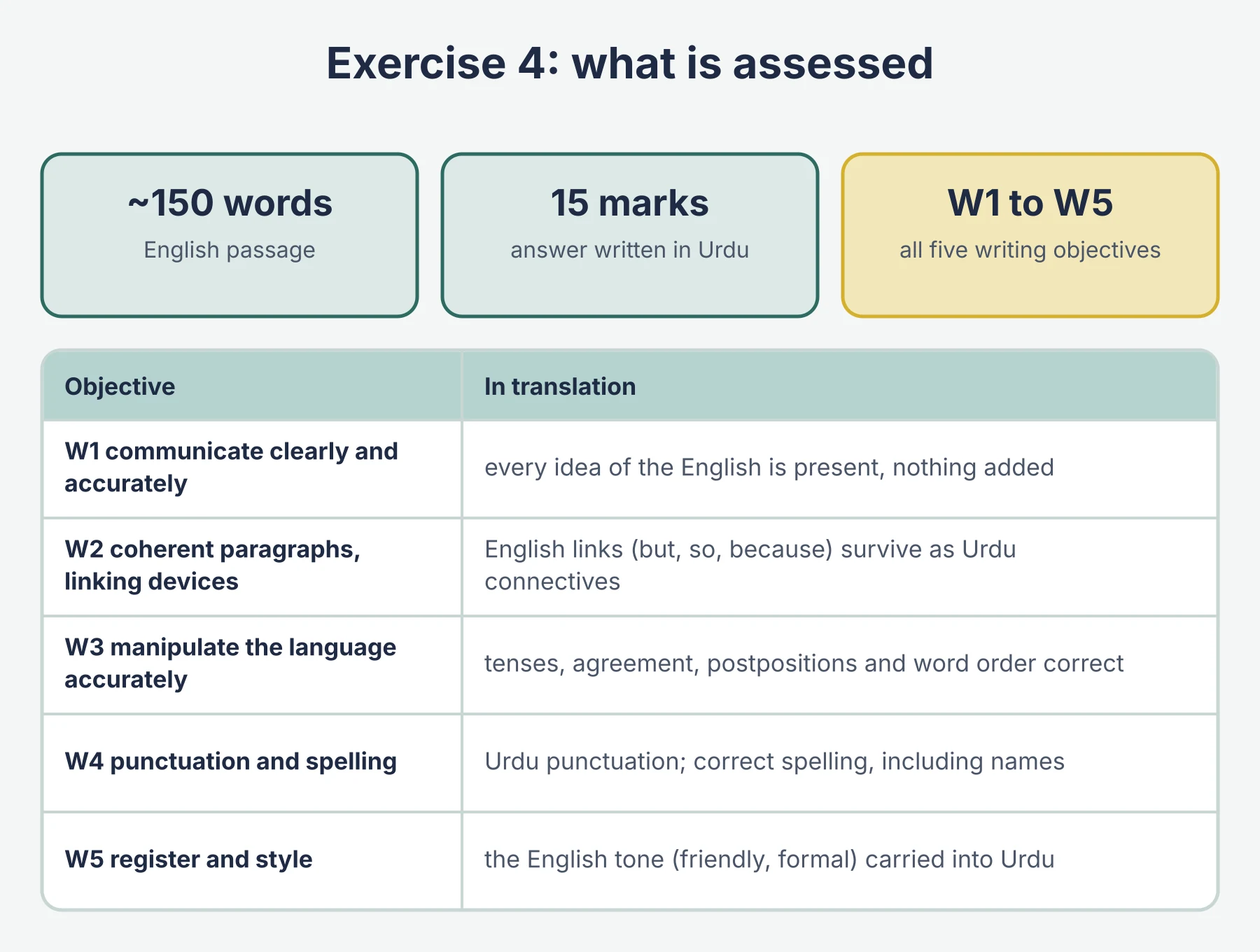
This guide covers Exercise 4 of Cambridge O Level Second Language Urdu 3248 Paper 2 Grammar, Writing and Translation: Translation, in which “candidates translate a short passage of approximately 150 words from English into Urdu”. The question is in English and the answer in Urdu. It is worth 15 marks and tests all five writing objectives, W1 to W5. For the paper as a whole, see the Paper 2 Grammar, Writing and Translation study guide. This page is about the specific changes English sentences need on their way into natural Urdu.
What the objectives mean for translation
| Objective | In translation |
|---|---|
| W1 communicate information clearly, accurately and effectively | every idea of the English is present, nothing added |
| W2 organise ideas into coherent paragraphs using linking devices | the English links (but, so, because) survive as Urdu connectives |
| W3 manipulate the target language accurately | tenses, agreement, postpositions and word order correct |
| W4 control of punctuation and spelling | Urdu punctuation; correct spelling, including names |
| W5 appropriate register and style/format | the English tone (friendly, formal) carried into Urdu |
Six changes English needs
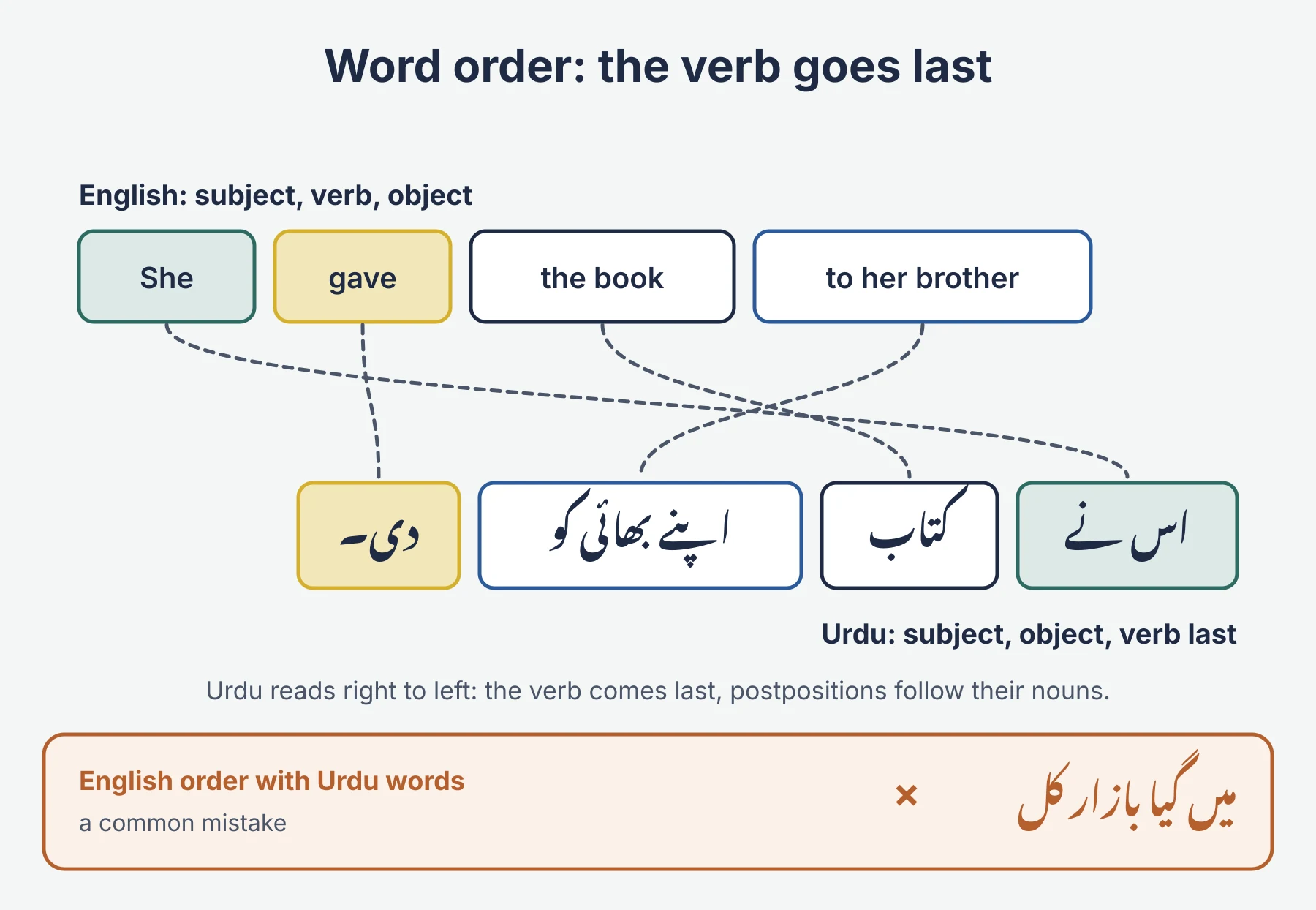
1. Word order. English is subject–verb–object; Urdu is subject–object–verb, with the verb at the end and postpositions after nouns. She gave the book to her brother. → اس نے کتاب اپنے بھائی کو دی۔
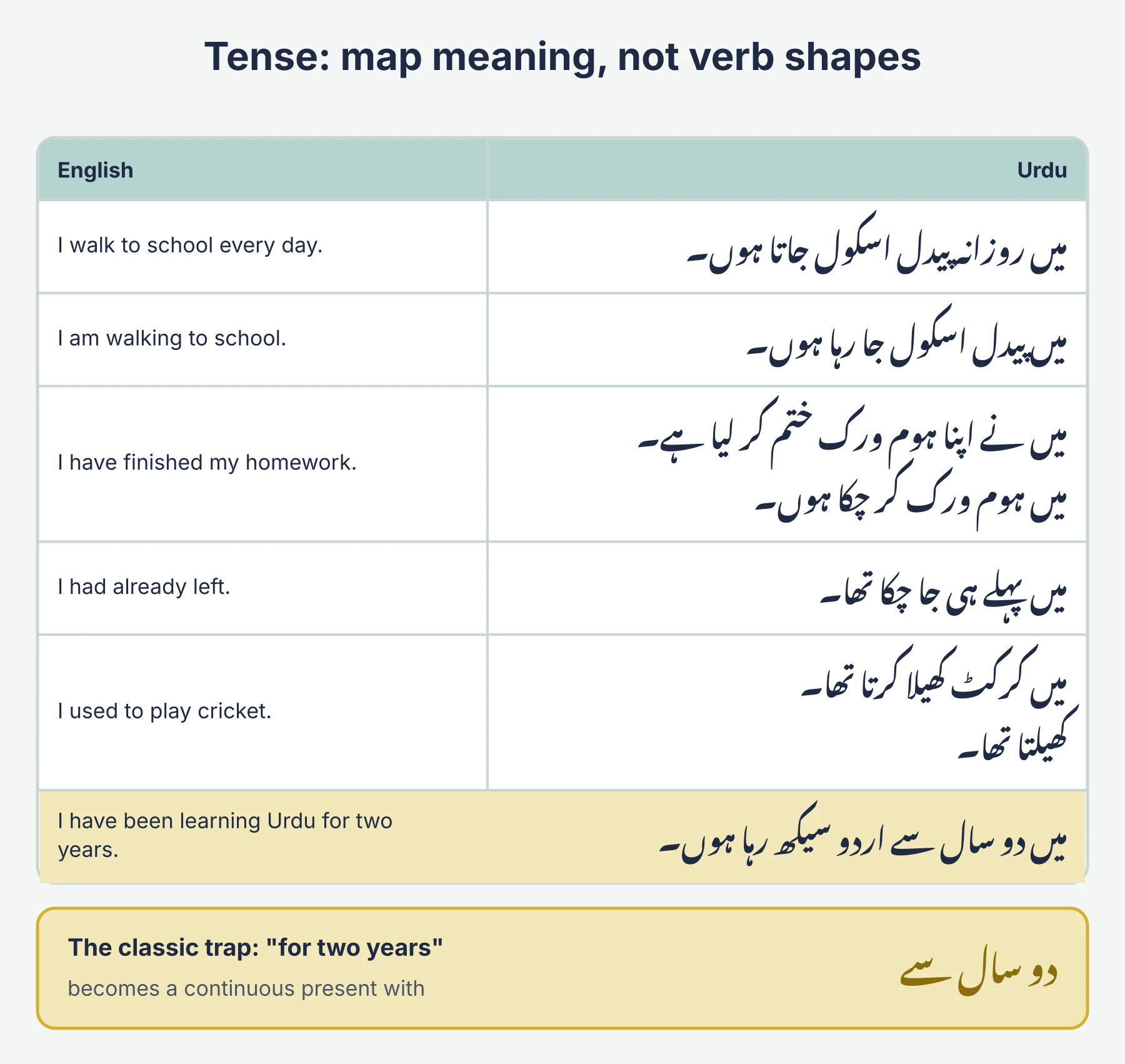
2. Tense and aspect. Map meaning, not English verb shapes.
| English | Urdu |
|---|---|
| I walk to school every day. | میں روزانہ پیدل اسکول جاتا ہوں۔ |
| I am walking to school. | میں پیدل اسکول جا رہا ہوں۔ |
| I have finished my homework. | میں نے اپنا ہوم ورک ختم کر لیا ہے۔ / میں ہوم ورک کر چکا ہوں۔ |
| I had already left. | میں پہلے ہی جا چکا تھا۔ |
| I used to play cricket. | میں کرکٹ کھیلا کرتا تھا۔ / کھیلتا تھا۔ |
| I have been learning Urdu for two years. | میں دو سال سے اردو سیکھ رہا ہوں۔ |
The last row is a classic trap: English “for two years” becomes دو سال سے with a continuous present.
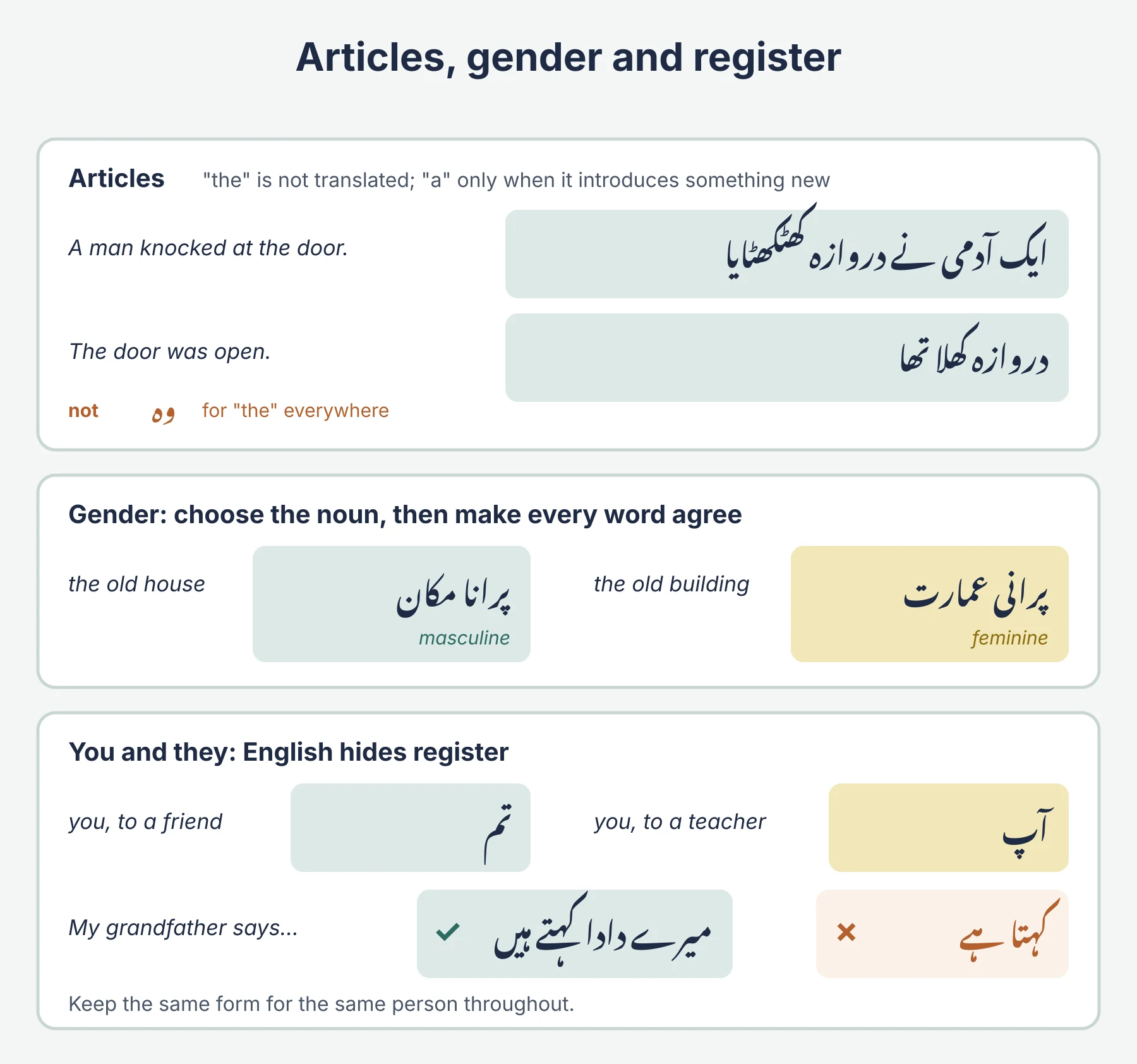
3. Articles. The is not translated; a/an becomes ایک only when it means “one” or introduces something new: A man knocked at the door → ایک آدمی نے دروازہ کھٹکھٹایا. The door was open → دروازہ کھلا تھا.
4. Gender. Every Urdu noun has a gender, and adjectives and verbs must follow it. English gives no help: the old house → پرانا مکان (masculine) but the old building → پرانی عمارت (feminine). Choose your noun, then check every word that agrees with it.
5. You and they. English you hides register. A message to a friend takes تم; to a teacher or stranger آپ. Third-person respect matters too: My grandfather says… → میرے دادا کہتے ہیں, not کہتا ہے.
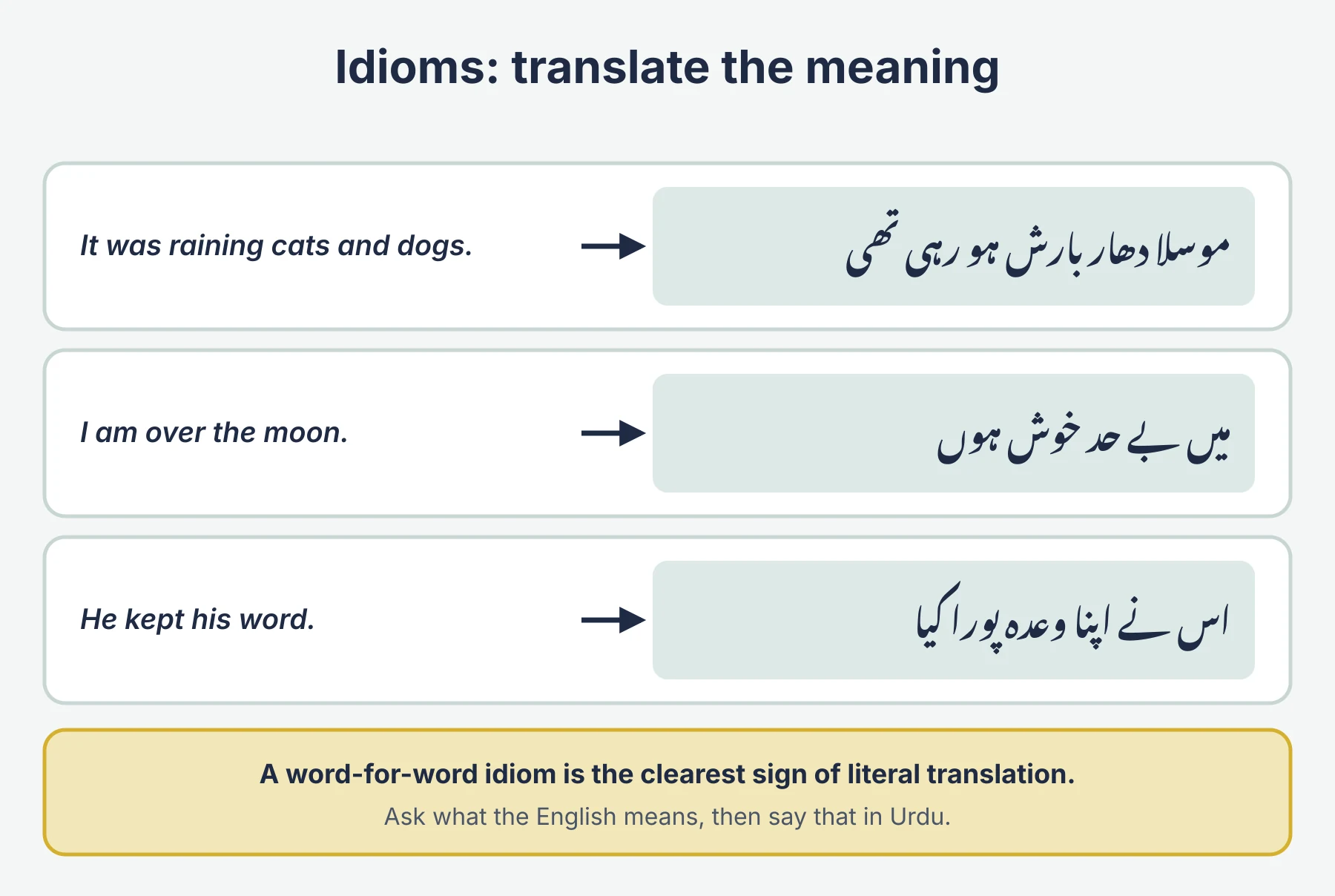
6. Idiom. Translate the meaning, not the words. It was raining cats and dogs → موسلا دھار بارش ہو رہی تھی. I am over the moon → میں بے حد خوش ہوں. He kept his word → اس نے اپنا وعدہ پورا کیا. A word-for-word version of an idiom is the clearest sign of literal translation.
A process for the exam
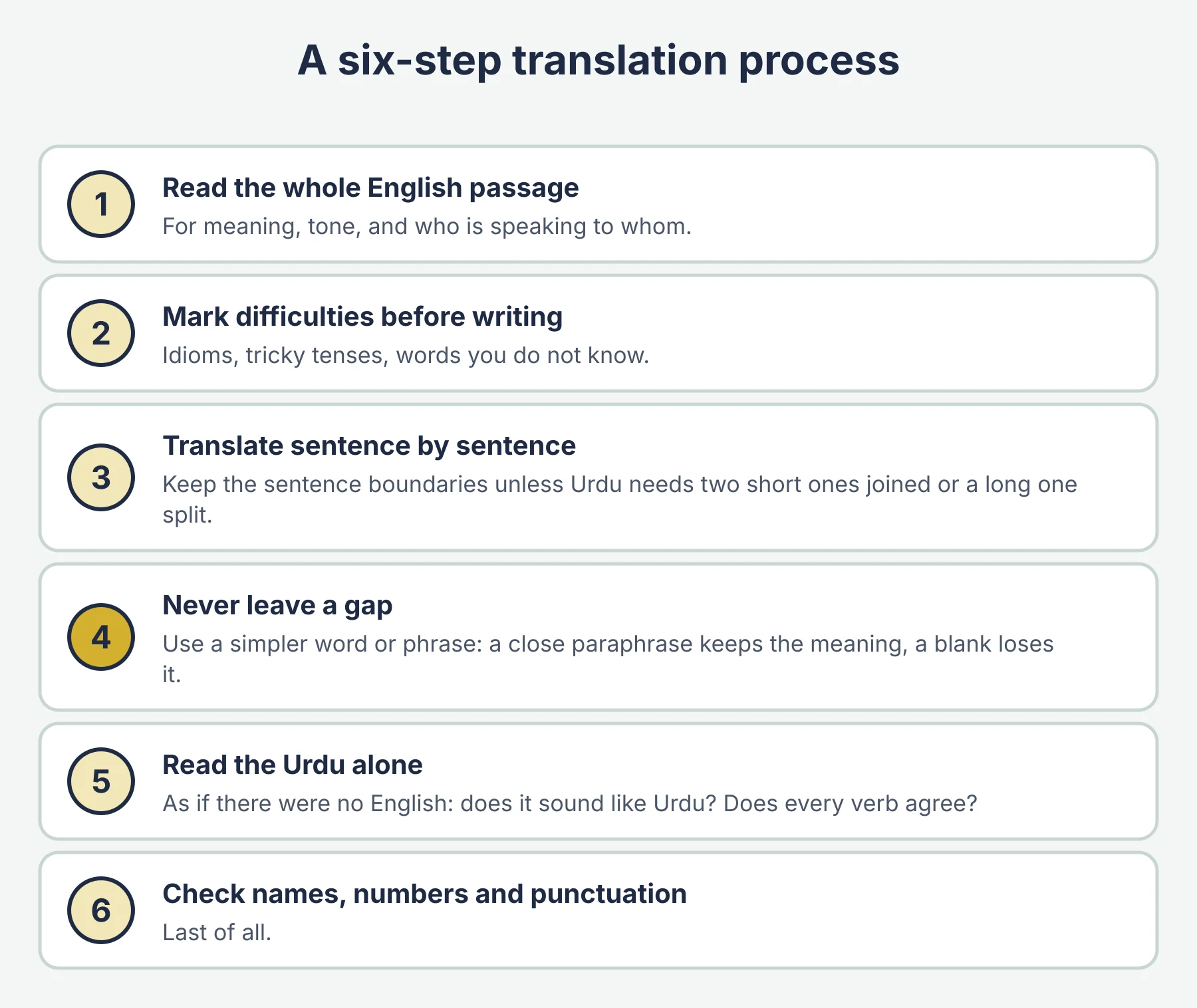
- Read the whole English passage for meaning, tone and who is speaking to whom.
- Mark difficulties before writing: idioms, tricky tenses, words you do not know.
- Translate sentence by sentence, keeping the English sentence boundaries unless Urdu needs two short sentences joined or one long one split.
- Never leave a gap. If a word is unknown, express the idea with a simpler word or phrase; a close paraphrase keeps the meaning, a blank loses it.
- Read the Urdu alone, as if there were no English. Does it sound like Urdu? Does every verb agree?
- Check names, numbers and punctuation.
Worked example
English (original):
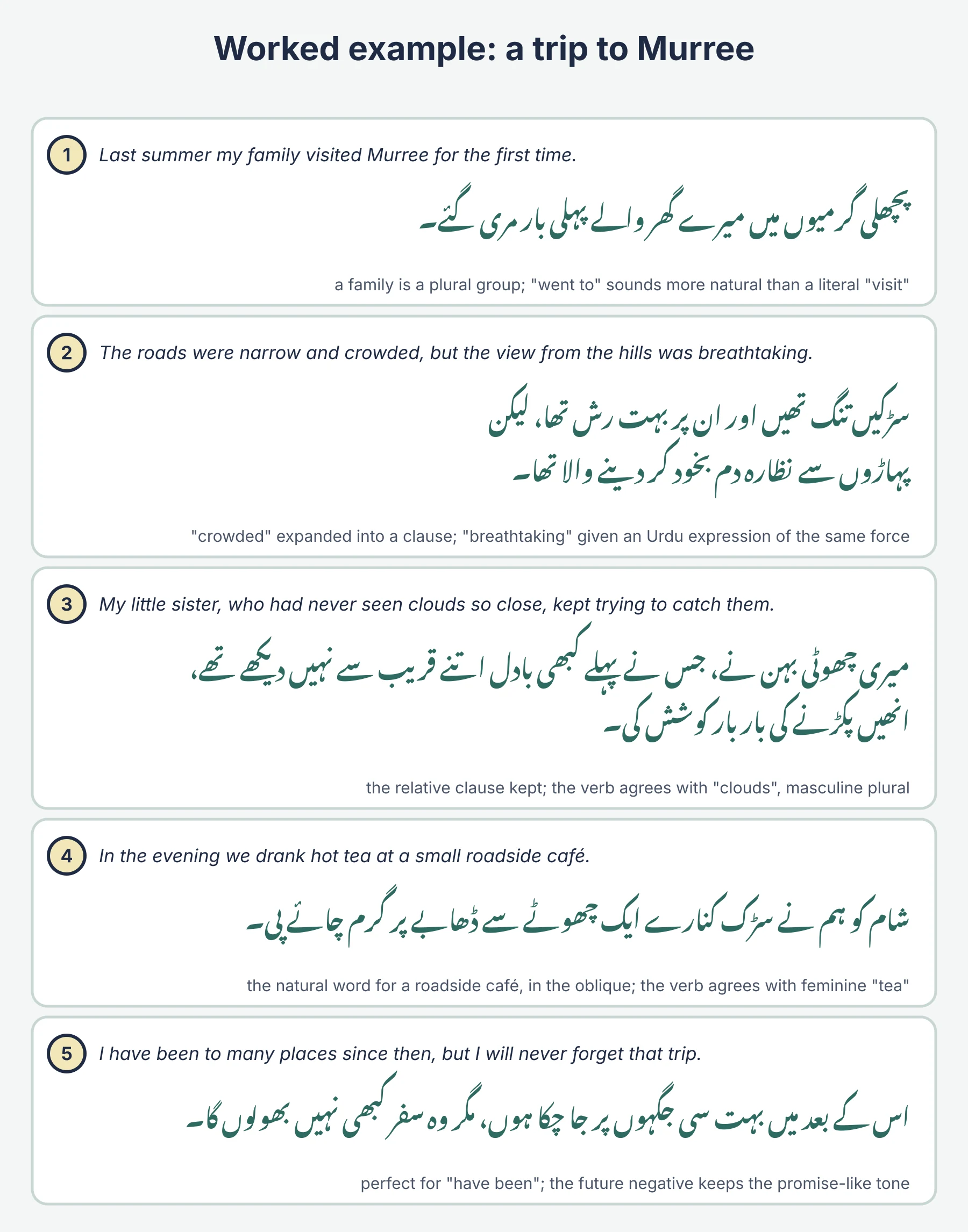
Last summer my family visited Murree for the first time. The roads were narrow and crowded, but the view from the hills was breathtaking. My little sister, who had never seen clouds so close, kept trying to catch them. In the evening we drank hot tea at a small roadside café. I have been to many places since then, but I will never forget that trip.
Urdu translation, with notes:
پچھلی گرمیوں میں میرے گھر والے پہلی بار مری گئے۔
My family as a group is naturally میرے گھر والے with a plural verb. Visited becomes گئے: “went to” sounds more natural than کا دورہ کیا for a family trip.
سڑکیں تنگ تھیں اور ان پر بہت رش تھا، لیکن پہاڑوں سے نظارہ دم بخود کر دینے والا تھا۔
Crowded is expanded to ان پر بہت رش تھا; breathtaking becomes an Urdu expression of the same force rather than a literal “taking breath”.
میری چھوٹی بہن نے، جس نے پہلے کبھی بادل اتنے قریب سے نہیں دیکھے تھے، انھیں پکڑنے کی بار بار کوشش کی۔
The relative clause who had never seen becomes جس نے … نہیں دیکھے تھے; دیکھے agrees with بادل (masculine plural). Kept trying is بار بار کوشش کی.
شام کو ہم نے سڑک کنارے ایک چھوٹے سے ڈھابے پر گرم چائے پی۔
Café by a roadside is naturally ڈھابا; here it is in the oblique, ڈھابے پر. پی agrees with feminine چائے.
اس کے بعد میں بہت سی جگہوں پر جا چکا ہوں، مگر وہ سفر کبھی نہیں بھولوں گا۔
I have been to many places since then uses جا چکا ہوں; the future negative کبھی نہیں بھولوں گا keeps the promise-like tone.
Numbers, names, dates and punctuation
- Numbers: write them in figures or in words, but consistently; ordinals become پہلا، دوسرا، تیسرا, agreeing in gender (دوسری بار).
- Names: keep personal and place names, spelt in Urdu script as they are normally written: لاہور، کراچی. Do not translate the meaning of a name.
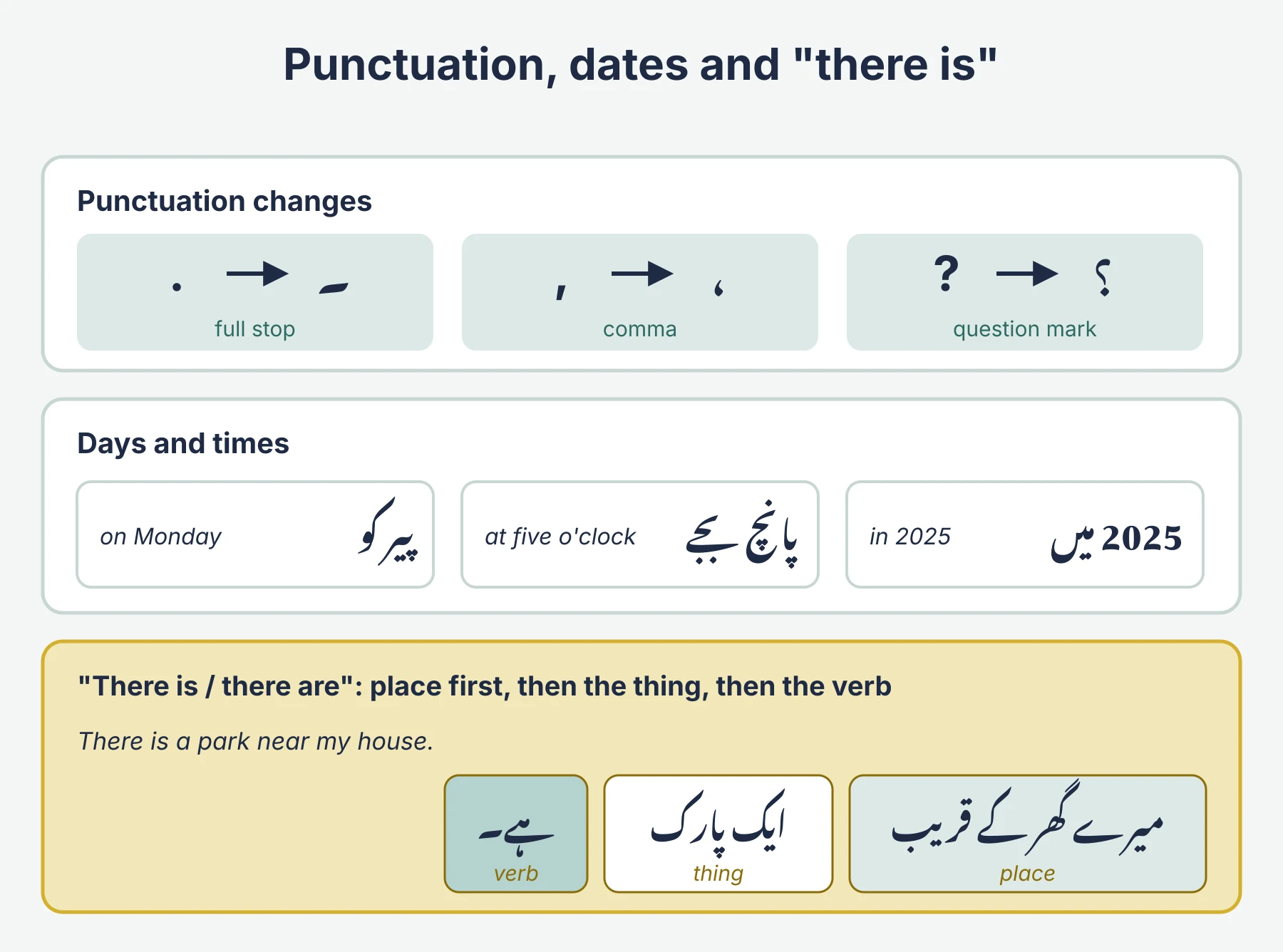
- Dates and times: on Monday → پیر کو; at five o’clock → پانچ بجے; in 2025 → 2025 میں.
- Punctuation: change English full stops to ۔, commas to ،, question marks to ؟. Quotation marks and exclamation marks stay.
Two structures English uses more than Urdu
“There is / there are” has no direct equivalent: There is a park near my house → میرے گھر کے قریب ایک پارک ہے۔ Place first, then the thing, then ہے.
The passive is less common in Urdu than in English. The match was cancelled can stay passive (میچ منسوخ کر دیا گیا), but I was given a prize often reads better active: مجھے انعام دیا گیا or انھوں نے مجھے انعام دیا.
Common mistakes
- English word order with Urdu words: میں گیا بازار کل.
- Translating “the” as وہ everywhere.
- Wrong gender chosen for a noun, then carried through the sentence.
- Missing نے with transitive past verbs.
- Literal idioms, and English words in Roman script left untranslated.
- Omissions: a whole clause such as who had never seen clouds so close left out because it was difficult.
- Register drift: آپ in one sentence and تم in the next for the same person.
More resources on this topic
Related resources
-
Practice questions
Cambridge O Level Second Language Urdu (3248): Exercise 4 Translation into Urdu – Practice Questions
Original English sentences and a full 150-word passage to translate into Urdu for 3248 Paper 2 Exercise 4, with model translations and the point each one tests.
Urdu Language · Cambridge · O Level
Try questions -
Revision notes
Cambridge O Level Second Language Urdu (3248): Exercise 4 Translation into Urdu – Revision Notes
Condensed notes for 3248 Paper 2 Exercise 4 translation: task facts, English-to-Urdu tense map, word order, articles, gender, idioms, traps and a self-test.
Urdu Language · Cambridge · O Level
Revise topic -
Study guides
Cambridge O Level Second Language Urdu: Paper 2 Grammar, Writing and Translation (3248)
Sentence transformation, multiple-choice cloze, extended writing and English-to-Urdu translation – Paper 2 Grammar, Writing and Translation of Cambridge O Level Second Language Urdu (3248), 2027-2029 series.
Urdu Language · Cambridge · O Level
Read guide
Get free revision emails (optional)
Occasional emails with practice questions, worked explanations and links to free resources for the qualification and subjects you choose. No spam, and you can unsubscribe from any email. The free tools on this site never need an email.