
Revision Notes
Edexcel A Level Urdu (9UR0): Emigration from Pakistan – Revision Notes
9UR0 Theme 3.3 notes on emigration from Pakistan, the research subject: waves, remittances, brain drain, a model paragraph and a self-test.
- Subject
- Urdu Language
- Level
- A LEVELS
- Topic
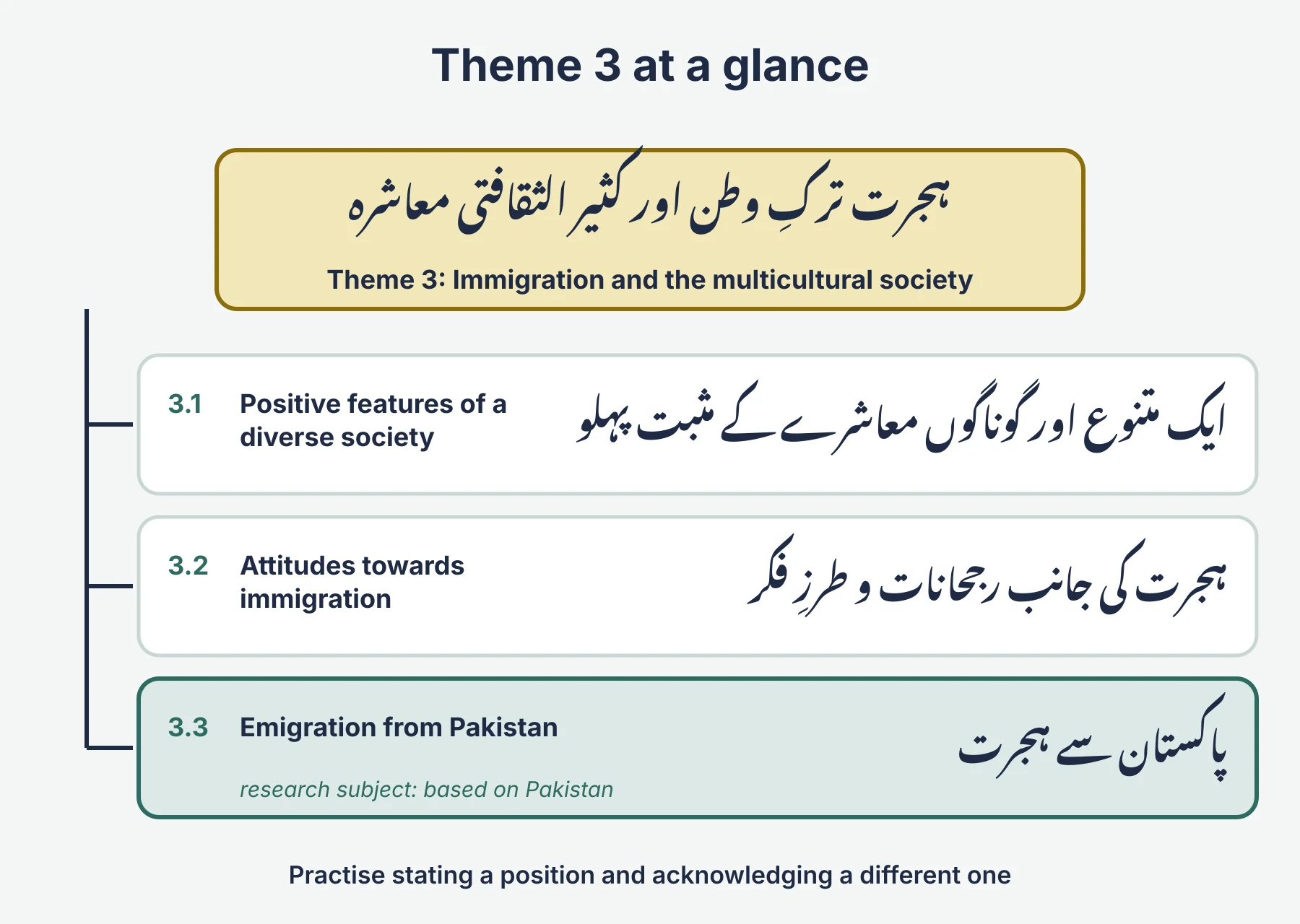
- Theme 3: Immigration and the multicultural society (ہجرت ترکِ وطن اور کثیر الثقافتی معاشرہ)
- Author
- Marlbridge Academic Team
- Updated
- Reviewed by
- Farheen Zehra (what this means)
Aligned to Pearson Edexcel A Level Urdu Language (9UR0), 2018. Official specification .
Syllabus page (what it covers and how it is assessed): Pearson Edexcel A Level Urdu Language.
Syllabus points this page covers
9UR0
- 3.3 پاکستان سے ہجرت
Found an error? Report a correction.
Need help with this topic? Request a free trial class for A Level Urdu Language (9UR0).
Revision notes for sub-theme 3.3 of Theme 3 in Pearson Edexcel A Level Urdu (9UR0): emigration from Pakistan (پاکستان سے ہجرت), which is the research subject for this theme. For the wider theme, read the Theme 3 study guide.
Research rules
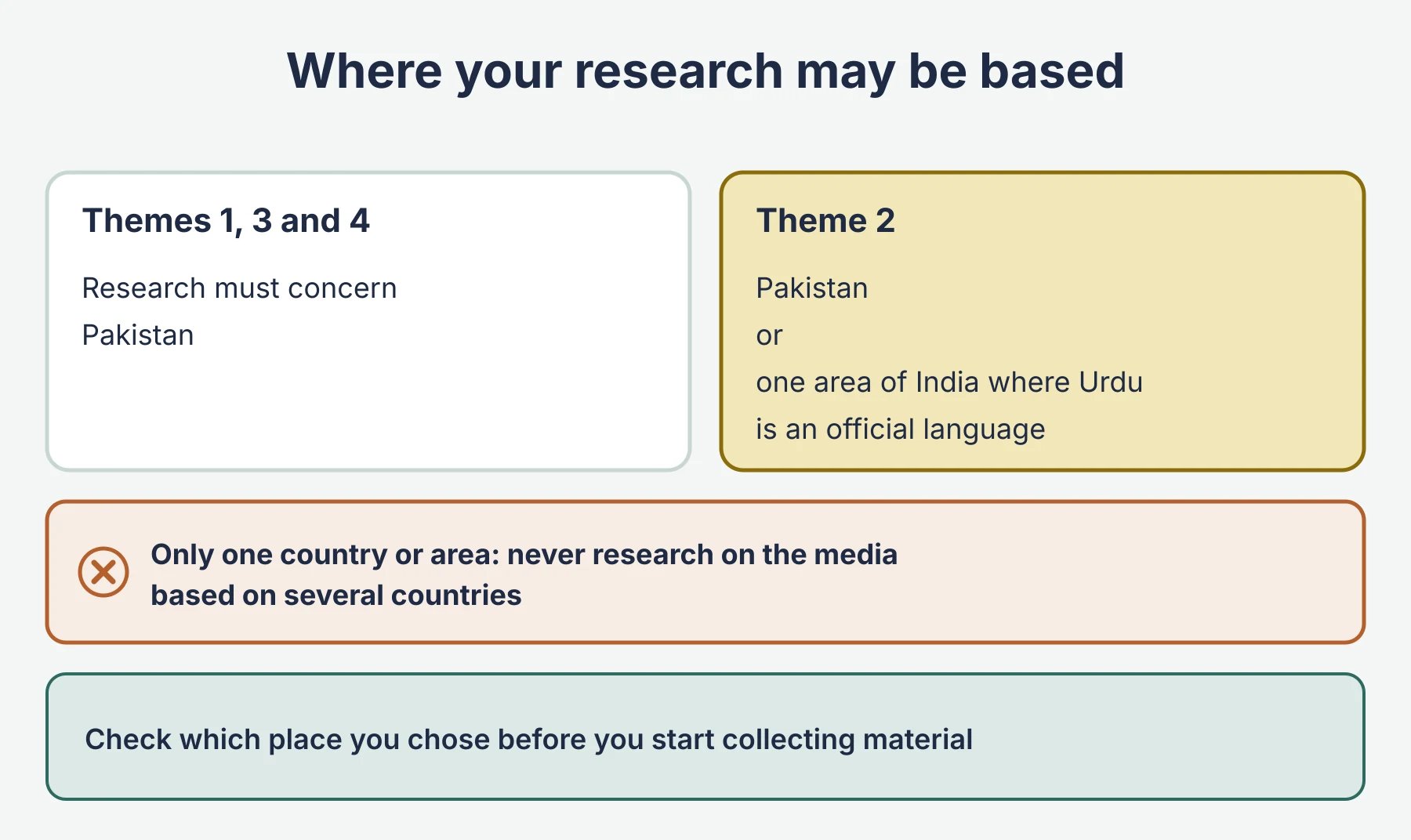
- Theme 3 research must be based on Pakistan and written in Urdu.
- Keep a file of named sources, dates and figures you have checked yourself; never quote a statistic you cannot trace.
- Prepare points for and against emigration so you can write a balanced response to any statement.
Key ideas
| Idea | Notes |
|---|---|
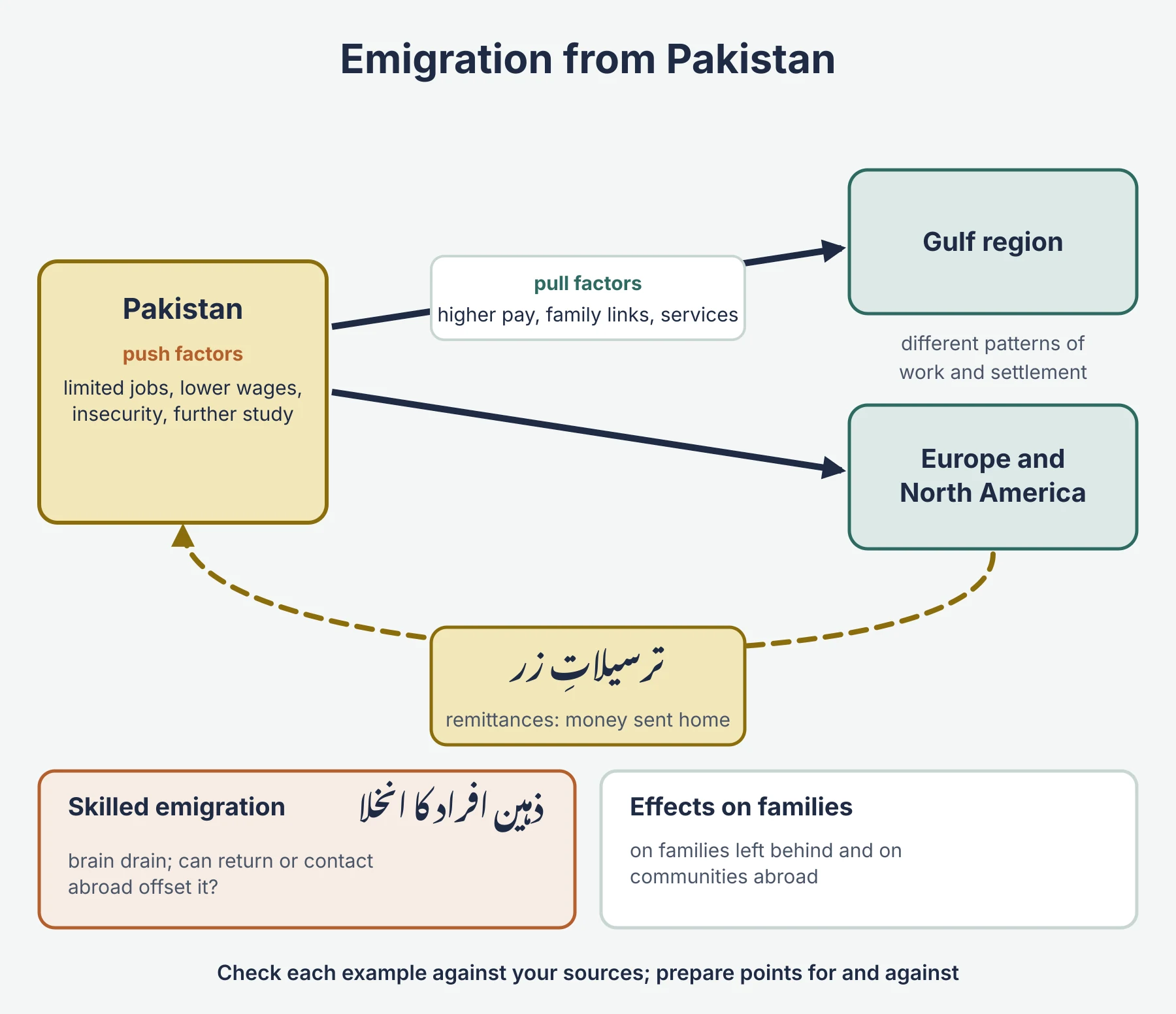
| Push factors | Reasons for leaving: limited jobs, lower wages, insecurity, the wish for further study |
| Pull factors | Reasons for a destination: higher pay, family links, better services |
| Destinations | Gulf region, Europe and North America, with different patterns of work and settlement; check examples against sources |
| Remittances (ترسیلاتِ زر) | Money sent home; effect on families and the economy |
| Brain drain (ذہین افراد کا انخلا) | Loss of skilled workers; debate over return or contact abroad |
| Families | Effects on families left behind and on communities abroad |
Issues and perspectives
Different waves, different patterns. Emigration from Pakistan is not one story. After the Second World War many men went to Britain to work in factories and mills, later bringing their families. A well-documented example is the Mirpur district of Azad Kashmir: the building of the Mangla Dam in the 1960s displaced many families, and a large share of Britain’s Pakistani-heritage community traces its roots there. From the 1970s, the oil boom in the Gulf created demand for workers, and large numbers went to Saudi Arabia and the United Arab Emirates, usually on temporary contracts and often without their families. More recently, students and professionals have moved to North America, Europe and Australia for study and skilled work.
Use these patterns to compare permanent settlement with temporary contract work: the first creates communities abroad with second and third generations; the second keeps workers closely tied to home, sending money back and eventually returning.
Economic effects. Remittances (ترسیلاتِ زر) are an important source of foreign exchange (زرِ مبادلہ) for Pakistan and support household spending on food, housing, education and health. Critics note that a country should not depend on exporting its workers, and that remittances do not always go into productive investment. Quote any figure only from a named, dated source.
Brain drain and brain gain. When doctors, engineers, nurses and IT professionals leave, hospitals and universities lose their skills, and the cost of their education has been paid at home. On the other hand, some argue that emigrants who keep links with Pakistan bring back money, knowledge, business contacts and investment, and that some return with new expertise.
Families left behind. When a father or son works abroad for years, wives and mothers often take on new responsibilities in the household; children may grow up with an absent parent. Families may gain financially but pay an emotional price (جدائی, separation).
Risks of irregular migration. Some people try to reach Europe through dangerous, illegal routes organised by smugglers. انسانی اسمگلنگ (human smuggling) and fraud by false agents are serious concerns, and the government has acted against such networks. Treat this point with care and rely on reported cases from reliable sources.
Overseas Pakistanis. Pakistan has a ministry for overseas Pakistanis (سمندر پار پاکستانی), and debates continue about their rights, such as voting from abroad, and their role in national development.
Terminology
- تارکِ وطن = emigrant (one who leaves). Do not confuse with immigration (arriving).
- تارکینِ وطن is the plural; سمندر پار پاکستانی and بیرونِ ملک مقیم پاکستانی mean overseas Pakistanis.
Vocabulary
| Urdu | Meaning |
|---|---|
| ہجرت | migration, emigration |
| تارکینِ وطن | emigrants (plural) |
| سمندر پار پاکستانی | overseas Pakistanis |
| بیرونِ ملک | abroad |
| ترسیلاتِ زر | remittances |
| زرِ مبادلہ | foreign exchange |
| ذہین افراد کا انخلا | brain drain |
| ہنرمند | skilled |
| روزگار کے مواقع | job opportunities |
| اعلیٰ تعلیم | higher education |
| خلیجی ممالک | Gulf countries |
| ویزا | visa |
| غیر قانونی | illegal |
| انسانی اسمگلنگ | human smuggling, trafficking |
| جدائی | separation |
| وطن واپسی | return home |
| آبائی وطن | ancestral homeland |
| دوہری شہریت | dual nationality |
| معیارِ زندگی | standard of living |
| سرمایہ کاری | investment |
Useful sentences with grammar notes
- بہت سے نوجوان بہتر روزگار کی تلاش میں بیرونِ ملک چلے جاتے ہیں۔ (Many young people go abroad in search of better employment.) Masculine plural subject and verb; کی تلاش میں (in search of) is a useful set phrase.
- سمندر پار پاکستانیوں کی بھیجی ہوئی رقم سے ہزاروں گھرانوں کا گزارا ہوتا ہے۔ (Thousands of households live on money sent by overseas Pakistanis.) The participle بھیجی ہوئی agrees with رقم (feminine); گزارا is masculine, so ہوتا ہے.
- اگر ہنرمند افراد ملک چھوڑ دیں تو ہسپتالوں اور جامعات کو نقصان پہنچتا ہے۔ (If skilled people leave the country, hospitals and universities suffer.) Subjunctive چھوڑ دیں in the condition; نقصان پہنچنا takes the affected party with کو.
- والد کے بیرونِ ملک جانے کے بعد گھر کی ذمہ داریاں ماں پر آ پڑیں۔ (After the father went abroad, the household responsibilities fell on the mother.) The verb agrees with ذمہ داریاں (feminine plural): آ پڑیں.
- بعض ماہرین کا خیال ہے کہ بیرونِ ملک مقیم پاکستانی اپنے تجربے اور سرمایہ کاری سے ملک کو فائدہ پہنچا سکتے ہیں۔ (Some experts believe that Pakistanis living abroad can benefit the country through their experience and investment.)
Model paragraph
پاکستان سے ہجرت کی کئی وجوہات ہیں۔ میری تحقیق کے مطابق سب سے اہم وجوہات روزگار کے محدود مواقع اور کم تنخواہیں ہیں، جبکہ بیرونِ ملک زیادہ آمدنی اور اعلیٰ تعلیم کے مواقع لوگوں کو اپنی طرف کھینچتے ہیں۔ ایک طرف تارکینِ وطن کی بھیجی ہوئی رقوم سے ان کے خاندانوں کا معیارِ زندگی بہتر ہوتا ہے اور ملک کو زرِ مبادلہ ملتا ہے، دوسری طرف ڈاکٹروں اور انجینئروں جیسے ہنرمند افراد کے جانے سے ملک ان کی صلاحیتوں سے محروم ہو جاتا ہے۔ میرے خیال میں ہجرت کو روکنا ممکن نہیں، لیکن حکومت ایسی پالیسیاں بنا سکتی ہے جن سے بیرونِ ملک پاکستانی اپنے تجربے سے وطن کو فائدہ پہنچائیں۔
Translation: There are several reasons for emigration from Pakistan. According to my research, the most important are limited job opportunities and low salaries, while higher income and opportunities for higher education abroad draw people towards them. On the one hand, the money sent by emigrants improves their families’ standard of living and brings the country foreign exchange; on the other hand, when skilled people such as doctors and engineers leave, the country is deprived of their abilities. In my view it is not possible to stop emigration, but the government can make policies through which Pakistanis abroad benefit their homeland with their experience.
Why it works: push and pull factors are named in one sentence; the ایک طرف … دوسری طرف frame weighs a benefit against a cost; and the conclusion is realistic rather than extreme.
Discussion and essay prompts
- «ہجرت پاکستان کے لیے نقصان سے زیادہ فائدہ مند ہے۔» (Emigration benefits Pakistan more than it harms it.) To what extent do you agree?
- Should the government try to stop skilled workers from leaving, or encourage them to keep links with home?
- «ترسیلاتِ زر پر انحصار ایک کمزوری ہے۔» (Dependence on remittances is a weakness.) Discuss.
- Compare the experience of a worker on a Gulf contract with that of a family that settled in Britain.
Exam traps
- Research that wanders to other countries.
- Mixing up emigration and immigration in terms and in the research focus.
- One-sided answers; give arguments for and against.
- Writing about the destination country’s society at length; keep the focus on Pakistan and Pakistanis.
- Quoting remittance totals or numbers of emigrants from memory.
- Agreement errors with feminine nouns such as رقم and ذمہ داریاں, and with plural وجوہات.
Self-test
- Which country must Theme 3 research be based on?
- What are remittances?
- Name two push factors and one pull factor.
- Give the Urdu for brain drain as used in the guide.
- Is تارکِ وطن an emigrant or an immigrant?
- Why is the Mangla Dam relevant to emigration to Britain?
- How did migration to the Gulf from the 1970s differ from earlier settlement in Britain?
- Give one argument that emigration can benefit Pakistan in the long term.
- Give the Urdu for ‘foreign exchange’ and ‘separation’.
- In والد کے بیرونِ ملک جانے کے بعد گھر کی ذمہ داریاں ماں پر آ پڑیں, why is the verb آ پڑیں?
- Translate: ‘many young people go abroad in search of better employment’.
Answers: 1. Pakistan. 2. Money that emigrants send home to their families. 3. For example, limited jobs and lower wages (push); higher pay abroad (pull). 4. ذہین افراد کا انخلا. 5. An emigrant, someone who leaves their country. 6. Its construction in the 1960s displaced many families from Mirpur, and many of them settled in Britain. 7. It was mainly temporary contract work, often without families, rather than permanent settlement. 8. For example, remittances, investment, business contacts and skills brought back by returning emigrants. 9. زرِ مبادلہ and جدائی. 10. It agrees with ذمہ داریاں, which is feminine plural. 11. بہت سے نوجوان بہتر روزگار کی تلاش میں بیرونِ ملک چلے جاتے ہیں۔
Related resources
-
Revision notes
Edexcel A Level Urdu (9UR0): Positive Features of a Diverse Society – Revision Notes
9UR0 Theme 3.1 notes on the positive features of a diverse society: perspectives, key terms, grammar notes, a model paragraph and a self-test.
Urdu Language · Pearson Edexcel · A Level
Revise topic -
Study guides
Edexcel A-Level Urdu: Theme 3, Immigration and the Multicultural Society (9UR0)
Diverse societies, attitudes towards immigration and emigration from Pakistan: ideas, vocabulary and model Urdu writing for Theme 3 of Pearson Edexcel GCE A-Level Urdu (9UR0).
Urdu Language · Pearson Edexcel · A Level
Read guide -
Study guides
Edexcel A Level Urdu (9UR0): Attitudes Towards Immigration
9UR0 sub-theme 3.2 study guide: community activities, public attitudes and migrants' own viewpoint in Pakistan, with reported speech and Paper 3 technique.
Urdu Language · Pearson Edexcel · A Level
Read guide
Get free revision emails (optional)
Occasional emails with practice questions, worked explanations and links to free resources for the qualification and subjects you choose. No spam, and you can unsubscribe from any email. The free tools on this site never need an email.