
Revision Notes
Edexcel A Level Urdu (9UR0): The Media (میڈیا) – Revision Notes
9UR0 Theme 2.3 notes on the media (میڈیا), the research subject: broadcasting, digital media, freedom, a model paragraph and a self-test.
- Subject
- Urdu Language
- Level
- A LEVELS
- Topic
- Theme 2: Art and culture in the Urdu-speaking world (اردو بولنے والی دُنیا میں تمدن اور فنونِ لطیفہ)
- Author
- Marlbridge Academic Team
- Updated
- Reviewed by
- Farheen Zehra (what this means)
Aligned to Pearson Edexcel A Level Urdu Language (9UR0), 2018. Official specification .
Syllabus page (what it covers and how it is assessed): Pearson Edexcel A Level Urdu Language.
Syllabus points this page covers
9UR0
- 2.3 میڈیا
Found an error? Report a correction.
Need help with this topic? Request a free trial class for A Level Urdu Language (9UR0).
Revision notes for sub-theme 2.3 of Theme 2 in Pearson Edexcel A Level Urdu (9UR0): the media (میڈیا), which is the research subject for this theme. For the wider theme, read the Theme 2 study guide.
Research rules
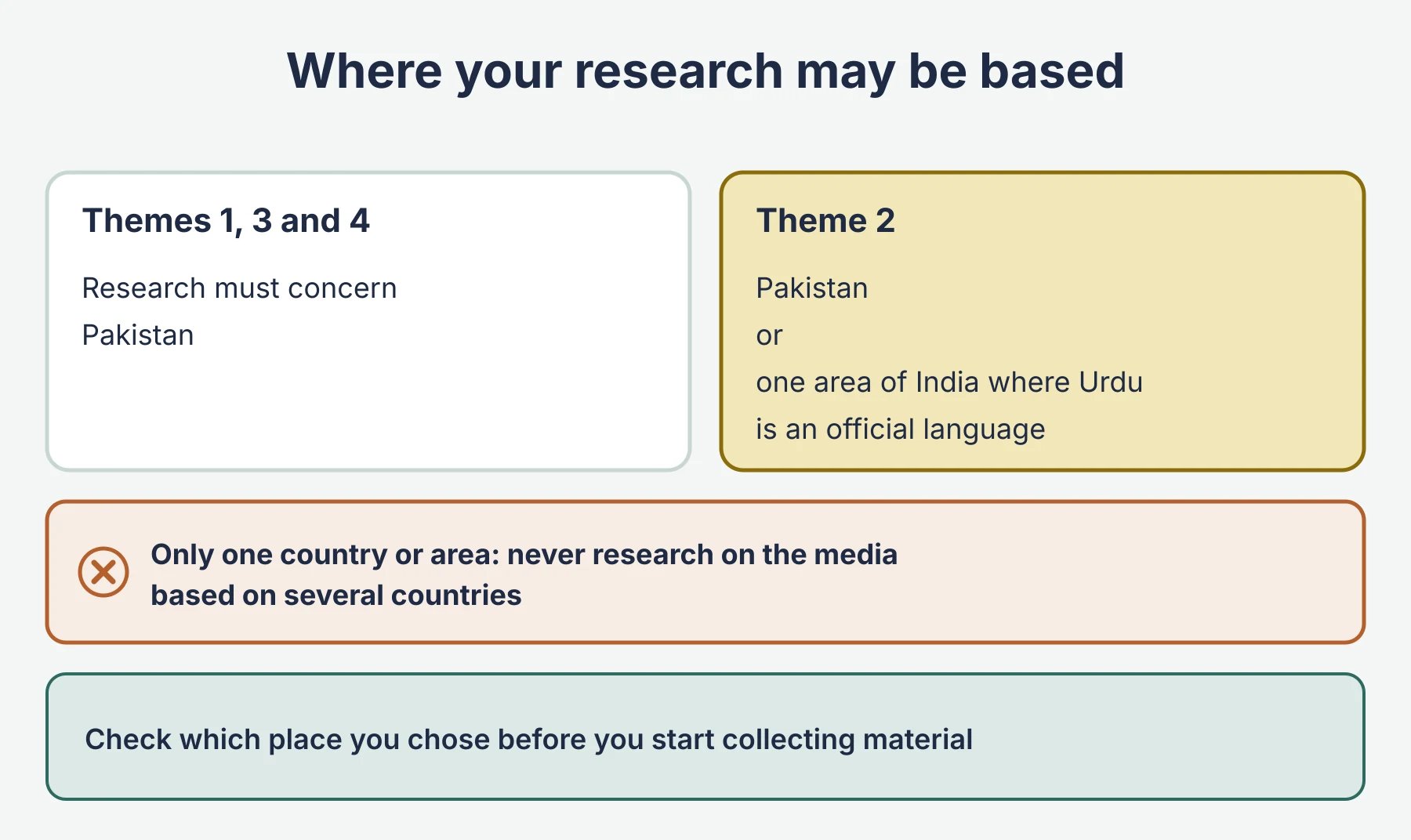
- Theme 2 research must concern one country or area: Pakistan, or one area of India where Urdu is an official language. Check which you chose.
- Present it in Urdu, keep a file of named, dated, checked sources, and compare at least two viewpoints on each point.
Areas to explore
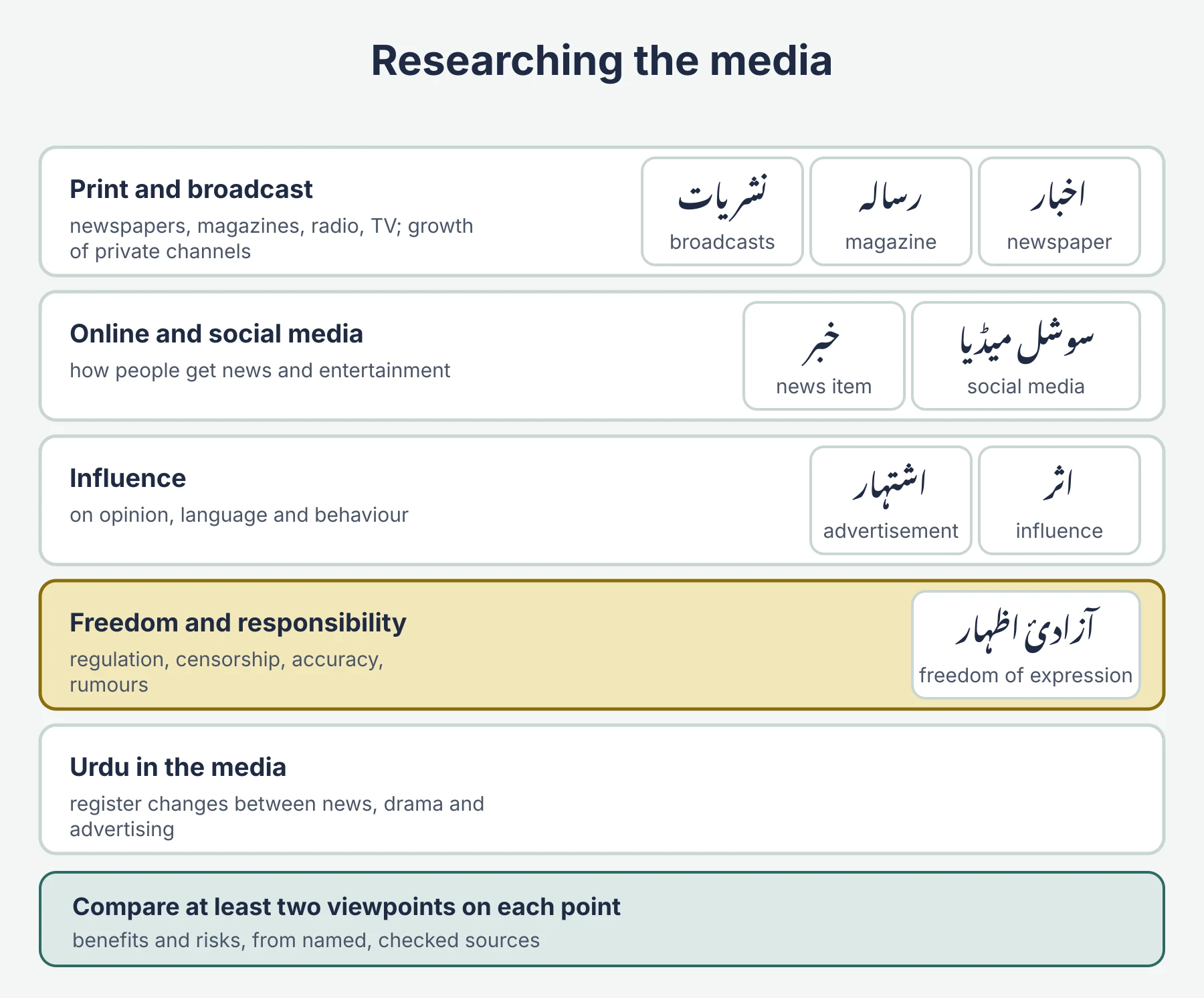
- Print media (newspapers and magazines) and broadcast media (radio and television); the growth of private television channels.
- Online and social media and how people get news and entertainment.
- The influence (اثر) of the media on opinion, language and behaviour.
- Freedom and responsibility: regulation, censorship, accuracy and rumours.
- Urdu in the media: how register changes between news, drama and advertising.
Issues and perspectives
The formal Urdu term for ‘the media’ is ذرائع ابلاغ (literally ‘means of communication’); میڈیا is used just as widely. Using both shows range.
From state broadcasting to many voices (if your research is on Pakistan). For decades, radio and television were dominated by the state broadcasters, Radio Pakistan and Pakistan Television (PTV). In the early 2000s the airwaves were opened to private companies, and a regulator, the Pakistan Electronic Media Regulatory Authority (PEMRA), was set up to license and oversee them. Many private news and entertainment channels followed, alongside long-established Urdu newspapers such as روزنامہ جنگ. Supporters say this gave viewers choice and made politicians more accountable; critics point to sensational بریکنگ نیوز, the race for ratings and noisy talk shows. If your research is on an area of India instead, build the equivalent picture for that one area from your own sources.
The rise of digital media. Many young people now get news on their phones through social media and video platforms rather than from a newspaper or a television bulletin. This allows شہری صحافت (citizen journalism), where ordinary people record and share events, and gives a voice to those ignored by mainstream outlets. It also allows افواہیں (rumours) and جعلی خبریں (fake news) to spread very quickly, before anyone checks them.
Freedom and responsibility. آزادیٔ اظہار (freedom of expression) is essential for democracy, but most people accept some limits, for example on hate speech or invasion of privacy. The debate is about who sets the limits and whether regulation protects the public or silences criticism (سنسرشپ). Journalists’ safety and independence are part of this debate; use reported cases from reliable sources rather than general claims.
Influence on society and language. Television drama, advertising and online content shape fashion, consumer habits and attitudes, for instance to marriage or women’s work. The media also shapes Urdu itself: news uses formal, Persian- and Arabic-derived vocabulary, drama uses everyday speech, and advertising often mixes Urdu with English. This register point is a good way to link your research to the language you are studying.
Vocabulary
| Urdu | Meaning |
|---|---|
| اخبار | newspaper |
| رسالہ | magazine |
| خبر | news item |
| نشریات | broadcasts |
| اشتہار | advertisement |
| سوشل میڈیا | social media |
| آزادیٔ اظہار | freedom of expression |
| اثر | influence |
| ذرائع ابلاغ | the media, means of communication |
| صحافی | journalist |
| صحافت | journalism |
| نشریاتی ادارہ | broadcaster |
| ناظرین | viewers |
| قارئین | readers |
| سامعین | listeners |
| افواہ | rumour |
| جعلی خبر | fake news |
| تصدیق | verification |
| غیر جانب دار | impartial |
| رائے عامہ | public opinion |
| سنسرشپ | censorship |
| ضابطۂ اخلاق | code of conduct |
| تفریح | entertainment |
Useful sentences with grammar notes
- سوشل میڈیا پر افواہیں بہت تیزی سے پھیلتی ہیں۔ (Rumours spread very quickly on social media.) The verb agrees with افواہیں (feminine plural): پھیلتی ہیں.
- نجی ٹی وی چینلوں کے آنے سے ناظرین کو زیادہ انتخاب ملا ہے۔ (With the arrival of private TV channels, viewers have more choice.) ملنا takes the receiver with کو and agrees with what is received, انتخاب (masculine): ملا ہے.
- صحافیوں کی ذمہ داری ہے کہ وہ خبر کی تصدیق کریں۔ (It is journalists’ responsibility to verify the news.) After a statement of duty, کہ is followed by a subjunctive: کریں.
- اخبار میں چھپنے والی ہر بات سچ نہیں ہوتی۔ (Not everything printed in a newspaper is true.) The participle چھپنے والی and the verb ہوتی both agree with بات (feminine).
- آزادیٔ اظہار اہم ہے، مگر اس کے ساتھ ذمہ داری بھی ضروری ہے۔ (Freedom of expression is important, but responsibility is also needed alongside it.) Note the hamza in آزادیٔ, which links the two words of the Persian construction.
Model paragraph
گزشتہ دو دہائیوں میں پاکستان کے ذرائع ابلاغ میں بڑی تبدیلی آئی ہے۔ میری تحقیق کے مطابق نجی ٹی وی چینلوں کے آنے سے ناظرین کو خبروں اور تفریح کے لیے زیادہ انتخاب ملا ہے، اور اب بہت سے نوجوان خبریں ٹی وی کے بجائے موبائل فون پر دیکھتے ہیں۔ اس کا ایک مثبت پہلو یہ ہے کہ عام شہری بھی اپنی آواز دوسروں تک پہنچا سکتے ہیں۔ اس کے برعکس سوشل میڈیا پر بغیر تصدیق کے خبریں اور افواہیں تیزی سے پھیلتی ہیں، جس سے رائے عامہ گمراہ ہو سکتی ہے۔ میرے خیال میں میڈیا کی آزادی ضروری ہے، لیکن صحافیوں اور صارفین دونوں کو خبر کی تصدیق کی عادت ڈالنی چاہیے۔
Translation: Over the past two decades, Pakistan’s media have changed greatly. According to my research, the arrival of private TV channels has given viewers more choice of news and entertainment, and many young people now watch the news on mobile phones instead of television. One positive aspect is that ordinary citizens can also make their voices heard. In contrast, unverified news and rumours spread quickly on social media, which can mislead public opinion. In my view media freedom is necessary, but both journalists and users should get into the habit of checking the news.
Why it works: a clear statement of change, a research-based point, a benefit and a risk linked by اس کے برعکس, and a balanced recommendation. Note عادت ڈالنی چاہیے: the infinitive agrees with عادت (feminine), so ڈالنی, not ڈالنا.
Discussion and essay prompts
- «سوشل میڈیا نے اخبارات کی جگہ لے لی ہے۔» (Social media has taken the place of newspapers.) To what extent is this true in the place you researched?
- «میڈیا پر پابندیاں عوام کے مفاد میں ہوتی ہیں۔» (Restrictions on the media are in the public interest.) Discuss.
- Does television drama reflect society, or shape it?
- How should young people protect themselves from fake news?
Exam traps
- Basing media research on several countries instead of one.
- Quoting a figure you cannot trace.
- Discussing only benefits or only risks; compare both.
- Not separating your research from the source text in a Section C answer.
- Treating میڈیا as feminine: it normally takes masculine agreement (میڈیا اثر ڈالتا ہے).
- Writing خبر as if it were masculine; it is feminine (خبر چھپی، خبریں پھیلتی ہیں).
Self-test
- Which places may Theme 2 research be based on?
- Give the Urdu for ‘advertisement’ and ‘freedom of expression’.
- Name two kinds of media you could compare.
- What does the register point refer to?
- Translate: ‘the media influences young people’.
- What is the formal Urdu term for ‘the media’?
- What is citizen journalism, and what is its Urdu name?
- Give one argument for and one against the growth of private news channels.
- Give the Urdu for ‘viewers’, ‘readers’ and ‘listeners’.
- Why is the verb ملا in ناظرین کو زیادہ انتخاب ملا ہے?
- Why is it ڈالنی چاہیے, not ڈالنا چاہیے, in the model paragraph?
Answers: 1. Pakistan, or one area of India where Urdu is an official language, but only one. 2. اشتہار and آزادیٔ اظہار. 3. For example, newspapers and television, or print and social media. 4. How the Urdu used changes between news, drama and advertising. 5. میڈیا نوجوانوں پر اثر ڈالتا ہے۔ 6. ذرائع ابلاغ. 7. Ordinary people recording and sharing news themselves; شہری صحافت. 8. For example, more choice and accountability (for); sensationalism and the race for ratings (against). 9. ناظرین, قارئین and سامعین. 10. ملنا agrees with the thing received, انتخاب, which is masculine singular. 11. The infinitive agrees with عادت, which is feminine.
Related resources
-
Revision notes
Edexcel A Level Urdu (9UR0): Popular Culture (مقبول کلچر) – Revision Notes
9UR0 Theme 2.2 notes on popular culture (مقبول کلچر): drama, music, cricket, global influence, a model paragraph and a self-test.
Urdu Language · Pearson Edexcel · A Level
Revise topic -
Study guides
Edexcel A-Level Urdu: Theme 2, Art and Culture in the Urdu-Speaking World (9UR0)
Folklore, popular culture and the media in the Urdu-speaking world: ideas, vocabulary and model Urdu writing for Theme 2 of Pearson Edexcel GCE A-Level Urdu (9UR0).
Urdu Language · Pearson Edexcel · A Level
Read guide -
Study guides
Edexcel A Level Urdu (9UR0): Folklore and Tradition (لوک رسوم و روایت)
9UR0 sub-theme 2.1 study guide: folk music, the emerging Western influence and national and religious festivals, with translation and evaluation practice.
Urdu Language · Pearson Edexcel · A Level
Read guide
Get free revision emails (optional)
Occasional emails with practice questions, worked explanations and links to free resources for the qualification and subjects you choose. No spam, and you can unsubscribe from any email. The free tools on this site never need an email.