
Revision Notes
Edexcel GCSE Business: Globalisation, ethics and the environment (1BS0) – Revision Notes
Condensed revision notes on globalisation, tariffs, trade blocs, ethics, the environment and pressure groups for Edexcel GCSE Business Theme 2, topic 2.1.
- Subject
- Business
- Level
- GCSE
- Topic
- Growing the business
- Author
- Marlbridge Academic Team
- Updated
- Reviewed by
- Asif Iqbal (what this means)
Aligned to Pearson Edexcel GCSE Business (1BS0), Issue 2, July 2022. Official specification .
Syllabus page (what it covers and how it is assessed): Pearson Edexcel GCSE Business.
Syllabus points this page covers
1BS0
- 2.1 Growing the business (whole topic)
- 2.1.3 Business and globalisation
- 2.1.4 Ethics, the environment and business
Found an error? Report a correction.
Want a teacher for this? Marlbridge teaches Business online. Request a free trial class.
These notes condense Theme 2: Building a business, topic 2.1 Growing the business, items 2.1.3 and 2.1.4, of the Pearson Edexcel Level 1/Level 2 GCSE (9-1) in Business (1BS0) specification, Issue 2, July 2022. For full explanations and worked examples, read the study guide. When you are ready to test yourself, use the practice questions. Course links: the Edexcel GCSE Business hub, the printable checklist and the free diagnostics. Every business and figure here is invented.
The specification has two written papers, Theme 1 (1BS0/01) and Theme 2 (1BS0/02), each 1 hour 45 minutes, 90 marks and 50% of the qualification. Formulae are listed in the specification (Appendix 3) and are not provided in the examinations.
Key definitions
| Term | Meaning |
|---|---|
| Globalisation | Businesses and markets in different countries becoming more closely linked |
| Imports | Goods or services bought from overseas |
| Exports | Goods or services sold to overseas markets |
| Multinational | A business with operations in more than one country |
| Tariff | A tax on imported goods |
| Trade bloc | A group of countries that trade on easier terms with each other |
| E-commerce | Buying and selling over the internet |
| Ethical considerations | Questions of right and wrong in how a business behaves |
| Sustainability | Operating so that resources are not used up and future needs can still be met (standard meaning) |
| Pressure group | An organised group trying to change how businesses or governments behave |
The specification names these terms but does not define them, so the meanings above (including sustainability) are standard usage, not specification text. The same applies to the European Union example in the study guide.
2.1.3 Globalisation: what to remember
Imports
- Competition from overseas: more choice for customers, pressure on price, possible lost sales for home firms, and an incentive to improve.
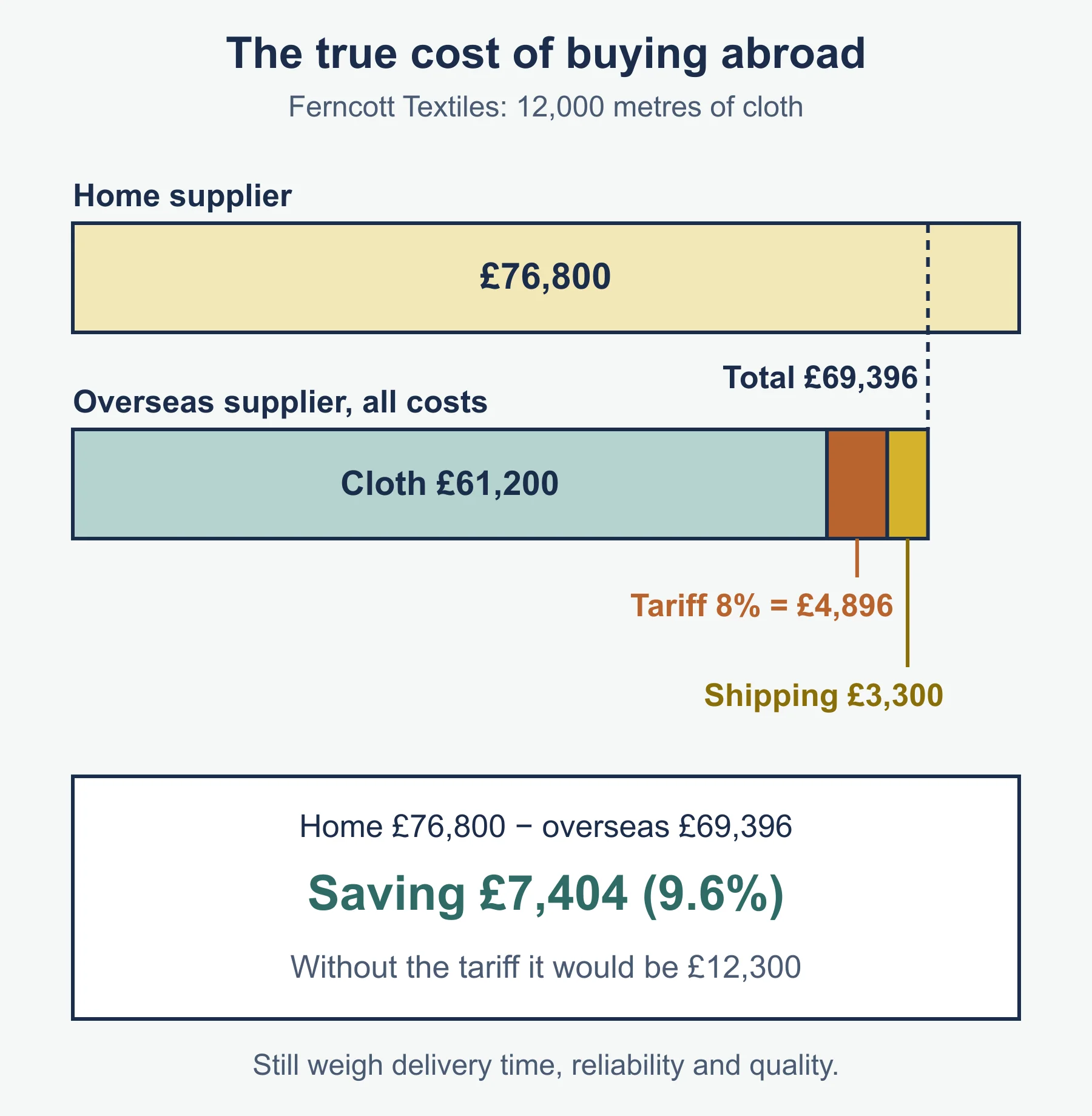
- Buying from overseas: usually lower prices or wider choice, but add shipping, delays, quality checks and any tariff.
Exports
- Benefits: more customers, less reliance on one market, growth when the home market is crowded.
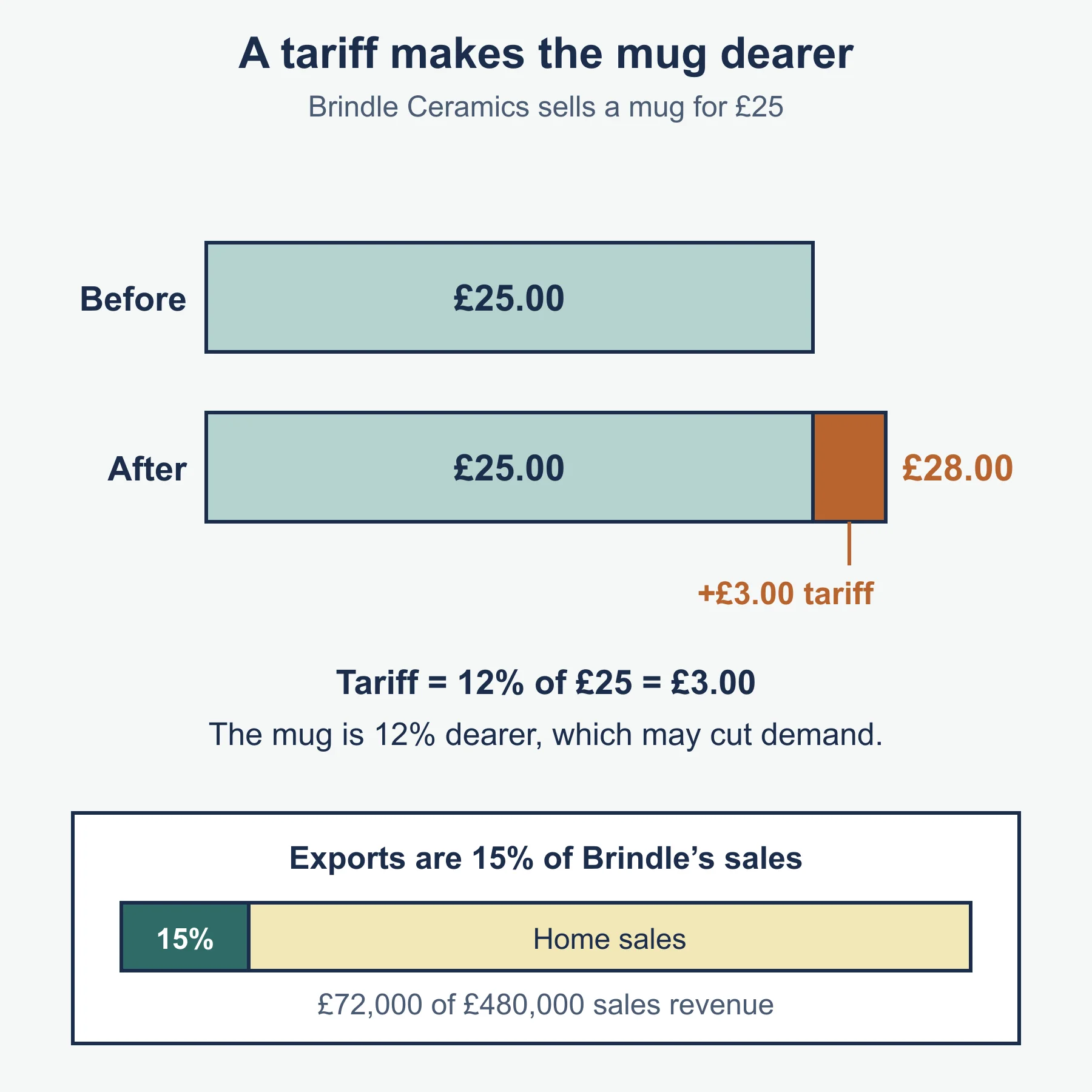
- Costs: transport, paperwork, learning about local tastes, tariffs.
Changing business locations
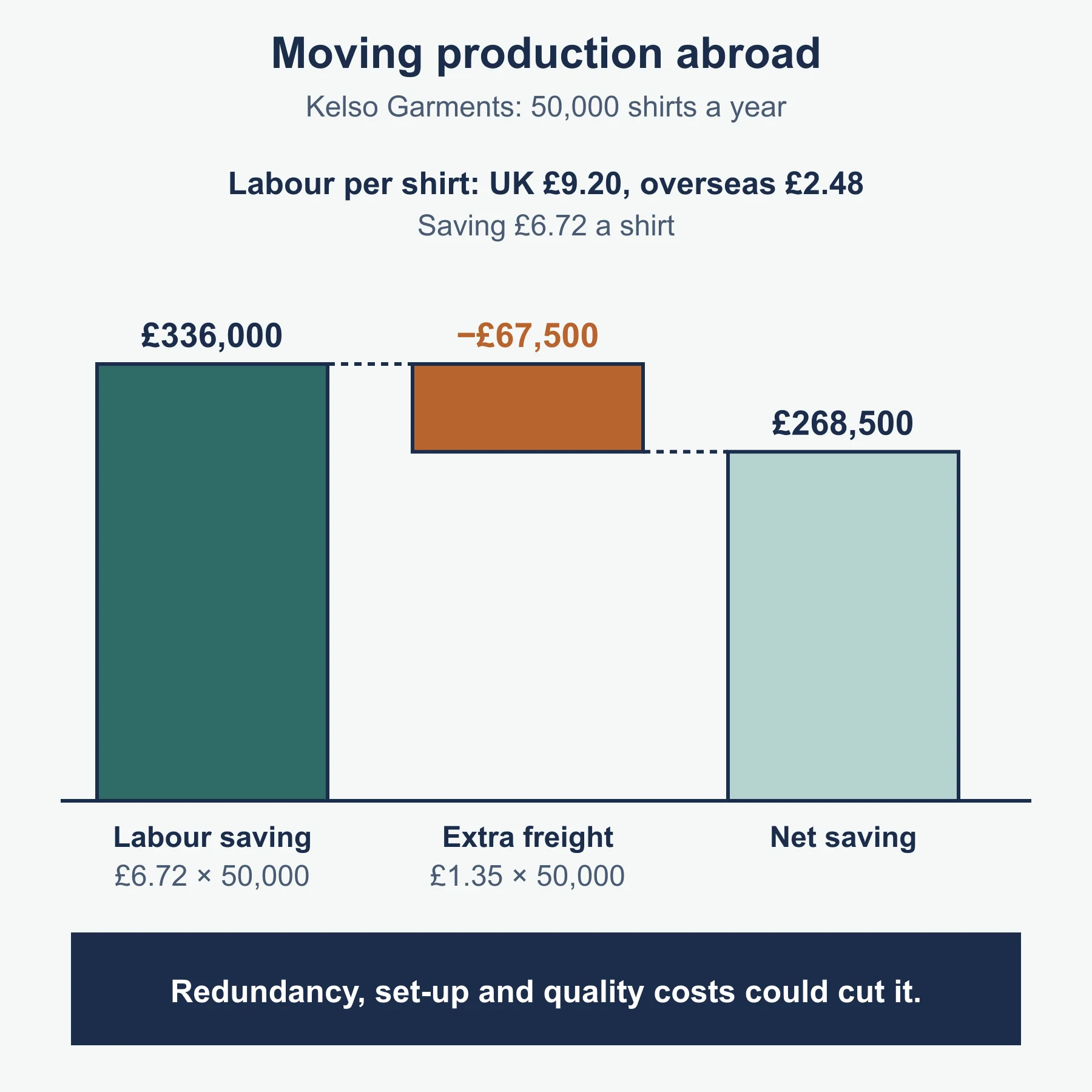
- Reasons: lower labour or land costs, closeness to new markets, avoiding tariffs by producing inside the market.
- Costs: redundancy at home, longer supply chains, harm to reputation, managing from a distance.
Multinationals
| Effect | For the multinational | For the host country |
|---|---|---|
| Positive | New markets, lower costs, spread of risk | Jobs, skills, spending, tax |
| Negative | Hard to manage, different rules, bad publicity | Local firms squeezed, profits sent abroad, pressure on the environment |
Barriers to international trade
| Barrier | Effect on an importer | Effect on an exporter |
|---|---|---|
| Tariff | Higher cost paid at the border | Product dearer in the customer country, so demand may fall |
| Trade bloc | Easier terms inside the bloc | Outsiders face the bloc’s barriers; insiders enjoy easier access |
Competing internationally
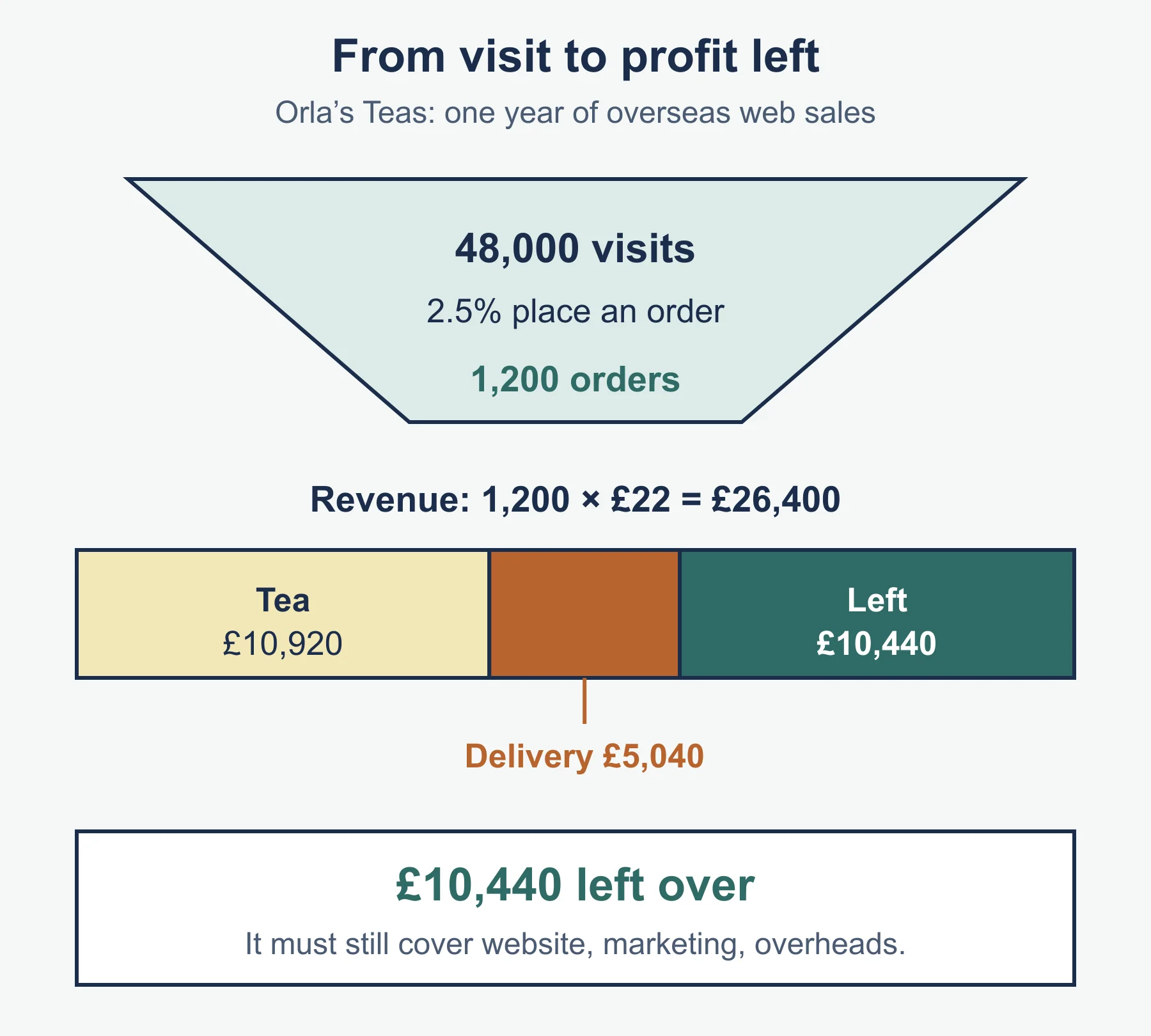
- Internet and e-commerce: reach overseas customers without shops there; costs include delivery, returns and building trust.
- Marketing mix: adapt the product, set price for local incomes and tariffs, promote in the local language, choose local places to sell.
2.1.4 Ethics, the environment and business
| Issue | Possible gain | Possible cost |
|---|---|---|
| Ethics | Reputation, loyal customers, motivated staff | Higher costs, lower profit in the short run |
| Environment and sustainability | New customers, saved energy, less waste | Higher costs, set-up spending |
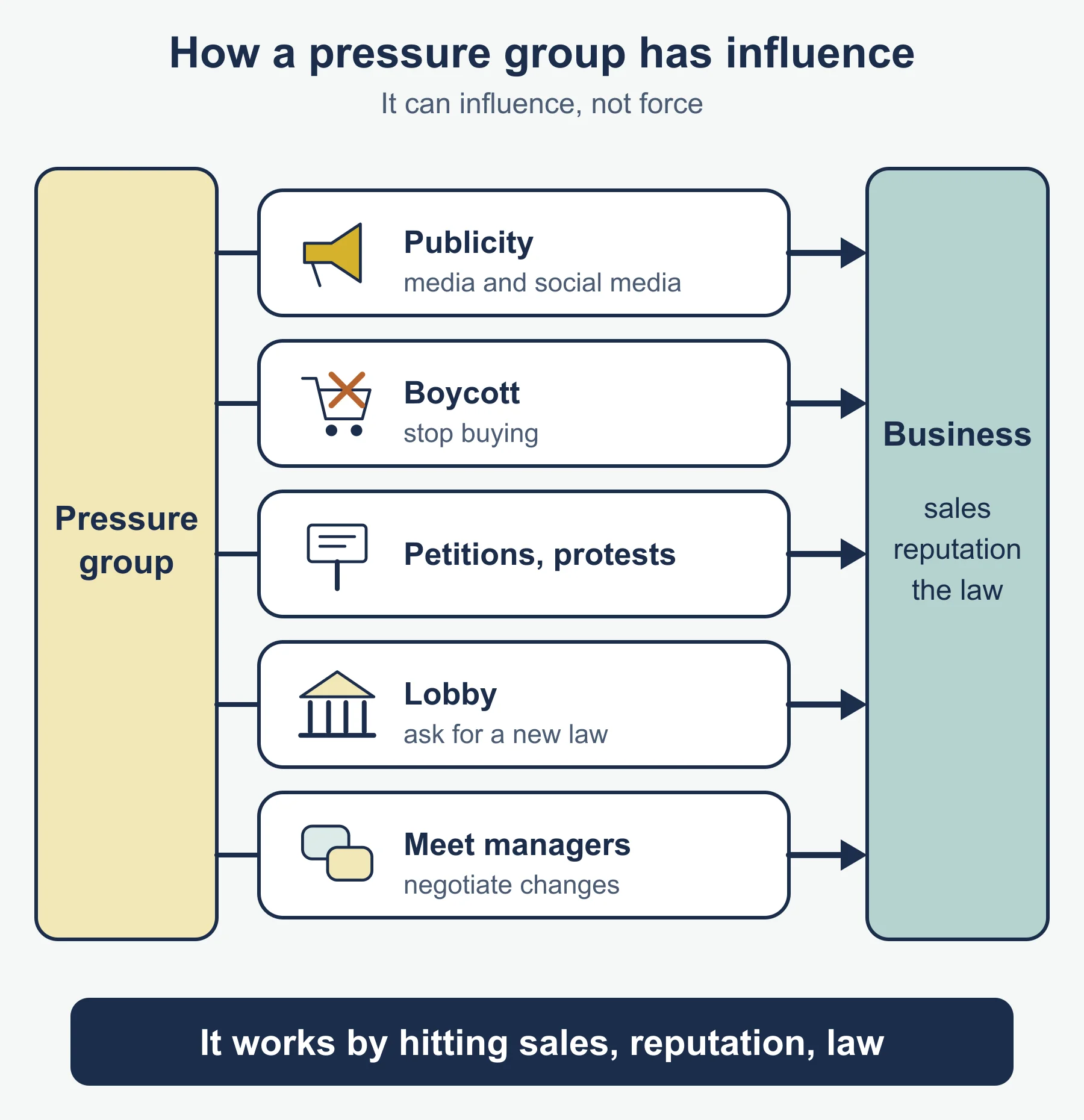
Pressure groups and the marketing mix:
| Element | Pressure group impact |
|---|---|
| Product | Redesign or change materials |
| Price | Fairer pay raises cost, perhaps price |
| Promotion | Respond to publicity; promote the change |
| Place | Retailers stop or start stocking the product |
Method boxes
Tariff calculation:
- Find the import value (quantity x price).
- Tariff = import value x tariff rate.
- Total = import value + tariff (+ freight if given).
- Compare with the home price.
Percentage share and change:
- Share = part / total x 100.
- Change = (new - old) / old x 100.
Trade-off answer (ethics or environment):
- State the choice and its effect on cost.
- Show the effect on profit, using numbers if you have them.
- Give a benefit that could repay the cost.
- Reach a judgement based on the business.
Small worked reminders
Tariff: a business imports goods worth £8,000 and the tariff is 15%. The tariff is 0.15 x 8,000 = £1,200 and the total is £9,200.
Share: exports of £45,000 on sales of £360,000 are 12.5%. If exports rise to £54,000 the change is (54,000 - 45,000) / 45,000 x 100 = 20%.
Location: a task takes 1.5 hours. Labour costs £9.80 an hour at home and £2.40 overseas. The saving per item is 1.5 x (9.80 - 2.40) = £11.10, so on 20,000 items it is £222,000, before freight and other costs.
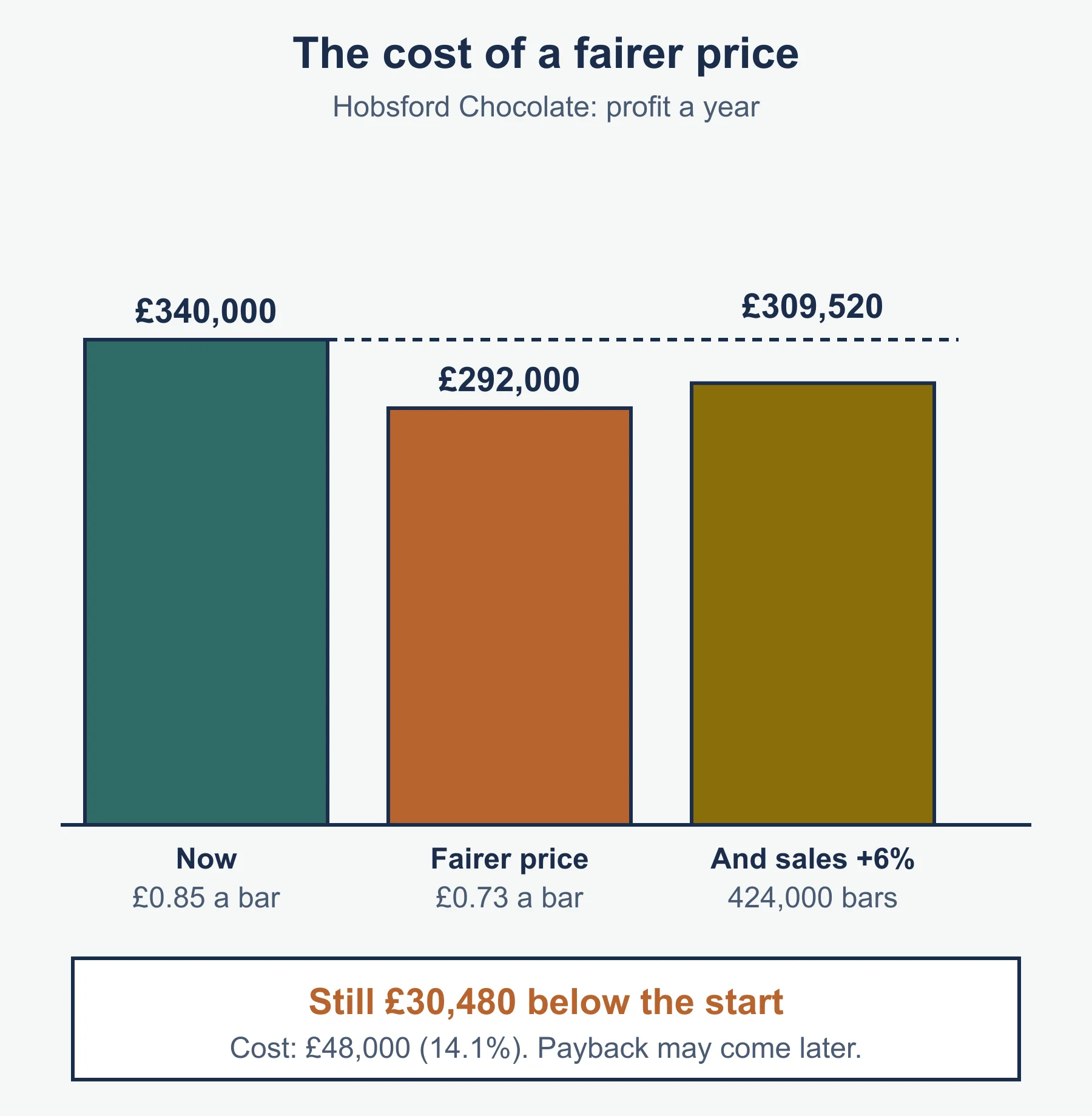
Ethics: an extra £0.20 a unit on 150,000 units costs £30,000. Whether it pays depends on the extra sales.
Environment: energy use is 62,000 units and a new system cuts it by 14%. The saving is 8,680 units, leaving 53,320.
Judgement prompts for longer answers
Use these to move from description to judgement.
- Moving production abroad: weigh the labour saving against freight, redundancy, quality control and reputation. The decision is likelier to pay when volumes are high and the product is simple to make.
- Selling abroad through a website: weigh the extra customers against delivery costs, returns and language. It is likelier to pay when the product is light, high in value and easy to describe.
- Facing a tariff: ask whether the product is priced so that it can absorb the tax, whether customers will pay more and whether production inside the market is possible.
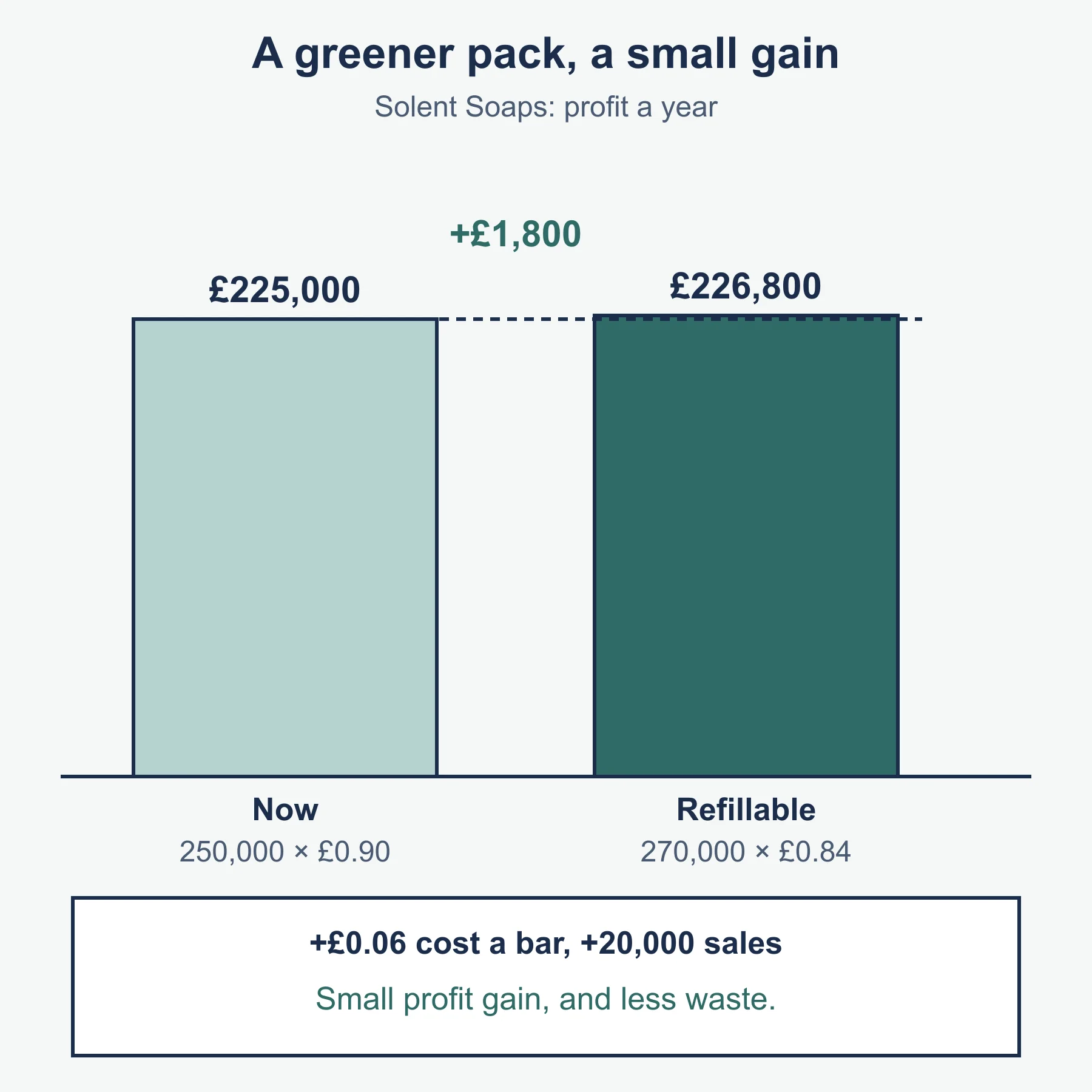
- Choosing an ethical or environmental option: ask how large the cost is, how likely the extra sales are and over what period the benefit should be judged. A short-run fall in profit may be accepted if customers in the target market value the change.
- Responding to a pressure group: ask how many customers share the group’s view, how much sales revenue is at risk and which element of the mix is the cheapest to change.
A model chain of reasoning
Point: Switching to recycled packaging may reduce profit in the short run. Evidence: It adds cost to every unit sold, so profit per unit falls. Development: If customers who care about the environment buy more, sales may rise and the extra volume could repay the cost. Judgement: It is worthwhile if the extra sales are likely, so the answer should say how much the business needs to gain.
Must-know distinctions
- Imports are bought in; exports are sold out. A tariff is paid on imports.
- Ethical considerations are about right and wrong; environmental considerations are about the natural world. A business may face both.
- A multinational operates in more than one country; an exporter may sell abroad without any overseas operations.
- A trade bloc helps members and may hinder outsiders.
- Sustainability looks at the long run; profit in one year is a short-run measure.
- Explain gives a fact and two expansion points without context; analyse places the answer in the business in the question; justify recommends one of two options; evaluate reaches a supported conclusion.
Quick self-test
- A business imports 3,200 units at £14.50 each. A 10% tariff applies. Calculate the total cost.
- Exports are £90,000 and sales revenue is £750,000. Calculate the export share.
- A website has 20,000 visits, 3% place an order, and the average order is £31. Calculate the revenue.
- State one reason why a trade bloc could harm a business outside it.
- A product sells for £5.20 and costs £4.10 to make. Calculate profit on 80,000 units.
- The cost then rises by £0.15 a unit for an ethical sourcing change. Calculate the new profit on 80,000 units.
- A product priced at £30 faces a 20% tariff abroad. Calculate the price after the tariff, then after a cut to 5%.
- Give two ways a business could change its marketing mix to sell abroad.
- State one effect of a pressure group campaign on place.
- Give one reason why a multinational may be criticised in a host country.
Answers
- Import value 3,200 x 14.50 = £46,400. Tariff £4,640. Total £51,040.
- 90,000 / 750,000 x 100 = 12%.
- Orders 600; revenue 600 x 31 = £18,600.
- It faces the bloc’s tariffs, so its goods cost more than those of members.
- 1.10 x 80,000 = £88,000.
- 0.95 x 80,000 = £76,000 (down £12,000).
- At 20% the price is £36.00; at 5% it is £31.50.
- Any two of: adapt the product, change the price for local incomes, promote in the local language, use a local distributor.
- Retailers may stop stocking the product.
- For example, profits leave the country, local firms are squeezed, or the environment suffers.
Where marks are usually lost
- Describing a tariff as a tax on exports.
- Leaving freight and tariff out of a landed-cost comparison.
- Giving a general benefit of exporting without tying it to the business in the question.
- Writing only about profit in a trade-off answer and never weighing it against ethics or sustainability.
- Listing the marketing mix without saying how the pressure group affects each part.
- Not reaching a judgement in an evaluate or justify answer.
- Confusing the percentage share with the percentage change.
Frequently asked questions
Who pays a tariff on imported goods? A tariff is a tax on imports, so the importer pays it, although the cost may be passed on to customers in higher prices. Saying the exporter pays the tariff is a common error.
What is a trade bloc? A trade bloc is a group of countries that agree to trade with each other on easier terms, such as low or no tariffs between members, while usually keeping tariffs on goods from outside. The European Union is an example.
What is a multinational? A multinational is a business with operations, such as factories, shops or offices, in more than one country, usually with a head office in one country. Host countries can gain jobs and tax receipts but local firms may face more competition.
Do ethical choices always reduce a business’s profit? Not always. Ethical choices often raise costs in the short run, but they can bring a better reputation, loyal customers and motivated staff, so Edexcel GCSE Business (1BS0) answers should weigh the trade-off between ethics and profit.
Official syllabus
Pearson Edexcel Level 1/Level 2 GCSE (9-1) in Business (1BS0), Specification, Issue 2, July 2022, published by Pearson Education Limited. Theme 2: Building a business, Topic 2.1 Growing the business, items 2.1.3 and 2.1.4.
Get free revision emails (optional)
Occasional emails with practice questions, worked explanations and links to free resources for the qualification and subjects you choose. No spam, and you can unsubscribe from any email. The free tools on this site never need an email.
Related resources
-
Study guides
Edexcel GCSE Business: Business growth and changing aims (1BS0)
Study guide to organic and external growth, plc ownership, sources of finance and why aims change, for Pearson Edexcel GCSE Business Theme 2.
Business · Pearson Edexcel · GCSE
Read guide -
Practice questions
Edexcel GCSE Business: Business growth and changing aims (1BS0) – Practice Questions
Twelve original practice questions with worked answers on growth methods, plc, finance and changing aims for Edexcel GCSE Business Theme 2.
Business · Pearson Edexcel · GCSE
Try questions -
Revision notes
Edexcel GCSE Business: Business growth and changing aims (1BS0) – Revision Notes
Condensed revision notes on growth methods, plc, sources of finance and changing aims for Pearson Edexcel GCSE Business Theme 2, with a self-test.
Business · Pearson Edexcel · GCSE
Revise topic
Related articles
-
teaching
A Level tuition in Dubai: Cambridge or Pearson Edexcel International A Level?
Schools in Dubai and Abu Dhabi teach either Cambridge International AS & A Level or Pearson Edexcel International A Level. How the two are structured, why it matters for tuition, and how online classes from Lahore work.
9 October 2026
-
curriculum guides
Choosing subjects at IGCSE and A Level
How subject choices at 14 and 16 affect university options later, and how to keep pathways open without overloading a timetable.
28 July 2026
Studying this with a teacher
Working through Business GCSE?
This page is free and stays free. If you would rather be taught it, Marlbridge runs Business classes one-to-one and in small groups of up to 15, online in your own time zone. The first trial class is free. WhatsApp replies within an hour (8am–11pm Pakistan time, every day); email the same day.
Pearson Edexcel Business teachers at Marlbridge

