
Revision Notes
Edexcel International A Level Accounting: Role and purpose, concepts and conventions (YAC11) – Revision Notes
Condensed recall notes for Edexcel IAL Accounting 1.1.1-1.1.2 and 1.1.8-1.1.10: role of accounting, nine concepts, IAS terms and a self-test.
- Subject
- Accounting
- Level
- AS LEVEL
- Topic
- Principles of accounting and double entry bookkeeping
- Author
- Marlbridge Academic Team
- Updated
- Reviewed by
- Javaid Iqbal Sabri (what this means)
Aligned to Pearson Edexcel A Level Accounting (YAC11), 2015-onwards. Official specification .
Syllabus page (what it covers and how it is assessed): Pearson Edexcel A Level Accounting.
Syllabus points this page covers
YAC11 (AS Level)
- 1.1.1-1.1.2 Role and purpose of accounting
- 1.1.8-1.1.10 Accounting concepts and conventions
Found an error? Report a correction.
Need help with this topic? Request a free trial class for A Level Accounting (YAC11).
These notes condense outcomes 1.1.1 to 1.1.2 and 1.1.8 to 1.1.10 of the Pearson Edexcel International Advanced Subsidiary/Advanced Level in Accounting (XAC11/YAC11) specification, Issue 2, September 2018. This is Unit 1 content, so it is International AS material that also counts towards the full International A Level. All money amounts are in dollars.
For full explanations use the study guide. Then try the practice questions. Wider topic: principles and double entry study guide and principles revision notes. Course hub: Edexcel A-Level Accounting. Checklist: YAC11 topic checklist. Check your gaps with a free 10-minute diagnostic.
Role and purpose (1.1.1 and 1.1.2)
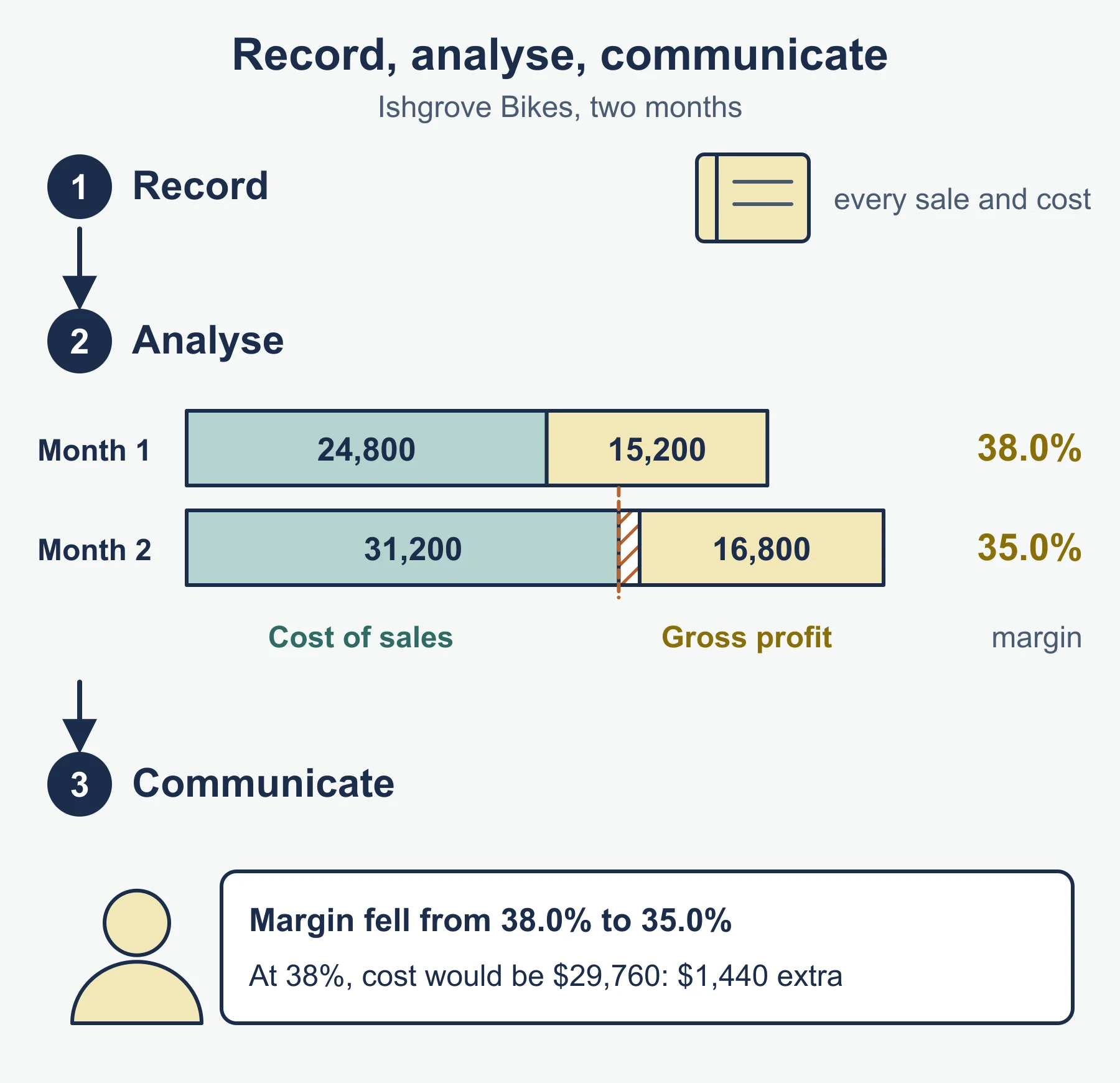
Role: record, analyse, communicate information to users.
| Step | What happens | Example output |
|---|---|---|
| Record | Transactions entered in the books of account in money terms | Ledger accounts |
| Analyse | Totals, comparisons, percentages | Gross profit as a percentage of revenue |
| Communicate | Presented to users | Financial statements, reports |
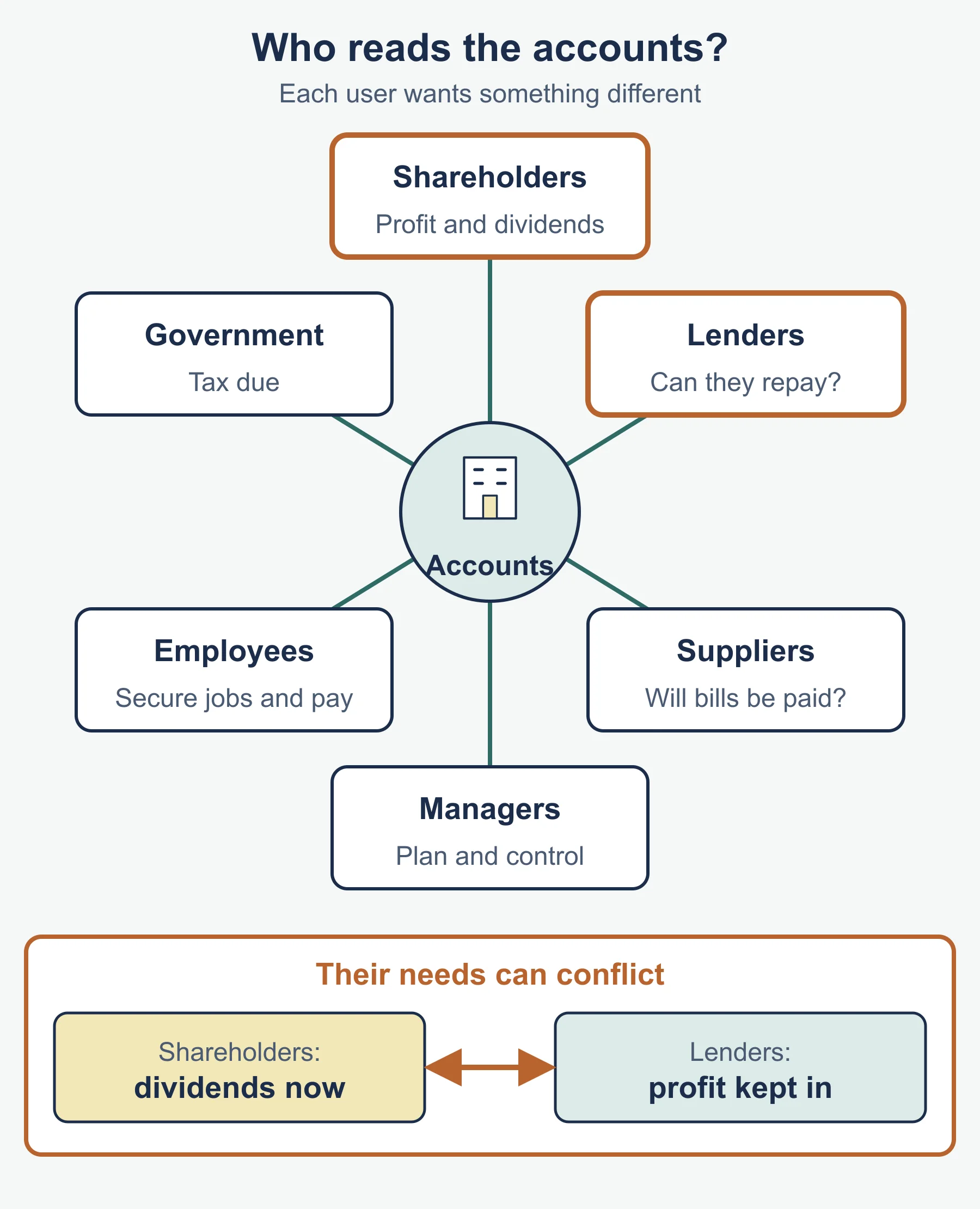
Users and what they want.
| User | Wants to know |
|---|---|
| Owner | Profit, drawings, value of the business |
| Managers | Costs, margins, performance by product |
| Lender | Ability to repay loan and interest |
| Supplier | Likelihood of being paid on time |
| Employees | Security and stability |
| Tax authority | Taxable profit |
| Investor | Return compared with alternatives |
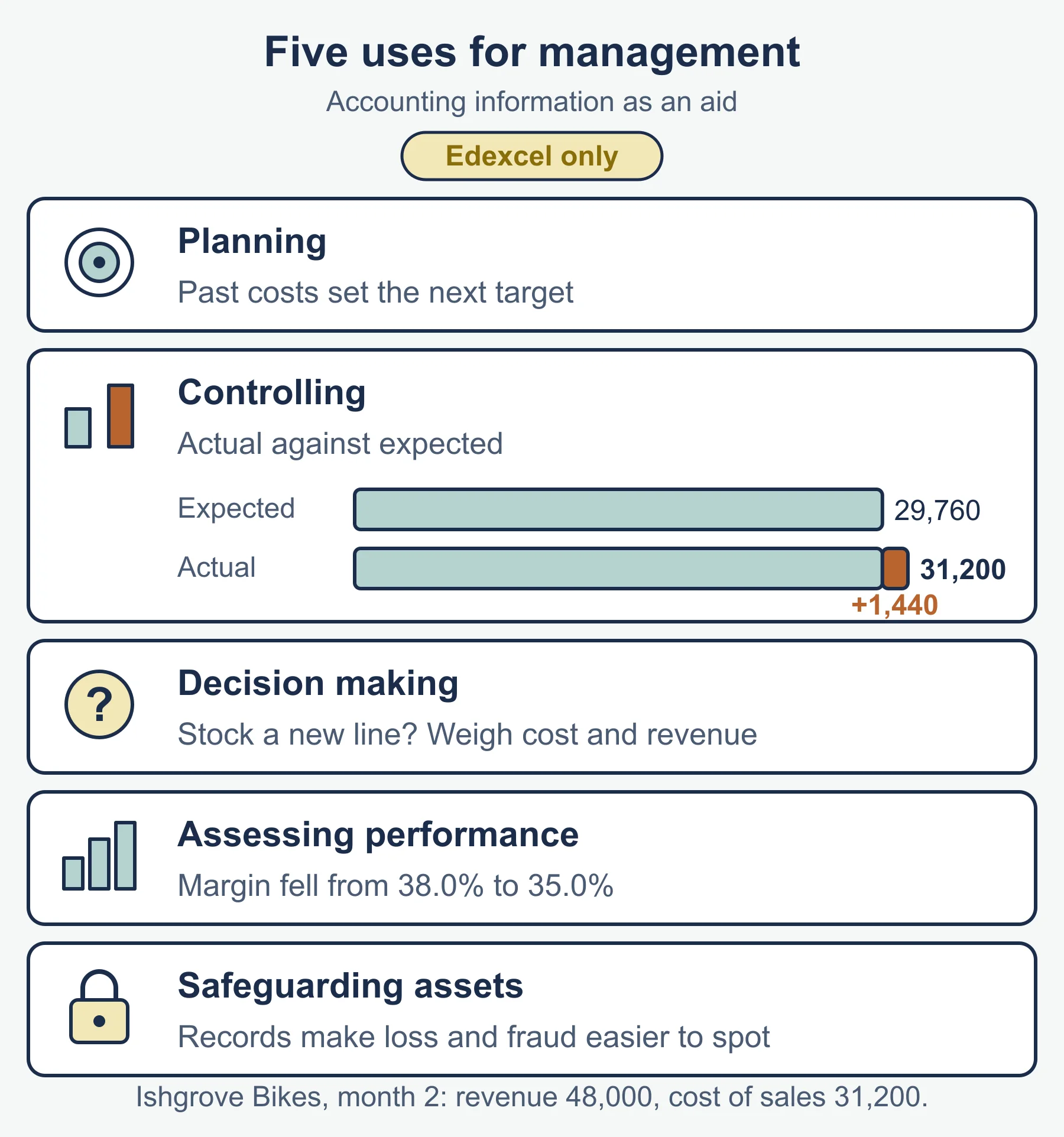
Purpose: an aid to management. Five uses, each needing a figure to back it up.
| Use | Short example |
|---|---|
| Planning | Set next year’s sales target from this year’s results |
| Controlling | Compare actual costs with expected costs |
| Decision making | Decide whether to add a product line |
| Assessing performance | Compare margins between months |
| Safeguarding assets | Reconcile inventory records with a count |
Small worked reminder. Gresham Toys: revenue 90,000, cost of sales 54,000. Gross profit = 90,000 - 54,000 = 36,000. Gross profit as a percentage of revenue = 36,000 / 90,000 = 40.0%. If last year’s figure was 44%, the manager asks why the margin has fallen.
The nine concepts and conventions (1.1.8 and 1.1.9)
| Concept | One-line meaning | Test to run on a scenario | Typical effect |
|---|---|---|---|
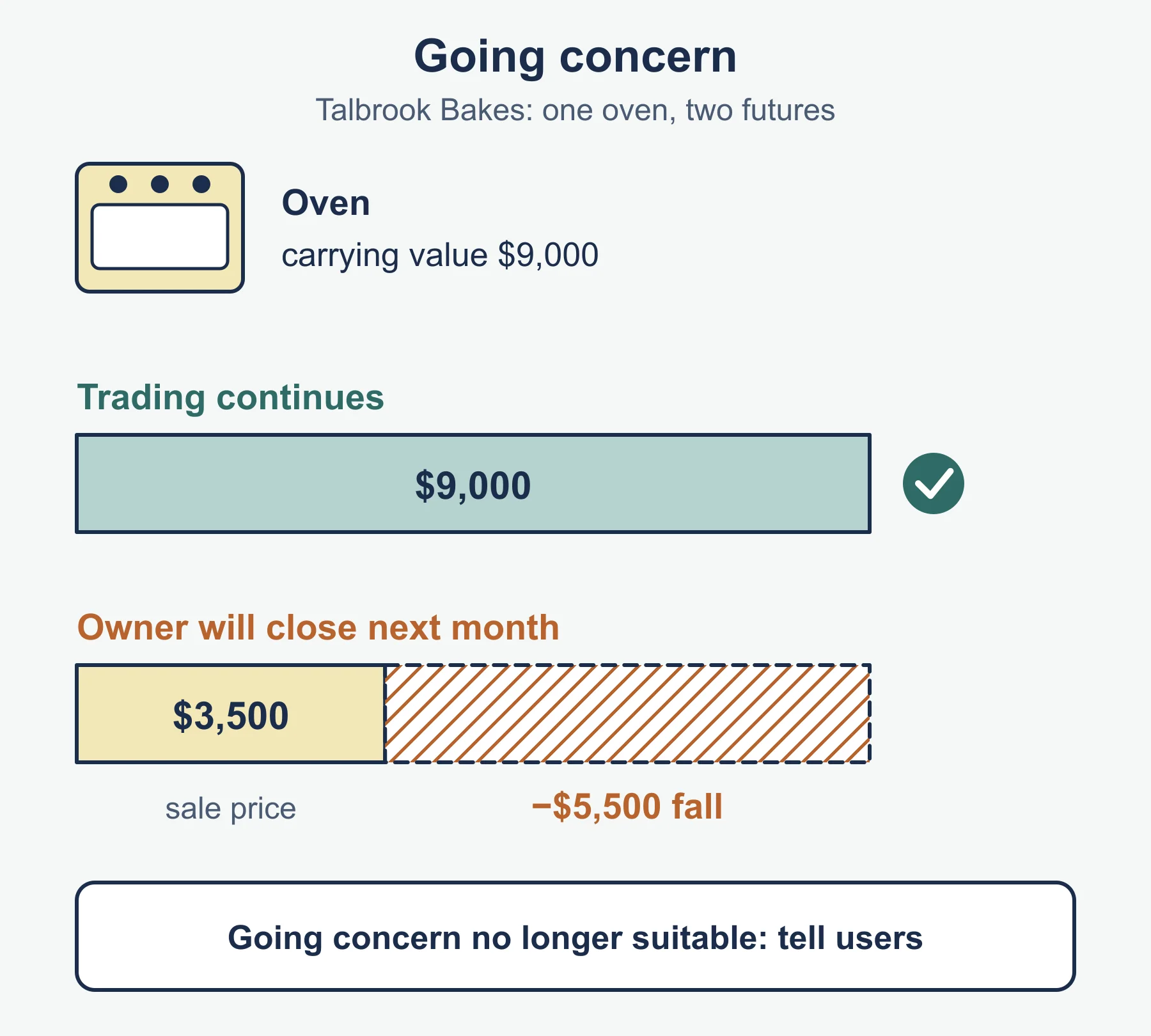
| Going concern | Business will continue for the foreseeable future | Is closure planned or likely? | Assets kept at carrying value; costs spread over asset life |
| Prudence | Do not overstate assets or income, or understate liabilities or expenses | Is there doubt over a gain or loss? | Lower profit or asset value when in doubt |
| Accruals | Match income and expenses to the period earned or incurred | Does cash move in a different period from the benefit? | Accrued expenses, prepayments |
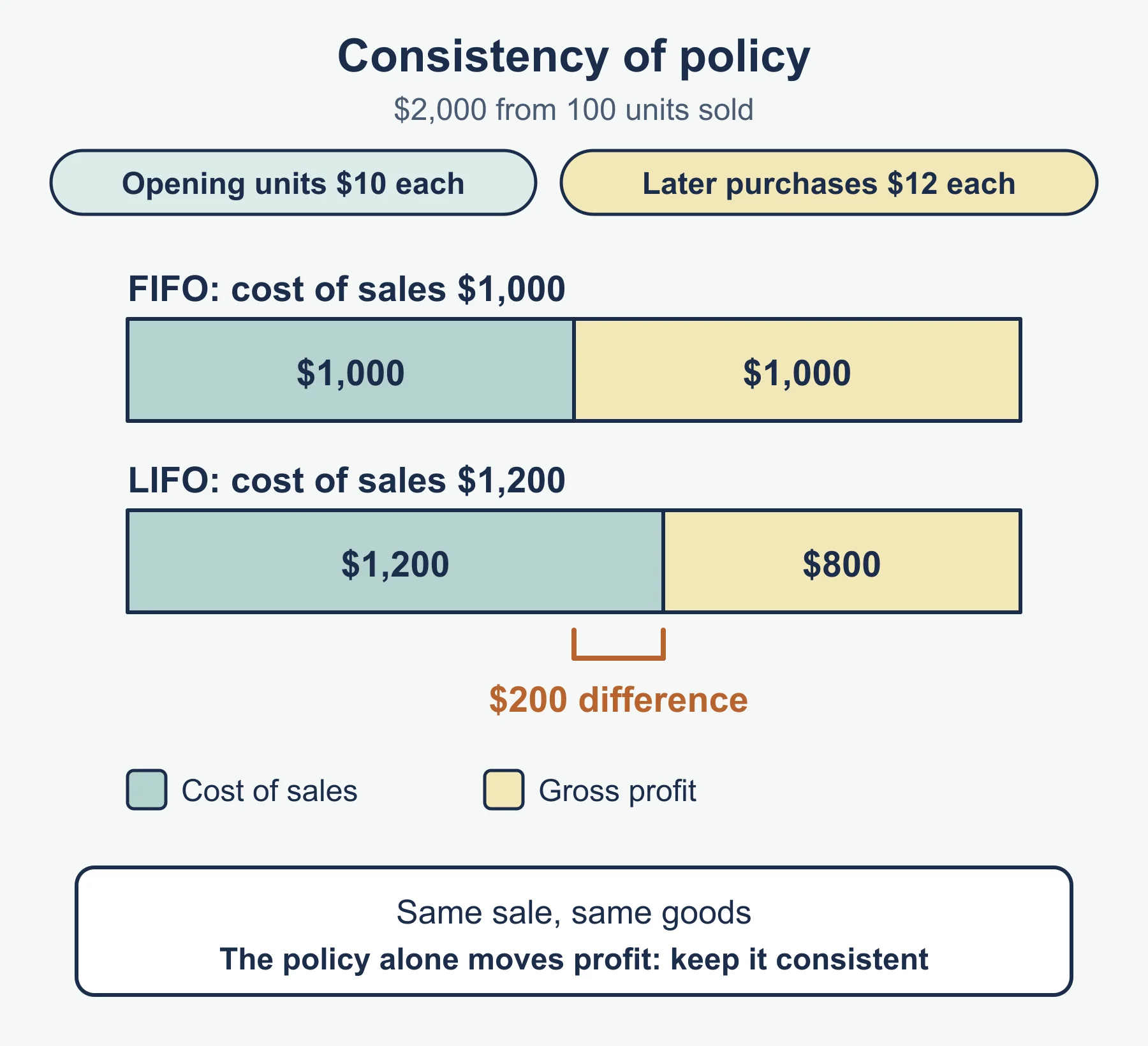
| Consistency | Same policies each period | Has a method changed? | Results stay comparable |
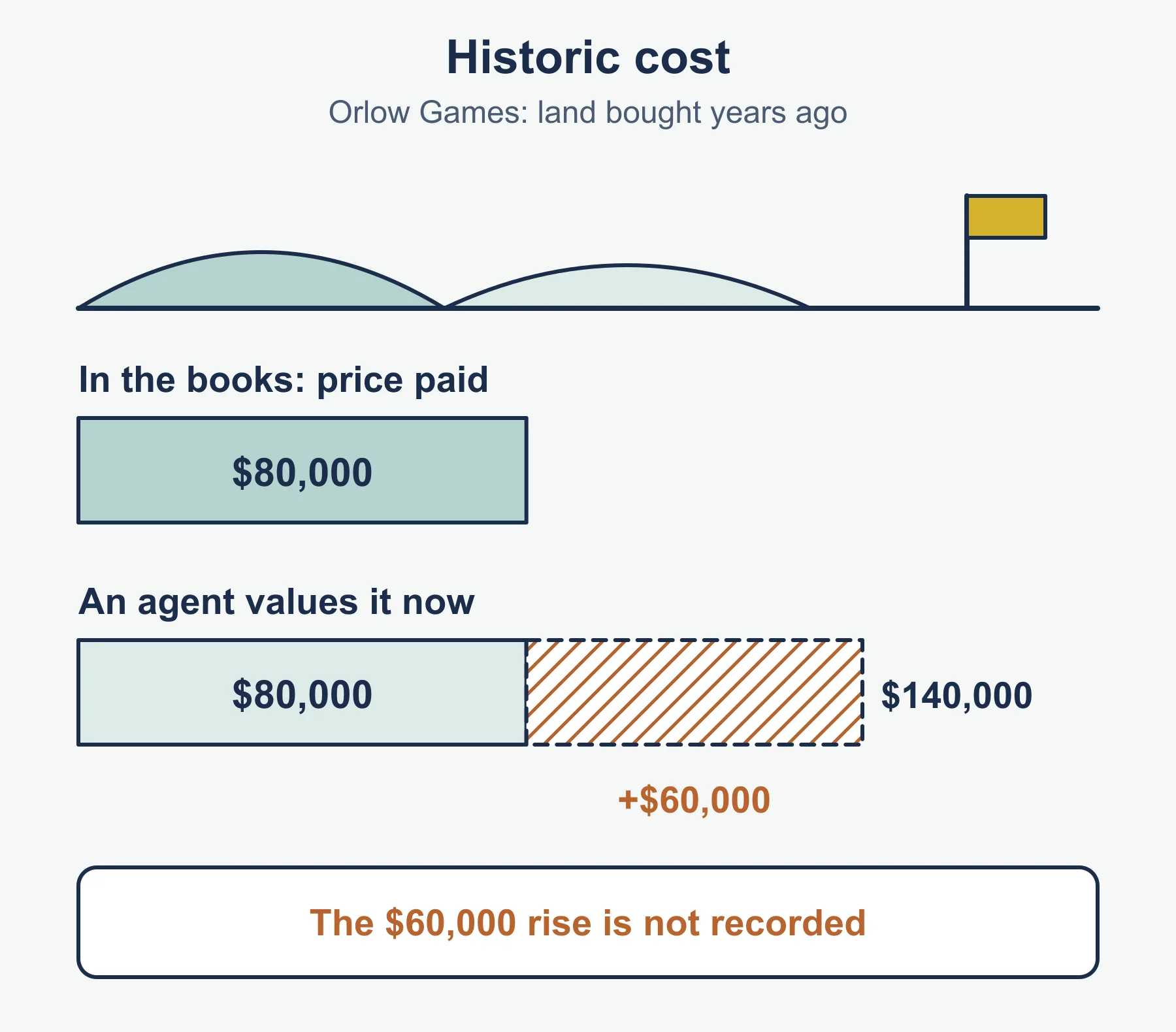
| Historic cost | Record assets at price paid | Is a current value being used instead? | Assets stay at cost |
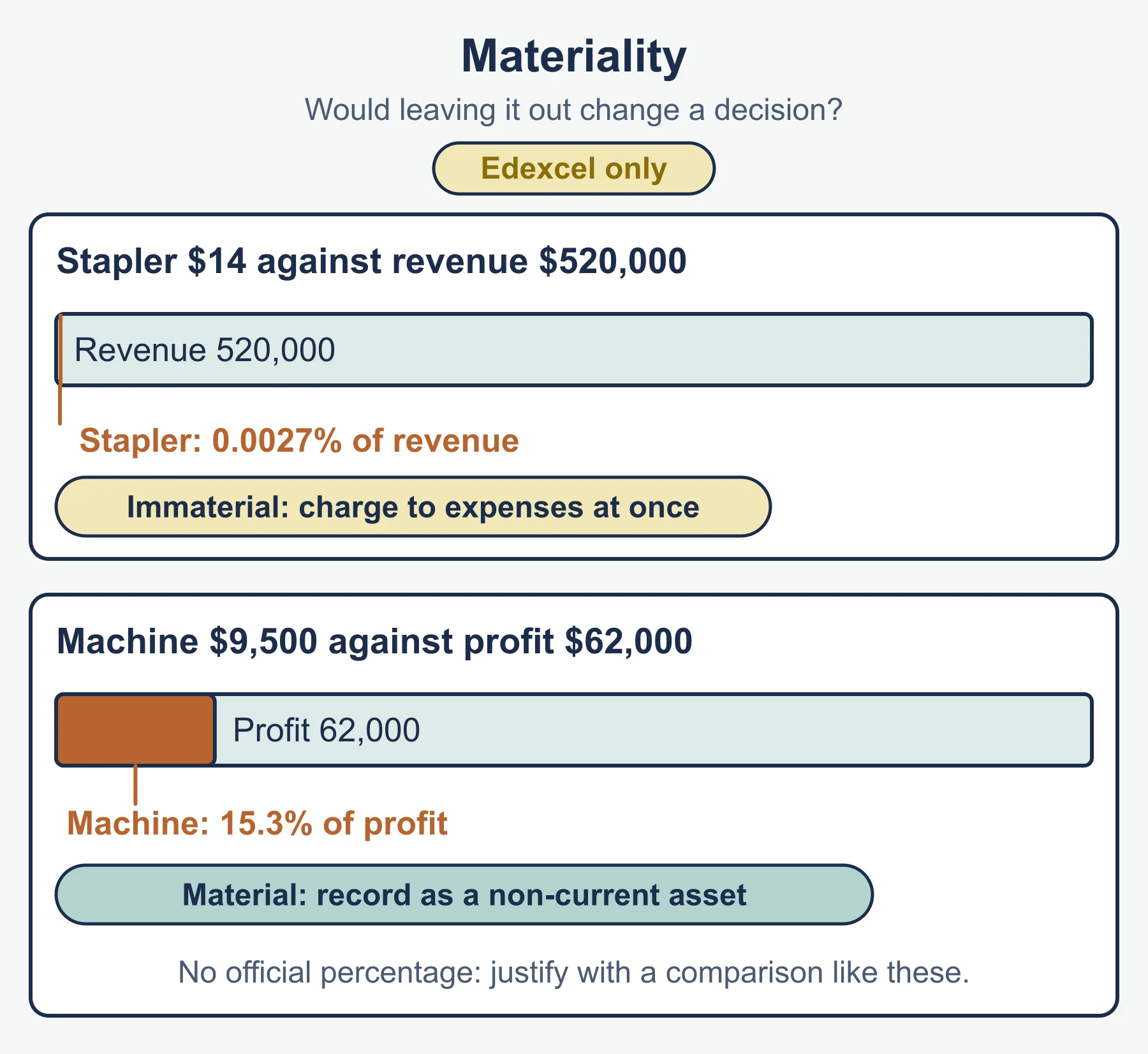
| Materiality | Matters only if it could change a user’s decision | Is the item big enough to matter? | Small items expensed |
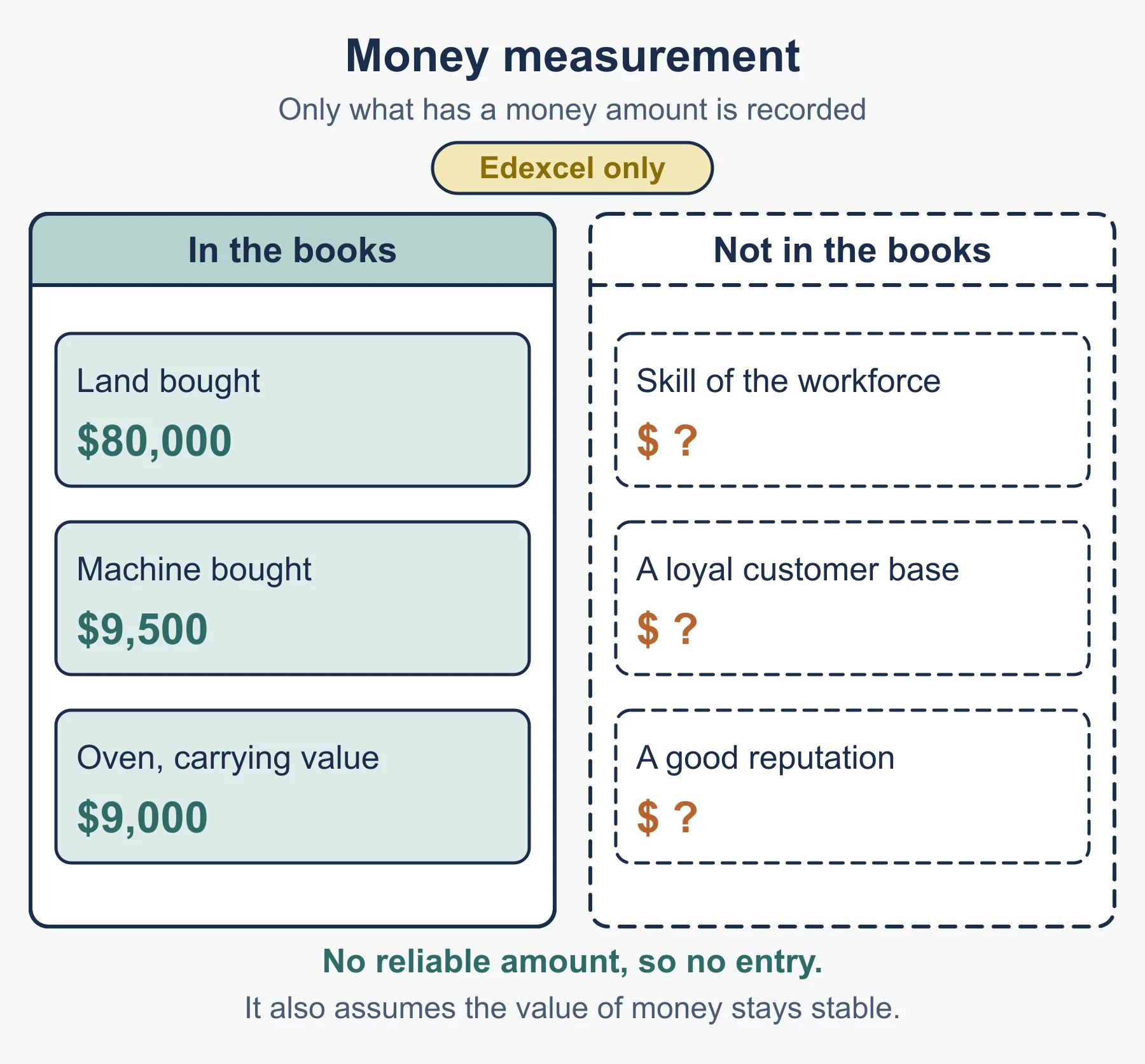
| Money measurement | Only items measurable in money are recorded | Can a reliable money amount be given? | Skills, reputation not recorded |
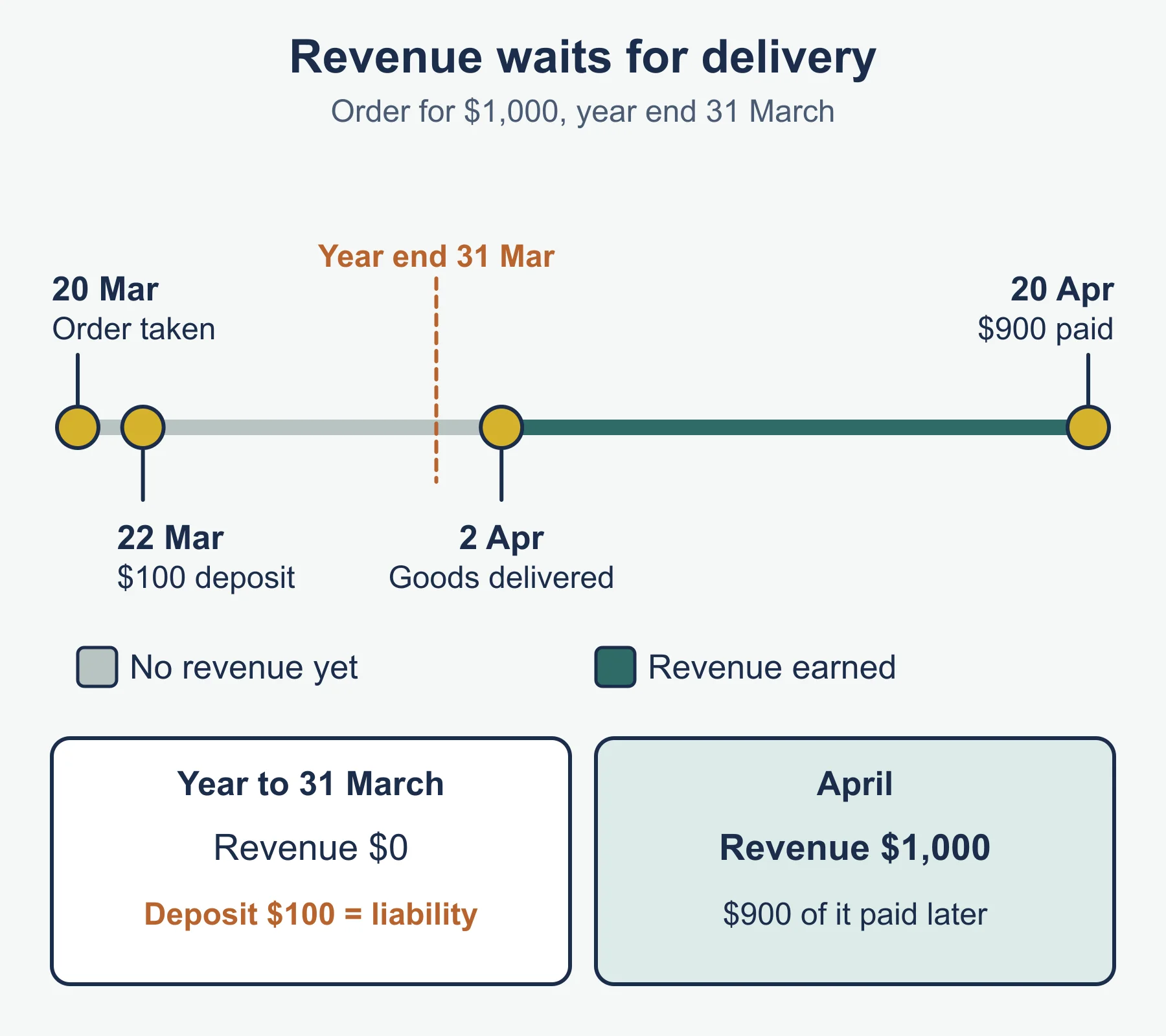
| Realisation | Revenue is recognised on supply of goods or services | Has the customer received the goods or service? | Deposits are liabilities until then |
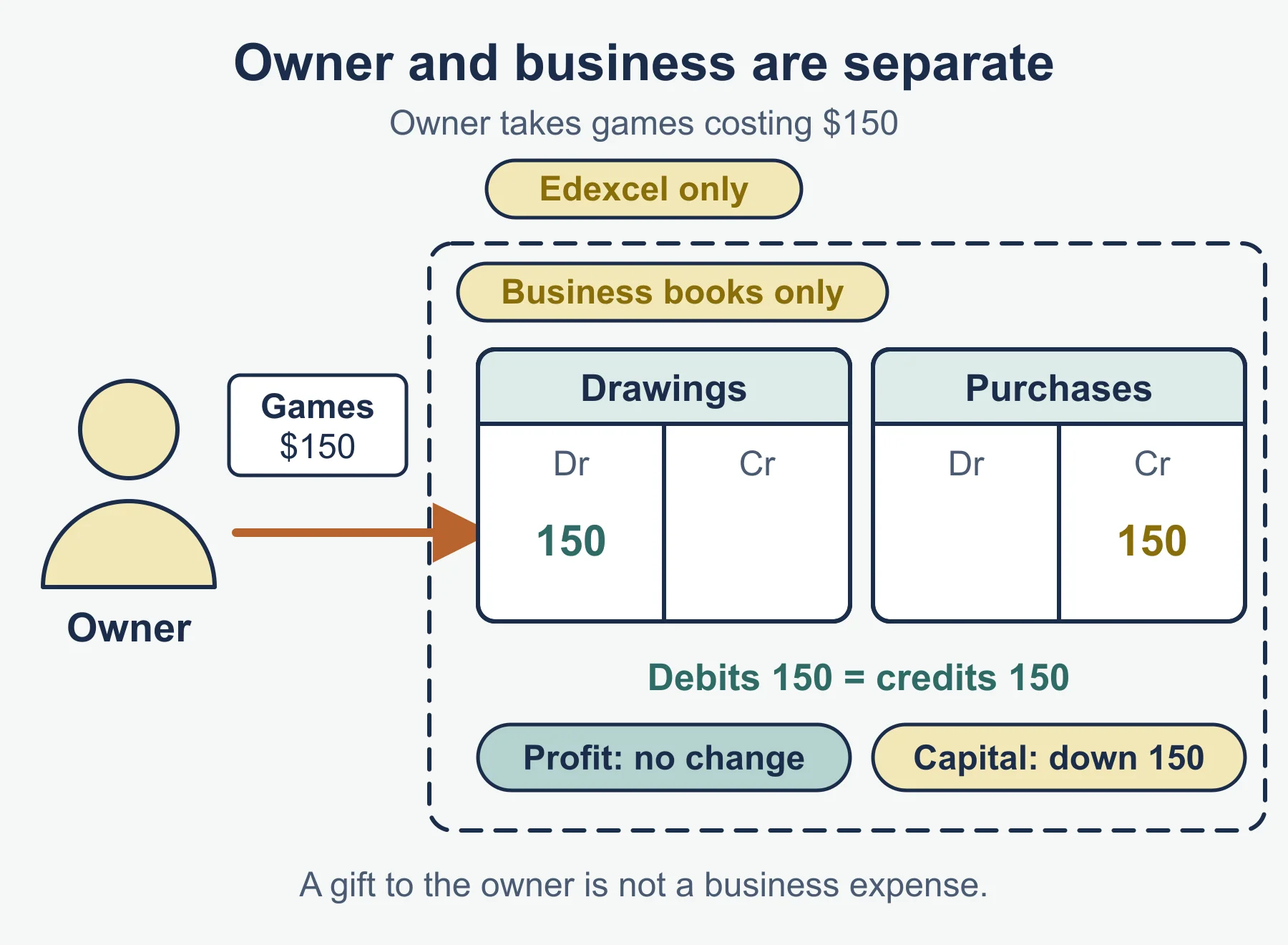
| Business entity | Owner and business are separate | Is this a business or a personal item? | Personal use is drawings |
Pairs people mix up.
| Pair | Difference |
|---|---|
| Accruals and realisation | Accruals matches costs and income to the right period; realisation fixes the point at which revenue is earned |
| Prudence and understating | Prudence stops overstatement; it does not allow deliberate understatement |
| Historic cost and money measurement | Historic cost is about which value to use for an asset; money measurement is about what can be recorded at all |
| Consistency and comparability | Consistency is one business over time; IAS support comparison between businesses |
| Going concern and prudence | Going concern is the basis for the whole set of statements; prudence guides individual judgements |
Method in steps: naming a concept in an exam answer
- Quote or paraphrase the key fact in the scenario.
- Name the concept exactly as the specification does.
- State what it requires, in one clause.
- State the effect on a figure: profit, an asset, a liability or comparability.
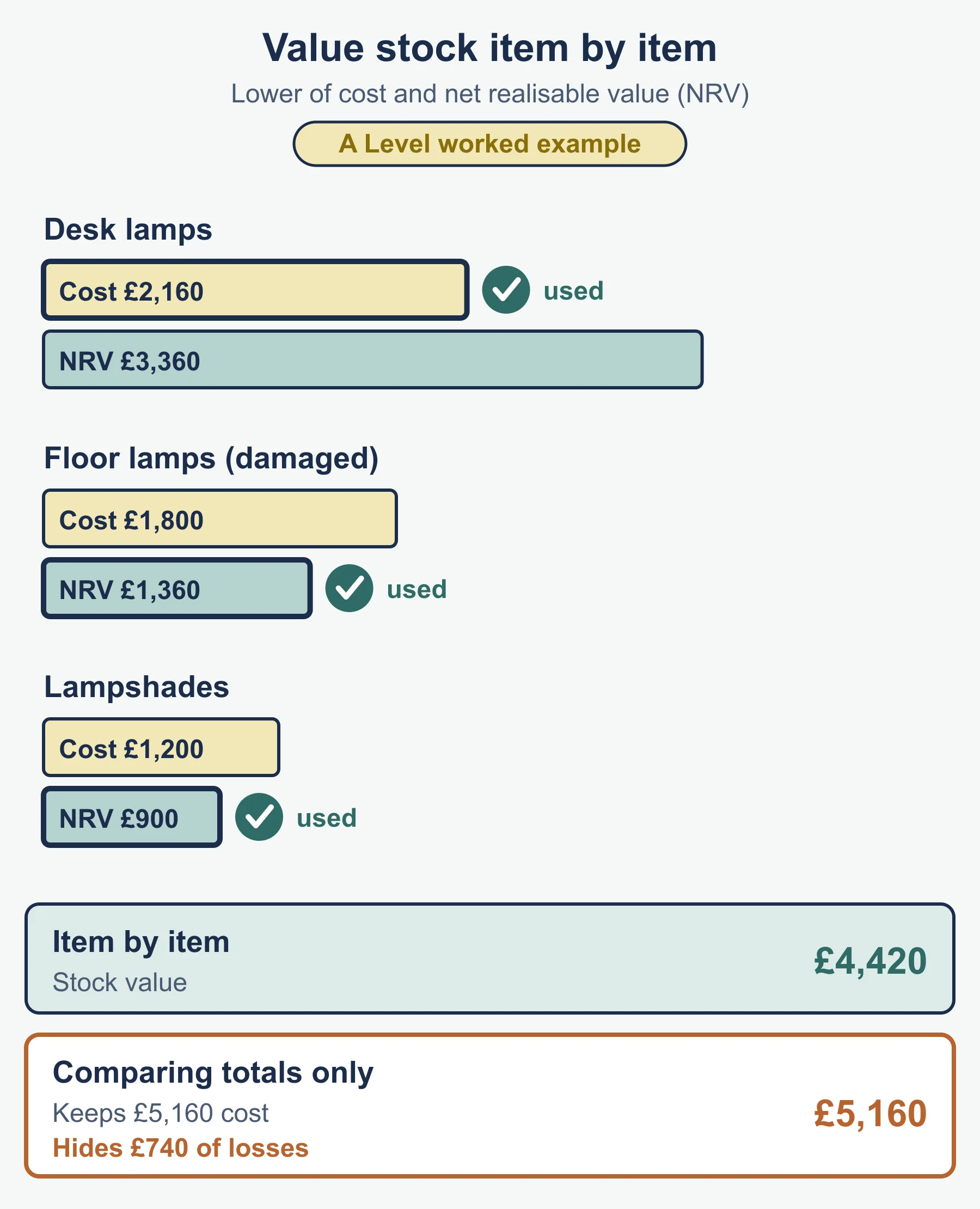
Example: “Pendry Tools values 30 damaged units at 7 instead of cost 8. This is prudence, which stops assets being overstated, so inventory falls from 240 to 210 and profit falls by 30.”
Small worked reminders
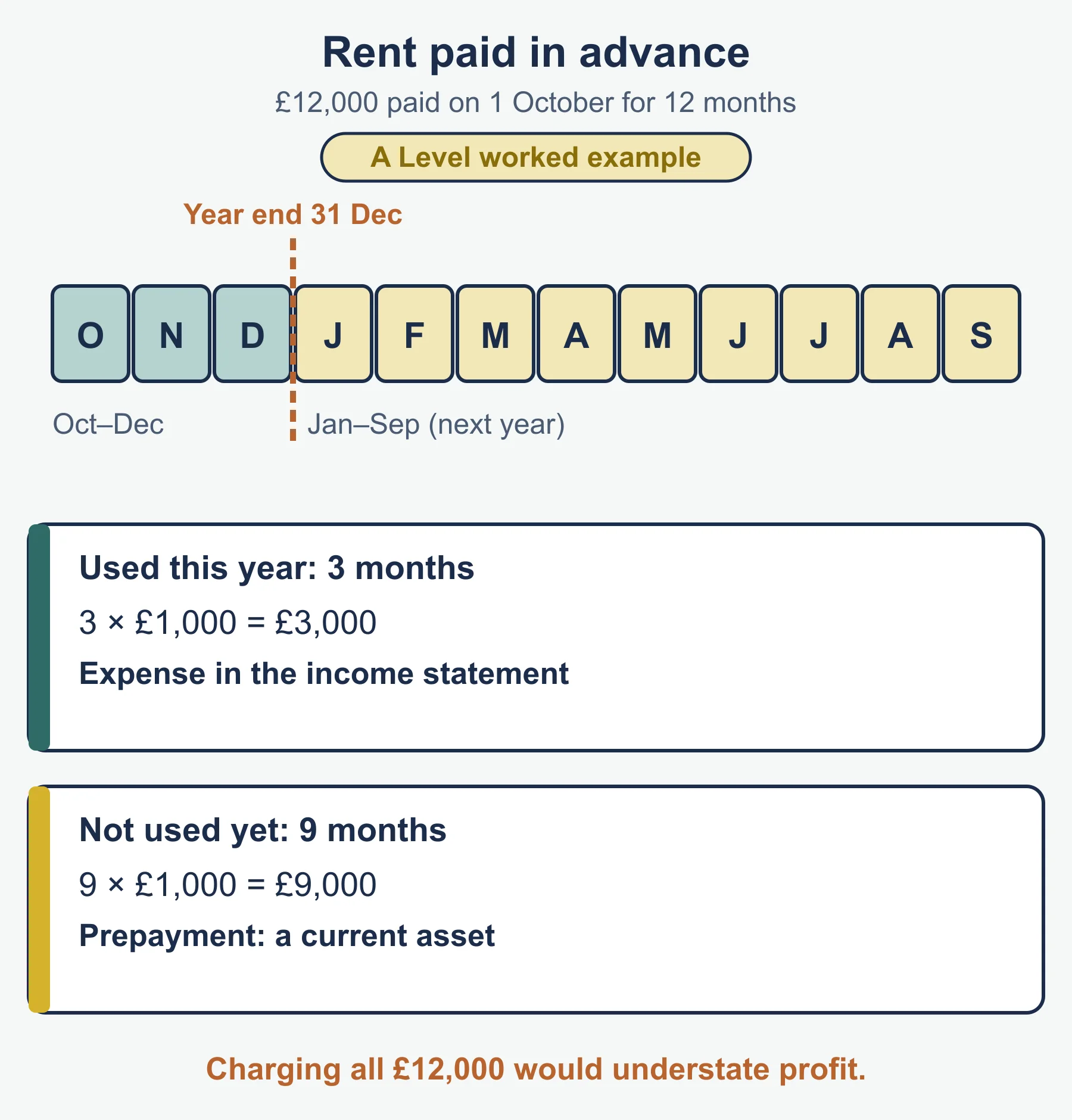
Accruals. Rent of 6,000 for a year is paid on 1 October and the year ends on 31 December. Monthly rent = 6,000 / 12 = 500. Three months used = 1,500, which is the expense. The remainder, 6,000 - 1,500 = 4,500, is a prepayment (other receivables).
Prudence. 30 units cost 8 each (240). Selling price is 12 and selling costs are 5, so net realisable value (NRV) = 12 - 5 = 7. Value at the lower of cost and NRV = 30 x 7 = 210. Profit is reduced by 240 - 210 = 30.
Materiality. An item of 25 against revenue of 300,000 is 25 / 300,000 = 0.0083% of revenue, so it is treated as an expense.
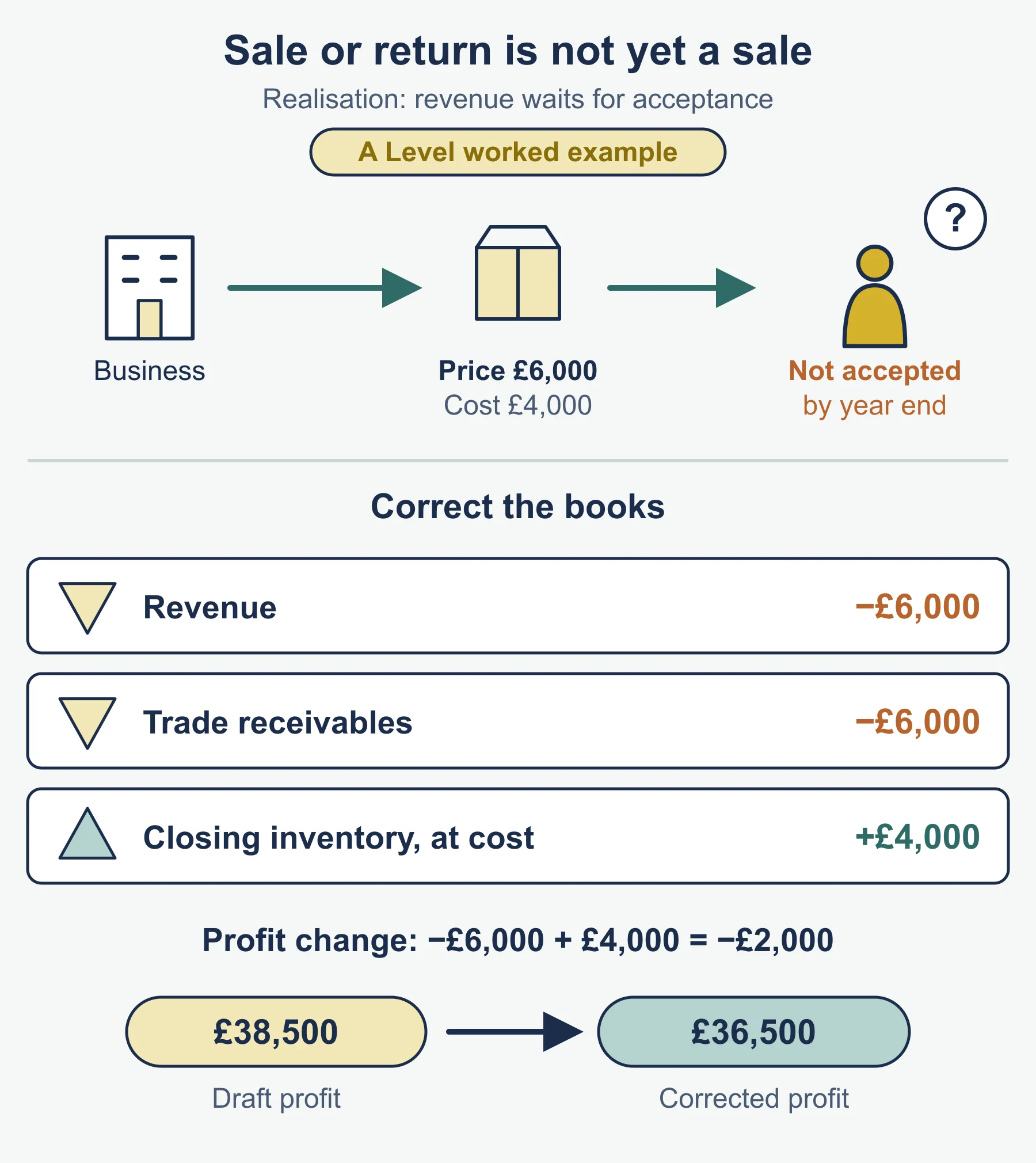
Realisation. A deposit of 500 received for goods to be delivered next month is not revenue yet. It is a liability until delivery.
Business entity. The owner takes goods for personal use: debit drawings, credit purchases. The business expense is not increased.
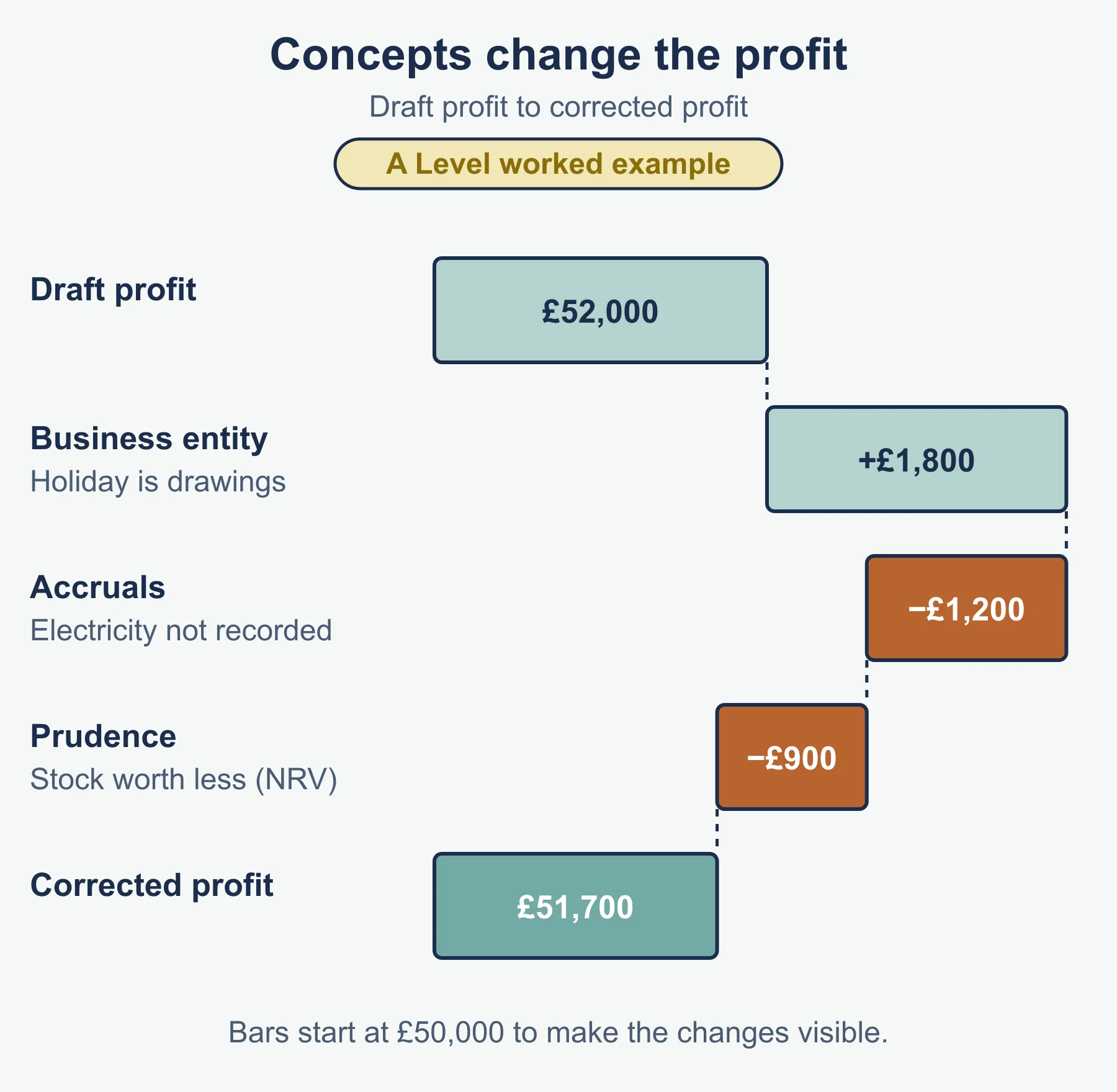
Which figure does each concept change?
| Concept | Figure usually affected |
|---|---|
| Going concern | Asset values if trading will stop, and depreciation periods |
| Prudence | Inventory, receivables, provisions, profit |
| Accruals | Expenses, other payables, other receivables, profit |
| Consistency | Comparability of profit from year to year |
| Historic cost | Non-current assets and capital employed |
| Materiality | Whether an item is capitalised or expensed |
| Money measurement | What is left out of the statements |
| Realisation | Revenue and trade receivables in the right period |
| Business entity | Drawings and capital |
Use this table as a prompt when an exam question asks what a concept does to a figure, not only what it means.
International Accounting Standards (1.1.10)
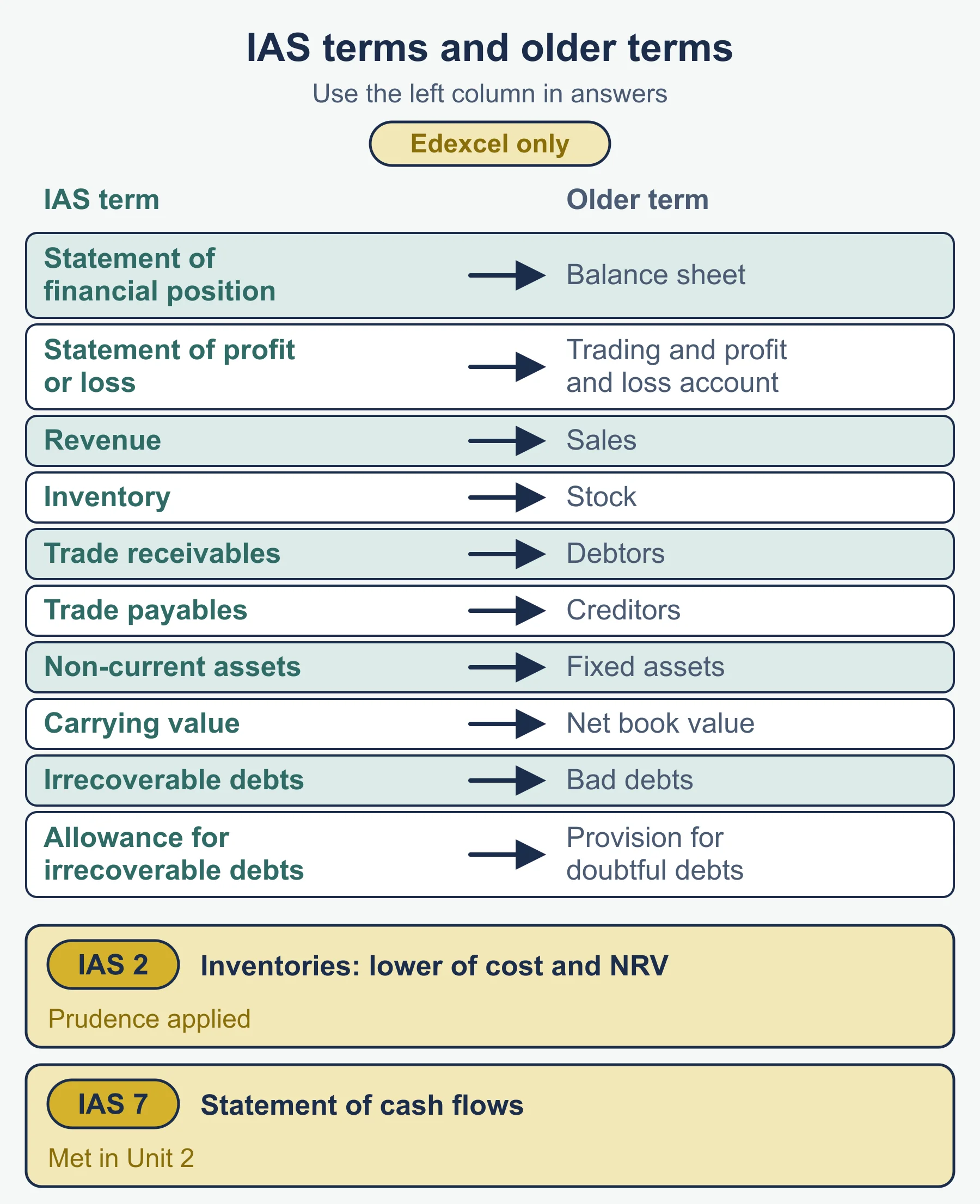
IAS are agreed rules on recognising, measuring and presenting transactions. Benefits: comparability between businesses, trust in the statements, and less room to flatter the figures. Two standards linked to this topic: IAS 2 (inventories, lower of cost and NRV) and IAS 7 (statement of cash flows, met in Unit 2).
| Use this (IAS term) | Not this |
|---|---|
| Statement of financial position | Balance sheet |
| Statement of profit or loss | Trading and profit and loss account |
| Revenue | Sales |
| Inventory | Stock |
| Trade receivables | Debtors |
| Trade payables | Creditors |
| Non-current assets | Fixed assets |
| Carrying value | Net book value |
| Irrecoverable debts | Bad debts |
| Allowance for irrecoverable debts | Provision for doubtful debts |
| Inventory count | Stock take |
| Other payables | Accruals |
Quick self-test
- Name the three parts of the role of accounting.
- Pendry Tools holds 30 units at cost 8 each. They can be sold for 12 each with selling costs of 5 each. Calculate the inventory value and the effect on profit.
- Rent of 6,000 for twelve months is paid on 1 October. The year end is 31 December. State the expense and the prepayment.
- The owner pays a personal holiday from the business bank account. Which concept explains why it is not an expense?
- A customer pays a deposit of 500 for goods to be delivered next month. How is it treated at the year end, and which concept applies?
- Land cost 90,000 and is now worth 140,000. Which concept keeps it at 90,000?
- Calculate 25 as a percentage of revenue of 300,000 and name the concept used to expense it.
- Give the IAS term for debtors and for net book value.
- State two benefits to a lender of businesses using IAS.
- Name the concept that justifies spreading the cost of a machine over several years.
- Gresham Toys used electricity worth 210 in December. The bill arrives in January. State the treatment and the effect on profit.
Answers
- Record, analyse and communicate.
- NRV = 12 - 5 = 7. Value = 30 x 7 = 210 (cost is 240). Profit falls by 30.
- Expense 1,500 (3 months at 500); prepayment 4,500.
- Business entity. It is drawings.
- A liability at the year end; revenue is recognised on delivery. Realisation.
- Historic cost.
- about 0.0083%. Materiality.
- Trade receivables; carrying value.
- For example: statements can be compared with other businesses, and they follow recognised rules.
- Going concern (with accruals matching the cost to the periods that benefit).
- Accrue it: a current liability (other payables) of 210, and profit is reduced by 210.
Where marks are usually lost
- Writing only “records transactions” for the role of accounting.
- Listing users without saying what each one needs.
- Naming a concept but not the effect on profit or an asset.
- Treating prudence as permission to understate profit.
- Mixing up accruals (which period) with realisation (when revenue is earned).
- Treating a deposit as revenue.
- Giving a market value when historic cost is asked.
- Using older terms such as stock, debtors, balance sheet and net book value.
- Calculating a prepayment from the wrong number of months.
Frequently asked questions
What is the going concern concept? Going concern assumes the business will continue trading for the foreseeable future, so assets are kept at their carrying value. If the business plans to close, a going concern basis is no longer suitable and assets may need to be valued at what they would sell for.
What is the business entity concept? The owner and the business are treated as two separate parties, and the business books record business dealings only. Goods taken by the owner for personal use are drawings, not an expense, so profit is unaffected but capital falls.
What does the money measurement concept mean? Only items that can be expressed in money are recorded in the accounts. Things such as staff skill, customer loyalty or reputation are left out because no reliable amount can be placed on them.
What are the five purposes of accounting information for managers? Managers use accounting information for planning, controlling, decision making, assessing performance and safeguarding assets. Good answers tie each purpose to a real figure in the scenario.
Why does the consistency concept matter? Using the same accounting policies from period to period lets results be compared. A change of policy is allowed for good reason, but its effect must be disclosed, because a change such as switching from FIFO to LIFO can alter profit with no change in trading.
Official syllabus
Pearson Edexcel International Advanced Subsidiary/Advanced Level in Accounting (XAC11/YAC11) specification, Issue 2, September 2018, published by Pearson Education Limited.
Get free revision emails (optional)
Occasional emails with practice questions, worked explanations and links to free resources for the qualification and subjects you choose. No spam, and you can unsubscribe from any email. The free tools on this site never need an email.
Related resources
-
Study guides
Edexcel International A Level Accounting: Principles and Double Entry Bookkeeping (YAC11)
Purpose of accounting, double entry, accounting concepts, capital versus revenue spending and depreciation: Topic 1 of Edexcel IAL Accounting (YAC11), Unit 1.
Accounting · Pearson Edexcel · AS Level
Read guide -
Practice questions
Edexcel International A Level Accounting: Principles and Double Entry Bookkeeping — Practice Questions
Original exam-style practice questions with full worked answers on double entry, control accounts, adjustments and correction of errors.
Accounting · Pearson Edexcel · AS Level
Try questions -
Revision notes
Edexcel International A Level Accounting: Principles and Double Entry Bookkeeping — Revision Notes
Revision notes on the accounting equation, concepts, adjustments and control accounts, with bank reconciliation as background, for Edexcel IAL Accounting YAC11.
Accounting · Pearson Edexcel · AS Level
Revise topic
Related articles
-
teaching
A Level tuition in Dubai: Cambridge or Pearson Edexcel International A Level?
Schools in Dubai and Abu Dhabi teach either Cambridge International AS & A Level or Pearson Edexcel International A Level. How the two are structured, why it matters for tuition, and how online classes from Lahore work.
9 October 2026
-
curriculum guides
Choosing subjects at IGCSE and A Level
How subject choices at 14 and 16 affect university options later, and how to keep pathways open without overloading a timetable.
28 July 2026
Studying this with a teacher
Working through Accounting AS LEVEL?
This page is free and stays free. If you would rather be taught it, Marlbridge runs Accounting classes one-to-one and in small groups of up to 15, online in your own time zone. The first trial class is free. WhatsApp replies within an hour (8am–11pm Pakistan time, every day); email the same day.
Pearson Edexcel Accounting teachers at Marlbridge

