
Revision Notes
IB DP Business Management: Lean production and quality management (HL only) – Revision Notes
Condensed IB DP Business Management 5.3 (HL only) revision notes: lean production, kaizen, JIT, quality methods, TQM, standards and a self-test.
- Subject
- Business
- Level
- IB
- Topic
- Unit 5: Operations management
- Author
- Marlbridge Academic Team
- Updated
- Reviewed by
- Salman Ahmad (what this means)
Aligned to International Baccalaureate IB Diploma Programme Business (DP Business Management), First assessment 2024. Official specification .
Syllabus page (what it covers and how it is assessed): IB Diploma Programme Business.
Syllabus points this page covers
DP Business Management
- 5.3 Lean production and quality management (HL only)
Found an error? Report a correction.
Need help with this topic? Request a free trial class for IB Diploma Programme Business (DP Business Management).
These are condensed notes for section 5.3, Lean production and quality management (HL only), in Unit 5 of the IB Business management guide, first assessment 2024. For full explanations and worked examples, read the study guide. Test yourself with the practice questions. The course hub is IB DP Business Management, the printable list is the syllabus checklist, and the free diagnostics help you pick weak areas.
Content points at a glance
| Content point | Depth in the guide |
|---|---|
| Lean production features: less waste, greater efficiency | AO1 |
| Methods: continuous improvement (kaizen), just-in-time (JIT) | AO2 |
| Cradle to cradle design and manufacturing | AO2 |
| Quality control and quality assurance | AO2 |
| Quality circle, benchmarking, total quality management (TQM) | AO2 |
| Impact of lean production and TQM on an organization | AO3 |
| National and international quality standards | AO2 |
The guide lists no formulas or definitions here, so the definitions below are standard business-studies wording. The arithmetic you need is percentages of units or inventory, multiplied by a unit cost, plus a simple payback.
Definitions
| Term | Short definition |
|---|---|
| Lean production | Producing with less waste and greater efficiency, so each input adds value |
| Waste | Any use of materials, time or effort that adds no value for the customer |
| Kaizen | Continuous improvement through many small changes made by all employees |
| Just-in-time (JIT) | Receiving materials and producing goods only as they are needed, with minimal inventory |
| Just-in-case | Holding buffer inventory to cover delays or demand spikes |
| Cradle to cradle | Design and manufacturing in which materials are reused or safely returned to nature at end of life |
| Quality control (QC) | Inspecting output and removing defective items |
| Quality assurance (QA) | Preventing defects by building quality into the process |
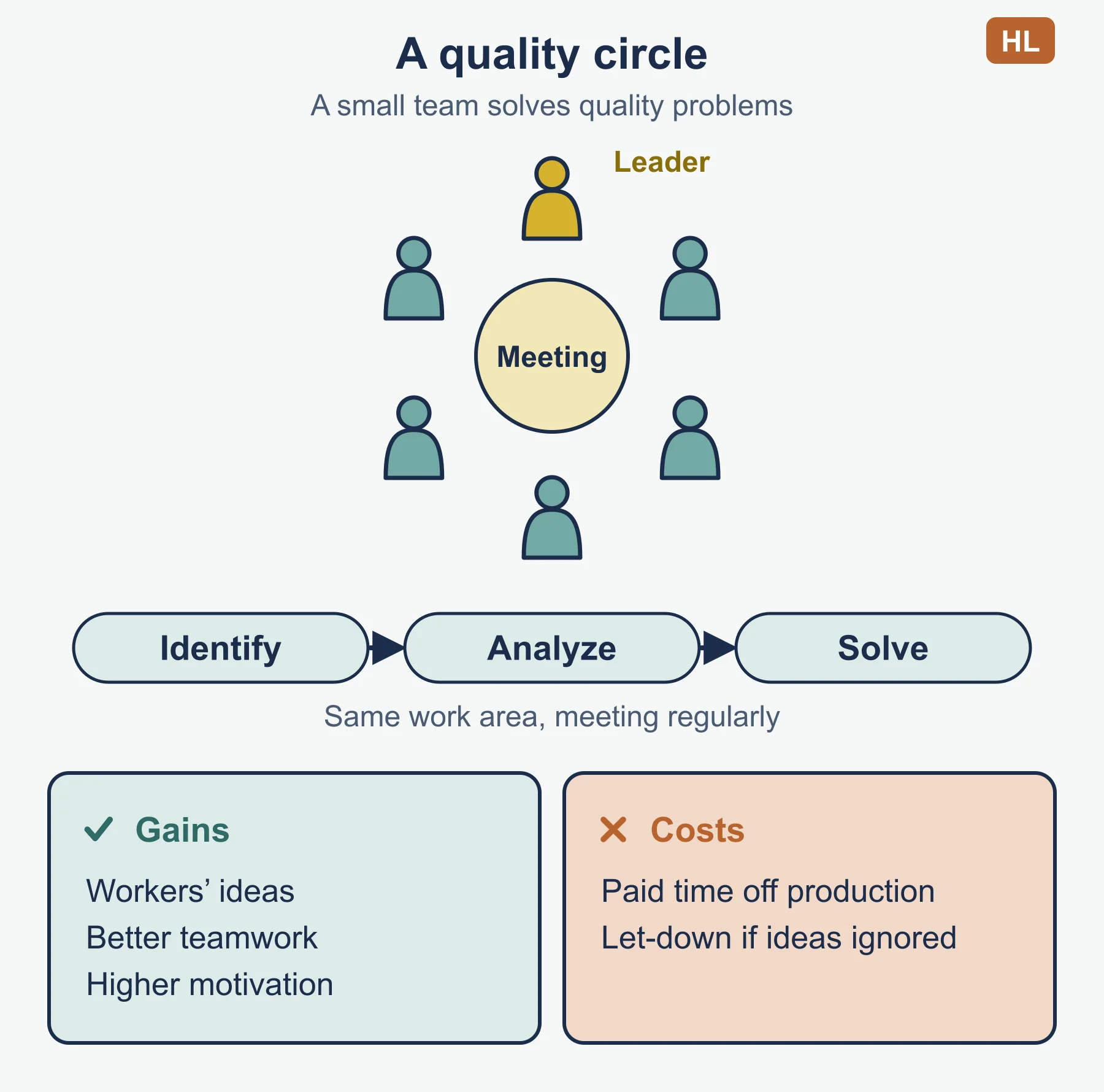
| Quality circle | Small group of workers who meet to solve quality problems |
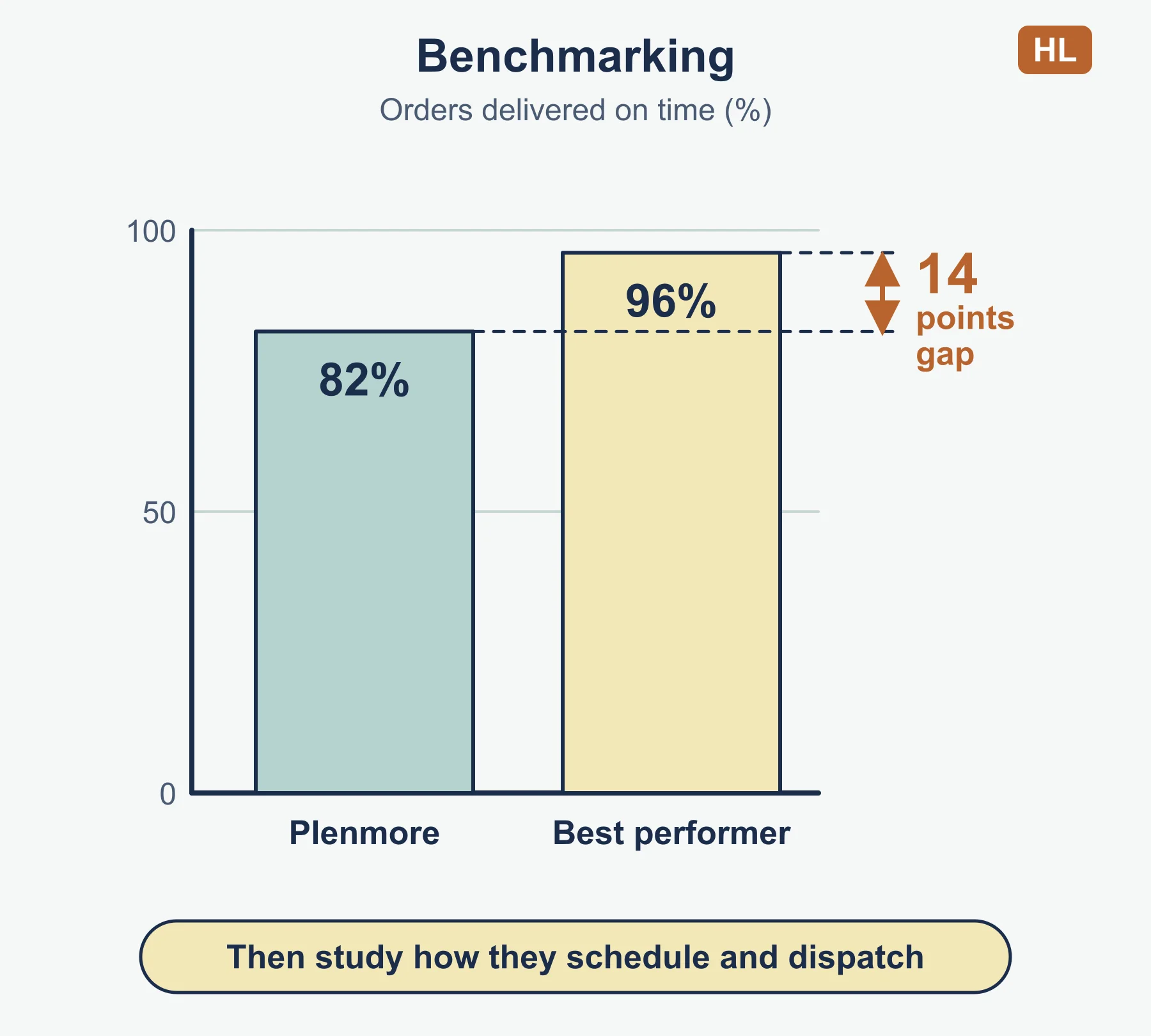
| Benchmarking | Comparing performance with a best performer and closing the gap |
| Total quality management (TQM) | Business-wide approach in which all staff are responsible for quality, aiming at zero defects |
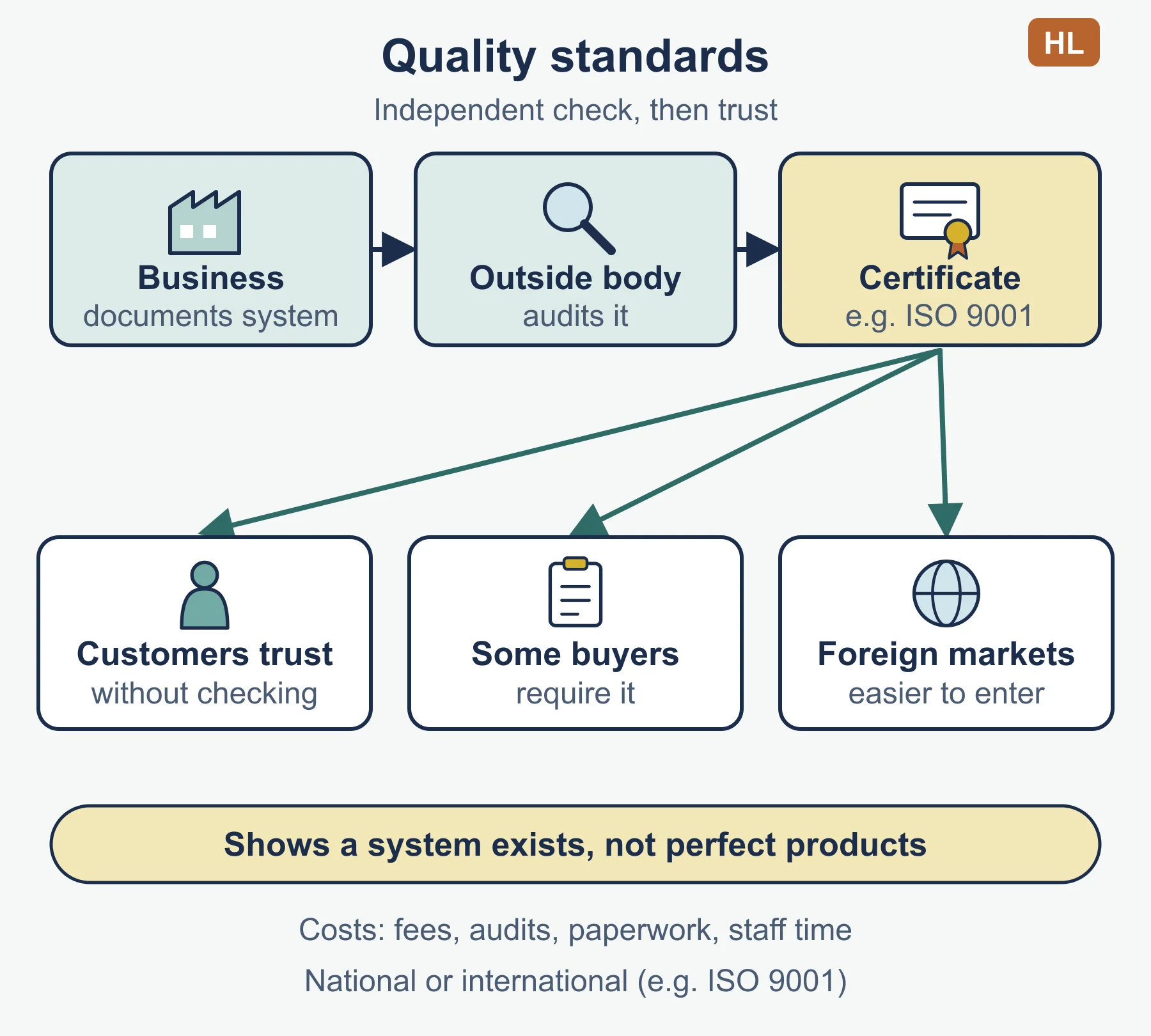
| Quality standard | Published requirements an organization can be independently checked against |
Lean production in steps
- Find the waste: scrap, rework, excess inventory, waiting, extra movement, overproduction.
- Choose methods: kaizen for steady gains, JIT for inventory.
- Involve employees, since they see the problems first.
- Measure the result in costs, defect rate and delivery time.
- Repeat, because the target moves.
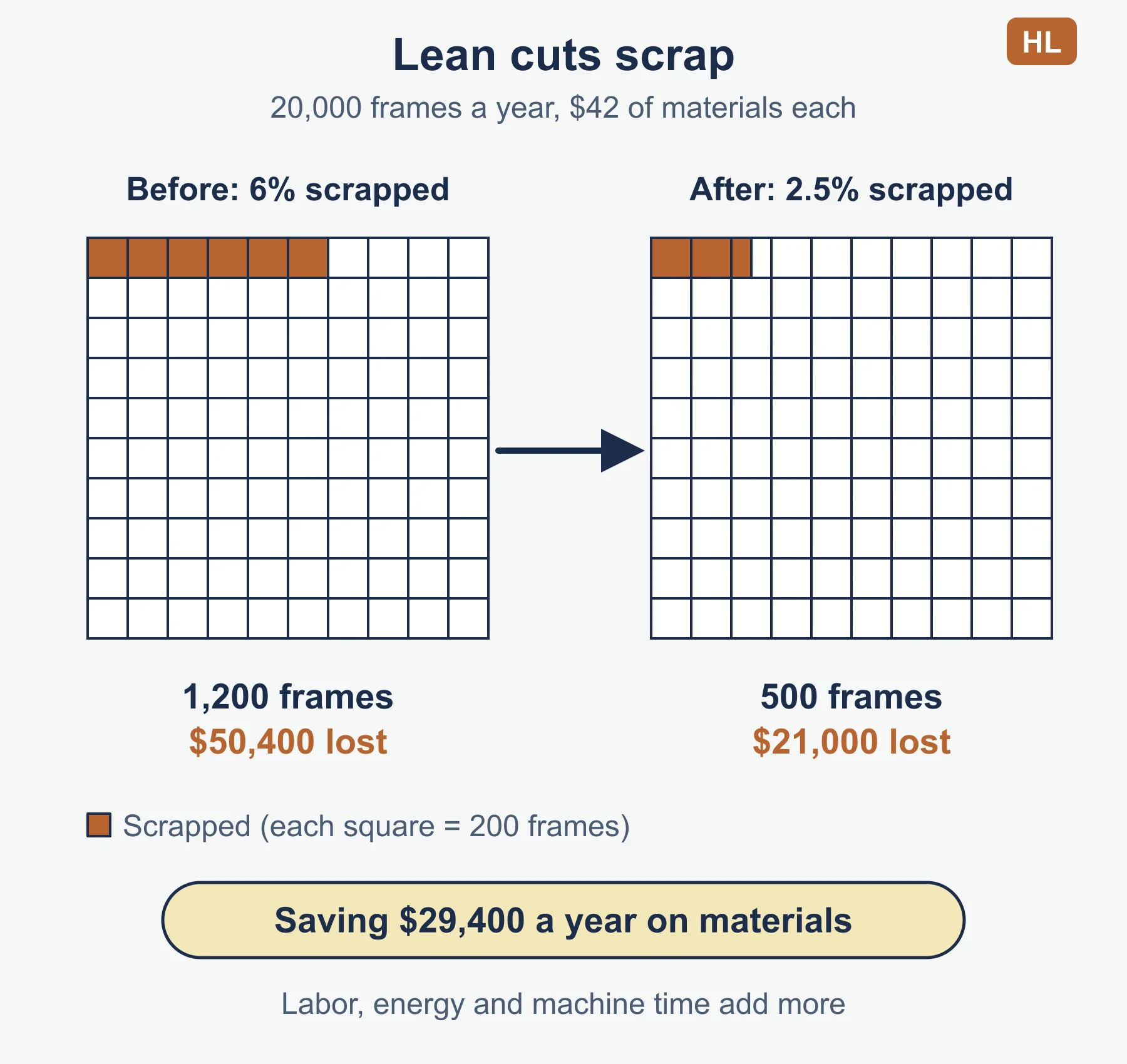
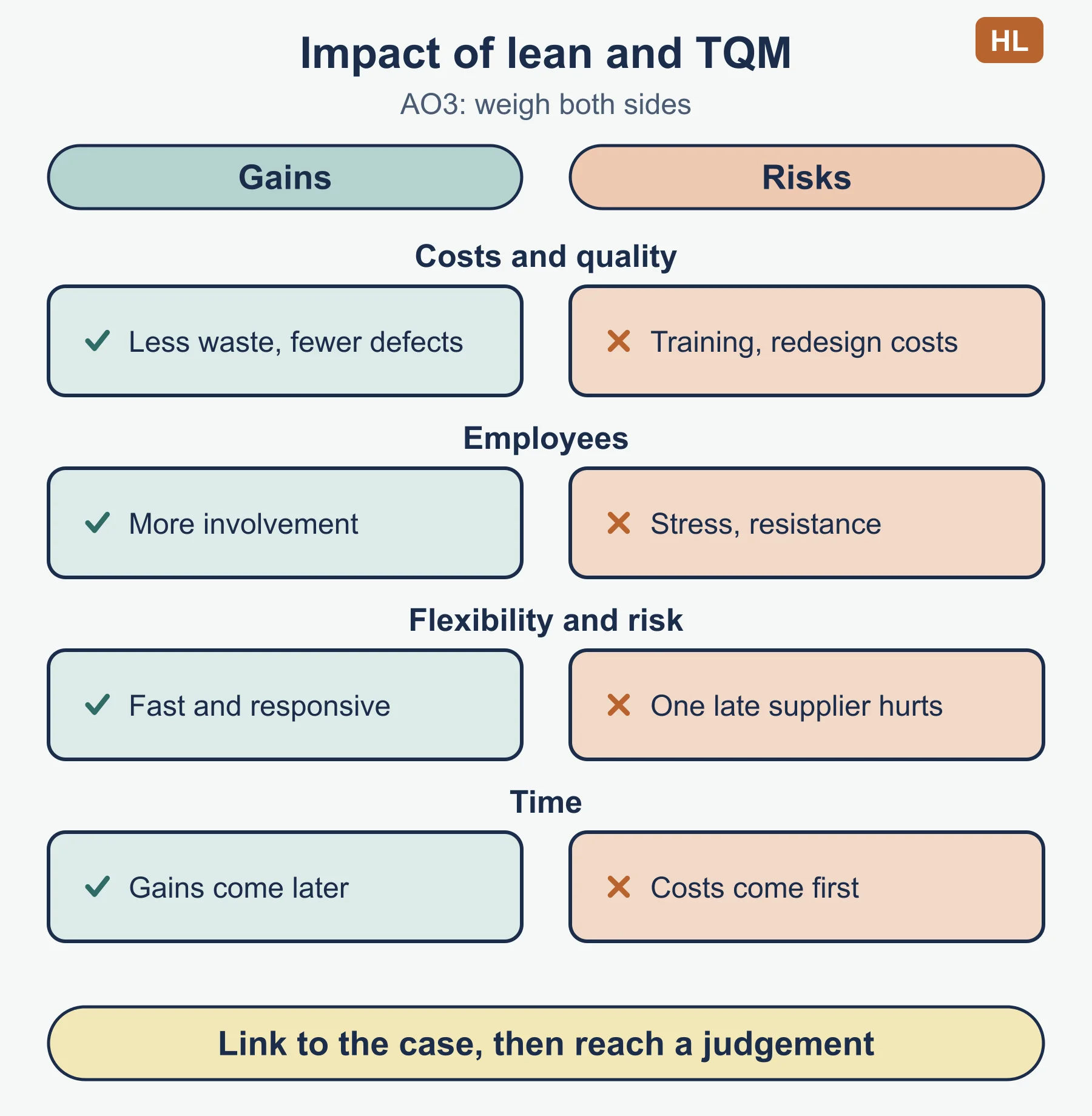
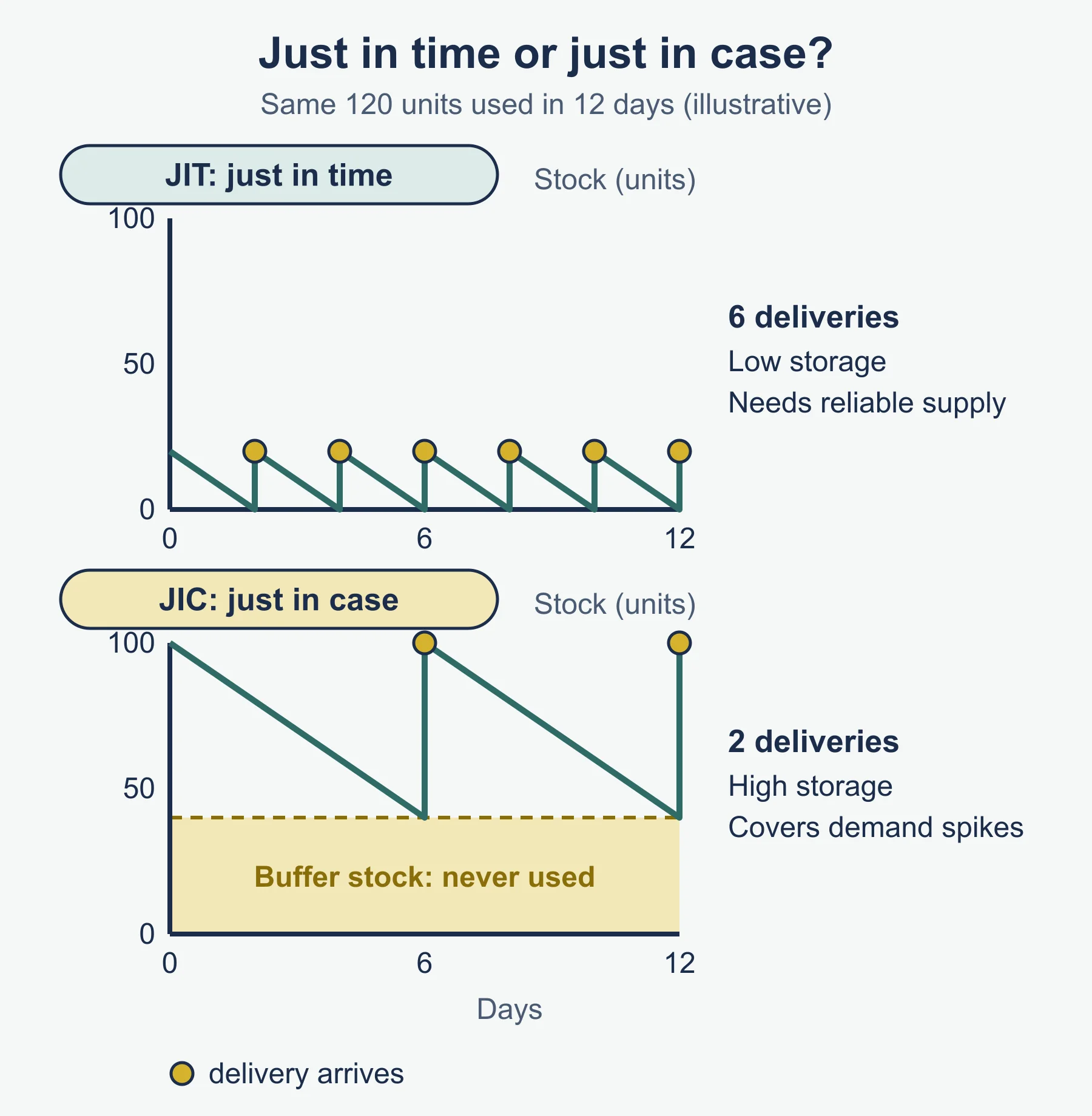
Kaizen versus JIT
| Point | Kaizen | JIT |
|---|---|---|
| What it is | Habit of small, continuous improvement | System of timed delivery and production |
| Main aim | Better processes over time | Lower inventory and holding cost |
| Who drives it | All employees | Operations and purchasing, with suppliers |
| Main risk | Ideas ignored, enthusiasm fades | Late delivery stops production |
| Depends on | Open culture and manager response | Reliable suppliers and accurate forecasts |
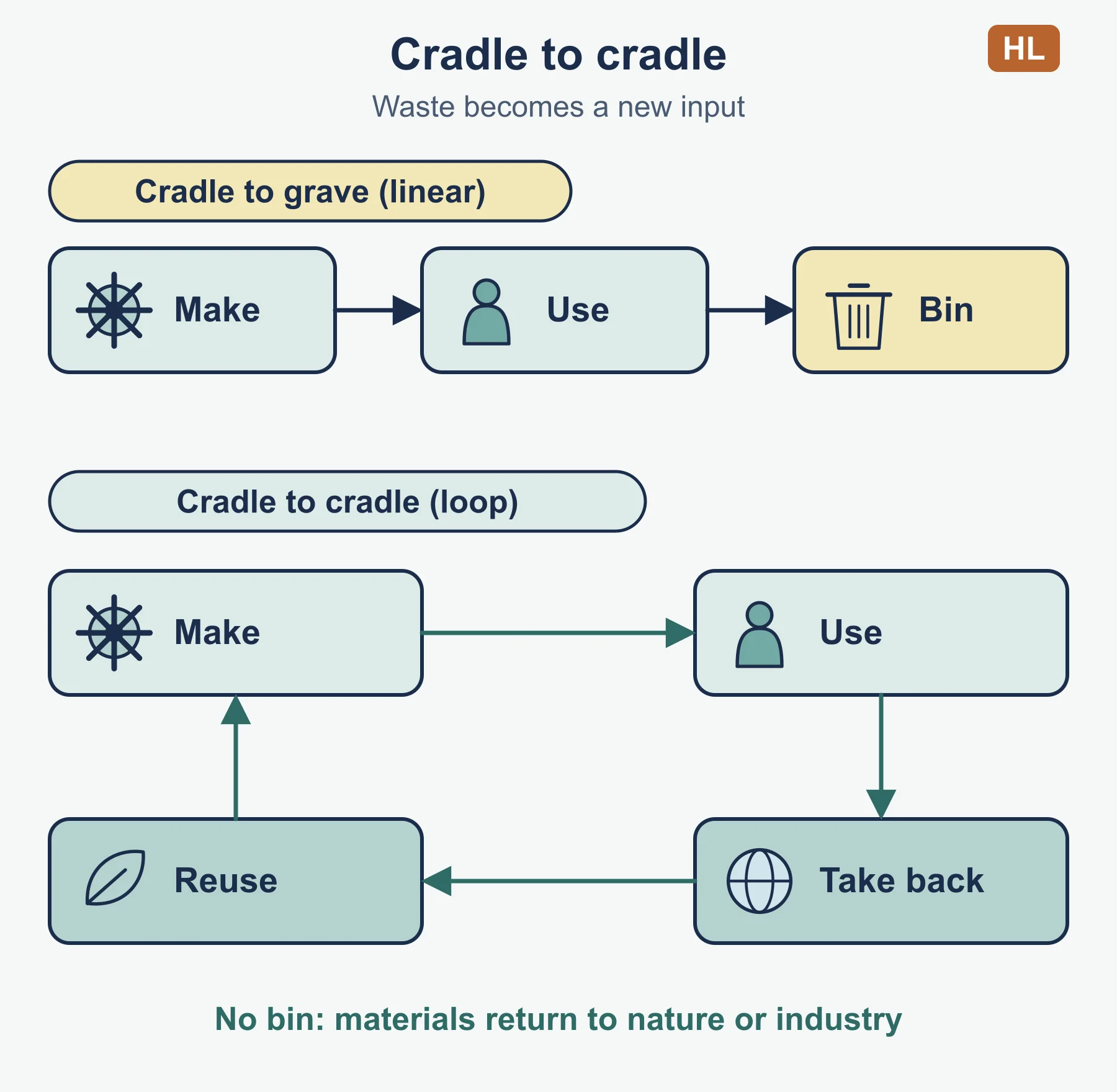
Cradle to cradle in brief
- Aim: no waste, because end-of-life materials become new inputs.
- Features: reusable or safely returnable materials, design for disassembly, renewable energy, avoiding harmful substances, whole-life thinking.
- Contrast: the linear cradle-to-grave model makes, uses and disposes.
- Pros: lower raw material use, reputation, ethical appeal.
- Cons: design and research cost, supplier cooperation, difficulty collecting used products.
Must-know distinctions
| Pair | Key difference |
|---|---|
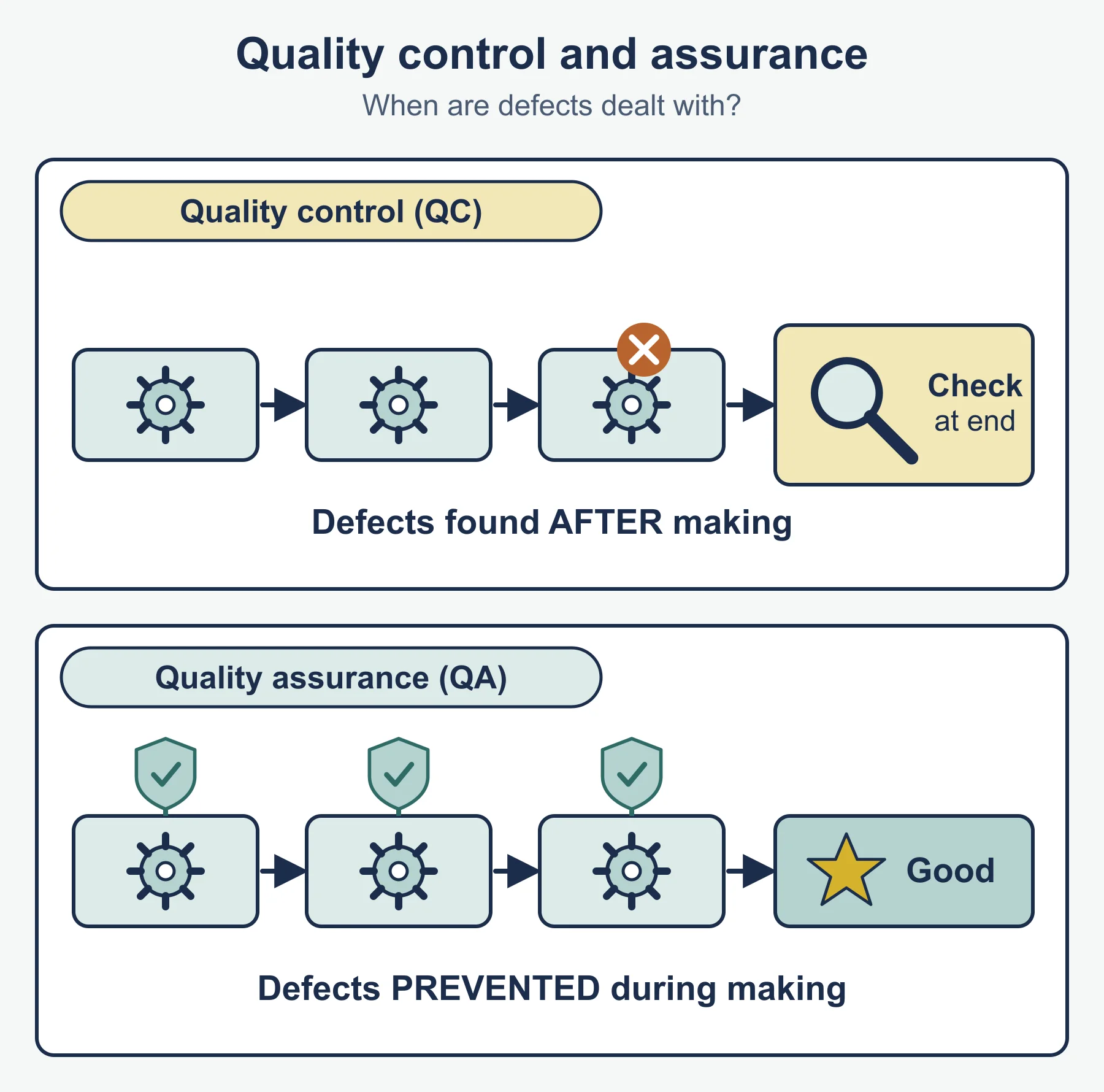
| QC and QA | QC detects defects in output. QA prevents defects in the process. |
| QA and TQM | QA is a set of systems. TQM is a whole-organization culture where everyone owns quality. |
| Quality circle and kaizen | A circle is a defined group meeting on a problem. Kaizen is a continuous habit for everyone. |
| Benchmarking and market research | Benchmarking compares processes against a best performer. Market research studies customers. |
| National and international standards | A national body sets one, applying in one country. An international one, such as ISO 9001, applies across countries. |
| JIT and just-in-case | JIT holds minimal inventory. Just-in-case holds buffers. |
Three quality methods in steps
Quality circle: form a small group, meet regularly, identify a problem, analyze causes, propose a solution, present it to management, review results.
Benchmarking: choose the process, pick a best performer (internal, competitive or functional), collect data, measure the gap, plan changes, re-measure.
TQM: set customer-focused quality goals, train and empower staff, involve suppliers, use continuous improvement, and measure defects against a zero-defect target.
Impact checklist
For a 5.3 evaluation, address:
- Costs: savings versus training and set-up costs.
- Customers: fewer defects, reputation, repeat sales.
- Employees: motivation and involvement versus pressure and resistance.
- Risk: supplier dependence, little spare capacity.
- Time: costs first, benefits later.
- Context: size, product, supplier base, culture.
End with a judgement tied to the case, for example “likely worthwhile if its suppliers are reliable”.
Quality standards in brief
- Why they matter: customer trust, access to buyers who demand certification, documented processes, market entry abroad.
- Costs: fees, audits, paperwork, staff time.
- Limit: certification shows a system exists, not that every unit is perfect.
Calculation method
- Convert the rate to units: units × rate.
- Multiply by the unit cost.
- Do this before and after, then subtract.
- For payback, divide the one-off cost by the annual saving, then say years or months.
Worked reminder: Veltrin Plastics makes 12,000 units with a 5% scrap rate and USD 8 of materials per unit. At 5%, 600 units are lost, costing 4,800. At 3%, 360 units are lost, costing 2,880. The saving is USD 1,920.
Case-study skills for 5.3
Use these moves in any question set around a business you have not met before.
- Name the method, then link it to the case. Do not write “JIT reduces costs”. Write what in the case would be delivered later, and which supplier or product is affected.
- Pick the stakeholder. Say who gains or loses: employees, customers, suppliers, owners.
- Use numbers if the case gives them. A defect rate, inventory value or delivery record turns a general point into a case point.
- Weigh up. Compare benefit with cost, short term with long term, and say which matters more for this business.
- Finish with a judgement. One sentence that answers the question and gives the main reason.
More worked reminders
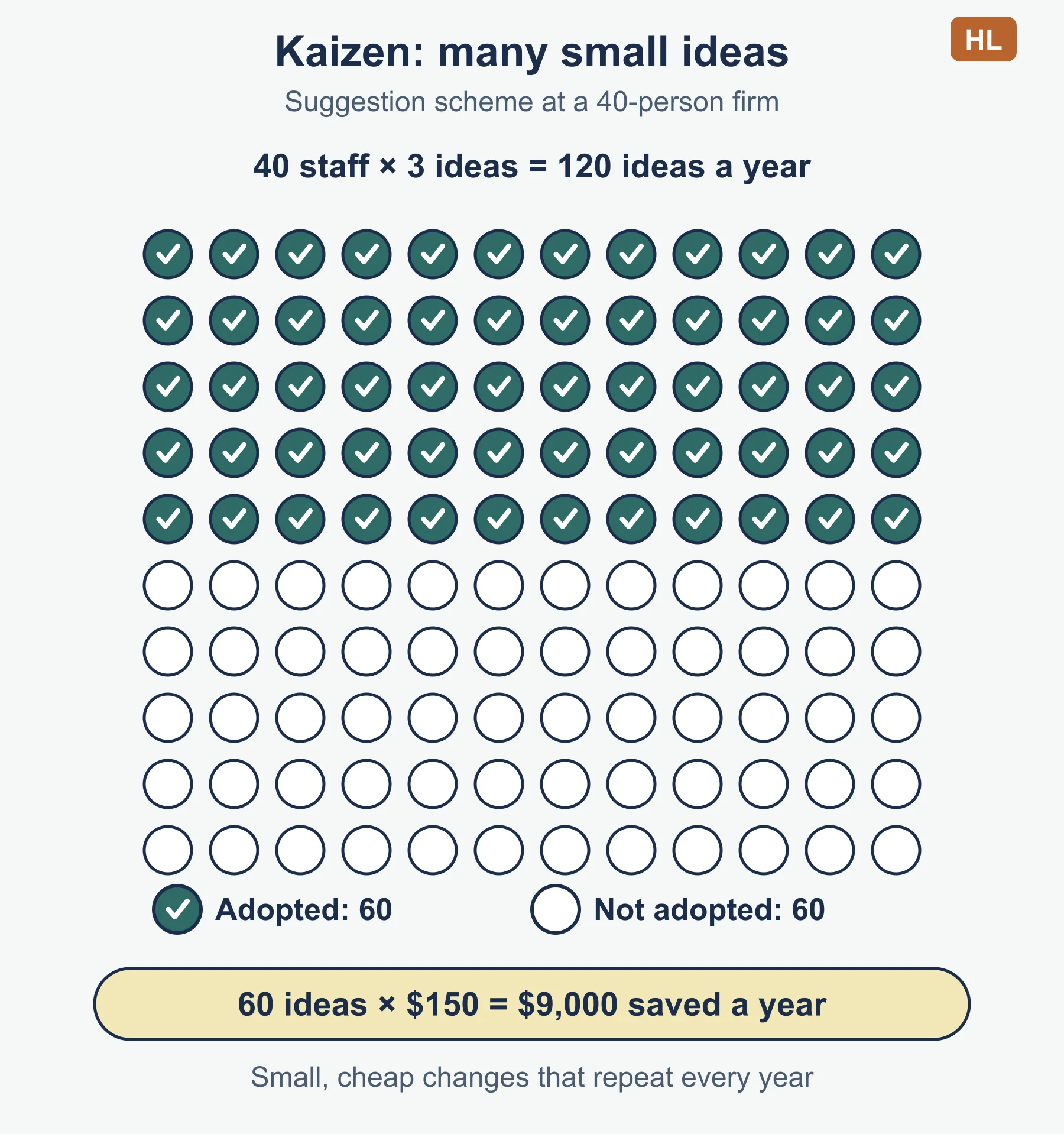
Kaizen: a team of 25 makes 2 suggestions each a year. Half are adopted, each saving USD 100 a year. Adopted ideas: 25 × 2 × 0.5 = 25. Saving: 25 × 100 = USD 2,500 a year.
Benchmarking: a call centre answers 70% of calls within 20 seconds, and the best performer answers 90%. The gap is 20 percentage points. The next step is to study how the best performer rosters staff.
Standards: a firm pays USD 6,000 to be certified and wins extra annual profit of USD 3,000 because of it. Payback is 6,000 ÷ 3,000 = 2 years. A longer-term judgement also counts customer trust that the figures do not show.
Quick self-test
- Define kaizen.
- State two features of lean production.
- Distinguish between quality control and quality assurance.
- State one drawback of JIT for a business with an unreliable supplier.
- Veltrin Plastics (above) cuts scrap from 5% to 3% of 12,000 units at USD 8 each. Calculate the annual saving.
- Corbeck Textiles holds inventory worth USD 80,000 and holding costs are 10% of value. Calculate the annual saving if inventory falls by 40%.
- Outline what a quality circle is.
- State the three types of benchmarking named in these notes.
- State how cradle to cradle differs from a cradle-to-grave approach.
- Name one international standard for quality management systems and one benefit of certification.
- A defect rate falls from 4% to 1%. Calculate the percentage fall in the rate.
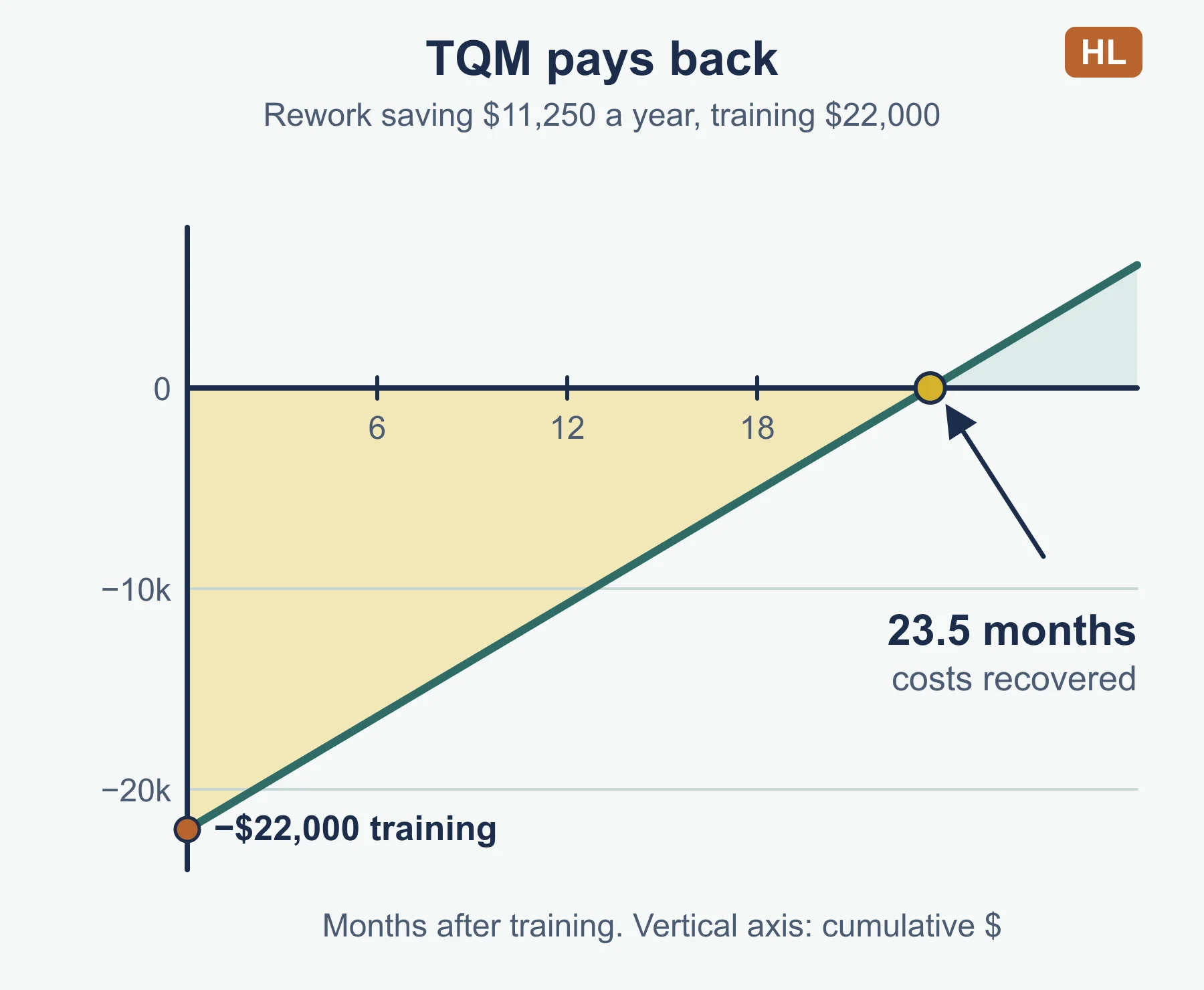
- A TQM programme costs USD 25,000 and saves USD 5,000 a year. Calculate the payback period in months.
Answers
- Continuous improvement through many small changes, made by all employees.
- Less waste and greater efficiency.
- QC inspects output to detect defects. QA builds quality into the process to prevent them.
- A late delivery can stop production, since little stock covers the gap.
- Before: 12,000 × 0.05 × 8 = 4,800. After: 12,000 × 0.03 × 8 = 2,880. Saving USD 1,920.
- Holding cost is 8,000 a year. Inventory falls by 40%, so the new holding cost is 4,800. Saving: USD 3,200.
- A small group of workers who meet regularly to identify and solve quality problems.
- Internal, competitive and functional.
- Cradle to grave ends in disposal. Cradle to cradle designs for reuse or safe return of materials.
- ISO 9001. Benefit: customers trust a certified supplier (other valid benefits also fit).
- (4 − 1) ÷ 4 = 0.75, so a 75% fall.
- 25,000 ÷ 5,000 = 5 years, which is 60 months.
Where marks are usually lost
- Writing “reduce costs” for lean production without naming waste or efficiency.
- Confusing QC with QA, or calling TQM a type of inspection.
- Describing JIT only as “less stock”, with no mention of supplier reliability.
- Listing benefits of a method without any drawback or judgement in an evaluation.
- Generic answers that never use the case-study business.
- Forgetting units, or giving a payback in years when the question asks for months.
- Stating a standard’s name without explaining why it matters to customers or the business.
- Treating quality circles and kaizen as identical.
Frequently asked questions
What is the difference between kaizen and just-in-time? Kaizen is a habit of small, continuous improvement made by all employees, aimed at better processes over time. Just-in-time is a system of timed delivery and production aimed at lower inventory and holding costs.
What is the difference between quality assurance and TQM? Quality assurance is a set of systems that builds quality into the process to prevent defects. Total quality management is a whole-organization culture in which every employee owns quality.
What is a quality circle? A quality circle is a small group of workers who meet regularly to identify and solve quality problems. It is not identical to kaizen, which is a wider habit of continuous improvement across the business.
What are the three types of benchmarking? The notes name internal, competitive and functional benchmarking. In each case a business compares its processes or performance with a best performer and then works to close the gap.
Official syllabus
IB Diploma Programme Business management guide, first assessment 2024, International Baccalaureate Organization, section 5.3, Lean production and quality management (HL only). Marlbridge is not affiliated with the IB.
Get free revision emails (optional)
Occasional emails with practice questions, worked explanations and links to free resources for the qualification and subjects you choose. No spam, and you can unsubscribe from any email. The free tools on this site never need an email.
Related resources
-
Study guides
IB DP Business Management: Location
Study guide to IB DP Business Management section 5.4: reasons for a production location, outsourcing, offshoring, insourcing and reshoring.
Business · International Baccalaureate · IB
Read guide -
Practice questions
IB DP Business Management: Location – Practice Questions
Original practice questions with worked answers on IB DP Business Management section 5.4: location, outsourcing, offshoring, insourcing, reshoring.
Business · International Baccalaureate · IB
Try questions -
Revision notes
IB DP Business Management: Location – Revision Notes
Condensed revision notes for IB DP Business Management section 5.4 Location: location factors, outsourcing, offshoring, insourcing, reshoring.
Business · International Baccalaureate · IB
Revise topic
Related articles
-
teaching
A Level tuition in Dubai: Cambridge or Pearson Edexcel International A Level?
Schools in Dubai and Abu Dhabi teach either Cambridge International AS & A Level or Pearson Edexcel International A Level. How the two are structured, why it matters for tuition, and how online classes from Lahore work.
9 October 2026
-
curriculum guides
Choosing subjects at IGCSE and A Level
How subject choices at 14 and 16 affect university options later, and how to keep pathways open without overloading a timetable.
28 July 2026
Studying this with a teacher
Working through Business IB?
This page is free and stays free. If you would rather be taught it, Marlbridge runs Business classes one-to-one, online in your own time zone. The first trial class is free. WhatsApp replies within an hour (8am–11pm Pakistan time, every day); email the same day.
IB Business teachers at Marlbridge

