
Revision Notes
IB DP History (DP History): History of Asia and Oceania – Revision Notes
Condensed HL notes for Asia and Oceania: late Qing decline and 1911, Japan's road to war 1912-41 and China under Deng, with key terms and a self-test.
- Subject
- World History
- Level
- IB
- Topic
- Topic 3: HL options: Depth studies
- Author
- Marlbridge Academic Team
- Updated
- Reviewed by
- Azam Siddique (what this means)
Aligned to International Baccalaureate IB Diploma Programme History (DP History), First assessment 2017. Official specification .
Syllabus page (what it covers and how it is assessed): IB Diploma Programme History.
Syllabus points this page covers
DP History
- 3 History of Asia and Oceania
Found an error? Report a correction.
Need help with this topic? Request a free trial class for IB Diploma Programme History (DP History / DP History (2028)).
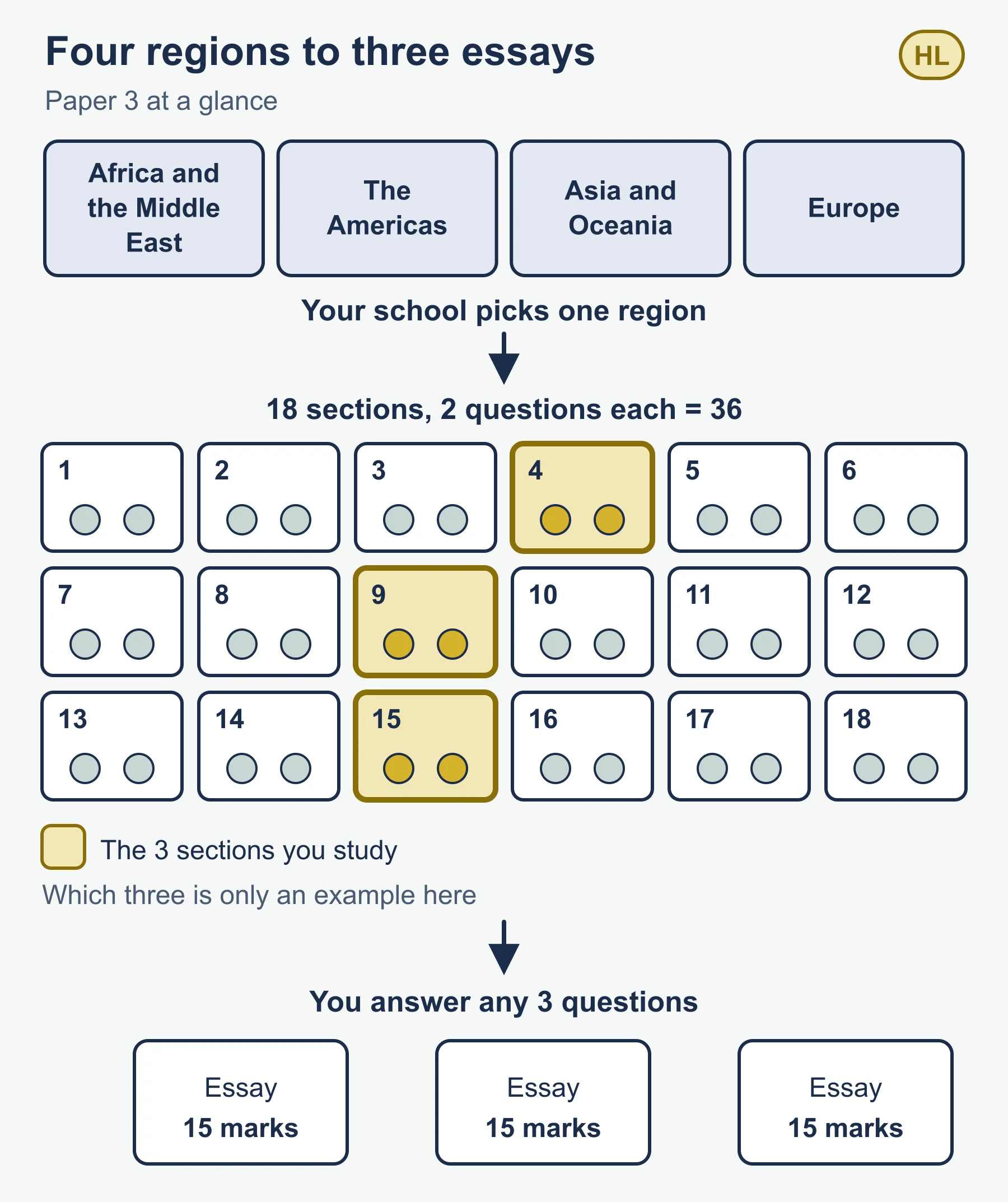
These notes condense three widely taught content areas from the HL History of Asia and Oceania option for Paper 3. The study guide develops the arguments: read the History of Asia and Oceania study guide first, then test yourself with the History of Asia and Oceania practice questions. Match what you revise to your school’s three sections.
Paper 3 essentials
| Feature | Detail |
|---|---|
| Choice | Any three of 36 questions (two per section) |
| Time | 2 hours 30 minutes |
| Marks | 15 per essay, 45 in total |
Late Qing China, 1839-1912
Chronology
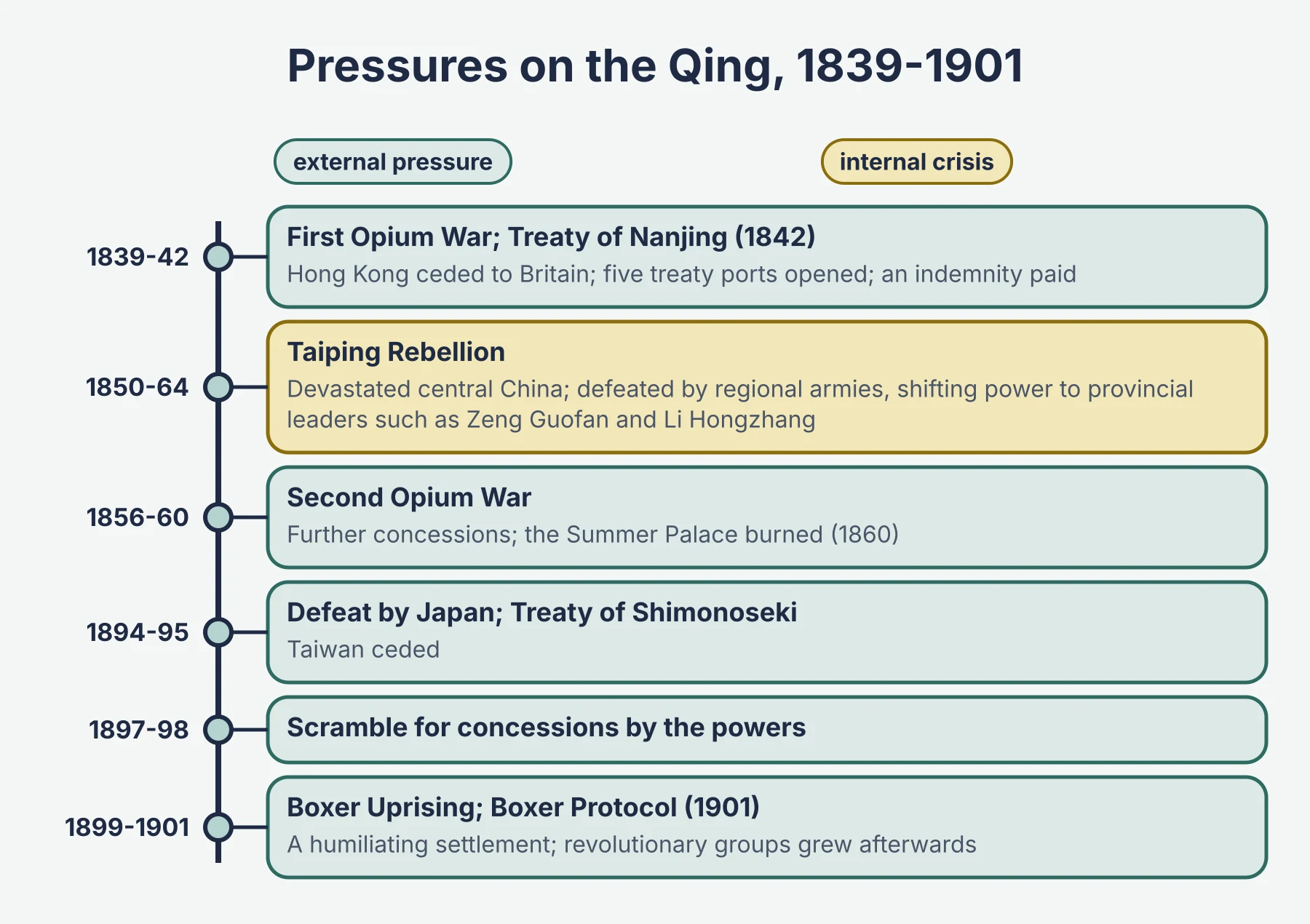
- 1839-42: First Opium War; Treaty of Nanjing (1842).
- 1850-64: Taiping Rebellion.
- 1856-60: Second Opium War; Summer Palace burned (1860).
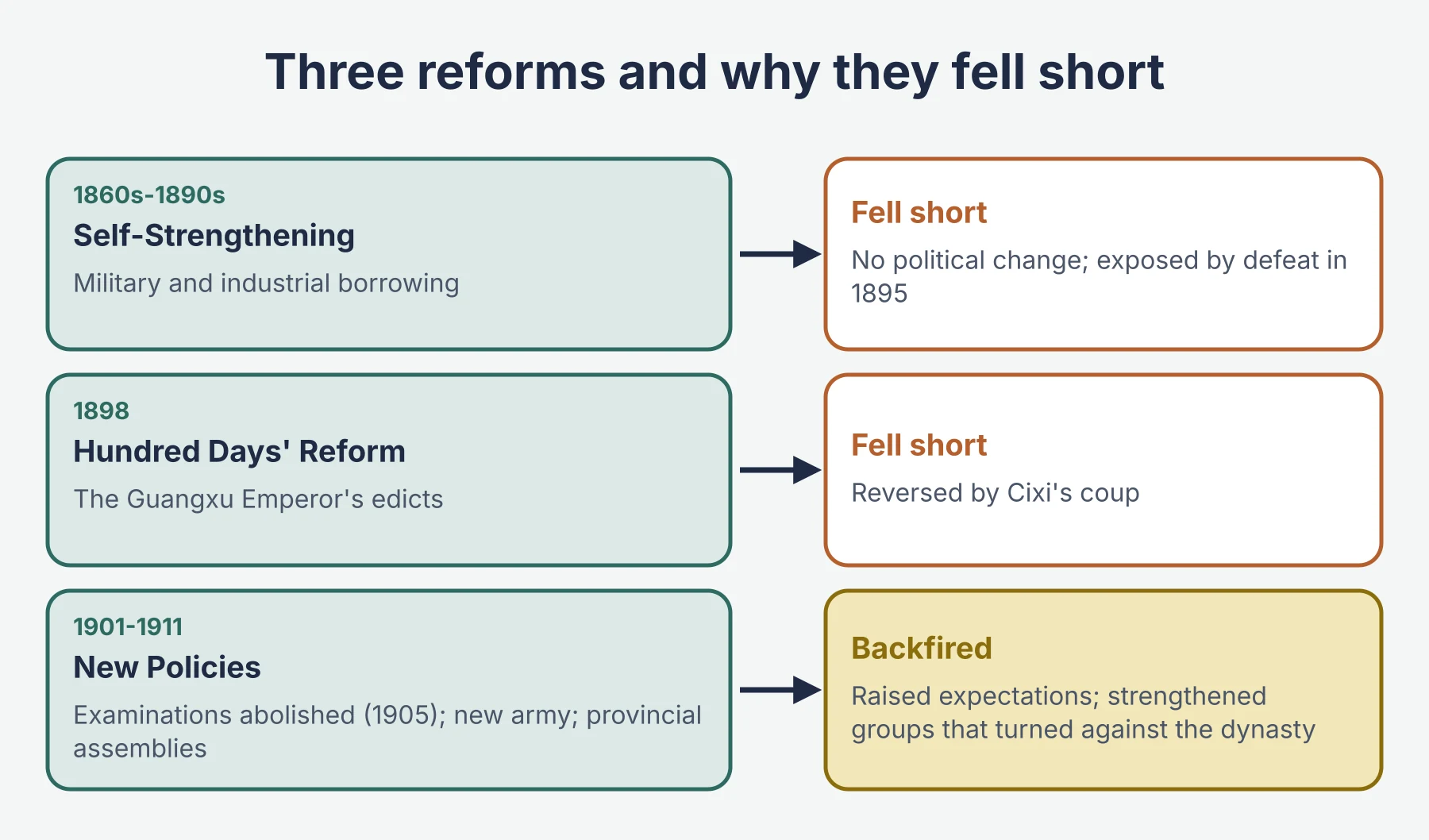
- 1861-95: Self-Strengthening movement; arsenals, shipyards, the Zongli Yamen (foreign office).
- 1894-95: Sino-Japanese War; Treaty of Shimonoseki (Taiwan ceded; Korea’s independence recognized).
- 1897-98: scramble for concessions.
- 1898: Hundred Days’ Reform; Cixi’s coup.
- 1899-1901: Boxer Uprising; Boxer Protocol (1901).
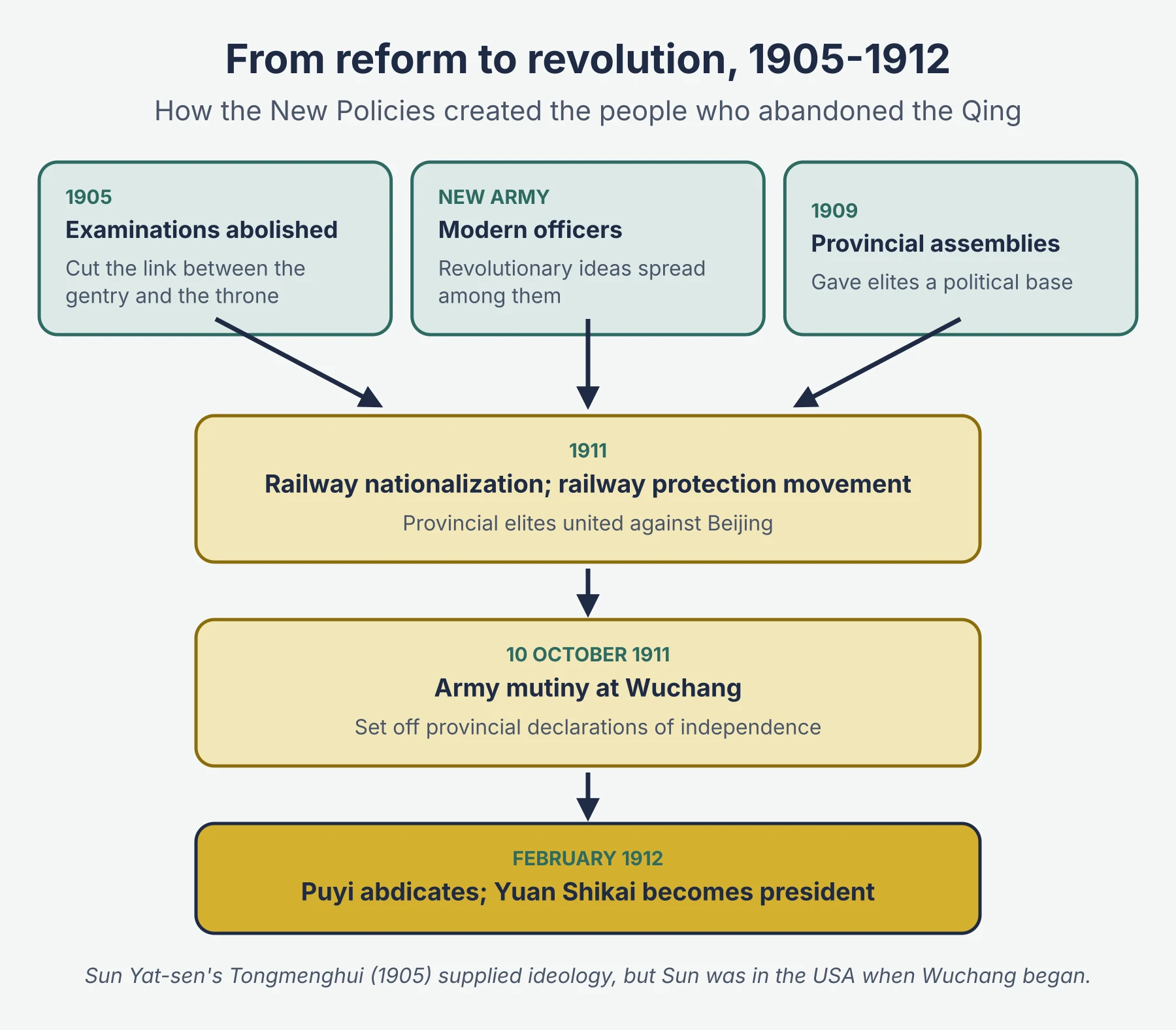
- 1901-11: New Policies; examinations abolished (1905); New Army; provincial assemblies (1909).
- 1905: Tongmenghui founded under Sun Yat-sen.
- 1908: Cixi and the Guangxu Emperor die; Puyi succeeds.
- 1911: railway nationalization protests; Wuchang uprising (10 October).
- February 1912: Puyi abdicates; Yuan Shikai becomes president.
Causes of collapse, sorted
| Type | Factors |
|---|---|
| External | Defeats and unequal treaties; indemnities; loss of territory; Japanese example |
| Internal rebellion | Taiping and other risings; growth of regional armies |
| Reform | Self-Strengthening’s limits; New Policies raised expectations and empowered elites |
| Ideology | Sun Yat-sen’s Three Principles of the People: nationalism, democracy, people’s livelihood |
| Trigger | Railway nationalization; Wuchang mutiny; provincial secessions |
Japan, 1912-1941
Chronology
- 1912: Taishō era begins.
- 1915: Twenty-One Demands on China.
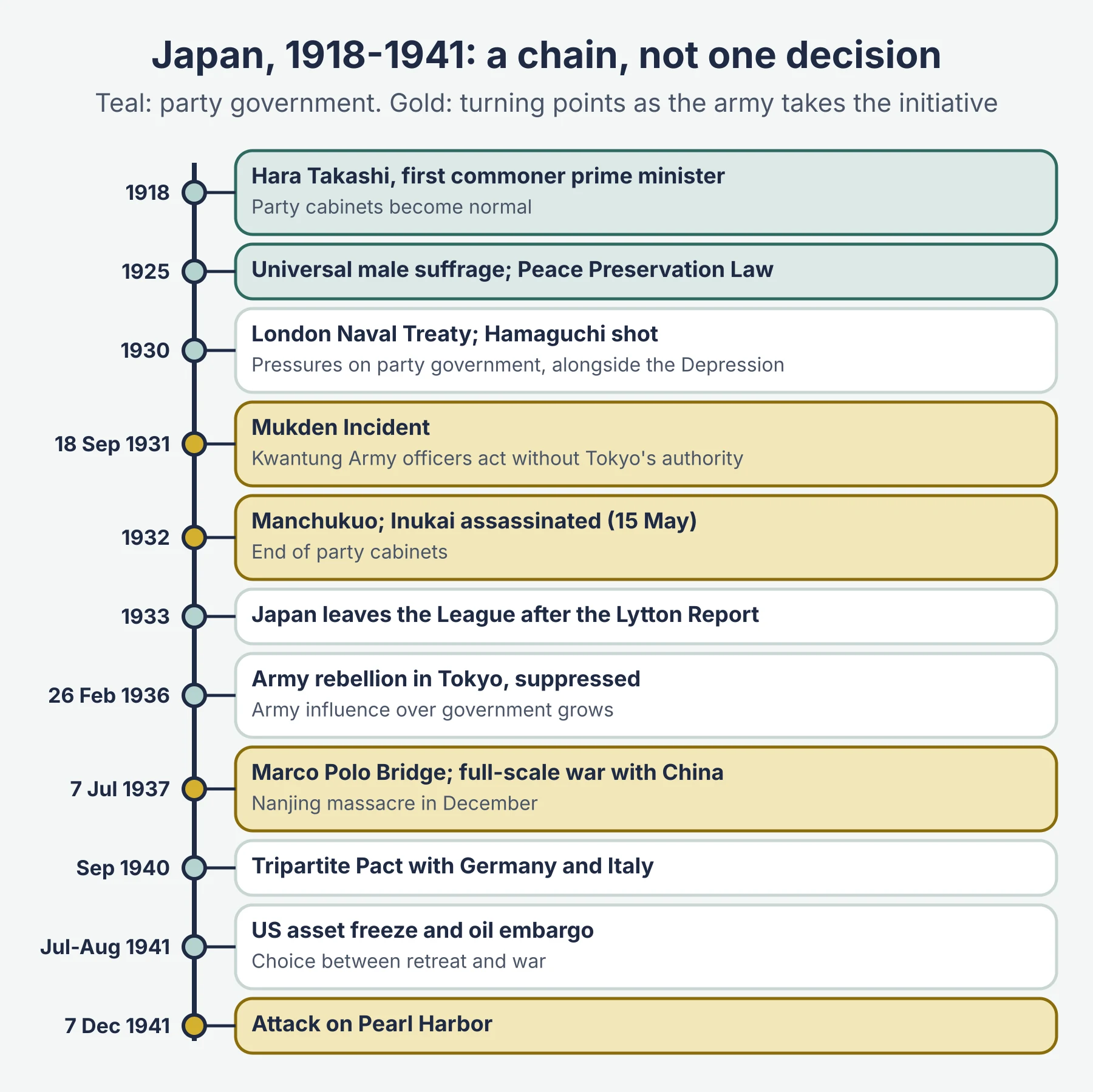
- 1918: Rice riots; Hara Takashi becomes prime minister.
- 1921: Hara assassinated.
- 1923: Great Kantō earthquake.
- 1925: universal male suffrage; Peace Preservation Law.
- 1926: Shōwa era begins.
- 1930: London Naval Treaty; Prime Minister Hamaguchi shot.
- 18 September 1931: Mukden Incident.
- 1932: Manchukuo; Inukai assassinated (15 May).
- 1933: Japan leaves the League of Nations.
- 26 February 1936: attempted army coup.
- November 1936: Anti-Comintern Pact with Germany.
- 7 July 1937: Marco Polo Bridge incident; war with China.
- December 1937: Nanjing massacre.
- September 1940: Tripartite Pact.
- July-August 1941: US asset freeze and oil embargo.
- 7 December 1941: Pearl Harbor.
Why militarism rose
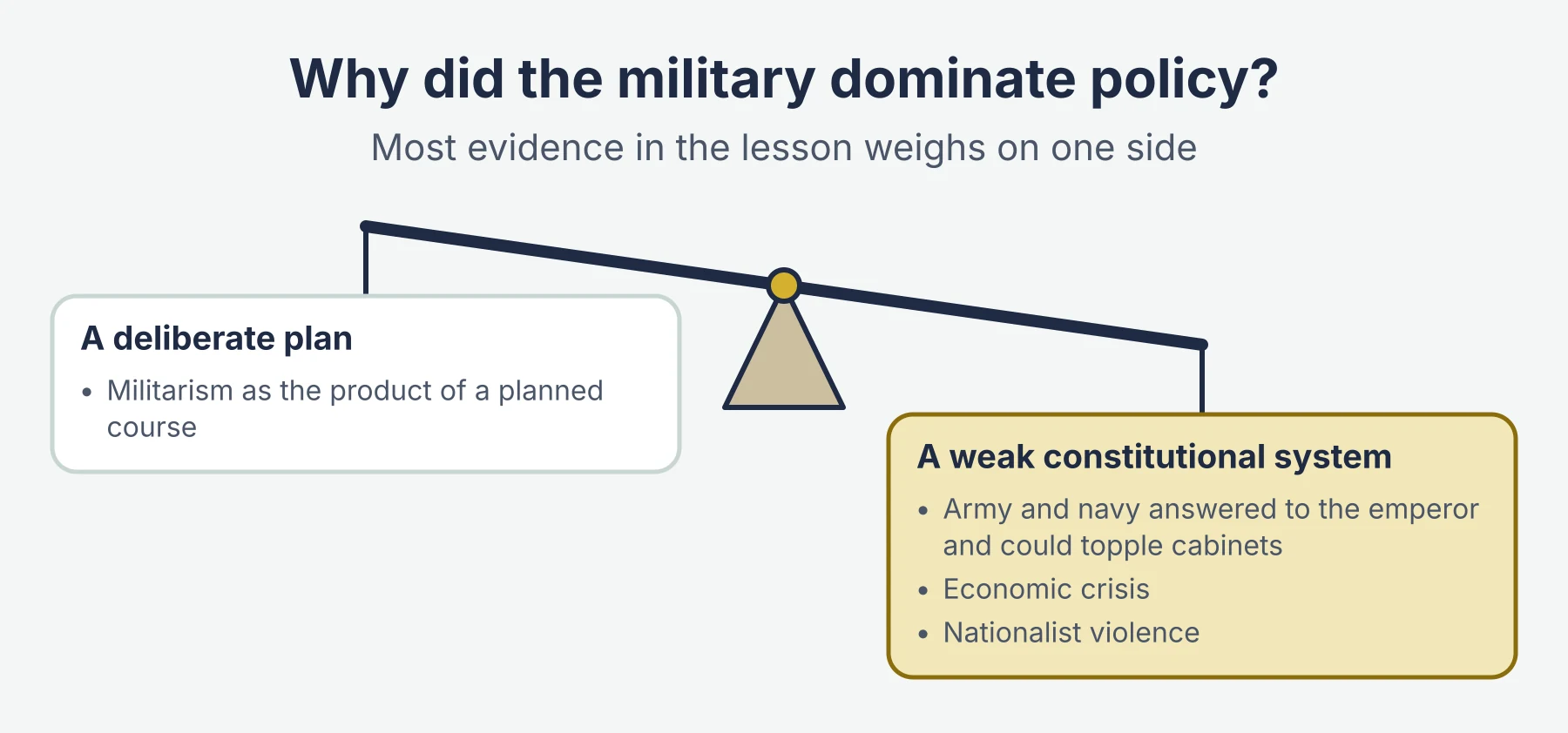
- Constitutional structure: armed forces answerable to the emperor; service ministers had to be serving officers, so the army and navy could bring down cabinets.
- Economic crisis: the Depression and the collapse of silk prices devastated rural Japan.
- Ideology: nationalism, emperor worship and pan-Asian ideas.
- Political violence: assassinations and coups by young officers and nationalist societies.
- Foreign policy success: the easy conquest of Manchuria made the army popular.
- International context: Western tariffs and immigration restrictions, and the weakness of the League of Nations.
China under Deng, 1976-1997
| Date | Event |
|---|---|
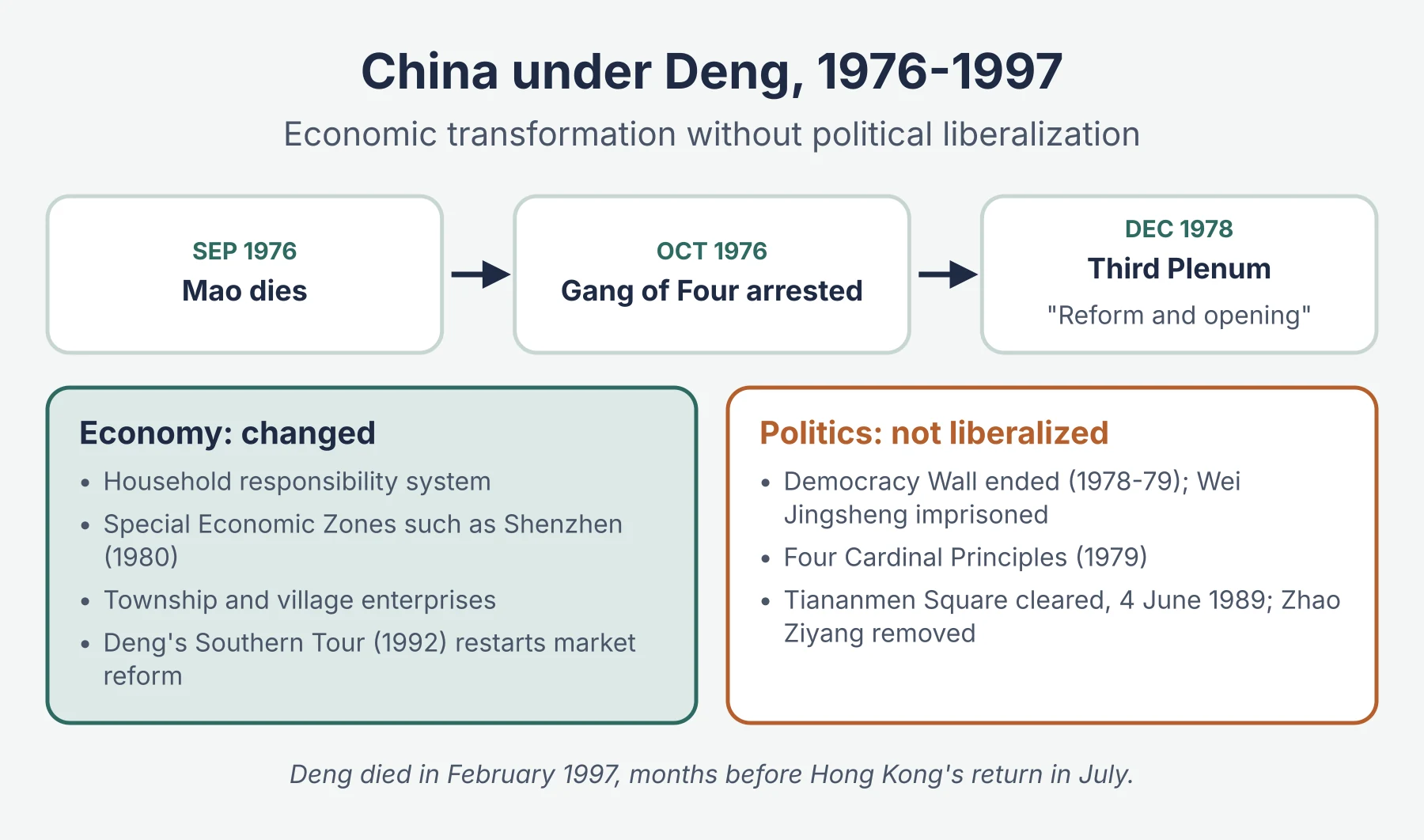
| September 1976 | Mao dies |
| October 1976 | Gang of Four arrested |
| December 1978 | Third Plenum: “reform and opening” |
| 1978-79 | Democracy Wall; Wei Jingsheng imprisoned |
| 1979 | Four Cardinal Principles; one-child policy introduced (1979-80) |
| 1980 | Special Economic Zones, including Shenzhen |
| April-June 1989 | Tiananmen protests; 4 June crackdown |
| 1992 | Southern Tour revives reform |
| February 1997 | Deng dies |
| July 1997 | Hong Kong returns to China |
Four Modernizations: agriculture, industry, national defence, science and technology.
Key terms
| Term | Meaning |
|---|---|
| Unequal treaties | Treaties forced on China giving foreigners privileges such as treaty ports and extraterritoriality |
| Extraterritoriality | Foreigners subject to their own countries’ courts, not Chinese courts |
| Self-Strengthening | Qing policy of adopting Western military and industrial technology |
| Tongmenghui | Sun Yat-sen’s revolutionary alliance (1905) |
| Taishō democracy | The period of party government in Japan in the 1910s and 1920s |
| Kwantung Army | Japanese army in Manchuria |
| Household responsibility system | Chinese reform giving farm households control over production after quotas |
| Special Economic Zone | Area with incentives for foreign investment and market activity |
Essay angles to prepare
| Content area | Question angle | Factors to weigh |
|---|---|---|
| Late Qing | Why did reform fail to save the dynasty? | Conservative resistance, foreign pressure, regionalism, the effects of the New Policies |
| 1911 | How important was Sun Yat-sen? | Ideology and organization against the army, provincial elites and the railway crisis |
| Japan | Why did party government collapse after 1930? | Depression, military independence, assassinations, the Manchurian success |
| Road to war | Why did Japan attack the USA in 1941? | Oil embargo, war in China, the resources of South-East Asia, Axis alignment |
| Deng | How far did China change under Deng? | Economic reform against political continuity |
Exam traps
- Writing the whole nineteenth century when the question asks about 1901-1911.
- Ignoring the Japanese constitutional structure in explaining militarism.
- Treating Deng as a liberal. Economic reform came with political control.
- Neglecting Oceania or South-East Asia if your sections include them.
- Dates outside the section. Paper 3 questions are tightly dated.
Self-test
- What did the Treaty of Shimonoseki give Japan? Taiwan, and Chinese recognition of Korea’s independence (along with an indemnity).
- Why did the Taiping Rebellion weaken the Qing in the long term? Regional armies under provincial leaders defeated it, shifting power away from Beijing.
- What was the Boxer Protocol? The 1901 settlement imposing a huge indemnity and foreign troops in Beijing.
- When was the civil service examination abolished? 1905.
- What were the Three Principles of the People? Nationalism, democracy and people’s livelihood.
- Who was the first commoner prime minister of Japan? Hara Takashi (1918).
- What did the Peace Preservation Law of 1925 do? Restricted left-wing and anti-system political activity.
- Which prime minister was assassinated on 15 May 1932? Inukai Tsuyoshi.
- What incident began full-scale war with China in 1937? The Marco Polo Bridge incident (7 July).
- What were the Four Modernizations? Agriculture, industry, national defence, science and technology.
- What was the Democracy Wall? A 1978-79 movement of posters in Beijing calling for reform, ended by the government.
- What did Deng’s Southern Tour of 1992 achieve? It revived market reform after the conservative reaction following 1989.
Related resources
-
Study guides
IB DP History (DP History): History of Europe
The HL History of Europe option for Paper 3: the French Revolution and Napoleon, Italian and German unification and Eastern Europe after 1945.
World History · International Baccalaureate · IB
Read guide -
Practice questions
IB DP History (DP History): History of Europe – Practice Questions
Twelve original HL Paper 3-style practice questions on the History of Europe, from short recall to full 15-mark essays, with mark-scheme answers.
World History · International Baccalaureate · IB
Try questions -
Revision notes
IB DP History (DP History): History of Europe – Revision Notes
Condensed HL notes for the History of Europe: the French Revolution and Napoleon, Italian and German unification, Eastern Europe 1945-91, with a self-test.
World History · International Baccalaureate · IB
Revise topic
Get free revision emails (optional)
Occasional emails with practice questions, worked explanations and links to free resources for the qualification and subjects you choose. No spam, and you can unsubscribe from any email. The free tools on this site never need an email.