
Revision Notes
IGCSE Accounting: Calculating and interpreting accounting ratios (Cambridge 0452) – Revision Notes
Condensed revision notes on the ten accounting ratios, interpreting them and profit versus cash, for Cambridge IGCSE Accounting 0452 sections 6.1-6.2.
- Subject
- Accounting
- Level
- IGCSE, O LEVELS
- Topic
- Analysis and interpretation
- Author
- Marlbridge Academic Team
- Updated
- Reviewed by
- Javaid Iqbal Sabri (what this means)
Aligned to Cambridge IGCSE O Level Accounting (0452, 7707), 2027-2029. Official specification (IGCSE) ; Official specification (O Level) .
Syllabus page (what it covers and how it is assessed): Cambridge IGCSE Accounting; Cambridge O Level Accounting.
Syllabus points this page covers
0452
- 6.1 Calculation and understanding of accounting ratios
- 6.2 Interpretation of accounting ratios
7707
- 6.1 Calculation and understanding of accounting ratios
- 6.2 Interpretation of accounting ratios
Found an error? Report a correction.
Want a teacher for this? Marlbridge teaches Accounting online. Request a free trial class.
Syllabus edition note. This resource follows the Cambridge IGCSE Accounting 0452 syllabus (and Cambridge O Level Accounting 7707, which has the same subject content for the same series) for exams in 2027, 2028 and 2029 (version 1), first examined in the March 2027 series in India and the June 2027 series elsewhere. If you sit 0452 in November 2026, you sit the 2026 syllabus (version 2), which differs: Paper 1 has 35 multiple-choice marks in 1 hour 15 minutes, not 40 marks in 1 hour 30 minutes; Topic 7 is “Accounting principles and policies”, without 7.2 Ethical considerations or 7.3 Technology and sustainability; 4.4 is “Irrecoverable debts and provision for doubtful debts”; income statements are named instead of statements of profit or loss; three-column running balance accounts are not required; Clubs and societies is 5.4 and Manufacturing accounts 5.5; and 6.3 is “Inter-firm comparison”. For this topic, the 2026 syllabus lists eight ratios without inventory turnover in days (mark-up appears only in its ratio appendix), names ROCE’s numerator “net profit before interest”, lists interested parties as owners, managers, trade payables, banks, investors, club members and others such as governments and tax authorities, and gives the limitations of accounting statements as historic cost, difficulties of definition and non-financial aspects. If you sit in November 2026, work from the 2026 syllabus on the Cambridge International website.
Short recall notes for syllabus sections 6.1 (Calculation and understanding of accounting ratios) and 6.2 (Interpretation of accounting ratios) of the Cambridge IGCSE Accounting syllabus (0452, version 1) for exams in 2027, 2028 and 2029. The syllabus text divides no content by tier. For full explanations and a two-year example, read the study guide. Then test yourself with the practice questions and the free diagnostics. Wider topic notes (6.3 to 6.5) are in the Analysis and interpretation revision notes. Course links: hub and checklist.
1. Formula card (6.1)
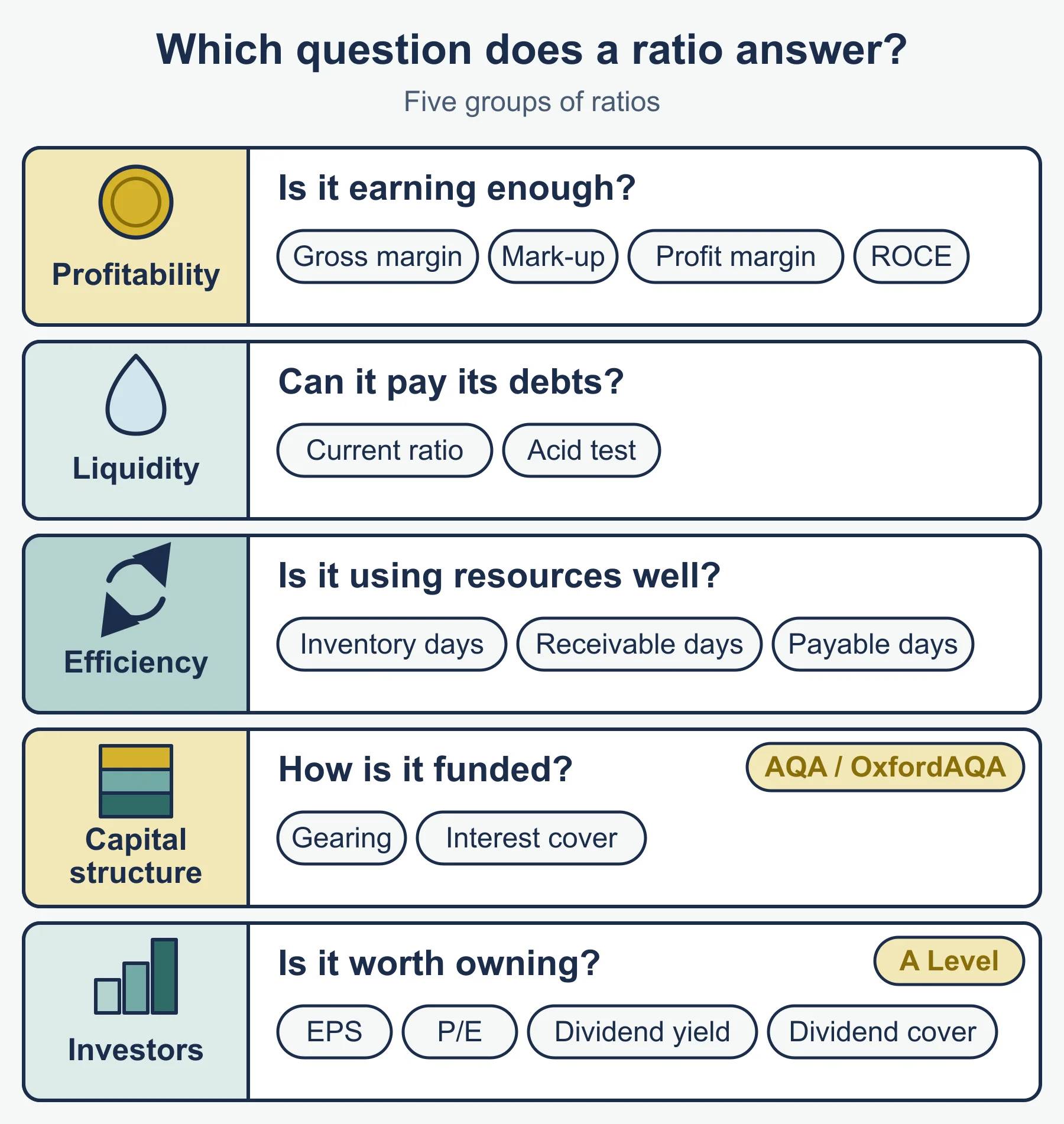
The syllabus accepts only the formulas in its own ratio list.
| Ratio | Formula | Unit | A rise usually suggests |
|---|---|---|---|
| Gross profit margin | gross profit / revenue x 100 | % | better pricing or cheaper purchasing |
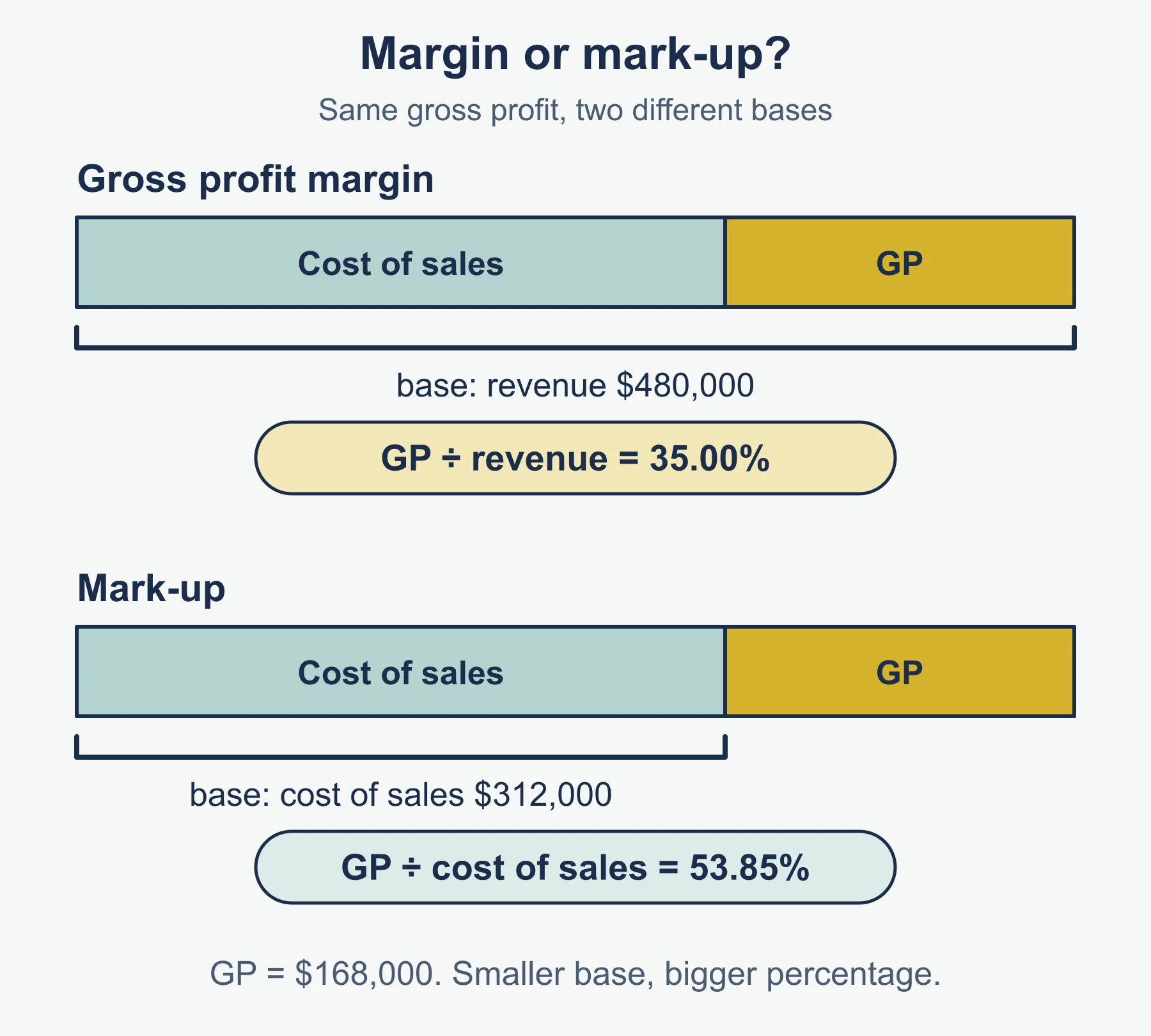
| Mark-up | gross profit / cost of sales x 100 | % | the same, measured on cost |
| Profit margin | profit for the year / revenue x 100 | % | better control of expenses or gross profit |
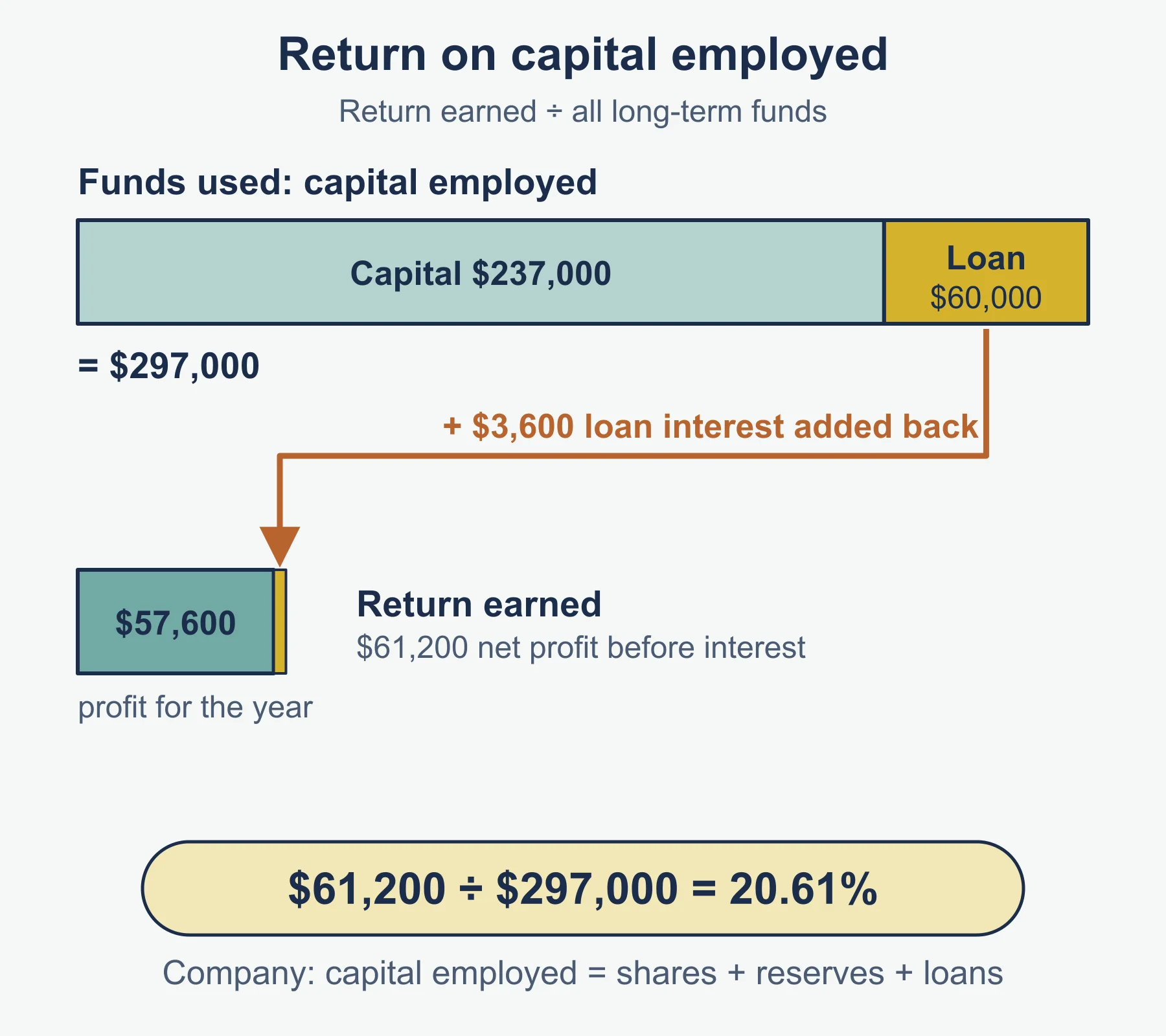
| ROCE | profit for the year before interest / capital employed x 100 | % | capital used more profitably |
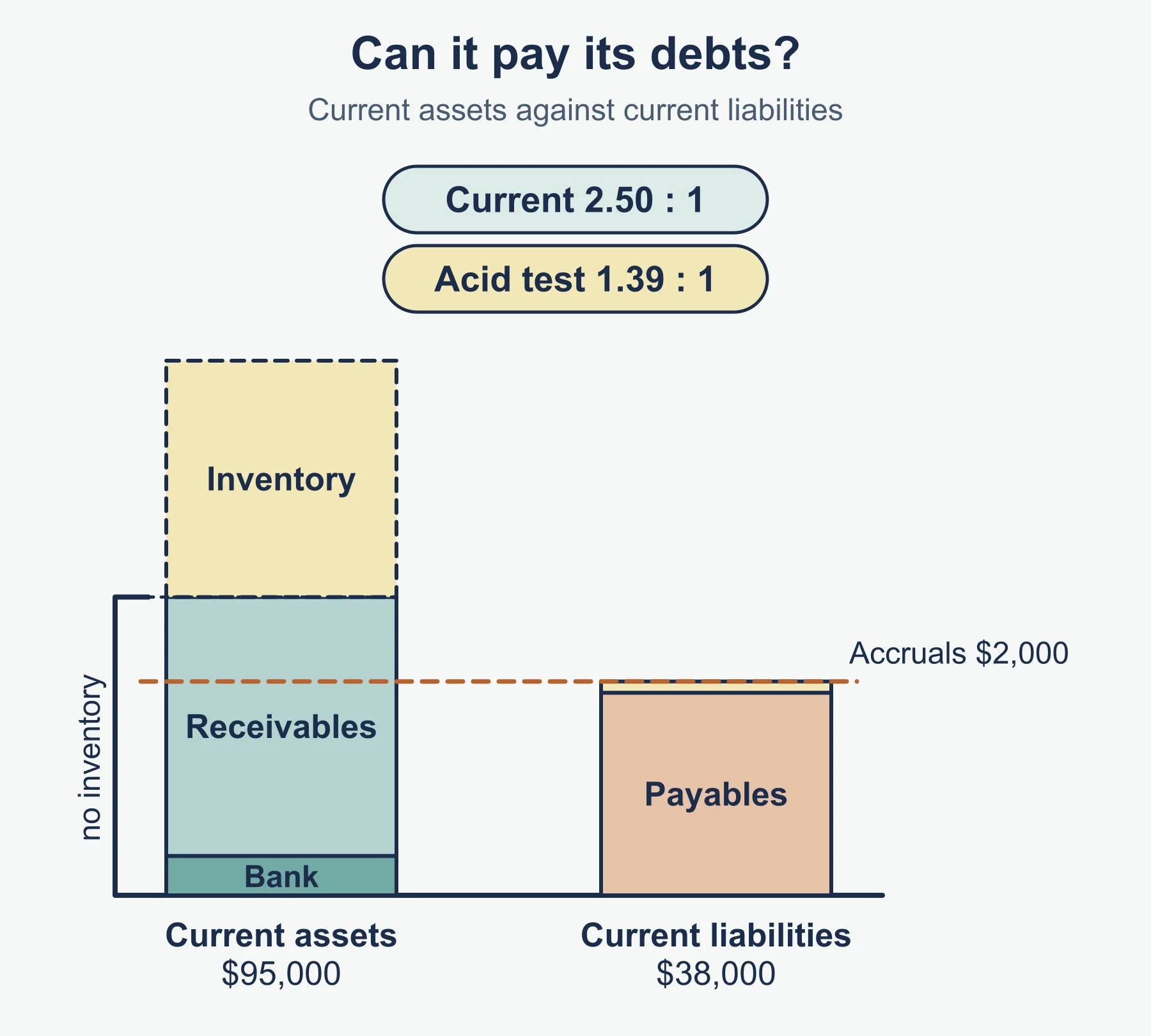
| Current ratio | current assets : current liabilities | x : 1 | more cover for short-term debts |
| Acid test | (current assets - inventory) : current liabilities | x : 1 | more cover without selling inventory |
| Rate of inventory turnover | cost of sales / average inventory | times | inventory sold faster |
| Inventory turnover | average inventory / cost of sales x 365 | days | inventory held longer |
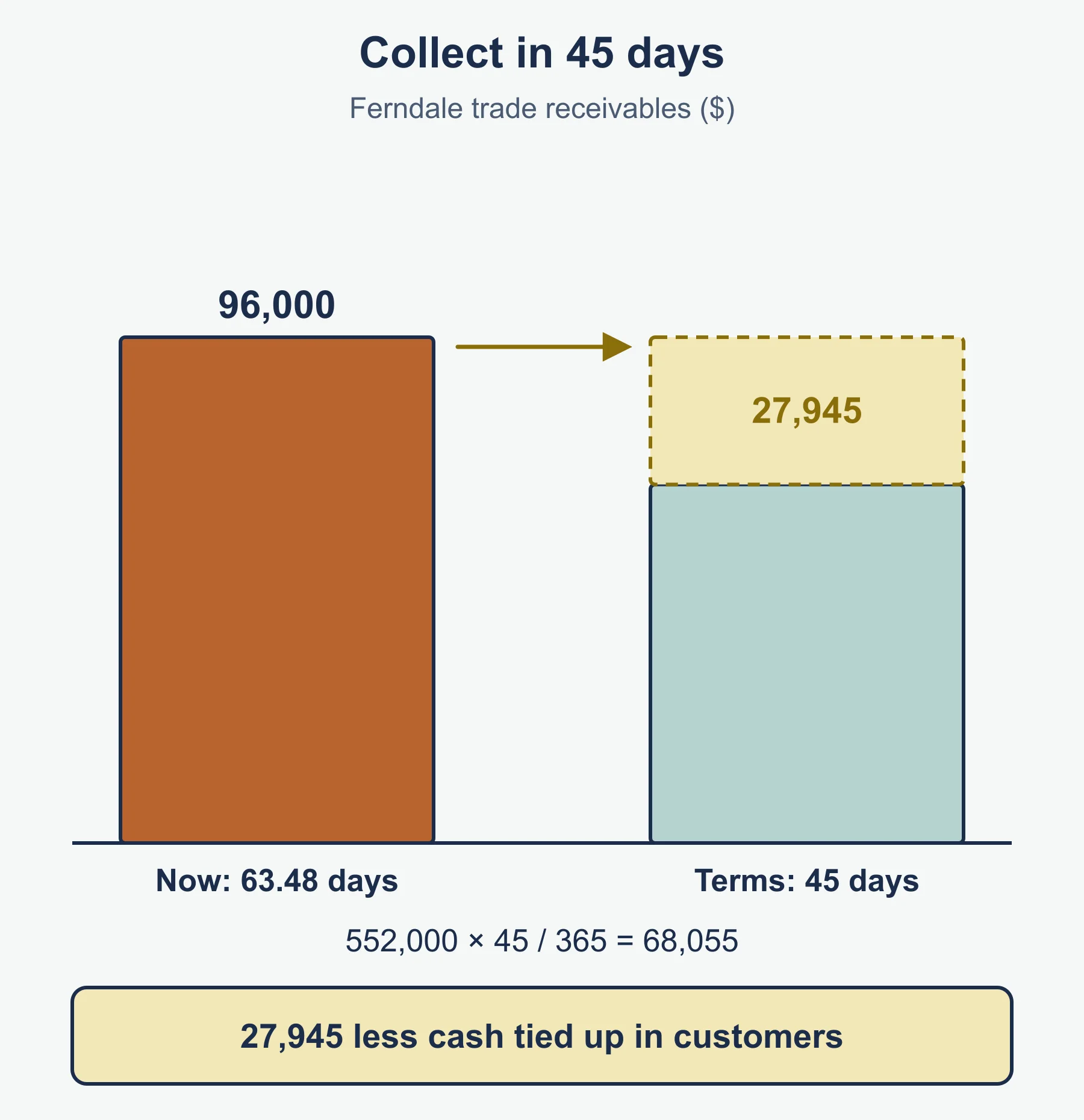
| Trade receivables turnover | trade receivables / credit sales x 365 | days | customers paying later |
| Trade payables turnover | trade payables / credit purchases x 365 | days | suppliers being paid later |
Capital employed = issued shares + reserves + non-current liabilities. Average inventory = (opening + closing) / 2.
2. Method in six steps
- Pick the right figures: average inventory, credit sales, credit purchases, profit before interest.
- Write the formula with the figures substituted.
- Give the answer to 2 decimal places with its unit: %, times, days or x : 1.
- Compare it with last year, a target or a credit period.
- Give a reason taken from the scenario.
- Say what it means, then recommend something specific.
3. Quick worked reminders
Sundial Clocks (sole trader). Revenue 84,000, of which 63,000 was on credit. Cost of sales 54,600. Expenses 19,320. Trade receivables 7,350. Credit purchases 42,000. Trade payables 4,200.
Gross profit           84,000 - 54,600 = 29,400
Gross profit margin    29,400/84,000 x 100 = 35.00%
Mark-up                29,400/54,600 x 100 = 53.85%
Profit for the year    29,400 - 19,320 = 10,080
Profit margin          10,080/84,000 x 100 = 12.00%
Receivables days       7,350/63,000 x 365 = 42.58 days
Payables days          4,200/42,000 x 365 = 36.50 days
Skerryvore Toys Limited. Profit for the year 31,500 after debenture interest of 4,500. Shares 120,000, reserves 60,000, debentures 50,000. Current assets 98,000 including inventory 38,000. Current liabilities 49,000.
Capital employed   120,000 + 60,000 + 50,000 = 230,000
ROCE               (31,500 + 4,500)/230,000 x 100 = 15.65%
Current ratio      98,000 : 49,000 = 2.00 : 1
Acid test          (98,000 - 38,000) : 49,000 = 1.22 : 1
4. Must-know distinctions
| Pair | Difference |
|---|---|
| Margin and mark-up | Same gross profit, different base: revenue or cost of sales. Mark-up is the larger percentage. Sundial: 35.00% against 53.85%. |
| Current ratio and acid test | The acid test removes inventory, the slowest current asset to turn into cash. |
| Inventory times and days | Times counts the yearly cycles of selling and restocking; days measures how long it is held. A higher figure is good for times and poor for days. |
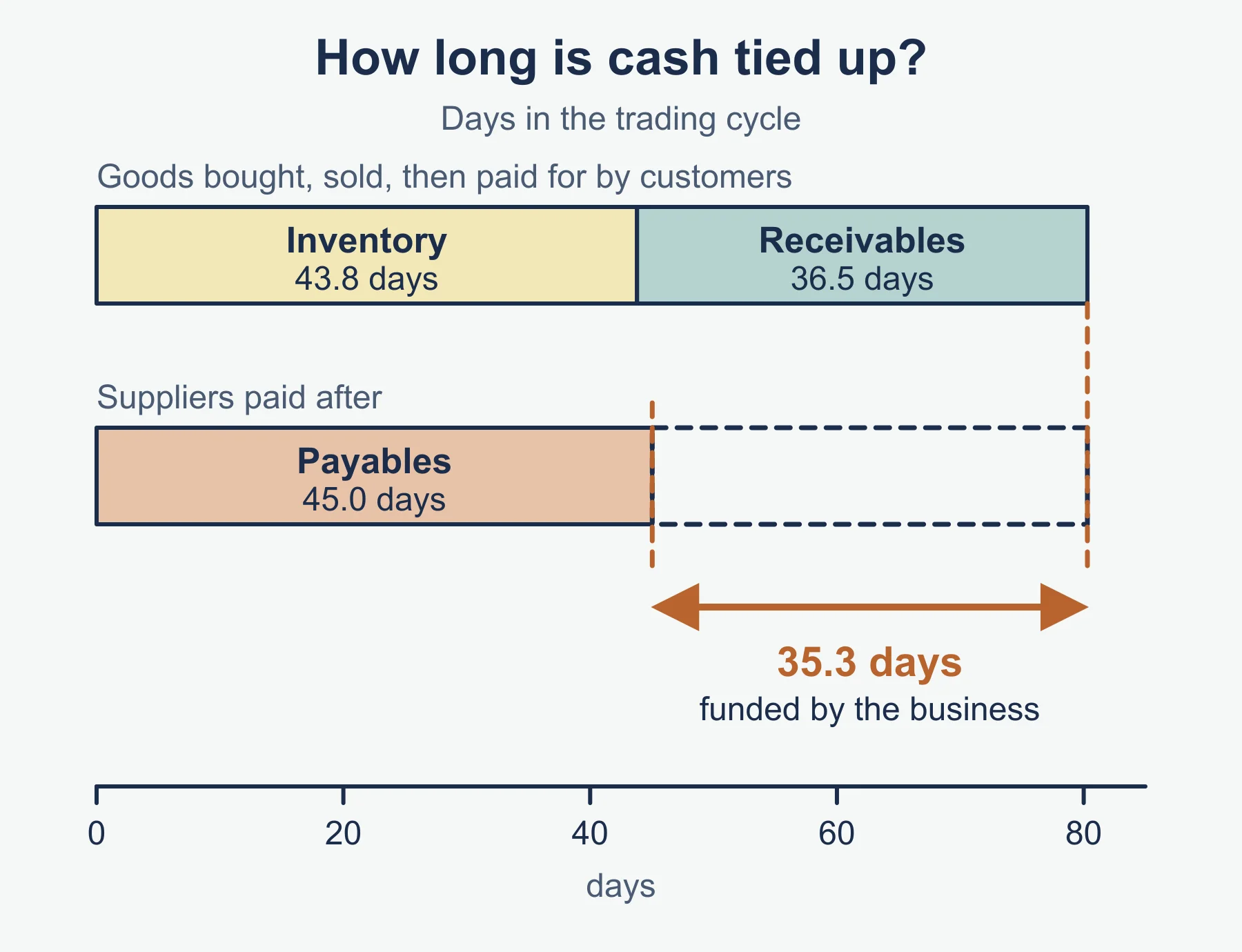
| Receivables and payables days | Long receivables days are bad news for cash. Long payables days help cash but can upset suppliers. |
| Gross profit margin and profit margin | The first is before expenses, other income and interest. The second is after them. |
| Percentage points and per cent | A margin falling from 40.00% to 35.00% has dropped 5.00 percentage points, not 5.00%. |
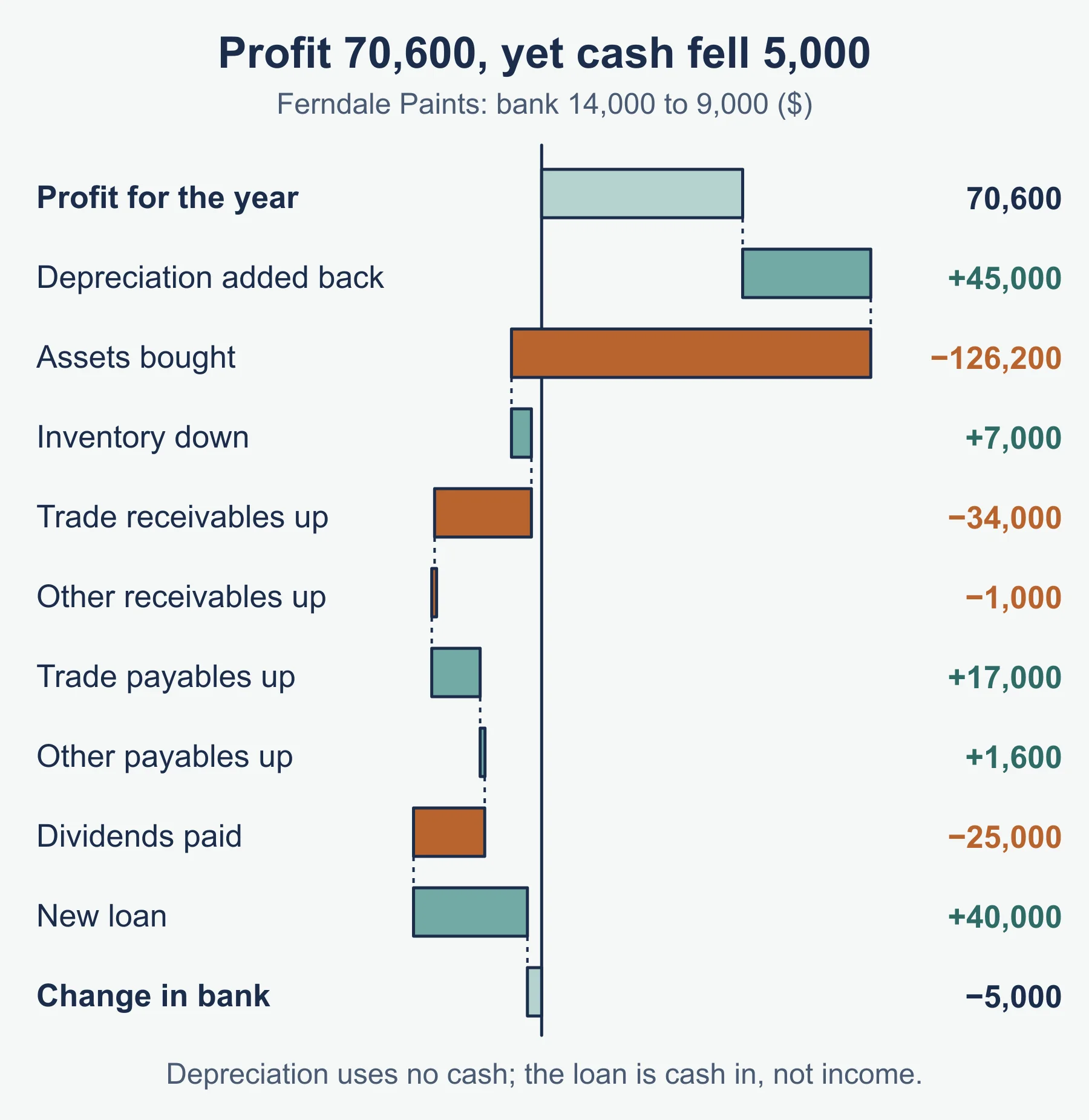
| Profit and cash | Profit matches income and expenses to the year. Cash records money moving. |
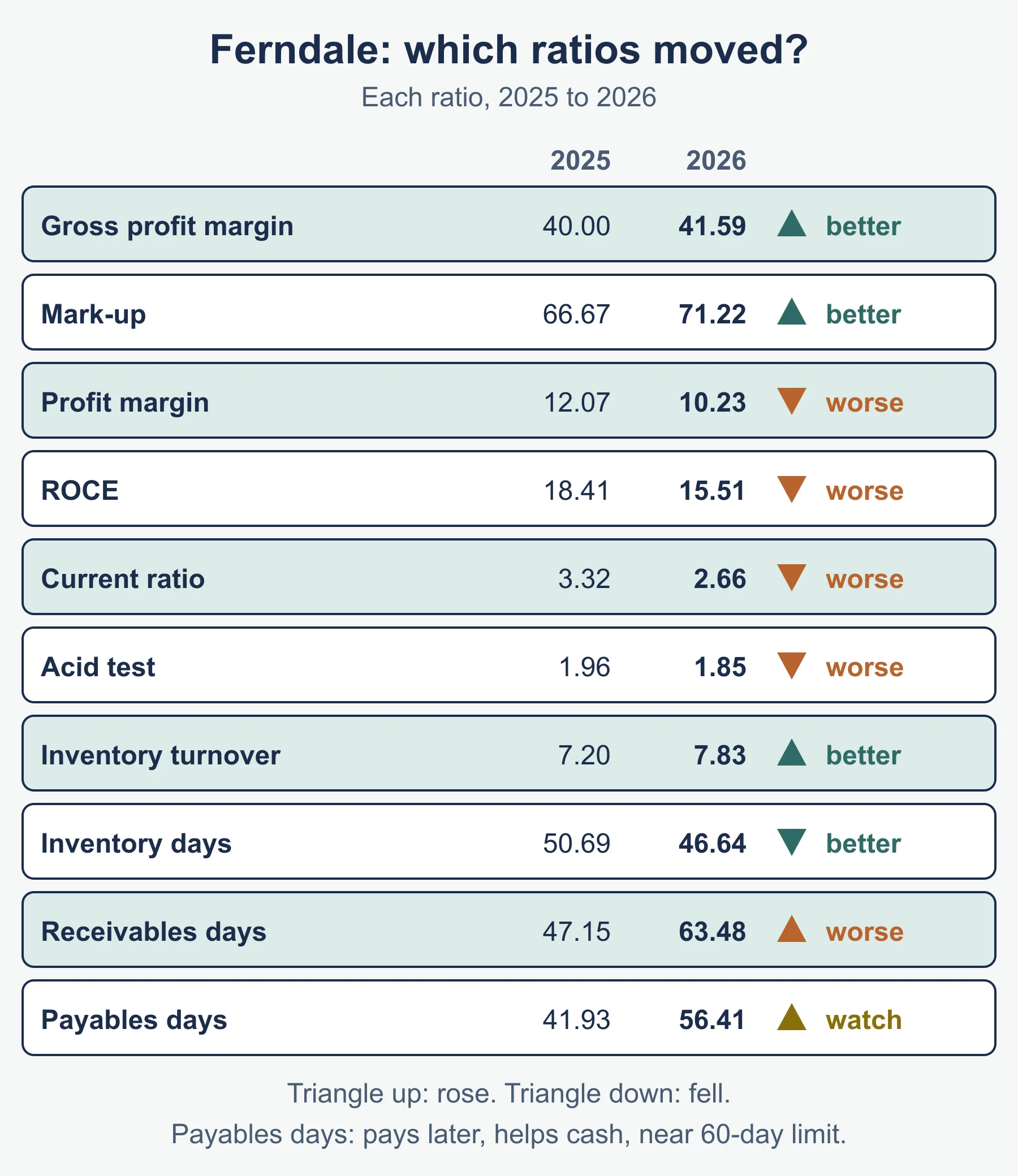
5. Interpretation grid (6.2)
| If this moves | Possible causes | Possible action |
|---|---|---|
| Gross profit margin falls | Lower selling prices, dearer purchases, overvalued opening or undervalued closing inventory | Raise prices, change supplier, check inventory valuation |
| Profit margin falls, gross profit margin steady | Expenses or interest up, other income down | Review expenses, find other income |
| ROCE falls | Profit down, or capital employed up without more profit | Improve profit, put new capital to work |
| Current ratio or acid test falls | Higher current liabilities, slower receivables, an overdraft | Collect debts, use long-term finance |
| Inventory days rise | Over-ordering, slow sellers | Order less, discount slow lines |
| Receivables days rise | Weak credit control | Statements, reminders, cash discount, credit checks |
| Payables days fall | Paying earlier than needed | Use the full credit period |
Comparison statement: show each item for two years with the change, then comment on the largest changes.
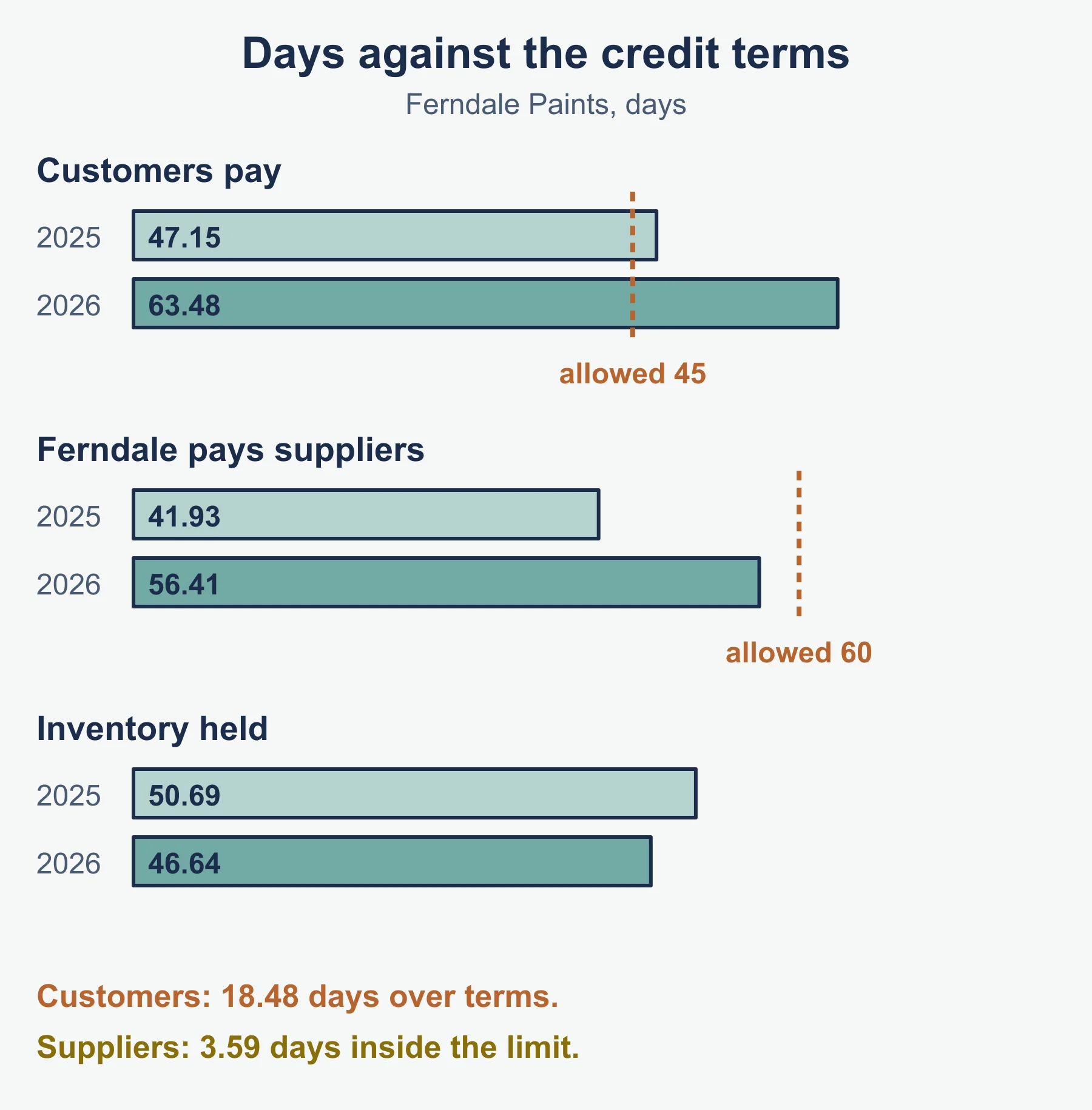
Model comment. If Sundial’s receivables days rose from 35.00 to 42.58 against 30 days allowed, write: “Customers are paying later, so cash is tied up in receivables. Sundial should send statements promptly and offer a cash discount for early payment.” The comment gives both figures, the direction, the meaning and one fitting action.
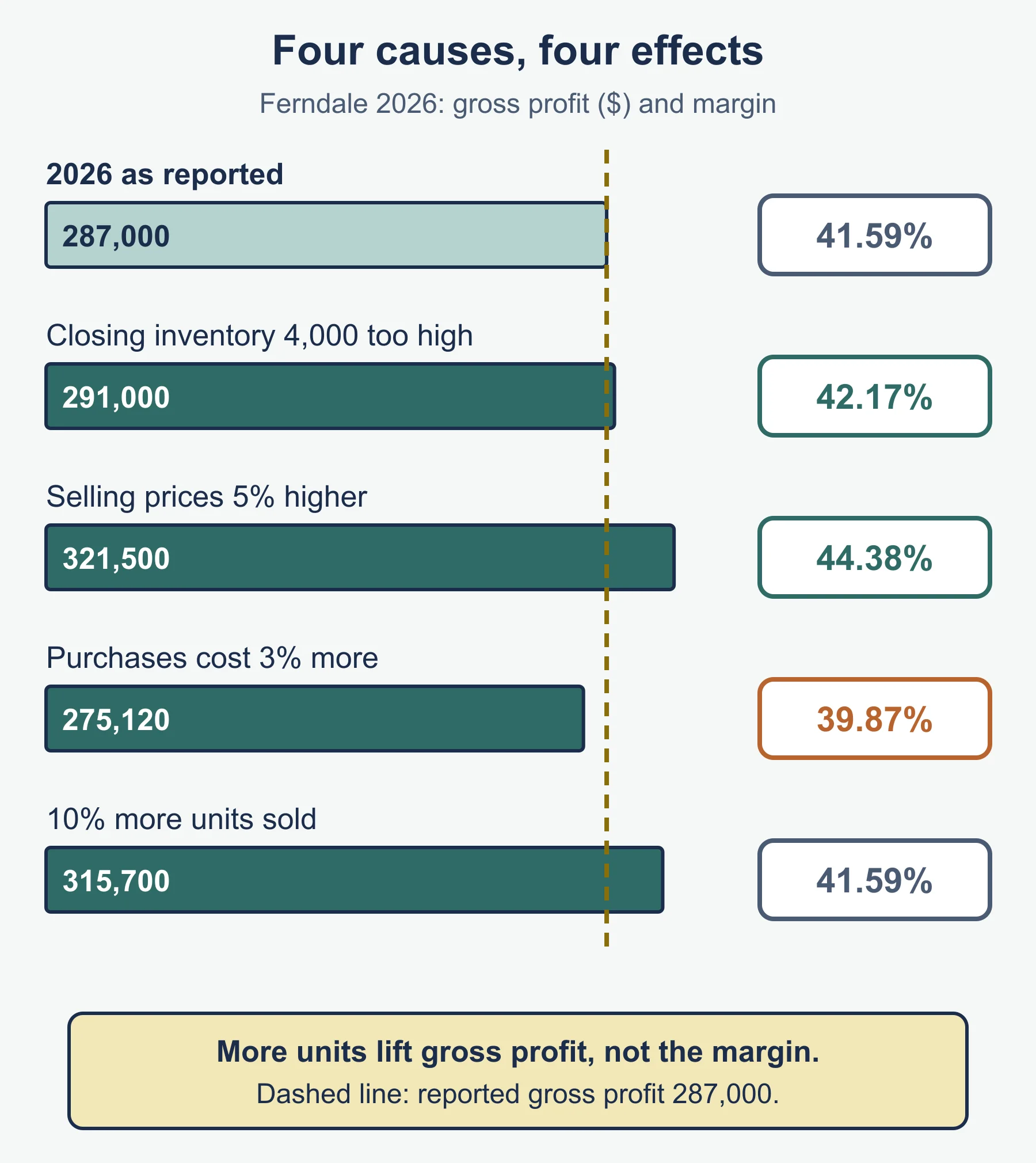
6. What changes gross profit and profit for the year
| Cause | Gross profit | Gross profit margin |
|---|---|---|
| Closing inventory overvalued | overstated | overstated |
| Closing inventory undervalued | understated | understated |
| Higher sales quantity, same prices | up | unchanged |
| Higher selling prices, same costs | up | up |
| Lower selling prices | down unless extra units sell | down |
| Higher purchasing prices, same selling prices | down | down |
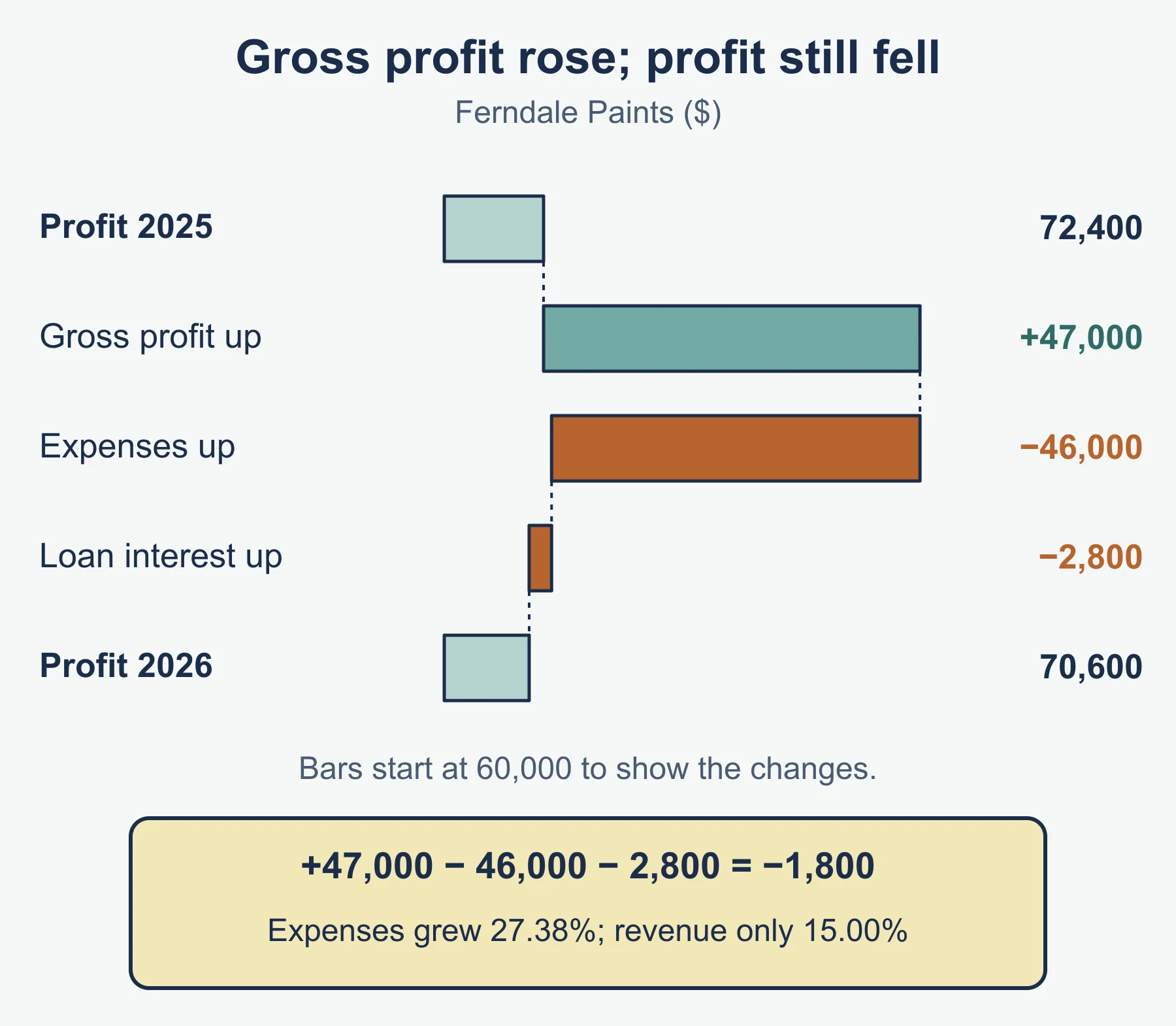
Profit for the year = gross profit + other income - expenses (and interest). It falls if gross profit is flat and expenses rise, or if other income drops.
7. Why cash and profit differ
Cash lower than profit: non-current assets bought; inventory or receivables increased; drawings or dividends paid; loan repaid.
Cash higher than profit: depreciation (no cash paid); payables increased; capital introduced or loan received; inventory or receivables decreased.
Also: accruals, prepayments and irrecoverable debts move profit without matching cash.
8. Quick self-test
- State the ROCE formula and what capital employed contains.
- Revenue is 48,000 and cost of sales is 36,000. Calculate the gross profit margin and mark-up.
- Current assets are 51,000, including inventory of 21,000. Current liabilities are 30,000. Give the current ratio and acid test.
- Opening inventory is 12,000, closing inventory 18,000, cost of sales 90,000. Calculate the rate of inventory turnover and inventory turnover in days.
- Sales were 80,000, of which 32,000 was for cash. Trade receivables are 9,000. Calculate trade receivables turnover.
- Trade payables are 5,500 and credit purchases 33,000. Calculate trade payables turnover.
- Why might profit for the year fall even though gross profit has risen? Give two reasons.
- Closing inventory was understated by 1,500. What happens to gross profit and profit for the year?
- Purchase prices rise but selling prices do not. What happens to the gross profit margin?
- Give two reasons why a business with a profit can have less cash.
Answers
- ROCE is profit for the year before interest divided by capital employed, times 100. Capital employed combines issued shares, reserves and non-current liabilities.
- Gross profit 12,000; margin 25.00%; mark-up 33.33%.
- Current ratio 1.70 : 1; acid test 30,000 : 30,000 = 1.00 : 1.
- Average inventory 15,000; 6.00 times; 60.83 days.
- Credit sales 48,000; 9,000/48,000 x 365 = 68.44 days.
- 5,500/33,000 x 365 = 60.83 days.
- Expenses grew faster than gross profit; other income dropped; interest charges went up.
- Both are understated by 1,500.
- It falls, because cost of sales rises while revenue does not.
- Any two: non-current assets bought; inventory increased; receivables increased; drawings or dividends paid; loan repaid.
9. Where marks are usually lost
- Writing a current ratio as a percentage.
- Using profit after interest in ROCE.
- Using closing inventory when the formula needs the average.
- Using total sales instead of credit sales.
- Mixing up margin and mark-up.
- Describing a change without a reason from the scenario.
- Giving advice that does not fit the weak ratio.
- Treating a rise in days as an improvement.
Frequently asked questions
What is capital employed for a limited company? Capital employed is issued shares plus reserves plus non-current liabilities, where reserves include a general reserve and retained earnings. As a check, it equals total assets less current liabilities.
What can change gross profit? Gross profit can change because of the valuation of inventory, the quantity sold and changes in selling or purchase prices. An overvalued closing inventory inflates gross profit, while selling more units raises gross profit but not the margin.
Is a rise in trade receivables days an improvement? No. A rise means customers are taking longer to pay, which ties up cash. Compare the days with the credit period the business allows.
What does a steady gross profit margin with a falling profit margin show? It points to expenses rising faster than revenue, because the trading result before expenses is unchanged. A falling gross profit margin would instead point to prices, purchase costs or inventory.
Official syllabus
Cambridge IGCSE Accounting syllabus (0452, version 1) for exams in 2027, 2028 and 2029, published by Cambridge University Press & Assessment: sections 6.1 and 6.2 and the Accounting ratios list.
Get free revision emails (optional)
Occasional emails with practice questions, worked explanations and links to free resources for the qualification and subjects you choose. No spam, and you can unsubscribe from any email. The free tools on this site never need an email.
Related resources
-
Revision notes
IGCSE Accounting: Analysis and Interpretation — Revision Notes
Quick recall for Cambridge IGCSE Accounting 0452 Topic 6: ten ratios, reading them, profit versus cash, comparing businesses, users and statement limits.
Accounting · Cambridge · IGCSE, O Level
Revise topic -
Study guides
IGCSE Accounting: Inter-business comparison, interested parties, limits (Cambridge 0452)
Study guide to Cambridge IGCSE Accounting 0452 sections 6.3 to 6.5: inter-business comparison, interested parties and limitations of statements.
Accounting · Cambridge · IGCSE, O Level
Read guide -
Practice questions
IGCSE Accounting: Inter-business comparison, interested parties, limits (Cambridge 0452) – Practice Questions
Original practice questions with worked answers on Cambridge IGCSE Accounting 0452 inter-business comparison, interested parties and limitations.
Accounting · Cambridge · IGCSE, O Level
Try questions
Related articles
-
teaching
A Level tuition in Dubai: Cambridge or Pearson Edexcel International A Level?
Schools in Dubai and Abu Dhabi teach either Cambridge International AS & A Level or Pearson Edexcel International A Level. How the two are structured, why it matters for tuition, and how online classes from Lahore work.
9 October 2026
-
curriculum guides
Choosing subjects at IGCSE and A Level
How subject choices at 14 and 16 affect university options later, and how to keep pathways open without overloading a timetable.
28 July 2026
Studying this with a teacher
Working through Accounting IGCSE, O LEVELS?
This page is free and stays free. If you would rather be taught it, Marlbridge runs Accounting classes one-to-one and in small groups of up to 15, online in your own time zone. The first trial class is free. WhatsApp replies within an hour (8am–11pm Pakistan time, every day); email the same day.
Cambridge Accounting teachers at Marlbridge

