
Revision Notes
IGCSE Business: Business and ethical issues and Pressure groups (Cambridge 0264) – Revision Notes
Condensed revision notes on ethical issues, business responses, being ethical and pressure groups for Cambridge IGCSE Business 0264 sections 6.4 and 6.5.
- Subject
- Business
- Level
- IGCSE
- Topic
- External influences on business activity
- Author
- Marlbridge Academic Team
- Updated
- Reviewed by
- Salman Ahmad (what this means)
Aligned to Cambridge IGCSE Business (0264), For examination in 2027, 2028 and 2029. Official specification .
Syllabus page (what it covers and how it is assessed): Cambridge IGCSE Business.
Syllabus points this page covers
0264
- 6.4 Business and ethical issues
- 6.5 Pressure groups
Found an error? Report a correction.
Need help with this topic? Request a free trial class for IGCSE Business (0450 / 0264).
These notes condense sections 6.4 (Business and ethical issues) and 6.5 (Pressure groups) of the Cambridge IGCSE Business 0264 syllabus for examination in 2027, 2028 and 2029. For full explanations and longer worked examples, read the study guide. Then test yourself with the practice questions. The course hub, the printable checklist and the free diagnostics help you plan the rest of your revision.
All businesses and figures here are invented. Money is in dollars and written as plain numbers.
Key terms
| Term | Meaning (standard wording, not a quotation) |
|---|---|
| Ethical issue | A choice between doing what is right and doing what is cheapest or most profitable |
| Ethical business | One that acts on principles of right and wrong, even where the law does not force it to |
| Child labour | Employing children in work unsuitable for their age or that stops them going to school |
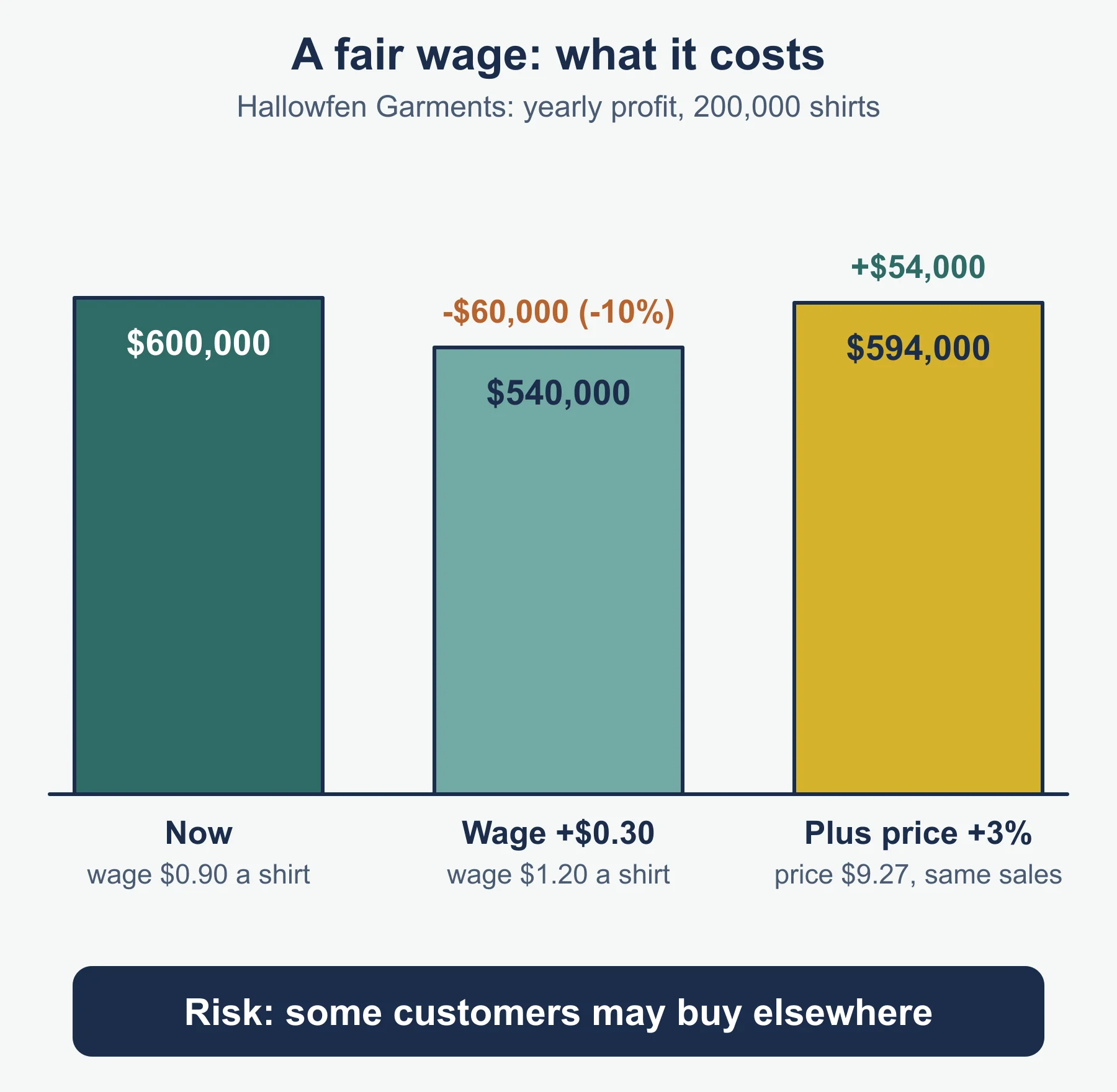
| Fair wage | Pay that reflects the work done and lets the employee live decently |
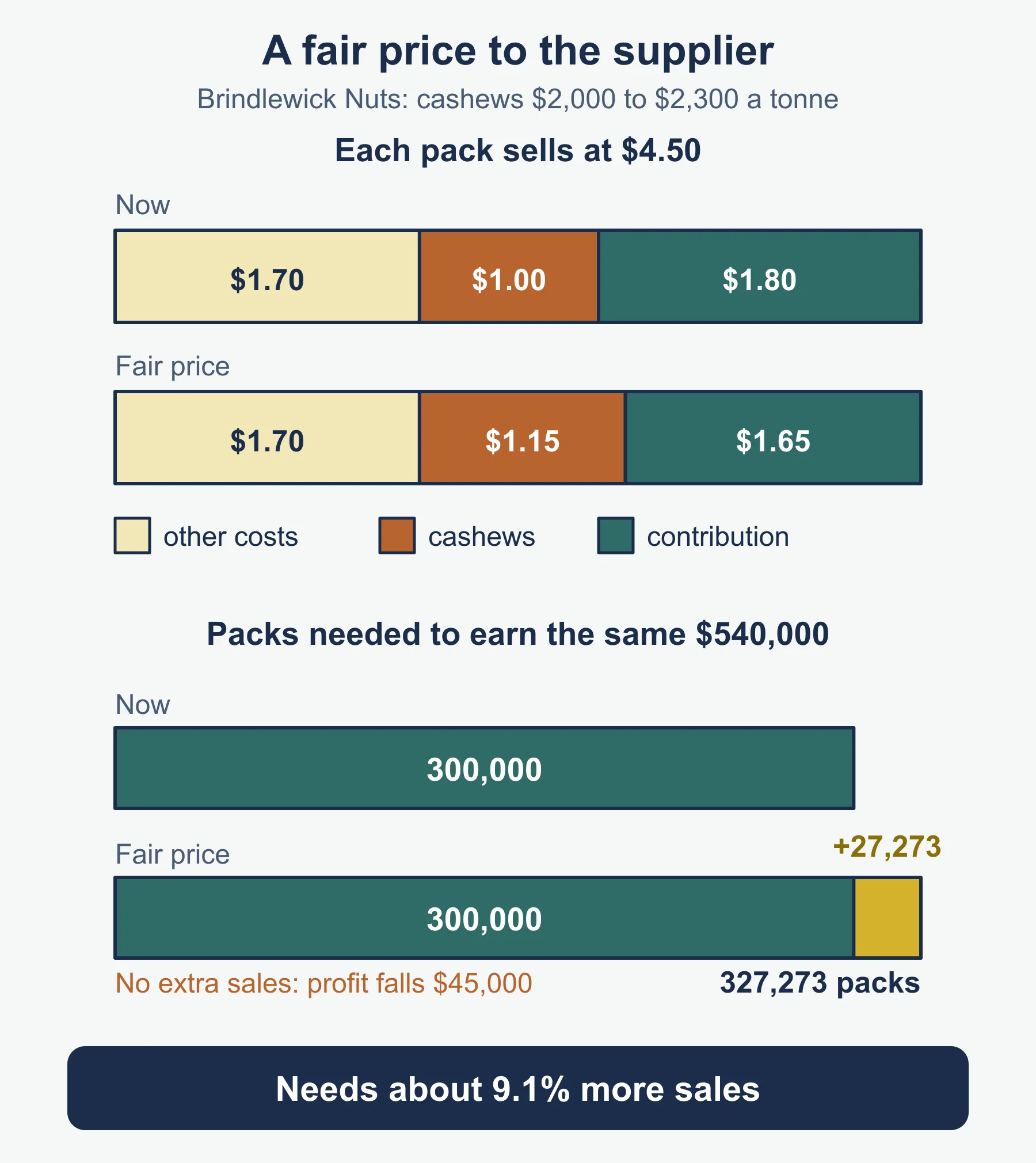
| Fair price to a supplier | A price that covers the supplier’s costs and lets it stay in business |
| Pressure group | An organised group that campaigns to influence the decisions of businesses or governments |
| Boycott | Customers deliberately refusing to buy from a business |
| Lobbying | Trying to persuade the government to make or change a law |
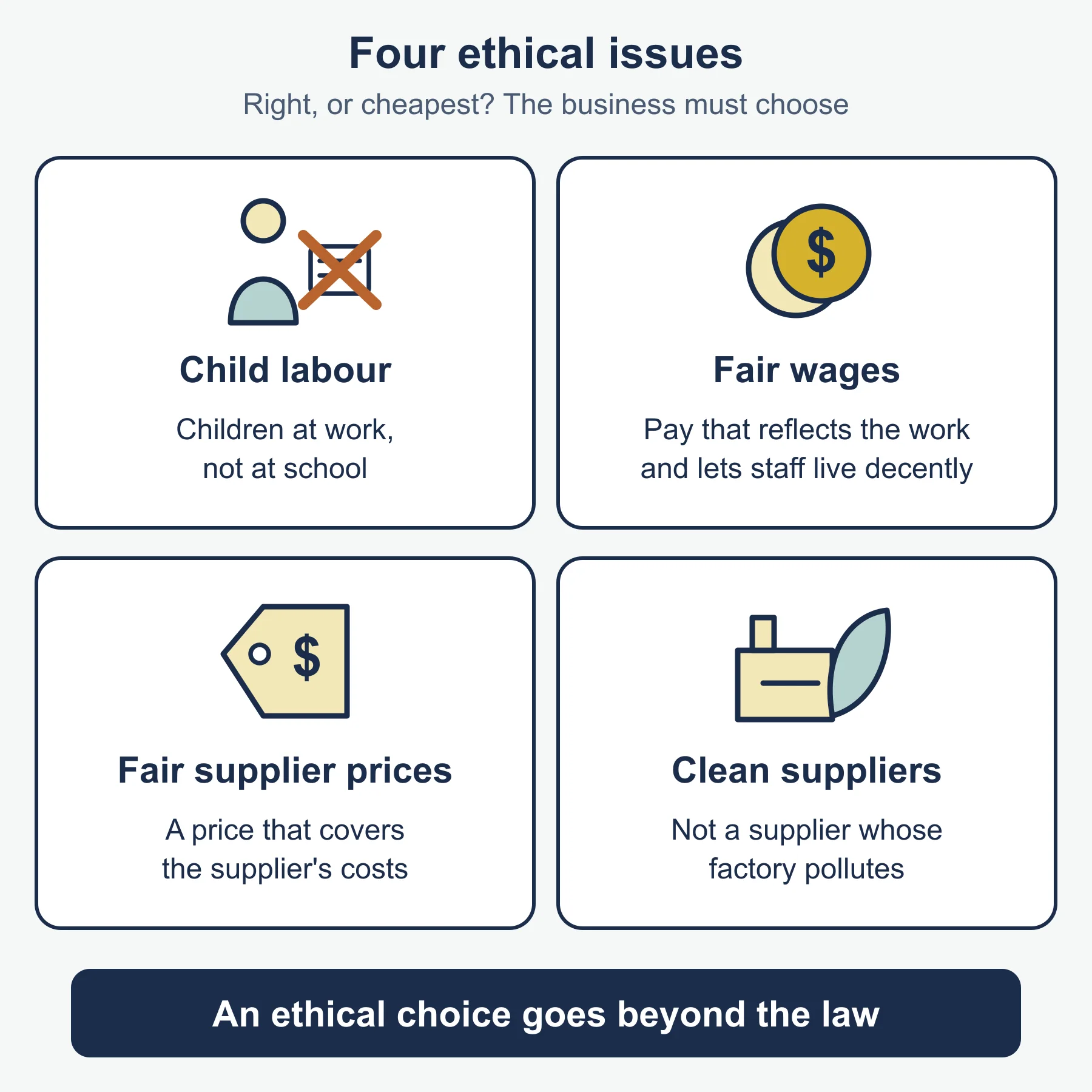
The four ethical issues in the syllabus (6.4.1)
- Child labour.
- Paying fair wages to employees.
- Paying fair prices to suppliers.
- Using suppliers who do not damage the environment.
These are given as examples, so be ready for others in a case study. Link the issue to the people affected: employees, suppliers, customers, the community and owners.
How businesses may respond
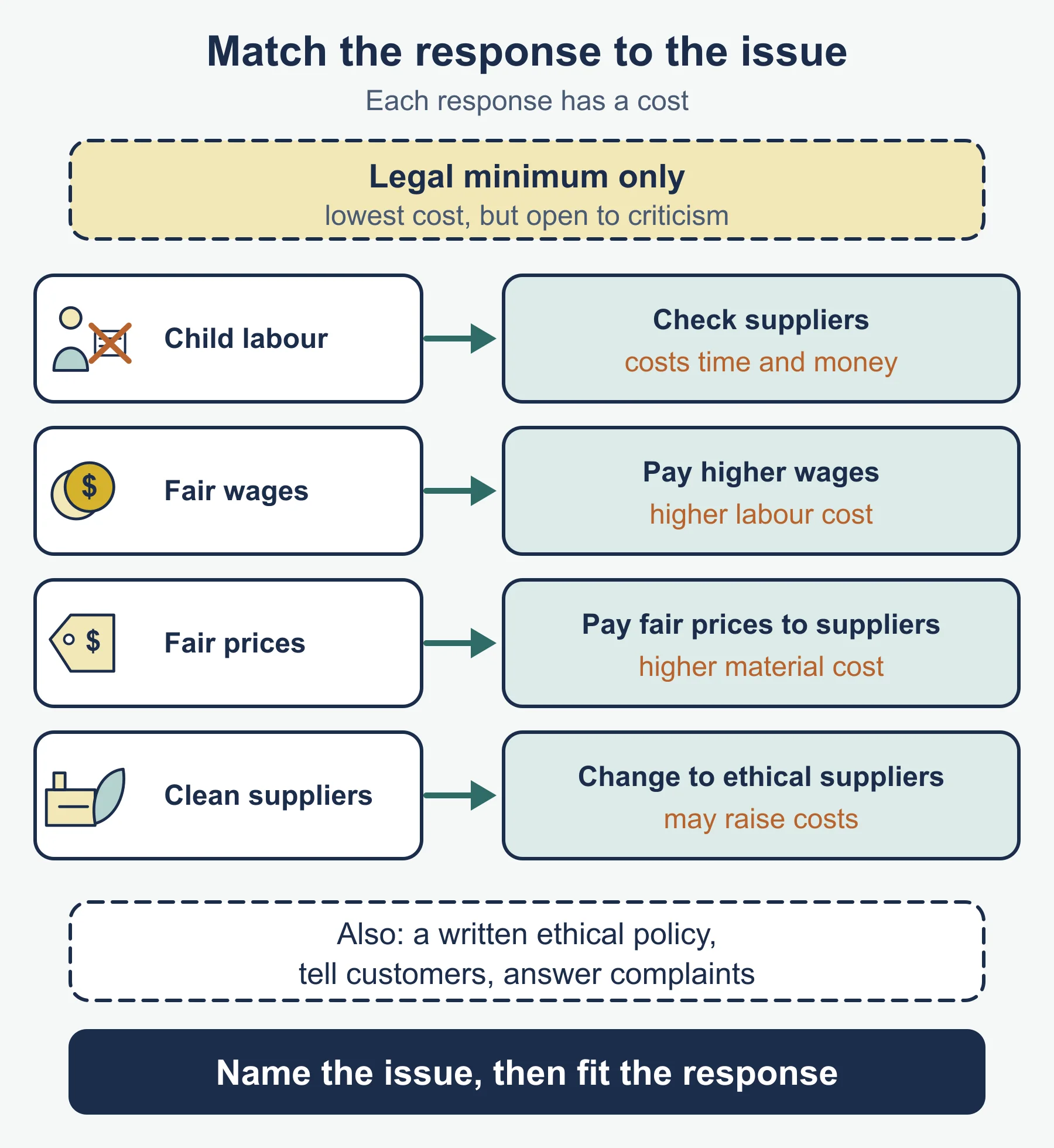
| Response | One-line evaluation |
|---|---|
| Legal minimum only | Cheapest, but risks criticism and bad publicity |
| Written ethical policy | Clear rules, but only works if enforced |
| Inspect suppliers, drop those that fail | Reduces risk in the supply chain, costs time and money |
| Pay higher wages | Better motivation and retention, higher labour costs |
| Pay fair prices to suppliers | More reliable supply, higher material costs |
| Switch to ethical suppliers or materials | Matches the policy, may raise unit costs |
| Publicise the policy | Builds reputation, but claims must be true |
| Meet or answer a pressure group | Protects reputation, may need changes in practice |
| Ignore or deny | Saves money in the short run, risks sales and reputation |
Method for a “how could the business respond” question
- Name the issue from the stimulus.
- State one specific response.
- Explain what it changes, such as supplier checks that reduce the chance of child labour.
- Say what it costs or gains the business, using any figures given.
Advantages and disadvantages of being ethical
| Advantages | Disadvantages |
|---|---|
| Better reputation and more sales | Higher costs |
| More loyal customers | Higher prices can lose price-sensitive customers |
| More motivated, longer-serving staff | Lower profit in the short run |
| Easier recruitment | Time and money spent checking suppliers |
| Less risk of campaigns and bad publicity | Rivals who ignore ethics may be cheaper |
| Co-operative, reliable suppliers | Benefits are slow and hard to prove |
| Possibly a higher price | Untrue claims damage reputation |
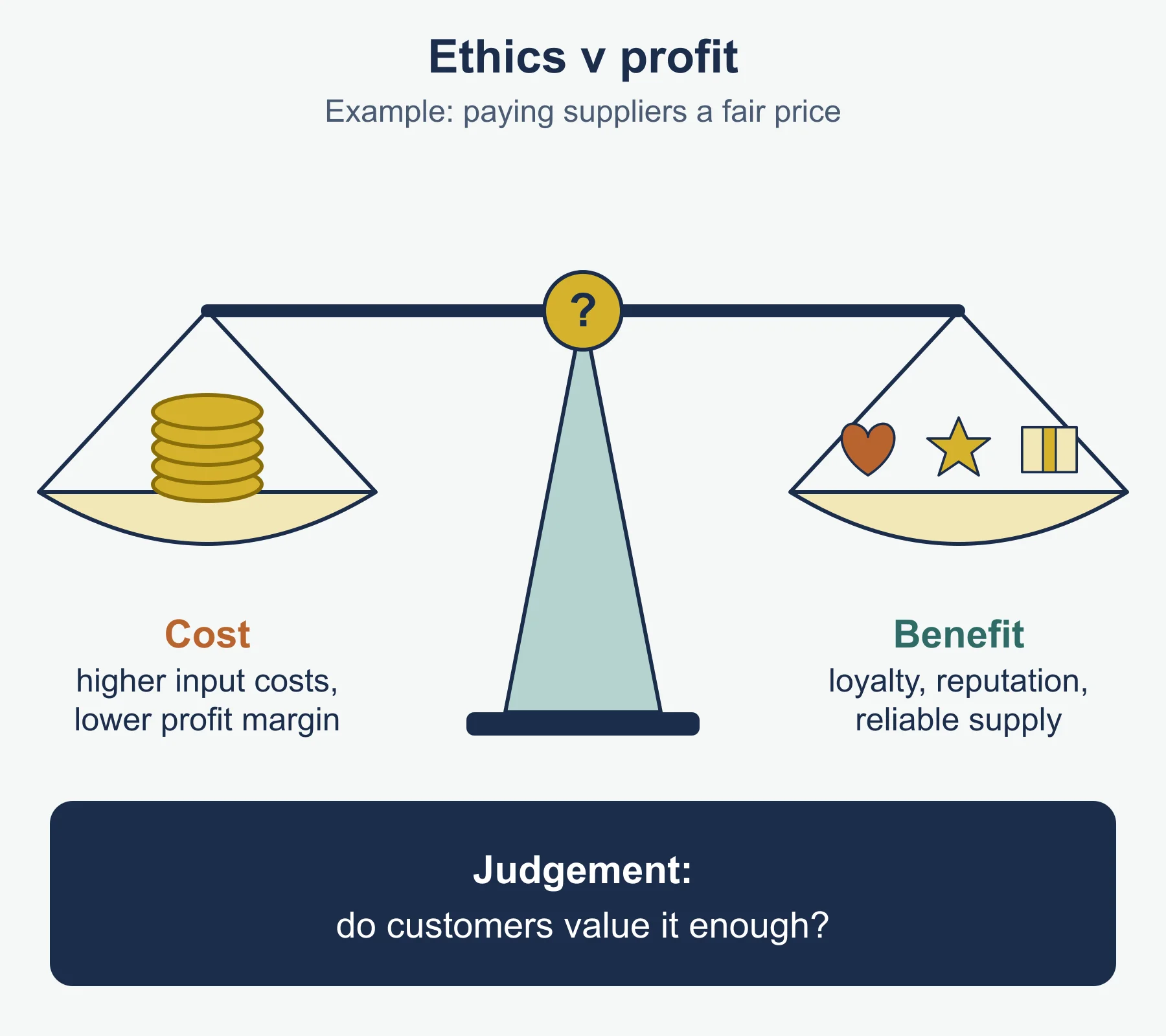
The balance depends on the business. A strong brand with customers who care has more to gain. A business whose customers buy only on price may find the costs hard to recover.
Pressure groups (6.5.1)
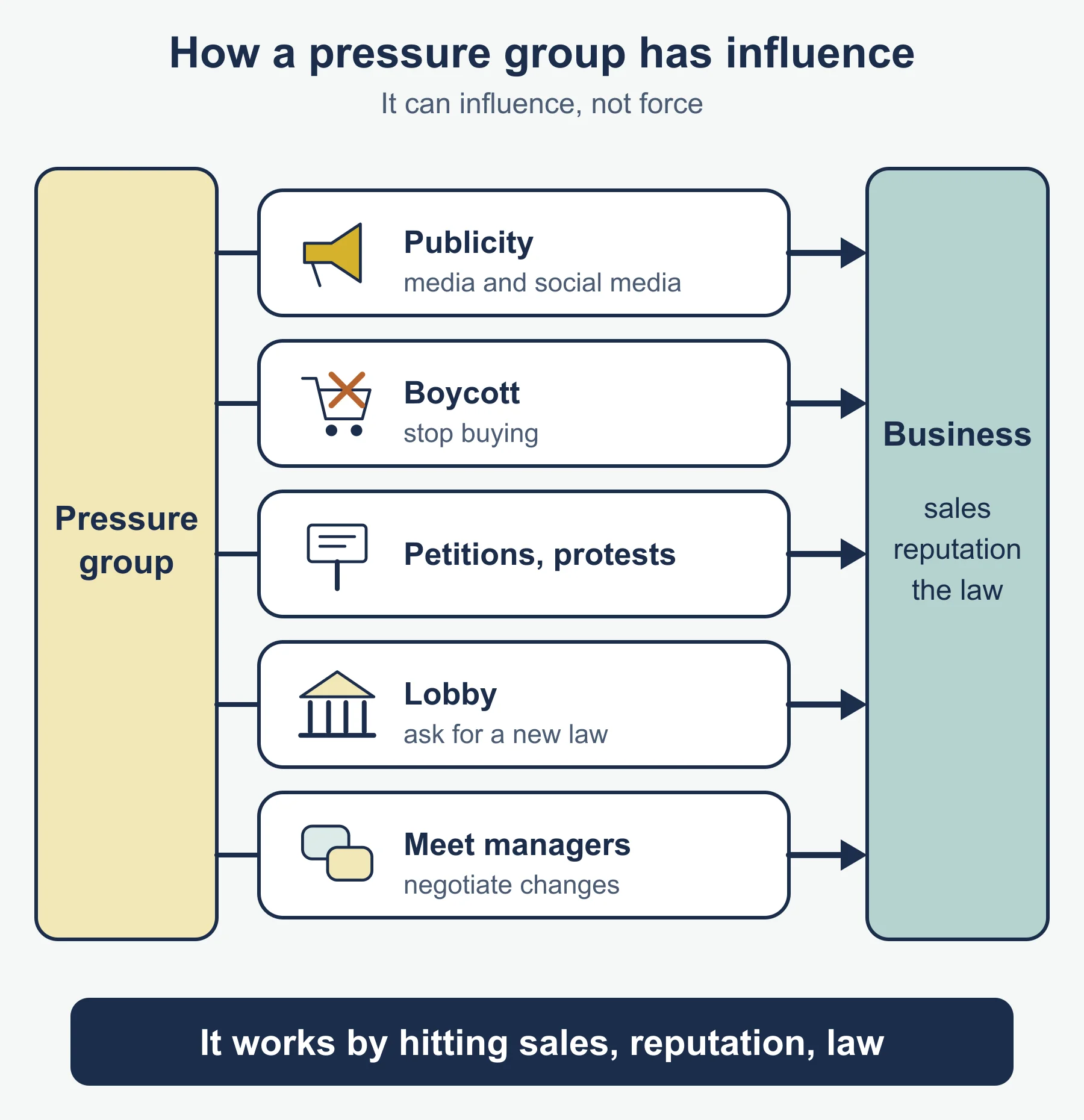
How a pressure group can influence business decisions:
- publicity through the media and social media
- calling for a boycott
- petitions and protests
- lobbying the government to change the law
- negotiating with managers
- praising businesses that improve
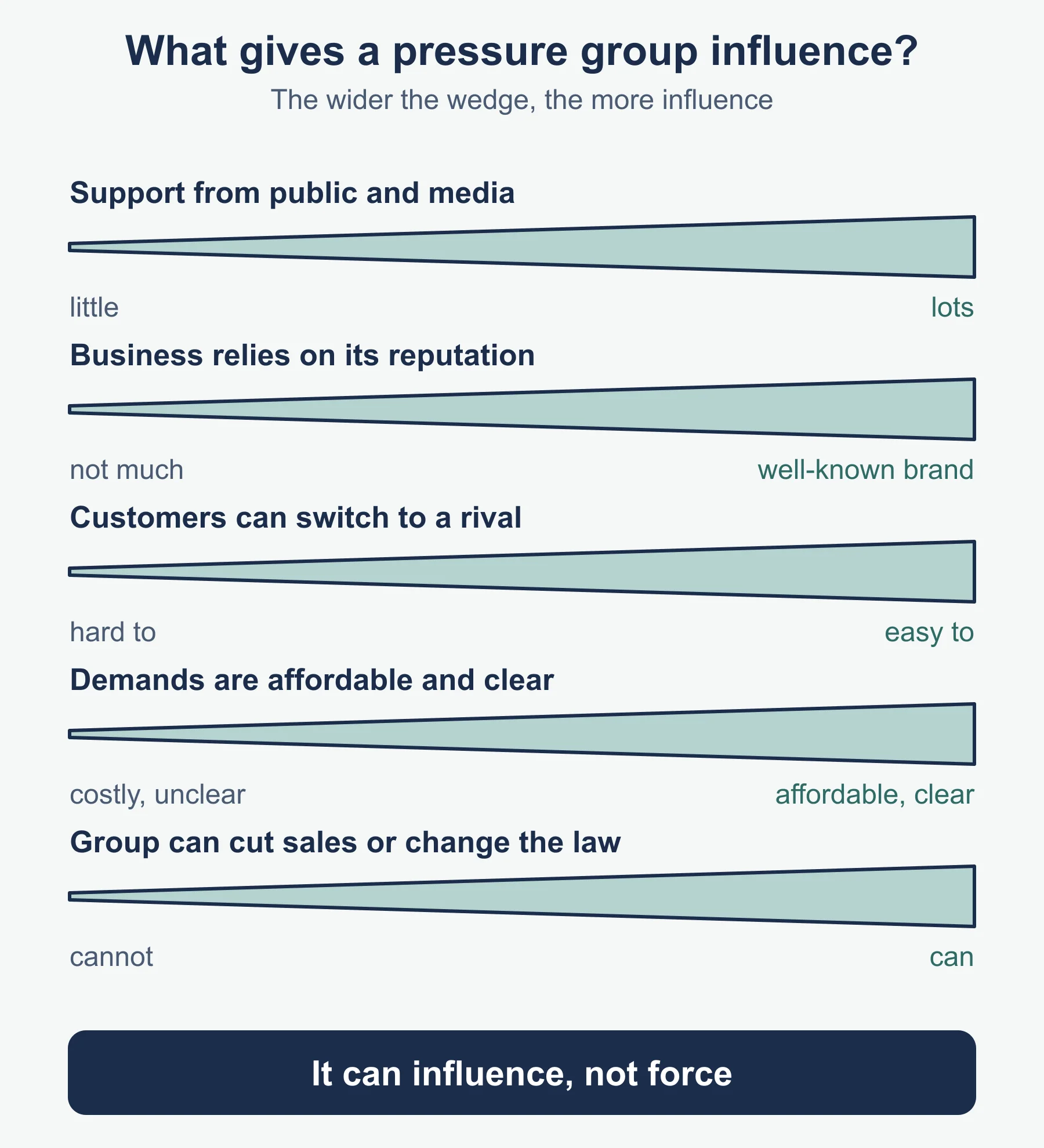
What affects the group’s influence:
- level of public and media support
- how much the target depends on its reputation
- whether customers can switch easily
- how clear and affordable the demands are
- whether the group can reach the government
A pressure group cannot order a business to change. It works through sales, reputation and the law. Not every group is hostile: some work with businesses and give them credit.
Business responses to a pressure group
Ignore, defend, negotiate, change practice, or change practice and publicise it. Judge each by cost, speed and the effect on reputation.
Must-know distinctions
| Pair | Difference |
|---|---|
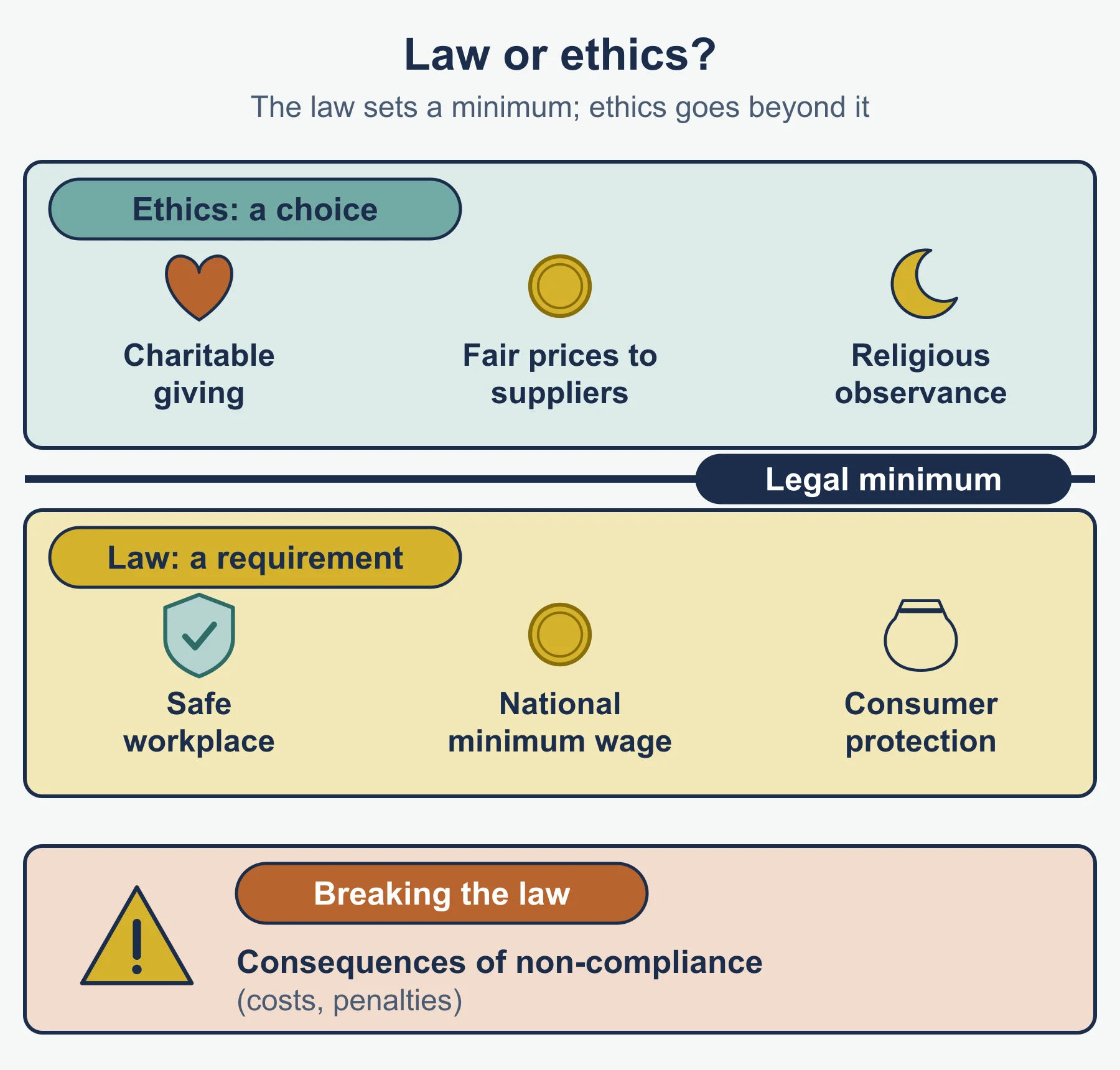
| Legal vs ethical | The law is compulsory. Ethics goes beyond what the law demands |
| Pressure group vs trade union | A pressure group campaigns on a cause. A trade union represents workers in their workplaces |
| Boycott vs lobbying | A boycott hits sales directly. Lobbying aims to change the law |
| Fair wage vs fair price | One is paid to employees. The other is paid to suppliers |
| Ethical cost vs ethical benefit | Costs are usually certain and immediate. Benefits are often uncertain and later |
| Stakeholder vs pressure group | A stakeholder has a direct link to the business. A pressure group may have none |
Worked reminders
Fair price to a supplier
Dorrance Bakery buys 60 tonnes of flour a year at 500 a tonne. A fair-price agreement lifts the price to 560.
- Old cost = 60 × 500 = 30,000.
- New cost = 60 × 560 = 33,600.
- Extra cost = 3,600, which is 12% more.
- Sales revenue is 420,000, so the extra cost is about 0.9% of sales revenue.
This is a small share of revenue, so the bakery may judge the move affordable, especially if it wins loyal customers.
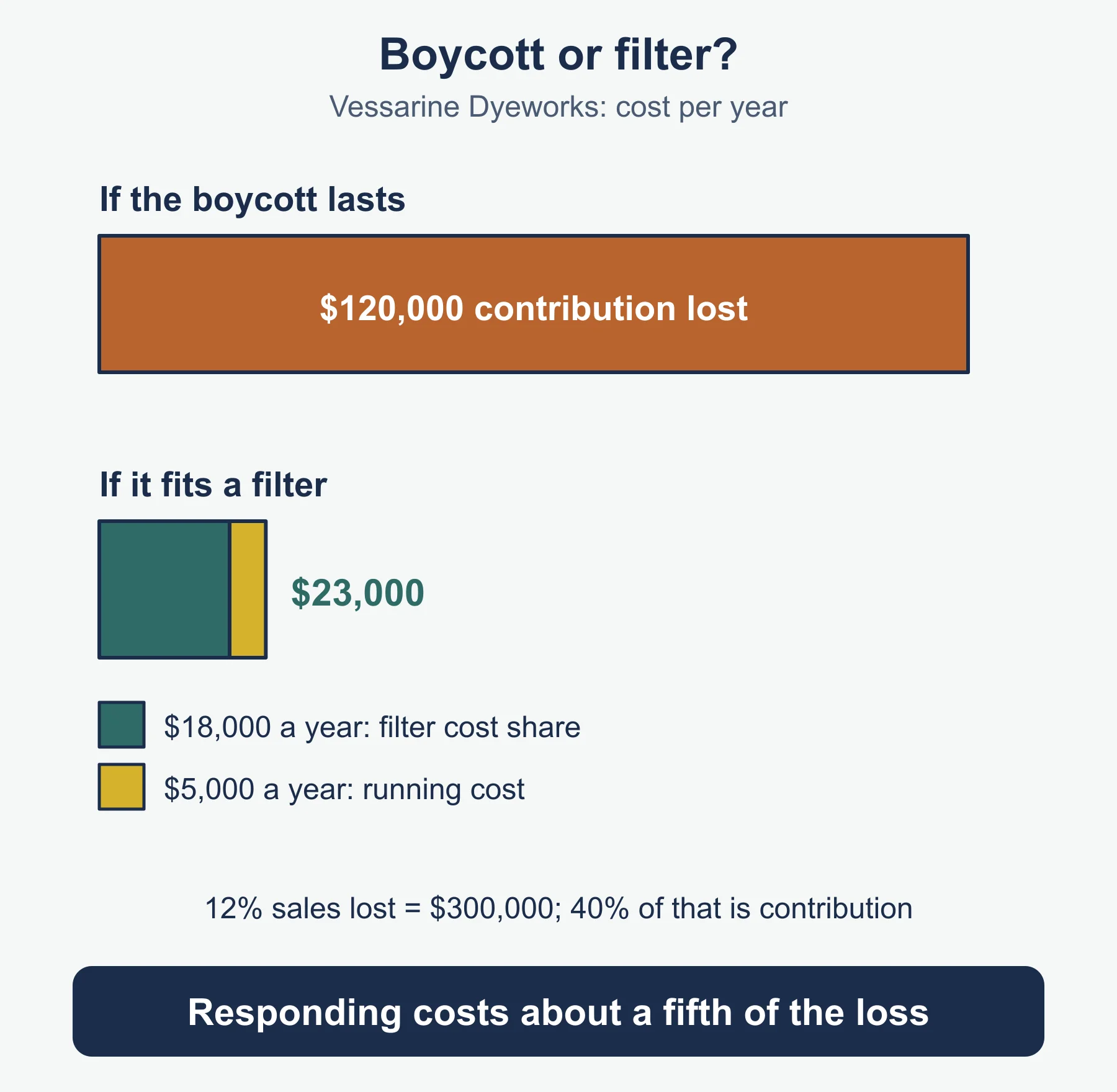
Cost of a boycott
Harlequin Toys sells 40,000 toys at 12 each, so sales revenue is 480,000. A pressure group campaign reduces sales by 5%, and the contribution on each sale is 30%.
- Lost revenue = 5% × 480,000 = 24,000.
- Lost contribution = 30% × 24,000 = 7,200.
If changing its practice would cost more than 7,200 a year, Harlequin might wait. If the campaign is growing, the loss could be larger, so the decision is not just about this year’s figure.
Command words used in this topic
The syllabus lists these command words: calculate, consider, define, explain, identify, justify, outline and state. Use them like this:
- Define and state: give a short, precise answer with no development.
- Identify: name the issue or response from the information.
- Outline: set out the main points briefly.
- Explain: give a reason and develop it, using the business in the question.
- Consider and justify: support a case with evidence. Give a point for and a point against, then reach a decision and say why.
The papers also reward analysis and evaluation, so expect to follow every reason with its effect on the business.
Quick self-test
- State two ethical issues which may affect a business.
- Define the term pressure group.
- Outline two ways a pressure group can influence a business.
- Identify two ways a business can respond to evidence of child labour in its supply chain.
- State one advantage to a business of being ethical.
- State one disadvantage to a business of being ethical.
- Explain why paying fair prices to suppliers might help a business in the long run.
- A business raises an hourly wage from 5.00 to 6.00. Calculate the percentage increase.
- A business makes 50,000 items and pays 0.12 more per item to suppliers. Calculate the extra yearly cost.
- A business with sales revenue of 200,000 loses 5% of it during a boycott. Calculate the revenue lost.
- Explain why a well-known brand may respond quickly to a pressure group campaign.
Answers
- Any two of: child labour, paying unfair wages, paying unfair prices to suppliers, using suppliers who damage the environment.
- An organised group that campaigns to influence the decisions of businesses or governments.
- Any two of: publicity, boycott, petition or protest, lobbying the government, negotiation.
- Any two of: inspect suppliers, drop the supplier, set an ethical policy, change to a different supplier, tell customers what it has done.
- For example, a better reputation which may increase sales.
- For example, higher costs which may reduce profit.
- Suppliers who are paid fairly are more likely to keep trading and to supply reliable quality, so the business has a more secure supply.
- (6.00 − 5.00) ÷ 5.00 × 100 = 20%.
- 50,000 × 0.12 = 6,000.
- 5% × 200,000 = 10,000.
- Its sales depend on its reputation, so bad publicity could cost it many customers, and it has more to lose than a little-known business.
Where marks are usually lost
- Writing “it is good for the image” with no development of why that increases sales.
- Treating ethical and legal as the same thing.
- Describing a pressure group but not saying how it changes the business’s decision.
- Giving one-sided answers to “consider” and “justify” questions.
- Forgetting to use figures from the data in a calculation or comment.
- Quoting the word “boycott” without saying what the customers do.
- Listing ethical issues without saying who is affected.
- Writing a long answer to a 2-mark “state” question.
- Stating a conclusion with no reason attached.
Frequently asked questions
What is the difference between legal and ethical behaviour? The law is compulsory for every business. Ethical behaviour goes beyond what the law demands, acting on principles of right and wrong even where the law does not require it.
What is the difference between a pressure group and a trade union? A pressure group campaigns on a cause to influence businesses or government. A trade union represents workers in dealings with their employer.
What affects how much influence a pressure group has? Influence depends on the level of public and media support, how much the business depends on its reputation, whether customers can switch easily, how clear and affordable the demands are, and whether the group can reach the government.
How can a business respond to a pressure group campaign? It can ignore the campaign, defend its practice, negotiate, change its practice, or change and publicise the change. Judge each response by comparing its cost with the sales or reputation at risk.
Official syllabus
Cambridge IGCSE Business 0264 syllabus for examination in 2027, 2028 and 2029, published by Cambridge International, sections 6.4 and 6.5.
Get free revision emails (optional)
Occasional emails with practice questions, worked explanations and links to free resources for the qualification and subjects you choose. No spam, and you can unsubscribe from any email. The free tools on this site never need an email.
Related resources
-
Study guides
IGCSE Business: Business and the environment (Cambridge 0264)
A full study guide to Cambridge IGCSE Business 0264 section 6.3: environmental harm, why and how firms respond, and the effect of legal controls.
Business · Cambridge · IGCSE
Read guide -
Practice questions
IGCSE Business: Business and the environment (Cambridge 0264) – Practice Questions
Original practice questions with worked answers on business and the environment for Cambridge IGCSE Business 0264, with calculation and case items.
Business · Cambridge · IGCSE
Try questions -
Revision notes
IGCSE Business: Business and the environment (Cambridge 0264) – Revision Notes
Condensed revision notes for Cambridge IGCSE Business 0264 section 6.3: environmental harm, business responses and the effects of legal controls.
Business · Cambridge · IGCSE
Revise topic
Related articles
-
teaching
A Level tuition in Dubai: Cambridge or Pearson Edexcel International A Level?
Schools in Dubai and Abu Dhabi teach either Cambridge International AS & A Level or Pearson Edexcel International A Level. How the two are structured, why it matters for tuition, and how online classes from Lahore work.
9 October 2026
-
curriculum guides
Choosing subjects at IGCSE and A Level
How subject choices at 14 and 16 affect university options later, and how to keep pathways open without overloading a timetable.
28 July 2026
Studying this with a teacher
Working through Business IGCSE?
This page is free and stays free. If you would rather be taught it, Marlbridge runs Business classes one-to-one and in small groups of up to 15, online in your own time zone. The first trial class is free. WhatsApp replies within an hour (8am–11pm Pakistan time, every day); email the same day.
Cambridge Business teachers at Marlbridge

