
Revision Notes
IGCSE Business: Enterprise, business growth and size (Cambridge 0264) – Revision Notes
Revision notes for Cambridge IGCSE Business 0264 section 1.3: entrepreneurs, plans, business size, growth, small firms and failure, plus a self-test.
- Subject
- Business
- Level
- IGCSE
- Topic
- Understanding business activity
- Author
- Marlbridge Academic Team
- Updated
- Reviewed by
- Salman Ahmad (what this means)
Aligned to Cambridge IGCSE Business (0264), For examination in 2027, 2028 and 2029. Official specification .
Syllabus page (what it covers and how it is assessed): Cambridge IGCSE Business.
Syllabus points this page covers
0264
- 1.3 Enterprise, business growth and size
Found an error? Report a correction.
Need help with this topic? Request a free trial class for IGCSE Business (0450 / 0264).
These are condensed notes for section 1.3, Enterprise, business growth and size, of the Cambridge IGCSE Business 0264 syllabus for examination in 2027, 2028 and 2029. For full explanations and worked examples, read the study guide. When you are ready, try the practice questions. The course hub, the checklist lets you tick off points, and the free diagnostics show your weak spots.
Key definitions
| Term | Meaning |
|---|---|
| Entrepreneur | A person who takes the risk of starting and running a business |
| Enterprise | The activity of starting and running a business, taking risks |
| Business plan | A document setting out what a business intends to do and how |
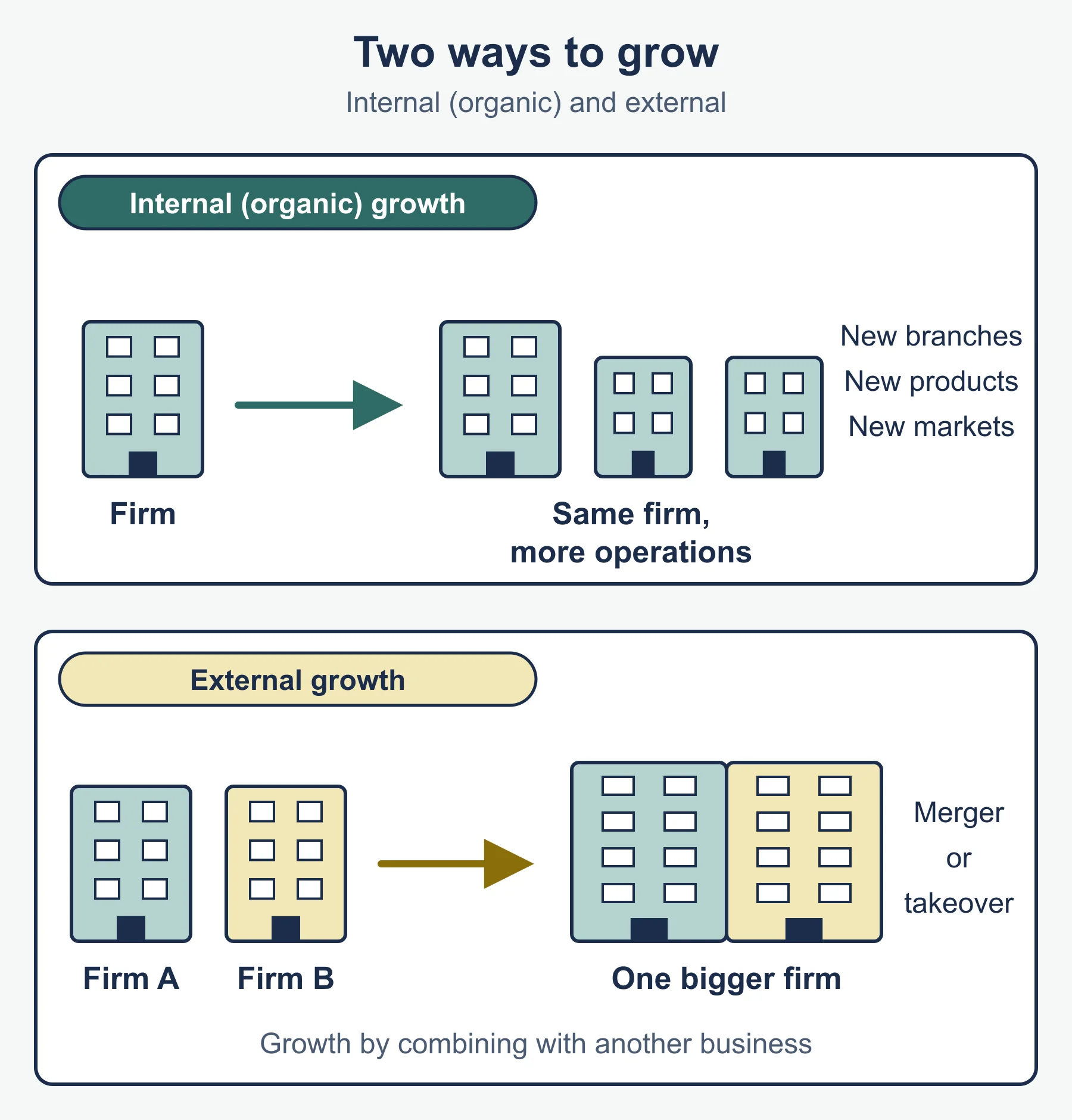
| Internal growth | Growth using the firm’s own resources, for example new products or markets |
| External growth | Growth by joining with another business |
| Merger | Two firms agree to combine as a single business |
| Takeover | One firm buys enough of another to control it |
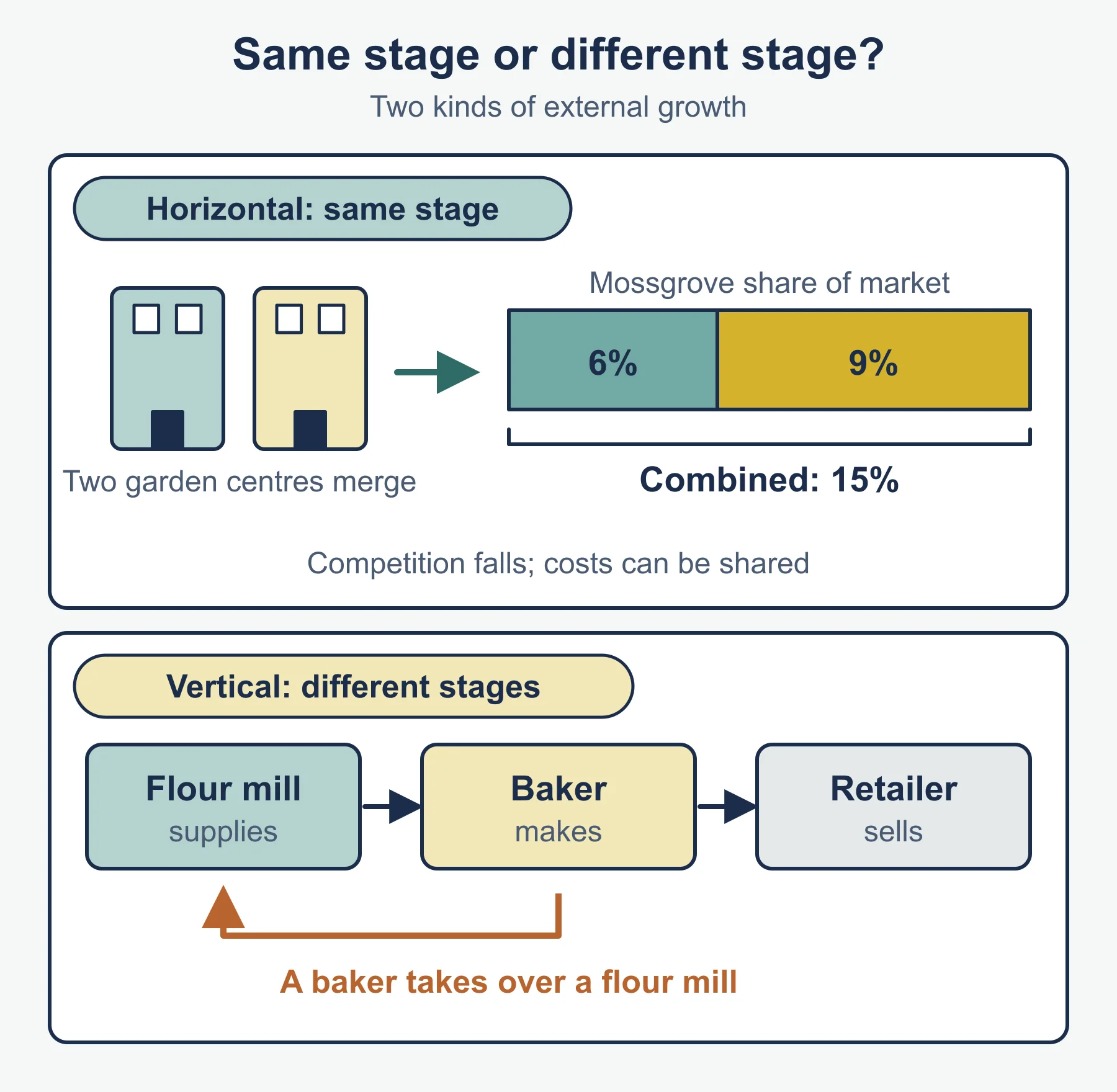
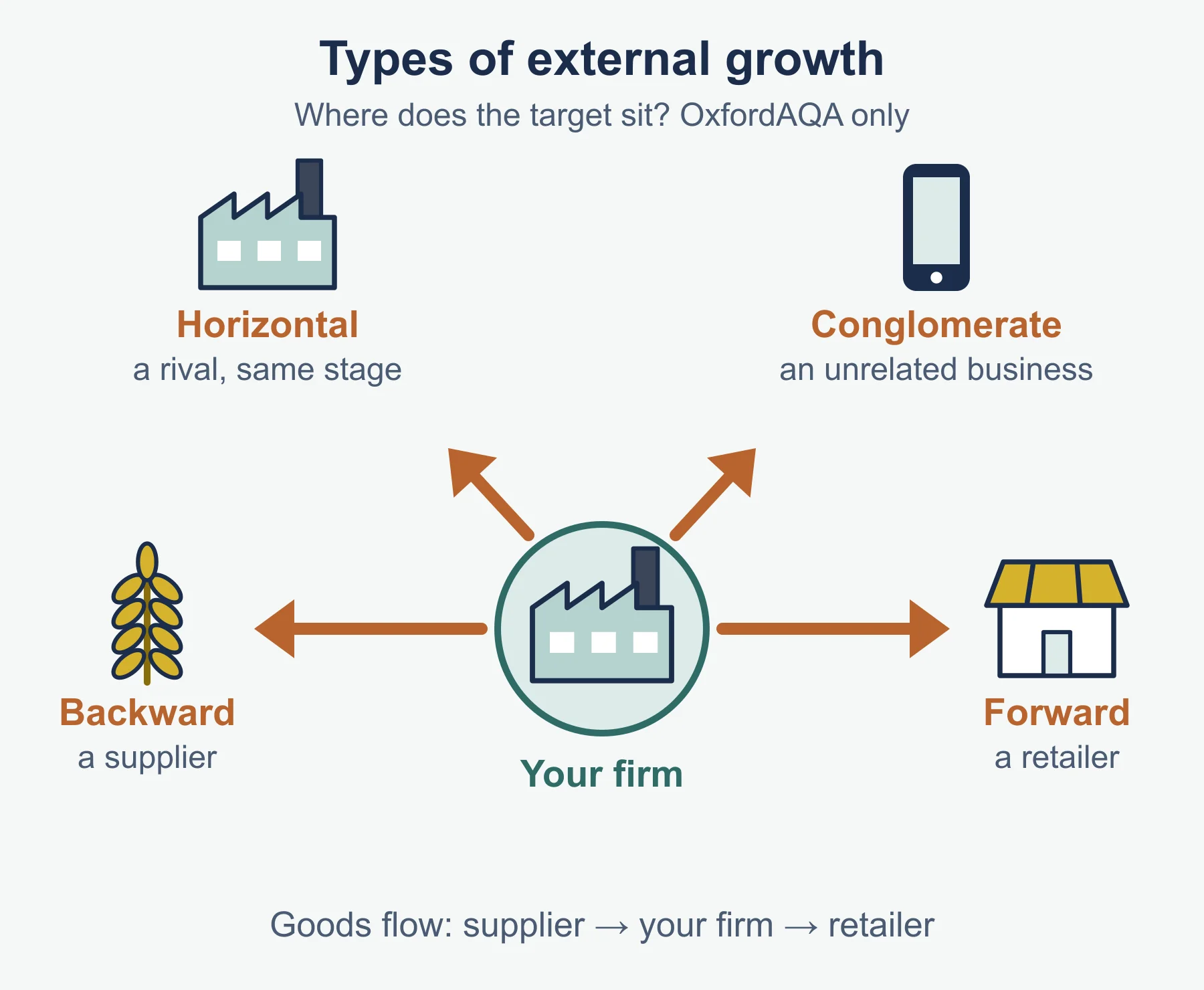
| Horizontal integration | Joining firms at the same stage of the same industry |
| Vertical integration | Joining firms at different stages of the supply chain |
| Capital employed | The long-term finance in the business (standard form: total assets less current liabilities) |
1.3.1 Enterprise and entrepreneurship
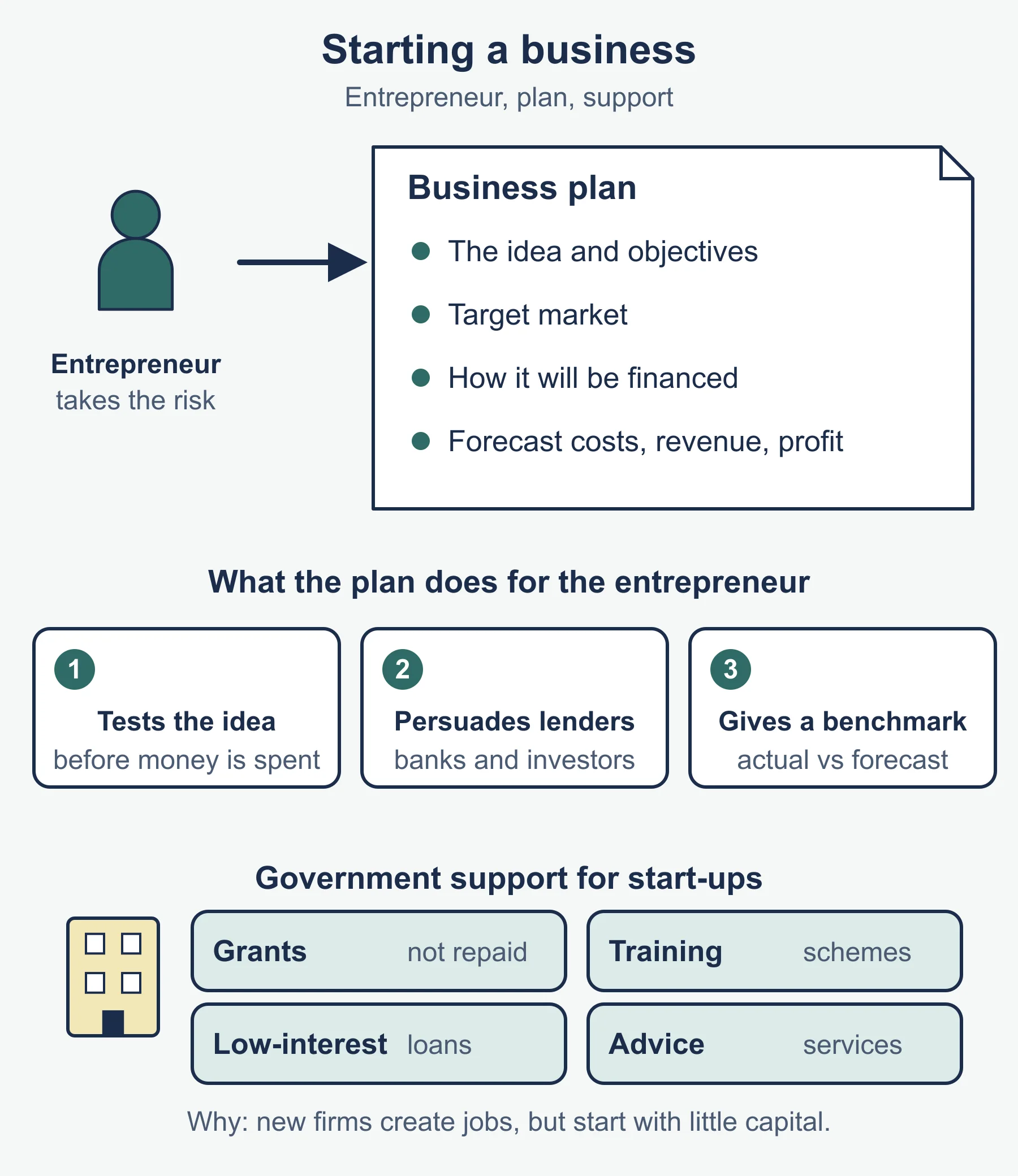
Characteristics of successful entrepreneurs: risk-taking, innovation, determination, hard work, self-confidence, leadership, good decisions.
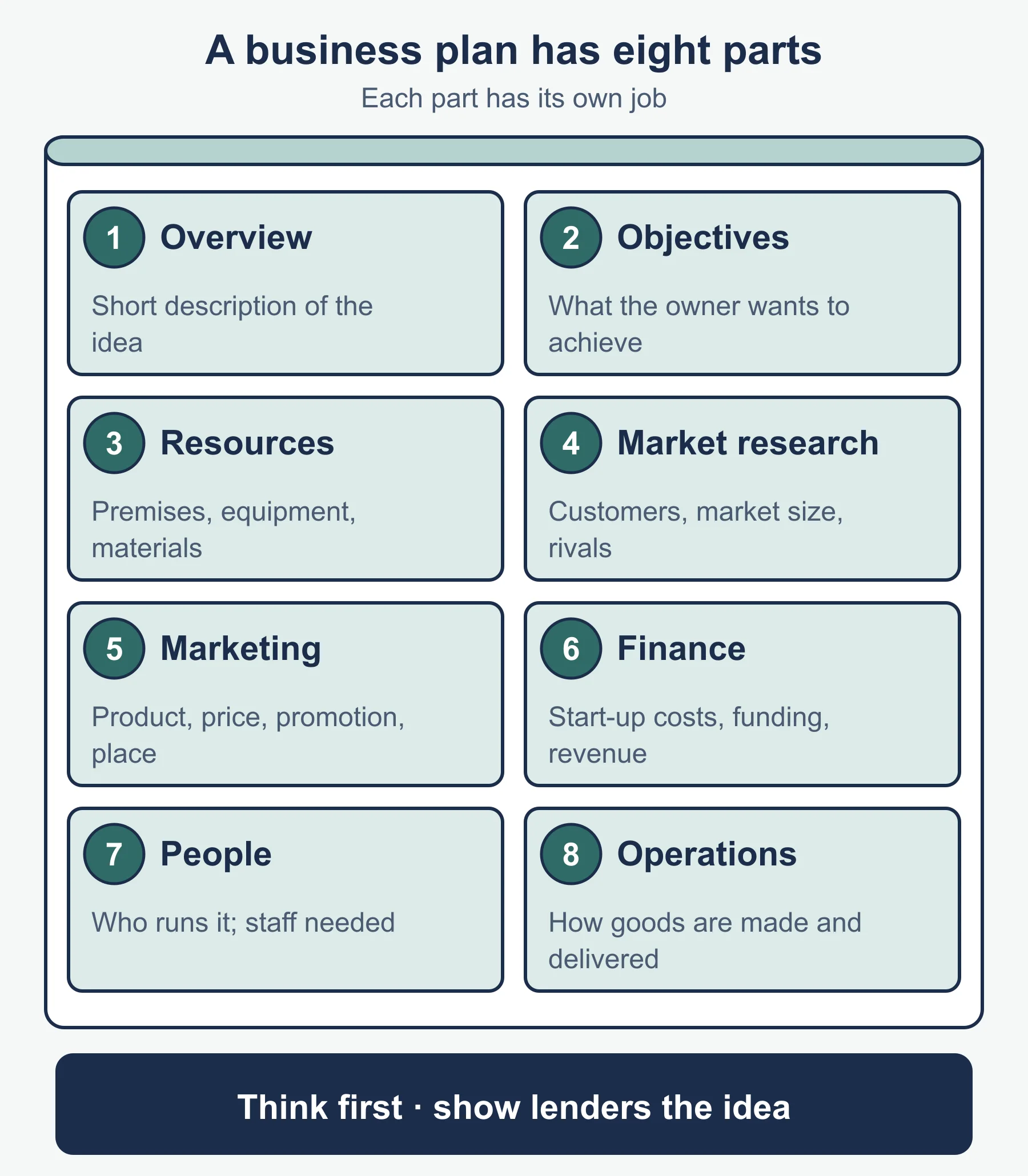
Business plan: eight key elements. Learn them in this order.
- Overview/summary
- Objectives
- Resources
- Market research
- Marketing
- Finance
- People
- Operations
Why a plan matters:
- makes the owner think through problems before spending money;
- helps to persuade lenders and investors;
- sets targets to measure progress against;
- but it relies on forecasts, so it cannot guarantee success.
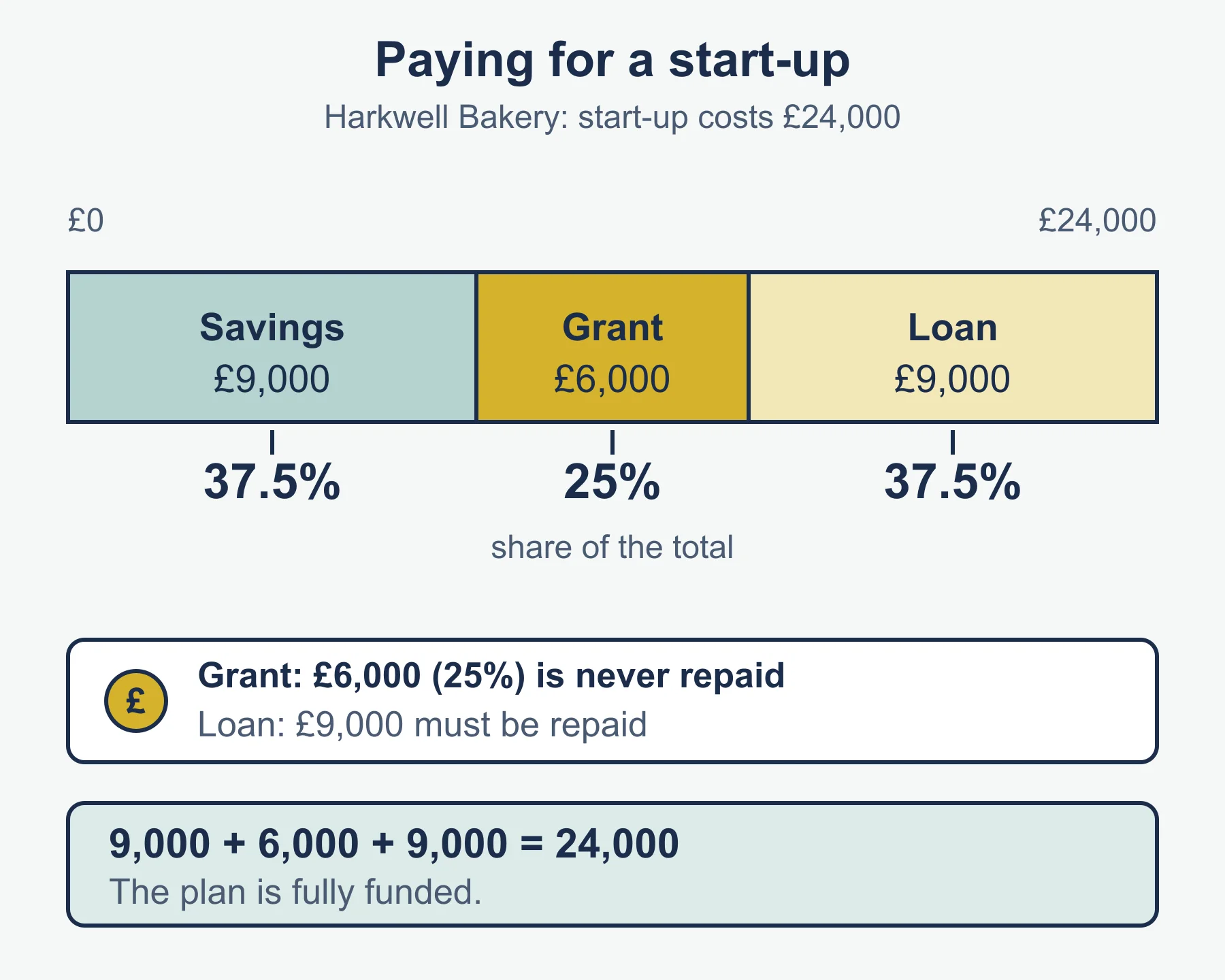
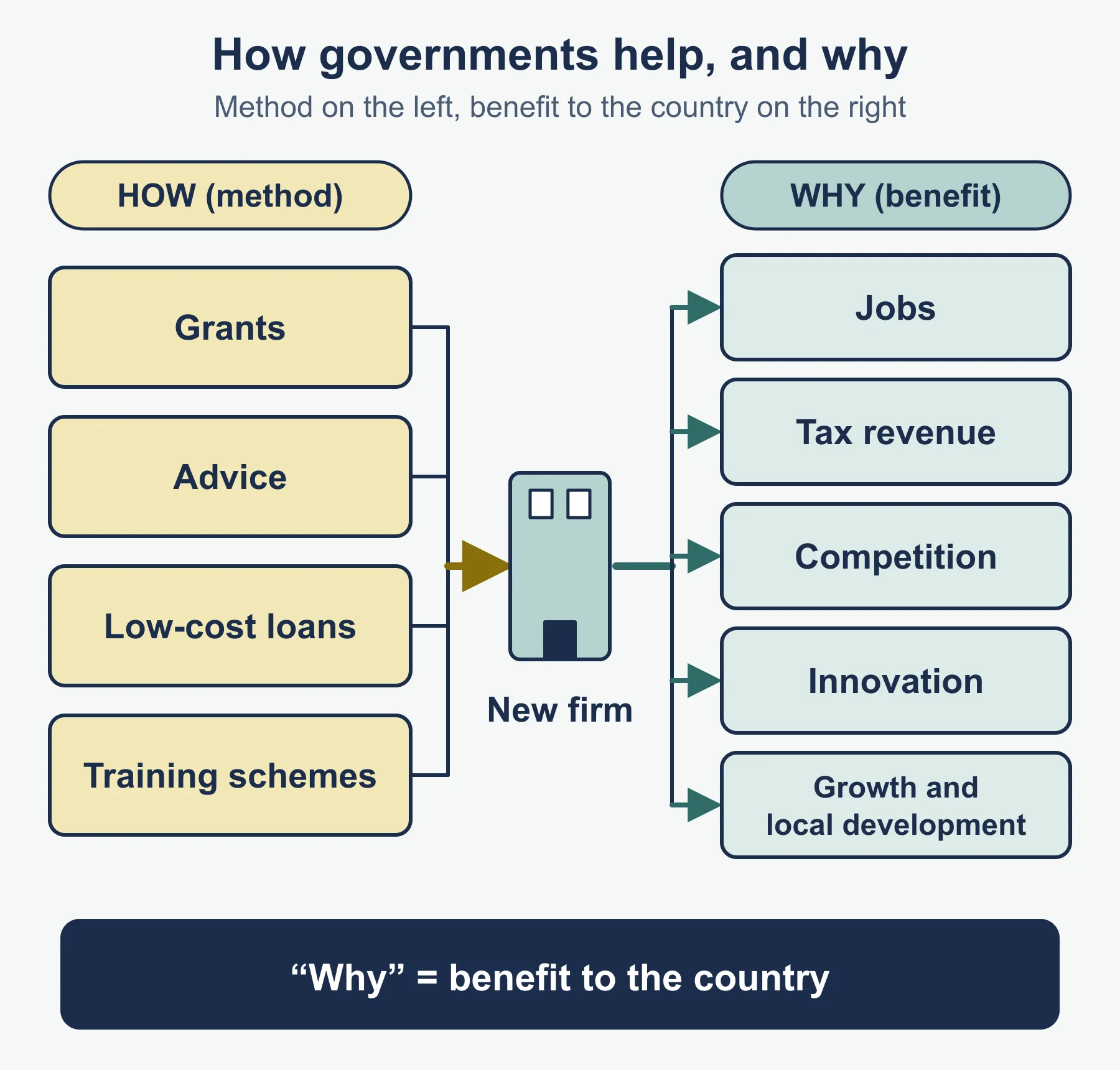
Why governments support start-ups: create jobs, reduce unemployment, raise tax revenue, increase competition, encourage innovation, support economic growth.
How governments support start-ups
| Method | One-line effect |
|---|---|
| Grants | Money not repaid |
| Advice | Guidance on planning, finance and rules |
| Low-cost loans | Cheaper borrowing |
| Training schemes | Skills for owner and staff |
Why versus how: “why” is about benefits to the country; “how” is the method used.
1.3.2 Measuring business size
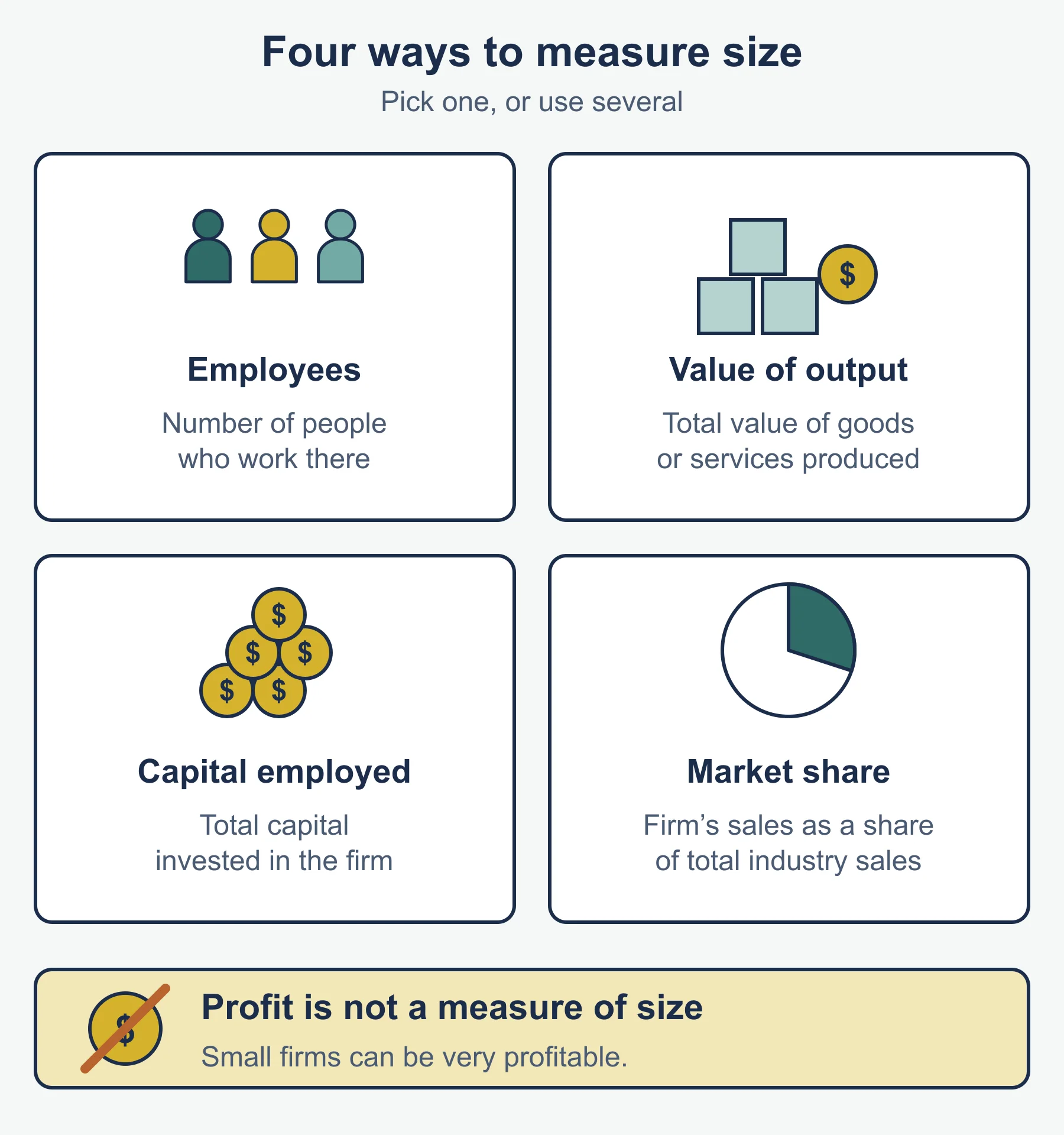
| Method | Measures | Weakness |
|---|---|---|
| Number of people employed | Workers | Ignores machines; part-time versus full-time |
| Value of output/sales | Money value | Affected by price changes |
| Volume of output/sales | Units | Hard to compare different products |
| Capital employed | Money invested | Asset values can be hard to judge |
Profit is not a method of measuring business size.
Method in steps: choosing a size measure
- Identify the industry (labour-intensive or capital-intensive).
- Pick the measure that suits the question.
- Note its weakness.
- Where possible, use two measures and compare.
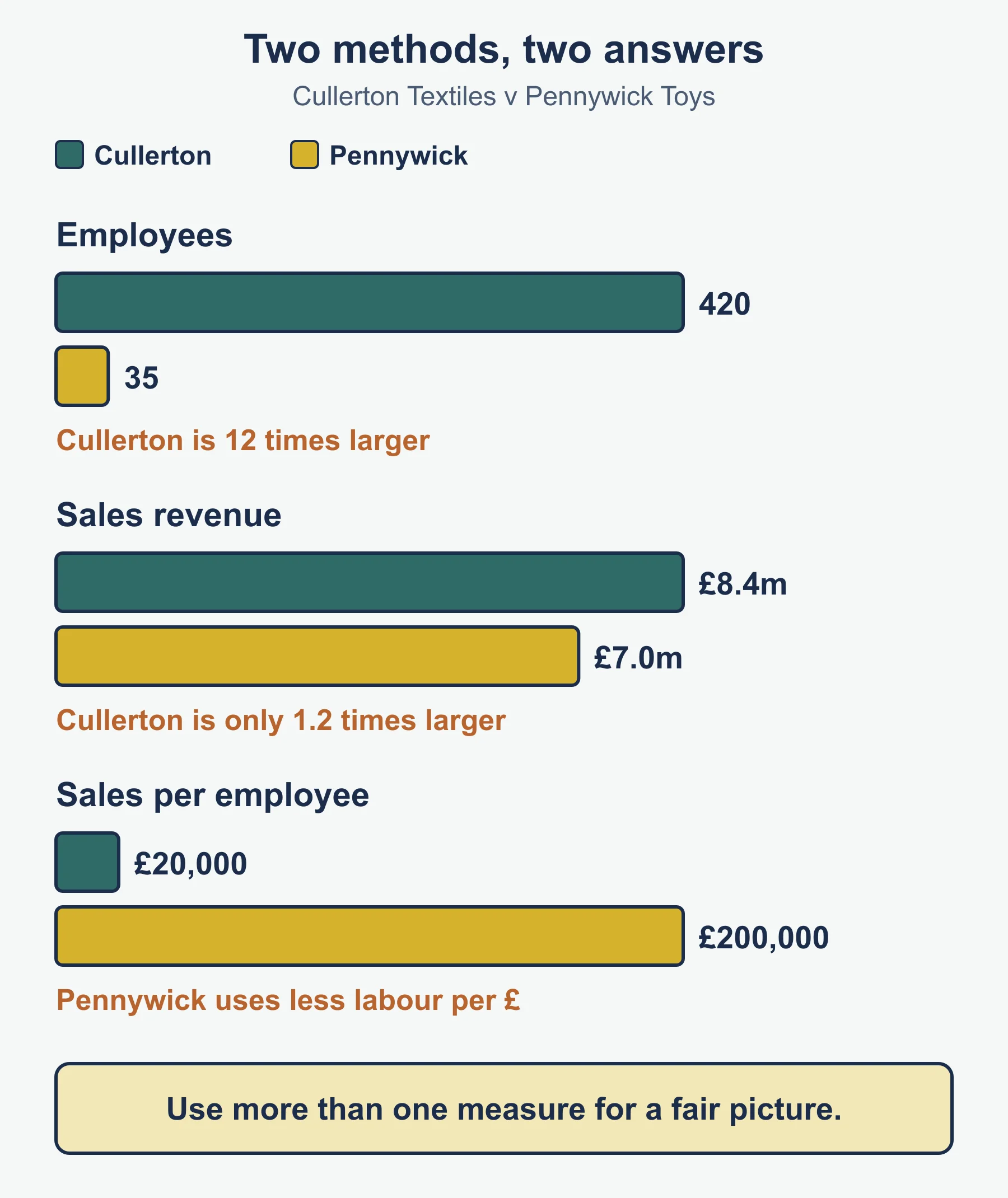
Useful calculation (standard form): sales per employee = sales revenue ÷ number of employees.
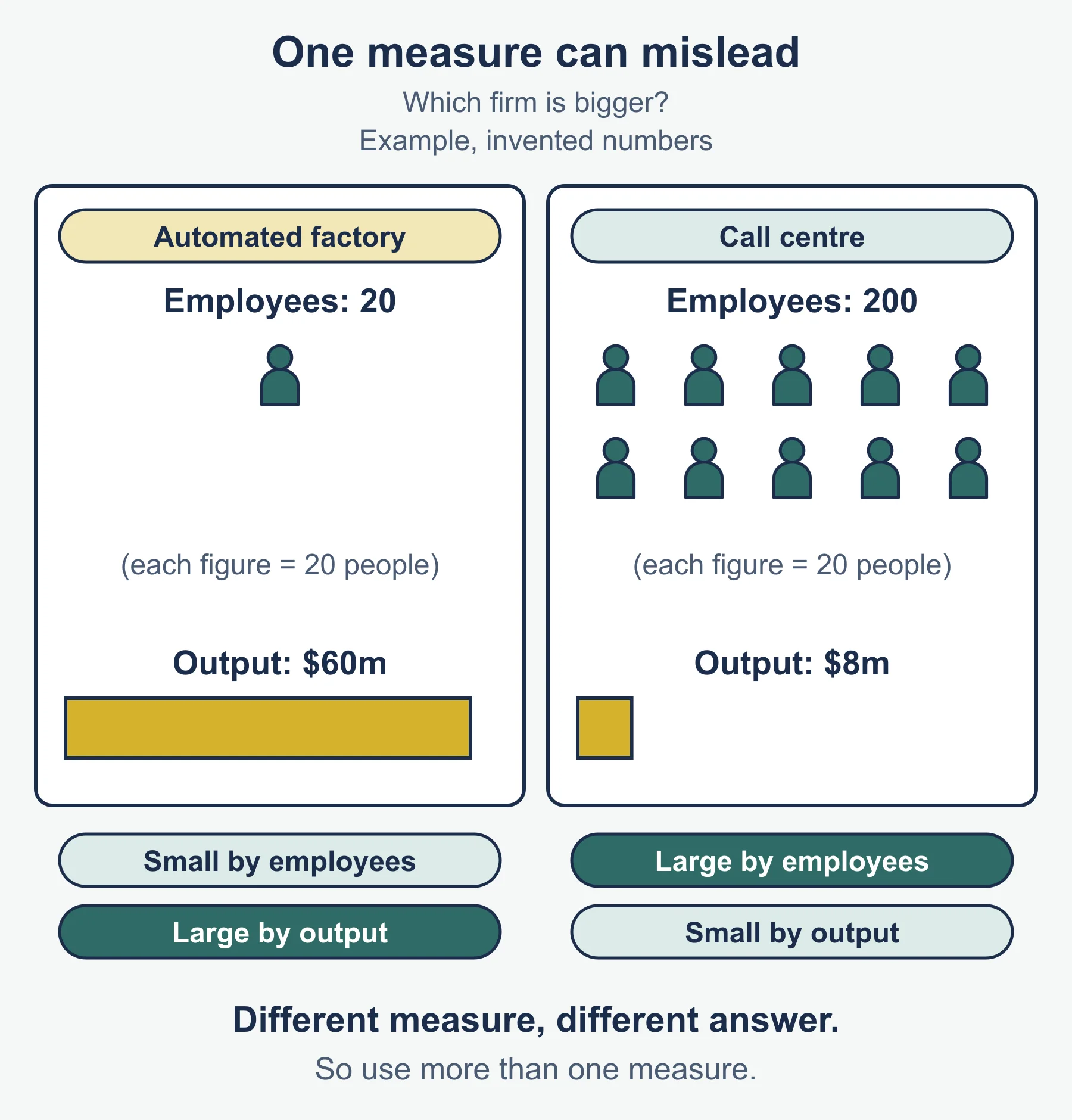
Worked reminder. Firm A: 60 employees, sales revenue £1.5 million. Firm B: 12 employees, sales revenue £1.2 million. Sales per employee: A = £25,000; B = £100,000. A is five times larger by employees (60 ÷ 12) but only 1.25 times larger by sales (1.5 ÷ 1.2).
Problems of measuring size
- Different industries give different answers.
- Capital-intensive firms have few workers.
- Value and volume can tell different stories.
- Inflation and exchange rates change sales values.
- Part-time, seasonal and outsourced staff blur headcount.
1.3.3 Growth and remaining small
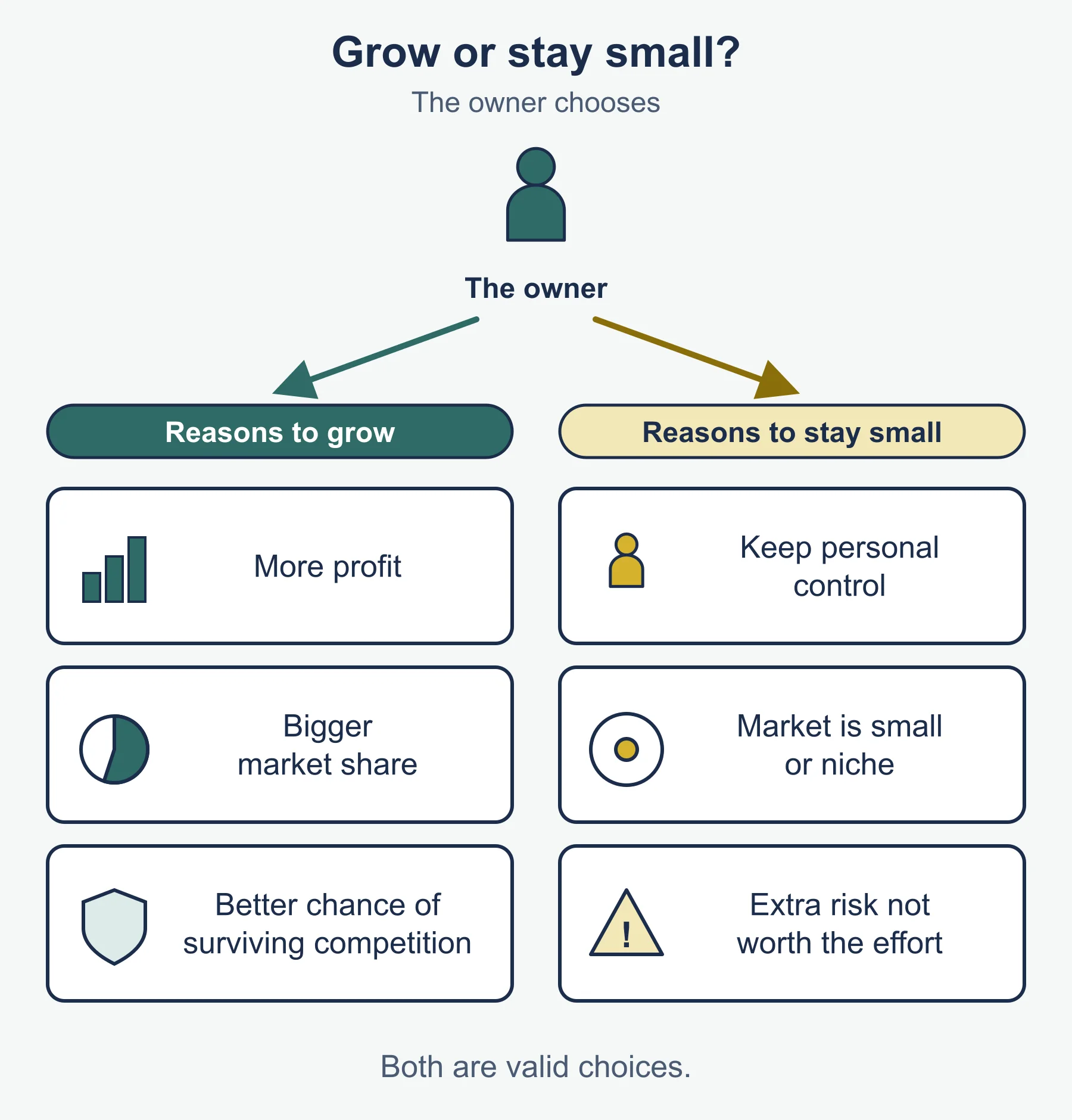
Why owners want growth: more profit, larger market share, lower unit costs, spread risk, status, security.
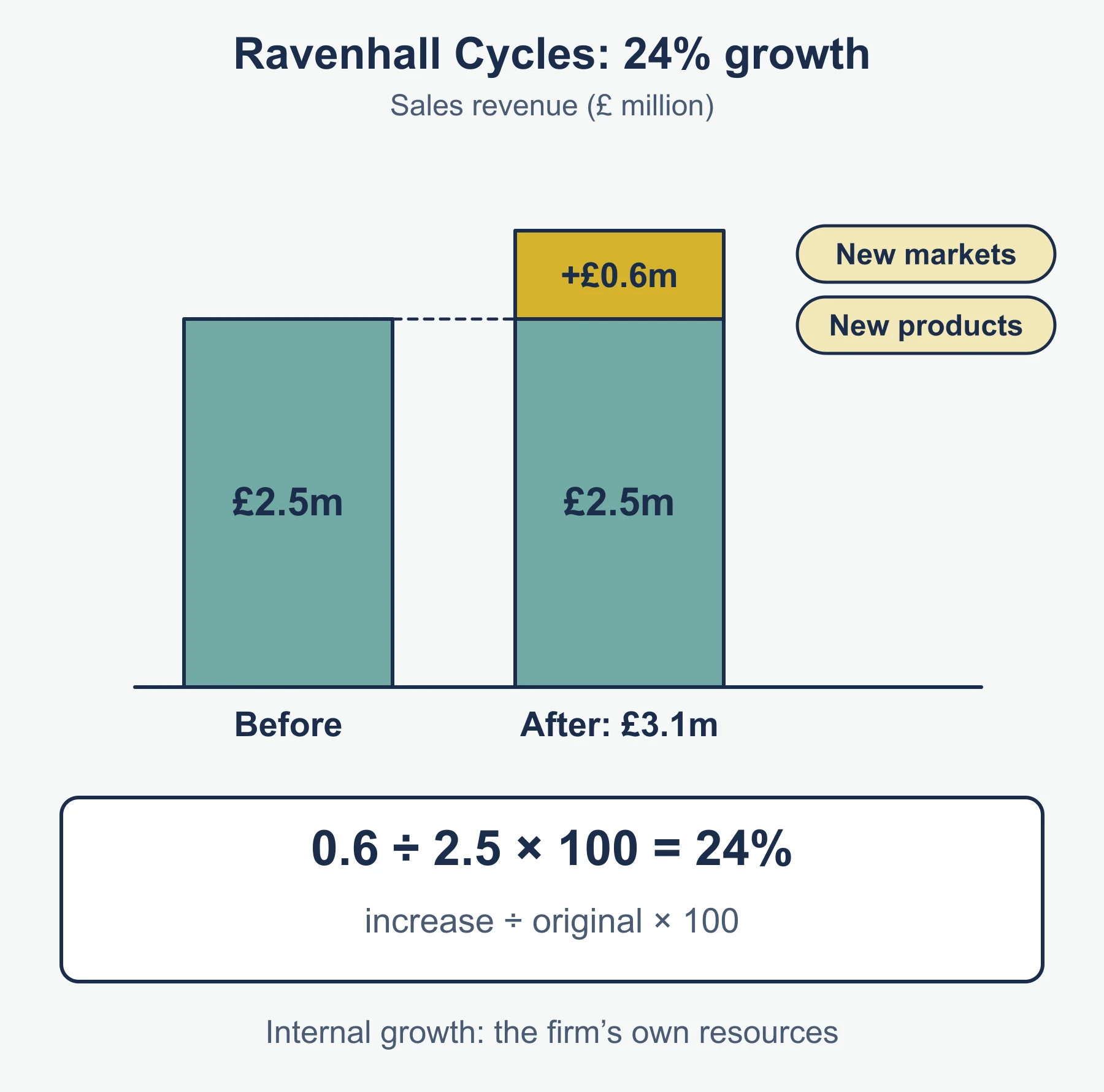
Internal growth (own resources): new products, new markets, new outlets.
- Plus: control kept, steady, less risky.
- Minus: slow, needs finance, new products can fail.
External growth (joining another firm)
| Method | Plus | Minus |
|---|---|---|
| Merger | Quick growth, shared costs and skills | Clashing cultures, job losses |
| Takeover | Quick growth, gains customers and brands | Expensive; may be resisted |
| Horizontal integration | Removes a rival; larger share | May reduce choice for customers |
| Vertical integration | Secures supply or outlets | Managers face unfamiliar stages of production |
Standard sub-types of vertical integration: backward (towards suppliers) and forward (towards retailers).
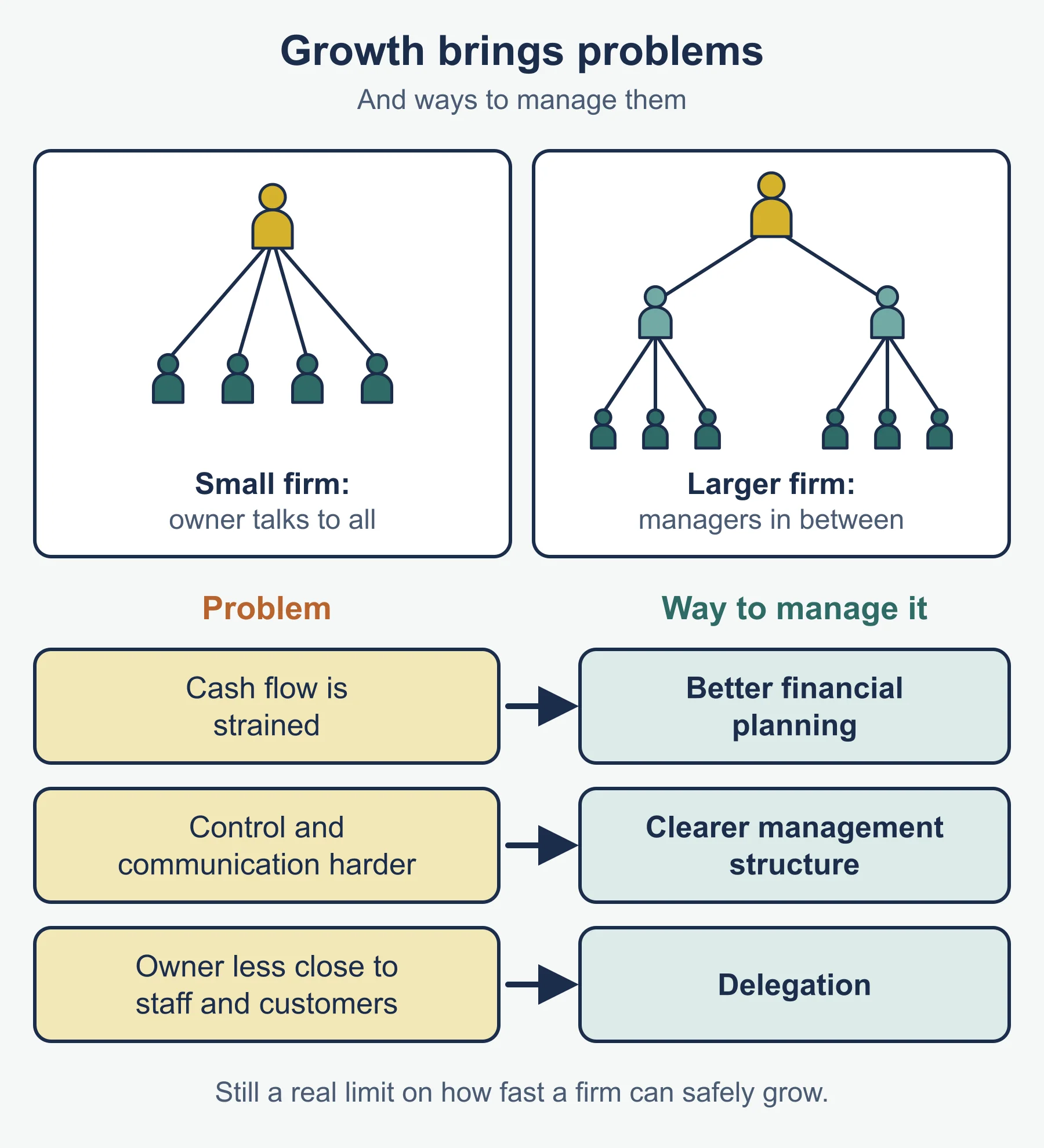
Problems linked to growth: cash flow strain, harder management and control, poorer communication, rising average costs if too big, falling quality, borrowing risk.
Why some stay small: small or niche market, owner wants control, lack of finance, wish to avoid risk, personal service, content with lifestyle.
Method in steps: a growth recommendation
- State the options (internal or external).
- Give one advantage and one drawback for each, in context.
- Weigh them against the firm’s finance, management and aims.
- Reach a reasoned decision.
1.3.4 Success and failure
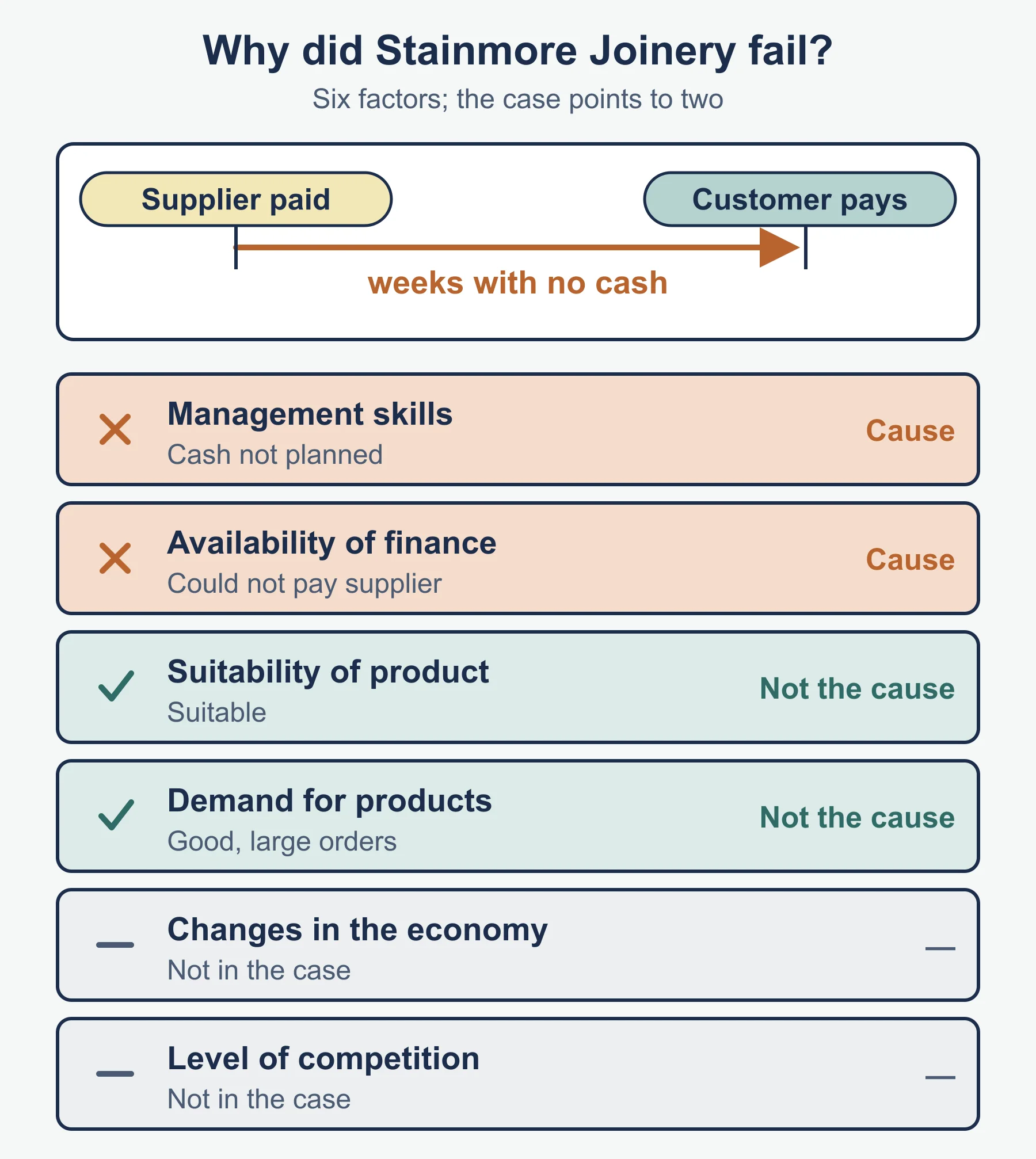
| Factor | Success | Failure |
|---|---|---|
| Management skills | Planning, leadership | Poor decisions |
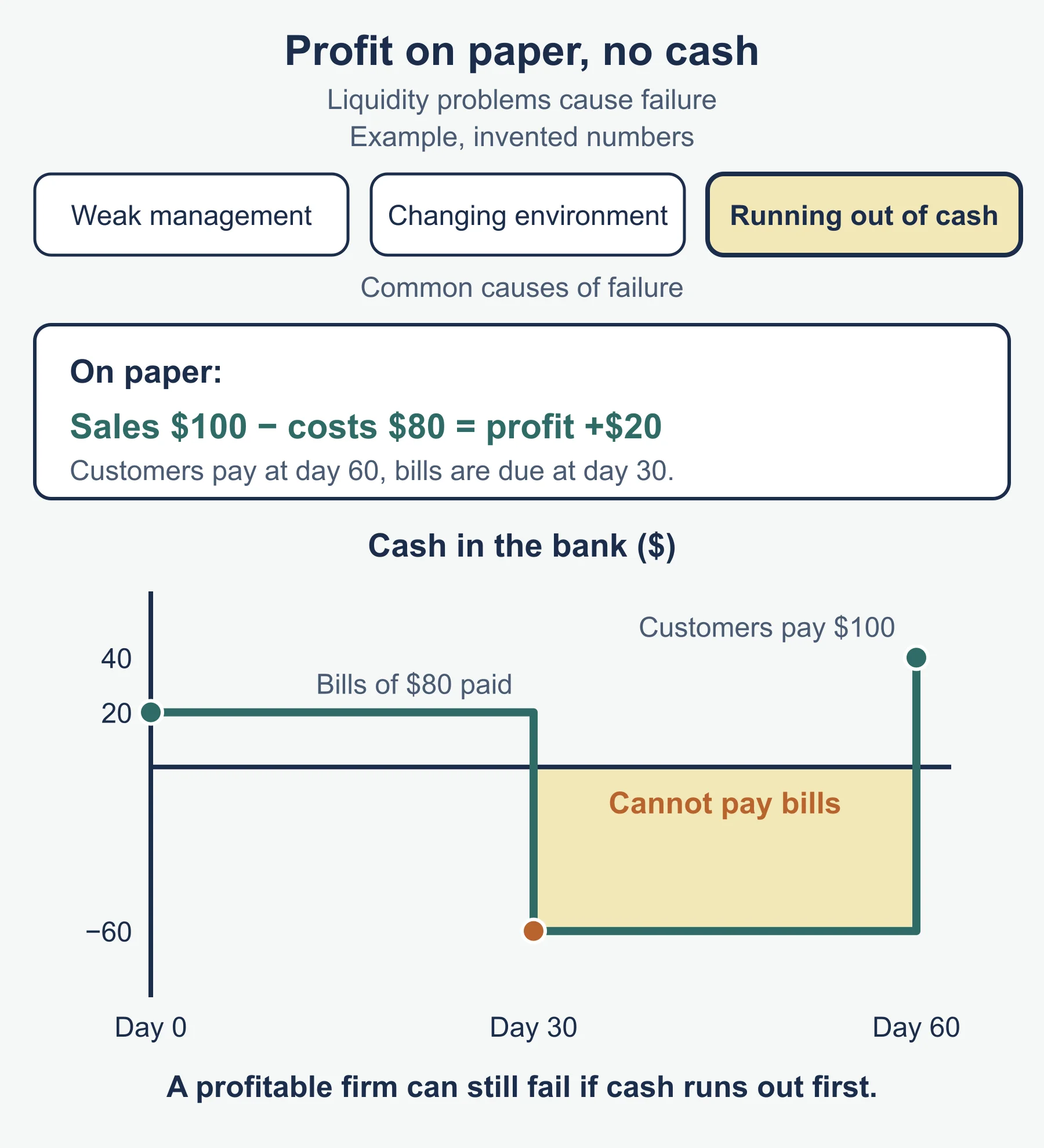
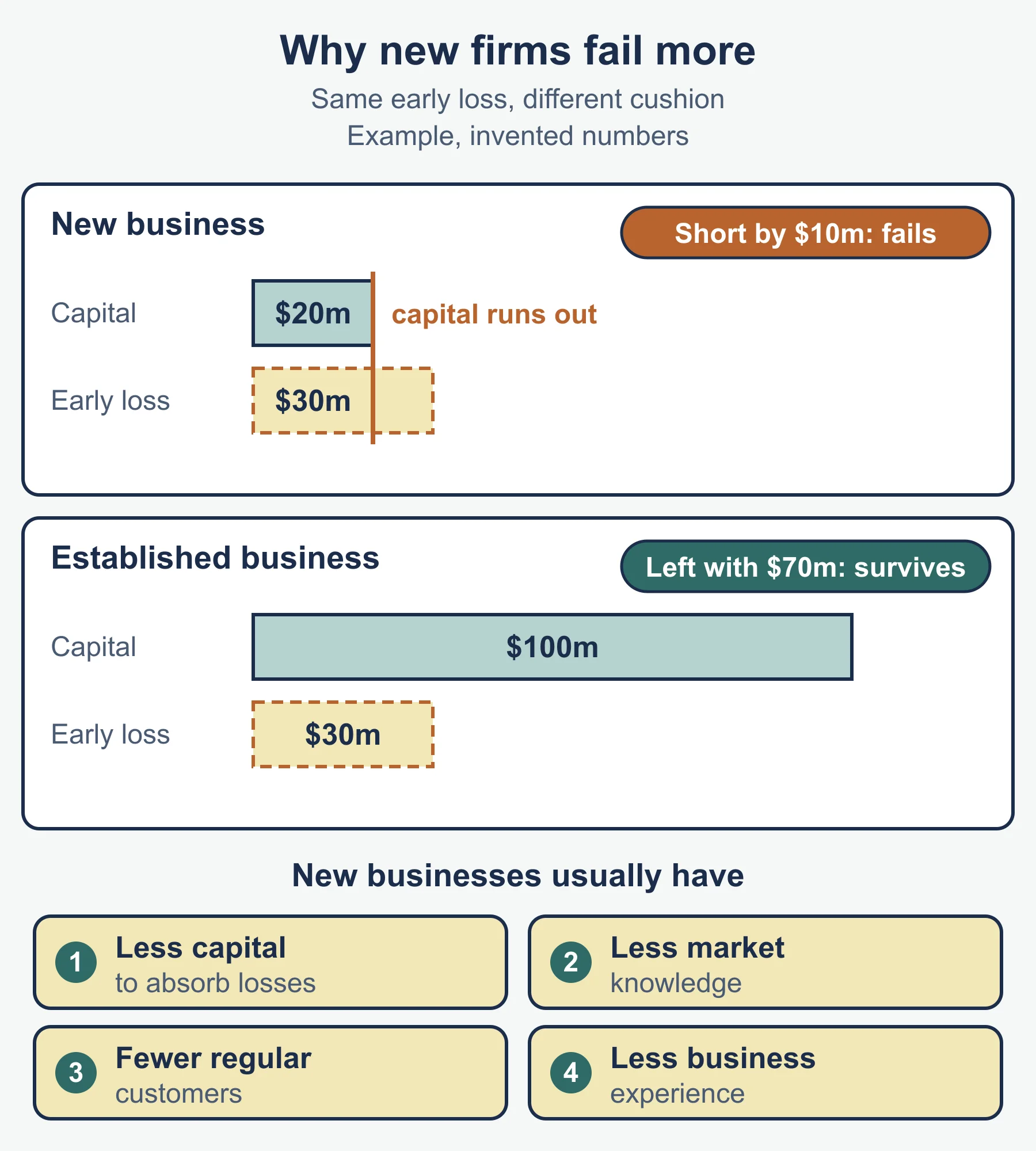
| Availability of finance | Funds for early losses | Cash runs out |
| Suitability of product | Meets needs | Not wanted |
| Demand for products | Strong | Falls |
| Changes in the economy | Rising incomes | Recession |
| Level of competition | Few close rivals | Strong rivals |
Must-know distinctions
- Merger and takeover: agreed joining of two firms versus one firm gaining control of another.
- Horizontal and vertical: same stage versus different stages.
- Internal and external growth: own resources versus joining with another firm.
- Value and volume: money from sales versus number of units.
- Why and how of government support.
Linking points to the case
Application (AO2) carries a large share of the marks. Before you write, underline three facts in the case: the size of the business, its aim, and any money figure. Then use at least one in each paragraph. For example, a firm that wants to keep control suits internal growth, while a firm short of cash may struggle with a takeover.
Command words for this section
| Command word | Meaning in the syllabus | What it means here |
|---|---|---|
| State | Express in clear terms | Give the point briefly, for example one characteristic |
| Identify | Name, select, recognise | Pick the element, method or type from a list or case |
| Define | Give precise meaning | Say exactly what a term such as takeover means |
| Calculate | Work out from given facts | Show the formula, the figures and the answer |
| Explain | Set out reasons, say why or how, with evidence | Point, reason, then link to the business |
| Justify | Support a case with evidence or argument | Weigh both sides, then reach a decision with reasons |
Worked reminder: growth percentage. A firm grows from £5 million to £6.5 million. Increase = 1.5 million. Percentage growth = 1.5 ÷ 5 × 100 = 30%.
Worked reminder: share after a takeover. A takeover joins a firm with sales revenue of £3 million to one with £1 million. Combined = £4 million. The larger firm accounts for 3 ÷ 4 × 100 = 75% of the combined sales revenue.
Internal against external growth at a glance. Internal growth is slower, cheaper and keeps control. External growth is faster, costs more and brings the task of joining two businesses together.
Quick self-test
- State two characteristics of a successful entrepreneur.
- Identify four key elements of a business plan.
- State one reason why a government supports start-ups.
- Name one way a government can support a start-up.
- Identify two ways of measuring business size.
- Why is profit not a method of measuring size?
- A company has 90 employees and sales revenue of £4.5 million. Calculate sales per employee.
- Sales rose from £800,000 to £1,000,000. Calculate the percentage increase.
- Define vertical integration.
- A bakery buys a rival bakery in the next town. What type of integration is this?
- State two reasons why a business might stay small.
- Identify two reasons why a business might fail.
Answers
- Any two of: risk-taking, innovation, determination, hard work, self-confidence, leadership.
- Any four of: overview/summary, objectives, resources, market research, marketing, finance, people, operations.
- For example: to create jobs, to raise tax revenue, or to increase competition.
- Grants, advice, low-cost loans or training schemes.
- Any two of: number of people employed, value of output/sales, volume of output/sales, capital employed.
- A small firm can earn a high profit and a large firm can make a loss, so profit says little about size.
- 4,500,000 ÷ 90 = £50,000 per employee.
- (1,000,000 − 800,000) ÷ 800,000 × 100 = 25%.
- Joining firms at different stages of the supply chain of the same industry.
- Horizontal integration (same stage of the same industry).
- For example: the market is small or niche, or the owner wants to keep control.
- For example: poor management skills, shortage of finance, unsuitable product, falling demand, a recession, strong competition.
Where marks are usually lost
- Giving profit as a measure of business size.
- Naming a characteristic or element without saying what it means or showing it in the case.
- Answering “why does the government help” from the firm’s point of view.
- Mixing up merger, takeover, horizontal and vertical integration.
- Quoting one growth advantage without any link to the business named.
- Writing a list of problems of growth with no explanation of how each affects the firm.
- Giving a one-sided answer where the question says justify or consider.
- Forgetting units or to show the working in percentage and per-employee calculations.
Frequently asked questions
Why do governments support business start-ups? Governments support start-ups to create jobs and reduce unemployment, raise tax revenue, increase competition, encourage innovation and support economic growth. “Why” questions are about benefits to the country; “how” questions are about the method used.
What is the difference between a merger and a takeover? A merger is when two firms agree to combine as a single business. A takeover is when one firm buys enough of another to control it, which may be agreed or not.
What problems can growth cause for a business? Growth can strain cash flow, make management and control harder, cause communication problems, raise average costs if the firm becomes too big to manage well, lower quality or service, and add finance risk if growth is paid for by borrowing.
Why do some businesses stay small? A business may stay small because its market is small or niche, the owner prefers control, finance is lacking, personal service is its selling point, or the owner is content with the income and lifestyle.
Official syllabus
Cambridge IGCSE Business 0264 syllabus for examination in 2027, 2028 and 2029, published by Cambridge University Press & Assessment (Cambridge International), section 1.3.
Get free revision emails (optional)
Occasional emails with practice questions, worked explanations and links to free resources for the qualification and subjects you choose. No spam, and you can unsubscribe from any email. The free tools on this site never need an email.
Related resources
-
Study guides
IGCSE Business: Types of business organisation (Cambridge 0264)
Study guide to types of business organisation for Cambridge IGCSE Business 0264: ownership, liability, franchises, joint ventures and recommending a type.
Business · Cambridge · IGCSE
Read guide -
Practice questions
IGCSE Business: Types of business organisation (Cambridge 0264) – Practice Questions
Original practice questions with worked answers on types of business organisation for Cambridge IGCSE Business 0264, with short-answer and case items.
Business · Cambridge · IGCSE
Try questions -
Revision notes
IGCSE Business: Types of business organisation (Cambridge 0264) – Revision Notes
Revision notes on types of business organisation for Cambridge IGCSE Business 0264: definitions, comparison tables, a self-test and common mistakes.
Business · Cambridge · IGCSE
Revise topic
Related articles
-
teaching
A Level tuition in Dubai: Cambridge or Pearson Edexcel International A Level?
Schools in Dubai and Abu Dhabi teach either Cambridge International AS & A Level or Pearson Edexcel International A Level. How the two are structured, why it matters for tuition, and how online classes from Lahore work.
9 October 2026
-
curriculum guides
Choosing subjects at IGCSE and A Level
How subject choices at 14 and 16 affect university options later, and how to keep pathways open without overloading a timetable.
28 July 2026
Studying this with a teacher
Working through Business IGCSE?
This page is free and stays free. If you would rather be taught it, Marlbridge runs Business classes one-to-one and in small groups of up to 15, online in your own time zone. The first trial class is free. WhatsApp replies within an hour (8am–11pm Pakistan time, every day); email the same day.
Cambridge Business teachers at Marlbridge

