
Revision Notes
IGCSE Business: Marketing and the market and Market research (Cambridge 0264) – Revision Notes
Condensed revision notes on marketing, market share, niche and mass markets, segmentation and market research for Cambridge IGCSE Business 0264.
- Subject
- Business
- Level
- IGCSE
- Topic
- Marketing
- Author
- Marlbridge Academic Team
- Updated
- Reviewed by
- Salman Ahmad (what this means)
Aligned to Cambridge IGCSE Business (0264), For examination in 2027, 2028 and 2029. Official specification .
Syllabus page (what it covers and how it is assessed): Cambridge IGCSE Business.
Syllabus points this page covers
0264
- 3.1 Marketing and the market
- 3.2 Market research
Found an error? Report a correction.
Need help with this topic? Request a free trial class for IGCSE Business (0450 / 0264).
These are condensed notes for sections 3.1 (Marketing and the market) and 3.2 (Market research) of the Cambridge IGCSE Business 0264 syllabus for examination in 2027, 2028 and 2029. For full explanations and worked examples, read the study guide. To test yourself, use the practice questions. Course pages: the Cambridge IGCSE Business hub and the printable checklist. The free diagnostics show which topics need most work.
Syllabus map
| Ref | Content |
|---|---|
| 3.1.1 | Role of marketing: identify, satisfy, keep loyal, build relationships, anticipate |
| 3.1.2 | Market changes, competition, responses, market share |
| 3.1.3 | Mass and niche markets |
| 3.1.4 | Segmentation by age, income, location, gender, lifestyle |
| 3.2.1 | Purposes and methods of market research, sampling, accuracy, simple data analysis |
3.1.1 Role of marketing
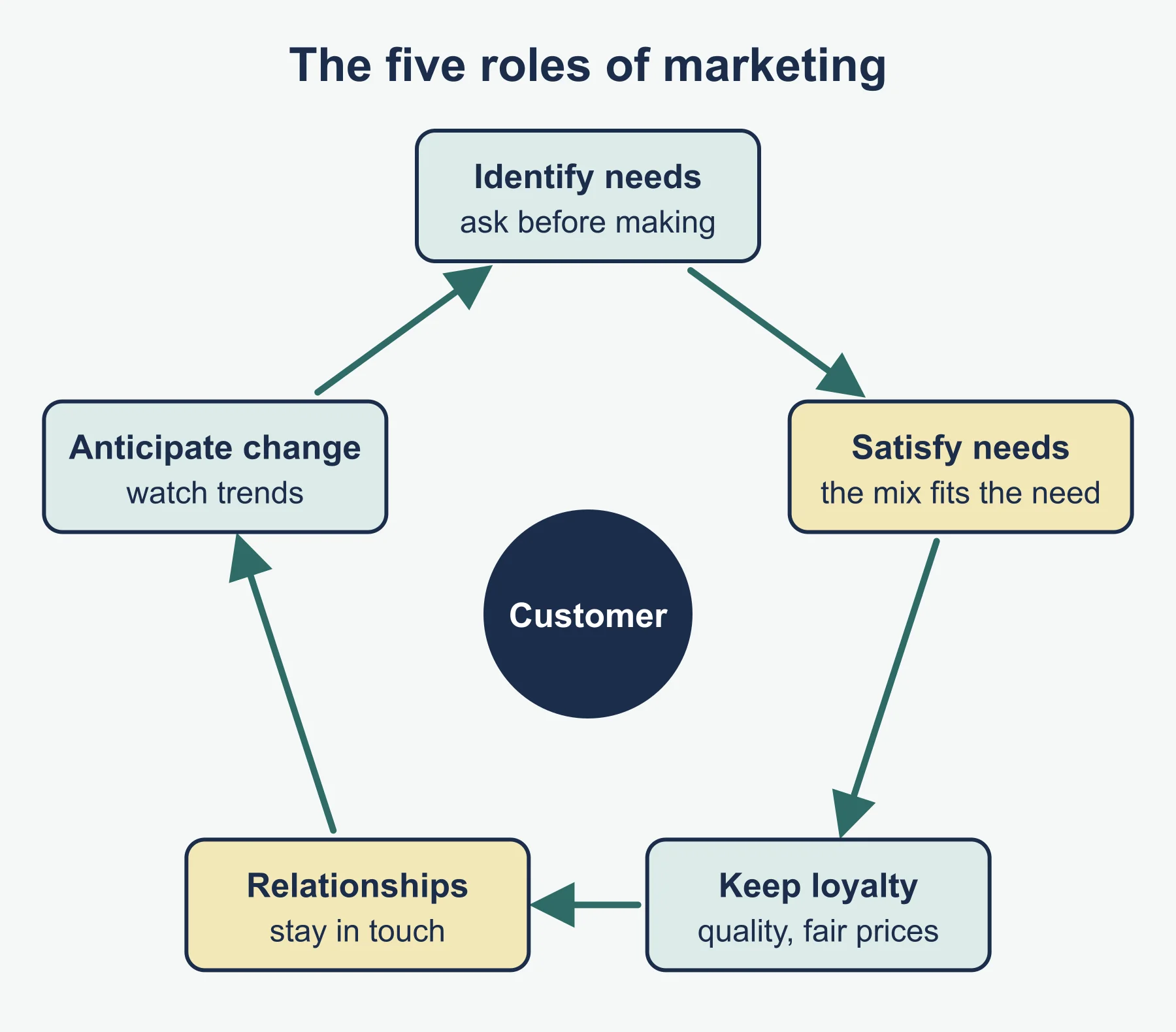
Five jobs, each linked to the customer:
- Identify customer needs (find out what people want).
- Satisfy customer needs (right product, price, promotion, place).
- Maintain customer loyalty (repeat custom, retained buyers).
- Build customer relationships (contact, feedback, service).
- Anticipate changes in customer needs (spot trends early).
Memory hook: Identify, Satisfy, Loyal, Relationship, Anticipate.
3.1.2 Understanding market changes
| Question | Points to recall |
|---|---|
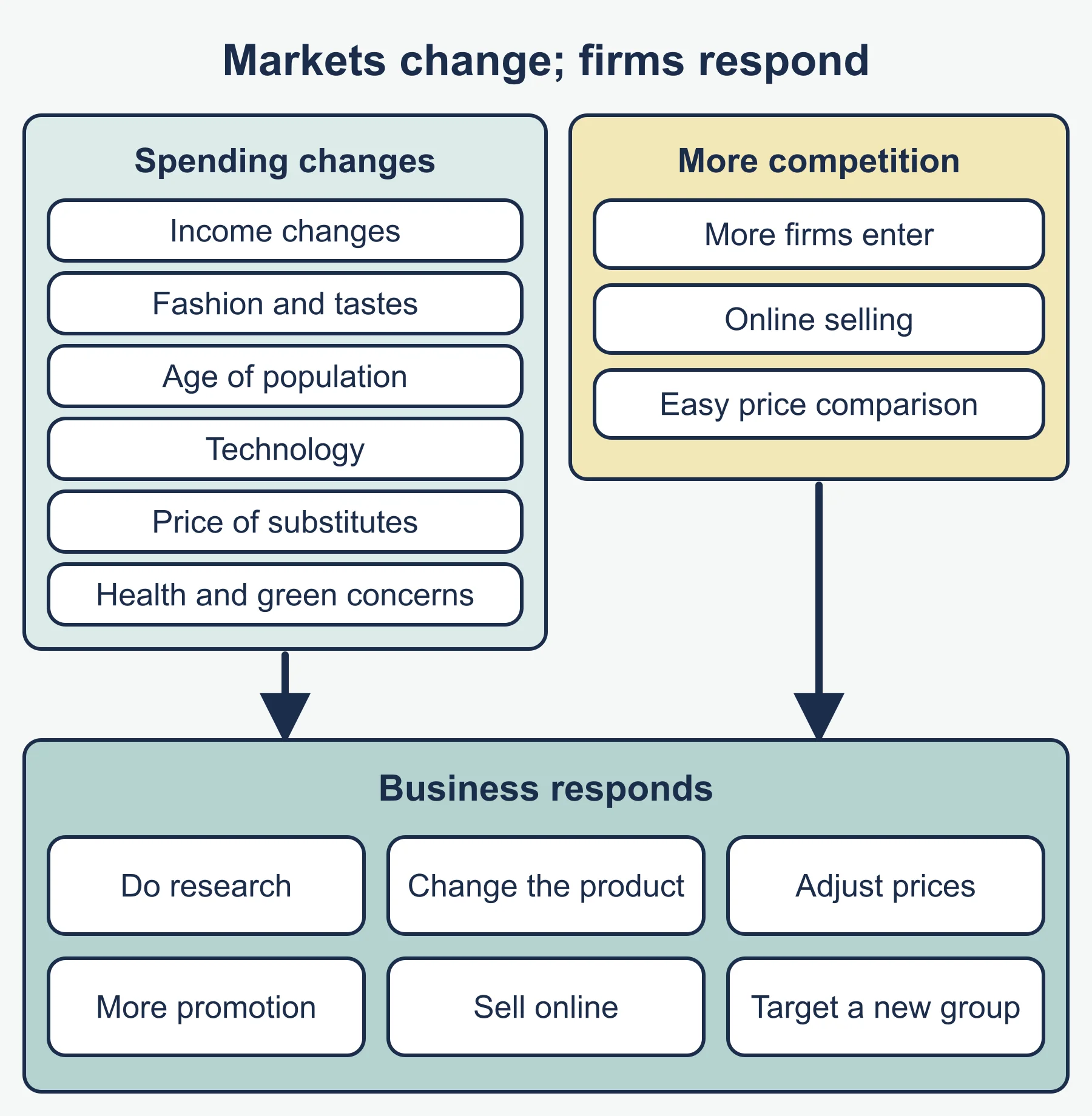
| Why do spending patterns change? | Incomes rise or fall; fashion and tastes; age structure of the population; technology; prices of substitutes; changing attitudes (health, environment) |
| Why are some markets more competitive? | New entrants; online selling; easy price comparison; low barriers to entry |
| How can businesses respond? | Research the change; adapt the product; change prices or offers; promote more; improve service; sell online; target new customers |
Market share
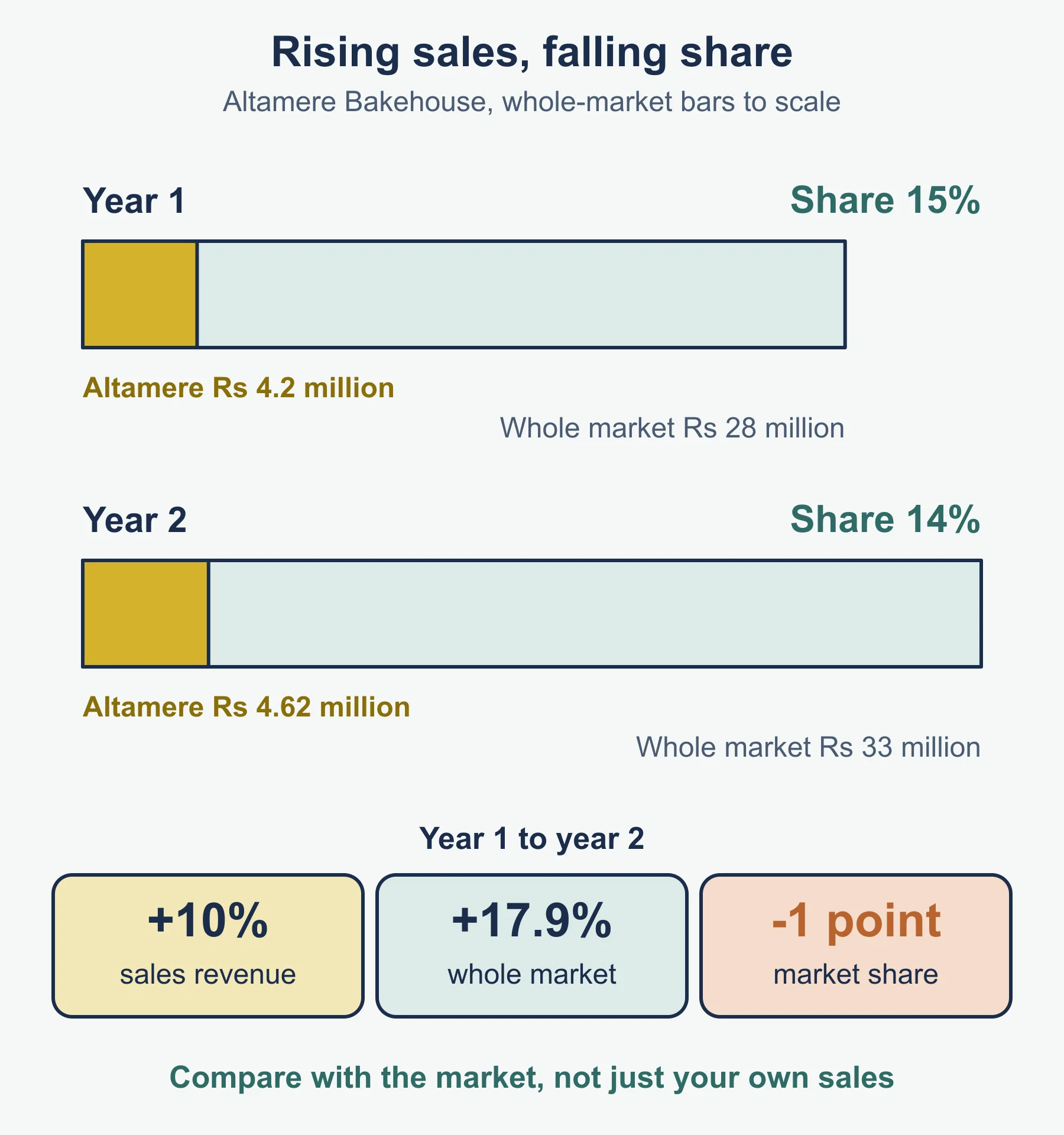
Formula from the syllabus: market share = sales revenue of a business / total sales revenue for the whole market × 100, shown as a percentage.
Method in steps:
- Write the business’s sales revenue (top of the fraction).
- Write total sales revenue for the whole market (bottom).
- Divide, then multiply by 100.
- Add the percent sign.
Rearrangements: total market sales revenue = business sales revenue / share × 100. Business sales revenue = share × market total / 100.
Small worked reminder. A firm with sales revenue of Rs 2,250,000 in a market worth Rs 15,000,000 has 2,250,000 / 15,000,000 × 100 = 15%. If the market grows to Rs 18,000,000 and the firm’s sales revenue stays the same, its share falls to 12.5%.
Key point: share is a comparison with the market. Sales revenue can rise while share falls.
3.1.3 Mass markets and niche markets
| Mass market | Niche market | |
|---|---|---|
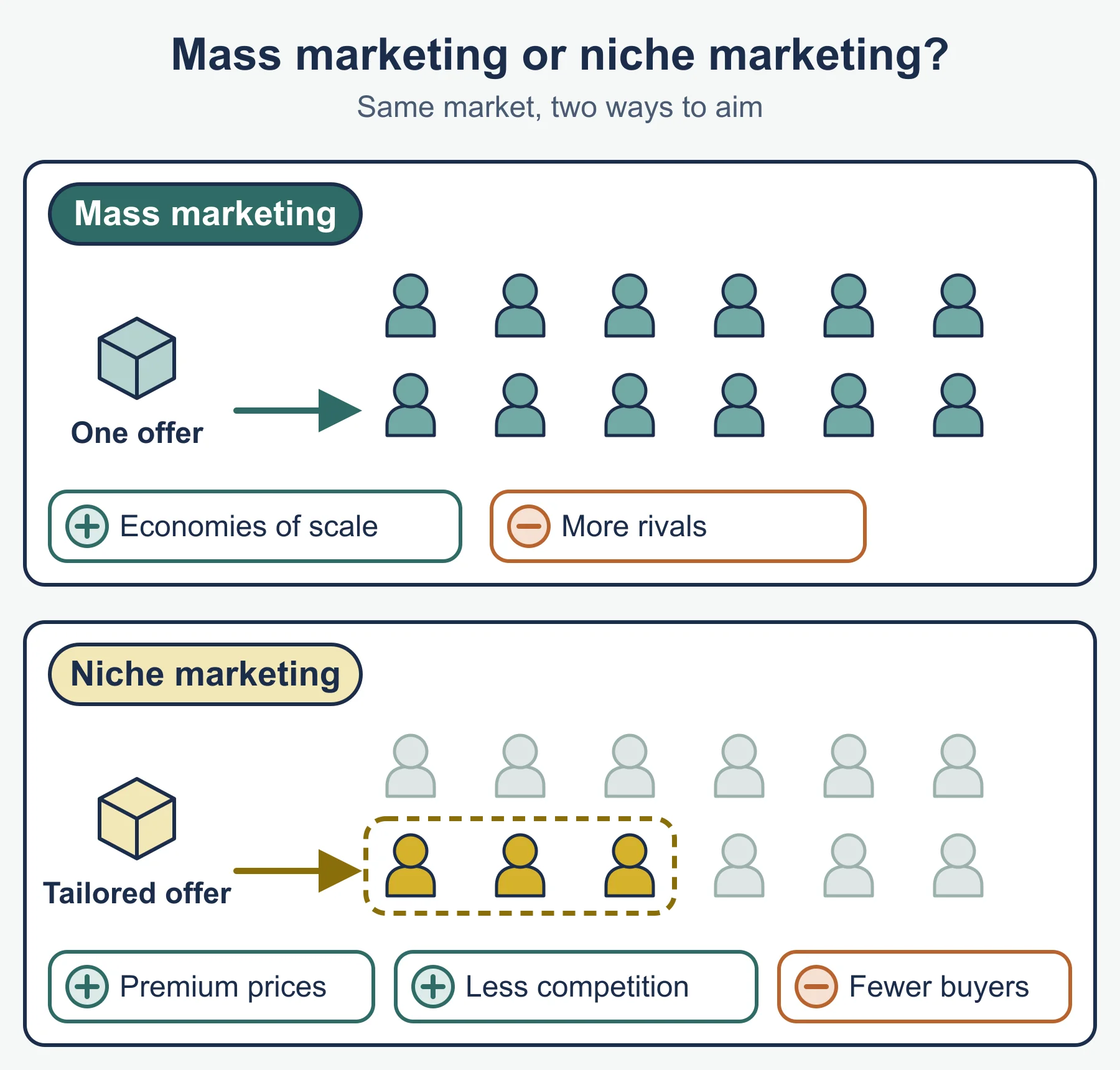
| Meaning | Large market, many customers, standard products | Small specialist part of a wider market |
| Advantages | Big sales volume; economies of scale | Less competition; can charge more; loyal buyers |
| Disadvantages | Strong competition; lower prices; high promotion costs | Limited customers and growth; vulnerable if niche shrinks; large rivals may enter |
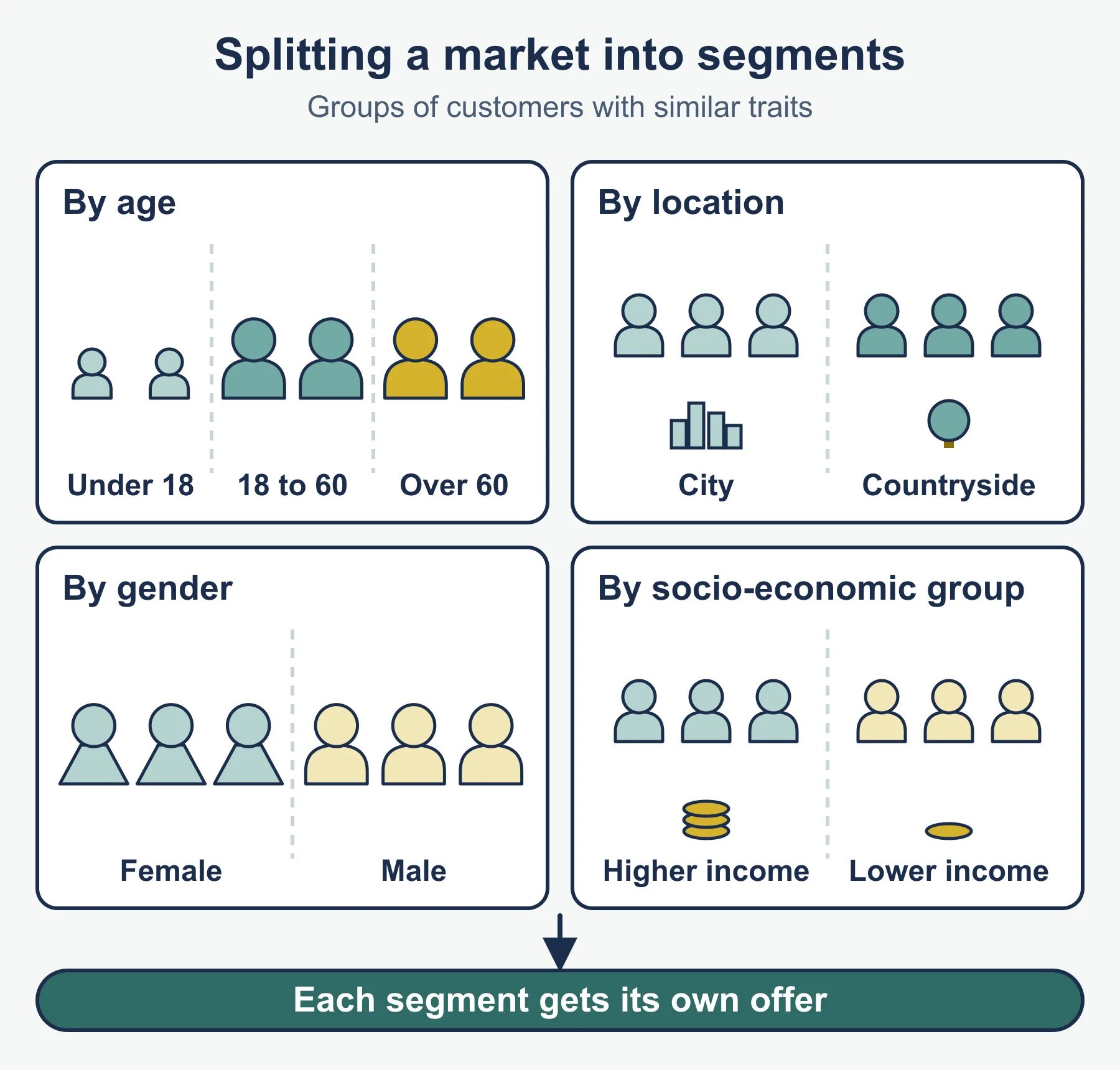
3.1.4 Market segmentation
Definition: splitting a market into groups whose members share traits.
| Basis | Think of |
|---|---|
| Age | Children, teenagers, adults, older customers |
| Income | Budget, mid-range, premium |
| Location | Town or country, region, climate |
| Gender | Female or male products and messages |
| Lifestyle | Habits, interests, values |
Advantages: better matching of products to wants; targeted promotion; spots gaps; may raise sales revenue. Disadvantages: research cost; several versions raise costs; small segments; groups overlap.
3.2.1 Market research
Why use it
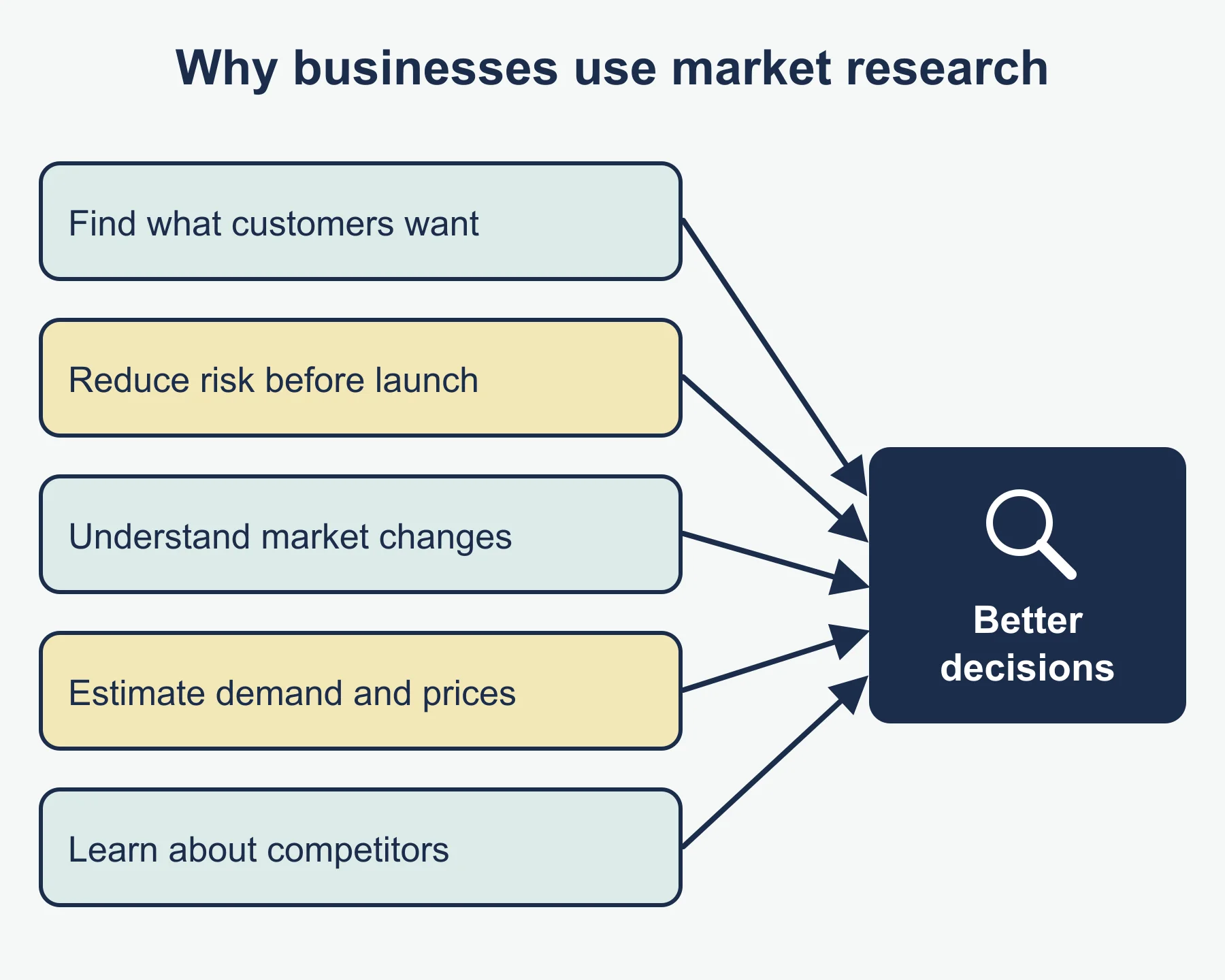
Find out what customers want; reduce the risk of a launch; understand market changes; estimate demand; check prices; learn about competitors.
Primary methods
| Method | Advantage | Disadvantage |
|---|---|---|
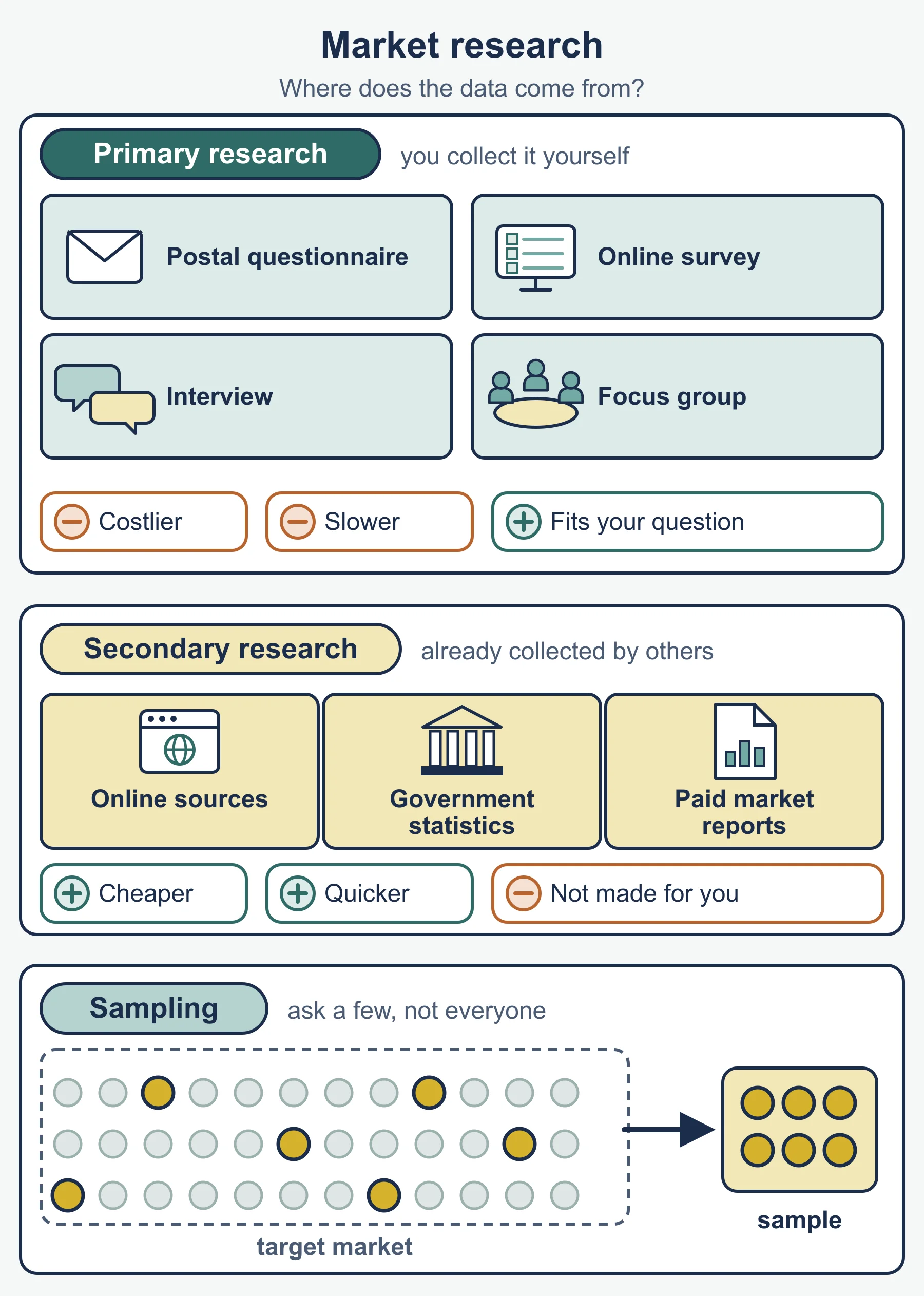
| Questionnaire or survey | Many responses cheaply | Low response; untruthful answers |
| Interview | Detailed, can follow up | Slow and costly; interviewer influence |
| Focus group | Reasons and opinions | Small and unrepresentative; one person may dominate |
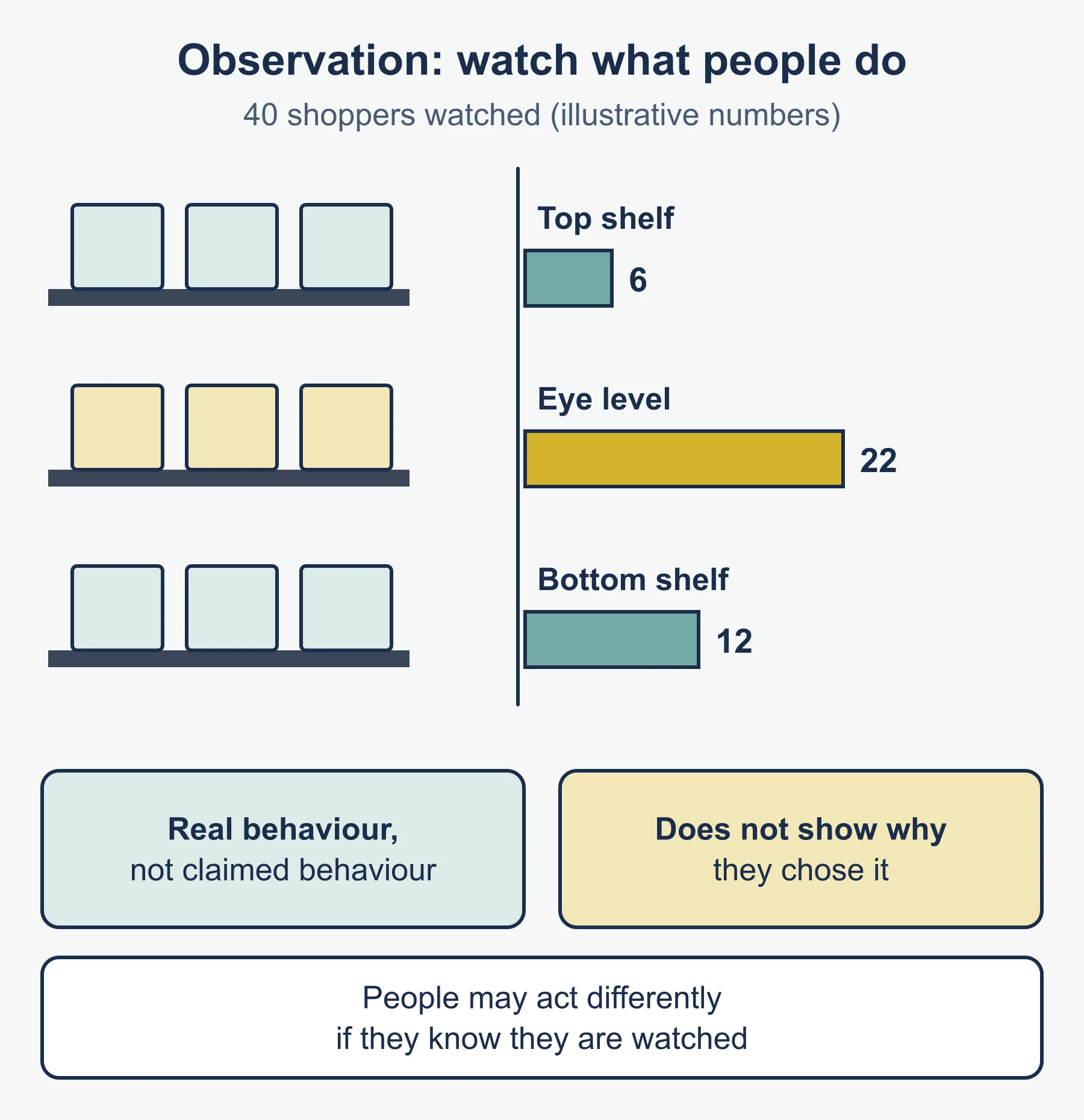
| Observation | Real behaviour | Does not show why |
Primary overall: up to date and specific, but expensive and slow.
Secondary methods
Competitor websites, government sources, market reports, trade magazines. Advantages: cheaper, faster, wide coverage. Disadvantages: may be old, not specific, may cost money, others can see it too.
Sampling
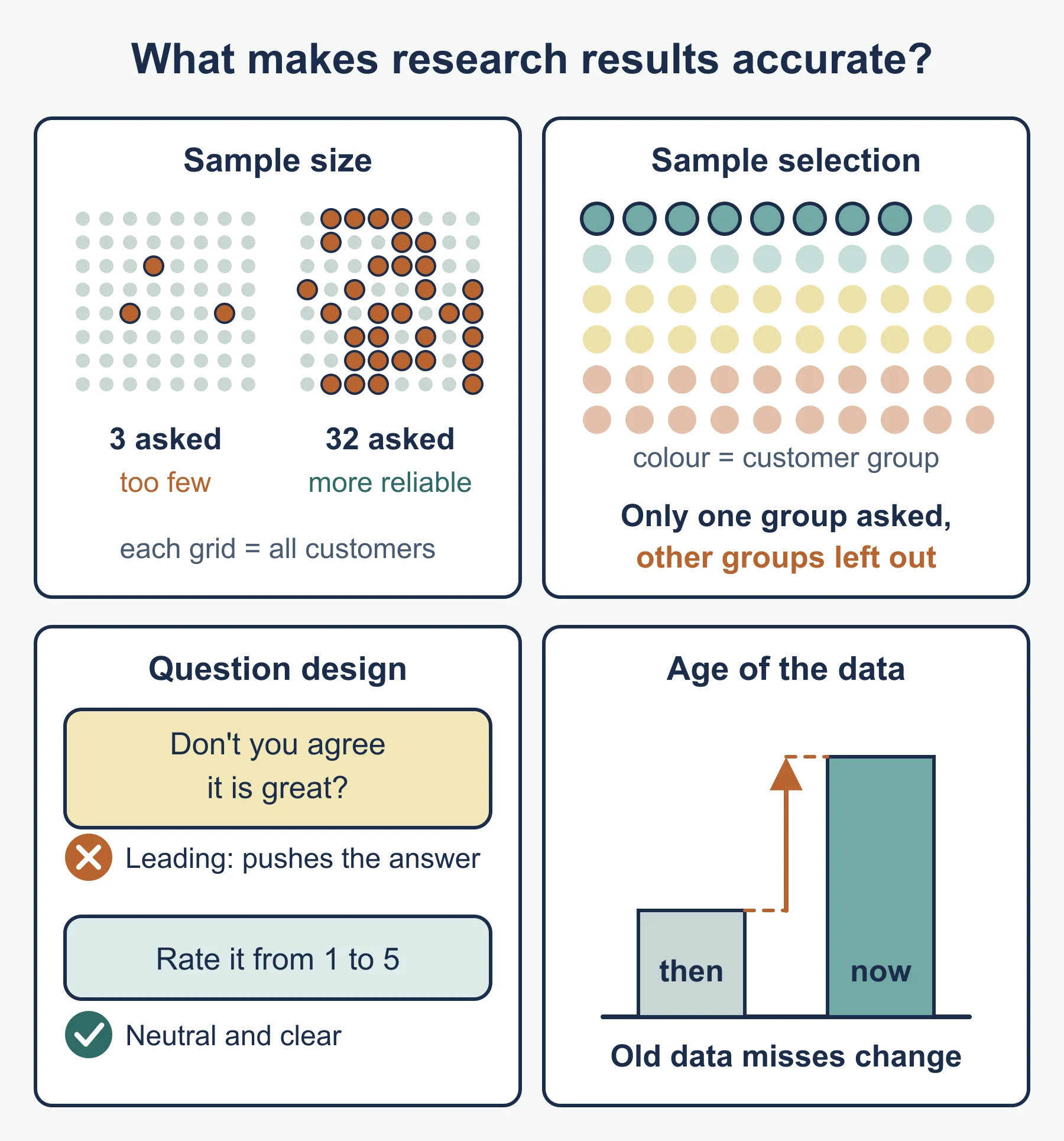
A sample is a smaller group chosen to represent the whole population. It is useful because asking everyone costs too much and takes too long. It is reliable only if large enough and representative.
Accuracy
Sample size; bias in who is chosen; question wording; honesty of answers; age of data; reliability of the source; influence of the interviewer.
Analysing simple data
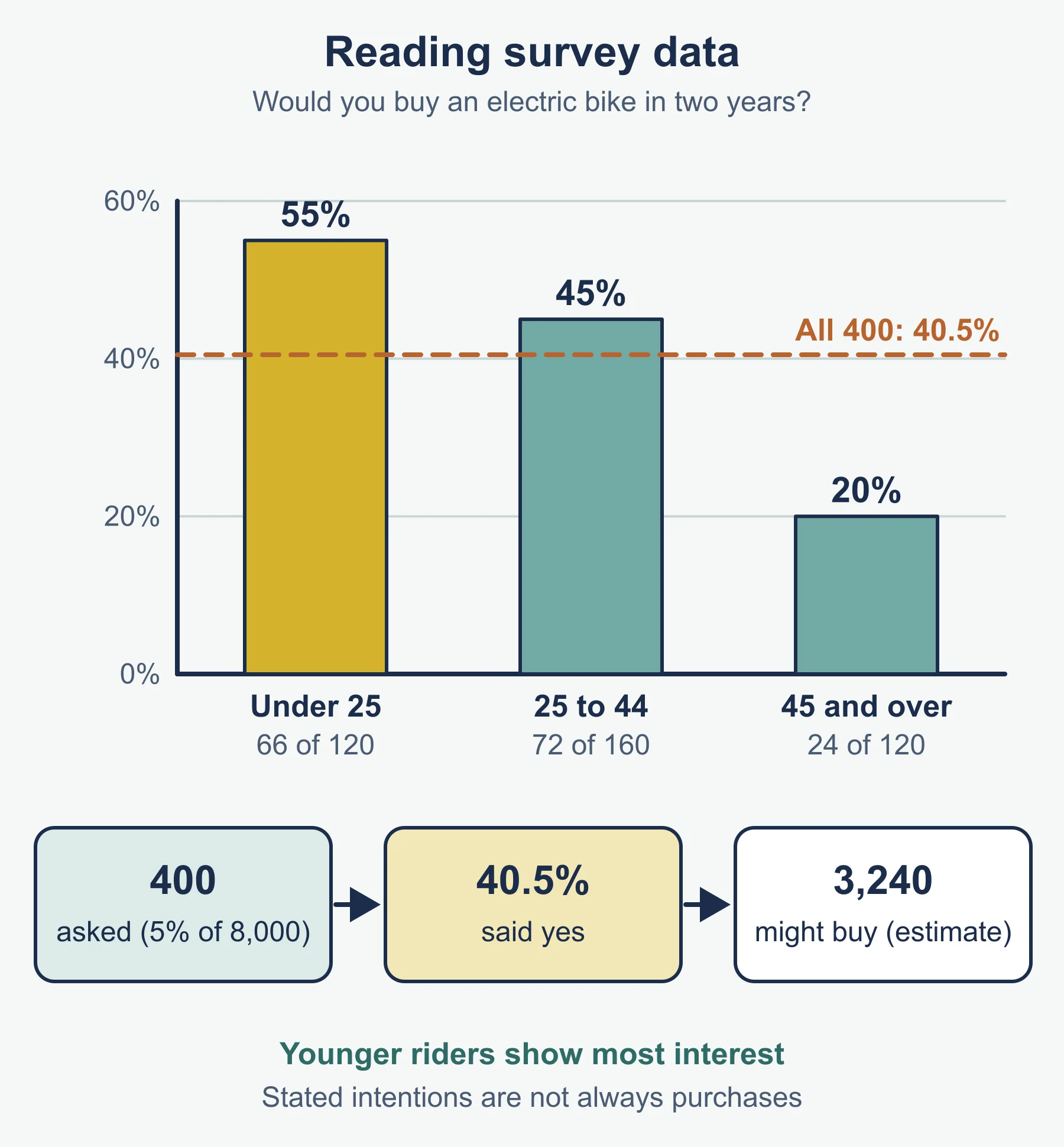
Steps: read the title and units; find the figure asked about; calculate any percentage as part / whole × 100; compare groups; state a conclusion; add one caution about the sample or the data.
Small worked reminder. A sample of 250 shoppers contains 90 who prefer home delivery. Percentage = 90 / 250 × 100 = 36%. If 5,000 customers are like the sample, about 1,800 might prefer delivery. This is an estimate, not a certainty.
Case-study skills for this topic
Marketing questions in the exam are usually set in a business context, so your answer needs the business’s own details. Use this routine.
- Identify: name the concept (for example, niche market or secondary research) in a few words.
- Apply: pick a detail from the stimulus, such as the customers, the product or a figure in the table.
- Explain: say why that detail matters, using words such as “because”, “so” and “which means”.
- Judge: when the command word is “justify” or “consider”, weigh the other side and give a reasoned decision.
Example of the pattern. A tea seller is deciding between a customer survey and reading a trade magazine. “A survey is primary research, so it collects new data about this seller’s own customers (identify). The seller has 3,000 customers on its mailing list (apply). That makes a survey affordable and specific, which means it can answer the exact question about flavours (explain). However, a trade magazine is quicker and cheaper, so the seller might read it first and survey only if gaps remain (judge).”
Linking market research to the rest of the topic
Market research feeds the role of marketing: it identifies needs, shows whether they are satisfied and helps anticipate change. Segmentation depends on research data about age, income, location, gender and lifestyle. Market share is itself a secondary figure, often taken from market reports. When a case study gives a table of survey results, expect to link three steps: calculate a percentage, say which group matters most, and recommend an action for that group.
Must-know distinctions
- Sales revenue grows versus market share grows: a firm can do one without the other.
- Niche versus segment: a niche market is a small specialist market; segmentation is dividing any market into groups.
- Primary versus secondary: new information versus existing information.
- Sample versus population: the group asked versus all the customers.
- Loyalty versus relationships: loyalty is repeat buying; relationships are the ongoing contact that helps to produce it.
Quick self-test
- State two roles of marketing.
- Calculate market share when a firm’s sales revenue is Rs 3,600,000 and the market is Rs 24,000,000.
- A firm has a 20% share and sales revenue of Rs 1,500,000. What is the total market sales revenue?
- Name two reasons why consumer spending patterns might change.
- Give one advantage and one disadvantage of a niche market.
- Name the five bases of segmentation in the syllabus.
- Name two primary and two secondary research methods.
- Why is sampling useful?
- Give two factors that affect the accuracy of research data.
- In a sample of 200 people, 62 say they would buy a new snack. What percentage is this?
Answers
- Any two of: identifying customer needs; satisfying customer needs; maintaining customer loyalty; building customer relationships; anticipating changes in customer needs.
- 3,600,000 / 24,000,000 × 100 = 15%.
- 1,500,000 / 20 × 100 = Rs 7,500,000.
- Any two of: changes in income; fashion or tastes; age of the population; technology; prices of substitutes; changes in attitudes.
- Advantage: less competition or higher prices accepted. Disadvantage: small customer base, limiting growth.
- Age, income, location, gender, lifestyle.
- Primary: any two of questionnaires or surveys, interviews, focus groups, observation. Secondary: any two of competitor websites, government sources, market reports, trade magazines.
- It saves time and money while still giving a guide to what all customers think.
- Any two of: sample size; bias in the sample; question design; honesty of respondents; age of data.
- 62 / 200 × 100 = 31%.
Where marks are usually lost
- Writing market share as a number of units or leaving out the percent sign.
- Using profit instead of sales revenue in the market share formula.
- Saying sales revenue rose so market share must have risen.
- Listing advantages of a niche market without saying why they help this business.
- Naming a segmentation basis but never linking it to the customers in the case.
- Calling a survey “cheap” without comparing it with another method.
- Treating a sample result as a certain fact about all customers.
- Giving a method of research but not saying whether it is primary or secondary.
- Answering “evaluate” or “justify” with one-sided points and no final judgement.
Frequently asked questions
What is the role of marketing? Marketing has five roles: identifying customer needs, satisfying customer needs, maintaining customer loyalty, building customer relationships, and anticipating changes in customer needs.
What is the difference between a niche market and market segmentation? A niche market is a small, specialist market. Market segmentation is dividing a whole market into groups whose members share traits, so a business can target each group.
What are the advantages and disadvantages of secondary research? Secondary research is usually cheaper and faster and gives wide coverage of the market. However, the data may be old, may not be specific to the business’s question and may come from an unreliable source.
How do you find total market size from market share? Rearrange the formula: total market sales revenue equals the business’s sales revenue divided by its market share, multiplied by 100.
Official syllabus
Cambridge IGCSE Business 0264 syllabus for examination in 2027, 2028 and 2029, published by Cambridge University Press & Assessment (Cambridge International Education): sections 3.1 and 3.2.
Get free revision emails (optional)
Occasional emails with practice questions, worked explanations and links to free resources for the qualification and subjects you choose. No spam, and you can unsubscribe from any email. The free tools on this site never need an email.
Related resources
-
Study guides
IGCSE Business: Marketing mix (Cambridge 0264)
Study guide to product, price, place, promotion, ecommerce, marketing strategy and entering new markets for Cambridge IGCSE Business 0264.
Business · Cambridge · IGCSE
Read guide -
Practice questions
IGCSE Business: Marketing mix (Cambridge 0264) – Practice Questions
Eleven original practice questions with worked answers on product, price, place, promotion, ecommerce and new markets, Cambridge IGCSE Business 0264.
Business · Cambridge · IGCSE
Try questions -
Revision notes
IGCSE Business: Marketing mix (Cambridge 0264) – Revision Notes
Condensed revision notes on the marketing mix, life cycle, pricing, channels, promotion and ecommerce for Cambridge IGCSE Business 0264.
Business · Cambridge · IGCSE
Revise topic
Related articles
-
teaching
A Level tuition in Dubai: Cambridge or Pearson Edexcel International A Level?
Schools in Dubai and Abu Dhabi teach either Cambridge International AS & A Level or Pearson Edexcel International A Level. How the two are structured, why it matters for tuition, and how online classes from Lahore work.
9 October 2026
-
curriculum guides
Choosing subjects at IGCSE and A Level
How subject choices at 14 and 16 affect university options later, and how to keep pathways open without overloading a timetable.
28 July 2026
Studying this with a teacher
Working through Business IGCSE?
This page is free and stays free. If you would rather be taught it, Marlbridge runs Business classes one-to-one and in small groups of up to 15, online in your own time zone. The first trial class is free. WhatsApp replies within an hour (8am–11pm Pakistan time, every day); email the same day.
Cambridge Business teachers at Marlbridge

