
Revision Notes
IGCSE Business: Organisation and management (Cambridge 0264) – Revision Notes
Revision notes on organisation and management for Cambridge IGCSE Business 0264: key terms, comparison tables, a self-test with answers and mistakes.
- Subject
- Business
- Level
- IGCSE
- Topic
- People in business
- Author
- Marlbridge Academic Team
- Updated
- Reviewed by
- Salman Ahmad (what this means)
Aligned to Cambridge IGCSE Business (0264), For examination in 2027, 2028 and 2029. Official specification .
Syllabus page (what it covers and how it is assessed): Cambridge IGCSE Business.
Syllabus points this page covers
0264
- 2.2 Organisation and management
Found an error? Report a correction.
Need help with this topic? Request a free trial class for IGCSE Business (0450 / 0264).
These notes condense section 2.2 (Organisation and management, points 2.2.1 to 2.2.5) of the Cambridge IGCSE Business 0264 syllabus for examination in 2027, 2028 and 2029. For full explanations and worked examples, read the study guide. Test yourself with the practice questions, tick off topics on the printable checklist, and see the course hub for the rest of the syllabus. If you are unsure where you stand, take a free diagnostic first.
All candidates take Paper 1 (Short Answer and Data Response) and Paper 2 (Case Study). Both are based on all the subject content, so this topic can appear in either. Money figures are in dollars and all businesses are invented.
Key terms
| Term | Meaning |
|---|---|
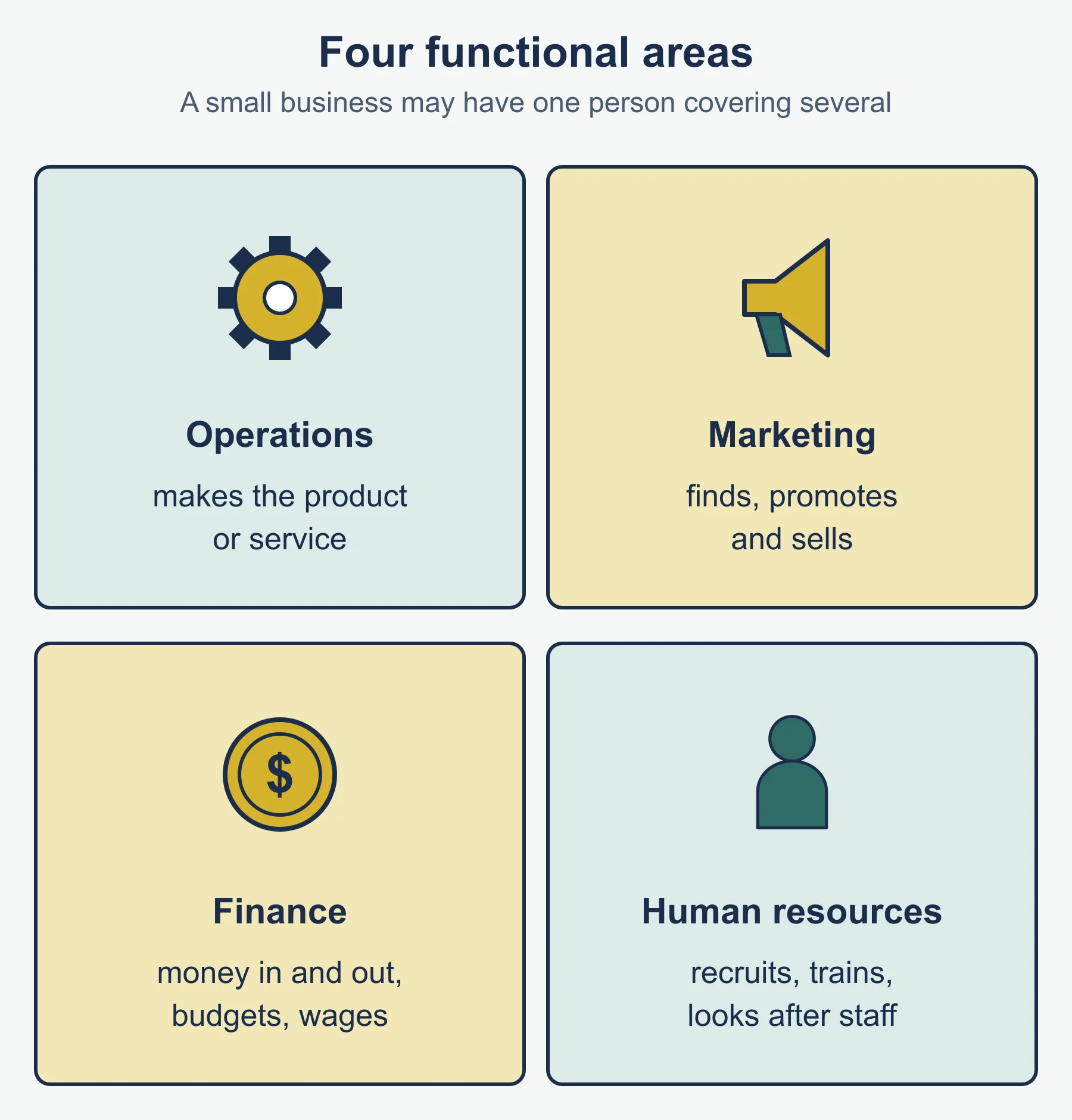
| Functional areas | The main areas, for example operations, marketing, finance, human resources |
| Hierarchy | The ranking of jobs from top to bottom |
| Level of hierarchy | One rank in that ranking |
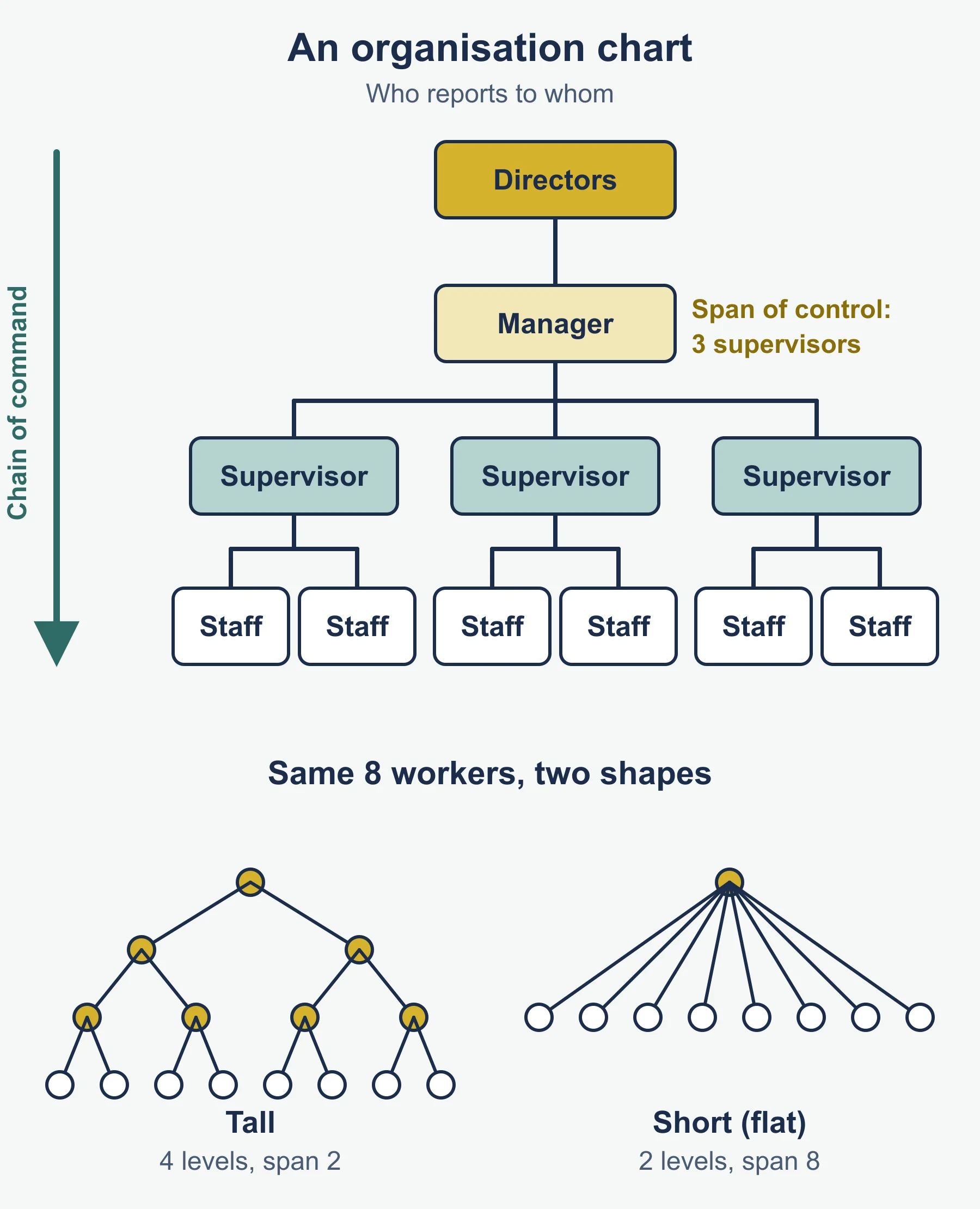
| Chain of command | The line of authority from the top of the business to the bottom |
| Span of control | The number of employees who report directly to one manager |
| Delegation | Passing authority for a task and its decisions to someone lower down |
| Leadership style | The way a manager directs staff |
| Downsizing | Deliberately reducing the number of employees |
| Redundancy | Losing a job because the job is no longer needed |
| Trade union | An organisation of workers who join together to protect and improve their interests |
2.2.1 Structures
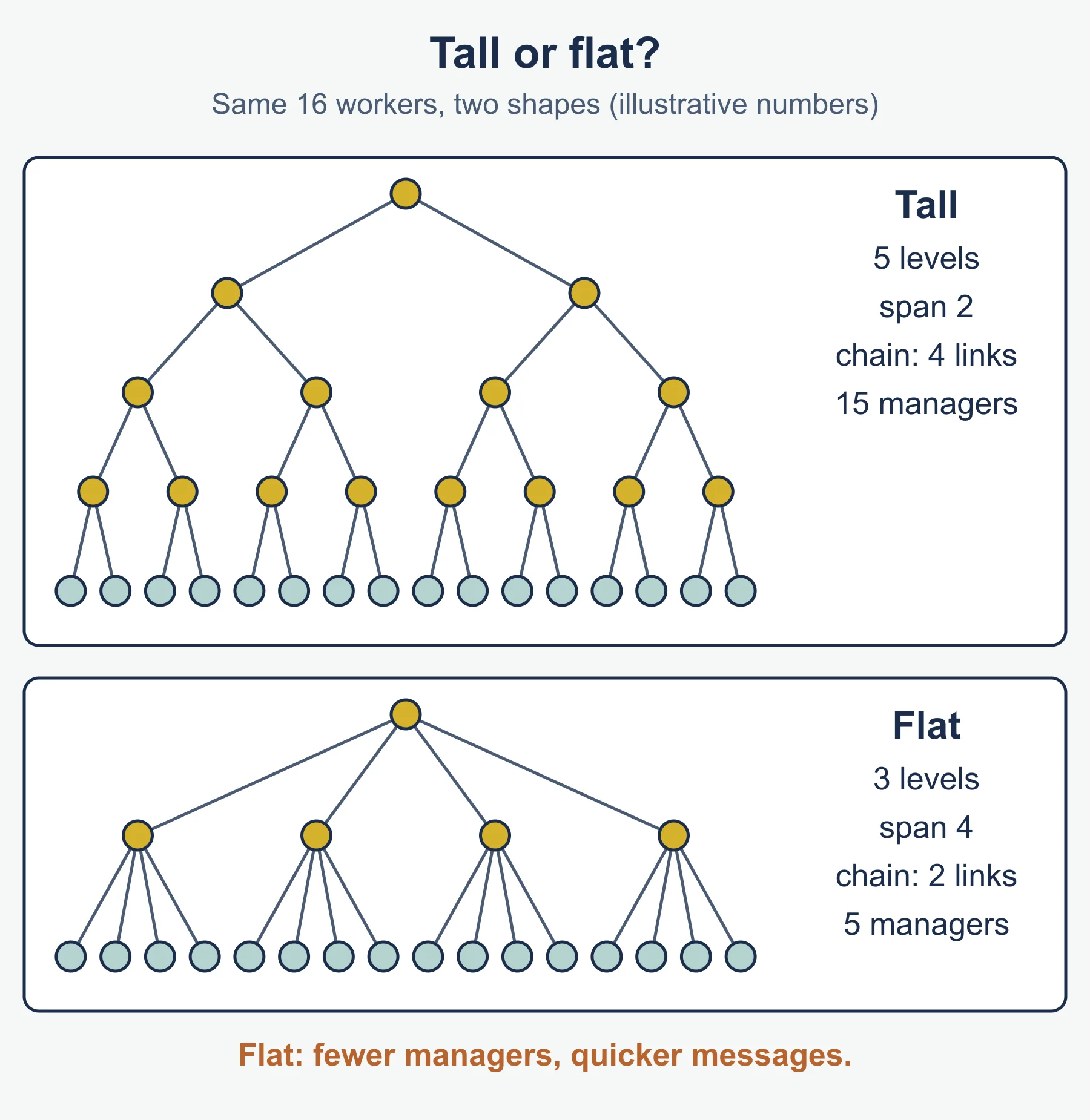
Tall against flat
| Tall | Flat | |
|---|---|---|
| Levels of hierarchy | Many | Few |
| Chain of command | Long | Short |
| Span of control | Narrow | Wide |
| Communication | Slower, passes through many people | Faster |
| Promotion | Many steps | Few steps |
| Manager cost | Higher | Lower |
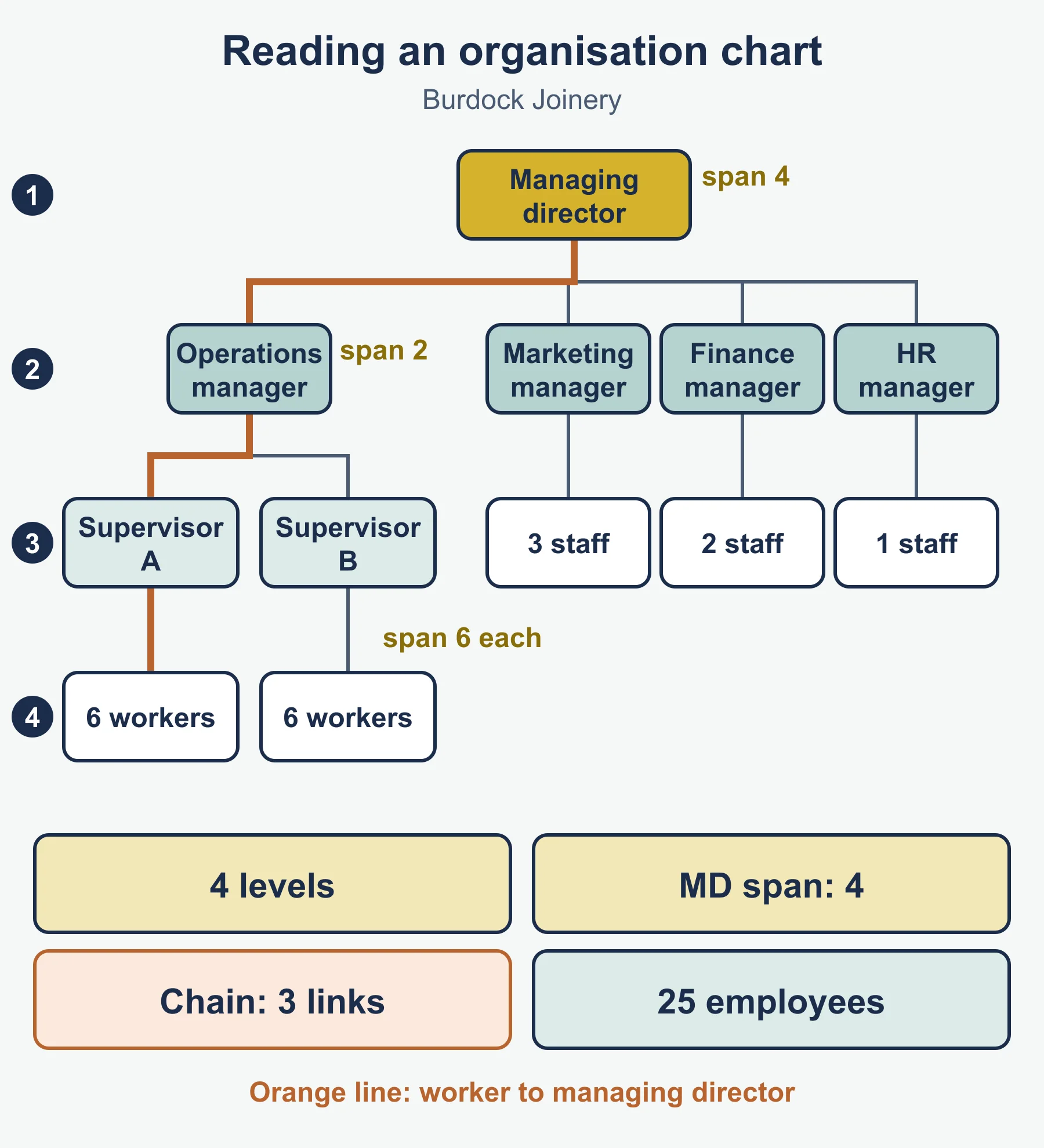
Reading an organisational chart: steps
- Start at the top box and count the rows. That gives the levels.
- For any manager, count the boxes directly below. That is the span.
- Trace a line from the bottom box up to the top. The number of links is the chain of command.
- Add up every box if the question asks for the total employees.
Small reminder: a managing director has 3 managers. Each manager has 5 staff. There are 3 levels, the director’s span is 3, a manager’s span is 5, and the total is 1 + 3 + 15 = 19 employees.
Flexible working
| Type | Benefit | Drawback |
|---|---|---|
| Home working | Saves travel time and cost for staff. Less office space needed | Harder to supervise. Staff may feel isolated |
| Flexible hours | Fits work around family life, which may motivate staff | Harder to arrange meetings and cover busy times |
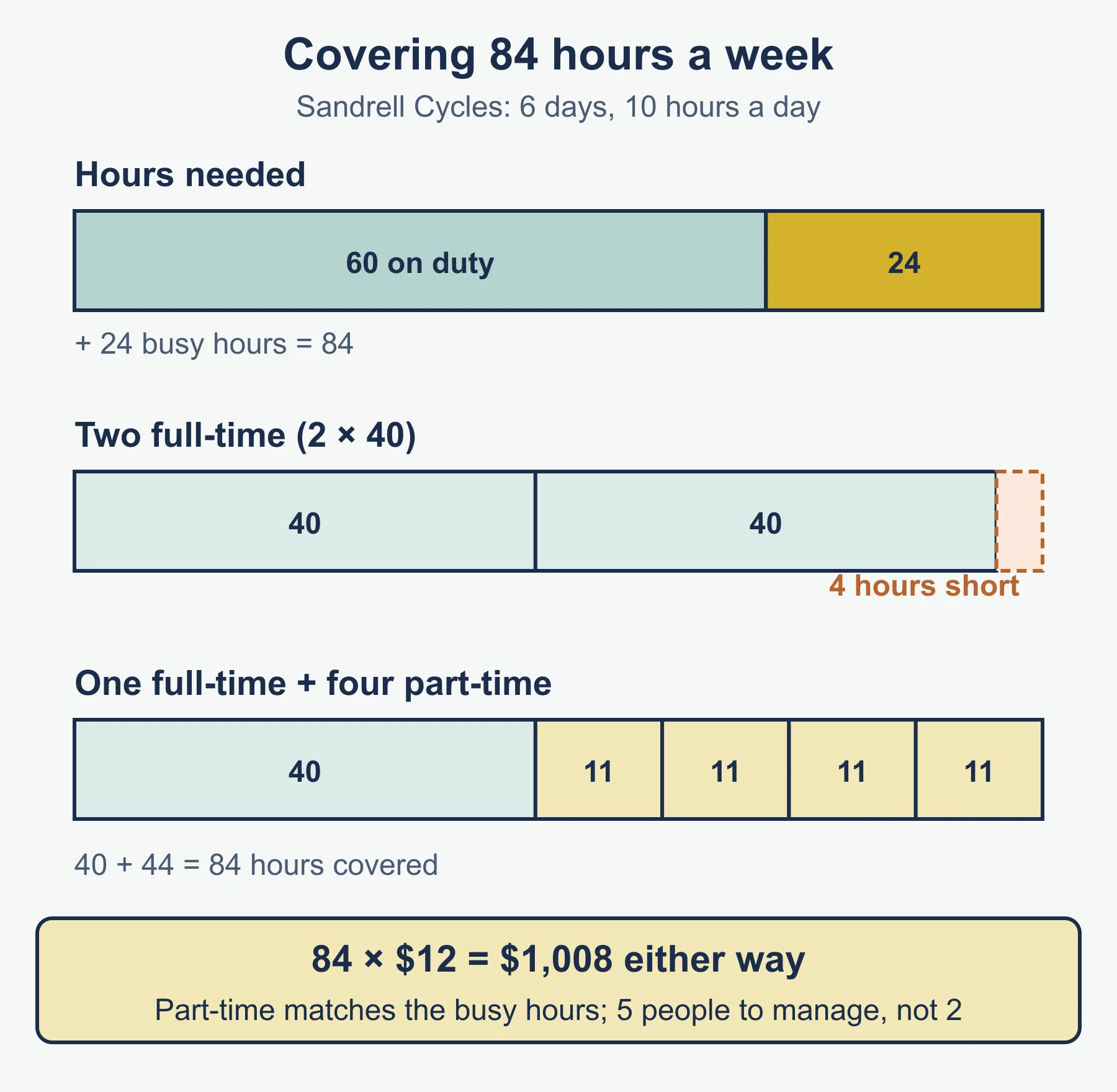
Part-time against full-time
| Part-time | Full-time | |
|---|---|---|
| For the business | Cover for busy times only. Often easier to recruit | Reliable, committed, knows the business |
| Against the business | More people to train and manage. Handovers | Paid for quiet times too. Less flexible |
2.2.2 Functions of management and delegation
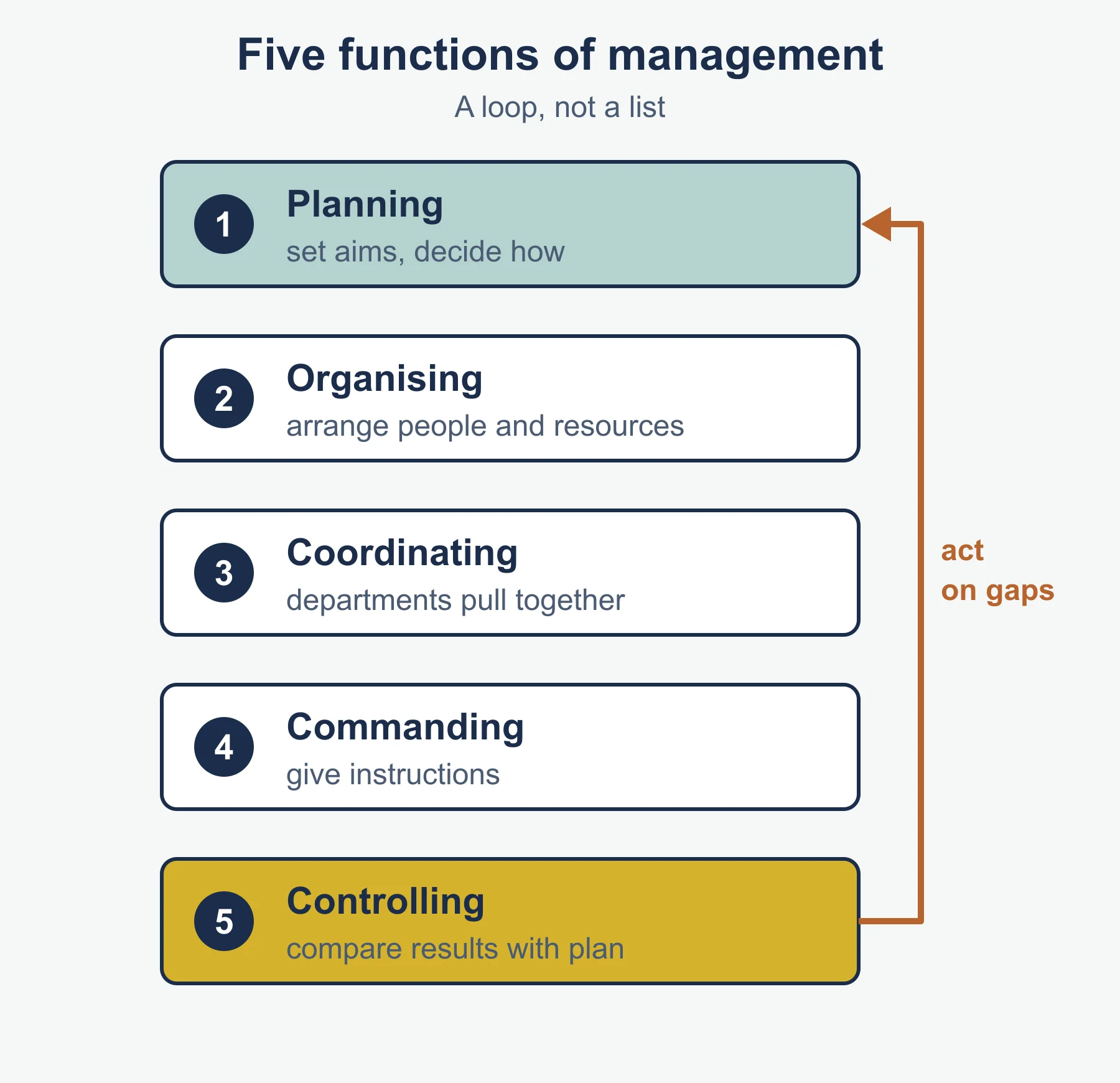
| Function | Key idea | Clue words in a case |
|---|---|---|
| Planning | Set objectives and decide how to reach them | targets, forecast, decides what to launch |
| Organising | Arrange people, money, equipment, time | allocates staff, schedules, sets up teams |
| Coordinating | Make departments work together | joint meeting, links production and sales |
| Commanding | Give instructions and direct staff | tells, instructs, orders |
| Controlling | Compare actual with plan and act | checks results, corrects, monitors budgets |
Delegation
| Advantages | Disadvantages |
|---|---|
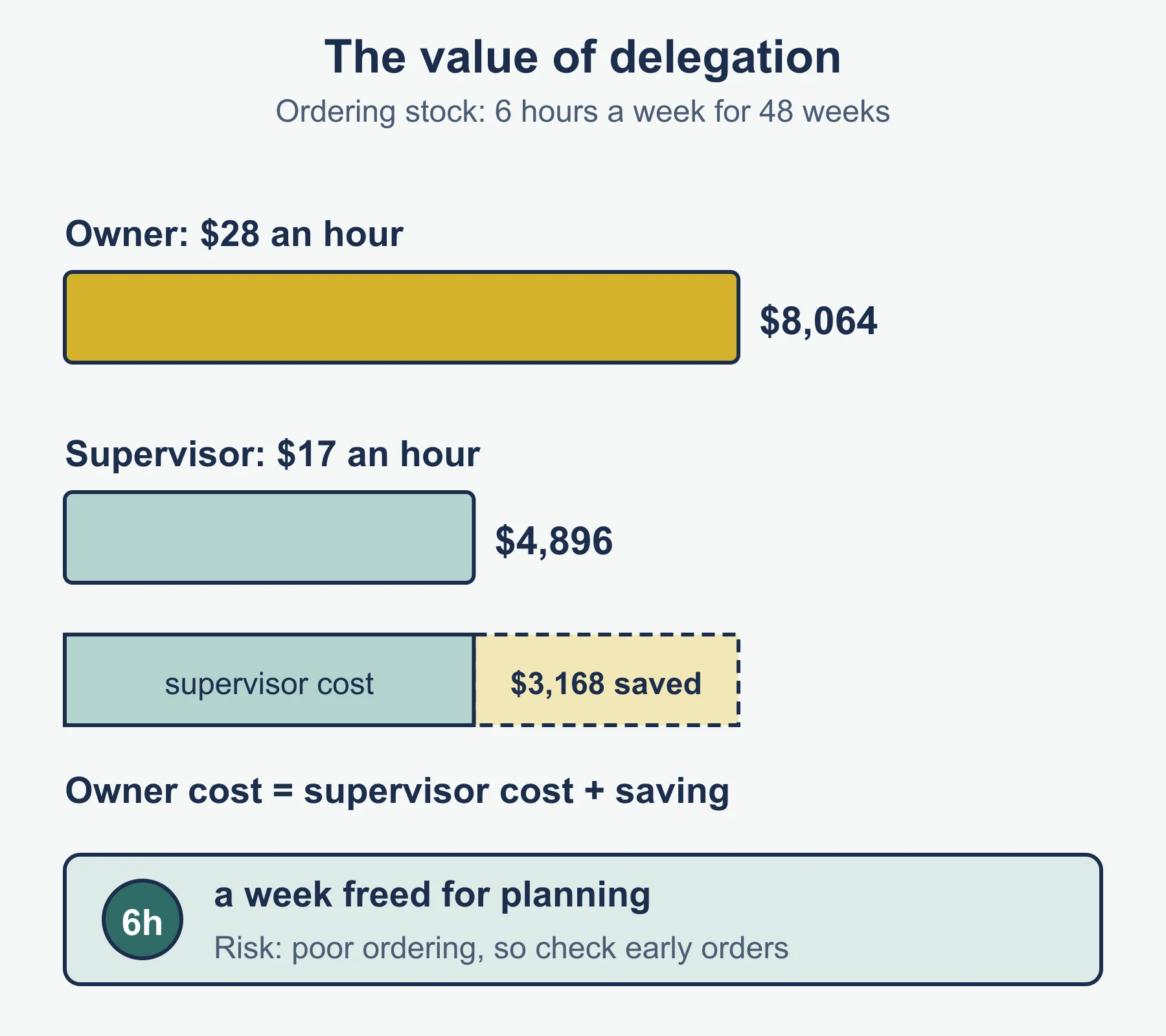
| Frees the manager for planning | Employee may lack skill |
| Staff feel trusted, so may be more motivated | Manager still responsible, may lose control |
| Staff gain experience | Takes time to explain |
| Faster decisions near the problem | Some staff see it as extra work |
2.2.3 Leadership styles
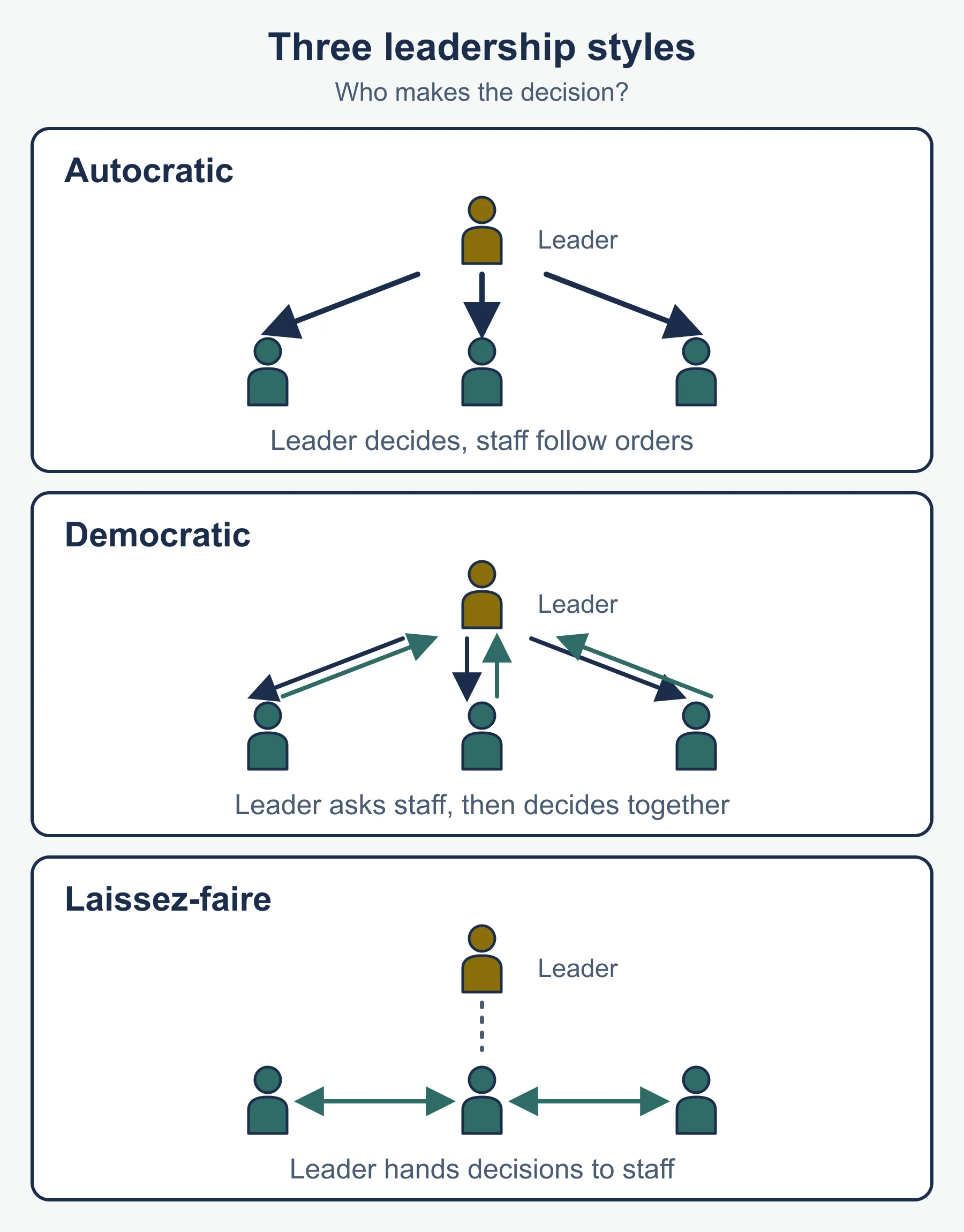
| Style | Who decides | Best when | Main risk |
|---|---|---|---|
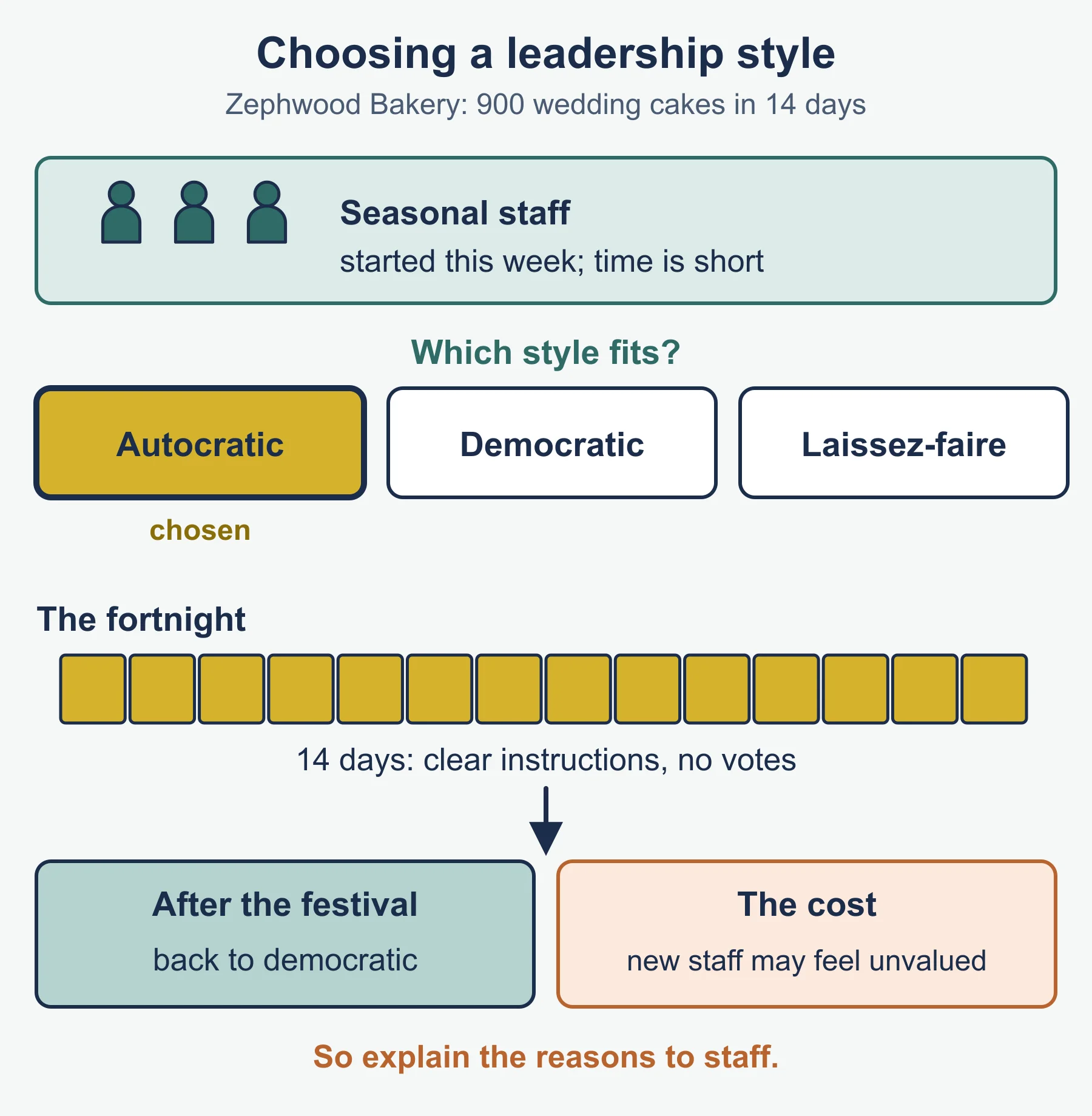
| Autocratic | Leader alone | Urgent, unskilled or new staff, safety | Low motivation, ideas lost |
| Democratic | Leader with staff input | Staff are skilled and time allows | Slow, views may clash |
| Laissez-faire | Staff themselves | Expert, self-motivated, creative staff | Lack of direction |
Method: recommend and justify a style
- Pick out the evidence on time, staff skill, the task and staff mood.
- State your choice.
- Link each piece of evidence to the style.
- Give one cost of your choice and one reason it is still the best option.
- Say why one other style is less suitable.
2.2.4 Downsizing and redundancy
Reasons for downsizing: automation, reduced demand for products, need to lower costs.
Costs of redundancy: payments to those leaving, lower morale among staff who remain, loss of skills and knowledge, possible legal disputes if unfair.
Method: who to make redundant
- List the criteria the case allows: skills, performance, attendance, length of service, cost, flexibility, role.
- Compare the people using the data given.
- Choose one and give the main reason.
- Show why the others are less suitable.
- Admit the downside and say why you still choose them.
Small reminder: closing a line cuts 5 jobs paid 18,000 each, with 2,500 paid to each person leaving. Saving 5 x 18,000 = 90,000 a year. One-off cost 5 x 2,500 = 12,500. First-year net saving = 77,500, if there are no other costs.
2.2.5 Trade unions
A union is formed by workers, who pay a subscription to belong. Benefits of membership for employees:
- Collective voice with the employer, for example over pay and conditions.
- Advice and support in a dispute.
- Pressure for safe conditions and fair treatment.
Answer from the employee’s viewpoint when the question asks about employees. Benefits to the employer or the economy are not asked for.
Exam technique for this topic
- Define needs the precise meaning, so include both parts of a term such as span of control.
- Identify and state need a name or a short statement, with no explanation.
- Explain needs a point, then a reason or effect, in the context given.
- Calculate needs the working shown, in the units the question uses.
- Justify needs evidence from the case, a reason for your choice, and a reason why the alternative is less suitable.
- Use the business’s own figures, such as span, hours or pay, in your answer wherever the case gives them.
Must-know distinctions
- Span of control against levels of hierarchy. Span is across, levels are down.
- Delegation against giving orders. Delegation passes decision-making authority. Commanding is an instruction about how to do a task.
- Democratic against laissez-faire. In democratic leadership the leader still takes the final decision. In laissez-faire the staff decide.
- Redundancy against dismissal for misconduct. Redundancy is about the job, not the person’s behaviour.
- Downsizing against redundancy. Downsizing is the policy of cutting staff. Redundancy is what happens to each employee affected.
Quick self-test
- Name the four example functional areas given in the syllabus.
- Define span of control.
- A manager has 3 supervisors, and each supervisor has 7 workers. How many supervisors and workers are under the manager in total?
- Which kind of structure has the shorter chain of command, tall or flat?
- State one benefit to an employee of home working.
- A manager compares monthly sales with the target and takes action where sales are low. Which function of management is this?
- State one disadvantage of delegation.
- A leader sets a goal and leaves the team to decide how to reach it. Which style is this?
- Define redundancy.
- State one benefit to employees of belonging to a trade union.
- A firm cuts 5 jobs paid 18,000 each, and pays 2,500 to each person leaving. Calculate the net saving in the first year.
Answers
- Operations, marketing, finance, human resources.
- The number of employees who report directly to one manager.
- 3 + (3 x 7) = 3 + 21 = 24.
- Flat.
- Saves travel time and cost (or fits work around home life).
- Controlling.
- The employee may make mistakes, or the manager may lose control but still be responsible.
- Laissez-faire.
- Losing a job because the job is no longer needed.
- A group voice with the employer, or support in a dispute, or pressure for safe conditions.
- 90,000 - 12,500 = 77,500.
Where marks are usually lost
- Giving a definition of span of control that mentions levels or the whole workforce.
- Describing a feature of a flat structure with no consequence for the business in the question.
- Treating coordinating and commanding as the same thing.
- Writing “delegation” for any task a manager hands out, with no authority passing down.
- Recommending a leadership style without evidence from the case on time, skills or staff mood.
- Choosing who to make redundant using only length of service, with no comparison across the people given.
- Giving only the advantages when asked to justify a recommendation.
- Describing benefits of a union for the employer when the question asks about employees.
Next, work through the practice questions and recheck any gaps in the study guide.
Frequently asked questions
What is the difference between span of control and levels of hierarchy? Span of control is the number of employees who report directly to one manager, so it runs across the chart. Levels of hierarchy are the ranks from the top of the business downwards.
What is the difference between democratic and laissez-faire leadership? In democratic leadership the leader asks staff for their views but still takes the final decision. In laissez-faire leadership the leader sets the aim and leaves the staff to decide how to reach it.
Is redundancy the same as being dismissed? No. Redundancy is about the job no longer being needed, not the person’s behaviour or performance, whereas dismissal for misconduct is about the employee.
What is the difference between downsizing and redundancy? Downsizing is the policy of deliberately cutting the number of staff. Redundancy is what happens to each employee affected when their job is no longer needed.
What does a “justify” question need in Cambridge IGCSE Business 0264? It needs evidence from the case, a reason for your choice and a reason why the alternative is less suitable. Use the business’s own figures, such as span, hours or pay, wherever the case gives them.
Official syllabus
Aligned to section 2.2 of the Cambridge IGCSE Business 0264 syllabus for examination in 2027, 2028 and 2029, published by Cambridge University Press & Assessment (Cambridge International Education).
Get free revision emails (optional)
Occasional emails with practice questions, worked explanations and links to free resources for the qualification and subjects you choose. No spam, and you can unsubscribe from any email. The free tools on this site never need an email.
Related resources
-
Study guides
IGCSE Business: Human resource management (HRM) (Cambridge 0264)
Study guide to human resource management for Cambridge IGCSE Business 0264: recruitment, selection, contracts, legal controls and training.
Business · Cambridge · IGCSE
Read guide -
Practice questions
IGCSE Business: Human resource management (HRM) (Cambridge 0264) – Practice Questions
Original practice questions with worked answers on human resource management for Cambridge IGCSE Business 0264, with short and case items.
Business · Cambridge · IGCSE
Try questions -
Revision notes
IGCSE Business: Human resource management (HRM) (Cambridge 0264) – Revision Notes
Condensed revision notes on human resource management for Cambridge IGCSE Business 0264, with tables, a self-test and common mistakes.
Business · Cambridge · IGCSE
Revise topic
Related articles
-
teaching
A Level tuition in Dubai: Cambridge or Pearson Edexcel International A Level?
Schools in Dubai and Abu Dhabi teach either Cambridge International AS & A Level or Pearson Edexcel International A Level. How the two are structured, why it matters for tuition, and how online classes from Lahore work.
9 October 2026
-
curriculum guides
Choosing subjects at IGCSE and A Level
How subject choices at 14 and 16 affect university options later, and how to keep pathways open without overloading a timetable.
28 July 2026
Studying this with a teacher
Working through Business IGCSE?
This page is free and stays free. If you would rather be taught it, Marlbridge runs Business classes one-to-one and in small groups of up to 15, online in your own time zone. The first trial class is free. WhatsApp replies within an hour (8am–11pm Pakistan time, every day); email the same day.
Cambridge Business teachers at Marlbridge

