
Revision Notes
O Level Business: Income statements and Statement of financial position (Cambridge 7115) – Revision Notes
Condensed revision notes on profit, income statements and the statement of financial position for Cambridge O Level Business 7115, with a self-test.
- Subject
- Business
- Level
- O LEVELS
- Topic
- Financial information and decisions
- Author
- Marlbridge Academic Team
- Updated
- Reviewed by
- Salman Ahmad (what this means)
Aligned to Cambridge O Level Business (7115), For examination in 2026. Official specification .
Syllabus page (what it covers and how it is assessed): Cambridge O Level Business.
Syllabus points this page covers
7115
- 5.3 Income statements
- 5.4 Statement of financial position
Found an error? Report a correction.
Need help with this topic? Request a free trial class for O Level Business (7115).
These revision notes condense syllabus sections 5.3 (Income statements) and 5.4 (Statement of financial position) of the Cambridge O Level Business Studies 7115 syllabus for examination in 2026. For full explanations and worked examples, read the study guide. The syllabus says constructing these statements will not be assessed, so the notes focus on reading them and using them.
Other pages: course hub, printable checklist, practice set, the earlier financial information and decisions practice set and the free 10-minute diagnostics.
5.3.1 Profit
| Point | Key content |
|---|---|
| How profit is made | Revenue greater than total costs. If costs are greater, there is a loss |
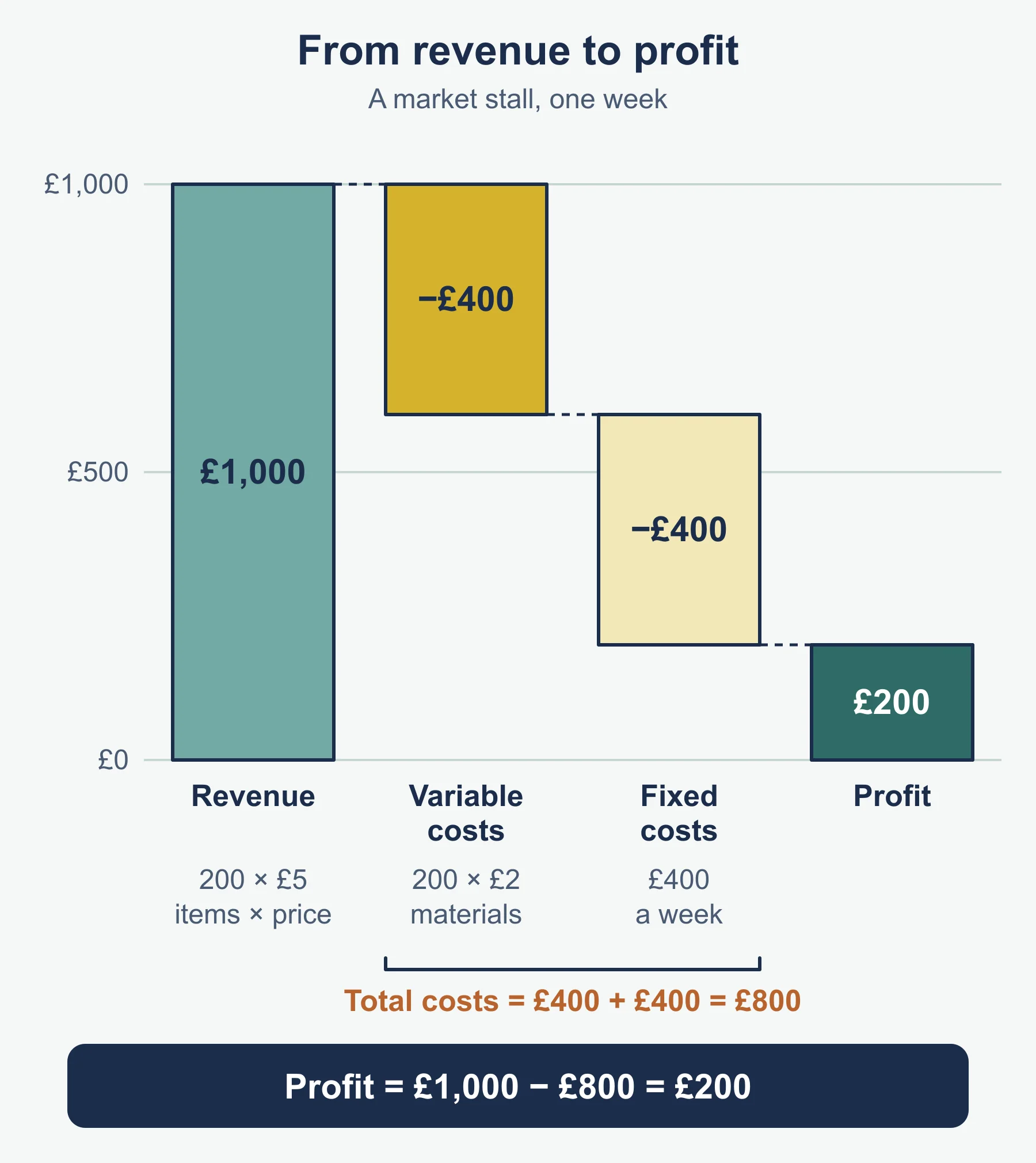
| Formula | Profit = revenue − total costs |
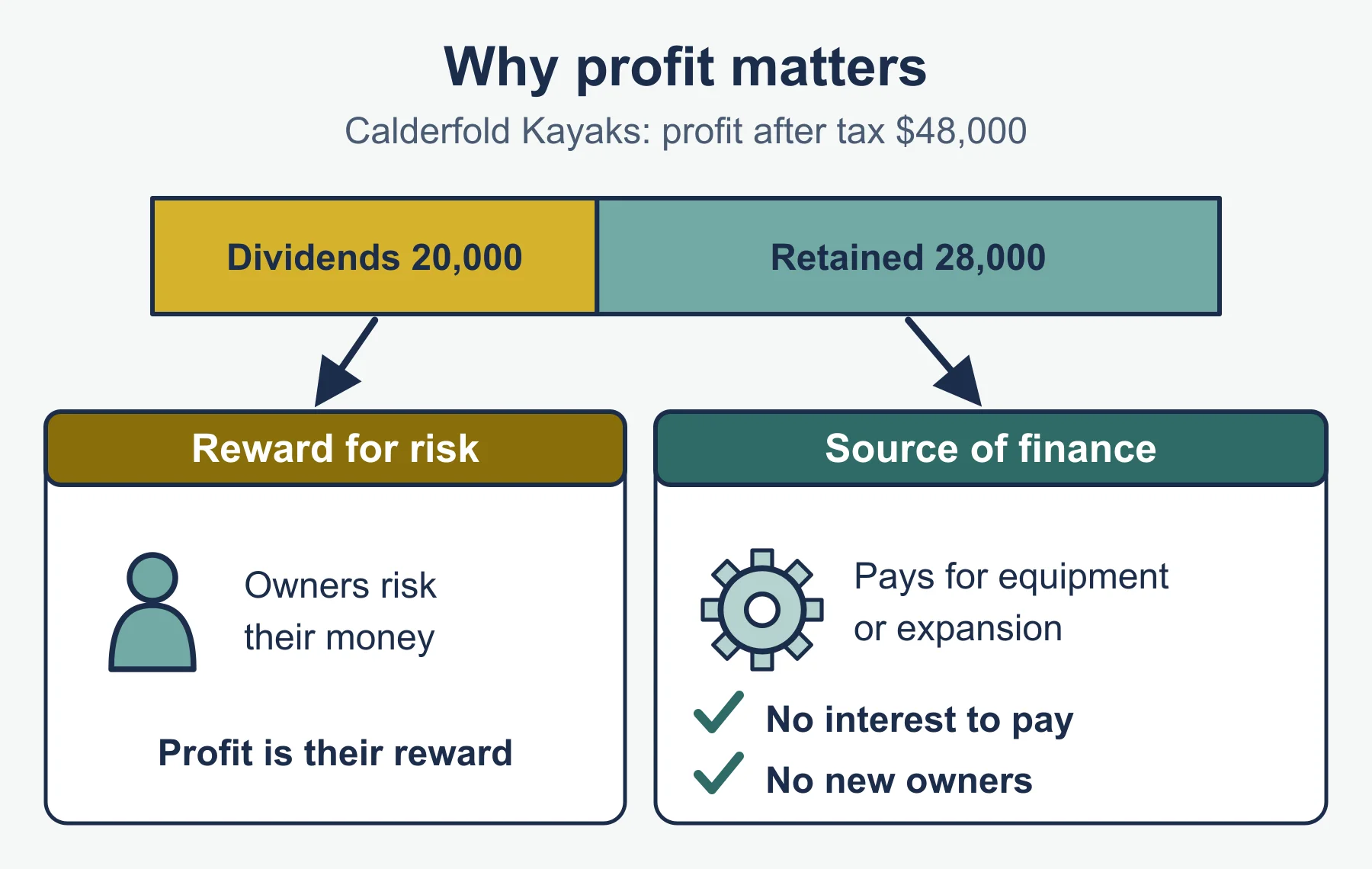
| Why it matters (reward) | Reward for the risk and enterprise of the owners |
| Why it matters (finance) | Retained profit is a source of finance for the business, with no interest and no new owners |
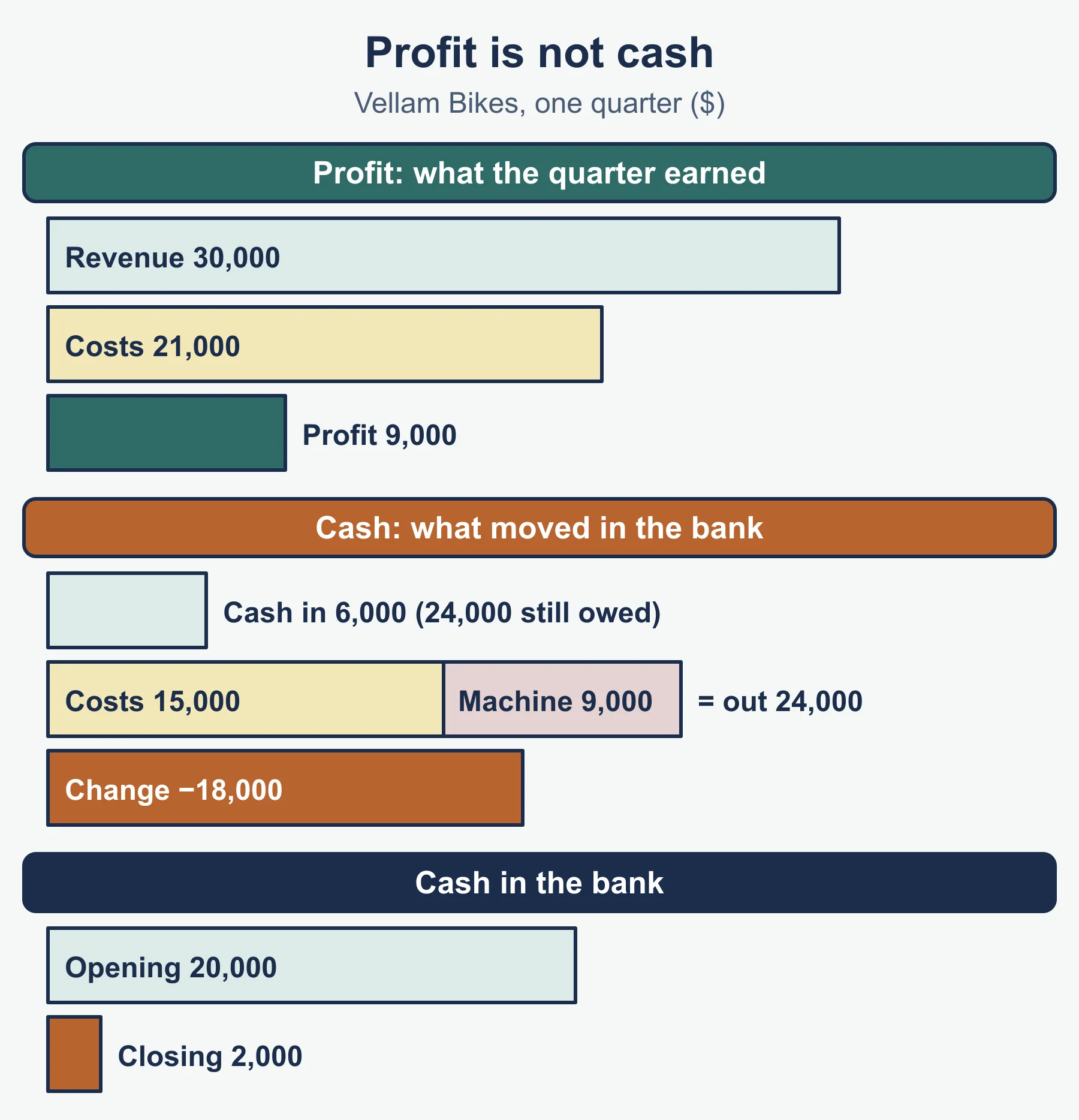
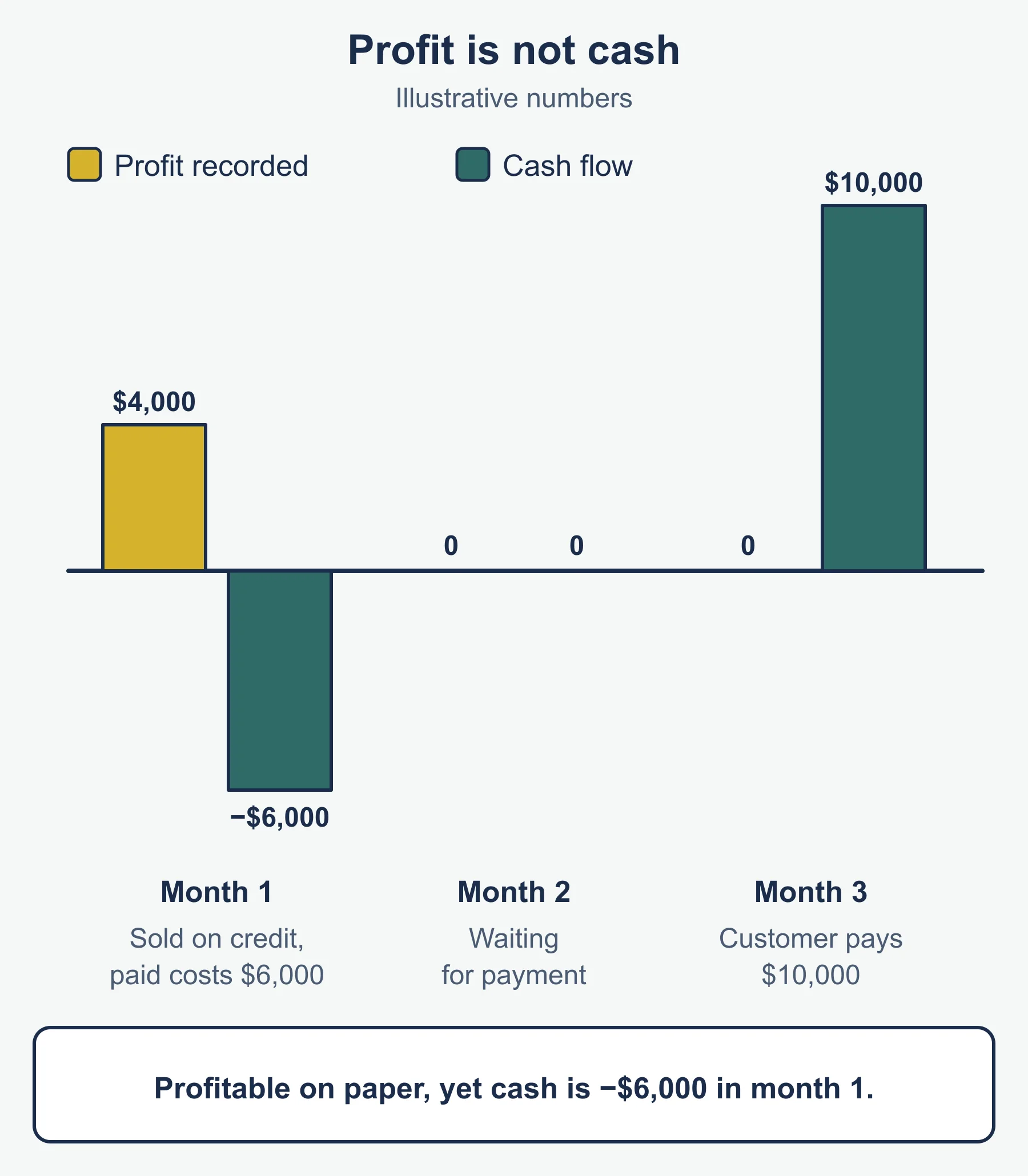
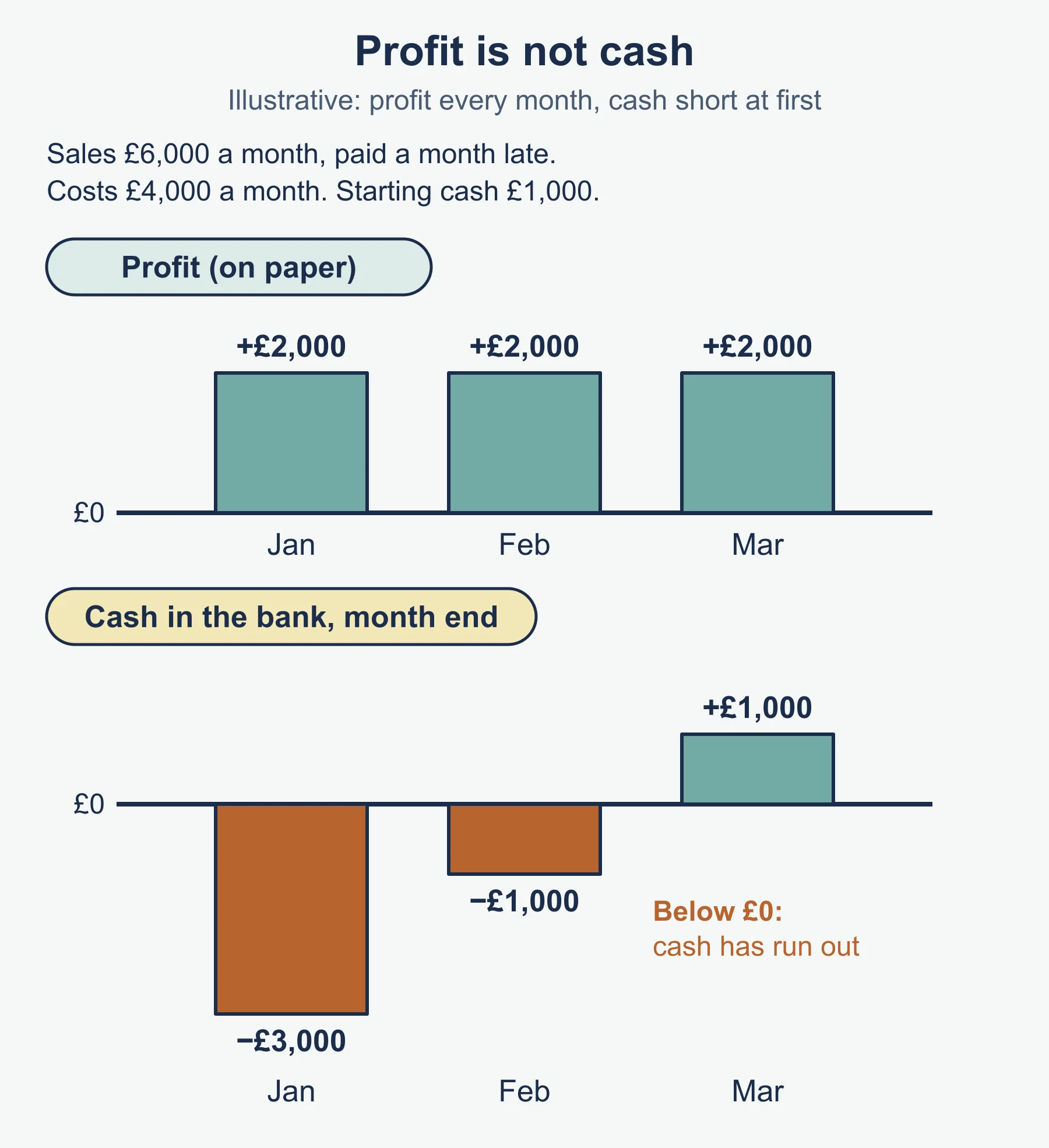
| Profit v cash | Profit is revenue minus costs. Cash is money held. They can move in opposite directions |
Why profit and cash differ
- Sales on credit count as revenue now, but the cash arrives later.
- Buying a non-current asset uses cash straight away, but it is not a cost against this year’s revenue in the same way.
- A loan brings cash in but is not profit. Repaying a loan takes cash out but is not an expense.
- Paying suppliers late keeps cash in the business longer than the costs suggest.
Reminder example (Vellam Bikes): profit 9 000, but cash change −18 000 because 24 000 of sales were on credit and 9 000 went on a machine.
5.3.2 Income statements
Layout (standard form for a limited company)
| Line | How it is found |
|---|---|
| Revenue | Price × quantity sold |
| − Cost of sales | Direct cost of goods sold |
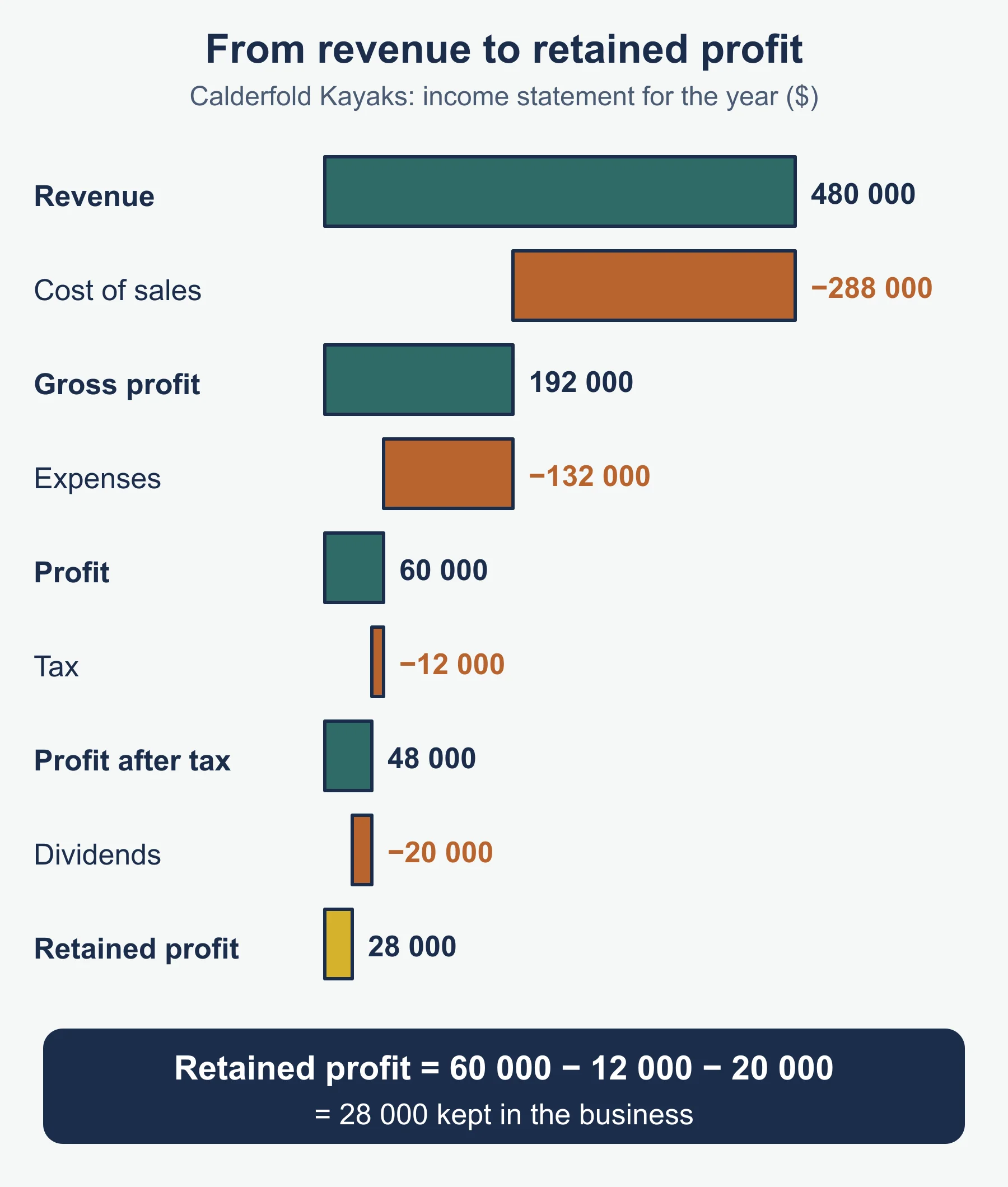
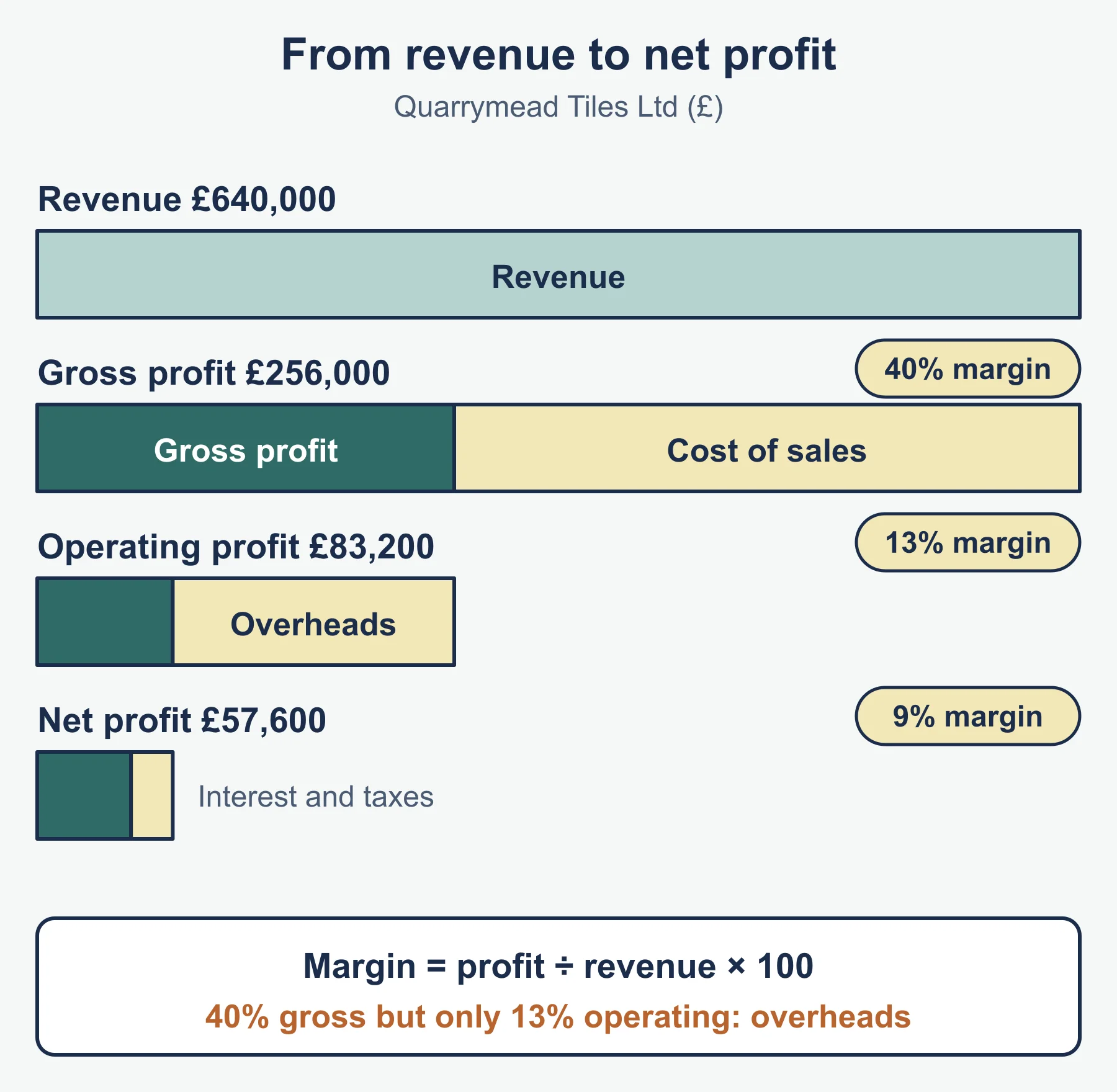
| = Gross profit | Revenue − cost of sales |
| − Expenses | Overheads such as rent, wages, advertising |
| = Profit | Gross profit − expenses |
| − Tax | Paid to the government |
| − Dividends | Share of profit paid to owners |
| = Retained profit | Profit left in the business |
The syllabus names revenue, cost of sales, gross profit, profit and retained profit. Tax and dividends are the standard lines that lead to retained profit.
Method: using an income statement to decide
- Write out the current figures: revenue, cost of sales, gross profit, expenses, profit.
- Apply the proposal to the right lines only (a price change alters revenue; a supplier change alters cost of sales; a new cost goes into expenses).
- Recalculate gross profit and profit.
- Compare the new profit with the old, in money and as a percentage.
- Write the decision and name the assumption it depends on.
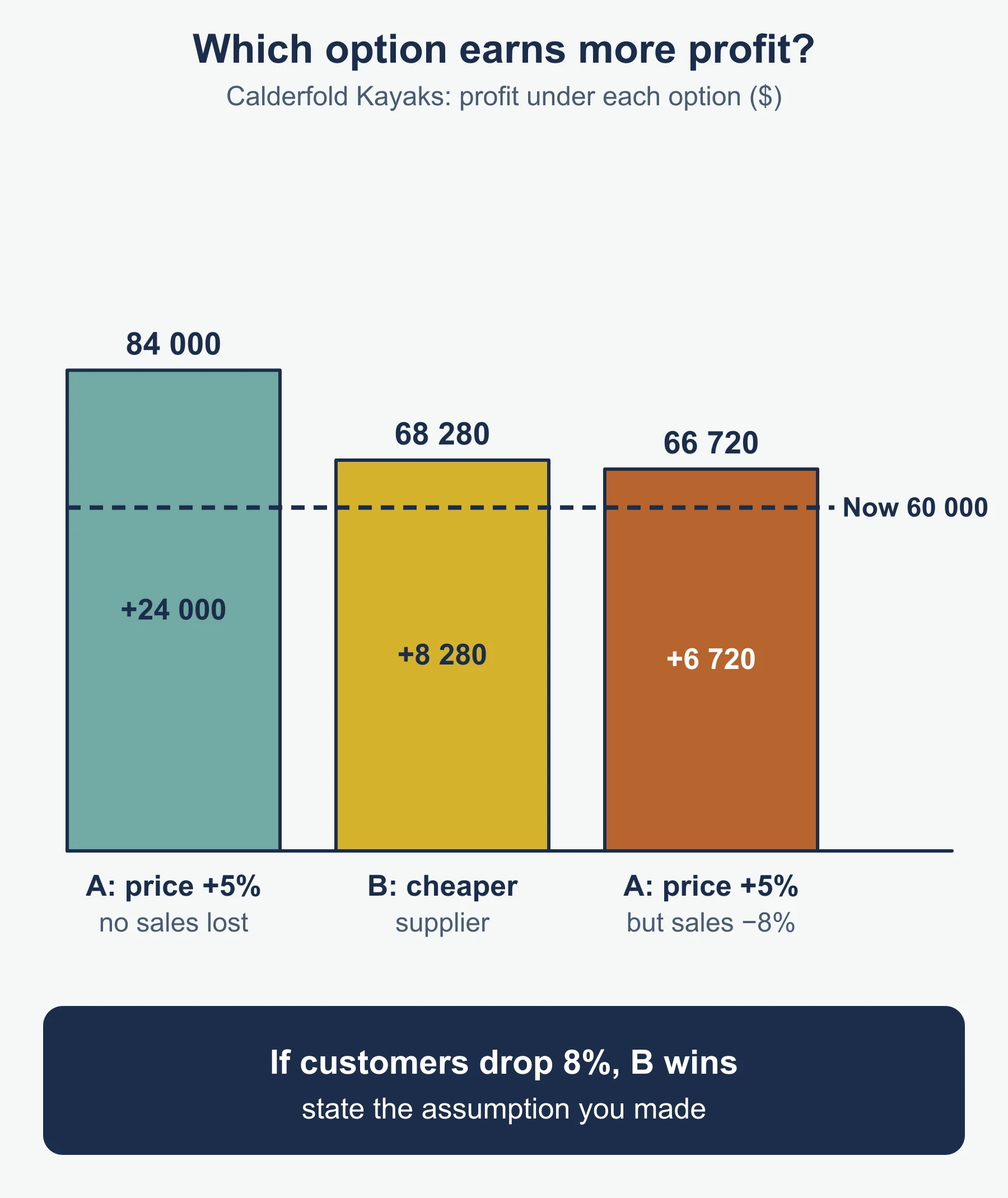
Reminder example (Calderfold Kayaks): profit 60 000. A 5% price rise with no lost sales gives profit 84 000. If sales volume falls 8% as well, profit is 66 720. The recommendation depends on how customers react.
Limits to mention
- It covers a past period only.
- It does not show cash.
- Forecasts using it rely on assumptions.
- It does not show how the profit is financed or what the business owns (that is the statement of financial position).
5.4 Statement of financial position
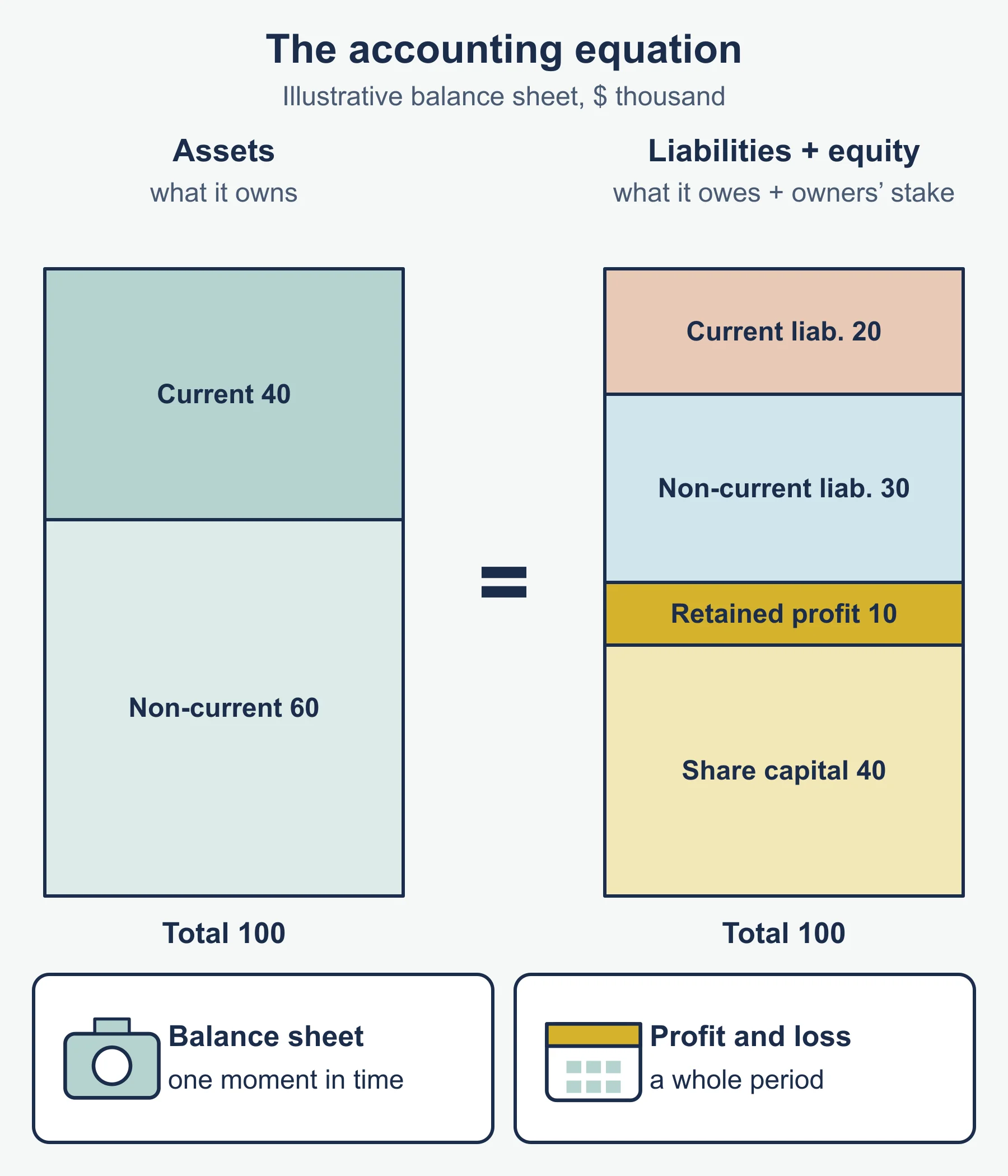
Classification table
| Class | Test | Examples |
|---|---|---|
| Non-current asset | Used for more than a year | Premises, machinery, vehicles |
| Current asset | Becomes cash within a year | Inventories, receivables (debtors), cash |
| Current liability | Due within a year | Payables (creditors), bank overdraft |
| Non-current liability | Due after more than a year | Bank loan, mortgage |
| Equity | Owners’ stake | Share capital, retained profit |
Key relationships
| Item | Standard form |
|---|---|
| Net assets | Total assets − current liabilities − non-current liabilities |
| Equity | Share capital + retained profit, and equals net assets |
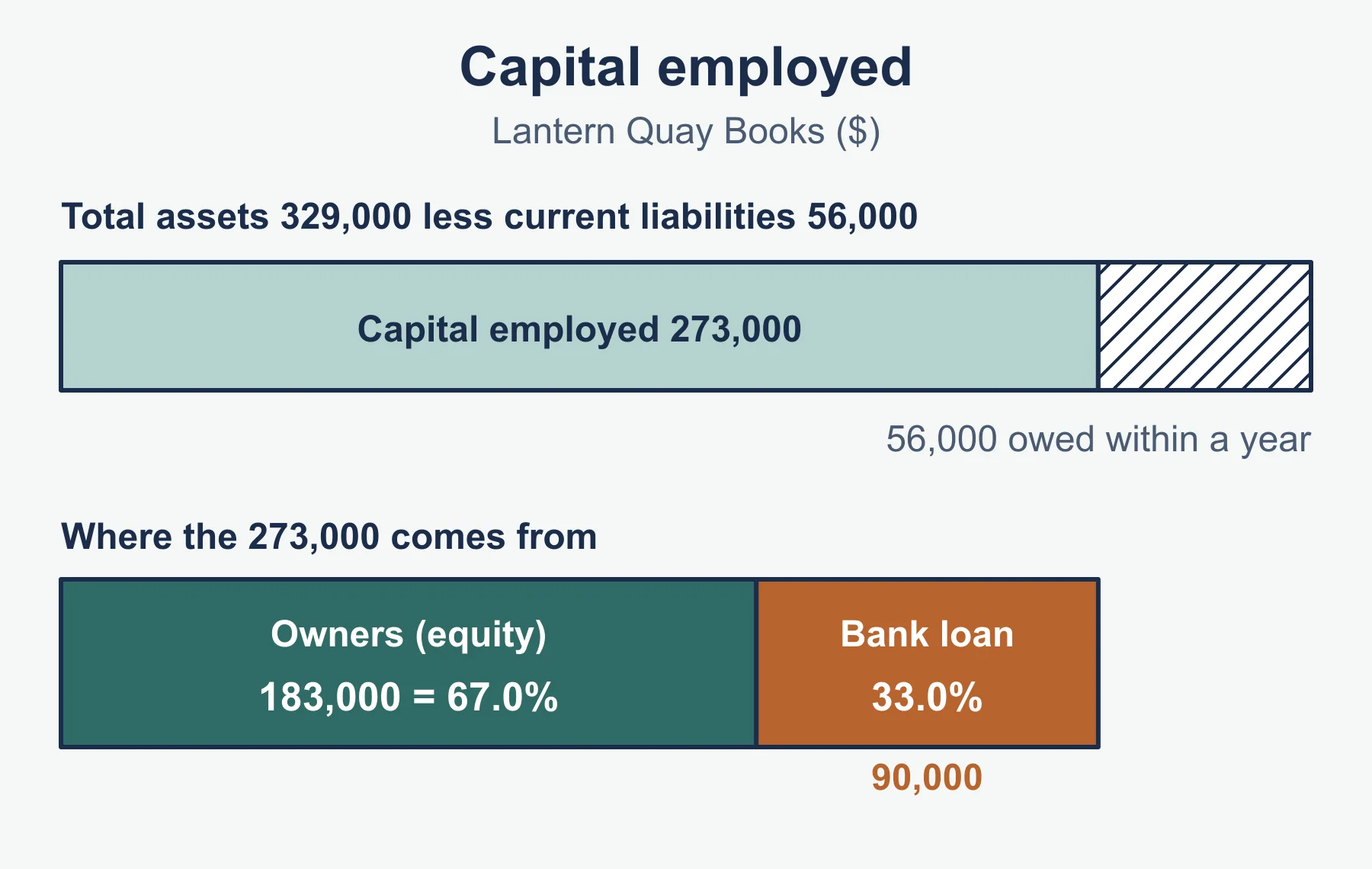
| Capital employed | Equity + non-current liabilities (also total assets − current liabilities) |
| Working capital | Current assets − current liabilities |
Method: interpreting a statement
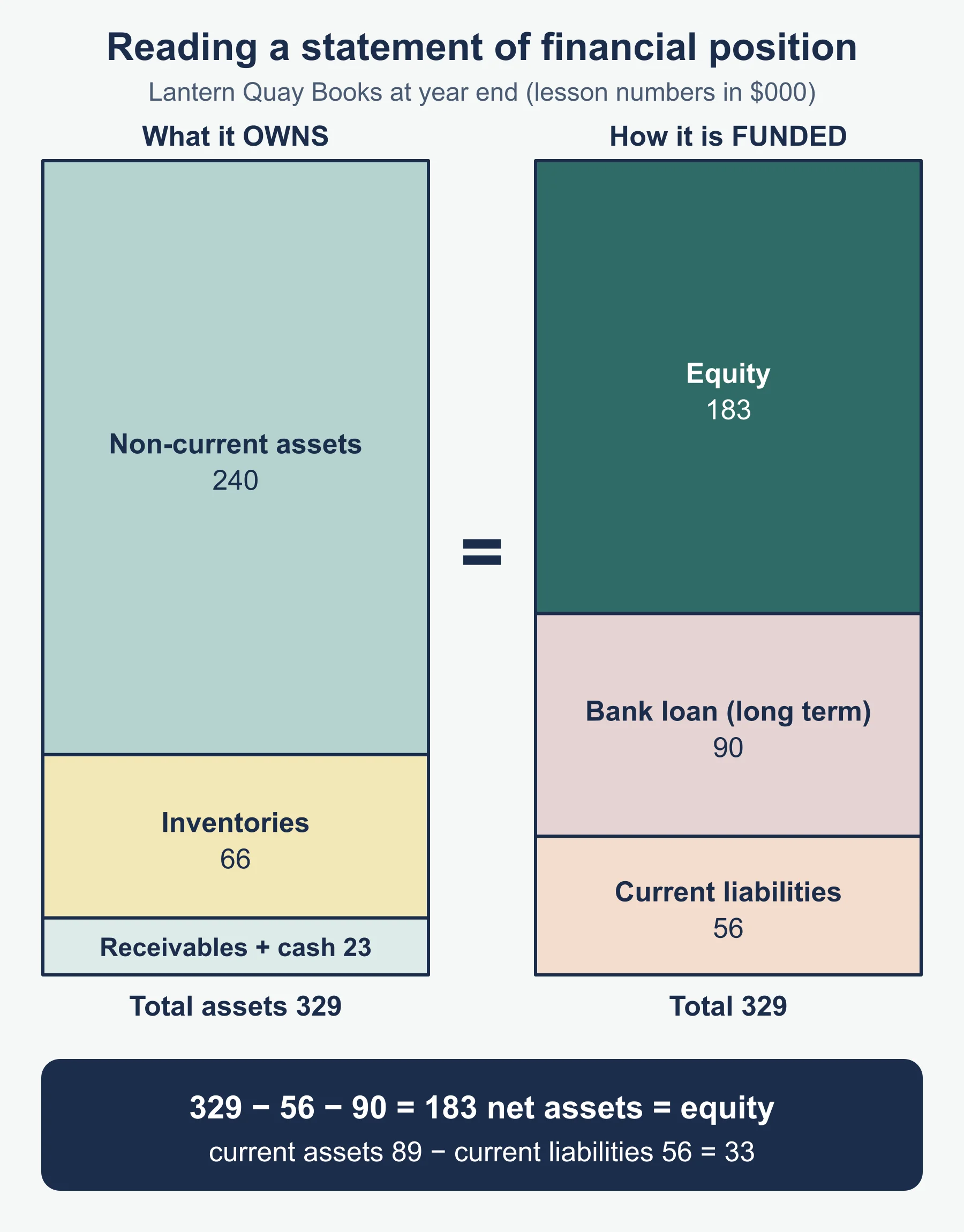
- What does it own? Compare non-current and current assets. Note how much of the current assets is inventories.
- How is it financed? Compare equity with non-current liabilities, and note any overdraft. A high share of borrowing means interest to pay.
- Can it pay short-term debts? Compare current assets with current liabilities. If much of the current assets is inventories, liquidity is weaker than it looks.
- Make the deduction. Support each statement with a figure.
Reminder example (Lantern Quay Books): capital employed 273 000, of which the loan is 33.0% and equity 67.0%. Working capital is 33 000, but 66 000 of the 89 000 current assets is inventories.
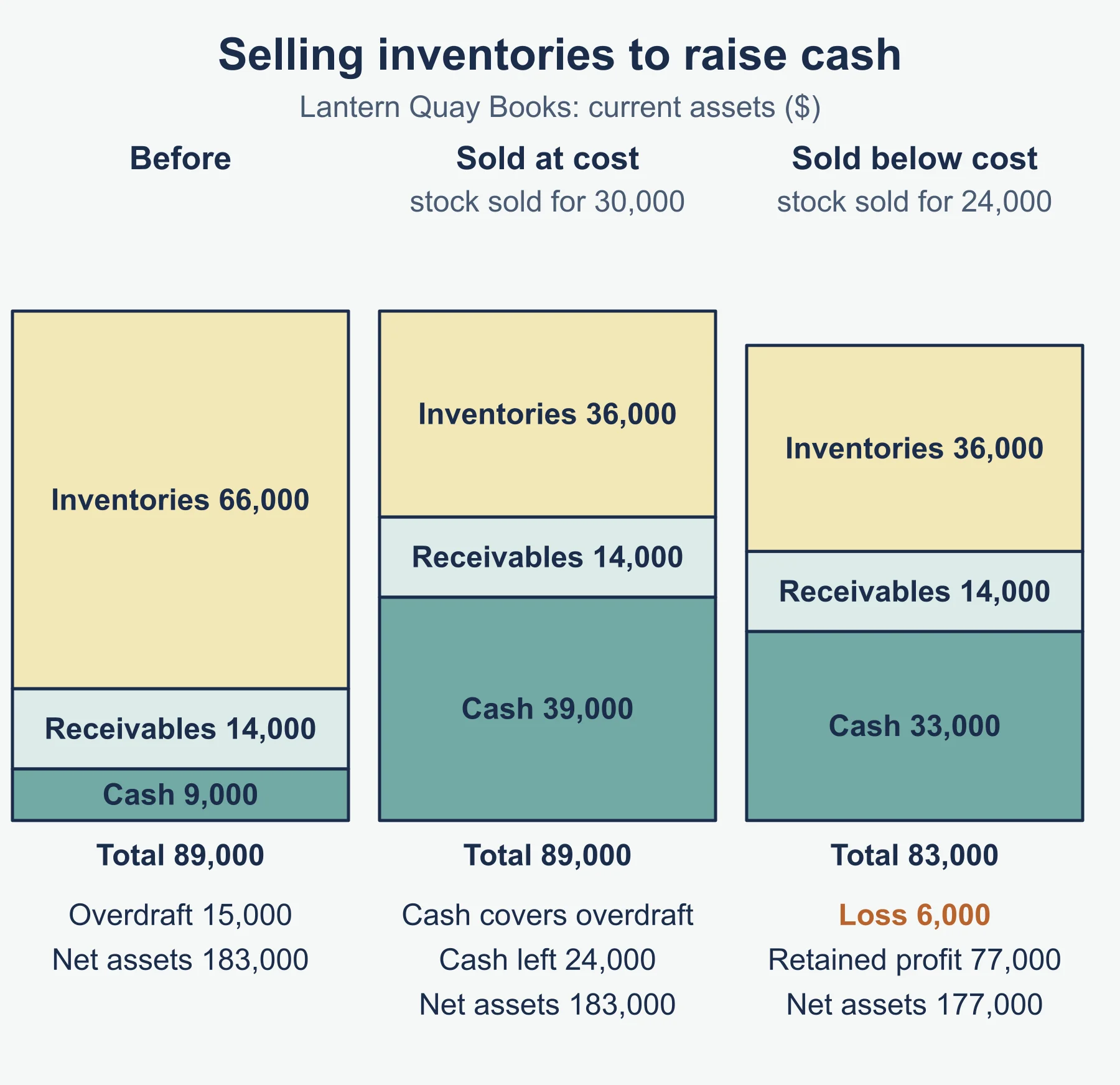
Selling inventories to raise finance
- Selling at cost for cash: inventories fall, cash rises by the same amount, and total current assets stay the same but are more liquid.
- The cash can reduce an overdraft.
- Selling below cost: less cash raised, and the loss reduces retained profit and equity.
- Risk: too little stock left to serve customers.
Answering exam questions on this topic
The syllabus says Paper 1 is short answer and data response, and Paper 2 is a case study, so expect both kinds of stimulus. The assessment objectives are knowledge, application, analysis and evaluation.
| Command word | What to do here |
|---|---|
| State / identify | Name the item or figure only, no explanation needed |
| Define | Give a precise meaning (for example retained profit: profit left in the business after tax and dividends) |
| Calculate | Show the line you are changing and the arithmetic |
| Explain | Give a reason, tied to the business described in the stimulus |
| Analyse | Follow a cause through to a consequence, using figures |
| Evaluate / justify | Weigh both sides, then reach a reasoned judgement |
A second worked reminder: reading a statement
A business has non-current assets of 200 000, current assets of 60 000, current liabilities of 80 000 and a non-current bank loan of 50 000.
- Net assets = 200 000 + 60 000 − 80 000 − 50 000 = 130 000, so equity is 130 000.
- Capital employed = 130 000 + 50 000 = 180 000. The loan provides 27.8% of it.
- Working capital = 60 000 − 80 000 = −20 000. Current liabilities exceed current assets, so short-term debts may be hard to pay on time.
- Deduction: the long-term finance looks sound, but the short-term position is weak. Selling some inventories or negotiating longer payment terms would help.
Must-know distinctions
| Pair | Difference |
|---|---|
| Revenue v profit | Revenue is sales income. Profit is what is left after costs |
| Gross profit v profit | Gross profit is before expenses. Profit is after expenses |
| Profit v retained profit | Retained profit is profit left after tax and dividends |
| Profit v cash | Profit is a calculation. Cash is money held |
| Current v non-current | Within a year, or longer than a year |
| Loan v equity | A loan must be repaid with interest. Equity is the owners’ money |
| Overdraft v bank loan | An overdraft is a current liability. A long-term loan is non-current |
Quick self-test
All questions use the invented Pennifold Bakery, or the figures stated.
- Revenue is 150 000 and cost of sales is 96 000. Calculate gross profit.
- Expenses are 38 000. Calculate profit.
- Tax is 3 000 and dividends are 5 000. Calculate retained profit.
- A different business has retained profit of 40 000 after tax of 6 000 and dividends of 9 000. Calculate its profit before tax and dividends.
- Classify a bank overdraft and a 15-year mortgage.
- A statement shows non-current assets 90 000, current assets 35 000, current liabilities 25 000 and non-current liabilities 20 000. Calculate net assets.
- For the same business, calculate capital employed and working capital.
- State two reasons profit is important to a private sector business.
- A firm sells goods worth 12 000 on credit and pays 7 000 of costs in cash in the same month. Calculate its profit and its change in cash for the month, assuming no customer has yet paid.
- Explain why selling inventories for less than cost reduces a business’s equity.
Answers
- 150 000 − 96 000 = 54 000
- 54 000 − 38 000 = 16 000
- 16 000 − 3 000 − 5 000 = 8 000
- 40 000 + 6 000 + 9 000 = 55 000
- Overdraft: current liability. 15-year mortgage: non-current liability.
- 90 000 + 35 000 − 25 000 − 20 000 = 80 000
- Capital employed = 80 000 + 20 000 = 100 000 (also 90 000 + 35 000 − 25 000). Working capital = 35 000 − 25 000 = 10 000.
- Any two: reward for the owners’ risk and enterprise; a source of finance through retained profit.
- Profit = 12 000 − 7 000 = 5 000. Change in cash = −7 000 (no cash received yet).
- The loss on sale lowers retained profit, which is part of equity, and the business also holds less stock.
Where marks are usually lost
- Calling cash “profit”, or stating that profitable firms cannot run out of cash.
- Starting retained profit from gross profit instead of from profit after tax and dividends.
- Putting an overdraft under non-current liabilities.
- Describing inventories as cash when judging liquidity.
- Writing “the business is doing well” with no figure to back it.
- Changing the wrong line when testing a proposal (for example adding a delivery cost to cost of sales instead of expenses).
- Forgetting to state the assumption behind a recommendation.
- Listing the parts of a statement without saying what they show about the business.
Frequently asked questions
What is retained profit? Retained profit is the profit kept in the business after tax and any dividends to owners have been paid. Start the calculation from profit, not from gross profit or revenue.
Is a bank overdraft a current or non-current liability? An overdraft is a current liability, because it is repayable in the short term, even though it comes from a bank like a loan.
Why do profit and cash differ? Profit is revenue minus costs, while cash is the money actually in the bank and till. They differ because of timing, such as credit sales not yet paid, and because some cash movements, such as buying a machine, are not part of profit.
What are the limits of an income statement when making a decision? It looks back at a past period, it does not show cash, and any forecast built from it rests on assumptions about future sales and costs.
Official syllabus
Cambridge O Level Business Studies 7115 syllabus for examination in 2026, published by Cambridge University Press & Assessment, sections 5.3 and 5.4.
Get free revision emails (optional)
Occasional emails with practice questions, worked explanations and links to free resources for the qualification and subjects you choose. No spam, and you can unsubscribe from any email. The free tools on this site never need an email.
Related resources
-
Study guides
O Level Business: Analysis of accounts (Cambridge 7115)
Study guide to profitability, liquidity, the five ratios and how users of accounts make decisions, for Cambridge O Level Business Studies 7115 section 5.5.
Business · Cambridge · O Level
Read guide -
Practice questions
O Level Business: Analysis of accounts (Cambridge 7115) – Practice Questions
Original questions with worked answers on profitability, liquidity, five ratios and users of accounts for Cambridge O Level Business Studies 7115 5.5.
Business · Cambridge · O Level
Try questions -
Revision notes
O Level Business: Analysis of accounts (Cambridge 7115) – Revision Notes
Condensed notes on profitability, liquidity, the five ratios and users of accounts, with a self-test, for Cambridge O Level Business Studies 7115 5.5.
Business · Cambridge · O Level
Revise topic
Related articles
-
teaching
A Level tuition in Dubai: Cambridge or Pearson Edexcel International A Level?
Schools in Dubai and Abu Dhabi teach either Cambridge International AS & A Level or Pearson Edexcel International A Level. How the two are structured, why it matters for tuition, and how online classes from Lahore work.
9 October 2026
-
curriculum guides
Choosing subjects at IGCSE and A Level
How subject choices at 14 and 16 affect university options later, and how to keep pathways open without overloading a timetable.
28 July 2026
Studying this with a teacher
Working through Business O LEVELS?
This page is free and stays free. If you would rather be taught it, Marlbridge runs Business classes one-to-one and in small groups of up to 15, online in your own time zone. The first trial class is free. WhatsApp replies within an hour (8am–11pm Pakistan time, every day); email the same day.
Cambridge Business teachers at Marlbridge

