
Study Guides
O Level Business: Income statements and Statement of financial position (Cambridge 7115)
Study guide to profit, income statements and the statement of financial position for Cambridge O Level Business 7115, with worked examples.
- Subject
- Business
- Level
- O LEVELS
- Topic
- Financial information and decisions
- Author
- Marlbridge Academic Team
- Updated
- Reviewed by
- Salman Ahmad (what this means)
Aligned to Cambridge O Level Business (7115), For examination in 2026. Official specification .
Syllabus page (what it covers and how it is assessed): Cambridge O Level Business.
Syllabus points this page covers
7115
- 5.3 Income statements
- 5.4 Statement of financial position
Found an error? Report a correction.
Need help with this topic? Request a free trial class for O Level Business (7115).
This guide is aligned to the Cambridge O Level Business Studies 7115 syllabus for examination in 2026. It covers syllabus sections 5.3 (Income statements) and 5.4 (Statement of financial position), both part of unit 5, Financial information and decisions. The syllabus says that constructing income statements and statements of financial position will not be assessed. What you need is the ability to read them, explain their parts and use them to support a decision.
Related pages: the Cambridge O Level Business hub, the printable checklist, the revision notes and the practice set. The existing financial information and decisions practice set covers ratios and cash-flow forecasts, so this guide does not repeat them. To find your weak spots first, try the free 10-minute diagnostics.
What this unit covers
| Section | What you must be able to do |
|---|---|
| 5.3.1 | Explain how a profit is made, why profit matters to private sector businesses, and the difference between profit and cash |
| 5.3.2 | Describe the main features of an income statement (revenue, cost of sales, gross profit, profit, retained profit) and use a simple one to make decisions |
| 5.4.1 | Describe the main classifications of assets and liabilities, with examples |
| 5.4.2 | Interpret a simple statement of financial position and make deductions, such as how the business finances its activities, what assets it owns, and the effect of selling inventories to raise finance |
All figures below are in dollars and all businesses are invented.
5.3.1 Profit
How a profit is made
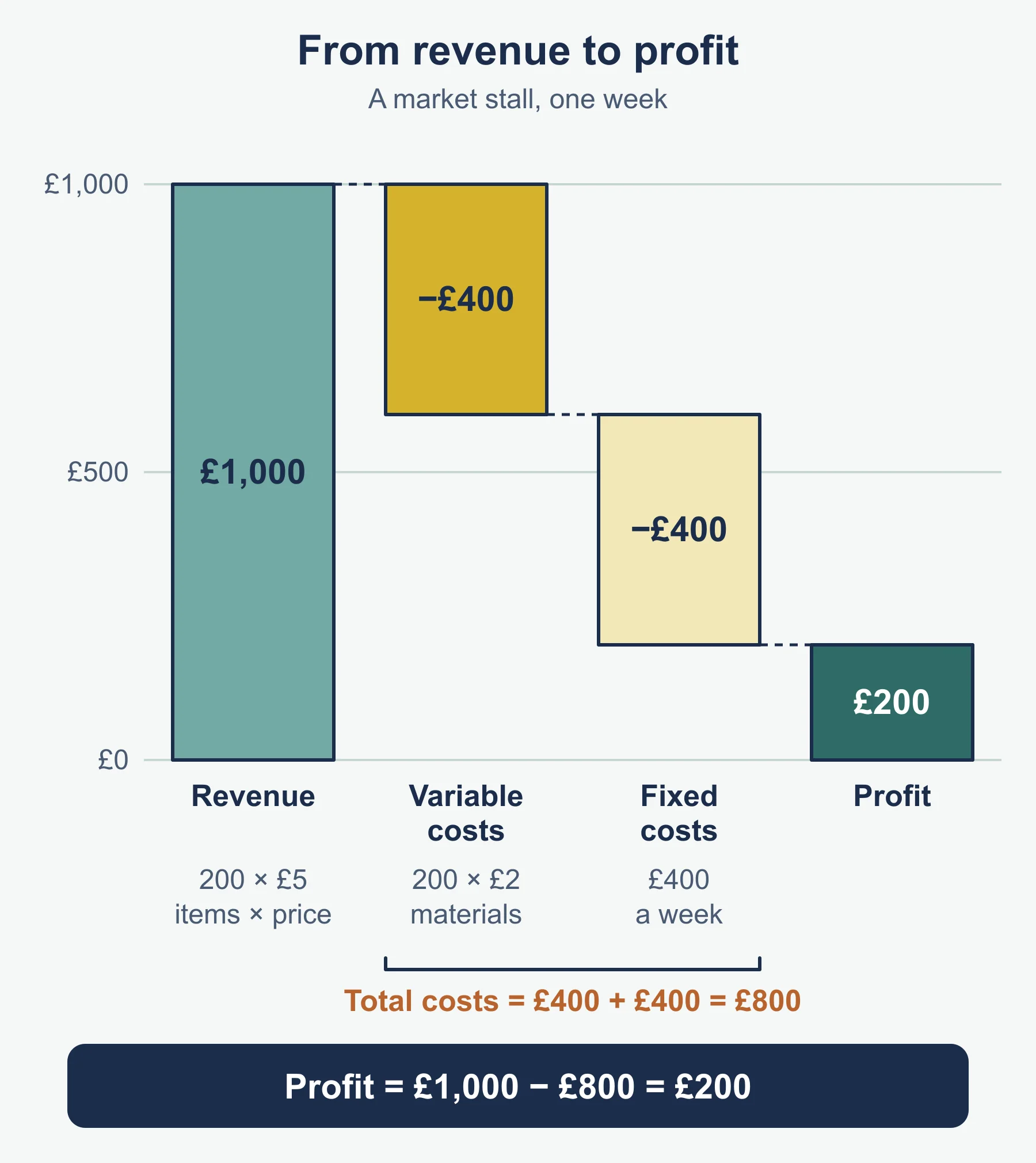
A business makes a profit when its revenue (the income from selling goods or services) is greater than its total costs. If costs are greater than revenue, it makes a loss.
Profit = revenue − total costs
Profit can rise if revenue rises, if costs fall, or both. This is why the decision examples later in this guide change prices and costs and then look at the new profit.
Why profit is important to private sector businesses
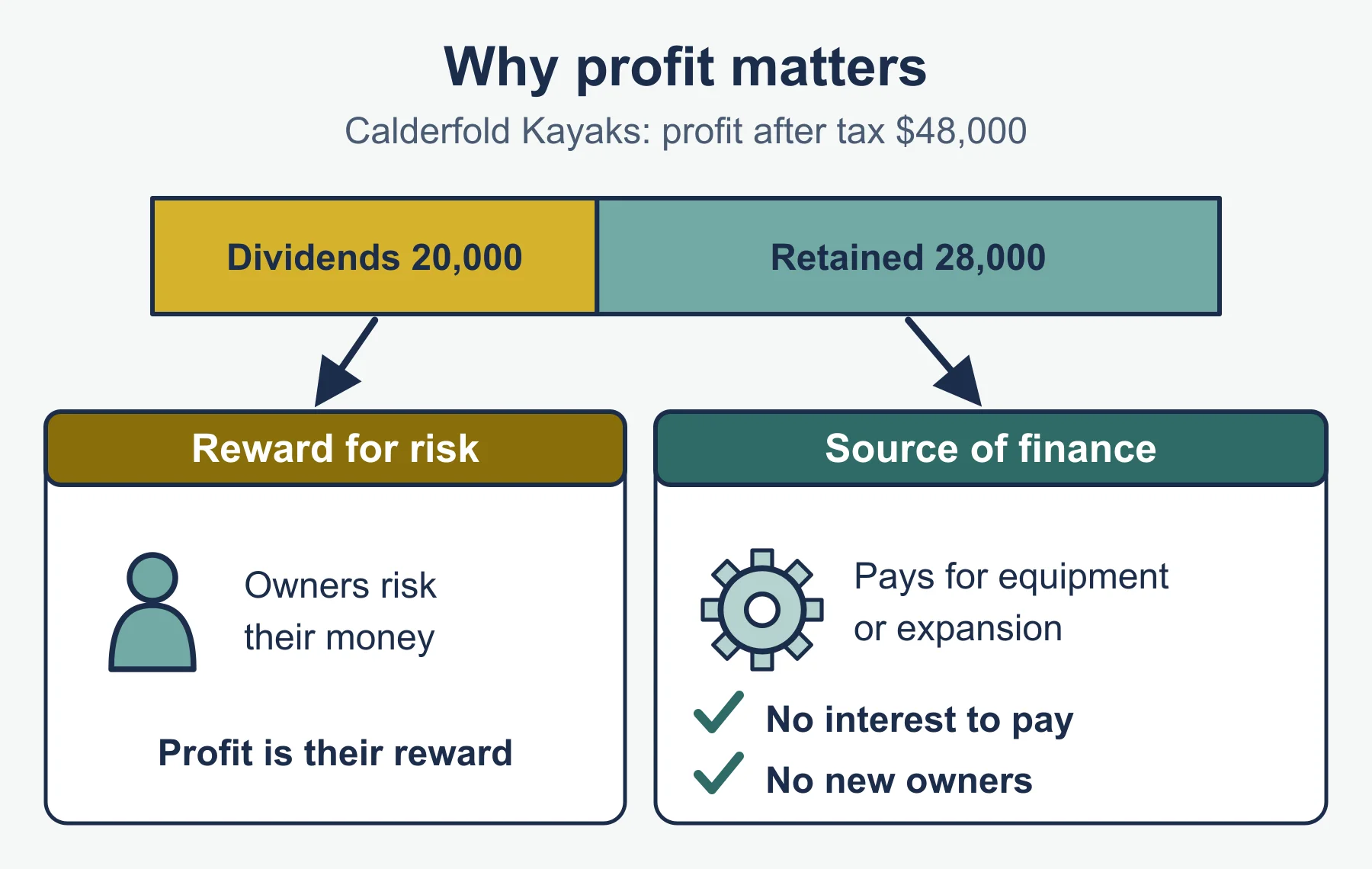
- Reward for risk-taking and enterprise. Owners put money in and accept the risk of losing it. Profit is their reward, and the hope of it is why people start businesses.
- Source of finance. Profit that is not paid out stays in the business as retained profit. It can pay for new equipment or expansion without borrowing, so there is no interest to pay and no new owners to share control with.
Profit and cash are different
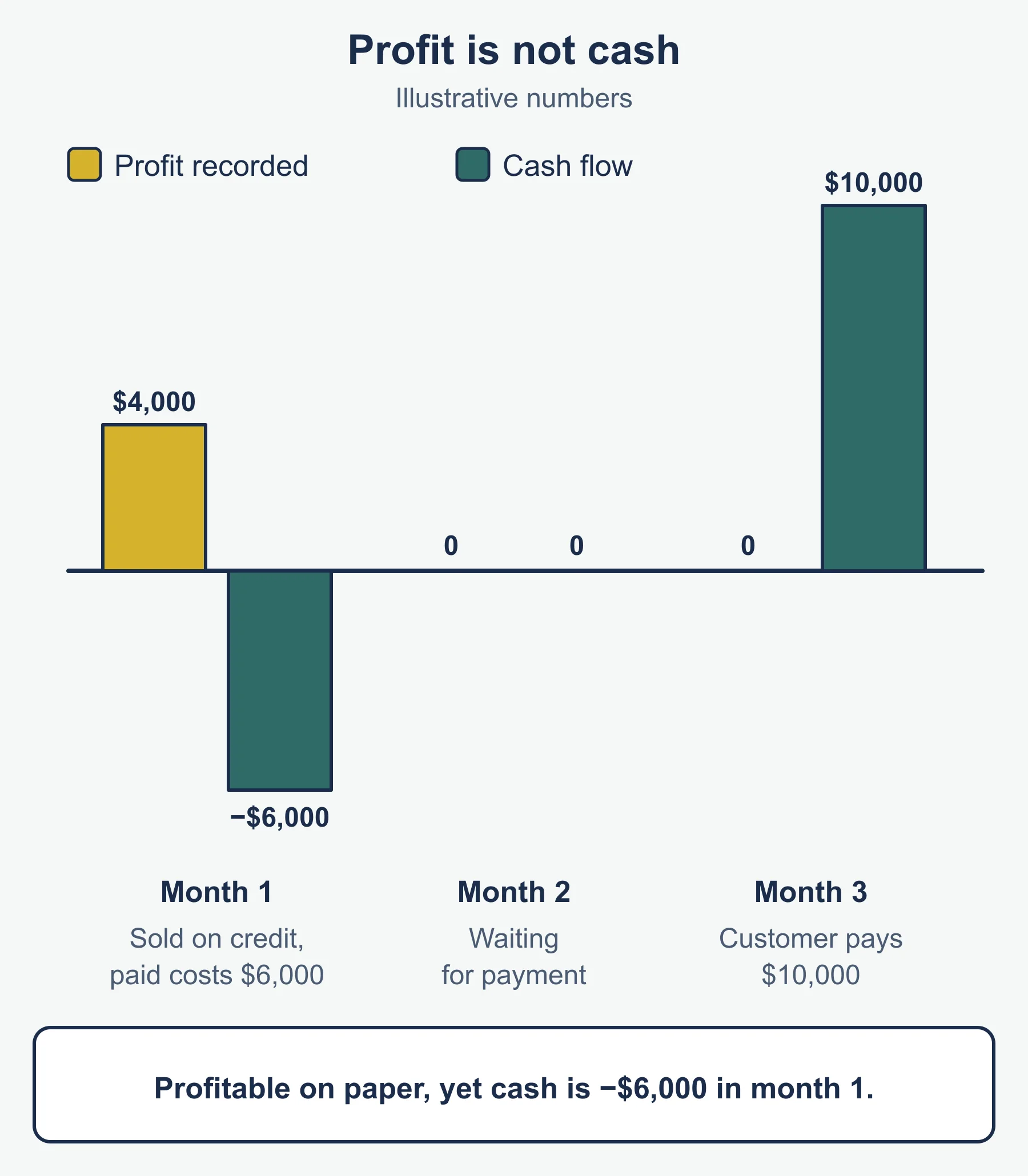
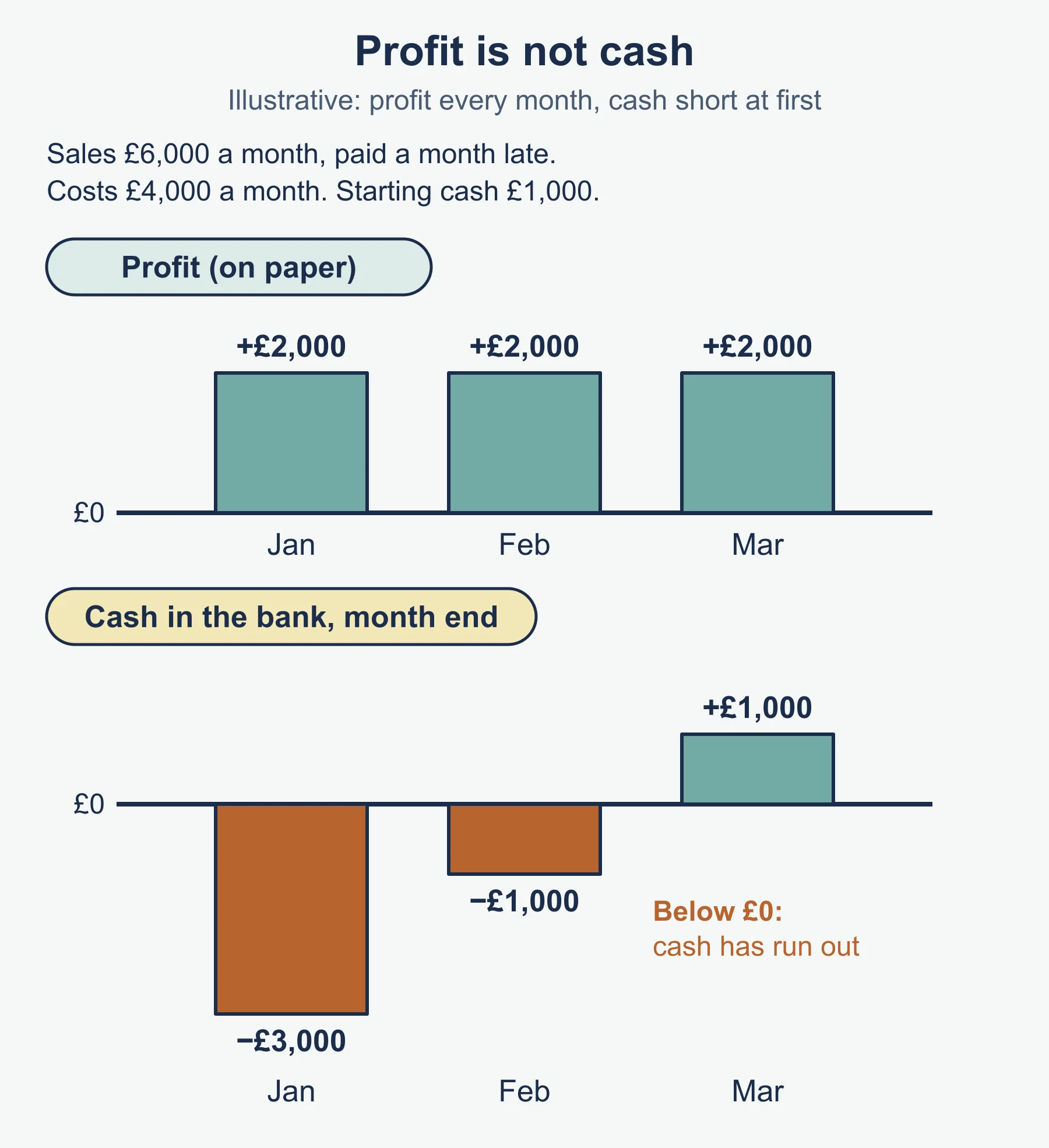
Profit measures revenue minus costs. Cash is the money actually in the bank and till. They differ because of timing and because some cash movements are not part of profit.
Worked example: Vellam Bikes, one quarter
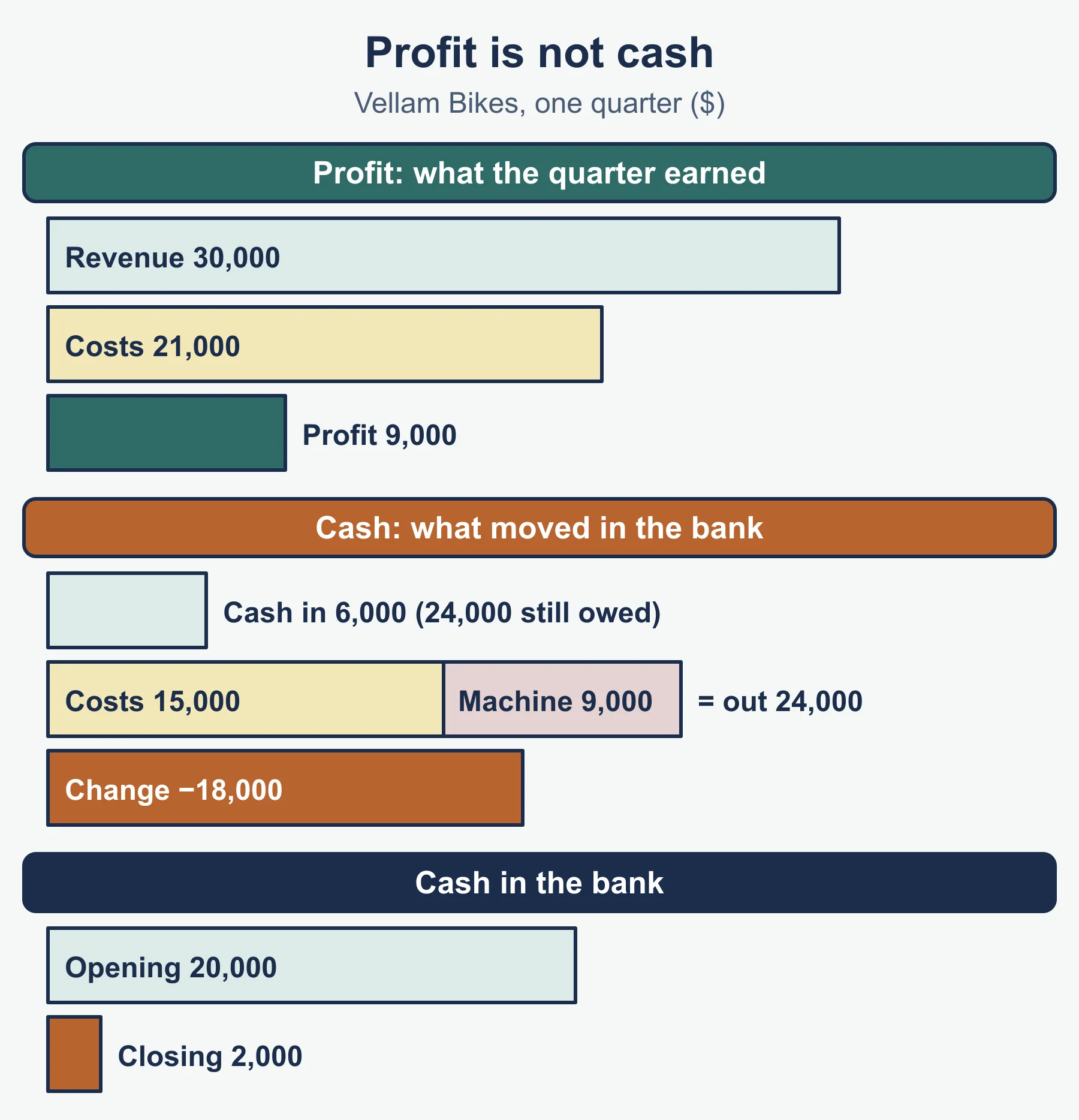
- Revenue is 30 000, but only 6 000 was paid in cash. The other 24 000 was sold on credit and is still owed by customers.
- Costs for the quarter are 21 000, of which 15 000 was paid in cash.
- The owner also paid 9 000 cash for a new workshop machine.
Profit = 30 000 − 21 000 = 9 000.
Cash in = 6 000. Cash out = 15 000 + 9 000 = 24 000. Change in cash = 6 000 − 24 000 = −18 000.
So the business is profitable but its cash has fallen. With an opening balance of 20 000, cash at the end is only 2 000. Even a profitable business may run short of cash when customers pay late, when it buys assets for cash, or when it repays loans. Taking out a loan raises cash but is not profit.
5.3.2 Income statements
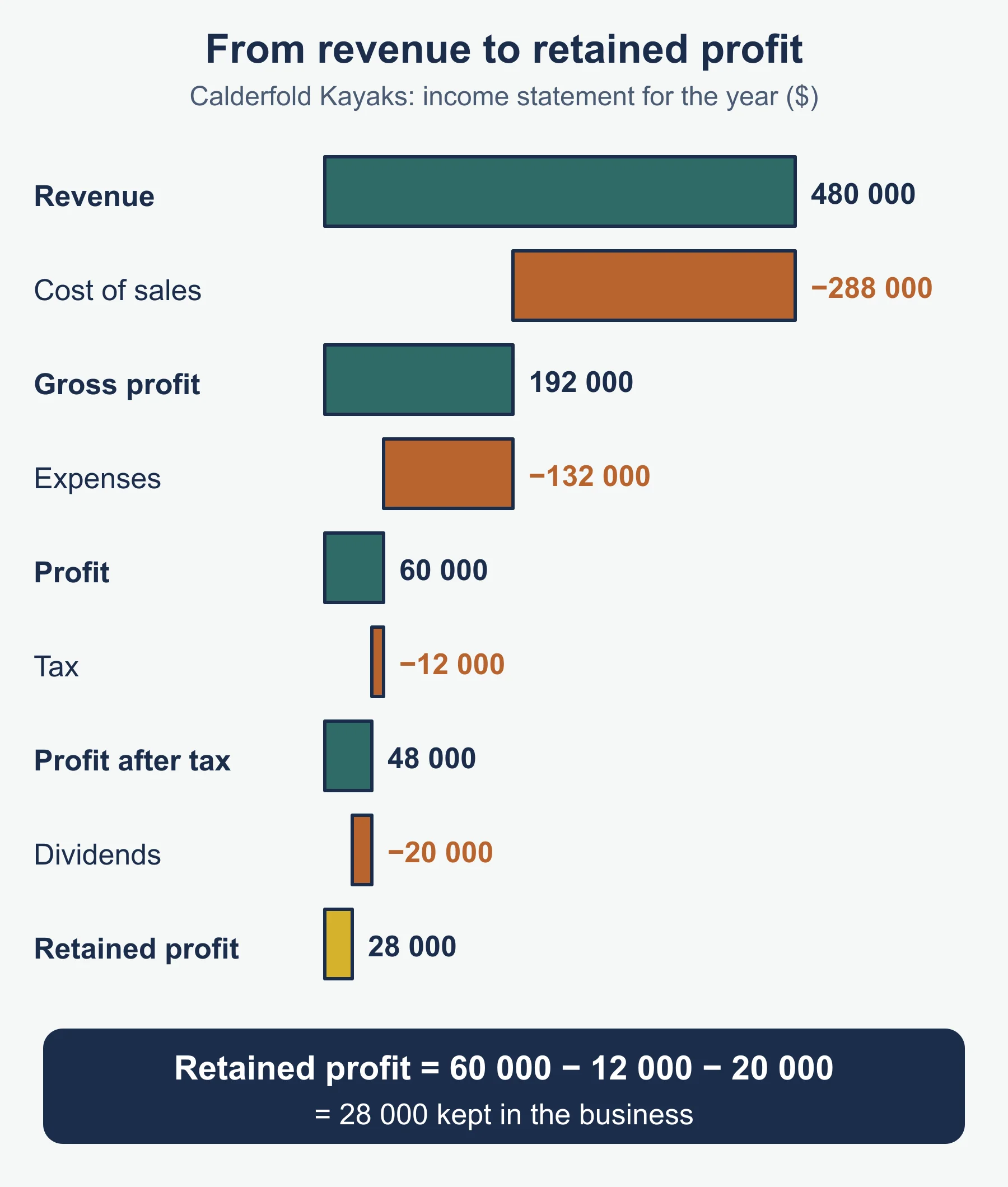
An income statement shows how a business’s profit was made over a period, usually a year. Here is the layout in the standard form for a limited company. Constructing one is not assessed, so concentrate on what each line means.
Calderfold Kayaks, income statement for the year
| Line | Amount |
|---|---|
| Revenue | 480 000 |
| Cost of sales | (288 000) |
| Gross profit | 192 000 |
| Expenses | (132 000) |
| Profit | 60 000 |
| Tax | (12 000) |
| Profit after tax | 48 000 |
| Dividends | (20 000) |
| Retained profit | 28 000 |
Main features
- Revenue: the value of goods or services sold in the period (price × quantity sold).
- Cost of sales: the direct cost of the goods sold, such as materials and bought-in stock.
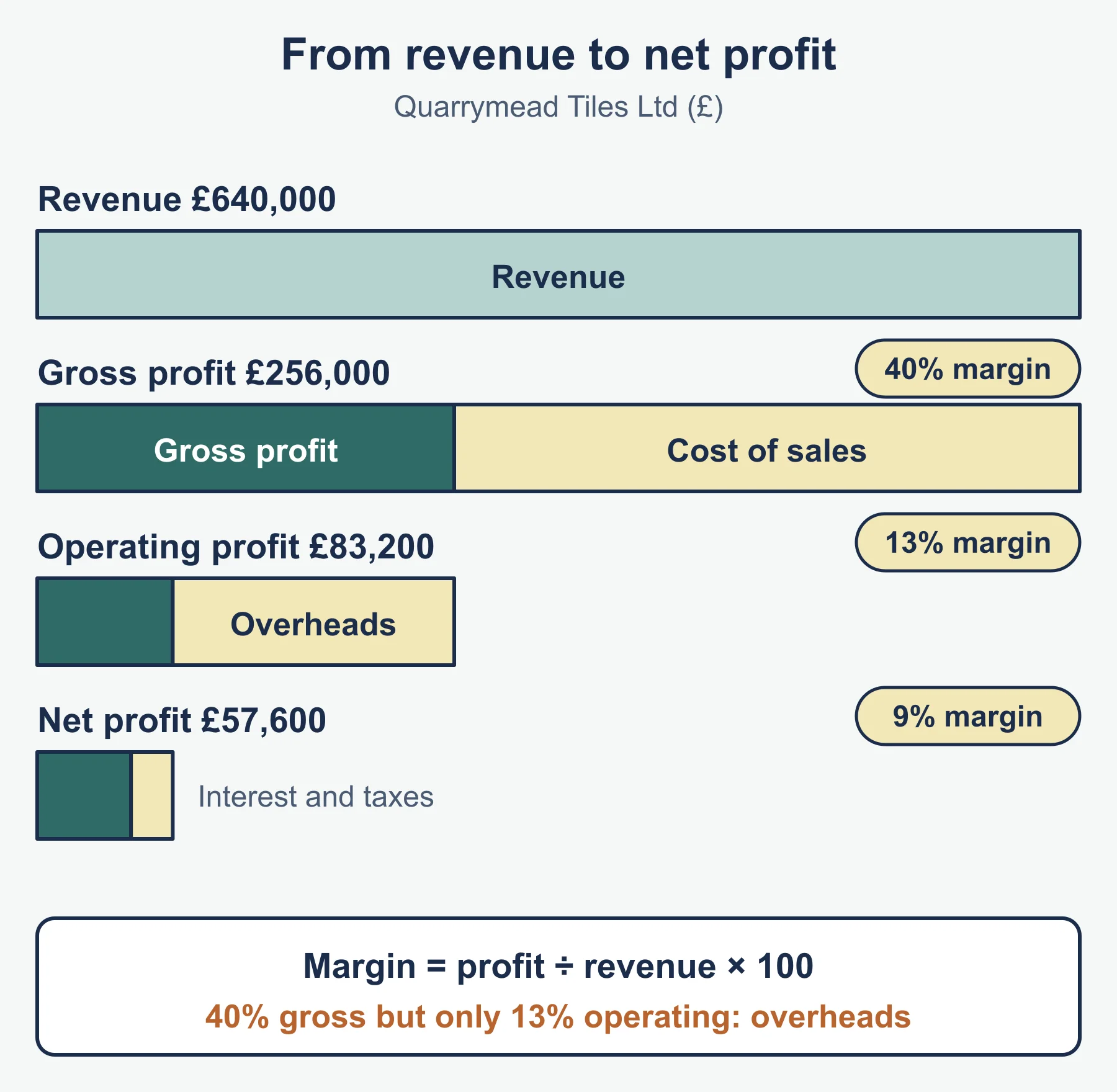
- Gross profit = revenue − cost of sales. It shows what is left to cover running costs. Here, 480 000 − 288 000 = 192 000.
- Expenses (overheads): costs not tied directly to each item sold, such as rent, wages of office staff, advertising and insurance.
- Profit = gross profit − expenses. Here, 192 000 − 132 000 = 60 000. The syllabus uses the word “profit” for this line. Some statements add other labels, such as profit before tax, so check the line names in the data you are given.
- Retained profit: the profit kept in the business after tax and after any dividends paid to owners. Here, 60 000 − 12 000 − 20 000 = 28 000. The syllabus lists retained profit as a main feature, and the tax and dividend lines shown here are the standard way of getting to it. Dividends and tax are shown in the standard form, not as the syllabus’s own wording.
Using an income statement to make a decision
Questions give you a simple statement and a proposal. Work out the new figures line by line, then compare profit.
Option A: raise prices by 5%, with the same number of kayaks sold
- New revenue = 480 000 × 1.05 = 504 000
- Cost of sales stays at 288 000, so gross profit = 216 000
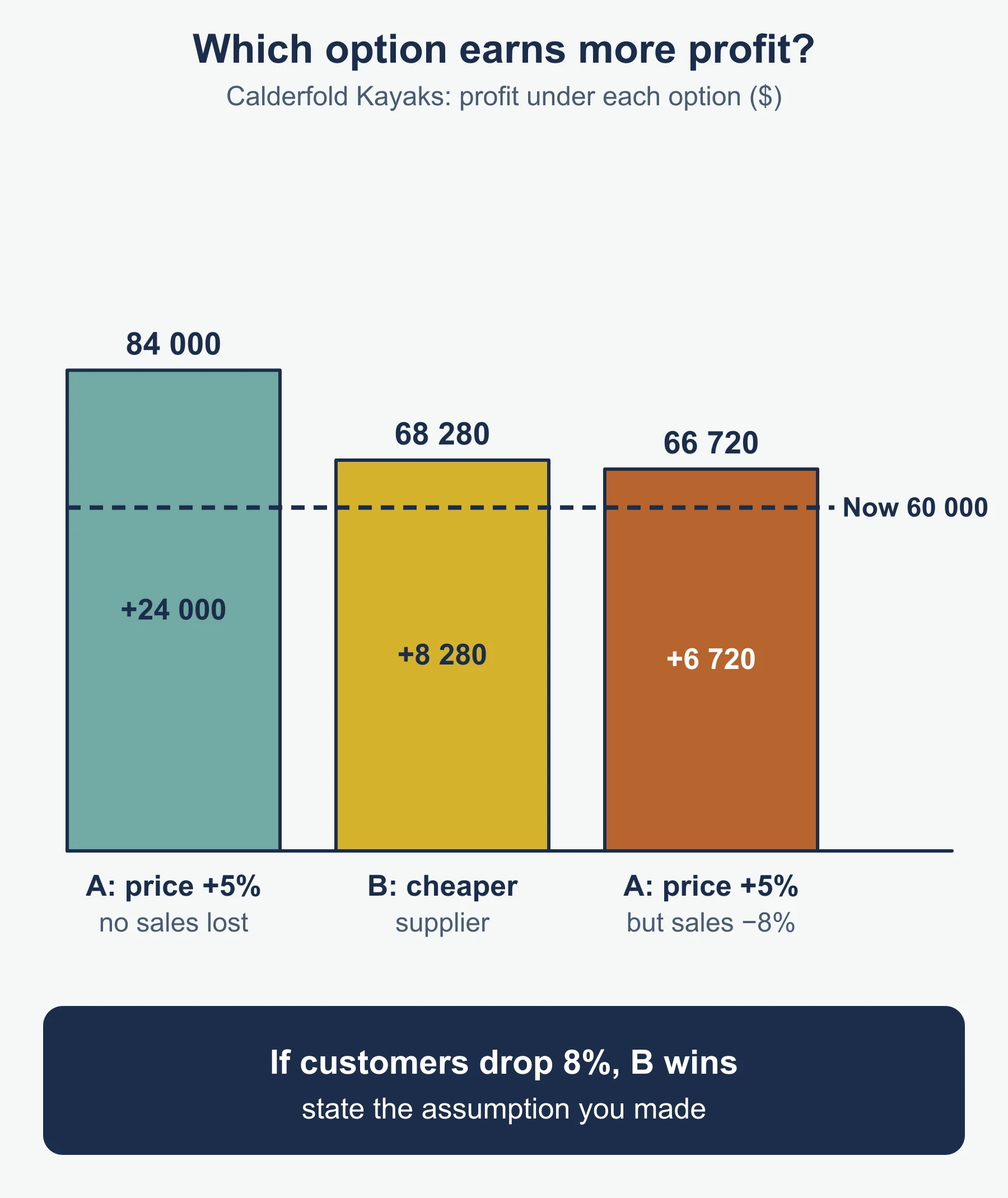
- Expenses stay at 132 000, so profit = 84 000, up by 24 000 (a 40% rise on 60 000)
Option B: change supplier, cutting cost of sales by 6% but adding 9 000 to expenses for delivery
- New cost of sales = 288 000 × 0.94 = 270 720, so gross profit = 209 280
- Expenses = 132 000 + 9 000 = 141 000, so profit = 68 280, up by 8 280
On these numbers, Option A is better. But Option A assumes no customers are lost. Suppose a 5% price rise cuts the number of kayaks sold by 8%:
- Revenue = 480 000 × 1.05 × 0.92 = 463 680
- Cost of sales falls with volume: 288 000 × 0.92 = 264 960
- Gross profit = 198 720, and profit = 198 720 − 132 000 = 66 720, up by only 6 720
Now Option B (68 280) is slightly ahead. A good evaluation says which option is better, shows the figures, and states the assumption that could change the answer (here, how customers react to the price rise). It might also mention that Option B depends on the supplier’s quality and reliability.
Limits of income statements in decisions: they look backwards at a past period; they do not show cash; and forecasts built from them rest on assumptions about sales and costs.
5.4 Statement of financial position
A statement of financial position shows what a business owns (assets), what it owes (liabilities) and how it is financed, on one date.
5.4.1 Classifications, with examples
| Classification | Meaning | Examples |
|---|---|---|
| Non-current assets | Owned for use over more than one year | Premises, machinery, vehicles, fixtures |
| Current assets | Expected to become cash within a year | Inventories (stock), receivables (debtors), cash |
| Current liabilities | Must be paid within a year | Payables (creditors), bank overdraft |
| Non-current liabilities | Repayable after more than a year | Bank loan, mortgage |
| Equity (owners’ funds) | Money owners have put in or left in | Share capital, retained profit |
The syllabus uses “debtors” in its cash-flow section. Receivables and payables are the usual statement-of-financial-position names for debtors and creditors, so treat them as the same thing.
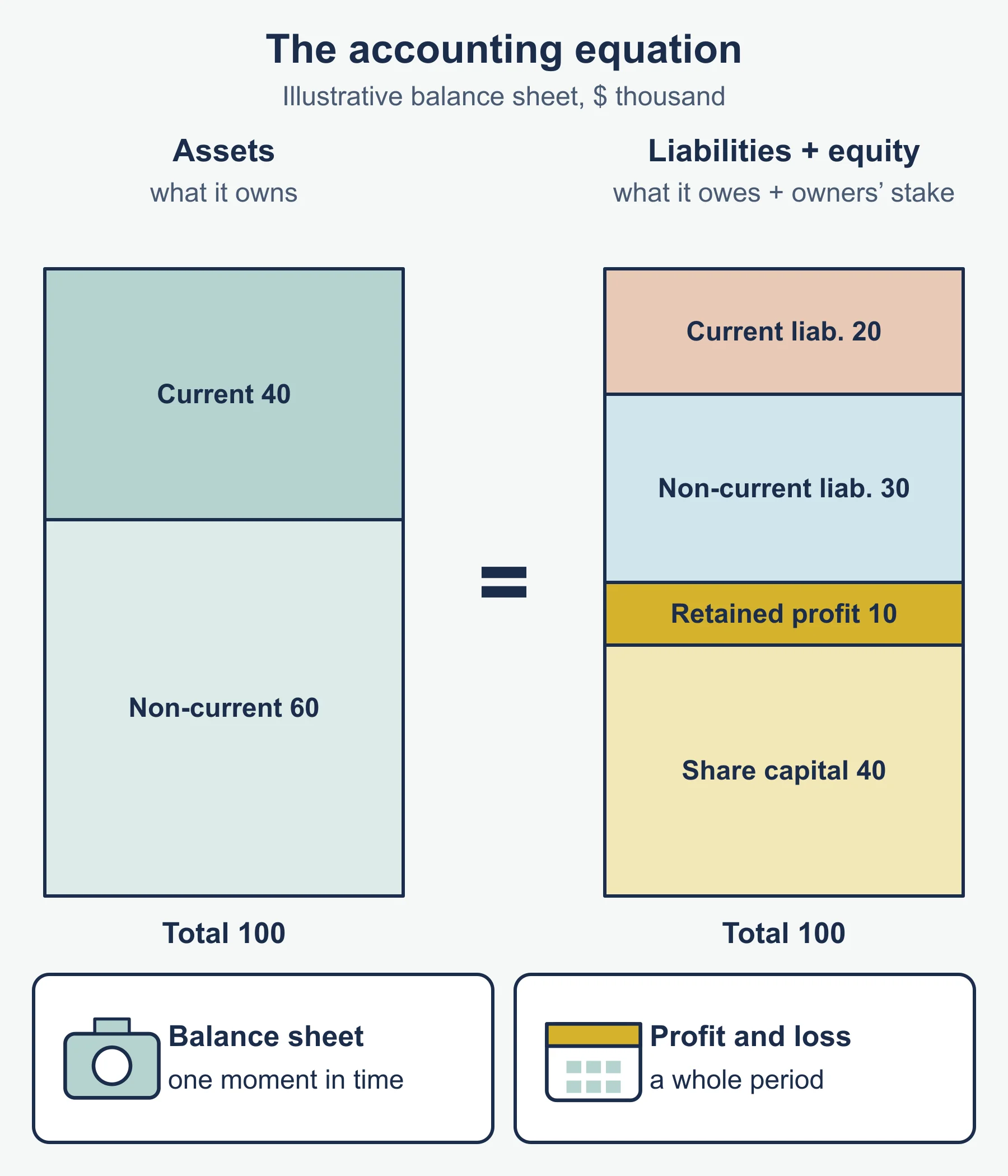
The shape of a statement
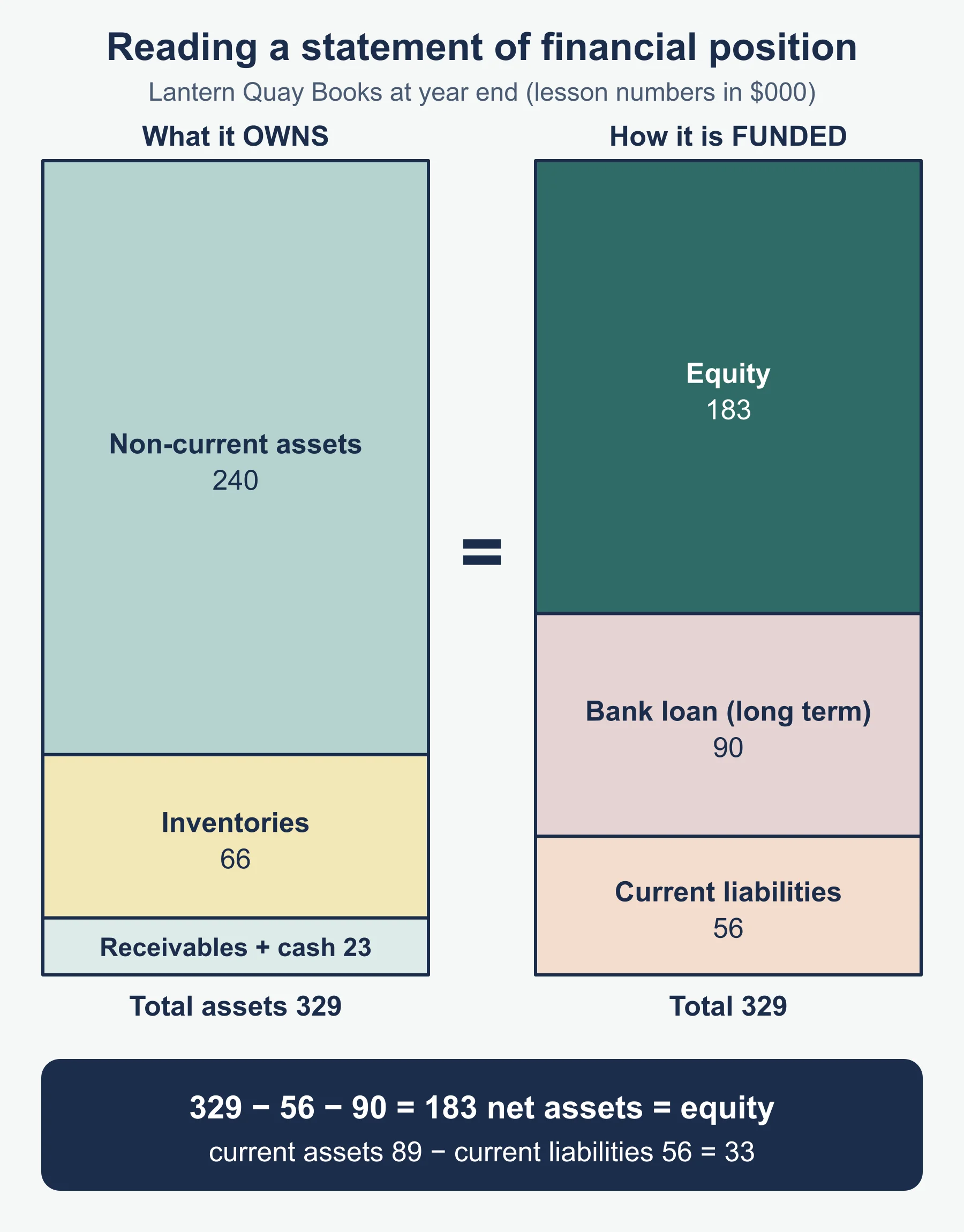
Total assets − current liabilities − non-current liabilities = net assets = equity.
Both sides always balance, because what the business owns is paid for by owners or by lenders.
Lantern Quay Books, statement of financial position at year end
| Item | Amount |
|---|---|
| Premises | 180 000 |
| Fixtures | 42 000 |
| Delivery van | 18 000 |
| Non-current assets | 240 000 |
| Inventories | 66 000 |
| Receivables | 14 000 |
| Cash | 9 000 |
| Current assets | 89 000 |
| Total assets | 329 000 |
| Payables | 41 000 |
| Bank overdraft | 15 000 |
| Current liabilities | 56 000 |
| Bank loan (non-current liability) | 90 000 |
| Net assets | 183 000 |
| Share capital | 100 000 |
| Retained profit | 83 000 |
| Equity | 183 000 |
5.4.2 Interpreting it
Ask three questions of any statement.
1. What does the business own? Non-current assets are 240 000, mostly premises. Current assets are 89 000, and most of that (66 000) is inventories, which are not cash until they are sold.
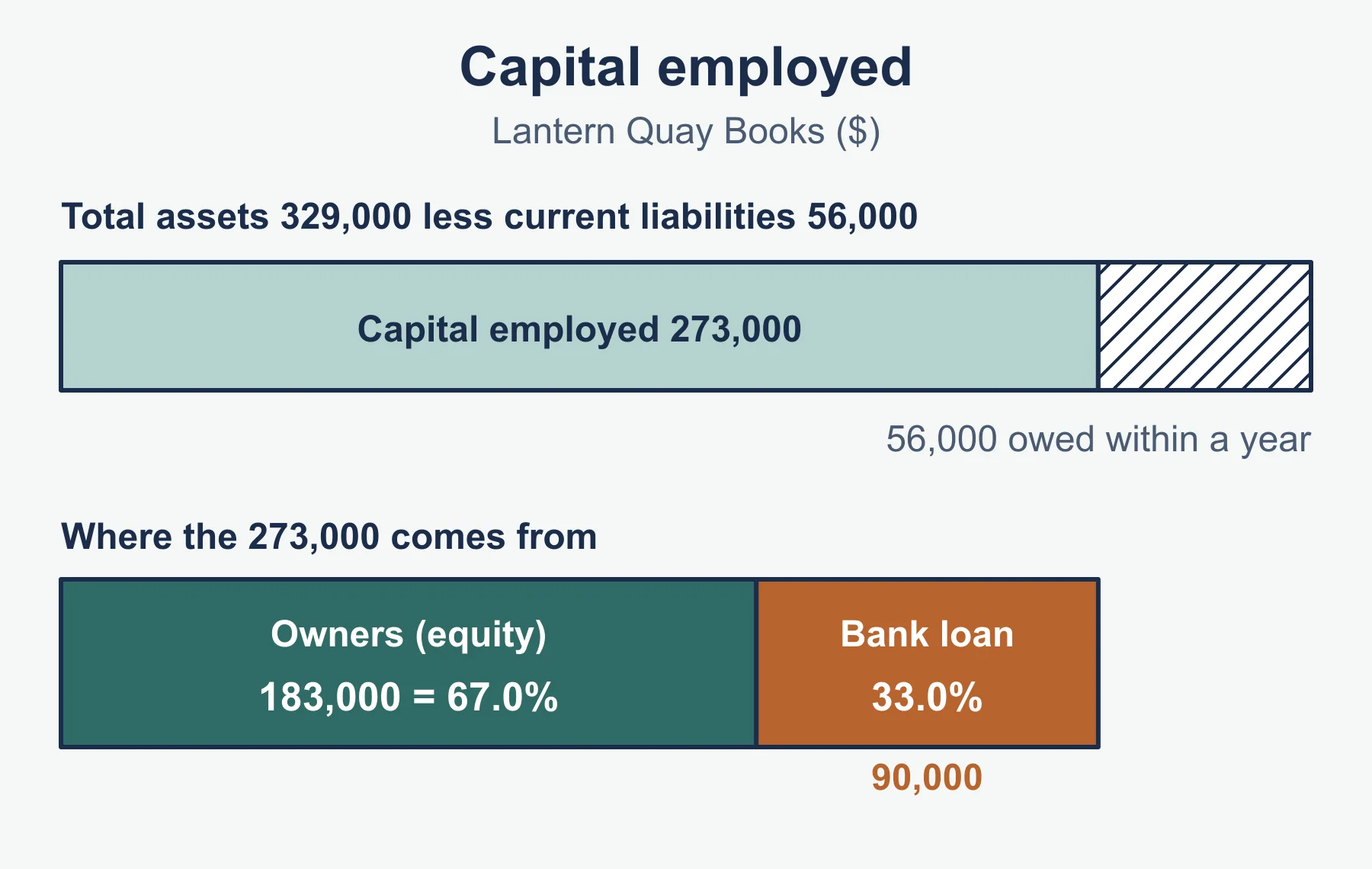
2. How is it financed? Capital employed here is equity plus non-current liabilities: 183 000 + 90 000 = 273 000. This is the standard form, and it equals total assets minus current liabilities (329 000 − 56 000). The loan provides 90 000 ÷ 273 000 = 33.0% of the long-term funds and the owners provide 67.0%. The business also owes a short-term overdraft of 15 000. A business financed mainly by borrowing has interest to pay whatever its profit.
3. Can it meet its short-term debts? Current assets (89 000) exceed current liabilities (56 000), so there is working capital of 33 000. Take away the inventories, though, and only 23 000 of current assets (receivables and cash) are available to cover 56 000 of debts. Lantern Quay depends on selling its stock.
Selling inventories to raise finance
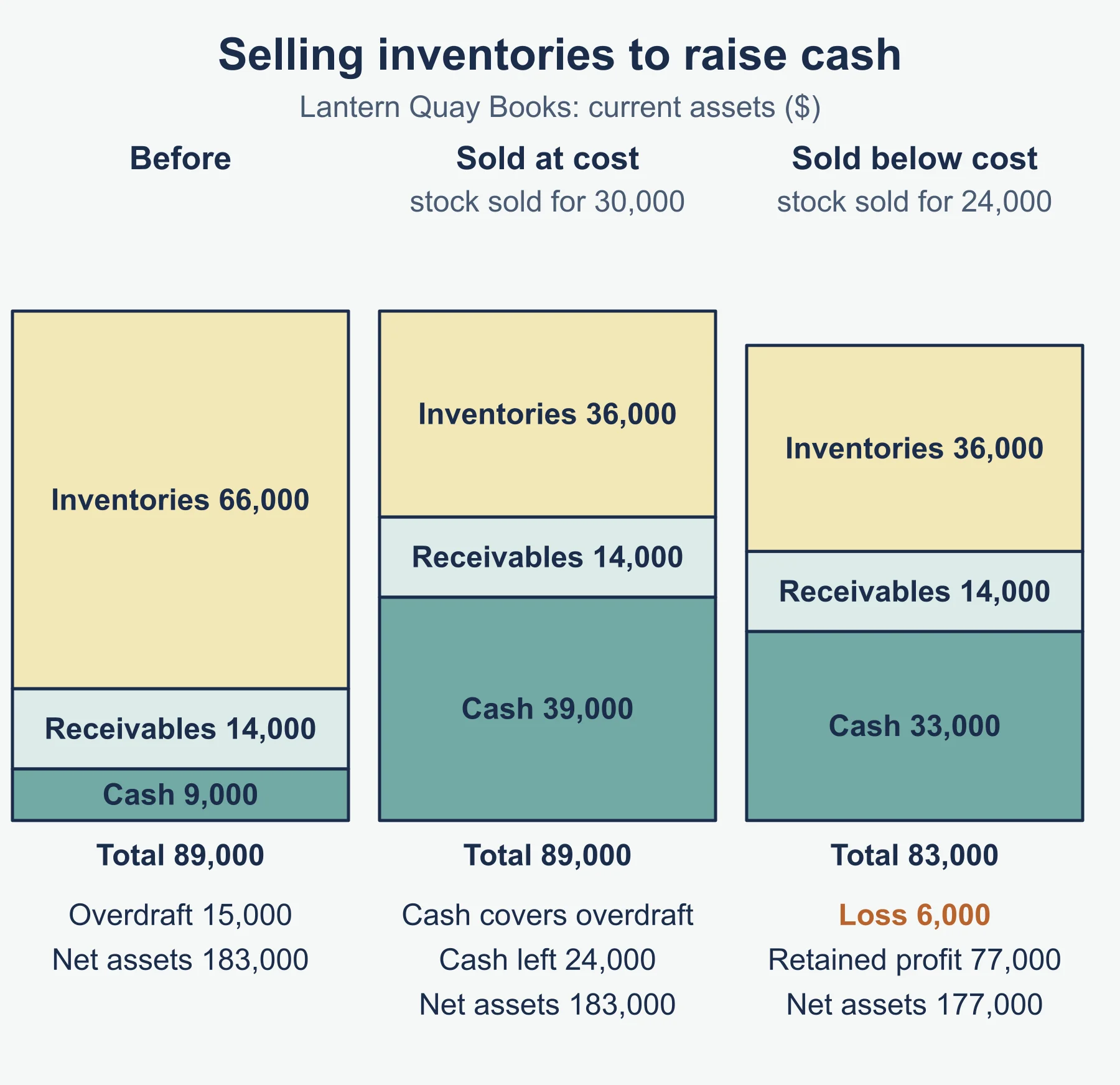
A business short of cash can sell inventories. Suppose Lantern Quay sells 30 000 of its inventories at cost for cash:
- Cash rises from 9 000 to 39 000 and inventories fall from 66 000 to 36 000.
- Current assets stay at 89 000 but are more liquid. The overdraft of 15 000 can be cleared, leaving cash of 24 000.
If the stock has to be sold for less than cost, say 24 000 for 30 000 of stock, the business raises less cash (cash up by 24 000) and makes a loss of 6 000, so retained profit falls to 77 000 and net assets to 177 000. Selling off inventories may also leave too little to serve customers.
Common errors
- Treating profit and cash as the same thing, or saying a profitable business cannot have cash problems.
- Mixing up revenue and profit, or gross profit and profit.
- Classing an overdraft as a non-current liability. It is borrowing for the short term, so it is a current liability.
- Saying inventories are cash. They are a current asset that only becomes cash when sold.
- Listing a loan under assets. A loan is a liability, though the cash it provides is an asset.
- Giving a decision without figures, or without saying what you assumed.
Frequently asked questions
Do you have to construct an income statement in Cambridge O Level Business 7115? No. Constructing an income statement is not assessed, so concentrate on what each line means and on using the figures to make a decision.
What is the difference between gross profit and profit? Gross profit is revenue minus cost of sales. Profit is gross profit minus expenses, the overheads such as rent, office wages, advertising and insurance.
Are receivables and payables the same as debtors and creditors? Yes. Receivables and payables are the usual statement-of-financial-position names for debtors and creditors, so treat them as the same thing.
How can selling inventories help a business short of cash? Selling inventories turns them into cash, which can clear short-term debts such as an overdraft. If the stock has to be sold for less than cost, less cash is raised and the business makes a loss on the sale.
Are inventories the same as cash? No. Inventories are a current asset that only becomes cash when the goods are sold.
Next steps
Try the practice set, then check yourself against the revision notes.
Official syllabus
Cambridge O Level Business Studies 7115 syllabus for examination in 2026, published by Cambridge University Press & Assessment, sections 5.3 and 5.4.
Get free revision emails (optional)
Occasional emails with practice questions, worked explanations and links to free resources for the qualification and subjects you choose. No spam, and you can unsubscribe from any email. The free tools on this site never need an email.
Related resources
-
Practice questions
O Level Business: Income statements and Statement of financial position (Cambridge 7115) – Practice Questions
Original practice questions with worked answers on profit, income statements and the statement of financial position for Cambridge O Level Business 7115.
Business · Cambridge · O Level
Try questions -
Revision notes
O Level Business: Income statements and Statement of financial position (Cambridge 7115) – Revision Notes
Condensed revision notes on profit, income statements and the statement of financial position for Cambridge O Level Business 7115, with a self-test.
Business · Cambridge · O Level
Revise topic -
Study guides
O Level Business: Analysis of accounts (Cambridge 7115)
Study guide to profitability, liquidity, the five ratios and how users of accounts make decisions, for Cambridge O Level Business Studies 7115 section 5.5.
Business · Cambridge · O Level
Read guide
Related articles
-
teaching
A Level tuition in Dubai: Cambridge or Pearson Edexcel International A Level?
Schools in Dubai and Abu Dhabi teach either Cambridge International AS & A Level or Pearson Edexcel International A Level. How the two are structured, why it matters for tuition, and how online classes from Lahore work.
9 October 2026
-
curriculum guides
Choosing subjects at IGCSE and A Level
How subject choices at 14 and 16 affect university options later, and how to keep pathways open without overloading a timetable.
28 July 2026
Studying this with a teacher
Working through Business O LEVELS?
This page is free and stays free. If you would rather be taught it, Marlbridge runs Business classes one-to-one and in small groups of up to 15, online in your own time zone. The first trial class is free. WhatsApp replies within an hour (8am–11pm Pakistan time, every day); email the same day.
Cambridge Business teachers at Marlbridge

