
Revision Notes
OCR A Level Business: Market forces, physical and non-physical markets, dominance (H431) – Revision Notes
Condensed OCR A Level Business H431 revision notes on market forces, physical and non-physical markets, competition, mergers and market dominance.
- Subject
- Business
- Level
- A LEVELS
- Topic
- External influences facing businesses
- Author
- Marlbridge Academic Team
- Updated
- Reviewed by
- Salman Ahmad (what this means)
Aligned to OCR A Level Business (H431), Version 2.1 (January 2026), for first assessment in 2017; final assessment summer 2027. Official specification .
Syllabus page (what it covers and how it is assessed): OCR A Level Business.
Syllabus points this page covers
H431
- 2.3 Market forces, physical and non-physical markets, competition and market dominance
Found an error? Report a correction.
Need help with this topic? Request a free trial class for A Level Business (H431).
These notes condense the External influences content on market forces, physical and non-physical markets, competition and market dominance in the OCR A Level Business (H431) specification, Version 2.1 (January 2026). For full explanations and worked examples, read the study guide, then test yourself with the practice questions.
Related pages: the wider External influences revision notes, the External influences practice set, the course hub, the printable checklist and the free diagnostics.
Key definitions
| Term | Meaning |
|---|---|
| Market force | The pressure of demand, supply and competition on price and output |
| Dynamic market | A market that keeps changing: tastes, rivals, technology, prices |
| Competition | Rivalry between businesses for the same customers |
| Physical market | Buyers and sellers meet in a place |
| Non-physical market | No shared place; dealing by website, app, phone or other digital means |
| Online | Trading over the internet |
| Digital | Wider than online: includes digital products and app-based trading |
| Barrier to entry | Any obstacle that stops new firms entering a market easily |
| Barrier to exit | Anything that makes it costly to leave a market |
| Market dominance | One firm (or very few) with a very large share and real power over price, output and rivals |
| Monopoly | A single supplier in a market (in practice, a very large share) |
| Organic growth | Growth from the firm’s own resources |
| Merger | Two firms agree to combine as one |
| Acquisition | One firm buys control of another (a takeover) |
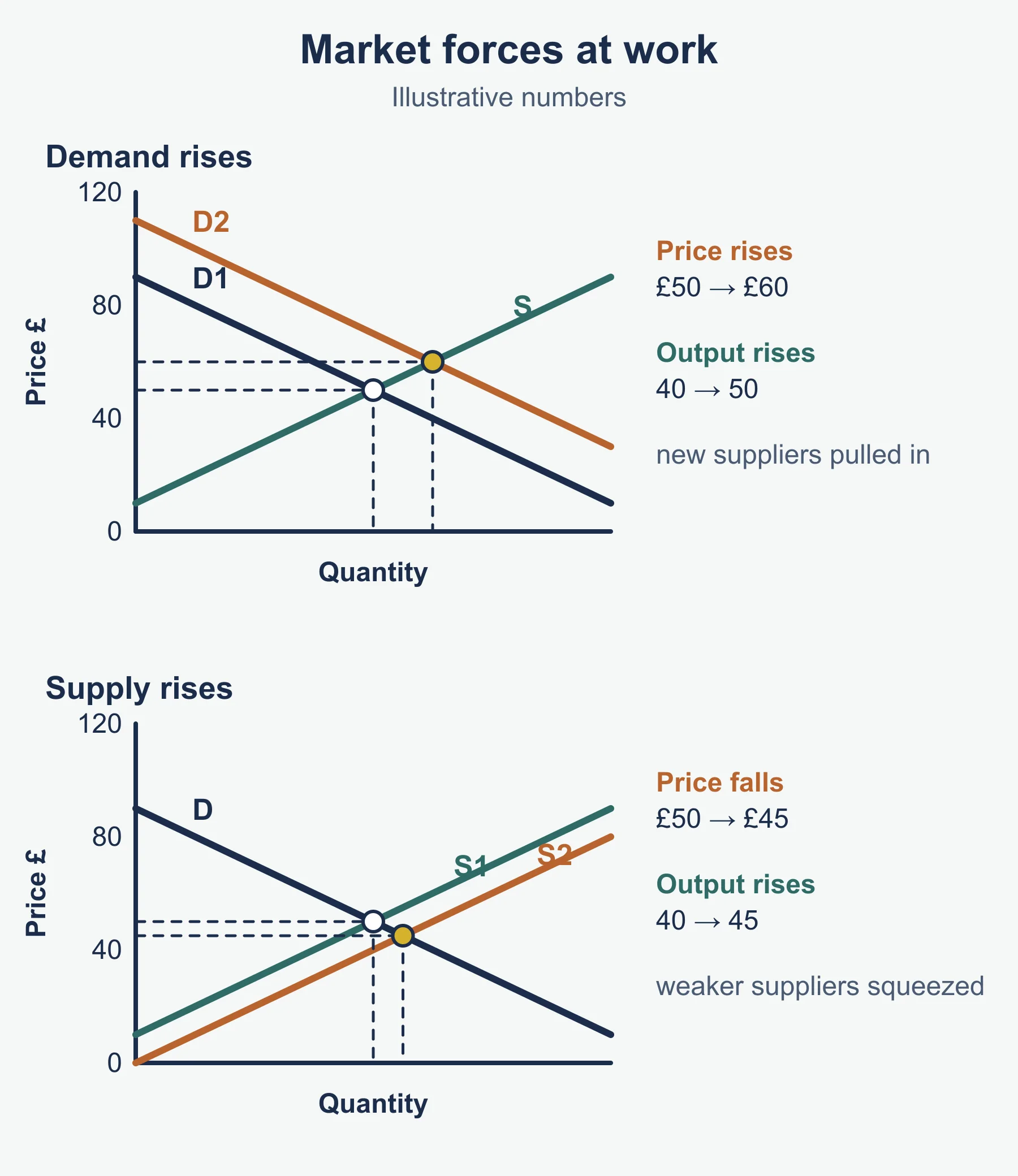
Market forces at a glance
- Effect on the business: revenue (price and volume), costs (supplier prices) and strategy (rivals’ moves).
- Effect on stakeholders: name the group and say whether it gains or loses. Customers, employees, suppliers, shareholders, the local community.
- Dynamic nature: the faster the market changes and the less flexible the firm, the greater the effect.
- Levels of competition: local, national, global. Ask which one the customer actually uses.
- Recommend and justify: choose one response, tie it to the case data, weigh the main risk, give a verdict.
Method boxes
Market share (standard form)
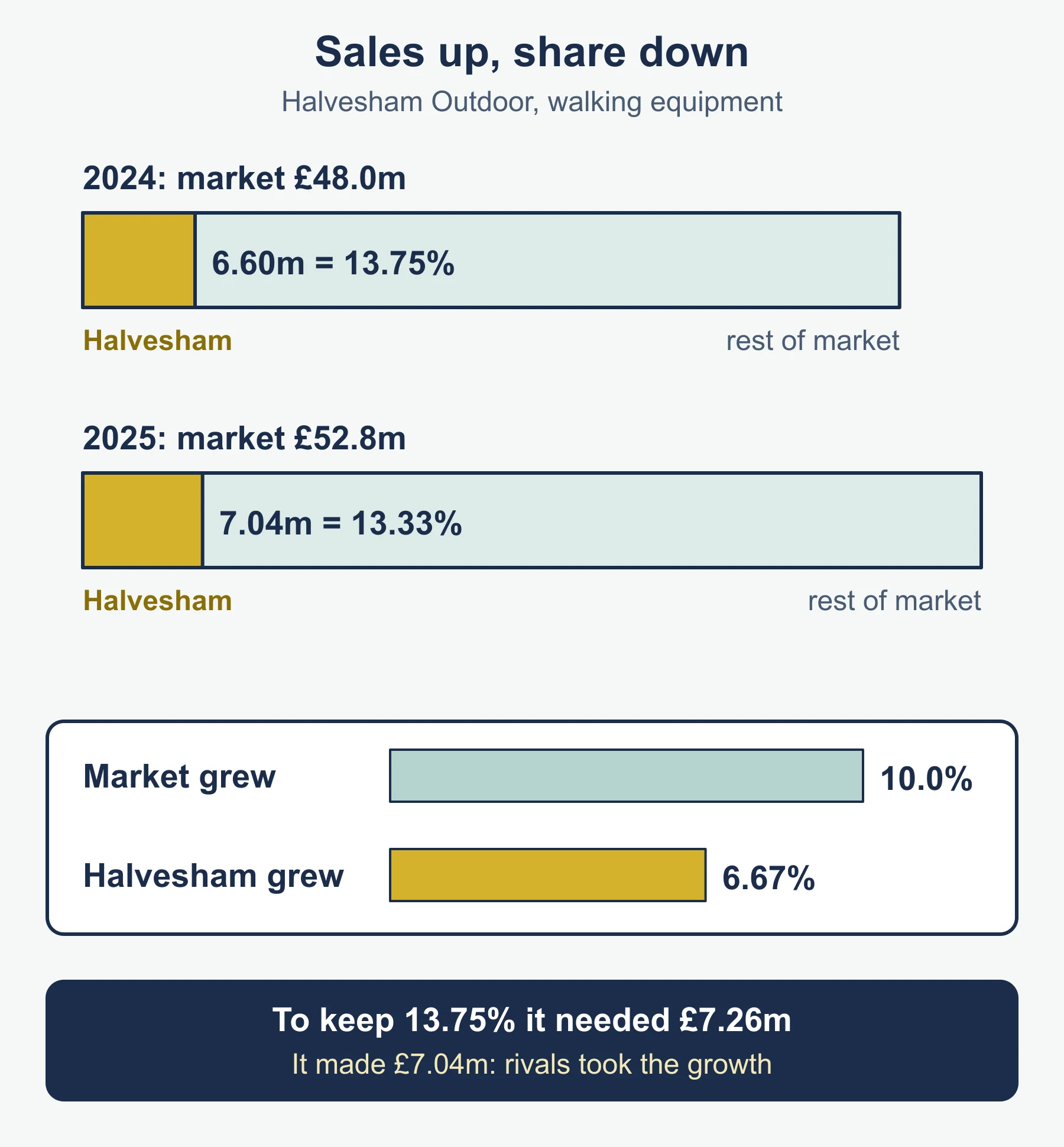
- Market share (%) = business sales revenue ÷ total market sales revenue × 100.
- Market growth (%) = (new market size − old market size) ÷ old market size × 100.
- Compare share across years. If the market grows faster than the firm, share falls even when sales rise.
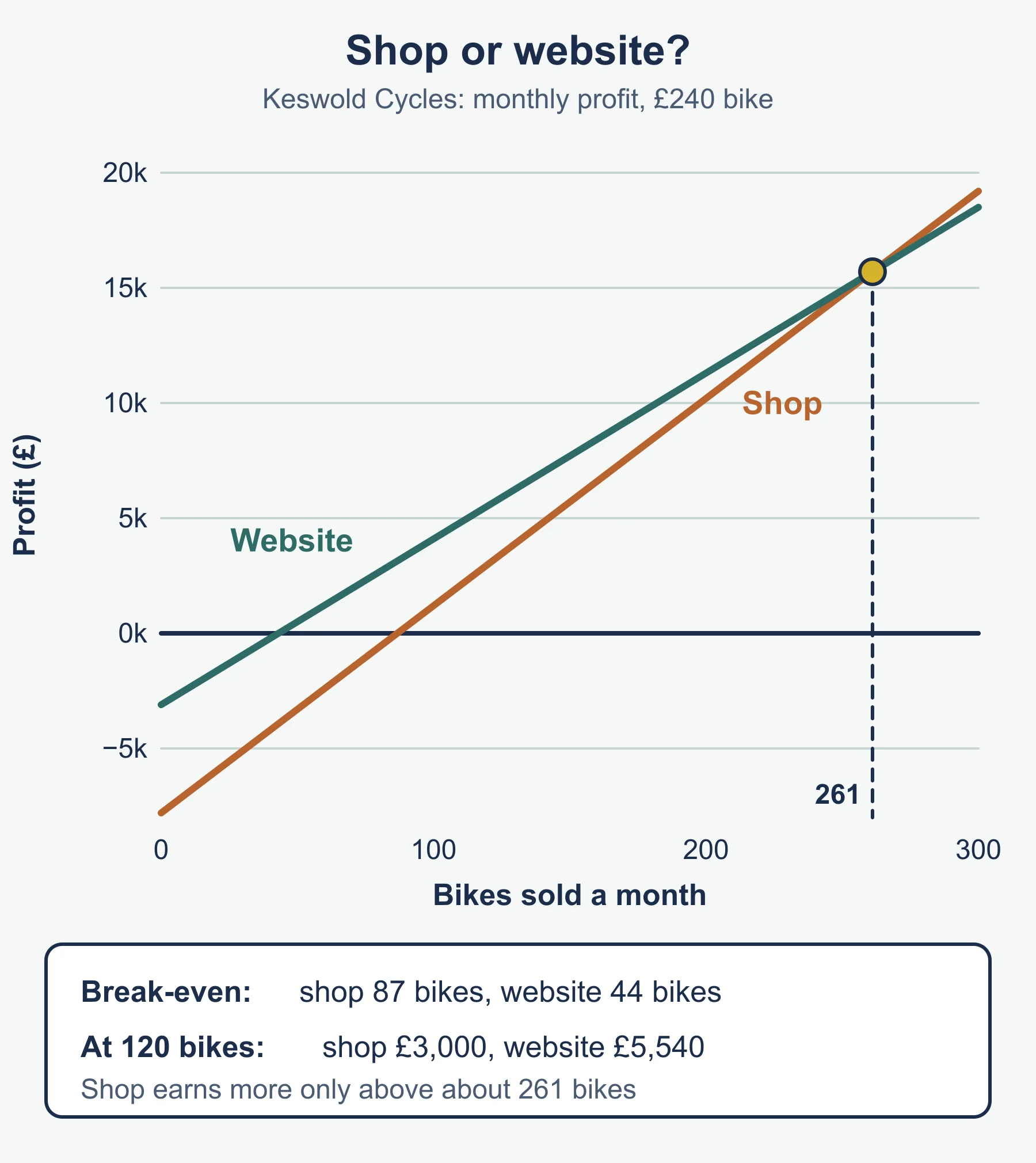
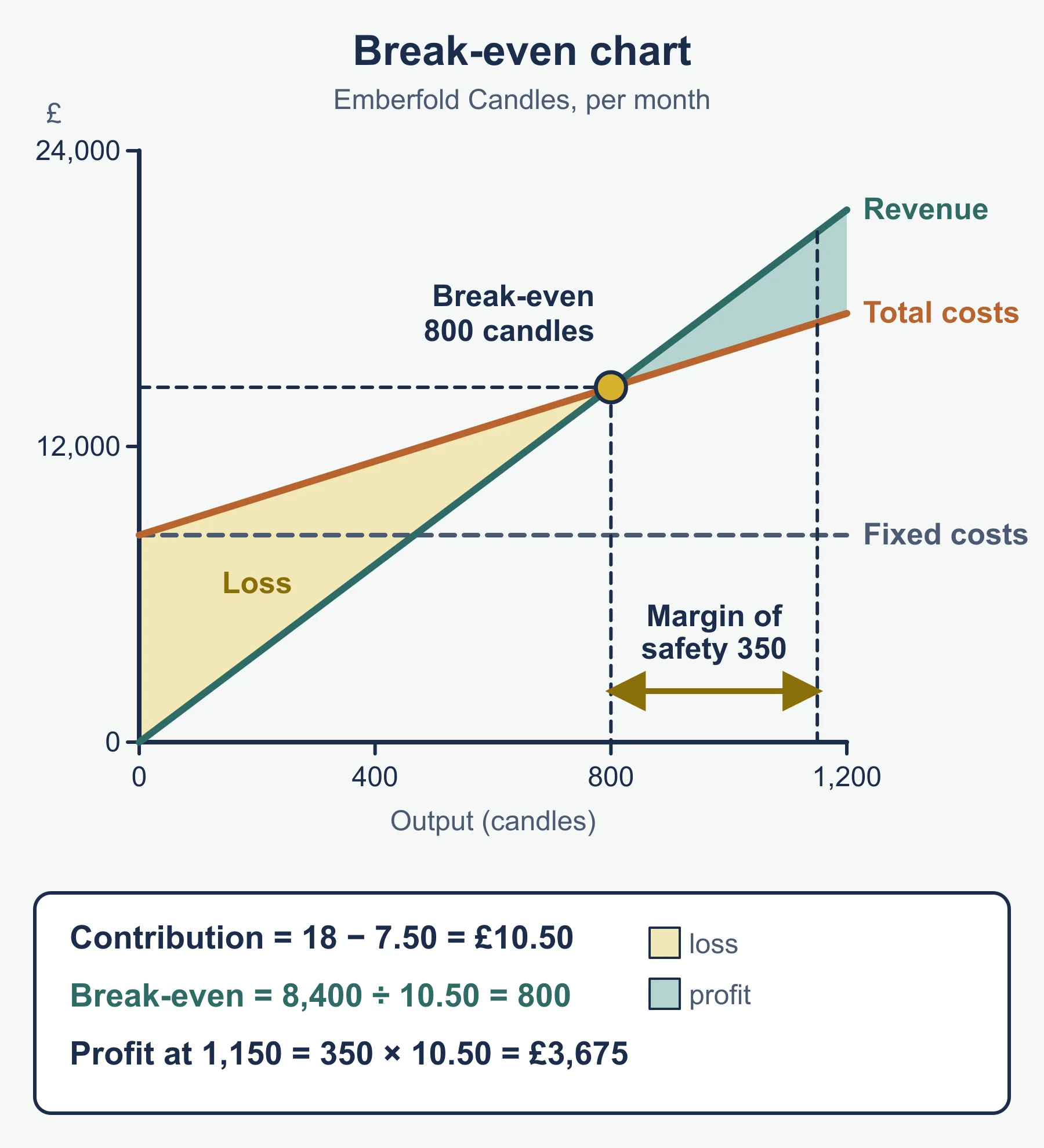
Break-even for a channel choice (standard form)
- Contribution per unit = price − variable cost per unit. Include delivery or returns costs for an online channel.
- Break-even output = fixed costs ÷ contribution per unit, then round up to whole units.
- The channel with lower fixed costs breaks even sooner, but a higher contribution can win at high volume.
Evaluating a strategic response
- State the response.
- Show how it deals with the problem in the case.
- Give a cost, risk or timing weakness.
- Weigh the two. Give a judgement that depends on one named factor (for example, how fast the market is changing).
Worked reminder: is the merged firm dominant?
A firm with 31% buys a firm with 8%. The next largest rival holds 25%.
- Combined share = 31 + 8 = 39%.
- Compare with the next rival: 39 ÷ 25 = 1.56, so the merged firm is bigger, but not overwhelmingly so.
- Ask four questions: how easy is entry, how similar are the products, how easily do customers switch, and could a regulator challenge the deal?
- Conclude. Here the lead is modest, so dominance depends on the barriers to entry. Say that, rather than assuming 39% is enough.
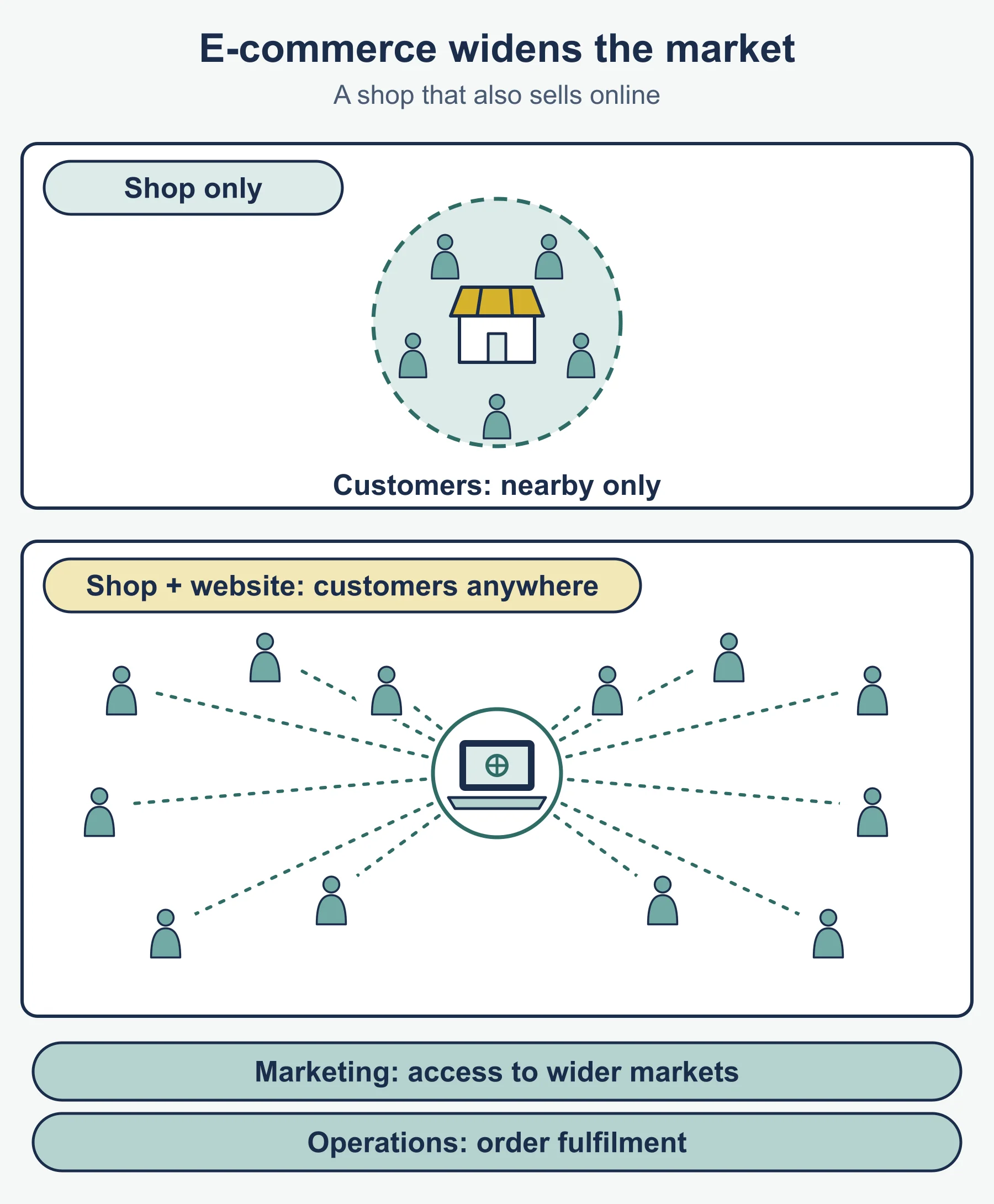
Physical and non-physical markets
| Point | Physical | Non-physical |
|---|---|---|
| Reach | Local, set hours | Wide, any hour |
| Fixed costs | Rent, rates, fit-out | Website, hosting, software |
| Variable costs | Stock | Stock, delivery, returns |
| Strength | Touch, advice, instant sale | Convenience, range, comparison |
| Weakness | Footfall risk | Easy price comparison, data and security risk |
Why choose physical: customers want to try or see the product, the service is the product, a local presence builds trust. Why choose non-physical: a wider market, lower overheads, a digital product, and 24-hour access. Why choose both: customers use several routes to buy. Weakness: higher management cost and possible channel conflict.
Competition
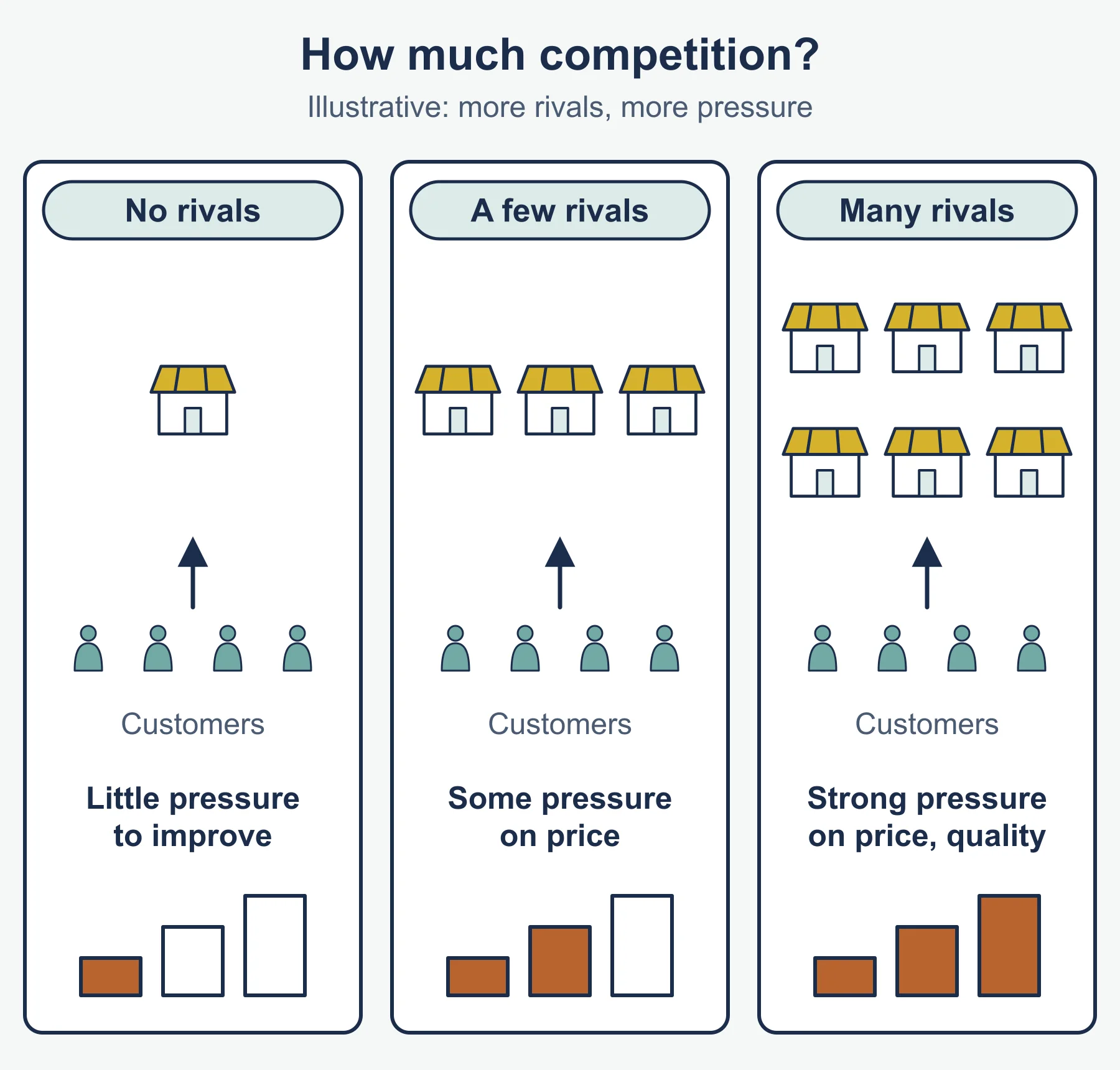
- Strength depends on: number and size of rivals, product similarity, ease of switching, ease of entry.
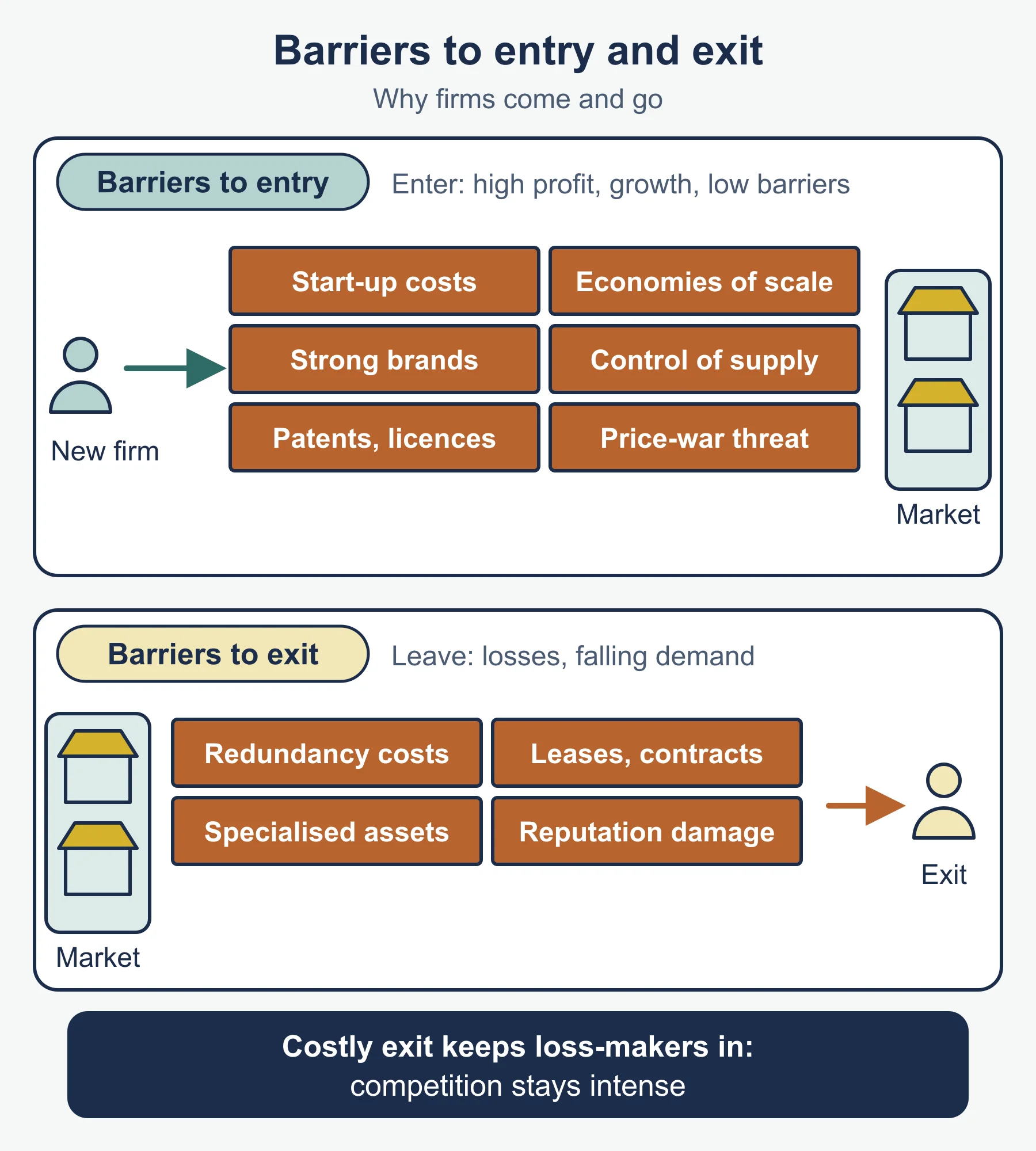
- Enter because: high profits, fast growth, low barriers, a new idea, spreading risk.
- Exit because: losses, falling demand, intense competition, an owner leaving, better use of resources elsewhere.
- Barriers to entry: start-up costs, economies of scale for existing firms, brands and loyalty, control of supply or distribution, patents and licences, threat of price war.
- Barriers to exit: redundancy costs, long leases or contracts, specialised assets, reputation damage.
- Impact: on the business (price, cost, profit), on stakeholders (name each), on the market (innovation, efficiency, failures, fewer firms).
Market dominance
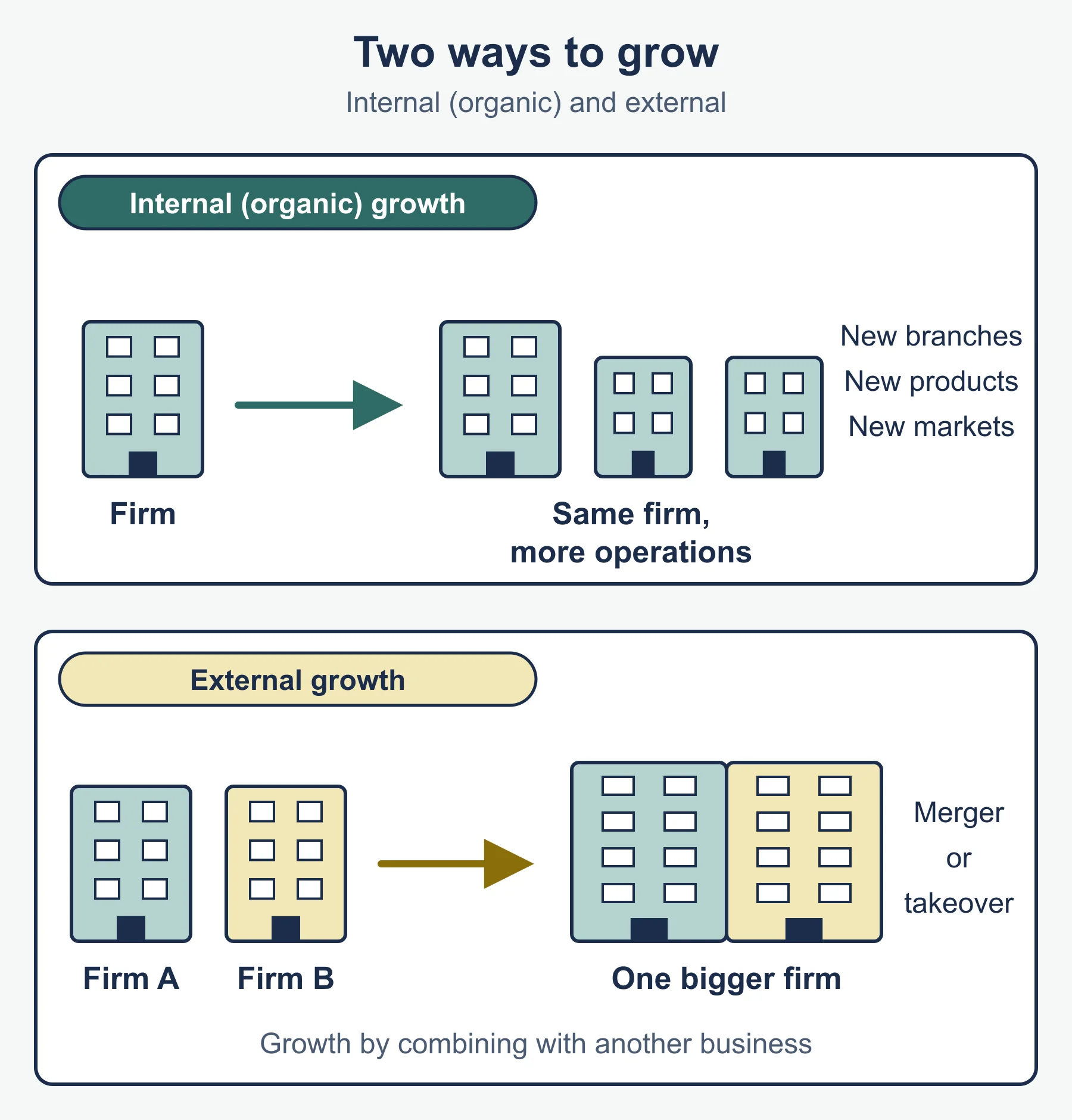
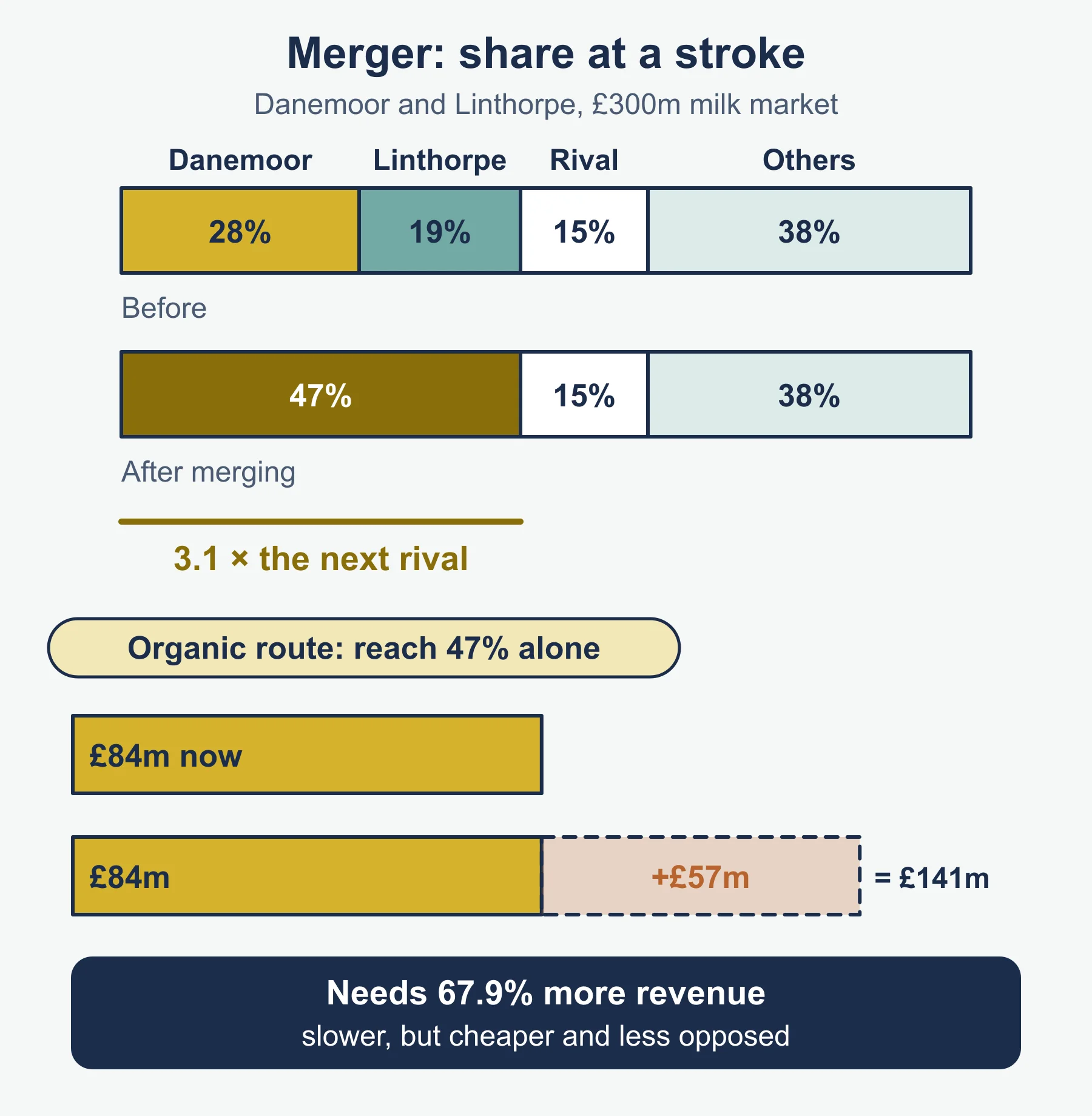
- Routes to dominance: organic growth (slow, own resources); mergers and acquisitions (fast, combine shares and remove a rival).
- Organic growth: advantage, no integration problem; disadvantage, slow.
- Merger or acquisition: advantage, instant scale; disadvantage, integration cost, culture clash, possible regulatory challenge.
- Impact of a dominant firm on other businesses: price pressure, supplier dependence, fewer routes to customers, possible niche for small firms. For customers: less choice, but sometimes lower prices from scale.
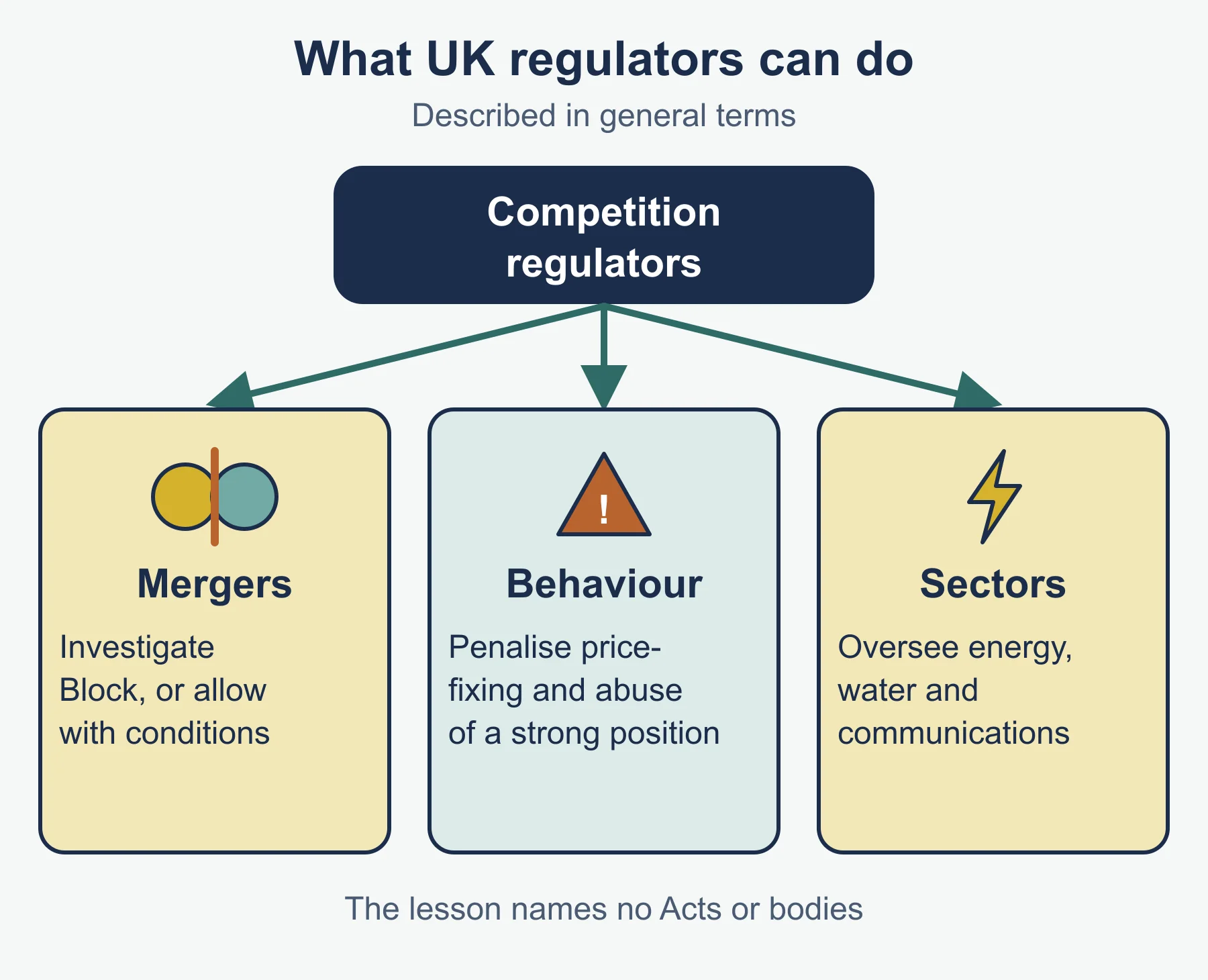
- UK restriction and regulation (general terms): as general knowledge (not named in the specification), the Competition and Markets Authority is the main UK competition authority. Regulators can investigate mergers and block them or allow them with conditions, investigate anti-competitive behaviour, and sector regulators oversee some industries. The specification does not name bodies or Acts, so general description is enough.
- Impact of regulation: limits dominant firms’ growth and adds compliance cost; protects smaller rivals and customers; may block useful mergers.
Must-know distinctions
- Online vs digital: online is trading through the internet; digital also covers digital products and apps.
- Merger vs acquisition: a merger is agreed combining; an acquisition is one firm buying control.
- Dominance vs size: dominance is power over price and rivals; a big firm with easy entry for others may lack it.
- Entry vs exit barriers: one keeps new firms out; the other keeps existing firms in.
- Market growth vs own growth: compare both before judging performance.
Quick self-test
- Define a market force.
- Distinguish online from digital.
- State two barriers to exit.
- A firm has sales revenue of £4.5m in a market worth £30m. Calculate its market share.
- The market grows to £36m and the firm’s sales revenue rises to £5.04m. Calculate the market growth and the new market share, and explain what has happened.
- What sales revenue would the firm in Question 5 need to keep its original share?
- An online seller has fixed costs of £2,000 a month, a price of £25, a unit cost of £10 and delivery of £3 a unit. Calculate break-even output.
- Two firms with 22% and 17% of a market merge. Calculate the combined share and explain why this does not prove dominance.
- Give one disadvantage of organic growth and one of acquisition.
- State two things a competition regulator may do about a proposed merger.
Answers
- The pressure of demand, supply and competition that sets prices and output in a market.
- Online means trading over the internet. Digital is wider: it also covers digital products and trading by app.
- Any two from redundancy costs, long leases or contracts, specialised assets that are hard to sell, reputation damage.
- 4.5 ÷ 30 × 100 = 15%.
- Market growth = (36 − 30) ÷ 30 × 100 = 20%. New share = 5.04 ÷ 36 × 100 = 14.0%. Sales revenue rose by 12%, but the market grew faster, so share fell by one percentage point.
- 15% × £36m = £5.4m.
- Contribution = 25 − 10 − 3 = £12. Break-even = 2,000 ÷ 12 = 166.67, so 167 units.
- 22 + 17 = 39%. Dominance depends on power over price and rivals: if the next rivals are also large or entry is easy, the merged firm may have little power.
- Organic growth: slow. Acquisition: integration costs or culture clash, or regulatory challenge (any one for each).
- Any two from investigate it, block it, allow it with conditions.
Where marks are usually lost
- Writing “competition lowers prices” without saying what that does to this business’s revenue or profit.
- Naming a stakeholder but not saying whether it gains or loses.
- Describing market share as sales revenue instead of a percentage of the market.
- Judging performance on sales growth alone and ignoring market growth.
- Listing barriers to entry without saying which matters most in the case.
- Treating all online trading as cheaper, ignoring delivery, returns and marketing cost.
- Treating a merger as automatically good or bad, with no weighing of integration cost against scale.
- Inventing Acts, thresholds or fines when describing regulation.
- Writing a recommendation with no justification or no weakness.
Frequently asked questions
What is the difference between online and digital? Online means trading through the internet. Digital also covers digital products and apps, so the two are not the same.
What is the difference between barriers to entry and barriers to exit? Barriers to entry keep new firms out of a market. Barriers to exit keep existing firms in it, even when they might want to leave.
Can a firm’s sales rise while it loses market share? Yes. If the market grows faster than the firm, its share falls even though its own sales rise, so compare market growth with the firm’s own growth before judging performance.
Is market dominance the same as being a large firm? No. Dominance is power over price and rivals; a big firm in a market that others can enter easily may lack it.
Official syllabus
OCR, OCR Level 3 Advanced GCE in Business (H431) Specification, Version 2.1 (January 2026), External influences: Market forces; Physical and non-physical markets; Competition; Market dominance.
Get free revision emails (optional)
Occasional emails with practice questions, worked explanations and links to free resources for the qualification and subjects you choose. No spam, and you can unsubscribe from any email. The free tools on this site never need an email.
Related resources
-
Study guides
OCR A Level Business: Political, economic, social and technological factors and related topics (H431)
Study guide to political, economic, social, technological, digital, ethical, legal and environmental factors for OCR A Level Business H431.
Business · OCR · A Level
Read guide -
Practice questions
OCR A Level Business: Political, economic, social and technological factors and related topics (H431) – Practice Questions
Original practice questions with worked answers on PESTLE, digital, ethical, legal and environmental factors for OCR A Level Business H431.
Business · OCR · A Level
Try questions -
Revision notes
OCR A Level Business: Political, economic, social and technological factors and related topics (H431) – Revision Notes
Condensed revision notes on political, economic, social, technological, digital, ethical, legal and environmental factors for OCR A Level Business H431.
Business · OCR · A Level
Revise topic
Related articles
-
teaching
A Level tuition in Dubai: Cambridge or Pearson Edexcel International A Level?
Schools in Dubai and Abu Dhabi teach either Cambridge International AS & A Level or Pearson Edexcel International A Level. How the two are structured, why it matters for tuition, and how online classes from Lahore work.
9 October 2026
-
curriculum guides
Choosing subjects at IGCSE and A Level
How subject choices at 14 and 16 affect university options later, and how to keep pathways open without overloading a timetable.
28 July 2026
Studying this with a teacher
Working through Business A LEVELS?
This page is free and stays free. If you would rather be taught it, Marlbridge runs Business classes one-to-one, online in your own time zone. One-to-one only for this course: Rs 6,000 per class in Pakistan, with other currencies on the fees page. The first trial class is free. WhatsApp replies within an hour (8am–11pm Pakistan time, every day); email the same day.
OCR Business teachers at Marlbridge
