
Revision Notes
OCR GCSE Business: Finance (J204) – Revision Notes
Condensed revision notes on Finance for OCR GCSE (9-1) Business J204: formulas, source-of-finance table, method steps, self-test and common errors.
- Subject
- Business
- Level
- GCSE
- Topic
- Operations, finance and influences on business
- Author
- Marlbridge Academic Team
- Updated
- Reviewed by
- Salman Ahmad (what this means)
Aligned to OCR GCSE Business (J204), Version 2.0 (January 2026), for first assessment in 2019. Official specification .
Syllabus page (what it covers and how it is assessed): OCR GCSE Business.
Syllabus points this page covers
J204
- 5 Finance
Found an error? Report a correction.
Need help with this topic? Request a free trial class for GCSE Business (J204).
These notes condense section 5, Finance (5.1 to 5.5), of the OCR GCSE (9-1) Business (J204) specification, Version 2.0 (January 2026). For full explanations and longer worked examples, read the Finance study guide. Then test yourself with the Finance practice questions. Wider Business 2 material is in the Business 2 study guide, Business 2 revision notes and Business 2 practice set. See the course hub, the checklist and the free diagnostics.
5.1 The finance function
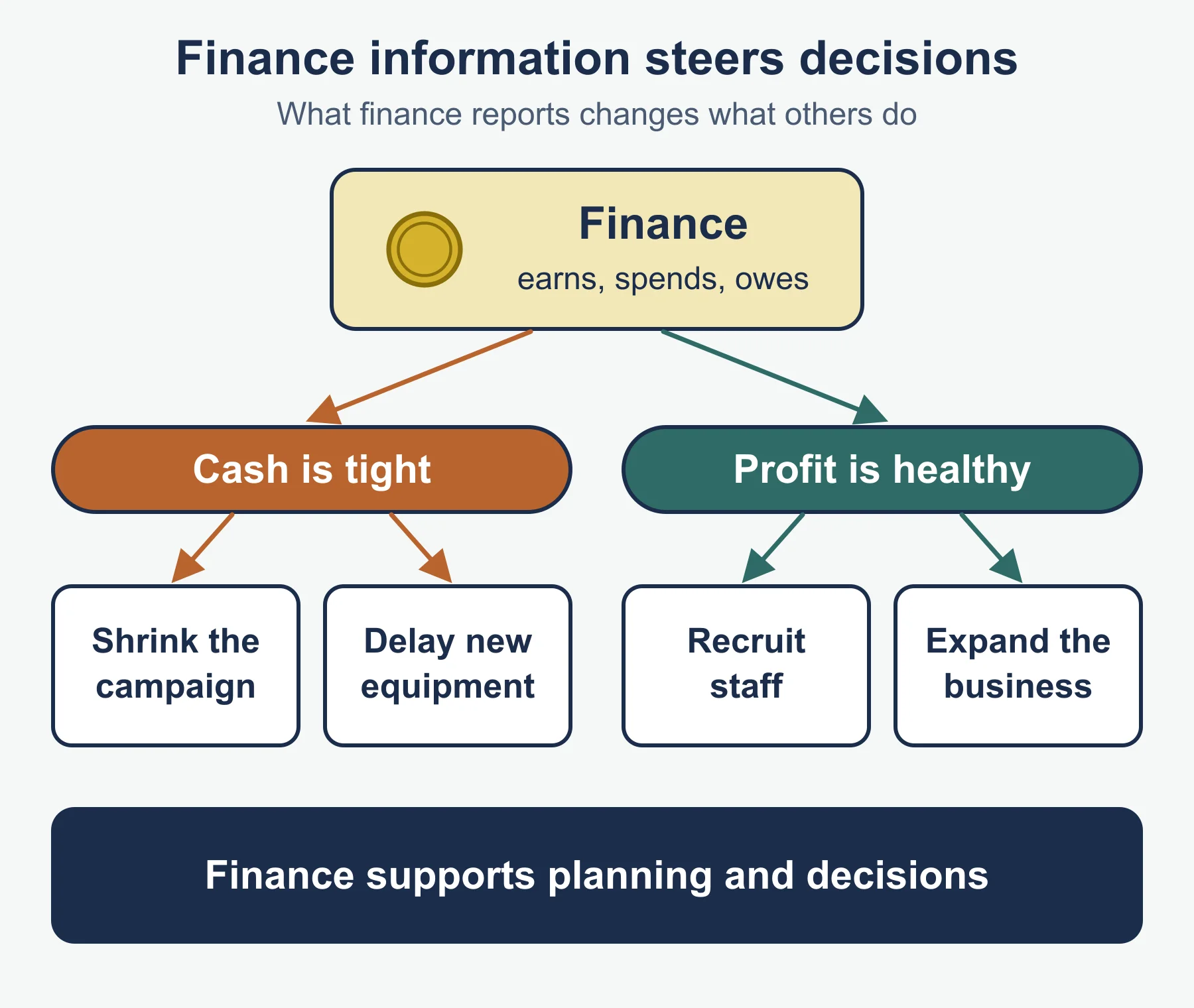
- Purpose: to provide financial information, and to support business planning and decision making.
- Influence on business activity: what finance reports affects what the other functions can do. Tight cash can limit marketing and recruitment; strong profit can allow expansion.
- Link every answer to a decision: finance information is useful because someone uses it to choose something.
5.2 Sources of finance
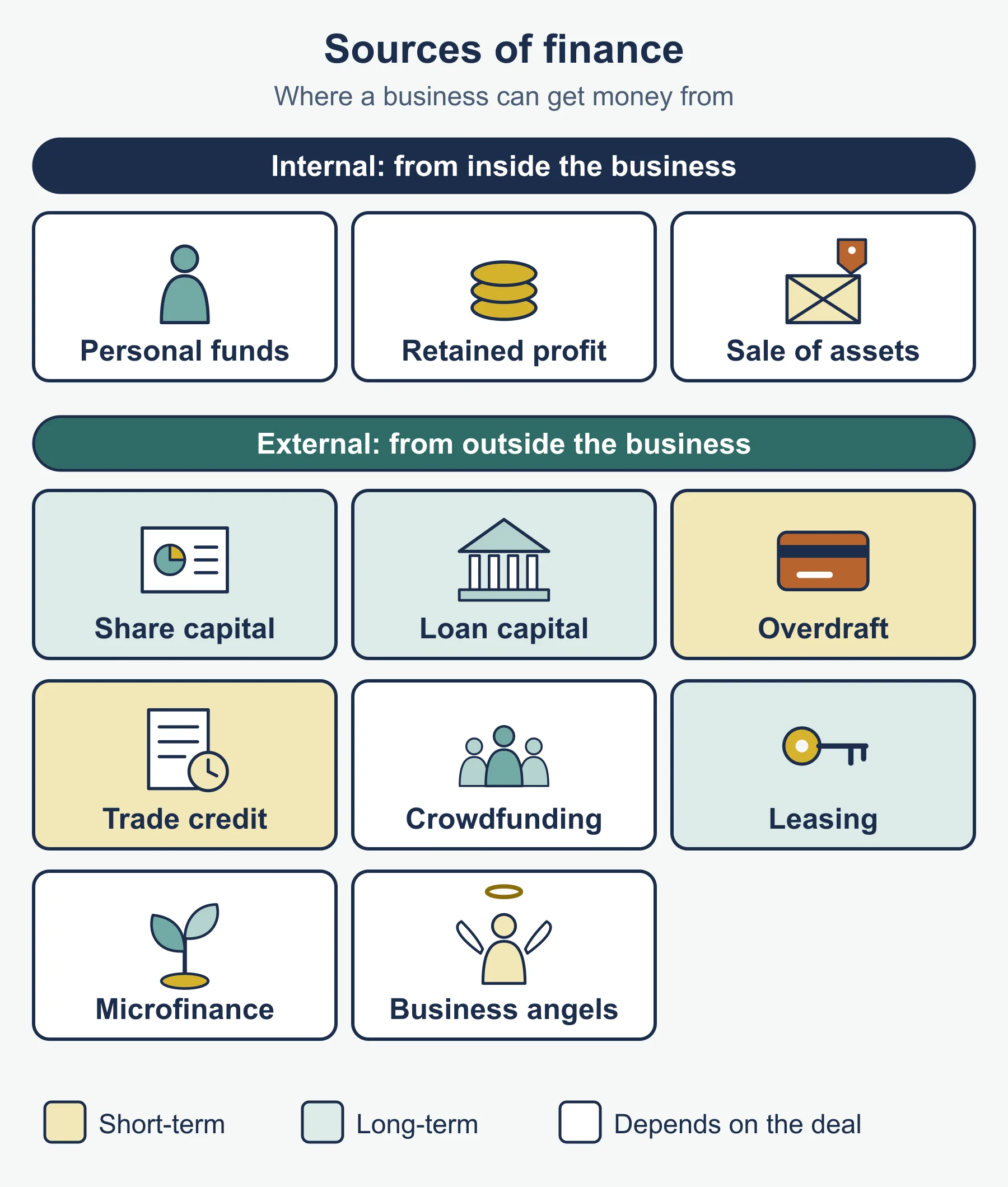
Why finance is needed (the five reasons to learn): establishing a new business; funding expansion; to run the business; recruitment; marketing.
| Source | One-line summary | Better suited to |
|---|---|---|
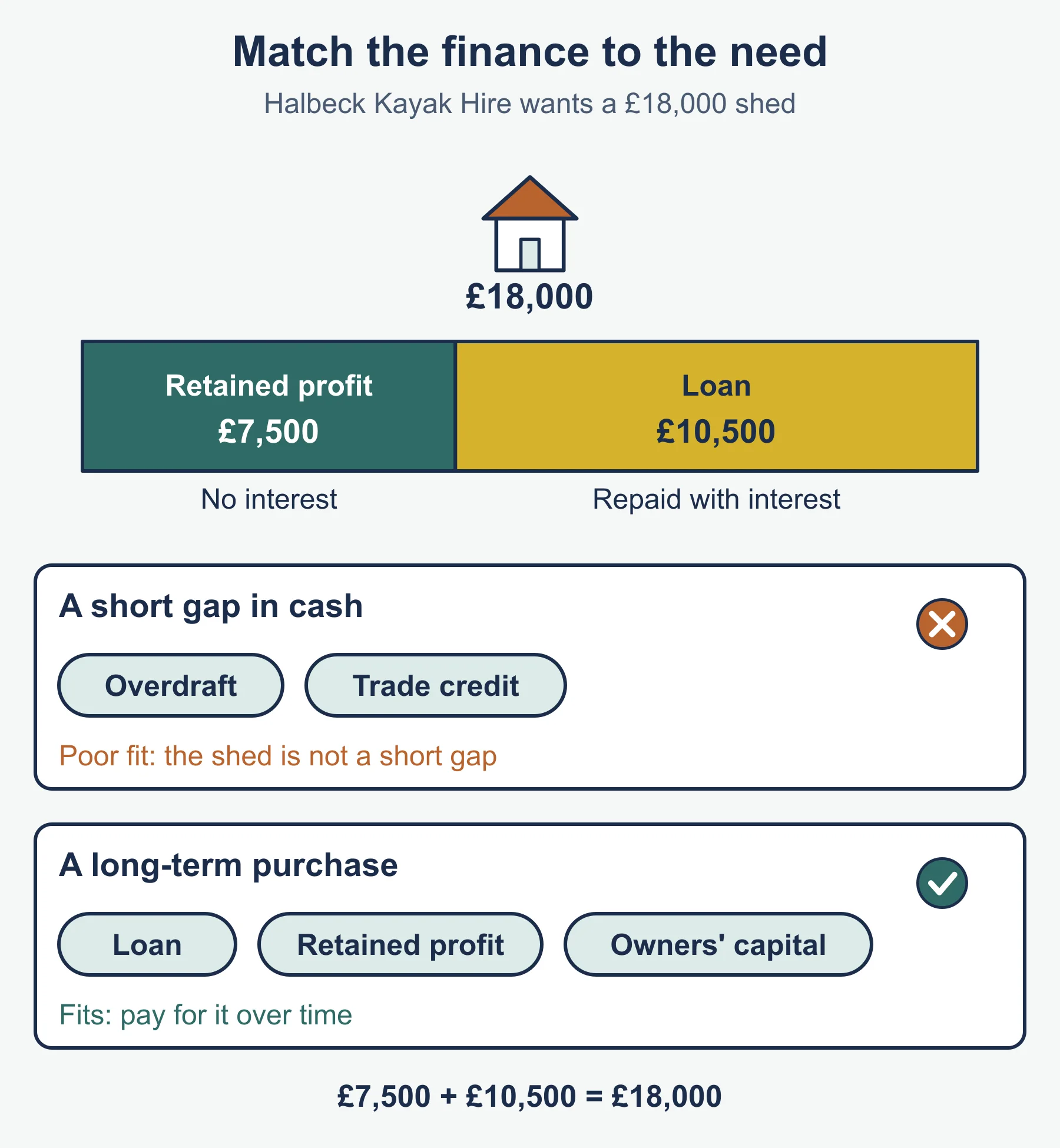
| Loan | Borrow a sum, repay with interest | Large, long-term needs; established firms or new ones with a plan |
| Overdraft | Spend beyond the balance up to a limit | Short-term gaps in cash |
| Trade credit | Pay suppliers later | Delaying cash outflow for stock |
| Retained profit | Profit kept in the business | Established businesses (new ones have none yet) |
| Sale of assets | Sell something owned | Raising cash without borrowing; asset is lost |
| Owners’ capital | Owner’s own money | New businesses and small top-ups |
| New partner | Another co-owner puts in money | Partnerships needing money and skills |
| Share issue | Sell shares to investors | Companies raising larger sums |
| Crowdfunding | Many small contributions, usually online | New ideas with public appeal |
Matching method, in steps:
- Identify the need: how much, and for how long?
- Identify the business: new (no profit history) or established (records, assets, profit)?
- Pick the source that fits both.
- Add a drawback, such as interest, lost control or a failed target.
5.3 Revenue, costs, profit and loss
| Term | Meaning or formula |
|---|---|
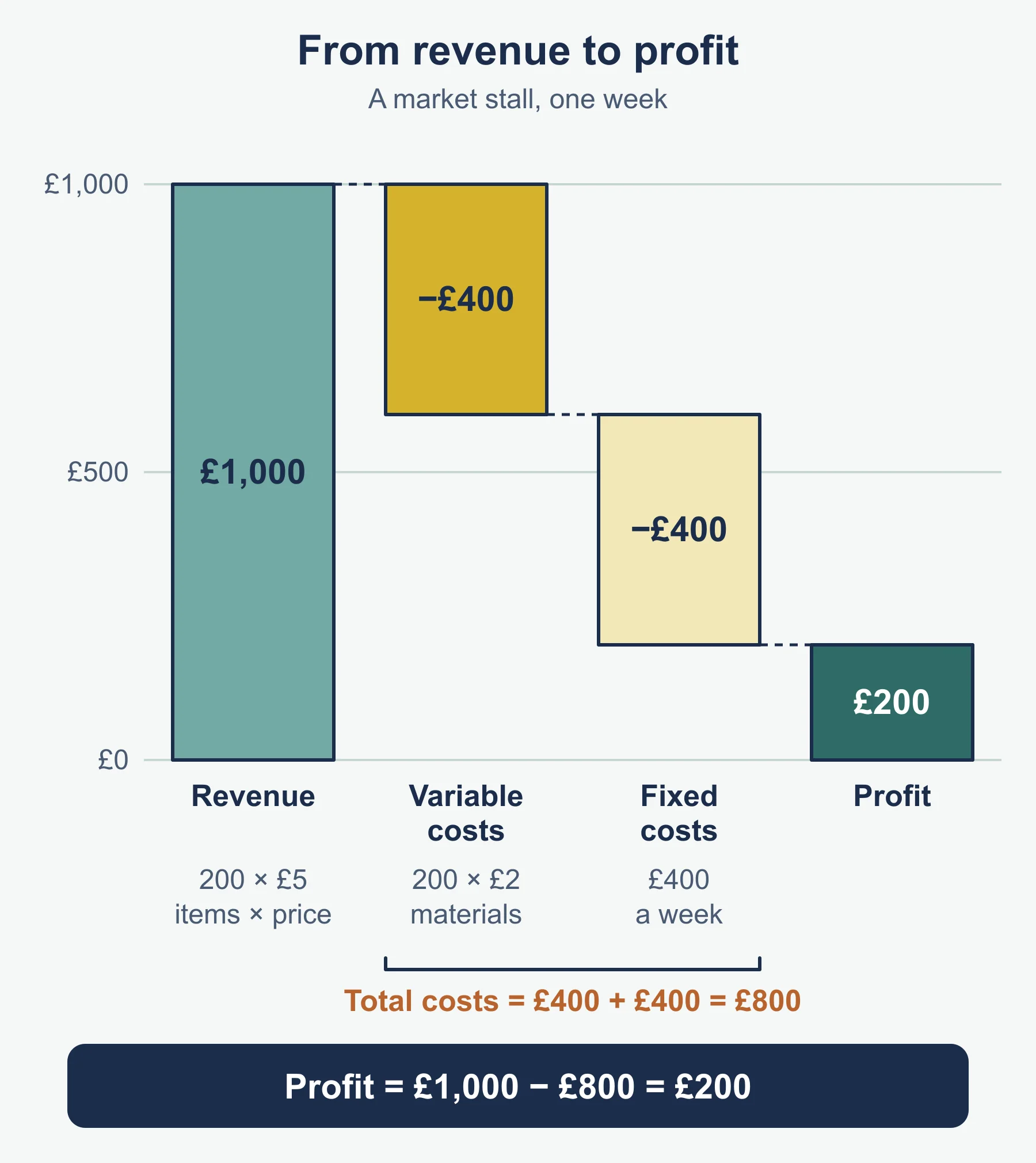
| Revenue | Selling price × quantity sold |
| Fixed costs | Do not change with output in the short term (rent) |
| Variable costs | Change with output (materials) |
| Total costs | Fixed costs + variable costs |
| Profit or loss | Revenue − total costs (a negative answer is a loss) |
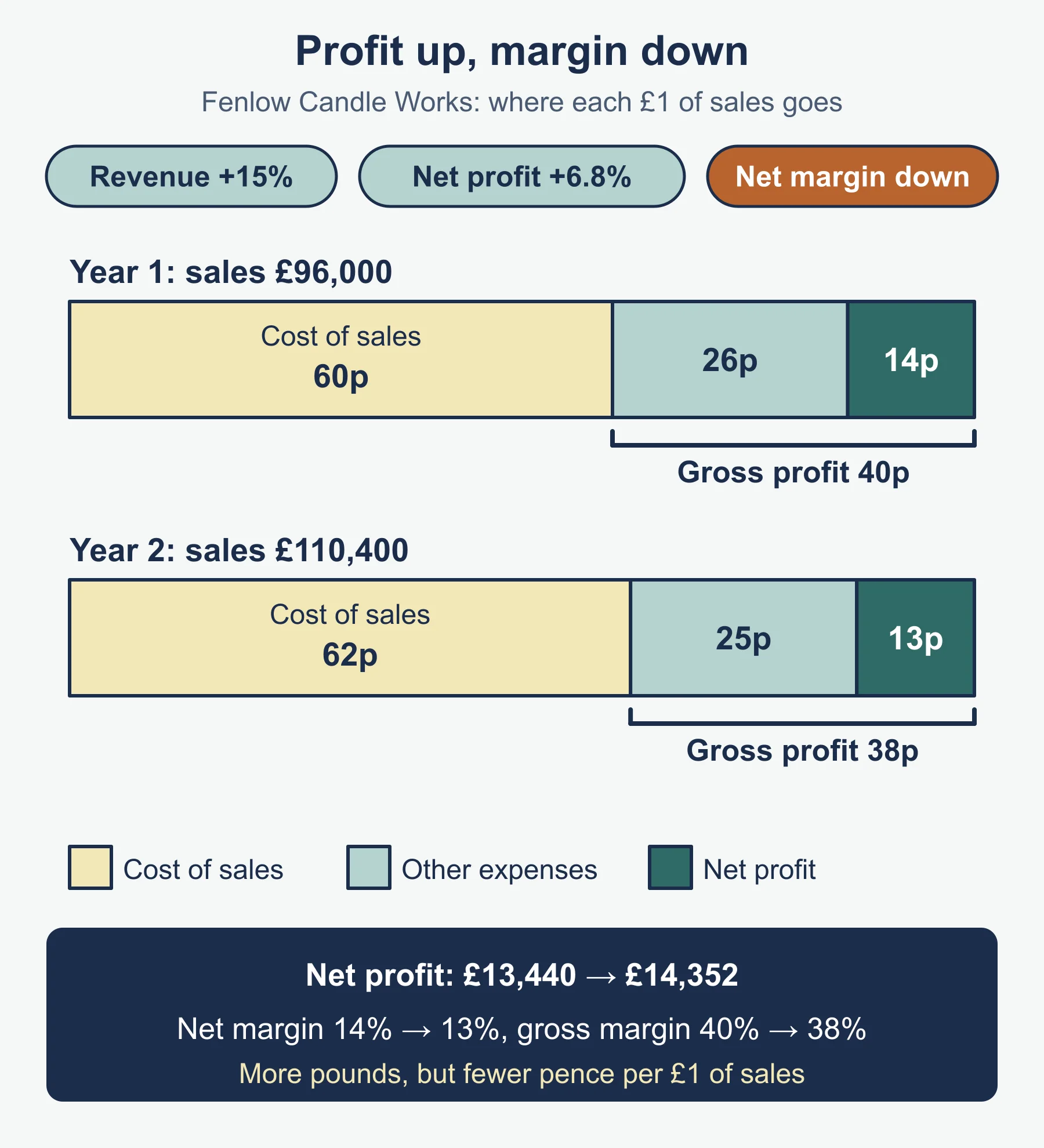
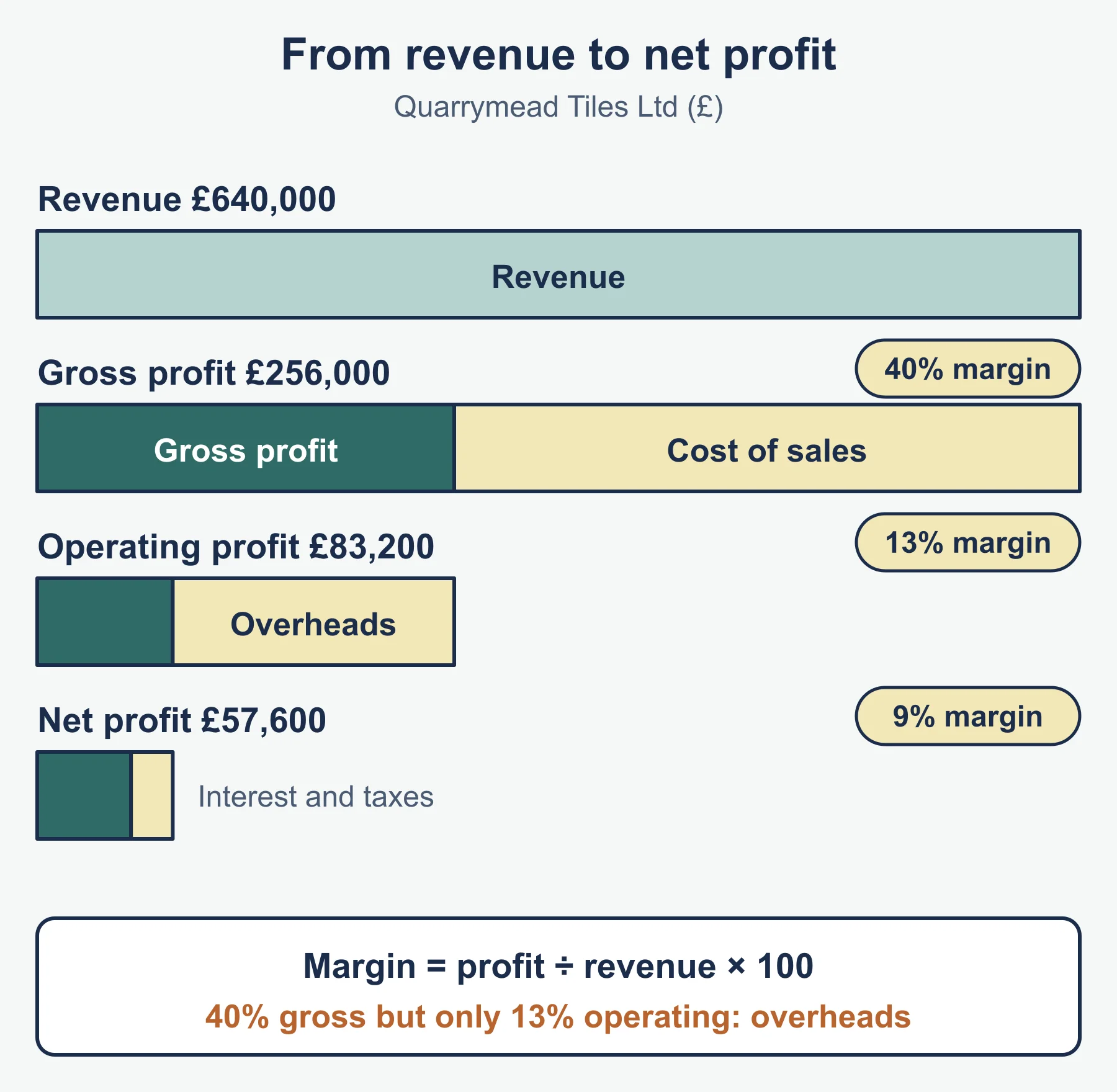
| Gross profit | Revenue − cost of sales |
| Net profit | Gross profit − other business expenses |
| Gross profit margin | (gross profit ÷ revenue) × 100 |
| Net profit margin | (net profit ÷ revenue) × 100 |
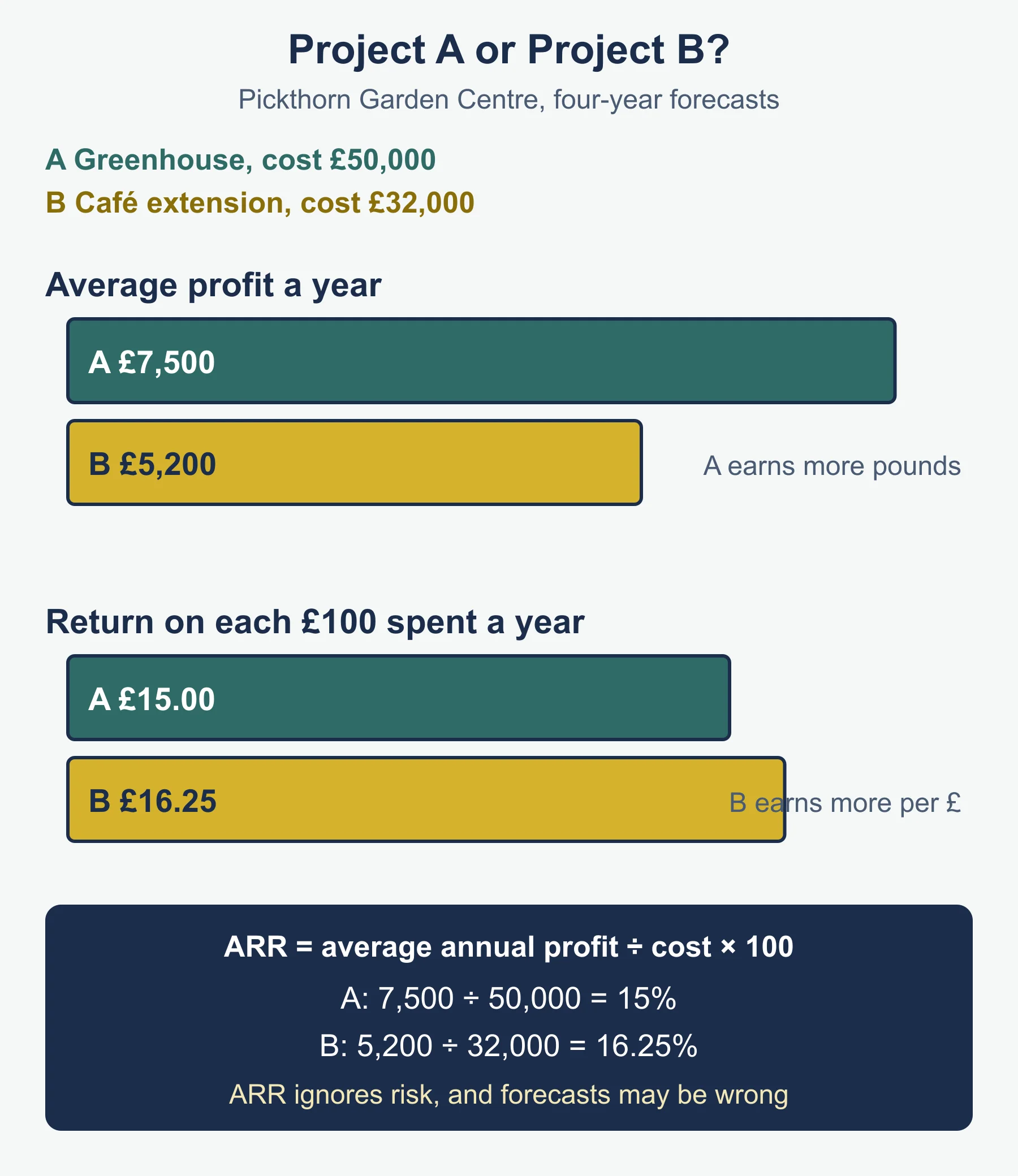
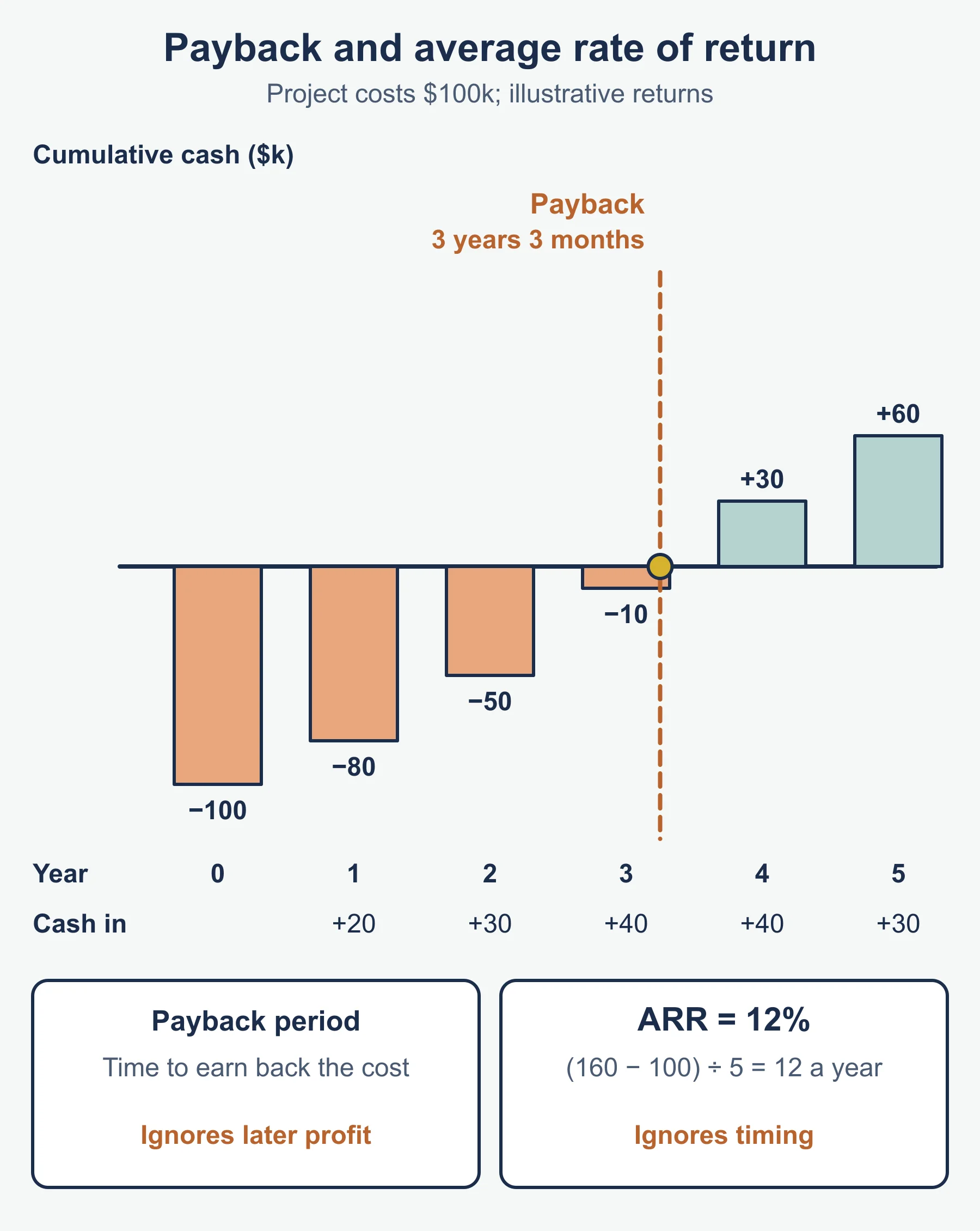
| Average rate of return (ARR) | (average annual profit ÷ cost of investment) × 100 |
The specification gives the ratio names and ARR without formulas, and does not define cost of sales or contribution; the forms above are the standard ones.
Quick reminder (margins). Revenue £60,000; cost of sales £39,000; other expenses £15,000.
Gross profit = 60,000 - 39,000 = 21,000    margin = 21,000/60,000 x 100 = 35%
Net profit   = 21,000 - 15,000 =  6,000    margin =  6,000/60,000 x 100 = 10%
Interpreting margins:
- A higher margin means more profit from each pound of revenue.
- Compare with the previous year, a rival, or a target.
- If gross margin falls, look at cost of sales or pricing. If gross margin holds but net margin falls, look at other expenses.
- Percentage change = (change ÷ original) × 100.
Quick reminder (ARR). A £20,000 machine returns £32,500 in total over five years.
Total profit = 32,500 - 20,000 = 12,500
Average annual profit = 12,500 / 5 = 2,500
ARR = 2,500 / 20,000 x 100 = 12.5%
Interpretation: compare with other projects or with a target. Higher is better, but ARR does not allow for risk or for forecasts being wrong.
5.4 Break-even
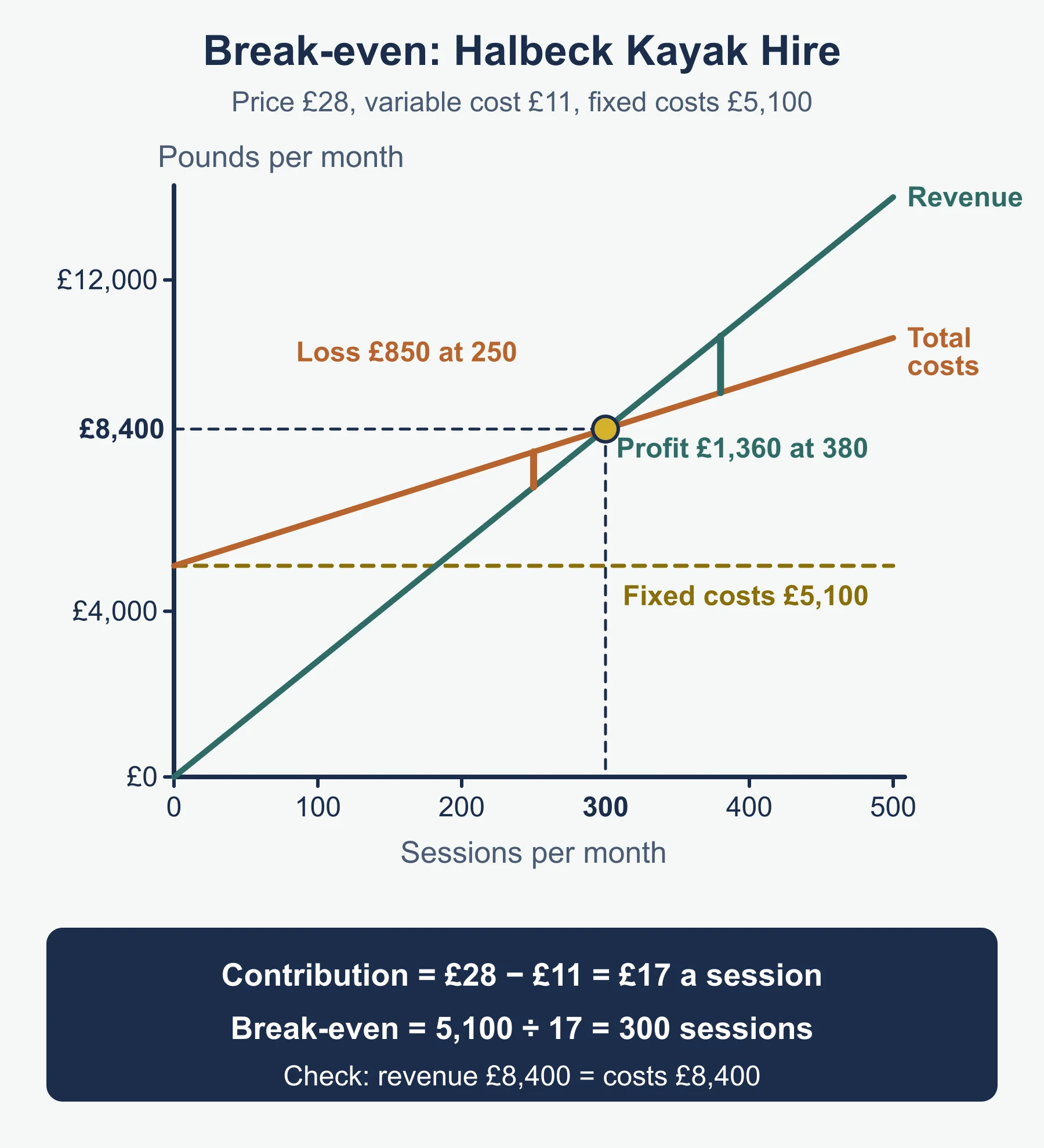
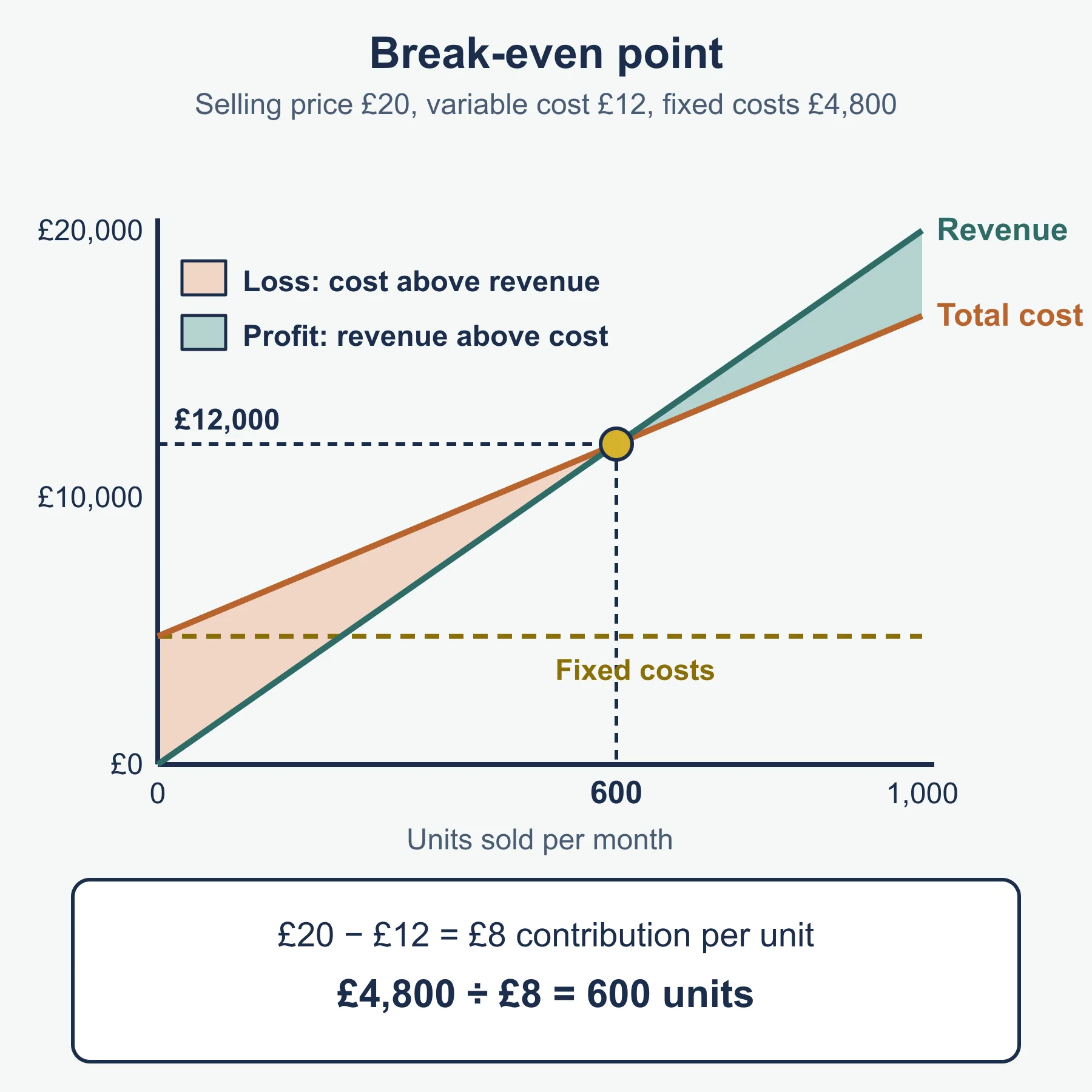
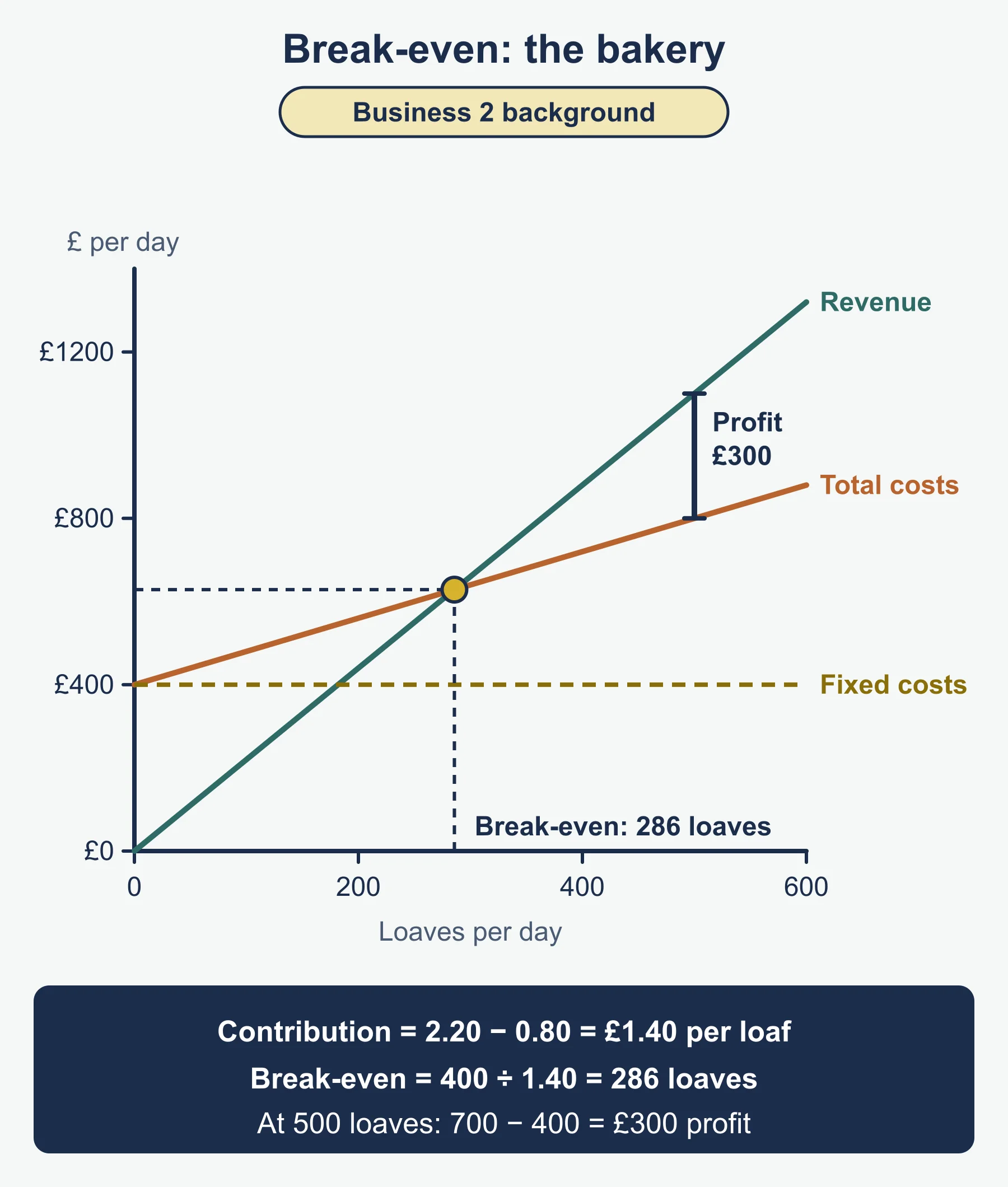
- Concept: total costs = total revenue. No profit, no loss.
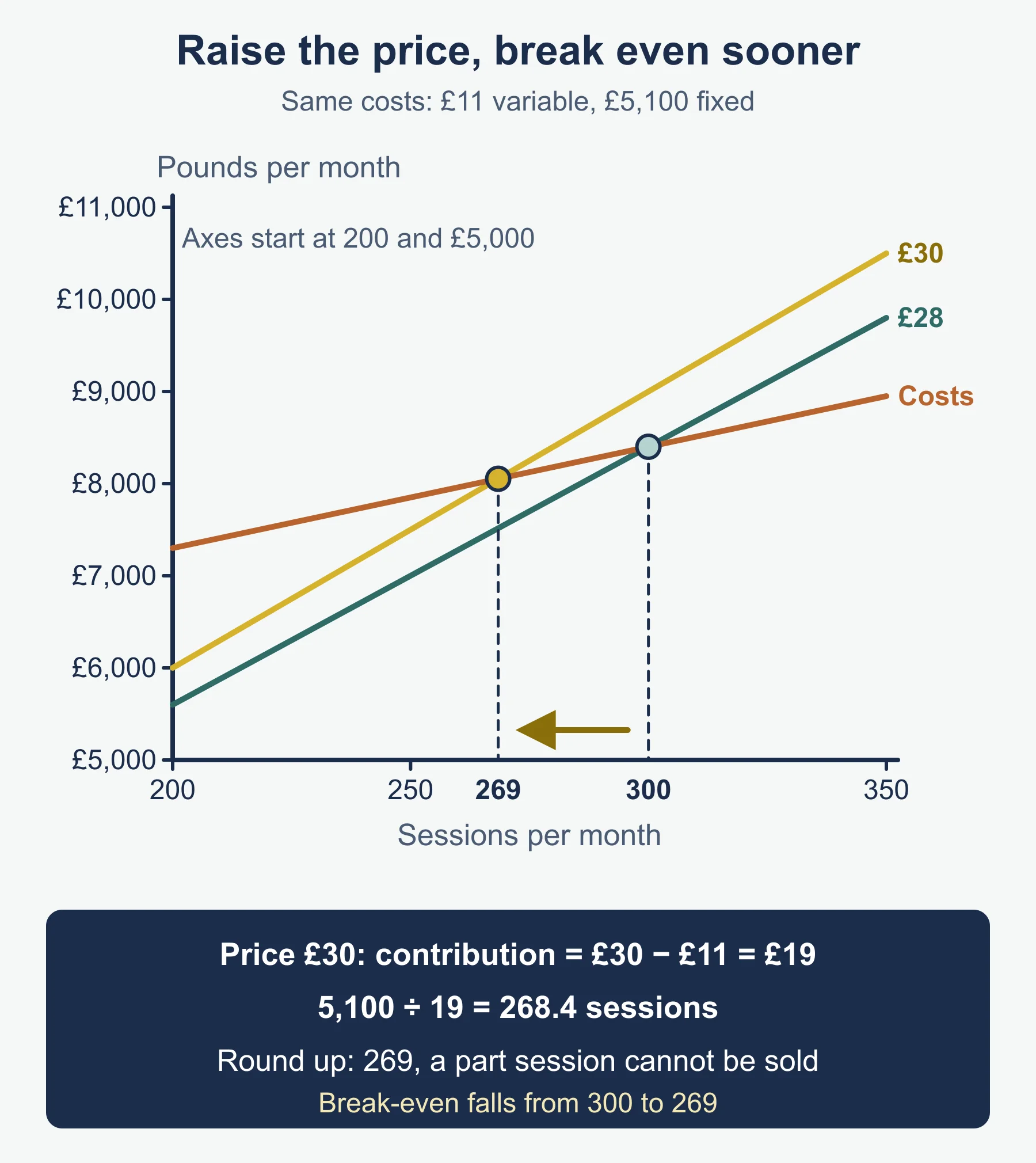
- Contribution per unit = selling price − variable cost per unit.
- Break-even quantity = fixed costs ÷ contribution per unit.
- Round up if the answer is not whole.
Quick reminder. Sedgeley Print Studio sells a pack for £6. Variable cost is £2.50. Fixed costs are £1,750 a month.
Contribution = 6 - 2.50 = 3.50
Break-even   = 1,750 / 3.50 = 500 packs
Sales above 500 earn £3.50 profit each; sales below 500 make a loss.
Usefulness: informs marketing and planning decisions (pricing, sales targets, whether a plan is realistic). Limits: assumes everything made is sold and that prices and costs stay constant.
5.5 Cash and cash flow
- Importance of cash: provides liquidity, so the business can meet short-term debts and expenses.
- Cash versus profit:
| Cash | Profit |
|---|---|
| Money actually received and paid | Revenue minus costs for a period |
| Changes when payment happens | Counted when the sale or cost occurs |
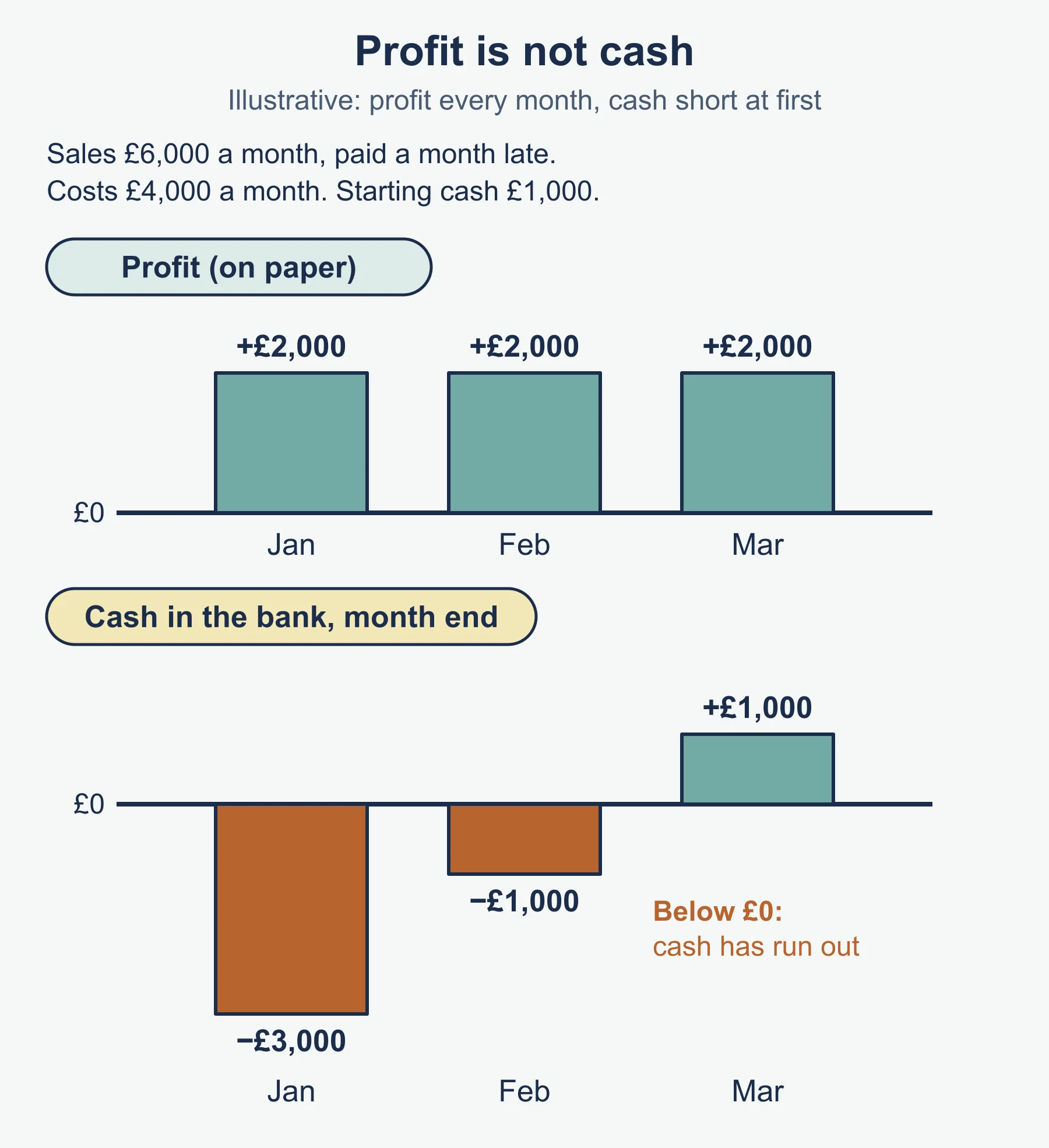
| Shortage stops bills being paid | Can look healthy even when cash is short |
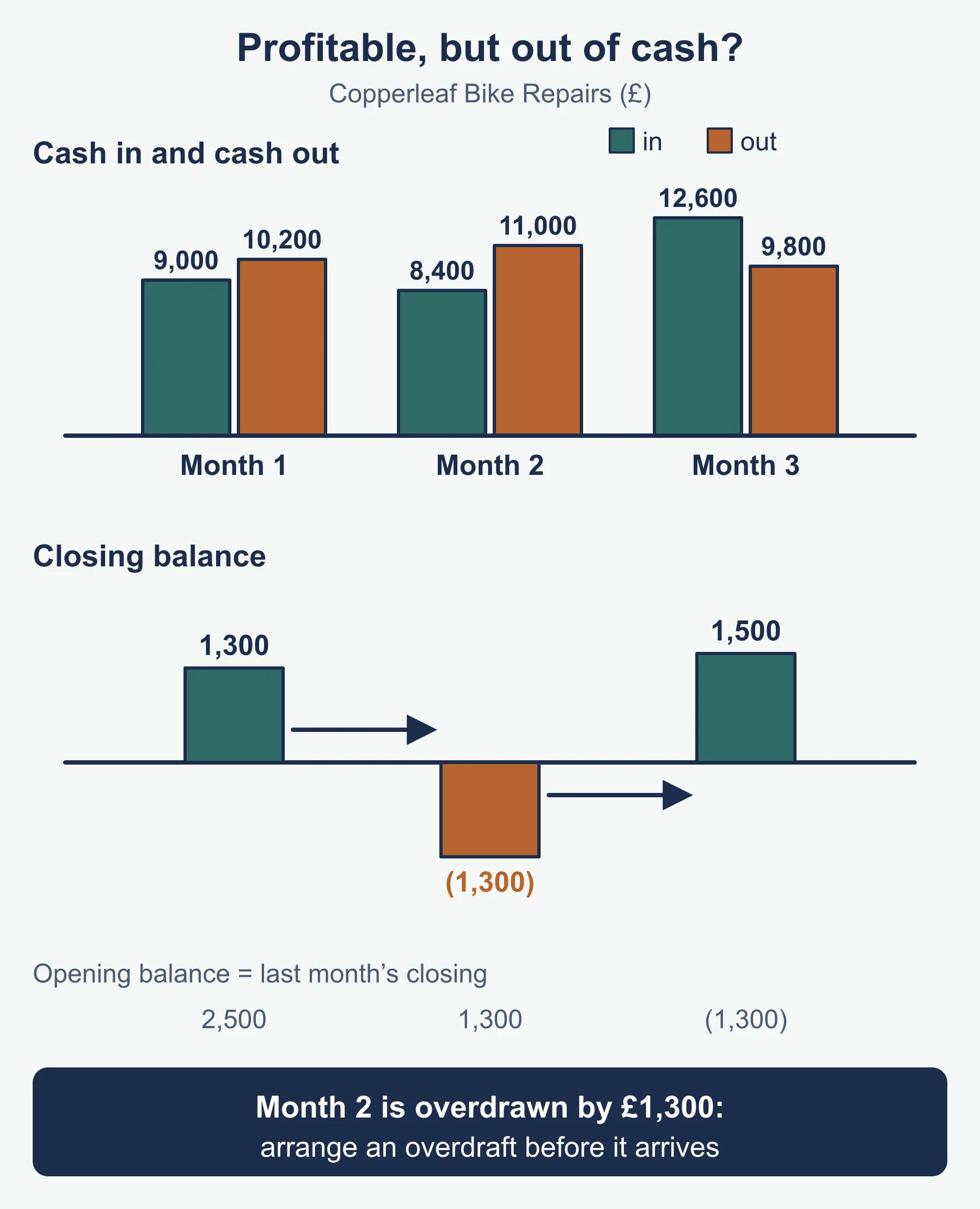
- Why a forecast is useful: a planning tool; anticipates periods of cash shortage; enables remedies to be put in place; provides targets.
Completing a forecast, in steps:
- Write the opening balance for the first month.
- Total the cash in. Total the cash out.
- Net cash flow = cash in − cash out.
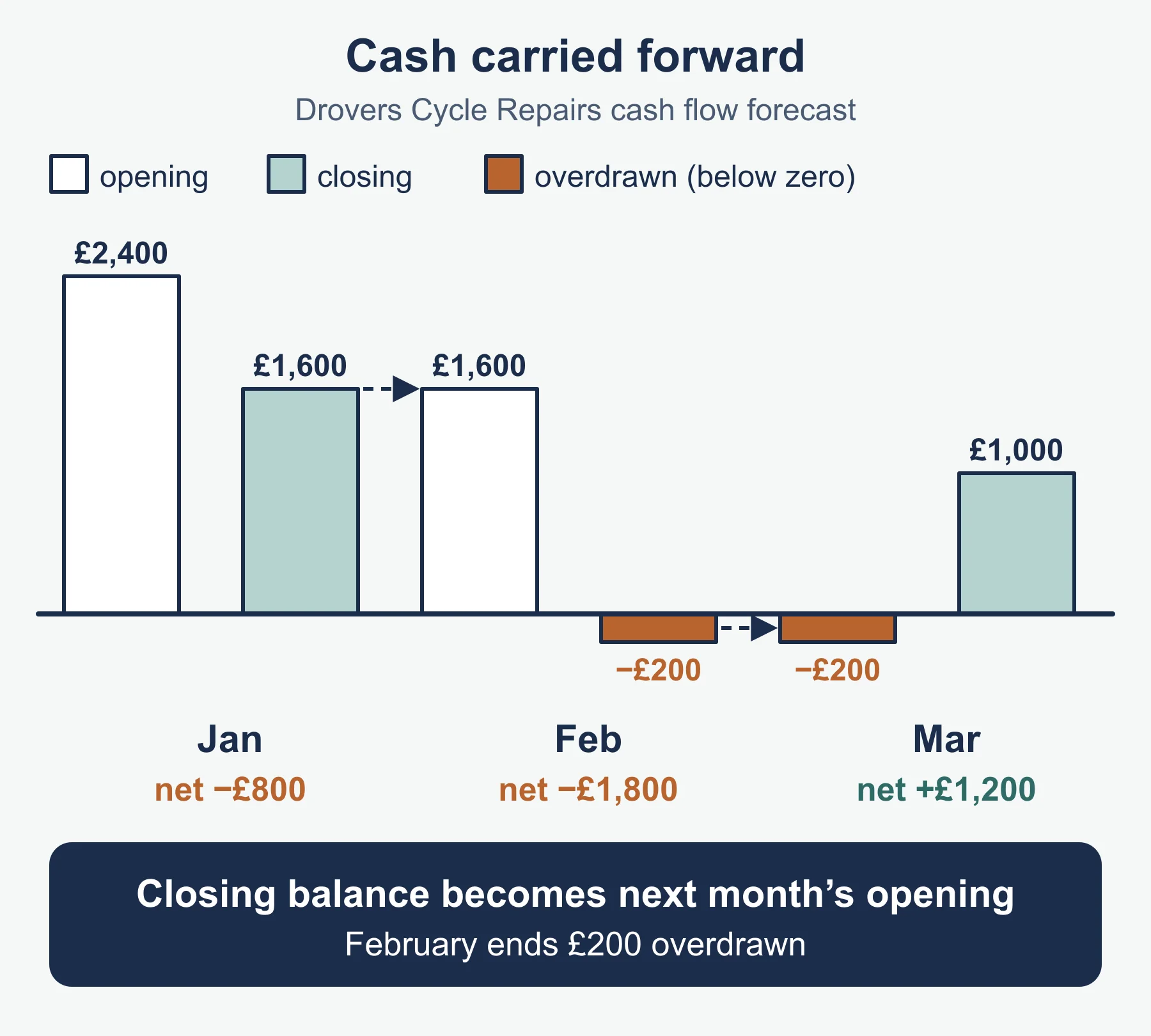
- Closing balance = opening balance + net cash flow.
- Copy the closing balance to the next month’s opening balance.
- Look for negative balances, then suggest remedies.
Quick reminder. Opening £900, cash in £4,200, cash out £3,500: net cash flow = £700; closing balance = £1,600.
Remedies for a shortage: overdraft, longer trade credit from suppliers, chasing customers who owe money, delaying spending, selling an asset. Choose the one that fits the size and length of the gap.
Command words and answer shape
- State, identify, define: a short answer, no explanation needed.
- Calculate: write the formula, substitute, give the answer with units or a percentage sign.
- Explain: make a point, then say why or what follows. Use the business named in the question.
- Analyse: break a situation into parts and link causes to effects, using the figures given.
- Evaluate and justify: give points on both sides, then reach a judgement and say why it wins. For a source of finance, weigh cost, speed, risk and control against the size and length of the need.
- Recommend: choose one option and support it with evidence from the case.
Short reminder on a sources-of-finance answer. A new nursery needs £6,000 for equipment. Owners’ capital is quick and has no interest, but the owners may not have enough. A loan could cover the sum, but repayments start before many customers arrive. A judgement might favour a mix of owners’ capital and a small loan, because the nursery has no retained profit yet.
Must-know distinctions
- Gross profit versus net profit: net takes off other expenses as well as cost of sales.
- Profit versus cash: timing of payments separates them.
- Fixed versus variable: does the cost change when output changes?
- Margin versus amount: margin is a percentage of revenue, profit is a sum of money.
- Contribution versus profit: contribution is per unit before fixed costs.
Quick self-test
- State two purposes of the finance function.
- Name three reasons a business may need finance.
- Which source of finance best suits a temporary shortfall of cash?
- A product sells for £12 with variable cost £7.50 per unit. Fixed costs are £2,700. Find the break-even quantity.
- The business sells 700 units. Find its profit.
- Revenue is £50,000 and gross profit £17,500. Find the gross profit margin.
- Net profit is £4,000 on revenue of £50,000. Find the net profit margin.
- An investment of £15,000 earns total profit of £6,750 over three years. Find ARR.
- A business starts a month overdrawn by £300, receives £2,100 and pays out £1,500. What is the closing balance?
- Explain why a profitable business can run short of cash.
Answers
- To provide financial information; to support planning and decision making.
- Any three: establishing a new business, funding expansion, running the business, recruitment, marketing.
- An overdraft, because it covers a short gap flexibly and is repaid as cash recovers. Trade credit is also a defensible answer, because it delays paying suppliers and so eases a temporary shortfall, but it only helps where suppliers agree and only for goods or services bought, whereas an overdraft can cover any bill. Either, with a reason, is fine.
- Contribution = £4.50; 2,700 ÷ 4.50 = 600 units.
- Revenue £8,400; total costs £2,700 + (700 × £7.50) = £7,950; profit £450.
- 17,500 ÷ 50,000 × 100 = 35%.
- 4,000 ÷ 50,000 × 100 = 8%.
- Average = 6,750 ÷ 3 = £2,250; 2,250 ÷ 15,000 × 100 = 15%.
- −300 + 2,100 − 1,500 = £300.
- Sales on credit count as revenue now but bring cash later, while the business must pay wages and suppliers sooner. Profit can look healthy while cash is short.
Where marks are usually lost
- Using revenue instead of gross profit, or mixing up the two margins.
- Writing the break-even formula with selling price in place of contribution.
- No working shown for a calculation, so one slip loses everything.
- Leaving out the unit or the percentage sign.
- Not carrying the closing balance forward in a cash flow forecast.
- Naming a source of finance without saying why it suits this business.
- Describing cash and profit as the same thing.
- Calculating ARR with total profit instead of average annual profit.
- Giving the figure but no interpretation when the question says “interpret” or “analyse”.
Frequently asked questions
How do you calculate break-even in OCR GCSE Business? Break-even output is fixed costs divided by contribution per unit, where contribution per unit is selling price minus variable cost per unit. Writing the formula with selling price in place of contribution is a common error.
What is the difference between profit and cash? Cash is money actually received and paid out, while profit is revenue minus costs for a period. The timing of payments separates them, so a profitable business can still run short of cash.
What is the difference between gross profit and net profit? Gross profit is revenue minus cost of sales. Net profit also takes off other expenses, so mixing up the two margins is a common error.
How do you complete a cash flow forecast? Start with the opening balance, total the cash in and cash out, find net cash flow as cash in minus cash out, and add it to the opening balance to get the closing balance. The closing balance then becomes the next month’s opening balance.
How can a business fix a cash flow shortage? Remedies include an overdraft, longer trade credit from suppliers, chasing customers who owe money, delaying spending and selling an asset. The right choice is the one that fits the size and length of the gap.
Official syllabus
OCR, GCSE (9-1) in Business (J204) Specification, Version 2.0 (January 2026), section 2c, topic 5 Finance, and Appendix 5c, quantitative skills requirement.
Get free revision emails (optional)
Occasional emails with practice questions, worked explanations and links to free resources for the qualification and subjects you choose. No spam, and you can unsubscribe from any email. The free tools on this site never need an email.
Related resources
-
Study guides
OCR GCSE Business: Influences on business and The interdependent nature of business (J204)
A full study guide to ethical, environmental, economic and global influences and how business functions depend on each other, for OCR GCSE Business.
Business · OCR · GCSE
Read guide -
Practice questions
OCR GCSE Business: Influences on business and The interdependent nature of business (J204) – Practice Questions
Twelve original practice questions with worked answers on ethical, environmental, economic and global influences and interdependence, OCR GCSE Business.
Business · OCR · GCSE
Try questions -
Revision notes
OCR GCSE Business: Influences on business and The interdependent nature of business (J204) – Revision Notes
Condensed revision notes on ethical, environmental, economic and global influences, risk and reward, and linking business functions, for OCR GCSE Business.
Business · OCR · GCSE
Revise topic
Related articles
-
teaching
A Level tuition in Dubai: Cambridge or Pearson Edexcel International A Level?
Schools in Dubai and Abu Dhabi teach either Cambridge International AS & A Level or Pearson Edexcel International A Level. How the two are structured, why it matters for tuition, and how online classes from Lahore work.
9 October 2026
-
curriculum guides
Choosing subjects at IGCSE and A Level
How subject choices at 14 and 16 affect university options later, and how to keep pathways open without overloading a timetable.
28 July 2026
Studying this with a teacher
Working through Business GCSE?
This page is free and stays free. If you would rather be taught it, Marlbridge runs Business classes one-to-one, online in your own time zone. One-to-one only for this course: Rs 6,000 per class in Pakistan, with other currencies on the fees page. The first trial class is free. WhatsApp replies within an hour (8am–11pm Pakistan time, every day); email the same day.
OCR Business teachers at Marlbridge
