
Study Guides
OCR GCSE Business: Influences on business and The interdependent nature of business (J204)
A full study guide to ethical, environmental, economic and global influences and how business functions depend on each other, for OCR GCSE Business.
- Subject
- Business
- Level
- GCSE
- Topic
- Operations, finance and influences on business
- Author
- Marlbridge Academic Team
- Updated
- Reviewed by
- Salman Ahmad (what this means)
Aligned to OCR GCSE Business (J204), Version 2.0 (January 2026), for first assessment in 2019. Official specification .
Syllabus page (what it covers and how it is assessed): OCR GCSE Business.
Syllabus points this page covers
J204
- 6 Influences on business
- 7 The interdependent nature of business
Found an error? Report a correction.
Need help with this topic? Request a free trial class for GCSE Business (J204).
This guide covers sections 6 (Influences on business) and 7 (The interdependent nature of business) of the OCR GCSE (9-1) Business specification (J204), Version 2.0 (January 2026), for first assessment in 2019. Both sections sit in Business 2: operations, finance and influences on business (J204/02). The specification says this component assumes knowledge of business activity, marketing and people, so some examples below pull in ideas from Business 1.
The rest of the unit is here: revision notes and a practice set. The wider component is covered in the operations, finance and influences study guide, its revision notes and its practice questions. Course hub: OCR GCSE Business. Printable list: checklist. Not sure where to start? Try the free diagnostics.
What the specification asks for
| Section | What you must be able to do |
|---|---|
| 6.1 Ethical and environmental considerations | Explain ethical considerations (treatment of workers, suppliers and customers, sourcing of materials, marketing decisions) and environmental considerations (sustainability, waste disposal, pollution, climate change) and their impact on businesses |
| 6.2 The economic climate | Explain the economic climate and its impact on businesses, including changing levels of consumer income and unemployment |
| 6.3 Globalisation | Explain the concept of globalisation and its impact: growth of multinational companies, influences on business location, international branding, how businesses compete internationally |
| 7 The interdependent nature of business | Link operations, finance, marketing and human resources; explain how these links underpin decisions; explain the impact of risk and reward; use financial information to measure performance and support decisions |
Section 6 also says you must understand how businesses change in response to these influences. The specification states that Business 2 has a multiple-choice section worth 15 marks and a second section worth 65 marks, which uses stimulus material from real business contexts and includes synoptic questions.
6.1 Ethical considerations
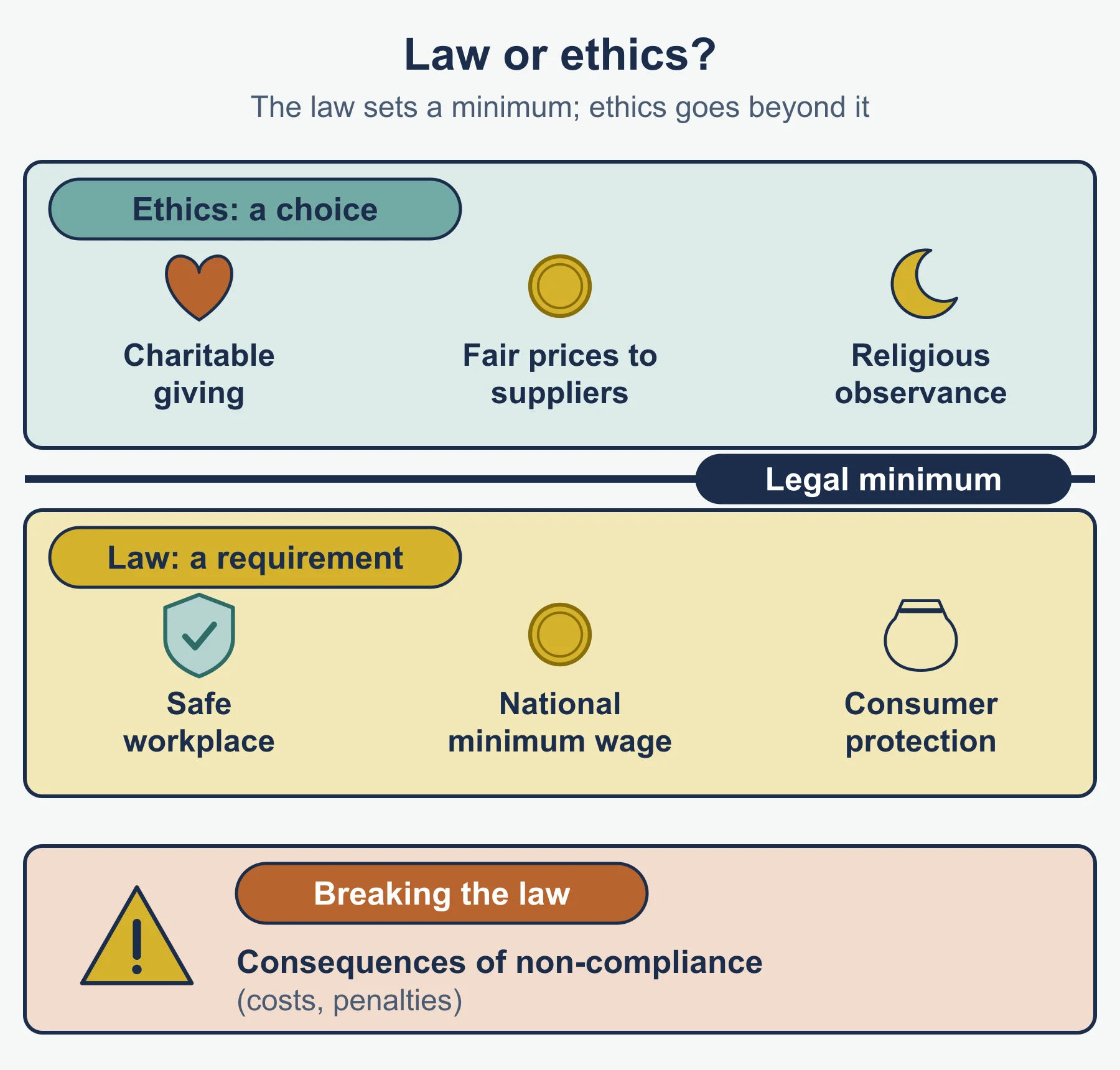
An ethical consideration is a question of right and wrong that a business weighs when it makes a choice, beyond what is simply profitable or legal. The specification lists four areas.
- Treatment of workers. Fair pay, safe conditions and reasonable hours cost money but can improve motivation and reduce staff turnover.
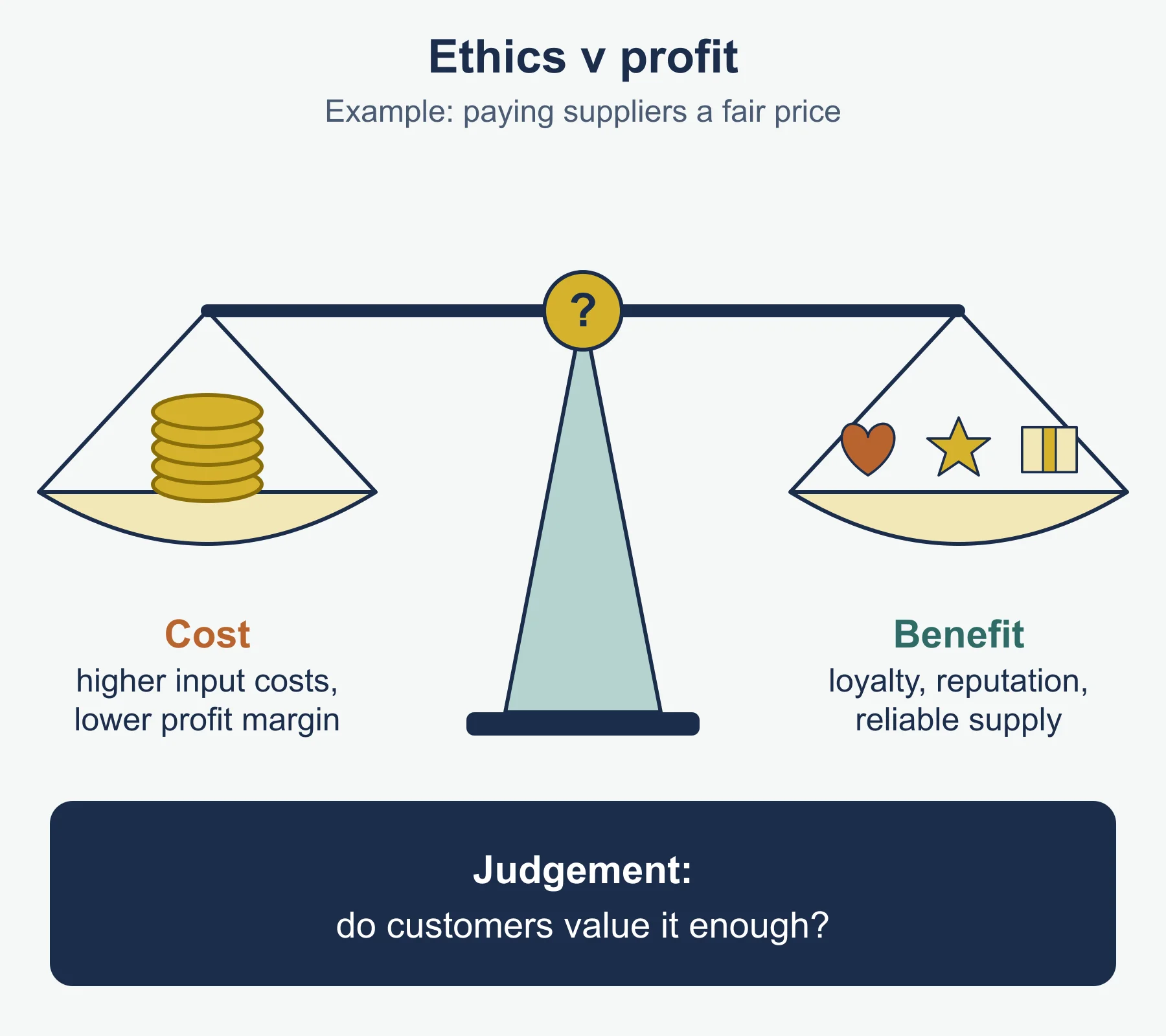
- Treatment of suppliers. Paying on time and at a fair price helps suppliers survive. Squeezing them may cut costs now but can damage the relationship and reliability of supply.
- Treatment of customers. Honest descriptions and fair pricing build trust. Misleading customers can lead to complaints, returns and lost sales.
- Sourcing of materials. Choosing ethically sourced inputs may raise costs but may allow a higher price and appeal to certain customers.
- Marketing decisions. Advertising that exaggerates claims, or targets vulnerable groups, may raise sales briefly but harms reputation.
Worked example: an ethical choice with a cost
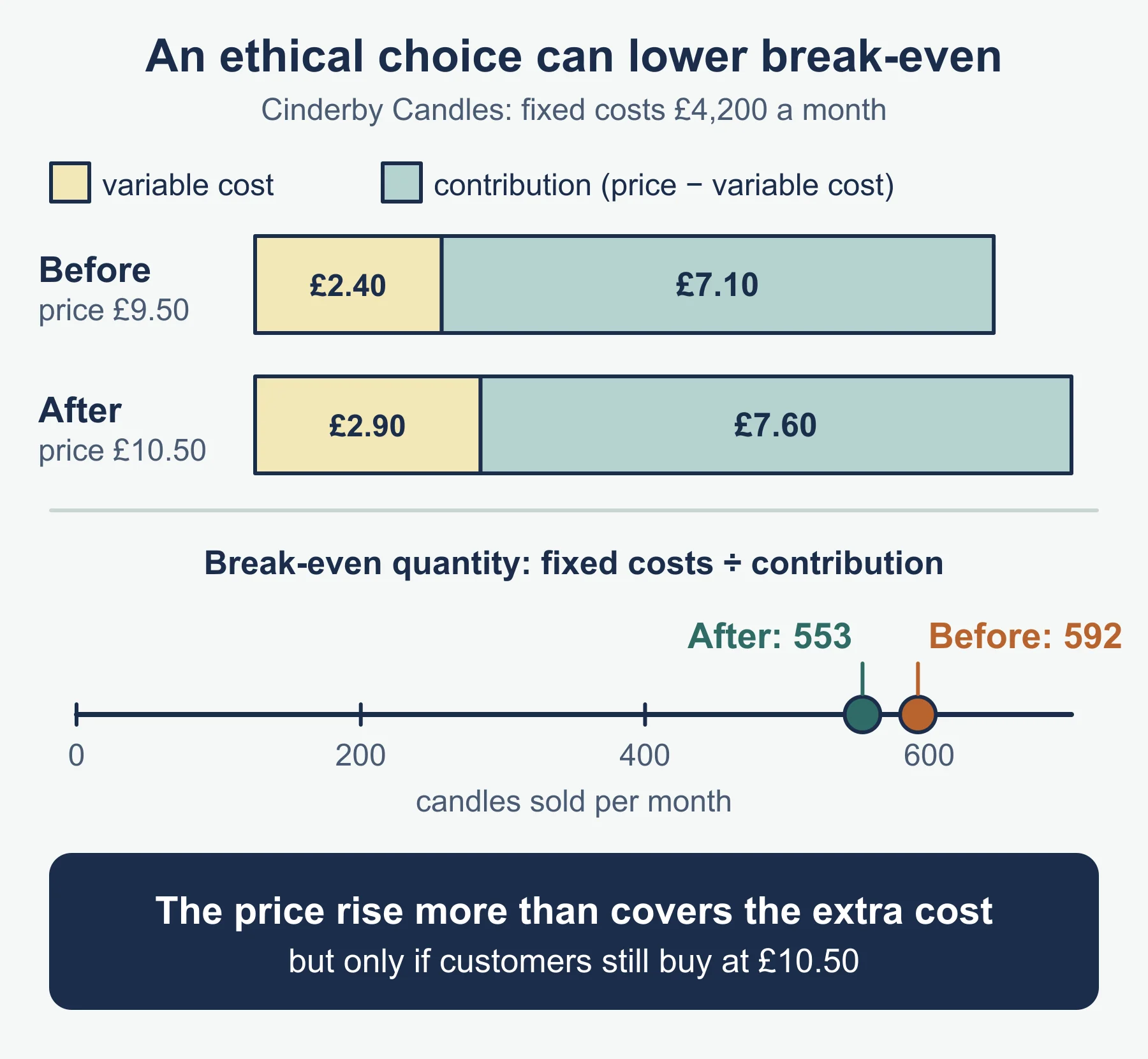
Cinderby Candles is a small business with fixed costs of £4,200 a month. It sells candles for £9.50 each. The variable cost is £2.40 per candle. The owner is offered wax from a supplier that guarantees fair pay for its workers. The new variable cost would be £2.90 per candle, so Cinderby raises its price to £10.50.
Before: contribution = 9.50 - 2.40 = £7.10 per candle
        break-even   = 4,200 / 7.10 = 591.5, so 592 candles
After:  contribution = 10.50 - 2.90 = £7.60 per candle
        break-even   = 4,200 / 7.60 = 552.6, so 553 candles
Here the ethical choice lowers the break-even quantity, because the price rise more than covers the extra cost. That only holds if customers still buy at £10.50. A fair exam answer says so: the calculation shows the possible reward, and the risk is that sales fall at the higher price.
6.1 Environmental considerations
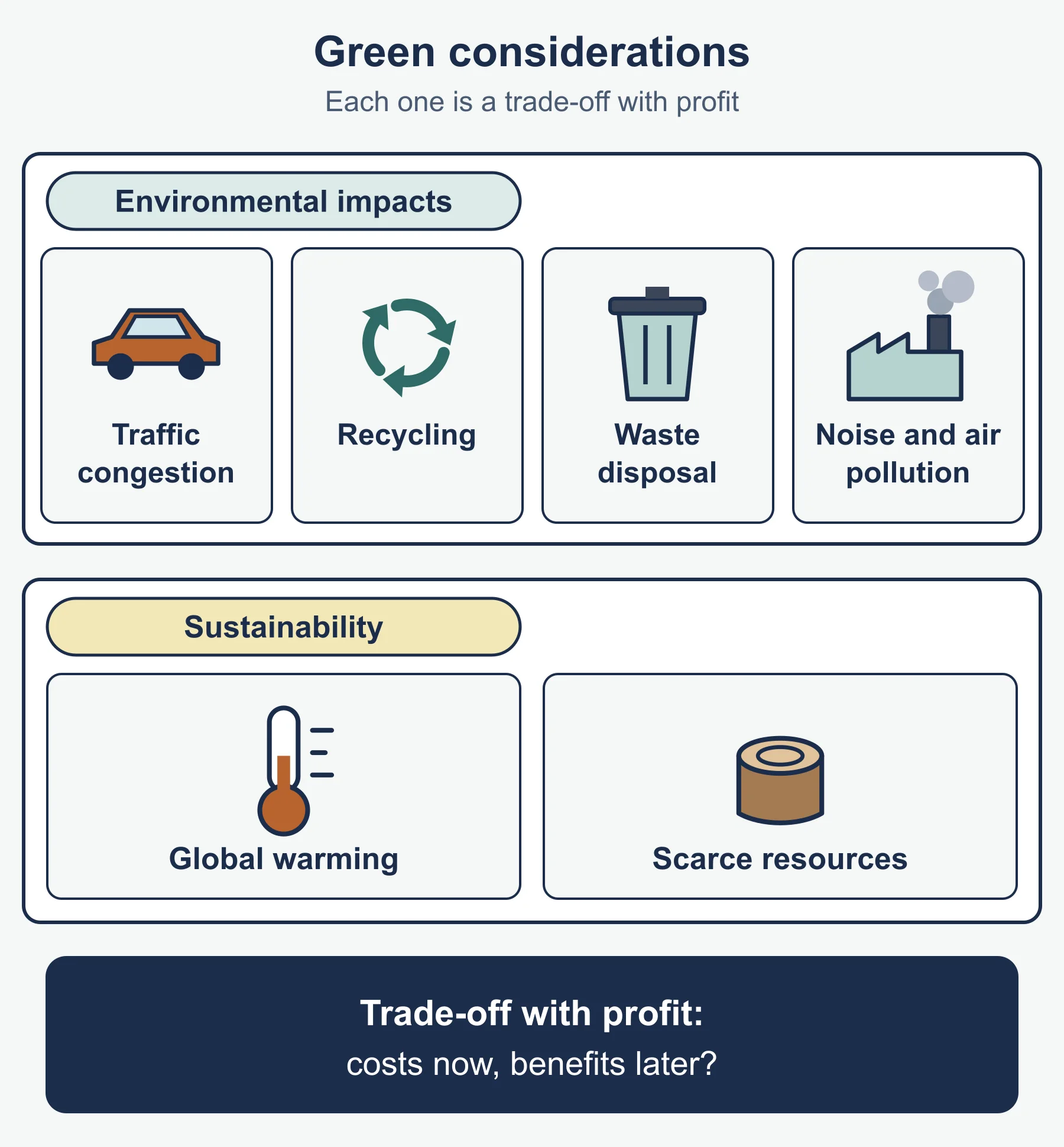
Environmental considerations are about how a business affects the natural world and how the natural world affects it. The specification names four points.
- Sustainability. Using resources in a way that does not run them out for the future, for example buying wood from replanted forests.
- Waste disposal. Waste costs money to remove, and some types must be handled safely. A business that produces less waste spends less.
- Pollution. Emissions or spills damage the local area and can cause complaints from neighbours, customers and campaigners.
- Climate change. Businesses may face higher energy costs, changing weather that disrupts supplies, and customers who want lower-carbon products.
Businesses respond in different ways: changing operations (recycling offcuts, cutting energy use), products (refillable containers) or marketing (showing their commitment). Each response has a cost and can create a reward through lower running costs, a better reputation or new customers. A business with very thin cash may reasonably phase changes in.
6.2 The economic climate
The economic climate is the general state of the economy in which a business trades. The specification points to two features: changing levels of consumer income and unemployment.
- When consumer income rises and unemployment is low, people have more to spend. Demand grows, especially for non-essential goods and services, and businesses may need more staff and stock.
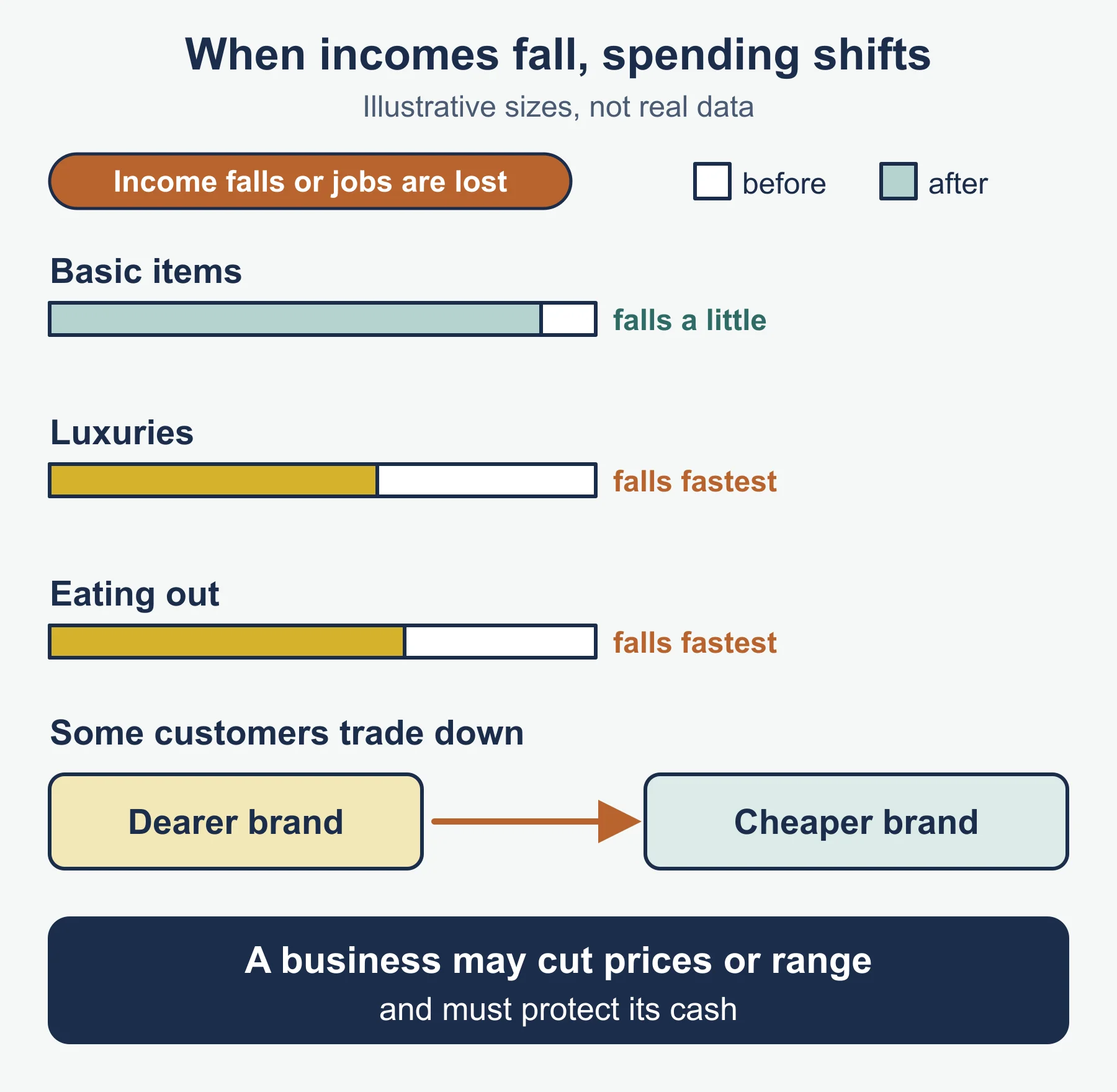
- When consumer income falls or unemployment rises, households cut back. Demand for luxuries and eating out tends to fall faster than demand for basic items. Some customers trade down to cheaper brands.
A business can respond with lower prices, cheaper product ranges, tighter control of costs or a shift in marketing towards value. It must also protect its cash while demand is weak.
Worked example: a fall in consumer spending
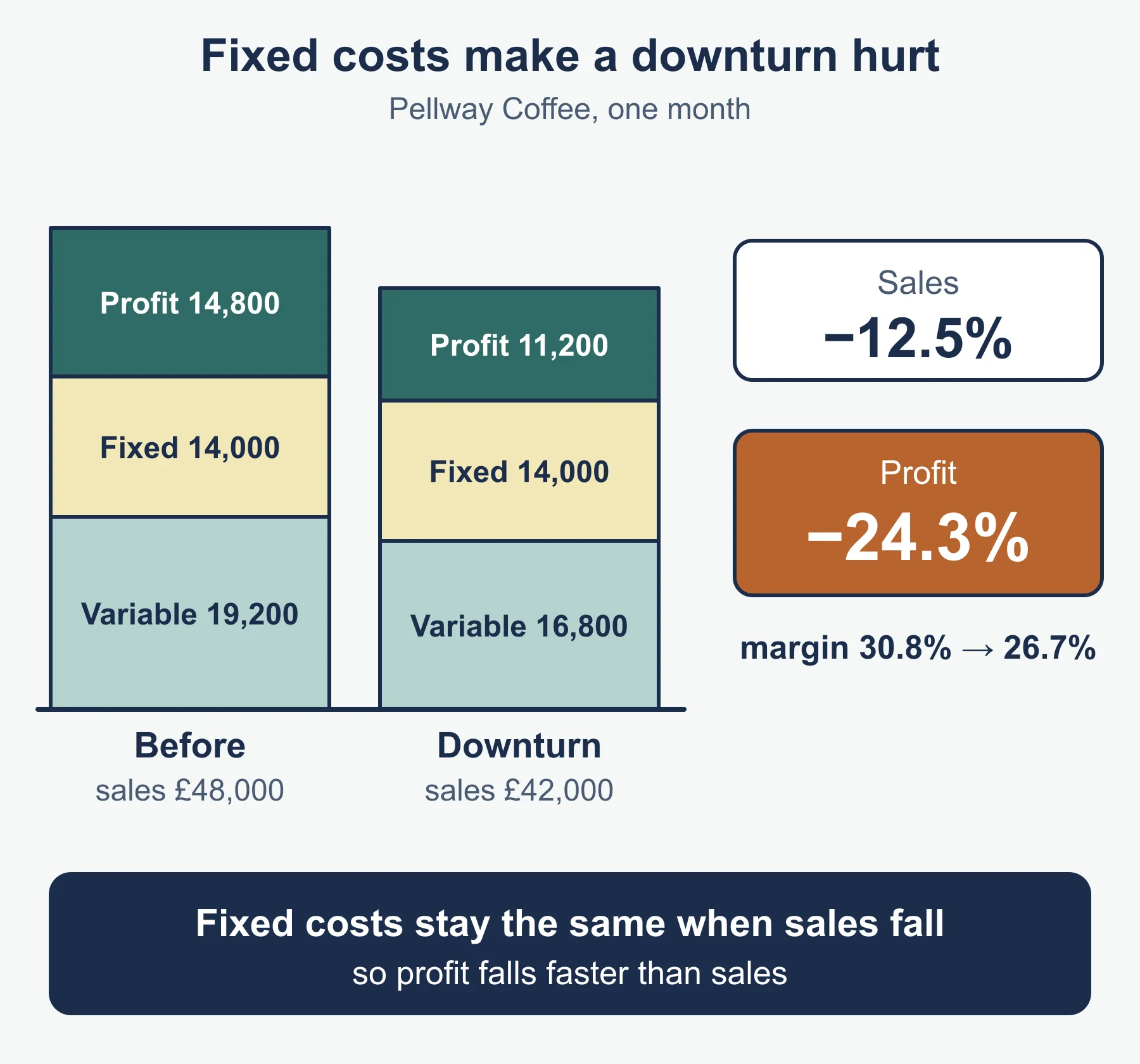
Pellway Coffee has monthly sales revenue of £48,000. Variable costs are 40% of revenue and fixed costs are £14,000 a month. In a downturn, revenue falls by 12.5%.
Before: revenue 48,000; variable costs 19,200; fixed 14,000
        net profit = 48,000 - 19,200 - 14,000 = £14,800
        net profit margin = 14,800 / 48,000 x 100 = 30.8%
After:  revenue 42,000; variable costs 16,800; fixed 14,000
        net profit = 42,000 - 16,800 - 14,000 = £11,200
        net profit margin = 11,200 / 42,000 x 100 = 26.7%
Revenue fell by 12.5%, but profit fell by 24.3% (3,600 / 14,800 x 100). The reason is that fixed costs stay the same when sales drop. This is why fixed costs make a downturn harder to survive.
6.3 Globalisation
Globalisation is the increasing connection between economies, so that goods, services, money, ideas and people move more freely across borders. For a business it means more markets to sell into, more places to buy from, and more competitors.
The impact on businesses
- Growth of multinational companies. A multinational operates in more than one country. It may have large buying power and well-known brands, and it can put pressure on smaller local firms.
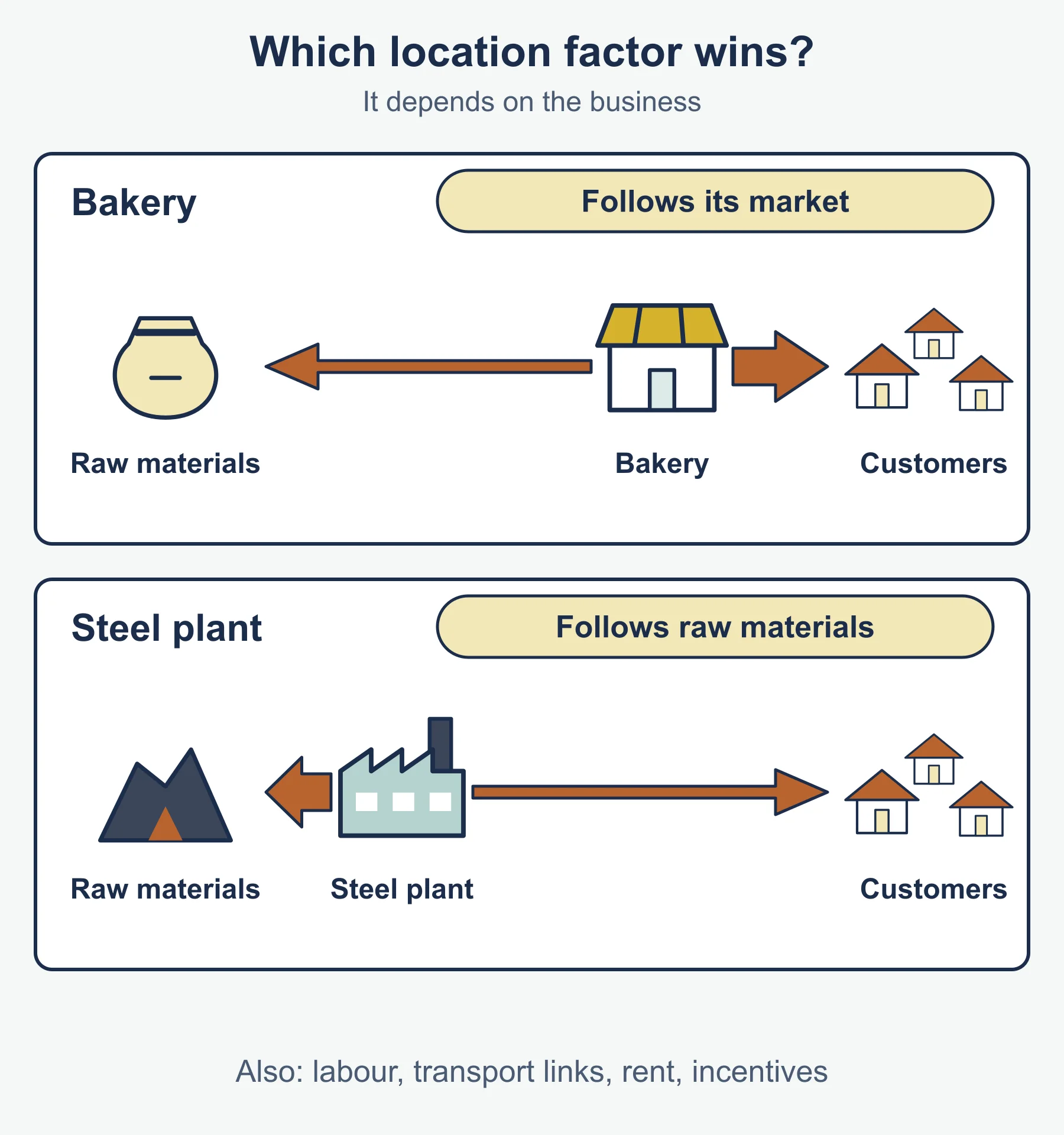
- Influences on business location. A business choosing where to base production considers costs, the proximity to its market, and the availability of labour and materials. Globalisation widens the list of possible places.
- International branding. A brand recognised in many countries can sell more easily abroad. The business must decide how far to keep the same name, look and message everywhere, and how far to adapt to local tastes.
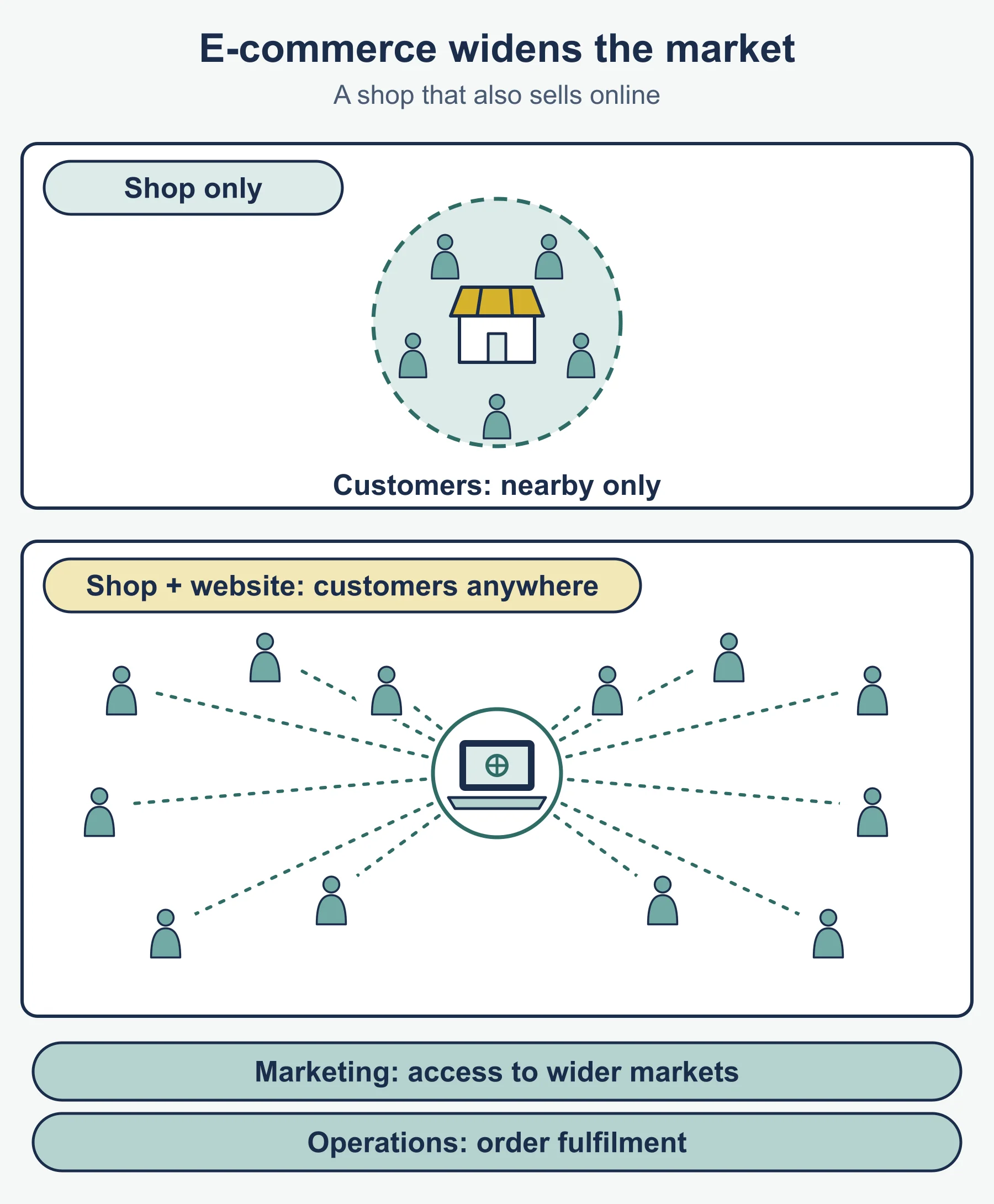
- How businesses compete internationally. Firms compete on price, quality, brand, delivery speed and service. A business may also choose to sell online to reach distant customers.
Worked example: choosing a production location
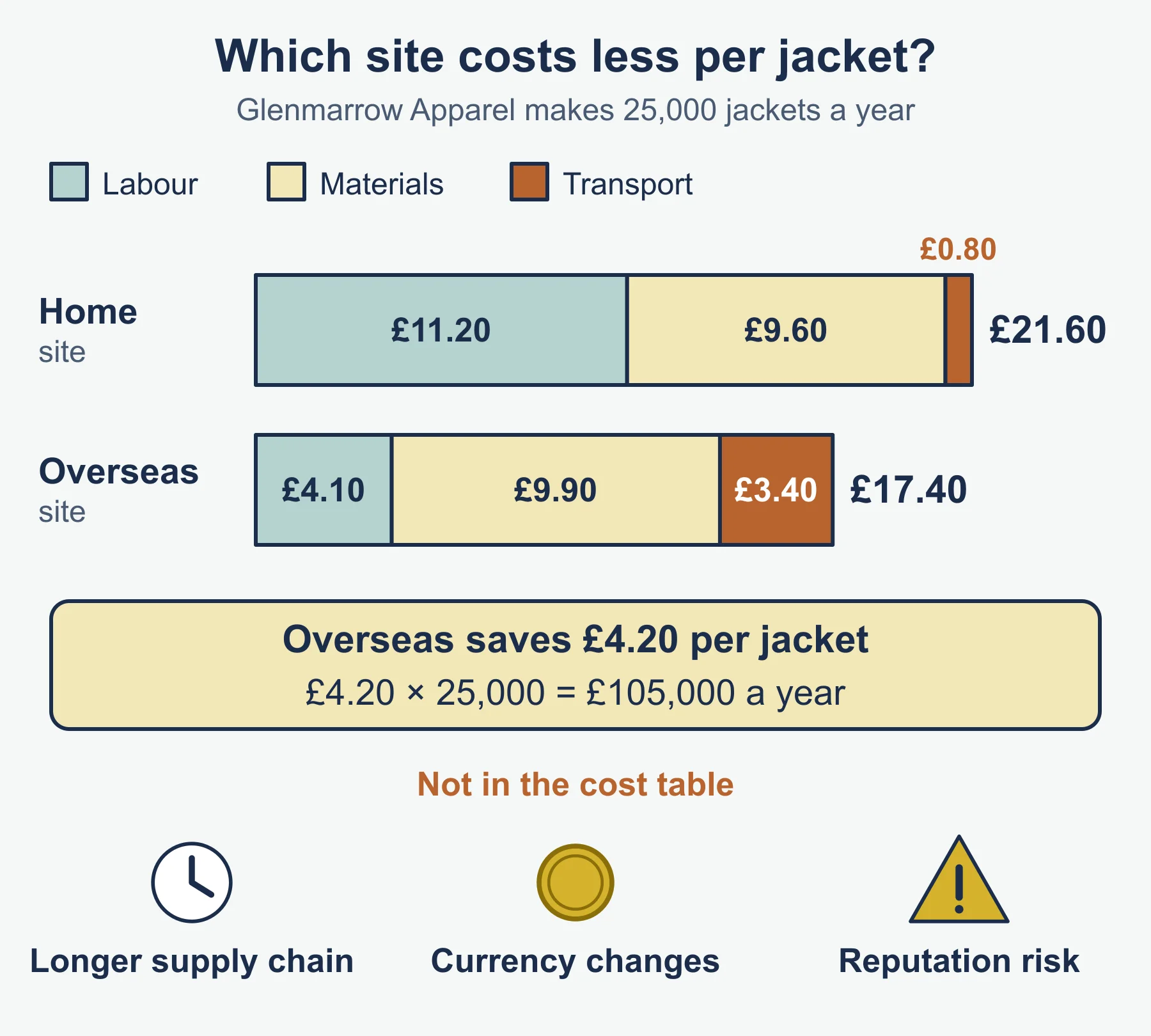
Glenmarrow Apparel makes 25,000 jackets a year for sale in its home country. It compares two sites using cost per jacket.
| Cost per jacket | Home site | Overseas site |
|---|---|---|
| Labour | £11.20 | £4.10 |
| Materials | £9.60 | £9.90 |
| Transport to customers | £0.80 | £3.40 |
| Total | £21.60 | £17.40 |
The overseas site saves £4.20 per jacket, which is £105,000 a year across 25,000 jackets. A strong answer then adds what the table does not show: a longer supply chain, slower delivery to the home market, currency changes that could raise costs, and possible harm to reputation if overseas working conditions draw criticism. The cost saving is the reward. Delays and reputational damage are the risks.
7 The interdependent nature of business
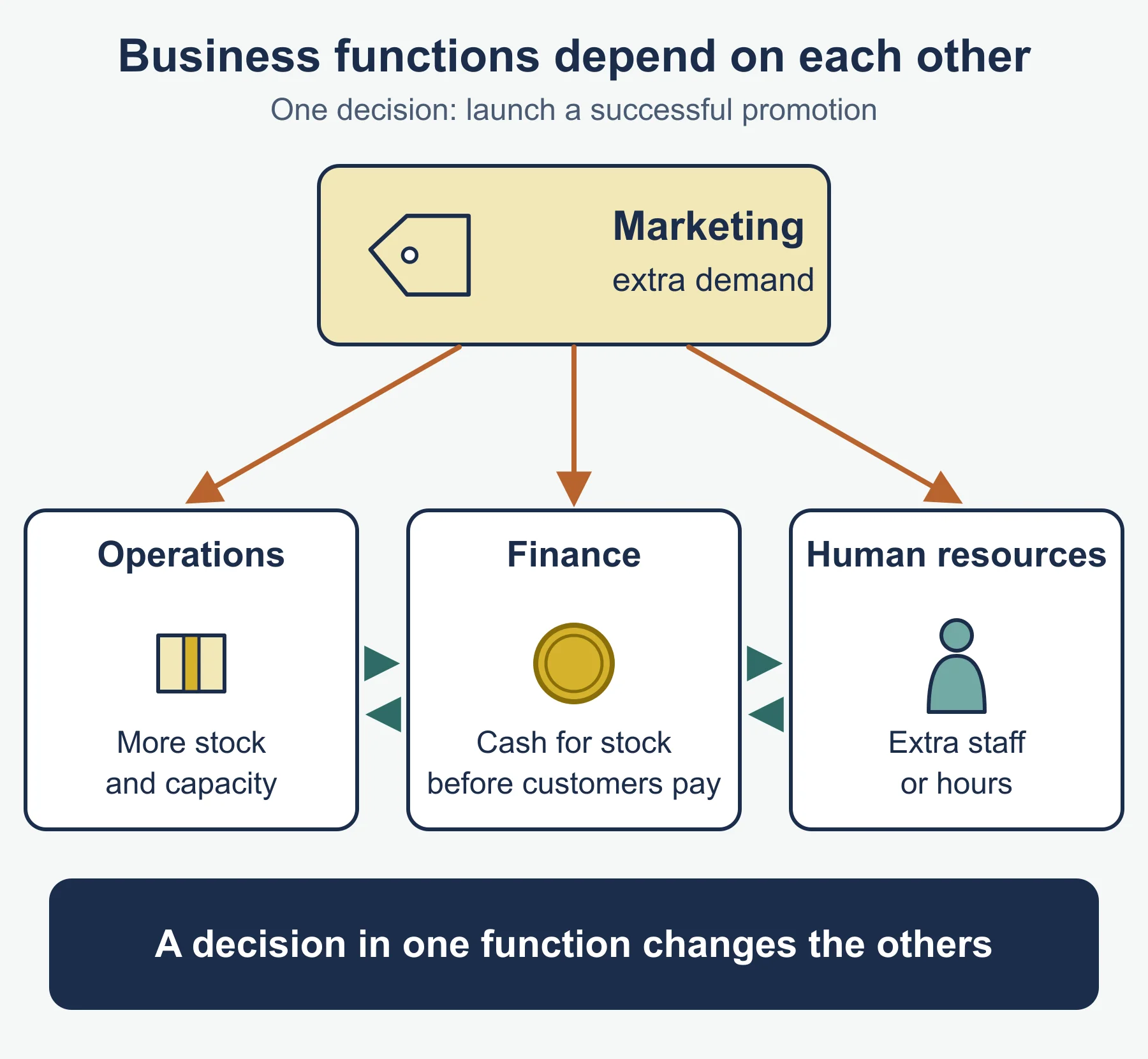
The four functions named in the specification are operations, finance, marketing and human resources. Interdependent means each function relies on the others, so a decision in one area changes the others.
| Decision | Operations | Finance | Marketing | Human resources |
|---|---|---|---|---|
| Launch of a successful promotion | Needs more stock and capacity | Needs cash to buy stock before sales are paid for | The cause of the extra demand | May need extra staff or hours |
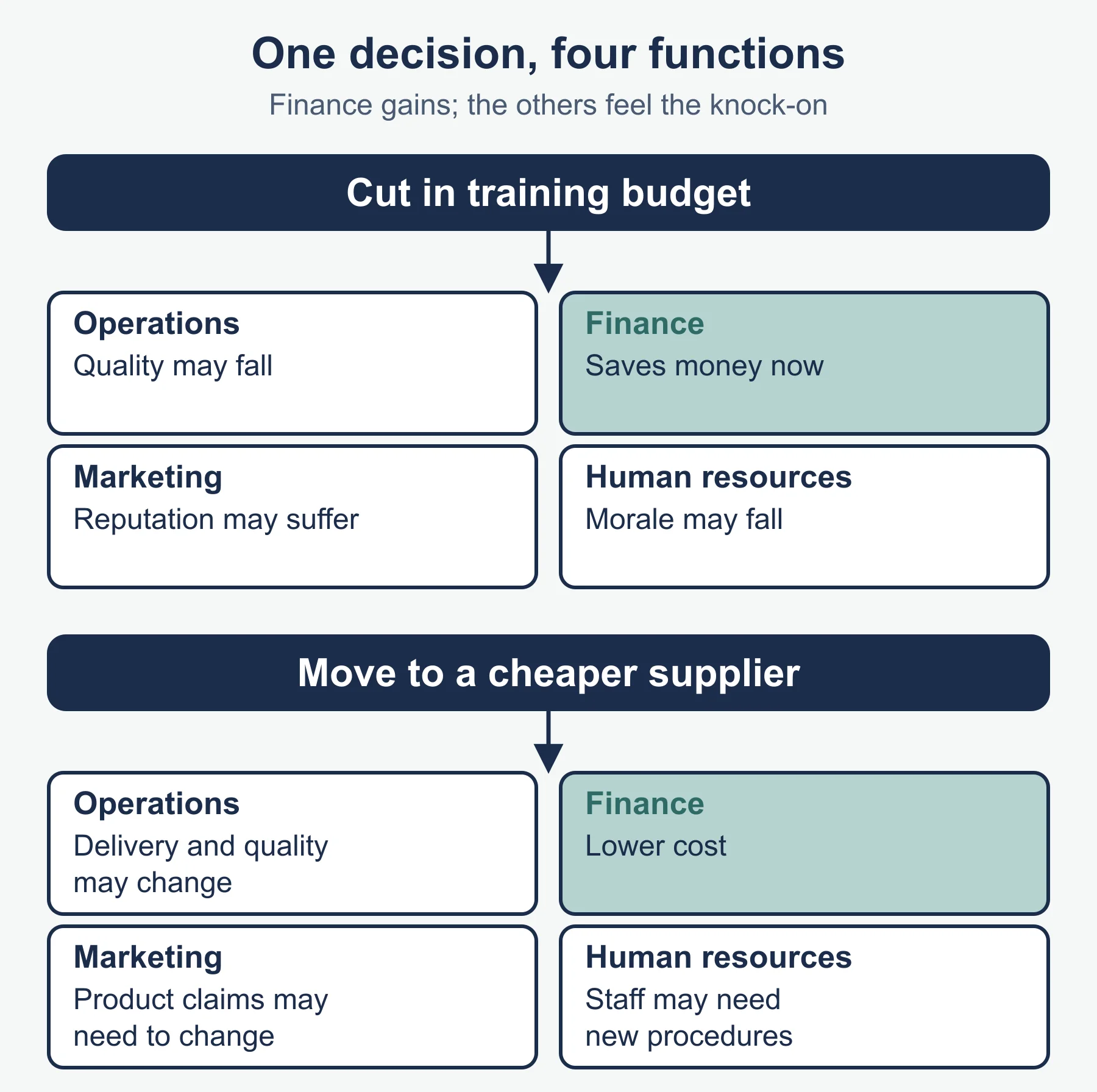
| Cut in training budget | Quality may fall | Saves money now | Reputation may suffer | Morale may fall |
| Move to a cheaper supplier | Delivery and quality may change | Lower cost | Product claims may need to change | Staff may need new procedures |
A good synoptic answer picks the function the question is about, then follows the effect into at least one other function, in the context given.
How interdependence underpins decisions
A decision to expand needs a sales forecast from marketing, a capacity check from operations, a funding plan from finance and a recruitment plan from human resources. If any one is missing, the plan can fail.
7 Risk and reward
Risk is the chance that a decision turns out badly. Reward is the benefit if it works. Bigger rewards usually carry bigger risks. Risk and reward appear in almost every business decision: opening a new shop, starting to export, buying equipment, changing a product.
A business can reduce risk by researching the market first, starting small, selling several products and keeping cash in reserve. Information helps, but it never removes risk entirely.
7 Using financial information
Financial information tells a business how it is performing and supports decisions. It also has limits: it looks at the past, it covers only what can be measured, and forecasts can be wrong.
The measures you need come from section 5:
- profit margins: gross profit margin = gross profit / revenue x 100, and net profit margin = net profit / revenue x 100
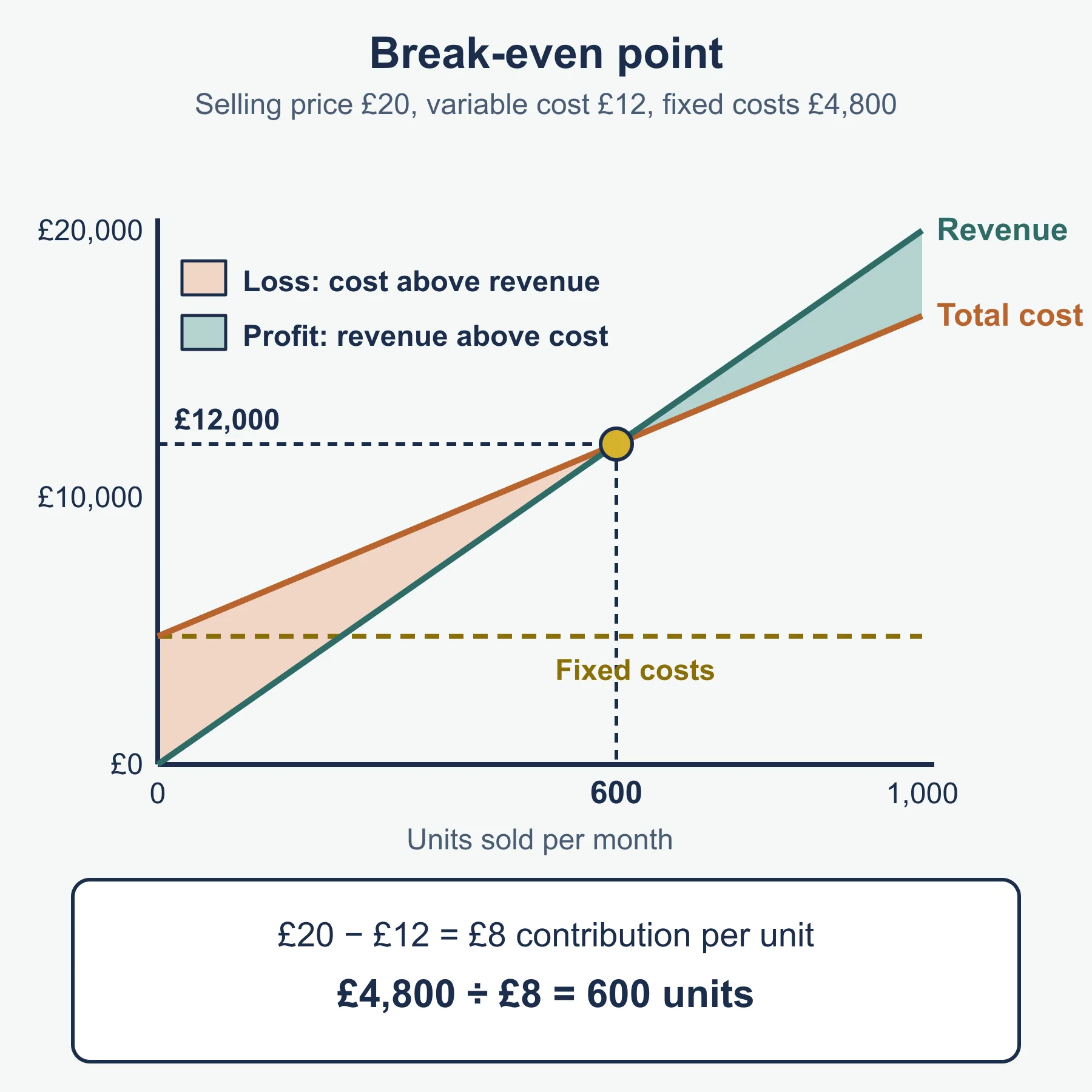
- break-even quantity = fixed costs / contribution per unit (standard form)
- average rate of return (ARR) = average annual profit / initial investment x 100 (standard form)
- cash flow forecasts, which show whether cash will run short.
Worked example: measuring performance
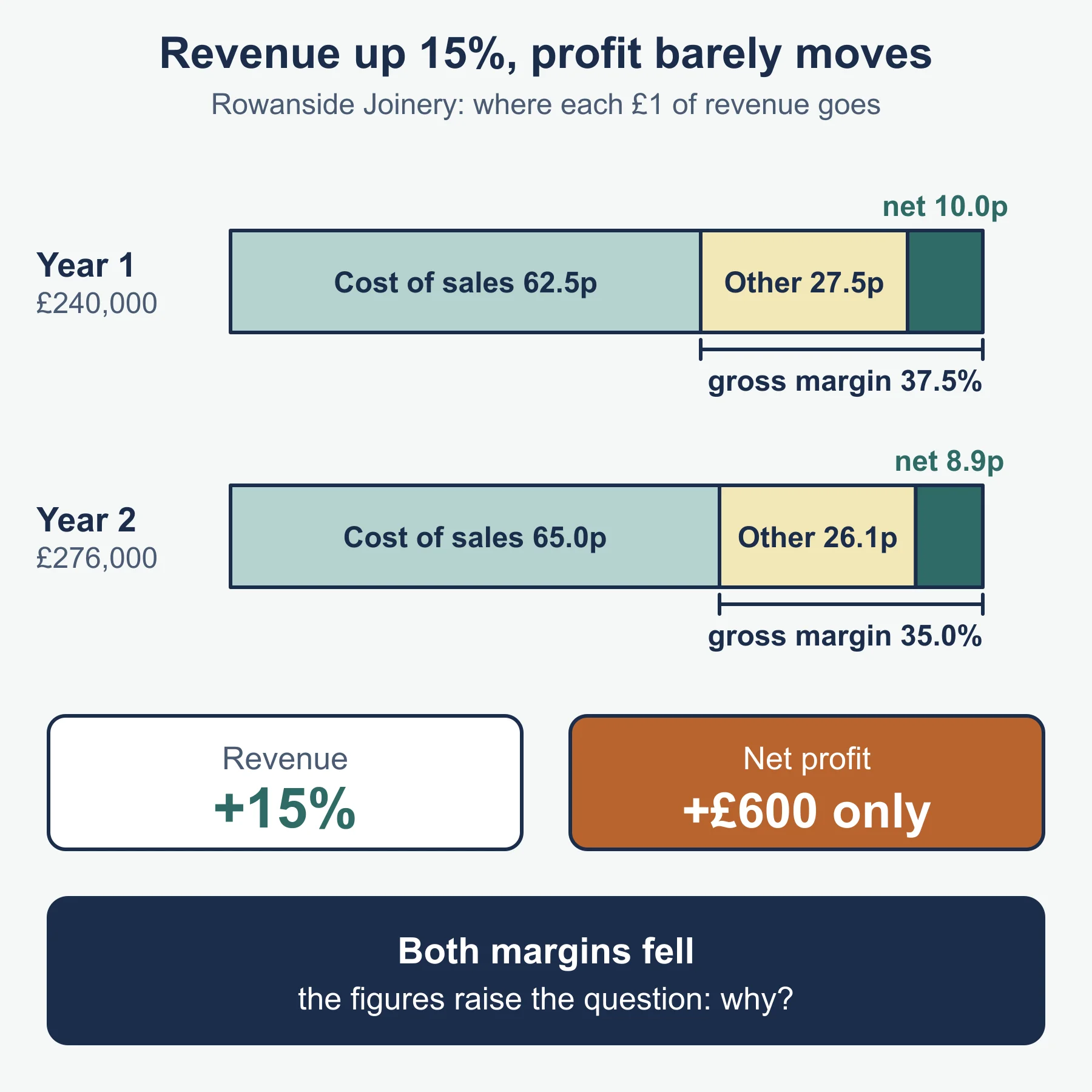
Rowanside Joinery makes fitted furniture. Its results for two years:
| Year 1 | Year 2 | |
|---|---|---|
| Revenue | £240,000 | £276,000 |
| Cost of sales | £150,000 | £179,400 |
| Other expenses | £66,000 | £72,000 |
| Gross profit | £90,000 | £96,600 |
| Net profit | £24,000 | £24,600 |
| Gross profit margin | 37.5% | 35.0% |
| Net profit margin | 10.0% | 8.9% |
Revenue grew by 15%, but net profit rose by only £600 and both margins fell. The data does not say why. Cost of sales may have risen because of dearer materials, or discounts may have been used to win orders. The financial information raises a question; the owner must then look at operations and marketing to answer it.
Worked example: risk, reward and ARR
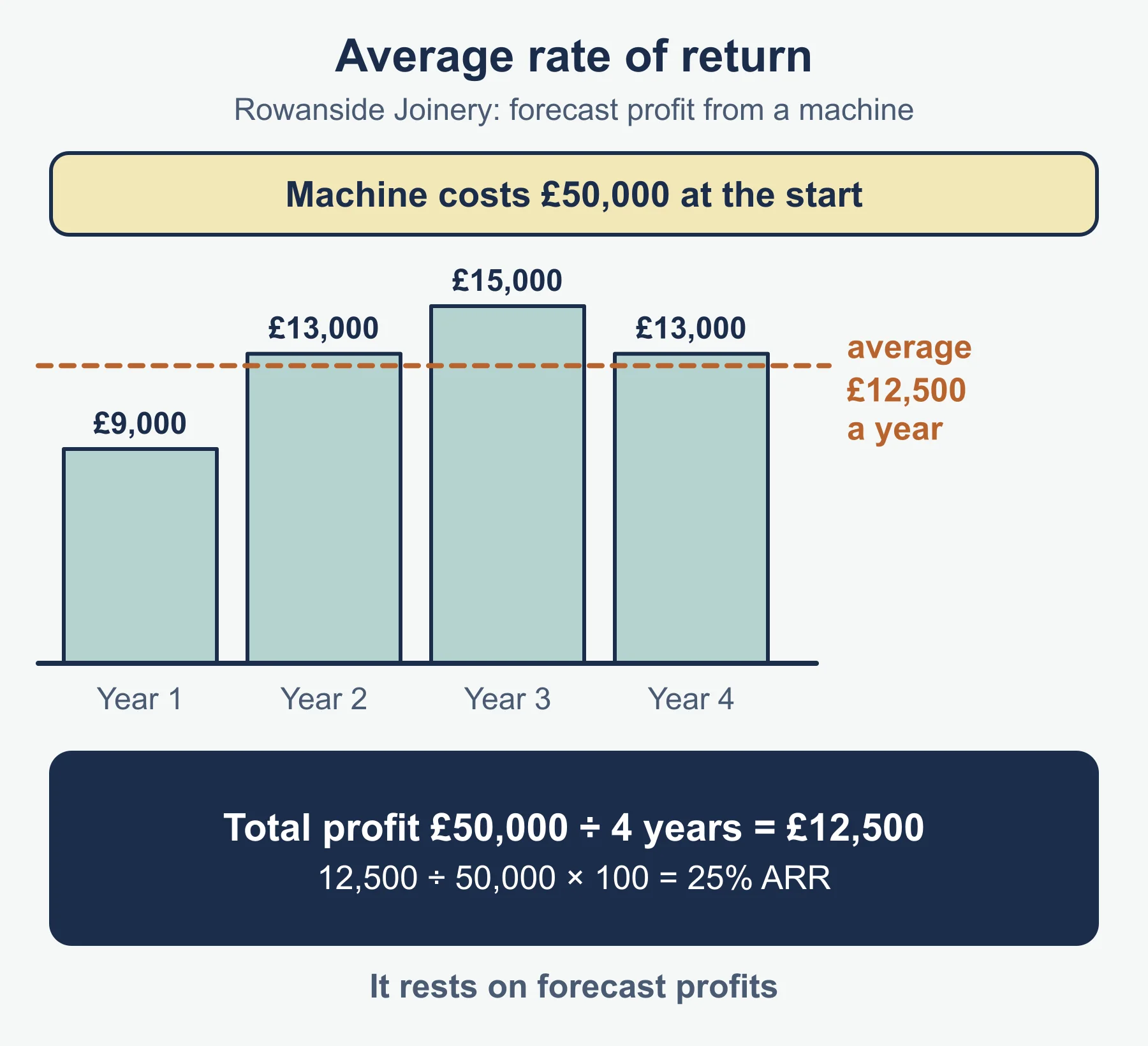
Rowanside is considering a £50,000 machine. Forecast profits from the extra work are £9,000, £13,000, £15,000 and £13,000 over four years.
Total profit  = 9,000 + 13,000 + 15,000 + 13,000 = £50,000
Average annual profit = 50,000 / 4 = £12,500
ARR = 12,500 / 50,000 x 100 = 25%
A 25% ARR looks attractive, but it rests on forecasts. The machine also means a £50,000 cash outflow at the start, so the cash flow forecast must show the business can afford it. Staff would need training (human resources) and the new work must be sold (marketing). The decision links all four functions.
Common errors
- Listing ethical and environmental points with no link to cost, reputation or sales.
- Treating globalisation as only good news or only bad news when the question says evaluate or justify.
- Saying a fall in consumer income hurts every business equally, instead of saying which goods are affected.
- Writing about one function when the question is synoptic.
- Quoting a margin or ARR without saying what it means for the decision.
Frequently asked questions
What is globalisation in OCR GCSE Business? Globalisation is the increasing connection between economies, so that goods, services, money and ideas move more easily across borders. OCR GCSE Business (J204) looks at its impact through the growth of multinationals, business location, international branding and how businesses compete internationally.
Can behaving ethically lower a business’s costs or raise its profit? It can. Ethical choices such as fair pay may cost money but can improve motivation and reduce staff turnover, and ethically sourced inputs may allow a higher price that more than covers the extra cost.
How does a fall in consumer income affect a business? When consumer income falls and unemployment rises, people have less to spend, so demand falls, especially for non-essential products. Because fixed costs stay the same, profit can fall by a larger percentage than revenue.
What are the four business functions in J204? The four functions named in the specification are operations, finance, marketing and human resources. They are interdependent, so a decision in one, such as expanding, needs input from all the others.
How can a business reduce risk? A business can reduce risk by researching the market first, starting small and selling several products rather than relying on one. Bigger potential rewards usually come with bigger risks.
Official syllabus
OCR GCSE (9-1) Business (J204), Version 2.0 (January 2026), first assessment 2019, published by OCR. Sections 6 and 7 of the specification, as part of Business 2: operations, finance and influences on business.
Get free revision emails (optional)
Occasional emails with practice questions, worked explanations and links to free resources for the qualification and subjects you choose. No spam, and you can unsubscribe from any email. The free tools on this site never need an email.
Related resources
-
Practice questions
OCR GCSE Business: Influences on business and The interdependent nature of business (J204) – Practice Questions
Twelve original practice questions with worked answers on ethical, environmental, economic and global influences and interdependence, OCR GCSE Business.
Business · OCR · GCSE
Try questions -
Revision notes
OCR GCSE Business: Influences on business and The interdependent nature of business (J204) – Revision Notes
Condensed revision notes on ethical, environmental, economic and global influences, risk and reward, and linking business functions, for OCR GCSE Business.
Business · OCR · GCSE
Revise topic -
Study guides
OCR GCSE Business: Operations (J204)
Study guide to section 4 Operations in OCR GCSE (9-1) Business J204: production, quality, selling, consumer law, location, suppliers, with worked examples.
Business · OCR · GCSE
Read guide
Related articles
-
teaching
A Level tuition in Dubai: Cambridge or Pearson Edexcel International A Level?
Schools in Dubai and Abu Dhabi teach either Cambridge International AS & A Level or Pearson Edexcel International A Level. How the two are structured, why it matters for tuition, and how online classes from Lahore work.
9 October 2026
-
curriculum guides
Choosing subjects at IGCSE and A Level
How subject choices at 14 and 16 affect university options later, and how to keep pathways open without overloading a timetable.
28 July 2026
Studying this with a teacher
Working through Business GCSE?
This page is free and stays free. If you would rather be taught it, Marlbridge runs Business classes one-to-one, online in your own time zone. One-to-one only for this course: Rs 6,000 per class in Pakistan, with other currencies on the fees page. The first trial class is free. WhatsApp replies within an hour (8am–11pm Pakistan time, every day); email the same day.
OCR Business teachers at Marlbridge
