
Revision Notes
OCR GCSE Business: Operations (J204) – Revision Notes
Condensed revision notes for section 4 Operations in OCR GCSE (9-1) Business J204, with tables, method steps, a self-test and common lost marks.
- Subject
- Business
- Level
- GCSE
- Topic
- Operations, finance and influences on business
- Author
- Marlbridge Academic Team
- Updated
- Reviewed by
- Salman Ahmad (what this means)
Aligned to OCR GCSE Business (J204), Version 2.0 (January 2026), for first assessment in 2019. Official specification .
Syllabus page (what it covers and how it is assessed): OCR GCSE Business.
Syllabus points this page covers
J204
- 4 Operations
Found an error? Report a correction.
Need help with this topic? Request a free trial class for GCSE Business (J204).
Condensed recall for section 4, Operations, of the OCR GCSE (9-1) Business (J204) specification, Version 2.0 (January 2026), topics 4.1 to 4.6, assessed in Business 2 (J204/02). For full explanations and worked examples, read the study guide. Test yourself with the practice questions, find your weak areas with the free diagnostics, and tick off topics on the checklist. The course hub lists everything for this qualification, and the wider component is in the operations, finance and influences notes.
4.1 Production processes
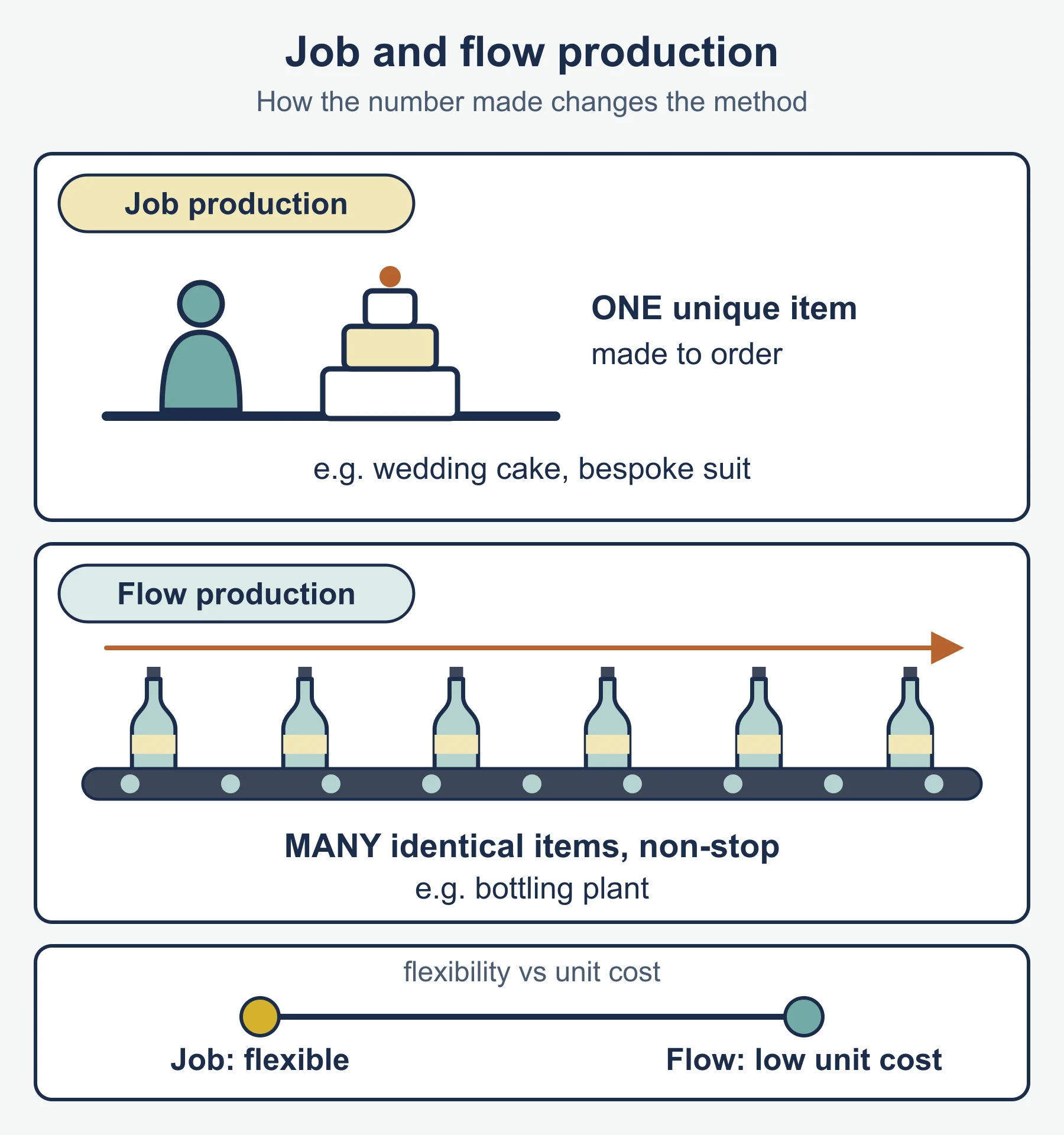
| Process | What it is | Strengths | Weaknesses |
|---|---|---|---|
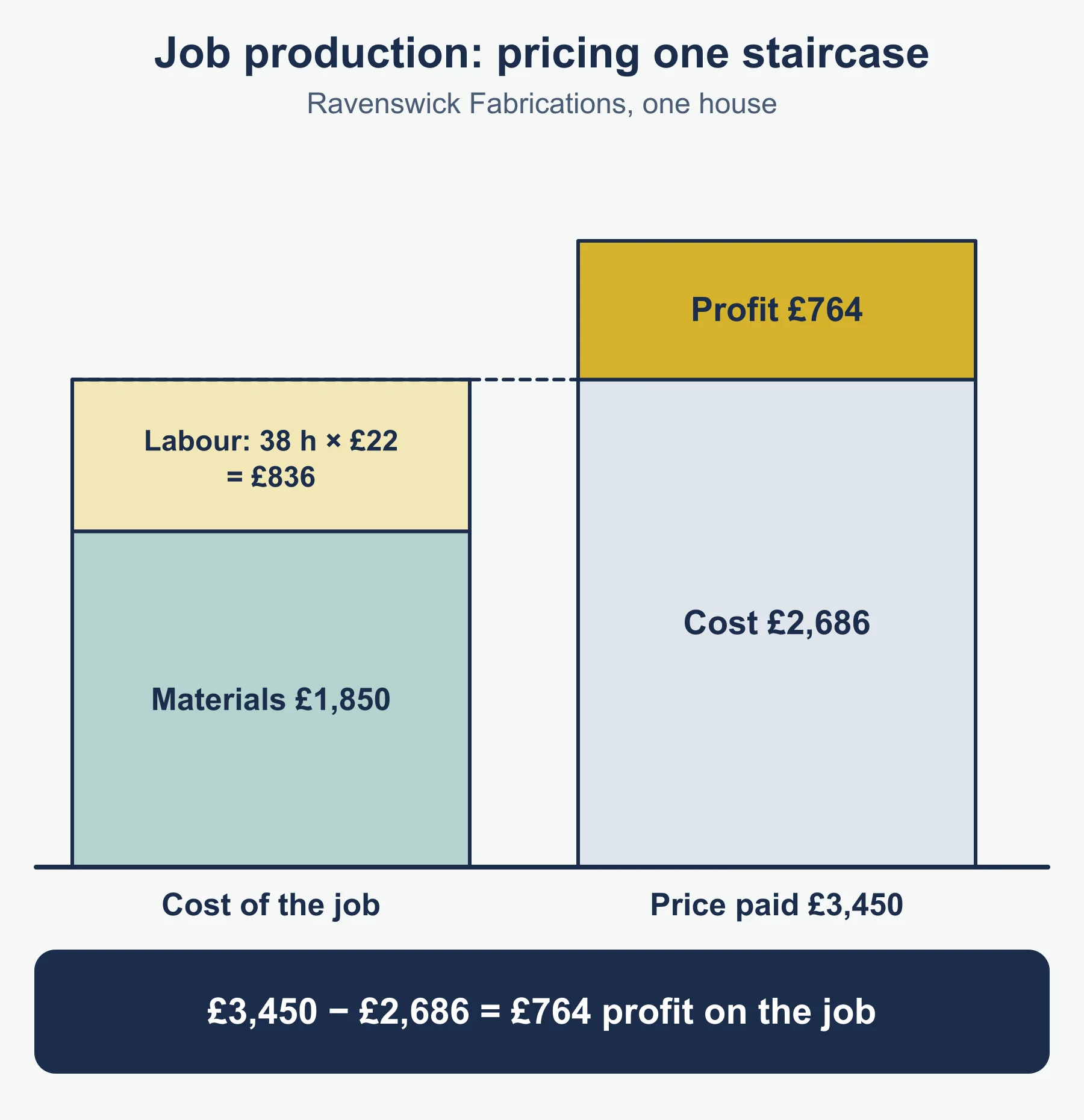
| Job | One-off product made to order | Matches the customer exactly, high price possible | Slow, skilled labour, costly per unit |
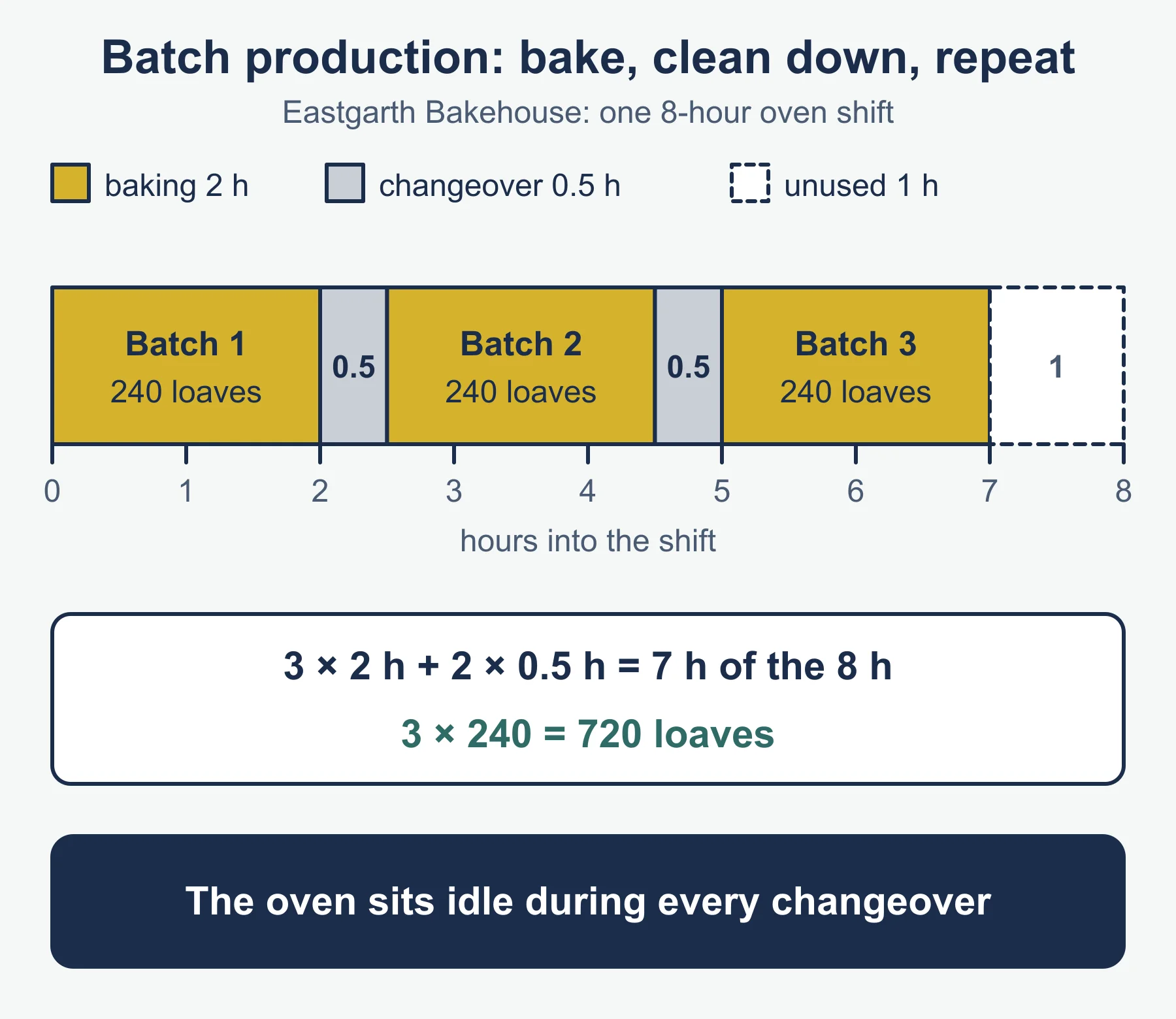
| Batch | Set quantity of identical items, then switch product | Variety, can follow demand | Idle time at changeovers, stock waiting |
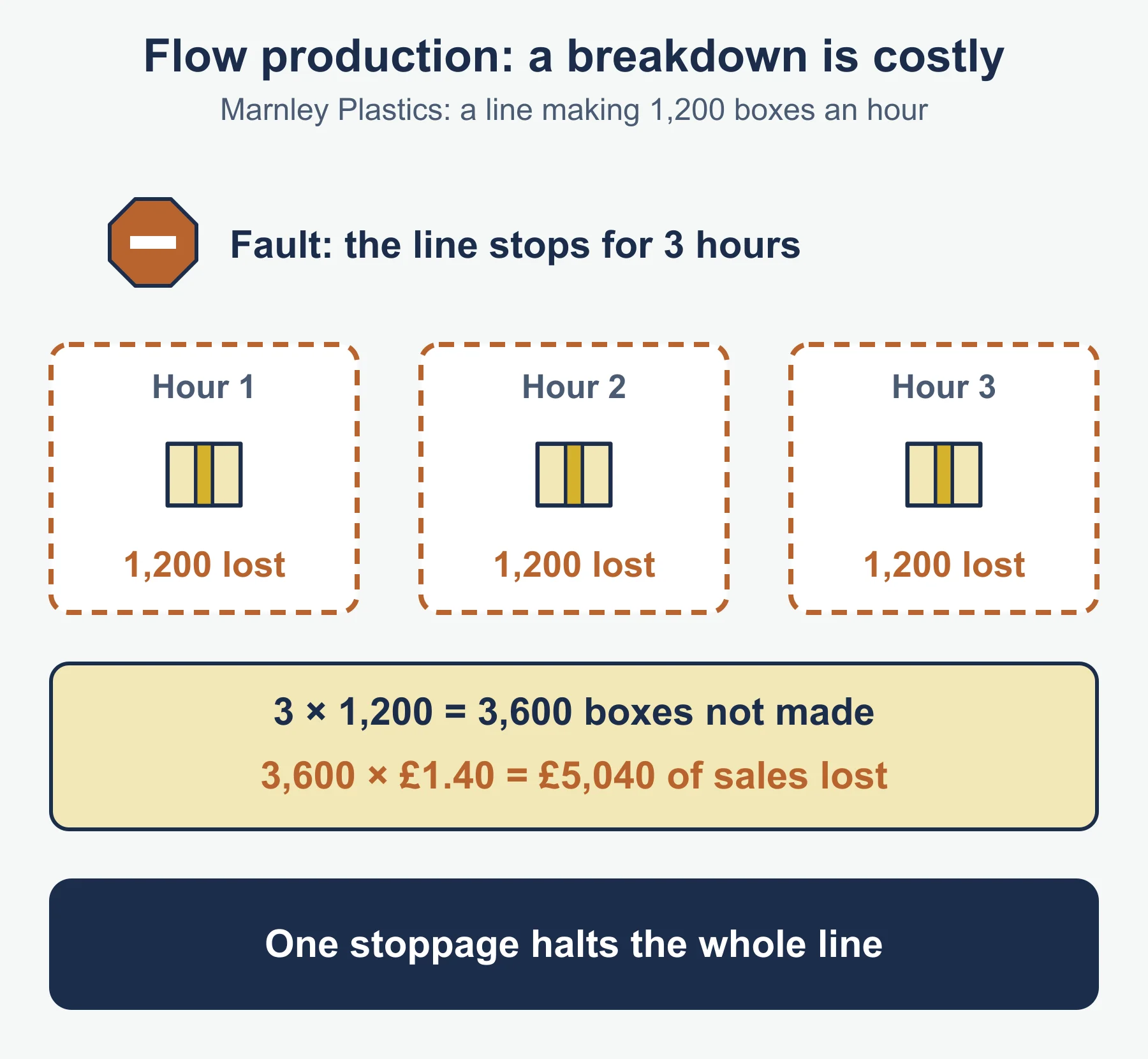
| Flow | Continuous production of identical items | Low unit cost at high volume | Costly set-up, inflexible, a fault stops everything |
Match the process to the product: a custom wedding cake is job, a tray of rolls is batch, a bottled-water line is flow.
Technology
| Term | Meaning | Typical impact |
|---|---|---|
| Automation | Machines do tasks with little human input | Faster, steadier output, fewer routine jobs |
| Computers | Control machines, plan production, hold stock and quality data | Fewer errors, better planning |
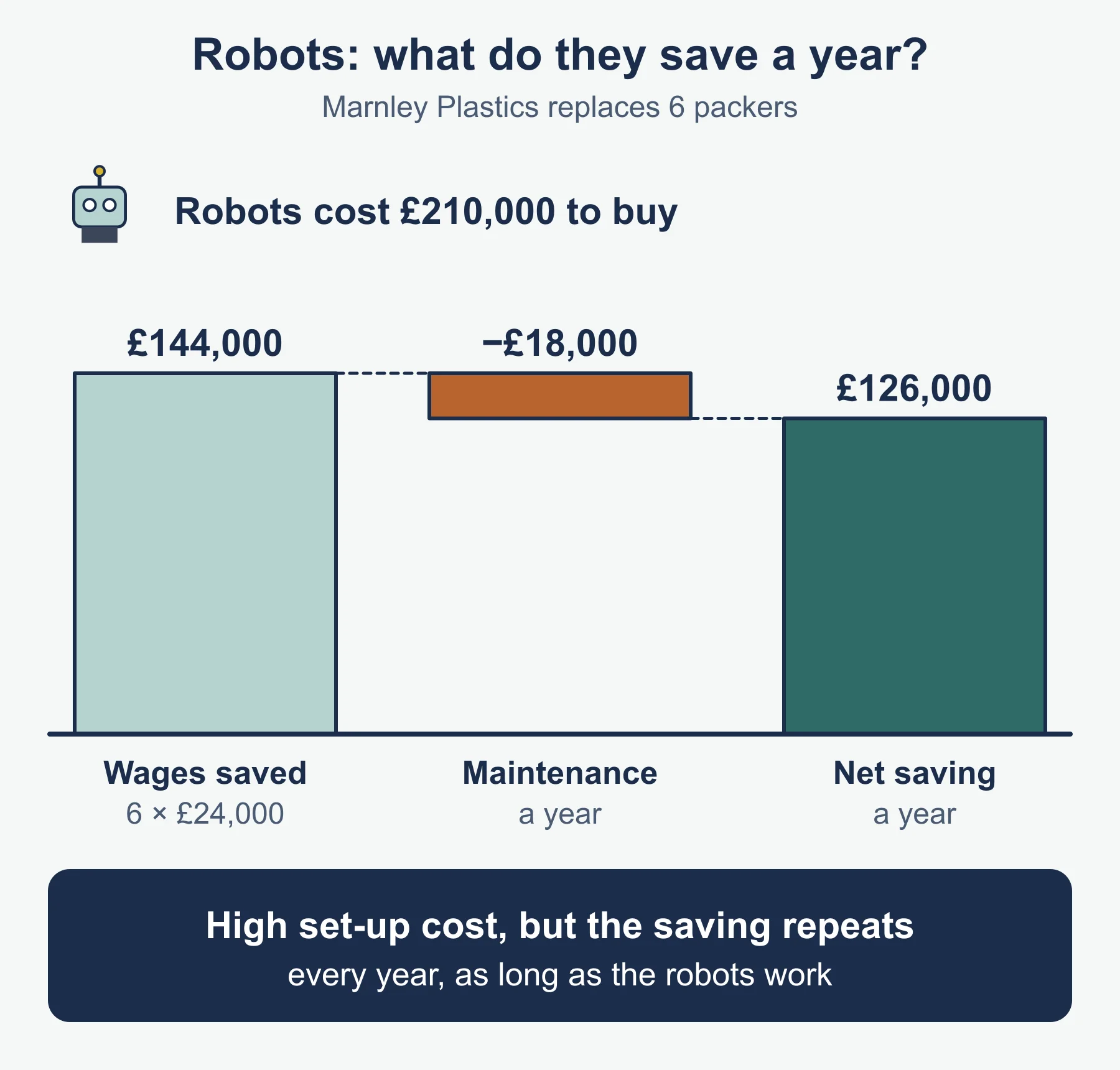
| Robotics | Programmable machines doing welding, packing, moving | Consistent work, high purchase and maintenance cost |
Benefits: consistency, speed, lower labour cost in the long run, work through the night. Drawbacks: high set-up cost, maintenance, technical skills needed, redundancy worries.
Method: answering a technology question
- Name the technology used in the case.
- State the effect on output, cost or quality.
- Say who or what is affected: customers, staff, profit.
- Weigh it against the cost or risk, then judge.
4.2 Quality of goods and services
Quality means how well a good or service meets the standard customers expect for the price. In services, think accuracy, speed, courtesy, consistency.
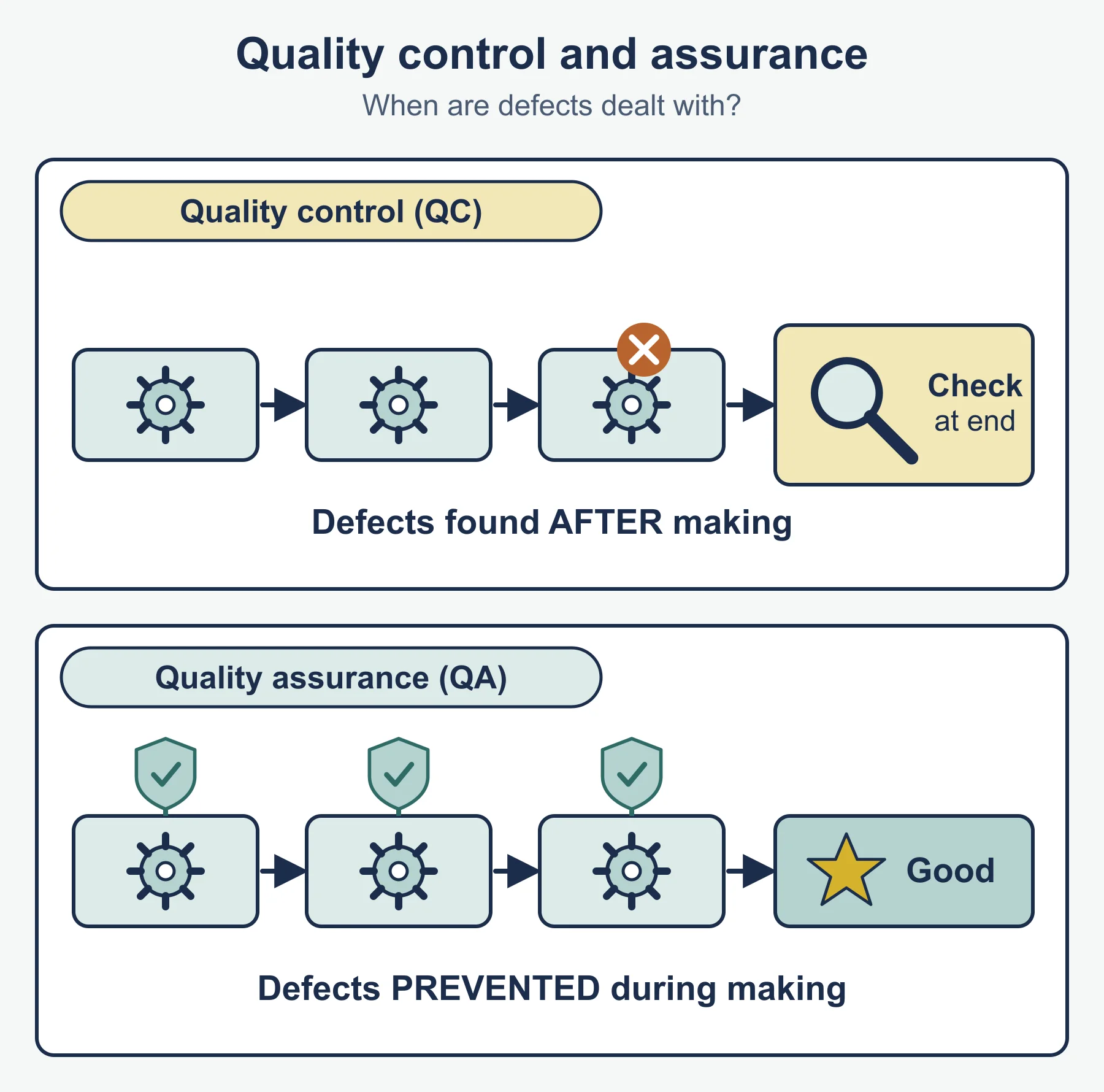
| Quality control | Quality assurance | |
|---|---|---|
| Aim | Find faults | Prevent faults |
| When | At the end or at set checkpoints | At every stage |
| How | Inspect, test, reject | Standards, training, supplier checks, fixing causes |
Why quality matters (four points to remember):
- Reputation of the business.
- Gaining customers and retaining them.
- Fewer product returns.
- Less risk of a product recall.
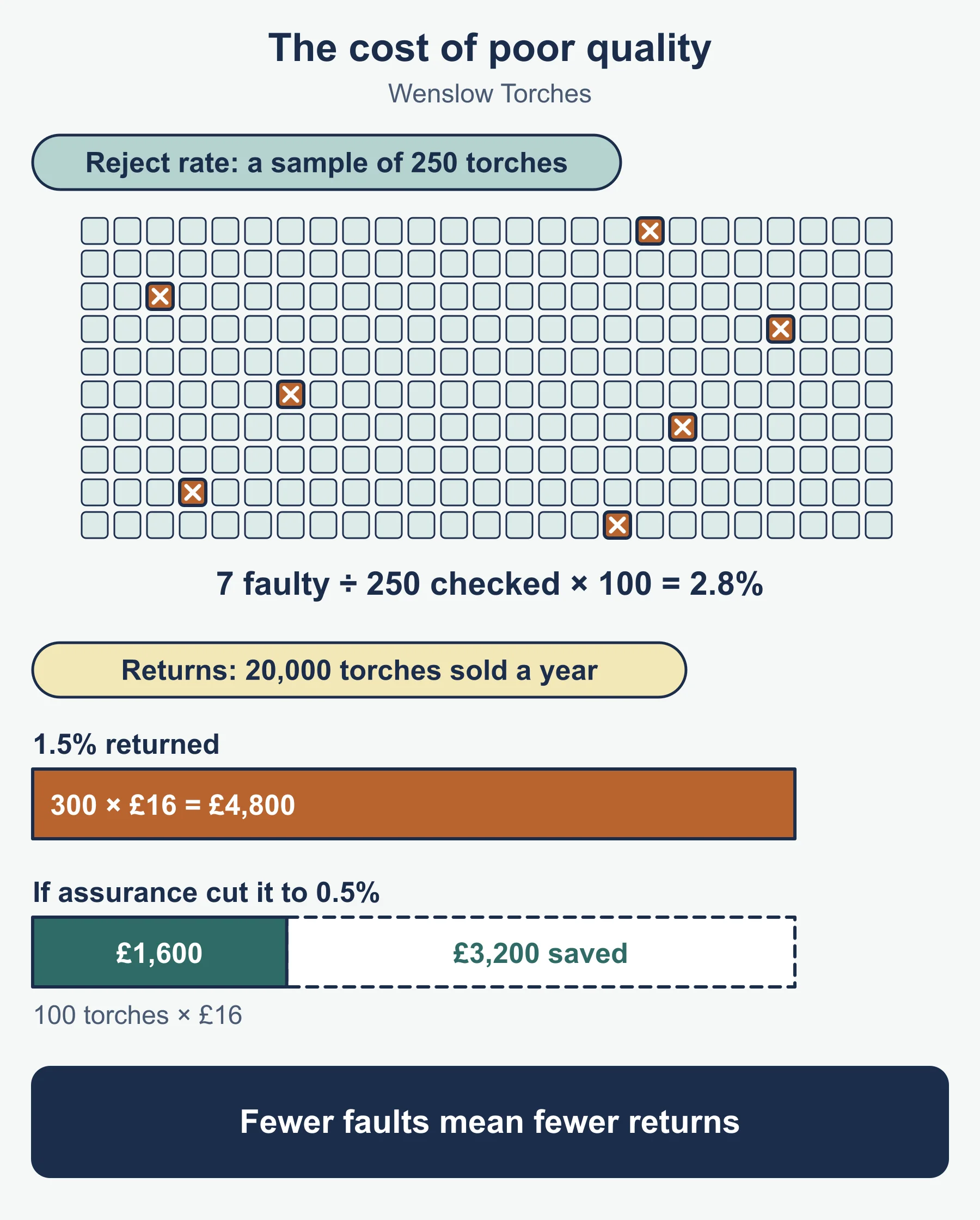
Reject rate (a standard calculation) = faulty items / items checked x 100. For example, 9 faulty in a sample of 300 gives 9 / 300 x 100 = 3%.
Cost of returns (standard form, not given in the specification) = number returned x cost per return. For example, 4,000 sales with 2% returned is 80 items; at £15 each the cost is £1,200.
4.3 The sales process and customer service
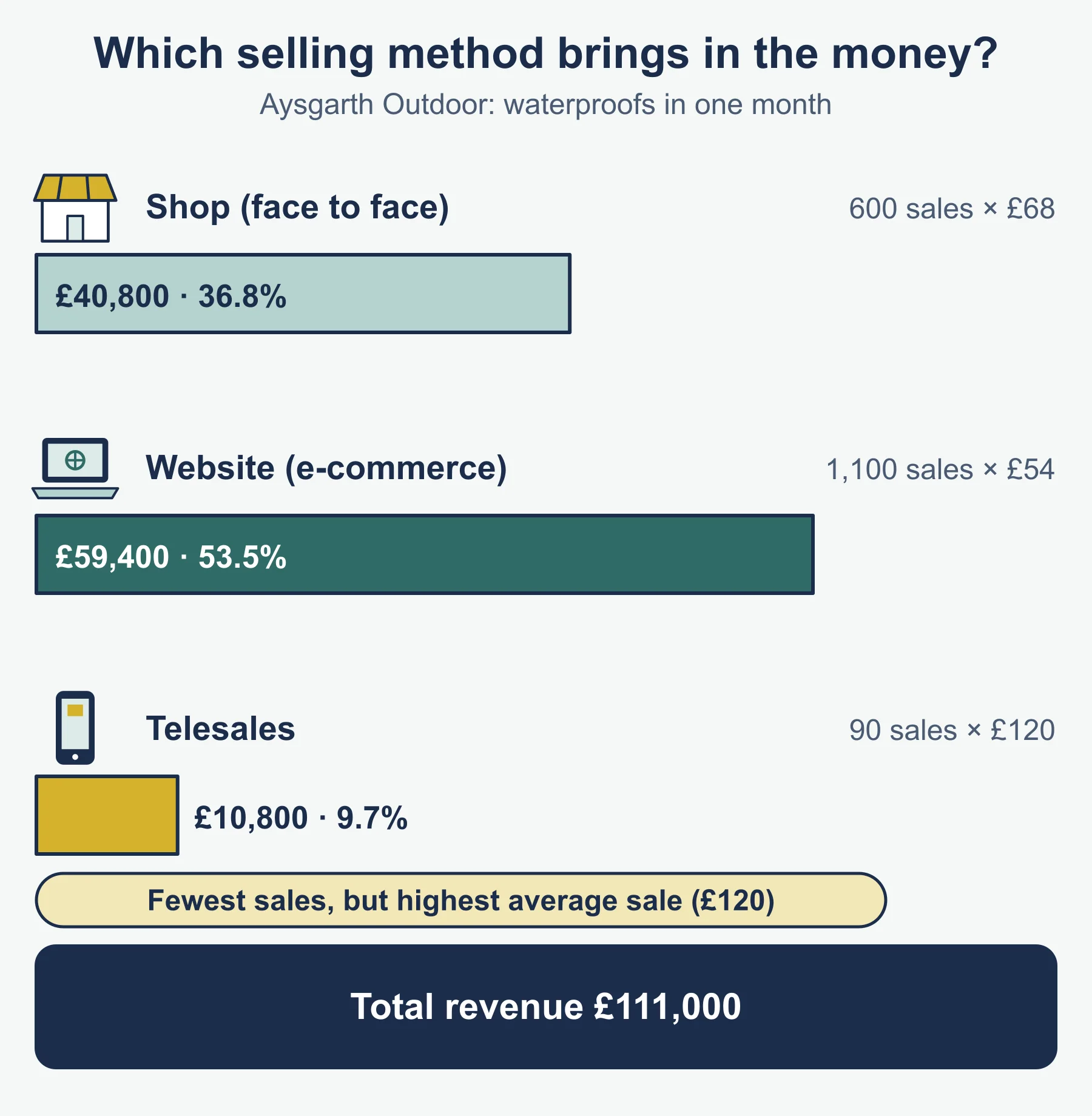
| Method | For | Against |
|---|---|---|
| E-commerce | Open all hours, wide market, data on customers | Delivery and returns, site and security cost, strong competition |
| Face to face | Demonstration, advice, immediate sale | Premises and staff cost, limited reach |
| Telesales | Cheap, direct questions, follow up leads | Can annoy, product not seen |
Influence of e-commerce on business activity:
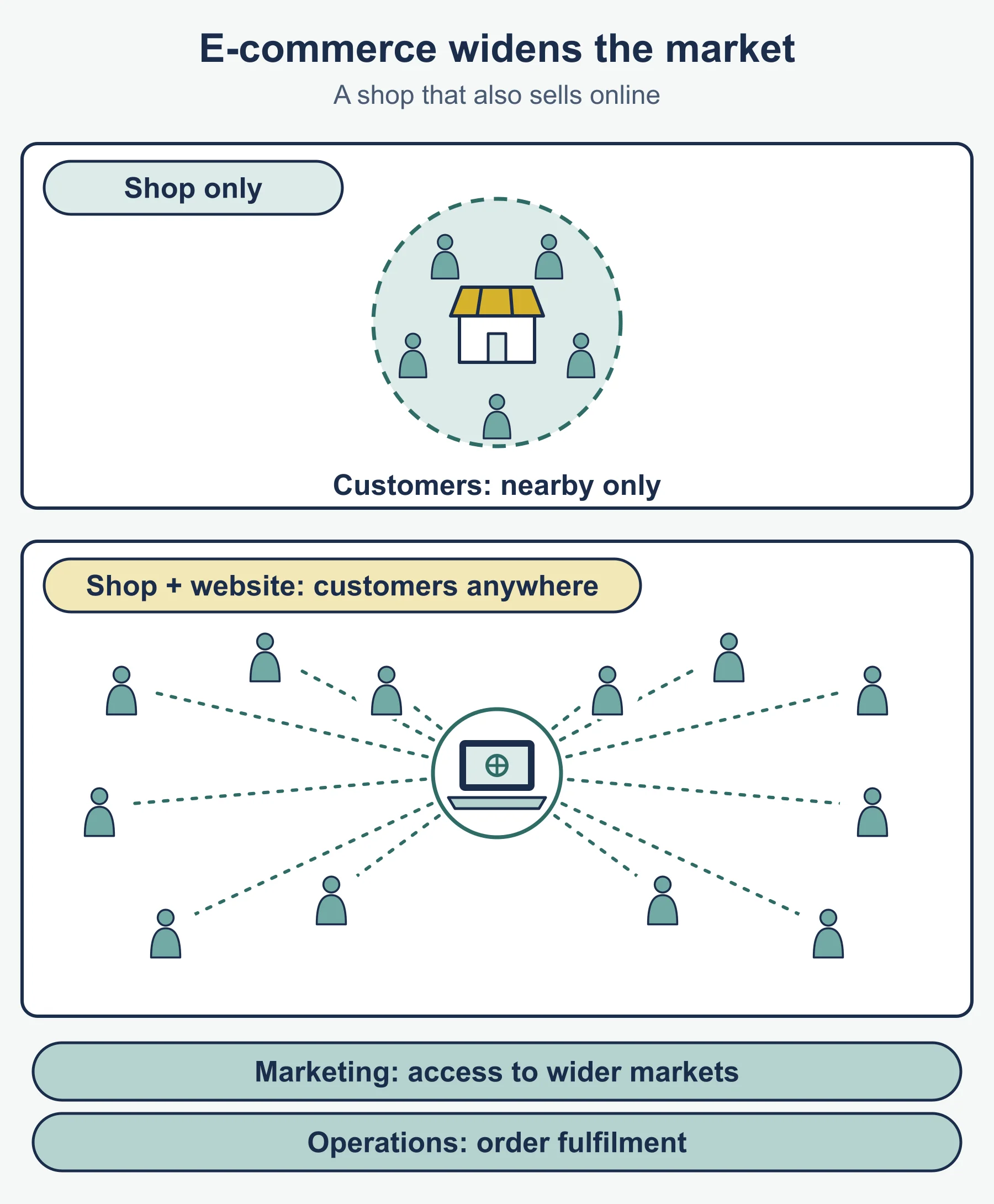
- Small firms can reach national and overseas markets.
- Less need for expensive high-street premises.
- More data on what customers view and buy.
- More competition and more returns, with extra spending on packing and delivery.
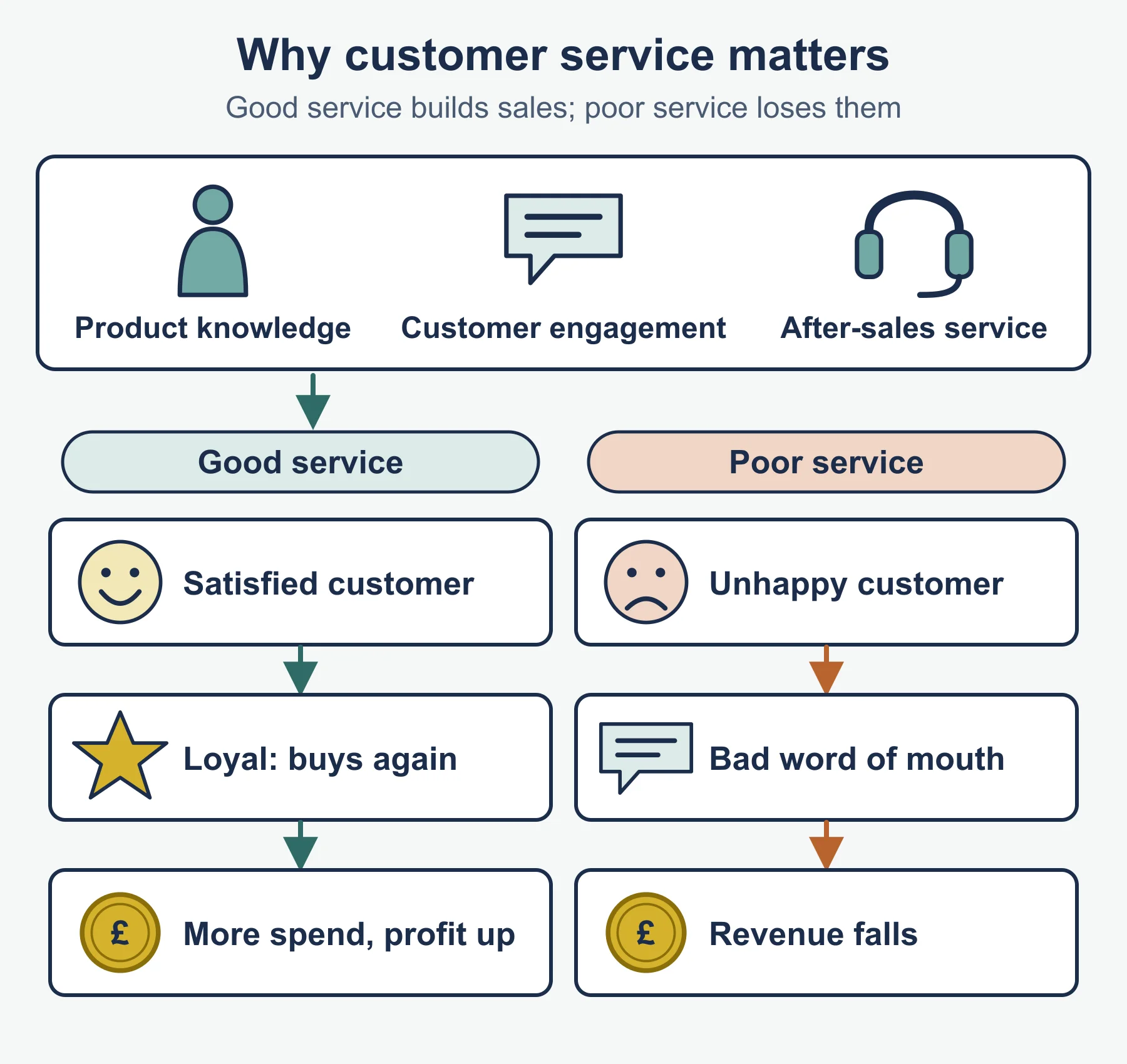
Customer service is the help given before, during and after a sale. It is important to gain and retain customers.
- After-sales service: delivery updates, help using the product, repairs, returns, complaints.
- Product knowledge: staff can recommend the right item and answer questions.
- Customer engagement: listening, replying quickly, asking for feedback, keeping in touch.
Method: a customer service answer
- Name the service feature (for example, a repair offer).
- Say what the customer gets from it.
- Link to loyalty, repeat sales or reputation.
4.4 Consumer law
- Rules that protect buyers of goods and services.
- Named focus in the specification: safety and satisfactory quality of goods, and the reputation of the business.
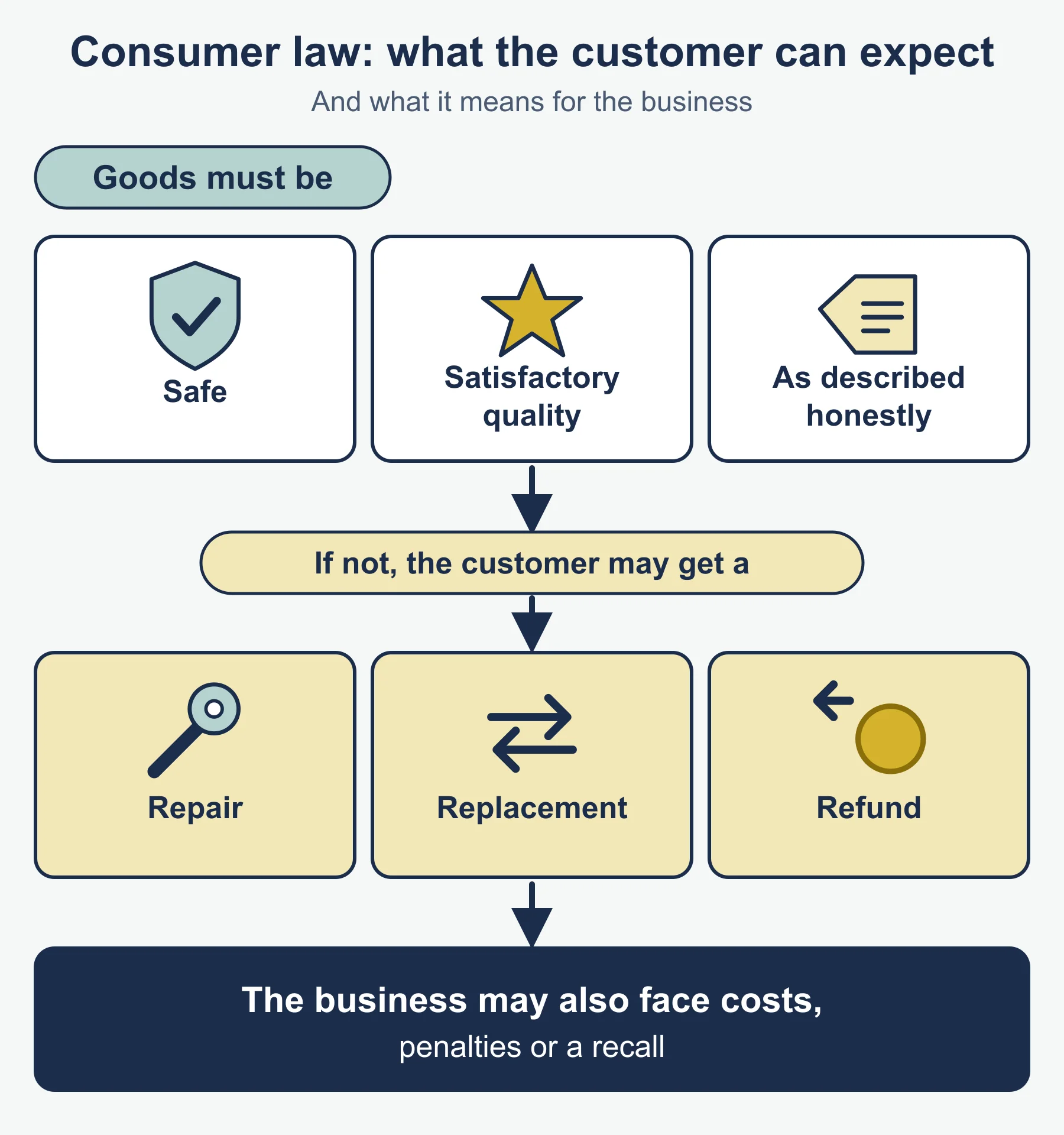
- Businesses must sell goods that are safe, of satisfactory quality and as described. If not, the customer may be entitled to a repair, replacement or refund.
- Impact on a business: testing and checking, honest descriptions, refund and replacement costs, staff training.
- Good compliance builds trust. Poor compliance risks lost customers, costs and damaged reputation.
- Keep to general terms in answers. Explain the effect on the business rather than listing laws.
4.5 Business location
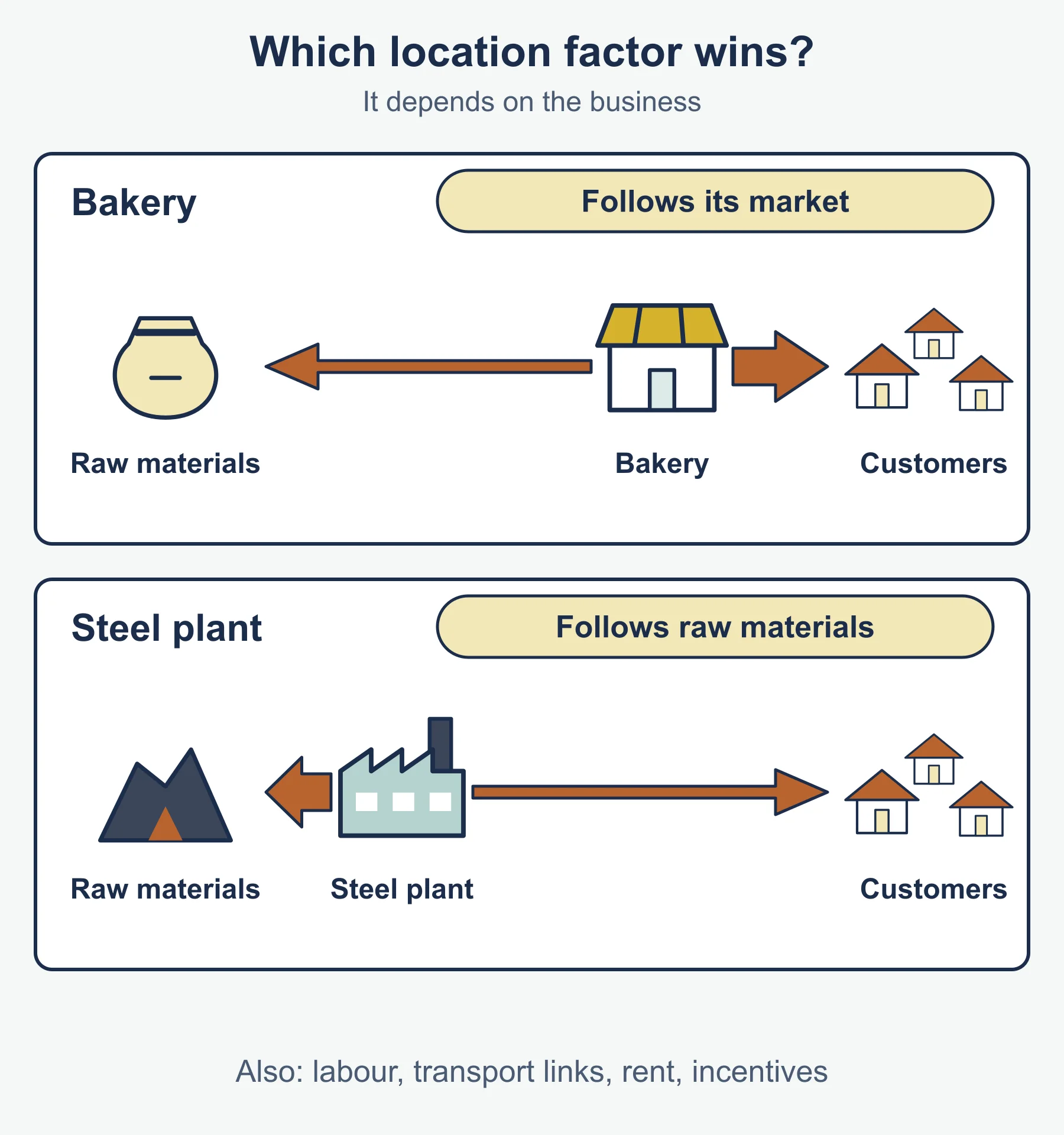
| Factor | Question to ask | Likely to dominate for |
|---|---|---|
| Costs | What are rent, rates, utilities and transport? | Businesses with tight margins |
| Proximity to market | How close are customers? | Shops, cafes, fresh goods |
| Labour | Are suitable workers available at an affordable wage? | Skilled trades, labour-intensive firms |
| Materials | How far must inputs travel? | Firms using heavy or bulky inputs |
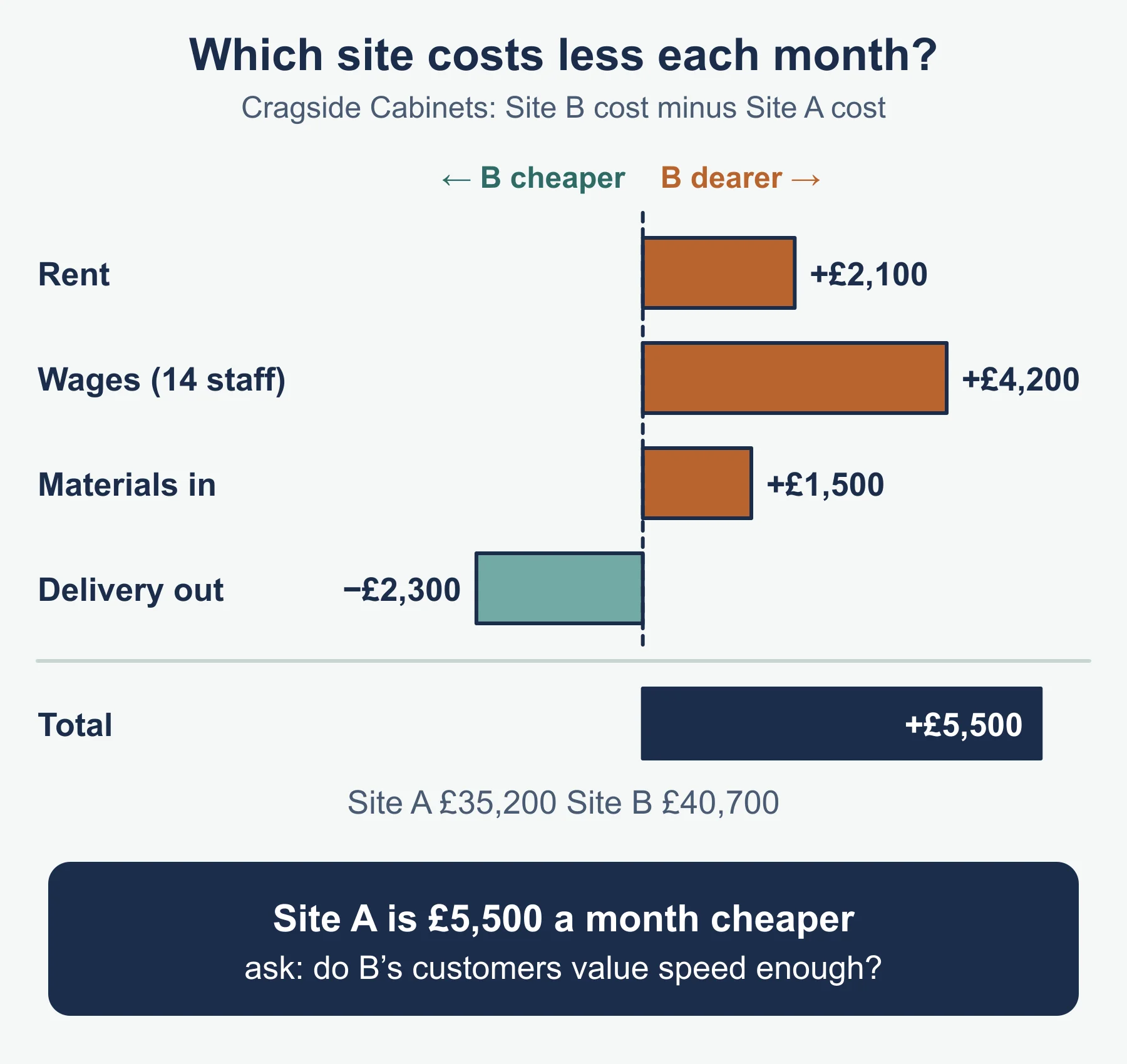
Add up all the monthly costs for each site (a standard method, not a specification formula) before you recommend. Then ask what the numbers leave out, such as customer convenience, staff skills and room to grow.
4.6 Working with suppliers
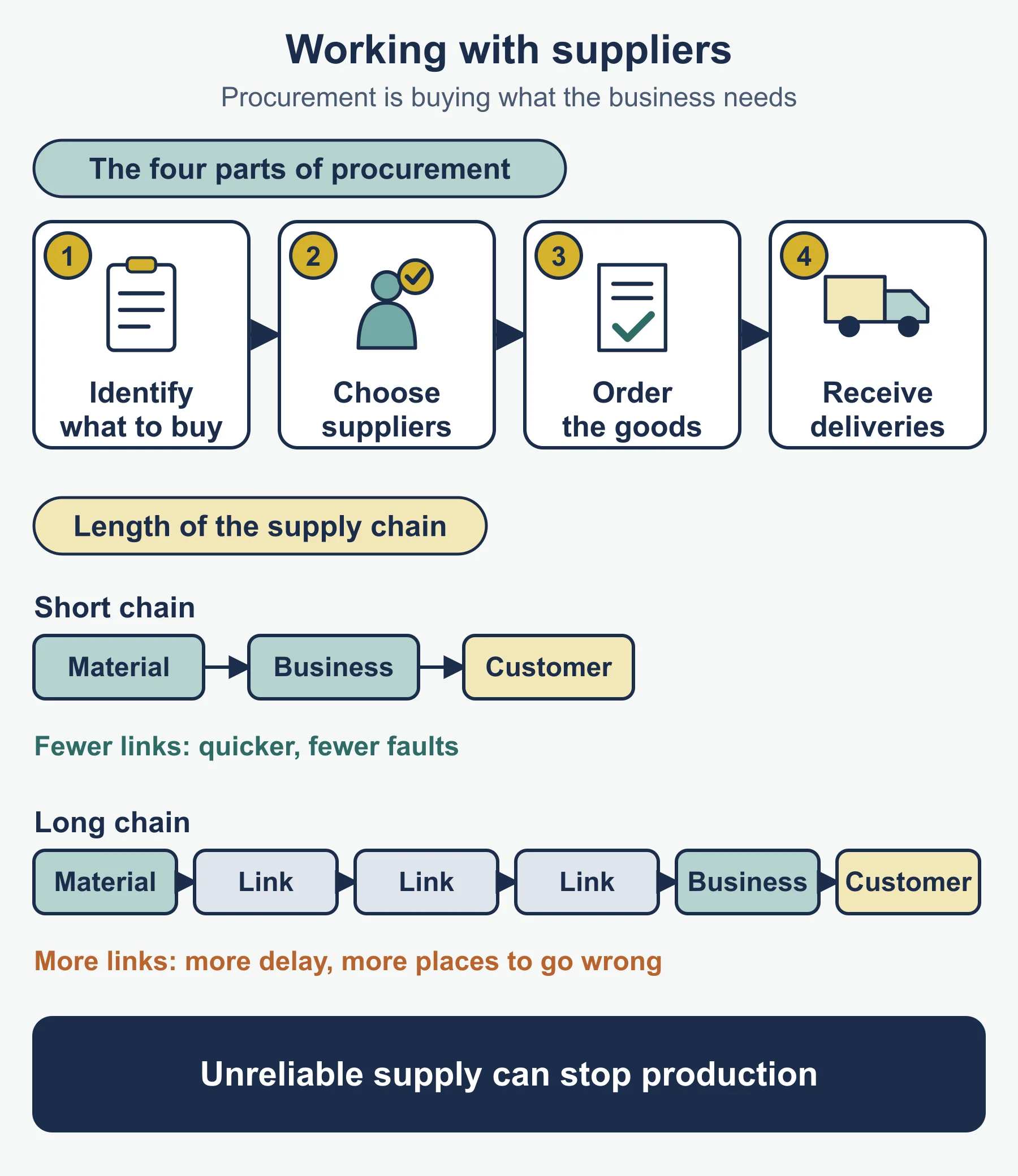
Procurement has four parts:
- Identifying goods and services to buy.
- Choosing suppliers.
- Ordering goods and services.
- Receiving deliveries from suppliers.
Impact of logistical and supply decisions on a business:
| Factor | Effect |
|---|---|
| Time | Delays can hold up production or customer orders |
| Length of supply chain | More links mean more delay and more things that can go wrong |
| Reliability of supply | Unreliable supply can stop production and cause stock-outs |
| Costs | Lower prices help profit but may bring risk |
| Customer service | Late or short deliveries lead to late orders and lost trust |
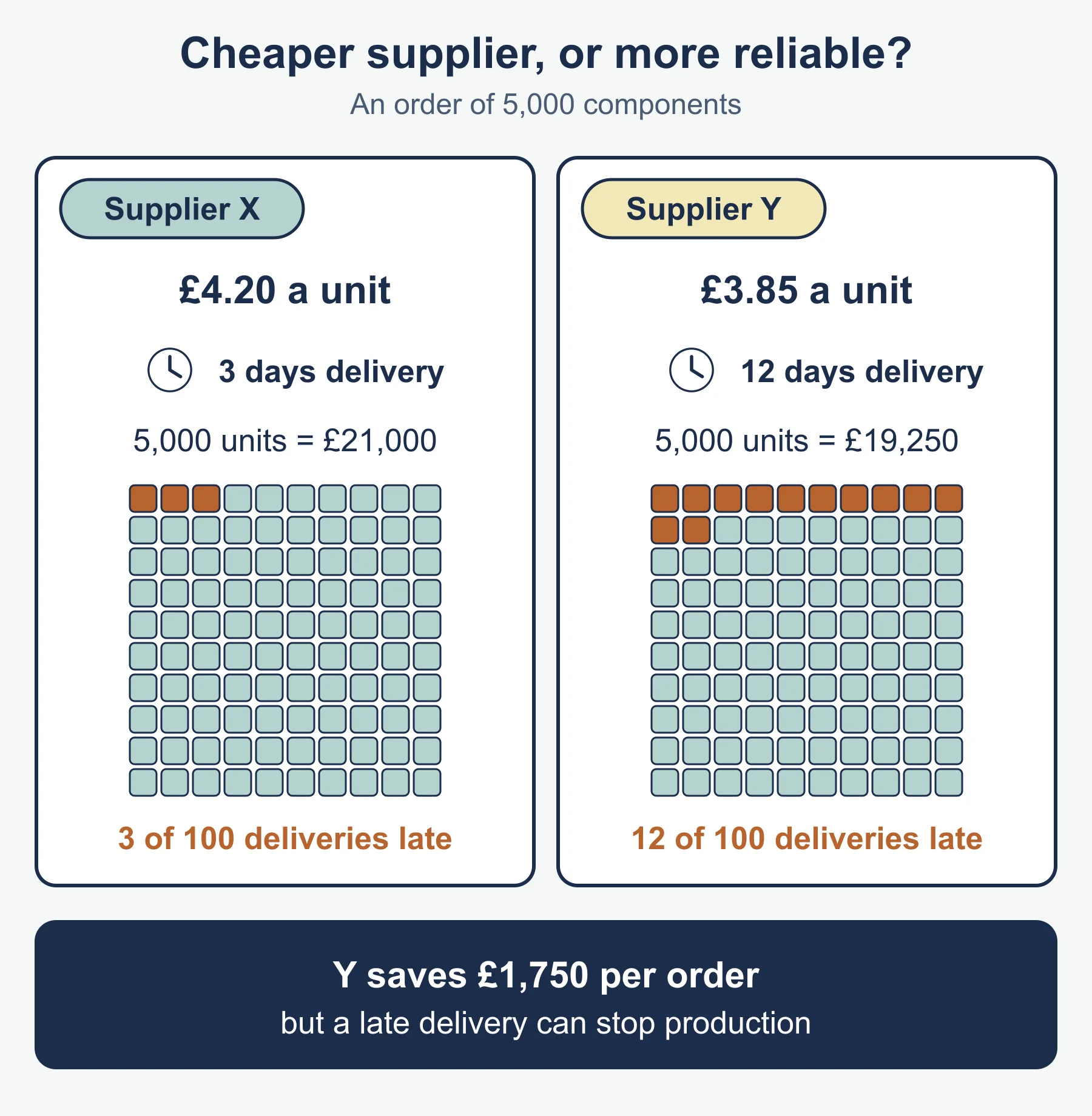
Choosing a supplier is a trade-off between price, speed, reliability and quality. Calculate the order cost for each (quantity x price), then weigh the difference against the risk.
Worked reminders
Location, per month, six staff. Site 1: rent £1,900, wages 6 x £1,700 = £10,200, transport £700, total £12,800. Site 2: rent £2,600, wages 6 x £1,500 = £9,000, transport £500, total £12,100. Site 2 is £700 cheaper, so cost favours Site 2. Then check the other factors: is the labour at Site 2 skilled enough, and are customers easy to reach?
Supplier order, 2,000 units. Supplier P at £5.10 costs 2,000 x £5.10 = £10,200. Supplier R at £4.80 costs 2,000 x £4.80 = £9,600. R saves £600. If R delivers late more often, a stoppage could cost more than £600, so state the risk before you recommend.
Linking sections. A quality fault found late (4.2) can cause returns, poor reviews online (4.3) and a safety concern under consumer law (4.4). Show these links in case-study answers.
Must-know distinctions
- Quality control finds faults after they occur; quality assurance aims to prevent them.
- Job means one-off, batch means a set quantity then switch, flow means continuous.
- E-commerce is online; telesales is by phone; face to face is in person.
- After-sales service comes after the purchase; product knowledge comes from staff understanding the range.
- Procurement is buying; it is not selling or recruiting.
Quick self-test
- State two features of flow production.
- A bakery makes 150 identical pies, then 200 identical tarts, on the same oven. Name the process.
- State one drawback of introducing robots.
- Distinguish quality assurance from quality control.
- A sample of 400 pens has 12 faulty. Calculate the reject rate.
- Identify the four parts of the procurement role.
- State one disadvantage of telesales.
- A shop sells 3,000 items and 2% are returned at £20 each. Calculate the cost of returns.
- State two factors that can influence business location.
- Explain one way a longer supply chain could harm a business.
Answers
- Continuous production; identical products; low unit cost at high volume; costly to set up; inflexible (any two).
- Batch production.
- High purchase or maintenance cost; fewer jobs; need for technical skills; machine fault stops work (any one).
- Assurance aims to prevent faults at every stage; control checks and finds faults, usually after production.
- 12 / 400 x 100 = 3%.
- Identifying goods and services to buy; choosing suppliers; ordering; receiving deliveries.
- Customers may find calls annoying; the product cannot be seen; limited to people with phones who will answer (any one).
- 3,000 x 0.02 = 60 items; 60 x £20 = £1,200.
- Costs; proximity to market; labour; materials (any two).
- More links give more chances of delay or error, so goods may arrive late and customers wait longer.
Where marks are usually lost
- Naming a production process without saying what it means for this business.
- Mixing up control and assurance, or saying control prevents faults.
- Writing “it is cheaper” with no reason, instead of a chain of reasoning for analyse questions.
- Treating e-commerce as all benefit with no mention of competition, delivery or returns.
- Listing consumer laws instead of explaining the effect on safety, quality and reputation.
- Picking a location or supplier on cost alone, ignoring reliability, time, labour or customer service.
- Leaving out the judgement on evaluate and recommend questions. Weigh both sides, then decide and say why.
- Arithmetic slips because working was not shown. Write the formula, then the substitution.
Frequently asked questions
How do you calculate a reject rate? The reject rate is the number of faulty items divided by the number checked, multiplied by 100. It is a standard calculation used to measure quality.
What are the four parts of procurement in OCR GCSE Business? The OCR GCSE Business (J204) specification names identifying the goods and services to buy, choosing suppliers, ordering the goods and services, and receiving deliveries. Choosing a supplier is a trade-off between price, speed, reliability and quality.
What does consumer law focus on in J204? Consumer law is the set of rules that protect buyers of goods and services. The specification focuses on the safety and satisfactory quality of goods and on the reputation of the business.
How has e-commerce influenced business activity? E-commerce lets small firms reach national and overseas markets and reduces the need for expensive high-street premises. It is open all hours and gives the business data on its customers.
Official syllabus
OCR, GCSE (9-1) in Business (J204) Specification, Version 2.0 (January 2026), for first assessment in 2019, section 2c, Content of Business 2: operations, finance and influences on business, section 4 Operations.
Get free revision emails (optional)
Occasional emails with practice questions, worked explanations and links to free resources for the qualification and subjects you choose. No spam, and you can unsubscribe from any email. The free tools on this site never need an email.
Related resources
-
Study guides
OCR GCSE Business: Finance (J204)
Study guide to Finance in OCR GCSE (9-1) Business J204: sources of finance, profit, ratios, ARR, break-even and cash flow forecasts, with worked examples.
Business · OCR · GCSE
Read guide -
Practice questions
OCR GCSE Business: Finance (J204) – Practice Questions
Original practice questions with worked answers on Finance for OCR GCSE (9-1) Business J204: sources of finance, margins, ARR, break-even and cash flow.
Business · OCR · GCSE
Try questions -
Revision notes
OCR GCSE Business: Finance (J204) – Revision Notes
Condensed revision notes on Finance for OCR GCSE (9-1) Business J204: formulas, source-of-finance table, method steps, self-test and common errors.
Business · OCR · GCSE
Revise topic
Related articles
-
teaching
A Level tuition in Dubai: Cambridge or Pearson Edexcel International A Level?
Schools in Dubai and Abu Dhabi teach either Cambridge International AS & A Level or Pearson Edexcel International A Level. How the two are structured, why it matters for tuition, and how online classes from Lahore work.
9 October 2026
-
curriculum guides
Choosing subjects at IGCSE and A Level
How subject choices at 14 and 16 affect university options later, and how to keep pathways open without overloading a timetable.
28 July 2026
Studying this with a teacher
Working through Business GCSE?
This page is free and stays free. If you would rather be taught it, Marlbridge runs Business classes one-to-one, online in your own time zone. One-to-one only for this course: Rs 6,000 per class in Pakistan, with other currencies on the fees page. The first trial class is free. WhatsApp replies within an hour (8am–11pm Pakistan time, every day); email the same day.
OCR Business teachers at Marlbridge
