
Study Guides
OxfordAQA International GCSE English Language (9270): Paper 2 Section A — Reading
How to read five or six modern-world sources, including visual texts, and compare pairs in OxfordAQA International GCSE English Language 9270 Paper 2.
- Subject
- English
- Level
- IGCSE
- Topic
- Paper 2 – Source-based Reading and Directed Writing
- Author
- Marlbridge Academic Team
- Updated
- Reviewed by
- Ammar Bilal (what this means)
Aligned to OxfordAQA IGCSE English (9270), Version 5.1, for exams May/June 2018 onwards. Official specification .
Syllabus page (what it covers and how it is assessed): OxfordAQA IGCSE English Language.
Found an error? Report a correction.
Need help with this topic? Request a free trial class for IGCSE English Language (9270).
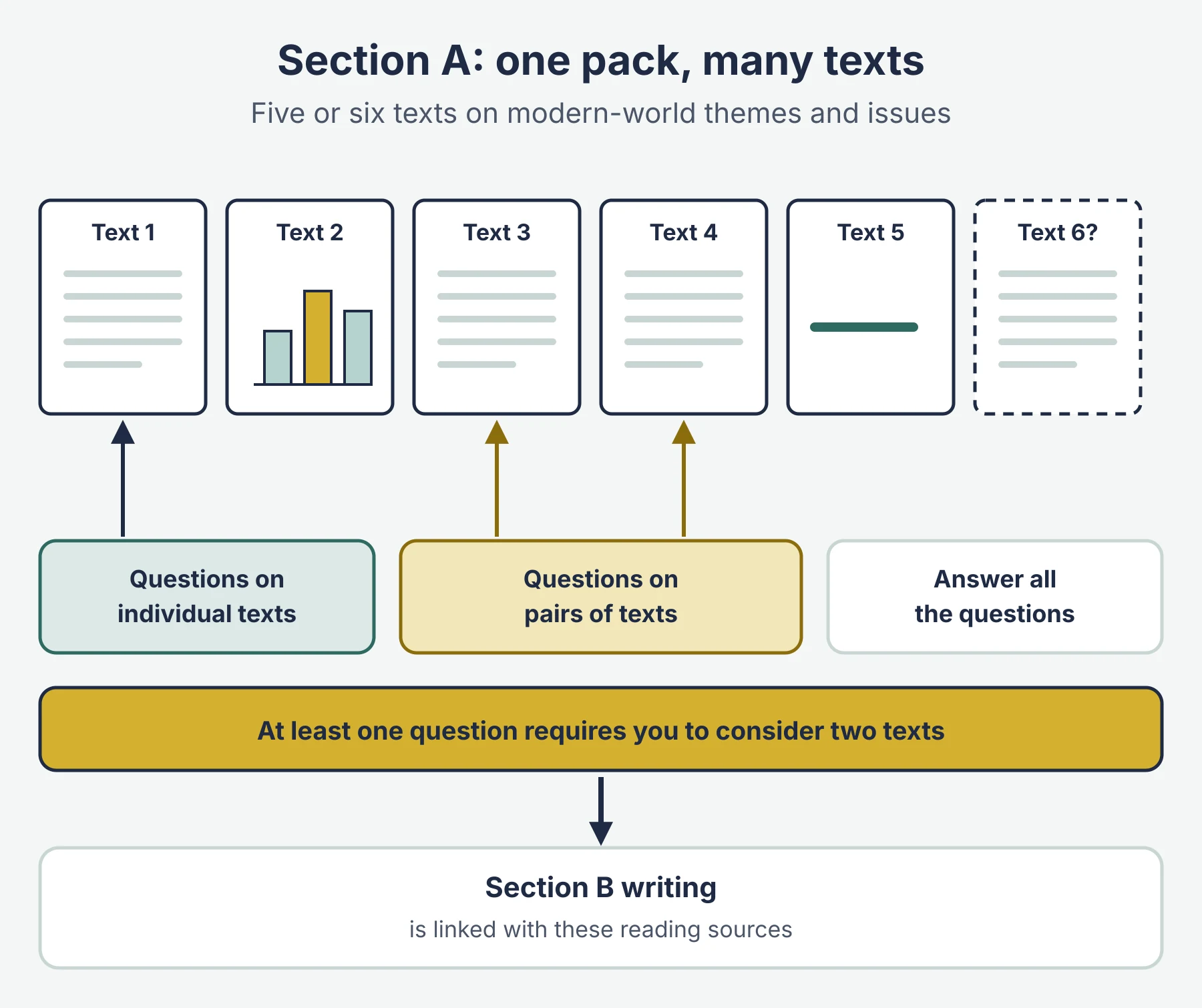
Section A of Paper 2 in OxfordAQA International GCSE English Language (9270) is a source-based reading section worth 40 of the paper’s 80 marks. Unlike Paper 1, it does not set one long text: the stimulus material is a collection of five or six texts on modern-world themes and issues, and you must be able to read each one closely and also bring two together. Paper 2 is the written alternative to the non-exam assessment project, so this guide applies if your centre has entered you for the exam route.
What the specification says
- The reading texts relate to modern world themes and issues.
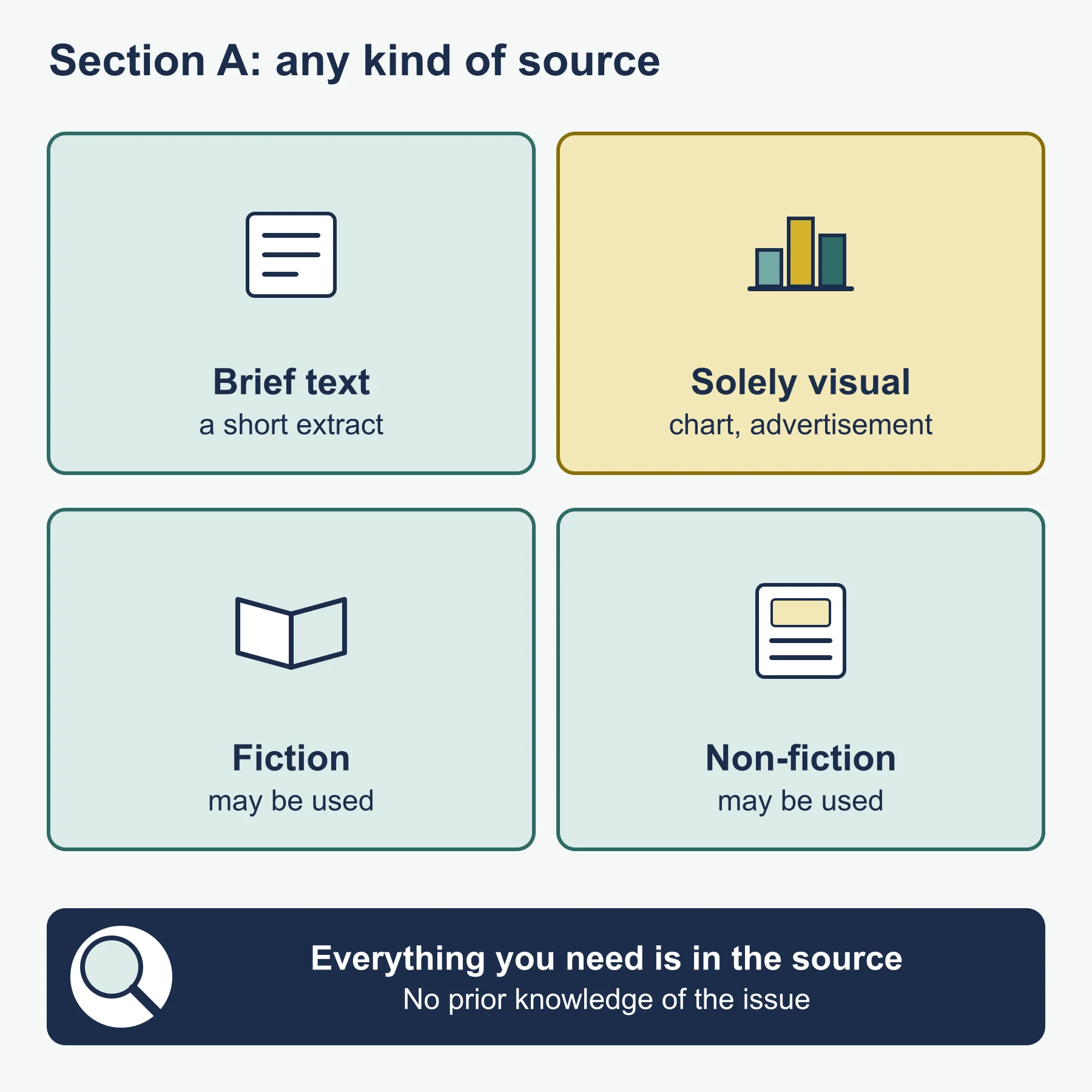
- Some may be brief or solely visual.
- Texts may be fiction or non-fiction.
- The stimulus material consists of 5–6 texts.
- Questions are asked on individual texts and on pairs of texts, and at least one question requires students to consider two texts.
- Students answer all the questions in Section A.
- Writing in Section B is linked with the reading sources from Section A.
The reading skills applied to multiple sources
| Skill | Specification wording | What it looks like with several sources |
|---|---|---|
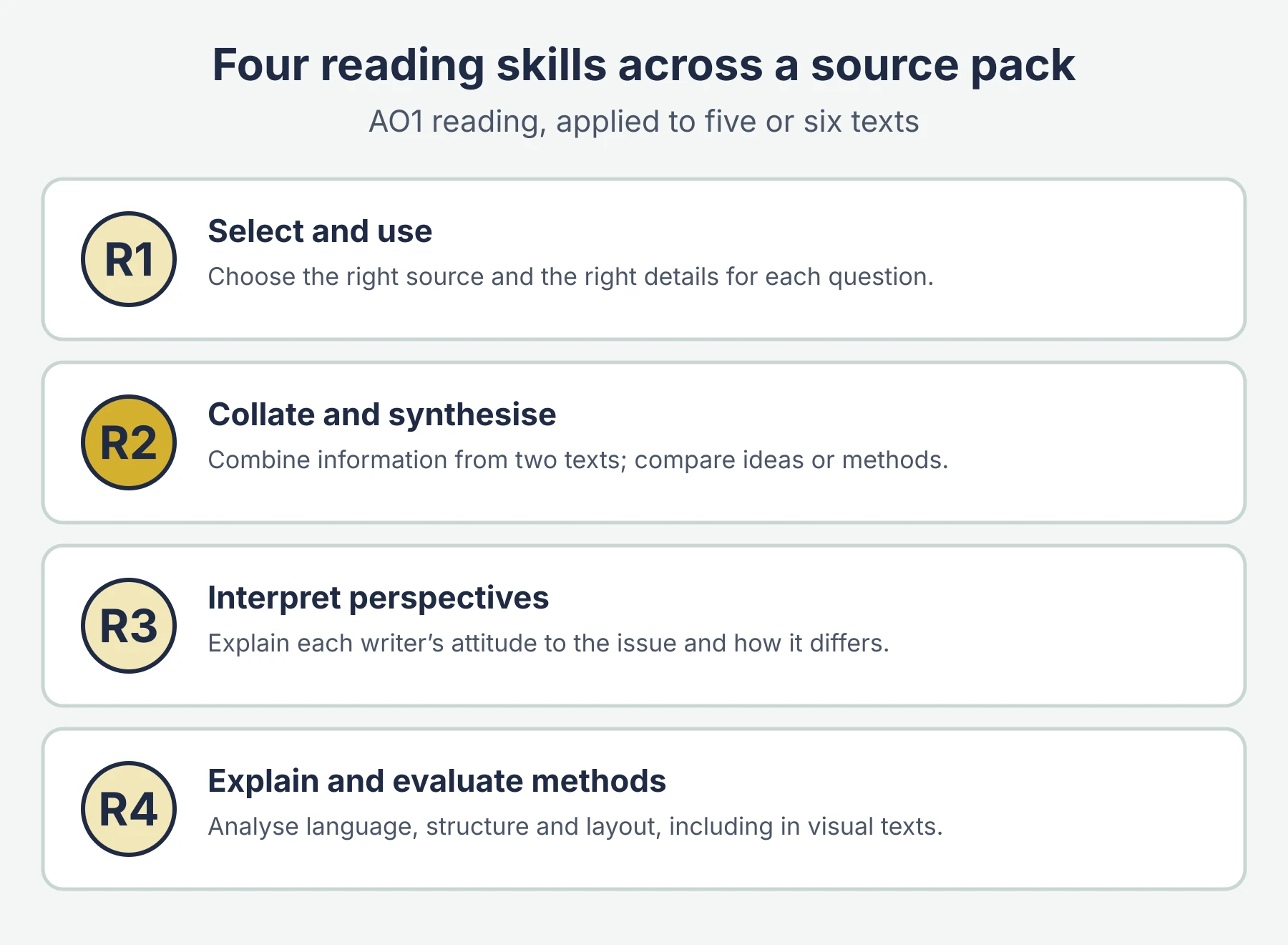
| R1 | Read and understand texts, selecting and utilising material appropriate to purpose | Choosing the right source and the right details for each question |
| R2 | Collate and synthesise detail from one or more sources, making cross-references and comparisons as appropriate | Combining information from two texts; comparing ideas or methods |
| R3 | Develop and sustain interpretations of writers’ ideas and perspectives | Explaining each writer’s attitude to the issue and how it differs |
| R4 | Explain and evaluate how writers use linguistic, grammatical, structural and presentational features to achieve effects and engage and influence the reader | Analysing language, structure and layout, including in visual texts |
Getting to know a source pack quickly
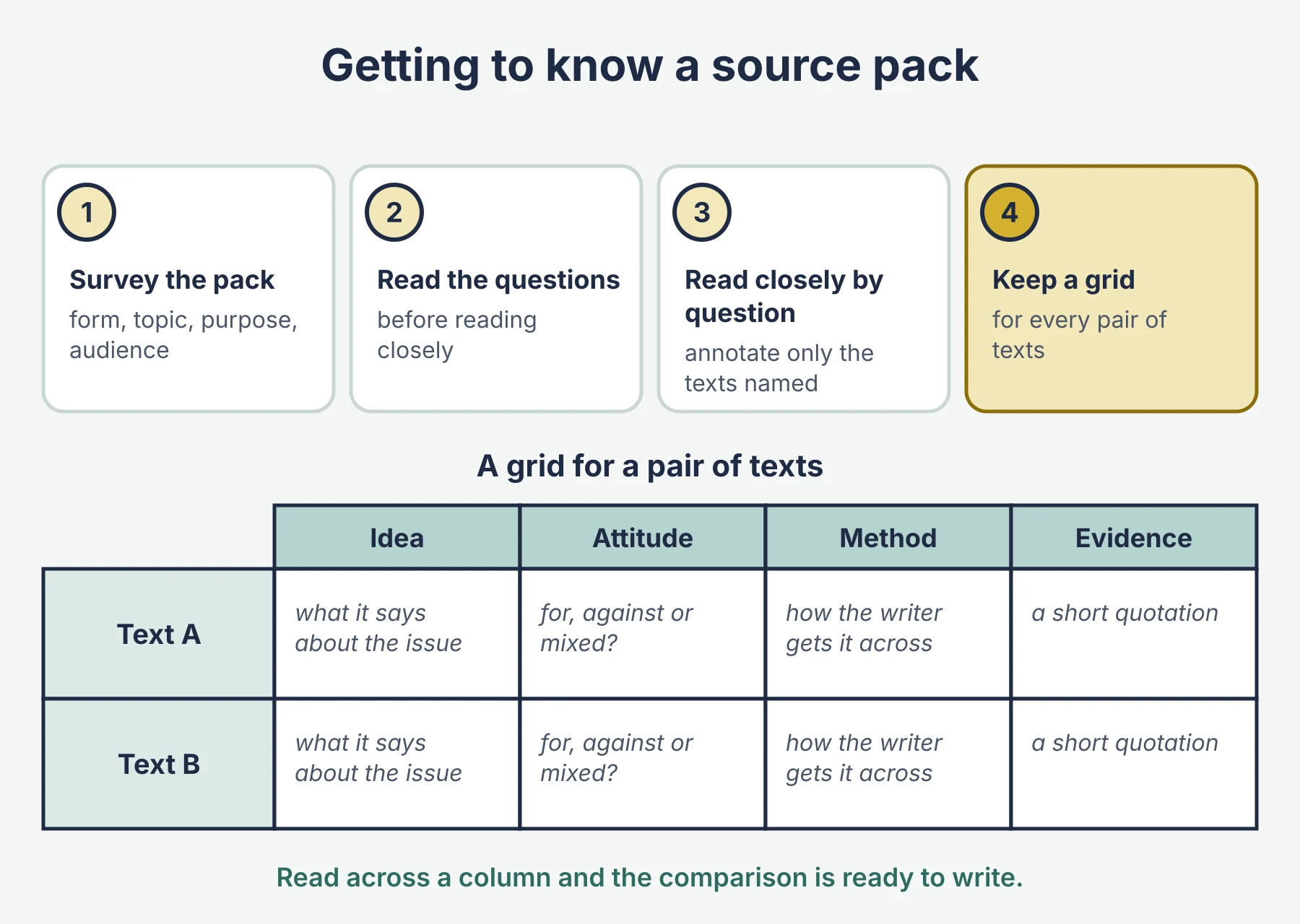
With five or six texts, efficient first reading matters.
- Survey the pack. For each text note in a few words: form (article, blog, advert, chart, story extract), topic, apparent purpose and audience.
- Read the questions before reading closely, so you know which texts need the most attention.
- Read closely by question, annotating only the text or pair the question names.
- Keep a grid for pairs: idea, attitude, method, evidence, so comparisons are easy to write.
Reading different kinds of source
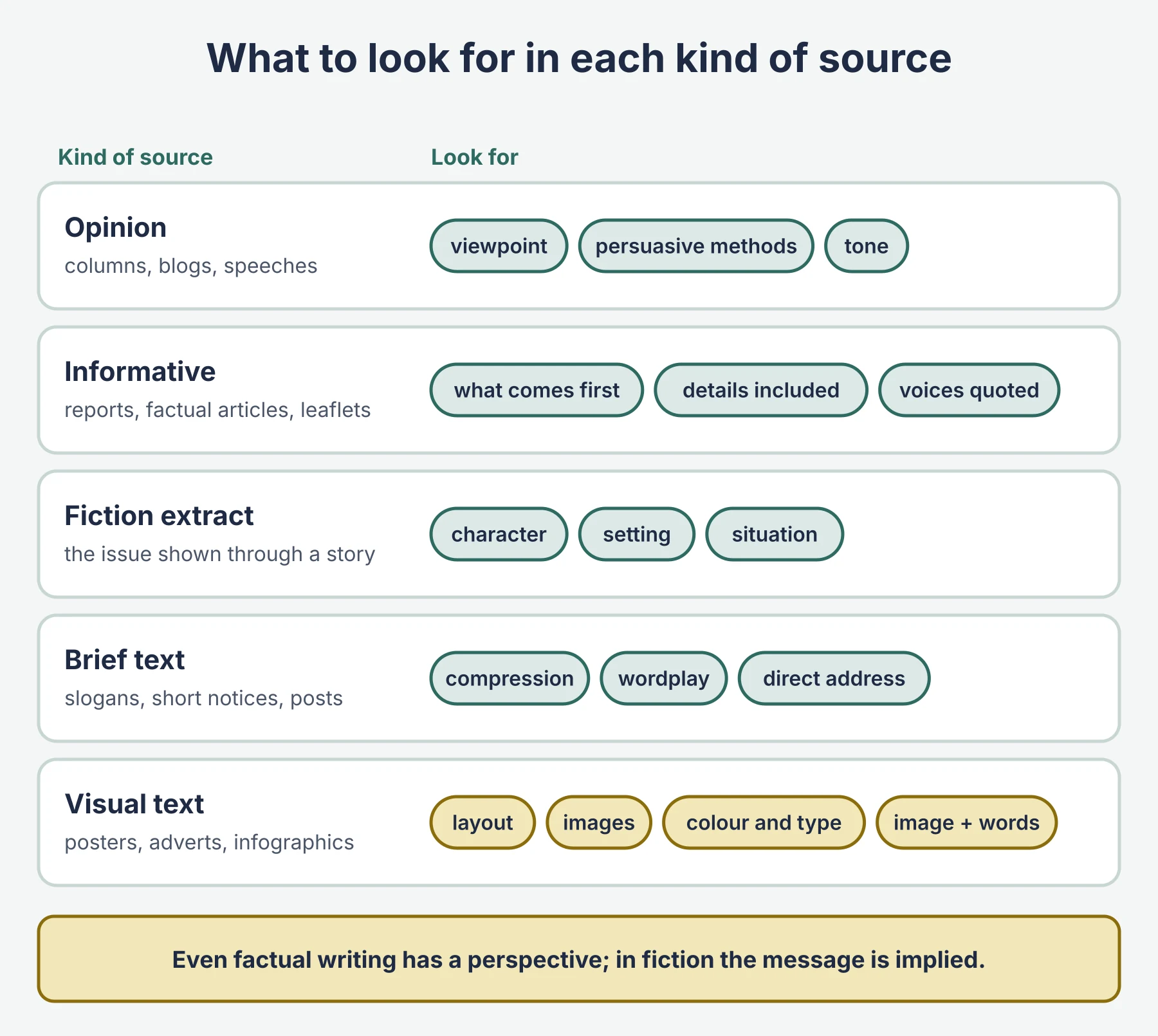
Opinion writing (columns, blogs, speeches): identify the viewpoint, the methods of persuasion and the tone. Ask what the writer wants the reader to think or do.
Informative writing (reports, factual articles, leaflets): focus on selection and organisation. Even factual writing has a perspective: what is placed first, which details are included, which voices are quoted.
Fiction extracts: the specification allows fiction too. Read for how a story presents the issue through character, setting and situation; the “message” is implied, not stated.
Brief texts (slogans, short notices, social media posts): every word carries weight. Comment on compression, wordplay and direct address.
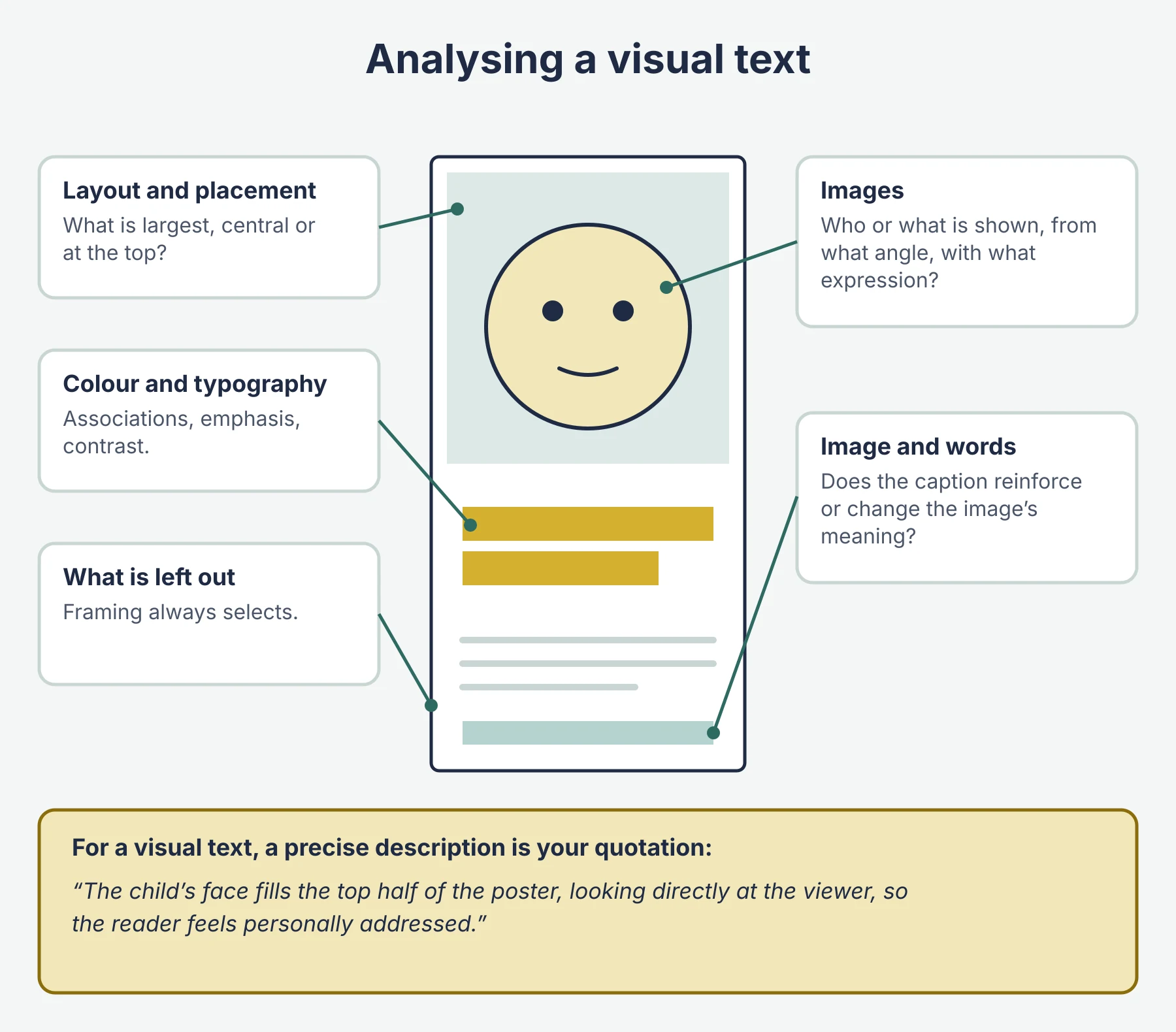
Visual texts (posters, adverts, infographics, photographs with captions): analyse presentational features:
- layout and placement: what is largest, central or at the top;
- images: who or what is shown, from what angle, with what expression;
- colour and typography: associations, emphasis, contrast;
- the relationship between image and words: does the caption reinforce or change the image’s meaning?
- what is left out: framing always selects.
Writing about one text
Use the same analytical habit as in Paper 1: method, short quotation or precise reference, effect on the reader, link to purpose. For visual texts, the “quotation” is a precise description: “The child’s face fills the top half of the poster, looking directly at the viewer, so the reader feels personally addressed.”
Writing about two texts
Questions on pairs of texts may ask you to combine information (synthesis) or to compare ideas, perspectives or methods. The key is integration: talk about both texts within the same point.
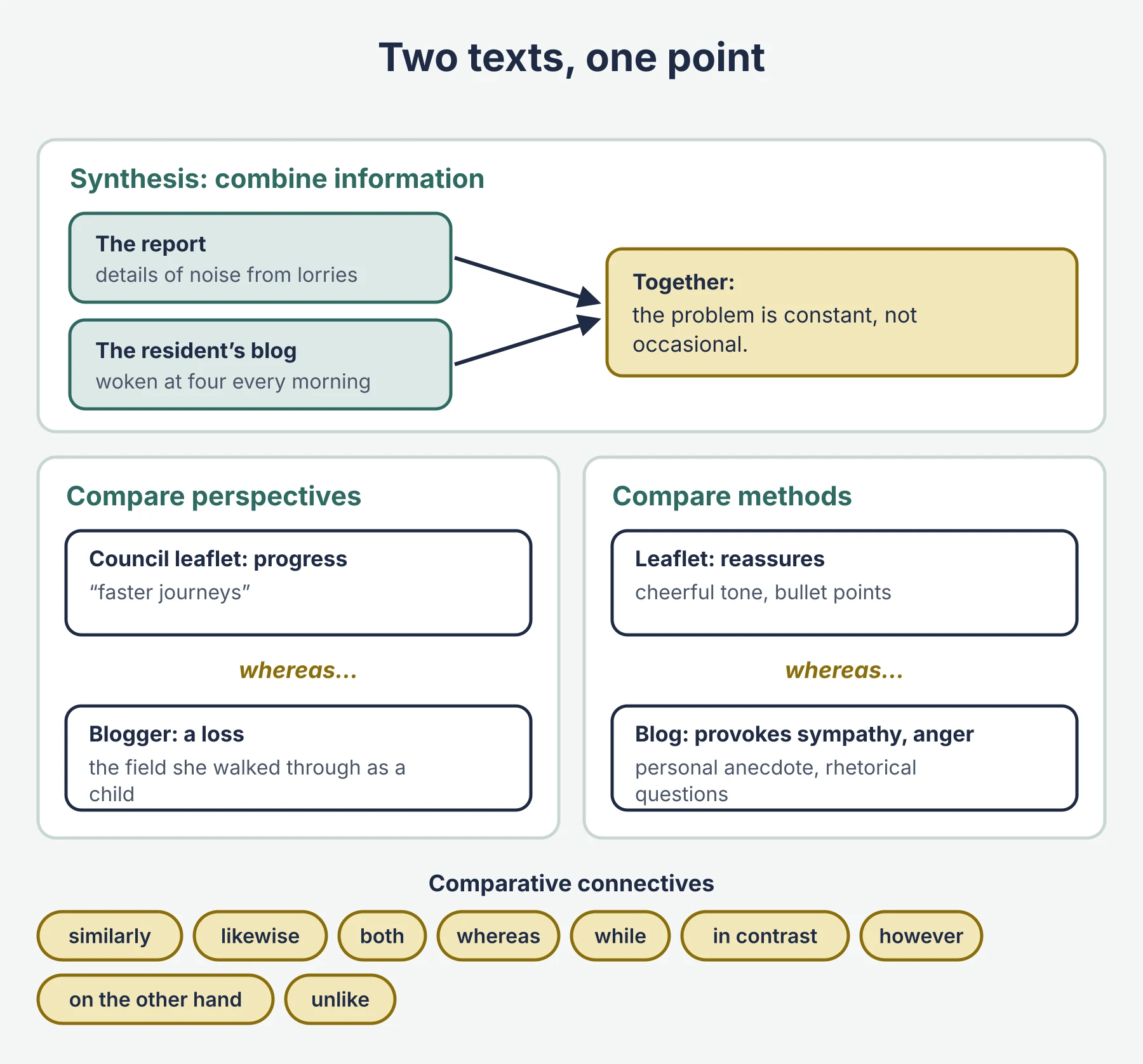
Synthesis: “Both texts show that the new road affects local people. The report gives details of the noise from lorries, while the resident’s blog describes being woken at four every morning, so together they suggest the problem is constant, not occasional.”
Comparison of perspectives: “Whereas the council leaflet presents the road as progress, emphasising ‘faster journeys’, the blogger treats it as a loss, describing the field she walked through as a child.”
Comparison of methods: “The leaflet relies on a cheerful tone and bullet points to reassure readers, while the blog’s personal anecdote and rhetorical questions aim to provoke sympathy and anger.”
Useful comparative connectives: similarly, likewise, both, whereas, while, in contrast, however, on the other hand, unlike.
Worked example
Two original sources written for this guide:
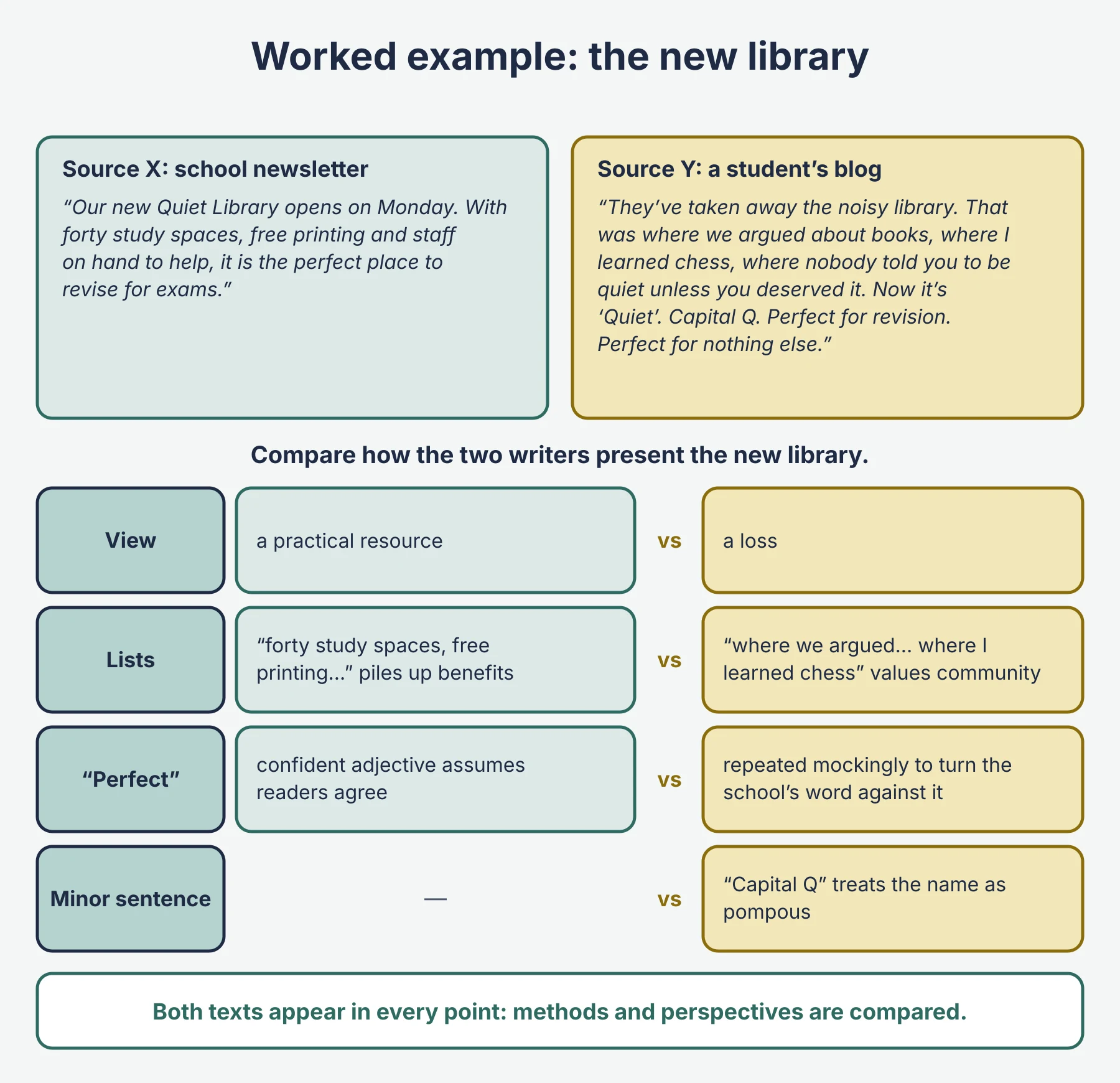
Source X (from a school newsletter): “Our new Quiet Library opens on Monday. With forty study spaces, free printing and staff on hand to help, it is the perfect place to revise for exams.”
Source Y (from a student’s blog): “They’ve taken away the noisy library. That was where we argued about books, where I learned chess, where nobody told you to be quiet unless you deserved it. Now it’s ‘Quiet’. Capital Q. Perfect for revision. Perfect for nothing else.”
Question: Compare how the two writers present the new library.
Model answer (extract): The newsletter presents the library positively as a practical resource: the list “forty study spaces, free printing and staff on hand” piles up benefits, and the confident adjective “perfect” assumes readers will agree. The blog, in contrast, presents it as a loss. Its list of memories, “where we argued… where I learned chess”, values the old library for community, not study. The writer also echoes the newsletter’s language mockingly: the minor sentence “Capital Q” treats the name as pompous, and repeating “Perfect for… Perfect for nothing else” turns the school’s word against it, so readers question whether quiet is really an improvement.
Why it works: both texts appear in every point; methods and perspectives are compared, not just described in turn.
Common mistakes
- Writing about the wrong source or using all the sources for a question on one.
- Summarising each text in turn for a two-text question instead of integrating them.
- Ignoring visual features or describing an image without explaining its effect.
- Bringing outside opinions about the issue rather than analysing the texts.
- Assuming factual texts have no perspective.
- Running out of time for Section B, which carries the same 40 marks.
Exam technique
- Check which text or texts each question names, and box them on the paper.
- Let the marks guide length: a short retrieval question needs a few precise points, a longer analysis or comparison question needs developed paragraphs.
- As you read, note ideas and methods you might reuse in Section B, which is linked to the sources, but never copy whole sentences from them.
More resources on this topic
- Paper 2 Section A reading revision notes
- Paper 2 Section A reading practice questions
- Paper 2 study guide
- Paper 2 Section B writing study guide
Source: OxfordAQA International GCSE English Language (9270) specification, Version 5.1, sections 2.2, 3.2.1 and 4.2.
Related resources
-
Practice questions
OxfordAQA International GCSE English Language (9270): Paper 2 Section A — Reading — Practice Questions
Original five-text pack on city cycling with 11 questions on single texts, a visual text and pairs, for OxfordAQA International GCSE English Language 9270.
English · OxfordAQA · IGCSE
Try questions -
Revision notes
OxfordAQA International GCSE English Language (9270): Paper 2 Section A — Reading — Revision Notes
Recall notes on reading five or six sources, visual texts, synthesis and comparison for OxfordAQA International GCSE English Language 9270 Paper 2 Section A.
English · OxfordAQA · IGCSE
Revise topic -
Study guides
OxfordAQA International GCSE English Language (9270): Paper 2 Section B — Writing
How to write for a set audience and purpose, use the sources and control form in OxfordAQA International GCSE English Language 9270 Paper 2 Section B.
English · OxfordAQA · IGCSE
Read guide
Get free revision emails (optional)
Occasional emails with practice questions, worked explanations and links to free resources for the qualification and subjects you choose. No spam, and you can unsubscribe from any email. The free tools on this site never need an email.