
Revision Notes
AQA GCSE Sociology (8192): Changing relationships within families – Revision Notes
Condensed AQA GCSE Sociology 8192 notes on 3.3.4: three periods of family change, Willmott and Young's stages, four contemporary issues and a self-test.
- Subject
- Sociology
- Level
- GCSE
- Topic
- Families
- Author
- Marlbridge Academic Team
- Updated
- Reviewed by
- Naqiya Yousaf (what this means)
Aligned to AQA GCSE Sociology (8192), first teaching 2017. Official specification .
Syllabus page (what it covers and how it is assessed): AQA GCSE Sociology.
Syllabus points this page covers
8192
- 3.3.4 Changing relationships within families
Found an error? Report a correction.
Need help with this topic? Request a free trial class for GCSE Sociology (8192).
These notes condense 3.3.4 Changing relationships within families from the AQA GCSE Sociology (8192) specification, assessed in Paper 1. The specification asks how relationships have changed “over time (pre-industrial, industrial and contemporary/modern)”, names four contemporary issues (“the quality of parenting, the relationships between teenagers and adults, care of the disabled/elderly and arranged marriage”), and names Willmott and Young’s symmetrical family and principle of stratified diffusion.
For full explanations and worked answers, read the changing relationships within families study guide. Then try the changing relationships within families practice questions.
Key terms
| Term | Meaning |
|---|---|
| Pre-industrial | Before industrialisation, when most people worked on the land |
| Unit of production | A family working together to produce goods |
| Privatised nuclear family | A home-centred family with weaker ties to wider kin and neighbours |
| Privatised instrumentalism | Social relationships centred on the home, with work valued mainly for the money it brings |
| Symmetrical family | Willmott and Young’s Stage 3: partners make similar contributions to the household |
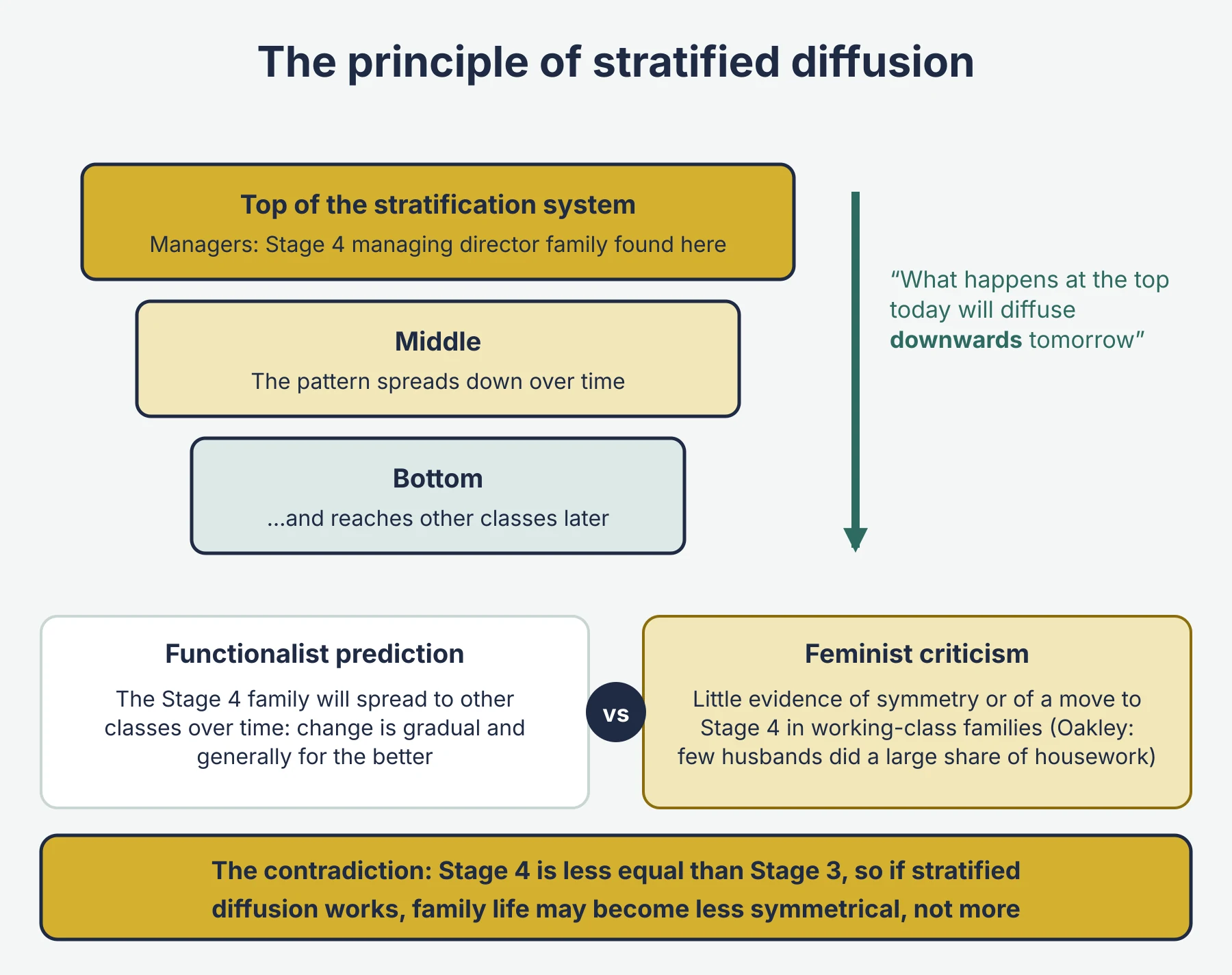
| Principle of stratified diffusion | What happens at the top of the stratification system spreads downwards over time |
| Managing director family | Willmott and Young’s Stage 4: work-centred husband, wife responsible for home and children |
| Child-centred family | A family organised around children’s needs and interests |
| Adolescence | The stage between childhood and adulthood |
| Youth culture | Shared values, styles and tastes of young people |
| Intergenerational | Between generations, such as grandparents and grandchildren |
| Dependent family members | Those who rely on others for care or money |
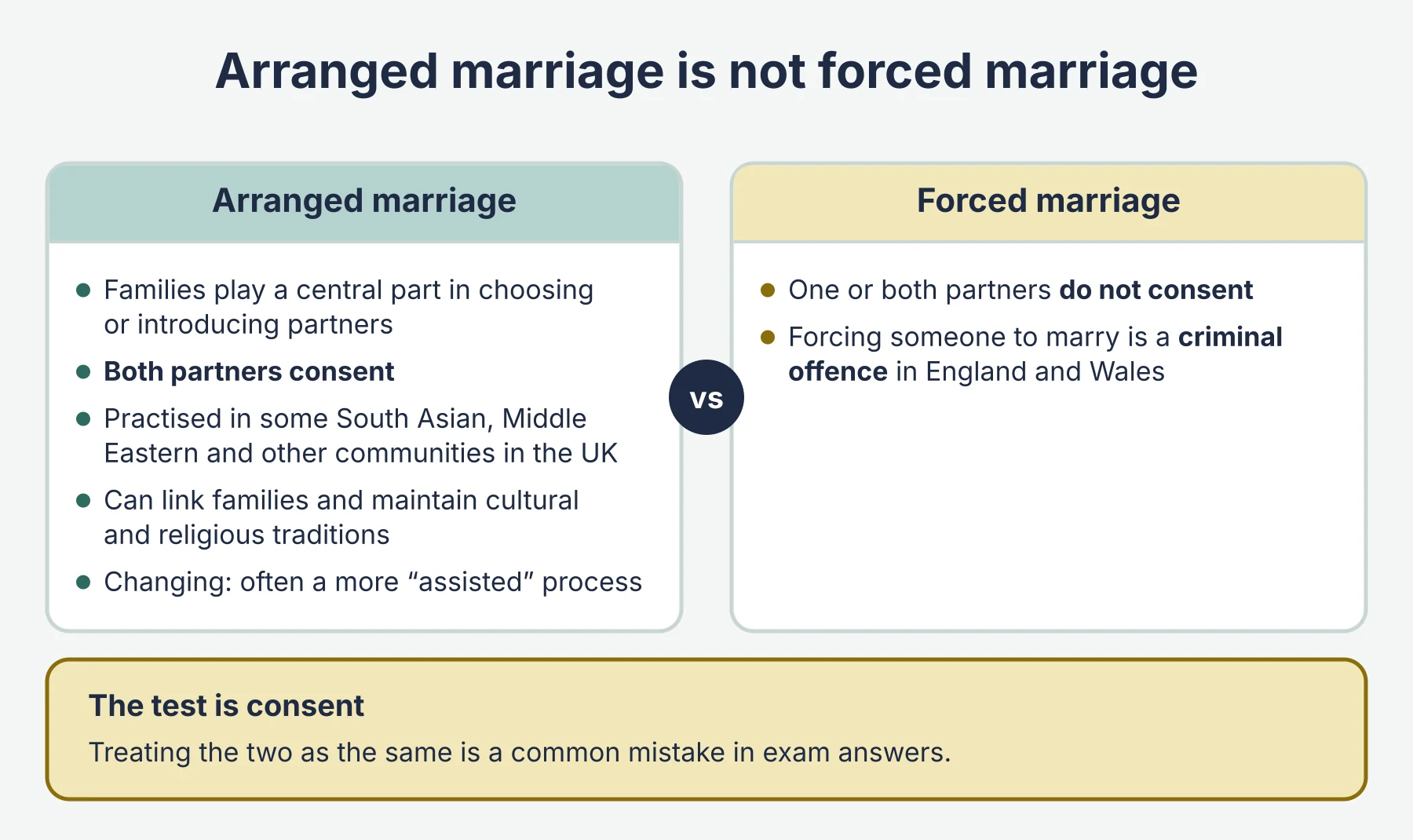
| Arranged marriage | Families choose or introduce partners, with both partners’ consent |
| Forced marriage | Marriage without the full consent of one or both partners; a crime in England and Wales |
| Kin | Relatives by blood, marriage or adoption |
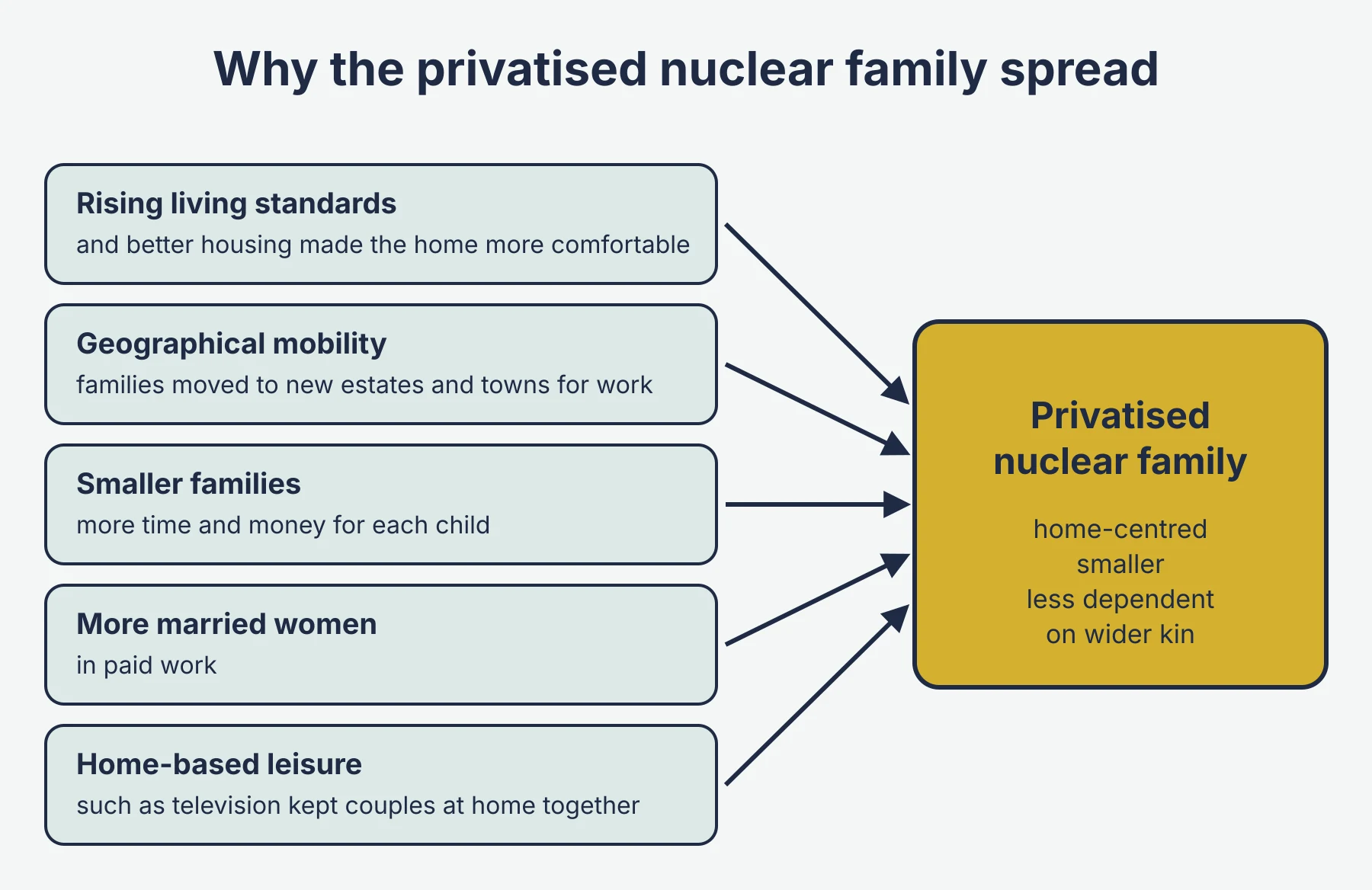
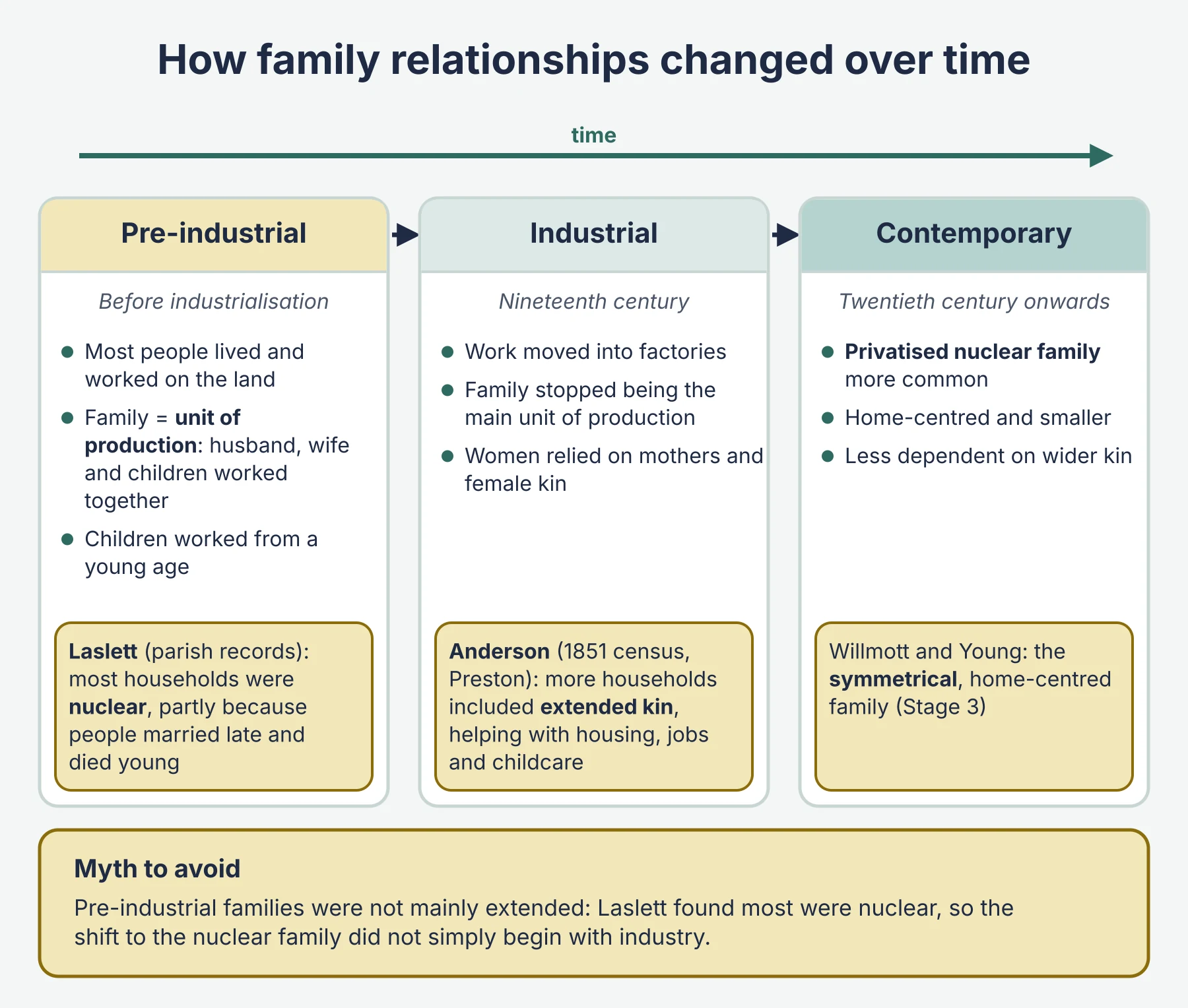
Three periods in one grid
| Pre-industrial | Industrial | Contemporary | |
|---|---|---|---|
| Economy | Family as unit of production | Work moves to factories | Mainly service jobs; many dual earners |
| Household | Mostly nuclear (Laslett) | More extended kin in early industrial towns (Anderson, Preston 1851) | Privatised nuclear, plus growing diversity |
| Relationships | Children work young; marriage partly economic | Long male working hours; women rely on female kin | Home-centred, more joint, child-centred |
| Willmott and Young | Stage 1 | Stage 2 | Stage 3, with Stage 4 predicted |
Willmott and Young in six bullets
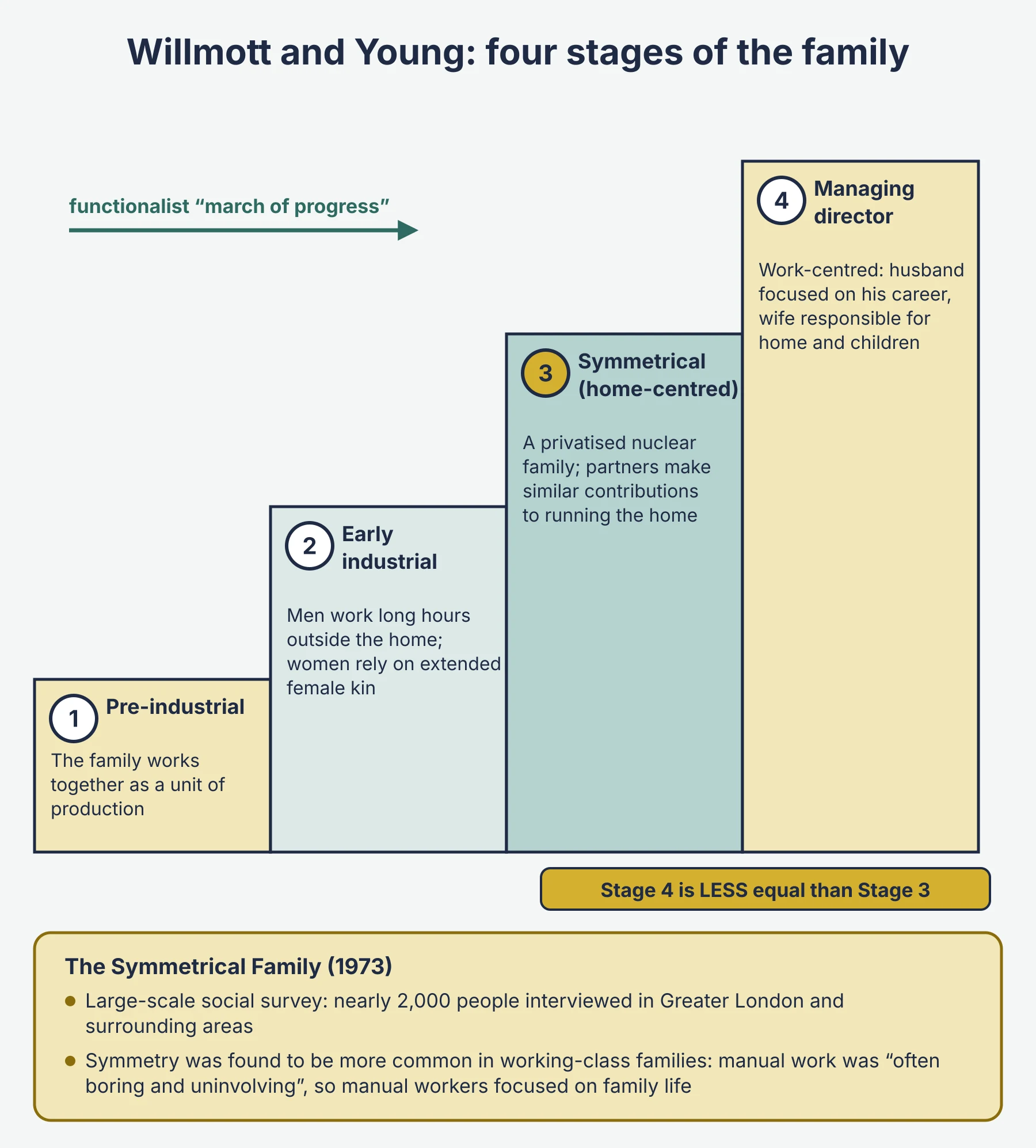
- The Symmetrical Family (1973): functionalist; nearly 2,000 people interviewed in Greater London and surrounding areas.
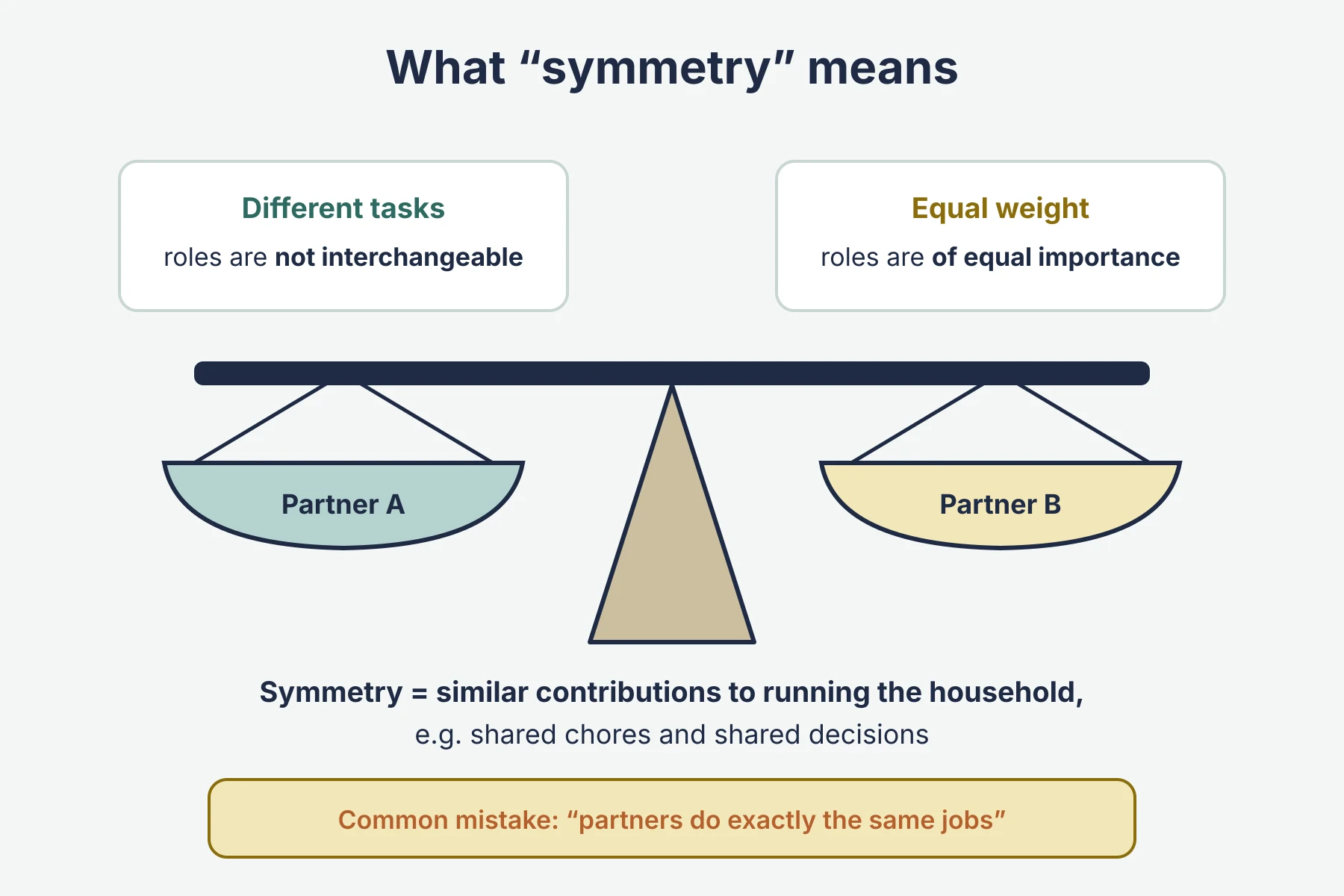
- Stage 3 symmetrical family: home-centred nuclear family with shared chores and shared decisions.
- Roles “not interchangeable” but “of equal importance”.
- Found more often in working-class families, because boring manual work led men to focus on family life.
- Stratified diffusion: change starts at the top and spreads down; they predicted Stage 4 would spread.
- Feminists saw little evidence of symmetry or of Stage 4 among working-class families.
Contemporary issues in one line each
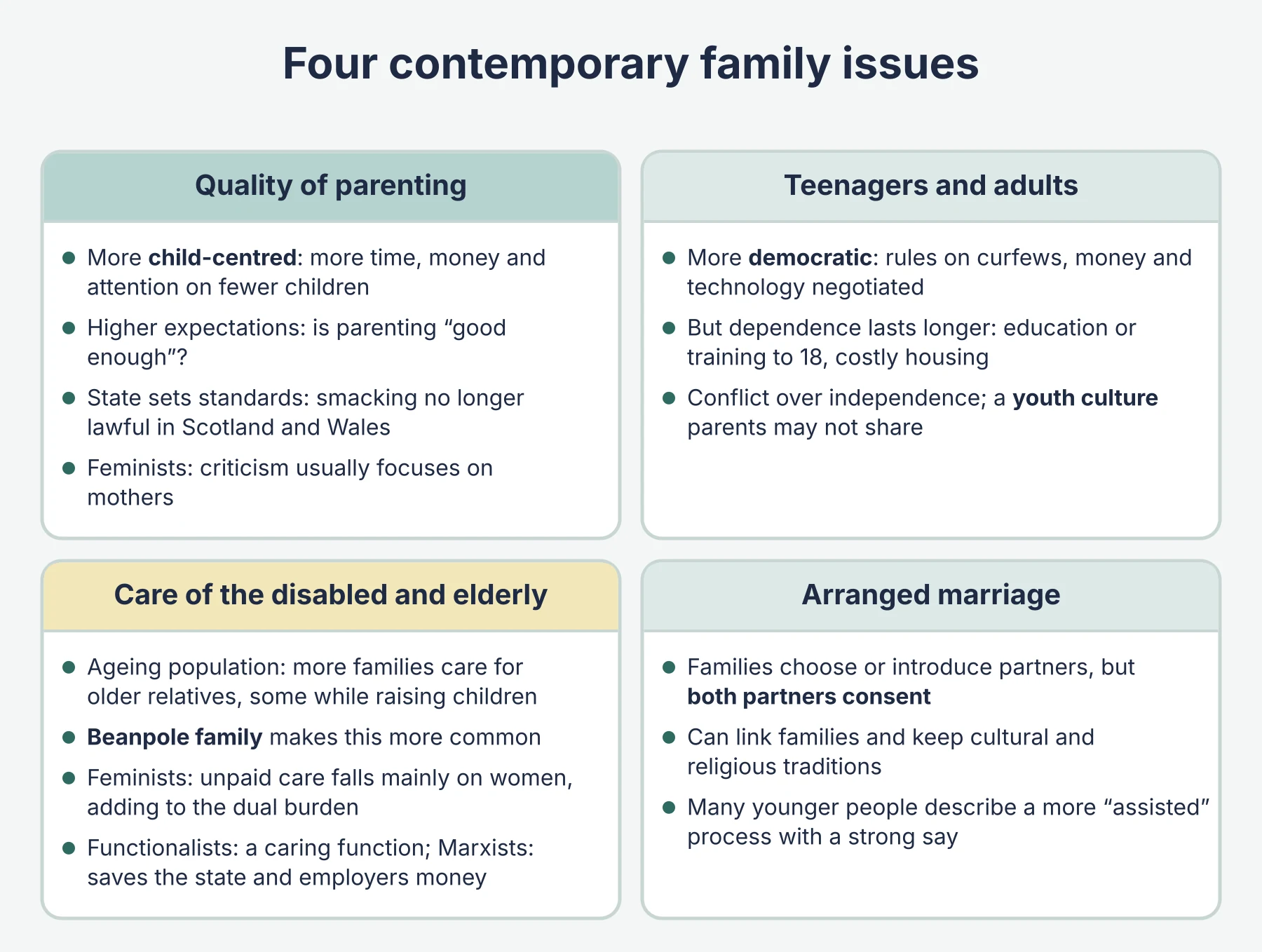
- Quality of parenting: child-centred families raise expectations; the state sets more rules, such as Scotland and Wales removing the defence of reasonable punishment.
- Teenagers and adults: more democratic negotiation, but longer dependency through education or training to 18 and high housing costs.
- Care of the disabled/elderly: an ageing population and beanpole families increase family care, which falls mainly on women.
- Arranged marriage: families choose or introduce partners with consent; becoming more “assisted”; distinct from forced marriage.
Perspectives
- Functionalist: change is progress towards equal, home-centred families (Willmott and Young).
- Feminist: symmetry is exaggerated; women carry most housework, childcare and elder care (Oakley).
- Marxist: the privatised family is a unit of consumption; unpaid care cuts costs for capitalism and the state.
Exam traps
- Saying pre-industrial families were mainly extended.
- Writing that symmetrical means identical roles.
- Reversing stratified diffusion.
- Describing Stage 4 as more equal than Stage 3.
- Using arranged and forced marriage as the same thing.
- Describing an issue without saying how it has changed.
Quick self-test
- Name the three periods the specification asks you to compare.
- What did Laslett find about pre-industrial households?
- What did Anderson’s study of Preston show?
- What is Willmott and Young’s Stage 2 family like?
- What does “symmetry” mean in Willmott and Young’s work?
- Why did they think symmetry was more common in working-class families?
- What is the principle of stratified diffusion?
- Describe the Stage 4 managing director family.
- What was the feminist criticism of Willmott and Young?
- Give one reason why teenagers stay dependent on parents for longer today.
- Why do feminists see care of the elderly as a gender issue?
- What is the difference between an arranged and a forced marriage?
Answers
- Pre-industrial, industrial and contemporary (modern).
- Most households were nuclear rather than extended.
- In early industrial towns more households included extended kin, who helped each other with housing and jobs.
- Men work long hours outside the home and women rely on their mothers and other female kin.
- Each spouse makes a similar contribution to running the household, such as shared chores and decisions.
- Manual work was often boring and uninvolving, so men focused on family life.
- What happens at the top of the stratification system today spreads downwards tomorrow.
- A work-centred family in which the husband focuses on his career and the wife is responsible for home and children.
- They saw little evidence of symmetry, or of a move towards Stage 4, among working-class families.
- Any one: education or training until 18 in England; high housing costs; longer time in higher education.
- Most unpaid family care is done by women, adding to their dual burden.
- In an arranged marriage both partners consent; in a forced marriage one or both do not.
Official syllabus
AQA GCSE Sociology (8192) specification, Version 1.2 (June 2026), for GCSE exams 2019 onwards: section 3.3.4 Changing relationships within families and Appendix B, 7.1 Families.
Related resources
-
Study guides
AQA GCSE Sociology (8192): Conjugal role relationships
In-depth AQA GCSE Sociology 8192 guide to 3.3.3: joint and segregated roles, the domestic division of labour, Oakley, decision making and money management.
Sociology · AQA · GCSE
Read guide -
Practice questions
AQA GCSE Sociology (8192): Conjugal role relationships – Practice Questions
Original AQA GCSE Sociology 8192 practice on 3.3.3 conjugal roles: Oakley, decision making, money, dual career families and leisure, with marked answers.
Sociology · AQA · GCSE
Try questions -
Revision notes
AQA GCSE Sociology (8192): Conjugal role relationships – Revision Notes
Condensed AQA GCSE Sociology 8192 notes on 3.3.3 conjugal roles: joint and segregated roles, Oakley, the five contemporary issues, perspectives and a self-test.
Sociology · AQA · GCSE
Revise topic
Related articles
Get free revision emails (optional)
Occasional emails with practice questions, worked explanations and links to free resources for the qualification and subjects you choose. No spam, and you can unsubscribe from any email. The free tools on this site never need an email.